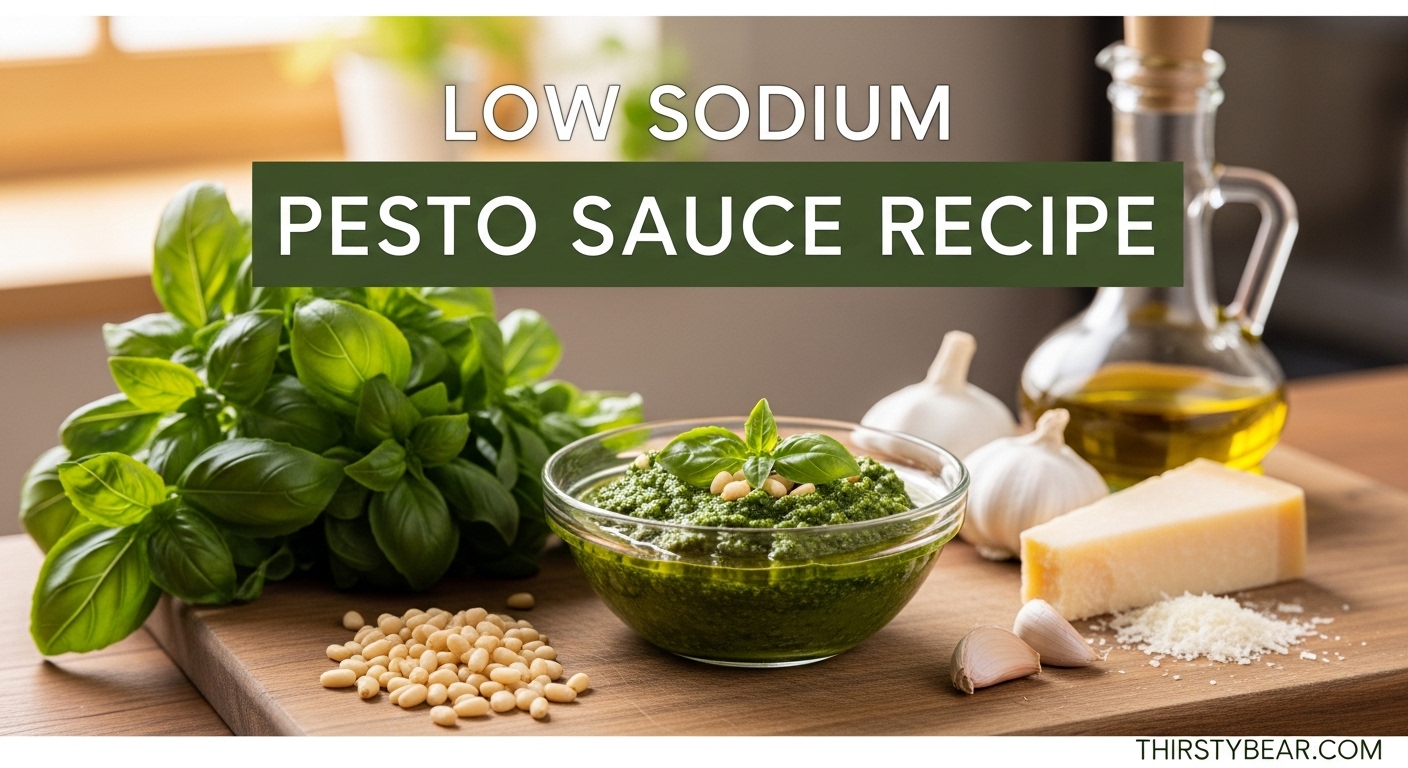
I’ve been making homemade pesto for years, and this low sodium pesto sauce recipe has become a staple in our kitchen. Traditional pesto is already one of the healthier sauce options, but store-bought versions can pack up to 710mg of sodium per quarter cup. That’s a significant portion of your daily recommended intake in just a small serving.
After my dad was diagnosed with high blood pressure, I started experimenting with salt-free alternatives that didn’t compromise on flavor. What I discovered is that pesto doesn’t actually need added salt to taste incredible. The fresh basil, aromatic garlic, quality olive oil, and nuts provide plenty of natural flavor on their own.
This recipe takes just 5 minutes to prepare and requires no cooking. It’s become my go-to sauce for pasta, a spread for sandwiches, and even a topping for grilled vegetables. If you’re looking to explore more healthy recipes, check out our recipe collection for more delicious options.
Why Make Low Sodium Pesto Sauce
Store-bought pesto is convenient, but the sodium content is often shocking. Most commercial brands add salt as a preservative and flavor enhancer. Some popular jarred pestos contain between 400-710mg of sodium per quarter cup serving. For someone on a low sodium diet (typically restricted to 1,500-2,000mg per day), that’s 20-35% of your daily allowance in one small serving.
Homemade pesto gives you complete control over what goes into your sauce. When you make it yourself, you know exactly how much sodium is in each serving. This recipe contains less than 10mg of naturally occurring sodium per serving, making it suitable for:
- People with Chronic Kidney Disease (CKD) – Pesto is naturally low in both sodium AND potassium, making it ideal for renal diets
- High blood pressure management – No added salt helps maintain healthy blood pressure levels
- Heart health – Olive oil provides healthy monounsaturated fats
- Whole food, clean eating – No preservatives, additives, or artificial ingredients
I’ve tested this recipe with family members following kidney-friendly diets, and the feedback has been overwhelmingly positive. The flavor comes through clearly because the ingredients are fresh and high-quality, not masked by excessive salt.
Low Sodium Pesto Sauce Recipe
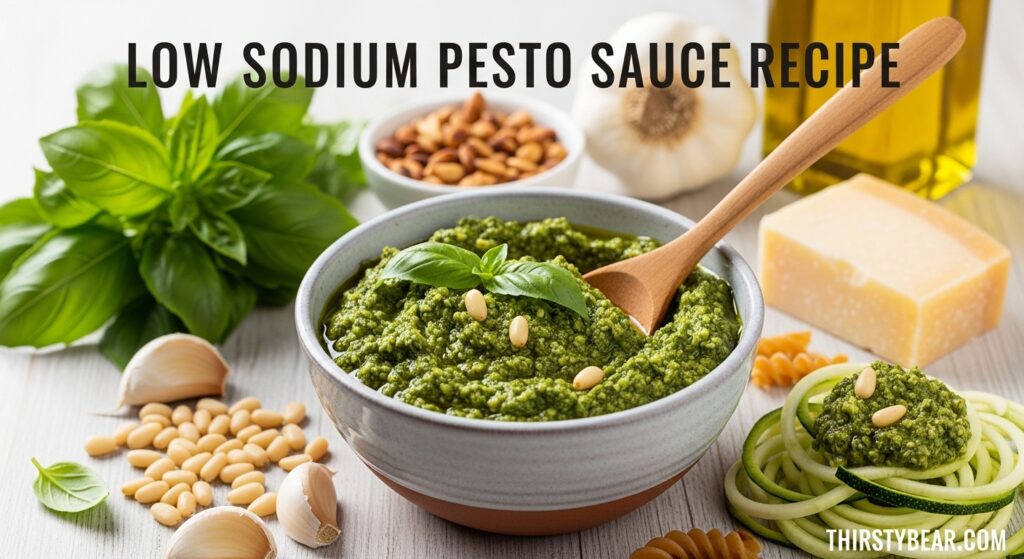
This low sodium pesto sauce recipe comes together in minutes and delivers authentic Italian flavor without any added salt. The key is using the freshest ingredients you can find.
Equipment You’ll Need
- Food processor or blender (a food processor works best for pesto)
- Chef’s knife and cutting board
- Measuring cups and spoons
- Storage container with tight-fitting lid
- Rubber spatula for scraping down the sides
Ingredients
- 2 cups fresh basil leaves – packed, stems removed (about 1 large bunch)
- 1/3 cup pine nuts – walnuts or cashews also work well
- 3 cloves garlic – fresh, peeled
- 1/2 cup extra virgin olive oil – quality oil makes a difference
- 1/2 cup grated Parmesan cheese – or nutritional yeast for dairy-free
- 2 tablespoons lemon juice – fresh squeezed
- 1/4 teaspoon black pepper – freshly ground
Instructions
- Prepare the basil: Wash the basil thoroughly and pat dry completely. Remove the leaves from the stems. Any water on the leaves will cause the pesto to oxidize and turn brown more quickly.
- Toast the nuts (optional but recommended): Place pine nuts in a dry skillet over medium heat for 2-3 minutes, stirring frequently until fragrant and lightly golden. This step enhances the nutty flavor, but you can skip it if you’re pressed for time.
- Combine ingredients in food processor: Add the basil leaves, toasted nuts, garlic cloves, Parmesan cheese, lemon juice, and black pepper to the bowl of your food processor.
- Pulse to chop: Pulse 5-7 times to roughly chop the ingredients and begin incorporating them. Scrape down the sides of the bowl with a spatula.
- Add olive oil and blend: With the food processor running, slowly pour in the olive oil through the feed tube in a steady stream. Continue processing until the pesto reaches your desired consistency. I prefer it slightly textured rather than completely smooth.
- Taste and adjust: Taste the pesto and adjust the lemon juice or pepper if needed. Remember, the flavors will develop and mellow slightly after refrigeration.
- Store immediately: Transfer to an airtight container and press a piece of plastic wrap directly onto the surface to prevent oxidation. Store in the refrigerator.
Pro Tips for Best Results
- Use the freshest basil: Look for bright green leaves with no black spots or wilting. Basil at peak freshness will yield the most flavorful pesto.
- Don’t over-process: Over-blending can heat up the ingredients and cause the basil to oxidize, turning your pesto brown. Pulse until just combined.
- Make it immediately before serving: Pesto is best when freshly made. The flavors are most vibrant right after preparation.
- Quality ingredients matter: Since this recipe has no salt to mask flavors, use the best extra virgin olive oil and freshest Parmesan you can afford.
Nutrition Information
Per 2 tablespoon serving:
- Calories: 120
- Total Fat: 12g
- Sodium: 8mg (less than 1% DV)
- Potassium: 85mg
- Carbohydrates: 2g
- Protein: 3g
This low sodium pesto sauce recipe is naturally gluten-free, and can easily be made dairy-free or vegan by substituting nutritional yeast for the Parmesan cheese.
How to Use Low Sodium Pesto
One of the things I love most about this sauce is its versatility. Pesto isn’t just for pasta anymore. Here are my favorite ways to use it, and you can learn more cooking techniques in our cooking techniques guide.
- Pasta sauce: Toss with hot pasta for a classic dish. The residual heat from the pasta slightly warms the pesto without cooking it.
- Sandwich spread: Use instead of mayonnaise on sandwiches, wraps, or paninis. It adds incredible flavor to turkey, chicken, or vegetable sandwiches.
- Pizza base: Spread a thin layer on pizza dough instead of tomato sauce. Top with mozzarella, fresh tomatoes, and chicken for a white pizza.
- Vegetable dip: Serve as a dip for raw vegetables, crackers, or bread. Great for parties or healthy snacking.
- Salad dressing: Thin with a little more olive oil and lemon juice, then toss with mixed greens for an instant dressing.
- Grilled vegetables: Brush over zucchini, eggplant, bell peppers, or tomatoes before grilling. The pesto caramelizes beautifully.
- Risotto stir-in: Stir into cooked risotto just before serving for a creamy, herbaceous finish.
- Chicken or fish topping: Spread over baked chicken or salmon during the last few minutes of cooking.
I always keep a batch in my refrigerator for quick meal additions. It instantly elevates simple dishes and adds gourmet flavor with minimal effort.
Storage and Shelf Life
Proper storage is key to maintaining the vibrant green color and fresh flavor of your pesto. Here’s what I’ve learned from years of making this recipe.
- Refrigerator storage: Store pesto in an airtight container in the refrigerator for up to 5-7 days. Press a piece of plastic wrap directly onto the surface to prevent oxidation, which turns the pesto brown. The brown color doesn’t affect the taste, but it’s less appetizing.
- Freezer storage: Pesto freezes exceptionally well. I recommend portioning it into ice cube trays, freezing until solid, then transferring the cubes to a freezer bag. This way, you can thaw exactly the amount you need. Frozen pesto keeps for up to 3 months.
- Signs of spoilage: If your pesto develops an off smell, visible mold, or tastes unusually bitter, it’s time to discard it. The natural separation of oil is normal – simply stir before using.
Tips and Variations
Once you’ve mastered the basic low sodium pesto sauce recipe, try these variations to customize the flavor to your preferences.
- Nut substitutions: Pine nuts are traditional but expensive. Walnuts work beautifully and add omega-3 fatty acids. Cashews create a creamier texture. For a nut-free version, try sunflower seeds or pumpkin seeds.
- Herb variations: Add fresh spinach or arugula to boost nutrients and stretch the basil. Cilantro makes a delicious Mexican-inspired pesto. Try mixing basil with parsley for a different flavor profile.
- Dairy-free options: Nutritional yeast provides a cheesy, umami flavor without dairy. Simply replace the Parmesan cheese with an equal amount of nutritional yeast for a vegan, dairy-free version.
- Flavor boosters without salt: Add a small handful of fresh flat-leaf parsley for brightness. A pinch of red pepper flakes adds gentle heat. Extra garlic lovers can add an additional clove. Fresh lemon zest enhances the citrus notes.
- Double batch: This recipe doubles easily. I often make a double batch and freeze half for later. The freezer method ensures you always have homemade pesto ready, even when fresh basil isn’t in season.
FAQs
Is pesto low in sodium?
Homemade pesto is naturally low in sodium when made without added salt. Store-bought pesto can contain up to 710mg of sodium per quarter cup, while this recipe has less than 10mg per serving.
Is pesto good for people with CKD?
Yes, homemade pesto is excellent for people with Chronic Kidney Disease (CKD). It’s naturally low in both sodium and potassium, making it a kidney-friendly alternative to marinara sauce and other high-sodium condiments.
How to make no salt pesto?
Making no salt pesto is simple: blend fresh basil leaves, garlic, nuts (pine nuts or walnuts), extra virgin olive oil, and lemon juice in a food processor until smooth. The key is using high-quality, fresh ingredients that provide plenty of natural flavor without needing salt.
Can you eat pesto with high blood pressure?
Yes, you can eat pesto with high blood pressure when it’s homemade without added salt. Traditional pesto recipes rely on fresh herbs, garlic, and nuts for flavor rather than sodium, making it a heart-healthy condiment option for those managing blood pressure.
Conclusion
This low sodium pesto sauce recipe has transformed how we approach flavorful eating while managing sodium intake. After making this recipe dozens of times over the past two years, I’m convinced that fresh ingredients don’t need salt to shine. The combination of aromatic basil, pungent garlic, rich olive oil, and nutty pine nuts creates a sauce that’s satisfying and delicious without any added sodium.
What started as a recipe for my dad has become a kitchen staple I recommend to everyone. Whether you’re managing CKD, watching your blood pressure, or simply want to reduce processed foods in your diet, this pesto delivers on flavor without compromise.
Make a batch this week and discover how good salt-free can taste. Once you experience the vibrant flavor of homemade pesto, you’ll never go back to the high-sodium jarred versions. For more healthy, delicious recipes, explore our green recipes collection for inspiration.