There comes a moment when only a proper cocktail will do. For me, that moment often calls for a Manhattan. This iconic drink has been my go-to for dinner parties, quiet evenings, and celebrations alike. In this guide, I’ll walk you through everything you need to know about making the perfect Manhattan cocktail at home.
Whether you’re a home bartender just starting out or someone looking to refine your technique, you’ll find the exact measurements, stirring methods, and ingredient recommendations that have worked for me over years of testing. If you enjoy exploring cocktail recipes, this classic deserves a spot in your repertoire.
What Is a Manhattan Cocktail?
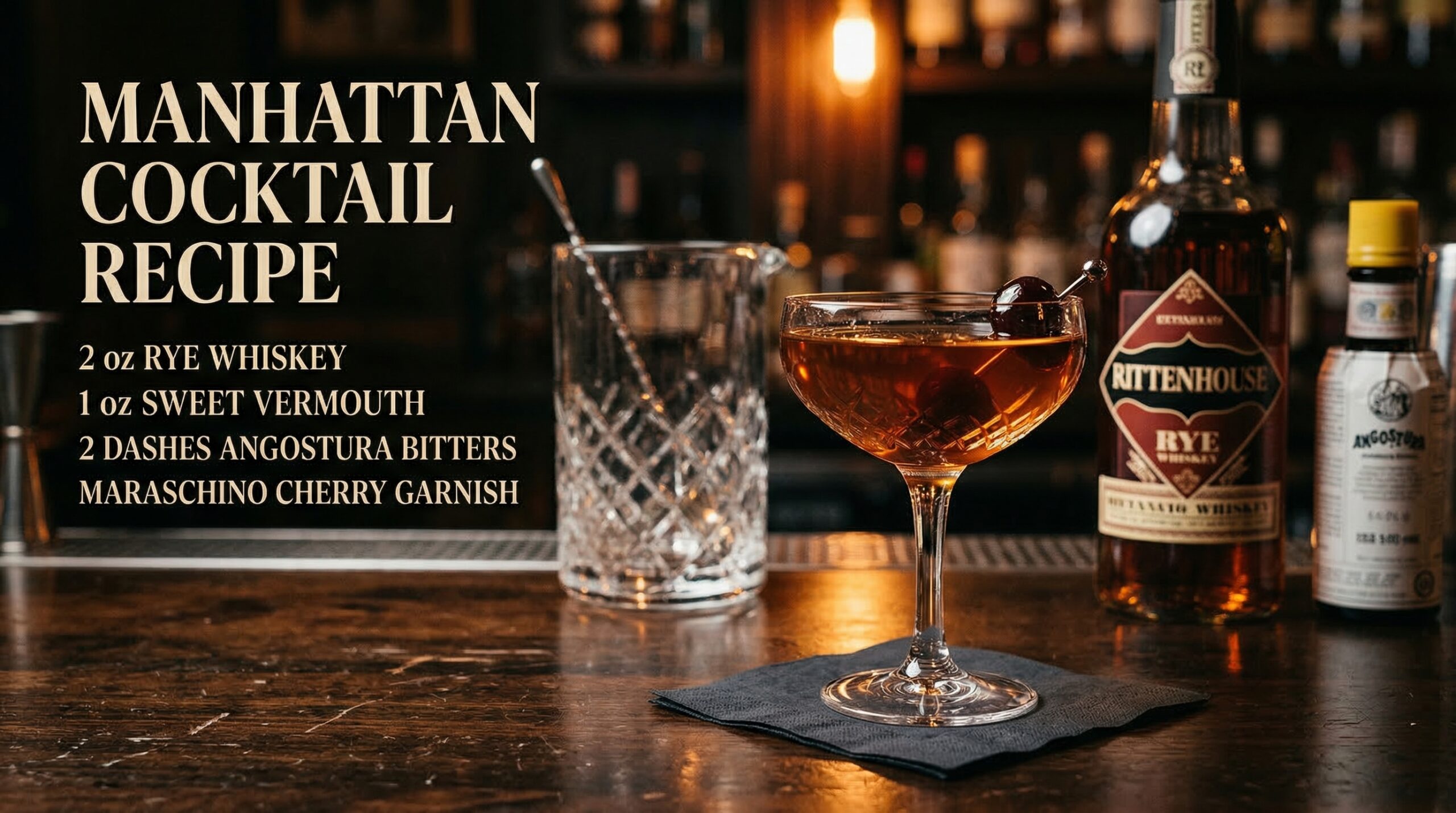
A Manhattan is a classic, spirit-forward cocktail made with whiskey (traditionally rye), sweet vermouth, and aromatic bitters. The combination creates a sophisticated drink that balances the bold spice of whiskey with the complex sweetness of vermouth. It’s stirred with ice and strained into a chilled coupe glass, then garnished with a maraschino cherry.
What makes the Manhattan special is its simplicity and balance. With just three main ingredients, the quality of each component matters immensely. The drink falls into the “spirit-forward” category, meaning the base spirit (whiskey) takes center stage rather than being masked by fruit juices or sweeteners.
The flavor profile is bold yet balanced. You’ll taste the spicy, peppery notes of rye whiskey, the herbal sweetness of vermouth, and the aromatic complexity from bitters. It’s less sweet than many modern cocktails, making it perfect for sipping slowly before or after dinner.
I’ve served Manhattans at countless gatherings, and they consistently impress guests who appreciate a well-made drink. The cocktail works beautifully for dinner parties, holiday celebrations, or any occasion that calls for something sophisticated without being fussy.
Manhattan Cocktail Ingredients
Here’s everything you need to make a classic Manhattan:
- 2 ounces rye whiskey (or bourbon, if you prefer a sweeter drink)
- 1 ounce sweet vermouth (quality matters here – I recommend Cocchi Vermouth di Torino or Carpano Antica Formula)
- 2-3 dashes Angostura bitters
- Garnish: Maraschino cherry (Luxardo or brandied cherries work best)
- Ice: Large cubes for stirring
The classic ratio is 2:1 whiskey to vermouth, though some prefer a drier 3:1 ratio. After testing dozens of variations, I find the 2:1 ratio hits the sweet spot for most palates. The bitters add aromatic complexity without overpowering the drink.
How to Make a Manhattan Cocktail
Follow these steps to make a perfect Manhattan every time:
Step 1: Chill Your Glass
Place your coupe or martini glass in the freezer for at least 5 minutes before making the drink. A chilled glass keeps your cocktail at the ideal temperature from first sip to last.
Step 2: Add Ingredients to Mixing Glass
Pour 2 ounces of rye whiskey, 1 ounce of sweet vermouth, and 2-3 dashes of Angostura bitters into a mixing glass. I prefer a glass or metal mixing vessel with a pouring spout for easy straining.
Step 3: Add Ice and Stir
Fill the mixing glass with ice (large cubes work best to minimize rapid dilution). Stir smoothly and continuously for 25-30 seconds. You want the mixture well-chilled and slightly diluted, but not watered down.
Step 4: Strain and Serve
Strain the mixture into your chilled coupe glass. A Hawthorne strainer or julep strainer works perfectly for this.
Step 5: Garnish
Add a maraschino cherry to the glass. I recommend Luxardo cherries or homemade brandied cherries for the best flavor. Avoid the bright red, artificially dyed cherries from the supermarket.
Why Stir Instead of Shake?
This is crucial. A Manhattan should always be stirred, never shaken. Shaking introduces air bubbles and creates a cloudy appearance, while stirring keeps the drink silky and clear. Since this cocktail contains only spirits (no fruit juice or dairy), stirring provides the right texture and proper dilution. I learned this the hard way after shaking my first few Manhattans and wondering why they looked murky.
Rye vs Bourbon: Which Is Better for a Manhattan?
This question sparks endless debate among cocktail enthusiasts. The short answer: both work beautifully, but they create different experiences.
Rye Whiskey brings spicy, peppery notes that cut through the sweetness of vermouth. It creates a drier, more assertive Manhattan. Classic recipes call for rye, and after extensive testing, I understand why. The spice complements the herbal notes in vermouth beautifully. My go-to bottles include Rittenhouse Rye (bottled-in-bond, consistent quality) and Knob Creek Rye (smooth with plenty of character).
Bourbon contributes sweeter, vanilla-forward flavors with caramel and oak notes. A bourbon Manhattan feels rounder and more approachable, especially for those new to whiskey cocktails. Woodford Reserve and Buffalo Trace make excellent Manhattans when you want something slightly sweeter.
My recommendation? Start with rye if you want the classic experience. Switch to bourbon if you prefer a sweeter, more mellow drink. Neither is wrong – it comes down to personal preference.
One more consideration: proof matters. Higher-proof whiskeys (100 proof or bottled-in-bond) stand up better to dilution from stirring. They maintain their character even as the ice melts slightly into the drink.
Popular Manhattan Variations
Once you’ve mastered the classic, these variations offer exciting ways to explore different flavor profiles.
The Perfect Manhattan
Despite the name, “perfect” doesn’t mean better – it refers to the ratio of vermouths. A Perfect Manhattan uses equal parts sweet and dry vermouth:
- 2 ounces rye whiskey or bourbon
- 0.5 ounce sweet vermouth
- 0.5 ounce dry vermouth
- 2 dashes bitters
- Garnish: lemon twist
The result is more complex and less sweet than the classic. I love this version when I want something slightly more sophisticated. The lemon twist garnish complements the drier profile beautifully.
The Dry Manhattan
For those who find the classic too sweet, the Dry Manhattan replaces sweet vermouth entirely with dry vermouth:
- 2 ounces rye whiskey
- 1 ounce dry vermouth
- 2 dashes orange bitters (instead of Angostura)
- Garnish: lemon twist
This version is crisp and herbal, perfect for warm weather or those who prefer less sweetness. Orange bitters complement the dry vermouth’s floral notes.
The Rob Roy
This Scottish cousin substitutes Scotch whisky for rye or bourbon:
- 2 ounces blended Scotch whisky
- 1 ounce sweet vermouth
- 2 dashes Angostura bitters
- Garnish: maraschino cherry
The smoky, malty character of Scotch creates an entirely different experience. Use a blended Scotch rather than a peaty single malt for the best balance.
The Black Manhattan
This modern variation replaces sweet vermouth with Averna amaro:
- 2 ounces rye whiskey
- 1 ounce Averna amaro
- 2 dashes orange bitters
- Garnish: brandied cherry
The amaro adds bitter, herbal complexity that transforms the drink. It’s become one of my favorite variations for after-dinner sipping.
The Brooklyn
This variation adds complexity with dry vermouth and maraschino liqueur:
- 2 ounces rye whiskey
- 1 ounce dry vermouth
- 0.25 ounce maraschino liqueur
- 2 dashes Angostura bitters
- Garnish: brandied cherry
The maraschino liqueur adds subtle almond-like sweetness that plays beautifully against the dry vermouth.
Tips for the Perfect Manhattan and Common Mistakes to Avoid
After making countless Manhattans (and plenty of mistakes along the way), here’s what I’ve learned about getting it right every time.
Top Tips for Success
- Use quality vermouth: Cheap vermouth ruins good whiskey. Spend a bit more on Cocchi Vermouth di Torino, Carpano Antica Formula, or similar quality options. The difference is immediately noticeable.
- Store vermouth properly: Vermouth is wine-based and spoils. Keep it in the refrigerator after opening and use within 2-3 months. If it smells off or vinegary, toss it.
- Chill your glass: A room-temperature glass warms your cocktail quickly. Five minutes in the freezer makes a real difference.
- Use good ice: Large, clear cubes melt more slowly and dilute less. Avoid using ice that’s been sitting in your freezer absorbing odors.
- Invest in quality cherries: Luxardo maraschino cherries or homemade brandied cherries elevate the entire experience. They’re worth the extra cost.
- Taste before straining: Dip a straw into your mixing glass and taste. Too strong? Stir a bit longer. Too diluted? Strain immediately.
Common Mistakes to Avoid
- Shaking instead of stirring: This clouds the drink and creates an unpleasant texture. Always stir spirit-forward cocktails.
- Using old vermouth: That bottle sitting in your cabinet for a year? It’s probably spoiled. Fresh vermouth makes all the difference.
- Over-diluting: Stirring for too long waters down the drink. Aim for 25-30 seconds with plenty of ice.
- Skip the garnish: A Manhattan without a cherry feels incomplete. The cherry adds visual appeal and a sweet finish.
- Wrong glassware: A coupe or martini glass is traditional. Rocks glasses work, but the drink warms faster.
- Measuring by eye: Use a jigger. Consistency matters, especially when you’re trying to perfect your technique.
- Using bad ice: Ice that tastes like freezer burn transfers that flavor to your drink. Fresh ice only.
Troubleshooting Your Manhattan
Too sweet? Try a drier ratio (3:1 whiskey to vermouth) or switch to rye whiskey instead of bourbon. You can also reduce the vermouth slightly.
Too strong? Add a splash more vermouth or stir a few seconds longer. The extra dilution softens the alcohol bite.
Cloudy appearance? You probably shook instead of stirred. Next time, stir gently for 25-30 seconds.
Not cold enough? Make sure your glass is chilled and you’re stirring with enough ice. The mixing glass should feel cold to the touch.
Food Pairings for Your Manhattan
One aspect often overlooked is what to serve alongside your Manhattan. This spirit-forward cocktail pairs beautifully with several foods:
- Appetizers: Cured meats like prosciutto or salami complement the whiskey’s warmth. Sharp cheddar or aged gouda provides a nice contrast to the vermouth’s sweetness.
- Main courses: The Manhattan’s boldness stands up to rich foods. Try it with steak, roasted duck, or braised short ribs. The herbal notes cut through fatty dishes beautifully.
- Desserts: Dark chocolate, pecan pie, or bread pudding all work well. The cocktail’s slight bitterness balances sweet desserts without competing.
I’ve found that Manhattans shine brightest when served before dinner as an aperitif or after dinner as a digestif. Either way, they elevate the meal.
The History of the Manhattan Cocktail
The Manhattan’s origins trace back to the 1870s in New York City. Like many classic cocktails, the exact origin story varies depending on who you ask.
The most popular tale credits the Manhattan Club, where a banquet was supposedly held in 1874 honoring Lady Randolph Churchill (Winston Churchill’s mother). The drink created for the occasion supposedly became the Manhattan. However, historians have since debunked this story – Lady Churchill was in England at the time.
More likely, the drink evolved from earlier whiskey and vermouth combinations popular at the time. The first printed recipe appeared in O.H. Byron’s 1884 “Modern Bartenders’ Guide,” which described it as equal parts whiskey and vermouth with bitters.
What we do know is that the Manhattan has remained one of the six basic cocktails defined by cocktail historian David A. Embury in his 1948 book “The Fine Art of Mixing Drinks.” Its staying power speaks to its perfect balance and timeless appeal.
Over the decades, the ratio has shifted from the original equal parts to the now-standard 2:1 whiskey to vermouth. This evolution reflects changing American tastes toward stronger, less sweet cocktails.
FAQs
What is a Manhattan cocktail made of?
A Manhattan cocktail is made of three main ingredients: 2 ounces of whiskey (traditionally rye), 1 ounce of sweet vermouth, and 2-3 dashes of Angostura bitters. It’s stirred with ice, strained into a chilled coupe glass, and garnished with a maraschino cherry.
What is the difference between an Old Fashioned and a Manhattan?
An Old Fashioned is made with whiskey, sugar (or simple syrup), and bitters – it’s essentially whiskey seasoned with sweet and bitter elements. A Manhattan adds sweet vermouth to the mix, which creates a more complex, layered drink. The Old Fashioned is built in the glass, while the Manhattan is stirred in a mixing glass and strained.
Is rye or bourbon better for a Manhattan?
Rye whiskey is traditional and creates a spicier, drier Manhattan with more bite. Bourbon produces a sweeter, smoother drink with vanilla and caramel notes. Neither is wrong – it depends on your preference. Try both to see which you prefer.
What are common mistakes making Manhattans?
The biggest mistake is shaking instead of stirring, which clouds the drink. Other common errors include using old or low-quality vermouth, over-diluting by stirring too long, skipping the garnish, and not chilling the glass beforehand.
What is a perfect Manhattan recipe?
A Perfect Manhattan uses equal parts sweet and dry vermouth instead of all sweet vermouth. The recipe is: 2 ounces rye whiskey, 0.5 ounce sweet vermouth, 0.5 ounce dry vermouth, and 2 dashes bitters. Garnish with a lemon twist instead of a cherry.
Why should you stir a Manhattan instead of shaking it?
A Manhattan contains only spirits (no juice, dairy, or eggs), so stirring is the correct technique. Shaking introduces air bubbles that cloud the drink and creates an unpleasant, frothy texture. Stirring keeps the drink clear and silky smooth.
Final Thoughts on the Manhattan Cocktail Recipe
The Manhattan cocktail recipe has stood the test of time for good reason. Its simple three-ingredient formula creates a perfectly balanced drink that works for nearly any occasion. Whether you prefer the spicy kick of rye or the sweet warmth of bourbon, the fundamentals remain the same: quality ingredients, proper technique, and attention to detail.
Remember to stir (never shake), use fresh vermouth stored in your refrigerator, and don’t skip the cherry garnish. Once you’ve mastered the classic, explore the variations to find your personal favorite. The Perfect Manhattan and Black Manhattan are excellent starting points for your exploration.
I encourage you to make this recipe your own. Adjust the ratios slightly, try different whiskeys, experiment with bitters. The best Manhattan is the one you enjoy most. For more cocktail inspiration and drink recipes, check out our collection of recipes.
Cheers to your new favorite cocktail.