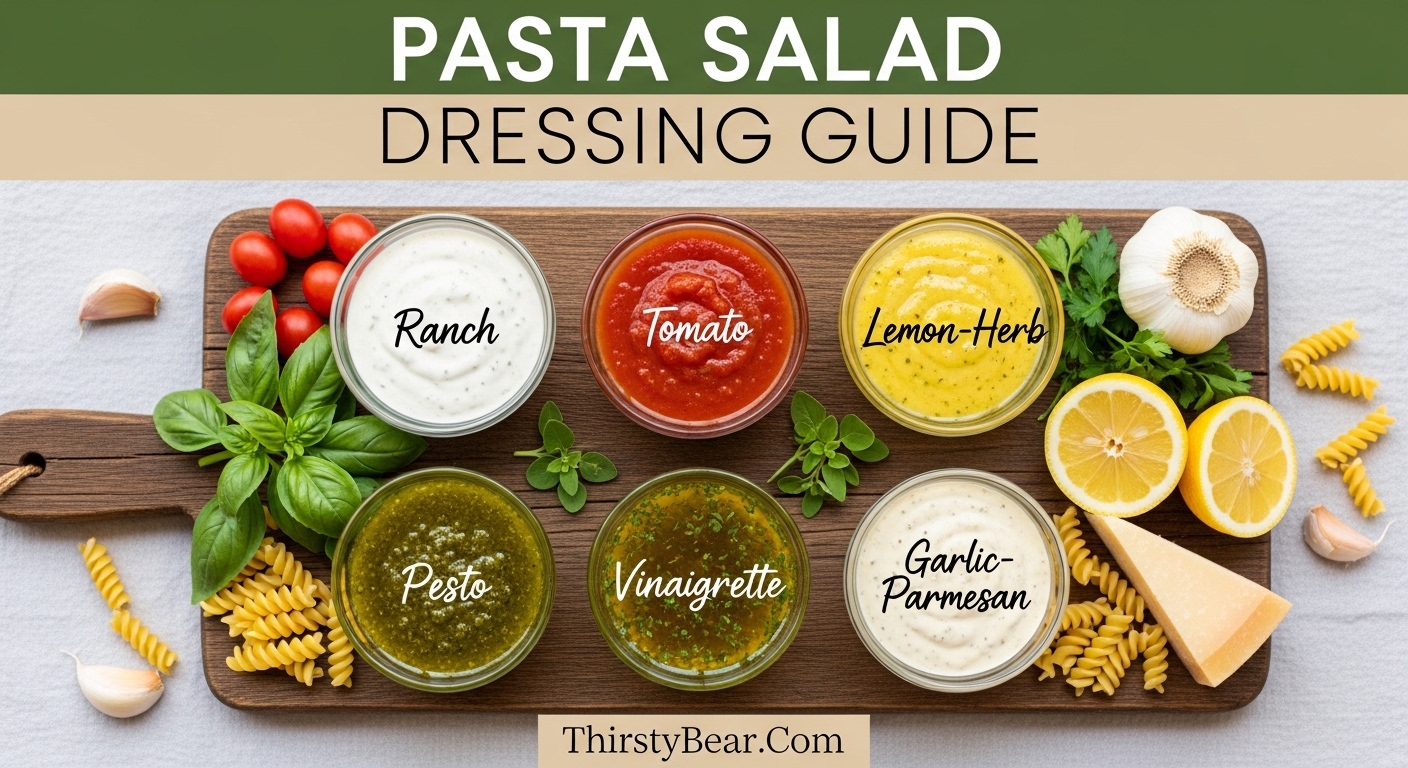
The right pasta salad dressing transforms a simple bowl of cooled noodles and vegetables into something memorable. After testing countless variations for summer cookouts and weeknight meal prep, I’ve learned that dressing makes or breaks pasta salad. A well-balanced vinaigrette brings tangy brightness, while creamy options add rich comfort.
In this guide, I’ll share everything you need to know about pasta salad dressing, from classic Italian vinaigrette to simple creamy alternatives. You’ll learn the proper oil-to-vinegar ratio, how to emulsify like a pro, and exactly when to dress your pasta for the best results.
Pasta Salad Dressing: The Foundation of Great Pasta Salad
Pasta salad dressing is the flavorful sauce that coats and seasons pasta salad. Unlike hot pasta dishes where sauce clings to steaming noodles, pasta salad dressing needs to work on cooled pasta and stand up to refrigeration.
The most common approach is a vinaigrette-based pasta salad dressing. This combines olive oil with an acid like red wine vinegar or lemon juice, plus aromatics like garlic and herbs. Vinaigrettes absorb into pasta over time, which is why timing matters so much.
Creamy pasta salad dressing options use mayonnaise, Greek yogurt, or a blend of both as the base. These coat pasta more thoroughly and don’t absorb as much, making them ideal for make-ahead situations. The tangy flavor of mayo or yogurt complements vegetables like cherry tomatoes, cucumbers, and bell peppers.
Emulsification is the key technique for any pasta salad dressing. When you whisk oil and vinegar together, they naturally separate. Adding an emulsifier like Dijon mustard helps them combine into a smooth, cohesive dressing that coats every bite evenly.
Types of Pasta Salad Dressing
Understanding the different types of pasta salad dressing helps you choose the right one for your recipe and occasion. Here’s how the main categories compare:
Vinaigrette-Based Dressings
Vinaigrettes are the traditional choice for pasta salad dressing. They start with a 3-to-1 ratio of olive oil to vinegar, though you can adjust this to taste. Red wine vinegar is classic, but lemon juice, white wine vinegar, and even balsamic work beautifully.
The beauty of vinaigrette pasta salad dressing is how it absorbs into pasta over time. Flavors deepen and mingle as the salad chills, which is why pasta salad often tastes better the next day. This absorption also means you’ll need to refresh the salad with a splash more dressing before serving.
Creamy Dressings
Creamy pasta salad dressing provides rich comfort and coats ingredients thoroughly. Mayonnaise-based dressings are traditional and pair well with hearty vegetables like broccoli and cauliflower. Greek yogurt offers a lighter, tangier alternative with probiotic benefits.
Many home cooks blend mayo and yogurt for the best of both worlds. The creamy base doesn’t absorb into pasta like vinaigrette does, so these dressings maintain their consistency even after days in the refrigerator.
Comparing Vinaigrette vs Creamy Dressing
- Flavor absorption: Vinaigrettes absorb into pasta over time, while creamy dressings coat the surface
- Make-ahead friendly: Creamy dressings maintain consistency better overnight
- Refrigeration: Vinaigrettes may solidify when cold but loosen at room temperature
- Vegetable pairings: Vinaigrettes highlight fresh vegetables, creamy dressings complement hearty ingredients
- Calorie density: Vinaigrettes are generally lighter, creamy options are more filling
- Shelf life: Vinaigrettes last longer refrigerated, creamy dressings have shorter life
Classic Italian Vinaigrette Recipe (2026)
This Italian vinaigrette is my go-to pasta salad dressing for a reason. It comes together in minutes with ingredients you likely have on hand. The balanced flavors work with virtually any pasta salad combination.
Ingredients
- 1/2 cup extra virgin olive oil
- 3 tablespoons red wine vinegar
- 1 clove garlic, minced
- 1 teaspoon Dijon mustard
- 1/2 teaspoon dried oregano
- 1/2 teaspoon kosher salt
- 1/4 teaspoon freshly ground black pepper
Instructions
- Combine all ingredients in a small jar or bowl
- Seal the jar and shake vigorously, or whisk until emulsified
- Taste and adjust seasoning as needed
- Store refrigerated for up to 2 weeks
The Dijon mustard acts as an emulsifier, helping the oil and vinegar combine into a smooth dressing. I’ve found that shaking in a jar works just as well as whisking, and it’s easier to store any leftovers.
This recipe makes about 3/4 cup of pasta salad dressing, which is perfect for a pound of pasta. You can easily double or triple the batch to keep on hand throughout the summer.
Pro Tips
- Let the garlic sit in the vinegar for 5 minutes before adding oil to mellow its flavor
- If the dressing solidifies in the refrigerator, let it sit at room temperature for 10 minutes
- Substitute fresh herbs like basil or parsley for the dried oregano
- Add a pinch of red pepper flakes for subtle heat
Creamy Pasta Salad Dressing Options
Sometimes only creamy pasta salad dressing will do. These options provide richness and coat ingredients beautifully, making them ideal for potlucks and picnics where you want hearty comfort food.
Classic Mayonnaise-Based Dressing
A simple mayo-based pasta salad dressing starts with mayonnaise thinned with a bit of vinegar or lemon juice. This creates a tangy, creamy base that pairs well with crunchy vegetables like celery, bell peppers, and onions.
For every cup of mayonnaise, add 1-2 tablespoons of red wine vinegar or lemon juice. Whisk in minced garlic, a pinch of sugar, salt, pepper, and dried herbs like Italian seasoning or dill. This creamy pasta salad dressing coats every ingredient and doesn’t absorb into the pasta, making it perfect for make-ahead dishes.
Greek Yogurt Dressing
Greek yogurt offers a lighter, tangier alternative to mayonnaise. It provides creaminess with less fat and more protein. The natural tang of yogurt works beautifully with fresh vegetables and herbs.
Use plain Greek yogurt as your base and thin it with lemon juice or vinegar. Add minced garlic, fresh or dried dill, salt, and pepper. This pasta salad dressing works especially well with Mediterranean-style salads featuring feta cheese, olives, and fresh herbs.
Mayo-Yogurt Blend
Combining mayonnaise and Greek yogurt gives you the best of both worlds. The mayo provides rich body while yogurt adds tang and lightness. A 50-50 ratio works well, though you can adjust to taste.
This blend is my favorite creamy pasta salad dressing for potlucks. It maintains its texture overnight and doesn’t separate. The flavors meld beautifully and complement virtually any pasta salad combination.
Lemon-Herb Vinaigrette Variation
When I want a brighter, fresher pasta salad dressing, I turn to lemon-herb vinaigrette. The citrus acidity is more vibrant than vinegar, and fresh herbs add aromatic complexity that elevates simple ingredients.
Ingredients
- 1/2 cup olive oil
- 3 tablespoons fresh lemon juice
- 1 teaspoon Dijon mustard
- 1 clove garlic, minced
- 1 tablespoon fresh chopped herbs (basil, parsley, or tarragon)
- 1/2 teaspoon salt
- 1/4 teaspoon black pepper
Instructions
- Whisk together lemon juice, mustard, garlic, salt, and pepper
- Slowly drizzle in olive oil while whisking to emulsify
- Stir in fresh herbs
- Use immediately or refrigerate for up to 1 week
This lemon-herb vinaigrette shines with delicate vegetables and lighter pasta salads. It’s perfect for spring and summer gatherings when you want something fresh and herbaceous. The bright lemon flavor complements ingredients like asparagus, peas, and fresh mozzarella.
How to Dress Pasta Salad Properly
Knowing how to dress pasta salad properly is just as important as the dressing itself. The timing and technique affect flavor absorption, texture, and overall quality.
When to Add Dressing
Always dress pasta salad while the pasta is still warm, not piping hot. Warm pasta absorbs dressing better, allowing flavors to penetrate the noodles. I’ve tested this both ways, and warm-dressed pasta consistently has better flavor throughout.
That said, don’t dress steaming hot pasta. The heat can cause delicate ingredients in the dressing to break down or lose potency. Let the pasta cool for about 5 minutes after draining before adding your pasta salad dressing.
Dressing-to-Pasta Ratio Guide
Getting the right amount of dressing prevents dry or soggy pasta salad. Here’s a reliable ratio guide based on testing:
- 1 pound dried pasta: 3/4 to 1 cup vinaigrette dressing
- 1 pound dried pasta: 1 to 1.5 cups creamy dressing
- For heavy add-ins: Increase dressing by 25%
- For lighter salads: Decrease dressing by 25%
Start with less dressing than you think you need. You can always add more, but you can’t remove excess. Toss the pasta with about three-quarters of the dressing, then add more if needed after it has absorbed for a few minutes.
Make-Ahead Considerations
Pasta salad absorbs vinaigrette dressing as it sits, which is why it often tastes better the next day. This absorption also means you’ll need to refresh the salad before serving. I always reserve a quarter of the dressing to add just before serving.
Creamy dressings don’t absorb the same way, but they can thicken in the refrigerator. If your creamy pasta salad dressing seems stiff after chilling, thin it with a teaspoon of lemon juice or vinegar and toss well before serving.
Best Pasta Shapes for Salad
The right pasta shape holds dressing better and provides a more enjoyable eating experience. After testing many varieties, here are my top recommendations:
- Fusilli or Rotini: The spiral shape traps dressing in every crevice
- Penne: Tubes hold dressing inside and provide satisfying texture
- Farfalle (Bowties): Large surface area catches dressing and small ingredients
- Orzo: Small rice-shaped pasta makes dressing-coated bites
- Macaroni: Classic choice that works well with creamy dressings
Avoid long pasta like spaghetti or linguine for pasta salad. These shapes are difficult to eat cold and don’t hold dressing as effectively as shorter, textured shapes.
Storage and Make-Ahead Tips
Proper storage ensures your pasta salad stays fresh and flavorful. Here’s what I’ve learned from making pasta salad for countless gatherings:
Refrigeration Guidelines
Store dressed pasta salad in an airtight container in the refrigerator for up to 5 days. Vinaigrette-based salads may develop a solidified layer of oil on top—this is normal. Let the salad sit at room temperature for 15-20 minutes and toss well before serving.
Creamy pasta salad dressing maintains its texture better but can separate slightly. A quick toss reincorporates everything. If the salad seems dry after refrigeration, add a splash more dressing or a teaspoon of vinegar and toss.
Refreshing Leftovers
Pasta salad often dries out in the refrigerator as pasta continues to absorb dressing. Before serving leftovers, taste and assess. Add a splash more vinaigrette or a bit more creamy dressing as needed. Fresh herbs, a squeeze of lemon, or a pinch of salt can also revive day-old pasta salad.
Make-Ahead Strategy
For the best make-ahead results, dress the pasta while warm and let it absorb flavors overnight. Reserve some dressing to refresh before serving. Add delicate ingredients like fresh herbs or avocado just before serving to prevent wilting or browning.
I’ve found that pasta salad actually improves after 8-24 hours of refrigeration. The flavors meld and penetrate the pasta more deeply. Just plan to refresh the dressing and perhaps add some fresh garnish before serving.
FAQs
What is the best dressing for pasta salad?
The best pasta salad dressing depends on your preference and recipe. Italian vinaigrette is the most versatile choice, offering bright tangy flavors that complement virtually any ingredient combination. It absorbs into pasta over time, creating deeper flavor. Creamy dressings made with mayonnaise or Greek yogurt provide rich comfort and coat ingredients thoroughly, making them ideal for potlucks and make-ahead situations.
What kind of dressing do you use for pasta?
For pasta salad, vinaigrette-based dressings are most common. These combine olive oil with vinegar or lemon juice, plus aromatics like garlic and herbs. Italian dressing, which is essentially a pre-seasoned vinaigrette, works beautifully. Creamy options include mayonnaise-based dressings, Greek yogurt dressings, or a blend of both. The key is choosing a dressing that complements your other ingredients.
What are the ingredients in pasta salad dressing?
Classic pasta salad dressing starts with olive oil and vinegar in a 3-to-1 ratio. Common ingredients include red wine vinegar or lemon juice for acidity, Dijon mustard to emulsify, garlic for flavor, and dried or fresh herbs like oregano, basil, or parsley. Salt and pepper are essential for seasoning. Creamy versions use mayonnaise or Greek yogurt as the base, thinned with vinegar or lemon juice and seasoned with similar aromatics.
How do you make pasta salad with vinaigrette?
To make pasta salad with vinaigrette, cook pasta according to package directions and drain. Let it cool for about 5 minutes so it’s warm but not hot. Meanwhile, prepare your vinaigrette by whisking together olive oil, vinegar, Dijon mustard, garlic, herbs, salt, and pepper. Pour the vinaigrette over the warm pasta and toss to coat. Add your vegetables, cheese, and other mix-ins. Taste and adjust seasoning. Refrigerate for at least 1 hour before serving to allow flavors to meld.
When should you add dressing to pasta salad?
Add pasta salad dressing while the pasta is still warm, about 5 minutes after draining. Warm pasta absorbs dressing better than cold pasta, allowing flavors to penetrate throughout. However, don’t dress piping hot pasta as the heat can cause delicate ingredients to break down. The dressing should be at room temperature when added. After tossing, let the salad cool completely before refrigerating. Reserve some dressing to refresh the salad before serving, as pasta continues to absorb liquid as it sits.
Conclusion
Great pasta salad starts with the right dressing. Whether you choose a classic Italian vinaigrette, a creamy mayo-yogurt blend, or a bright lemon-herb variation, understanding how to use pasta salad dressing makes all the difference. Dress warm pasta, use the proper ratio, and refresh before serving for the best results.
Experiment with these recipes and techniques to find your perfect pasta salad dressing. The simple act of making your own dressing transforms ordinary ingredients into something special for cookouts, potlucks, and everyday meals. Once you taste the difference, you’ll never go back to store-bought versions again.