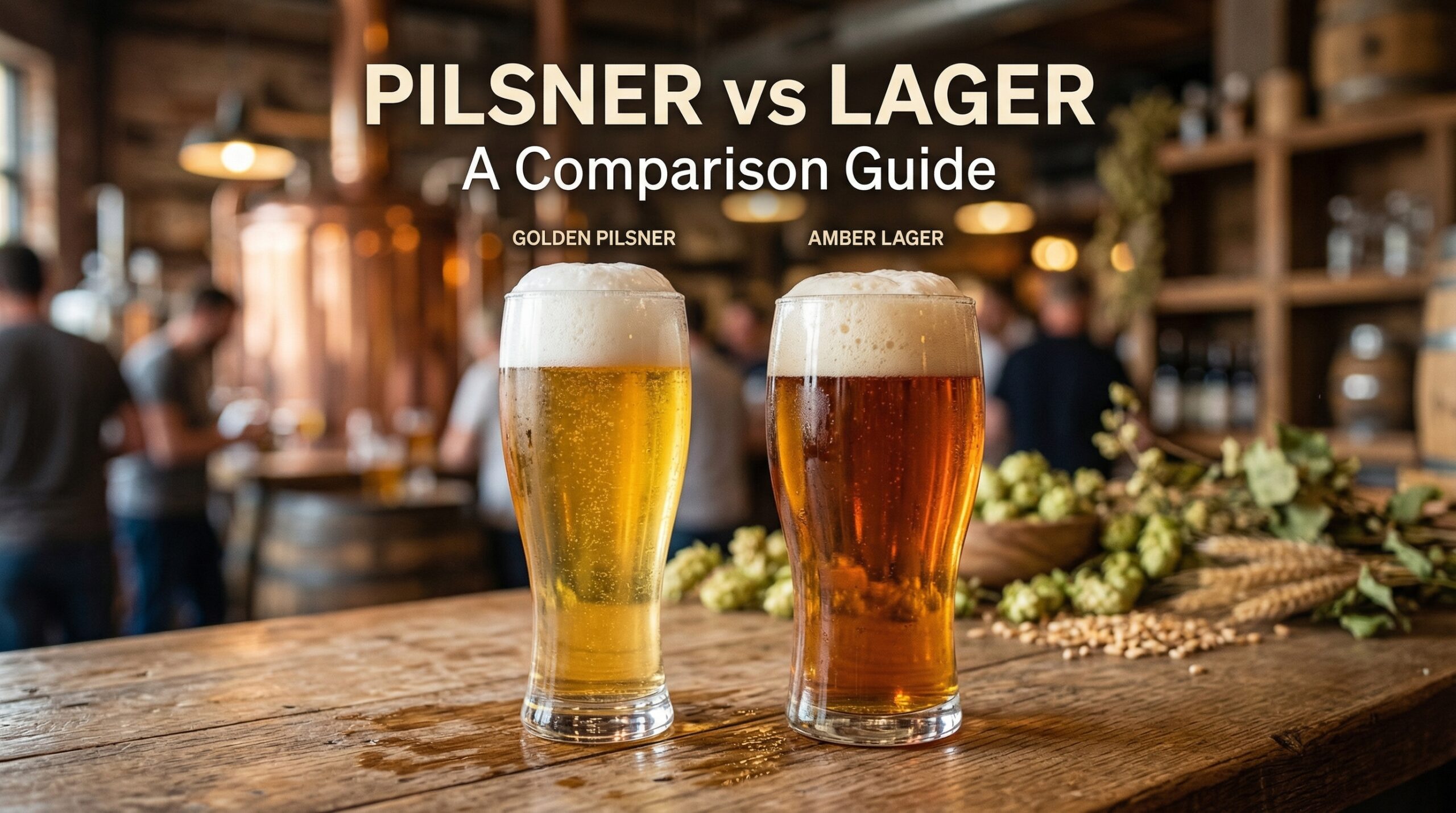
If you have ever wondered whether a pilsner is the same as a lager, you are not alone. The beer world can be confusing with its overlapping terminology, but here is the straightforward answer: No, a pilsner is not the same thing as a lager. A pilsner is actually a specific type of lager, which means all pilsners are lagers, but not all lagers are pilsners. Understanding this distinction can genuinely improve your beer experience when you are next at a bar or browsing a menu.
At our brewery’s approach to craft beer, we often get questions about beer styles. The confusion between pilsner and lager is one of the most common. This guide will break down exactly what makes each style unique, how they differ in flavor, and why it matters when you are choosing your next pint.
What Is a Lager?
A lager is a type of beer brewed with bottom-fermenting yeast (Saccharomyces pastorianus) at cold temperatures, typically between 45-55°F (7-13°C). The name “lager” comes from the German word “lagern,” meaning “to store,” because these beers undergo a long conditioning period at cold temperatures. This process, called lagering, can last weeks or even months, resulting in a clean, crisp finish that many beer lovers appreciate.
The fermentation characteristics of lager yeast produce fewer fruity esters and phenolic compounds compared to ale yeast. This means lagers tend to have a purer, more subtle malt character without the yeast-driven flavors you might find in ales. The result is a beer that often tastes “cleaner” and more refreshing, making lagers incredibly popular worldwide.
Lagers encompass a wide range of styles beyond just pale, light beers. Some popular types include:
- Bock – A strong, malty lager with rich bread and caramel flavors
- Helles – A Munich-style golden lager with a soft, honey-like malt sweetness
- Dunkel – A dark Munich lager with chocolate and toast notes
- Märzen – A copper-colored lager traditionally brewed for Oktoberfest
- Pale Lager – The everyday drinking beer, often with adjuncts like rice or corn
Many of the mass-market beers you see in convenience stores, like Budweiser, Coors, and Miller, are pale lagers. These are designed to be light, refreshing, and easy to drink rather than complex or challenging.
What Is a Pilsner?
A pilsner is a specific type of pale lager that originated in Plzen, Czech Republic, in the 1840s. What sets a pilsner apart from other lagers is its distinctive hop character and brewing technique. Traditional pilsners use noble hop varieties, particularly Saaz hops, which give the beer its signature spicy, floral aroma and notable bitterness.
The brewing process for a pilsner involves a careful balance of malt, hops, and water. Pilsner malt is typically lightly kilned to preserve the grain’s natural sweetness while achieving that characteristic bright golden color. The combination of generous hop additions and the long lagering process creates a beer that is both refreshing and flavorful, with a crisp finish that lingers.
There are several regional variations of pilsner style:
- Czech Pilsner (Bohemian Pilsner) – The original style, featuring a fuller body, more residual malt sweetness, and pronounced Saaz hop character
- German Pilsner – A drier, more bitter interpretation with lighter body and clean finish
- American Pilsner – Often uses domestic hop varieties while maintaining the pilsner structure
Key Differences Between Pilsner and Lager
The most important distinction is this: a pilsner is a style of lager, not a separate category of beer. Both use bottom-fermenting yeast and both undergo cold conditioning. However, pilsners are distinguished by their hop-forward character, pale golden color, and specific brewing traditions that emphasize noble hop varieties.
When we compare flavor profiles, the differences become clearer:
- Hop Character: Pilsners have noticeable hop bitterness and aroma, while standard lagers tend to be more malt-focused and subtle
- Color: Pilsners are typically bright golden, while lagers range from pale straw to dark brown
- Flavor Intensity: Pilsners offer more complexity and hop-driven flavors, while pale lagers prioritize drinkability over intensity
- Body: Pilsners usually have a medium body with a crisp finish, while some lager styles (like bock) are much heavier
The distinction matters because it affects what you can expect when you order. If you want something with real hop bite and aromatic complexity, look for a beer labeled “pilsner.” If you prefer something milder and more sessionable, a standard lager might be your preference.
Our organic brewing techniques we use often incorporate principles from both traditions, balancing the clean fermentation of traditional lagers with the hop character of pilsner styles.
Pilsner vs Lager: A Quick Comparison
| Characteristic | Pilsner | Lager |
|---|---|---|
| Origin | Plzen, Czech Republic (1840s) | Germany, popularized worldwide |
| Yeast Type | Bottom-fermenting (lager yeast) | Bottom-fermenting (lager yeast) |
| Color | Bright golden to pale | Pale straw to dark brown |
| Hop Character | Pronounced, spicy, floral | Subtle to moderate |
| Flavor Profile | Crisp, bitter finish, complex | Clean, malt-focused, refreshing |
| Popular Examples | Stella Artois, Weihenstephaner, Sierra Nevada | Budweiser, Heineken, Corona |
| ABV Range | 4.4% – 5.5% | 3.5% – 7% |
Common Questions About Pilsner and Lager
Is a pilsner the same thing as a lager?
No, a pilsner is not the same as a lager. A pilsner is a specific type of pale lager. All pilsners are lagers, but not all lagers are pilsners. The key difference is that pilsners have more pronounced hop character and bitterness compared to standard lagers.
Is Budweiser a pilsner or a lager?
Budweiser is a pale lager, not a pilsner. While it shares the bottom-fermenting yeast and cold conditioning of lagers, it does not have the hop character or brewing tradition of a true pilsner.
Is Modelo a pilsner or lager?
Modelo Especial is a Mexican pale lager. It is not technically a pilsner, though it shares some characteristics like the golden color and refreshing quality.
Is Stella Artois a lager or pilsner?
Stella Artois is technically a lager, but it is brewed in the Belgian pilsner tradition with noble Saaz hops. Many consider it a pilsner-style lager due to its hop character and brewing method.
Is pilsner better than lager?
Neither is objectively better. Pilsners offer more hop complexity and bitterness, while standard lagers provide a cleaner, more subtle drinking experience. The choice depends entirely on your flavor preferences.
Which beer is good for acid reflux?
Generally, lower-alcohol, less acidic beers are easier on acid reflux. Pale lagers like Corona or Heineken are often better tolerated than high-alcohol or highly hoppy beers. However, individual tolerances vary significantly.
Conclusion
Understanding the difference between pilsner and lager can genuinely enhance your beer knowledge and drinking experience. When you know that a pilsner is a type of lager with more pronounced hop character and a specific brewing tradition, you can make better choices when scanning a beer menu or visiting a brewery.
Whether you prefer the spicy, hop-forward complexity of a Czech pilsner or the clean, refreshing simplicity of a pale lager, both styles have their place in the beer world. The next time you are ordering a beer, use this knowledge to pick something that matches what you are actually craving. If you want bold hops, reach for a pilsner. If you want something easy-drinking and mild, a standard lager will serve you well.
Cheers to understanding what is in your glass.