The Sidecar recipe is one of those rare cocktails that feels like it was always there — polished, simple, and quietly perfect. It is tart enough to wake you up, smooth enough to sip slowly, and elegant enough to serve at any gathering without explanation. I have made hundreds of Sidecars over the years, tweaking ratios and swapping bottles, and I keep coming back to this drink.
In this guide, you will get the classic Sidecar recipe with exact measurements, step-by-step instructions, tips on balancing the sweet and sour, and a look at some great variations to try once you have the original dialed in.
What Is a Sidecar Cocktail?
A Sidecar is a classic sour cocktail built on three core ingredients: cognac, orange liqueur, and fresh lemon juice. It sits in the same family as the Margarita and the Cosmopolitan — drinks where a spirit meets citrus and sweetness in a careful balance.
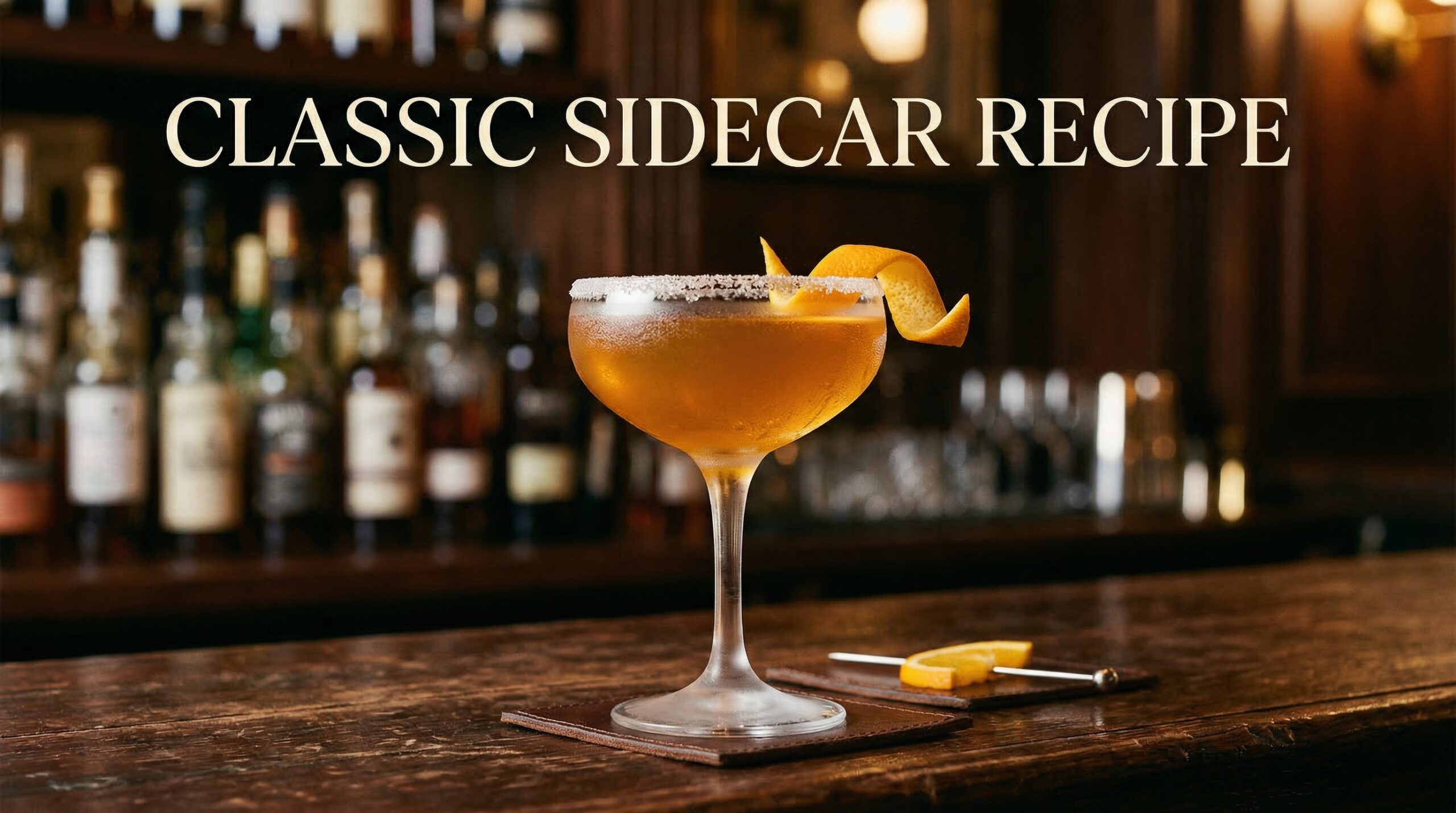
The flavor profile is spirit-forward but bright. You get the warmth and complexity of cognac up front, the candied orange notes of Cointreau in the middle, and a clean citrus finish from the lemon. The sugar rim adds a sweet counterpoint on each sip. The result is dry, sophisticated, and refreshing all at once — a genuinely balanced cocktail that rarely disappoints.
It is traditionally served in a chilled coupe glass, which keeps the drink cold without ice diluting the flavors. This is not a highball you nurse for an hour. It is a focused, well-constructed drink meant to be appreciated.
Sidecar Recipe: Ingredients
The classic Sidecar recipe calls for three main ingredients plus a sugar rim. Here is what you need to make one cocktail:
- 2 oz cognac (VS, VSOP, or XO — more on this below)
- 3/4 oz Cointreau (or another quality orange liqueur)
- 3/4 oz fresh lemon juice (freshly squeezed, never bottled)
- Sugar for the rim (optional but traditional)
- Orange twist for garnish
The 2:3/4:3/4 ratio is the standard starting point used by most classic cocktail guides. Some bartenders on Reddit’s r/cocktails swear by adding a small splash — around 1/4 oz — of simple syrup if the drink feels too sharp, especially if your lemon juice is particularly acidic that day.
The key is fresh lemon juice. Bottled juice makes a noticeably flat, slightly chemical-tasting Sidecar. Squeeze your lemons fresh before every batch — it takes 30 seconds and makes a real difference.
Glassware and Bar Tools
You do not need much to make a great Sidecar, but having the right tools helps you nail the technique consistently.
- Cocktail shaker (a cobbler or Boston shaker both work)
- Jigger for accurate measurements
- Hawthorne strainer if using a Boston shaker
- Coupe glass (chilled, ideally) — or a Nick and Nora glass as an alternative
- Small plate for the sugar rim
- Citrus juicer or reamer for fresh lemon juice
- Vegetable peeler or channel knife for the orange twist garnish
A coupe glass is the traditional choice. Its wide, shallow bowl shows off the cocktail’s amber color and allows the aroma to open up as you drink. A Nick and Nora glass is a slightly narrower option that works just as well and is easier to keep chilled.
How to Make a Classic Sidecar: Step-by-Step
Making a Sidecar takes about five minutes once your glass is prepped. Here is the complete process from start to finish:
Step 1: Chill your glass. Place your coupe in the freezer for at least 10 minutes, or fill it with ice water while you prepare the drink. A cold glass keeps the cocktail at the right temperature longer.
Step 2: Prepare the sugar rim. Run a lemon wedge around the outer edge of the glass rim. Pour a thin layer of granulated or superfine sugar onto a small plate. Gently press the moistened rim into the sugar, rotating to coat it evenly. Shake off any excess. Only coat the outside edge — if sugar falls inside the glass it will alter the drink’s balance.
Step 3: Add ice to your shaker. Fill a cocktail shaker about halfway with fresh ice. Using fresh ice — not watery, old ice from the bottom of the bin — gives you better dilution control and a colder shake.
Step 4: Measure and add the ingredients. Using a jigger, add 2 oz of cognac, 3/4 oz of Cointreau, and 3/4 oz of freshly squeezed lemon juice to the shaker. If you want to add a touch of simple syrup for balance, add 1/4 oz now.
Step 5: Shake hard for 10 to 15 seconds. You want the shaker to get very cold — almost painfully cold to hold. This tells you the drink is properly chilled and correctly diluted. Do not under-shake; the Sidecar needs that aeration to get the right texture.
Step 6: Discard the ice from your glass. If you used ice water to chill it, empty the glass and give it a quick shake to remove excess water.
Step 7: Strain into the prepared coupe. Using a Hawthorne strainer (or the built-in strainer on a cobbler shaker), strain the cocktail into the sugar-rimmed glass. Leave it neat — no ice in the glass.
Step 8: Add the garnish and serve. Express an orange peel over the surface of the drink by twisting it skin-side down over the glass to release the oils, then run the peel around the rim and drop it into the drink or balance it on the edge. Serve immediately.
Tips for the Perfect Sidecar
The classic Sidecar recipe is straightforward, but a few details separate a good one from a great one. These are the things I have learned from making them regularly and from reading through a lot of bartender discussions.
Getting the Sweet and Sour Balance Right
The single most common complaint I hear about Sidecars — and one that shows up repeatedly in cocktail forums — is that the drink comes out too acidic or too flat. The culprit is almost always the lemon juice.
Lemon juice varies in acidity day to day depending on the fruit. When you shake up a Sidecar and it tastes harsh and sharp, add a small amount of simple syrup — start with 1/4 oz — and taste again. The Cocktail Codex’s “Ideal Sidecar” actually uses a different ratio entirely: 1.5 oz Pierre Ferrand Ambré, 1 oz Cointreau, and 0.5 oz lemon juice. This leans sweeter and rounder, and many experienced home bartenders prefer it.
On the other end, if your Sidecar tastes flat or one-dimensional, your lemon juice may be too sweet (under-ripe lemons or older cut fruit) or your Cointreau proportion too high. Try bumping the lemon juice up by a quarter ounce and tasting again.
Keep a small notebook near your bar station. Jot down which ratio you used each time and how it tasted. After three or four Sidecars, you will know your preferred balance and can hit it every time.
Choosing the Best Cognac (and Substitutes)
Cognac is the soul of this drink, so the bottle you choose matters. A VS (Very Special) cognac is the minimum — it is young and slightly rougher, but absolutely usable. A VSOP (Very Superior Old Pale) is aged at least four years and brings a noticeably smoother, more complex flavor that makes the Sidecar taste more polished. An XO is exceptional but feels like overkill in a shaken drink where the lemon and liqueur are competing for attention.
Specific bottles that come up most often in bartender recommendations: Rémy Martin VSOP, Pierre Ferrand Ambré, Camus VSOP, and Hennessy VSOP. All of these work beautifully in a Sidecar. Rémy Martin VSOP tends to be the most accessible and consistent.
If you do not have cognac, Armagnac is the closest substitute — it is also French brandy but earthier and a bit wilder in character. American brandy or California brandy works in a pinch and gives the drink a slightly different but still enjoyable profile. Bourbon is a popular swap that creates a completely different drink (sometimes called a Bourbon Sidecar), which is excellent in its own right but no longer a traditional Sidecar.
Avoid very cheap grape brandy. The Sidecar is a simple three-ingredient cocktail, which means every ingredient is fully audible. A low-quality base spirit will show through clearly.
Sidecar Variations Worth Trying
Once you have the classic recipe down, exploring variations is half the fun. The Sidecar’s structure is flexible enough to absorb changes without falling apart.
French Sidecar. Uses Armagnac instead of Cognac. Armagnac is nuttier and more rustic than cognac, which gives the drink a slightly more complex, earthy edge. If you enjoy single malt Scotch for its character over smoothness, you will likely enjoy the French Sidecar.
Bourbon Sidecar. Swap the cognac for a high-rye bourbon. The vanilla and caramel notes from the barrel aging interact beautifully with the orange liqueur and lemon juice. This variation is approachable for people who find cognac intimidating and is a great gateway drink into the classic version.
White Sidecar. Replace the cognac with white rum or pisco. The result is lighter, more tropical, and notably brighter in color. It drinks almost like a Daiquiri with orange notes. A good choice for summer gatherings when something refreshing is called for.
Peach Sidecar. Add 1/2 oz of peach liqueur or peach schnapps alongside (or in place of) the Cointreau. The peach adds a soft, fruity sweetness that rounds out the tartness. This variation shows up in the related searches around the recipe and has a real following.
Skinny Sidecar. For those watching their sugar intake, skip the sugar rim, replace the Cointreau with a lower-sugar orange liqueur like Combier, and add just a few dashes of orange bitters for complexity. You lose some sweetness but keep the essential structure.
The History of the Sidecar Cocktail
The Sidecar’s exact origins are genuinely disputed, which is part of what makes it interesting. Two cities claim to have invented it: Paris and London.
The Paris story traces back to Harry’s New York Bar on the Rue Daunou, where an American Army captain reportedly arrived by motorcycle sidecar after World War I and ordered a drink that became the Sidecar. Harry MacElhone, who owned the bar and wrote “Harry’s ABC of Mixing Cocktails,” included the recipe in his 1922 book — one of the earliest documented appearances of the cocktail.
The London story credits Buck’s Club, a private members’ club, as the actual birthplace. Pat MacGarry, the head bartender there, is named in some sources as the creator. Robert Vermeire’s cocktail book from 1922 also lists the Sidecar recipe and attributes it to MacGarry.
Most cocktail historians believe the drink evolved from the Brandy Crusta, an older brandy-lemon-liqueur cocktail from New Orleans created by Joseph Santini in the 1850s. The Sidecar essentially stripped the Brandy Crusta down to its essentials and gave it a more direct, modern shape. The sugar rim, a defining characteristic of the Crusta, carried over.
As for the name — it almost certainly refers to the motorcycle sidecar attachment popular in the years just after World War I. The story of the Army captain is probably apocryphal, but the timing fits. The sidecar was a fashionable and recognizable piece of transport in 1920s Europe, and naming cocktails after transportation was a modest trend at the time.
By the 1930s, the Sidecar had spread internationally and appeared in most major cocktail books. It fell somewhat out of fashion during the mid-20th century when vodka-based drinks dominated, but the craft cocktail revival of the 2000s brought it back with considerable enthusiasm.
How to Serve a Sidecar
The Sidecar is most commonly served as an aperitif — a before-dinner drink meant to stimulate the appetite. Its balance of tart, sweet, and spirit-forward notes makes it an ideal starter cocktail that does not overwhelm the palate before a meal.
It also works well as a digestif after a rich dinner. The acidity and brandy base aid digestion, and the smaller serving size means it does not add excessive alcohol at the end of an evening. Cognac cocktails have a long history in this after-dinner role in French dining culture.
For food pairings, the Sidecar is especially good alongside soft cheeses, charcuterie, duck and other duck fat-cooked dishes, and dark chocolate. The citrus cuts through richness, and the cognac complements aged, savory flavors naturally.
Serve it at a dinner party as a signature welcome cocktail — it is simple enough to batch-prepare (mix the cognac, Cointreau, and lemon juice in a pitcher, refrigerate, and shake to order), elegant enough to impress, and familiar enough that most guests will recognize and appreciate it.
What are the ingredients in a Sidecar?
A classic Sidecar contains 2 oz cognac, 3/4 oz orange liqueur (typically Cointreau), and 3/4 oz fresh lemon juice. It is served in a sugar-rimmed coupe glass and garnished with an orange twist.
What is the best liquor for Sidecars?
Cognac is the traditional choice, and a VSOP expression gives the best results for the price. Rémy Martin VSOP, Pierre Ferrand Ambré, and Hennessy VSOP are frequently recommended by bartenders. If cognac is unavailable, Armagnac is the closest substitute and creates a slightly earthier, more rustic drink.
What is a good substitute for cognac in a Sidecar?
Armagnac is the best direct substitute. American brandy or California brandy also works well. Bourbon creates a popular variation called the Bourbon Sidecar. For a lighter version, pisco or aged rum can be used, though these produce a noticeably different flavor profile.
Why is it called a Sidecar?
The name most likely refers to the motorcycle sidecar attachment, which was a fashionable mode of transport in post-World War I Europe when the cocktail was invented. The most popular origin story involves an American Army captain arriving at Harry’s New York Bar in Paris by motorcycle sidecar, though this story is probably apocryphal. The timing of the name fits the post-WWI era perfectly.
Make Your Sidecar Tonight
The Sidecar recipe has survived more than a century because it works. Three ingredients, a sugar rim, a cold coupe, and five minutes of your time produce one of the most satisfying classic cocktails you can make at home.
Start with the standard ratio — 2 oz cognac, 3/4 oz Cointreau, 3/4 oz lemon juice — and adjust from there based on your own palate. Once you have your preferred balance locked in, this becomes a drink you can make confidently for guests or for a quiet evening at home. The Sidecar is proof that the best cocktails are usually the simplest ones.