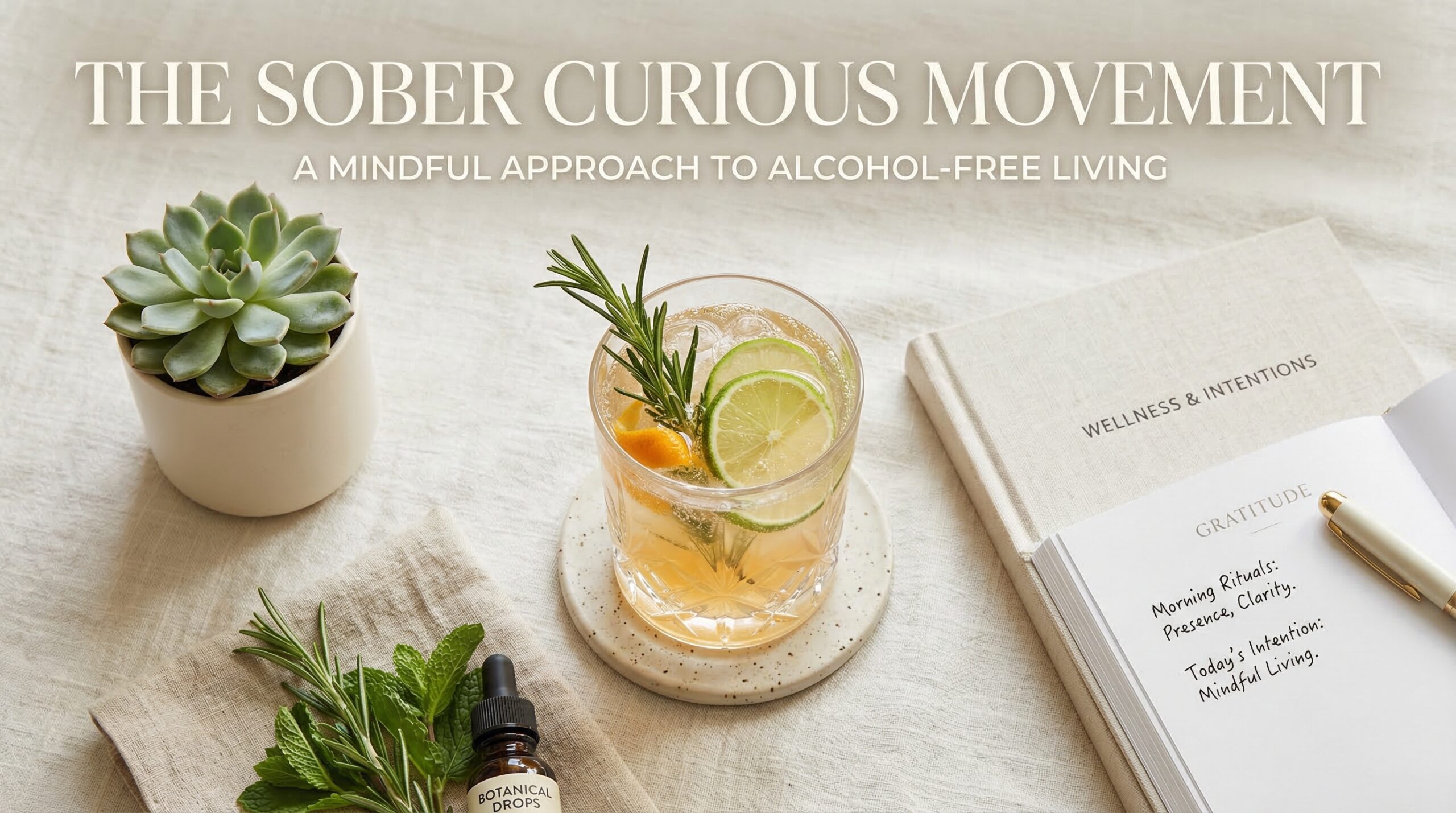
The sober curious movement is a lifestyle trend where people choose to examine, reduce, or eliminate their alcohol consumption as a wellness practice rather than a response to addiction. This approach emphasizes mindful drinking, intentional choices, and questioning the role alcohol plays in daily life without requiring complete abstinence or a diagnosis of alcohol use disorder.
Walk into any social gathering in 2026, and you might notice something different. More people are reaching for sparkling water, mocktails, or non-alcoholic beers without apology or explanation. This quiet revolution represents one of the most significant cultural shifts in how we think about drinking in decades.
The sober curious movement has transformed from a niche concept into a mainstream lifestyle choice embraced by millions. What started as small communities of people questioning their relationship with alcohol has evolved into a cultural phenomenon reshaping everything from social norms to the beverage industry itself.
In this comprehensive guide, we will explore what the sober curious movement really means, trace its origins, examine why it matters on both personal and societal levels, and provide practical guidance for anyone curious about exploring this lifestyle. Whether you are considering your first alcohol-free month or simply want to understand this growing trend, this article will give you the complete picture.
What Is the Sober Curious Movement?
At its core, being sober curious means approaching alcohol with intentionality rather than habit. It is about asking yourself honest questions: Why am I drinking right now? Do I actually want this drink, or am I doing it out of social obligation? How does alcohol make me feel, both immediately and in the days that follow?
The movement rejects the binary thinking that has long dominated conversations about alcohol. Traditionally, you were either a “normal” drinker or someone with a “problem” requiring treatment. The sober curious philosophy recognizes a vast middle ground where people can choose to reduce or eliminate alcohol for wellness reasons without labeling themselves as alcoholics or joining recovery programs.
This approach appeals particularly to health-conscious individuals who may not meet clinical criteria for alcohol use disorder but recognize that their drinking habits do not align with their wellness goals. They might experience hangxiety (anxiety after drinking), poor sleep quality, or simply notice that alcohol no longer serves the social lubricant function it once did.
The flexibility of the sober curious mindset is central to its appeal. Some practitioners commit to complete abstinence for defined periods like Dry January or Sober October. Others adopt permanent moderation strategies, drinking only on special occasions or limiting themselves to a specific number of drinks per week. The common thread is conscious choice rather than automatic behavior.
Demographically, this movement resonates most strongly with Millennials and Gen Z, though people of all ages participate. These younger generations came of age during a wellness boom that emphasized self-care, mindfulness, and holistic health. For many, alcohol consumption became another variable to optimize rather than an assumed part of adult life.
It is important to understand what the sober curious movement is not. This is not a recovery program, a twelve-step fellowship, or addiction treatment. While people with alcohol use disorders may find value in the community and resources surrounding the movement, the sober curious approach is designed for wellness-motivated lifestyle changes rather than addressing clinical addiction.
The language itself matters. Terms like “mindful drinking,” “alcohol-free lifestyle,” and “conscious consumption” frame this as a positive choice rather than a restriction imposed by circumstance. This reframing has helped destigmatize not drinking, making it easier for people to opt out without lengthy explanations or justifications.
Origins and History of the Movement
The term “sober curious” entered mainstream vocabulary largely through the work of British author Ruby Warrington. Her 2018 book “Sober Curious: The Blissful Sleep, Greater Focus, Limitless Presence, and Deep Connection Awaiting Us All on the Other Side of Alcohol” articulated what many had been feeling but lacked language to express.
Warrington described her own experience as someone who did not identify as an alcoholic but recognized that her relationship with alcohol was not serving her well. She coined “sober curious” to capture that liminal space of questioning, experimenting, and exploring sobriety without the commitment or stigma associated with traditional recovery.
The timing proved perfect. By the late 2010s, wellness culture had permeated mainstream consciousness. Yoga studios, meditation apps, organic food, and biohacking were no longer fringe interests but billion-dollar industries. Within this context, alcohol stood out as one of the few substances people regularly consumed without questioning its health impacts.
Dry January, a public health campaign that began in the United Kingdom in 2013, served as an important gateway for many into the sober curious lifestyle. The challenge offered a structured, time-limited opportunity to experience life without alcohol without making any permanent declarations. Participants often discovered unexpected benefits that extended beyond the month.
The movement gained additional momentum through social media. Instagram accounts, podcasts, and online communities created spaces where people could share experiences, recommendations for non-alcoholic beverages, and strategies for navigating social situations. This digital infrastructure made the lifestyle feel accessible and supported rather than isolating.
Celebrity endorsements accelerated mainstream acceptance. When influential figures openly discussed their decisions to reduce or eliminate alcohol, it normalized the conversation. What might once have been seen as an admission of a problem became reframed as a wellness choice worthy of respect.
By 2026, the sober curious movement has evolved from a curiosity-driven experiment to an established lifestyle category. Major publications cover it regularly, non-alcoholic beverage sections have expanded dramatically in stores, and restaurants increasingly offer sophisticated mocktail programs. What began as a question has become a cultural movement.
Why the Sober Curious Movement Matters
Societal and Cultural Impact
The significance of the sober curious movement extends far beyond individual health choices. This represents a fundamental shift in how our culture conceptualizes drinking, socialization, and wellness. For generations, alcohol has been woven into the fabric of social life so completely that choosing not to drink required justification.
This movement challenges that assumption at its core. By framing alcohol reduction as a positive lifestyle choice rather than a restriction, it reverses the social dynamic. Increasingly, the question becomes not “why aren’t you drinking?” but rather “why are you drinking?” The burden of explanation shifts from the non-drinker to the drinker.
The cultural implications are profound. Alcohol has long served as a universal social lubricant, a ritual that eases awkwardness and creates shared experience. When significant numbers of people opt out, it forces a reimagining of social structures. Events must accommodate non-drinkers meaningfully rather than simply offering them soda while everyone else enjoys carefully crafted cocktails.
We are witnessing the emergence of new social rituals. Morning dance parties, wellness-focused gatherings, and alcohol-free social spaces have proliferated. These alternatives do not merely substitute one beverage for another but reimagine what social connection can look like without chemical enhancement.
Gen Z’s Role as Primary Drivers
Generation Z deserves particular credit for accelerating this movement. Research consistently shows that this cohort drinks less than any previous generation at the same age. This is not simply delayed drinking that will catch up later; longitudinal studies suggest a genuine generational shift in attitudes toward alcohol.
Several factors explain Gen Z’s relationship with alcohol. This generation grew up with unprecedented access to information about health and wellness. They witnessed the consequences of excessive drinking in older siblings and parents. Social media also plays a role; the permanence of digital records makes public intoxication riskier than ever before.
Gen Z approaches alcohol with the same intentionality they bring to other consumption choices. They research ingredients, consider health impacts, and align their behavior with their values. For many, alcohol simply does not fit into the optimized lifestyle they are constructing.
What is Gen Z doing instead of alcohol? The alternatives are diverse and creative. Functional beverages containing adaptogens, nootropics, and botanicals offer sophisticated flavor profiles without intoxication. Mocktails have evolved from afterthoughts to精心crafted creations. Cannabis, where legal, provides alternative relaxation for some. Many simply prioritize experiences over substances, investing in travel, fitness, and creative pursuits.
The economic implications of Gen Z’s choices cannot be overstated. Beverage companies, restaurants, and entertainment venues must adapt to serve a generation that may never develop the drinking habits of their predecessors. This demographic shift is reshaping entire industries.
Economic Impact and Industry Transformation
The sober curious movement has spawned a booming non-alcoholic beverage industry. What was once a tiny category dominated by O’Doul’s and similar products has exploded into a multibillion-dollar market. Craft non-alcoholic breweries, sophisticated alcohol-free spirits, and premium mocktail ingredients now compete for shelf space and consumer attention.
Market data reveals the scale of this transformation. The global non-alcoholic beer market alone is projected to exceed forty billion dollars within the coming years. Growth rates far exceed those of traditional alcoholic beverages, signaling a fundamental shift in consumer preferences.
Major alcohol companies have taken notice. Anheuser-Busch, Diageo, and other industry giants have acquired or launched non-alcoholic brands, hedging their bets against a future where alcohol consumption continues to decline. This corporate validation further normalizes the alcohol-free choice.
The restaurant and hospitality industries have responded as well. Establishments that once offered a single token non-alcoholic option now feature extensive mocktail menus. Sommeliers trained exclusively in wine are expanding their expertise to include non-alcoholic pairings. The message is clear: non-drinkers represent a significant and growing market segment deserving of serious attention.
Beyond beverages, the movement has created demand for sober social experiences. Alcohol-free bars, daytime raves, wellness retreats, and adventure-based social activities have proliferated. Entrepreneurs recognize that people seeking connection without alcohol represent an underserved market.
Destigmatizing the Choice Not to Drink
Perhaps the most profound impact of the sober curious movement is its role in destigmatizing non-drinking. Historically, choosing not to drink carried significant social costs. Non-drinkers faced suspicion, pressure, and exclusion. Were they recovering alcoholics? Pregnant? Religious? The absence of a drink in hand demanded explanation.
The sober curious movement has reframed this narrative entirely. Not drinking is no longer automatically assumed to indicate a problem. It can simply mean prioritizing wellness, sleep, mental clarity, or any number of positive goals. This rebranding removes the shame that often surrounded choosing not to drink.
This destigmatization has ripple effects. People who might benefit from reducing alcohol but feared the social consequences now feel empowered to make changes. The availability of a vocabulary and community makes the lifestyle feel accessible rather than isolating.
The movement has also created space for honest conversations about alcohol that transcend the addiction framework. People can discuss their complicated relationships with drinking without self-identifying as alcoholics. This middle ground allows for exploration and change without the all-or-nothing thinking that has long dominated alcohol discussions.
Connection to Broader Wellness Trends
The sober curious movement does not exist in isolation. It connects to larger wellness trends including biohacking, mindfulness, intentional living, and holistic health. For many practitioners, reducing alcohol is one component of a broader lifestyle optimization strategy.
Biohackers interested in cognitive performance recognize alcohol as counterproductive to their goals. Mindfulness practitioners find that presence and awareness are difficult to maintain when drinking. Those focused on fitness and physical performance note that alcohol impairs recovery and sleep quality. The connections multiply across wellness domains.
This integration with broader wellness culture has amplified the movement’s reach. Someone who might not join a recovery program will enthusiastically participate in a wellness challenge that includes alcohol reduction. The framing matters enormously in attracting participants.
The movement also intersects with growing awareness of mental health. As society destigmatizes discussions of anxiety, depression, and emotional wellbeing, the role of alcohol in exacerbating these conditions has come under scrutiny. Many find that reducing alcohol significantly improves their mental health, creating positive feedback that reinforces the lifestyle change.
Health Benefits of the Sober Curious Lifestyle
The health benefits of reducing or eliminating alcohol are well-documented and substantial. While the sober curious movement is not primarily a health intervention, practitioners often report significant improvements across multiple dimensions of wellbeing.
Mental clarity ranks among the most commonly reported benefits. Alcohol impairs cognitive function both acutely and chronically. Regular drinkers often do not realize how much brain fog they carry until they experience extended periods of sobriety. Many sober curious practitioners report improved focus, better decision-making, and enhanced creativity.
Sleep quality improves dramatically for most people who reduce alcohol. While alcohol can help people fall asleep initially, it disrupts sleep architecture, reducing restorative deep sleep and REM cycles. This results in waking feeling unrefreshed even after adequate hours. Without alcohol, sleep becomes more efficient and restorative.
Physical health benefits extend beyond sleep. Alcohol consumption is associated with increased risk of numerous conditions including liver disease, certain cancers, cardiovascular problems, and weakened immune function. Even moderate drinking carries health risks that many people prefer to avoid.
Weight management often becomes easier without alcohol. Alcoholic beverages are calorie-dense while providing minimal nutritional value. Additionally, alcohol lowers inhibitions around food choices, often leading to late-night eating or poor nutritional decisions. Removing these calories can facilitate weight loss or maintenance.
Financial savings represent an often unexpected benefit. Alcohol is expensive, particularly when purchased at bars and restaurants. A regular drinking habit can cost hundreds of dollars monthly. Eliminating or reducing this expense frees resources for other priorities.
Social and emotional benefits extend beyond physical health. Many practitioners report being more present in social situations without alcohol. They remember conversations fully, form deeper connections, and avoid the regret that sometimes follows intoxicated behavior. Relationships often improve as a result.
Energy levels typically increase without alcohol. The body no longer needs to metabolize a toxin, and improved sleep quality means more restorative rest. Many sober curious individuals find they have energy for activities that previously felt overwhelming.
How to Start Your Sober Curious Journey
Beginning a sober curious lifestyle does not require dramatic declarations or permanent commitments. The flexibility that defines this movement means you can experiment at your own pace, finding an approach that works for your life and goals.
Step one involves honest self-reflection. Examine your current drinking patterns without judgment. When do you drink? Why do you drink? How does alcohol make you feel during and after consumption? This awareness forms the foundation for intentional change.
Step two requires defining your goals. Are you curious about complete abstinence for a defined period? Do you want to reduce frequency? Eliminate weeknight drinking? Only drink on special occasions? Your goals will shape your strategy, and they can evolve over time.
Step three involves preparing alternatives. What will you drink instead of alcohol? Fortunately, options have never been better. If you enjoy the craft and complexity of alcoholic beverages, explore the best non-alcoholic beers now available. Many craft breweries produce NA versions of their flagship beers that rival their alcoholic counterparts in flavor and complexity.
Step four requires communicating your intentions. You do not need to justify your choice to anyone, but informing close friends and family can help them support your efforts. A simple statement that you are taking a break from alcohol or drinking less is usually sufficient.
Step five involves building new routines. If drinking was associated with specific activities or times of day, create alternative practices. Replace the evening wine with herbal tea. Swap the post-work cocktail for a walk or workout. New habits require conscious construction initially.
For your first thirty days, consider these practical strategies. Start with a defined challenge period like Dry January or Sober October, or simply choose your own timeframe. Track your experiences in a journal, noting both challenges and benefits. This documentation helps maintain motivation and reveals patterns.
Build a toolkit of responses for social situations. Practice saying “no thanks, I’m taking a break from alcohol” until it feels natural. Have a non-alcoholic drink in hand to avoid offers. Arrive early to events before heavy drinking begins, or plan to leave before you feel uncomfortable.
Connect with community. Online forums, social media groups, and local meetups provide support from others on similar journeys. Sharing experiences normalizes the challenges and celebrates the victories. You are not alone in this exploration.
Common Challenges and How to Overcome Them
Social pressure represents the most frequently cited challenge for those exploring sobriety curiosity. Friends who do not understand your choice may tease, cajole, or outright pressure you to drink. This behavior often stems from their own discomfort with your decision rather than genuine concern for your wellbeing.
Strategies for handling peer pressure include having prepared responses that feel authentic to you. “I’m doing a health challenge” works well for temporary breaks. “I just feel better without it” is honest and difficult to argue with. For persistent pressure, a firm “no thanks, I’m good” repeated as necessary eventually communicates that the topic is closed.
Dating while sober curious presents unique challenges. Alcohol has been central to courtship rituals for centuries, and many people feel anxious about first dates or social events without the confidence boost that drinking provides. Consider suggesting daytime dates centered around activities rather than evening drinks. Coffee, hiking, or museum visits create connection opportunities without alcohol.
Workplace culture often revolves around alcohol. Happy hours, client dinners, and professional networking events frequently include drinking as an assumed activity. Remember that many successful professionals do not drink for various reasons. Order a non-alcoholic beverage, focus on the conversation and connection, and recognize that your choices about alcohol do not diminish your professional capabilities.
Fear of missing out, or FOMO, can be intense initially. Seeing friends’ social media posts featuring alcohol or feeling excluded from drunk conversations can trigger doubt. Remind yourself that you are not missing anything meaningful. Drunk conversations are rarely as profound as they seem in the moment, and you can fully participate in social events while sober.
Cravings and habit triggers require attention. If you typically drink in specific contexts, those contexts will initially trigger urges. Identify your triggers and prepare alternative responses. Stress might previously have been managed with a drink; now you might take a walk, practice breathing exercises, or call a friend.
Sober Curious vs. Traditional Recovery: Understanding the Difference
Distinguishing the sober curious movement from addiction recovery is essential for appropriate expectations and safety. While both involve reducing or eliminating alcohol, they serve different populations with different needs.
Traditional recovery programs like Alcoholics Anonymous are designed for people with alcohol use disorder, a clinical condition characterized by compulsive drinking despite negative consequences. These programs typically emphasize complete abstinence, work with sponsors, and ongoing commitment to recovery practices.
The sober curious movement serves people who may not have alcohol use disorder but wish to change their relationship with alcohol for wellness, lifestyle, or personal reasons. The approach is flexible, non-prescriptive, and does not require identifying as an alcoholic or committing to lifetime abstinence.
However, this distinction requires important caveats. If you experience withdrawal symptoms when you stop drinking, find yourself unable to control your consumption once you start, or continue drinking despite serious negative consequences to your health, relationships, or life circumstances, professional help is appropriate regardless of whether you identify with the sober curious movement.
Warning signs of alcohol use disorder include drinking more or longer than intended, unsuccessful attempts to cut down, spending significant time obtaining, using, or recovering from alcohol, craving alcohol strongly, failing to fulfill obligations due to drinking, continuing to drink despite interpersonal problems, giving up important activities because of alcohol, drinking in dangerous situations, developing tolerance, and experiencing withdrawal symptoms.
If these symptoms sound familiar, please consult a healthcare provider or addiction specialist. The sober curious movement is not a substitute for professional treatment when clinical intervention is needed. Many resources exist to support those with alcohol use disorders, and seeking help is a sign of strength rather than weakness.
Frequently Asked Questions About the Sober Curious Movement
What does sober curious mean?
Sober curious means choosing to examine, reduce, or eliminate alcohol consumption as a wellness practice. It involves questioning your relationship with alcohol and making intentional choices about drinking rather than consuming alcohol automatically or out of habit.
How often do you drink if you’re sober curious?
There is no set rule for how often sober curious individuals drink. Some practice complete abstinence for defined periods, others drink only on special occasions, and some simply reduce their overall consumption. The approach is flexible and personalized to individual goals.
What is Gen Z doing instead of alcohol?
Gen Z is turning to functional beverages with adaptogens and nootropics, sophisticated mocktails, cannabis where legal, and experience-focused activities like fitness, travel, and creative pursuits. Many prioritize mental clarity and wellness over intoxication.
How do I start being sober curious?
Start by honestly examining your current drinking patterns and motivations. Set clear goals for what you want to change. Stock up on appealing non-alcoholic alternatives. Communicate your intentions to supportive friends. Begin with a defined trial period like thirty days to experience the benefits firsthand.
Is sober curious the same as sobriety?
No, sober curious is not the same as traditional sobriety or recovery. Sobriety typically refers to complete abstinence, often in the context of recovering from alcohol use disorder. Sober curious is a flexible, wellness-focused approach to examining and potentially reducing alcohol without requiring clinical addiction or lifetime abstinence.
When did the sober curious movement start?
The movement began gaining momentum in the late 2010s, particularly after Ruby Warrington published her book ‘Sober Curious’ in 2018. However, the term and concept evolved from earlier wellness trends, Dry January challenges, and growing interest in mindful drinking that developed throughout the decade.
Conclusion
The sober curious movement represents more than a wellness trend. It reflects a fundamental cultural shift in how we think about alcohol, socialization, and intentional living. By destigmatizing the choice not to drink and providing a flexible framework for change, this movement has empowered millions to examine their relationship with alcohol without shame or rigid categories.
Whether you are curious about a thirty-day challenge, seeking sustainable moderation, or simply want to understand this cultural phenomenon, the sober curious movement offers valuable perspectives. The choice to reduce or eliminate alcohol is increasingly recognized as a positive lifestyle decision rather than a restriction imposed by circumstance.
As this movement continues to reshape social norms, beverage industries, and wellness culture, one thing remains clear: questioning our relationship with alcohol is no longer unusual. It is becoming the new normal. The sober curious movement matters because it gives us permission to prioritize our wellbeing, make intentional choices, and imagine new possibilities for social connection and personal fulfillment.