
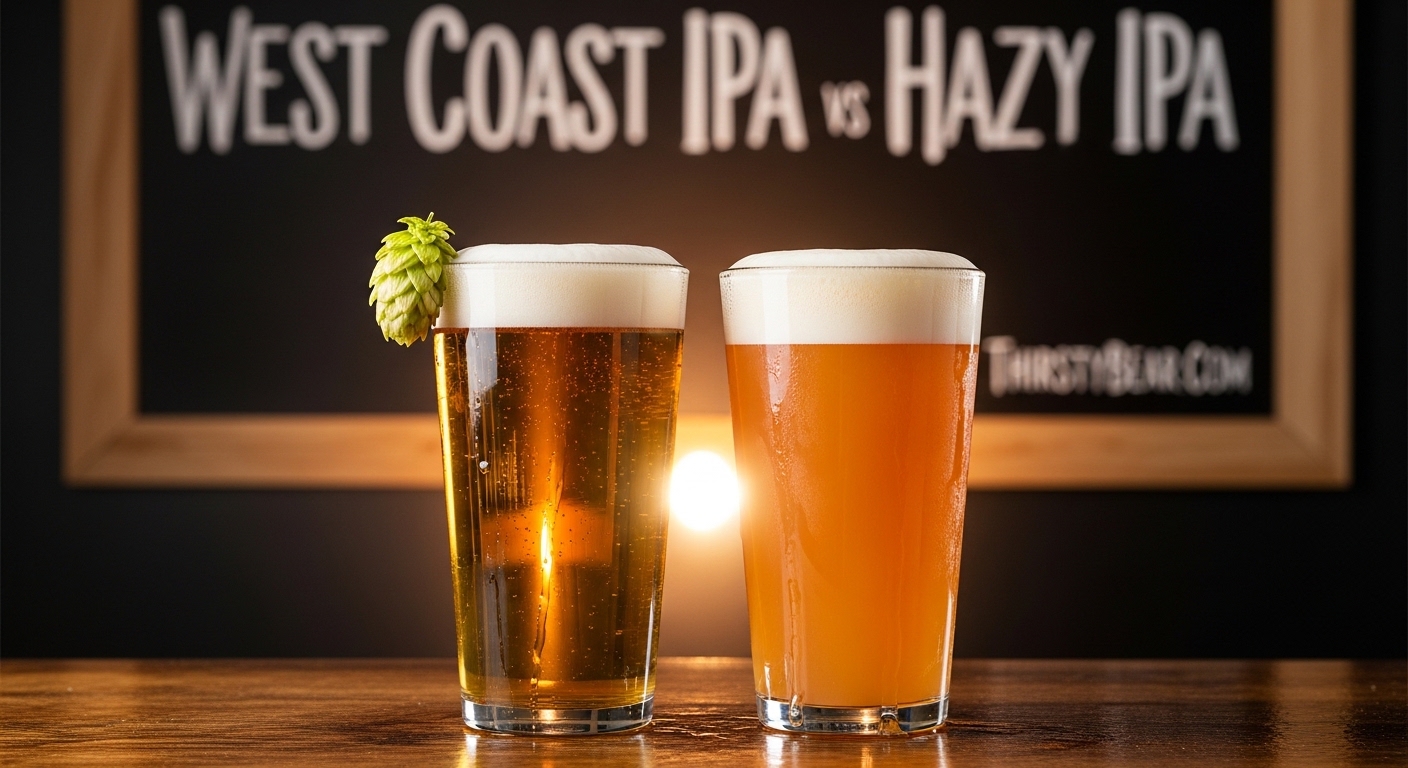
If you have walked into any craft brewery in recent years, you have probably noticed two styles dominating the tap list: West Coast IPA and Hazy IPA. Both are hop-forward beers, yet they taste remarkably different. This guide breaks down everything you need to know about West Coast IPA vs Hazy IPA so you can decide which one belongs in your glass.
We will compare appearance, flavor, bitterness, mouthfeel, and brewing techniques. By the end, you will know exactly what sets these two styles apart and which one might be your new favorite. Whether you are a craft beer beginner or a seasoned hophead, this comparison will help you navigate the IPA landscape with confidence.
Table of Contents
What Is a West Coast IPA?
A West Coast IPA is a hop-forward beer known for its crystal clear appearance, bold bitterness, and piney-citrusy flavor profile. This style emerged from California breweries in the 1980s and 1990s, riding the wave of the craft beer revolution that swept the United States.
The defining characteristics of a West Coast IPA include high International Bitterness Units (IBUs), a dry finish, and aggressive hop character. Brewers achieve this style by adding hops throughout the brewing process, particularly during the boil, where bittering compounds extract efficiently into the wort.
Classic hop varieties used in West Coast IPAs include Cascade, Centennial, Chinook, and Simcoe. These varieties contribute notes of pine, resin, grapefruit, and floral aromatics. The result is a beer that is assertive, refreshing, and meant to be savored slowly.
What Is a Hazy IPA?
A Hazy IPA (also called New England IPA) is an opaque, juicy beer with low bitterness and pronounced tropical fruit flavors. This style originated in Vermont in the early 2010s and quickly spread across the country, changing the IPA landscape forever.
The haze in these beers comes from proteins, beta-glucans, and hop compounds that remain suspended in the liquid. This turbidity is intentional and indicates a properly crafted Hazy IPA, not a flaw. The style prioritizes aroma and flavor over bitterness.
Popular hop varieties for Hazy IPAs include Citra, Mosaic, Sabro, and El Dorado. These hops deliver flavors of mango, passion fruit, peach, and citrus without the bitter bite. Oats and wheat frequently appear in the grain bill, adding body and contributing to the smooth, velvety mouthfeel that defines the style.
Appearance: Clear vs Cloudy
The most obvious difference between these two styles is their appearance. A West Coast IPA is crystal clear, often sparkles under light, and pours with a thin white head. A Hazy IPA looks like orange juice in a glass, completely opaque from edge to edge.
West Coast brewers intentionally filter and fine their beers to achieve clarity. They use clarifying agents like isinglass or PVPP to remove suspended particles. This clarity is considered a mark of quality in traditional IPA brewing.
Hazy IPA brewers embrace the cloudiness deliberately. They skip filtration entirely and often add ingredients like oats, wheat, and raw grains to boost protein content. The result is a stable haze that does not settle, even after weeks in the keg. Some haze is also contributed by dry-hopping techniques that introduce hop particles into suspension.
Flavor and Aroma Comparison
West Coast IPA flavors center on pine, resin, grapefruit, and caramel malt backbone. The bitterness is front and center, providing a crisp, drying finish that makes you reach for another sip. You will notice less fruit character and more earthiness compared to Hazy IPAs.
Hazy IPA flavors are dominated by tropical fruit, citrus, and stone fruit. Notes of mango, passion fruit, peach, and apricot dominate. The bitterness is subdued, allowing the juicy hop flavors to shine without interruption. Many drinkers describe Hazy IPAs as tasting like fruit juice with beer underneath.
The aroma differences are equally dramatic. West Coast IPAs smell like a pine forest with citrus accents. Hazy IPAs smell like a tropical fruit basket, often with coconut or stone fruit nuances depending on the hop bill.
Bitterness Levels
West Coast IPAs are significantly more bitter than Hazy IPAs. IBUs in West Coast styles typically range from 50 to 80, sometimes higher. The bitterness is derived from alpha acids added during the boil, which extract efficiently at high temperatures.
Hazy IPAs usually fall in the 20 to 40 IBU range, sometimes lower. The perception of bitterness is further muted by the smooth, full body and residual sweetness from the grain bill. Drinkers who find traditional IPAs too bitter often gravitate toward Hazy styles.
Perceived bitterness in Hazy IPA is also affected by the smooth, coating mouthfeel. The same IBU level would taste more bitter in a thin, dry West Coast IPA than in a velvety Hazy. This is why Hazy IPAs feel more approachable to craft beer newcomers.
Mouthfeel and Body
West Coast IPAs have a medium to medium-light body with a dry, crisp finish. The carbonation is usually moderate to high, creating a refreshing, effervescent quality. The dryness at the end cleans the palate, preparing you for another sip.
Hazy IPAs feel thick, velvety, and almost creamy in the mouth. Oats and wheat contribute dextrins and proteins that add body and smoothness. The carbonation is often lower, creating a softer mouthfeel. Many people describe drinking a Hazy IPA as similar to sipping a smoothie.
The sessionability factor favors different styles depending on your preference. West Coast IPAs are more refreshing at 6 to 7 percent ABV, making them easier to drink multiple pints. Hazy IPAs often clock in at 7 to 8 percent ABV with a heavier body, so they feel more filling per serving.
Brewing Technique Differences
Hop Addition Timing
West Coast IPA brewers add hops throughout the process. A significant portion of bitterness comes from kettle additions early in the boil. Late-boil and whirlpool additions contribute some flavor and aroma, but bittering remains a primary goal.
Hazy IPA brewers minimize kettle additions and focus almost entirely on post-fermentation hops. Most flavor and aroma come from whirlpool additions (after the boil but before cooling) and massive dry-hop charges. This technique extracts aromatic oils without excessive bittering compounds.
Dry-Hop Process
West Coast IPAs typically receive 1 to 2 pounds of hops per barrel (PPB) during dry-hopping. Hazy IPAs often receive 3 to 6 PPB or more. The large dry-hop charge is partly responsible for the intense aroma and flavor in Hazy styles.
Hazy IPA brewers also use techniques like biotransformation, adding hops during active fermentation so yeast enzymes can modify hop compounds into new aromatic molecules. West Coast brewers rarely employ this technique, preferring to preserve the bittering character.
The Science Behind the Haze
The haze in Hazy IPAs comes from protein-tannin complexes that form during fermentation. Oats and wheat contribute beta-glucans that increase viscosity and help suspend hop particles. Some brewers add small amounts of raw grain or skip filtration entirely to preserve the cloudiness.
West Coast brewers take the opposite approach. They use fining agents to precipitate proteins and tannins, then filter to remove haze precursors. The result is a beer that looks as clear as distilled water but loses some hop character in the process.
Modern brewers have created hybrid styles that blend these approaches. West Coast Haze IPAs use Hazy techniques but with more bittering hops, creating something in between the two traditional styles.
Food Pairing Recommendations
West Coast IPAs pair exceptionally well with bold, fatty, and spicy foods. The high bitterness cuts through rich dishes like BBQ ribs, bacon-wrapped anything, and creamy pasta. Spicy Thai or Mexican food benefits from the refreshing quality of a bitter West Coast IPA.
The citrus and pine notes in West Coast IPA also complement seafood, particularly grilled fish with lemon and herbs. The dryness helps reset your palate between bites, allowing you to experience each component of a complex dish.
Hazy IPAs shine with fruity, sweet, and umami-rich foods. The tropical hop character complements dishes like coconut shrimp, mango salsa, and glazed ham. The smooth mouthfeel handles spicy food without overwhelming the palate, making Hazy IPAs a versatile pairing choice.
Cheese pairings differ too. West Coast IPAs pair with aged cheddar, gouda, and blue cheese due to their sharpness and bitterness. Hazy IPAs work better with brie, camembert, and fresh goat cheese, matching the creamy texture and fruity notes.
Modern Evolution and Hybrid Styles
The beer world never stands still. Many breweries now produce West Coast IPAs that borrow Hazy techniques, adding more late-hop character while maintaining higher bitterness. These beers offer a middle ground for drinkers who want both the juicy aroma of Hazy and the bitter backbone of West Coast.
The Hazy style continues to evolve as well. Some brewers are pushing for cleaner, less turbid versions while others embrace extreme haze. New hop varieties like Strata, Idaho 7, and Cashmere offer unique aromatic profiles that expand what Hazy IPAs can taste like.
If you are new to IPAs, trying both styles side by side is the best way to understand the difference. Visit a brewery that offers a flight or growler fill of each style. You might find you prefer one, or you might appreciate what each brings to the table. There is no objectively better style, only what works for your palate.
Conclusion
West Coast IPA vs Hazy IPA comes down to two fundamentally different approaches to hop-forward beer. West Coast IPAs deliver bold bitterness, piney-citrus aromatics, and a dry finish in a crystal clear package. Hazy IPAs offer juicy tropical fruit flavors, smooth mouthfeel, and low bitterness in an opaque, velvety pour.
Neither style is objectively superior. Your preference depends on what you value in a beer. If you enjoy crisp, bitter beers that refresh the palate, West Coast IPA is your style. If you prefer smooth, fruity beers that feel like drinking a tropical smoothie, Hazy IPA will satisfy your cravings.
The good news is that you do not have to choose just one. Many craft breweries, including our brewery’s IPA offerings, produce both styles so you can compare them directly. The craft beer revolution gave us options, and that is worth celebrating. If you are exploring non-alcoholic options, check out our non-alcoholic beer alternatives guide for more choices.
What is the difference between hazy and West Coast IPA?
West Coast IPAs are crystal clear with high bitterness and piney-citrus flavors. Hazy IPAs are opaque with low bitterness and tropical fruit flavors. West Coast uses more kettle hop additions for bitterness, while Hazy relies on post-fermentation hops for aroma.
Are west coast IPAs more bitter?
Yes, West Coast IPAs are significantly more bitter. They typically range from 50-80 IBUs, while Hazy IPAs usually fall between 20-40 IBUs. The smooth, velvety mouthfeel of Hazy IPAs also mutes perceived bitterness compared to the dry finish of West Coast IPAs.
Can West Coast IPAs be hazy?
Traditional West Coast IPAs are crystal clear, but modern hybrid styles sometimes blend techniques. Some breweries produce West Coast Haze IPAs that use Hazy brewing methods while maintaining higher bitterness. However, a truly traditional West Coast IPA should be clear.
What does a Hazy IPA taste like?
Hazy IPAs taste like tropical fruit juice with beer underneath. Common flavors include mango, passion fruit, peach, and citrus. The bitterness is low, and the mouthfeel is smooth and velvety from oats and wheat in the grain bill.
Which IPA is better for beginners?
Hazy IPA is generally better for beginners due to its lower bitterness and fruit-forward flavors. It feels more approachable than the assertive bitterness of West Coast IPA. However, some beginners prefer the refreshing, crisp character of West Coast IPAs.