
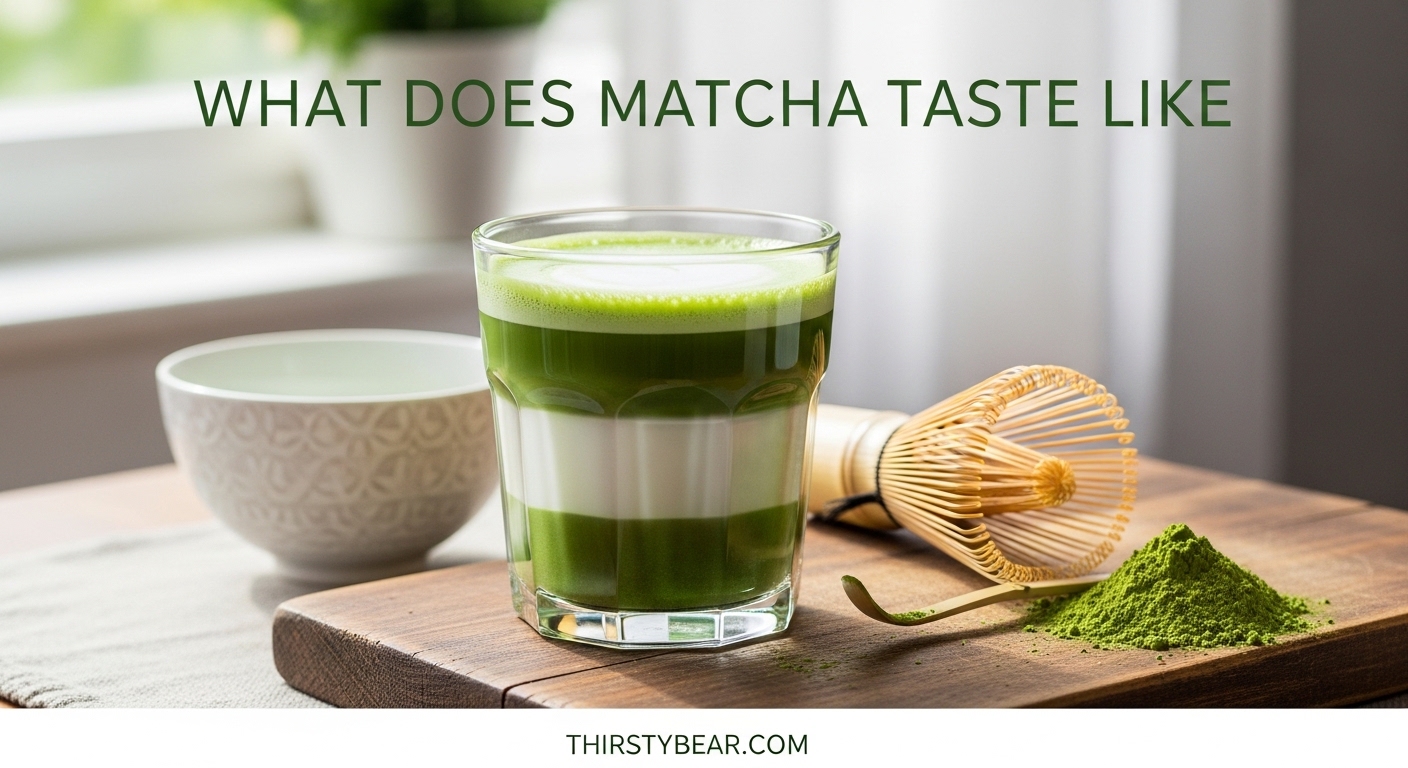
Matcha tastes like a harmonious blend of savory umami, fresh vegetal notes, and gentle sweetness with pleasant bitter undertones. The flavor is often described as earthy and grassy, similar to steamed spinach or nori seaweed, but with a creamy, full-bodied mouthfeel that sets it apart from regular green tea.
I remember my first cup of matcha vividly. I was expecting something like the green tea I had grown up drinking, but instead I got this intense, almost soup-like beverage that made me pause. It was not love at first sip for me. But after learning how quality, preparation, and personal taste buds all play a role, I discovered what makes matcha one of the most complex and rewarding beverages in the world.
In this guide, I will walk you through exactly what to expect when you try matcha for the first time. Whether you are curious about the flavor profile, wondering why your matcha tastes bitter, or trying to understand what the fuss is about, I have got you covered.
What Is Matcha
Before diving into taste, let me clarify what matcha actually is. Matcha is a finely ground powder made from specially grown and processed green tea leaves. Unlike regular green tea where you steep the leaves and discard them, with matcha you whisk the powder directly into water and consume the entire leaf.
This fundamental difference is why matcha tastes so much more intense than brewed green tea. You are getting 100% of the leaf, including all the chlorophyll, amino acids, and compounds that create its distinctive flavor. The tea plants are shade-grown for 3-4 weeks before harvest, which increases chlorophyll production and boosts amino acid content, particularly L-theanine.
After harvesting, the leaves are steamed, dried, and slowly stone-ground into an ultra-fine powder. This labor-intensive process preserves the delicate flavors and contributes to matcha signature taste profile.
What Does Matcha Taste Like
The short answer: matcha tastes like a concentrated, creamy green tea with savory, vegetal, and slightly sweet notes. But that barely scratches the surface of this complex flavor profile.
High-quality matcha delivers a multi-dimensional tasting experience that evolves as you sip. The initial taste hits with umami, followed by fresh vegetal notes, then finishes with subtle sweetness and minimal bitterness. Poor quality matcha, on the other hand, can taste harsh, overly bitter, or even fishy.
Let me break down the key flavor components that make matcha unique.
Umami: The Savory Foundation
Umami is the fifth taste, alongside sweet, sour, salty, and bitter. It is that savory, mouth-filling sensation you get from foods like parmesan cheese, mushrooms, and broth. Matcha is particularly rich in umami, which comes from its high concentration of amino acids, especially L-theanine.
The shade-growing process is what creates this umami intensity. When tea plants are covered from direct sunlight before harvest, they produce more chlorophyll and amino acids to survive. This translates into a rich, savory taste that makes quality matcha almost soup-like in its depth.
When you taste good matcha, you will notice this savory quality immediately. It coats your tongue and creates a satisfying, full-bodied sensation that lingers pleasantly after each sip.
Vegetal and Grassy Notes
Matcha undeniably tastes green. Not just the color, but the flavor of fresh, living plants. This vegetal character comes from the high chlorophyll content in the shade-grown leaves.
Think of the smell of fresh-cut grass on a spring morning, or the taste of steamed spinach, or the briny freshness of nori seaweed. Matcha captures that essence in liquid form. Some people describe it as tasting like fresh peas, young asparagus, or even wet grass after rain.
This vegetal quality is what puts some first-time drinkers off. Our Western palates are not always accustomed to such pronounced green flavors in beverages. But this same characteristic is what matcha enthusiasts crave, it is the taste of vitality and freshness.
Bitterness and Sweetness Balance
Quality matcha should have minimal bitterness. The sweetness comes from the natural compounds in the tea leaves, particularly the amino acids that develop during shade growing.
However, matcha does contain catechins, which are antioxidants that can taste bitter. The balance between these compounds and the amino acids determines how bitter or sweet your matcha tastes. High-grade ceremonial matcha has been carefully cultivated and processed to maximize sweetness while minimizing harsh bitterness.
You might also notice a slight astringency, a dry, puckering sensation on your tongue similar to what you get from red wine or strong black tea. This is natural and actually part of matcha refreshing quality. In good matcha, it is gentle and pleasant rather than harsh.
Matcha Texture and Mouthfeel
Taste is not just about flavor, texture plays a huge role in the matcha experience. Properly prepared matcha has a creamy, almost velvety mouthfeel that is utterly unlike any other tea.
When whisked correctly with a bamboo chasen, matcha develops a thick, frothy layer on top. This foam is not just for aesthetics, it contributes to the creamy texture that makes matcha so satisfying to drink. The tiny bubbles create a lightness that balances the intensity of the flavor.
The texture should be smooth, not gritty. If your matcha feels grainy or sandy, either the powder quality is poor or it was not sifted properly before whisking. High-quality matcha is ground so fine that it suspends evenly in water, creating a silky consistency.
This creamy mouthfeel is why matcha works so beautifully in lattes. The natural texture of the tea blends seamlessly with milk to create a rich, indulgent drink that still carries all those complex green tea flavors.
How Quality Affects Matcha Taste
Here is something I learned the hard way: not all matcha tastes the same. In fact, the difference between high-quality and low-quality matcha is like the difference between fresh-squeezed orange juice and instant drink mix.
Quality affects everything from flavor intensity to texture to aftertaste. Understanding the different grades helps you know what to expect and ensures you do not judge all matcha by one bad experience.
Ceremonial Grade Matcha
Ceremonial grade is the highest quality matcha, made from the youngest, most tender leaves picked during the first harvest of spring. These leaves have been shaded the longest and contain the highest concentration of amino acids.
The taste is remarkably smooth, with pronounced umami and minimal bitterness. It is naturally sweet, vegetal but not harsh, and has a creamy mouthfeel that coats your palate. This is the matcha used in Japanese tea ceremonies, intended to be drunk straight with just hot water.
If you have tried matcha once and hated it, chances are you did not start with ceremonial grade. This is the grade that converts skeptics into enthusiasts.
Latte Grade Matcha
Latte grade, sometimes called premium grade, sits between ceremonial and culinary quality. It still uses quality leaves but may include slightly older leaves or later harvests.
The flavor is bolder and more robust than ceremonial grade, with a pleasant bitterness that stands up well to milk and sweeteners. It is designed specifically for mixed drinks like lattes, where the milk softens any harsh edges.
This is an excellent entry point for beginners who want to try matcha in a more familiar format. The milk adds creaminess while the matcha provides that distinctive green flavor and caffeine boost.
Culinary Grade Matcha
Culinary grade matcha is made from older leaves, later harvests, or leaves that were not shaded as long. It has a stronger, more astringent flavor that works well in cooking and baking where it needs to compete with other ingredients.
Drank straight, culinary grade can taste quite bitter and harsh. It lacks the smooth sweetness and creamy texture of higher grades. While perfectly fine for adding to smoothies, baked goods, or recipes, it is not the best choice for traditional preparation.
Unfortunately, many people first encounter matcha through culinary grade products or pre-made drinks using lower quality powder, which leads to the misconception that matcha always tastes bitter and unpleasant.
Signs of Good vs Bad Matcha
Color is your first quality indicator. High-quality matcha should be a vibrant, bright green, almost electric in its intensity. This comes from the high chlorophyll content. Dull, olive, or yellowish-green matcha indicates older leaves or poor storage.
Freshness matters enormously. Matcha begins oxidizing as soon as it is exposed to air, light, and heat. Fresh matcha smells grassy and slightly sweet. Stale matcha smells flat or slightly fishy, which is a definite red flag.
Origin also affects quality. Japanese matcha, particularly from regions like Uji in Kyoto, is generally considered the gold standard. The climate, soil, and centuries of cultivation expertise create superior flavor profiles.
What Does Matcha Taste Like Compared to Other Foods
Sometimes the best way to describe a new taste is through comparison. Here is how matcha stacks up against flavors you might already know.
Comparisons to Vegetables
The most common comparison is to steamed spinach or other leafy greens. Matcha shares that same fresh, slightly earthy vegetable quality. Some people say it tastes like asparagus, particularly the tender young shoots.
Nori seaweed is another excellent comparison. If you have ever eaten sushi wrapped in nori, you know that briny, ocean-fresh, vegetable taste. Matcha has similar marine notes without the saltiness.
Fresh peas and edamame also come close to matcha flavor profile, that sweet, green, slightly nutty taste of young legumes. Matcha is like the distilled essence of spring vegetables in beverage form.
Matcha vs Regular Green Tea
While both come from the same plant, Camellia sinensis, matcha and regular green tea taste quite different. Green tea is subtle, light, and refreshing. Matcha is intense, bold, and complex.
Think of it like the difference between eating an orange and drinking orange juice concentrate. Both taste like orange, but one is diluted and gentle while the other is concentrated and powerful.
Regular green tea is steeped and the leaves are removed, so you get a milder extraction of flavor compounds. Matcha uses the entire leaf ground into powder, so you get the full spectrum of taste in every sip.
Starbucks Matcha vs Traditional
If your only matcha experience comes from coffee shop chains, you have not tasted authentic matcha. Most commercial matcha drinks are loaded with sugar, milk, and flavorings that completely mask the true taste of the tea.
A typical Starbucks matcha latte contains more sugar than matcha powder. What you are tasting is primarily sweetened milk with a hint of green tea flavor. Traditional matcha, especially ceremonial grade, has no added sugar and tastes nothing like these commercial versions.
This is important to understand because many people think they like matcha when they actually like sweetened green tea flavored milk. Real matcha is an acquired taste that offers far more complexity and depth.
How Preparation Affects Matcha Taste
Even the highest quality matcha can taste terrible if prepared wrong. Preparation technique significantly impacts flavor, texture, and overall enjoyment.
Water temperature is critical. Use water that is too hot, above 175°F, and you will scorch the delicate powder, bringing out harsh bitterness. The ideal temperature is around 160-170°F, hot enough to extract flavor but gentle enough to preserve sweetness.
The whisking technique matters for texture. Using a traditional bamboo whisk, chasen, and whisking in a W or M motion creates that desirable frothy layer. This aerates the tea and gives it the creamy mouthfeel that makes matcha so distinctive.
Matcha to water ratio determines intensity. Traditional preparation uses about 1 gram of matcha to 2 ounces of water for a thick, espresso-like consistency. For a lighter tea, use more water. Experiment to find your preference.
Always sift your matcha before whisking. Clumps of powder will not dissolve properly and create a gritty texture. A fine mesh sieve or specialized matcha sifter makes a noticeable difference in smoothness.
Tips for Learning to Love Matcha
Let me be honest: matcha is an acquired taste. Many people, myself included, do not love it on the first try. But with the right approach, you can develop an appreciation for this complex beverage.
Start with quality. Do not judge matcha by a cheap culinary grade powder. Invest in a small tin of ceremonial grade from a reputable Japanese source. The difference is night and day.
Try it as a latte first. Adding milk and a touch of honey can make matcha more approachable while you get used to the vegetal flavor. As your palate adjusts, you can gradually reduce the milk and sweetener.
Pay attention to preparation. Follow proper techniques for water temperature, whisking, and ratios. Poor preparation can make even great matcha taste bitter and unpleasant.
Give it three tries. Our taste buds adapt to new flavors over time. What tastes strange on day one might taste delicious by day three. Approach matcha with curiosity rather than expectation.
Consider the experience. Matcha is not just about taste, it is about the ritual, the caffeine boost, the health benefits, and the moment of calm it brings. Sometimes the whole experience makes the flavor more enjoyable.
Frequently Asked Questions
What is matcha flavor similar to?
Matcha flavor is most similar to steamed spinach, fresh asparagus, or nori seaweed. It has a vegetal, grassy quality with savory umami notes and a creamy texture. Some people also compare it to fresh peas or edamame.
Is matcha supposed to taste like grass?
Yes, matcha naturally has grassy, vegetal notes due to its high chlorophyll content from shade-grown tea leaves. However, good quality matcha should not taste like lawn clippings. Instead, it tastes like fresh, sweet grass with savory umami and minimal bitterness.
Why does my matcha taste bitter?
Bitter matcha usually indicates either low quality powder, water that is too hot, or improper preparation. High-quality ceremonial grade matcha should have minimal bitterness. Try using water at 160-170°F instead of boiling, and make sure you are whisking thoroughly to avoid clumps.
Does matcha taste good with milk?
Yes, matcha pairs beautifully with milk. The creaminess of milk softens matcha vegetal notes and creates a smooth, comforting beverage. Many people find matcha lattes more approachable than traditional preparation, making them an excellent entry point for beginners.
Is matcha an acquired taste?
Yes, matcha is definitely an acquired taste for many people, especially those new to Japanese green tea. The intense vegetal flavor and umami notes can be surprising at first. Most people find their appreciation for matcha grows with repeated exposure and by starting with higher quality ceremonial grade.
What does matcha do to your body?
Matcha provides a calm, focused energy boost due to its unique combination of caffeine and L-theanine. The caffeine gives you alertness while the L-theanine promotes relaxation without drowsiness. Matcha is also rich in antioxidants called catechins, particularly EGCG.
Final Thoughts on What Matcha Tastes Like
So what does matcha taste like? It tastes like concentrated green vitality, savory and sweet, earthy and fresh, creamy and complex. It is a flavor that demands attention and rewards curiosity.
If you are new to matcha, I encourage you to approach it with an open mind and quality ingredients. Start with ceremonial grade from a reputable Japanese source. Prepare it carefully with the right water temperature and proper whisking technique.
Your first sip might surprise you. It might even disappoint you. But give it time, give it three tries, and you might just find yourself joining the ranks of matcha enthusiasts who start each morning with that vibrant green elixir.
The taste of matcha is unlike anything else in the beverage world. It is worth experiencing for yourself.