
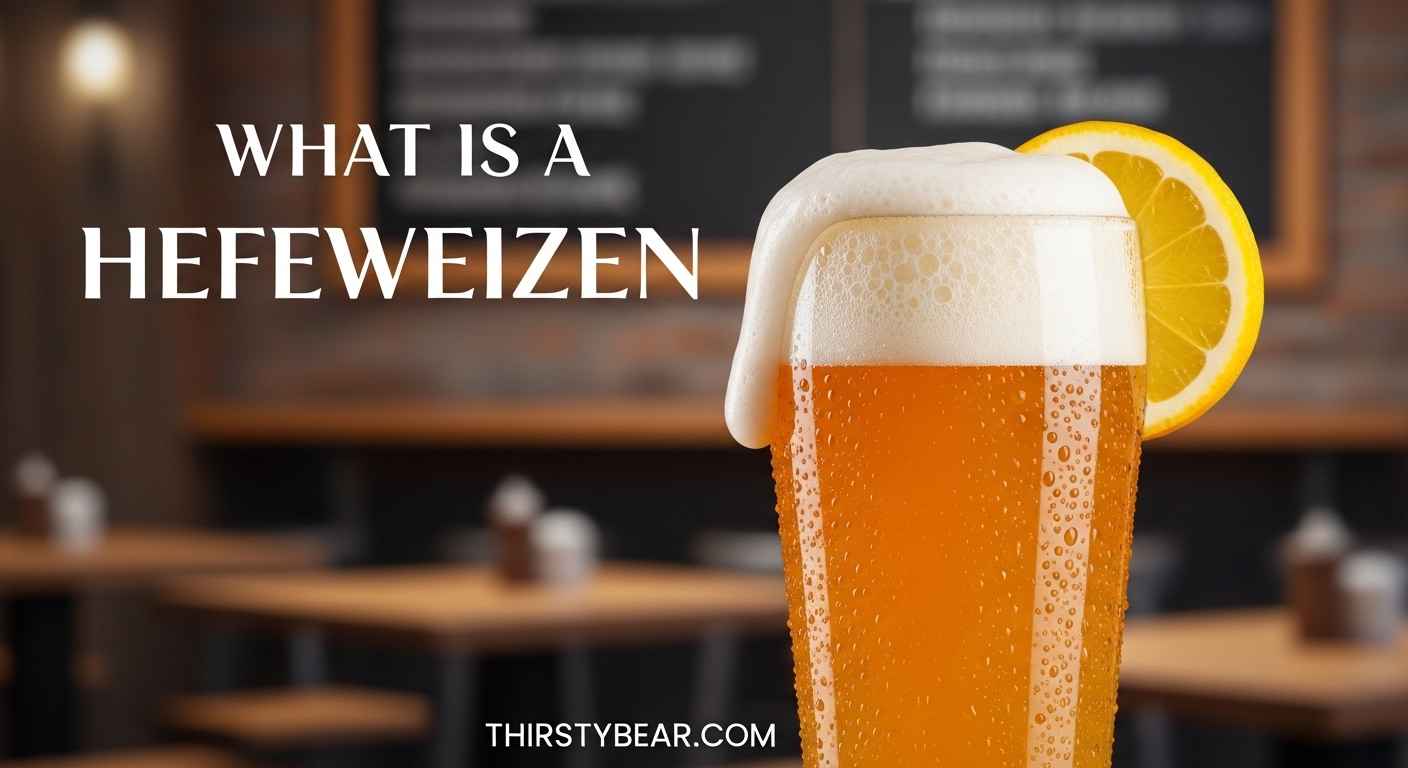
If you have ever found yourself staring at a beer menu wondering what exactly a Hefeweizen is, you are not alone. This traditional German wheat beer has been confusing and delighting drinkers for centuries, and it deserves a proper introduction.
Hefeweizen is a traditional, unfiltered Bavarian wheat beer. The name comes from German: “hefe” means yeast and “weizen” means wheat. Unlike most beers you will find on tap, Hefeweizen stays deliberately cloudy because it is never filtered, leaving the yeast suspended in the liquid.
Our team has spent years exploring beer styles across Europe and America. We have tasted authentic Hefeweizen in Bavarian breweries and wondered why American versions often miss the mark. This guide covers everything you need to know about this unique style, from its centuries-old origins to how you should serve it at home.
Table of Contents
History and Origins of Hefeweizen
Hefeweizen traces its roots back to Bavaria in the 1520s. The Dukes of Degenberg held an exclusive privilege to brew wheat beer in the region, a right that dated back even earlier. For generations, wheat beer was considered a noble drink, reserved for royalty and the wealthy. This early exclusivity helped establish wheat beer as something special, different from everyday barley ales.
The Reinheitsgebot, Bavaria’s famous beer purity law enacted in 1516, actually worked against wheat beer initially. This law stated that beer could only be made from barley, water, and hops. Wheat beer survived only because the Degenberg family’s special exemption allowed them to continue brewing their signature style. Without this royal patronage, wheat beer might have disappeared entirely from German brewing.
When the Degenberg line died out in 1803, the Wittelsbach family (the Bavarian royal family) took over wheat beer production. They eventually opened the Weihenstephan Brewery in 1040, which is still operating today and is recognized as the world’s oldest operating brewery. The brewery’s location in Freising, just outside Munich, has been making beer continuously for nearly a millennium. Their Weihenstephaner Hefeweissbier is considered the gold standard against which all other versions are measured.
By the mid-1800s, wheat beer had become more widely available throughout Bavaria as the purity laws relaxed somewhat regarding wheat content. Brewers began experimenting more freely, and the style developed its modern characteristics during this period. The distinctive banana and clove flavors that define the style today emerged through careful selection of yeast strains over generations of brewing.
Hefeweizen made its journey to America in the 1980s. The Widmer Brothers brewery in Portland, Oregon pioneered the American version in 1986. Their “Hefe” style caught on quickly, though beer enthusiasts often argue that American versions never quite match the complexity of traditional German offerings. The American interpretation tends to be less yeasty and sometimes showcases more citrus notes from different hop varieties.
Today, several American craft breweries produce excellent Hefeweizen-style beers. Sierra Nevada Kellerweis has become widely available and respected. Live Oak, Dovetail, Urban Chestnut Schnickelfritz, and Tröegs DreamWeaver have built loyal followings among beer enthusiasts who appreciate the style. These breweries demonstrate that American brewers can indeed capture the essence of Bavarian wheat beer when they pay close attention to yeast selection and brewing technique.
What Does a Hefeweizen Taste Like
The flavor profile of a Hefeweizen is unlike any other beer style. You will immediately notice dominant banana notes alongside spicy clove flavors. These characteristics come from the yeast used during fermentation, not from adding any fruits or spices to the brew. The banana is not added as fruit but emerges naturally from the yeast’s metabolic processes during fermentation.
Beyond banana and clove, you might detect bubblegum sweetness and hints of vanilla. Some versions show subtle black pepper sensations at the back of the throat. The overall impression is one of fruity, spicy complexity wrapped in a light, refreshing package. These layered flavors develop at different stages of the drinking experience, revealing new nuances as the beer warms slightly in your glass.
These flavors are called esters and phenols, produced naturally by the Bavarian yeast strain during fermentation. At cooler fermentation temperatures (around 64-68°F), the yeast produces more banana esters. Warmer fermentation (70-75°F) pushes the yeast toward more clove and pepper phenols. Master brewers carefully control this balance to achieve their desired flavor profile, understanding that small temperature adjustments can significantly alter the final character of the beer.
Unlike hop-forward beers, Hefeweizen offers very little bitterness. The noble hops used (typically Hallertau or Tettnang) provide only subtle earthy notes that support rather than dominate the yeast character. The wheat itself adds a slightly bready, grainy undertone that complements the fruity yeast character and provides a solid foundation for the ester forward flavors.
The finish of a well-made Hefeweizen is typically crisp and clean with minimal lingering bitterness. You might notice a subtle sweetness that fades quickly, leaving you ready for another sip. This dryness makes the beer incredibly sessionable, meaning you can enjoy several pints without feeling weighed down by heavy malt character or overwhelming alcohol warmth.
How Hefeweizen Is Brewed
True Hefeweizen must contain at least 50% wheat malt, with most traditional recipes using between 60-70%. This high wheat content distinguishes it from standard ales and lagers, which typically use only barley. The wheat gives the beer its characteristic light body and contributes to that signature hazy appearance. Without sufficient wheat content, the beer simply cannot achieve the style’s distinctive character.
The Bavarian yeast strain is absolutely critical to this style. Unlike American ale yeasts, these specialized strains produce the distinctive banana, clove, and bubblegum compounds. Professional brewers call these strains “weizen yeast” and treat them with particular care because they behave differently from standard brewing yeast. The yeast itself is the soul of the beer, responsible for transforming simple grain sugars into a complex tapestry of aromatic compounds.
Mash temperatures for Hefeweizen typically run around 152-158°F. Higher temperatures extract more proteins from the grain, which helps create and maintain that thick, persistent foam head. The high protein content also contributes to the mouthfeel and helps the beer feel fuller despite its light body. This protein head retention is one of the style’s most visually distinctive characteristics.
Noble hops like Hallertau, Tettnang, or Perle provide the bittering balance. These hops are added sparingly because the style should not be hop-forward. The traditional approach limits hopping to around 15-20 IBUs, allowing the yeast character to take center stage. This restraint reflects the Bavarian brewing philosophy that prioritizes balance and drinkability over aggressive hop presence.
The brewing process for Hefeweizen often includes a step called “protein rest” during mashing, where the temperature is held around 122-131°F for 20-30 minutes. This rest helps break down proteins and beta-glucans from the wheat, improving head retention and clarity eventually. While some modern brewers skip this step, traditional breweries maintain it as essential to achieving authentic Hefeweizen character.
If you want to learn more about hop varieties and their role in brewing, check out our beer styles and brewing basics guide. Understanding how different ingredients interact helps you appreciate why Hefeweizen tastes the way it does and what to look for when selecting a bottle or pint.
Appearance and How to Serve Hefeweizen
The most striking feature of a Hefeweizen is its appearance. It pours a cloudy, hazy golden color that almost looks like orange juice. This haze comes from yeast cells that remain in suspension throughout the beer. Filtering would remove this cloudiness, but traditional Hefeweizen is never filtered. The cloudiness is not a flaw but a defining characteristic that signals authenticity and proper brewing technique.
A properly poured Hefeweizen should have a thick, billowing white head that sticks around for several minutes. This head forms because of the high protein content from the wheat malt. If you pour it correctly down the center of a tall glass, you will get that characteristic fluffy head that seems to float above the liquid like a cloud. Pouring too hard or at an angle creates excessive foam, while pouring too gently fails to develop the proper head.
Traditional weizen glasses are curved and tall, designed to showcase the cloudy appearance and support the large head. These glasses typically hold 16-20 ounces and narrow toward the top to concentrate the aroma. The shape also helps maintain the head by providing a rough surface for the foam to cling to. Some enthusiasts insist that drinking from the correct glass genuinely improves the flavor experience.
Serving temperature makes a significant difference in how Hefeweizen tastes. Serve at 45-50°F, which is cooler than room temperature but not ice cold. At this temperature, the banana and fruit flavors are most pronounced and the beer feels most refreshing. Too cold and the flavors become muted, hiding the delicate yeast characteristics that define the style. Too warm and the alcohol presence becomes more noticeable while the fruity esters seem to fade.
Freshness absolutely matters with Hefeweizen. The delicate yeast character fades rapidly after packaging. For the best experience, drink within three months of the brewing date. After six months, the beer loses much of its signature fruitiness and begins tasting stale or cardboard-like. This freshness requirement is one reason why Hefeweizen is best enjoyed fresh from the brewery or from retailers with high inventory turnover.
When selecting Hefeweizen at a store or bar, check the bottling date if possible. Many German breweries print the production date directly on the bottle rather than just an expiration date. Bottle conditioned versions (those that referment in the bottle) often develop more complex fruit flavors and a bigger mouthfeel over time, though they still should not be aged beyond three months for optimal flavor.
Hefeweizen Food Pairings
Hefeweizen is one of the most food-friendly beer styles available. Its light body, minimal bitterness, and fruity yeast character make it incredibly versatile at the table. The style works especially well with foods that might be overwhelmed by heavier beers. This versatility stems from the beer’s balanced character and refreshing nature, which cleanses the palate without attacking it.
Seafood is a natural match. Shrimp, crab, light fish dishes, and oysters all pair beautifully with Hefeweizen. The beer acts as a palate cleanser that refreshes your mouth between bites. If you enjoy sushi or raw bars, Hefeweizen should be your go-to choice. The carbonation helps lift away fish oils and reset your palate for the next bite, while the citrus notes complement delicate seafood flavors.
German cuisine fits perfectly, of course. Sausages, schnitzel, pretzels, and sauerkraut all complement the style. The bread-like quality of the beer echoes the grain notes in German bread dishes. Poultry and light pork preparations also work well. The light body of Hefeweizen means it does not compete with the subtle flavors of well-prepared meat dishes.
Salads and vegetarian dishes pair nicely because the beer does not overpower delicate vegetables. Try it with chicken Caesar salad, grilled chicken, or vegetable stir-fry. The carbonation helps cut through creamy sauces while the fruity yeast notes add interest. Even light pasta dishes with olive oil or butter sauces work well with this beer style.
The refreshing quality that makes Hefeweizen a great summer beer also helps it work as a palate cleanser during meals. It can stand in for wine in many pairing scenarios, particularly with seafood or light dishes. This versatility is one reason why the style has remained popular for centuries and why it appears on restaurant menus around the world.
Cheese pairings also work well with Hefeweizen. Young, soft cheeses like Brie, Camembert, and goat cheese complement the beer’s fruity character. The yeast notes in the beer can mirror similar flavors in the cheese, creating a harmonious pairing that highlights both the beer and the cheese simultaneously.
Hefeweizen vs Other Wheat Beers
Many people confuse Hefeweizen with Belgian witbier, but they are distinctly different styles. Hefeweizen uses Bavarian yeast and typically shows more banana and clove character. Witbier uses Belgian yeast and often includes orange peel and coriander, giving it a spicier, more citrusy profile. The historical development of each style reflects the unique brewing traditions of their respective regions.
Berliner Weisse is another German wheat beer, but it is fermented to be sour rather than fruity. This style is often served with fruit syrup to balance its sharp acidity. Hefeweizen, by contrast, is not sour at all and showcases the yeast’s fruity esters. The sourness in Berliner Weisse comes from a different fermentation process involving lactic acid bacteria, making it an entirely different drinking experience.
Filtered Weissbier represents the same base recipe as Hefeweizen, but with one crucial difference: it has been filtered to remove the yeast. The result is a clearer beer with a slightly lighter body. Some breweries produce both versions, labeling the filtered one as “Kristallweizen.” The flavor profile remains similar, but the mouthfeel and appearance differ noticeably.
Weizenbock is a stronger version of Hefeweizen, typically reaching 7-8% ABV compared to the standard 4-5% range. The higher alcohol content comes from additional brewing steps that concentrate the wort. Weizenbock often shows more complex, wine-like flavors alongside the standard banana and clove notes, making it better suited for cooler weather drinking.
As for Blue Moon, it is not a true Hefeweizen despite sharing some characteristics. Blue Moon is a Belgian-style white ale brewed with Valencia orange peel and coriander. While it is cloudy like Hefeweizen, the citrus additions and Belgian yeast give it a different flavor profile. It is inspired by witbier rather than traditional Bavarian wheat beer, reflecting the American interpretation of Belgian brewing traditions.
If you want to explore more German wheat beer styles, there are several regional variations worth discovering. Each has its own character while sharing the wheat-forward base that defines this category. German brewing traditions vary significantly from region to region, with Bavarian wheat beers representing just one approach among many.
Top Hefeweizen Brands to Try
Several German breweries produce exceptional examples of this style that are widely available internationally. Weihenstephaner Hefeweissbier remains the benchmark against which all others are measured. Brewed at the world’s oldest operating brewery, it showcases the perfect balance of banana, clove, and vanilla with a creamy mouthfeel that demonstrates what traditional technique can achieve.
Schneider Weisse also ranks among the finest examples, offering a slightly more aggressive yeast character than some competitors. Their Weizenbock version is particularly impressive if you want to explore the stronger end of the spectrum. Schneider’s long history and commitment to traditional methods have earned them a devoted following among beer enthusiasts worldwide.
Paulaner Hefeweizen represents a more accessible entry point to the style without sacrificing quality. It shows the classic banana and clove profile in a clean, refreshing package that works well as an introduction to the style. Paulaner also offers a Kristallweizen version for those who prefer a filtered beer.
Ayinger Weizenbock demonstrates how the stronger version of this style can develop remarkable complexity. The higher alcohol content brings additional warming sensation alongside deeper fruit and malt flavors. This beer is best enjoyed slowly, allowing time to appreciate how the flavors evolve as it warms in your glass.
Homebrewing Hefeweizen Tips
Homebrewing Hefeweizen presents unique challenges compared to other ale styles. The key is obtaining a proper Bavarian wheat yeast strain, which can be sourced from several specialty yeast labs. Standardale yeast will not produce the characteristic banana and clove flavors that define the style, so investing in quality yeast is essential.
Fermentation temperature control is critical for achieving the right flavor balance. Ferment at 64-68°F if you want more banana character, or push to 70-75°F for more clove and pepper notes. Many homebrewers struggle with temperature control during summer months, making this a challenging style to brew in hot climates without proper cooling equipment.
Use at least 50% wheat malt in your grist, though 60-70% is more traditional. Wheat malt is more difficult to mash than barley malt and tends to produce sticky runoff. Be prepared to adjust your lauter technique accordingly and consider adding rice hulls to improve runoff if needed.
The high protein content of wheat malt contributes to excellent head formation but can also cause issues with clarity. Do not be alarmed by the hazy appearance in primary fermentation; this is expected and desired. Bottle conditioning can continue to develop the yeast character for several weeks after packaging.
Frequently Asked Questions
What kind of beer is a Hefeweizen?
Is Blue Moon a Hefeweizen beer?
What does a Hefeweizen taste like?
What beer is good for acid reflux?
Can you age Hefeweizen?
Is Hefeweizen the same as Weissbier?
Conclusion
Hefeweizen represents one of the most distinctive and historically rich beer styles in the world. Its cloudy appearance, fruity yeast character, and refreshing light body set it apart from virtually every other beer style. The next time you see a Hefeweizen on tap, you will know exactly what makes it special and can appreciate the centuries of tradition that went into crafting it.
The style has survived for nearly 500 years because it genuinely tastes wonderful. Whether you are drinking an authentic German version from Weihenstephaner or Schneider, or exploring American craft options like Sierra Nevada Kellerweis, the banana and clove character should shine through clearly. Each brewery puts its own slight interpretation on the style while maintaining the essential character that defines Hefeweizen.
Remember to drink Hefeweizen fresh, serve it in the right glass, and give it a chance to open up at the proper temperature. This is a beer that rewards attention to detail. For those interested in exploring beyond traditional styles, some breweries even offer non-alcoholic Hefeweizen options that capture the essence of the style without the alcohol.