
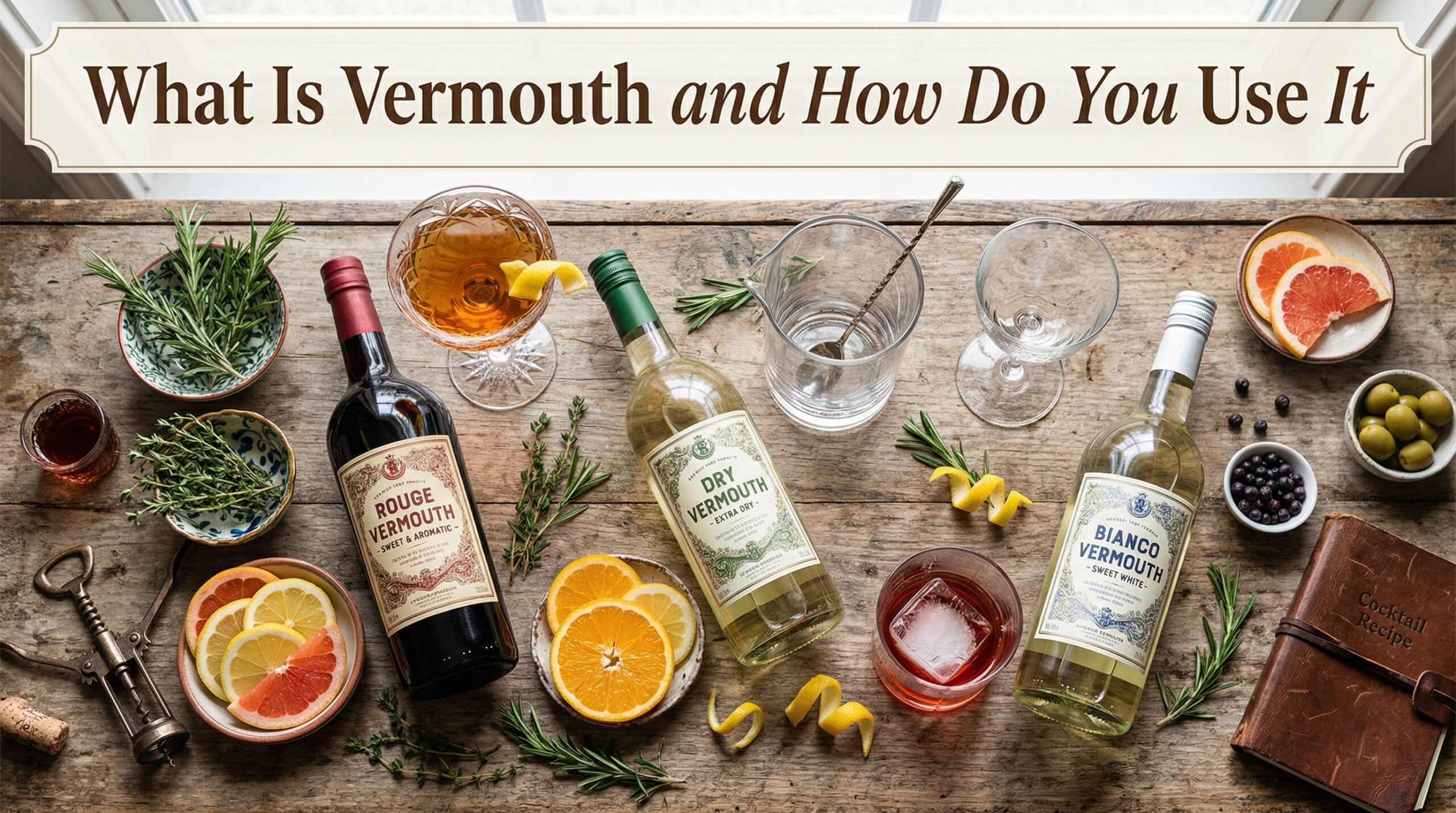
Vermouth is a fortified, aromatized wine that has been infused with a carefully balanced blend of botanicals, herbs, and spices. This distinctive beverage originated in Germany, where the word “Wermut” means wormwood, the key ingredient that gives vermouth its characteristic bitter edge. Whether you are mixing cocktails or exploring new drinks, understanding vermouth opens up a world of possibilities.
In my experience exploring different drinks over the years, vermouth stands out as one of the most versatile ingredients in any home bar. It transforms simple spirits into complex cocktails and can even be enjoyed on its own. If you have ever wondered what this aromatized wine really is and how to use it, you are in the right place.
Table of Contents
What Is Vermouth?
Vermouth is a fortified wine, meaning spirit alcohol has been added to increase its strength and shelf life. The alcohol content typically ranges from 16% to 18% ABV, higher than regular table wine but lower than most distilled spirits.
The defining characteristic of vermouth is its aromatization. Producers steep a proprietary blend of botanicals in the wine, which can include over 30 different ingredients. These typically include wormwood (the signature element), cinchona bark, angelica root, orris root, juniper, star anise, citrus peels, and various dried herbs and flowers.
The name vermouth actually comes from the German term “Wermut,” which directly translates to wormwood. This bitter herb remains the soul of traditional vermouth, providing the complexity that makes this drink so distinctive. Without wormwood, a fortified wine technically cannot be called vermouth under most definitions.
Today, vermouth is used in some of the worlds most famous cocktails, including the Martini, Manhattan, and Negroni. It also serves as an excellent aperitif when consumed on its own, particularly in European traditions where it is sipped before meals to stimulate the appetite.
How Vermouth Is Made
The production process for vermouth combines two distinct techniques: fortification and aromatization. First, producers create or select a base wine, usually from neutral grape varieties that will not overpower the botanical additions. This wine is then fortified with the addition of distilled spirits, typically grain alcohol or brandy.
After fortification comes the aromatization step, where the magic really happens. The fortified wine is steeped with the botanical blend, which can include roots, bark, flowers, seeds, and herbs. Each producer guards their exact recipe, some passed down through generations.
Common botanical ingredients include wormwood (essential for the characteristic bitter note), cinchona bark (providing quinine-like bitterness), angelica root (adding earthy depth), orris root (acting as a fixative), juniper berries (contributing floral pine notes), and star anise (lending subtle licorice flavors). Citrus peels, dried flowers, and various spices round out the blends.
After steeping, the mixture is aged for varying periods, depending on the style and producer. Some vermouths age for just weeks, while premium versions may rest for months or even years in oak barrels. The aging process allows the flavors to integrate and develop complexity.
Types of Vermouth
Vermouth comes in several distinct styles, broadly categorized by color and sweetness. Understanding these varieties helps you choose the right one for cocktails or sipping.
Dry White Vermouth
Dry vermouth, sometimes called French vermouth, has a pale straw color and minimal sweetness. It is the key ingredient in the classic Martini cocktail. French producers like Noilly Prat set the standard for this style, while Italian producers make their own versions.
The botanical profile of dry vermouth tends toward floral and herbal notes with subtle bitter undertones. It should taste crisp and refreshing, with a clean finish that pairs beautifully with gin or vodka in cocktails.
Sweet White Vermouth (Bianco)
Sweet white vermouth, often labeled as bianco, occupies the middle ground between dry and red varieties. It has more residual sugar than dry vermouth but is not as sweet as red vermouth. The color ranges from pale gold to deep amber.
This style works well in cocktails that need botanical complexity without the dryness of traditional dry vermouth. It also shines when sipped alone with a splash of soda.
Sweet Red Vermouth (Rosso)
Sweet red vermouth, the most recognized style in many parts of the world, has a deep mahogany color and rich, caramel-forward sweetness. Italian producers like Carpano and Antica Formula created the template for this beloved style.
The botanical blend in red vermouth typically emphasizes warmer spice notes alongside the herbal characteristics. This style is essential for cocktails like the Manhattan and Negroni, where its rich sweetness balances bold spirits.
Regional Variations: Italian, French, and Spanish Styles
While Italian and French vermouths dominate the market, Spanish vermouth has its own devoted following. In Spain, vermouth de rojo has evolved into a distinct tradition, often sweeter and more herbal than Italian counterparts.
The Italian style, sometimes called vermouth di Torino, emphasizes the use of Piedmontese wine and local botanicals. French vermouth, particularly from Chambery, tends toward lighter, more delicate profiles. Both styles have protected designation status in Europe.
Classic Vermouth Cocktails (2026)
Vermouth truly shines in cocktails, where its botanical complexity adds depth and dimension to spirits. Here are the essential cocktails every vermouth enthusiast should know.
The Martini
The Martini remains the most iconic dry vermouth cocktail. While ratios vary widely, the classic version combines gin with a modest pour of dry vermouth. Some prefer a 2:1 ratio, others go as lean as 6:1 or 7:1.
The garnish has sparked endless debate: olive or lemon twist? I have tried both extensively and find that the olive adds a briny, savory element that complements the botanicals in both gin and vermouth beautifully.
Looking for a perfect Martini recipe? Check out our classic Martini recipe for detailed instructions.
The Manhattan
The Manhattan showcases sweet vermouth at its best. This classic combines whiskey, sweet vermouth, and Angostura bitters in equal parts. The result is a rich, complex cocktail with layers of caramel, vanilla, and herbal notes.
Traditionalists insist on Canadian whisky, but rye whiskey has gained popularity for its spicier character. Either way, quality sweet vermouth makes or breaks this drink.
For a complete guide, see our classic Manhattan recipe.
The Negroni
The Negroni takes a different approach, using equal parts gin, sweet vermouth, and Campari. This combination creates a bitter, complex cocktail with notes of citrus, herbs, and Kampot pepper. The Campari provides the signature bitter punch that balances the sweetness of the vermouth.
This drink has gained tremendous popularity in recent years and is now considered one of the essential cocktails any home bartender should master.
Learn the traditional Negroni preparation in our classic Negroni recipe.
The Rob Roy
Essentially a Manhattan made with Scotch whisky instead of American whiskey, the Rob Roy highlights how vermouth pairs with smoky, peaty spirits. Sweet vermouth and Scotch create a surprisingly harmonious combination.
This cocktail is perfect for whiskey enthusiasts who want to explore vermouth beyond the traditional Manhattan.
See our full Rob Roy recipe for step-by-step guidance.
How to Drink Vermouth
While vermouth is famous for cocktails, it deserves appreciation as a standalone beverage. The way you drink it depends on the style and your personal preference.
Neat
Drinking vermouth neat means serving it at room temperature or slightly chilled, without any mixers. This approach works especially well for sweet vermouth, which many Europeans enjoy as an afternoon or pre-dinner drink. The complex botanical flavors unfold beautifully when you sip it slowly.
When I first tried quality sweet vermouth this way, I understood why some Europeans consider it a legitimate sipper. The layers of herbs, spices, and fruit create something genuinely fascinating in the glass.
On the Rocks
Serving vermouth over ice slightly dilutes and chills it, making for a refreshing drink on warm days. The slow melting of ice opens up different flavor profiles as the drink warms slightly. This method works for both dry and sweet vermouth, though sweet varieties benefit most.
With Soda
A vermouth spritz, made by adding soda water or tonic to vermouth, creates a light, effervescent drink. This approach stretches a bottle further while providing a refreshing option for casual sipping. Many Italian bars serve this style as an aperitivo.
The Spanish Tradition: La Hora del Vermut
In Spain, the tradition of “La hora del vermut” (the vermouth hour) is a cherished daily ritual. Around 6 or 7 PM, people gather at bars for a small glass of sweet red vermouth, often served with olives, almonds, and other tapas.
This tradition has experienced a renaissance in recent years, with new Spanish vermouth producers emerging and traditional bars reviving the custom. The Spanish style tends toward darker, sweeter profiles with intense botanical character.
If you have never tried Spanish vermouth, I highly recommend seeking out brands like Mancini or Laragnel. They offer something distinct from the Italian and French standards.
Storage and Shelf Life
One of the most common questions about vermouth concerns its longevity. Unlike regular wine, vermouth requires special handling after opening.
Does Vermouth Go Bad?
Yes, vermouth absolutely can go bad. Once opened, vermouth begins oxidizing immediately, and without proper storage, it deteriorates within weeks. I learned this lesson the hard way when a bottle of dry vermouth I had used for Martinis tasted flat and uninspiring.
The problem is that unlike fortified spirits with higher alcohol content, vermouth contains enough wine to support oxidation while lacking the structure to resist it. The delicate botanical flavors fade first, leaving behind a flat, sometimes vinegary liquid.
Refrigeration Is Essential
Always store opened vermouth in the refrigerator. The cold temperature significantly slows oxidation and preserves the botanical character. Even sweet vermouth, which has more alcohol than table wine, needs refrigeration after opening.
Some bartenders keep their vermouth in the freezer, which works fine for dry styles. Sweet vermouth may become too viscous when frozen solid, so the refrigerator is preferable for those bottles.
How Long Does Vermouth Last?
When refrigerated, an opened bottle of vermouth typically remains good for 1 to 3 months. Dry vermouth generally has a shorter window, while some sweet vermouths with higher alcohol content may last slightly longer.
Signs that vermouth has gone bad include a faded aroma, flat taste, and sometimes a sharp, vinegar-like smell. If your vermouth smells anything less than vibrant, it is time to replace it.
Tips for Keeping Vermouth Fresh
To maximize freshness, transfer vermouth to a smaller bottle once opened. Less air in the container means slower oxidation. Some enthusiasts flush bottles with inert gas before sealing, though this is overkill for most home drinkers.
Buy smaller bottles if you use vermouth infrequently. A 375ml bottle consumed over a month will always taste fresher than a 750ml bottle sitting half-full for three months.
Popular Vermouth Brands
Several brands have stood the test of time and are readily available at most wine and spirits shops.
For sweet red vermouth, Carpano Antica Formula remains a gold standard with its rich, complex flavor profile. Other excellent Italian options include Cinzano, Martini and Rossi (for everyday use), and the more recent Carpano Punt e Mes, which adds a bitter edge.
Dolin Dry Vermouth from France offers exceptional quality for dry styles, with a clean, herbal character that works beautifully in Martinis. Noilly Prat is another French classic, though some find it slightly sweeter than Dolin.
For Spanish vermouth, seek out Mancini, which has gained international recognition for its traditional approach. Laragnel also produces excellent Spanish-style vermouth with intense botanical character.
American craft producers have entered the vermouth market as well, offering interesting interpretations using local botanicals. These can be worth exploring if you want something different from European traditions.
Cooking with Vermouth
Vermouth is not just for drinking. Its complex flavor profile makes it an excellent cooking ingredient, particularly in dishes that would otherwise use white wine.
The herbal notes in vermouth add depth to pan sauces, deglazed dishes, and seafood preparations. Replace white wine with vermouth in equal amounts for an instant flavor upgrade. The botanicals complement butter-based sauces particularly well.
In savory applications, vermouth works wonderfully when deglazing a pan after searing meat or vegetables. The residual bits from the pan dissolve beautifully into the vermouth, creating a rich foundation for sauces.
Some cooks use sweet vermouth in dessert applications, such as reducing it into a syrup for drizzling over ice cream or incorporating it into poached fruit. The bittersweet character adds sophistication to sweet dishes.
Conclusion
Vermouth is a fascinating beverage that bridges the gap between wine and spirits. Its complex botanical character makes it indispensable in classic cocktails, while its versatility allows it to shine when sipped alone.
Understanding vermouth opens up countless possibilities in your home bar. Whether you are mixing a perfect Manhattan, exploring the Spanish vermouth tradition, or simply pouring a glass over ice, this aromatized wine rewards curiosity and experimentation.
The key points to remember: store it refrigerated after opening, use dry vermouth in Martinis and sweet vermouth in Manhattans and Negronis, and do not be afraid to drink it straight. With these basics covered, you are ready to explore everything vermouth has to offer.
FAQs
What is the best way to drink vermouth?
The best way depends on the type – dry vermouth shines in cocktails like Martinis, while sweet vermouth is excellent for sipping neat or in Manhattans. Many Europeans enjoy sweet vermouth on its own, slightly chilled.
Are you supposed to drink vermouth straight?
Yes, you can absolutely drink vermouth straight. Sweet vermouth is particularly enjoyable neat as an aperitif. Dry vermouth can be sipped but is more commonly used in small quantities in cocktails.
How long does vermouth last once opened?
Once opened, vermouth typically lasts 1-3 months when refrigerated. Without refrigeration, it degrades much faster due to oxidation. The flavor becomes flat and unpleasant as it oxidizes.
Is there alcohol in vermouth?
Yes, vermouth contains alcohol. As a fortified wine, it has higher alcohol content than regular wine, typically ranging from 16% to 18% ABV.
What does vermouth taste like?
Vermouth tastes complex and herbal, with botanical notes from various herbs and spices. Dry vermouth is lighter with subtle bitterness, while sweet vermouth has rich, caramel and fruit flavors with herbal undertones.