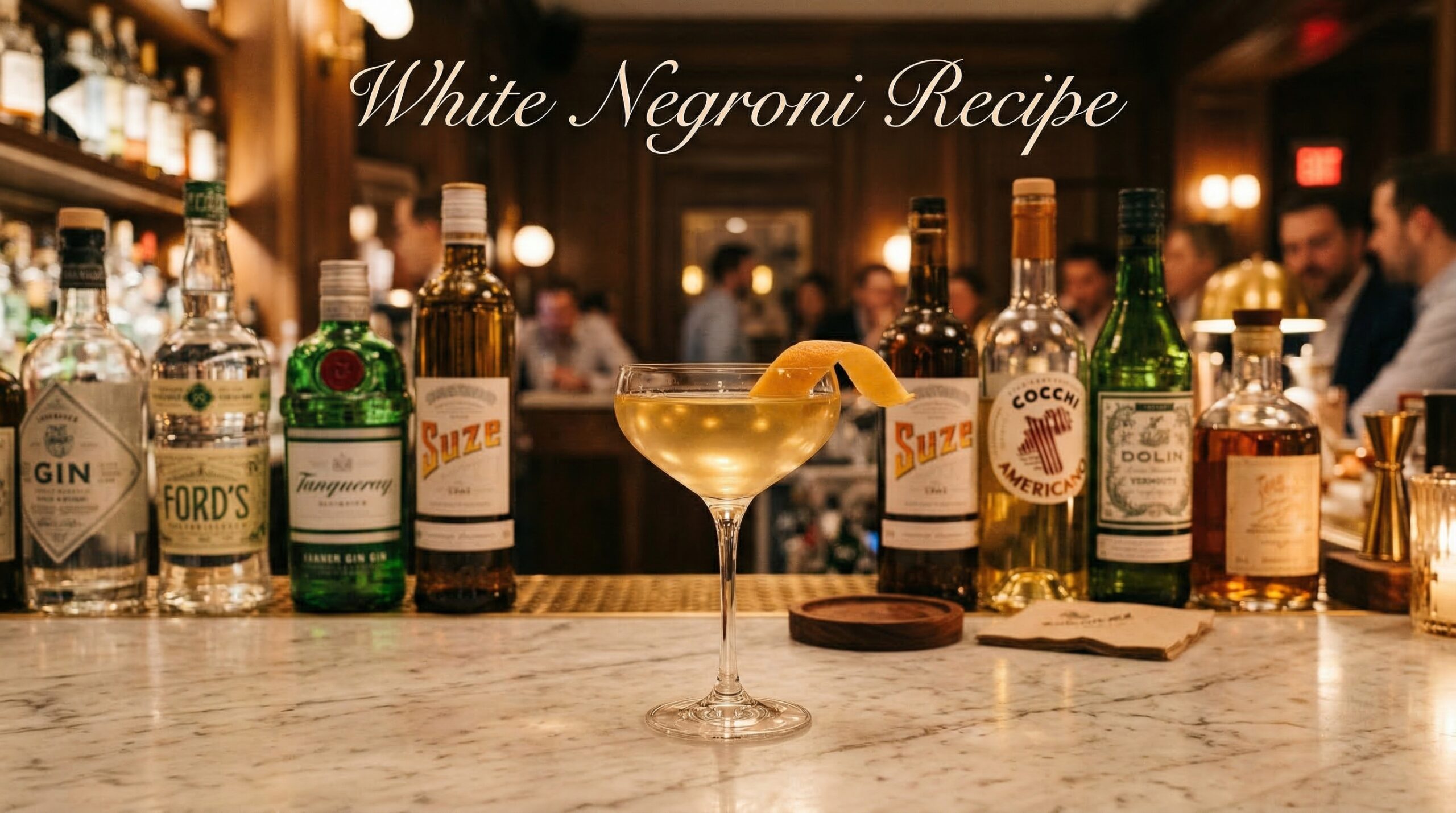
The White Negroni is one of those cocktails that surprises you on the first sip. I still remember my first taste at a small bar in San Francisco—the bartender handed me a pale golden drink with a grapefruit twist, and I was hooked. Unlike the bold red of a traditional Negroni, this variation offers something more subtle: floral, bitter, and incredibly refreshing.
In this guide, you’ll learn exactly how to make a White Negroni at home. We’ll cover the classic recipe with precise measurements, deep dives into each ingredient, substitution options when you can’t find Suze, and the common mistakes that can ruin this delicate balance. Whether you’re a Negroni enthusiast or just starting your cocktail journey, this recipe guide will give you everything you need.
What Is a White Negroni?
A White Negroni is a modern cocktail variation created in 2001 by British bartender Wayne Collins at VinExpo in Bordeaux. While the classic Negroni combines gin, Campari, and sweet vermouth in equal parts, the White Negroni substitutes the red Italian ingredients with clear French alternatives: Suze (a gentian-based liqueur) and Lillet Blanc (an aromatized wine).
The result is a drink that maintains the Negroni’s essential bitter-sweet-botanical balance but with a completely different character. Instead of Campari’s bold citrus-bitter punch, you get Suze’s earthy, floral bitterness from gentian root. Instead of sweet vermouth’s rich, dark complexity, Lillet Blanc brings bright, honeyed notes with hints of citrus and flowers.
What does a White Negroni taste like? Expect a drier, more herbal profile than the original. The gentian provides a distinctive bitterness that some describe as earthy or grassy, while the Lillet adds subtle sweetness and floral aromatics. It’s lighter on the palate, making it an excellent aperitif for warm weather or before a lighter meal.
White Negroni vs Classic Negroni
The key difference lies in the bittering agent and aromatized wine. Campari delivers bright, fruity bitterness with its signature red color, while Suze offers a more restrained, earthy bitterness with a golden hue. Sweet vermouth brings dark fruit and spice notes; Lillet Blanc contributes white wine freshness with quinine undertones.
Many bartenders and enthusiasts appreciate the White Negroni for its complexity. The combination of gentian and aromatized wine creates layers of flavor that unfold as you drink. It’s also a great option for those who find Campari too aggressive or who simply want to try something new.
White Negroni Ingredients
One reason I love this cocktail is its simplicity. Three ingredients, stirred over ice, finished with a twist of citrus. But each component matters, and understanding what they bring helps you make better drinks.
The Classic Recipe
Here are the White Negroni ingredients with precise measurements:
Standard Ratio (2:1:1):
- 1.5 oz (45 ml) London Dry gin
- 0.75 oz (22 ml) Suze gentian liqueur
- 0.75 oz (22 ml) Lillet Blanc
- Garnish: Grapefruit twist or lemon twist
Equal Parts Ratio (1:1:1):
- 1 oz (30 ml) London Dry gin
- 1 oz (30 ml) Suze gentian liqueur
- 1 oz (30 ml) Lillet Blanc
- Garnish: Grapefruit twist or lemon twist
The equal parts version is the original recipe from Wayne Collins. However, many modern bartenders prefer the 2:1:1 ratio because it allows the gin to shine while still delivering Suze’s distinctive character. If you’re new to gentian liqueurs, start with the adjusted ratio.
Gin Selection
Your choice of gin significantly impacts the final drink. London Dry gins work best because their juniper-forward profile stands up to Suze’s bitterness without competing with it. I’ve tested several options:
Best gins for White Negroni:
- Beefeater London Dry: Classic choice, juniper-forward with citrus notes. Widely available and affordable.
- Plymouth Gin: Slightly softer and more citrusy. The original gin used by Wayne Collins.
- Tanqueray London Dry: Bold juniper and coriander. Creates a more assertive drink.
- Gordon’s London Dry: Budget-friendly option that works well in mixed drinks.
Avoid heavily flavored or floral gins—they can clash with the Lillet and Suze. You want a clean, traditional London Dry that provides structure without overwhelming the other ingredients.
Suze: The Star Ingredient
Suze is a French gentian liqueur that’s been produced since 1889. It’s made from the roots of yellow gentian plants grown in the Swiss Alps and Jura mountains. The roots are harvested, dried, macerated, and distilled to create this distinctive golden liqueur.
What does Suze taste like? It’s bitter, earthy, and slightly sweet with notes of wildflowers and mountain herbs. The bitterness is different from Campari—more herbal and restrained. Some people describe it as grassy or vegetal, while others pick up honey and citrus undertones.
Suze typically clocks in at 15% ABV, making it lighter than many bitter liqueurs. This lower alcohol content is one reason the White Negroni works so well as an aperitif.
Lillet Blanc
Lillet Blanc is a French aromatized wine from the Bordeaux region. It’s a blend of white wines (mostly Semillon and Sauvignon Blanc) macerated with fruits, herbs, and quinine. The result is a light, refreshing aperitif wine with subtle sweetness and a hint of bitterness.
In a White Negroni, Lillet Blanc serves several functions. It adds body and texture, contributes honeyed sweetness to balance Suze’s bitterness, and brings aromatic complexity with notes of orange flower, lime, and exotic fruits.
Lillet should be stored in the refrigerator after opening and used within a few months. Fresh Lillet makes a noticeable difference in the final cocktail.
Alternative Ingredients
Not everyone can find Suze or Lillet at their local store. Here are some options:
Suze alternatives:
- Salers: Another French gentian liqueur, slightly more rustic and bitter than Suze.
- Avèze: Similar gentian-based liqueur, can be harder to find.
- Kina L’Aéro d’Or: By Tempus Fugit, a quinine-forward aperitif with gentian notes.
- Luxardo Bitter Bianco: Less bitter, more approachable. Creates a milder drink.
Lillet Blanc alternatives:
- Dolin Blanc vermouth: Drier profile, less sweet. Works well if you prefer less sweetness.
- Cocchi Americano: More quinine forward, creates a truly white-colored drink.
How to Make a White Negroni
Now for the main event. Making a White Negroni is straightforward, but technique matters. Here’s my tested method for getting it right every time.
Equipment Needed
- Mixing glass or cocktail shaker
- Bar spoon
- Jigger or measuring tool
- Julep strainer or Hawthorne strainer
- Coupe glass or rocks glass
- Ice (large cubes preferred)
- Vegetable peeler or channel knife for garnish
Note: This cocktail is stirred, not shaken. Shaking would cloud the drink and over-dilute it.
Step-by-Step White Negroni Recipe
Step 1: Chill Your Glass
Place your coupe or rocks glass in the freezer for at least 5 minutes before making the drink. A chilled glass keeps your cocktail colder longer and prevents rapid dilution.
Step 2: Measure Your Ingredients
Using a jigger, measure 1.5 oz gin, 0.75 oz Suze, and 0.75 oz Lillet Blanc into your mixing glass. Precision matters here—eyeballing can throw off the delicate balance.
Step 3: Add Ice
Fill the mixing glass with ice. Use large, clear cubes if possible—they melt more slowly and dilute the drink evenly. Smaller or cloudy ice will water down your cocktail too quickly.
Step 4: Stir Properly
Stir with a bar spoon for 30-45 seconds. The goal is to chill the mixture to about 18-20°F and achieve proper dilution. You should feel the mixing glass become frosty and cold to the touch.
Stir smoothly and consistently, keeping the back of the spoon against the glass wall. Don’t stir too vigorously—you’re not trying to create a vortex.
Step 5: Strain and Serve
Remove your chilled glass from the freezer. Strain the cocktail into the glass using a julep strainer (for mixing glass) or Hawthorne strainer (for shaker tin).
Step 6: Add Garnish
Cut a piece of grapefruit or lemon peel about 2 inches long. Hold it over the drink skin-side down and squeeze gently to express the oils onto the surface of the cocktail. Run the peel around the rim of the glass, then drop it into the drink.
Grapefruit is my preferred garnish—its aromatic oils complement the gentian beautifully. Lemon works well too if you don’t have grapefruit.
Serving Suggestions
Serve your White Negroni straight up in a coupe glass for the most elegant presentation. You can also serve it over a large ice cube in a rocks glass if you prefer a slower-sipping experience.
This cocktail pairs beautifully with light appetizers: olives, marinated vegetables, mild cheeses, or seafood. Its bitter-sweet profile makes it an excellent aperitif before dinner.
White Negroni Variations and Substitutions
Once you’ve mastered the classic recipe, you might want to experiment. Here are the most popular variations and when to use them.
The Truly White Negroni
One common complaint about the classic recipe is that Suze adds a yellow tint—not exactly “white.” If you want a genuinely colorless drink, try this variation:
Ingredients:
- 1.5 oz London Dry gin
- 0.75 oz Dolin Blanc vermouth
- 0.75 oz Cocchi Americano
- Garnish: Lemon twist
Cocchi Americano and Dolin Blanc are both clear, creating a pale drink that lives up to the “white” name. The flavor profile is slightly different—more quinine-forward and less intensely bitter—but equally delicious.
Adjusting the Ratio for Your Taste
Forum discussions reveal that bitterness preference varies widely. Here’s a guide to adjusting the ratios:
- For less bitterness: Reduce Suze to 0.5 oz and increase Lillet to 1 oz. This creates a milder, more approachable drink.
- For more bitterness: Increase Suze to 1 oz and reduce Lillet to 0.5 oz. This delivers a more bracing, intensely herbal experience.
- For more gin character: Use the 2:1:1 ratio (1.5 oz gin, 0.75 oz each Suze and Lillet). This lets the botanicals shine through.
- For equal balance: Use the traditional 1:1:1 ratio. This creates a more intense, spirit-forward drink.
Suze-Free White Negroni
Can’t find Suze or find it too bitter? Here are tested alternatives:
- With Cocchi Americano: Replace Suze with Cocchi Americano for a milder, more quinine-forward drink. Combine with Dolin Blanc for a clear-colored cocktail.
- With Luxardo Bitter Bianco: This Italian bitter liqueur is less intense than Suze, making it perfect for beginners. It maintains the bitter-sweet balance without overwhelming the palate.
- With Salers: Another gentian liqueur, but more rustic and earthy. Use the same amount as you would Suze.
- With Kina L’Aéro d’Or: This quinine-rich aperitif brings different bitter notes—more medicinal and herbal. It’s an interesting variation for adventurous drinkers.
Lillet Blanc Alternatives
If you can’t find Lillet or want to try something different:
- Dolin Blanc: Drier and less sweet than Lillet. Creates a more austere, sophisticated drink. Works especially well if you’re using a higher Suze ratio.
- Cocchi Americano: Can replace either the Suze or the Lillet. If using in place of Lillet, you might want to add a small amount of simple syrup to maintain the sweet-bitter balance.
Common Mistakes and Troubleshooting
After making countless White Negronis (and teaching friends how to make them), I’ve identified the most common errors. Here’s what goes wrong and how to fix it.
Mistake #1: Using the Wrong Ratio
The most frequent issue is using equal parts when you’re not ready for that intensity. If your drink tastes overwhelmingly bitter or unbalanced, try the 2:1:1 ratio instead. It’s more forgiving while still delivering the characteristic White Negroni flavor.
Mistake #2: Poor Stirring Technique
Under-stirring leaves the drink too warm and not properly diluted. Over-stirring waters it down. Aim for 30-45 seconds of smooth stirring until the mixing glass is frosty cold. The drink should be cold but still have texture and body.
Mistake #3: Using Old Lillet
Lillet Blanc is a wine-based product—it doesn’t last forever. An opened bottle should be refrigerated and used within 2-3 months. Old Lillet loses its bright, floral character and can make the drink taste flat or off.
Mistake #4: Skipping the Garnish
The citrus twist isn’t just decoration. Expressing the oils over the drink adds aromatic complexity that ties the ingredients together. Don’t skip this step—it genuinely improves the final cocktail.
Troubleshooting Guide
- Problem: My White Negroni is too bitter.
- Solution: Reduce the Suze to 0.5 oz and increase Lillet to 1 oz. Alternatively, try Luxardo Bitter Bianco instead of Suze—it’s significantly milder.
- Problem: My White Negroni is too weak.
- Solution: Make sure you’re stirring long enough for proper dilution and chilling. Also check that your Lillet is fresh—old Lillet loses its character.
- Problem: My White Negroni tastes unbalanced.
- Solution: Check your measurements with a jigger. Eyeballing often leads to imbalanced ratios. Also, try a different gin—some gins are too floral or citrusy for this cocktail.
- Problem: The drink is too warm.
- Solution: Chill your glass beforehand, use larger ice cubes that melt more slowly, and make sure you’re stirring long enough. A warm cocktail will taste harsh and unbalanced.
FAQs
What are the ingredients in a White Negroni?
A White Negroni contains three main ingredients: 1.5 oz London Dry gin, 0.75 oz Suze gentian liqueur, and 0.75 oz Lillet Blanc. Garnish with a grapefruit or lemon twist. Some recipes use equal parts (1 oz each) of the three ingredients.
What is a substitute for Suze in a White Negroni?
The best Suze substitutes are Salers (another French gentian liqueur), Luxardo Bitter Bianco (milder, less bitter), Cocchi Americano (creates a truly white drink), or Kina L’Aéro d’Or (quinine-forward with gentian notes). Luxardo Bitter Bianco is the most approachable option for those who find Suze too intense.
How do you make a Negroni Bianco?
Negroni Bianco is another name for White Negroni. To make it, stir 1.5 oz London Dry gin, 0.75 oz Suze, and 0.75 oz Lillet Blanc over ice for 30-45 seconds. Strain into a chilled coupe glass and garnish with a grapefruit twist. Serve straight up without ice.
What’s the difference between a Negroni and a White Negroni?
The classic Negroni uses Campari (red bitter liqueur) and sweet vermouth, creating a bold, fruity-bitter drink with a deep red color. The White Negroni substitutes these with Suze (gentian liqueur) and Lillet Blanc, resulting in a lighter, more floral, and earthy cocktail with a pale golden color. The White Negroni is drier and less intensely bitter than the original.
Conclusion
The White Negroni recipe proves that sometimes the best innovations come from simple ingredient swaps. By replacing Campari with Suze and sweet vermouth with Lillet Blanc, you create an entirely new cocktail experience—lighter, more floral, and endlessly sophisticated.
Start with the 2:1:1 ratio if you’re new to gentian liqueurs. Once you’ve mastered the technique, experiment with variations like the truly white version using Cocchi Americano and Dolin Blanc. And don’t forget to express those citrus oils over the drink—the garnish makes a real difference.
If you enjoy complex, floral cocktails, you might also like our lychee martini recipe. Both drinks showcase how subtle ingredients can create memorable sipping experiences. Cheers to your next great cocktail!