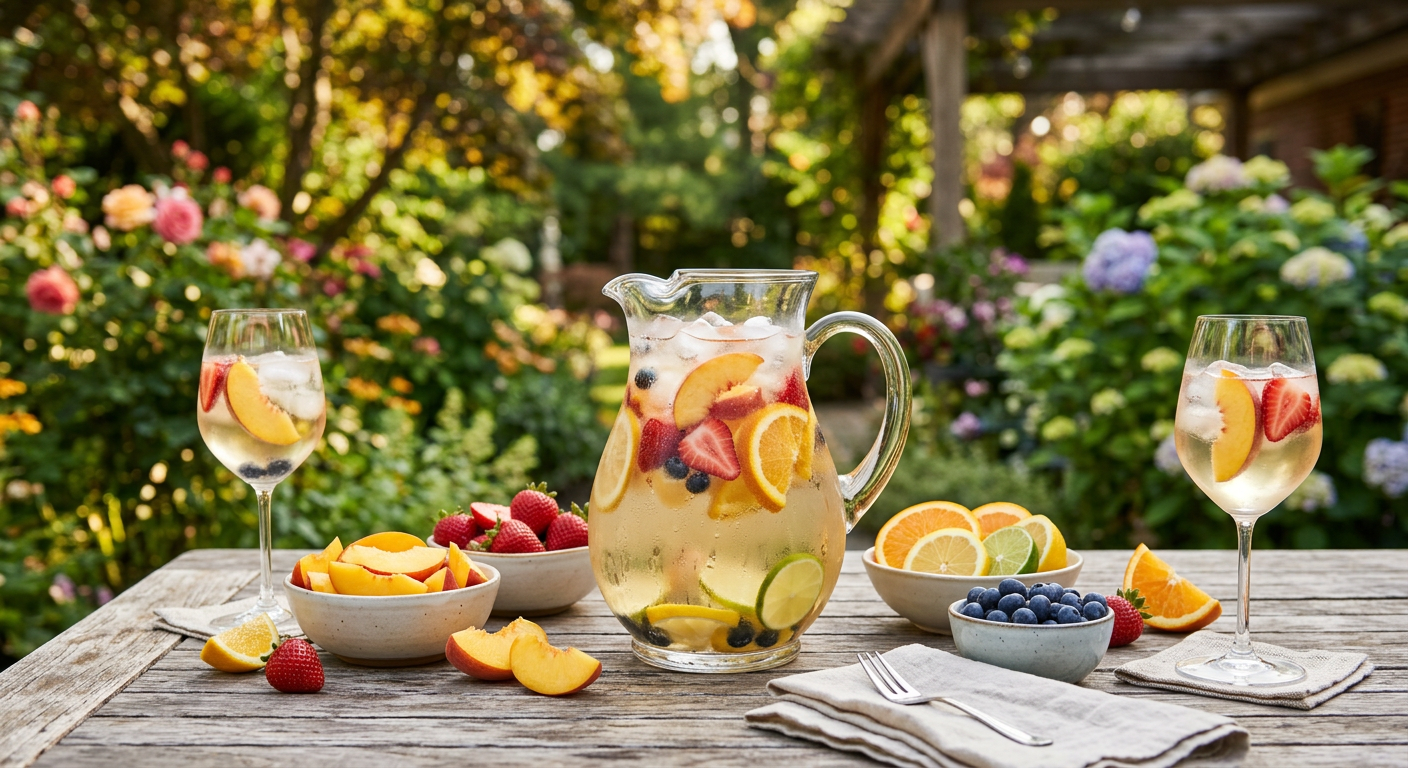
If you are hunting for a crowd-pleasing pitcher cocktail that comes together in minutes and tastes like summer in a glass, this White Sangria Recipe is exactly what you need. We have been making batch cocktails for years, and this refreshing white wine sangria consistently disappears faster than anything else at our gatherings. The best part is you can mix it up the night before, which means less time in the kitchen and more time enjoying your guests.
Our team tested this recipe over several summer weekends, adjusting fruit proportions and brandy ratios until we landed on a balance that tastes professional without requiring any bartending experience. Whether you are hosting a brunch, a patio party, or a birthday celebration, this white sangria recipe delivers that perfect combination of crisp, fruity, and slightly bubbly that keeps people coming back for refills.
Why You’ll Love This White Sangria
White sangria is the ultimate make-ahead cocktail. Unlike drinks that need to be assembled individually, this recipe scales effortlessly from a intimate dinner for four to a block-party pitcher for twelve. We love that the fruit soaks right into the wine, creating layers of citrus and stone fruit flavor that get better as the hours pass.
The drink itself is lighter and more refreshing than traditional red sangria, which makes it perfect for hot summer afternoons by the pool or on the deck. Our readers often tell us they prefer this version because it pairs beautifully with seafood, light salads, and cheese boards without overwhelming the food.
You do not need any special equipment or bartending skills. A large pitcher, a cutting board, and about fifteen minutes of prep time are all it takes. The recipe also invites creativity, so you can swap fruits and adjust sweetness to match your crowd’s preferences.
Ingredients for White Sangria Recipe
Having the right ingredients on hand makes all the difference when you are making white sangria. Here is what you need for one standard pitcher, which serves about eight people.
- One 750ml bottle of dry white wine (Pinot Grigio or Sauvignon Blanc works beautifully)
- Half cup brandy or peach schnapps
- Quarter cup triple sec or orange liqueur
- Quarter cup simple syrup, or to taste
- Half cup fresh orange juice
- Two tablespoons fresh lemon juice
- One cup sliced strawberries
- One cup peach slices or nectarines
- Half cup blueberries
- One orange, thinly sliced into half-moons
- One lemon, thinly sliced into half-moons
- One cup sparkling water or Prosecco, for topping
- Ice cubes or frozen fruit cubes, for serving
The wine sets the foundation, so choose something you would actually enjoy drinking on its own. Avoid anything too oaky or heavy, because those characteristics will dominate the final drink. A crisp, affordable bottle in the eight to twelve dollar range typically delivers excellent results.
How to Make White Sangria
Step 1: Prep the Fruit
Wash all your fruit thoroughly under cold water. Slice the strawberries into halves or quarters depending on their size. Peel and slice the peaches into wedges about half an inch thick. Spread the blueberries out and pick out any stems or damaged berries.
For the citrus, use a sharp knife to cut the orange and lemon into thin rounds. Removing the ends first gives you a flat surface to work with, which makes slicing much safer and more precise. Aim for pieces no thicker than a quarter inch so they release their flavors quickly.
Step 2: Mix the Base
Pour the entire bottle of white wine into a large pitcher. Add the brandy, triple sec, and simple syrup. Pour in the fresh orange juice and lemon juice, then stir everything together with a long-handled spoon until the liquids are fully combined.
Taste the mixture at this point and decide if you want it sweeter. Some wines and fruit juices vary in sweetness, so trust your palate. If it tastes too tart, add another tablespoon of simple syrup. If you prefer less sweet, back off on the syrup or choose a less sweet white wine next time.
Step 3: Add the Fruit and Chill
Add all the prepared fruit to the pitcher, including the strawberry, peach, blueberries, orange slices, and lemon slices. Give everything a gentle stir so the fruit distributes evenly throughout the wine.
Cover the pitcher with plastic wrap or a lid and move it to the refrigerator. Let the sangria chill for a minimum of four hours, though overnight is genuinely better. The extended rest time allows the fruit to soften and release its juices into the wine, creating that deep, layered flavor that makes sangria so satisfying.
Step 4: Add the Sparkling Topper and Serve
Right before serving, crack open the sparkling water or Prosecco and pour it into the pitcher. The bubbles add a lovely effervescence that brightens the entire drink. Give it one final gentle stir, being careful not to break the fruit too much.
Set out the pitcher with a ladle or large spoon for guests to serve themselves. Fill glasses with ice or frozen fruit cubes first, then ladle the sangria over top. Make sure everyone gets a good mix of fruit in their glass, because that is where a lot of the flavor lives.
Best White Wine for Sangria
The wine you choose matters more than the brandy or liqueurs in this recipe. We tested multiple options side by side, and the differences were noticeable enough that we now stick with two specific styles.
Pinot Grigio is our top recommendation. It has a clean, crisp flavor with bright citrus notes that complement the fruit without clashing. Look for bottles from Italy or Oregon. Most options in the eight to fifteen dollar range perform excellently. The wine is light enough that it does not weigh down the final drink.
Sauvignon Blanc works wonderfully if you want more herbal and grassy notes in your sangria. It tends to be slightly more acidic than Pinot Grigio, which can make the final product taste livelier. New Zealand and French Loire Valley versions offer distinct character profiles you can play with.
Chardonnay can work but proceed with caution. Avoid heavily oaked versions, because the wood flavors become too dominant after the fruit and brandy are added. Light, unoaked Chardonnays from California or Australia can deliver nice tropical fruit notes that enhance the peachy elements in the sangria.
Moscato is worth mentioning for a sweeter style sangria. Several readers have asked about this option, and we tried it. It makes a dessert-like version that some guests absolutely adore. If you go this route, reduce or skip the simple syrup since Moscato already brings significant sweetness.
White Sangria Variations
Once you have mastered the base recipe, these variations open up entirely new flavor territories worth exploring.
White Sangria with Prosecco
Replace the sparkling water with an entire bottle of Prosecco or other dry sparkling wine. This variation takes the drink from refreshing to genuinely celebratory. Add the Prosecco right before serving just like you would the sparkling water, and watch the bubbles create a festive display in each glass.
Peach Sangria
Double the peaches and add a quarter cup of peach schnapps for an intensified stone fruit profile. We tested this variation at a garden party last summer, and it vanished within ninety minutes. Ripe summer peaches work better than underripe ones, so buy extra and let any firm peaches ripen on the counter for a day or two.
Citrus Sangria
Skip the berries entirely and load up on citrus. Use two oranges, two lemons, one grapefruit, and add a splash of grapefruit juice. This version tastes brighter and more tart, which many guests prefer on extremely hot days. It also looks stunning in a glass because of all the colorful citrus slices.
Non-Alcoholic White Sangria
For guests who do not drink alcohol, replace the wine with white grape juice or a combination of apple juice and sparkling white grape juice. Skip the brandy and triple sec entirely. Add a splash of elderflower liqueur for complexity if you want something non-alcoholic that still has interesting flavor depth.
Our team tested this version and found it actually works well as a virgin cocktail option. The fruit flavors still meld beautifully, and the sparkling water gives it that same festive feeling. You can make a separate smaller pitcher just for non-drinking guests so everyone feels included.
Tips for Perfect Sangria
These pointers come from our own mistakes and from insights shared by experienced home bartenders in online communities. Apply them and you will consistently make better sangria.
Preventing Bitter Fruit
Citrus pith, the white layer beneath the peel, turns bitter when it sits in liquid for too long. Remove as much pith as possible when slicing your oranges and lemons. A sharp knife and thin slices help significantly. If you are planning to let the sangria sit for more than eight hours, consider peeling the citrus completely and adding only the flesh or juice instead of the whole slices.
Using Frozen Fruit Instead of Ice
Regular ice cubes dilute your sangria as they melt, watering down all those carefully balanced flavors. We discovered that frozen fruit cubes solve this problem elegantly. Freeze your strawberry and peach slices in water or juice in an ice cube tray. When they melt in the glass, they add flavor instead of dilution. This trick became our standard practice after trying it just once.
Scaling for Different Party Sizes
For a small gathering of two to four people, cut the recipe in half and use a glass pitcher or large mason jars. For a large party of fifteen or more, double or triple the recipe and use a beverage dispenser. The fruit ratios stay the same, but you may need to use multiple pitchers or dispensers to handle the volume. Guests can still serve themselves from each one.
When scaling down to a single serving, mix two ounces of wine with half an ounce of brandy, an ounce of orange juice, a tablespoon of liqueur, and whatever fruits sound good. Let it rest for at least thirty minutes in the refrigerator before straining over ice if you prefer no fruit bits.
Make-Ahead and Storage Tips
White sangria genuinely improves with advance preparation, which is why it remains one of our favorite party recipes. The minimum chill time of four hours allows the wine to absorb all those fruit flavors, but eight to twelve hours is the sweet spot according to our testing.
You can safely prepare the wine mixture with fruit up to twenty-four hours ahead. Beyond that, the fruit starts to break down and the citrus pith bitterness becomes noticeable. If you need to go longer, prepare the wine mixture without the citrus slices and add fresh citrus only four hours before serving.
Store any leftover sangria in the refrigerator for up to three days. The fruit will continue softening, and the wine color may shift slightly, but the flavor remains good. We do not recommend freezing the assembled sangria, though you can absolutely freeze extra fruit cubes for future batches.
For outdoor events in hot weather, keep the pitcher in a tub of ice rather than relying solely on frozen fruit to keep it cold. Refresh the ice bath every hour or so if the event lasts more than two hours.
FAQs
What are the ingredients in white sangria?
White sangria typically includes dry white wine, brandy or peach schnapps, triple sec or orange liqueur, simple syrup, fresh orange juice, lemon juice, and a variety of fruits like strawberries, peaches, blueberries, oranges, and lemons. Topped with sparkling water or Prosecco before serving.
What liquor is in white sangria?
White sangria contains brandy or peach schnapps for the primary liquor, along with triple sec or orange liqueur for added sweetness and citrus flavor. Some recipes also add sparkling water or Prosecco as a topper for effervescence.
What is the best wine for a white sangria?
Pinot Grigio is the best white wine for sangria because of its crisp, clean citrus notes. Sauvignon Blanc works well for a more herbal profile. Avoid heavily oaked Chardonnays. Budget options in the 8-15 dollar range perform excellently.
How to make white sangria with Prosecco?
To make white sangria with Prosecco, follow the standard recipe but replace the sparkling water with an entire bottle of Prosecco. Add it right before serving to preserve the bubbles. This variation creates a more celebratory, bubbly drink perfect for special occasions.
Ready to Make Your Own White Sangria
This White Sangria Recipe gives you everything you need to create a refreshing pitcher cocktail that your guests will remember. We designed it to be foolproof, scalable, and adaptable to whatever fruits you have on hand or whatever sweetness level your crowd prefers.
Start with the base recipe tonight, and notice how the flavors develop even after just four hours in the refrigerator. Try the Prosecco variation for your next celebration, or experiment with frozen fruit cubes instead of regular ice. Once you see how easy it is to make restaurant-quality white sangria at home, this will become your go-to drink for every summer gathering.
If you try any of the variations or have a favorite fruit combination we did not mention, we would love to hear about it. Leave a comment below and share what worked best for your gatherings.