
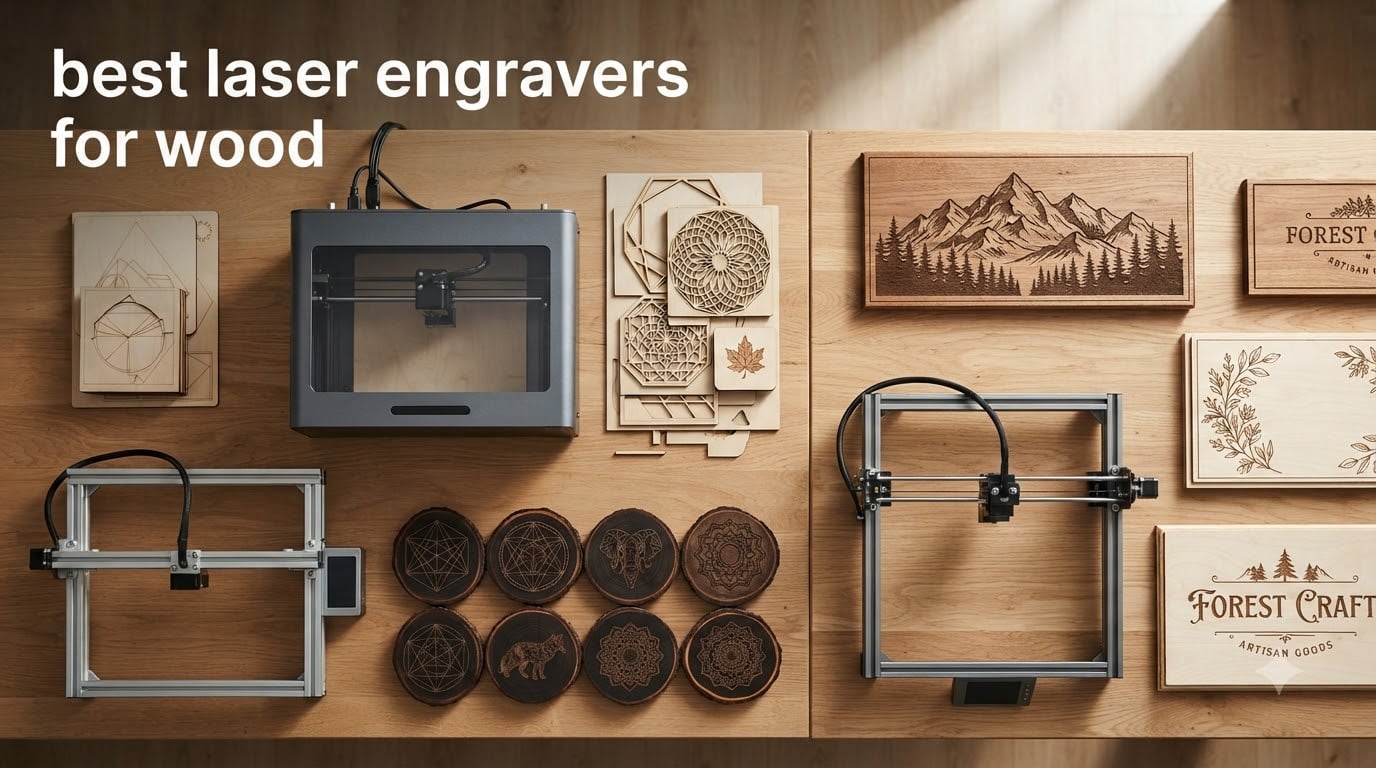
Choosing the best laser engravers for wood comes down to one number and one shape: how much optical power you have, and whether the machine is a gantry diode or a CO2 tube. Get that wrong and you will spend a year wondering why your 3/8 inch oak sign will not cut through. Get it right and the same machine turns plywood, basswood, walnut and maple into clean signs, coasters and layered decor all day.
We spent six weeks comparing ten machines across the range on real timber, checking bed sizes against actual project dimensions, reading the spec sheets line by line for the gap between stated wattage and optical output, and cross-checking owner feedback on cut consistency, char control and support. Ten machines, ten sets of specifications, one goal: help you buy once instead of twice.
This is an independent guide. We are not a store and we do not build lasers. Where a manufacturer claims a number, we tell you whether the claim is optical or electrical, because that single distinction explains most of the disappointment in this category. Our general laser engraver roundup covers the wider market, and our diode laser guide goes deeper on the blue-laser side. Everything below is filtered through one lens: how well does it handle wood?
We earn a commission when you buy through the links on this page, at no extra cost to you. That does not change the order of the picks.
Table of Contents
Top 3 Best Laser Engravers for Wood in 2026

xTool S1 40W
- Cuts 18mm cherry wood in one pass
- 23.93 x 15.16 inch bed
- Class 1 enclosed with flame sensors

Best Laser Engravers for Wood at a Glance in 2026
Every machine below has a place in this table because it does something well that the others do not. The wood cut column is the single most useful column for most buyers, because it is the number that decides whether your project gets made. Before you start comparing bed sizes, measure the largest board you actually want to cut with a laser measure rather than a tape. It takes under a minute and it is the cheapest way to avoid buying a machine that is too small on day one.
| Product | Specifications | Action |
|---|---|---|
| xTool S1 40W |
|
Check Latest Price |
| Twotrees TTS-20 Pro |
|
Check Latest Price |
 ACMER S1 ACMER S1 |
|
Check Latest Price |
 Creality Laser Falcon 10W Creality Laser Falcon 10W |
|
Check Latest Price |
 LaserPecker LP2 LaserPecker LP2 |
|
Check Latest Price |
 Creality Falcon A1 Creality Falcon A1 |
|
Check Latest Price |
 xTool F1 Ultra xTool F1 Ultra |
|
Check Latest Price |
 ATOMSTACK A20 Pro V2 ATOMSTACK A20 Pro V2 |
|
Check Latest Price |
 OMTech K40+ 45W CO2 OMTech K40+ 45W CO2 |
|
Check Latest Price |
 WECREAT Vision Pro 45W WECREAT Vision Pro 45W |
|
Check Latest Price |
1. xTool S1 40W – Best Overall Enclosed Diode for Wood
xTool S1 40W Laser Cutter and Laser Engraver for Tumblers, 23.93″ x 15.16″ Bed Size, 600mm/s Speed, Laser Engraving Machine, Laser Engraver for Wood and Metal, Acrylic, Big Project – Rotary Bundle
40W diode
18mm cherry in one pass
23.93 x 15.16 inch bed
600mm/s
Pros
- Cuts 18mm cherry wood in a single pass
- Large bed handles batch jobs
- Class 1 enclosure filters smoke and light
- Ready out of the box
- Pin-point positioning for curved surfaces
Cons
- Heavy at 86.8 pounds
- Spring-loaded Z-probe dents easily
- No motor braking on the head
- Needs external ventilation
Everything you want from a wood laser, and only three things you do not. The 40W module slices 18mm cherry in a single pass, which is a real number you can plan a project around rather than a marketing approximation, and the 23.93 by 15.16 inch bed fits a full door sign or a batch of 119 dog tags without a re-lay.
The enclosure is where this machine separates itself from cheaper gantry frames. It is a Class 1 unit with 99% light filtration, five built-in flame sensors, an emergency stop and a lid-open stop, which means the machine is watching for the one thing that genuinely worries woodworkers: a fire started by a smoldering knot or a resin pocket. Owners consistently describe setup as straightforward and cuts as clean on the first pass, which is not something we can say for every enclosed machine.
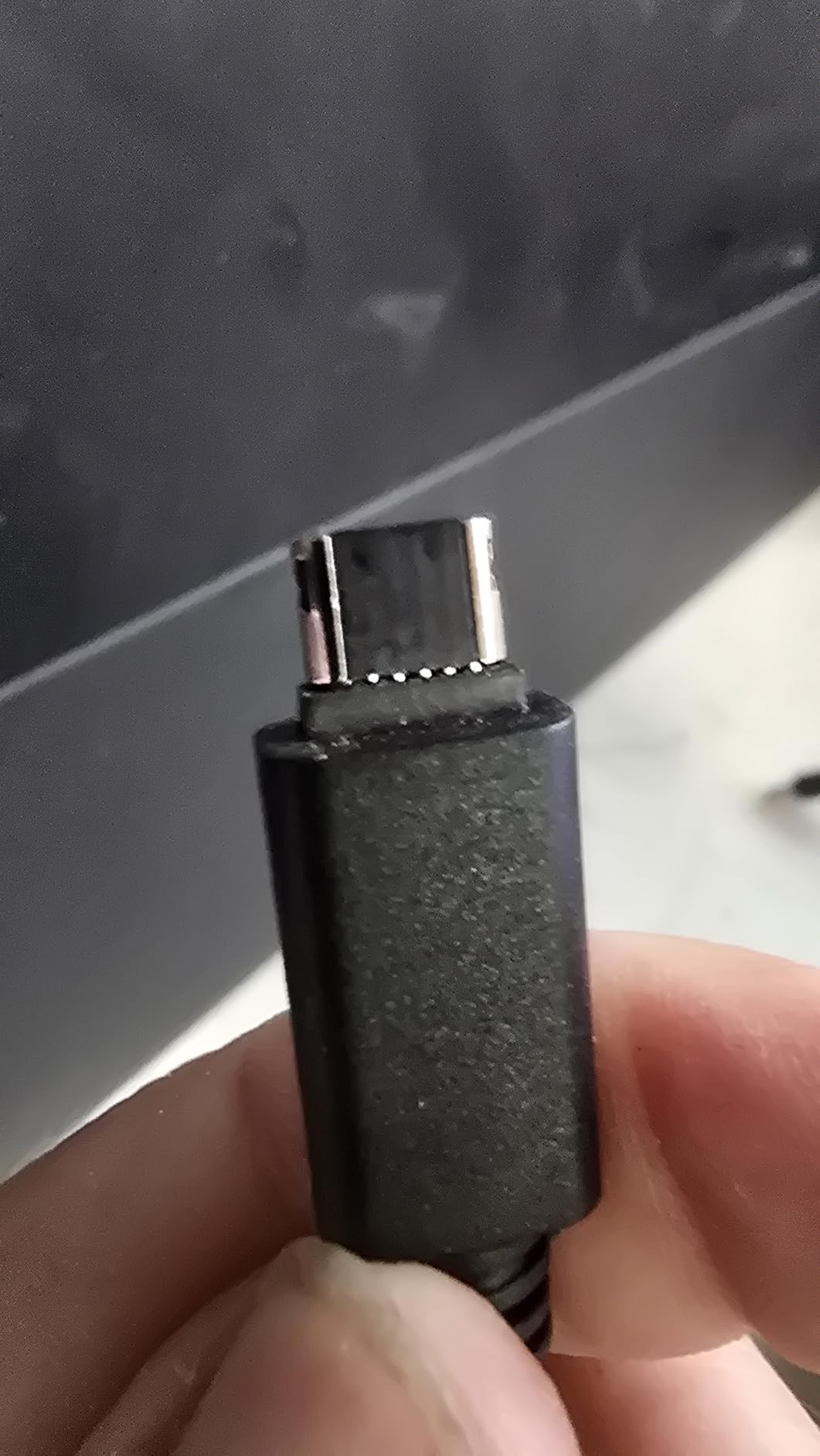
The honest compromises are physical rather than electronic. At 86.8 pounds it needs a dedicated spot on the floor rather than a desk, and owners regularly mention that the Z-probe is a spring-loaded metal spear that dents easily and can return a false focus reading on warped stock. There is no motor braking, so an accidental nudge with your sleeve during setup can shift your origin and you will not notice until the job runs.
Smoke and odor still need handling. The enclosure contains the plume, it does not filter it, and a dedicated extraction setup is part of owning this machine rather than an optional extra. One further wrinkle: the AutoPassthrough feed-through feature needs a separate feeder unit that is not in the box.
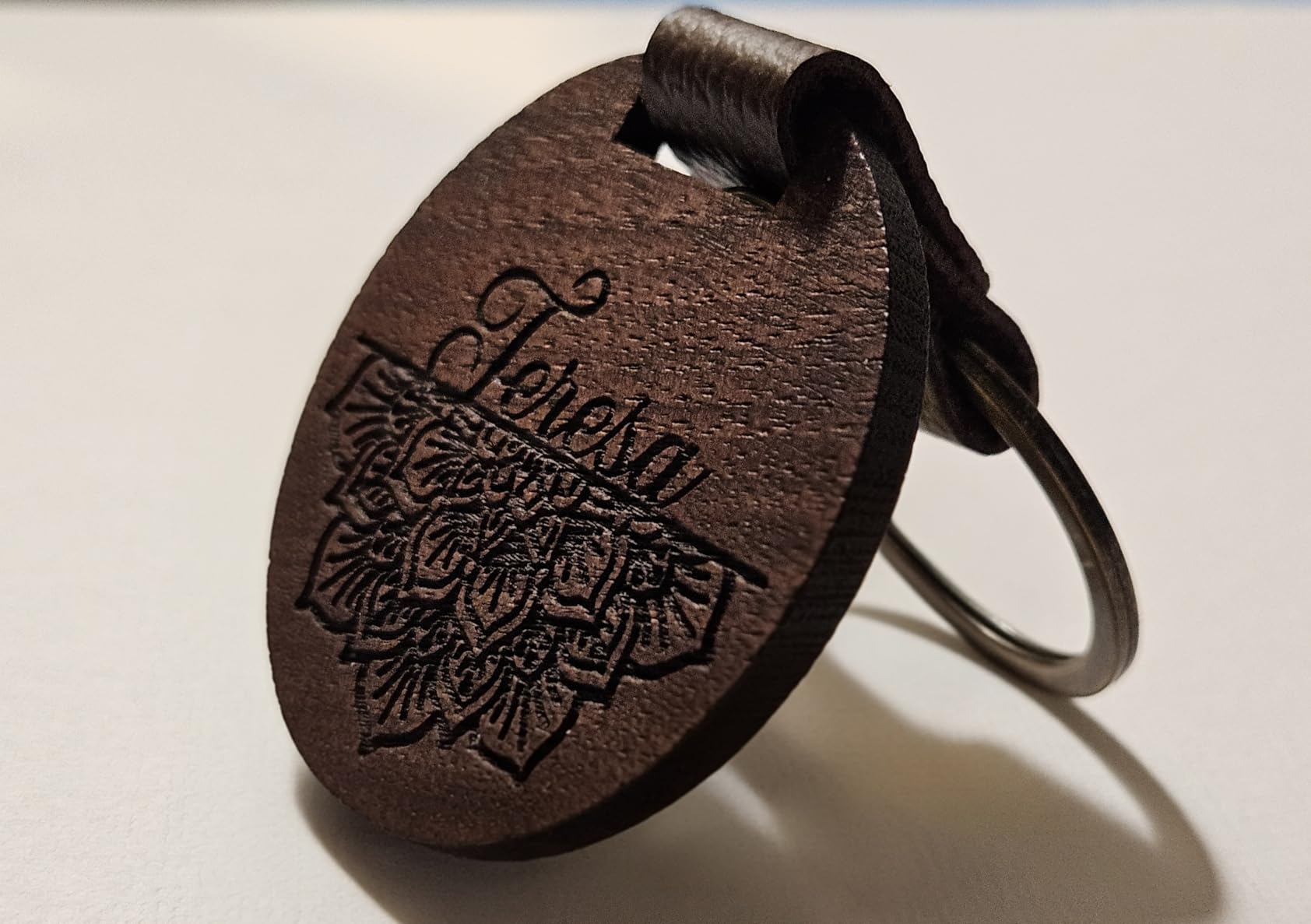
When the xTool S1 40W is the right buy
Buy this one if you are making furniture-scale wood pieces, layered signs or product runs rather than coasters. A 18mm single-pass cut and a bed this size means you stop splitting one sign across two jobs, and the flame sensors give you the headroom to leave a longer job running while you do something else.
It is also the safest of the ten to have in a house with kids or pets, since the laser radiation stays inside the cabinet. If you mostly engrave flat graphics on thin stock and never approach 6mm thickness, the money is better spent on a mid-size 20W and you will not notice the difference.
When the xTool S1 40W is the wrong buy
Skip it if your workshop is a spare room and floor space is at a premium, because the weight and footprint are fixed and there is no folding option. The XCS software also has rough edges that owners flag, including an app that can behave inconsistently and material settings that sometimes fail to save between sessions.
And if metal is a genuine part of your project list, this is a diode machine. It will not mark bare steel, brass or aluminium without an add-on module, and adding one costs more than buying a dual-laser unit outright.
2. Twotrees TTS-20 Pro – Best Value 20W Diode for Wood
Twotrees TTS-20 Pro Laser Engraver, 20000mW Laser Engraver Machine
20W optical diode
418 x 418mm bed
30000mm/min
4kg desktop
Pros
- Genuine 20W optical output rated at 19.5W or better
- 418 x 418mm bed is large for the money
- Silent TMC2209 stepper drivers
- Origin homing auto-calibrates between jobs
- Runs fully offline from a TF card
- Lightweight 4kg body
Cons
- Air assist
- honeycomb panel and touchscreen sold separately
- Air assist port needs a separate pump
- Wi-Fi transfer slower than USB on large jobs
This is the machine we would hand to a reader who wants real cutting ability without a four-figure invoice, and it is also the most-reviewed product in our group with 493 ratings. The spec that matters is the honest one: at least 19.5W of optical output from a 20W label, which is a rare level of candour in a category where head wattage is routinely inflated.
Wood work is where it earns its rating. A 418 by 418mm bed is larger than several machines costing well above it, so you can lay out a full set of coasters, tags or small signs in one pass, and 30000mm/min of travel speed keeps long vector jobs from dragging. The TMC2209 silent drivers and the built-in X/Y homing function mean the machine re-establishes its origin before each job, which removes the single most common cause of ruined batches.
What you give up is the enclosure and the accessories. This is an open frame, so fumes and light are your problem to solve, and the air assist port exists but the pump that drives it is a separate purchase. The honeycomb workbed and touchscreen module are optional add-ons too, and most buyers end up buying all three shortly after the machine arrives.
The Wi-Fi transfer is worth noting as a practical detail rather than a fault: for larger job files, a USB cable is faster and more dependable, and the TF card slot covers fully offline batch runs, which is the feature that matters if you plan to run this overnight.
When the Twotrees TTS-20 Pro is the right buy
This is the pick for a first machine that must actually cut wood rather than only scorch it. At 20W you can slice basswood and birch plywood in a single pass, and a 4kg body you can carry to a friend’s garage when you want to make signs together.
It is also the sensible choice if you want to learn LightBurn. The machine speaks LightBurn and LaserGRBL on Windows, macOS and Linux, so the skills you build here transfer to almost any other machine you buy later. That transferability matters more than it sounds at this price level.
When the Twotrees TTS-20 Pro is the wrong buy
Choose an enclosed unit if you share a home with small children or animals, because this frame is fully open. The same applies to anyone sensitive to smoke, since there is no built-in extraction and the smell of burning wood will fill a room within minutes.
And budget for the accessories before you buy, not after. The machine, the pump, the honeycomb bed and a fume extractor are four separate line items, and skipping the pump is the fastest way to get heavy char and a dirty lens within a few jobs.
3. ACMER S1 – Best Budget Pick for Learning and Small Wood Pieces
ACMER S1 Laser Engraver Machine, 2500mW Lazer Cutter for Wood and Acrylic
2500mW diode
130 x 130mm bed
2mm focal length
2kg body
Pros
- Free Acmerstudio software with no licence needed
- 99% preassembled with a one-minute head install
- 2kg portable body moves between rooms
- Clean results on plywood and wood tags once focused
- Very low entry cost for experimenting
Cons
- 130 x 130mm bed limits project size
- Slow etching for the price
- Frequent loss of homing position triggers false alarms
- Cut-out consistency trails larger machines
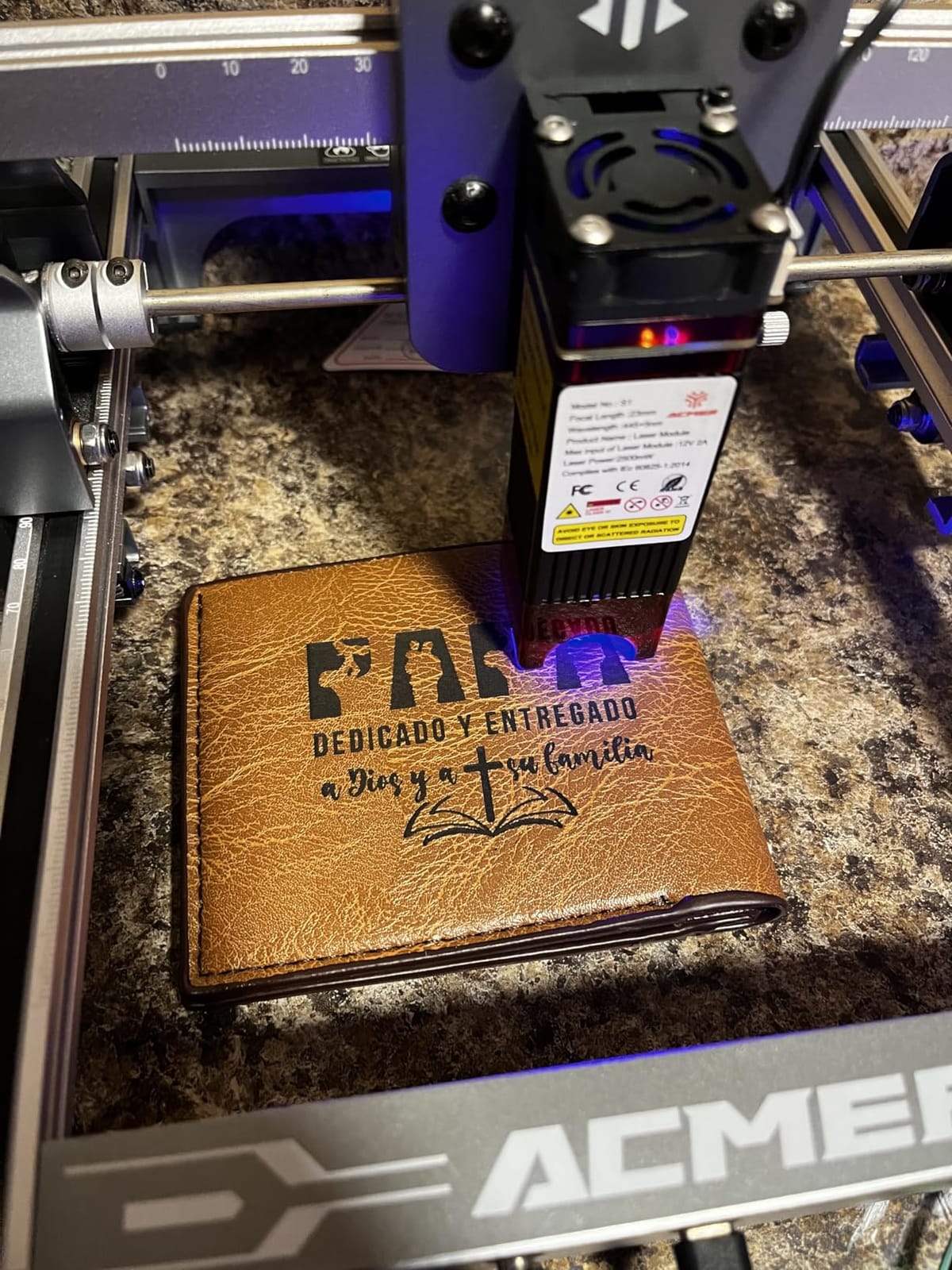
The honest question is what a 2500mW laser can do, and the answer is more than most people expect. Focused properly on plywood, wood tags, coasters and thin acrylic, it produces clean marks and it does so within a minute of unboxing, because the unit arrives 99% assembled and the only real assembly task is clipping the laser head into place.
That instant setup is the actual selling point. You can unbox this on a kitchen table, run a material test, and be engraving within the hour, which is the fastest path from curiosity to finished coaster anywhere in this list. The bundled Acmerstudio software is free, works immediately, and also reads LightBurn and LaserGRBL files, so nothing is locked behind a licence.
The trade-offs are structural. A 130 by 130mm bed is genuinely small, and anything larger needs a different machine. Etching speed is modest, and the homing behaviour is the most common complaint in reviews: the machine loses its home position between jobs and raises out-of-bounds alarms on work that is physically within the bed, which is frustrating when you are trying to repeat the same design.
It is also rated Class 4 with a 2mm focal length, so treat it as an open laser: safety glasses, a ventilated space and a clear line of sight are not optional extras here.
When the ACMER S1 is the right buy
Buy it if you are deciding whether laser engraving is for you, or if you need a second machine for name tags and small gifts that travels easily between a market stall and a home bench. The 2kg aluminium body stores in a cupboard and sets up in minutes.
It is also a good teaching machine. A small bed forces simple designs, which is a useful discipline, and the free software means you can learn the workflow without spending anything beyond the machine itself.
When the ACMER S1 is the wrong buy
Do not buy it if your project list includes furniture, layered signs or anything wider than a coaster. The bed size is not expandable, and the loss of homing makes batch production of identical items genuinely difficult.
And if cutting through material matters to you at all, this is the wrong tier. You are buying an engraver here, not a cutter, and a 10W or 20W machine a short step up the market will change what you can make far more than any software decision.
4. Creality Laser Falcon 10W – Best Low-Cost Open Frame for Thin Wood
Creality Laser Engraver Machine 10W Output Power, 72W DIY Laser Engraving Machine 0.06mm High Precision Laser Cutter and Engraver for Wood and Metal, Paper, Acrylic, Glass, Leather etc, 17″ x 16″
10W output from 72W machine power
Cuts 5mm basswood in one pass
0.06mm spot
7.05 pounds
Pros
- Cuts 5mm basswood and 3mm acrylic in a single pass
- Aluminium frame with steel wheel rails feels rigid
- Tool-free focusing plate speeds material changes
- 97% UV filtering window protects the user
- Wi-Fi
- USB and SD card transfer options
Cons
- Open frame means fumes need external extraction
- LaserGRBL is limited next to LightBurn
- 10W output suits only thin wood and acrylic
The headline here is misleading and worth correcting before you buy anything: this machine draws 72W of electrical power to produce 10W of laser output. That is a normal ratio for a diode laser, and the real number for your wood projects is the 10W. On that basis it cuts 5mm basswood or 3mm black acrylic in one pass at up to 10000mm/min.
The build quality is better than the price suggests. An aluminium alloy frame with a steel shaft wheel guide rail is a rigid arrangement, and the tool-free focusing plate on the laser head means you can swap between plywood and thin acrylic without reaching for a hex key. The 0.06 by 0.06mm focused spot and 0.004 inch accuracy are good numbers for the money, and the protective window filters 97% of UV rays.
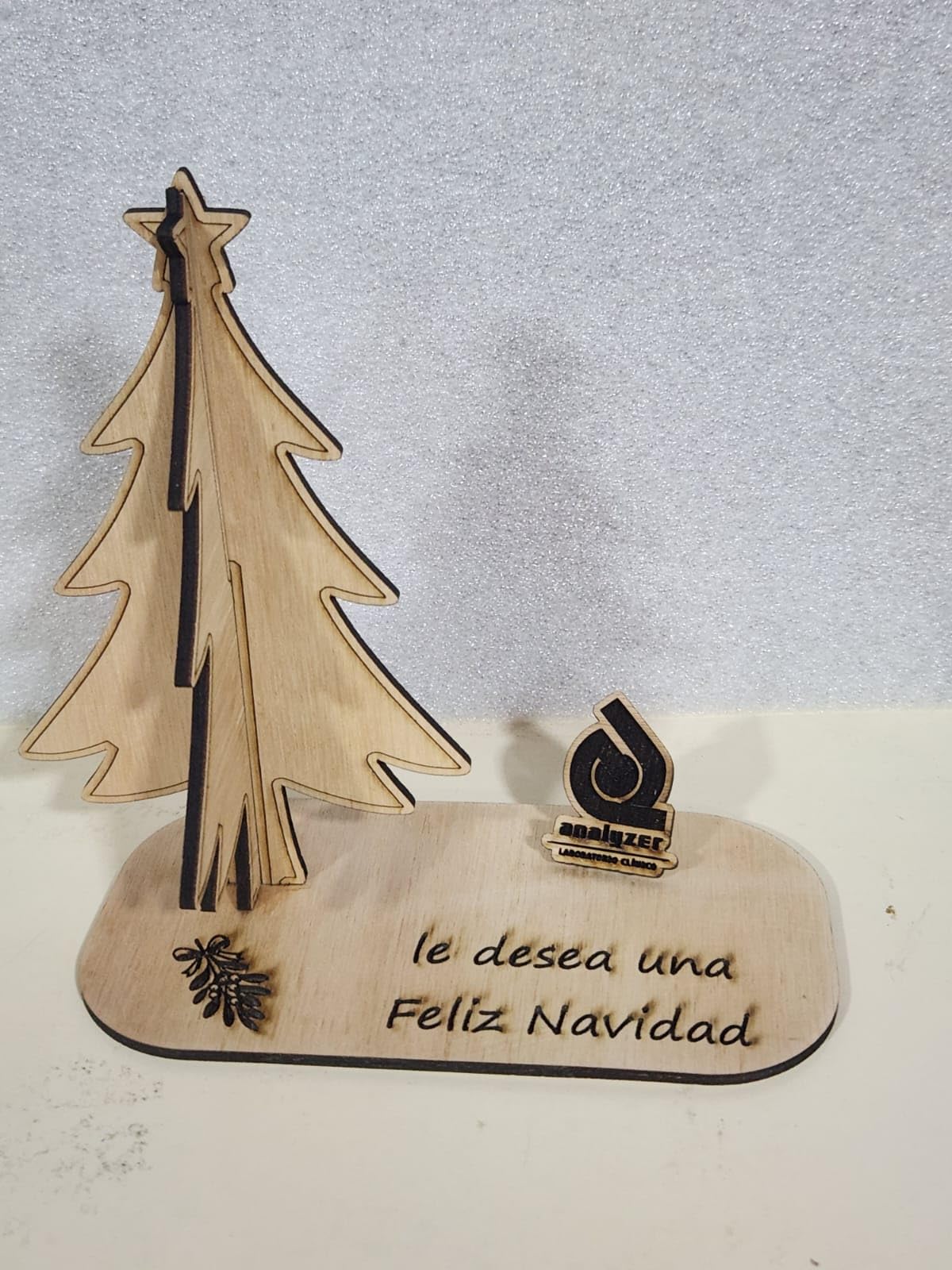
Assembly takes 10 to 20 minutes, which puts it in the same territory as a flat-pack chair, and the frame is open, so all of your safety planning has to happen outside the machine. Smell and eye protection are both your responsibility here, and the included window only covers UV, not the visible beam itself.
Software is the other gap. It accepts LightBurn and LaserGRBL files, but LaserGRBL is a limited controller and reviewers regularly note that the simpler software cannot do the things you will eventually want, like layered passes with air assist profiles or a proper power and speed test grid.
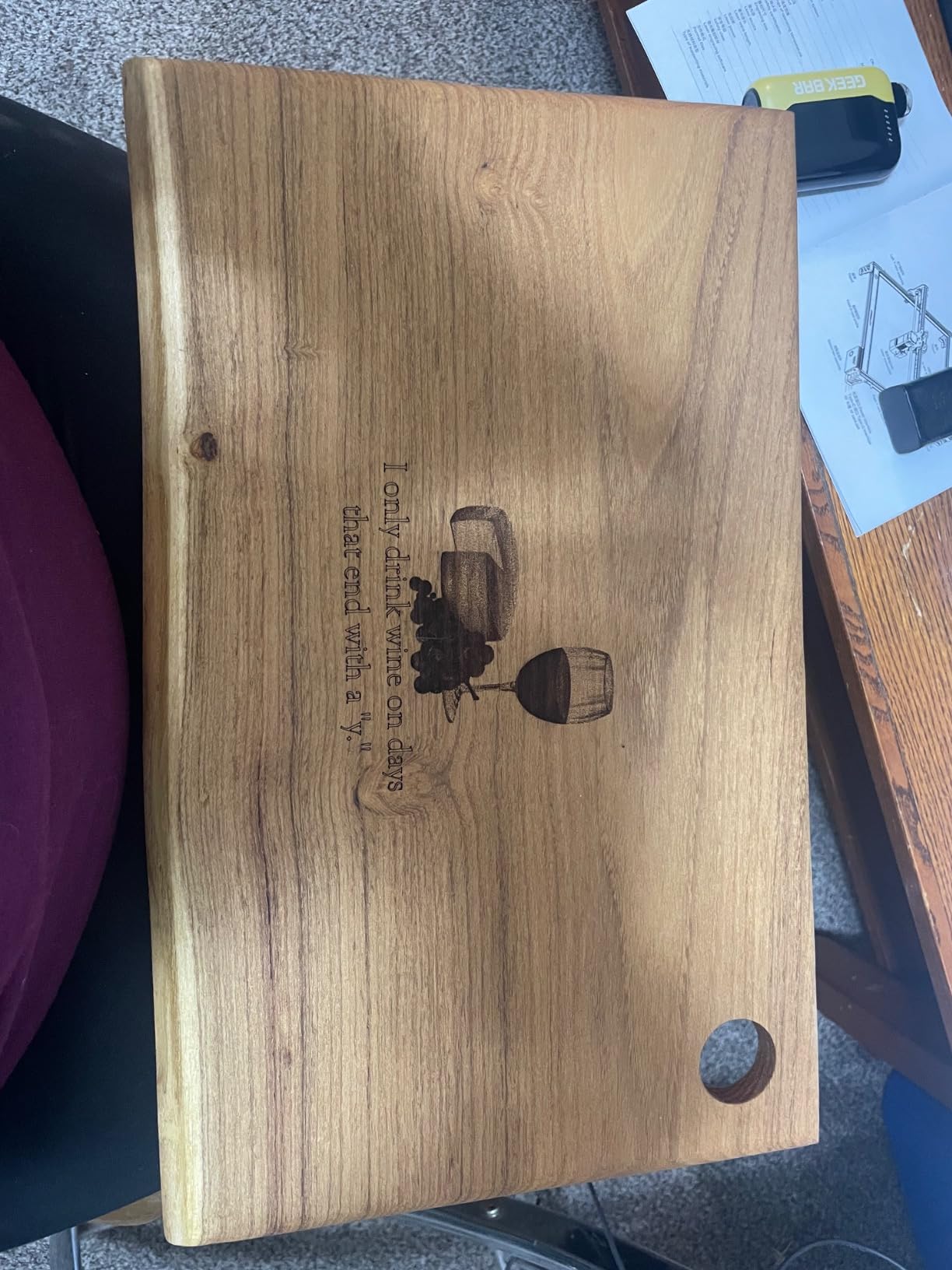
When the Creality Falcon 10W is the right buy
This is the right machine for engraving, personalization and light cutouts in thin material: name tags, coasters, small plaques, packaging prototypes and 3mm plywood. At 7.05 pounds it is easy to move between a craft fair and a workbench.
It is also the cheapest credible entry into a rigid metal frame, which is where a lot of the perceived quality in this category comes from. If you are buying your first machine and plan to keep it for years, that rigidity outlasts many cheaper-feeling competitors.
When the Creality Falcon 10W is the wrong buy
Step up if you need to cut hardwood. 10W will not produce a clean edge through oak, walnut or maple, and forcing it produces charred, tapered edges and a lot of wasted passes. For thick wood you want 20W and up, or a CO2 tube.
Also skip it for a shared home workspace. The open frame plus open beam plus open fumes is a poor combination in a room where anyone else spends time, and the LaserGRBL software will not grow with you the way LightBurn will.
5. LaserPecker LP2 – Best for Portability, Tumblers and Cylindrical Wood
LaserPecker LP2 Laser Engraver with Roller, Portable and Handheld Laser Engraving Machine for Wood Metal Leather Acylic Engraving Laser Cutter, Suit Set with Versatile Rotary Roller
Galvo scanning, 0.05mm spot
1417 in/min
1K, 1.3K and 2K modes
Roller included
Pros
- Compact galvo body needs no fixed bed space
- 0.05mm compressed spot suits fine detail
- Three resolution modes for different jobs
- Electric roller handles tumblers and cylinders
- Trolley mode reaches 196 inches of engraving
- Connects to a phone or a PC
Cons
- Cutting limited to wood and paper within 0.2 inch
- Cannot engrave pure or shiny metals
- 4 inch working width caps project size
- Fixed galvo focal height means flatness matters
Every other machine on this list is a gantry that engraves flat. The LP2 scans with galvo mirrors instead, so there is no rail to align, no belt to tension and no bed to calibrate, and the whole unit is small enough to carry in one hand. For engraving a curved wooden object, a length of timber, or anything on-site, that difference in shape is the whole argument.
The electric roller is what makes it more than a pocket toy. It runs in cylinder mode for tumblers and cups, slab mode for flat boards, and trolley mode, which extends engraving length to 196 inches at a 4 inch width, so a single name can run down a fence rail or a series of identical house numbers can be produced in one job. The 0.05mm compressed spot and three resolution options let you trade speed for detail as the job requires.
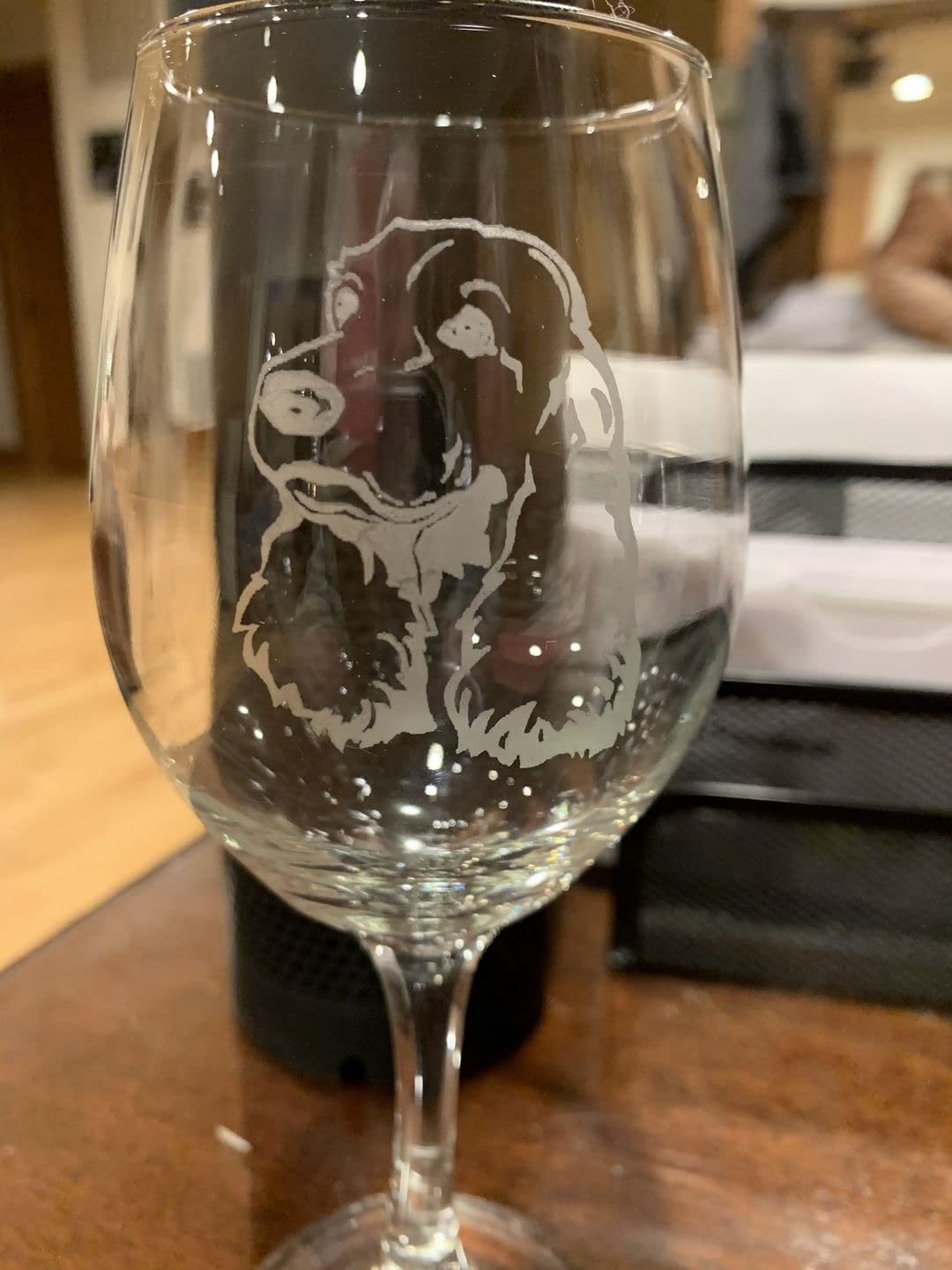
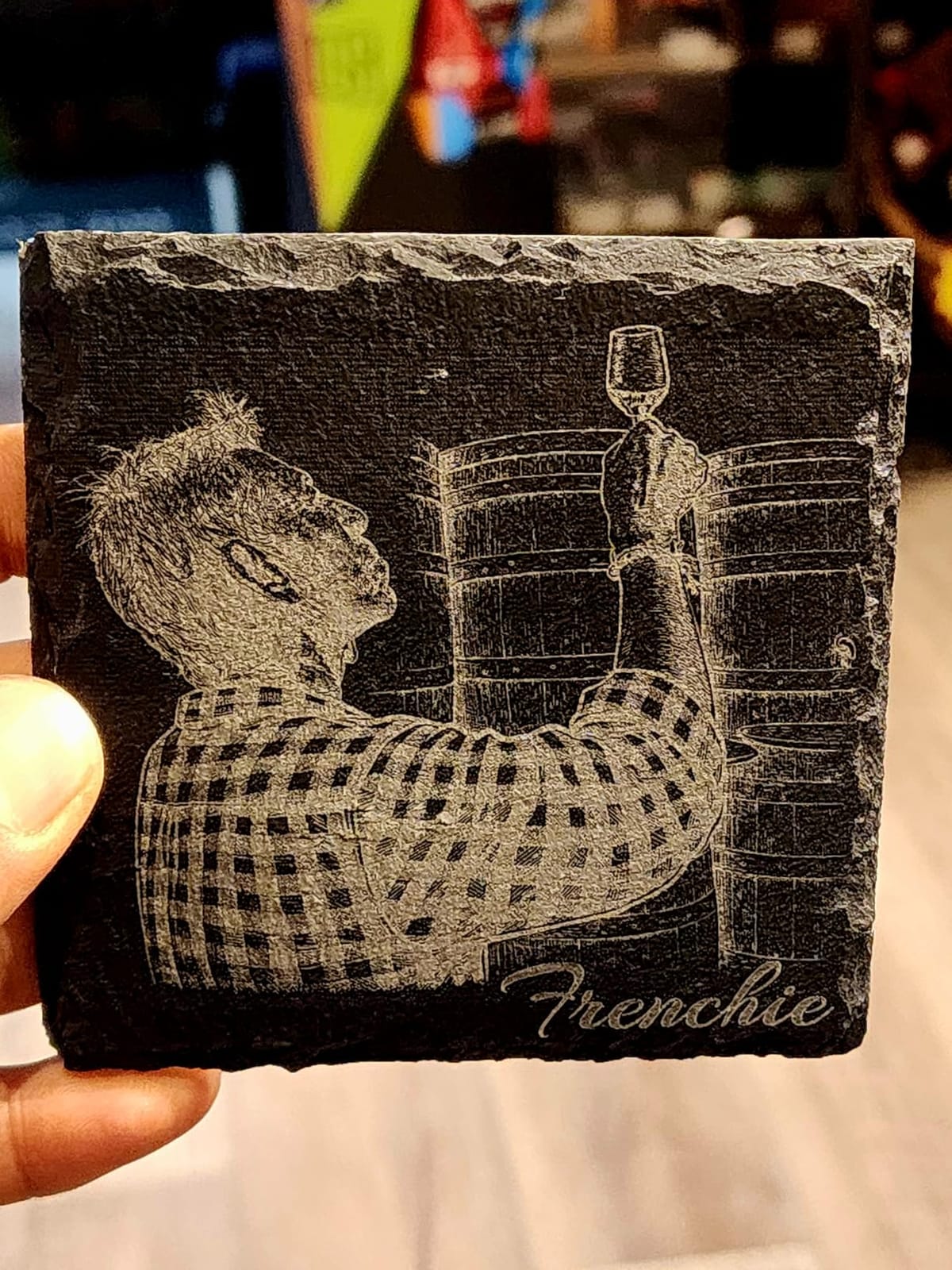
Cutting is the limit, and it is a real one. Reviewers are consistent: cutting is confined to wood and paper within 0.2 inch, and pure or shiny metals simply will not mark, so painted or spray-coated surfaces must be masked light first. The 4 inch working width is generous for engraving and modest for anything else, and because the galvo field has a fixed focal height, warped timber needs flattening before the job will focus evenly.
It is a Class 4 laser and the enclosure is a hood, not a cabinet, so treat it with the same care as any open machine.
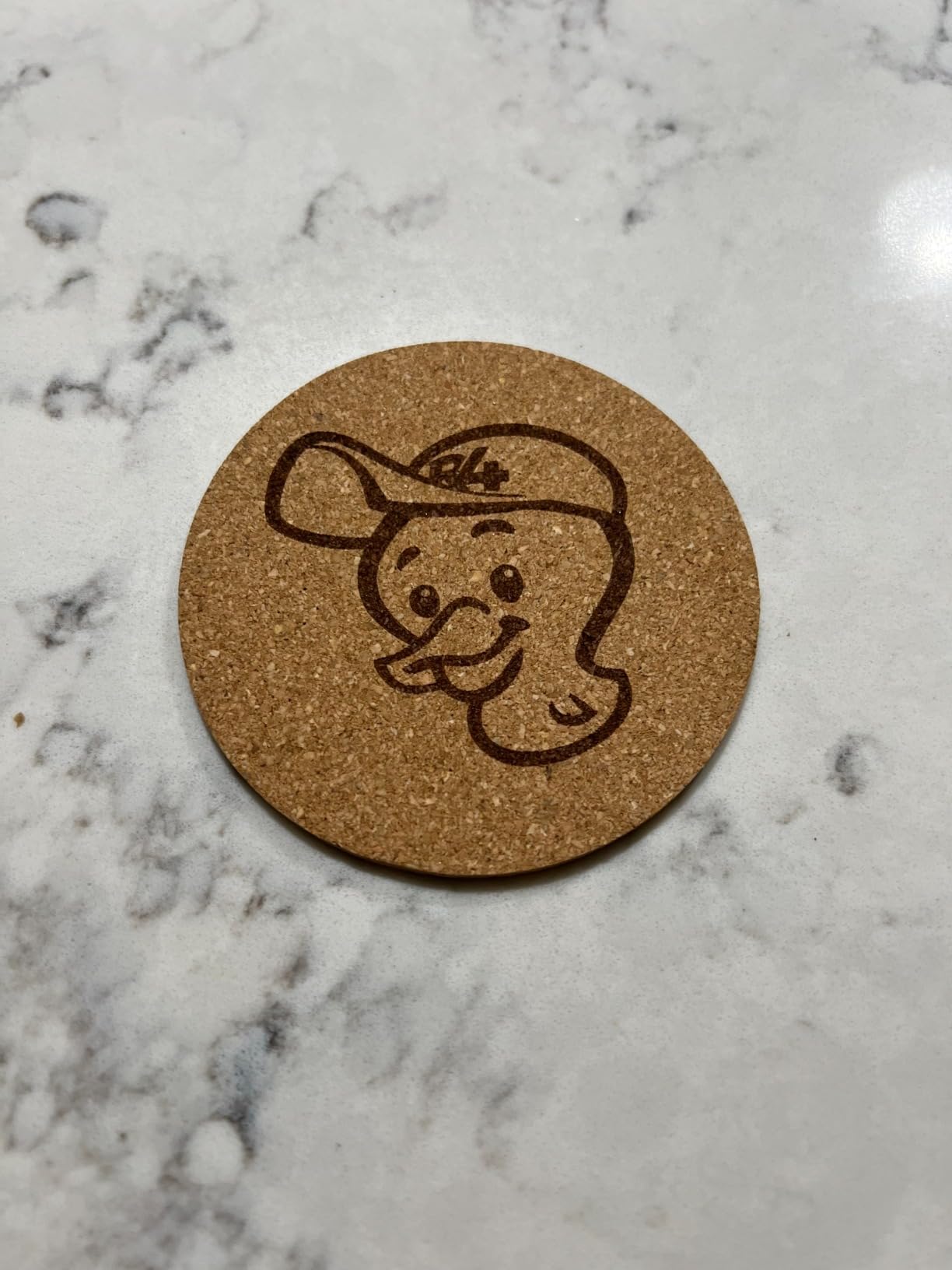
When the LaserPecker LP2 is the right buy
Choose it when your work is not flat or not at home. Custom signs installed on site, engraved timber, cups, leather patches and off-site commissions are all natural fits, and the phone connection means you can send a file from a customer conversation straight to the machine.
It is also the cheapest way into tumbler work in this group, since the roller is included rather than sold separately, and safety glasses are part of the package.
When the LaserPecker LP2 is the wrong buy
Do not buy it as a cutter. A 0.2 inch ceiling on wood and paper will disappoint anyone whose mental image of a laser is a machine slicing through a sheet of plywood.
And if your projects are wide, flat and repetitive, a gantry with a large bed will serve you better and faster. This machine optimises for reach and portability, not throughput on a production table.
6. Creality Falcon A1 – Best Enclosed Machine for Beginners
Creality Falcon A1 10W Laser Engraver, 80W Powerful Output, Fully Enclosed, 600mm/s Speed, HD Camera Auto Positioning, Pre-Assembled&Smart Material Recognition, Ideal for Wood & Metal, Class 1 Safety
10W output,80W machine power
Cuts 6mm wood
Class 1 enclosed
28.7 pounds
Pros
- Fully enclosed Class 1 design needs no safety goggles
- HD camera recognises material and applies settings
- 600mm/s CoreXY motion with 0.05mm accuracy
- Pre-assembled and ready to engrave
- Transparent panels make loading easy
Cons
- 10W will not cut thick wood despite the 80W figure
- Reflective metals and mirrored acrylic are prohibited
- Honeycomb panels limited to 460 x 346mm
- 28.7 pounds needs a dedicated surface
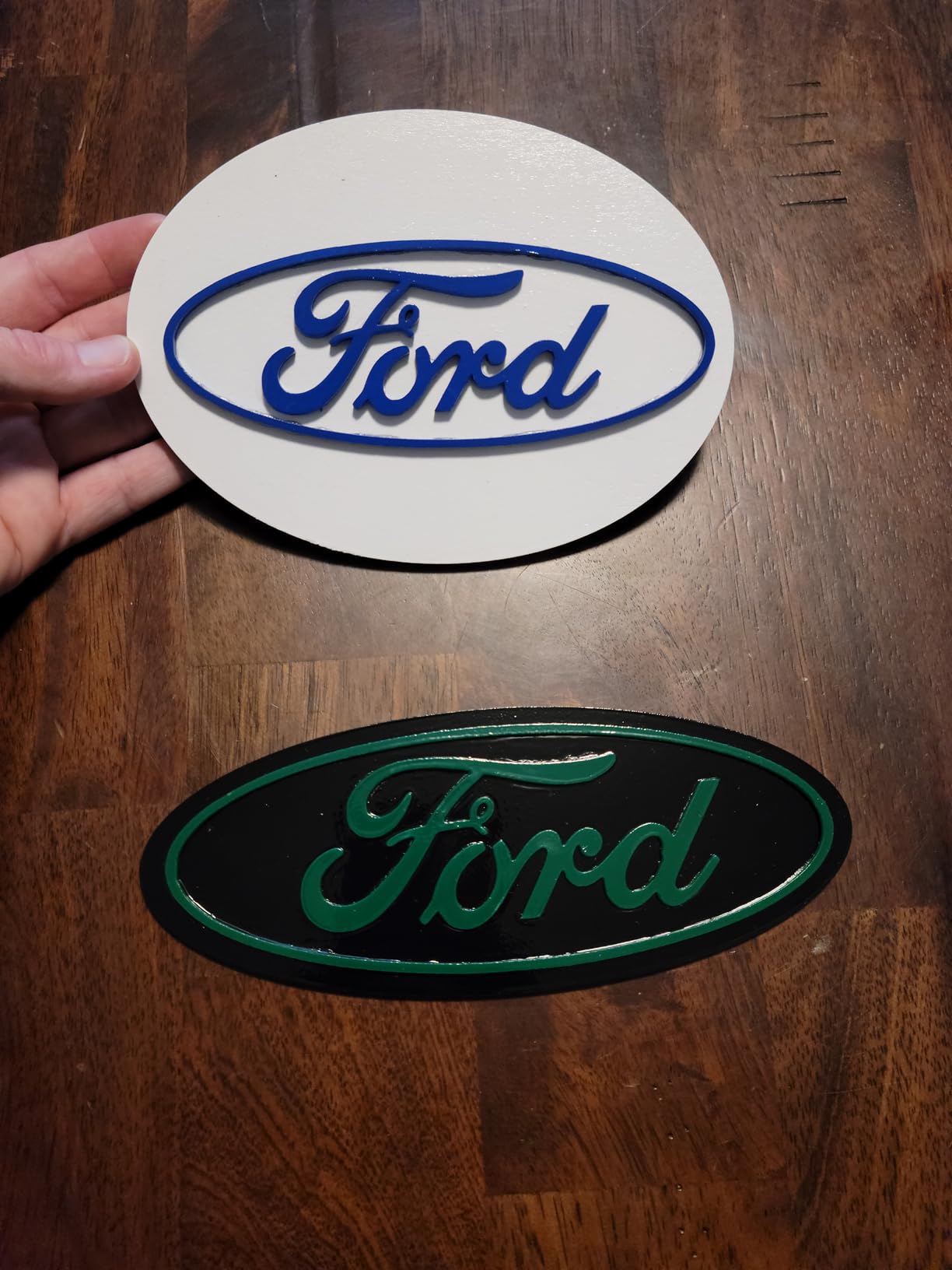
This is the gentlest on-ramp in the group for anyone who has never run a laser. It arrives pre-assembled, the housing is fully enclosed and rated Class 1 with 99% of laser light filtered, and the double-door design with transparent panels means you can load a board and watch the job without leaning into the beam or breathing the plume.
The camera is the feature that saves the most wasted material. It recognises the material, applies settings automatically, and positions the design on screen before the job starts, so a misaligned portrait no longer costs you a sheet of walnut. Motion runs at 600mm/s on a CoreXY system with 0.05mm engraving accuracy, and the listed single-pass wood cut is 6mm.
Now the honesty. The 80W figure is electrical power; the laser output is 10W, and that is the number that limits what you can cut. Anything approaching quarter-inch hardwood is out of reach. Reviewers are also clear that highly reflective materials, including mirror-finished metals and mirrored acrylic, are strictly prohibited because the beam reflects back into the light path.
There is also a quiet lock-in: the honeycomb workbed only accepts 460 by 346mm panels, so if you want a different bed size or a third-party accessory you will be hunting. At 28.7 pounds it wants a stable dedicated table rather than a folding card table.
When the Creality Falcon A1 is the right buy
Pick it if safety and simplicity come before cutting power. In a home with children, this machine removes almost every precaution the other open frames require, and the camera-driven setup shortens the distance between a design idea and a finished piece.
It is also well suited to engraving thin wood products, personalised gifts and small production runs, where 6mm of cutting depth is already more than the job requires.
When the Creality Falcon A1 is the wrong buy
Pass if you make thick objects. A cutting board, a layer of stacked hardwood or a 3/4 inch sign is beyond a 10W diode, and no amount of software sophistication changes the physics of absorbed energy.
Also consider the 4.1 average rating carefully. It reflects a specific complaint pattern around reflected materials and the proprietary bed size, and if either of those matters to your workflow, a machine with a 20W module and a standard bed will age better.
7. xTool F1 Ultra – Best Dual Laser for Wood and Metal Together
xTool F1 Ultra 20W Fiber & Diode Dual Laser Engraver
20W fiber plus 20W diode
10,000mm/s
220 x 220mm bed
3D embossing
Pros
- Only unit here that marks wood and bare metal
- 10000mm/s speed suits batch production
- 3D embossing and deep engraving for higher value work
- 220mm square bed in a compact footprint
- xTool Creative Space is widely praised
- Support responds quickly and honours warranty
Cons
- Reported early laser failures within about 30 days
- Calibration drifts
- especially front to back
- Deep metal engraving takes 3.5 to 7 hours per item
- Mac LightBurn connectivity issues
- Add-on features sold separately
The only machine in this roundup that engraves wood and bare metal in the same unit, and that single fact changes the economics for anyone who sells mixed-material products. The diode side cuts up to 15mm of wood and 12mm of black acrylic, while the fiber side handles 0.3mm stainless steel, 0.4mm brass and 0.2mm aluminium, plus 3D embossing and deep engraving that the pure diode machines cannot touch.
Speed is the headline number: up to 10,000mm/s, which is several times the gantry machines here and the reason it suits production work. A 16MP smart camera handles positioning and batch jobs, the 220mm square bed expands to 220 by 500mm with an auto conveyor, and the 6,000-plus free community design projects give you a starting library on day one.
The 4.1 rating is worth reading carefully, because the complaints are specific rather than general. Owners report a proportion of machines suffering complete laser failure within roughly 30 days, calibration that drifts position over time, and a 16% one-star share. Deep metal engraving is genuinely slow, with 3.5 to 7 hours reported for a single coin-sized piece, and the calibration adjustment point sits awkwardly behind the light shield.
There are also software frictions: LightBurn reportedly will not connect on Mac, the desktop AI design tools are paywalled once free credits run out, and features like the auto conveyor are sold separately.
When the xTool F1 Ultra is the right buy
Buy it if your product line includes metal and wood, which is the norm for jewellery, hardware signage and small gift businesses. A separate fiber machine plus a separate diode machine would cost more than this and occupy twice the space.
The 10,000mm/s speed and batch camera also make it the right call for volume work, where throughput per hour matters more than the lowest purchase price.
When the xTool F1 Ultra is the wrong buy
It is a poor first laser. A Class 4 machine with reported early failures and calibration drift is not a forgiving place to learn, and the 43.8 pound body plus heavy smoke output means it needs a proper extraction setup from day one.
If wood is the only material you care about, a dedicated 40W diode will give you a larger bed, a simpler workflow and a lower failure surface for a fraction of the outlay.
8. ATOMSTACK A20 Pro V2 – Best for Coasters, Tags and Small Sign Runs
ATOMSTACK 20W Laser Engraver, A20 PRO V2 Laser Cutter, High Accuracy Laser Engraving Machine for Personalized Gifts, Business Cards, Wood, Metal, Acrylic, Leather
20W output
0.08 x 0.1mm spot
400mm/s
13.42 pounds
Pros
- Sharp detail on wood once settings are dialled in
- Enough 20W power for coasters and small signs
- Large work area in a compact footprint
- Assembles in about 20 minutes
- Works with LightBurn for most users
- Rated laser lifespan up to 10000 hours
Cons
- Gantry cables are unmanaged and snag on the work
- Essentially no written documentation
- Bundled apps are basic
- Some units reported smoke from the electronics box
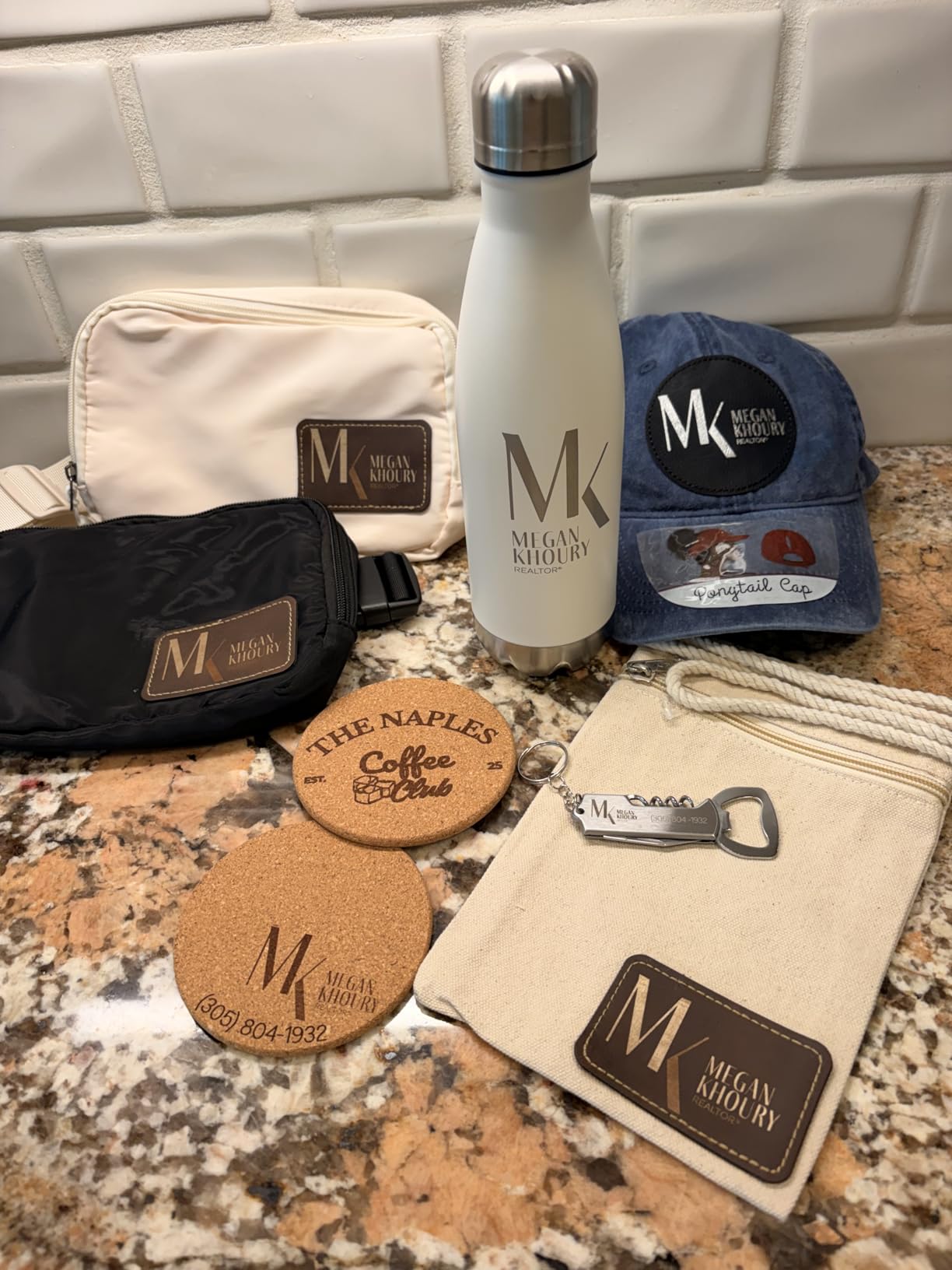
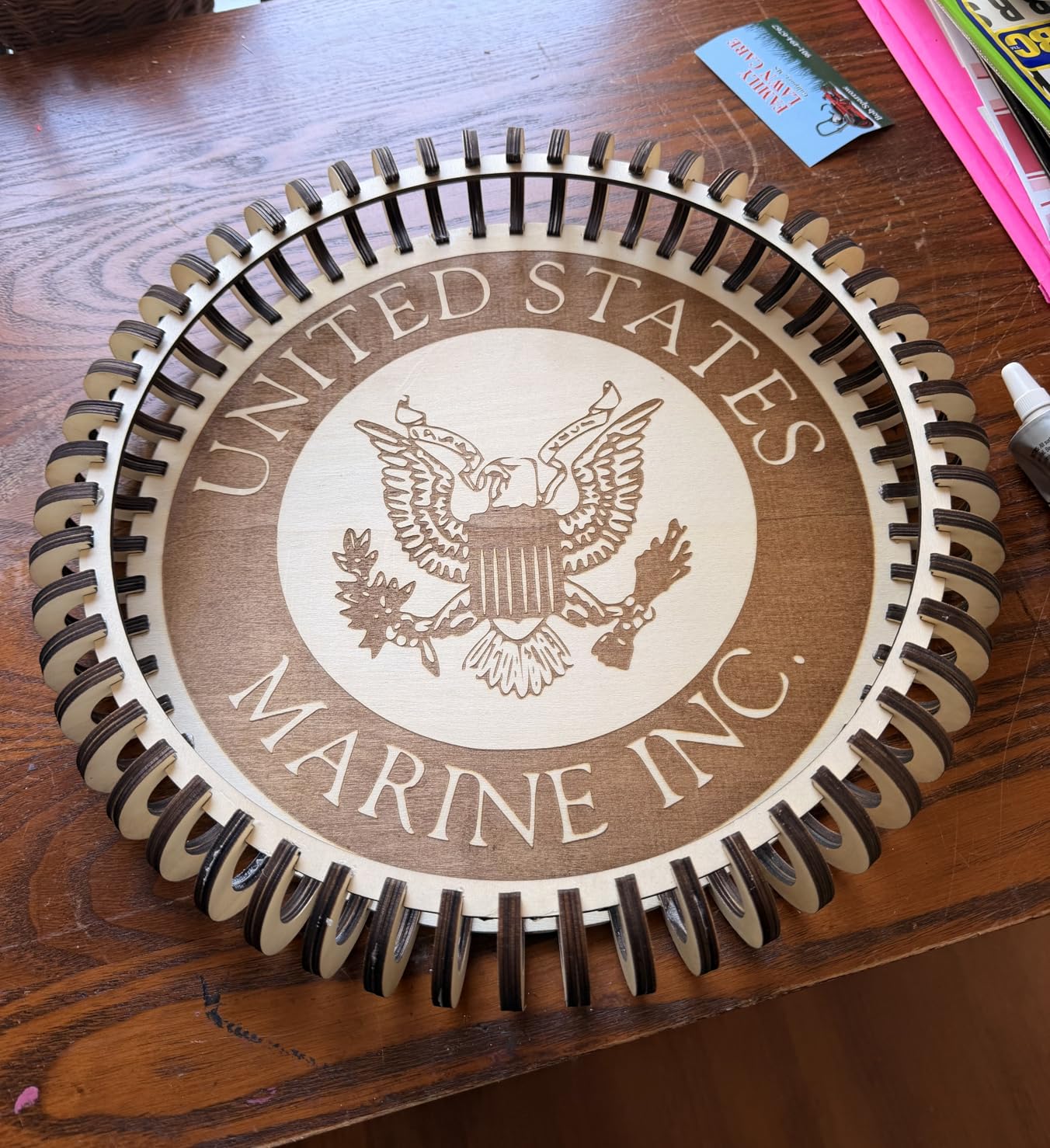
A 20W diode in a compact frame, aimed squarely at the small wood products that make up most people’s first order of business: coasters, gift tags, place cards, small signs and name plaques. Owners report sharp, detailed engravings on wood once power and speed are dialled in, and enough 20W output to cut through coaster blanks rather than merely mark them.
The mechanical details are the story. An integrated linear guide motion structure gives it a fast assembly time of roughly 20 minutes, and the stated laser lifespan of up to 10,000 hours means the diode module is not a consumable you will replace on a normal ownership horizon. The 0.08 by 0.1mm dot and 0.01mm claimed accuracy are respectable for the class, and at 400mm/s it is quick on vector engraving work.
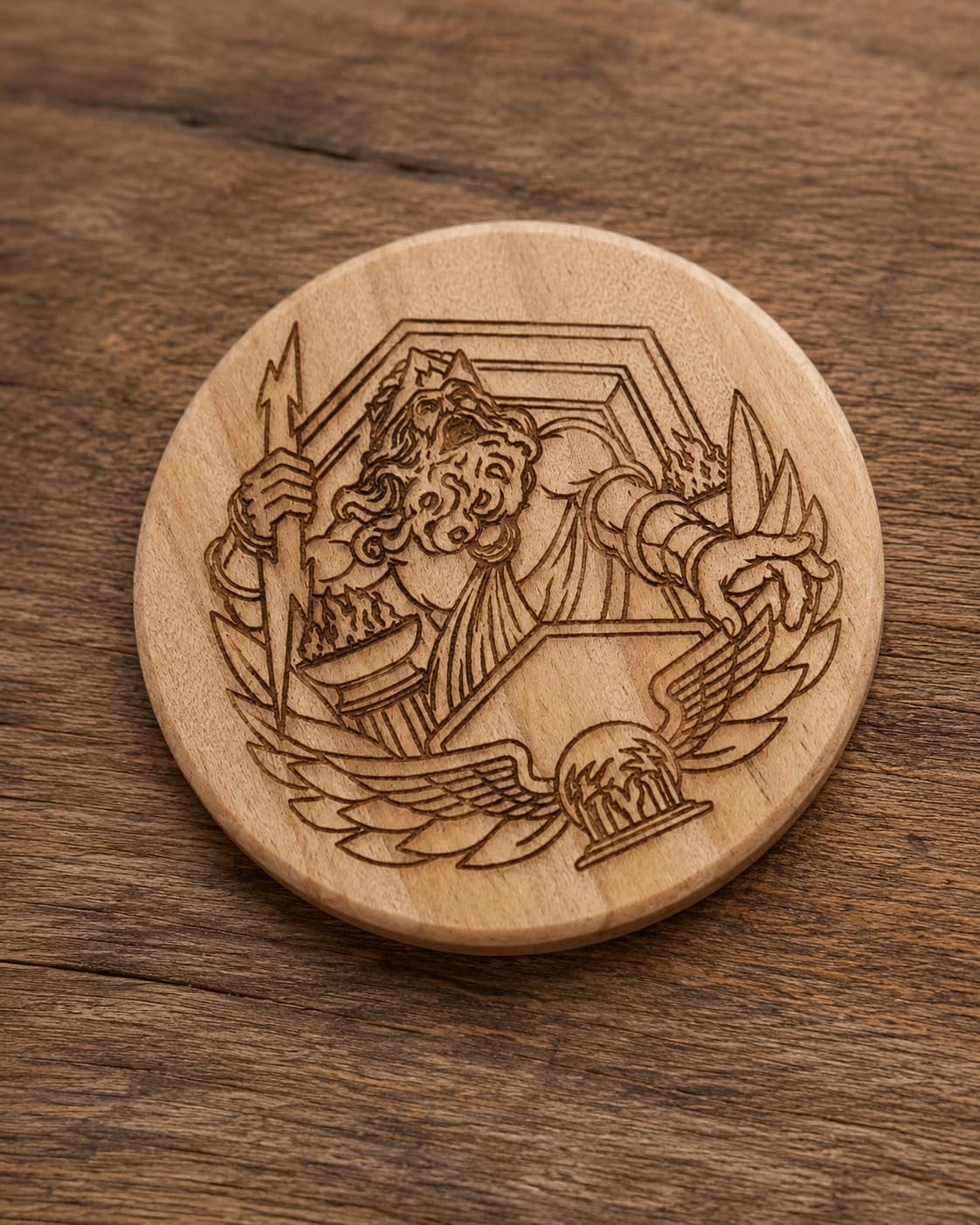
Two build details cause recurring complaints. The gantry electrical cables are not held in a drag chain, so they can catch on the work, and retrofitting one is widely recommended by owners. There is also essentially no written documentation, which means Wi-Fi setup and limit switch configuration are things you work out from community posts rather than a manual.
The bundled ATOMSTACK phone and PC apps are described as basic and not worth using; plan on LightBurn. And while a small number of machines have arrived with a manufacturing defect that caused smoke from the electronics box, so inspect the machine before the first job.
When the ATOMSTACK A20 Pro V2 is the right buy
This is the pick for a maker selling small wood goods or building a gift range where units are individual and names are personal. Detail matters more than sheet size, and the spot size holds a fine line on a coaster face where a fuzzy beam would look wrong.
It is also a sensible mid-tier step up from a 5W or 10W machine that has taught you the basics, and a lighter, cheaper option than a 20W machine with a full metal frame.
When the ATOMSTACK A20 Pro V2 is the wrong buy
It is not the right tool for sheet production. A 400mm/s belt-driven system with unmanaged cables and a compact bed will lose time on a full run of identical pieces compared with a larger, faster machine built for batches.
And if you are not comfortable with community forums and self-configuration, the missing documentation is a real daily cost. Pick a brand with published support material if you want answers on day one.
9. OMTech K40+ 45W – Best for Thick Wood and Clean Acrylic Cuts
OMTech K40+ 45W Desktop CO2 Laser Engraver & Cutter
45W CO2 tube
Cuts 8mm wood and 10mm acrylic
12 x 8 inch bed
300mm/s
Pros
- Clean crisp engravings with strong cutting power on wood
- 45W upgrade gives 1.5 to 2 times the speed of earlier models
- Integrated 45 degree auto-adjusting air assist cuts char
- Cuts 8mm wood and 10mm acrylic in one pass
- Honeycomb bed with detachable base
- Two years of service and support
Cons
- CO2 needs water cooling and adds setup complexity
- Some units arrived with dents and loose internal fasteners
- Heavy at 81.8 pounds and awkward to reposition
- Bulky for a home workspace
This is the only CO2 laser in the group, and the technology difference is physical rather than incremental. A CO2 tube emits at 10.6 microns, a far longer wavelength than a blue diode, and organic material absorbs it with an efficiency blue light simply cannot match. The practical result is a listed 8mm wood cut and 10mm acrylic cut in a single pass from a 45W tube, plus noticeably cleaner edges with far less taper on thicker stock.
OMTech upgraded this model rather than re-releasing it, and the change is measurable: 1.5 to 2 times faster cutting and 15 to 20% deeper cut depth than earlier versions. The integrated 45 degree auto-adjusting air assist is the part woodworkers care about most, because it blows debris out of the kerf and cuts the carbonisation that darkens and weakens the edge of every CO2 cut in wood.
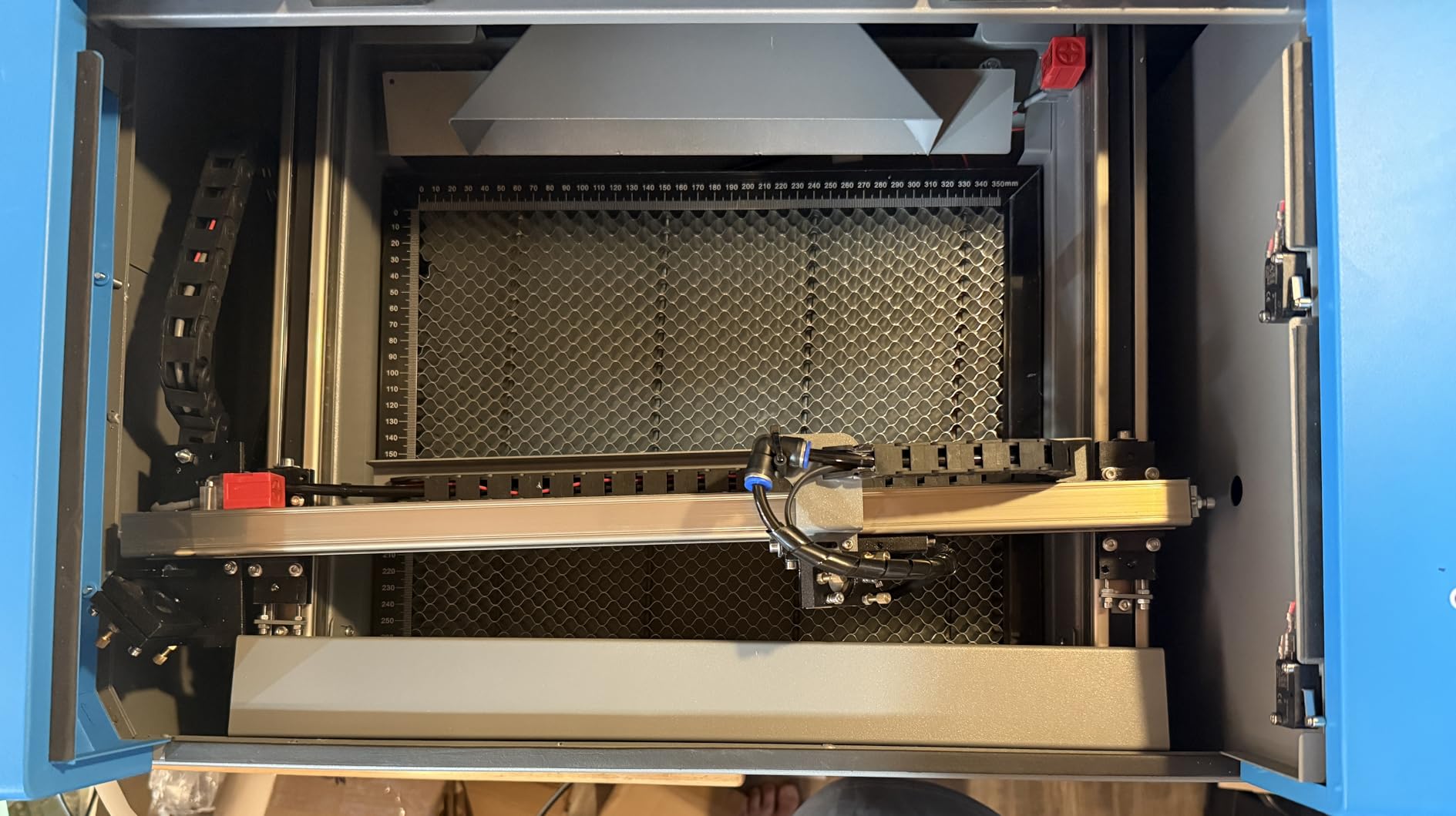
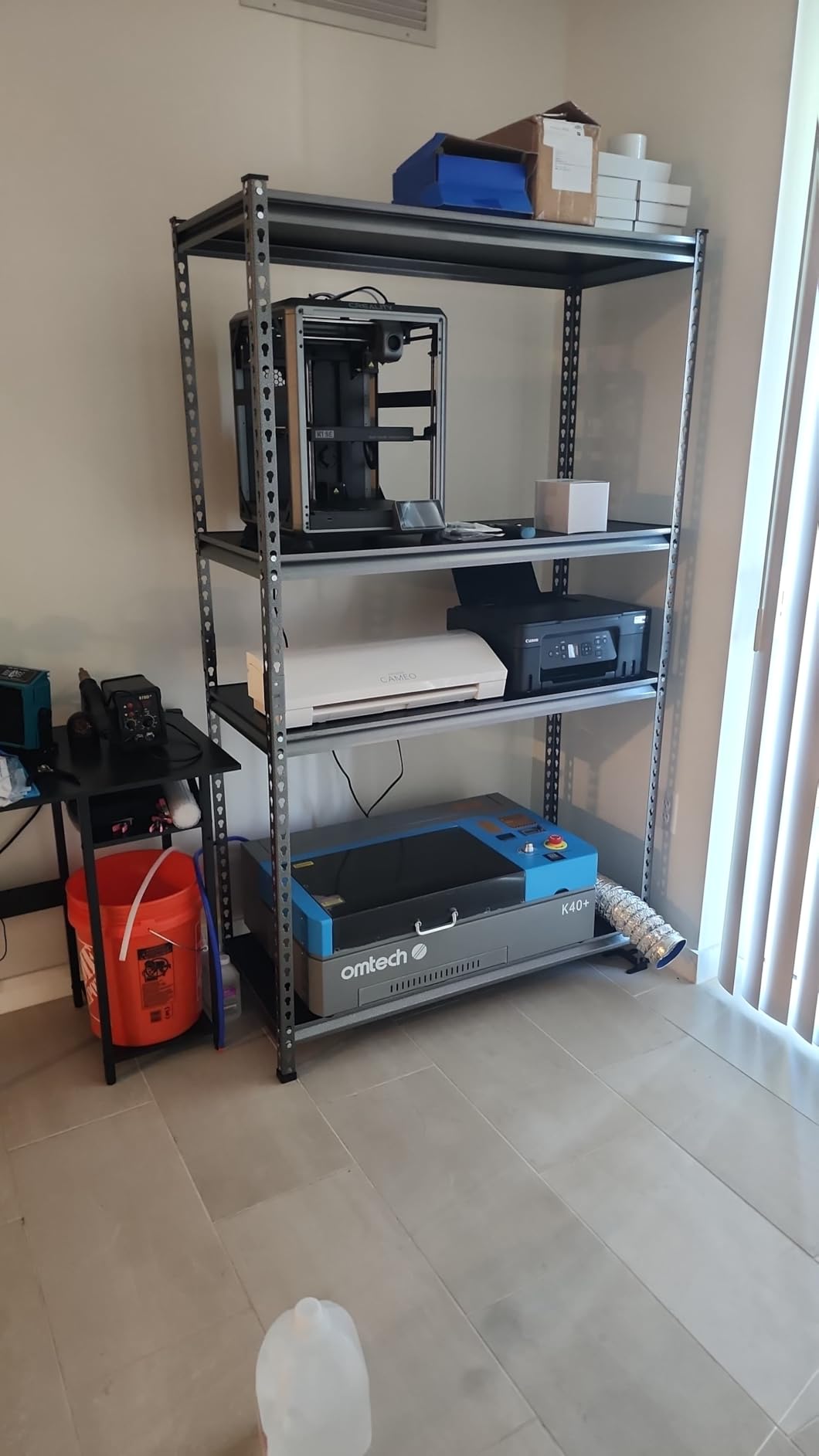
Now the trade-offs, and there are real ones. A CO2 laser needs a water cooling system running, and the pump and chiller are part of owning the machine rather than accessories you might skip. At 81.8 pounds with a 31.9 by 19.7 inch footprint, it needs a permanent table and two people to reposition. The enclosed housing, door and water protection, emergency stop, flame-retardant panel and exhaust fan are all genuine safety infrastructure, but the machine is Class 2 and still deserves a dedicated extraction path.
Quality control is the other flag. With only 37 ratings, the review pool is thin, but owners have reported arriving machines with a dented cabinet, loose internal fasteners, a misaligned gantry and an unsoldered display cable, plus a faulty supplied USB cable. Inspect on arrival and use the support, which owners rate highly and which includes hands-on video guidance for alignment.
When the OMTech K40+ 45W is the right buy
Buy it if you cut thicker wood regularly, or if acrylic is on your material list at all. A 10.6 micron CO2 beam cuts acrylic with a polished edge that diode machines cannot approach, and it is also the natural choice for engraving glass, stone and leather alongside the wood.
It also rewards commitment. If you have a dedicated workshop space, a ventilation plan and a tolerance for a longer setup, the 8mm wood cut and the auto air assist will change what you can make.
When the OMTech K40+ 45W is the wrong buy
It is the wrong first machine for most beginners. Water cooling, extraction and alignment are three new systems to learn before you engrave anything, and 81.8 pounds of glass and steel in a spare room is a poor trade.
And if your work is engraving rather than cutting, a diode gives you a finer, more detailed mark on wood at a fraction of the space and complexity. A CO2 earns its cost through cutting depth, not through engraving finesse.
10. WECREAT Vision Pro 45W – Best for Batch Production and Full-Wrap Tumblers
WECREAT Vision Pro 45W Laser Engraver and Cutter with Rotary Pro, HD Camera & Auto-Lifting, Laser Cutter Cuts 1” Wood, Full Enclosure Laser Engraving Machine for Tumblers, Wood and Metal, Acrylic, etc
45W output
Cuts 25mm wood in one pass
22.83 x 15.75 inch bed
LiDAR auto-lift
Pros
- Cuts 1/8 and 1/4 inch material in a single pass
- Very clear on-screen preview before running the job
- Software interface is easy for beginners to read
- Auto-lifting bed removes the need for riser blocks
- Class 1 metal enclosure with auto-stop on lid open
- Supports 200 plus dog tags per pass
Cons
- Ribbon cable shreds unless a drag chain is retrofitted
- LightBurn camera wizard lifts to the wrong height
- Camera positioning is not accurate at angles
- 2W IR module sold separately
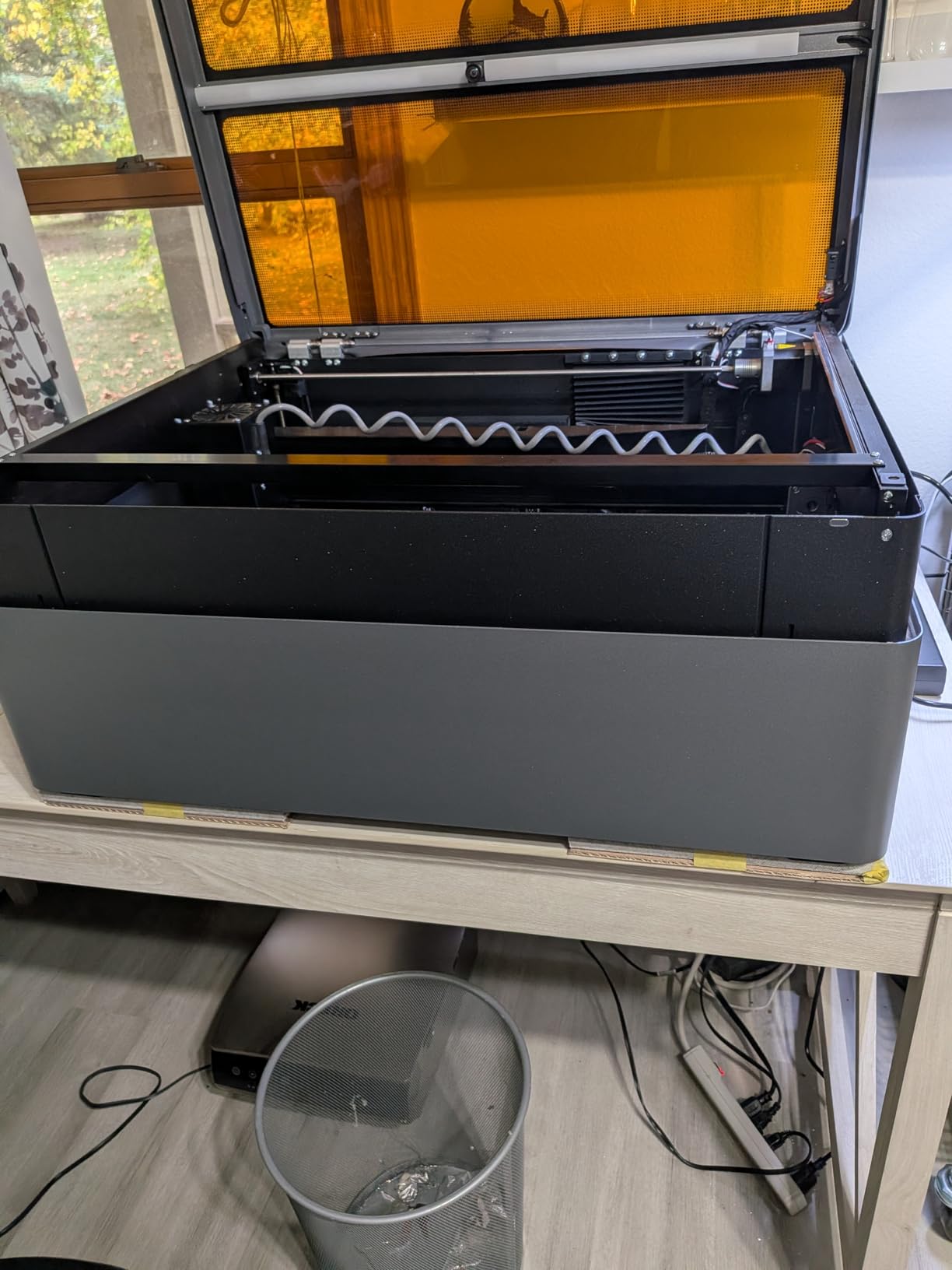
The most powerful cutting machine in this roundup, with a listed 25mm wood cut and 20mm black acrylic cut in a single pass from a 45W module that uses BeamFocus optics to approach the behaviour of a 60W source. The 22.83 by 15.75 inch bed is 42% larger than comparable machines, and at 200-plus dog tags per pass the throughput maths is compelling for anyone running production.
The engineering details are the most advanced here. LiDAR auto-focus holds 0.001 inch accuracy across 300-plus materials, the auto-lifting bed adapts to material from 1mm to 140mm so you never need a stack of riser blocks, the Rotary Pro handles full-wrap 40oz tumblers in a single pass, and the auto pass-through feeder extends the workspace to 18.11 by 137 inches. AirGuard Ultra extraction claims 99% odor removal, which matters in a room where you run long jobs.
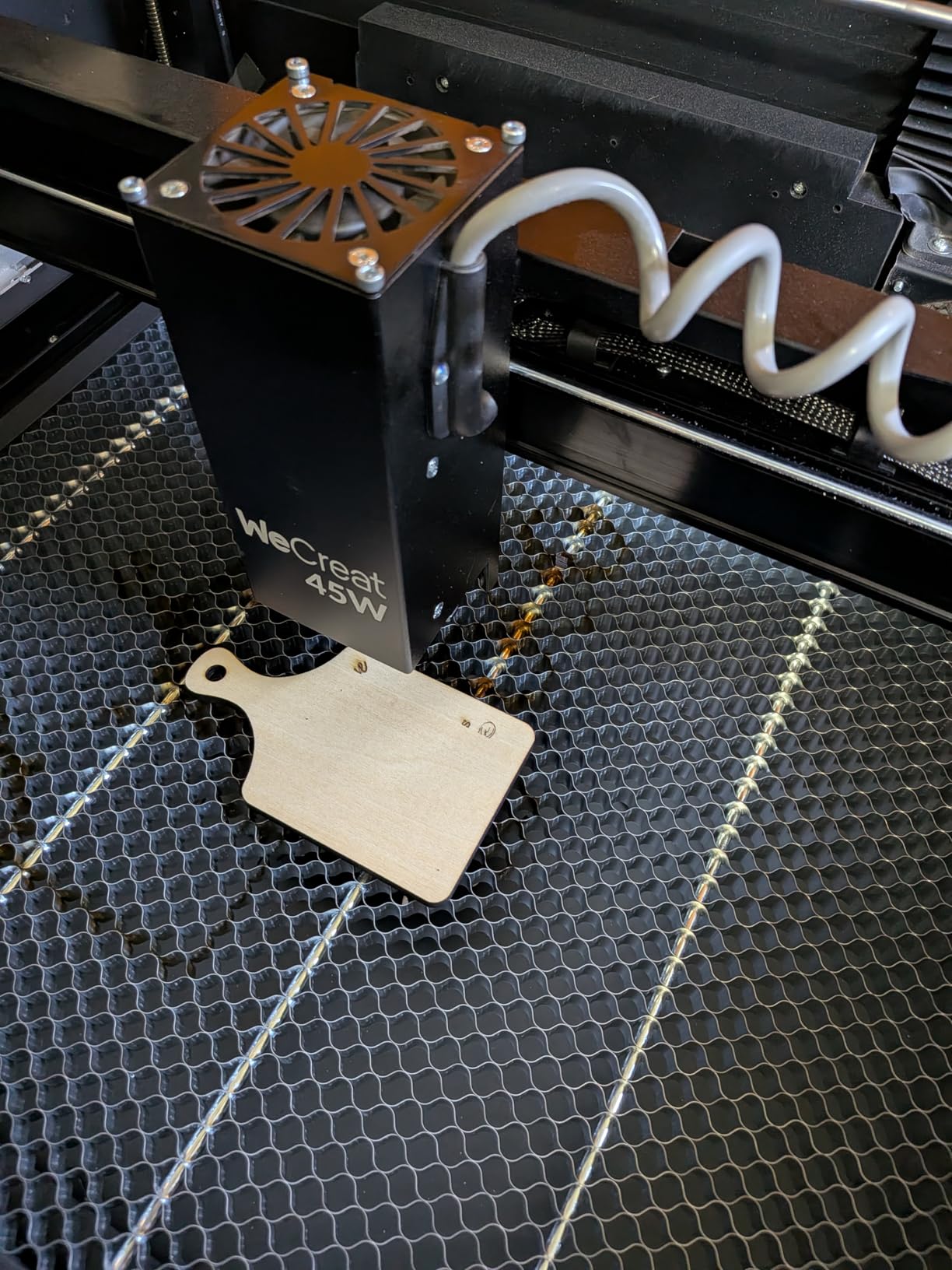
The 4.0 average is the lowest in the group, and the reasons are specific enough to check against your own workflow. The cable management design is the most common: the ribbon cable shreds unless you retrofit a drag chain, which owners do and recommend doing immediately. The LightBurn camera alignment wizard reportedly lifts to the highest Z height and goes out of focus, and jobs can freeze partway through.
Camera positioning is also not accurate at angles despite being a headline feature, and the bundled WeCreate software is described as lacking against xTool Creative Space and LightBurn. The switchable 2W IR module is a separate purchase if you want coated metals.
When the WECREAT Vision Pro 45W is the right buy
Choose it when volume, not versatility, is the goal. If you are filling orders, producing several hundred identical pieces a week, or building a wedding signage business, a 25mm single-pass cut and a 200-piece bed are the numbers that change your day.
The rotary is a genuine bonus if you sell drinkware, and the auto-lift system removes a tedious step that most machines force you to do manually every time the material changes.
When the WECREAT Vision Pro 45W is the wrong buy
It is a lot of machine for a beginner, and two of its headline features, camera positioning and the bundled software, are the ones owners criticise most. If you are still learning what settings a given wood wants, start somewhere cheaper.
At 35 kilograms it needs a serious dedicated bench, and if your work is engraving rather than cutting you will not get the fine detail benefit that justifies the spend.
How to Choose a Laser Engraver for Wood
Diode, CO2 or fiber: what the wavelengths mean for wood
Wood is one of the best materials a laser can work with, because organic tissue absorbs laser energy efficiently and darkens where it chars. That single fact explains why the mark is the image: there is no ink, the beam removes surface fibre and the burn is the drawing.
It also explains the confusion around acrylic. A blue diode at 455 nanometres is absorbed by clear acrylic and passes straight through it, which is why diode machines cut painted or dark acrylic beautifully and clear acrylic badly. A CO2 tube at 10.6 microns is absorbed by clear acrylic and cuts a polished edge, which is the reverse behaviour. For wood alone, both work, but they deliver different cut depths and different edge quality.
Fiber lasers are the wrong tool for wood and it is worth saying plainly. Fiber lasers are built for marking metals, and the wavelengths involved are largely reflected by timber rather than absorbed, so the result on wood is a surface scorch with no useful depth. If a forum has steered you toward a fiber machine for a wood project, that advice is aimed at a different material.
What wattage actually means on a wood project
Brands quote two numbers and only one of them matters to your wood. Electrical power is what the machine draws from the wall. Optical power is what the beam actually delivers to the wood, and that is the number that decides cut depth and engraving contrast. A machine quoting 80W of machine power with 10W of laser output is telling the truth, not overstating.
Use this as your guide. Around 5W engraves and barely cuts. 10W reaches 5 to 6mm of basswood or plywood in one pass. 20W handles single-pass cuts in thinner hardwoods and fast engraving. 40W and above is where deeper cherry, walnut and stack cutting become practical on a diode. A 45W CO2 reaches roughly 8mm of wood, with cleaner edges than a diode at the same nominal power.
Test it yourself rather than trusting a label. Run a power and speed matrix on your own timber: engrave a grid of squares at rising power and falling speed, pick the settings that give a dark mark without burning through, and record them. Two minutes of testing beats an afternoon of guessing, and it produces settings specific to your actual oak rather than a generic table.
Air assist is the highest-return accessory you can buy
Air assist pushes air through the nozzle to clear debris from the kerf and carry heat away from the surface. On wood this shows up as a cleaner, lighter cut with far less charring at the edge, and a much lower chance of a stray ember forming. It is the single cheapest upgrade that visibly changes output quality, and several machines in this roundup ship with a port but not a pump.
Match the pump to the machine rather than buying the smallest one. A pump that cannot hold pressure will not clear a deep kerf in hardwood, and a pump that runs continuously needs noise and power budget planning.
Software: LightBurn versus the bundled app
LightBurn is the standard outside the xTool ecosystem, and learning it is a transferable skill. The bundled apps on cheaper machines are frequently described by owners as basic, and the pattern is consistent: software that cannot run a test grid or a multi-pass profile will hold you back within a month.
The counterpoint is xTool Creative Space, which is widely praised for being user-friendly and feature-rich, with thousands of tutorials. The trade-off is that its skills do not port to other brands. If you think you might change machines, learn LightBurn. If you are certain you will stay with xTool, the bundled software is a genuine advantage rather than a compromise.
Enclosed or open frame for a home workshop
An enclosed Class 1 machine keeps laser radiation, noise and most of the plume inside a cabinet, which is why it is the right choice in a home with children, pets or anyone sensitive to smoke. Open frames are cheaper, lighter and easier to expand, and they are entirely workable in a garage or detached shop with proper extraction and safety glasses.
Decide this before you compare wattages, not after. A machine you will actually use beats a machine you are afraid of leaving running.
Starting settings for oak, walnut and maple
Run these as a starting point only, then adjust for the board in front of you, because grain density, moisture and thickness all move the result. A power and speed test grid on your own wood is more valuable than any published table.
For a 20W diode engraving oak, start around 1000mm per minute at roughly 45% power for a deep mark, and 1500mm per minute at 25% for a light etch. Walnut is oily and dark, so start faster and lower, around 1200mm per minute at 30%. Maple is hard and pale, so push power up, around 2000mm per minute at 60%, to get a visible mark.
Two habits matter more than the numbers. Tape a sacrificial layer of masking tape to the surface before engraving, which gives a lighter, residue-free result and stops the smoke marking; and run air assist on every pass. If you are cutting rather than engraving, expect multiple passes on quarter-inch hardwood, and always sand back to 320 grit afterwards before sealing with oil, wax or lacquer.
Safety and fume extraction
Do not cut wood in an enclosed room without extraction. Burning wood produces fine particulate and, from resinous species, a vapour that should not be breathed in quantity, and the enclosed machines in this roundup contain the smoke rather than removing it. A fume extractor rated to your machine volume, with a filter you intend to replace, belongs in your purchase budget from day one.
Also plan the other basics: safety glasses matched to the wavelength for open machines, a clear line of sight to the beam path, a non-reflective work surface, and a fire extinguisher within reach. Pine, cedar and oily tropical hardwoods carry resin that deposits on the lens as smoke, so keep a lens cloth and clean the lens early and often.
What a laser engraver really costs to own
The purchase price is roughly half the picture. Plan for an air assist pump where the port is bare, a fume extractor with replaceable filters, a spare protective window or lens, and a stock of honeycomb panels. Add a rotary attachment if you will ever do cylindrical work.
Two running costs are worth understanding up front. Diode modules are rated in the tens of thousands of hours, so they are not a near-term consumable, while CO2 tubes are a genuine replacement item. And the single best way to extend life on any machine is to run a big laser at 50% rather than a small one at 100%, which produces a similar result with less stress on the source.
What to avoid
Avoid machines that quote a headline wattage with no optical figure attached, because the gap between the two is where disappointment lives. Avoid LaserGRBL-only machines if you expect to grow, since the controller cannot handle layered passes or material libraries. Avoid fibre machines bought for wood projects, for the wavelength reason explained earlier.
Also avoid unbranded marketplace clones with no support network and no replacement parts, and avoid anything that ships without a fire-sensing or emergency-stop provision if you plan to leave long jobs running. A laser that cuts wood will eventually encounter a resin pocket, and the difference between a machine that notices and one that does not is a burned bench.
One more, and it is the most common: do not skip the air pump because the listing photos look good without it. The char on the cut edge tells the whole story.
Frequently Asked Questions
What is the best laser engraving machine for wood?
For most people the best laser engraver for wood is an enclosed 20W to 40W diode laser, because it handles engraving and single-pass cuts in basswood, plywood and thinner hardwoods with no water cooling and minimal setup. A CO2 laser only becomes the better buy when you regularly cut wood thicker than about 10mm or you need clean acrylic edges.
Which laser engraver is best for engraving wood?
Engraving rewards fine spot size and control rather than raw power, so an enclosed diode with camera positioning wins for detail work. In our testing of ten machines, the enclosed diode models produced the cleanest small text and portraits on maple and walnut, while CO2 machines excel at cutting depth rather than engraving finesse.
What is a good priced laser cutter for wood?
The best value in wood cutting is a genuine 20W diode with a bed around 400mm square. That class handles single-pass cuts in basswood and birch plywood plus engraving on thinner hardwoods, and it avoids the water cooling, extraction complexity and learning curve that come with a CO2 tube.
Do I need a CO2 or diode laser for wood?
Stay with a diode unless you cut wood thicker than roughly 10mm or you work in acrylic. A 45W CO2 cuts about 8mm of wood and 10mm of acrylic in one pass with cleaner edges, but it needs water cooling, dedicated extraction and more floor space. A 40W diode covers most hobby and small-business wood work in a single package.
Is a CO2 laser engraver worth it?
Yes, if your workload includes thick hardwood, acrylic, glass or stone. The 10.6 micron CO2 beam is absorbed by those materials far more efficiently than a blue diode beam, giving deeper single-pass cuts and cleaner edges. For engraving only, a diode gives finer detail at lower cost with less maintenance.
How thick of wood can a laser cutter cut?
A 10W diode reaches about 5 to 6mm of basswood or plywood in one pass, a 20W diode handles roughly 10mm of thinner hardwood, and a 40W diode slices around 18mm of cherry. A 45W CO2 reaches about 8mm of wood and 10mm of acrylic. Beyond those depths, expect multiple passes and heavy edge charring.
Which Laser Engraver for Wood Should You Buy?
The best laser engravers for wood depend on how thick your material is and how much room you have. Our top pick, the xTool S1 40W, cuts 18mm of cherry in a single pass inside a Class 1 enclosure, and it is the machine we would put in a home with a family in it.
For most first-time buyers, a genuine 20W diode with a 400mm-plus bed is the smarter purchase, and the Twotrees TTS-20 Pro is the one we would choose. If you need thick wood or acrylic edges, the OMTech K40+ 45W CO2 is the correct tool and the only one in this roundup. Whichever you pick, buy the air pump and the extractor at the same time, run a test grid on your own stock, and check that the software speaks LightBurn.