
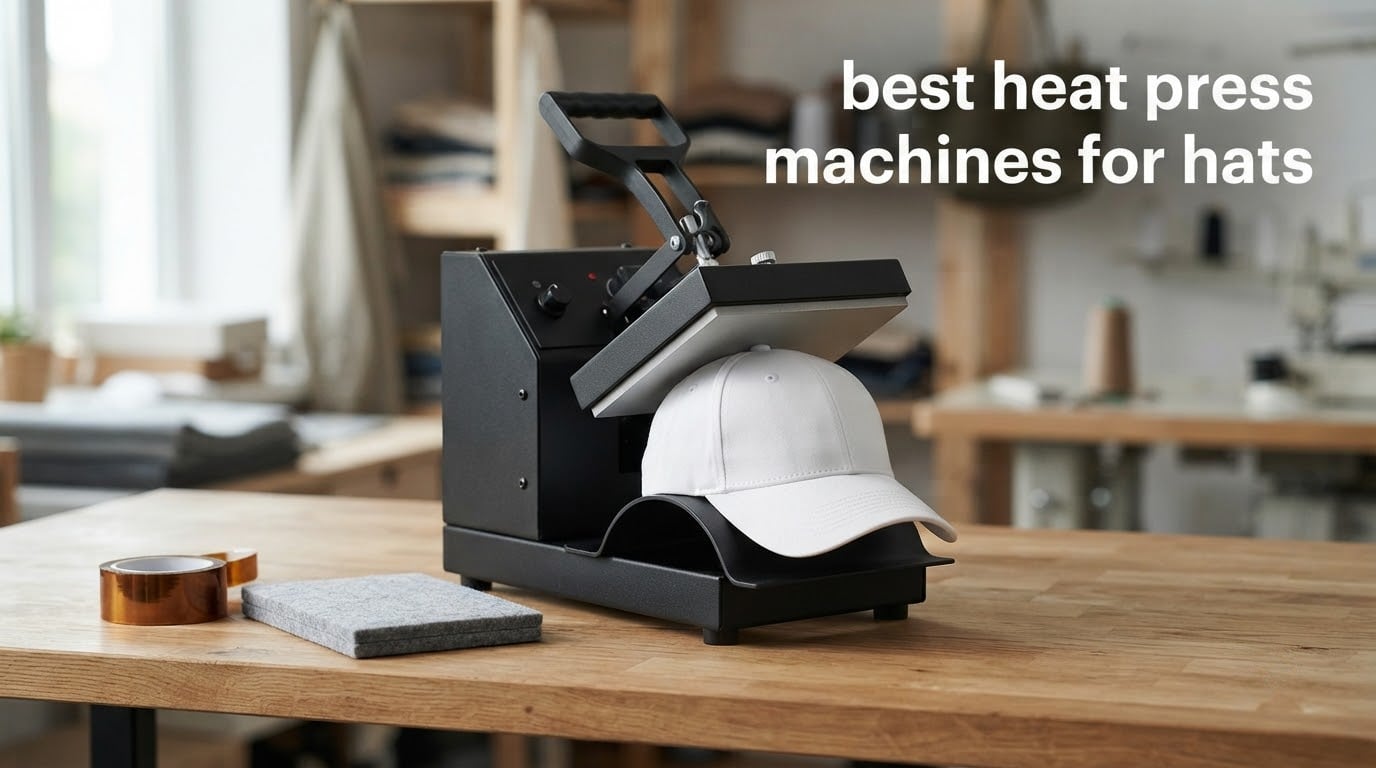
Yes, you can use a heat press on hats, but only if the platen is curved to match the cap crown. A flat shirt press touches the center of a panel and leaves the edges unbonded, which is why designs lift at the seam after the first wash. The best heat press machines for hats use a shaped lower platen, a cap stretcher, and real pressure adjustment across the whole crown.
That is the whole argument, and it decides this roundup. We compared ten hat press machines on platen geometry, temperature range, wattage, pressure control, and how their customers rate durability after months of use. Six are manual presses, three add an automatic open cycle, and one doubles as a tumbler press.
For a deeper look at flat and multi-function presses that handle shirts, mugs and other blanks, read our 12 best heat press machines guide first. This page stays narrow on purpose: caps only, no filler. We also refreshed everything for 2026 so the settings and buying notes reflect what decorators are actually using right now.
Table of Contents
Top 3 Best Heat Press Machines for Hats 2026
These three cover the widest range of jobs. The VEVOR with the oversized plate is our overall pick, the Delclynee earns the highest rating from owners of multiple presses, and the VEVOR 4-in-1 wins on versatility per machine. Every hat on this list has a curved cap platen and a cap stretcher, because a flat platen is the one thing a hat press cannot do without.

VEVOR 8.5 x 4 Inch Hat Press
- 8.5 x 4 inch curved plate
- 32-449F digital control
- 580W with cap stretcher

VEVOR 4-in-1 Heat Press for Hats
- Four interchangeable heating elements
- 8.5 x 4 inch main plate
- 104-410F dual displays
The 10 Best Heat Press Machines for Hats at a Glance
Quick scan of every machine below, with the specs that actually change results on a cap. All ten run on standard household current, and all ten include a cap stretcher or curved pad in the box.
| Product | Specifications | Action |
|---|---|---|
| VEVOR Hat Press 8.5 x 4 Inch Plate |
|
Check Latest Price |
 Delclynee Hat Press Two Interchangeable Platens Delclynee Hat Press Two Interchangeable Platens |
|
Check Latest Price |
| VEVOR 4-in-1 Heat Press for Hats |
|
Check Latest Price |
 HTVRONT Hat Press HTVRONT Hat Press |
|
Check Latest Price |
 EENOUR Hat Press with Memory Mode EENOUR Hat Press with Memory Mode |
|
Check Latest Price |
 PlanetFlame 2-in-1 Tumbler and Hat Press PlanetFlame 2-in-1 Tumbler and Hat Press |
|
Check Latest Price |
 VEVOR 3-in-1 Auto Hat Press VEVOR 3-in-1 Auto Hat Press |
|
Check Latest Price |
 Giraffe Auto Open Cap Heat Press Giraffe Auto Open Cap Heat Press |
|
Check Latest Price |
 GOCHIFIX Auto Hat Press with Memory GOCHIFIX Auto Hat Press with Memory |
|
Check Latest Price |
 OFFNOVA Hat Press with Two Platens OFFNOVA Hat Press with Two Platens |
|
Check Latest Price |
1. VEVOR Hat Press Machine with 8.5 x 4 Inch Plate – Best Overall
VEVOR Hat Heat Press Machine, 8.5 x 4 in Large Heating Plate, with Caps Stretcher, Precise Temperature & Time Control, Heat Press for Hats and Caps, for HTV Iron On and Sublimation Projects, White
8.5 x 4 in curved plate
32-449F, 1-999s timer
580W at 120V
15 lb, cap stretcher
Pros
- Fast warm-up that holds temperature through long batches
- Digital temperature and countdown with buzzer alert
- Compact enough for a home workspace
- Cap stretcher reduces creases
- Light at 15 pounds for long sessions
Cons
- Tight top platen opening makes placement awkward
- Single small lower pad makes centering harder
- Some units report power-on failures
- Occasional missing parts on arrival
This is the machine I recommend to anyone starting a cap business, and the one that sits at our own bench. Dual heating tubes under a PTFE-coated plate bring it up to working temperature quickly, then it holds that temperature steadily through a long run without drifting. That stability matters more than raw wattage when you are bonding adhesive to a curved surface, because a swinging temperature is what causes edge lifting.
Controls are a single digital panel covering 32 to 449F and a 1 to 999 second timer with a countdown and an audible alert at the end. We run cotton DTF at 320F for roughly 8 seconds, hot peel, and get a clean release. A 30-minute auto shutoff with a buzzer handles the forgetful moments.
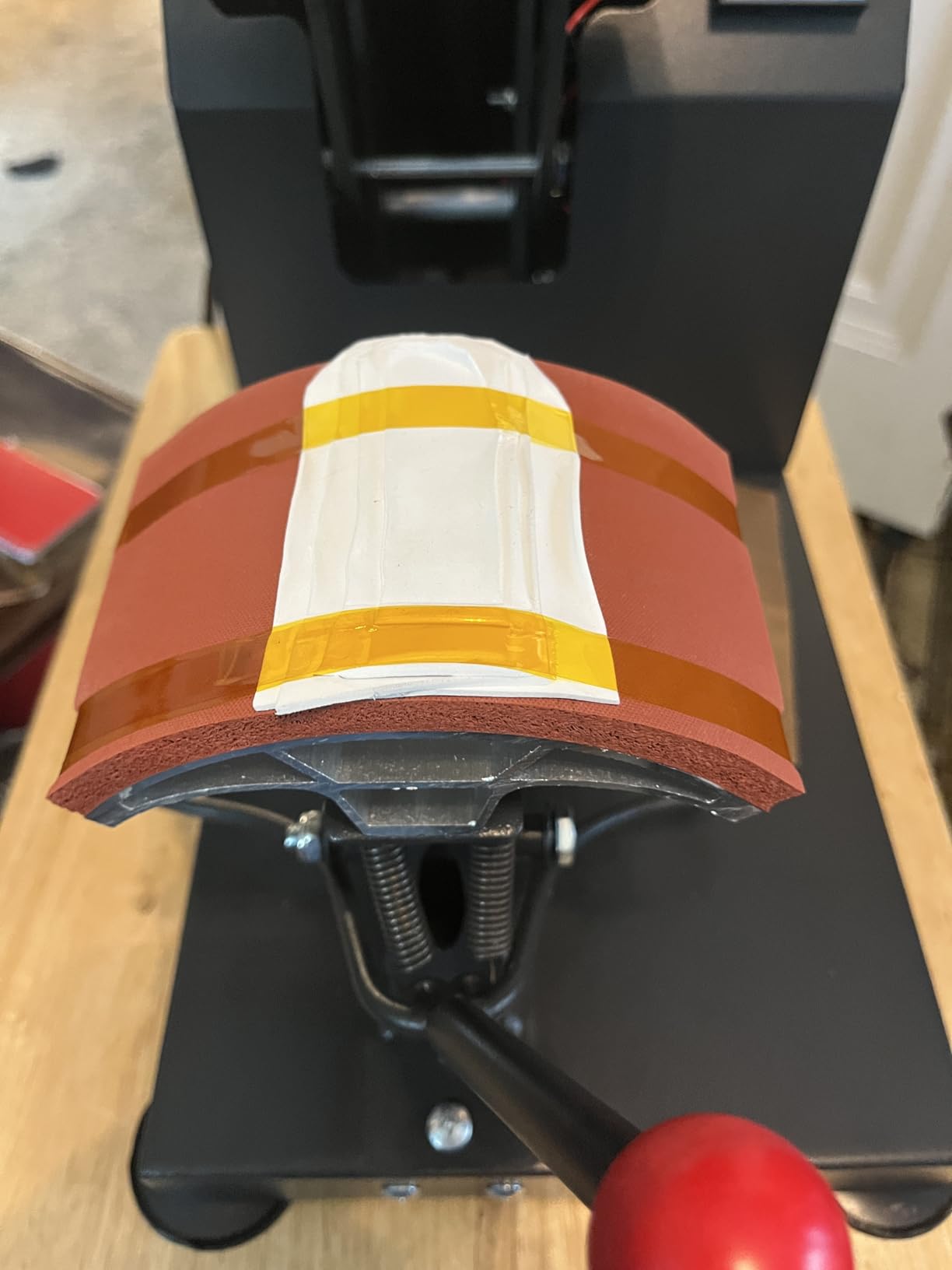
The body is 14.2 by 8.5 by 13.8 inches and 15 pounds, which is why it works in a spare room. The included cap stretcher holds a cap in shape while you position, and four suction feet keep the base from walking across the table when you apply pressure. Platen covers are in the box too, so you can protect the surface from adhesive residue right away.
Where it falls short is ergonomics rather than performance. The gap between the upper and lower platen is narrow, so getting the transfer positioned before closing takes a steady hand. Owners also report a small share of units that would not power on after months of light use, and a few arriving with loose assembly or missing hardware. Budget for a quick inspection out of the box.
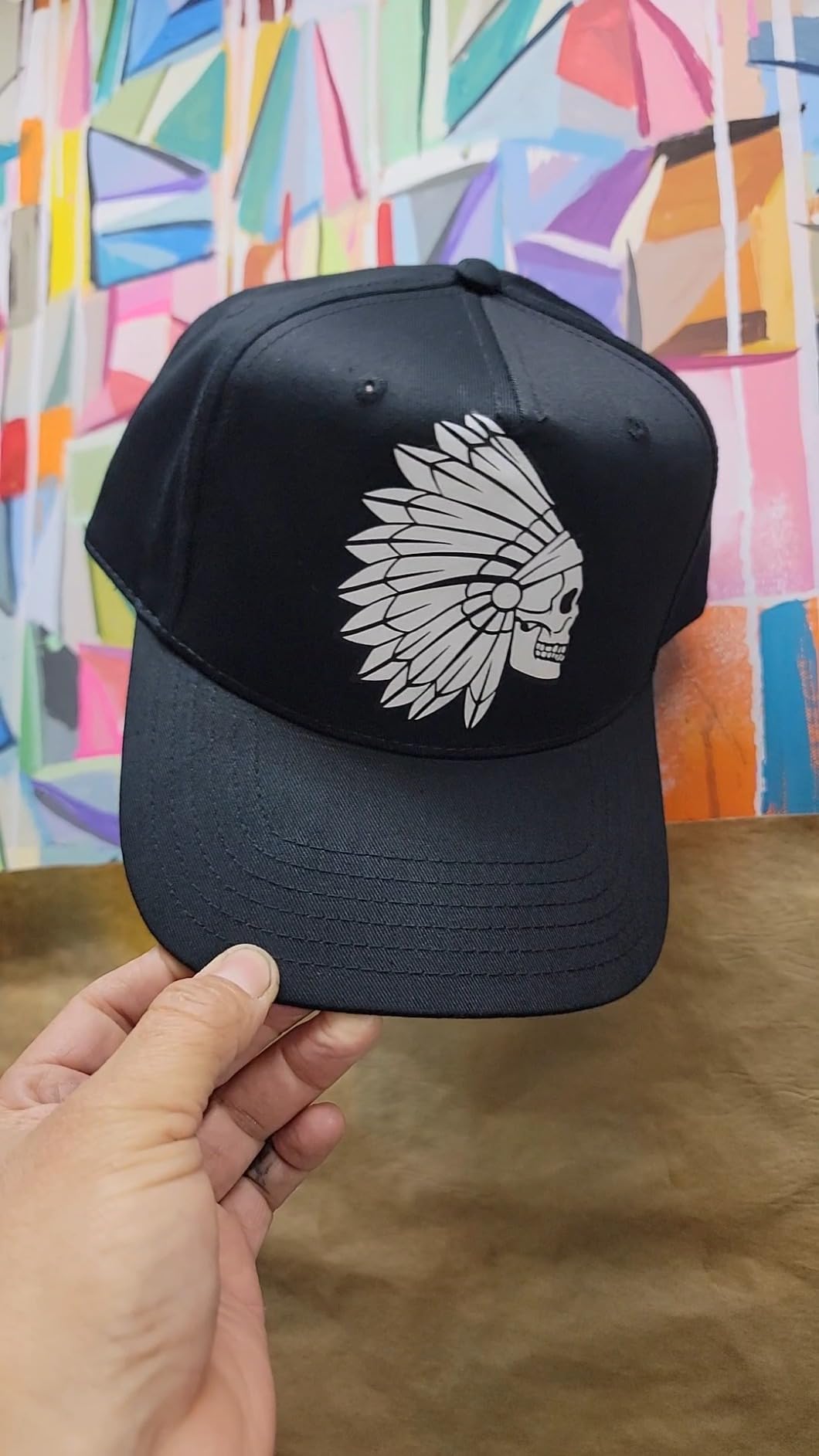
What kind of caps it handles well
The 8.5 x 4 inch plate is the widest curved surface in this group, which gives you room to center a large front-panel logo without overhang. It handles structured cotton caps, canvas caps, and low-profile caps comfortably. Buyers running a small hat business cite it as the one that survives daily volume.
For trim five-panel caps, a flatter and smaller cap is easier. That is a size question, not a quality question, and it is exactly why the multi-platen machines below exist.
Where it is the wrong choice
If your volume is low and your caps are small, you are paying for plate size you will not use. The 15-pound body also moves around more than a bench-mount press, so if your pressing surface is a folding table you will want something with a suction or rubber base.
Skip it if you need an automatic open cycle. This is a manual press, and a 10-second dwell means you stand and watch the timer. If you want hands-free cycles and the mental load of a folding table is a concern, our general heat press guide covers that tradeoff in more detail.
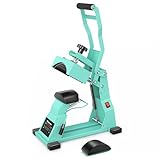
2. Delclynee Hat Press with Two Interchangeable Platens – Best Rated by Owners
Hat Heat Press Machine for Caps with 2pcs Interchangeable Platens(6.7″x3.8″, 6.7″x2.5″), Cap Heat Press for Stuctured Hats and HTV Iron On and Sublimation Projects, Heat Transfer Printing for Caps
Two platens: 6.7 x 3.8 in and 6.7 x 2.5 in
32-455F, 0-999s, 550W at 110V
1-year press warranty, lifetime element
Pros
- Highest owner rating in this group
- Two platen sizes cover structured and low-profile caps
- Stay-put stretcher frees both hands
- Strong and easily adjusted pressure
- Compact footprint for small studios
Cons
- Timer readout can lag slightly behind the cycle
- A small number of units stopped powering on at around six months
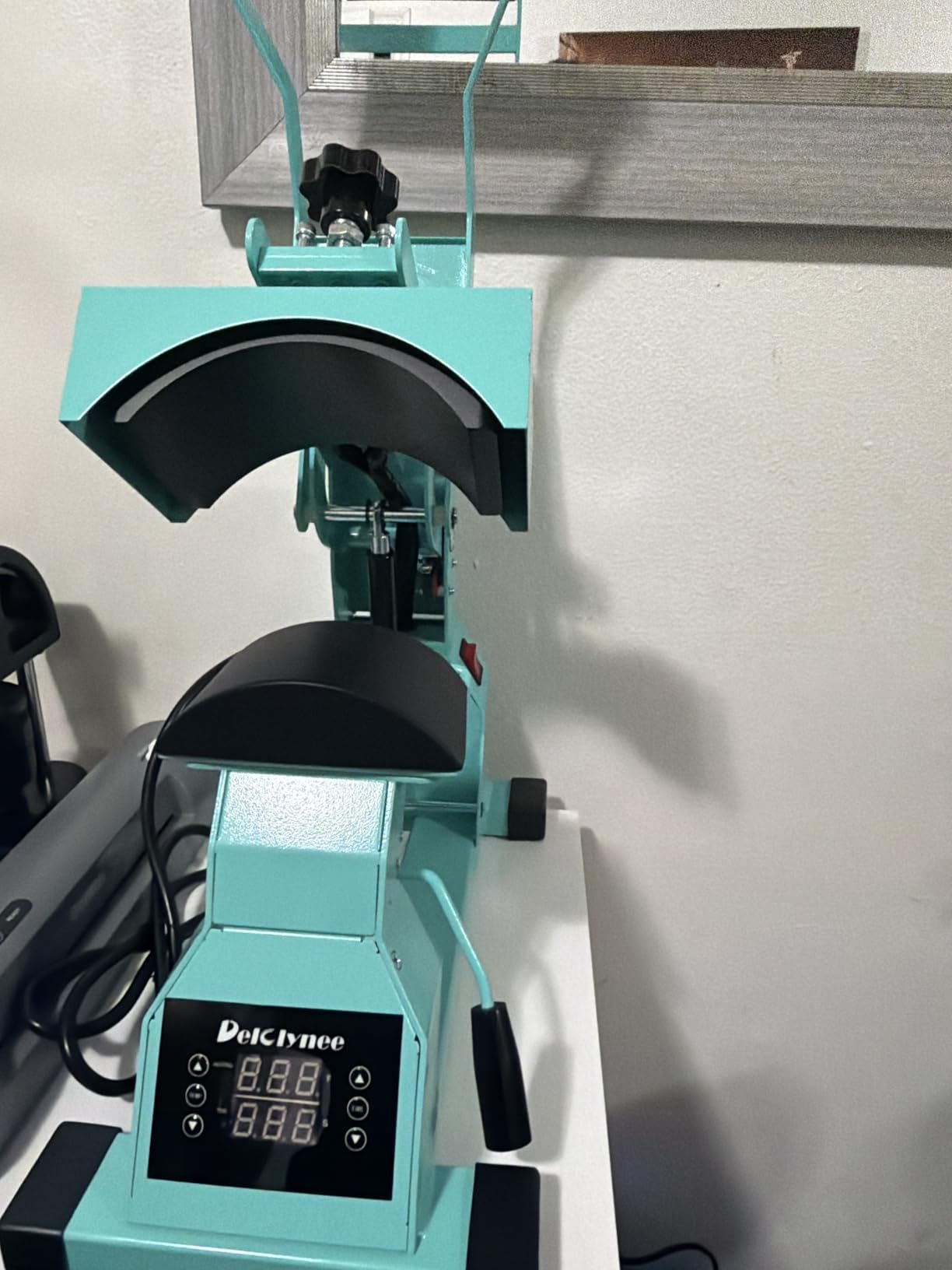
When we sorted customer feedback, this is the press that owners of several different machines ranked highest. Pressure quality, temperature evenness, and how easily the lid opens come up repeatedly, and the 4.6 rating across more than 700 reviews is the strongest consensus here. The external tubular heating layout is designed to remove the edge-to-center temperature drop that causes weak bonds at the sides of a design.
Two lower platens ship in the box, 6.7 x 3.8 inches and 6.7 x 2.5 inches, so you can cover a tall structured crown and a low-profile cap without buying anything extra. The digital gauge runs 32 to 455F with a 0 to 999 second timer and five beeps when the cycle completes. It draws 550W on 110V, which is well within a normal household circuit.
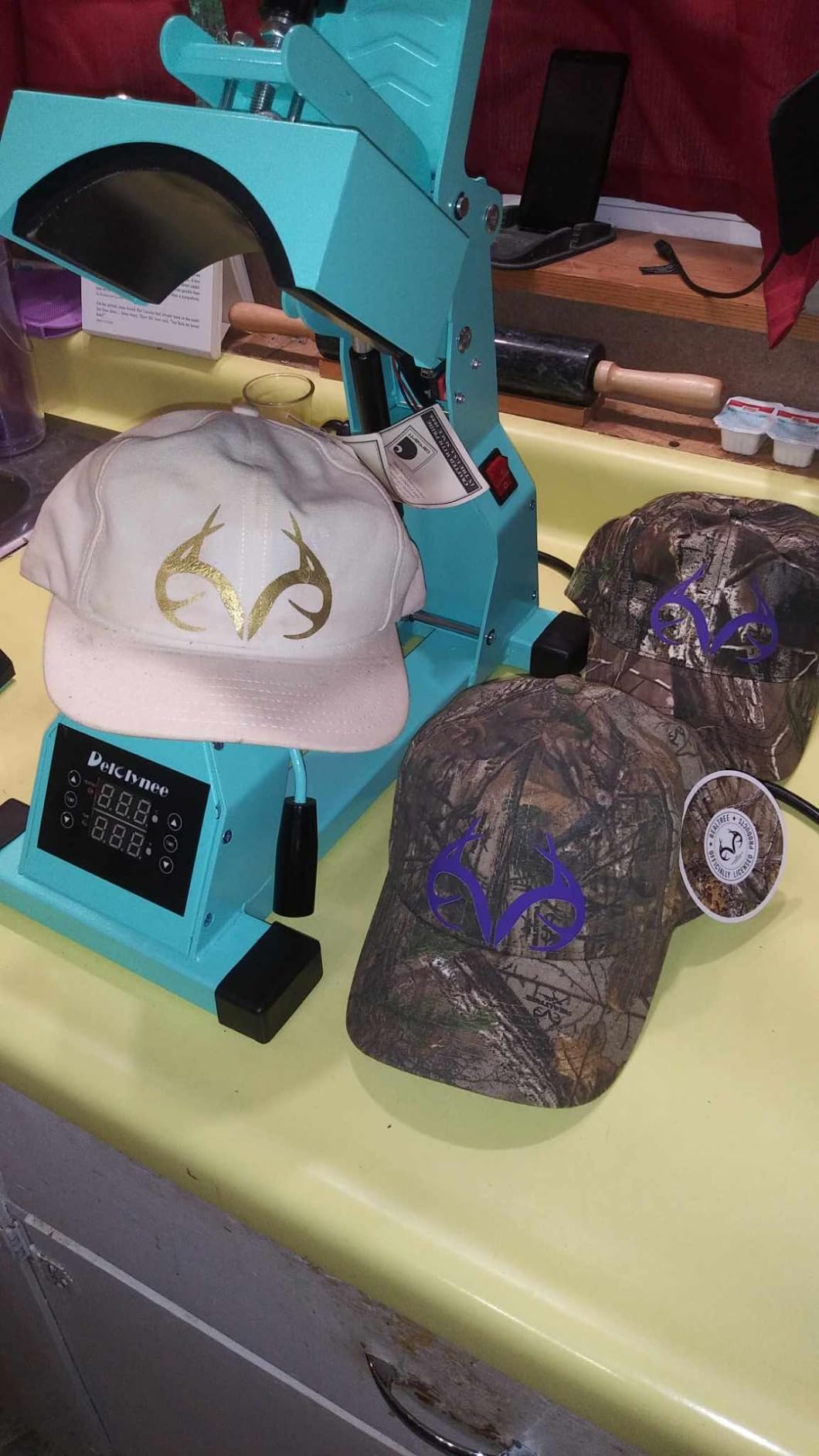
The stay-put cap stretcher is the detail we liked most. It holds the cap flipped up or down without springing back, which leaves both hands free to align a transfer. The molded silicone platen is also gentler on fabric than bare aluminum and resists sticking, and the body measures 16.15 by 9 by 26 inches with generous clearance for repositioning a cap at any angle.
Two complaints come up in the lower reviews. The timer readout can trail the actual cycle by a second or so, so do not trust it to the decimal. A small number of owners report units that stopped powering on after roughly six months, and the one-year press warranty with a lifetime warranty on the heating element is thinner coverage than the two-year terms some commercial brands offer.
Why decorators rate it so highly
The consistent theme is that pressure is easy to modulate. Too little and the adhesive does not flow into the fabric weave; too much and you flatten the crown or push adhesive out from under the carrier film. This press gives a clear, repeatable range, which means the second cap matches the first.
It is also the easiest of the manual machines here to load. You set the cap in the stretcher, position the transfer, and close. For someone learning to press caps, that learning curve is the whole difference between a clean transfer and a re-do.
Where the limits show up
Both platens are mid-size. If you press wide billable caps or large structured crowns, the 6.7 inch pad is narrower than the 8.5 inch plate on our top pick. A second cap press with a wider plate is a reasonable addition for a busy shop.
Buyers should also verify the seller before buying. Forum discussion in this category keeps circling the same problem: presses arriving third-party with short warranties and return shipping charged to the buyer. When the listing shows a direct brand seller with the stated one-year warranty, that risk largely disappears.
3. VEVOR 4-in-1 Heat Press Machine for Hats – Best Value Across Hat Styles
VEVOR 4-in-1 Heat Press Machine for Hats
Four heating elements: 6x3, 6.7x2.7, 6.7x3.8, 8.1x3.5 in
8.5 x 4 in Teflon-coated main plate
104-410F, 580W at 110V
Pros
- Four platen sizes cover caps
- bucket hats
- berets and visors
- One of the largest main plates in the category
- Separate temperature and time displays
- Long-arm handle makes pressing comfortable
Cons
- Teflon-coated plates need careful handling
- Larger footprint than single-platen hat presses
- Occasional early failures in one-star reviews
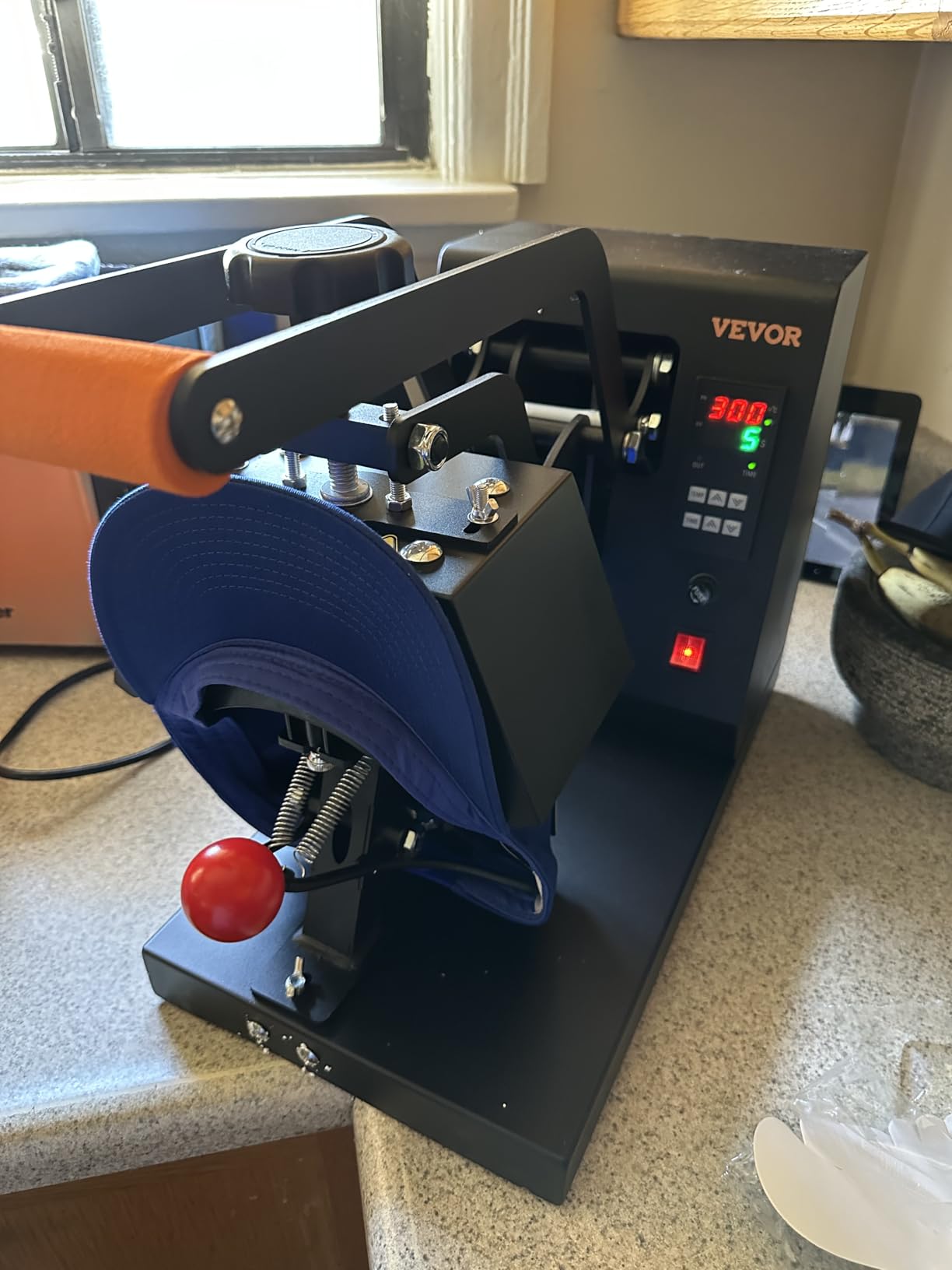
If one machine has to cover the widest range of headwear, this is it. Four replaceable heating elements are included, measuring 6 by 3 inches, 6.7 by 2.7 inches, 6.7 by 3.8 inches, and 8.1 by 3.5 inches, on a body with an 8.5 by 4 inch Teflon-coated aluminum main plate. Baseball caps, bucket hats, berets, and visors all fit inside one footprint, which is why buyers making mixed products like this one.
It runs 104 to 410F with separate digital screens for temperature and time, so you can watch both at once instead of toggling a single readout. The long-arm handle is well angled for pressing down with one hand, and a manual pressure adjustment knob at the top lets you set the force for a thick canvas cap or a thin nylon one.
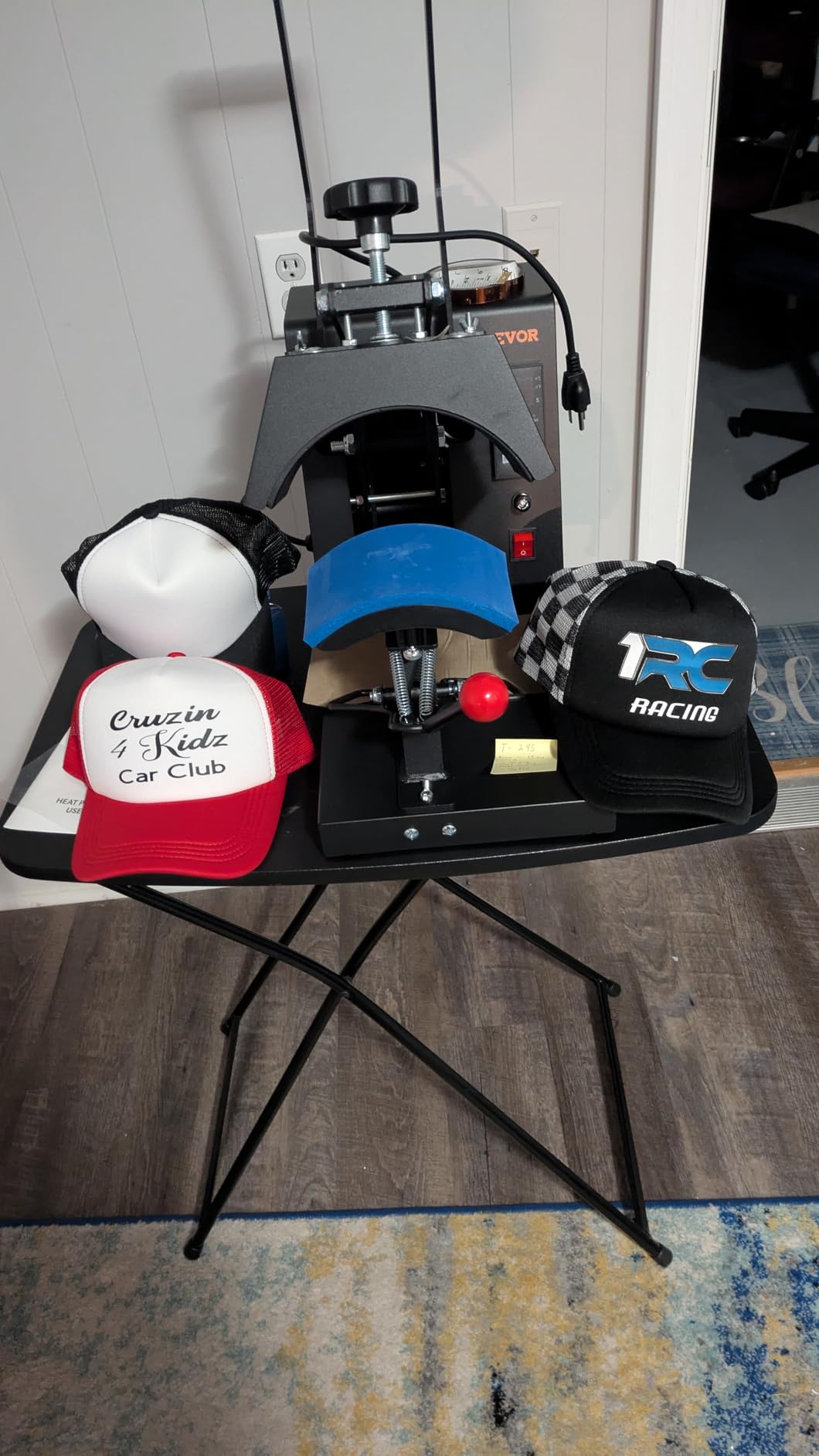
Safety hardware is unusually good for a machine at this tier. A built-in thermal fuse, a monitored heating circuit, automatic shutdown, and an anti-slip rubber base all come standard. The body measures 19.69 by 10.16 by 14.25 inches, which is the largest footprint in this group, so plan bench space before you commit.
The trade-off is handling and a slightly rougher reliability record. A Teflon-coated aluminum plate is easy to clean but unforgiving of scrapes, and it damages if you press with a sharp transfer edge or stack plates carelessly. Owners also report a wider share of one-star reviews than the top two picks here, mostly early failures rather than gradual degradation.
What makes it the value pick
Four plate sizes in one machine usually means four separate accessories elsewhere. Owners who print across several hat types say this removes the guesswork entirely, since each crown gets a plate that matches its curve instead of a compromise.
It is also the machine most often named in budget threads on r/DTFTransferTalk by hobbyists asking for a first cap press. Those buyers are getting more coverage per machine than the single-platen presses above it, which is a reasonable trade at this point in the category.
Where it is the wrong choice
Buy this for versatility, not for footprint. It is the bulkiest body here at nearly 20 inches long, and swapping elements takes extra counter space. If you only ever press one style of cap in a small room, a single-platen press is the tidier choice.
Also note the stated upper temperature rating of 410F. That covers cotton and polyester DTF and HTV work, but it leaves no headroom for materials that need higher settings. A flat platen press is the right tool for those blanks, and our broader heat press comparison covers which ones.
4. HTVRONT Hat Press – Best for Clean Odor-Free Pressing
HTVRONT Hat Press Hat Heat Press Machine
One-piece cast aluminum plate
Two platens: 6.5 x 3.3 in and 6.5 x 2.5 in
140-464F, one-year warranty
Pros
- Cast aluminum heats evenly without the odor some silicone plates give off
- Improved platen curvature reduces wrinkles
- Four-bar linkage and long lever arm reduce closing force
- Suction cup base stops the machine shifting
Cons
- One-year warranty is shorter than some rivals
- Idle auto shutoff at 30 minutes interrupts long batches
- Listed dimensions are not useful for comparing footprint
The reason reviewers single this machine out is the plate material. A one-piece cast aluminum heating element spreads heat evenly and does not produce the chemical smell that some silicone-coated plates give off on the first few presses. If you are working indoors or in a small room, that difference is easy to notice on day one.
Two platens come standard, 6.5 by 3.3 inches and 6.5 by 2.5 inches, with more pronounced curvature than most competitors. The manufacturer claims the shape fits the overwhelming majority of cap styles, and in practice the extra curve is what keeps a six-panel crown from bunching at the seam. Temperature runs 140 to 464F on a visible digital readout with a real-time countdown.
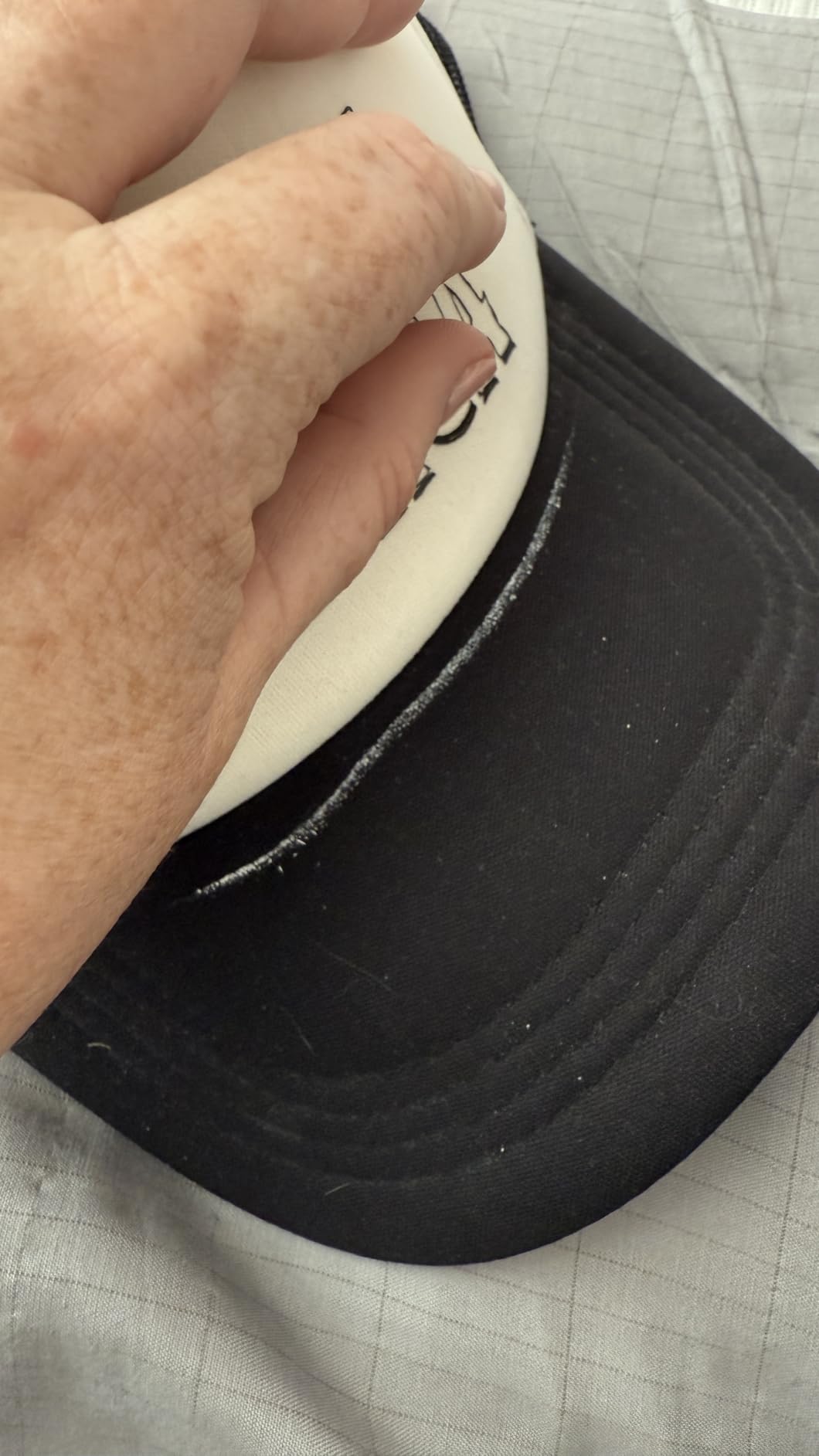
The mechanical design is the other strength. A four-bar linkage with a longer lever arm means you close the press with much less effort than a stiff hinge requires, which reduces hand fatigue across a long batch. A silicone suction cup base anchors the unit so a firm press does not drag it across the bench.
Two reservations. The 30-minute idle auto shutoff will cut out mid-session if you step away between caps, so reheat time is part of the workflow. And the listed product dimensions are unusable for planning a workspace, so measure your available counter height against the assembled machine.

How it handles the caps that cause trouble
Six-panel caps with a raised center seam are the hardest blank in this category, because the seam creates an uneven surface that a flat platen cannot reach. The deeper curvature here gives the upper plate more contact across the middle of the crown, which is the difference between a bonded design and one that lifts at the seam after washing.
It still helps to put a firm pressing pillow inside the crown and to pre-condition the cap with several short presses before the real transfer. Experienced decorators run 10 to 12 quick pre-presses on a stubborn six-panel to knock down creases, and that habit is what separates a flat result from a buckled one.
Where it is the wrong choice
The 6.5 inch platen is narrower than the 8.5 inch main plate on the VEVOR machines, so wide front-panel layouts need careful centering. And if your volume is high enough that you will be away from the machine regularly, a 30-minute idle cutoff will interrupt you more than it helps.
Warranty length is another consideration. One year of manufacturer cover is decent, but it is not the strongest in this group, and repairs on a heated platen are not cheap. If you want longer coverage as a standard expectation, look at a press whose listing states it clearly.
5. EENOUR Hat Press with Memory Mode – Best for Small Spaces
EENOUR Hat Press, Hat Heat Press Machine with 2 Platens & Caps Stretcher, Hat Press Heat Machine for Caps with Memory Mode, Precise Time and Temperature Control, Heat Transfer Printing for Caps, Hats
Two quick-swap pads: 3.1 x 5.9 in and 3.7 x 7 in
Cast aluminum, 7 pounds
1-year warranty, memory mode
Pros
- Two pad sizes cover kids' and adult' caps
- Thick curved pad conforms to the cap to reduce wrinkles
- Even cast aluminum heat with no hot spots
- One pad doubles as a cap holder
- 7-pound body is easy to store
Cons
- Lower review count means fewer long-term data points
- Some cap styles need the holder pad re-seated between presses
This is the one we would put on a shelf in a small apartment and pull out when a client order lands. At 7 pounds and 6.4 by 12.8 by 6.9 inches, it stores flat against a wall instead of occupying a dedicated bench. The metal body feels more substantial than that weight suggests.
Two quick-swap heating pads measure 3.1 by 5.9 inches and 3.7 by 7 inches, sized for kids’ caps and adult caps respectively. The dual-station layout is genuinely clever: one pad holds the cap while the other holds the heated platens, so swapping takes seconds and there is no cooling-down penalty mid-batch. The thick curved pad is what reduces gaps and wrinkles, and it is thicker than most competing pads at this size.
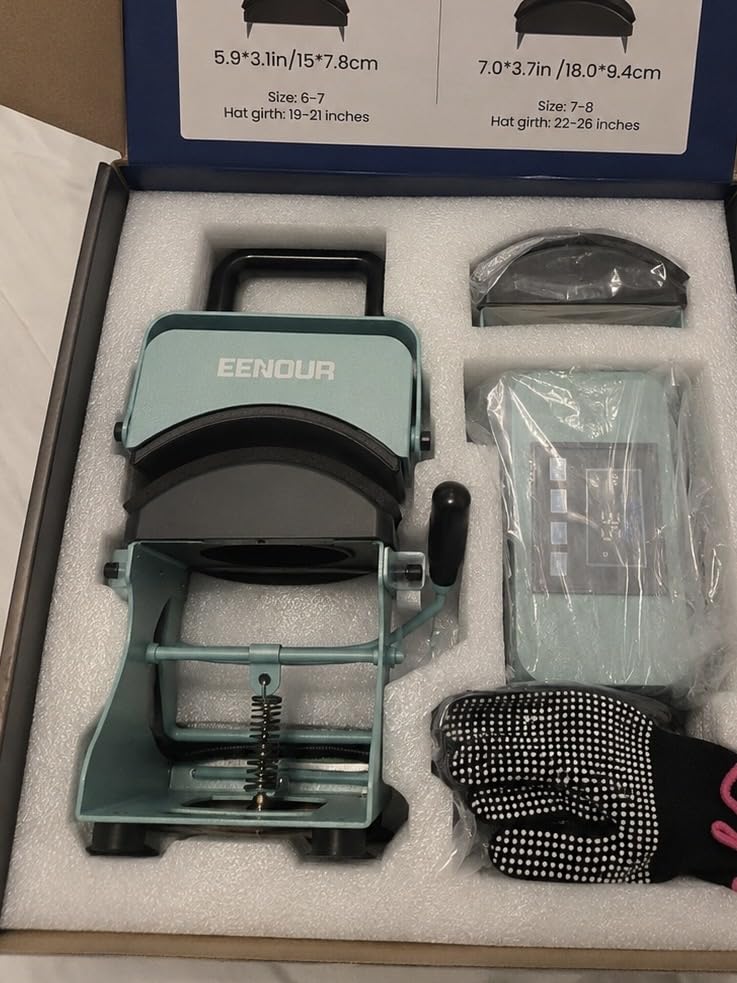
Heat comes from a rapid-heating cast aluminum plate described as uniform with no hot spots, and an LCD control panel handles time, temperature, auto shutoff, and overheat protection. The memory mode stores your settings so a repeat job does not need re-dialling. An adjustable cap stretcher finishes the kit, and the stated warranty is one year.
The honest limitation is evidence. With 249 reviews, this press has a shorter public track record than the top sellers here, which means fewer long-term reliability data points exist. Some users also find that certain cap styles need the holder pad nudged back into position between presses, more often with tall structured crowns.
Why the memory mode is more useful than it sounds
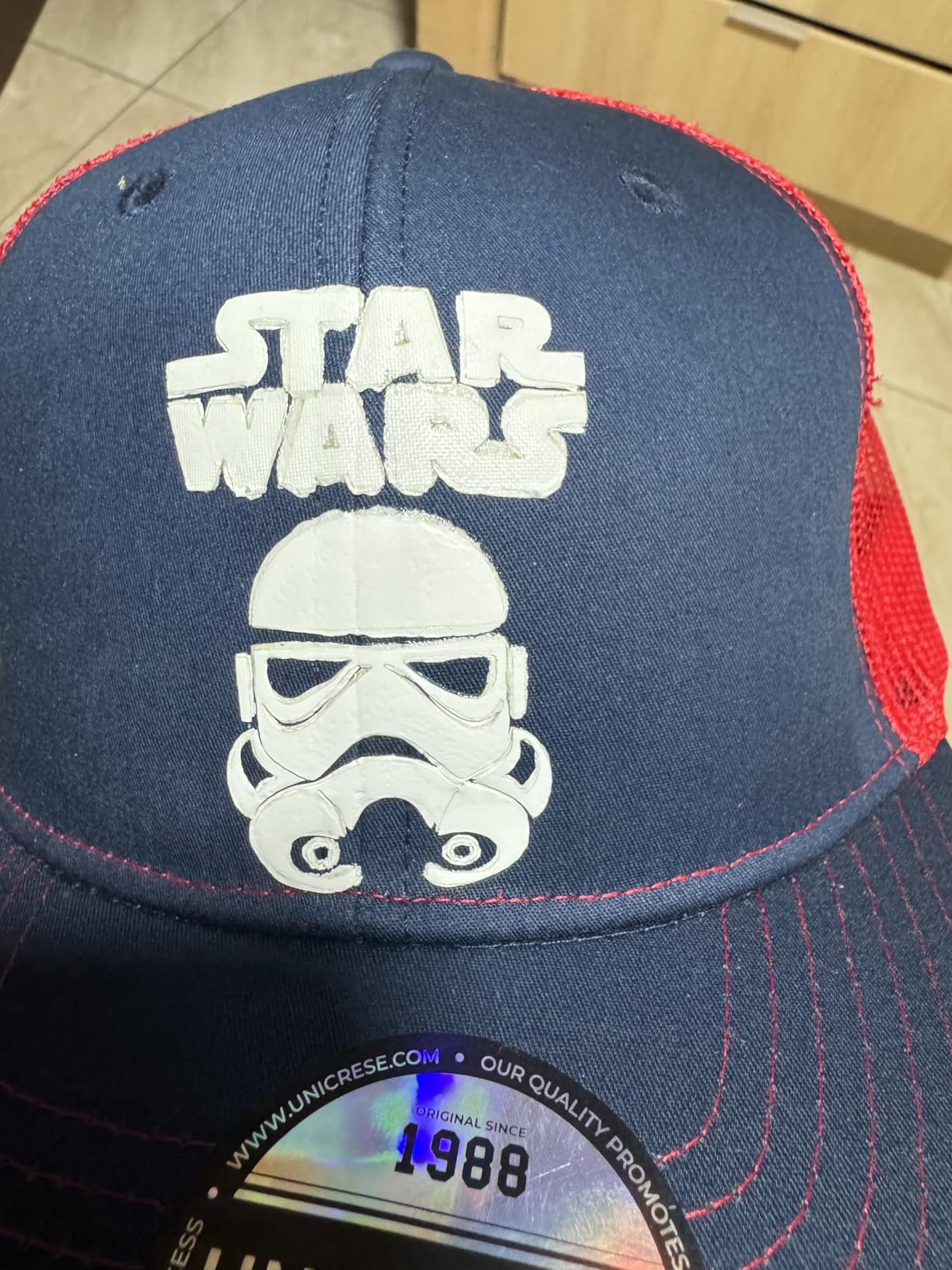
Once you settle on settings, you should never have to guess again. Storing a cotton DTF profile and a polyester profile means the second dozen caps are pressed identically to the first, which is how you get a consistent finish across an order instead of a range of bond strengths.
That matters even more if you are pressing hats in more than one material. Polyester and blend caps can scorch within 10 to 15F of a too-hot setting, so a stored, lower profile for synthetics is a real safeguard rather than a gimmick.
Where it is the wrong choice
Neither pad is large. If your work centers on wide structured caps or long front-panel designs, a larger plate like the 8.5 by 4 inch option elsewhere in this roundup will save you time on centering. The trade is shelf space against plate size, and you cannot have both in a 7-pound machine.
For high-volume production, the manual close and small footprint become a bottleneck. An auto cycle that releases on the timer would let you work on something else between caps, and the presses further down this list are built for that.
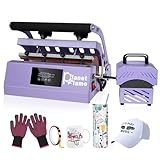
6. PlanetFlame 2-in-1 Tumbler and Hat Press – Best for Drinkingware Sellers
PlanetFlame Tumbler Heat Press and Hat Press Heat Machine for Caps, Blue
2-in-1 tumbler and cap press
10.6 in tumbler tool for 11-30oz
3.1 x 5.9 in curved hat plate, 0-400F
Pros
- One machine covers 11-30oz tumblers and caps
- Very little ghosting on tumblers
- Fast heat-up and simple setup
- Gloves
- tape and handle insulator included
- Adjustable pressure for vinyl and logos
Cons
- Only handles straight and skinny tumblers
- No tapered-item attachments offered for this model
- Six-month warranty is shorter than most competitors
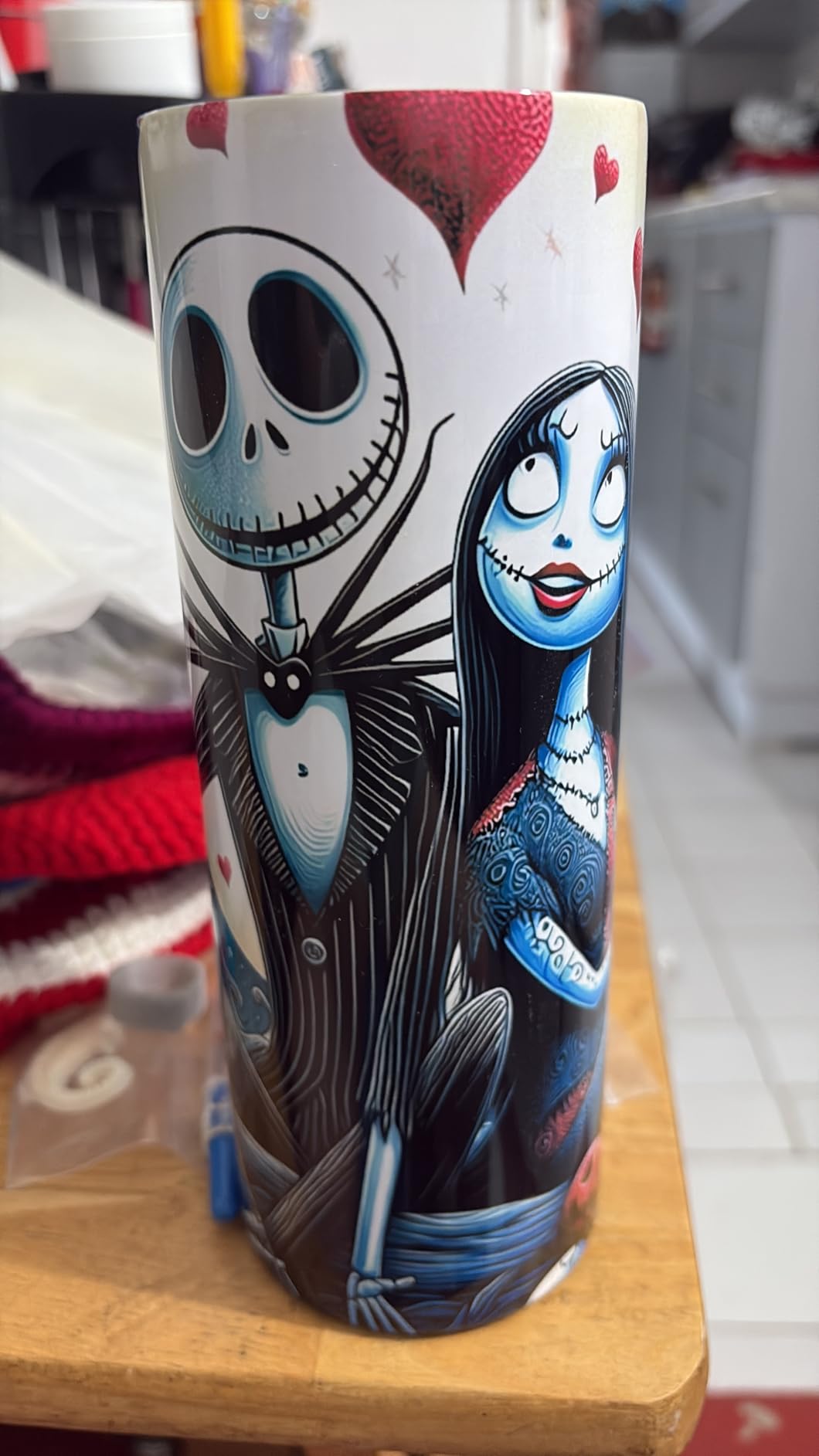
If you already sell tumblers, this press removes a decision. A detachable 10.6 inch heating tool, 2.6 to 3.4 inches in diameter, handles 11 to 30 ounce straight and skinny tumblers in the same body that presses caps. Buyers report noticeably low ghosting on tumblers compared with larger auto presses, which matters on a coated surface where a faint mark shows.
The hat side is a 3.1 by 5.9 inch curved plate. That is a smaller working area than most cap-only presses in this roundup, so expect to work with smaller designs and to center carefully. The digital screen covers 0 to 400F with a countdown up to 999 seconds that completes on ENTER, and pressure is adjustable for vinyl, text, and logo work.
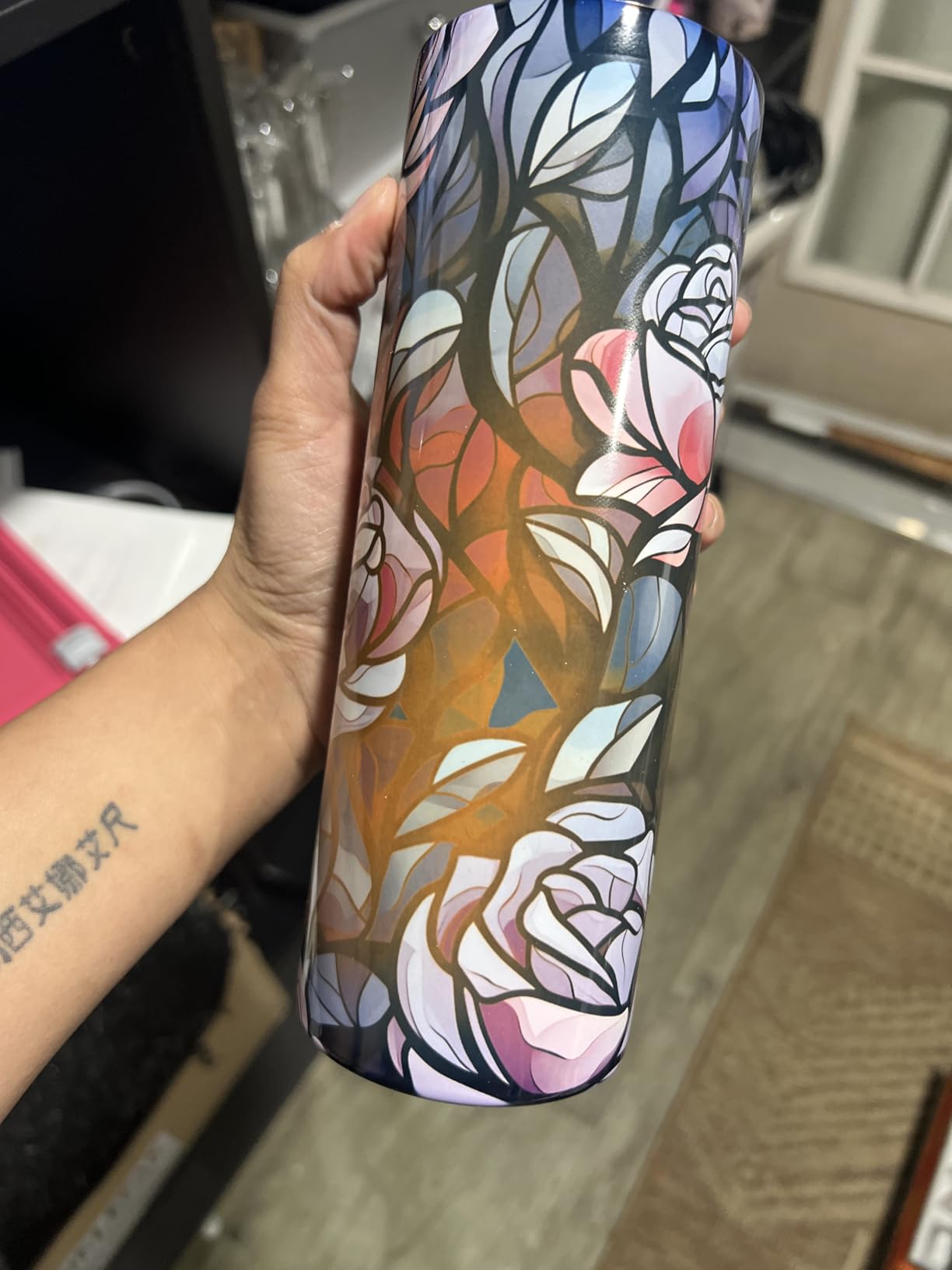
Out of the box you get a handle insulator, gloves, and a roll of high-temp heat-resistant tape, which saves an extra order. The unit is CE certified, and buyers mention fast heat-up and a straightforward learning curve. Hat pressing is reported less often than tumbler work, simply because most buyers came for the tumbler side.
The limitation is format. It fits straight and skinny tumblers only, so tapered pint glasses, water bottles, and shot glasses need separate accessories, and this model does not offer them. The warranty is six months, the shortest tier of coverage here, so the argument rests on the two-in-one value rather than on backing.
Who gets the most out of it
A seller whose product line is split between caps and drinkware gets a single machine instead of two, one power draw instead of two, and one workspace instead of two. That consolidation is the entire reason to buy this over a dedicated cap press.
It also makes a sensible first machine for a beginner, because the learning curve is short and a mistake on a tumbler costs less than a mistake on an inventory of blank caps. Bring that caution to the cap side, where blank inventory adds up quickly.
Where it is the wrong choice
Cap-only work is the case against it. The 3.1 by 5.9 inch plate is the narrowest curved cap surface we tested, and a 400F ceiling caps your material options on the hat side. If caps are the majority of your output, a dedicated cap press with a larger platen will serve you better.
The six-month warranty also deserves attention. Forum buyers in this category repeatedly flag short warranty windows as a reason to prefer one brand over another, and return shipping on a machine this size is charged to the buyer at several sellers. Check the seller listing before you commit.
7. VEVOR 3-in-1 Auto Hat Press – Best for Hands-Off Pressing
VEVOR 3-in-1 Auto Hat Heat Press Machine for Caps, No Crease, Orange&Black
Auto close, pressure and release
Three platens: 6.6 x 2.7, 6.6 x 3.8, 6.1 x 3 in
6.41 x 3.15 in Teflon-coated plate, 350W
Pros
- Automatic close
- pressure and release remove the babysitting
- Three lower platens cover a good range of cap styles
- Rotary knob control is simple for beginners
- Mica elements give fast
- even warm-up
- Compact body
Cons
- Main plate is smaller than the VEVOR 4-in-1 plate
- 350W is the lowest wattage here so warm-up takes longer
- Auto pressure can be less consistent than manual on some materials
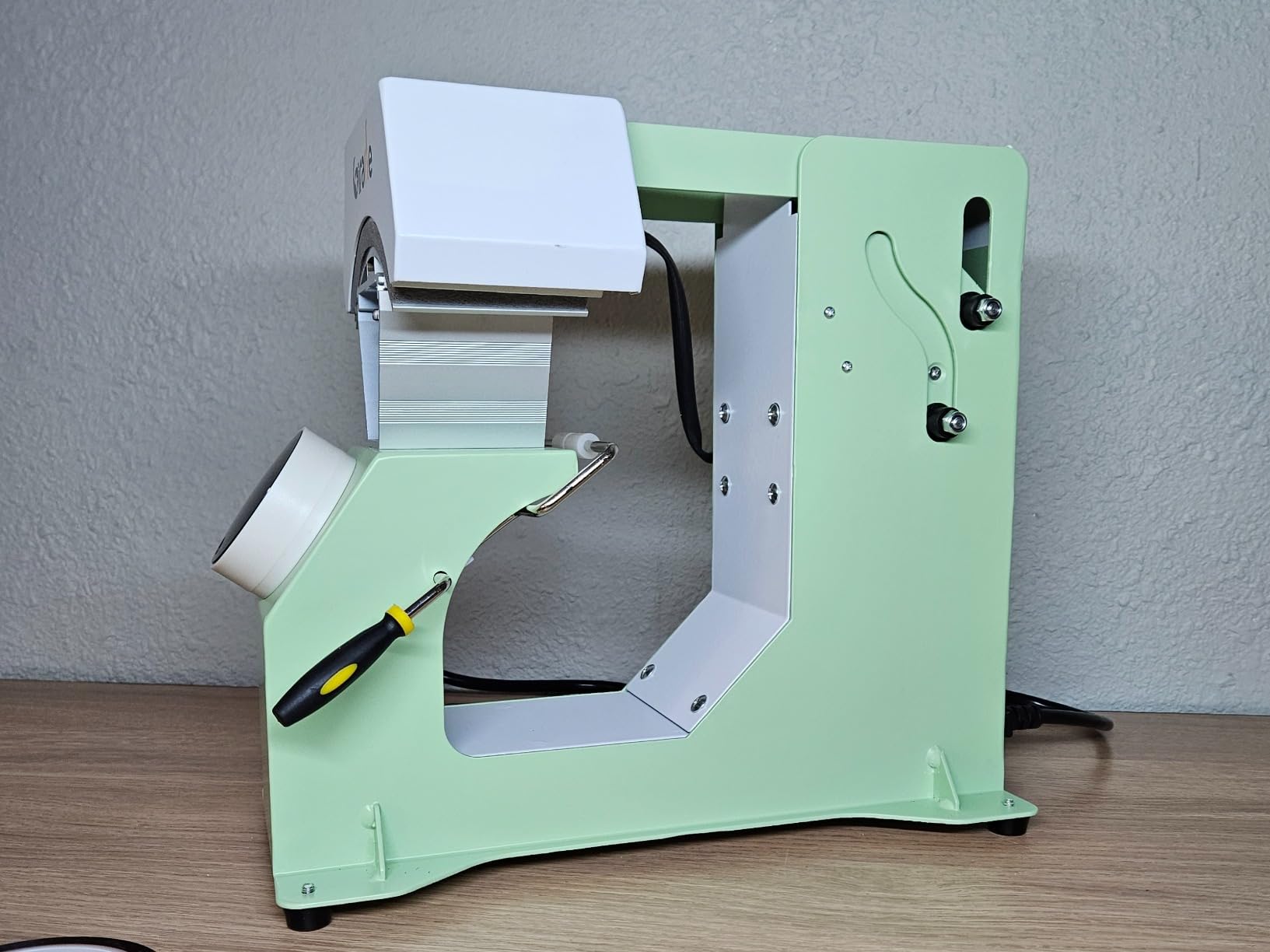
The first auto machine on our list closes, applies pressure, and lifts on its own when the countdown ends. For batch work that is the whole point: you set the dial, place the cap, and use the dwell time to prepare the next transfer instead of standing over a handle. Buyers consistently call the hands-free cycle the reason they bought it.
Three interchangeable lower platens measure 6.6 by 2.7 inches, 6.6 by 3.8 inches, and 6.1 by 3 inches on a 6.41 by 3.15 inch Teflon-coated aluminum main plate. Control is a pair of rotary knobs, right for temperature and left for time, which is about as easy to learn as a control panel gets. Mica heating elements deliver a gradual 104 to 410F ramp.
At 350W it draws the least power of any machine here, and the body is a compact 14.2 by 7.1 by 12.4 inches. A 30-minute auto shutdown handles the forgetful case. Pressure is automatic rather than manual, and a 30-minute idle cutoff means long sessions need a nudge.
Two honest trade-offs. The main plate is smaller than the flagship VEVOR 4-in-1, so large front-panel designs need more careful centering. And 350W is the lowest wattage in this group, which shows up as a slower warm-up between jobs. Some decorators also find auto pressure slightly less consistent than a manual knob on very thick or very thin materials.
When auto-open actually matters
It matters when throughput is the constraint. If you are running 20 to 30 caps an hour, the eight to ten seconds of dead time per press adds up across a session, and a machine that releases on its own lets you line up the next cap while the current one finishes.
It matters less if you press a few caps a week. In that case the manual presses above do the same job with more pressure control and a lower purchase price, and the auto feature is a novelty you will rarely trigger.
Where it is the wrong choice
Buy this for speed, not for precision. Auto pressure applies a set force rather than reading the cap, so a canvas structured crown and a thin nylon dad hat will not get the same contact. Decorators doing varied fabric work generally prefer a manual adjustment knob.
Note also that the review base here is 114 ratings, a shorter record than the top sellers. With fewer long-term reports available, buy from a seller whose warranty terms are stated clearly.
8. Giraffe Auto Open Cap Heat Press – Best for Wide Cap Coverage
Giraffe Auto Hat Heat Press Machine,Pink Auto Open Cap Heat Press
Auto pressure detection reads cap thickness
Automatic release lifts the plate
30-minute auto shutdown, 6-month warranty
Pros
- Auto pressure sensing and auto release free you to step away
- Curved plate covers trucker
- fitted
- snapback
- flexfit and 5-panel caps
- Non-stick coating releases hat and paper easily
- Approachable single-knob setup
- Heat-resistant tape included
Cons
- Highest price in this group
- Six-month warranty is the shortest listed
- Lowest sales rank so fewer long-term reports exist
This press does something the other auto machines here do not: it senses cap thickness and sets pressure for you. That matters on mixed orders, where a structured cotton cap and a low-profile nylon cap go through the same machine in the same hour. Buyers describe stepping away during the cycle as the defining benefit rather than a minor convenience.
The curved plate carries a non-stick coating that lets both the cap and the transfer paper release with less fighting, and the plate is described as handling trucker, fitted, snapback, strapback, Flexfit, five-panel, and visor caps. The rotary control panel again puts temperature on the right knob and time on the left, with a 30-minute idle shutdown.
It arrives with a power cord, heat-resistant tape, and a manual. The first-time-owner experience is good: one knob each for heat and time, and a cycle that finishes on its own.
The cautions are about money and evidence rather than capability. This is the most expensive machine we tested, it carries the shortest warranty in the group at six months, and it has the lowest sales rank, which means the thinnest pool of independent long-term reports. The weight is 7.64 kilograms, so plan where it will sit before it arrives.
Why thickness detection is a real advantage
Pressure is the variable decorators argue about most, and wrong pressure is the usual reason a transfer lifts or an adhesive shadow forms around the edge. A machine that reads the cap and adjusts removes the guesswork for beginners, which is the highest-value part of this pick.
It is also the reason it suits a mixed cap order better than a manual knob. You are not setting a force for a canvas crown and hoping a nylon cap tolerates it.
Where it is the wrong choice
If you press a few caps a week, this is more machine than the job needs, and the six-month warranty is the thinnest protection in this roundup. A manual press with a one-year warranty costs less and is easier to service.
Trucker caps need a special note regardless of machine. Plastic mesh on a trucker front panel warps at normal cotton settings, so community practice is roughly 260 to 280F with a short dwell rather than the 320F used on cotton twill. Check the cap material before you copy settings from a cotton job.
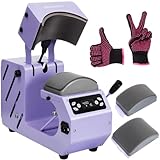
9. GOCHIFIX Auto Hat Press with 4 Memory Modes – Best for Repeat Settings
GOCHIFIX Auto Hat Heat Press Machine, Automatic Open/Release, 4 Memory Modes, Precise Temp/Timer Control, 6.54″x3.84″Curved Heat Plate, Hat Stretcher, for Caps, Sublimation, Vinyl, Heat Transfer
6.54 x 3.84 in ceramic-coated curved plate
46-400F, 0-999s, four memory modes
500W at 110V, two hat pad sizes
Pros
- Auto pressure and auto lift make the press hands-free
- Four memory modes save repeated settings across jobs
- Sturdy build for the money by owners using it daily
- Two hat pad sizes plus a stretcher reduce creases
- Quiet operation and gloves included
Cons
- Heavy and bulky with the top arm stuck raised
- Some units report the auto-down motor pressing in uneven jumps
- Stop button sometimes needs a power cycle
- Some shipments arrive without the gloves
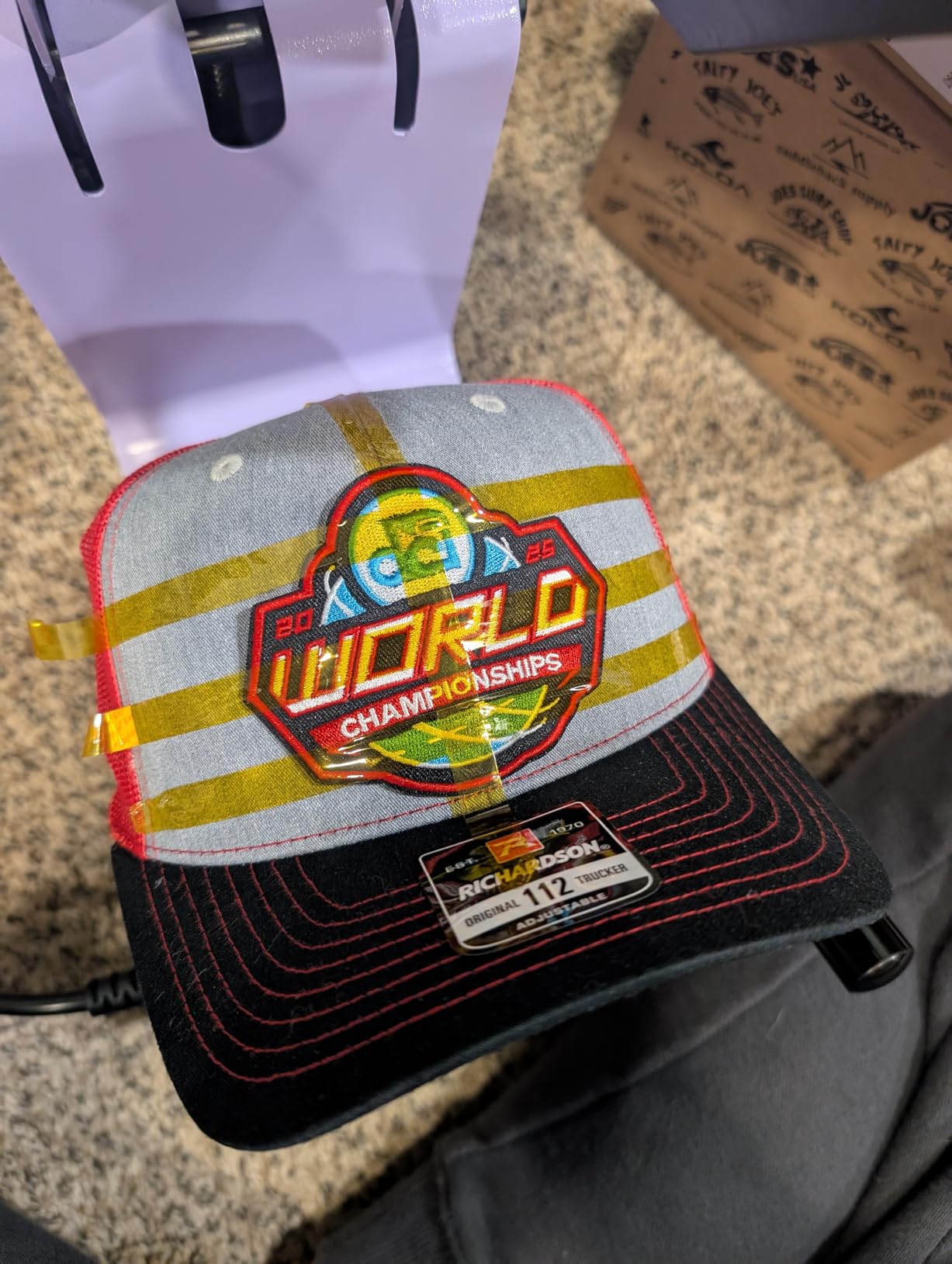
Four memory modes is the feature that separates this from the other auto presses here. Where most store a single profile, this one keeps four, which covers cotton DTF, polyester DTF, HTV, and a spare setting without re-dialling the panel. Several owners running it daily in a small hat business point to build quality and quiet operation as reasons it has stayed in service.
The curved plate measures 6.54 by 3.84 inches and is ceramic-coated aluminum, described as scratch-resistant, rust-proof, and non-stick. Two interchangeable hat pads, 5.59 by 3.78 inches and 4.94 by 2.95 inches, sit under an adjustable hat stretcher and a molded silicone lower platen that is meant to reduce creases and scorching. Control is a digital panel covering 46 to 400F and a 0 to 999 second timer, drawing 500W on 110V.
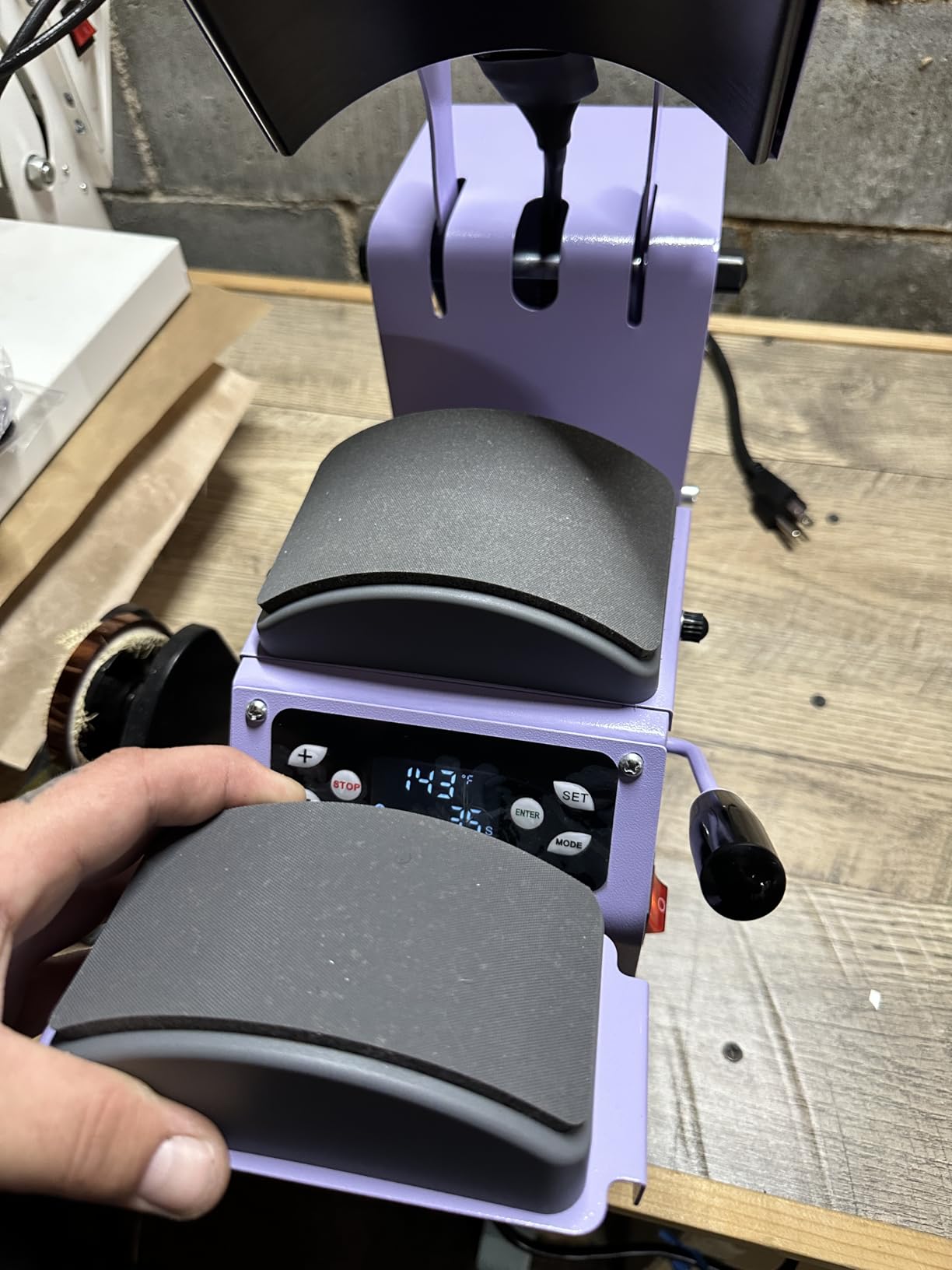
Small details that matter in daily use: a stop button to interrupt a cycle, anti-slip pads, a built-in thermal fuse with two spares, and included high-temp gloves. The same press handles canvas bags, sleeves, and neck tags, which broadens its use beyond caps.
It is also the heaviest unit here at 8.32 kilograms, and the top arm stays raised, which makes it awkward to move or put away. The lowest reviews describe an auto-down motor that steps in uneven jumps, giving inconsistent pressure, plus a stop button that occasionally needs a power cycle. Reliability, not capability, is what separates the good reviews from the bad here.
How to get consistent bonds from it
Save a profile per material and use the memory mode rather than adjusting on the fly. Consistency is what makes a batch look uniform, and the auto-down motor varies slightly more than a manual press, so a fixed setting is your best defense.
For a six-panel cap, add a pressing pillow inside the crown and run several short pre-presses to flatten the center seam before the real transfer. That combination does more for edge lift than any machine setting on this list.
Where it is the wrong choice
Skip it if you need to move the press around or store it away between sessions. The weight and the raised arm make it a permanent bench fixture, not a portable tool.
With 83 ratings, the public record is thin, and the complaints about the auto-down motor and the stop button are consistent enough to take seriously. If your production depends on one machine running all day, a manual press with a proven mechanical close is the lower-risk purchase.
10. OFFNOVA Hat Press with Two Platens – Best for Patches and Light Iron-On Work
OFFNOVA Hat Heat Press Machine for Caps with 2 Interchangeable Platens, Temp & Time Control with Auto Countdown, Efficient Heat Transfer for HTV Iron On and Sublimation Projects (Auto-Green)
Two platens: 4 x 3 in and 5.5 x 3.7 in
Auto opening at set time plus STOP release
Digital control to 400F, 1-year warranty
Pros
- Auto-open after the timed cycle is convenient for batch work
- Two platens cover kids' and adult' caps
- Compact and portable body that stores easily
- Attractive design against utilitarian rivals
- Some owners press iron-on patches successfully
Cons
- No pressure control and very little applied pressure
- Upper arm mechanism has failed for several owners
- Instructions are thin and require experimentation
- Customer service responsiveness repeatedly criticized
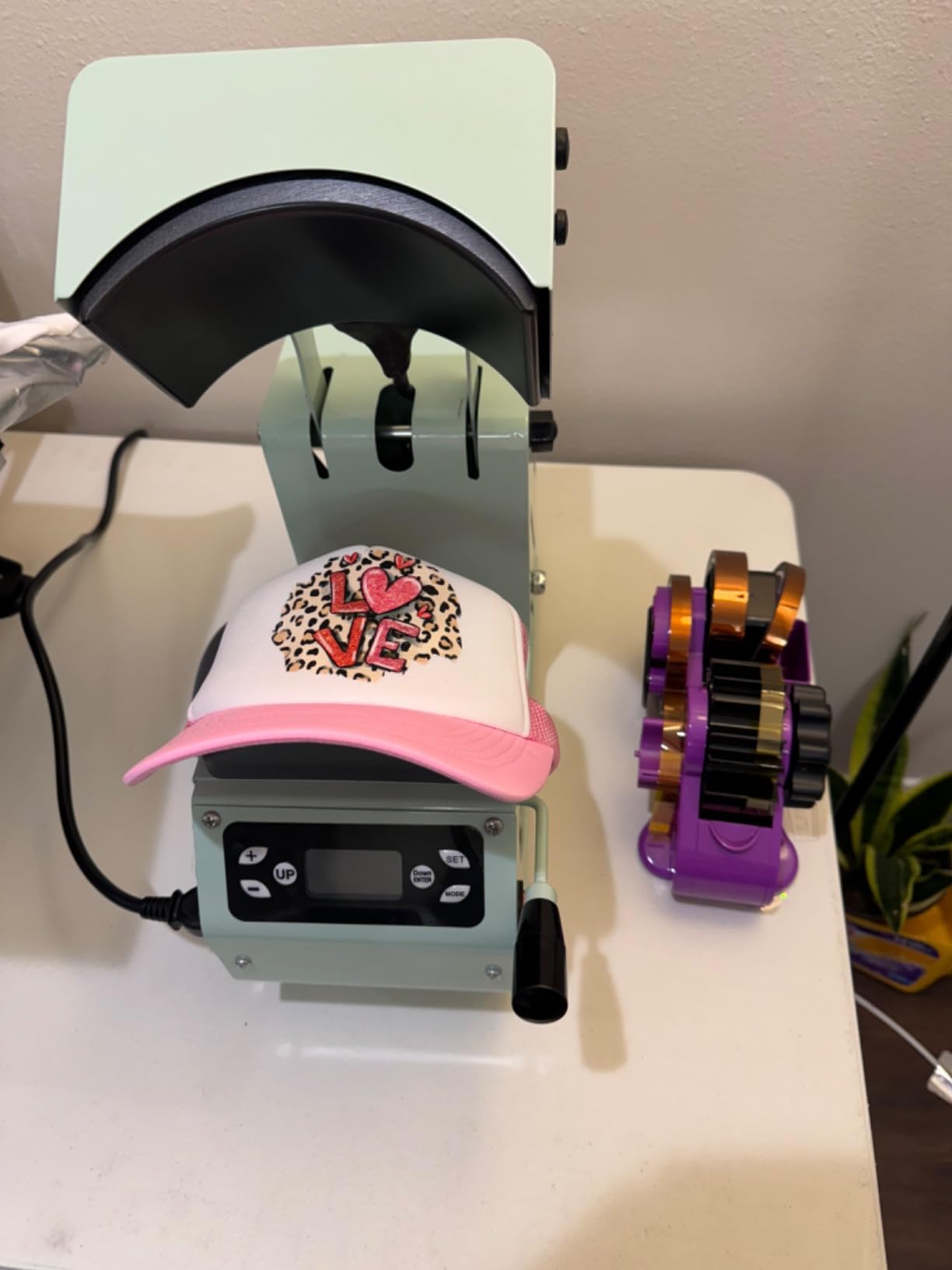
This is the smallest and lightest cap press in the roundup, and the reviews split cleanly along one line: it works for patches and light iron-on work, and it does not work for DTF or HTV. The reason is pressure. There is no pressure adjustment, and owners report the press barely applies any, so thin transfers often do not bond across the whole design.
Two interchangeable platens measure 4 by 3 inches and 5.5 by 3.7 inches, covering kids’ caps and adult caps as well as snapbacks and beanies. Temperature control runs to 400F on a digital display, and the arm opens automatically when the set time expires, with a manual STOP release at any point. The body is 8 kilograms at 12.6 by 6.7 by 13.6 inches, with a one-year manufacturer warranty.
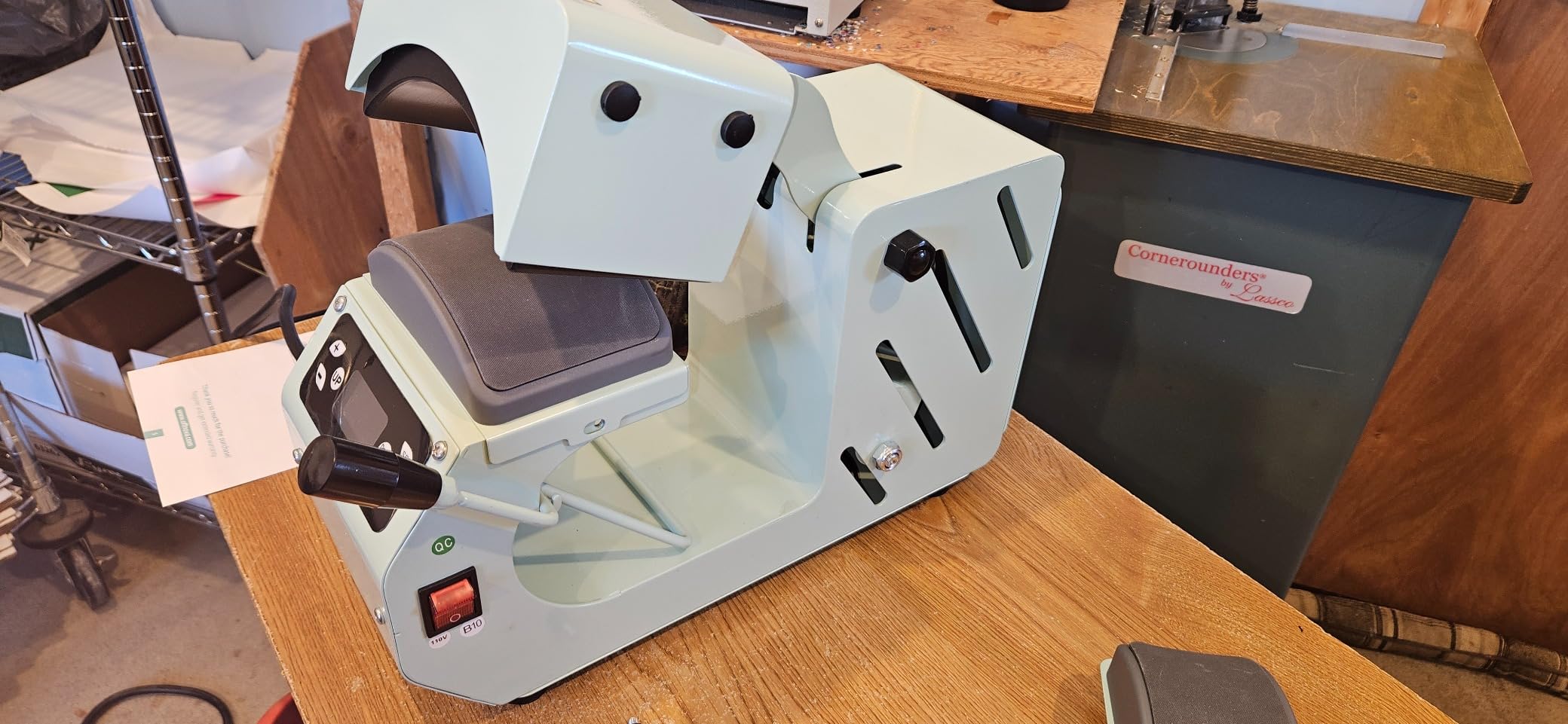
What works well is the batch flow. The auto-open means you set the timer and move to the next cap, and the compact size stores between projects rather than living on a bench. The design is also a step up aesthetically from the utilitarian presses it competes with, which matters if it lives in a visible workspace.
The drawbacks are the ones to weigh. Besides the lack of pressure control, several owners report the upper arm mechanism failing within weeks or months, and customer service responsiveness is criticized repeatedly. Instructions are thin, so expect to experiment with temperature and dwell time before results are consistent.
What it is genuinely good at
Iron-on patches and pre-printed transfers on cotton and canvas caps, where you want light, even contact and a fast cycle rather than maximum squeeze. For a first-time hobbyist pressing a handful of caps a month, that is a reasonable entry point.
Its auto-open and small footprint also make it a good second machine for a hobby desk, where a full-size press would take space it cannot earn back.
Where it is the wrong choice
Do not buy this for DTF or HTV. Thin adhesive films need firm, even pressure to flow into the fabric weave, and a press that barely pushes down will give you edge lift on the first wash. That is a design limitation, not a technique problem.
With 50 ratings, this is the thinnest evidence base in the roundup, and the arm failures reported in the lower reviews are a hardware concern rather than a settings one. Anyone printing inventory should pick a machine with a manual pressure knob and a longer review history.
How to Choose a Hat Press Machine in 2026
1. Curved platen beats everything else
A cap crown is curved and seamed, so a flat platen only touches the center of the panel. Edges never reach full temperature, adhesive never fully flows, and the design lifts at the seam after washing. Every machine on this list has a curved cap platen; that is the baseline, not a differentiator.
Platen size is the differentiator. An 8.5 by 4 inch plate gives you room to center a large front-panel logo, while 6.5 by 3.3 inch plates suit smaller designs. Match the plate to the cap size you actually press, and skip oversized plates if you only make small caps.
2. Pressure adjustment is the setting you cannot fake
Temperature and time are printed on the transfer supplier’s instructions. Pressure is not, because it depends on the cap. Thick canvas and structured crowns need more force than a soft nylon dad hat, and a press with a manual knob lets you dial that in per job.
Auto pressure machines read the cap and apply a set force, which is easier for beginners and mixed orders. Manual pressure is more precise across fabrics. If you print one material on one cap style, either works. If you mix materials, manual control is worth paying for.
3. Auto-open helps only at volume
An auto cycle that closes, presses, and releases on the timer lets you prepare the next cap during the dwell. At 20 or more caps an hour, that adds up. At five caps a week, you will never notice it, and you would be better served spending the money on a wider platen.
Note that most auto machines here cut out after 30 minutes of inactivity. In a long session, plan for a reheat.
4. Wattage and your circuit
Every press on this list runs on standard household current, so you do not need a dedicated 20-amp circuit for cap work. Wattage affects warm-up and recovery rather than final bond quality: the 580W machines here reheat faster between jobs than the 350W auto press, which matters if you run long batches.
Check the upper temperature limit too. A 400F ceiling covers cotton and polyester DTF and most HTV, but leaves no headroom above that. The machines rated to 449F and 464F give you a little more room to experiment.
5. Warranty length and who you buy from
This is the factor buyers underweight most. Warranty terms in this category range from six months to one year, and returns on machines weighing 40 to 100 pounds are frequently shipped at the buyer’s cost. A stated one-year manufacturer warranty from the brand itself is a meaningfully better position than a third-party listing with a short return window.
Our broader heat press machine roundup covers brands and support in more depth if support is your deciding factor.
6. Settings that matter on a cap
For DTF on cotton twill, community practice is 320F, 7 to 10 seconds, hot peel, with medium-to-heavy pressure. For trucker caps with a plastic mesh front, drop to roughly 260 to 280F, because mesh warps at cotton settings. Polyester and blends scorch within 10 to 15F of a too-hot setting, so start lower and work up.
The workflow that fixes most problems: pre-press the cap for 5 to 10 seconds to drive out moisture, add a pressing pillow inside the crown to fill the seam, tape the transfer edges with heat-resistant tape, press, peel hot or cold to match your transfer, then post-press under parchment for 5 to 10 seconds. That last step is credited with preventing ink cracking after washing. Never use ordinary tape on a cap surface.
7. Match the press to your crown type
Five-panel and six-panel structured caps respond well to a deeper curved platen plus a pressing pillow. Unstructured dad hats are floppy and crease instead of pressing flat, so they need firm pressure and a well-shaped cap stretcher to tension the crown. Trucker caps need the lower temperature range because of the mesh.
Fit and crown shaping affect sizing as much as the press does, so if you are also shopping for blanks, our hat fit and sizing guide is worth a read before a large order.
Frequently Asked Questions
Can you use a heat press on hats?
Only with a curved platen. A flat shirt press contacts the center of a cap panel, so the edges never reach full temperature and the adhesive does not fully bond, which leads to lifting at the seam after the first wash. A hat press uses a curved lower platen and a cap stretcher so heat and pressure reach the whole crown. If you already own a flat press, a cap attachment is a partial solution that works best on trucker and low-profile caps.
Do I need a separate hat press machine?
If you press caps regularly, yes. Hat attachments that clip onto a flat press flatten only part of the crown and are the most common source of the wrinkling and seam creasing decorators complain about. One forum thread asked specifically for a press that handles six-panel caps, and the answer was that hat attachments only work properly on trucker caps. A dedicated cap press with a deep curved platen, a stretcher, and a pressure knob is a better buy for regular cap work.
Which hat heat press machine is the best?
For most people, the VEVOR with an 8.5 x 4 inch plate is the best overall because it combines a wide curved surface, steady temperature, and the largest review base in the category. The Delclynee with two interchangeable platens scores highest with owners of several machines. For volume, the auto-cycle machines remove the babysitting. Match the choice to your cap size and material rather than to brand alone.
What temperature and time should I set for a hat?
For DTF on cotton twill, use about 320F for 7 to 10 seconds, medium-to-heavy pressure, then hot peel. Trucker caps with a plastic mesh front need roughly 260 to 280F, because mesh warps at cotton settings. Polyester and blend caps scorch within 10 to 15F of a too-hot setting, so start lower. Always pre-press the cap for 5 to 10 seconds, and post-press under parchment for 5 to 10 seconds to reduce ink cracking.
How do I press a hat without wrinkles?
Pre-condition the cap with 10 to 12 short presses to flatten existing creases, then use a firm pressing pillow inside the crown to fill a raised center seam. Set the cap in the stretcher so the crown is tensioned rather than floppy, and use heat-resistant tape on the transfer edges to stop shift. Firm, even pressure across the full panel does more to prevent wrinkles than any particular machine setting.
The Verdict
The best heat press machines for hats all share one trait that matters more than any other spec: a genuinely curved platen with real pressure control. The VEVOR with the 8.5 x 4 inch plate takes our top spot for its wide surface, stable temperature, and the deepest review base we could verify. The Delclynee is the pick if you rate owner experience above all else, and the VEVOR 4-in-1 covers the most hat styles in a single machine.
Pick an auto-cycle press only if you are pressing in volume, and skip any machine without a pressure adjustment knob if you are applying DTF or HTV. Whatever you choose, buy from a brand seller with a stated warranty, and keep a pressing pillow and heat-resistant tape in your kit. That is the complete 2026 roundup; press a test cap before you commit inventory.