
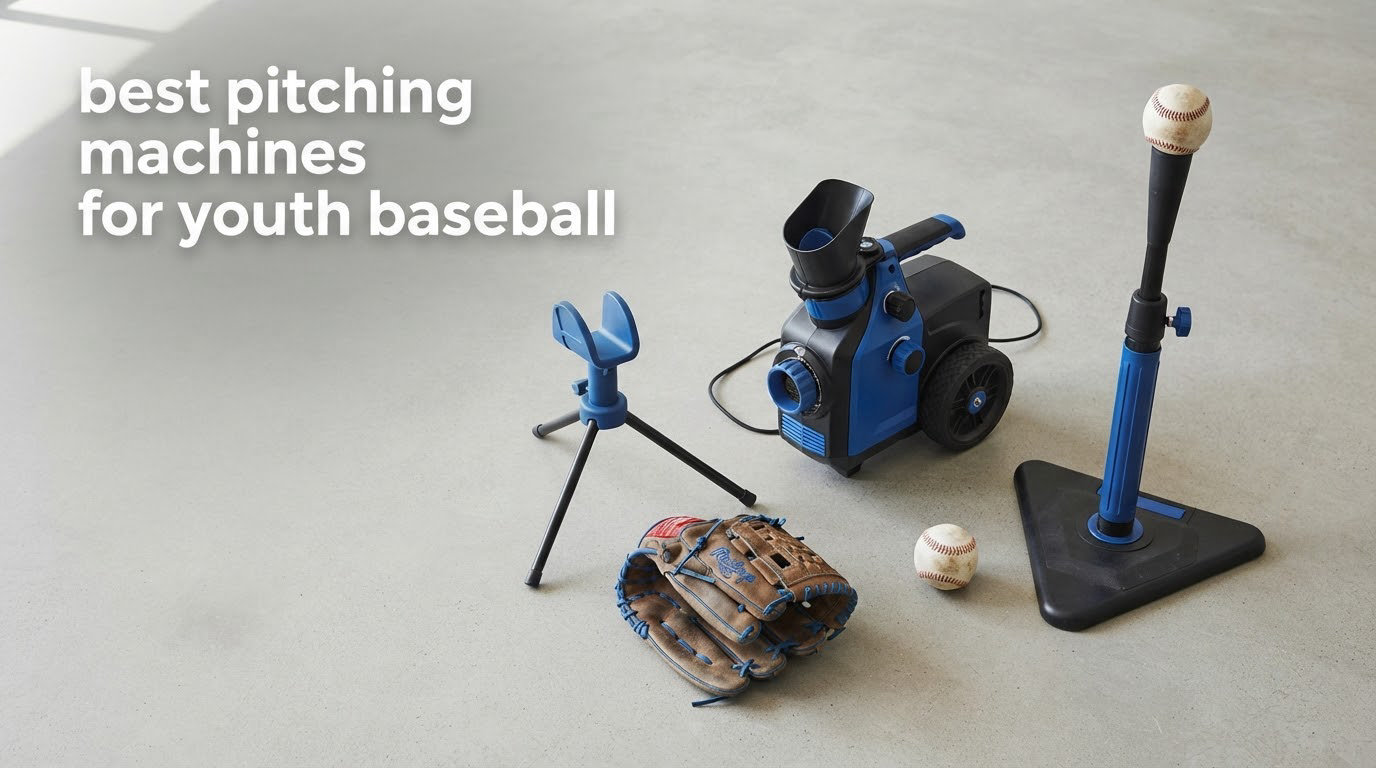
The best pitching machines for youth baseball fall into three clear groups. The Louisville Slugger Blue Flame is our best overall pick because it throws real baseballs and needs no power source at all. The Heater Slider Lite 360 is the best pick for teams that want automatic feeding without moving up a tier, and the Franklin Sports MLB Electronic is the cheapest way to add repeatable swings to a backyard.
A machine throws the same pitch, to the same spot, at the same speed, over and over. Hand-thrown batting practice is inconsistent in speed, location and accuracy, so young hitters spend more time chasing bad pitches than building swing mechanics. A machine fixes that problem for a fixed block of practice time.
There is an honest caveat before the picks, and no competitor puts it this plainly. Machine batting practice is a supplement to live arm work, never a replacement. Kids who face nothing but machine pitches start swinging at predictable balls with no windup and no hold, then struggle when a real pitcher does both. Keep one live-arm session in the rotation and the machine becomes the best batting partner your child will ever have.
We should also say what this roundup is. Our picks come from manufacturer specifications, owner review patterns and youth coaching discussion, not from independent lab testing or radar measurement. Advertised speed figures are the manufacturer’s own ranges, and on several machines the quoted figure is only reachable at a specific distance and with a specific ball. Where that matters, we say so.
Every machine below is written in the same format: what it does well, who it suits, and the situation where you should skip it. We also cover the four mechanism classes, ball compatibility, power requirements and a safety protocol in the buying guide further down.
Table of Contents
Top 3 Best Pitching Machines for Youth Baseball in 2026

Louisville Slugger Blue Flame
- Throws real baseballs
- No power needed
- 18-45 mph with hard balls

Heater Slider Lite 360
- Automatic feeder included
- Fastballs and curveballs
- 13 pound folding frame
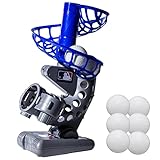
Franklin Sports MLB Electronic
- Seven second pitch interval
- Three launch angles
- Six balls included
Each of these three earns its place for a different reason. The Blue Flame solves the power-access problem that stops most families buying a machine at all. The Heater Slider Lite 360 solves the hand-loading problem that ends practice after twenty minutes. The Franklin Electronic solves the price problem, and it has the largest owner base in this roundup by a wide margin.
Quick Overview: All 10 Machines Compared
Here is the whole list in one scannable block. The ball type column matters more than the speed column, because a machine that will not throw the ball your hitter is used to will teach a swing that does not transfer to a game.
| Product | Specifications | Action |
|---|---|---|
| Louisville Slugger Blue Flame |
|
Check Latest Price |
| Heater Slider Lite 360 |
|
Check Latest Price |
 Heater Power Alley Lite 360 Heater Power Alley Lite 360 |
|
Check Latest Price |
| Franklin Sports MLB Electronic |
|
Check Latest Price |
 Franklin MLB Superstar 4 in 1 Franklin MLB Superstar 4 in 1 |
|
Check Latest Price |
 Franklin Sports MLB Power Pitcher Franklin Sports MLB Power Pitcher |
|
Check Latest Price |
 Furlihong 898BH Soft Toss Furlihong 898BH Soft Toss |
|
Check Latest Price |
 Furlihong 3801BH Furlihong 3801BH |
|
Check Latest Price |
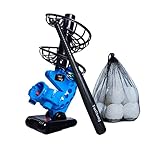 Furlihong 380BH Furlihong 380BH |
|
Check Latest Price |
 YESMARKS Kids Auto Set YESMARKS Kids Auto Set |
|
Check Latest Price |
Two practical notes on reading it. The Heater Power Alley Lite 360 lists four features because its speed range, enclosed wheel and power options all matter to the buying decision, so its cell is longer than the rest.
How We Picked These Machines
Our selection criteria were deliberately narrow. A machine had to be a genuine pitching machine rather than a pop-up net or a batting tee with a motor, it had to be built for children rather than for adult soft pitch training, and it had to have enough owner reviews for a pattern to emerge rather than a handful of impressions.
From there we weighted four things. Ball compatibility decided more selections than any other factor, because feeding a machine the wrong ball either damages it or produces a swing feel that does not carry over. Power source came second, since a machine you cannot use at your practice field is dead weight. Speed range had to fit a youth hitter rather than a college one. Durability and owner-reported consistency settled the rest.
We also read the negative reviews carefully. Products that read well in specifications and poorly in owner reports, such as the electronic two-wheel units with cheap feed ramps, moved down the list even when their feature sheets looked stronger than the mechanical options.
1. Louisville Slugger Blue Flame – Best Overall, and the Only One That Needs No Power
Louisville Slugger Blue Flame Pitching Machine – Manual, Lightweight, Adjustable Speed (18–45 MPH), Throws Baseballs & Softballs
11.9 pounds
18-45 mph hard balls, up to 60 mph lite
Spring loaded, no power
32 x 14 x 6 inches
Pros
- Throws real baseballs and softballs
- Needs no electricity or batteries
- Under 12 pounds and portable
- Official machine of Babe Ruth League
- Metal build that lasts many seasons
Cons
- Manual loading means an adult triggers every pitch
- Caps out near 45 mph with baseballs
- Needs anchoring on hard ground
This is the machine we keep coming back to. It is a spring-loaded arm that you cock by hand and release with a foot pedal, which means it works at a park with no outlet, at a school lot after hours, or in a garage with the door open. Nothing to charge, nothing to plug in, nothing to carry except the machine itself at under 12 pounds.
The more important detail is the ball. The Blue Flame throws hard balls from 18 to 45 mph, and it will also take light flight balls, plastic balls, dimple balls and slowpitch softballs with a high arch. That range is why it works from age seven through twelve without a second purchase, and why reviewers keep naming it a supplement to live pitching rather than a replacement for it.
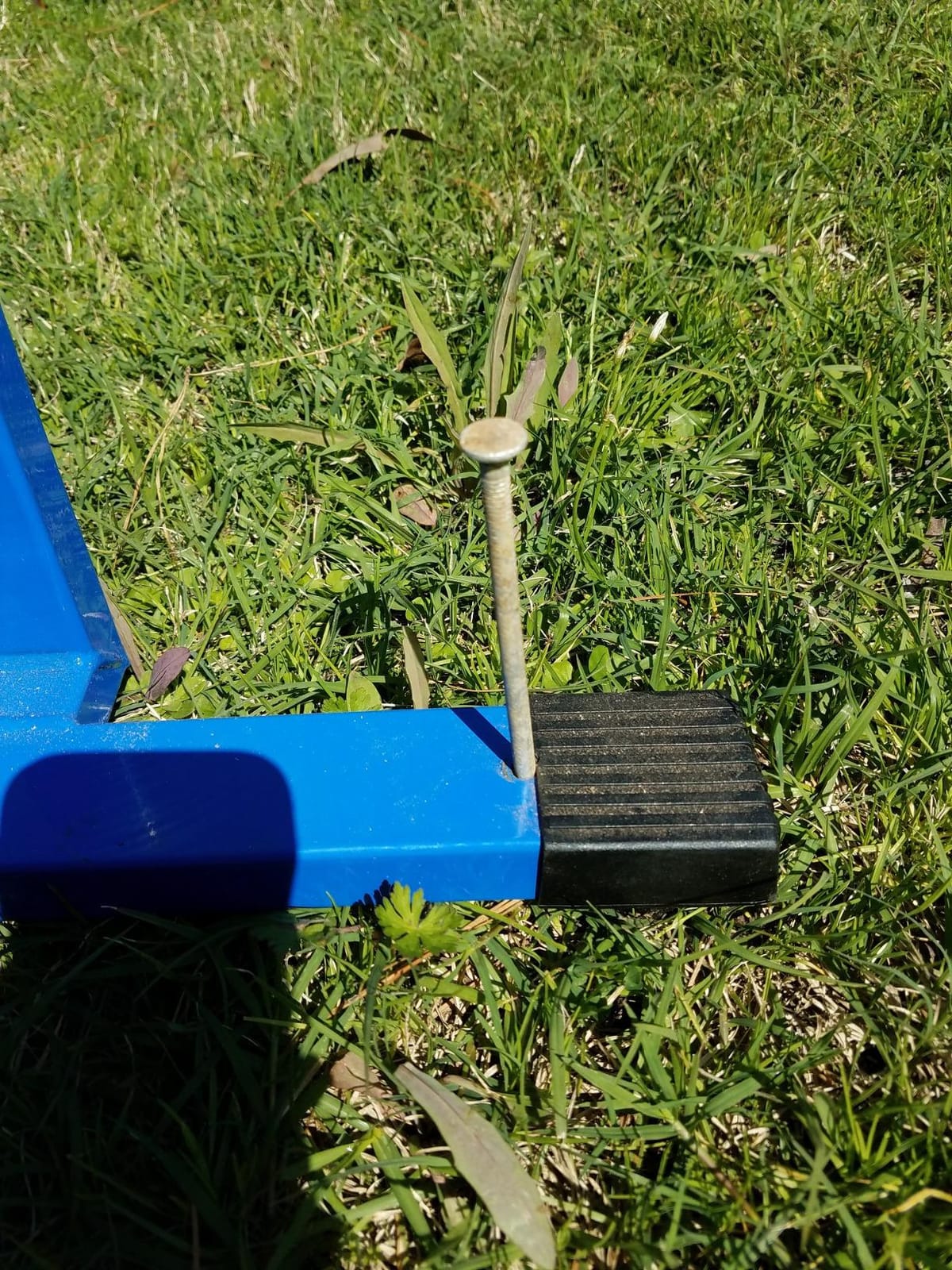
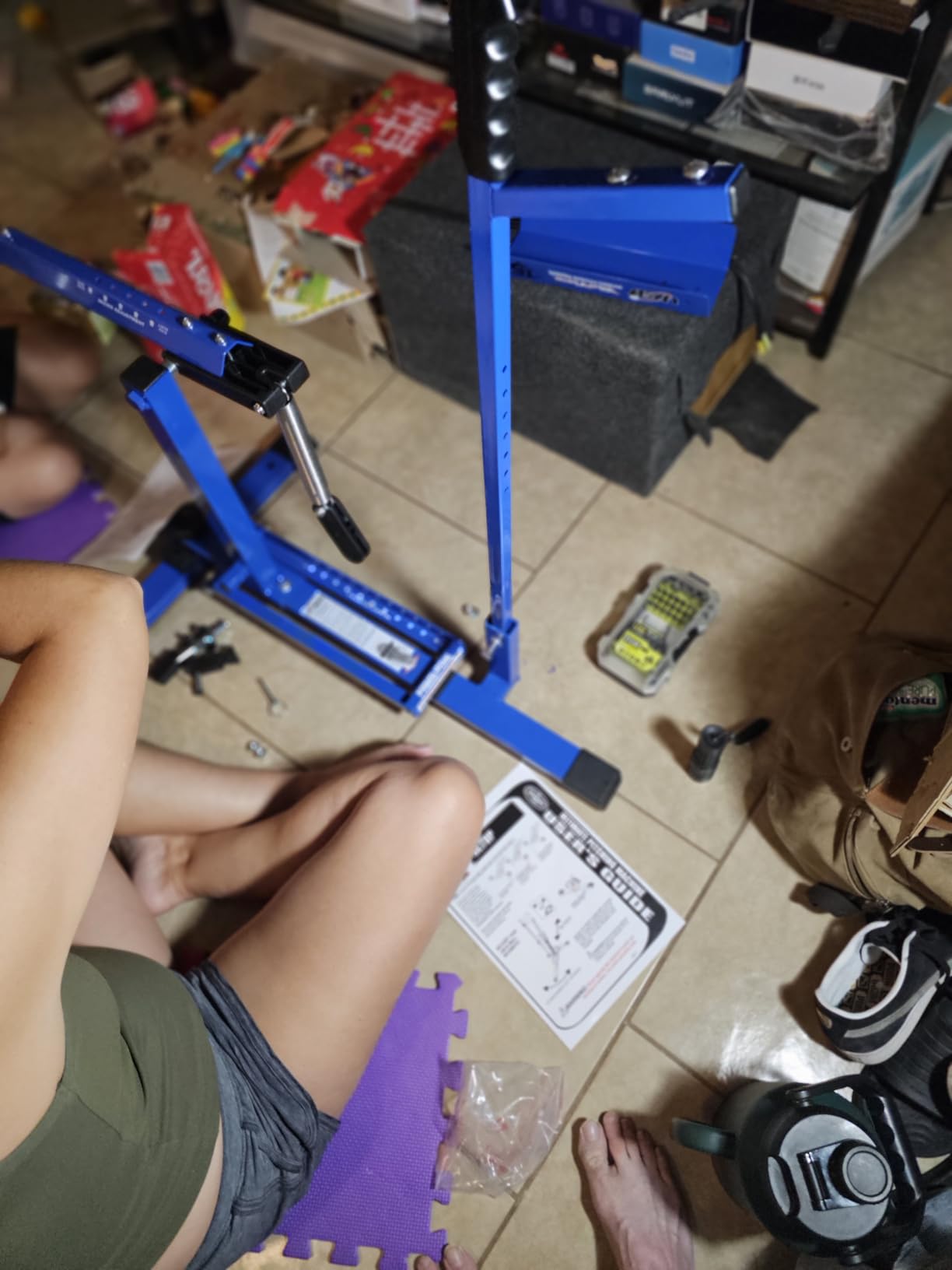
Setup is where new owners get impatient. The first session is spent tuning, and a few owners report thin instructions for the fine adjustments. Once dialled in, the reports describe strike after strike with only a few inches of variance, which is exactly what a hitter needs to trust a swing.
One mechanical note that shows up repeatedly: the machine walks slightly on hard ground. Anchor the front spikes and hold the back foot down while it fires, or set up on grass or a mat. That single habit removes most of the accuracy complaints owners post in the first week.
Who the Blue Flame suits
It suits a family with no reliable power at the practice field, a rec coach who wants one machine the whole roster can share, and any hitter between roughly seven and twelve who is working on contact and level swings. The level pitch mode is genuinely useful here, because a machine that fires every ball on the same line teaches a hitter to keep the head down.
Parents on r/Homeplate consistently treat the Blue Flame and the high-end wheel machines as both reliable and cage-worthy, and the decision between them usually comes down to whether the machine has to be moved. This one is moved in one hand.
When to skip the Blue Flame
Skip it if you need breaking pitches, because a spring arm does not offer pitch variety. It is a fastball machine with speed control. Also skip it if nobody is willing to stand next to it and trigger each pitch, because a machine that needs a full-time loader ends practice in twenty minutes once a coach has to do something else.
2. Heater Sports Slider Lite 360 – Best for Automatic Feeding Without Moving Up a Tier
Heater Sports Slider Lite 360 Baseball Pitching Machine with Automatic Ball Feeder – Accurate 360-Degree Delivery, Durable and Portable Training Tool for All Ages
13 pounds
Up to 80 mph with lite balls
Automatic feeder included
36 x 36 x 36 inches, folds
Pros
- Automatic feeder means no constant hand loading
- Throws fastballs and curveballs
- Folds for storage and moves between fields
- One year warranty
- Long owner histories
Cons
- Works best with Heater dimpled lite balls
- Motor needs seconds to recover speed between pitches
- Needs weight at the base to stop wiggling
The single most common complaint in coaching forums about affordable machines is the loader. A coach feeding every ball by hand runs out of attention long before the hitter runs out of swings, and the session ends early. This machine ships with an automatic feeder that mounts on the rear of the frame, which changes the length of a session more than any other feature in this list.
The swivel head delivers a fastball or a curve by repositioning, so a beginner can see two pitch looks rather than one. Owners training seven to twelve year olds call the accuracy the strongest part of the package, and that is the age band where pitch recognition is actually being taught.
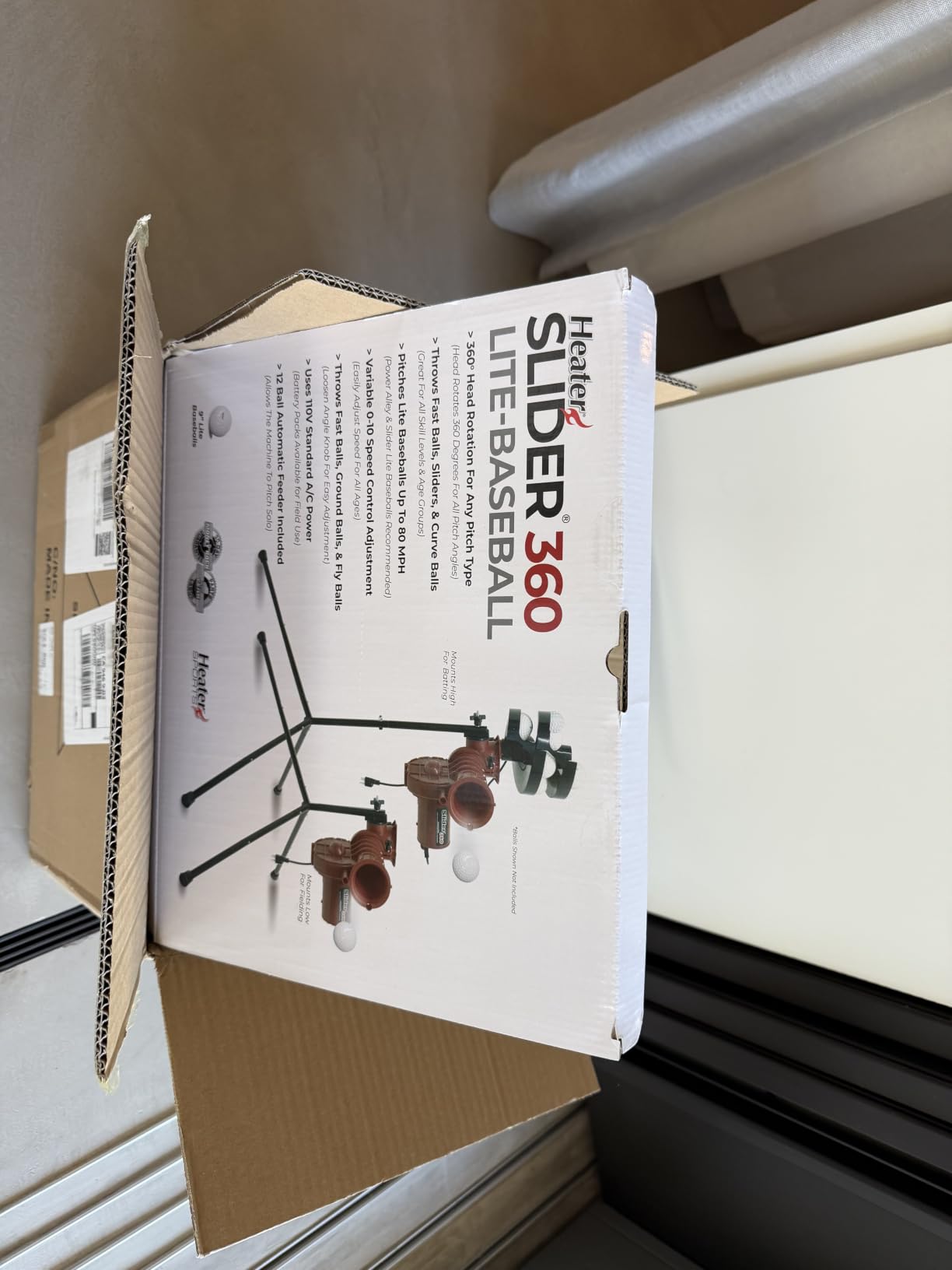
The ball compatibility is the caveat that decides this machine for you. It performs best with Heater’s own dimpled lite balls, and owners report that other balls bog the motor down. There is also a real mechanical characteristic to plan around: the motor loses speed after each pitch and takes several seconds to recover, so a rapid-fire drill is not what this machine does.
Against that, the durability reports are strong. Several owners describe six or more years of continuous seasonal use, and the fold-down tubular steel frame stores against a wall rather than taking up a garage corner.
Who the Slider Lite 360 suits
It suits a rec team that wants an auto-feeder without the expense of a full-size two-wheel, and a family with a two-wheel-compatible cage. It also suits a hitter who is ready to see breaking balls after several months of straight fastballs, because the curve is one head position away rather than a purchase away.
If your team is buying one machine for twelve players, this is the shape of machine that keeps working. Set and rest cycles, an auto feeder and a long service life are what allow a single unit to survive a full season of shared use.
When to skip the Slider Lite 360
Skip it if your plan is to feed real leather baseballs. It is a lite-ball machine, and a swing built on a light dimpled ball will not transfer cleanly to game speed. Skip it too if you need a fast interval between pitches, and add weight or a sandbag at the base or it will drift out of line during long sessions.
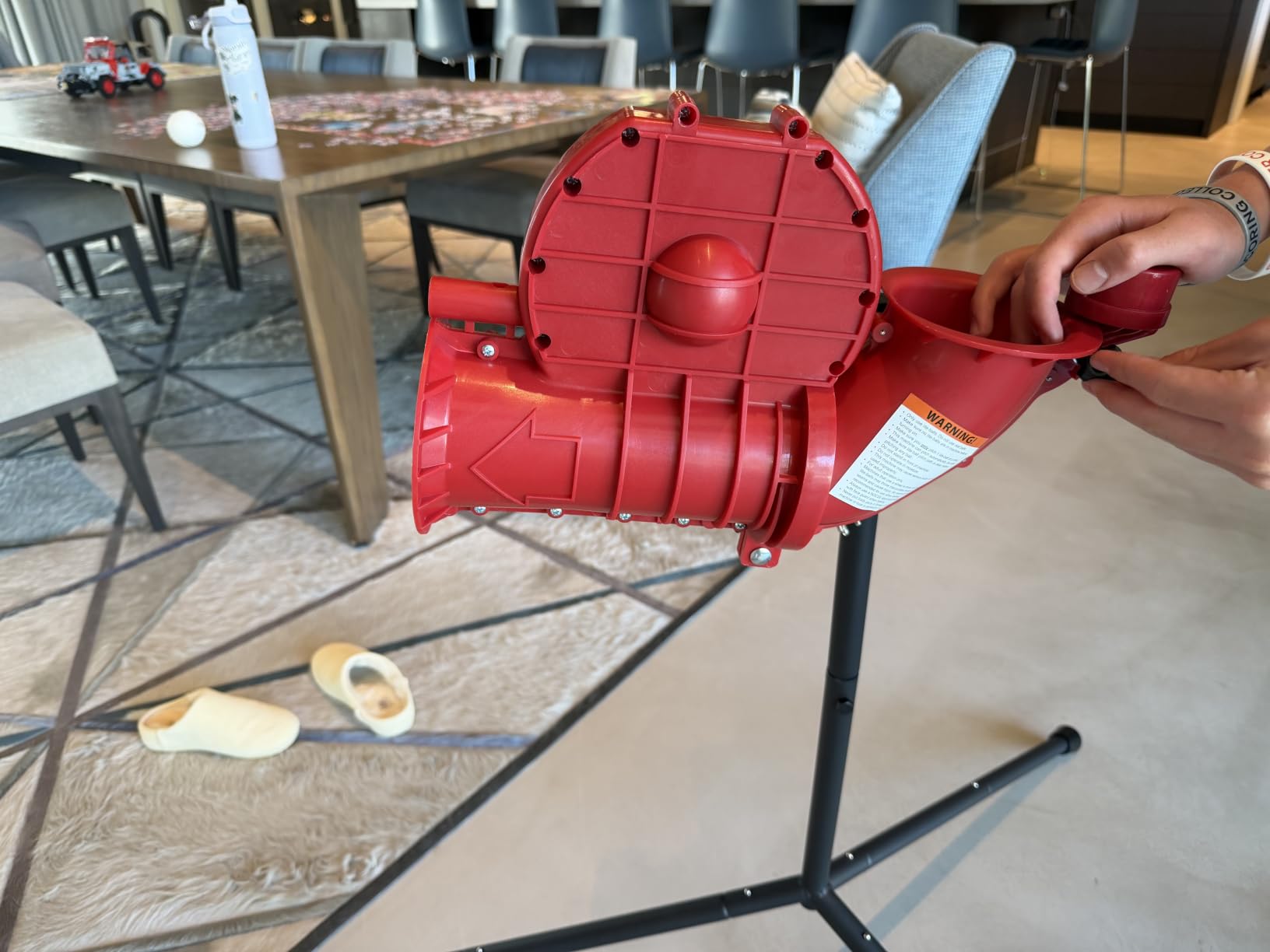
3. Heater Power Alley Lite 360 – Best for Breaking Pitches on a Budget
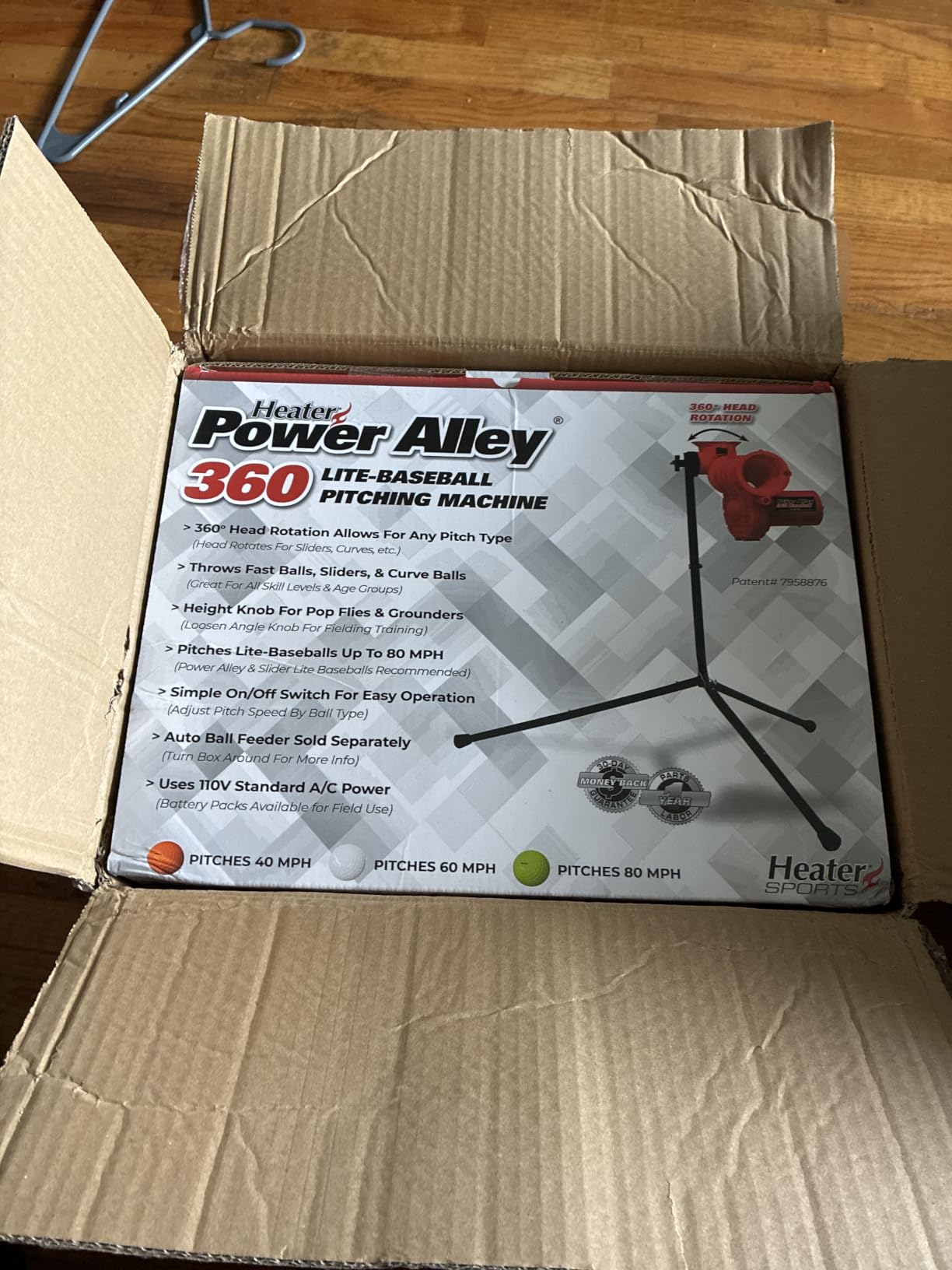
Heater Sports Power Alley Lite 360 Baseball Pitching Machine – Pitches Lite Balls 40-80 MPH Fastballs, Sliders, & Curves | Accurate, Durable, & Portable Training Tool for Batting & Field Practice
12.5 pounds
40-80 mph with lite balls
Fastball slider and curve
110V or portable power station
Pros
- Genuine fastball slider and curve variety
- Accuracy praised for 7 to 12 year olds
- Light enough to carry and store compactly
- Enclosed solid wheel
- One year parts and labor warranty
Cons
- Advertised speeds only reproduce at the stated distance
- Requires Heater lite balls rather than real baseballs
- Automatic feeder sold separately
- Machine wavers and needs anchoring
Where the Slider Lite 360 gives you two looks, this one gives you three: fastball, slider and curve from the swivel head. For a 10 or 11 year old who has been hitting machine fastballs for a season, adding two breaking looks is the single biggest quality jump available at this level of spend. It is also the only machine in our list that will hit fielding targets, with grounders, line drivers and pop flies out to 200 feet.
It runs on standard 110V, or on a portable power station sold separately, which is the practical answer for a rec field with no outlet. The fully enclosed solid wheel is a genuine safety advantage over exposed wheel designs, and the one year parts and labor warranty is the longest stated cover among the wheel machines here.
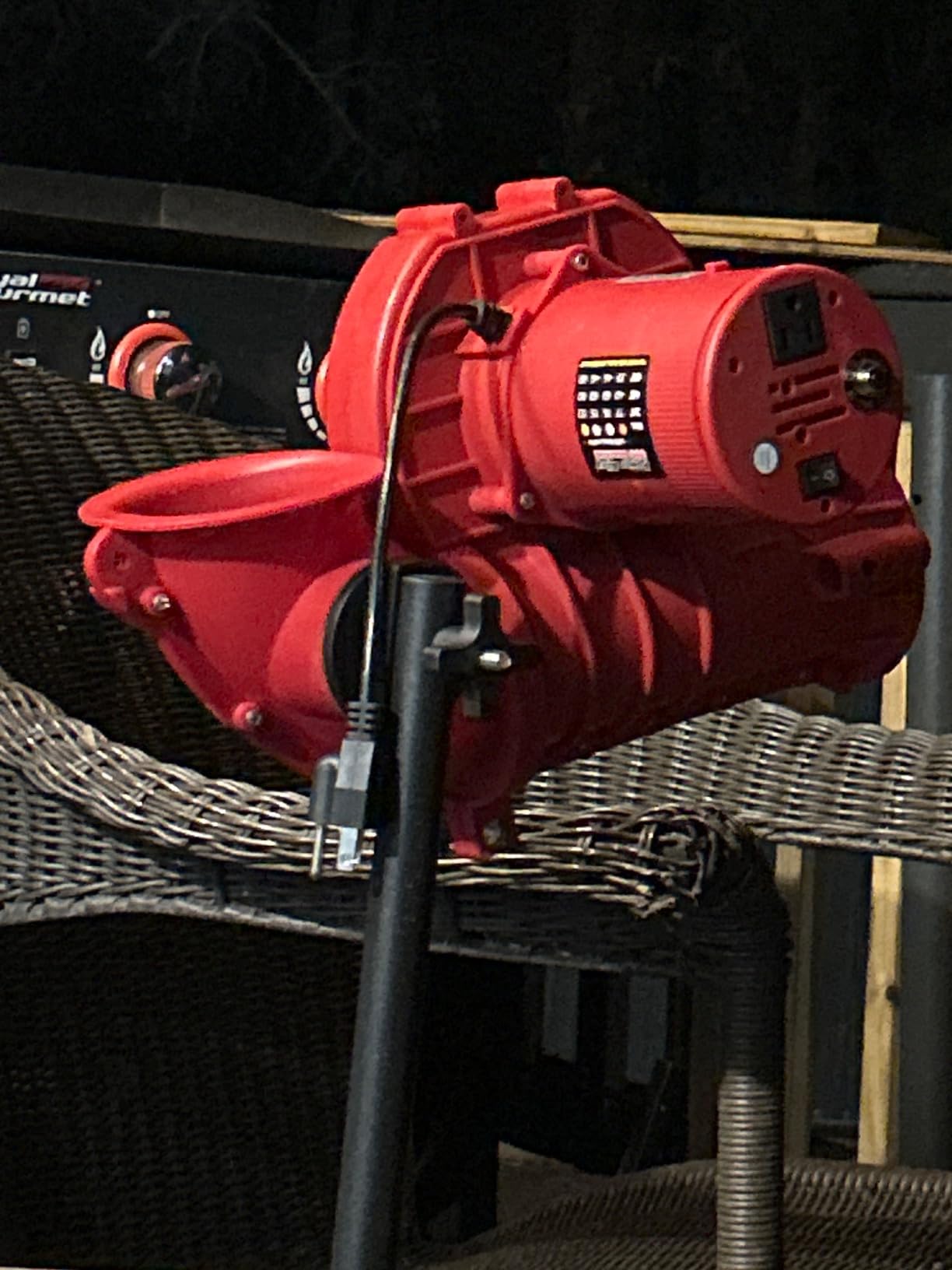
Now the honest part. Owners repeatedly report that the advertised 40 to 80 mph range is difficult to reproduce at shorter distances, so treat the top of that figure as a full-distance specification rather than a backyard number. Real baseballs are not recommended for this machine either; it wants lite balls.
The other recurring notes are that the machine wavers in position and needs a hand or a nearby L-screen to stay on line, that it is louder than a metal-bodied spring machine, and that the automatic feeder is a separate purchase. Budget for the feeder if you want unattended repetition.
Who the Power Alley Lite 360 suits
It suits a hitter aged roughly seven to twelve who has earned breaking pitches, and a coach running fielding drills in the same session as hitting. It also suits families who already own a net and want a machine that pushes balls to the edges of a yard rather than straight into a bucket.
If your child plays both baseball and softball, the dual-sport claim is a practical bonus. The same head handles both, which removes the argument for owning two machines.
When to skip the Power Alley Lite 360
Skip it if you need game-speed fastballs. A 10 year old facing a 70 mph machine pitch is facing a genuinely hard ball, and stepping down to the low end of the range produces a slow, floating delivery that teaches lunging. Some younger buyers report that the adjustment range is insufficient for that reason, and they are right.
4. Franklin Sports MLB Electronic – Best on Cost, and the Largest Owner Base Here
Franklin Sports MLB Pitching Machine
7 second pitch interval
Three adjustable launch angles
Six plastic balls included
Requires four D batteries
Pros
- Largest owner base of any machine on this list
- Easy to assemble and light enough for kids to move
- Three launch angles for different trajectories
- Six plastic balls included and a nine ball hopper
Cons
- Included plastic balls break quickly
- Unpredictable flight path
- Four D batteries add ongoing cost
- Balls can sting when they hit a face
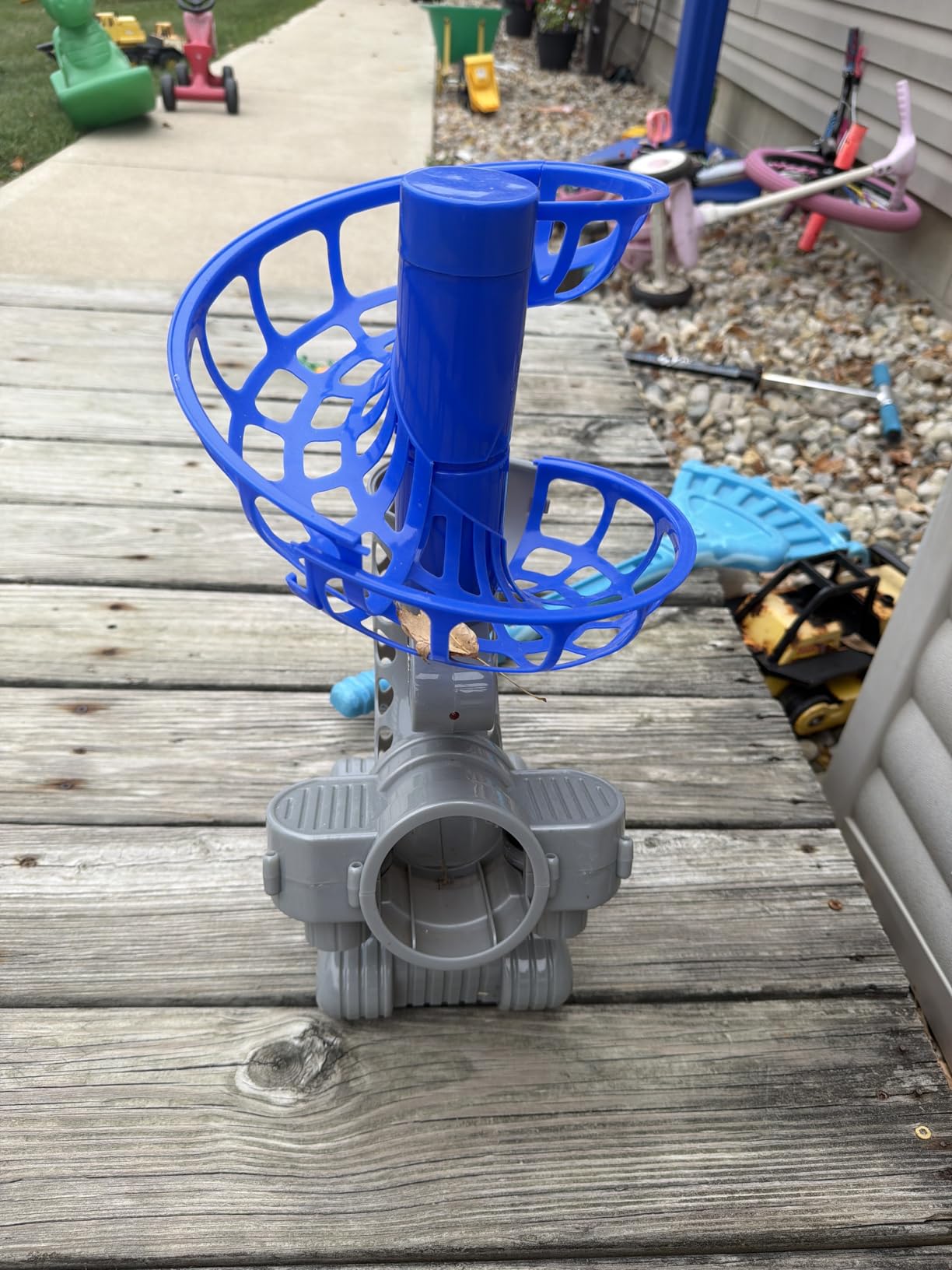
With a little over 9,000 owner reviews, this is the most battle-tested machine in the roundup by volume, and the pattern in those reviews is remarkably consistent. Parents and kids praise assembly, portability and fun. The most common complaint is inconsistent trajectory, and several owners repurpose the unit as a ball thrower for dogs or for fielding practice.
It does something the mechanical options cannot: it runs on a seven second interval without an adult standing next to it. The flashing red indicator light signals release, and the hopper holds up to nine balls. For a five to eight year old, that autonomy is the feature, because the child can set it up and get reps while a parent does something else.
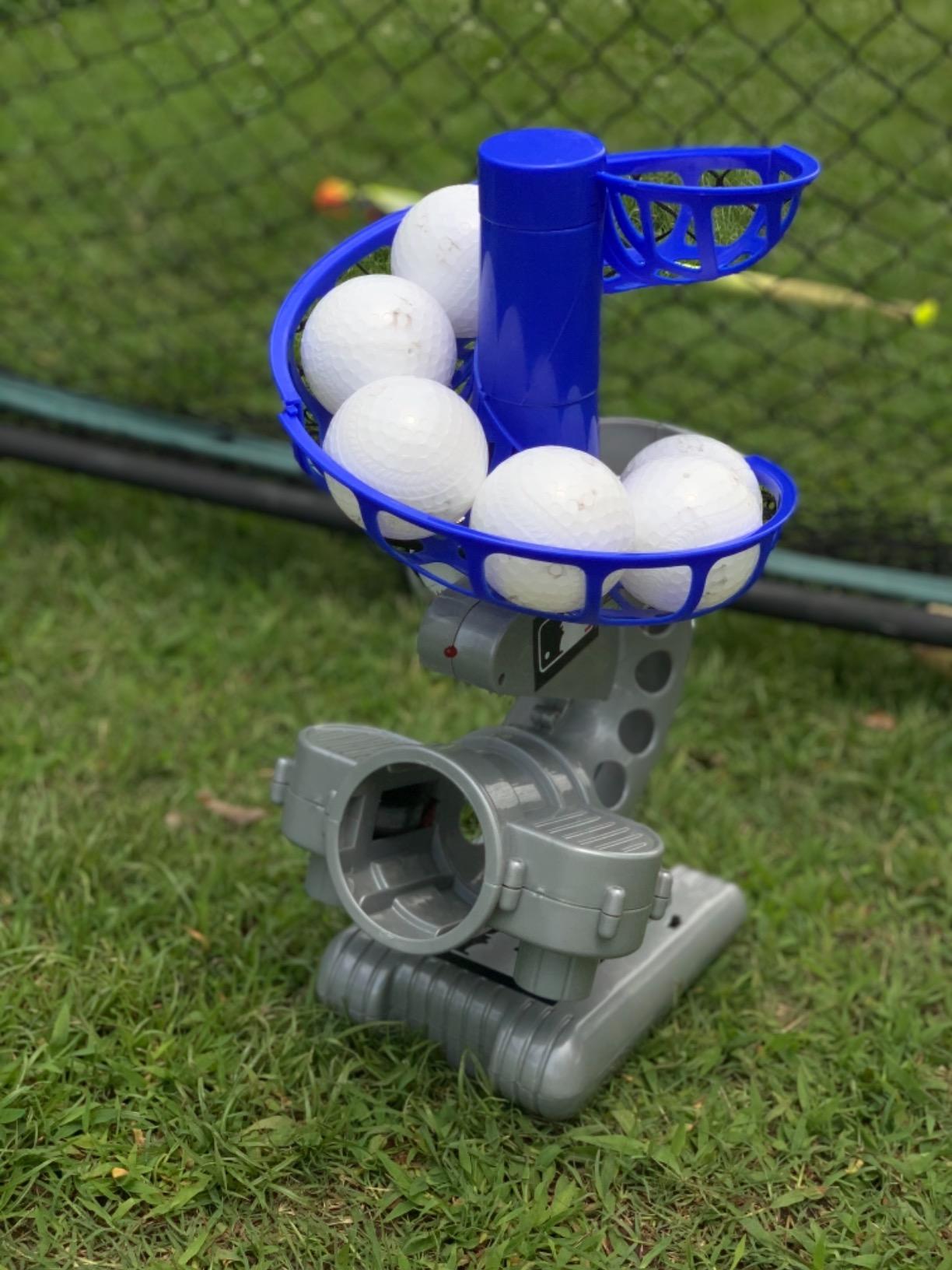
The ball is where compromise lives. It throws plastic aero-strike baseballs, and only six come in the box, with the hopper holding nine. Those plastic balls are destroyed quickly, and third-party replacements are a recurring source of feeder jams in the reviews.
There is also a safety point that a five year old will not raise. The launch speed is enough to sting when a ball hits a face, which is a reason for a helmet with a face guard and an L-screen even on a machine this simple.
Who the Franklin MLB Electronic suits
It suits a family with a small yard, a five to eight year old who is still building confidence, and anyone who wants to test whether machine work suits their child before spending on a better machine. It is also the machine most likely to survive being carried between the yard, the grandparent’s house and a park.
Nothing else in this list gives a young child this much independent repetition for this little. That is a real reason to start here rather than stretching upward.
When to skip the Franklin MLB Electronic
Skip it if you are training a hitter who needs to see a realistic ball. Plastic aero-strike balls feel nothing like leather, and a swing tuned to them will need relearning. Skip it if your field has no safe place to stand behind the machine, because the launch point is low and predictable, which makes it tempting for younger siblings to stand too close.
5. Franklin MLB Superstar 4 in 1 – Best for Hitting and Fielding in One Unit
Franklin MLB Superstar 4 in 1 Pitching Machine
5 pounds
Four in one pitch modes
Nine ball hopper
Requires four C batteries
Pros
- Four modes cover hitting and fielding in one unit
- Angle adjustment converts between modes
- Five pound body a child can carry
- Six plastic balls included
Cons
- Four C batteries not included
- Toy grade plastic build
- One year warranty
- Plastic balls only so swing feel differs
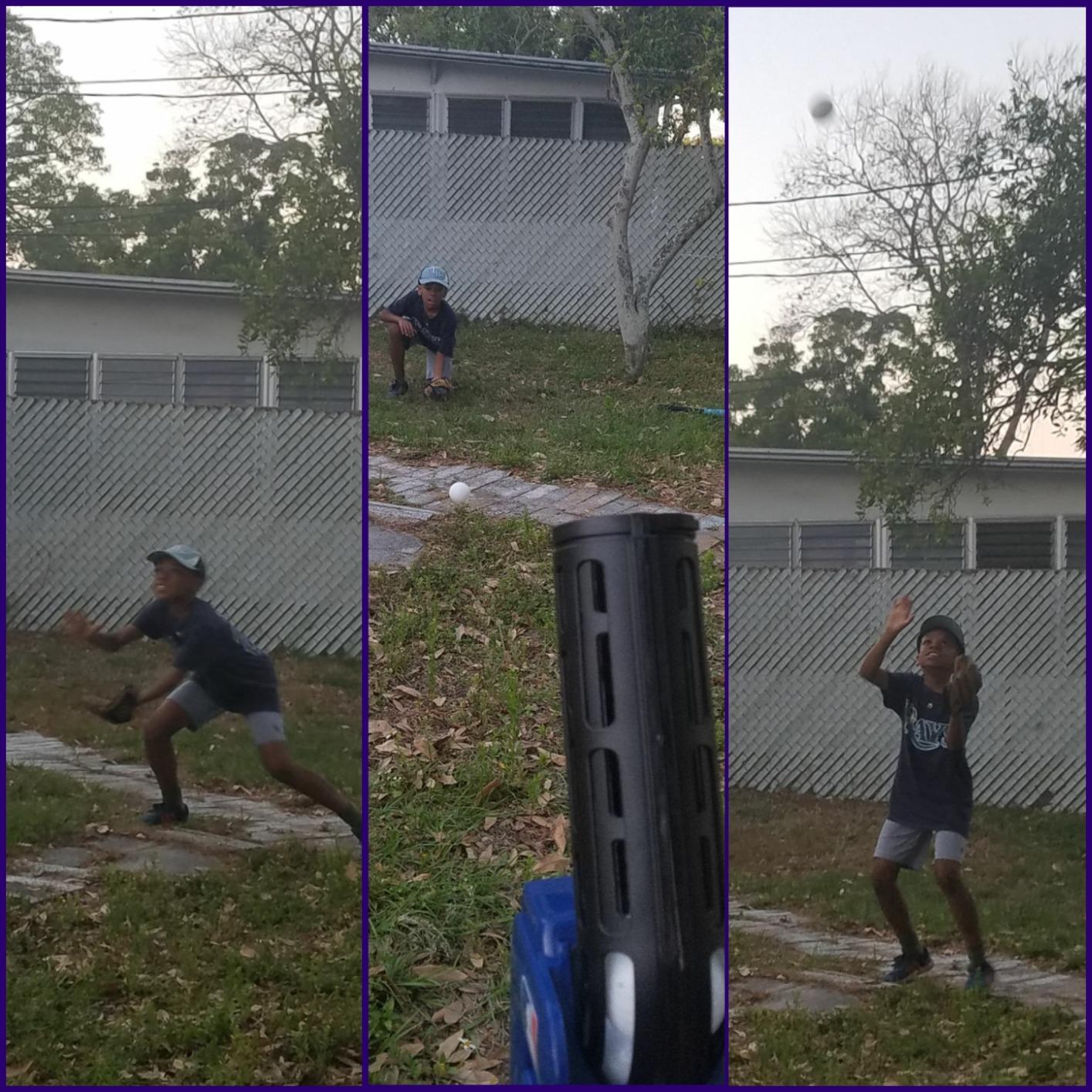
Most machines on this list throw one way. This one covers soft toss, fast pitch, ground balls and pop flies, and it does it by moving a single launch angle. For a coach with fifteen minutes and no field, that is a genuinely different product rather than a cheaper version of the same thing.
At five pounds with a plastic body, it is the easiest machine here for a child to carry out to the fence line and set up themselves. The seven second feed interval matches the Franklin Electronic above, and the hopper again holds nine balls.
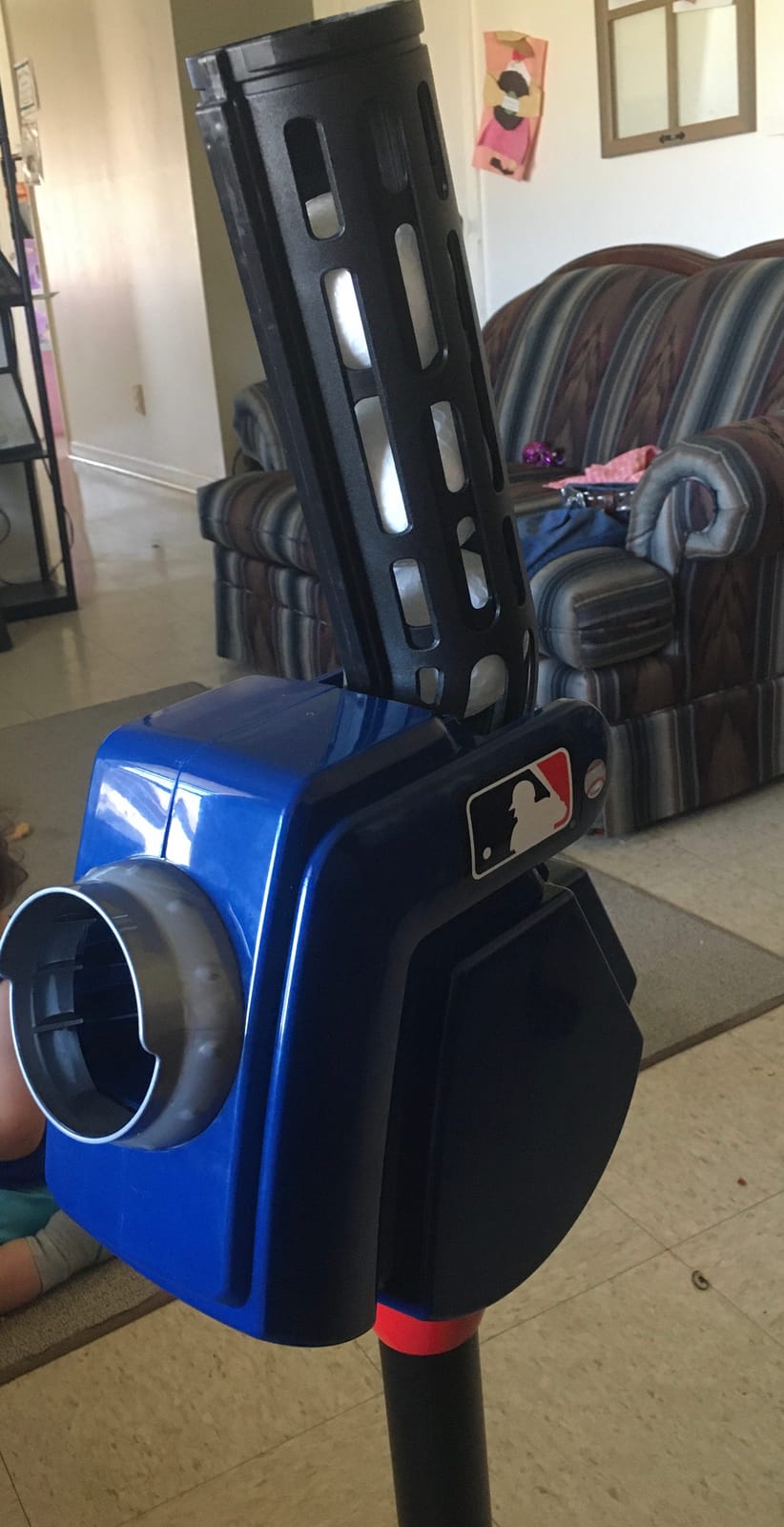
Buyers treat it as an inexpensive introduction to batting and fielding rather than a training-grade machine, and the reviews reflect that. Roughly half of the one-star and two-star feedback is about build quality, with the plastic body and the short one year warranty as the common themes.
The batteries are the practical annoyance: four C cells, not included. For a machine a child uses outdoors, that is a standing cost that the toy-grade units above also carry, and it is worth adding to any real budget calculation.
Who the Superstar 4 in 1 suits
It suits a coach who wants fielding reps in a yard rather than on a diamond, and a family with one child in tee ball and another just starting. The soft toss mode in particular is useful for a hitter who is not yet ready to stand in against a machine pitch from the mound.
It is also the cheapest way to find out whether your child actually enjoys machine work before you commit to a bigger purchase.
When to skip the Superstar 4 in 1
Skip it if you need accuracy. The mode changes are about trajectory type, not about placing a ball consistently in a zone, and owners do not describe this as a strike-zone tool. Also skip it for a hitter moving into competitive play, where ball feel and durability start to matter more than the number of modes.
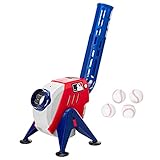
6. Franklin Sports MLB Power Pitcher – Best for Controlled Speed With Foam Balls
Franklin Sports MLB Power Pitcher Pitching Machine
4.5 pounds
Three speeds at 10 15 and 20 mph
Four foam balls included
12 x 25.75 x 18 inches
Pros
- Three selectable speeds for gradual progression
- Foam balls and low top speed are gentle on beginners
- Three position angle adjustment
- Light four and a half pound body
Cons
- Wide pitch dispersion so accuracy varies
- First pitch after a refill is low and bouncing
- Some units fail early with a cranking sound
- Batteries not included and no adapter in the box
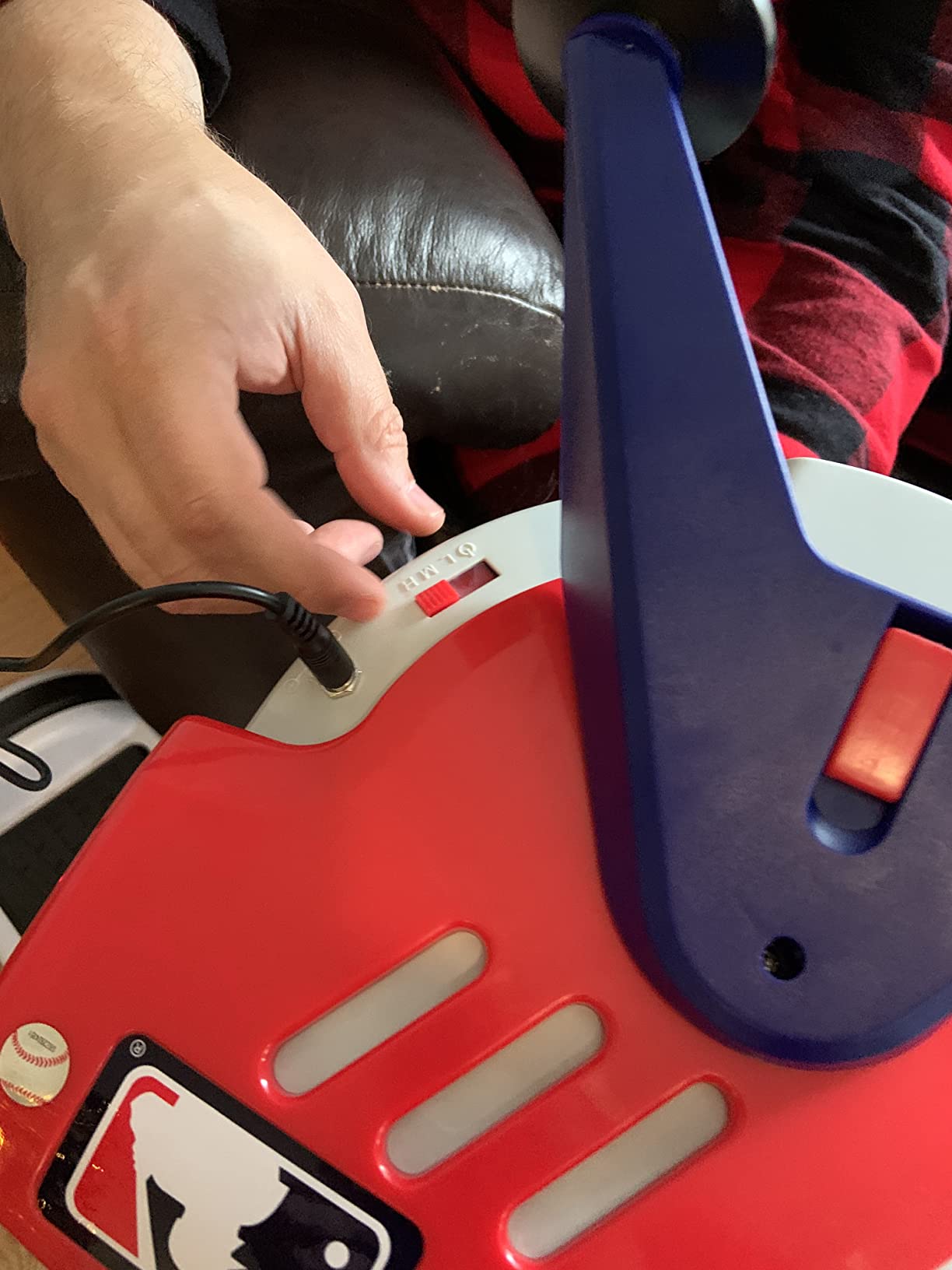
The distinguishing feature here is three discrete speeds at 10, 15 and 20 mph. Most machines give you a continuous dial, which is meaningless to a seven year old. Discrete settings let a coach say we are moving up one step today, and the hitter feels the difference immediately.
It throws foam practice balls, four of them included, with the feeder holding nine. Foam is the safest ball in this entire roundup for a small child, and combined with a 20 mph ceiling it makes this the machine we would put in front of a five or six year old who is nervous about being hit.
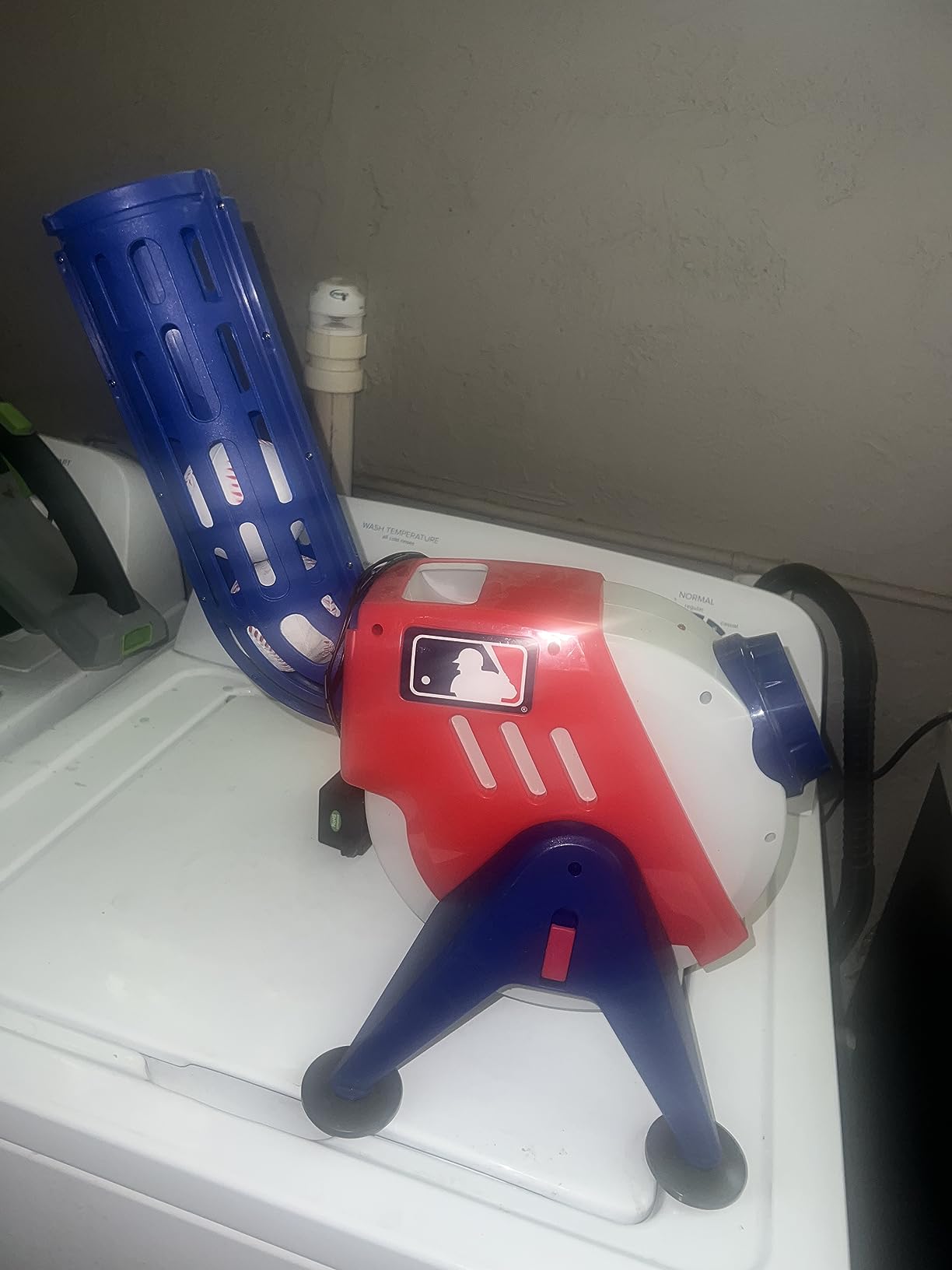
Owner feedback is honest about what weakens. Pitch dispersion is wide, so this is not an accuracy machine. The first pitch after a refill tends to arrive low and bouncing while the wheels spin up, and a minority of owners report units failing after light use with a cranking sound at the mechanism.
The power situation is also loose. The reviews describe running on batteries or an optional AC adapter, but the adapter is not in the box, so plan on four C cells as a standing cost unless you buy the adapter separately.
Who the Power Pitcher suits
It suits a beginner who needs to be ramped up gradually rather than dropped into a game-speed feed, and any parent whose main concern is that the machine will not hurt their child. The red release indicator also makes it usable without a parent standing in the firing line to call each pitch.
It is a good second machine for a family that already owns a net and a tee, because it is the first electric step up rather than a final destination.
When to skip the Power Pitcher
Skip it once the hitter can handle a machine pitch that is actually challenging. Twenty miles an hour stops being a training stimulus fairly early, and forcing a bigger step means moving to a different machine rather than adjusting this one. Skip it if you need any pitch variety, since foam balls from a single feed produce one look.
7. Furlihong 898BH Soft Toss – Best No-Power Machine That Throws Real Baseballs
Furlihong 898BH Baseball Soft Toss Machine, Angle Adjustable, Step On Paddle and Release to Launch, No Power Supply Needed, Works with Regulation Baseball
Foot pedal launch
No power supply required
Works with regulation baseballs
15.8 x 12 x 5.9 inches
Pros
- No batteries and no outlet needed
- Works with regulation baseballs
- Three toss angles for different ages and drills
- Mechanical design has no circuit board
Cons
- Ball rack sections do not always clip together firmly
- Machine slides around after a few pitches
- Younger kids struggle to press the pedal firmly enough
- Ball must be fully seated in the hole
This machine is worth understanding for what it is: a foot-pedal soft toss, not a full pitching machine. You step on the paddle and it launches a ball on an upward arc toward the hitter, releasing roughly five to six seconds later. That arc is why owners describe it as good for building launch readiness rather than for hitting a hard pitch.
The reason it earns a place next to the Blue Flame is the ball. It works with regulation baseballs, which almost nothing in this price range does, and the review pattern includes parents using it with six year olds. No power, no batteries, and a real ball at the other end of the arc.
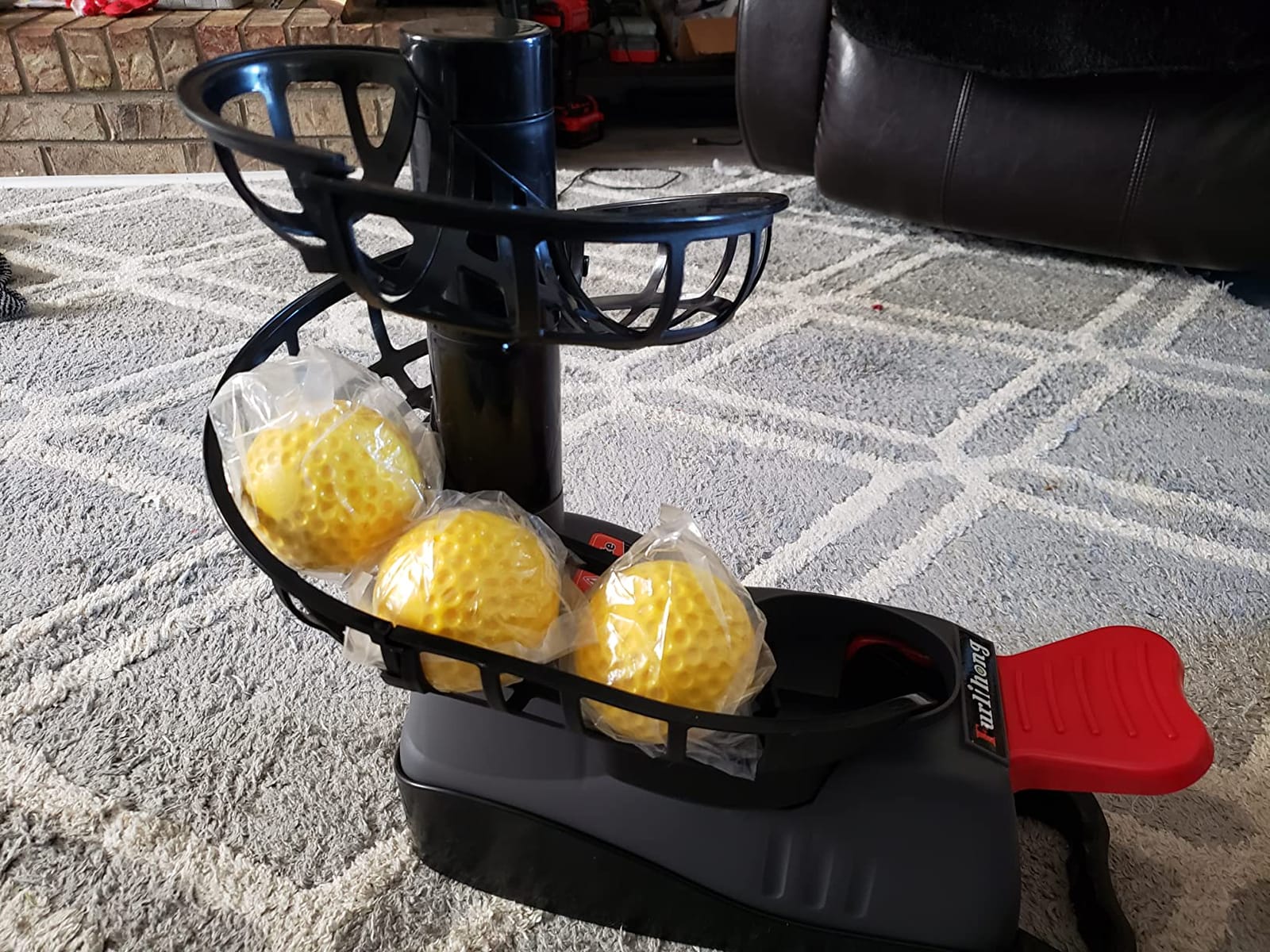
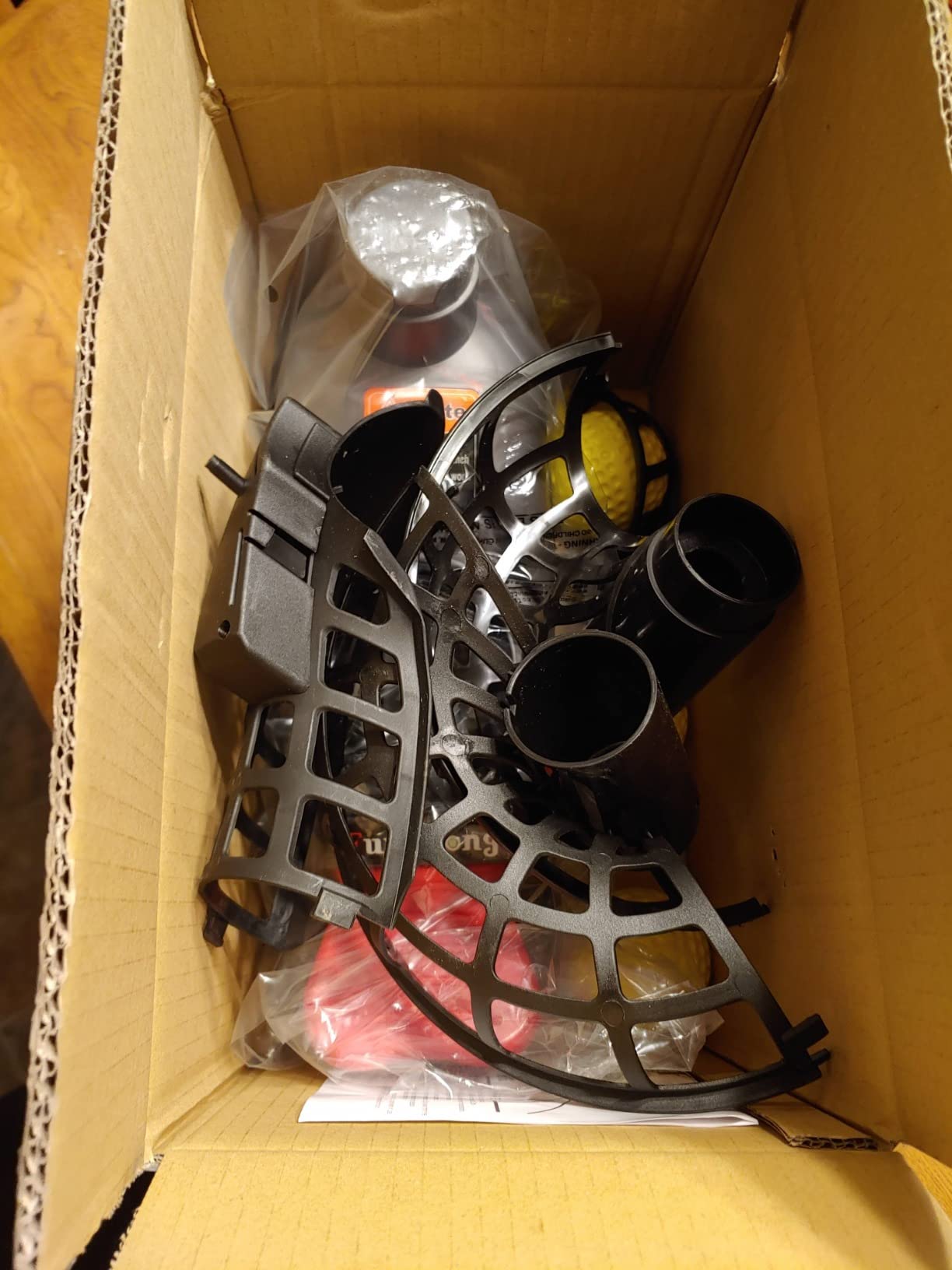
Assembly is the weak point. The extendable ball stacker is built from track sections that do not always clip together firmly, and some owners tape them. The unit also slides across flat ground after a couple of pitches and needs re-centering, which is a small annoyance that recurs often enough to plan for.
There is a user-error theme in the one-star reviews too: if the ball is not fully seated in the hole it will not fire, and younger children often cannot press the pedal firmly enough for a clean launch. Other reviewers attribute early breakage to assembly mistakes rather than the design. Either way, read the instructions before the first session.
Who the 898BH suits
It suits a hitter who is not yet ready for a machine pitch from the mound but is ready to hit something harder than a tee, and a family practicing in a park or on a driveway with no outlet. Because it works with regulation baseballs, it can introduce a real ball before the hitter moves to a powered machine.
Parents of multiple children get value from the three launch angles, since the same unit covers a five year old and a nine year old by changing a rear switch.
When to skip the 898BH
Skip it if you want a true fastball feed. This does not deliver one, and treating a lobbed toss as batting practice will produce a swing built for an arc that never appears in a game. Also skip it for surface work, because a machine that slides after two pitches is frustrating on a driveway and unworkable on a sloped lawn.
8. Furlihong 3801BH – Best Compact Two-Wheel Machine You Can Run on Batteries
Furlihong 3801BH Upgraded Electronic Baseball Pitching Machine for Beginner
4.5 pounds
Up to 30 mph
Two adjustable wheels
Battery or included 6V AC adapter
Pros
- Dual wheel adjustment changes speed and angle independently
- Dimpled balls are sting free
- Works on batteries or the included AC adapter
- Compact light design moves and stores easily
Cons
- Cannot use regulation baseballs
- Speed and trajectory vary between throws
- High and low settings reported as barely different
- Light balls are inconsistent outdoors in wind
Among the small electronic machines, this one has the most convincing mechanism. Two adjustable wheels give independent control of speed and angle, which is what produces a fastball, a curve and a slider rather than one trajectory with a different velocity. At 4.5 pounds and under 19 inches tall, it is the easiest wheel machine here to carry.
The dual power arrangement is the other differentiator. It runs on four D batteries, which are not included, or on the 6V AC adapter that is included. That means one unit works in a yard and inside a garage, and it means a family without a nearby outlet is not excluded.
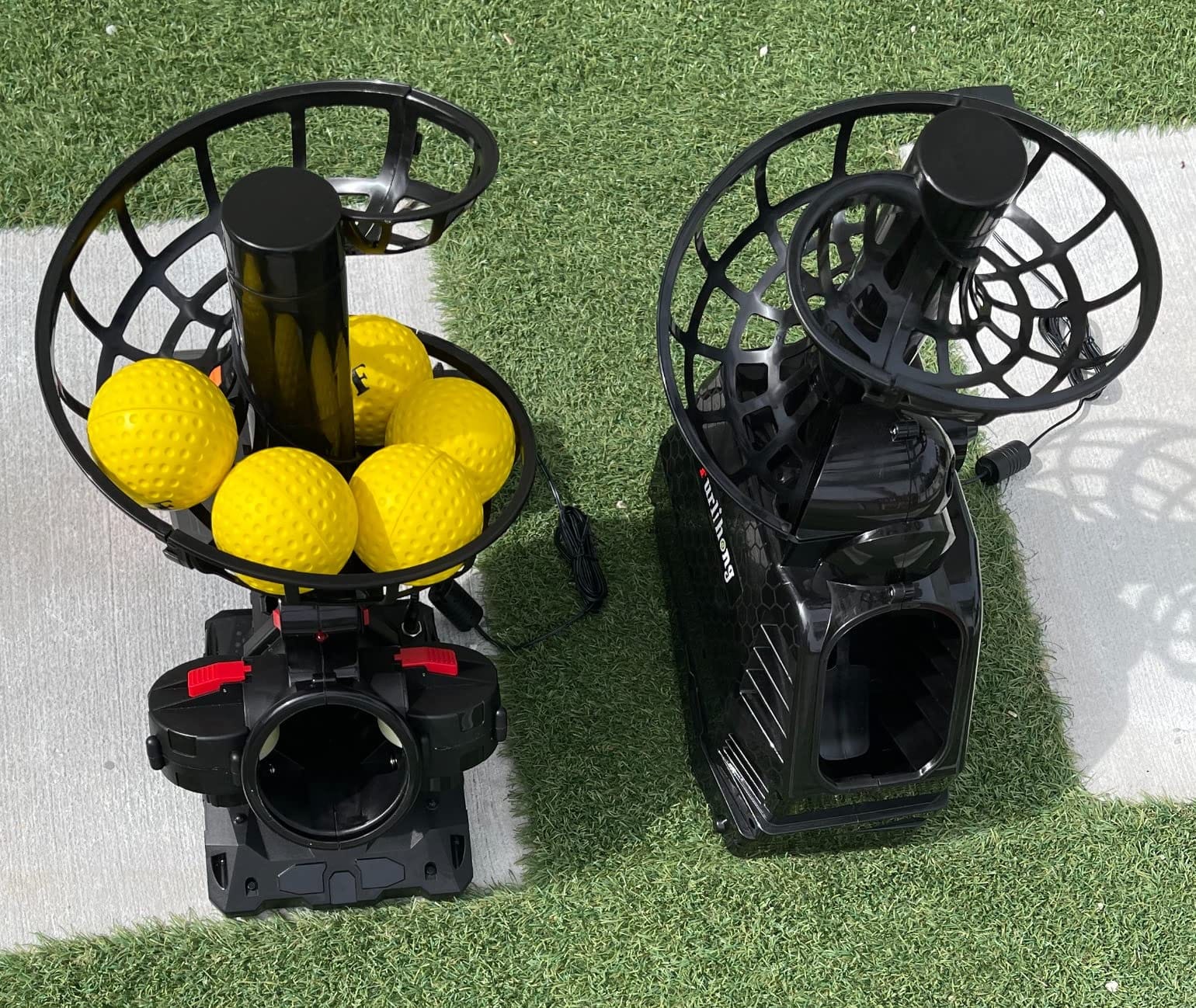
What you give up is ball type. It throws one ounce polyurethane dimpled balls, eight included, and the reviews are blunt that these feel much lighter than regulation baseballs. Very light balls are also inconsistent outdoors, because wind becomes the dominant variable once the ball’s own mass is gone.
There is also a specific control problem worth knowing before you buy. Some owners report no meaningful difference between the labelled high and low settings. Consistency between throws varies, which is the core job a machine exists to do, so test this one early and return it if repeatability is not there.
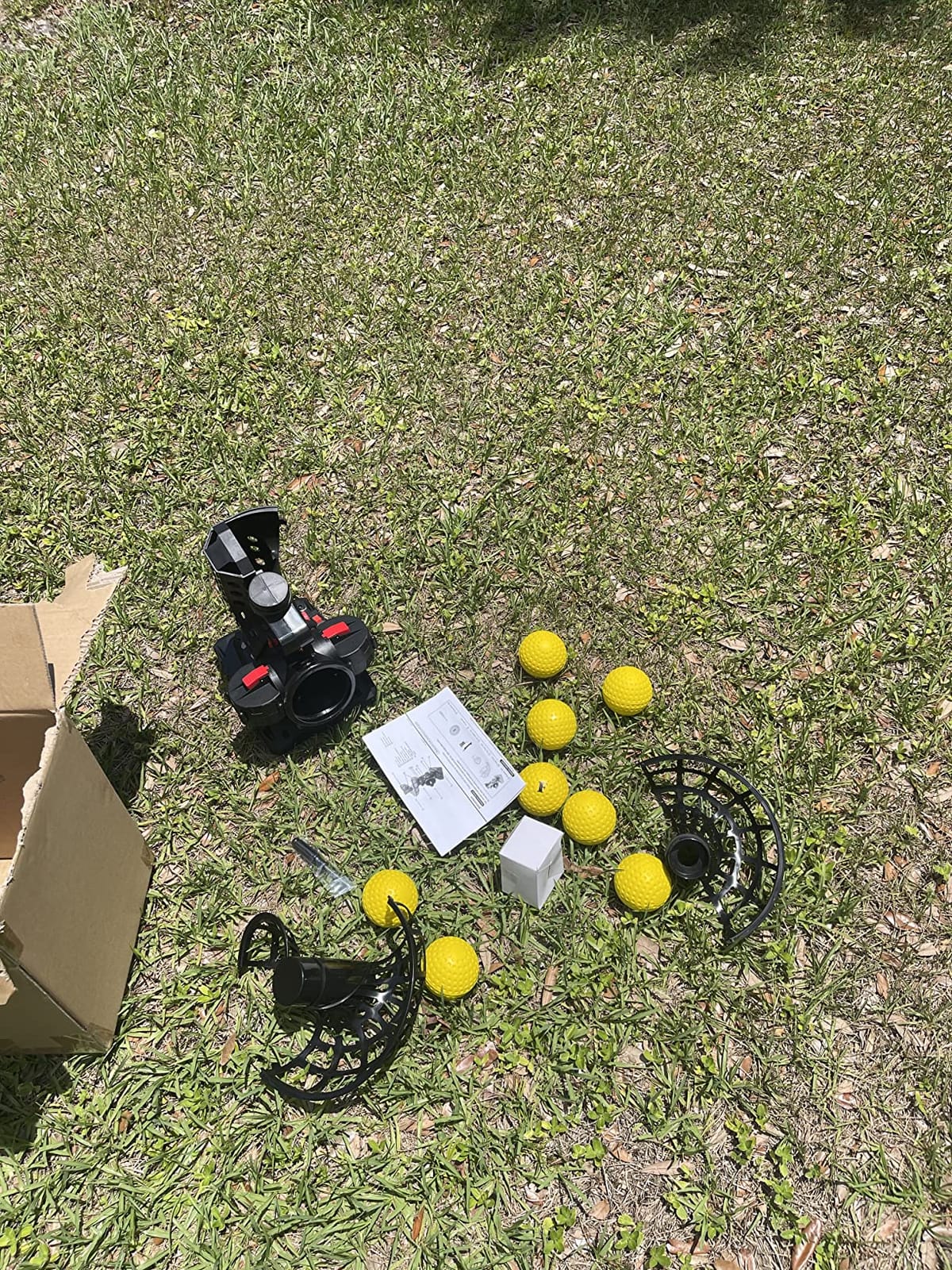
Who the 3801BH suits
It suits a hitter around ages seven to nine who is ready for two wheels but not ready to feed leather, and a family whose practice location changes between home and a relative’s house. Cricket coaches appear repeatedly in the review set, which tells you the mechanism handles repeated use well.
It is also the most sensible bridge machine in this roundup: a step up in pitch complexity from a single plastic unit, without a jump to a full-sized frame and a dedicated power source.
When to skip the 3801BH
Skip it if your field is open and windy, because light dimpled balls drift and the hitter will start guessing rather than tracking. Skip it if you need real baseballs, and skip it if repeatable accuracy is the entire point, since that is the weakness owners most often describe.
9. Furlihong 380BH – Best for Sting-Free Practice With the Highest Owner Rating
Furlihong 380BH Baseball Pitching Machine for Kids and Beginner
2.1 pounds
20 mph with plastic training balls
Three launch angles
21.3 x 9.9 x 9.5 inches
Pros
- Sting free plastic balls will not hurt young players
- Three launch angles suit different ages
- Only 2.1 pounds so a child can carry it
- Includes a plastic bat so it works out of the box
Cons
- Twenty mph is slower than most machines here
- Do not use other balls as they can damage the mechanism
- Four D batteries not included
- Ball count in the bundle is unclear
This has the highest owner rating of the ten machines we looked at, and the reason is simple: it will not hurt anyone. The 0.81 ounce plastic training balls are sting-free, they will not dent a bat, and the machine weighs 2.1 pounds, so a child can set it up in a driveway with no adult involvement.
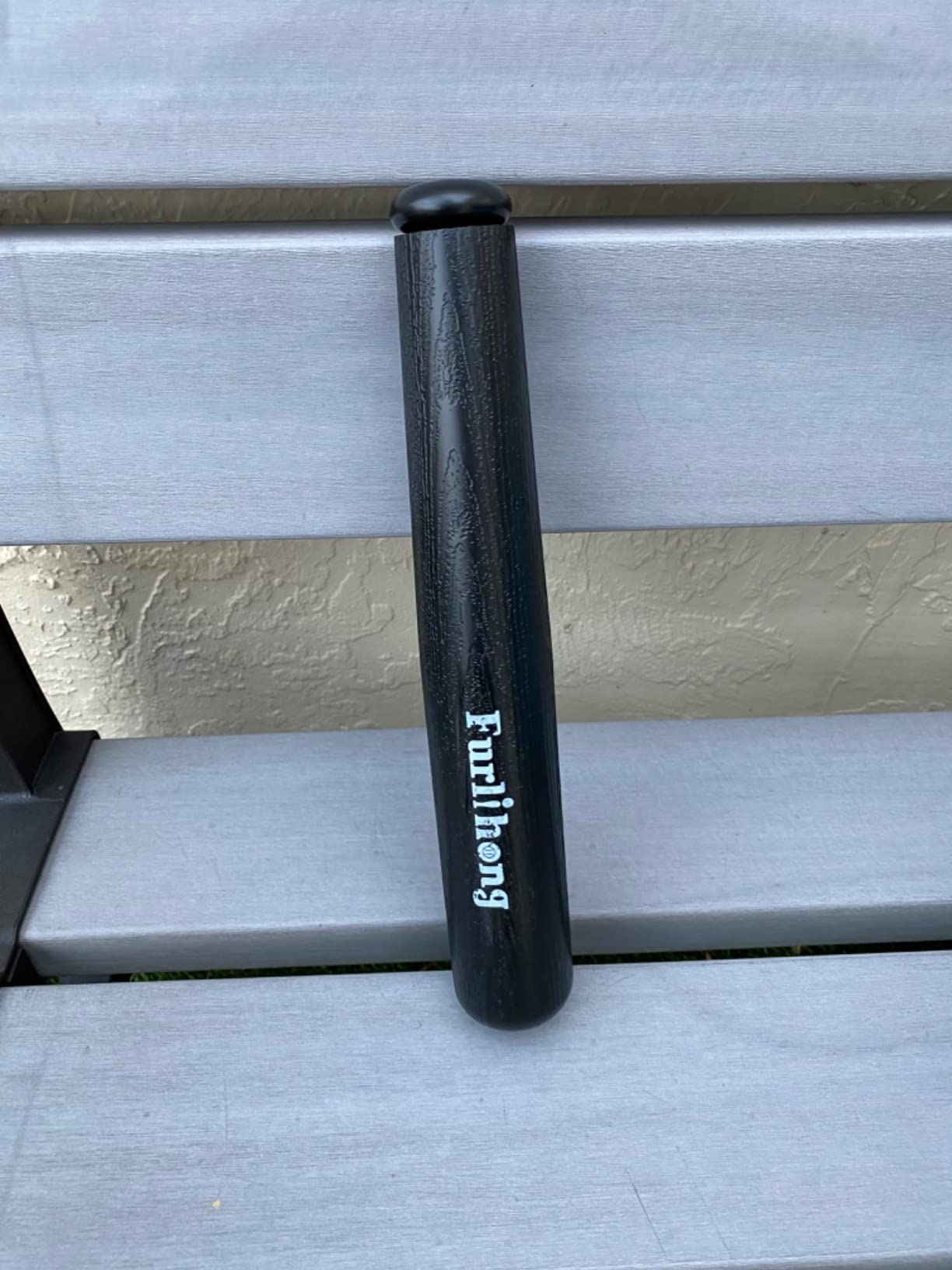
It also arrives complete. A plastic bat and the training balls are in the box, the launch angle has three positions, and the extendable ball tracks let you keep more than a few balls loaded. For a birthday present or a first machine, the out-of-box experience matters more than the specification list.
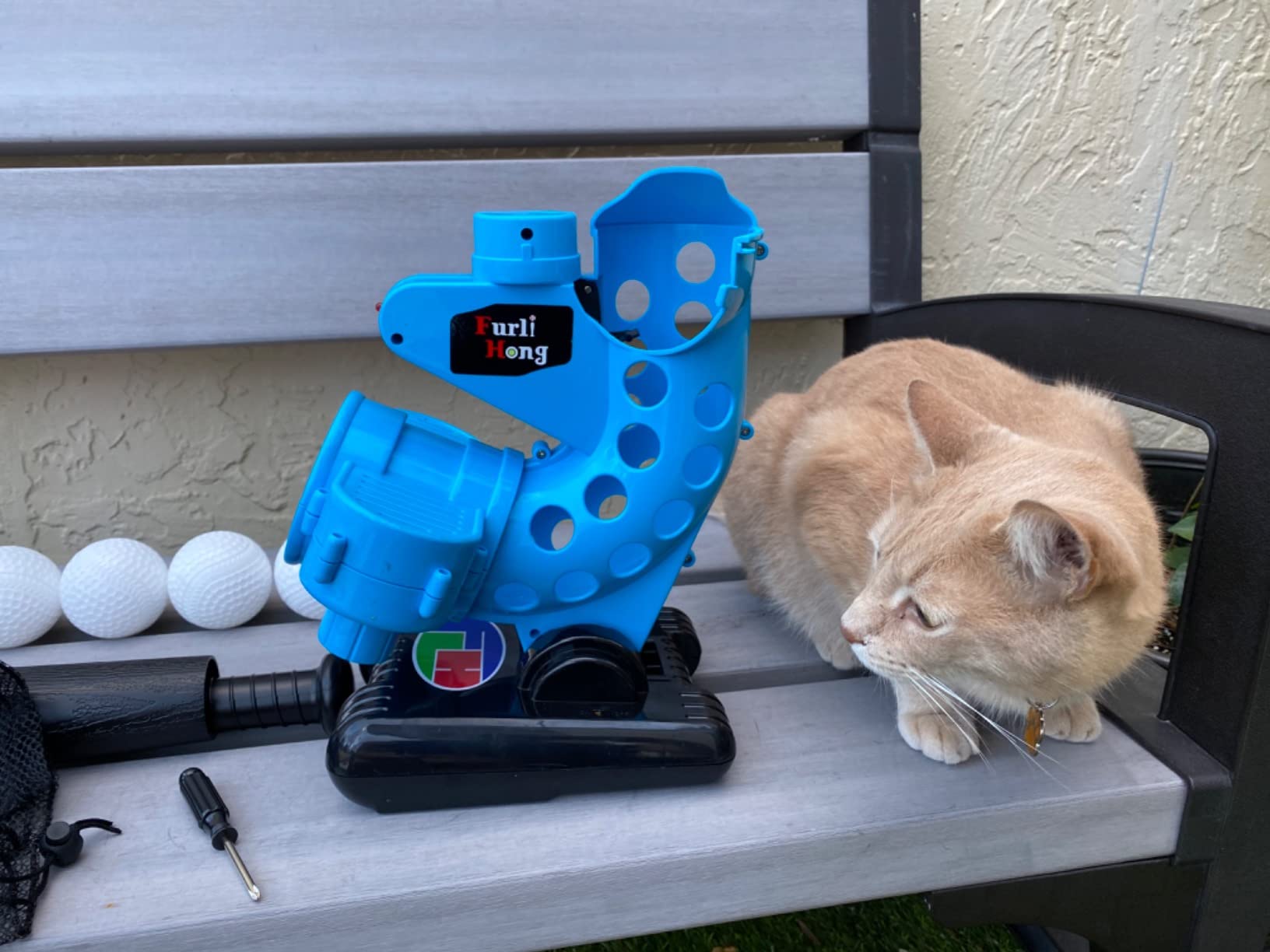
Twenty miles an hour is the ceiling, which makes this a contact machine and nothing more. It is slower than almost everything else in this roundup, and the reviews are consistent that it is an introduction to batting practice rather than a training tool.
Two small things to check. Four D batteries are required and not included. And the included-ball count is genuinely unclear in the listing, with the bundle listing twenty while the feature text describes a dozen, so count what arrives before you decide you are short.
Who the 380BH suits
It suits a child between about four and seven, a parent who wants zero risk of a stung face on day one, and anyone giving a machine as a gift where the recipient will not buy balls separately. The three launch angles let the same machine grow with the child for a couple of seasons.
It is also a reasonable first machine for a family that plans to move up to a wheel machine within two years, since nothing here is wasted if it is later given to a younger sibling.
When to skip the 380BH
Skip it if the hitter is eight or older and has access to better options, because 20 mph stops being a challenge quickly and a machine that is too easy is a machine that gets ignored. Also skip it if you want pitch variety, since a plastic ball from a single feed gives one look only.
10. YESMARKS Kids Auto Set – Best All-in-One Starter Kit
YESMARKS Kids Auto Baseball Pitching Machine Outdoor Toy Set – Training Equipment & Batting Practice Toys for Youth, Includes 10 Baseballs, Baseball Bat and Sports Bag
3.4 pounds
Machine bat ten balls and bag
4 AA batteries required
7.5 x 8.3 x 13.4 inches
Pros
- Machine bat balls and carrier all in one bag
- Ten hollow balls mean more batting time
- Light 3.4 pound set carries to a park easily
- Designed and safety rated for kids five and older
Cons
- AA batteries are not included
- Hollow PP balls feel nothing like a real baseball
- Only 90 day manufacturer warranty
- Not a machine for accuracy or serious training
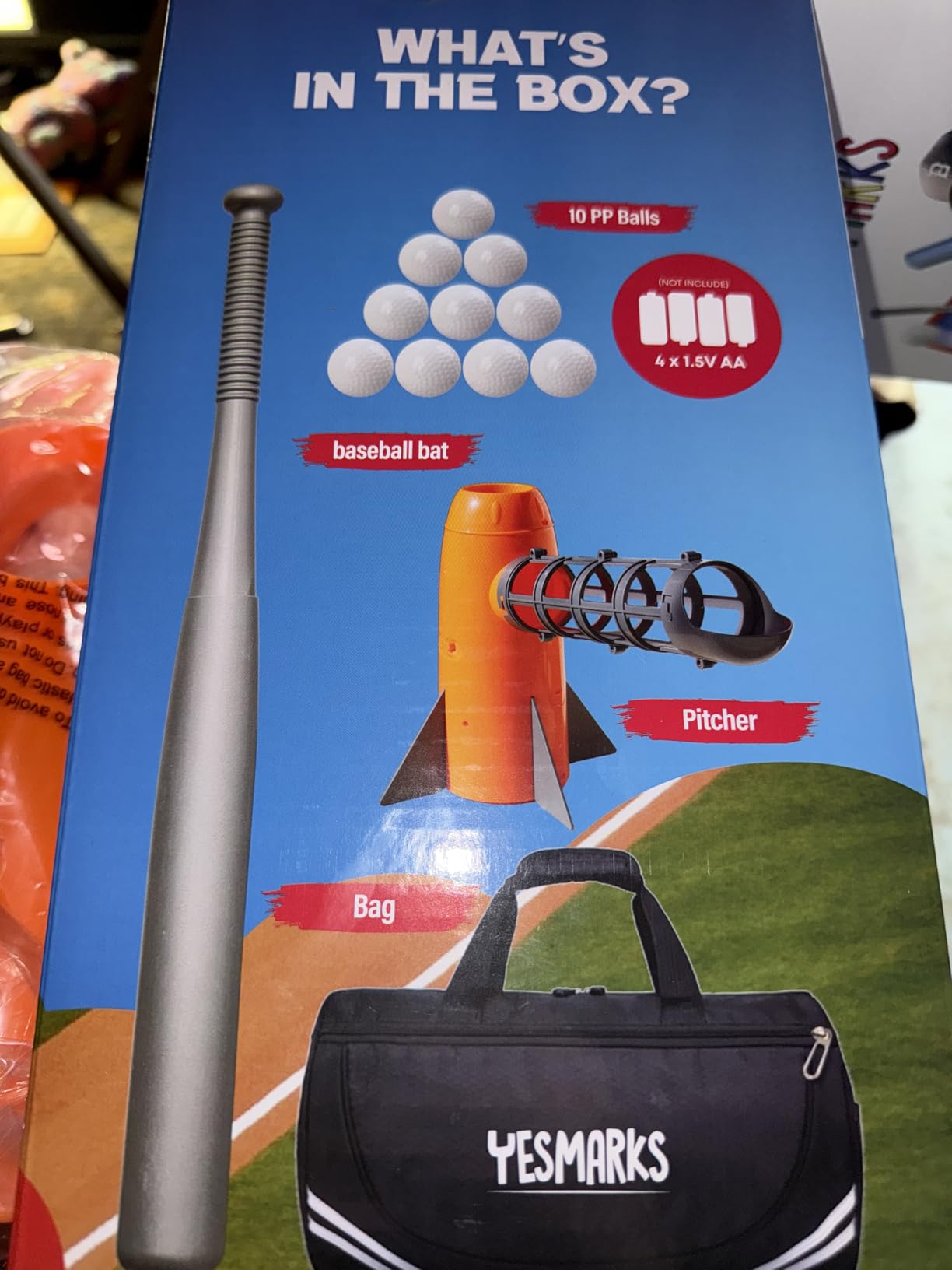
This one is bought as a complete set rather than as a machine. You get the rocket-shaped auto pitching machine, a light plastic bat, ten hollow PP baseballs and a sports bag in a single box. The owner rating is the second highest in this group at 4.2, with a 67 percent five-star share, and the reviews describe it as a birthday or holiday purchase rather than a training device.
The hollow balls and the collapsible bat are the design decision here. Both are safer than solid alternatives for a five year old, and the set assembles and disassembles for transport, which is what makes it usable at a park as well as in a yard.
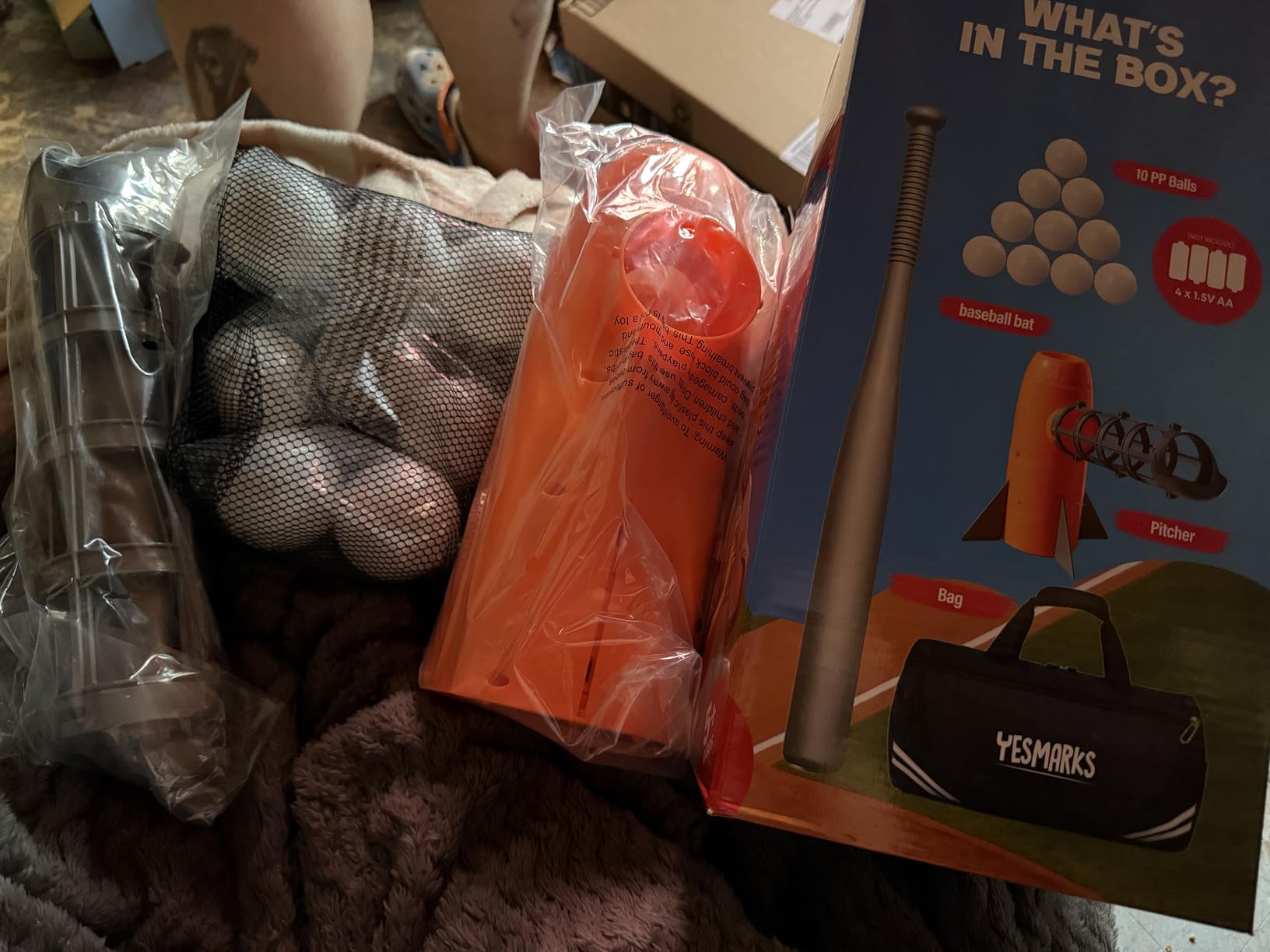
Owners also note that the pitching force stays steady as the batteries drain, which is not something you can assume from a small motor. It is a real advantage when a child loses interest halfway through a session and the batteries are the reason the machine is slowing down.
The limits are clear. Four AA batteries are not included, the warranty is 90 days, which is the shortest stated cover in this roundup, and hollow PP balls give a very different feel from real baseballs. Nobody should mistake this for accuracy work.
Who the YESMARKS set suits
It suits a parent looking for one purchase that solves the whole beginner problem: no separate bat, no separate bag, no separate ball bag. It also suits a family with several children at different beginner stages, since the whole set is light enough for one adult to carry out at once.
If your child is five or six and has never hit off a machine, this is the lowest-risk way to find out whether the idea appeals to them at all.
When to skip the YESMARKS set
Skip it if you are buying for a hitter who already takes instruction well and wants to develop a swing against something resembling a game pitch. This set will not hold that hitter’s attention. Skip it if you care about warranty length, since 90 days is thin cover for a device that will be knocked around.
How to Choose a Youth Pitching Machine: Mechanism, Ball Type, Speed and Power
Four decisions decide whether you buy the right machine, and they are simpler than the specification sheets suggest. Buy the ball type before the speed, buy the power source before the mechanism, and buy the mechanism last. A beautiful two-wheel machine that will not throw the ball your hitter sees in games is a bad purchase at any speed.
The four mechanism classes
Spring or arm machines use a foot pedal to release a cocked spring. They throw one fastball pitch, need no power, and are the only class that travels to a park with no outlet. Single-wheel machines grip a ball and fling it straight down the lane, giving you speed control but no break. Two-wheel machines run counter-rotating wheels at different speeds, which is what creates curveballs and sliders. Three-wheel machines control the ball on every axis for location and movement, and none of them appear in this price-conscious roundup.
For a hitter under nine, the spring and single-wheel classes cover nearly everything needed. Two wheels become worth the money at the point where a hitter is ready to recognise a breaking pitch, which for most players lands between ages ten and twelve.
Ball type is the filter that matters most
Real baseballs give the truest swing feel and are the correct choice for game-speed work, but they require a spring-arm or a machine designed to take leather, and they wear. Lite and dimpled machine balls are lighter, sting-free and far cheaper, and most two-wheel machines are built specifically for them. Plastic, foam and hollow balls are the safe options for small children and produce a swing feel that has to be unlearned later.
The mistake to avoid is feeding a lite-ball wheel a real baseball. Owners report the motor bogs down, and the resulting feed teaches a swing built on a ball the hitter will never see in a game.
Match speed to the hitter, not the spec sheet
A machine rated at 70 mph does not deliver 70 mph at 40 feet. Treat any top-of-range figure as a full-distance number, and start a young hitter at the bottom of the machine’s band rather than the middle. A 6 to 8 year old is usually served by 20 mph and soft or foam balls. A 9 to 12 year old typically needs 35 to 50 mph with lite balls, which is the range the Blue Flame and the Heater machines cover. A 13 and up hitter is approaching the point where game-speed reps matter, and the higher classes of machine start to earn their cost.
A machine that scatters pitches teaches lunging, not hitting. If you have to turn the speed down so far that the ball floats into the hitter’s hands, the machine is wrong for the player rather than badly tuned.
Power access decides more purchases than price
Manual spring machines need nothing. Battery machines need D or C cells, with the replacement cost becoming a permanent line in your equipment budget. AC machines need a 110V outlet, which many public and rec fields do not have. If your field has no power, either choose a spring machine or carry a portable power station, and confirm the machine supports that station before you buy either one.
One more practical number: if you will run a machine off a generator rather than an outlet, budget for a 1500 to 1800 watt inverter unit to hold full speed. A smaller open-frame generator will brown out the motor, and you will learn this the hard way in the middle of practice.
Buying order and the pre-purchase gate
Before spending on any machine, make sure the hitter can already stand in and hit off a front toss. Kids who cannot do that yet do not need a machine, they need a net, a tee and more front toss reps. Buy the net and the tee first, buy the machine second.
It is also worth checking whether renting a cage by the hour would settle the question for less. Families torn between a mid-range machine and a professional one can book a session on a quality machine first and see how the hitter responds before committing.
One listing warning, because it comes up repeatedly: titles on major marketplaces sometimes reuse a well-known machine name for a different product entirely, such as a pop-up cage rather than a pitching machine. Confirm the listing includes a motor, a wheel or a spring arm, and confirm the stated ball type before you order. Our roundup of the best pitching machines covers the general classes if you want the mechanism explained before you shop.
Safety Checklist Before the First Pitch
Machines are one of the few pieces of youth baseball equipment that can cause a serious injury, and the safety rules are simple enough to apply in five minutes.
Everyone in the hitting area wears a helmet with a face guard, including the adult retrieving balls. The operator stands behind an L-screen, never beside the machine at wheel height, and no one stands in front of or beside the machine while it is powered. Electric wheels never run unattended, and spring-arm machines are never left cocked and loaded. Start at the lowest speed setting, and inspect wheels, springs, cords and the tripod legs before every session. A face guard is the single most useful purchase here, and our youth baseball helmet roundup covers the options; a well-fitting glove is worth checking at the same time as our baseball glove picks.
One electrical note: use a dedicated outdoor-rated extension cord rather than a light indoor one, and keep it out of the ball path. Undersized cords cause the motor to brown out, and a browned-out wheel is the most common cause of premature machine failure we saw in owner reports.
How to Run a Machine Batting Practice Session
A machine only pays for itself if the session is structured. A useful session for a 9 to 12 year old is five warm-up pitches, then sets of 15 to 20 swings, then a rest and a conversation about what just happened. Five sets is a full session. Ten is a good week.
Work from the bottom of the speed band upward rather than jumping to the top, and change one variable at a time, so a hitter learns what caused the improvement. Keep one live-arm session in the rotation each week even when the machine is available, because the specific skill a machine cannot teach is adjusting to a moving, human release point.
Tracking speed at home is more useful than most parents expect. A radar gun lets you log what the machine actually delivers at your hitter’s distance rather than what the box claims, and it takes a session to do it. Our pitching radar gun picks cover the models worth considering.
Frequently Asked Questions
Are pitching machines good for youth baseball?
They are good as a supplement to live arm work, not a replacement. A machine gives a young hitter repeatable, high-quality swings that a tired parent or volunteer coach cannot. The risk is timing: a hitter who faces only machine pitches learns to swing at predictable deliveries with no windup, so keep one live-arm session in the weekly rotation.
What is a good baseball throwing machine for kids?
For a child under seven, a light battery machine throwing foam or hollow plastic balls at up to 20 mph is the right start. From seven to nine, a spring-arm machine that throws real baseballs introduces a true ball. From ten to twelve, a two-wheel machine with an automatic feeder and lite balls adds curveballs and keeps a whole session running without hand loading.
What is the best pitching machine for youth?
For most families and rec programs, the Louisville Slugger Blue Flame is the best overall choice because it throws real baseballs and needs no power source. The best value with automatic feeding is the Heater Slider Lite 360, and the cheapest way to add repeatable swings to a backyard is the Franklin Sports MLB Electronic.
What is the best pitching machine for playing in the backyard?
A backyard machine should be light enough for one adult to carry, safe at close range, and limited to speeds a child can handle. The Franklin Sports MLB Electronic and the Furlihong 380BH both fit that brief, while the Louisville Slugger Blue Flame is the better choice once you want real baseballs and a harder pitch.
What is the difference between a one-wheel and two-wheel pitching machine?
A single-wheel machine grips the ball and flings it straight down the lane, so you control speed and get one pitch look. Two counter-rotating wheels running at different speeds create spin, which is what produces curveballs and sliders. A two-wheel machine is worth the money once a hitter is ready to recognise a breaking pitch, usually around ages ten to twelve.
Do pitching machines need electricity?
It depends on the mechanism. Spring-arm machines like the Blue Flame are fully manual and need nothing. Small electronic machines run on D or C batteries, with replacements as a permanent cost. Wheel machines need a 110V outlet, and if your field has no power, budget for a 1500 to 1800 watt inverter generator or a portable power station to hold full speed.
How fast should a pitching machine throw for a 10 year old?
A 10 year old usually needs somewhere between 35 and 50 mph with lite balls, and the Blue Flame covers that range with real baseballs at 18 to 45 mph. Start at the bottom of whatever band the machine offers and step up only when the hitter is hitting a high percentage of pitches in the zone. Rated top speeds are usually measured at full distance and will not match at close range.
Do I need a machine that throws real baseballs?
Only if you want game-speed work with a true ball feel. Real baseballs are required for realistic swing transfer, and most two-wheel machines are built for lite or dimpled balls instead, so feeding a real ball to a lite-ball wheel will bog the motor. If your child is under about nine, a machine that takes real baseballs is the single most valuable compatibility feature to pay for.
Our Verdict: The Best Pitching Machines for Youth Baseball in 2026
For most families, the Louisville Slugger Blue Flame is the pick. It is the only machine here that combines real baseballs, a manual mechanism that needs no outlet, and a weight one adult can carry to any field. Youth coaches on coaching forums and r/Homeplate reach for this class of machine repeatedly for exactly that reason.
Pick the Heater Slider Lite 360 when hand loading ends your sessions early, and the Heater Power Alley Lite 360 when your hitter is ready for curveballs and sliders and you want fielding drills in the same unit. Start with the Franklin Sports MLB Electronic or the Furlihong 380BH if the hitter is young and safety is the deciding factor, and work up a tier every year or two rather than buying once and hoping.
Whatever you choose, buy the net and the tee first, keep a live-arm session in the rotation, and start at the lowest speed setting. That last habit is worth more than any feature on the list.