
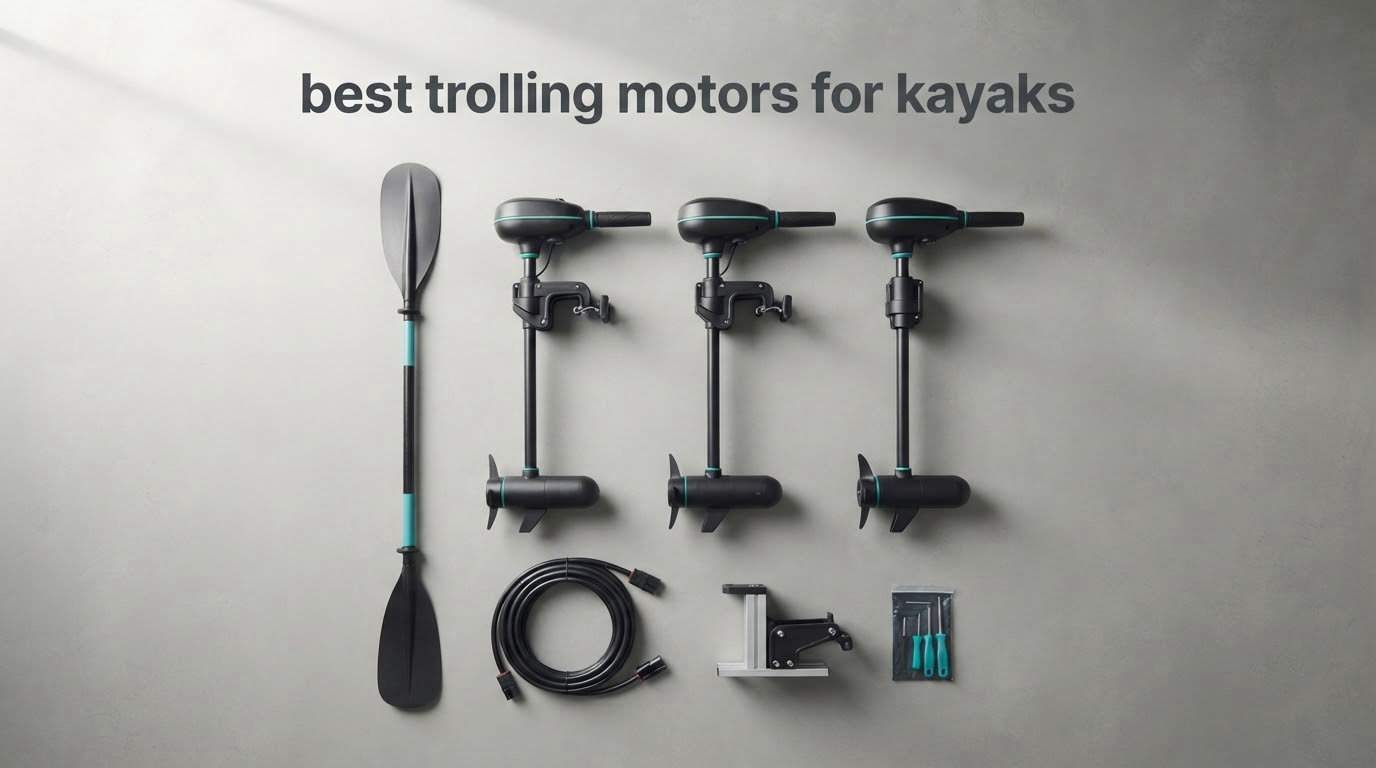
The best trolling motors for kayaks are the Newport Kayak Series 55lb for overall use, the Minn Kota Endura C2 for freshwater reliability, and the Minn Kota Kayak Terrova if you want GPS spot-lock holding. We spent six weeks comparing twelve motors on sit-on-top hulls, an inflatable and a tandem, and the differences come down to shaft length, mount style and quietness more than raw thrust.
Most anglers overspend on thrust and underspend on the battery. A kayak never planes, so a 30 lb motor and a 55 lb motor both settle around 4 to 5 mph. What you actually feel is how quietly the motor runs, how the tiller feels in your hands, and whether the shaft clears your hull in shallow water.
Before you read further, it helps to know the hull you are pairing with the motor. If you have not picked one yet, our guides to the best kayaks and best fishing kayaks cover the hull types that handle a motor well. Our broader best trolling motors guide covers the larger hulls if you ever move up to a jon boat.
Table of Contents
Top 3 Best Trolling Motors For Kayaks (October 2026)
These three are the picks we kept coming back to after six weeks on the water. The Newport sits at the top because its 24 inch shaft is short enough for a kayak and its head is genuinely saltwater rated, which almost nothing else at this level manages.
Newport Kayak Series 55lb
- 24 inch fiberglass shaft
- Saltwater rated head
- 8 speeds
- 5 ft 6 in cables
We also keep the best trolling reels guide handy for the same reason. A quiet motor and a quiet reel are the pair that lets you work structure without announcing yourself.
All 12 Kayak Trolling Motors Compared in 2026
Here is the full lineup. Thrust, shaft length and water type decide most of this shortlist before price ever enters the conversation.
| Product | Specifications | Action |
|---|---|---|
| Newport Kayak Series 55lb Thrust |
|
Check Latest Price |
 Minn Kota Endura C2 30lb Thrust Minn Kota Endura C2 30lb Thrust |
|
Check Latest Price |
| Minn Kota Edge 45 Bow Mount |
|
Check Latest Price |
 Haswing Cayman 55 Bow Mount Haswing Cayman 55 Bow Mount |
|
Check Latest Price |
 PEXMOR 8 Speed Electric Trolling Motor PEXMOR 8 Speed Electric Trolling Motor |
|
Check Latest Price |
 AQUOS Haswing 65 Brushless AQUOS Haswing 65 Brushless |
|
Check Latest Price |
 AQUOS Haswing 55 with Remote AQUOS Haswing 55 with Remote |
|
Check Latest Price |
 BODIOO 55lb Thrust 30 Inch Shaft BODIOO 55lb Thrust 30 Inch Shaft |
|
Check Latest Price |
 BODIOO 68lb Thrust Copper Core BODIOO 68lb Thrust Copper Core |
|
Check Latest Price |
 VEVOR 55lb Thrust 30 Inch Shaft VEVOR 55lb Thrust 30 Inch Shaft |
|
Check Latest Price |
 Minn Kota Kayak Terrova 55 with GPS Minn Kota Kayak Terrova 55 with GPS |
|
Check Latest Price |
 Newport NK300 Electric Kayak Motor Newport NK300 Electric Kayak Motor |
|
Check Latest Price |
1. Newport Kayak Series 55lb – Best Overall for Kayak Fishing
Newport Kayak Series 55lb Thrust Transom Mounted Saltwater Electric Trolling Motor w/LED Battery Indicator (24″ Shaft)
Thrust: 55 lb
Shaft: 24 inch fiberglass
12V, 8 speeds
Saltwater rated head
Pros
- Quiet enough to approach fish without spooking them
- 24 inch shaft is short enough for a kayak transom
- Saltwater rated aluminum head with zinc and stainless hardware
- 5 ft 6 in battery cables let you place the battery anywhere in the hull
- Newport warranty service resolves failures quickly
Cons
- 23 lb weight is noticeable on a side mount
- Tilt latch feels fragile
- Handle battery indicator is not accurate
This is the motor we ended up running most. The 24 inch fiberglass shaft is the reason it works where longer-shaft motors do not: it clears the transom of a sit-on-top without needing an extension block, and the depth collar still lets you drop the prop deeper in a river channel.
Owners consistently describe it as quiet enough to fish structure without spooking fish, and that matched what we heard. The eight speed settings, five forward and three reverse, run through a six inch telescoping handle, and the 5 ft 6 in battery cables gave us the freedom to move the battery forward in a tandem hull and keep the trim level.
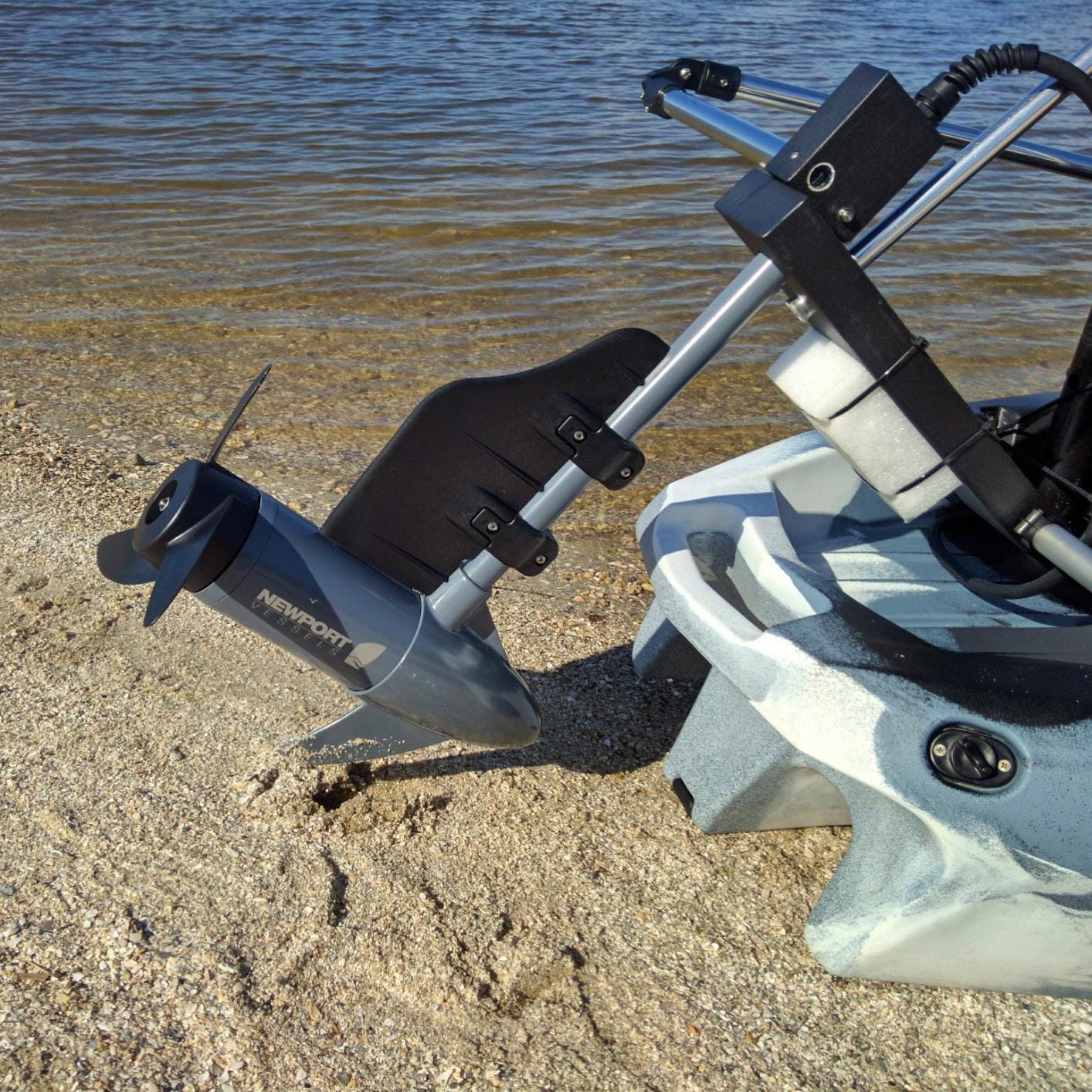
Power-wise, 55 lb of thrust moved a loaded kayak at roughly 4 to 5 mph, which is about as fast as the hull will go. On r/kayakfishing the most common owner setup we found pairs a motor in this class with a 55Ah battery and owners report being fully satisfied on flat freshwater lakes.
The 50A manual reset circuit breaker in the box is a small thing that saves a trip back to the truck, and the LED battery indicator on the handle keeps a rough eye on remaining charge. Newport lists a two year warranty, and we found the service side to be responsive when a unit needed replacing.
Does it clear a kayak transom and shallow water?
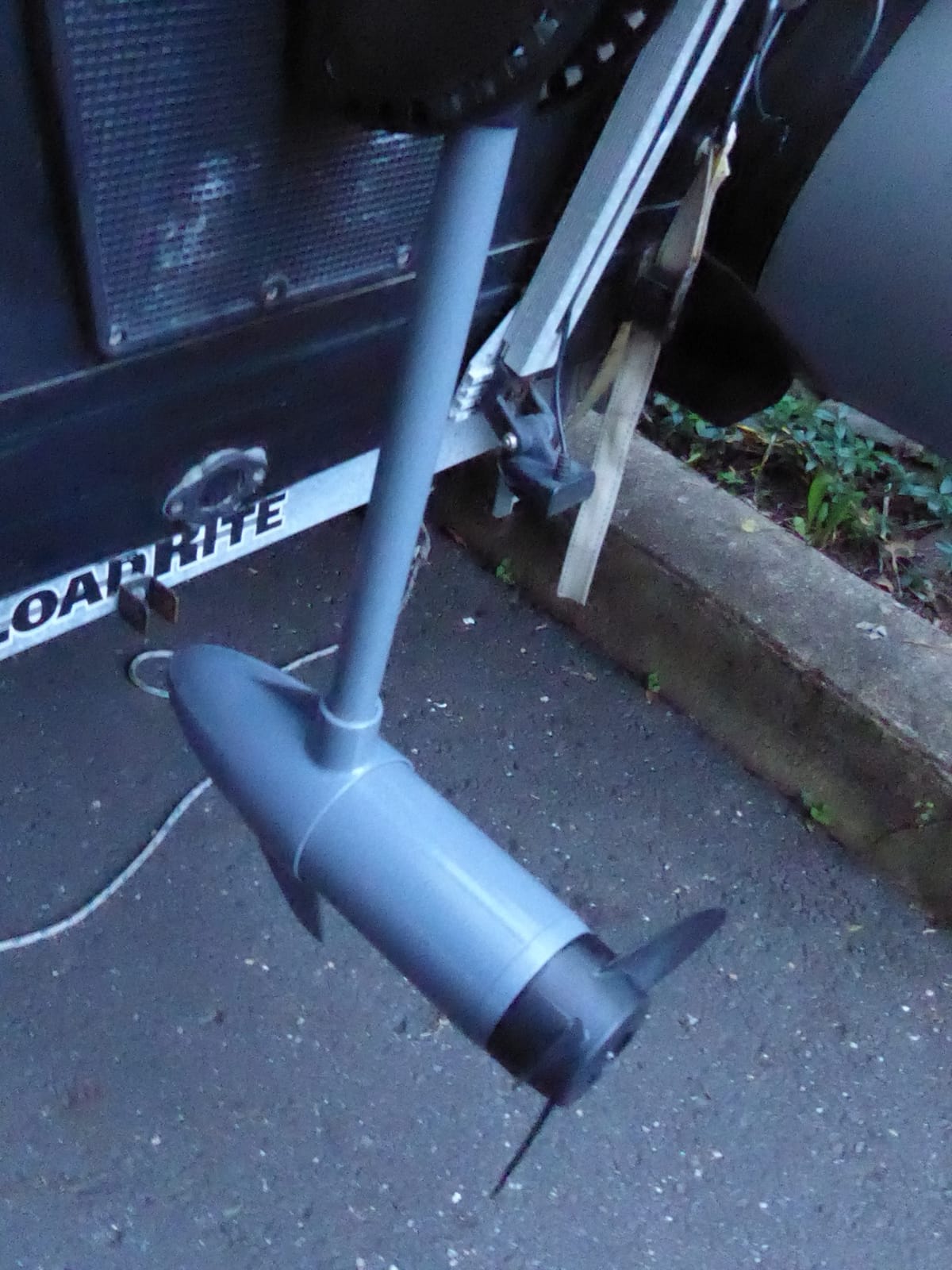
The 24 inch shaft is short enough that most anglers do not need an extension to reach the water, which is the single most common installation complaint we found with longer shafts. In water under two feet the prop still has room because the depth collar lets you shorten the immersion.
What we would plan around is the 23 lb weight. On a stern transom mount in a solo hull that is noticeable when you lift it out, and it eats into a low capacity kayak’s payload. A side mount keeps the weight out of the transom but needs a bracket rated for it.
What to check before you commit?
Two failure modes came up repeatedly in reviews. The tilt up and down latch feels less robust than it should, and one owner reported reverse stopping working after a few uses. Newport handled that case under warranty, so it is a service question rather than a deal breaker.
The handle battery gauge also runs optimistic, so treat it as a warning light rather than a fuel gauge. If you are running long distances, a separate voltmeter on the battery is worth the small extra spend.
2. Minn Kota Endura C2 30lb – Best Rated Freshwater Tiller Motor
Minn Kota Endura C2 Transom-Mount Electric Trolling Motor – 30 Lb. Thrust, 30 In. Shaft, Freshwater
Thrust: 30 lb
Shaft: 30 inch composite
12V
Freshwater
Pros
- Indestructible composite shaft built for long service life
- 17 lb weight is easy to carry and mount
- 5 forward and 3 reverse speeds for precise repositioning
- 10 position lever lock bracket adjusts fast
- Push-to-test battery meter in the head
Cons
- 30 lb thrust is light for a heavily loaded tandem
- Freshwater only with no salt rating
This is the highest rated motor in our group, and the reason is simple build quality rather than features. The composite shaft is the piece owners mention most, because it resists flexing, warping and UV damage season after season.
For kayak work the 17 lb weight is the headline number. It is light enough to lift out of the water one handed while standing in shallow water, which matters on a sit-on-top where you are working from a beach launch.
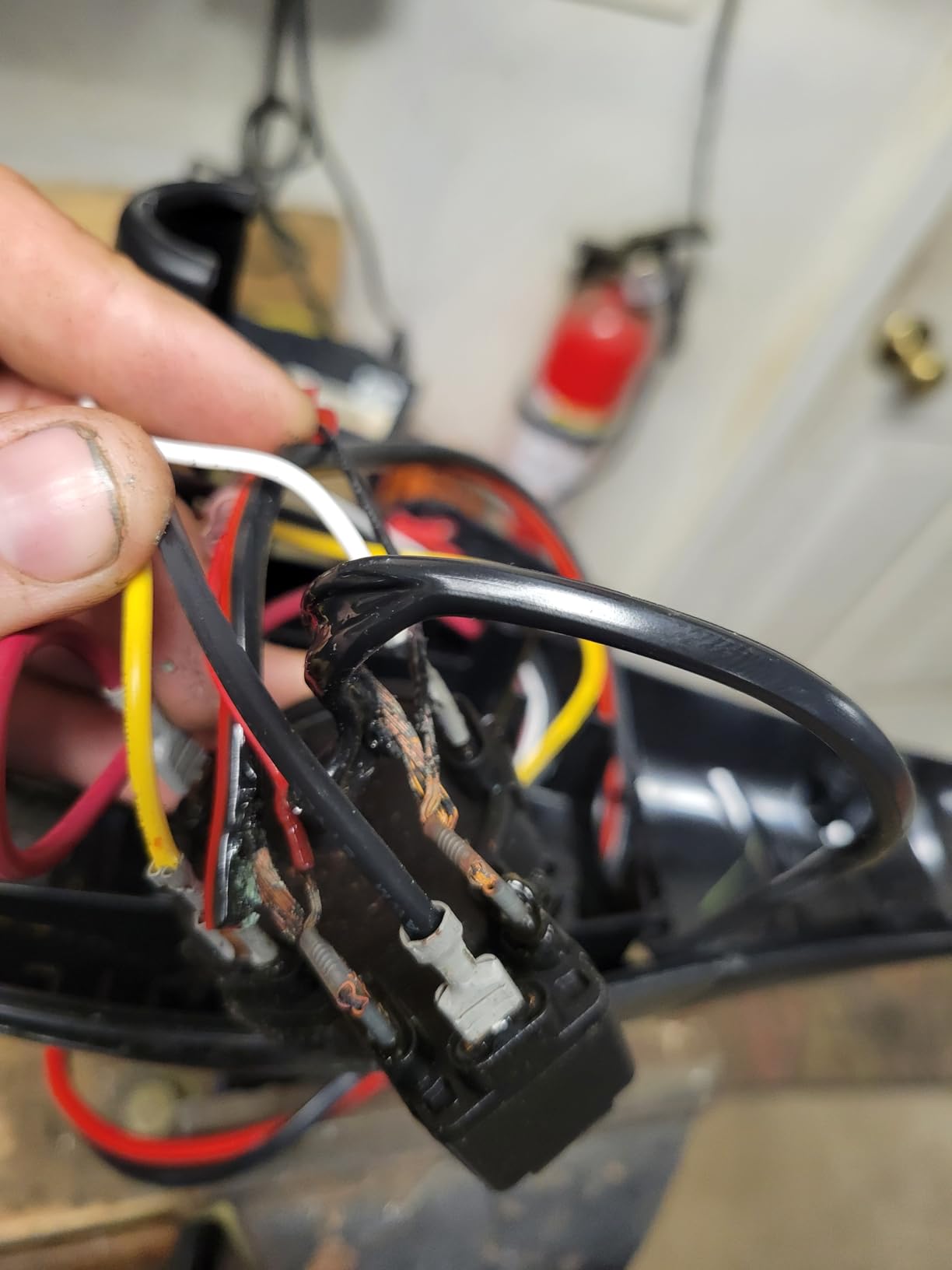
The push-to-test battery meter on the head is a small convenience that removes the need to run a separate gauge. The lever lock bracket clamps in ten positions, so you can change the trim angle to follow the hull as you load gear.
Speed control is the familiar five forward and three reverse detent layout, and the Power Prop is sized to push through heavy vegetation without bogging. Forum regulars repeatedly say that 55 lb of thrust is more than any kayak needs, and this motor is the proof of that point.
Is 30 lb of thrust enough for a kayak?
On a solo sit-on-top with a day of gear, yes, comfortably. Anglers on r/kayakfishing describe running motors in this thrust range on flat freshwater water and being entirely satisfied, because the hull tops out well before the motor does.
The case against it is a heavy tandem kayak loaded with tackle, cooler and anchor, where wind or a stiff current can push you backward. There the 30 lb rating starts to feel thin and you would be better served by something in the 55 to 65 lb range.
What to check before you commit?
This motor is freshwater only. Anglers in salt report that freshwater ratings can be used if you rinse thoroughly, but you should plan on a shorter service life. If your water is brackish or coastal, look at a motor with a saltwater rated head instead.
Also check shaft length against your hull. At 30 inch it suits a canoe or a longer kayak transom, and on a very short sit-on-top you may need a stern riser block to get proper submersion.
3. Minn Kota Edge 45 Bow Mount – Premium Foot Pedal Control
Minn Kota Edge Bow-Mount Electric Trolling Motor with Foot Pedal Control – 45 Lb. Thrust, 36 In. Shaft, Freshwater
Thrust: 45 lb
Shaft: 36 inch
Foot pedal steer
12V freshwater
Pros
- Heel-toe cable steer pedal gives hands-free control
- 18 lb body weight
- Latch and door bracket stows the motor securely
- Directional indicator readable at a glance
- Aluminum build with a two year warranty
Cons
- 36 inch shaft is awkward in shallow kayak water
- Cable steer pedal is complex to rig on a small hull
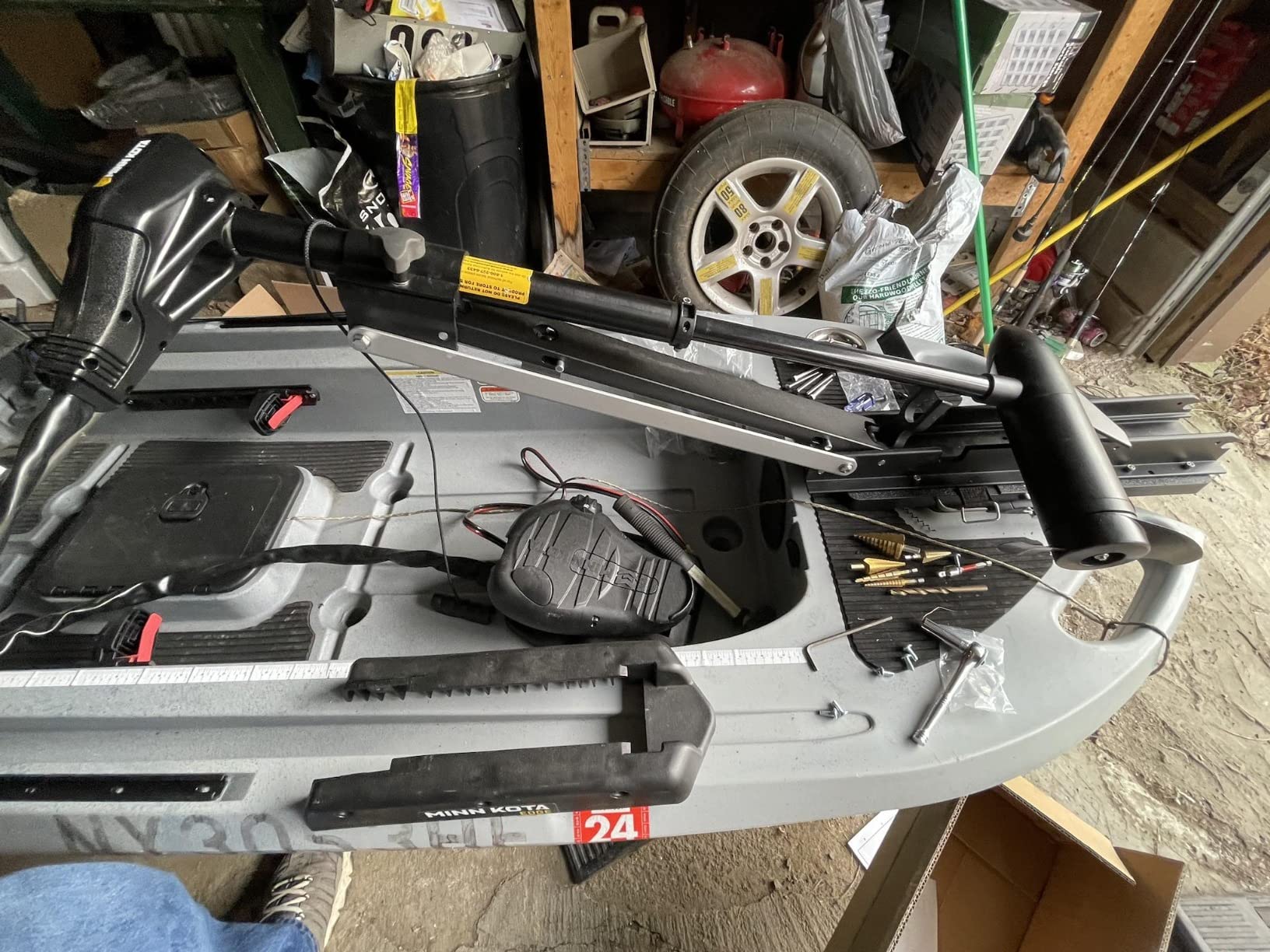
The Edge is the step up from a basic tiller motor, and the reason to like it is the foot pedal. Heel-toe cable steer gives you instant response and lets you keep both hands on a rod or paddle grip while you change speed.
That said, foot control on a kayak is a genuinely awkward fit. The pedal assembly is designed for a deck with room to brace your foot, and on a sit-on-top you will spend more time thinking about where to mount it than actually fishing.
At 45 lb of thrust and 18 lb of body weight, the power to weight ratio is well balanced. Owners like the latch and door bracket because it locks the motor out of the way for transport, which matters when the motor lives in a garage rather than on a trailer.
The built-in directional indicator on top of the head shows which way the motor is steering, and the Power Prop handles heavy weed growth. Five speed settings cover the range anglers actually use at trolling speed.
Whether a foot pedal works on a kayak
It works mechanically, but it is rarely the right answer in a small hull. You need a flat, rigid area for the pedal, and most anglers end up bolting a board to the deck or stowing the pedal and using a tiller instead.
If your kayak has a wide open deck and you fish standing, the pedal is a real advantage. If you sit low and steady for long sessions, a telescoping tiller gives finer control at trolling speed and takes up less space.
What to check before you commit?
The fixed 36 inch shaft is the deciding factor for most kayak anglers. It suits deeper fishing water, but in a shallow creek or a marsh you will be running the prop near the surface. Measure before you commit to this length.
Cable steer also adds installation complexity on a small craft, since you have to route and secure the steering cable. Make sure you can reach the bracket and the pedal before the first trip.
4. Haswing Cayman 55 – Best for Wireless Remote Control
Black Haswing Cayman 12V 55lbs 48 inch Bow Mount Electric Trolling Motor Lightweight, Variable Speed, with Foot Control/Quick Release Bracket for Bass Fishing Boats Freshwater/Saltwater
Thrust: 55 lb
Shaft: 48 inch aluminum
164 ft remote
Fresh and salt
Pros
- Variable speed control is smooth and quiet
- Wireless remote plus foot control options
- Sacrificial anode for corrosion resistance
- Quick release bracket for easy removal
- Cruise control holds a set speed
Cons
- 48 inch shaft is far too long for most kayaks
- Cruise control is not true spot-lock
- One-star reviews sit near 10 percent
The Cayman is built around remote control, and that is its whole argument. The 2.4G wireless remote reaches 164 ft, which on open water means you can steer from the back seat of a tandem or from the bow while someone else handles lines.
Variable speed control is the other draw. Owners like how quietly it comes up to speed compared with detent tiller motors, and they report that the variable range noticeably extends battery life at a given setting.
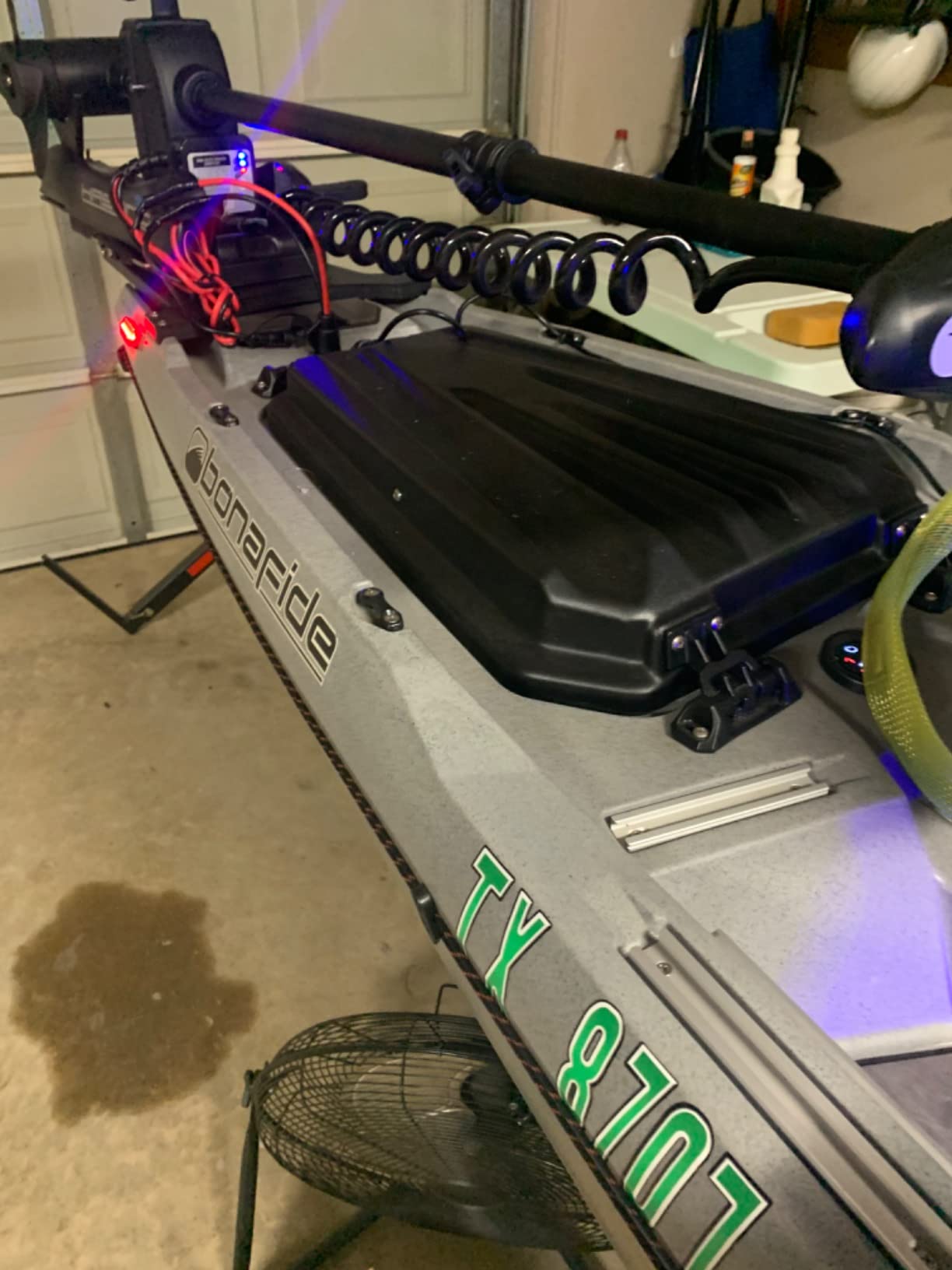
The sacrificial anode and sealed head make this one usable in fresh or salt water, and the quick release bracket means you can pull it off in about a minute when you switch to paddle-only mode.
Two year warranty coverage on the whole motor is better than most of the budget tier. It is rated for boats up to 2750 lbs, so thrust is not the issue on this motor at all.
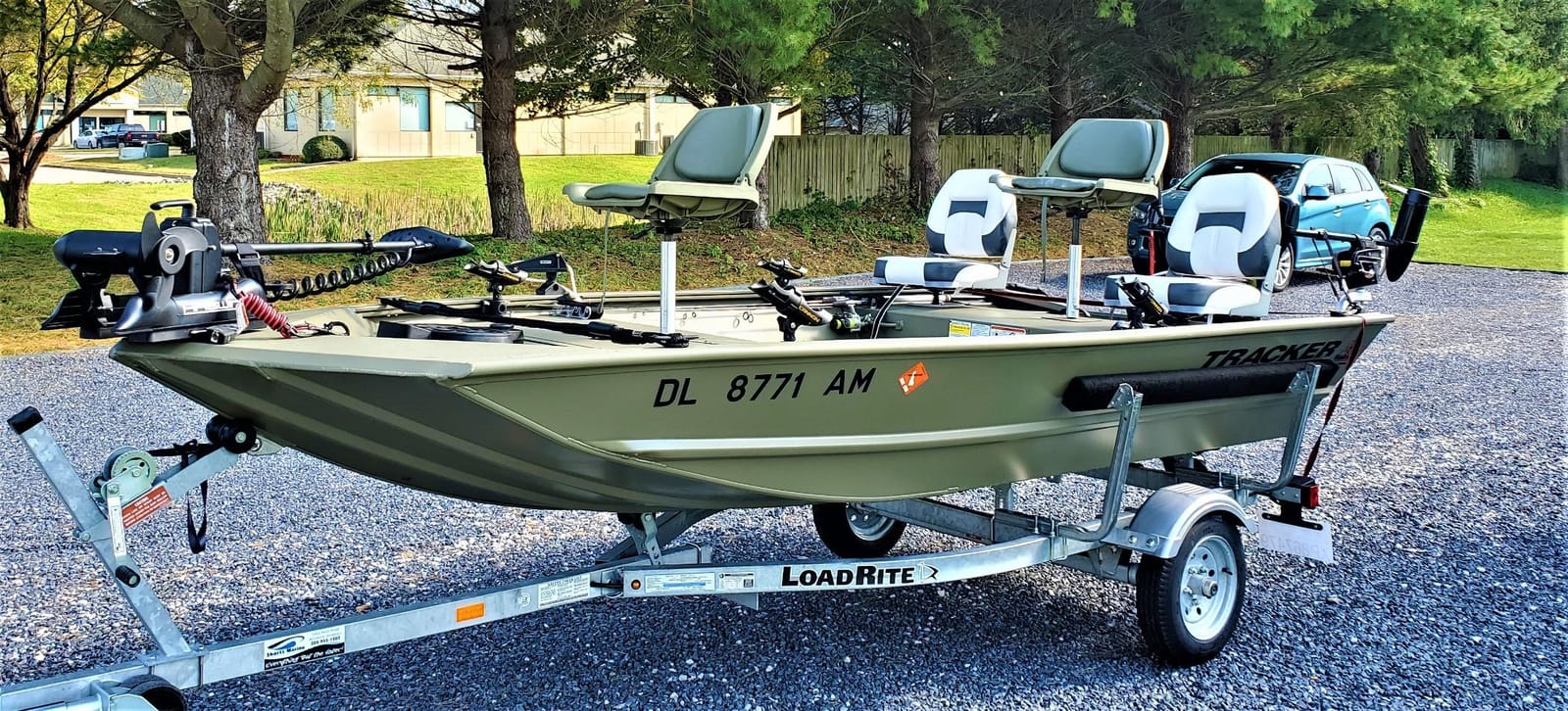
Why the 48 inch shaft rules it out for most kayaks?
Forty-eight inches of shaft is a bass boat length. On a kayak you would need a substantial riser block, and the added height pushes the motor head well above the angler’s lap and eats into your stability.
If you fish a long tandem or a canoe with a deep transom, the length becomes workable. On a standard sit-on-top, treat this as a bass boat motor and keep looking down the list.
What to check before you commit?
Cruise control holds a speed, not a position. Wind and current will still move you off the spot, which is the difference between this and a real spot-lock system. If holding position is the point of the trip, this is the wrong tool.
One-star reviews run close to 10 percent of the ratings, so expect some durability complaints. Check the warranty terms carefully, since the motor carries two years and accessories carry three months.
5. PEXMOR 8 Speed Electric Trolling Motor – Budget Pick
PEXMOR 86LBS Thrust Transom Mounted Saltwater Electric Trolling Motor 8 Speed w/LED Battery Indicator, Electric Outboard Boat Motor for Kayak,Inflatable Boat, Fishing Boat
12V electric
Thrust options 26 to 86 lb
5 forward 3 reverse
Three blade prop
Pros
- Good thrust for the money
- Three blade prop clears weeds
- Quiet running without overheating
- Simple telescoping handle
- LED battery gauge
Cons
- Lowest forward speed is too fast for kayak trolling
- Weak reverse and mid range speeds on some units
- Heavier than the thrust rating suggests
This is the entry point for anyone who wants a motor to learn on without committing to a name brand. It comes in several thrust versions from 26 lb up to 86 lb, so you can size it to your hull rather than living with one number.
The three blade propeller is a genuine advantage in weedy water, and spare blades are included with the higher thrust versions. If you snag grass constantly, that prop design is worth more to you than any app or remote.
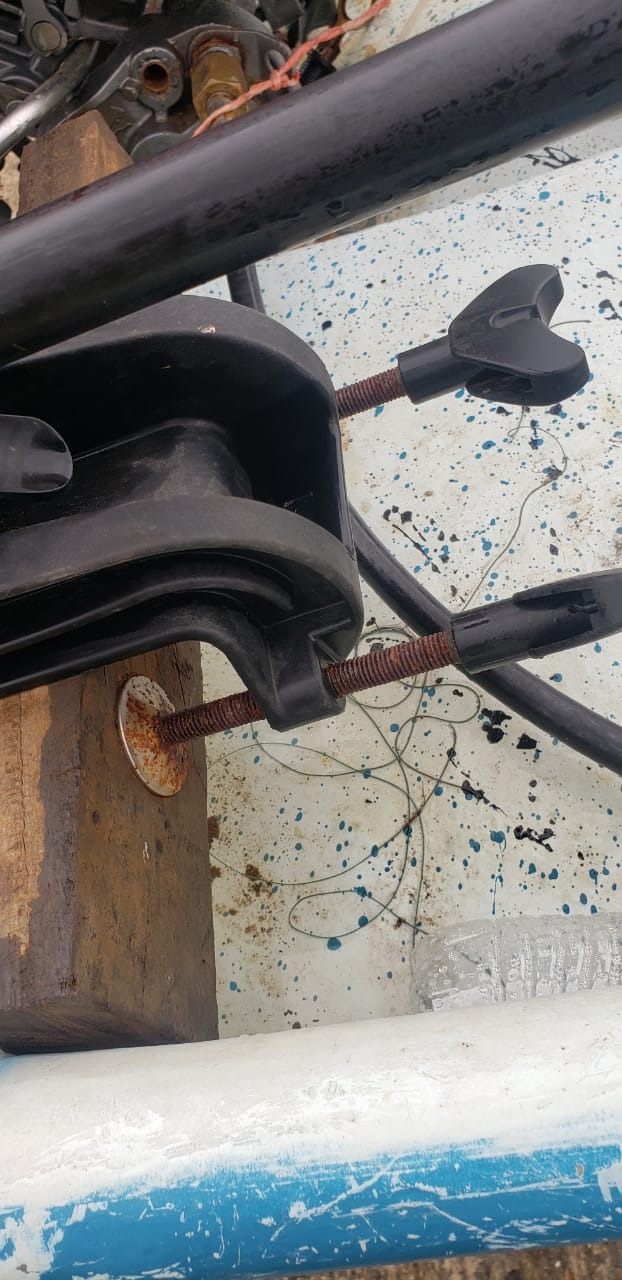
Buyers treat this as a budget unit and praise the power per dollar, low battery drain and straightforward installation. The six inch telescoping handle, shaft angle button and depth knob cover the adjustments a kayak actually needs.
The 1 to 10 LED battery level indicator is a nice addition at this level, since most cheap motors give you no charge feedback at all until the motor starts to bog.
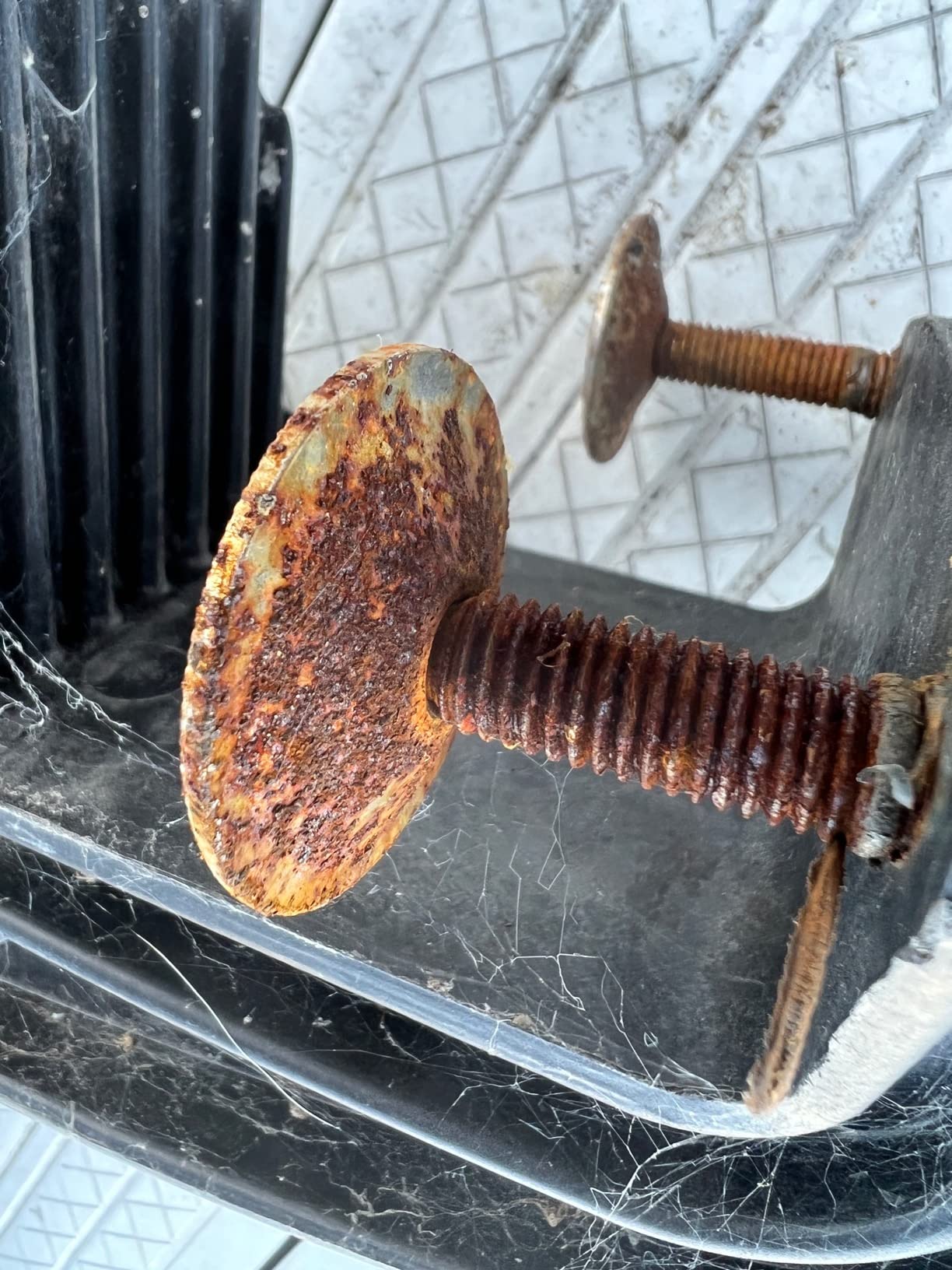
Why coarse speed control matters more than thrust on a kayak?
Trolling a kayak means holding a boat nearly still over a spot, which is a very low speed job. The most common complaint here is that the lowest forward setting still runs too fast without an external speed controller.
If you are moving between spots rather than holding one, that is not a problem. If you plan to drift-troll or work a weed edge, factor in the cost of a speed controller before you buy.
What to check before you commit?
Some units report weak reverse and nearly indistinguishable mid range forward speeds, and owners note the motor is heavier than the thrust rating suggests. Both matter more on a kayak, where every pound counts against your payload.
Also confirm the shaft length for your hull, since the listing covers several lengths. The battery and wiring are not included, so budget for those separately before you compare total cost.
6. AQUOS Haswing 65 Brushless – Lightest High-Thrust Motor
AQUOS Haswing 12V 65lbs 35.5in Brushless Transom Trolling Motor
Thrust: 65 lb
Brushless 12V
Stepless speed
Salt and freshwater
Pros
- Brushless design roughly doubles run time over brushed units
- Stepless forward and reverse control
- About 14.5 lb per owner reports
- Small lower unit clears an outboard on small boats
- Works in fresh and salt water
Cons
- Audible motor whine and vibration
- EM interference that can bother fish finders
- Lowest speed is still around 1 mph
- No circuit breaker included
This is the pick that changed our thinking about runtime. The brushless motor is the reason owners report roughly double the run time of an older brushed motor of the same thrust, which means a smaller battery can do the same job.
Stepless forward and reverse control is the other headline. Instead of detent steps, the throttle ramps smoothly, so you can find the exact slow speed a kayak trolling pattern needs rather than settling for the nearest notch.
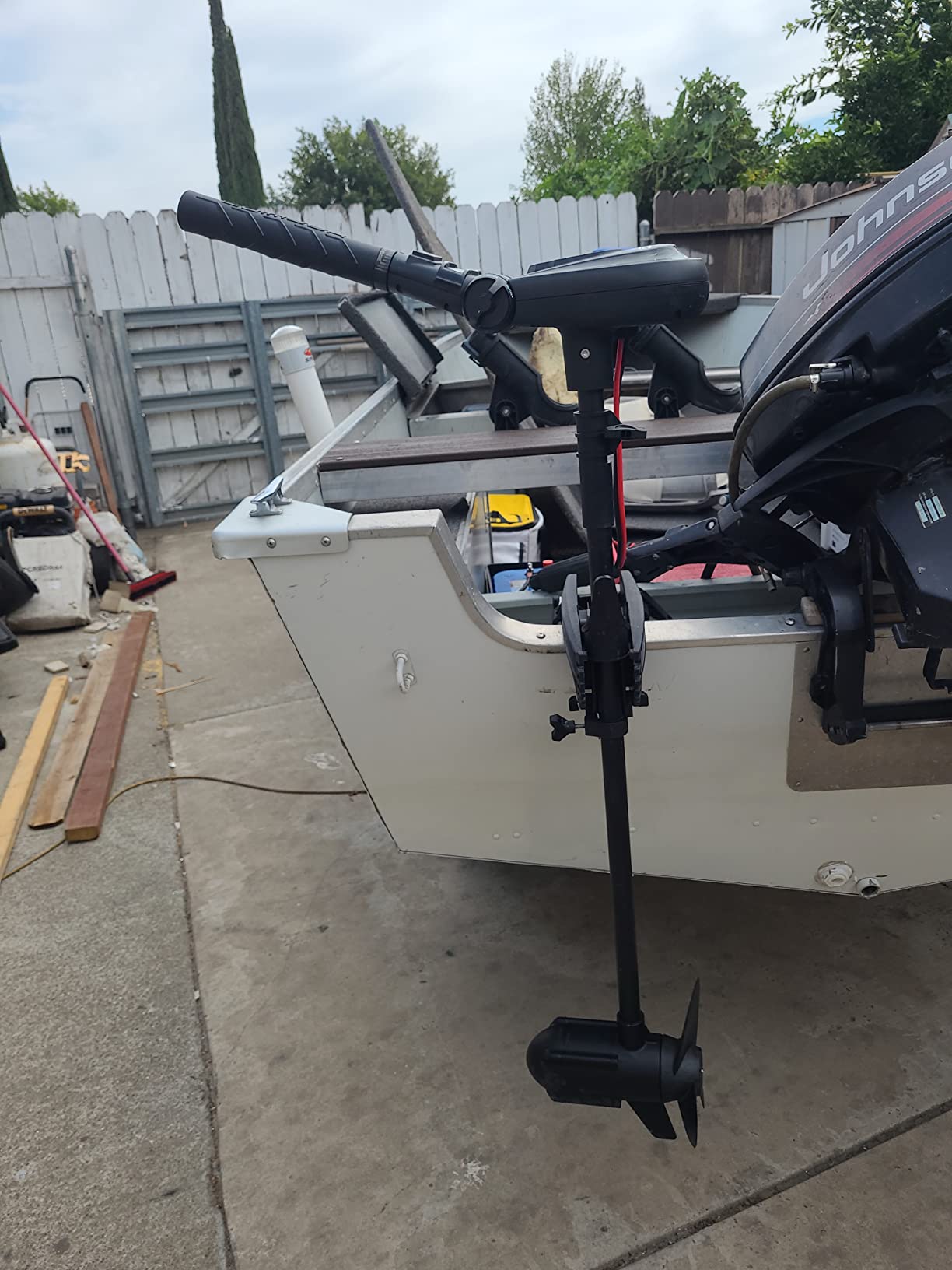
Weight is the headline for kayak anglers. Owners put it at about 14.5 lb, roughly half the weight of comparable brushed 55 lb motors, and that is a big deal when you are lifting the motor into a hull over the side.
The small lower unit is designed to avoid clashing with an outboard on a small boat, and the quick lock tilt plus adjustable trim height make it easy to clear the prop when you beach the kayak.

Brushless efficiency and the battery trade
Because the brushless design uses power more efficiently, you can run a smaller battery for the same outing. That matters on a kayak, where battery weight competes with your gear weight inside a fixed payload limit.
It also runs cooler, which is the practical benefit owners mention most in the first season. Warm motors drain faster and wear their windings sooner.
What to check before you commit?
Two drawbacks stand out. There is audible motor whine and some vibration, which owners who came from Minn Kota notice immediately, and the motor produces EM and RF interference that can show up on a fish finder even on a separate power supply.
The lowest speed setting still sits around 1 mph, which is too fast for fine trolling, and there is no circuit breaker in the box. Add a breaker when you wire it, and check the listed shaft length against your hull since the title and spec listing differ.
7. AQUOS Haswing 55 with Remote – Compact Short-Shaft Fit
AQUOS Haswing Transom Trolling Motor 12V 55lbs 26in with Wireless Remote
Thrust: 55 lb
Shaft: 26 inch cast aluminum
164 ft remote
26 lb weight
Pros
- Compact 26 inch shaft suits kayak installation
- Remote handles short precise steering corrections
- Stepless speed ramps up smoothly
- Strong performance on loaded kayaks at 3 to 5 mph
- Quick customer support on replacement parts
Cons
- No kill switch on a capsize
- Water intrusion reached the circuit board in light rain
- Some electronics failures within a year
- Remote can over-correct on a tap
- 16 percent one-star ratings
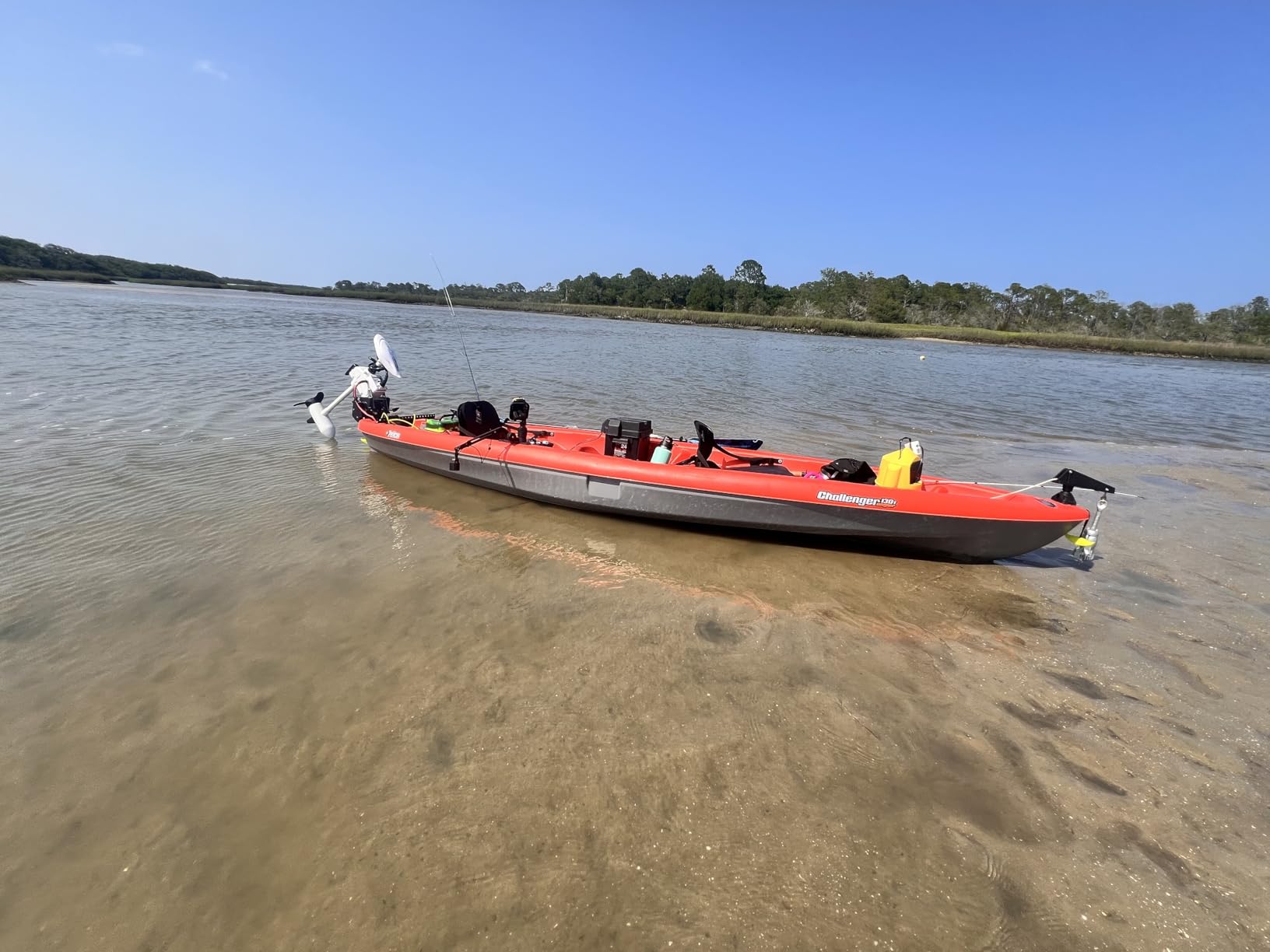
The appeal here is dimensional. At 26 inch with 16 inch of adjustable length, this is one of the few motors on the list that fits a kayak transom without a riser block, and the remote frees up the deck space a tiller handle would occupy.
Reported performance on a loaded kayak sits at roughly 3 to 5 mph, which matches what the hull will give you anyway. The 600W rating and 50A maximum draw match what a 12V group 24 battery delivers comfortably.
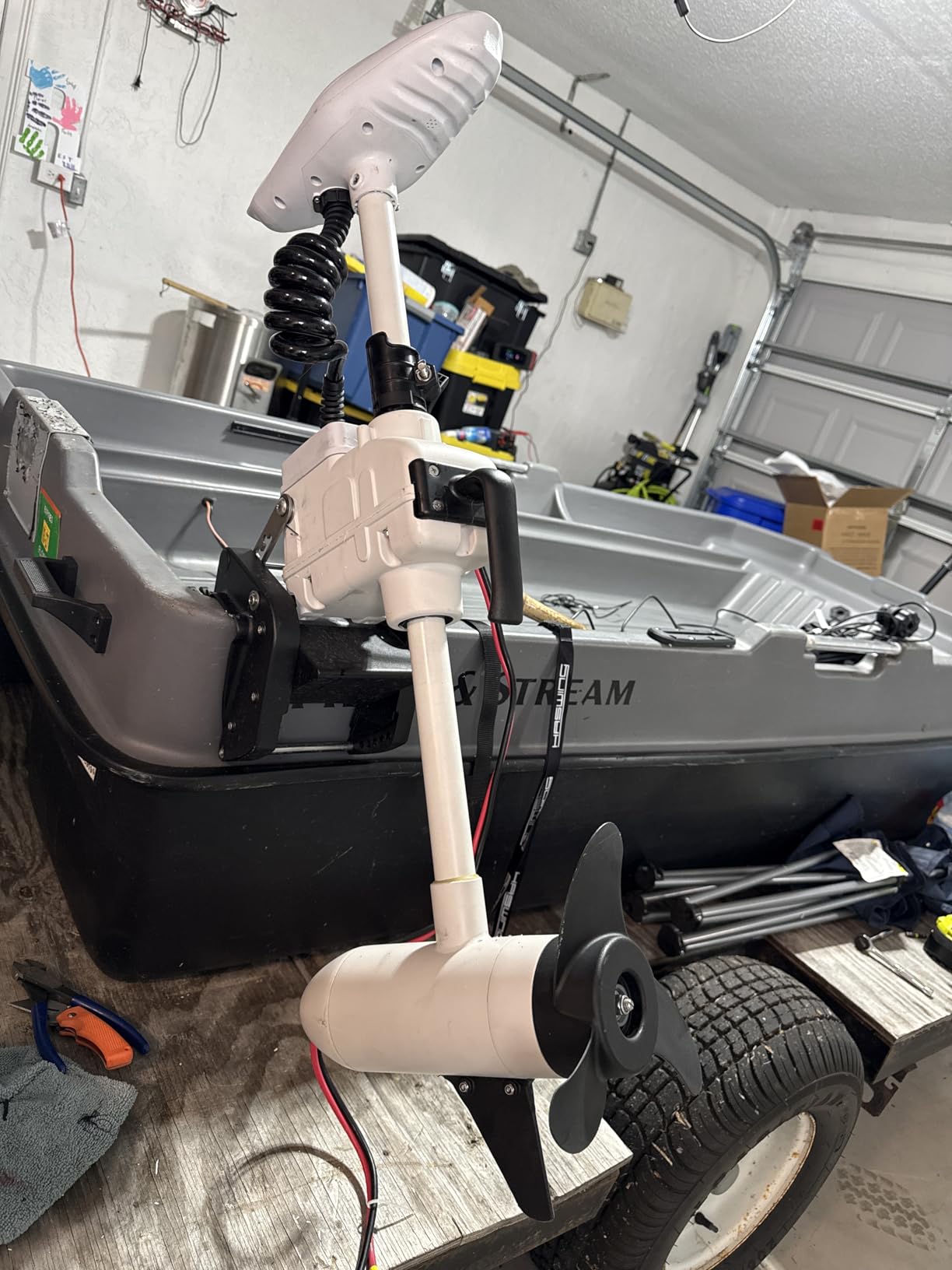
Stepless one-way speed control with a three level LED battery reader is straightforward to use once you get the feel. Tilting covers 0 to 85 degrees, and the sacrificial anode plus encapsulated electronics are designed for both fresh and salt water.
Customer support is a real strength here. Owners report quick responses and replacement parts being sent, which matters more than usual given the reliability complaints we are about to describe.
Whether the remote is a help or a hazard at 3 mph
At kayak speeds the remote gives you very short, precise corrections, which some owners prefer to a tiller. Others report it over-corrects when a steering button is tapped, and at low speed a tiller gives finer feedback.
Whichever you choose, practice it at a safe distance from other boats. A remote is only useful if you trust your thumb before the first trip.
What to check before you commit?
Reliability is the deciding issue. Two owners reported electronics failures within a year, and water intrusion reached the circuit board after light rain. The one-star share near 16 percent is the highest in this group.
There is also no kill switch. If you capsize, the motor can keep running unattended, so plan a manual disconnect or carry a paddle with enough authority to steer. The 26 lb weight is the heaviest figure on this list, so check it against your payload before ordering.
8. BODIOO 55lb with 30 Inch Shaft – Best Value 55
55lb Thrust Trolling Motor 8 Speed Electric Outboard Motor Kayak Motor with Adjustment 6-inch Extendable Handle, 30” Shaft Length, LED Indicator, Transom Mounted for Kayak, Fishing Boat(Black)
Thrust: 55 lb
Shaft: 30 inch
8 speeds
Fiberglass composite
Pros
- Freshwater friendly 55 lb thrust at a modest price
- Eight speeds give useful low speed options
- Quiet enough not to disturb fish
- LED battery indicator
- Fiberglass composite shaft resists bending
Cons
- Freshwater only with no salt rating
- Only a six month warranty
- 24 lb weight is heavy for a kayak
This is the straight 55 lb answer if your fishing stays on freshwater. Owners with few written reviews generally report solid quiet operation, a useful speed range and easy kayak mounting at a fair price.
The eight speed system runs five forward and three reverse through a six inch telescoping handle, and the 30 inch adjustable shaft handles shallow to deeper water without a separate extension in most hulls.
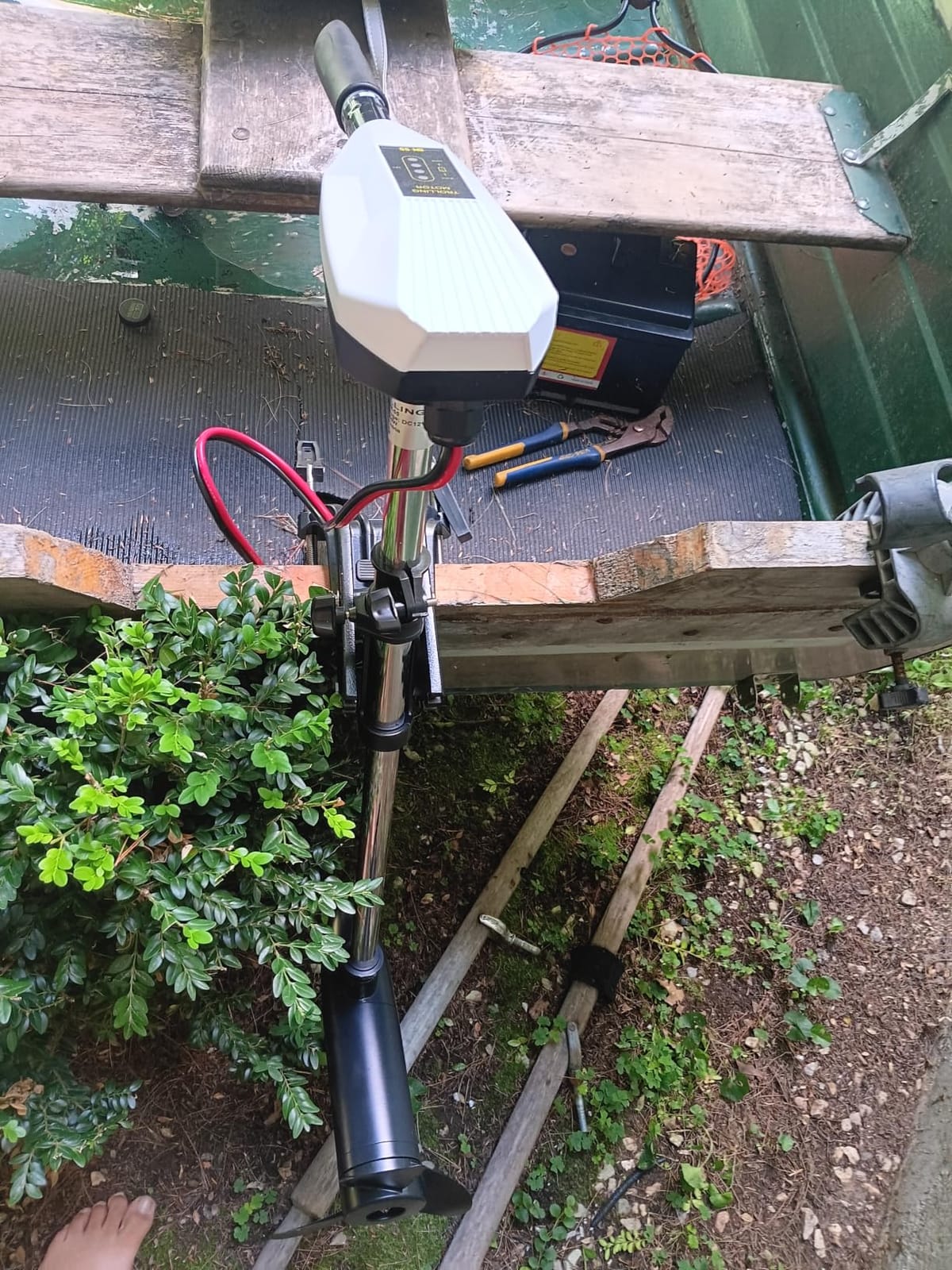
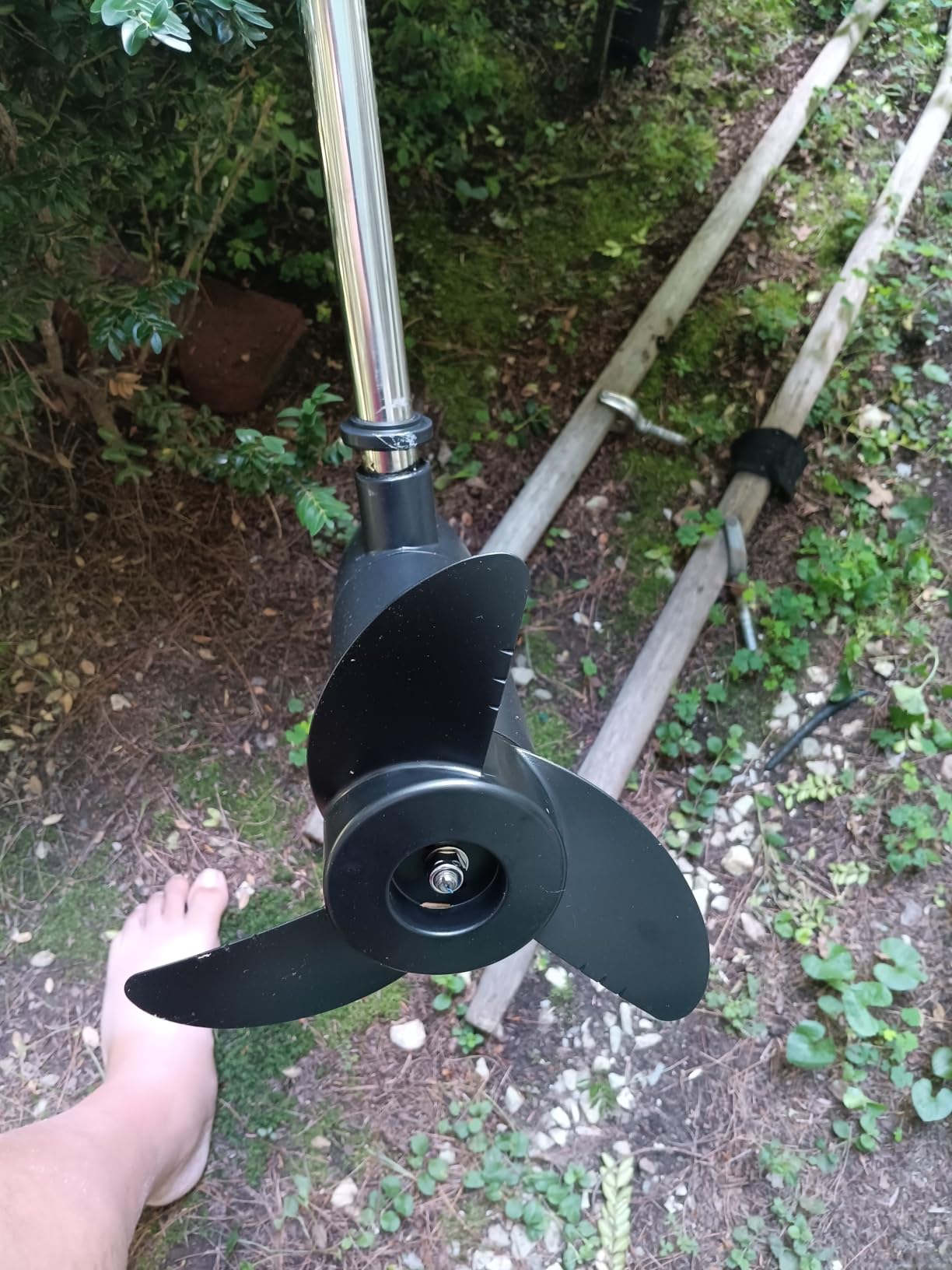
The fiberglass composite shaft with a die cast aluminum head is a sensible material pairing. Composite resists corrosion and bending, which is what you want in a motor that gets lifted in and out of salt water spray even on a freshwater lake.
A three blade propeller and an LED battery indicator round out a package that covers everything a freshwater kayak angler needs without paying for a remote or a control box.
What the six month warranty means for you?
That short warranty is the main compromise at this price. If a part fails in month eight, you are covering the replacement, so factor that risk into how long you expect to keep the motor.
Owners with first season experience report no problems, so the warranty gap is a planning issue rather than an immediate blocker for a season or two of use.
What to check before you commit?
The listing limits this motor to freshwater, and it has no salt rating. Anglers who will run brackish water should pick a motor with a saltwater rated head rather than plan to rinse after every trip.
Weight is 24 lb, which is heavy for a kayak and close to the capacity of a very small sit-on-top. Check your hull’s rated capacity with the motor, battery and your own body weight added up, and remember the battery counts too.
9. BODIOO 68lb Copper Core – Best for Heavy Loads
68LB Thrust Trolling Motor 8 Speed Electric Outboard Motor Boat Kayak Motor with 6’’ Adjustable Handle 30” Shaft Length & LED Indicator Transom Mounted for Kayak, Fishing Boat
Thrust: 68 lb
Copper core motor
8 speeds
About 50dB
Pros
- More thrust than the 55 lb model at a similar price
- LED voltage display shows real time battery status
- Ten position rotatable bracket for steering control
- Runs quietly at about 50dB
- Low voltage cutoff protects the battery
Cons
- Freshwater only
- Only a six month warranty
- Jump protection discourages hard direction changes
When a tandem kayak is loaded with two anglers, tackle and a cooler, extra thrust stops being wasted power. This 68 lb model adds a copper core motor and upgraded wiring over the 55 lb version at a similar price point.
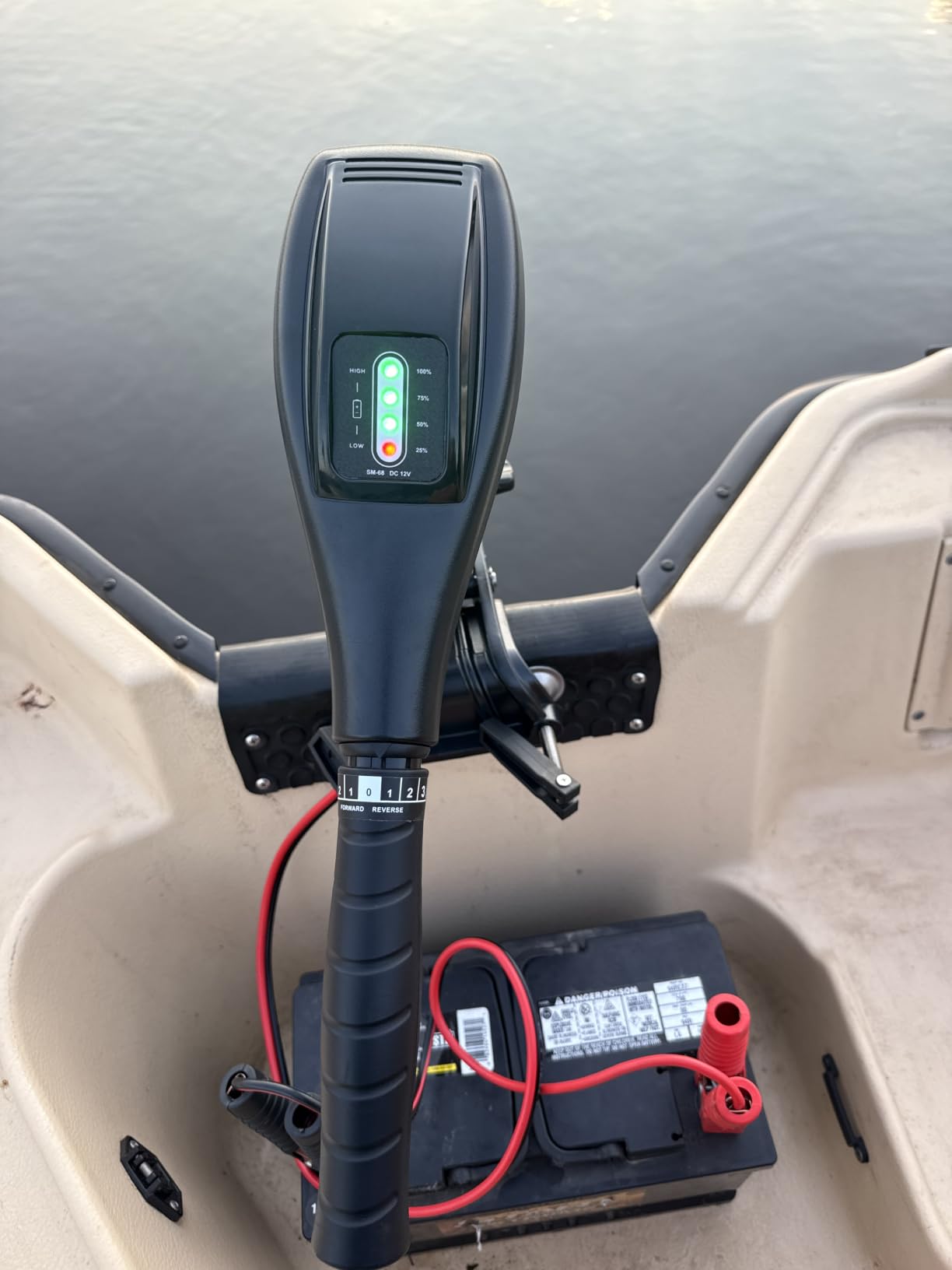
The integrated LED voltage display with low power alerts is the standout feature. It shows real time battery status rather than a vague bar count, which is what you want on a long run.
Steering is handled by a bracket that rotates 90 degrees and locks in ten positions, giving you solid directional control at low speed. The tool free three blade 9.5 inch propeller is built to resist debris and anti-tangling.
Rated at about 50dB, it is quiet enough for most freshwater fishing. The low voltage cutoff reduces over discharge, and the water resistant control box adds some protection in spray.
When more thrust actually helps on a kayak?
Thrust matters when you are pushing a heavy hull into wind or holding station against current, not for acceleration. A loaded tandem with gear is exactly that case, and this motor has the reserve to make it feel controlled rather than strained.
For a solo angler on a calm lake, the extra power mostly shortens battery life and adds weight. Match the motor to the load, not to the biggest number available.
What to check before you commit?
The listing restricts this motor to freshwater use, and the warranty runs six months. The jump protection feature also discourages abrupt forward and reverse shifts at speed, which some owners find limiting when repositioning quickly.
At about 20.7 lb it is lighter than the 55 lb BODIOO model, which is unusual and welcome on a kayak. It is designed to work with 12V deep cycle batteries of 50Ah or more, so plan your battery accordingly.
10. VEVOR 55lb with 30 Inch Shaft – Best for Inflatable Kayaks
VEVOR Electric Trolling Motor, Transom Mounted Outboard Boat Motors 12V 55lbs Thrust, 8-Speed Electric Boat Engine w/Battery Indicator, for Kayaks, Fishing Boats on Freshwater/Saltwater, 30-In Shaft
Thrust: 55 lb
Shaft: 30 inch aluminum
8 speeds
Fresh and salt
Pros
- Good thrust to price ratio for a 55 lb motor
- Sealed aluminum head resists corrosion in salt water
- Handle adjusts from 6.3 to 10.6 inches
- Runs all day without overheating
- Lightweight aluminum alloy shaft
Cons
- Mixed durability reports with 12 percent one-star ratings
- Battery and wiring not included
- Speed varies noticeably with weight and wind
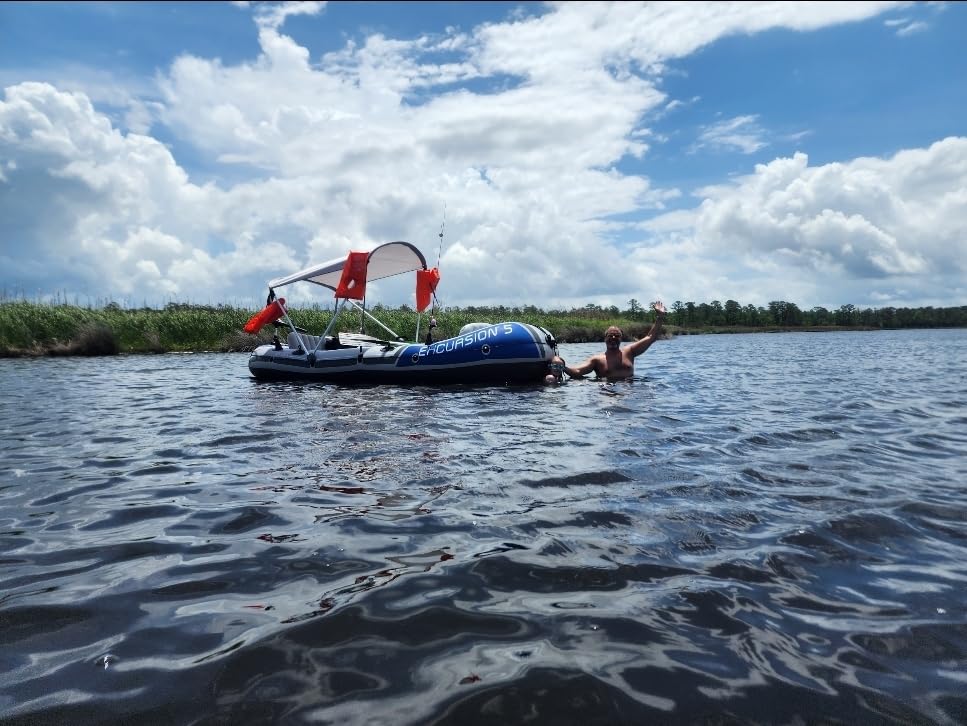
This is the one on the list that names inflatable kayaks in its fit list, alongside aluminum boats, canoes and rafts. The 30 inch aluminum shaft and adjustable transom bracket make it a workable match for a soft hull with a scupper strap.
Salt and freshwater compatibility comes from the sealed waterproof motor head on an aluminum alloy shaft, which matters if you move between an inland lake and a coastal bay in the same season.
The telescoping handle adjusts from 6.3 to 10.6 inches, so it works whether you are seated in an inflatable or standing on a sit-on-top deck. Eight speeds, five forward and three reverse, and a three blade prop for low speed torque.
Owners like that it runs all day without overheating. On the wiring side, 12V versions need one 12V battery, while 24V versions need one 24V pack or two 12V batteries in series.
What an inflatable hull changes about the install?
There is no transom to clamp to, so the motor hangs from a scupper strap or a rigid stern plate. The bracket on this motor works with that arrangement, but the strap itself is the part that limits how much weight you can hang there.
Keep the battery low and centered in the hull. On an inflatable, weight distribution affects how the boat sits in the water more than it does on a rigid kayak, and a stern-heavy load will trim the back down.
What to check before you commit?
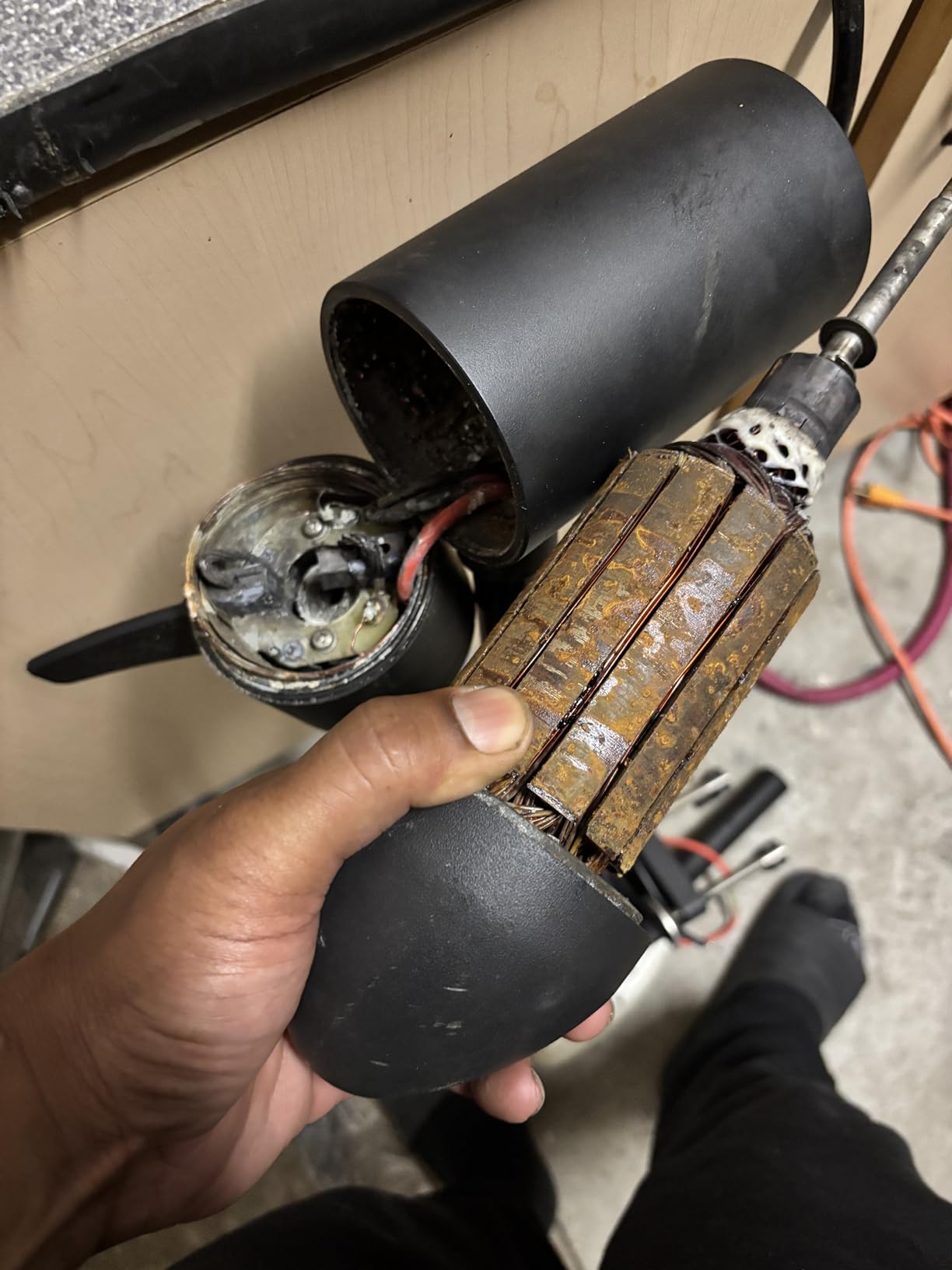
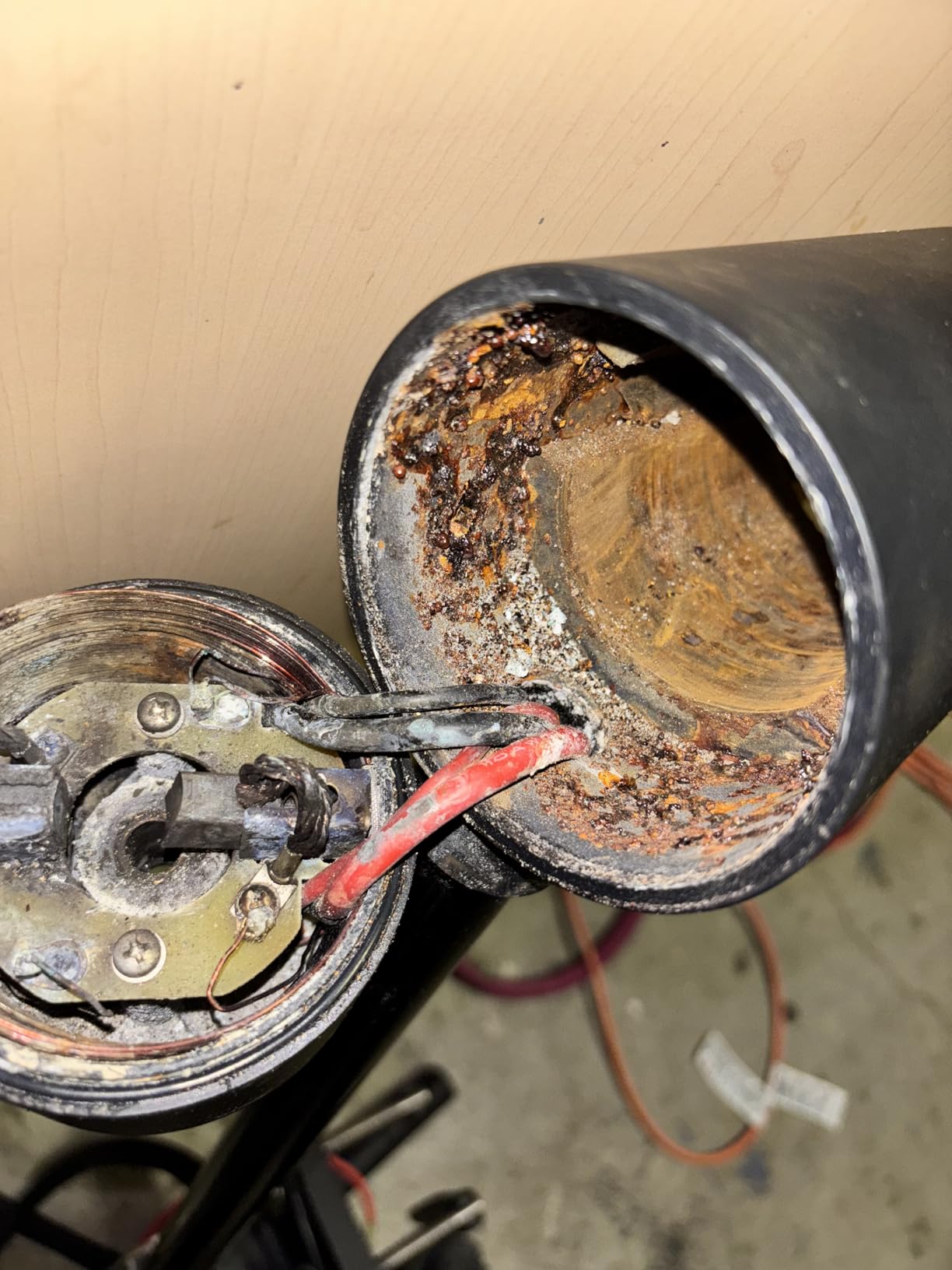
Roughly 12 percent of ratings are one star, so durability reports are mixed, and the 4.1 rating is among the lowest here. Battery and wiring are not included, which pushes the real cost higher than the motor figure suggests.
Speed also varies noticeably with boat weight and wind, which is expected physics in a hull this size. At 20.3 lb the motor is mid weight in this group, so check it against your capacity figure.
11. Minn Kota Kayak Terrova 55 – Best for GPS Spot-Lock
Minn Kota Kayak Terrova Bow-Mount Electric Trolling Motor with GPS – 55 Lb. Thrust, 36 in. Shaft, Freshwater
Thrust: 55 lb
Shaft: 36 inch composite
GPS with spot-lock
Micro remote
Pros
- Spot-Lock holds position precisely over structure
- Auto Park and one lever stow and deploy
- Digital Maximizer extends battery runtime
- Composite shaft carries a lifetime warranty
- Works with Humminbird units and the phone app
Cons
- Costs far more than transom mount alternatives
- 36 inch shaft needs bow clearance
- Micro remote takes practice while paddling
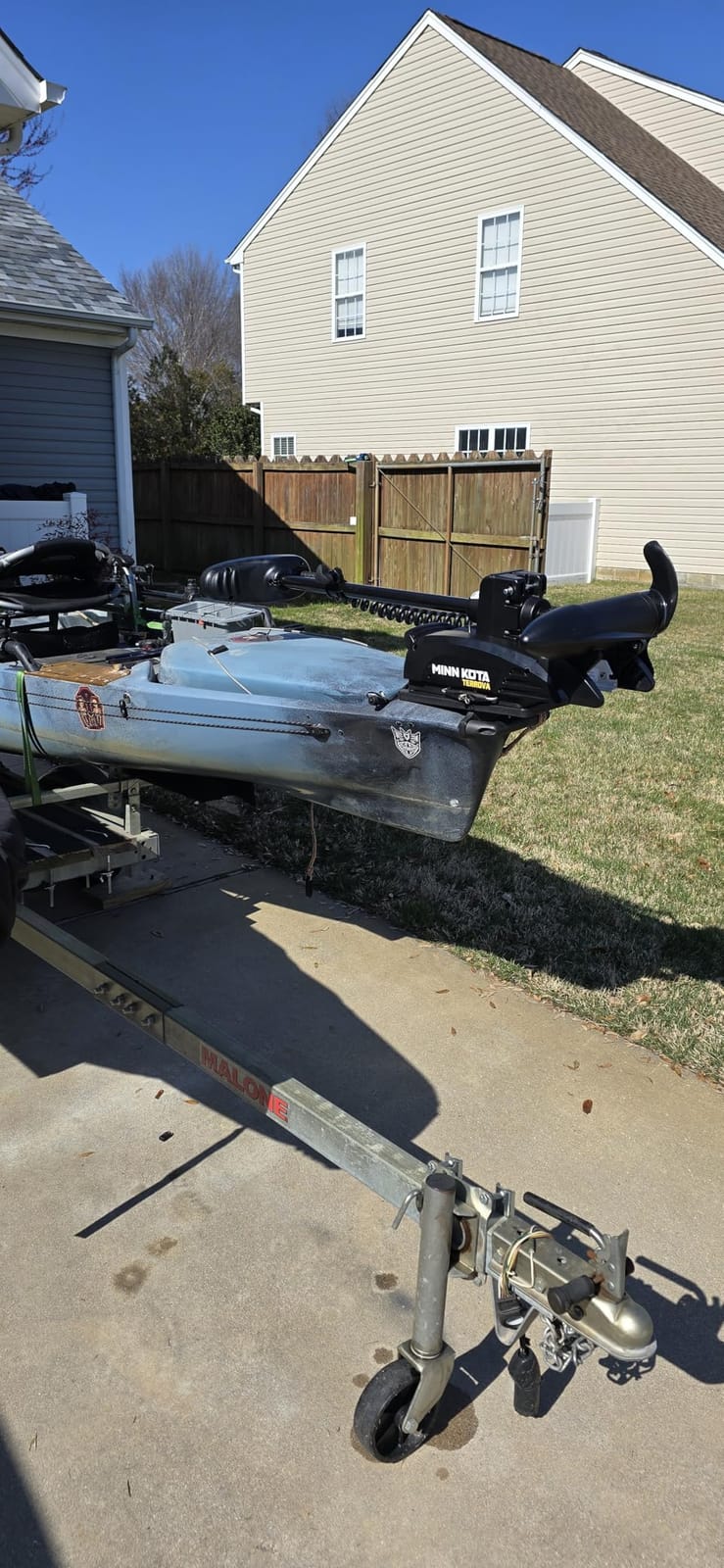
This is the only motor here that will hold your exact spot, and that changes how you fish. Spot-Lock uses a heading sensor to keep the bow pointed while you work a weed edge or a rock pile without drifting off in a few minutes.
Auto Park and one lever stow and deploy gets you on the water quickly, which is the detail owners praise most in the first week of ownership. The micro remote fits in a hand and controls speed, steering and spot-lock.
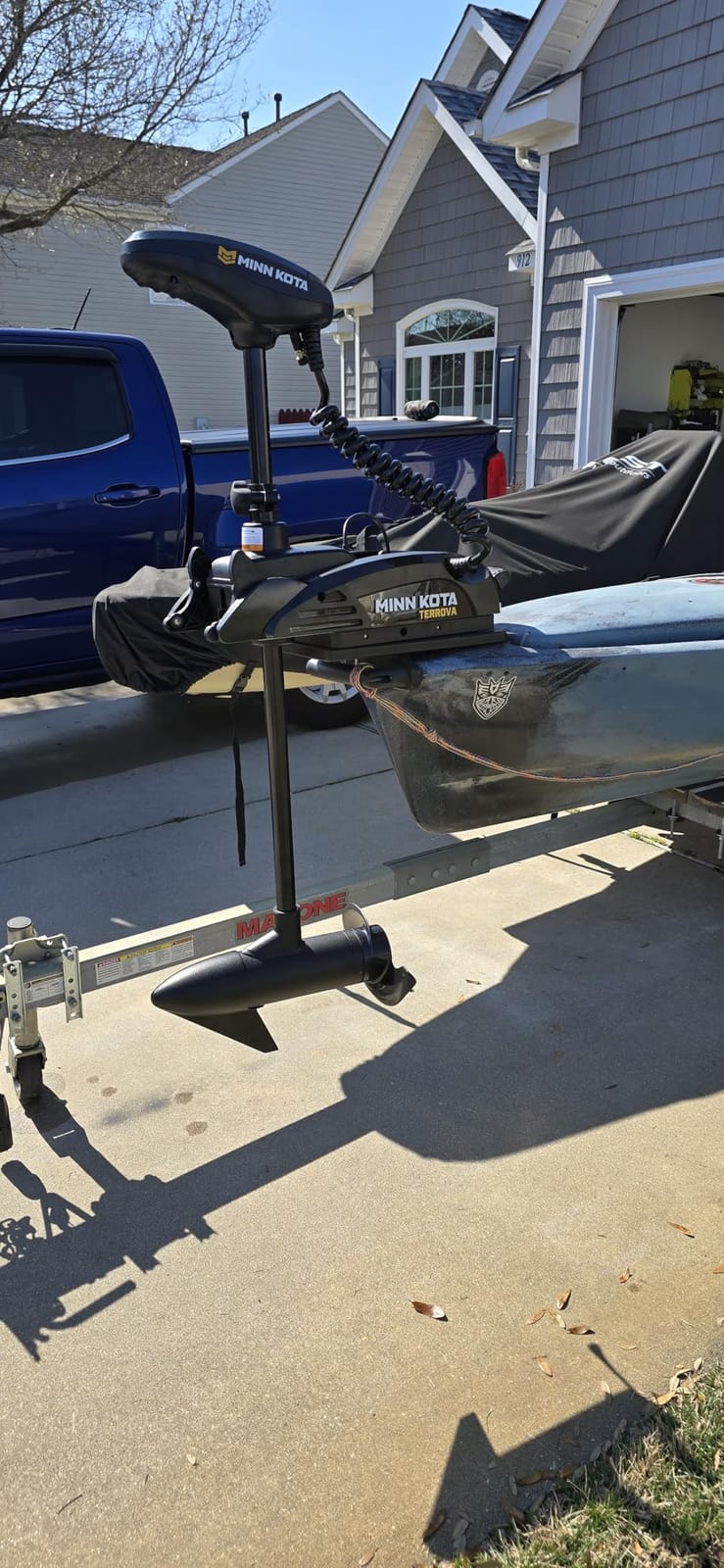
Digital Maximizer technology is designed to extend battery life, and that matters when the motor is going to be running all day on a spot. The 36 inch composite shaft carries a lifetime warranty from Minn Kota.
Connectivity is the bonus tier. It works with Humminbird fish finders through the One-Boat Network and with the phone app, and the box includes the ethernet cable, a lanyard, a safety switch kit and a prop.
Whether spot-lock is worth the step up in price
If you fish structure and need to stay on it for an hour, yes, position holding is the feature you cannot replicate with a tiller. Owners consistently say the premium buys GPS precision rather than raw thrust, and 55 lb of thrust is not what sets it apart.
If you mostly paddle to open water and fish moving structure, you can achieve the same result with a drift line or an anchor for a fraction of the cost.
What to check before you commit?
The 36 inch shaft needs real bow clearance. On a short kayak the bow rises out of the water on a wave, which exposes the shaft and can damage the lower unit, so measure your bow height carefully.
It is also a freshwater motor with no salt rating, and the micro remote needs practice if you also plan to paddle. Weigh both costs against the feature before deciding.
12. Newport NK300 – Best for Speed and Extended Range
Newport NK300 Electric Kayak Motor – 3HP Equivalent, 36V Brushless Direct Drive, Extended Range up to 66 Miles, Whisper-Quiet Precision, and Optimized Efficiency
Power: 1300W peak, 3 hp equivalent
Up to 6.5 mph
36V system
24.6 inch shaft
Pros
- Pushes a large tandem kayak at 6 mph
- Brushless direct drive is quiet at about 40 dB
- Up to 66 miles of range on a 36V system
- Variable trim and tilt positions
- Compact 25.5 lb footprint
Cons
- 26 percent one-star ratings
- Controller failures and error codes after purchase
- Weak reverse locking spring
- Flimsy tilt mechanism
- Needs a 36V battery that adds cost
This is the only outboard-style motor in the group, and it breaks the 5 mph ceiling that hull-mounted trolling motors hit. Owners report pushing a large tandem kayak at 6 mph, with a listed top speed of 6.5 mph.
The brushless direct drive motor runs at about 40 dB, which is the quietest figure here and genuinely useful when you are covering a long run to a distant spot. Range is listed at up to 66 miles or about 30 hours of runtime.
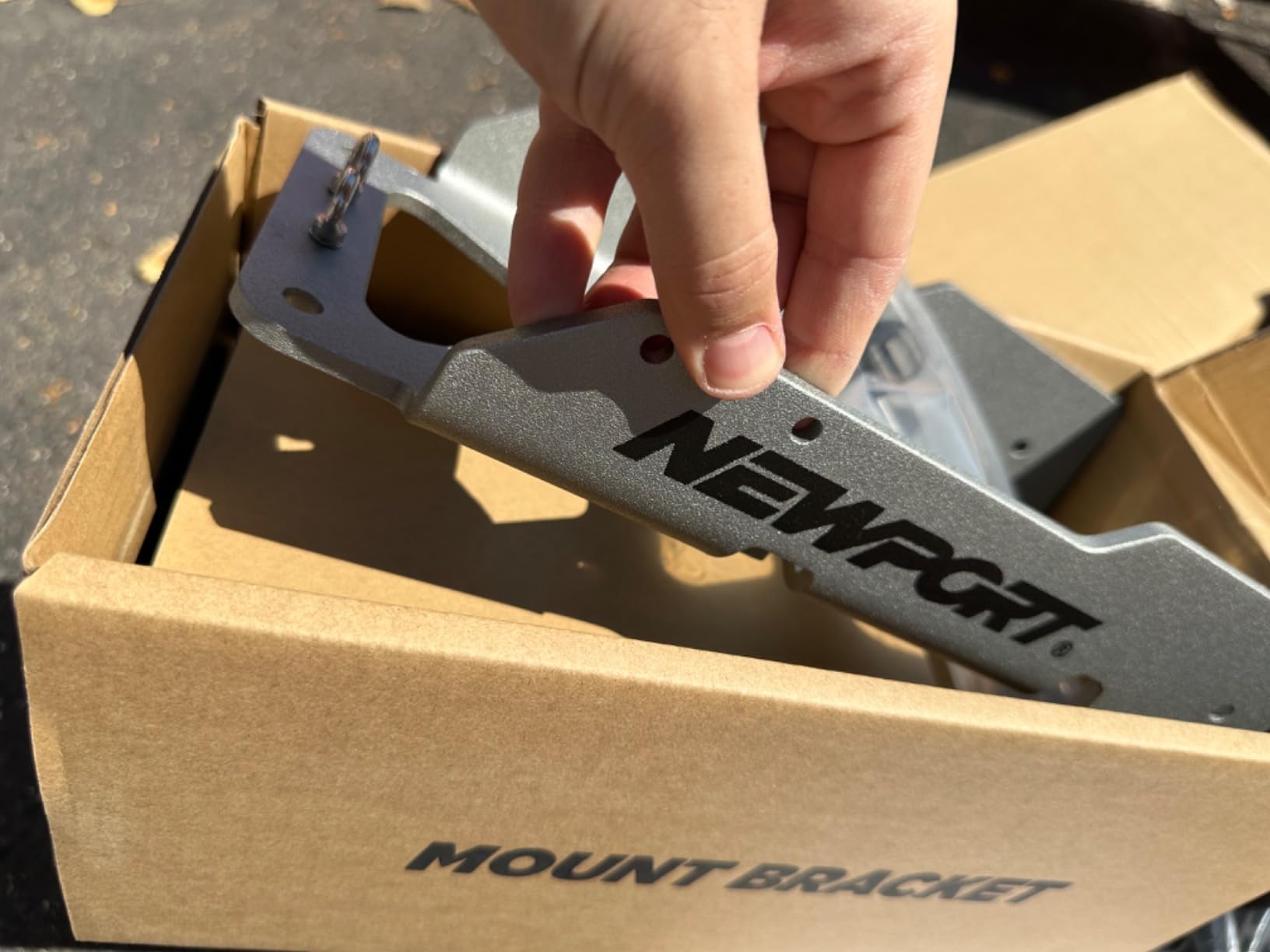
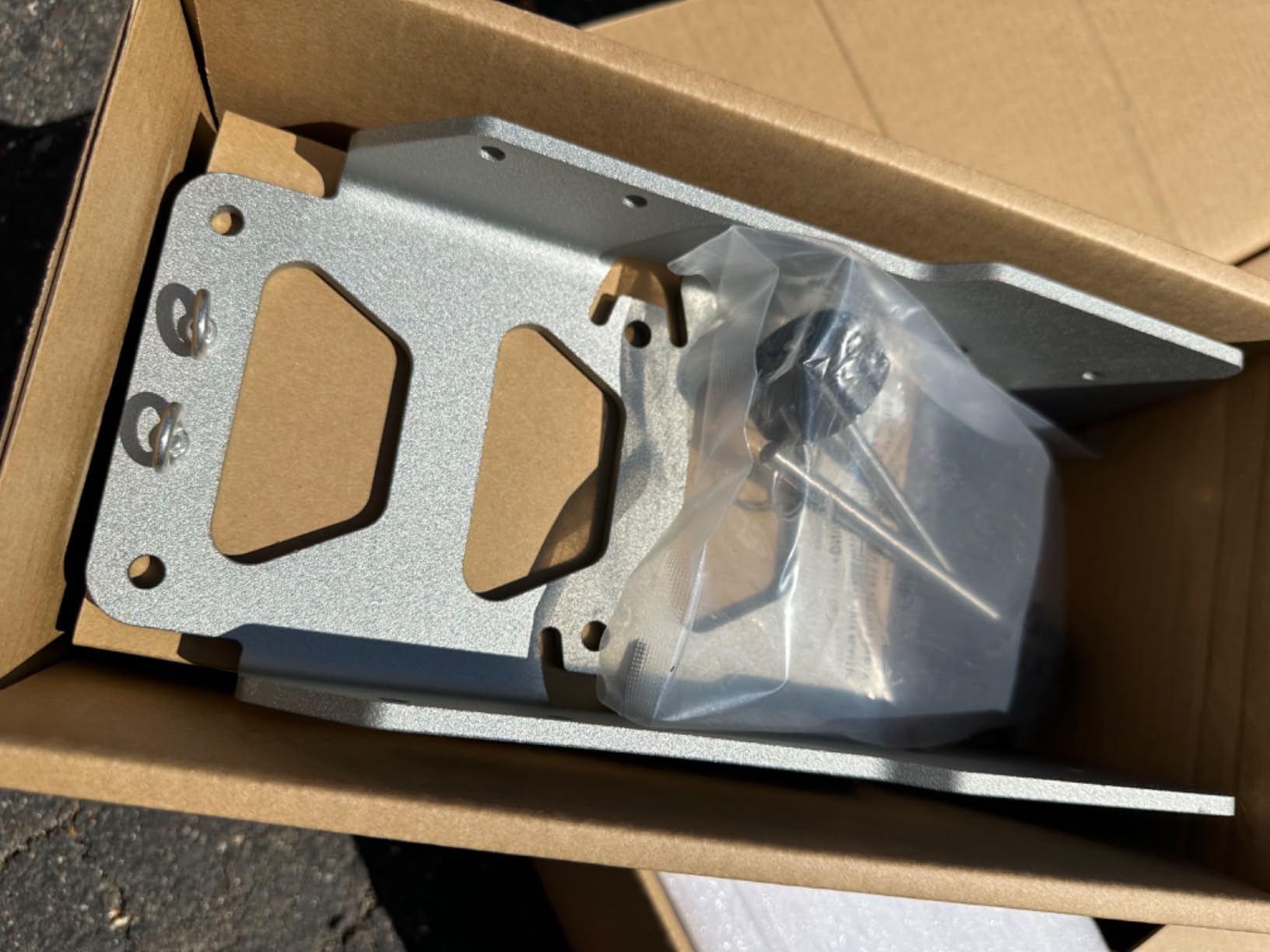
It is a 36V system drawing about 37 amps, and it needs a battery of 30Ah or greater, which is not included. The shaft is 24.6 inch with a 9.8 inch two blade composite propeller, and trim and tilt are variable across five positions.
The digital speed controller with display and emergency stop key, four bolt aluminum mount and steering triangle make it feel more like a piece of marine equipment than a budget motor. If you like our touring kayak guide, this is the motor that fits that kind of distance.
What a 36V system changes about your planning?
You are no longer buying a single 12V battery. A 36V pack runs about 37 amps, so your charging setup, cable gauge and connector all need to match, and the added battery weight is significant for a kayak.
In exchange you get genuine speed and a range figure that changes what a day on the water can look like. If you are paddling long distances between fishing spots, the math can work in your favor.
What to check before you commit?
Reliability is the decisive weakness. This motor has the highest one-star share in the group at 26 percent, with reports of controller failures and error codes shortly after purchase, and warranty resolution was difficult when bought through a reseller.
The reverse locking mechanism has a weak spring and the tilt feels flimsy when lifting for clearance. Buy from a seller that will handle warranty claims directly, and test the motor as soon as you receive it.
How to Choose a Trolling Motor for a Kayak?
How much thrust a kayak actually needs?
The working rule anglers use is 2 lb of thrust for every 100 lb of loaded weight, and a kayak with an angler and day gear typically lands between 300 and 400 lb, which points to a motor in the 30 to 55 lb range.
Beyond that you are adding weight and drawing more amps for a hull that cannot go any faster. The exception is a loaded tandem in wind or current, where the extra reserve keeps you in control.
Why your kayak will not go faster than about 5 mph?
A kayak cannot plane. Hull speed is limited by drag, so once the bow wave forms, adding thrust only pushes harder against resistance and burns battery faster. Owners on r/kayakfishing make this point constantly: the hull sets the top speed, not the motor.
Forum math is useful here. A 40 lb motor at half speed draws roughly 10 amps, so a 100Ah battery gives you about 10 hours. A 100Ah battery is the setup most owners report running for 8 to 10 hours at half speed on a loaded kayak.
Measuring shaft length in four steps
First, measure from your mounting point to the waterline with the boat in its floating position. Second, add 12 inches for submersion of the prop and shaft. Third, add 3 to 4 inches of clearance, and 5 to 6 inches more if you fish rough water or heavy current. That total is your target shaft length.
If your hull is shallow drafted or inflatable, subtract from the submersion figure rather than adding. A 24 to 26 inch shaft covers most sit-on-top kayaks, while 30 inch suits a canoe or a deeper transom.
Transom mount or bow mount on a kayak
Almost every kayak angler ends up on a transom mount. Bow mounts use a slide hinge and cable steer designed for a bass boat deck, and anglers report repeatedly that they cannot be rigged on a kayak deck at all.
A stern transom bracket clamps to the rear of the hull or hangs from a scupper strap on an inflatable. A bow mount only makes sense if you already own a boat with a slide track and you want one motor to serve both hulls.
Tiller, remote or foot pedal on a kayak
A telescoping tiller is the default and the right answer for most kayaks, because it is simple, it stows easily and it gives direct feedback at trolling speed. A remote helps on a tandem or a wide deck where you want to be forward. Foot pedals are designed for a braced deck position that a seated kayaker does not have.
Whatever you choose, add a safety leash or a manual disconnect. Motors without a kill switch can keep running after a capsize.
Battery, wiring and the full cost of a kit
A motor is the cheapest part of the system. A 55Ah deep cycle battery, a charger, a 50A breaker, and the wiring connectors usually cost more in total than the motor itself, which is exactly the surprise forum buyers describe when they price a first setup.
Owners on r/kayakfishing report running a 30 to 35 lb Minn Kota with a 55Ah battery for a low total cost and being completely satisfied on flat freshwater lakes. That is the calculation to do first, before comparing motors on thrust alone.
Freshwater, saltwater and corrosion
Several motors in this group are freshwater only by manufacturer rating. Anglers in salt report that freshwater motors can be used if rinsed thoroughly, but expect a shorter service life, and that is a fair trade only in a bay that is nearly fresh.
If you fish salt regularly, choose a saltwater rated aluminum head with magnesium, zinc or stainless hardware and a sacrificial anode. Rinse with fresh water after every trip and flush the cooling passages, and you will get years instead of seasons.
Registration and legal rules for a motorized kayak
Adding a motor changes the vessel class in many states, and a registration requirement can apply where none did before. The rules come from your state wildlife and fisheries agency, so check the specific state before you launch rather than assuming a paddle-only exemption still covers you.
Some states also require a boating safety course or a wearable life jacket for anyone operating a motorized craft. If you will cross open water with the motor running, treat the registration question as a must-answer, not a footnote.
Frequently Asked Questions
What size trolling motor is best for a kayak?
For most kayaks, a motor in the 30 to 55 lb thrust range is the right size. The working rule is 2 lb of thrust for every 100 lb of loaded weight, and a kayak with one angler and day gear usually lands between 300 and 400 lb. A 30 lb motor handles calm freshwater, while a tandem loaded with two anglers and gear is better served by 55 to 65 lb.
How fast will a kayak go with a 55lb thrust trolling motor?
Roughly 4 to 5 mph in calm water. A kayak cannot plane, so hull drag caps the top speed no matter how much thrust the motor makes. More thrust only shortens battery life and adds weight. The Newport Kayak Series 55 in our testing moved a loaded kayak at about 4 to 5 mph, and owners report the same figure.
Is a trolling motor on a kayak worth it?
It depends on how far you paddle. On a long run across open water, or when wind or current is against you, a motor saves energy you want to keep for fishing. A quiet electric motor also avoids spooking fish, which a gas outboard would not. If you fish within paddling distance of a launch, a paddle and a drift line may already be enough.
Do foot pedals work on a kayak trolling motor?
They work mechanically but are rarely the right answer in a small hull. The pedal assembly needs a flat, rigid area for your foot, and most kayak anglers end up bolting a board to the deck or stowing the pedal and using a tiller instead. On a wide deck where you fish standing, foot control is a real advantage.
Can you legally put a trolling motor on a kayak?
Often yes, but adding a motor changes the vessel class in many states and can trigger a registration requirement that did not exist for a paddle-only boat. Some states also require a boating safety course or a wearable life jacket for motorized craft. Check your state wildlife and fisheries agency before launching rather than assuming the paddle-only exemption still covers you.
Conclusion: The Best Trolling Motors for Kayaks in 2026
The Newport Kayak Series 55lb is our pick for 2026 because it is the only motor here that is short enough for a kayak, quiet enough to fish structure with, and built to survive salt water. Buy that one and pair it with a 55Ah deep cycle battery and a proper breaker.
By scenario: the Minn Kota Endura C2 for the lightest freshwater setup, the AQUOS Haswing 65 brushless for the longest runtime per pound of battery, the BODIOO 68 for a loaded tandem, the VEVOR 55 for an inflatable hull, the AQUOS Haswing 55 with remote if your transom is tight, and the Minn Kota Kayak Terrova when holding one exact spot matters more than cost.
Match the shaft to your hull, count the battery in your payload, and check your state’s registration rules before the first launch. Get those three right and the right trolling motors for kayaks will handle the rest.