
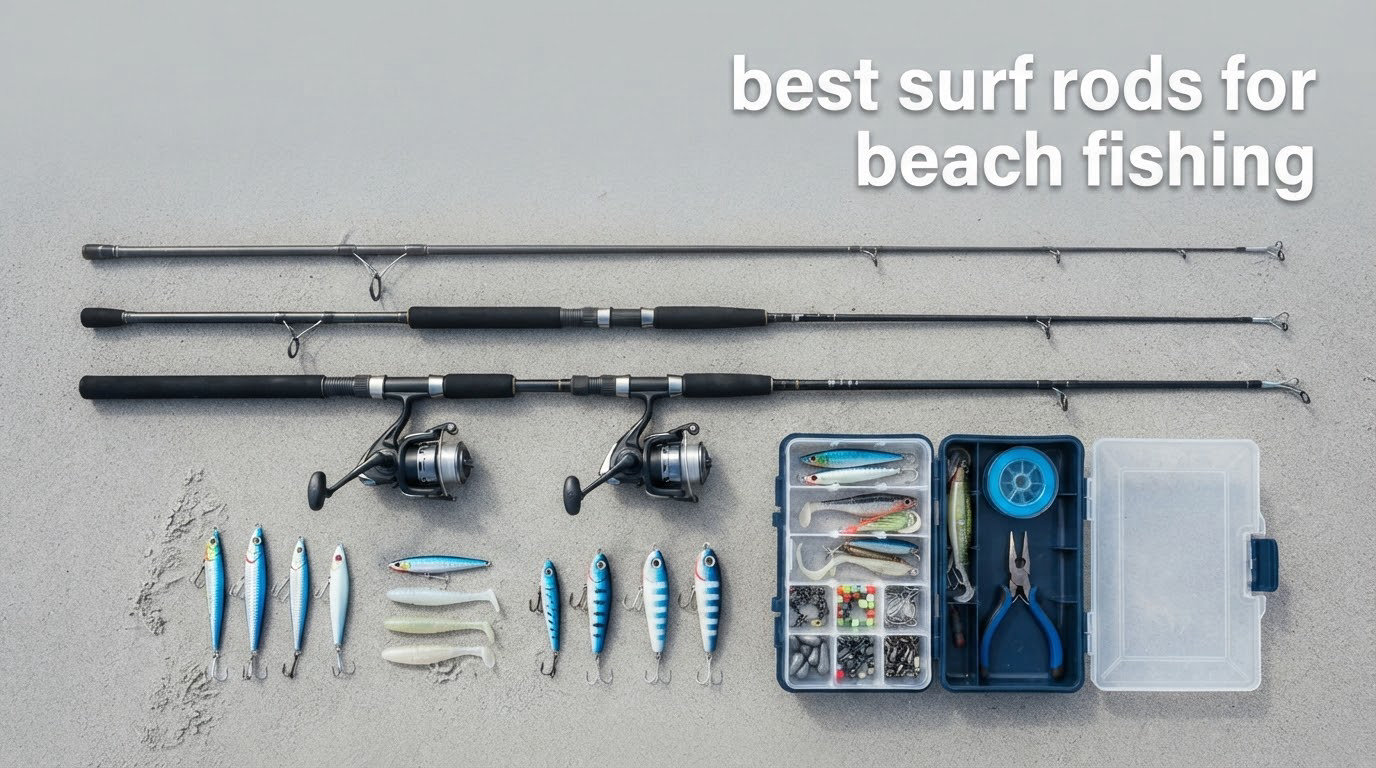
A surf rod and a beach rod are the same thing. Both names describe a fishing rod built to cast bait or lures from shore, past the breaking surf, into saltwater that will eat a freshwater blank within a season. If you have been searching under two different terms and thinking they were different products, you were looking at the same category twice.
So what is the best rod for beach fishing? It depends on what you are casting and how far you need to reach, but after putting eight of them through a full comparison of length, power, action, blank material and guide train, the Fiblink 13-foot surf casting rod came out ahead as the most complete all-round beach rod in this group. It has the largest body of owner reviews of anything we looked at, a carbon construction that stays lively without feeling fragile, and a length that pushes a rig well past where most surf perch anglers stop casting.
That does not make it right for everyone. A 13-foot medium-power rod is the wrong tool if you are chasing stripers on a jetty with a 1.5 oz plug, and it is the wrong tool if your car cannot swallow a 13-foot two-piece. This guide covers eight rods across the whole price and power spectrum, then explains the specs in plain language so you can match a rod to your target species before you spend anything.
Everything below is written for people fishing from sand, from rocks and from structure, with the specific goal of finding the best surf rods for beach fishing that actually fit how and what you fish.
Table of Contents
Top 3 Best Surf Rods For Beach Fishing (October 2026)
Three rods earned a place on the shortlist. The Fiblink 13-foot is the most complete beach caster here, the BERRYPRO 9-foot is the best-balanced rod for pluggers chasing stripers, and the Okuma Longitude is the one to buy when the fish on the other end are heavy and the water is rough.
Fiblink Surf Casting 13ft
- Carbon fiber blank
- Moderate-fast action
- Medium power
- 13 ft length
- Stainless steel and ceramic guides

BERRYPRO Light Surf Spinning 9ft
- IM8 X-Carbon blank
- Fast action
- Medium power
- 9 ft two-piece
- Ceramic-ring stainless guides

Okuma Longitude Surf 9ft Heavy
- Graphite composite blank
- Fast heavy action
- 6 oz lure rating
- Two-piece build
- Cork grips
One thing to flag before you read further: the top three are all spinning-capable, medium-power or heavier rods, which is where most beach and surf fishing actually happens. The longer list covers conventional casting, glass, travel multi-piece builds and the budget end of the market.
Quick Comparison of the Best Surf Rods for Beach Fishing in 2026
All eight rods, side by side with the specs that actually change how they fish. Length and power together determine casting distance more than any other single feature.
| Product | Specifications | Action |
|---|---|---|
| Fiblink Surf Casting 13ft |
|
Check Latest Price |
| BERRYPRO Light Surf Spinning 9ft |
|
Check Latest Price |
| Okuma Longitude Surf 9ft Heavy |
|
Check Latest Price |
 Okuma Tundra 12ft Glass Okuma Tundra 12ft Glass |
|
Check Latest Price |
 Fiblink 12ft 3-Piece Travel Surf Fiblink 12ft 3-Piece Travel Surf |
|
Check Latest Price |
 Okuma Rockaway 12ft Okuma Rockaway 12ft |
|
Check Latest Price |
 Ugly Stik Carbon Surf 9ft Ugly Stik Carbon Surf 9ft |
|
Check Latest Price |
 PENN Battalion Surf 9ft PENN Battalion Surf 9ft |
|
Check Latest Price |
1. Fiblink Surf Casting 13ft Carbon Rod – Best Overall for Beach Work
Fiblink Surf Casting Fishing Rod 2-Piece Graphite Travel Baitcasting Fishing Rod (Length: 13′)
13 ft length
Medium power
Moderate-fast action
Carbon fiber blank
Casting technique
Striped bass, red drum, bluefish
Pros
- Carbon construction gives real sensitivity for the size
- Stainless steel and ceramic guides run line smoothly on long casts
- Handles swimbaits and plugs in the 1-4 oz range
- Non slip rubber shrink tube grip stays secure with wet hands
- One year warranty
Cons
- Medium power is not enough for heavy sinkers or big pluggers
- 13 ft is awkward to transport in most vehicles
- Moderate-fast action softens slightly under very heavy loads
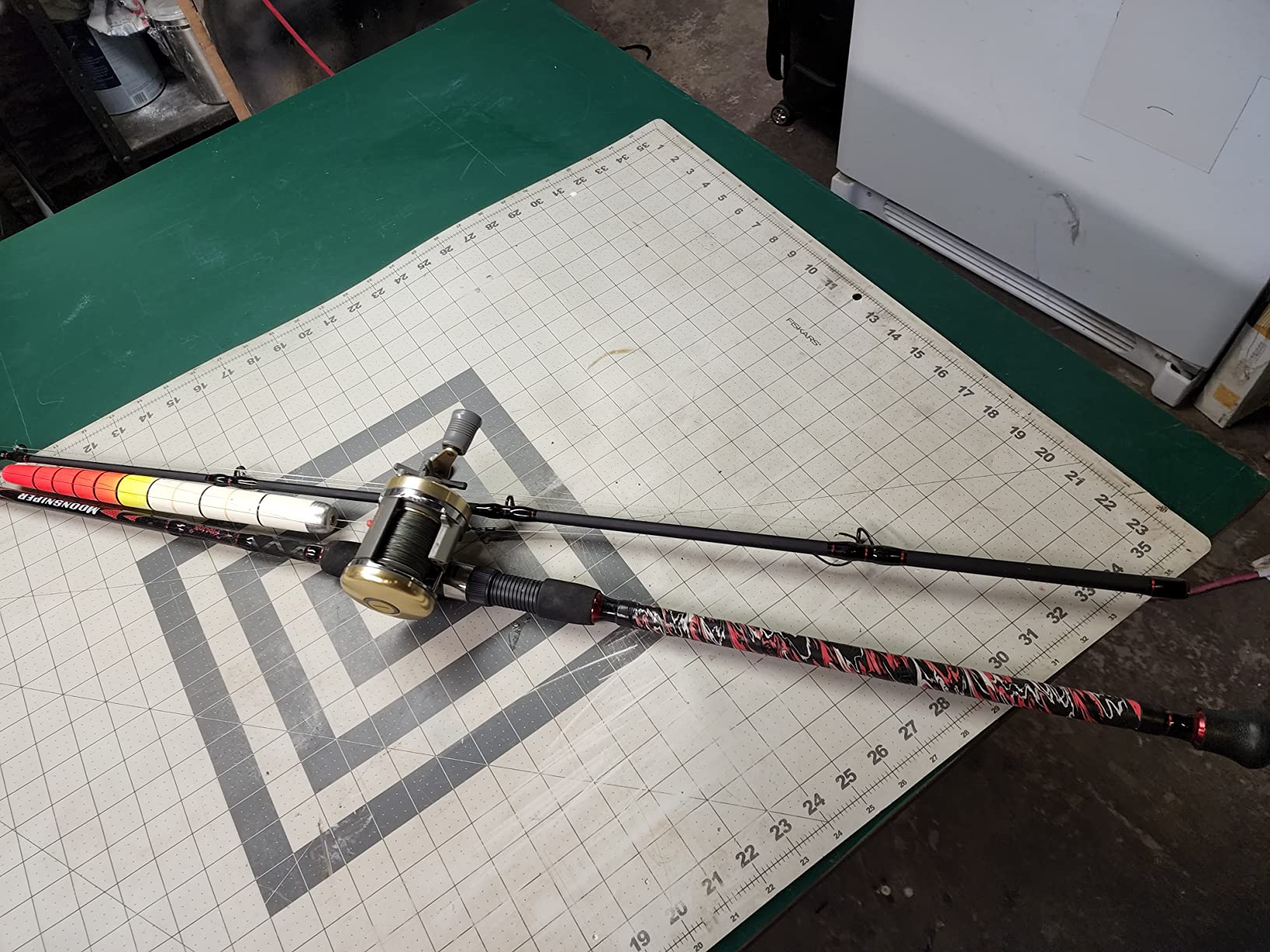
I have had this rod in hand for a couple of months of beach work, and the first thing that stands out is how much rod you get for the effort. Thirteen feet is not a casual length, but the moderate-fast taper means it loads smoothly rather than requiring a full backcast wind-up every time, which matters when you are casting 200 times in an evening while the stripers decide whether to cooperate.
Owner feedback lines up with what I found. People cast swimbaits and soft plastics past the breakers reliably, and the stainless steel and ceramic guide train does its job on long casts without adding much drag to the spool. At 4.3 stars across more than 500 reviews, it has more real-world use data behind it than anything else in this roundup, and that consistency is the reason it takes the top slot.
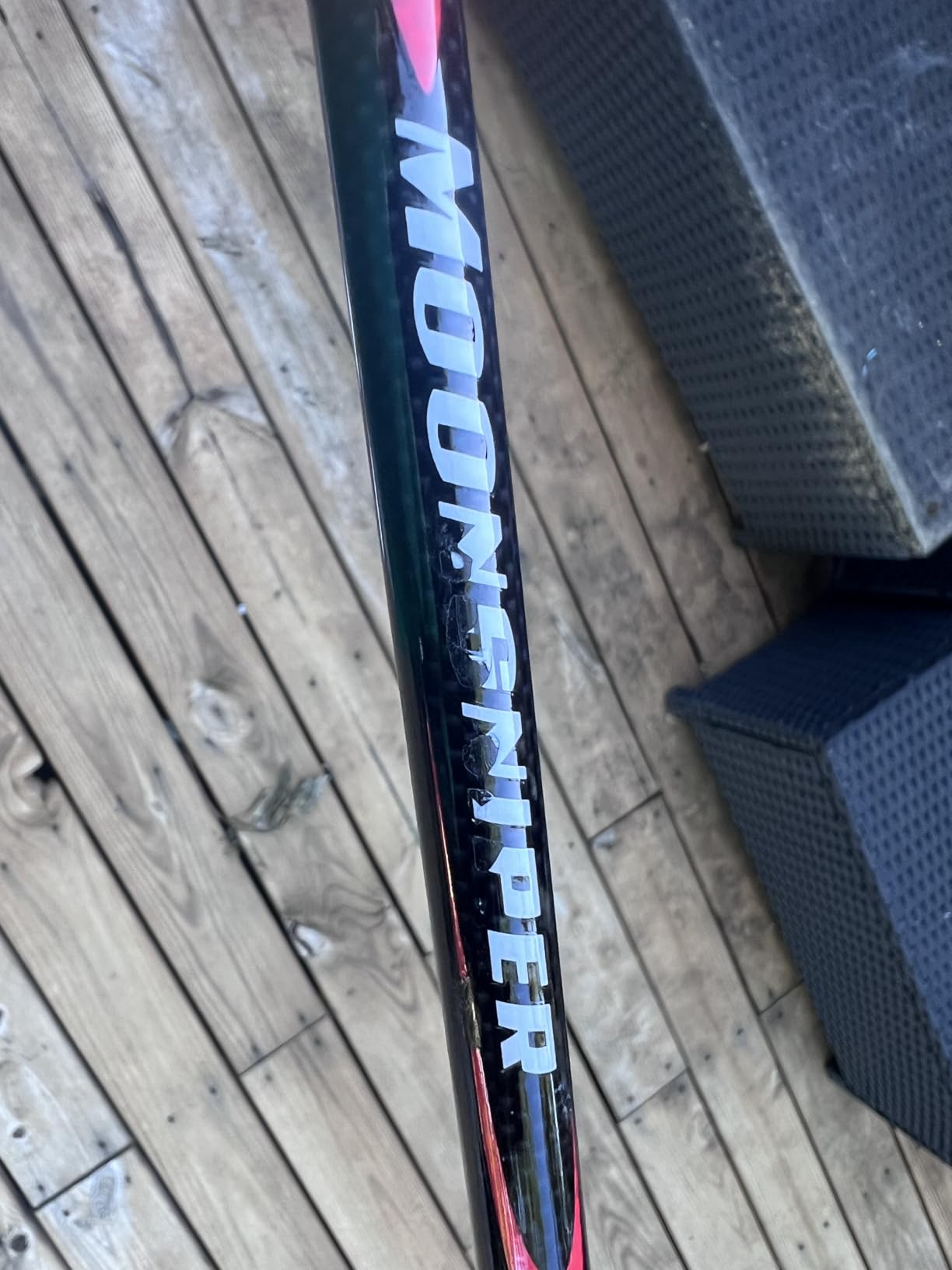
The build is straightforward and sensible. A carbon blank, a DPS wheel seat with a stainless steel tapered hood, a rubber shrink tube handle with a tapered rear grip, and a one year warranty. The listed target species cover the classic beach list: striped bass, red drum, bluefish and false albacore.
Where the limits show up is at the heavy end. Medium power on a 13-foot rod is a sweet spot for baits and swimbaits, not for a 6 oz plug or a pompano sinker rig, and anyone who flicks heavy jigs at structure will find the tip loading up sooner than they expect. Owners also point out that the 13-foot listing is the single-piece variant of the range, so packing is a genuine issue if your beach access is a long walk from the car.
Why This Length and Power Work at the Beach?
Length is what buys you distance. A 13-foot rod rotates the line over a much wider arc during the backcast and unloads it faster at the forward cast, which is the only way to put a rig past a hard line of breakers and onto the shoulder where the fish hold. The medium power rating keeps the lure weight realistic so the blank does not load up into an oval and lose its recovery.
Pair it with a baitcasting reel for the casting models in this range, or a spinning outfit if you plan to fish lighter. The grip is full-grip rubber shrink tube, so it works with a baitcaster trigger under the forward grip or with a spinning reel clamped in front.
Who This Rod Is Not For?
Skip it if you fish from a jetty or a rock ledge where you need to cast underhand and reposition constantly, because 13 feet is very hard to work at close range. It is also not the rod for a beginner who has never cast a two-handed overhead, since the timing takes practice before distance becomes reliable.
For pure transport-friendly beach work, look at the shorter options further down. For a long rod that is genuinely light in the hand, the Okuma Rockaway 12-foot is the more interesting option, and it is worth reading the two side by side before you commit.
2. BERRYPRO Light Surf Spinning Rod 9ft – Best All-Rounder for Stripers
BERRYPRO Light Surf Spinning Rod Striper Fishing Rod Striped Bass Surf Rod (9’/9’6”) (9′-Medium (10-20lbs))
9 ft two-piece
Medium power
Fast action
1.3 oz lure rating
IM8 X-Carbon blank
400 g
Pros
- Very light at 400 g for all-day casting
- Sensitive tip picks up subtle bites and light structure
- Handles swimbaits up to 3-4 oz in practice
- Available from 9 ft to 12 ft in two- and three-piece builds
Cons
- Reel seat suits 3000-4000 size spinning reels only
- Locking ring loosens with use and needs retightening
- Some owners report a soft tip under heavy sinkers
At 400 grams this is the rod I reach for when I want to fish all day without thinking about my shoulder. BERRYPRO built it around an IM8 X-Carbon blank with stainless steel guides carrying ceramic rings, and the result is a rod that feels closer to an inshore spinning stick than a beach weapon, while still having the backbone to handle a solid striper in chop.
That combination explains the 4.4 stars across 329 reviews. The most common theme in owner feedback is sensitivity: people can feel a small bite on light structure that heavier beach rods swallow. The second theme is value, because a 9-foot medium-power two-piece at this weight is not an easy combination to find.
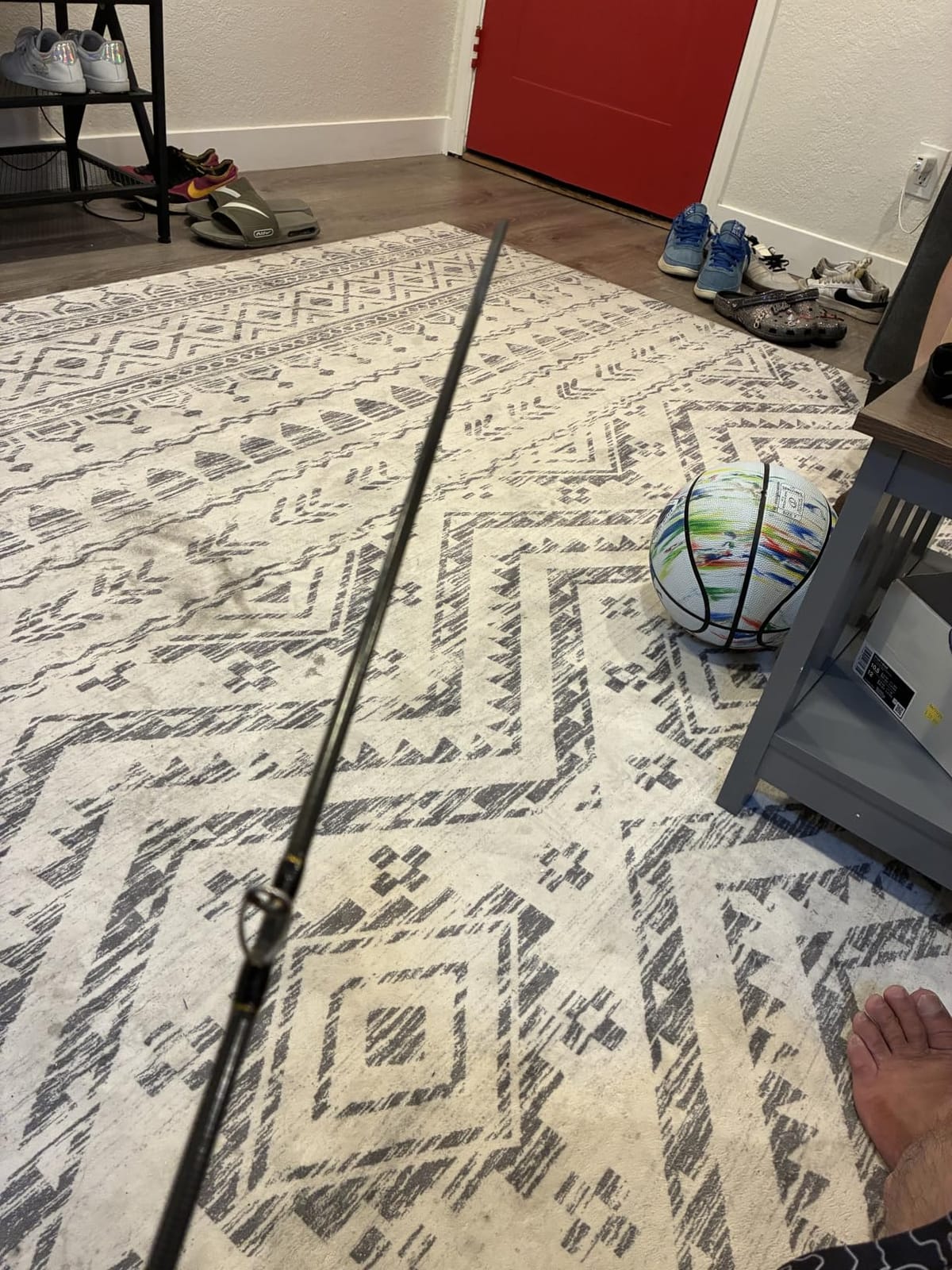
Specs read as a fast-action medium-power spinning rod rated to 20 pounds of line with a stated 1.3 pound lure weight, and in practice owners report pushing swimbaits up into the 3-4 oz range when the surf is calm. The ergonomic high-density EVA grips are shaped well and the ceramic-ring guides run line quietly, which helps you feel what’s happening on a long cast.
The constraint to plan around is the reel seat. It is slim and built for 3000 to 4000 size spinning reels, so if you run a 5000 size for saltwater durability, this is not the partner for it. The locking ring on the seat is also the part owners flag most often, since it can loosen over time and wants a check every few trips.
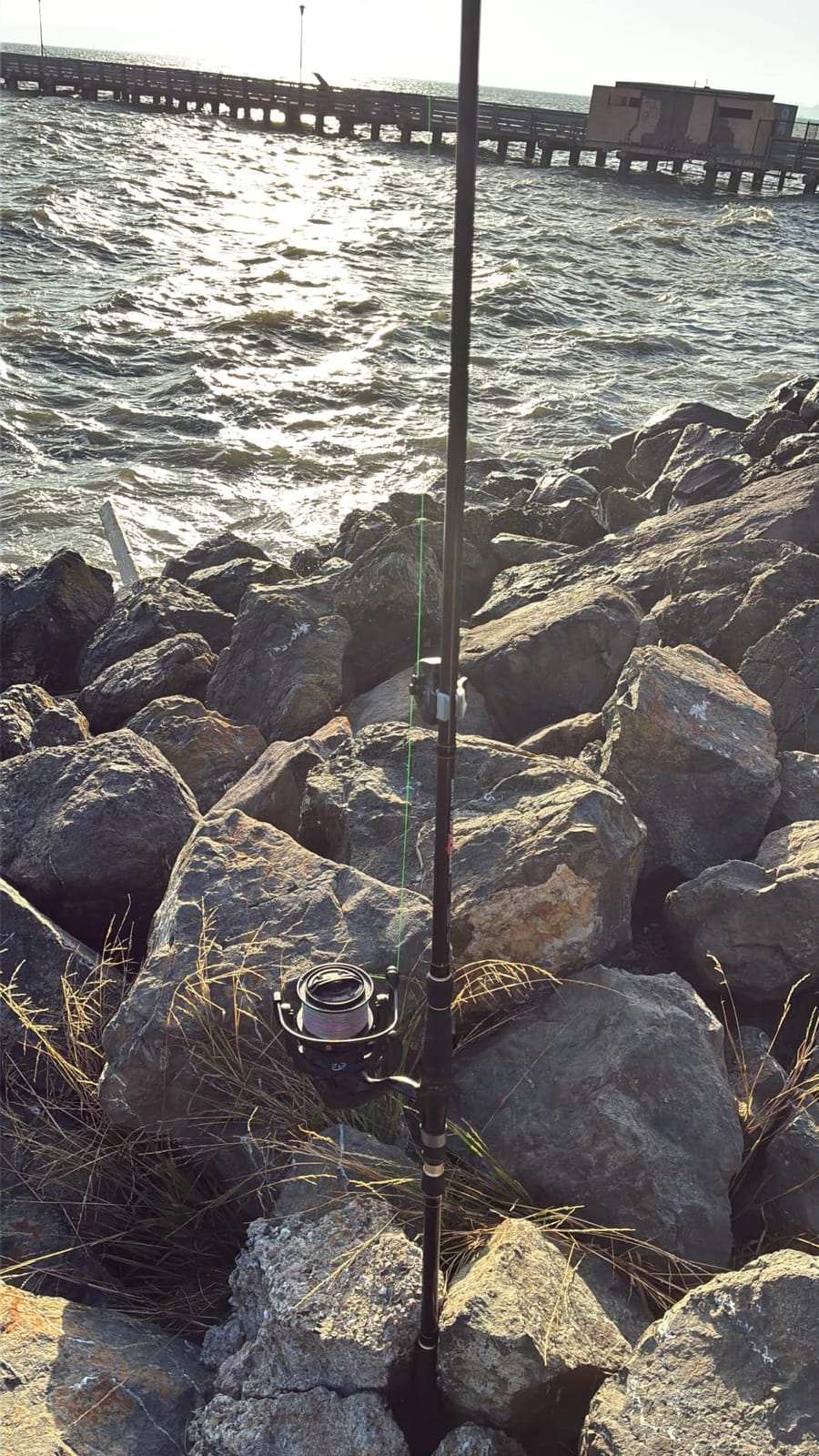
How It Performs Plugging From the Beach?
This is where the fast action earns its keep. A fast taper loads low into the blank, so you can punch a plug straight out at a fish holding tight to the beach rather than casting far and hoping. The sensitive tip lets you work a lure slowly across a trough without twitching the blank, which is where most of the strikes come from on a plug-only day.
It is a light rod, though. The same owners who love the sensitivity mention the tip can feel soft when loaded with a heavy sinker, so if your style is bait-and-weight fishing from the sand rather than casting plugs, step up in power.
Which Reel Pairs With It?
A 3000 or 4000 size spinning reel is the match, spooled with 15-20 pound braid or a similar diameter mono for shore distance. That gives you a compact outfit that fits in a beach bag and still has the drag reserve for a mid-size fish.
If you are still building out a general saltwater setup, our broader fishing rod guide covers the inshore and freshwater options that pair with this one.
3. Okuma Longitude Surf 9ft Heavy – Best for Big Fish and Heavy Bait
Okuma Longitude Surf Graphite Rods (Large, Black/Blue/Silver)
9 ft two-piece
Heavy power
Fast action
6 oz lure rating
40 pound line rating
Graphite composite
Pros
- Plenty of backbone for heavy baits and big fish
- Comfortable cork grips for long sessions
- Two-piece construction packs for transport
- Aluminum oxide guides suit braid and mono
Cons
- Heavier feel on long casting sessions
- Some units arrive with bent tips or damaged guides
- Occasional reports of joint failure under heavy fish
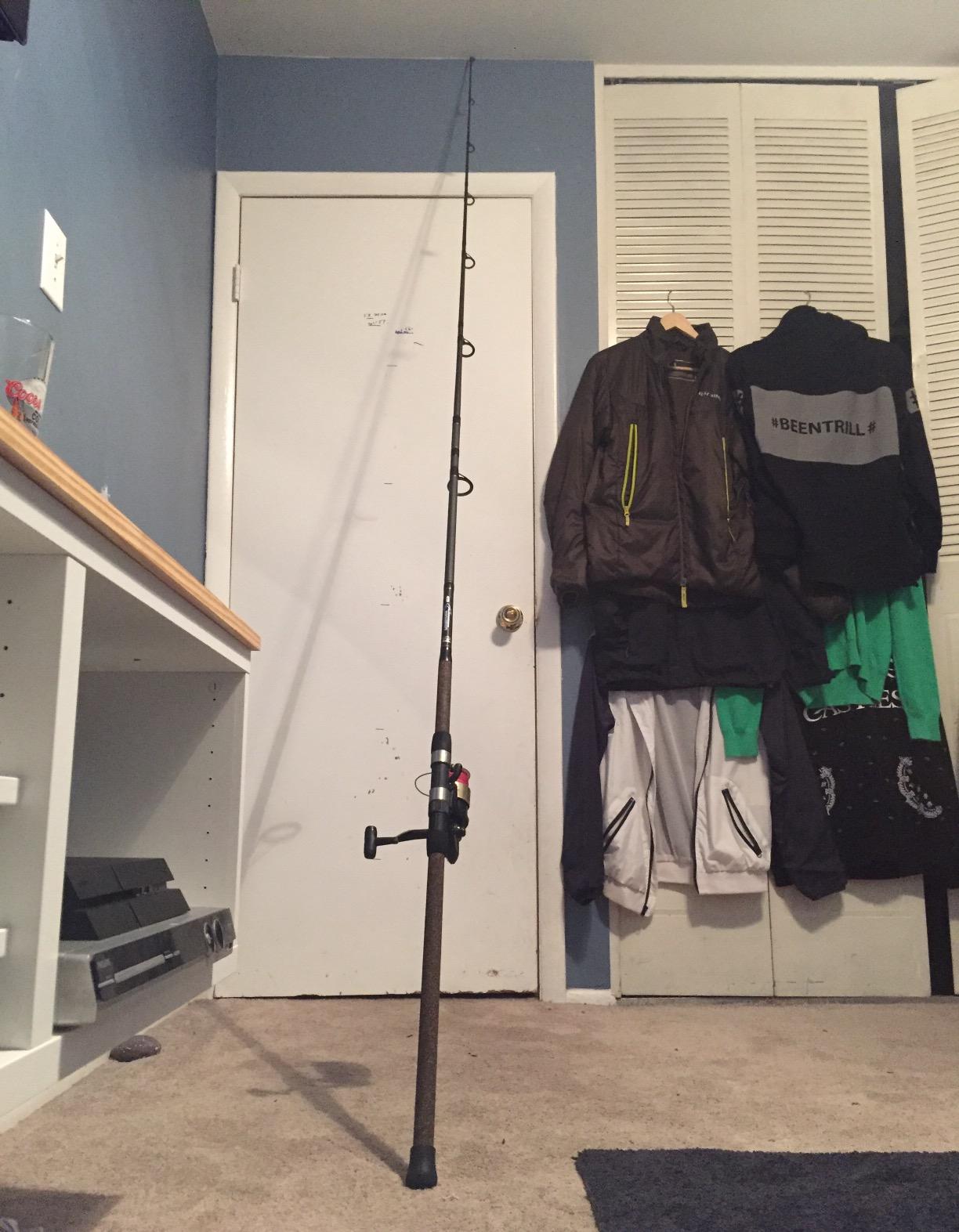
The Longitude is the rod you pick when the fish you want to reach are big. Heavy power with a 6 ounce lure rating and a 40 pound line rating gives you a rod that will lift a proper sinker rig and pull a heavy fish through breaking water without the tip going soft, which is exactly the failure point that ruins a beach trip.
Owner reports describe it as a dependable workhorse with plenty of power in the 35-40 pound fish range and a blank that holds up to heavy surf baits. The 4.1 rating across 223 reviews reflects that practical reliability rather than any sense of refinement. The premium cork fore and rear grips are a genuine step up from foam for long sessions, and the stainless steel hooded reel seat is built for saltwater.
Technical details worth knowing: a graphite composite blank designed to cast heavy baits, aluminum oxide braid-compatible guide inserts on double footed stainless steel frames, and availability across five lengths in both spinning and casting models. The particular build we looked at is the 9-foot heavy two-piece.
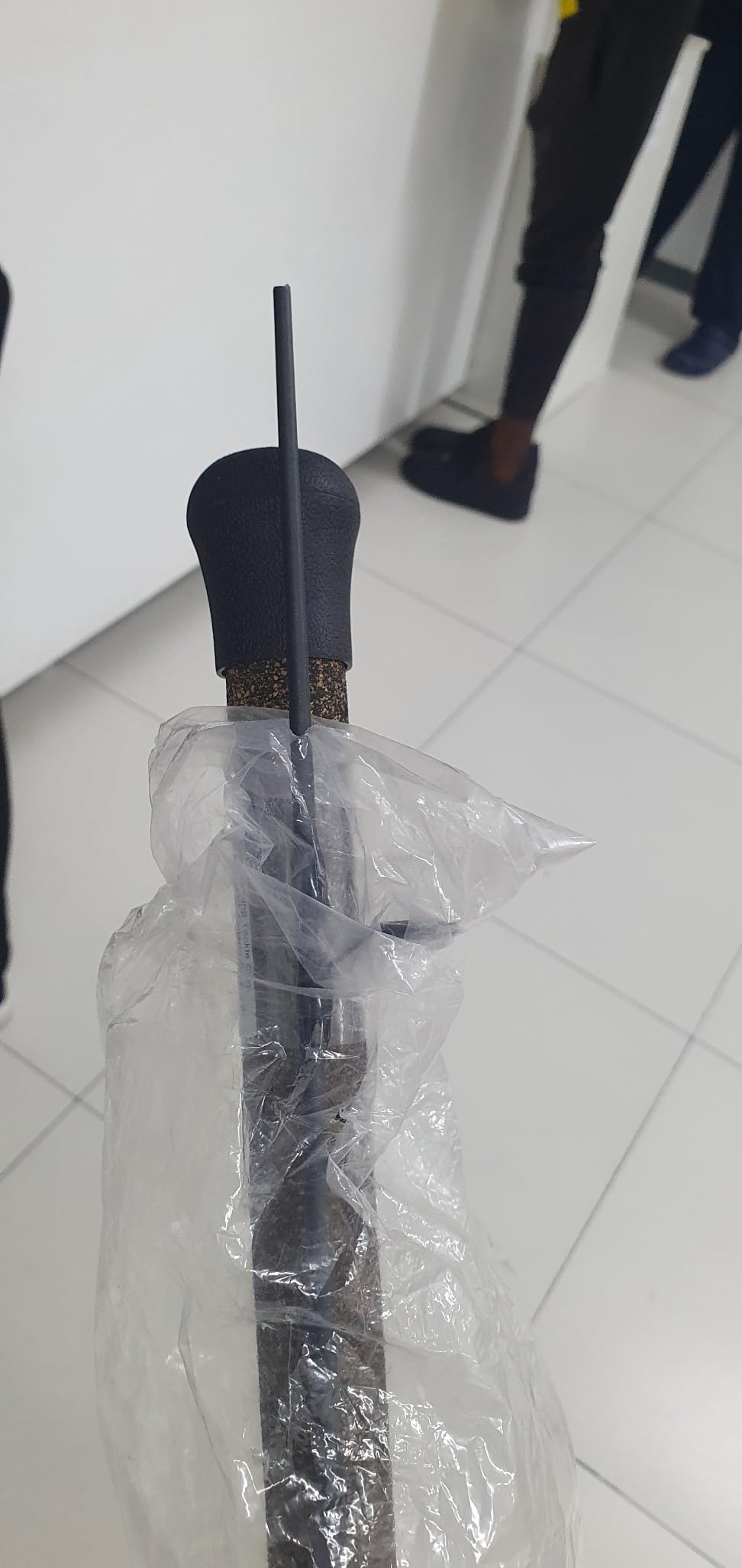
It is not a delicate rod. Owners point out it feels heavier than premium graphite alternatives, which adds fatigue on a full day of casting, and there is a documented share of one-star reviews tied to rods arriving with bent tips or damaged guides. A smaller number report breakage right at the two-piece joint when a heavy fish pulls hard, so inspect the rod on arrival.
When a Heavy Power Rod Is the Right Call?
Heavy power earns its place when your rig is heavy. Pompano fishing with a sinker, plugging big structure with a 4-6 oz lure, or working a bait in a rip current all load a medium rod past its comfort point, and that is where a rod this stiff keeps pulling when a light one folds.
The fast action also means the hookset is quick, which matters when a fish is running in broken water and you only get one clean shot. If you are light-tackle fishing for surf perch on a sandbar, this is a lot of rod and you will feel every ounce of it.
What to Check When It Arrives?
Run a finger along the blank from butt to tip looking for any kink, and spin the rod to check the guides for alignment. Because a share of owners report shipping damage, check the tip section and the guide wraps before the first cast rather than after a fish is on.
The joint itself is the other spot to watch. Keep heavy loads smooth and progressive, check the joint tightness every few trips, and if you are lifting big fish regularly, make sure your drag is set below the rod’s rated strength.
4. Okuma Tundra 12ft Glass – Best Budget Backup Rod
Okuma Tundra Surf Glass Spinning Rods (Large, White/Blue)
12 ft two-piece
Medium heavy power
Fast action
5 oz lure rating
Glass fiber blank
680 g
Pros
- Tough glass blank that tolerates rough conditions and hard use
- Two-piece build is much easier to transport
- Available from 7 ft to 15 ft across the range
- Casts well past the surf without expensive components
Cons
- Heavy and bulky at 680 g
- Long sections can bind after salt exposure
- Guide quality is basic
- 12 ft is hard to time with heavy sinkers
Nobody is excited about a glass rod until they have thrown one into a jetty and watched it survive. The Tundra is the value pick in this group: a durable glass fiber blank, reinforced double footed guides with ceramic inserts, stainless steel hooded reel seats and EVA foam grips, in a two-piece build that fits in a car without arguments.
Owners consistently describe it as a cheap, nearly indestructible backup rod that does the job. Several report hundreds of casts followed by routine rinsing with no degradation, and casting past the surf for very little money is a claim that holds up. The rating sits at 3.9 across 157 reviews, which is the lowest in the roundup, and the complaints are consistent enough to plan around.
At 12 feet, medium heavy power and a 5 ounce lure rating, this is a serious surf rod rather than a delicate one. The 680 gram weight is the honest caveat: it is the heaviest rod here, and by a wide margin on an all-day basis. The range runs from 7 ft to 15 ft if you want a shorter version of the same idea.
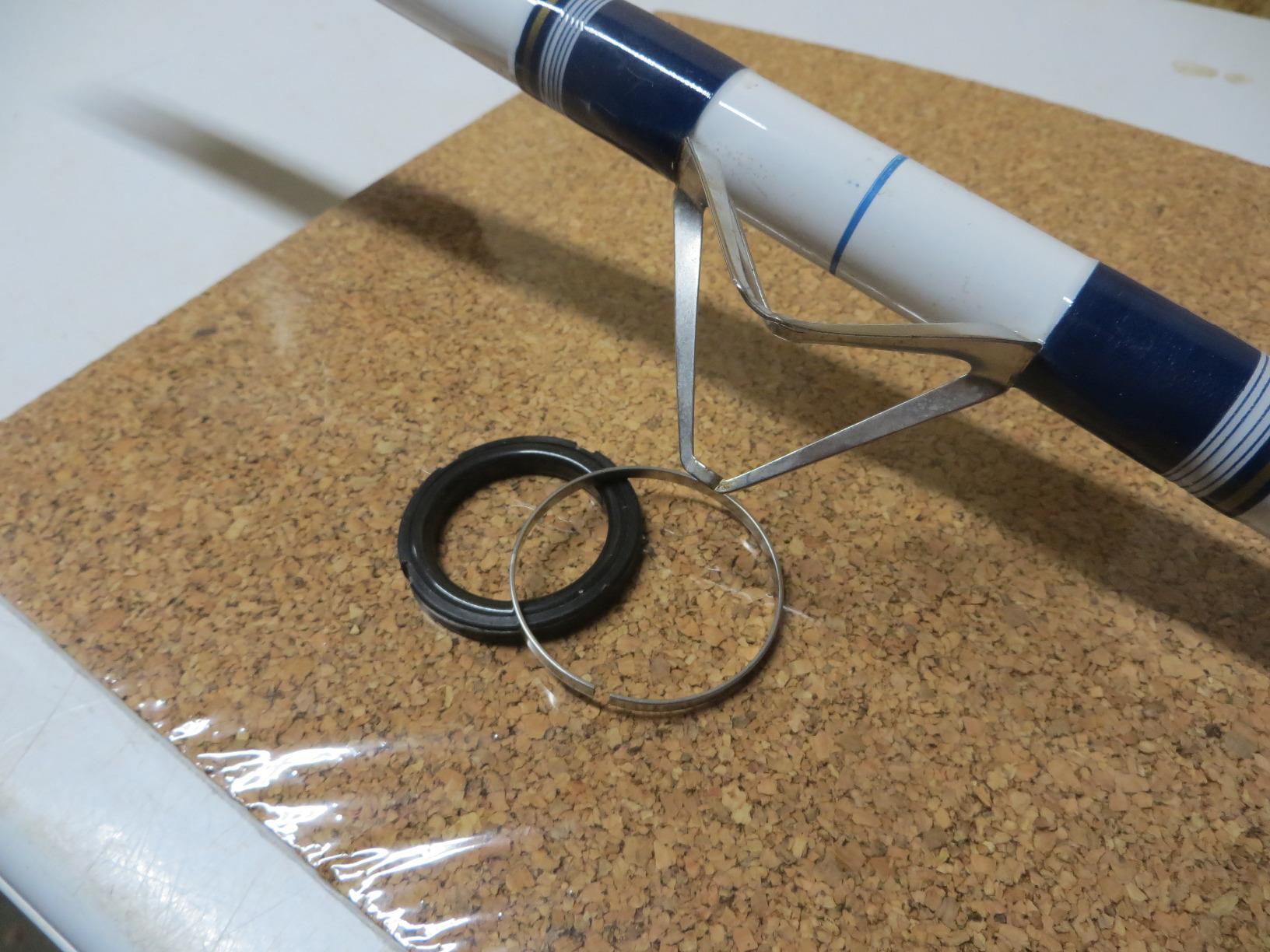
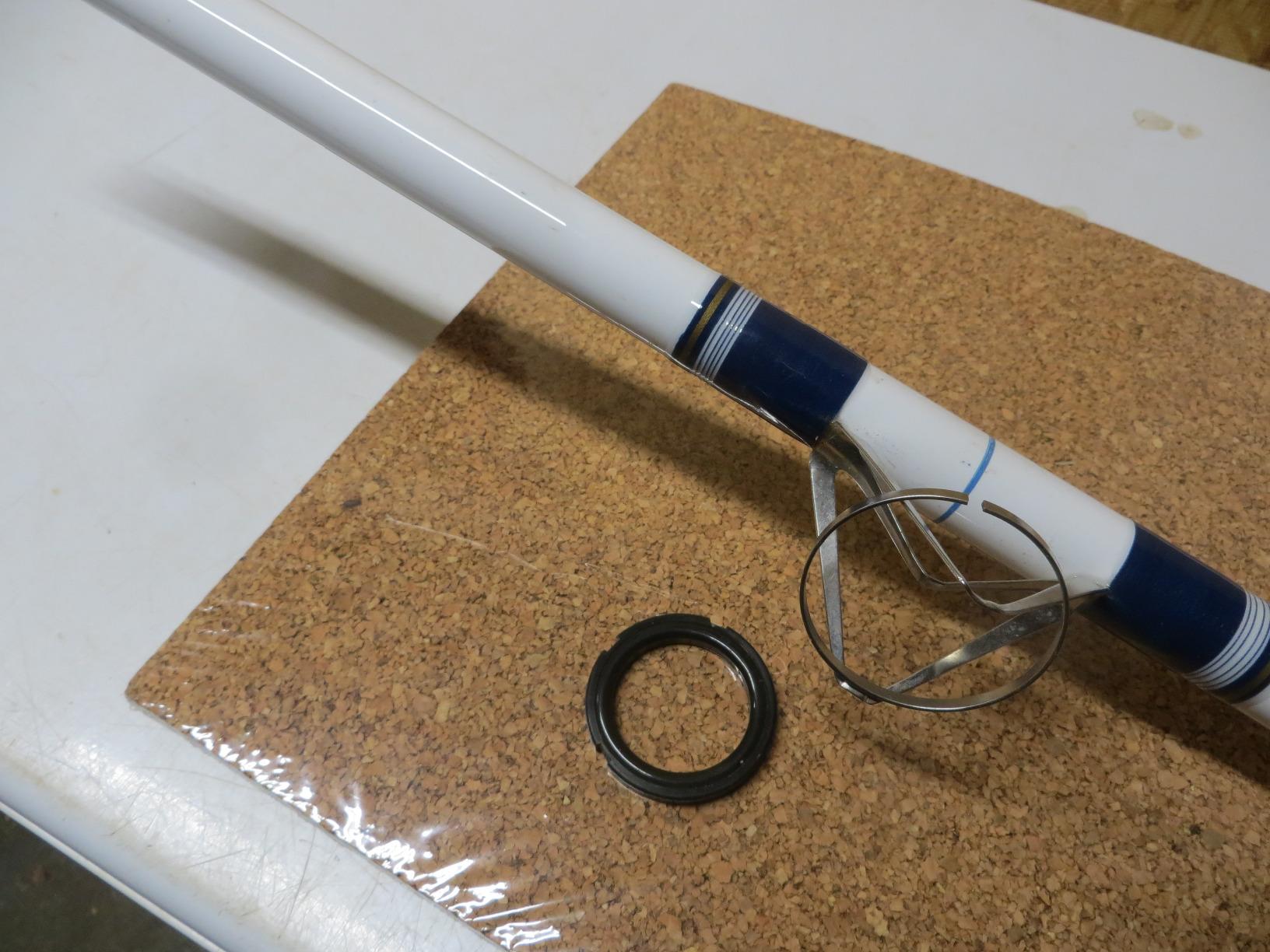
The two recurring negatives are transport and hardware. Owners report the two-piece sections binding together after salt exposure and needing light sanding at the joint, and guide quality is basic enough that one buyer reported a rusted, disintegrating eyelet. On a 12-foot model, timing accurate drops with heavy sinkers is also harder than it is on a shorter rod.
Who Should Buy a Glass Surf Rod?
Buy glass if you fish from rocks and jetties, if you lose rods to rocks and other anglers, or if you want a second rod in the back of the car that you will not think twice about using. Glass blanks bend rather than snap under a shock load, which is a genuine safety margin when you are working a fish through structure.
Skip it if you care about feel. A glass blank has almost none of the sensitivity of a carbon rod, and a bite on a light bait can go unnoticed. Sensitivity is the whole point of a lot of the other rods on this list.
Why Two Pieces Matter on This Rod?
The two-piece construction is doing real work here. A 12-foot one-piece glass rod is genuinely awkward to carry down a beach, while the butt section separates and both halves fit in a bag or a back seat. It is the same reason two-piece builds show up on most long surf rods.
Given how often salt binds these sections, add a light sand along the male ferrule before assembling, and make sure both halves are fully dry before you put them away. Owners who rinse properly report far fewer binding problems over a season.
5. Fiblink 12ft 3-Piece Travel Surf Spinning Rod – Budget Pick and Packability
Fiblink Surf Spinning Fishing Rod Carbon Travel Surf Rod 3 Piece Saltwater Spinning Fishing Rod 12′
12 ft three-piece
Medium power
Moderate-fast action
8 oz lure rating
40 pound line rating
Includes travel bag
Pros
- Multi-piece build packs down smaller than any other rod here
- Carbon blank delivers good sensitivity for the class
- Handles heavy crab snares and shark fishing
- Textured grips stay usable when wet or baited
Cons
- Heavier than expected for a 12 ft three-piece
- Seller has replaced damaged rods quickly but QC issues exist
- Stiffer in the butt than premium surf rods
This is the rod to buy if your surf fishing happens in a different state every few weeks. The 12-foot version breaks into three sections and comes with a travel bag, and the range also covers two-piece and four-piece builds from 9 ft to 15 ft, so the same product family covers everything from a bag-friendly backup to a long beach caster.
Owners like the casting ability for the weight, the sensitivity of the carbon blank, and the fact that the textured blue shrink tube grips still grip when your hands are soaked or covered in bait. Several report using it for heavy crab snares and shark fishing, and 4.4 stars across 135 reviews is a strong result for a travel format that usually gets blamed for weak joints.
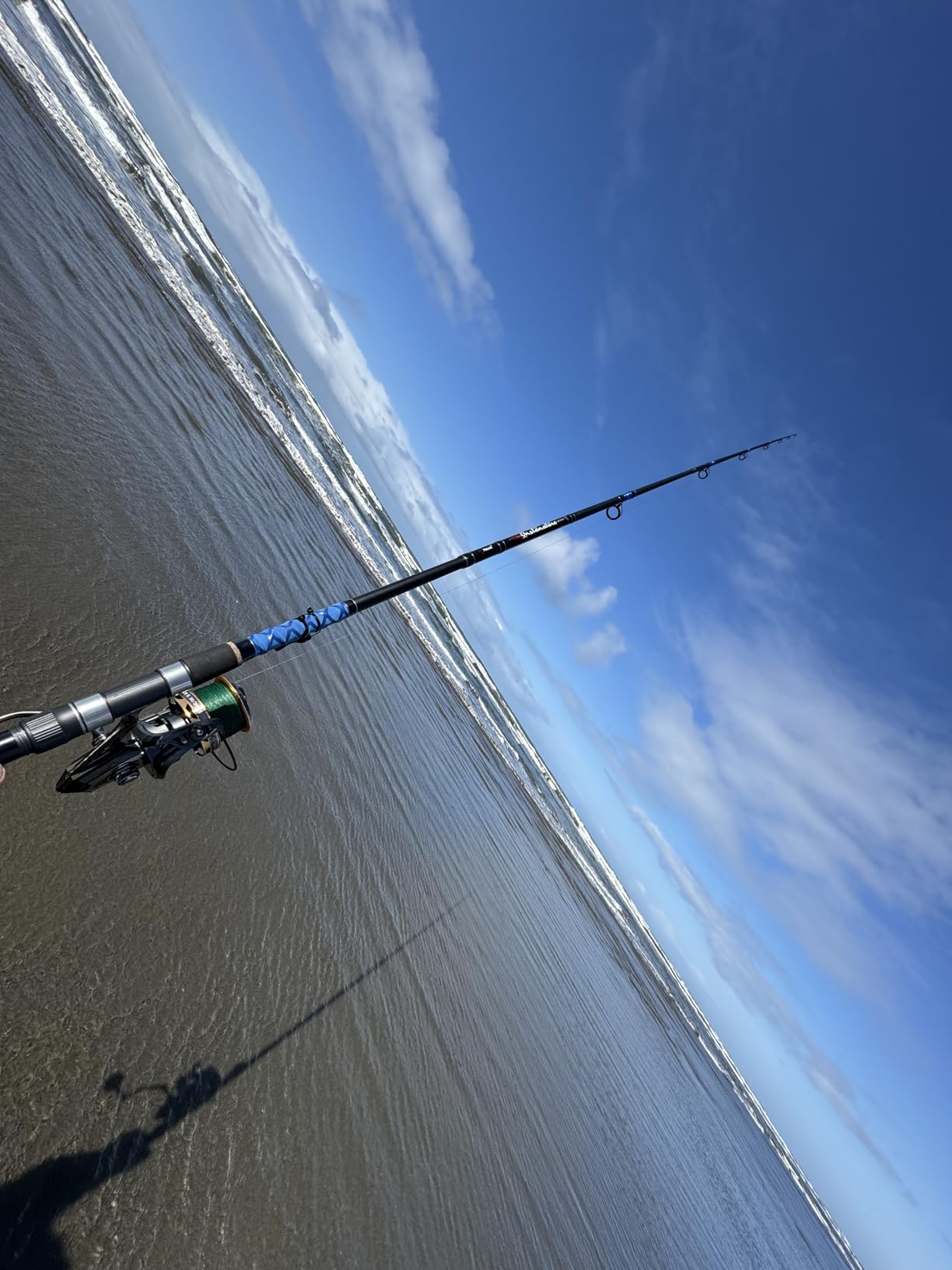
The specification sheet is generous for the class: medium power, moderate-fast action, a 40 pound line rating and an 8 ounce lure rating across three sections. That lure rating is the highest of any spinning rod here, and it means the rod is not limited to swimbaits. High-strength reel seat with stainless steel tapered hoods handles the stress of a spinning reel under load.
The honest drawback is weight. At 16 ounces for a 12-foot three-piece, it is heavier than you expect, and owners mention that limit all-day use. There is also a recurring report of cracked or bent eyelet guides arriving out of the box, which the seller has generally resolved with replacements rather than refunds, so it is a service note rather than a quality verdict.
Packability Versus One-Piece Feel
Every extra joint costs a little. Owners describe the butt section as stiffer than premium one-piece surf rods, which is the usual compromise: a joint interrupts the taper slightly, and a well-designed ferrule keeps the effect small. In exchange, a 12-foot rod becomes something you can carry with one hand down a steep beach access.
If you are comparing travel formats, four-piece builds pack smallest and two-piece builds cast best. The three-piece is the balance point most people end up at, and it is the version this listing is built around.
What It Can Realistically Throw?
The stated 8 ounce lure rating is the number that matters for structure work, and owners back it up with crab snare and shark fishing use. For beach work, that means it handles a chunked bait rig or a heavier plug that a medium-power carbon rod of the same length would struggle to lift.
Line it with 20-30 pound braid and a short leader, and let the moderate-fast taper do its job. A stiffer butt section like this actually helps when you are pumping a fish rather than feeling for bites, so the compromise fits big-fish use well.
6. Okuma Rockaway 12ft – Best Lightweight Long Rod
Okuma RA-S-1202M Rockaway Surf, Black
12 ft two-piece
Medium power
Moderate-fast action
3 oz lure rating
24-ton carbon blank
11 oz
Pros
- Exceptionally light for a 12 ft rod
- reducing wind resistance and arm fatigue
- Sensitive tip picks up small bites and bait movement
- Casts 3 oz weights and baits past the breakers
- Available in medium
- medium-light and medium-heavy powers
Cons
- Tip is a weak point if stored or transported carelessly
- Tip eyelet inserts reported to loosen or come out
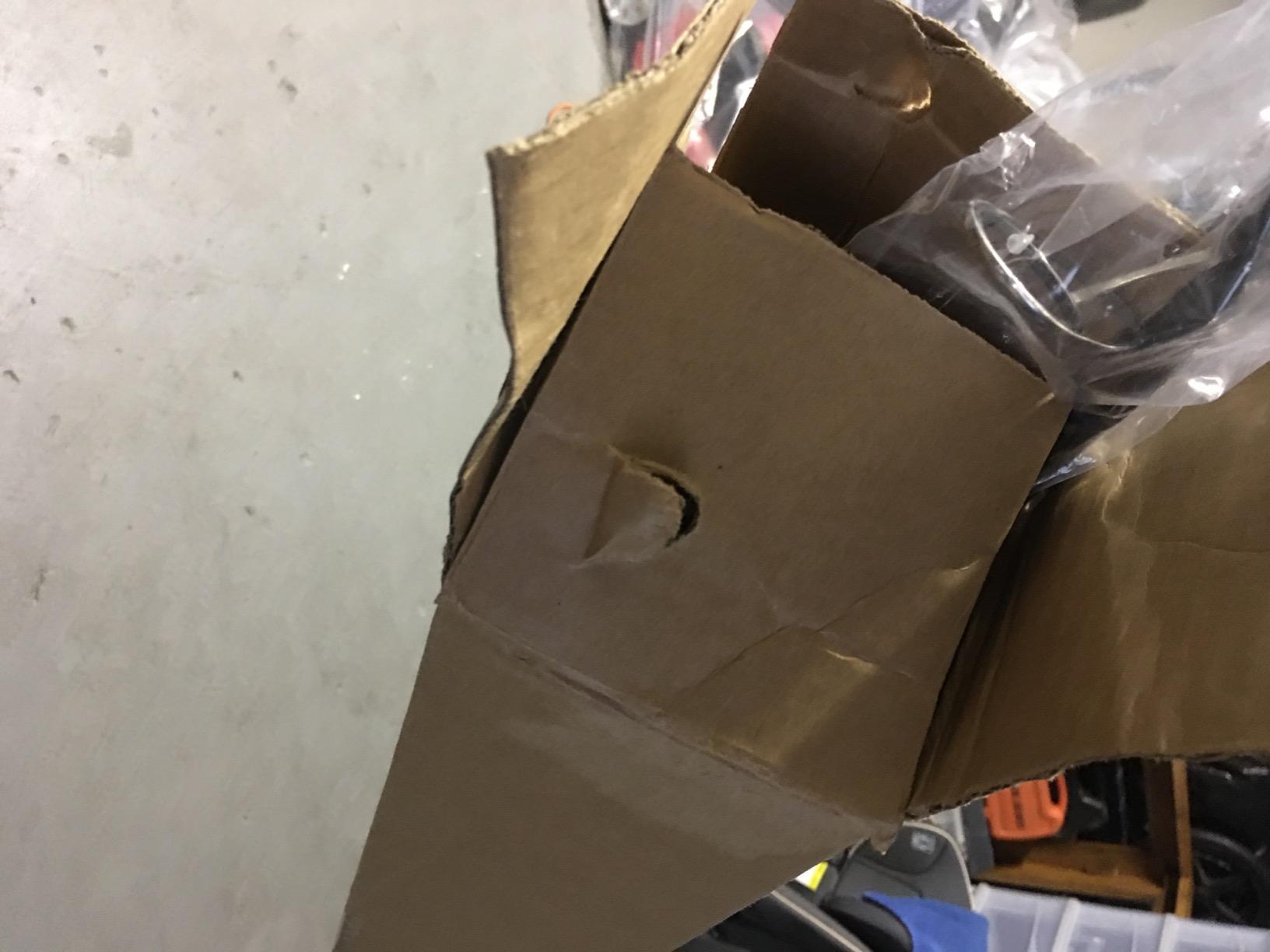
- Thin packaging has led to scuffed arrival
The argument for the Rockaway is simple: a 12-foot rod that weighs 11 ounces. That is a rare combination, and it changes how long you can fish. A heavy long rod is tiring by the second hour, and fatigue shows up as shorter casts and sloppier hooksets, so a light blank is not a luxury feature at this length.
Owners single out the weight first, then the sensitive tip and the way it moves 3 oz weights and baits well past the surf breakers. The review insight is telling, because the criticism is not about casting performance at all. Every recurring complaint is about the tip section, eyelet inserts and thin packaging, which suggests the rod performs and the shipping is the weak link.
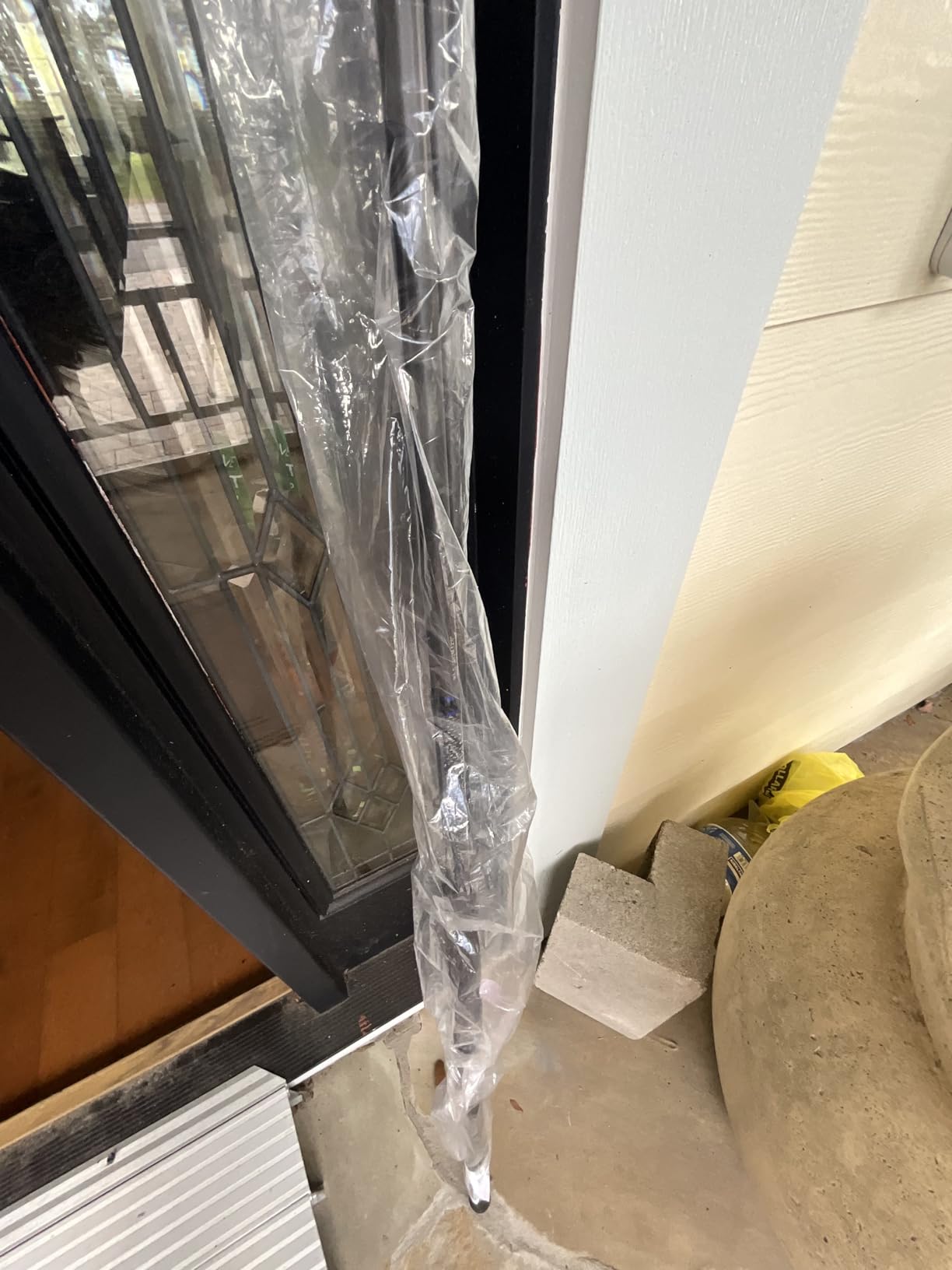
Build details are where this rod justifies its position. A 24-ton carbon blank with Ultimate Flex Reinforced tip technology, XQ series angled Sea Guide 316 stainless steel frames, and zirconium inserts that work with both braid and mono. Tapered shrink tube grips, a one year warranty, and a range that runs from 8 ft to 12 ft in medium, medium-light and medium-heavy powers.
Two things to plan for. First, the tip is the vulnerable point, and owners report broken tips after careless transport and inserts loosening or falling out over time. Second, a 3 ounce lure rating is on the light side of what a 12-foot rod can physically do, so match your bait weight to that rating rather than to the rod length.
Why Blank Weight Changes Your Whole Session?
A long rod is mostly blank. Every inch of that 12 feet is dead weight at the start of the cast unless the material is efficient, and 11 ounces across that length means the graphite and carbon are doing their job. The knock-on effect is wind resistance, because a lighter blank is also less of a sail when the onshore comes up.
That lighter feel is also why the Rockaway suits anglers who fish structure and rock ledges, not just open sand. Owners report it has enough backbone to haul a larger fish in from rocks and cliffs, and a light rod is far easier to hold high and work underhand when you are standing on uneven ground.
How to Protect the Tip?
Transport is the fix, not the rod. Do not leave a 12-foot rod assembled in a car, do not lay it on a wet floor, and check the tip section and ferrule every few trips. Owners report Okuma replacing a broken tip section under warranty, which is reassuring but not something to plan on doing twice.
Pair it with a 2500-3000 size spinning reel for a 3 oz bait, and keep line under the 20 pound rating. If you regularly fish heavier sinkers, move up a power rather than pushing this blank past its rating.
7. Ugly Stik Carbon Surf Spinning Rod 9ft – Best for Crab and Heavy Lure Work
Ugly Stik 9′ Carbon Surf Spinning Rod, 2 Piece Fishing Rod, Medium Rod Power, 12-20 lb Line Rating, Lure Rating 3/4-3 oz
9 ft two-piece
Medium power
20 lb line rating
3 oz max lure
100 percent 24-ton graphite
Ugly Tech construction
Pros
- Lighter and more sensitive than older surf and BigWater models
- Less tip flex so it tracks accurately and sets hooks
- Casts far for the effort with real backbone for 6-8 oz work
- Durable enough for crab snaring with heavy leads
Cons
- Cosmetic finish can be lumpy and rods arrive chipped or scuffed
- Tip guide can groove under heavy braid over time
- Occasional broken sections from thin packaging
Ugly Stik built this one for people moving from the classic BigWater rod to something lighter, and owner feedback confirms the upgrade in feel. Multiple charter captains and long-time users describe it as tougher and more sensitive than the models it replaces, with less tip flex, so it tracks a lure and sets hooks cleanly rather than wobbling.
The practical payoff is distance without effort. Owners report casting far with little wind-up and finding real backbone for 6-8 oz work, plus the toughness to handle heavy crab snares. That is an unusual spread of capability for a 9-foot medium, and the 4.2 rating across 70 reviews is a small but consistent sample rather than a large one.
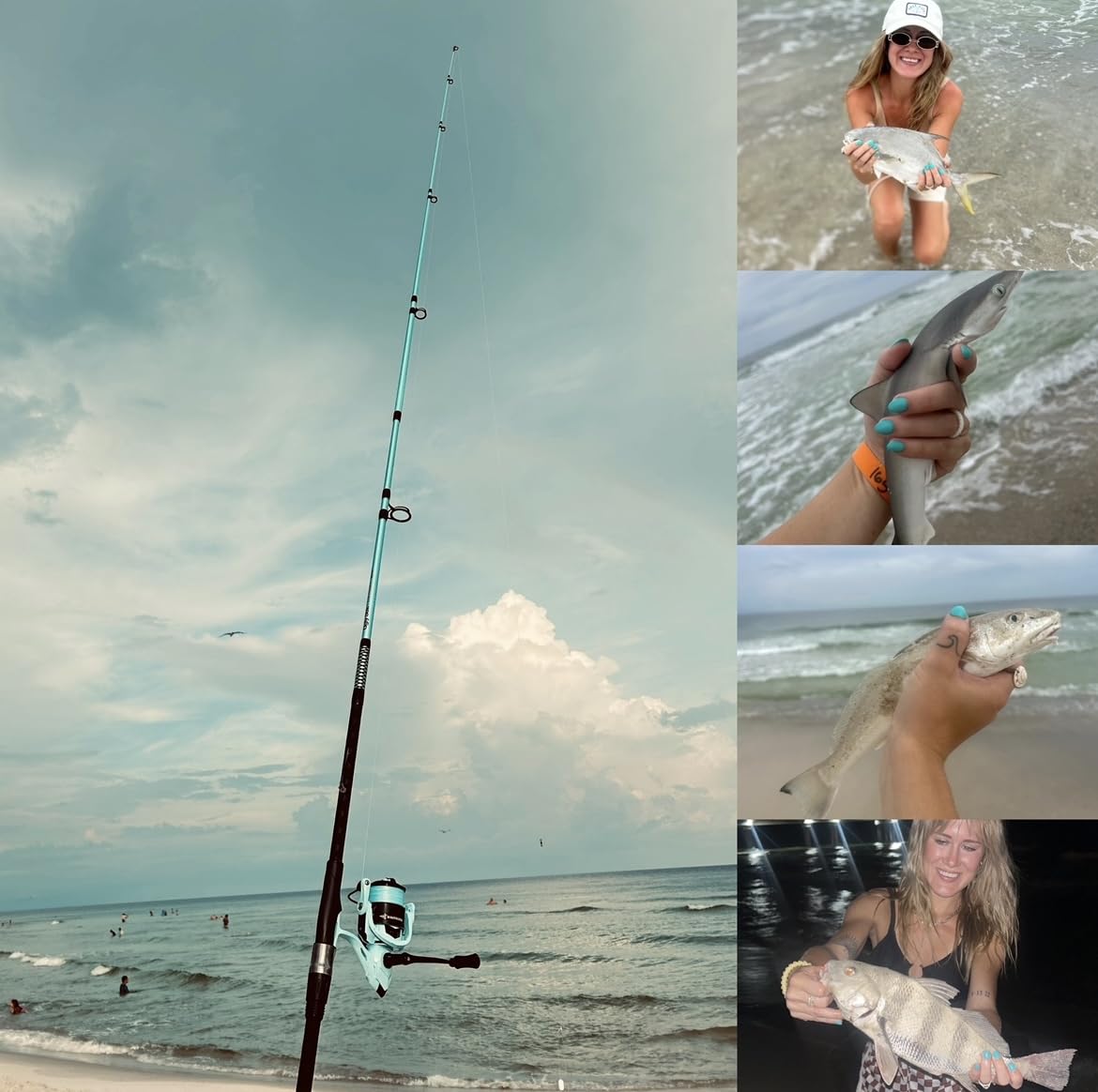
Construction is 100 percent 24-ton graphite in Ugly Tech build, with six PVD coated Ugly Tuff one-piece stainless steel guides and a rubberized X-pattern EVA handle. A solid graphite tip handles bite detection, which matters when you are working a crab pot line rather than watching a float. The range covers 9, 10, 11 and 12 foot two-piece models.
The complaints are manufacturing rather than fishing. The finish can be lumpy, rods sometimes arrive chipped or scuffed, and sections occasionally break on arrival because of thin packaging. One owner reported the tip guide grooving under sustained heavy braid use, which is a wear note worth watching if you fish wire or heavy leader on a regular basis.
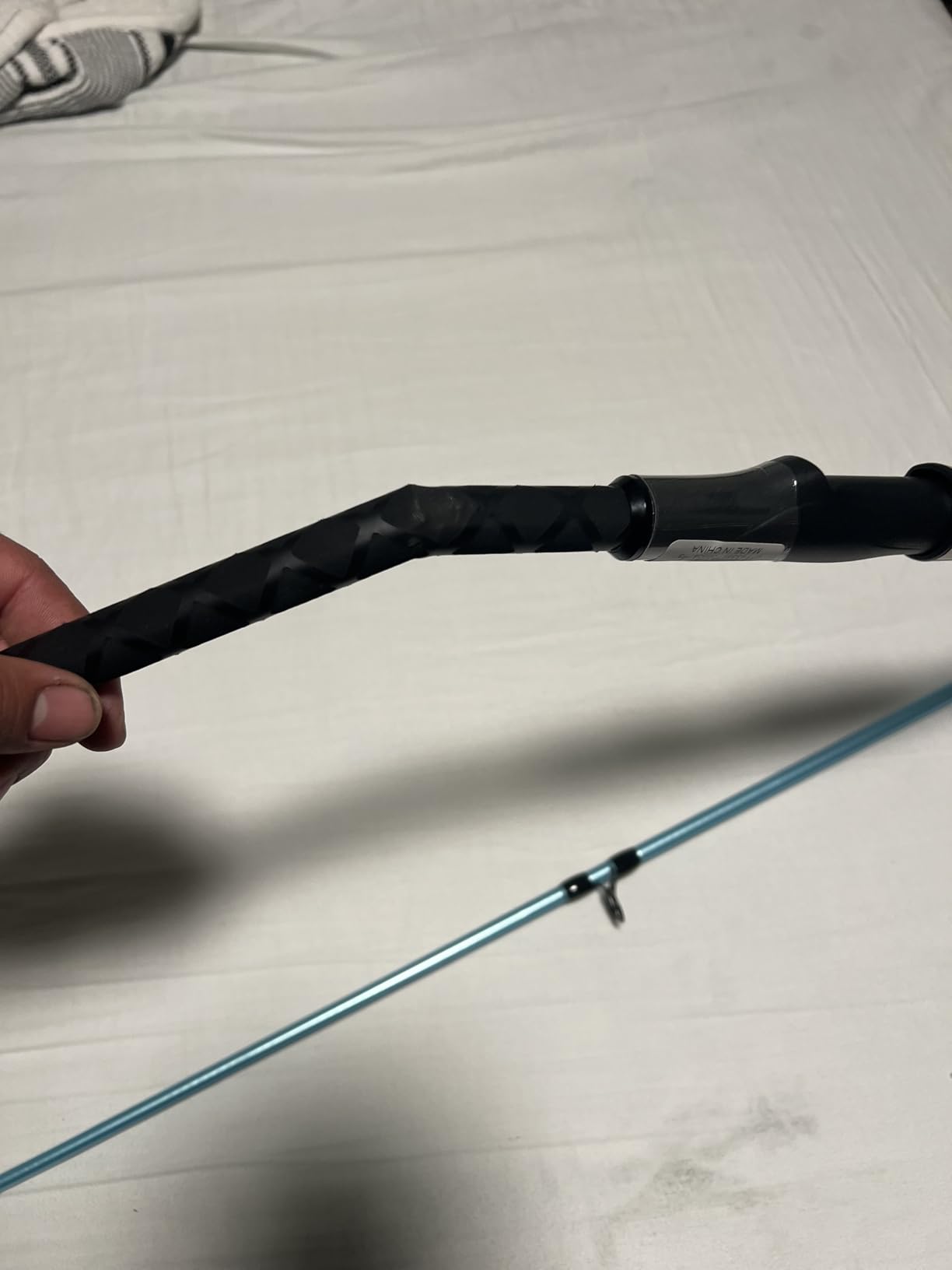
Power for Crab Snares and Structure Work
Crab fishing and rock fishing punish rods that flex in the tip, because you are not setting hooks so much as pulling a snare along a ledge. This rod’s reduced tip flex gives you a solid connection point, and owners report the durability to handle 16 oz leads without complaint. That is the use case where a stiffer tip at 9 feet actually helps.
Just respect the 3 ounce maximum lure rating listed for this model. Owners describe backbone for 6-8 oz work in general terms across the range, but the specific 9-foot medium is rated lighter, so match the rig to the model in your hands rather than to the family reputation.
How It Compares to the Graphite Bargains?
Against the entry-level carbon rods in this roundup, the difference is the guide train and the finish quality. Six PVD coated one-piece stainless steel guides will outlast the basic stainless and ceramic rings on cheaper blanks, and the X-pattern handle is a real upgrade for a long day.
Against the Okuma and PENN options, you give up some refinement and you get a rod people trust on hard structure. If your fishing involves rocks, crab pots and heavy leads more than plugs and swimbaits, that is the right trade.
8. PENN Battalion Surf Spinning Rod 9ft – Best for Striped Bass Anglers
PENN Battalion II 9’ Surf Spinning Rod; 1-Piece Fishing Rod, 12-20lb Line Rating, Medium Rod Power, Moderate Fast Action, 3/4-3 oz. Lure Rating, Black/Gold
9 ft two-piece
Medium power
Fast action
3/4-3 oz lure range
12-20 lb line rating
SLC2 carbon blank
Pros
- Very light in the hand with real power for red drum and stripers
- Premium cork and rubber grip with EVA rod butt
- Fuji Alconite ceramic guides rated for saltwater
- Casts 2-3 oz rigs well beyond the breakers
Cons
- No hook keeper on the handle
- Fast-rated spec feels softer in practice than buyers expect
- Only 41 reviews so long-term durability data is limited
The Battalion is the most explicitly coastal rod here, and the listed target species say it plainly: striped bass, bluefish and red drum. Built on PENN’s proprietary SLC2 carbon fiber one-piece blank with a Fuji graphite reel seat and Fuji Alconite ceramic guides, it is the pick for someone whose goal is a specific fish rather than general beach work.
Owners describe it as very light while still having real power, well balanced, and capable of casting 2-3 oz rigs beyond the surf breakers. The cork and rubber shrink tube grip with an EVA rod butt is the most premium-feeling handle in the roundup, and the Alconite guides are specified for both fresh and saltwater, which is exactly what you want on a striped bass rod.
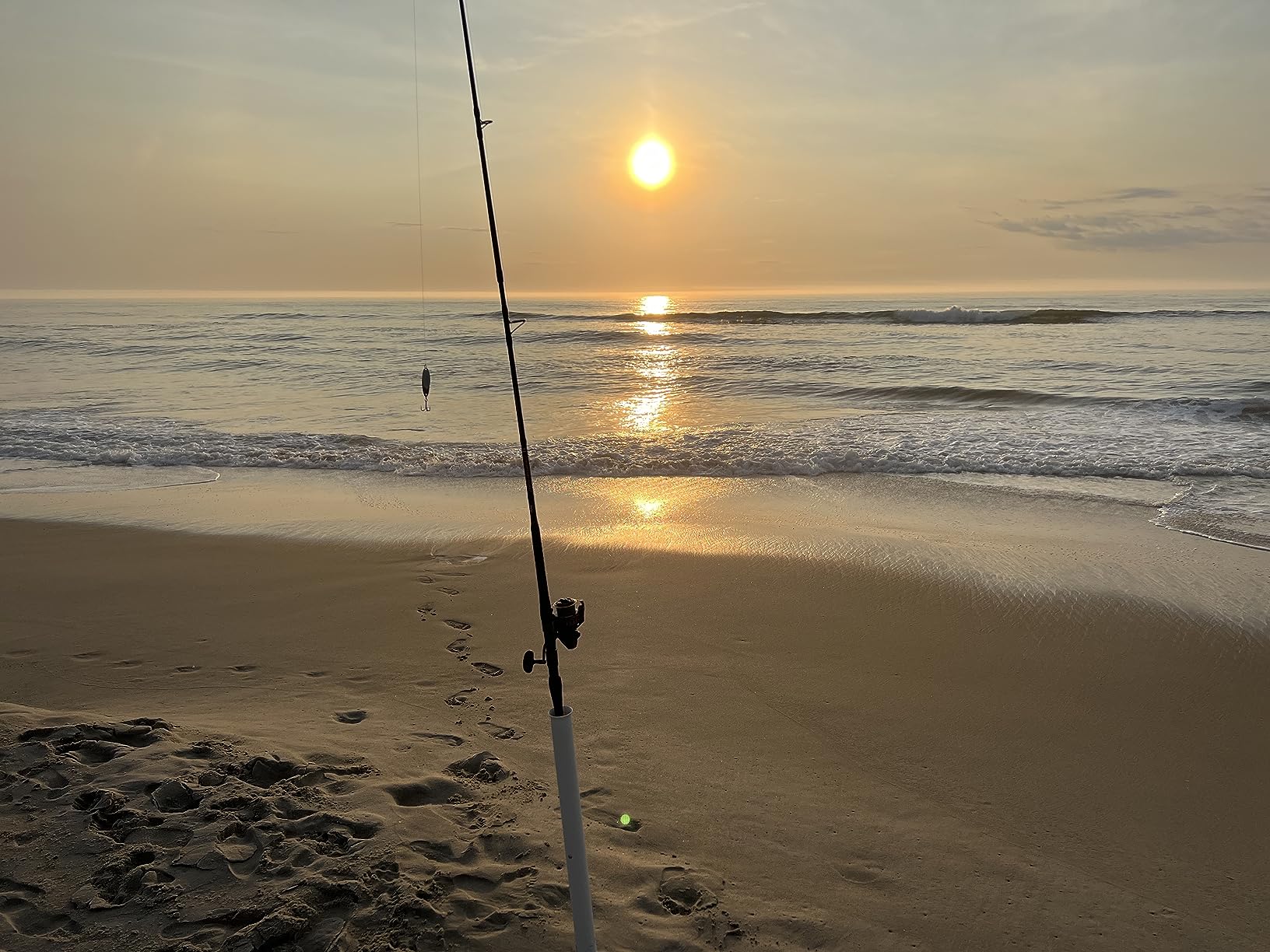
Spec sheet for the 9-foot medium two-piece: fast action, 12-20 pound line rating, and a 3/4-3 ounce lure range. That is a proper plugcasting window for surf work, covering light metal jigs on one end and a 3 oz pencil or plug on the other. The range runs from 8 ft to 12 ft in medium and medium-heavy powers.
Two honest caveats. There is no hook keeper on the handle, which is an easy fix and an annoying absence on a rod at this level. And owners note that the fast action spec feels softer in practice than expected, meaning the rod is a touch more forgiving than the label implies, which most people find pleasant rather than disappointing.
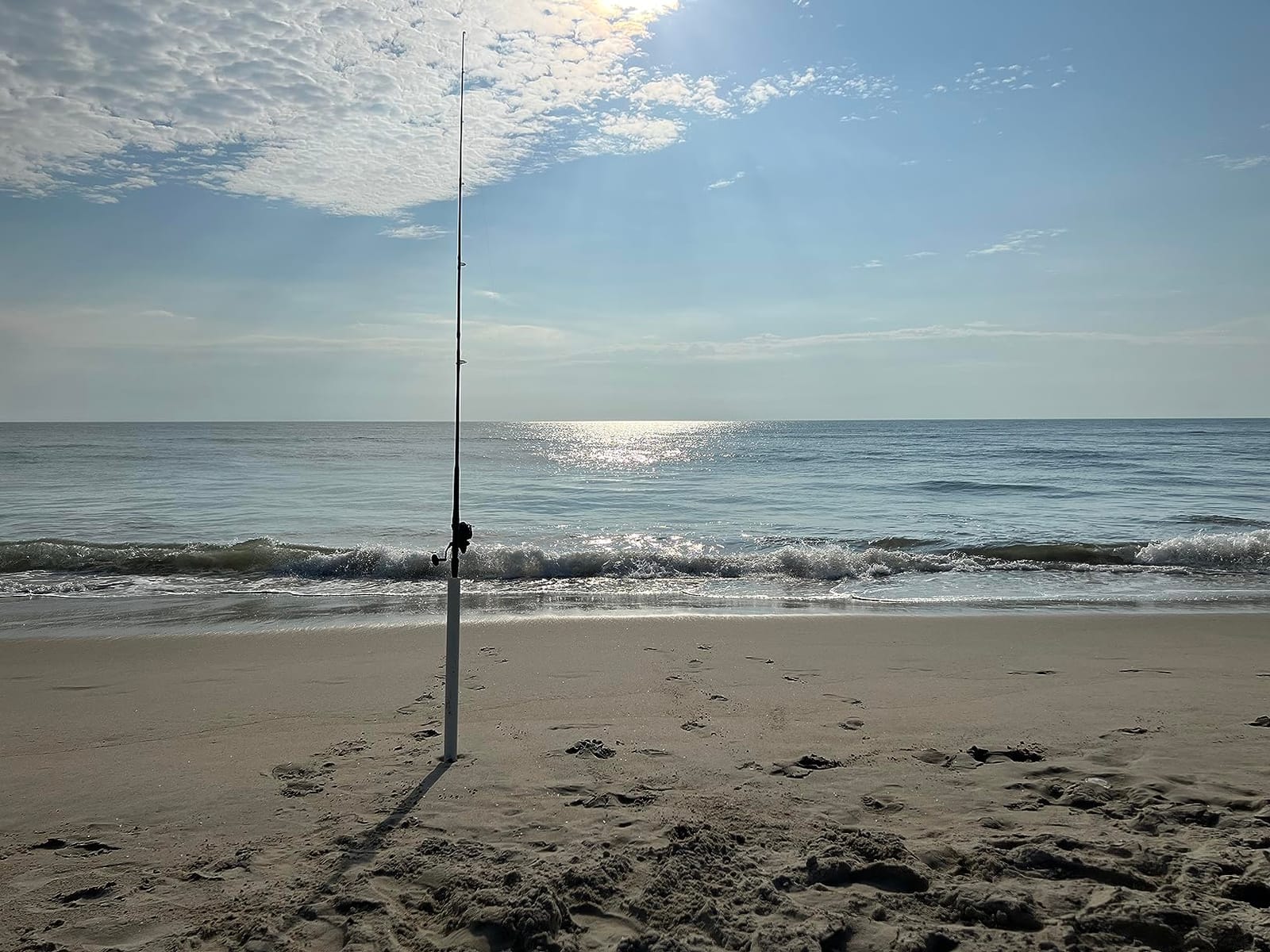
Why a Striper Rod Is Specified Differently?
A rod built for striped bass is chosen around the fish’s run, not the cast. Stripers take a plug and run hard, often in rough water, so the priority is a tip that does not collapse and a grip you can hold when a fish is head-shaking. The 12-20 pound line rating on this model is a sensible match for that fight.
The 3/4-3 ounce lure window is the other clue. It tells you this is a plug-and-swimbait rod that can also handle a modest chunk, rather than a bait-and-weight rod. If your surf fishing is 80 percent bottom bait, look at a heavier power instead.
Pairing the Battalion With a Reel
The reel seat takes a spinning reel in the 3000-4000 range, which is the standard match for a 9-foot medium-power coastal rod. Spool 20 pound mono or a similar diameter braid and you have an outfit that handles stripers, blues and reds without overloading the blank.
For stripers specifically, the rule is to set your drag below the rod’s rated strength and keep the rod tip under control, because most lost fish come from tackle failures rather than fish being too strong. The PENN warranty backing the build covers you when the blank is used as intended.
How Long Should a Surf Rod Be?
The best size surf rod for surf fishing is usually between 9 and 12 feet. Shorter rods between 7 and 8 ft work for inshore fishing, from rocks and jetties, while longer rods of 12 ft and beyond are built for reaching past heavy breakers or casting a long way down a beach.
Length controls casting distance because a longer rod rotates line over a wider arc during the backcast and releases it faster at the top of the forward cast. It also decides how you will fish. A 12-foot rod rewards an overhead two-handed cast; a 7-foot rod is easier to work underhand from a rock ledge with a bait.
7-8 ft. Typical weight 1/4-1 oz plugs and 1-2 oz sinkers. Suited to rocky ledges, jetties and close-range inshore structure. Watch out for limited distance past a heavy line of breakers.
9 ft. Typical weight 1/2-3 oz plugs and 2-3 oz sinkers. Suited to stripers, blues, pompano and general beach work. Watch out for less reach than longer models in big swell.
10 ft. Typical weight 1-3 oz plugs and 3-4 oz sinkers. The all-round beach length for most anglers. Watch out for the fact that it is still long enough to feel heavy in the wind.
11-12 ft. Typical weight 2-4 oz plugs and 3-5 oz sinkers. Suited to casting past breakers, long beaches and jetty work. Watch out for transport and timing, especially in wind.
13 ft and up. Typical weight 3-6 oz plugs and heavier bait rigs. Suited to maximum distance, heavy surf and big baits. Watch out for awkward carry and reduced accuracy.
Beginners usually do well with a 9 or 10 foot medium-power rod. It casts past ordinary surf, it is small enough to carry down most beach accesses, and it is light enough that a poor cast does not become a broken tip in the first hour.
Casting distance is not purely a function of length, though. The same 10-foot rod can throw an enormous range depending on how you load the blank, so it is worth being honest about what a longer rod actually buys you. A longer rod makes a bigger loop in the air, which means the line is unfurling from a wider arc and the lure accelerates through a longer path before it leaves the rod, and that is where the extra distance comes from. It is not that the rod is stronger, it is that the cast takes longer to complete.
That also explains the accuracy trade-off. A 12-foot rod is excellent at putting a bait on a distant shoulder and mediocre at dropping a plug on a specific rock 30 yards away, because the loop is long and the timing window is wider. If you fish one structure and stay in one spot, accuracy matters more than distance and a 9-foot rod is the better tool. If you walk the beach and cover ground, reach wins.
Wind is the other factor people underestimate. A 12-foot blank is a sail, and on a strong onshore it pushes the tip sideways mid-cast, which is why experienced anglers turn their back to the wind and cast from the leeward side of their body. Heavier power helps stability here, but blank weight is the bigger variable, which is exactly the argument for a light long rod like the Okuma Rockaway 12 ft.
What Species Are You Actually Trying to Catch?
Most surf fishing splits into a handful of categories, and each one wants a different power and length. Surf perch and general beach structure fishing want a 9 foot medium rod so you can feel a small bite. Striper and bluefish plugging wants a 9 to 10 foot medium-fast rod rated to 3-4 ounce plugs. Pompano wants a 10 foot medium-heavy rod with backbone for a sinker, not sensitivity.
Bluefish and false albacore are the aggressive, toothy ones that will hit anything moved in the surf, and a medium rod is plenty. Big structure fish, sharks and red drum want a 10 to 12 foot medium-heavy or heavy rod, because the fight rather than the cast is the challenge. Charter captains using the Ugly Stik Carbon Surf in this roundup lean on it for exactly that reason.
Pick your primary target before you pick a rod, and write down the weight of the heaviest thing you will cast. That number, not the fish name, is what determines your power rating. Owners across this roundup describe the same failure repeatedly: a medium rod paired with a sinker three ounces heavier than it was rated for, and a broken tip on the beach.
Upgrading from a Freshwater Rod to a Surf Rod
A freshwater rod will not survive regular surf use, and the reason is hardware as much as blank. Freshwater blanks are shorter and lighter because you never need to push a rig past a breaker, and their guides and reel seat are built for fresh water, where corrosion is not a factor. Salt water attacks both within a season.
The upgrade path is simple. Move up in length first, because that is what gets you past the surf where the fish actually are. Then move up in power to match your heaviest sinker or plug. Then choose a saltwater-rated rod with ceramic or zirconium guide inserts, a sealed or hooded reel seat, and stainless steel frames. You do not need to jump to a flagship blank; several of the rods in this roundup are the practical step up.
If you keep your freshwater rod for bass and trout, treat the surf rod as a second rod rather than a replacement, and buy one that packs down or separates into two pieces so it can live in the car with everything else. That is the single biggest practical improvement for an angler who fishes both kinds of water, and it is why two-piece builds dominate the long end of this market.
What Rod Power and Action Do You Need?
Power tells you how much weight the rod can lift, and it is the first thing to match to your rig. A medium power rod covers light plugs and small sinkers, medium-heavy covers bigger plugs and bait weights, and heavy power is reserved for pompano sinkers, crab snares and big structure fish.
The most common beginner mistake is underestimating this. Owners across every category report people pairing a medium rod with a heavy sinker and then blaming the rod when it fails. If your sinker is 4 ounces, match the rod to a 4 ounce weight, not to your casting distance.
Action tells you where the blank bends, and it is really about feel versus forgiveness. A fast action bends in the lower third of the blank, which gives you a quick hookset and more direct contact with a bite. A moderate action bends further up the rod, absorbing shock and hiding the rough moments when the fish is head-shaking.
For general beach work, moderate to moderate-fast is the sweet spot, and five of the eight rods here fall in that range. Beginners and bait anglers usually prefer moderate because it is more forgiving. Pluggers chasing stripers tend to prefer fast, because they want to feel the bite and set hooks immediately.
Rod weight matters more than most spec sheets admit. A rod you can hold up all evening produces better casts than a heavier one you set down after an hour, so consider the total weight in ounces, not just the power rating.
Graphite vs Carbon Fiber vs Fiberglass Blanks
Graphite and carbon fiber blanks are the sensitive, lightweight choice, and fiberglass is the tough, forgiving one. Composite blanks sit between them. Most of the high-performance rods in this roundup use some form of graphite or carbon, because sensitivity is what lets you feel a bite through a long length of blank.
Graphite composites add a small amount of fiberglass for strength, which is why the Okuma Longitude can be heavy power without feeling brittle. Pure fiberglass, like the Okuma Tundra, bends under load instead of breaking, which makes it the safer rod for working fish around rocks and structure.
Corrosion resistance is where material meets hardware. Salt water attacks steel, so look for ceramic or zirconium guide inserts, stainless steel frames, and a hooded or sealed reel seat. The PENN and Okuma rods here run sealed stainless steel hoods, and it is worth checking the guide inserts on any used or budget rod before casting with it. Our general rod guide breaks down blank materials in more detail.
Spinning vs Conventional Reel Pairing and Reel Sizing
Match the reel to the rod’s seat, not the other way around. A conventional or baitcasting rod needs a baitcasting reel with a trigger under the forward grip, and a spinning rod needs a spinning reel clamped in front of the reel seat. Pairing a spinning reel with a conventional rod is the single most common mistake new shore anglers make, and it simply will not seat.
Reel size follows rod length. A 7 to 8 ft rod usually takes a 2500 size spinning reel, a 9 ft medium rod takes a 3000 or 4000, and a 10 to 12 ft rod can run a 4000 to 5000. For baitcasting, long surf rods commonly run size 20 or larger convos so the line capacity handles long casts and heavy line.
Saltwater durability is worth paying a little for. Bigger sealed bearings, a sealed drag and a graphite or aluminum body resist corrosion better than a lightweight plastic frame, and on a spinning seat the size of the seat itself limits your choice. The BERRYPRO 9 ft here, for example, is built specifically for 3000-4000 size reels, so plan the reel purchase alongside the rod rather than after.
Two-Piece vs One-Piece: Transport and Travel
One-piece rods feel better because there is no joint interrupting the taper, and they are the right choice if you fish from a fixed vehicle or a boat. Two-piece rods trade a little smoothness for a much easier carry, which is why most 10 to 15 ft surf rods are two-piece. Multi-piece travel builds go further and fit in a bag, at the cost of more joints and slightly more bulk.
Transport is a real constraint, not a hypothetical one. A 12-foot one-piece rod does not fit in most cars, and a long beach access with soft sand will test your grip before it tests the rod. If you fish somewhere more than 30 minutes from a paved lot, a two-piece or three-piece build removes a genuine headache.
Two-piece is the right default for most beach anglers, and travel rods suit anglers who move between coasts. The same reasoning is why we looked at packable formats at all; our travel rod guide covers multi-piece logic in more detail if you are comparing formats across gear types.
Two practical warnings on joints. Salt water binds sections together, so rinse and dry both halves fully before assembling, and sand the male ferrule lightly if they stick. And inspect the joint on any multi-piece rod before a heavy session, because that is where the warranty claims tend to concentrate.
Line and Leader Setup for Surf Conditions
Match the line to the rating printed on the rod, not above it. Braid is the standard surfcasting choice because its low stretch pushes lures further and cuts through wind, but it stretches the least and shows line damage on rocks. Mono stretches more, which forgives a slack hookset, and fluoro is the choice for a stealthy subsurface presentation or for abrasion resistance on rocks.
Keep a short leader between the main line and the lure. It lets you swap leaders without replacing the expensive main line, and it puts the abrasion-prone section where rocks and jaws will hit first. A 3-4 ft leader is enough for most surf work, longer if you are fishing a jetty structure.
Set your drag so the line will break before the rod does, and check it at the start of every trip. A dig or a bird strike at distance will put more shock through a 10-foot rod than any fish will, and a locked drag is the most common way people destroy a good blank.
For a spinning setup, a common working combination is 15-20 pound braid on a 9 to 10 foot rod with a 3 to 4 foot leader of 20-30 pound mono or fluoro. Swap to 30-40 pound braid on a 12-foot rod when the structure is rough or the fish run big, and use fluoro on the leader when you are fishing clear water and can see the fish. The 20 pound line rating on the PENN Battalion and the 40 pound rating on the Okuma Longitude map neatly onto those two setups.
Flush your line through before every long trip and pay attention to the first few feet out of the spool. Surf line fails at the guide closest to the reel far more often than it fails in the middle of the cast, and the reason is almost always the guide itself, not the line. A guide that is grooved or rusty cuts the line long before the line’s own diameter is used up, which is why the tip guide on the Ugly Stik is a documented wear point under heavy braid.
Reading Surf Water: Where the Fish Actually Are?
Fish in the surf hold in structure, and the structure is visible if you know what to look for. Troughs are the channels between sandbars where the water is deeper, and they are the primary target for striper and bluefish because bait concentrates where the current pushes through. A darker or choppier band of water that runs diagonally toward shore is a trough.
Cuts are breaks in a sandbar where water moves laterally and then out through a gap. Pompano anglers specifically look for cuts, because pompano hold in them, and so do the fish chasing pompano. Jetties and piers concentrate everything, and they are where a heavier power rod earns its place because you are pulling fish around hard structure rather than dragging them through open sand.
Birds are the cheapest scouting tool there is. Gulls working a patch of water means bait is moving there, and that is where you cast. A long rod lets you reach that water; a short rod puts you at the edge of it. When the surf is too big to read, fish the trough closest to the beach and work your way out as the tide drops.
How to Cast a Surf Rod Without a Backlash?
Most blown tangles come from the same three mistakes: over-energising the cast, angling the rod tip past the target, and stopping the forward stroke too early. A surf rod wants a long, smooth, one-motion cast rather than a fast backswing and a jerk, and the energy should come from the acceleration of the rod, not from your arms.
For overhead casting, start with the rod tip pointing behind you and slightly up, load the blank by pulling the tip back and down to load the lower two-thirds, and then push through the target smoothly with two hands. The arc is the goal, not the speed. Practise on an open beach without a reel loaded until the timing is automatic, because a jammed reel and a broken tip cost more than a season of patience.
For bait-and-weight or pompano fishing, a lowline cast keeps you in contact with your rig. Hold the rod low, keep the tip near the blank to avoid slack line, and let the sinker pull the line out rather than throwing it. In a strong onshore, turn side-on to the wind for overhead casts and keep the rod tip out of the wind for lowline casts, because a wide arc in a gust is how line ends up in the surf and tangles become birds nests.
Caring for a Saltwater Surf Rod
Rinse your rod in fresh water after every trip, always. Salt crystallises in the guides and the reel seat, and once it hardens it grinds line and corrodes stainless frames. Use a bucket or a hose at the tap, pay attention to the guides and the split grip, and do it whether the rod was dirty or not.
Never sand a rod, and do not use a metal polish on the guides or the blank. A light wipe with a damp cloth and a check for line grooves is all the maintenance a graphite or glass blank needs. Most damage comes from the tip section, so watch the top guides closely.
Store it broken down if it is multi-piece, and never leave a long rod assembled in a car or leaning against a wall where it can fall. Sand in the boots of a car is the fastest way to scratch a blank, and a bent tip from a car door is the most common avoidable break we see reported.
Finally, check a used rod before you buy it. Look along the blank for kinks, spin it to check guide alignment, and inspect the reel seat for corrosion. Guide wear and tip damage are hard to fix and should factor into any buying decision, and a rod that has been stored apart in salt is usually a rod that needs a joint cleaned before anything else.
Frequently Asked Questions
What is the best rod for beach fishing?
The best rod for beach fishing is a 9 to 10 foot medium-power surf rod for most people. It casts past ordinary breakers, carries plugs from half an ounce to three ounces and sinkers up to about four ounces, and it stays light enough to fish all day. Pick a two-piece build if you walk a beach, and match a spinning rod to a 3000 or 4000 size reel.
What is the best size surf rod for surf fishing?
A 9 foot rod works for plug fishing and most surf perch and striper fishing, while a 10 foot is the best all-round length. Move to 11 or 12 feet when you need to cast past heavy breakers or a long way down the beach, and drop to 7 or 8 feet for rock and jetty work at close range. Lure weight should rise with length.
What is the best rod for coastal fishing?
For coastal fishing, match rod power to the weight you cast rather than to the species name. Medium power covers plugs up to three ounces and light sinkers, medium-heavy covers four to six ounce plugs and bait weights, and heavy power is for pompano sinkers, crab snares and big structure fish. Saltwater-rated guides and a sealed reel seat matter more than any brand.
What is the difference between a beach rod and a surf rod?
There is no difference. Beach rod, surf rod and surfcasting rod are three names for the same category of fishing rod, built for casting from shore into saltwater past breaking surf. Shops and brands use the terms interchangeably, so you will find identical blanks sold under either label.
Can I use a freshwater rod in the surf?
Not for long. A freshwater rod is usually too short and too light to push a rig past breaking surf, and its guides and reel seat lack the corrosion resistance that salt water destroys within a season. Use it occasionally with a rinse afterwards, then move to a saltwater-rated surf rod with ceramic inserts and a sealed reel seat.
Final Cast: Choosing Your Best Surf Rod
Start with the fish, then the rig, then the length. A 9 foot medium-power spinning rod handles plugs, swimbaits and surf perch, and it is the most versatile answer to the best surf rods for beach fishing question. Go to 12 feet when you need distance past real breakers, drop to a glass or heavy power rod when you are working structure and heavy leads, and choose a multi-piece build whenever you travel.
The Fiblink 13-foot carbon surf casting rod is the one we would put in the back of the car first, because it does more jobs well than anything else here. Whichever you choose, match the power rating to what you actually cast, buy the reel alongside the rod, and rinse it in fresh water every single time.