
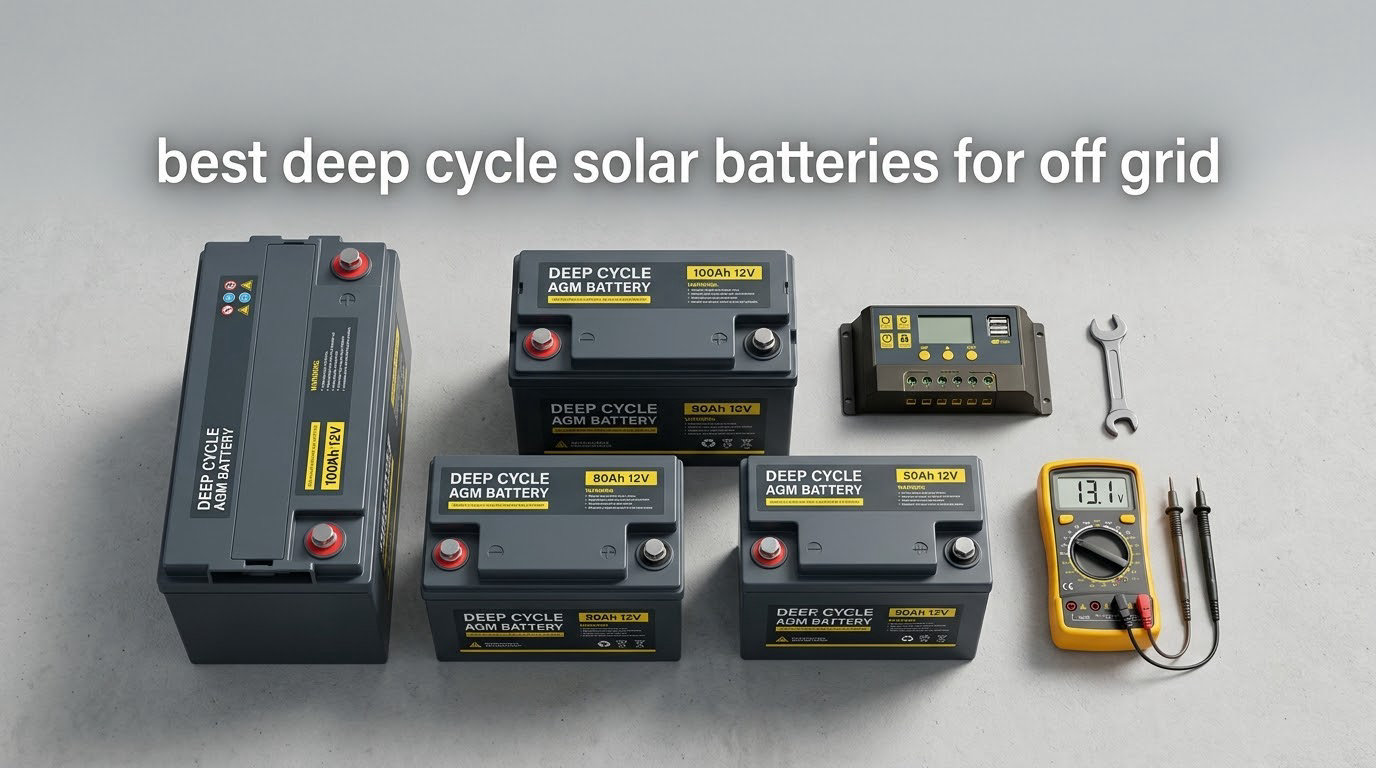
A deep cycle battery is a rechargeable battery built to be discharged and recharged again and again, giving up a large share of its rated capacity each time, unlike a car starting battery which delivers one short high-current burst and stays near full. Off-grid solar depends on that repeat cycling, and choosing the wrong chemistry quietly halves your usable storage. We compared 12 models on capacity, weight, cycle life, cold charging limits and monitoring, and the short version for 2026 is below.
Before the picks, the one line that matters most: for a system that cycles the bank every day, lithium iron phosphate wins on usable capacity and weight, and sealed AGM wins on upfront simplicity and proven field history. If your system sits at a full charge most of the year, that math flips.
Our method was spec-first. We pulled rated capacity, usable energy in watt-hours, continuous and peak discharge current, weight, warranty length, operating temperature range and monitoring hardware straight from the manufacturer listings, then cross-checked them against owner reviews to see where the real complaints sit. Owners of lithium models repeatedly flag the first-charge ritual, and owners of AGM models almost always flag weight first. We weighted those reports heavily.
Two picks from earlier roundups are worth a look if your project is not a stationary house: our [deep cycle battery guide](https://www.thirstybear.com/best-deep-cycle-batteries/) covers the chemistry basics, and the [lithium RV battery picks](https://www.thirstybear.com/best-lithium-rv-batteries/) go deeper on mobile installs where every pound matters.
Table of Contents
Top 3 Best Deep Cycle Solar Batteries for Off-Grid in 2026

WEIZE 12V 100Ah AGM
- Sealed maintenance-free AGM
- 1150A max discharge
- 1-3 percent self-discharge

LiTime 12V 100Ah Bluetooth
- 1280Wh at full depth of discharge
- Bluetooth 5.0 monitoring
- 100A BMS with 20+ protections

Renogy 12V 100Ah AGM
- 12V 100Ah sealed AGM
- Discharge from -4F to 140F
- Two-year prorated warranty
Best Deep Cycle Solar Batteries for Off-Grid at a Glance (October 2026)
All twelve batteries below use the same measurement standard so you can compare them fairly: rated amp-hours, the energy that actually lands in the bank in watt-hours, the continuous discharge the battery management system will sustain, and the warranty that backs it. Lithium entries store roughly 1.28 kWh per 100Ah at 100 percent depth of discharge, while the AGM entries yield closer to 0.5 kWh usable in daily service.
| Product | Specifications | Action |
|---|---|---|
| WEIZE 12V 100Ah AGM |
|
Check Latest Price |
| Renogy 12V 100Ah AGM |
|
Check Latest Price |
 dumfume 12V 200Ah LiFePO4 dumfume 12V 200Ah LiFePO4 |
|
Check Latest Price |
| LiTime 12V 100Ah Group 24 |
|
Check Latest Price |
 Daakmax 12V 100Ah AGM Daakmax 12V 100Ah AGM |
|
Check Latest Price |
 WattCycle 12V 100Ah LiFePO4 WattCycle 12V 100Ah LiFePO4 |
|
Check Latest Price |
 Power Queen 12V 100Ah Group 31 Power Queen 12V 100Ah Group 31 |
|
Check Latest Price |
 ECO-WORTHY 12V 314Ah LiFePO4 ECO-WORTHY 12V 314Ah LiFePO4 |
|
Check Latest Price |
 WindyNation 2x 100Ah AGM Bank WindyNation 2x 100Ah AGM Bank |
|
Check Latest Price |
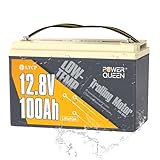 Power Queen 12V 100Ah Trolling Power Queen 12V 100Ah Trolling |
|
Check Latest Price |
 LiTime 12V 100Ah Group 24 LiTime 12V 100Ah Group 24 |
|
Check Latest Price |
 SUPER EMPOWER 12V 100Ah SUPER EMPOWER 12V 100Ah |
|
Check Latest Price |
1. WEIZE 12V 100Ah AGM Is the Most Proven Deep Cycle Battery Here
Weize Deep Cycle AGM 12 Volt 100Ah Battery, Maintenance-Free, 3% Self-Discharge Rate, 1150A Max Discharge Current, Perfect for RV, Solar, Trolling Motor, Wind, Marine, Camping and Off-Grid System
12V 100Ah sealed AGM
57 pounds
1-3 percent self-discharge
1-year warranty
Pros
- 16969 reviews give it the longest proven history in this group
- 1150A max discharge current handles inverter surges
- No watering or venting
- Works across RV solar marine and trolling setups
Cons
- 57 pounds per battery is a two-person lift
- Only about 50 percent usable depth of discharge
- 1-year warranty is among the shortest here
We picked this as the best deep cycle solar battery for off-grid use overall because of what its review history proves. Seventeen thousand ratings give you a long, unvarnished record of what works and what fails, and the pattern in those reviews is unusually consistent: batteries that hold their charge and simply do their job. That matters more than a headline spec when your system depends on a bank that will sit for weeks between charging windows.
At 100Ah and 12V nominal, this is the classic deep cycle shape. The rated 1150A maximum discharge figure is a five-second surge number, not a continuous rating, so do not plan to pull anything close to that from a bank of these. For sustained loads, budget on the 100Ah nameplate.
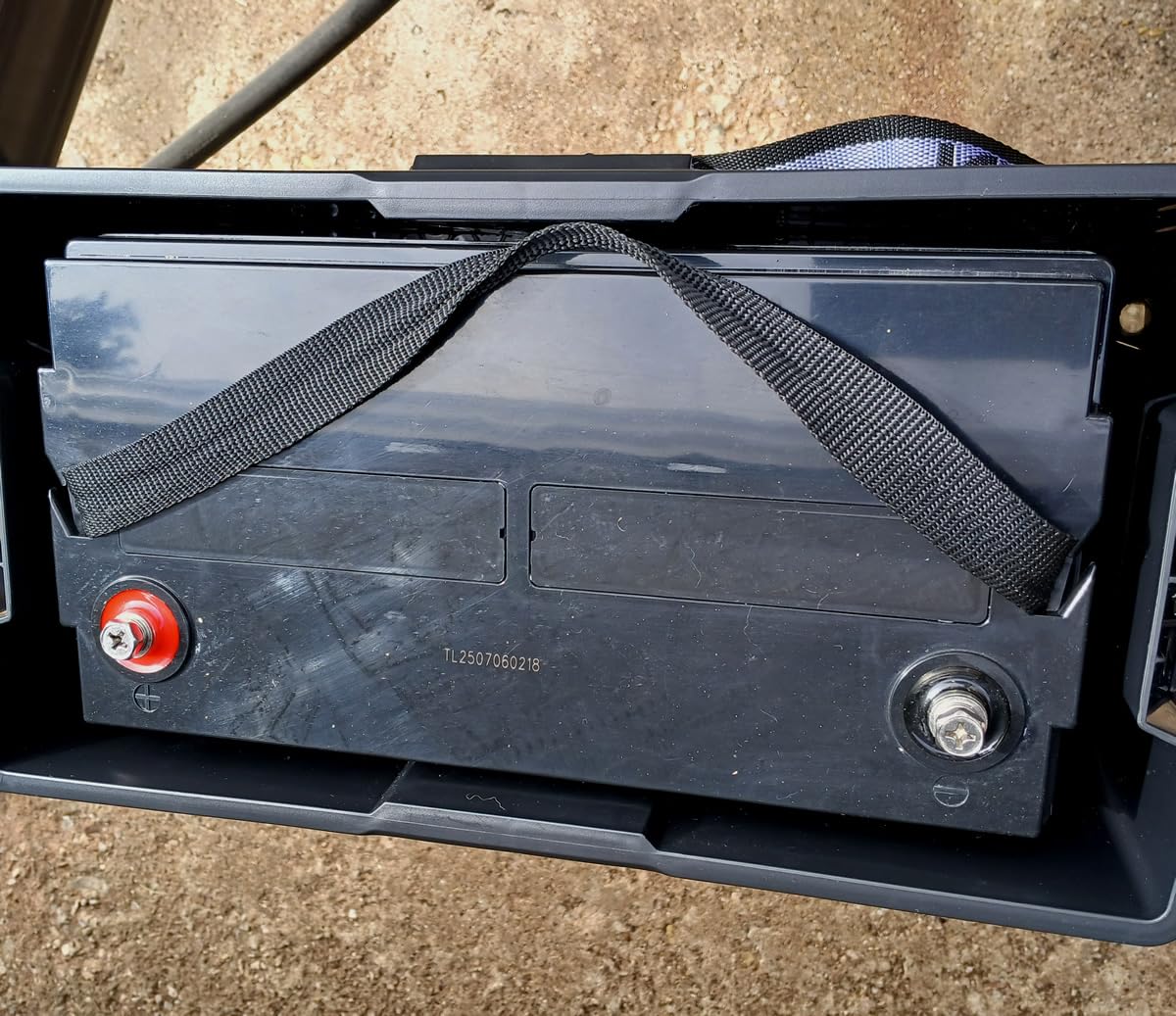
The self-discharge rate of 1 to 3 percent per month is the quiet advantage here. A bank that loses only a few percent a month keeps full capacity through a cloudy stretch or a winter with no sun, which is exactly the failure mode that catches people out in the field. Operating range runs from 14F for charging to 122F, so you can discharge down to 5F but should not expect charging in deep cold.
Weight is the real trade-off. At 57 pounds per battery, a four-battery bank is 228 pounds before you add the enclosure, and every move needs two people. If your install is walk-in closet tight or upstairs, our [lithium battery picks](https://www.thirstybear.com/best-lithium-rv-batteries/) cover lighter drop-ins that fit the same footprint.
Check the inverter surge requirement before buying
Well pumps, compressors and motor loads can ask for several times your inverter’s continuous rating for a second or two. The 1150A five-second figure on this battery covers that brief spike comfortably. What it cannot cover is a sustained draw above roughly 100A per battery, so split large loads across parallel strings rather than stacking them on one unit.
Know what you give up with lead-acid depth of discharge
Roughly half of the rated capacity is the number to plan around, because draining a sealed AGM past that point accelerates sulfation and shortens life. In practice that turns 100Ah into about 50Ah of usable storage, or 0.6 kWh at 12V. If your night load is more than that, plan a larger bank or a different chemistry rather than accepting the loss quietly.
2. Renogy 12V 100Ah AGM Is the Best Value Deep Cycle Battery
Renogy 12 Volt 100Ah Deep Cycle AGM Battery, Lead Acid Solar Battery
12V 100Ah sealed AGM
63.9 pounds
1100A max discharge
2-year prorated warranty
Pros
- Long-term owners report discharge matching the 100Ah rating
- Discharge performance from -4F to 140F
- Supports series and up to 4P parallel
- Removable terminal caps simplify bank wiring
Cons
- One of the heaviest units in the roundup at 63.9 pounds
- A small number of batteries arrive uncharged
- Two-year warranty is mid-pack for lead-acid
- No instructions in the box
Renogy is the name that comes up most often in off-grid forums when people argue about value, and the [lithium RV battery roundup](https://www.thirstybear.com/best-lithium-rv-batteries/) treats the brand the same way. The 12V 100Ah AGM is the workhorse version: sealed, serviceable with basic tools, and backed by a two-year prorated warranty.
Where this one earns its place is bank configuration. The listing explicitly supports series wiring and parallel combinations up to 4P, and the removable terminal caps make the connections far easier to torque properly. That matters because under-torqued cables on a high-current bank generate heat at exactly the terminal where you will least want it.
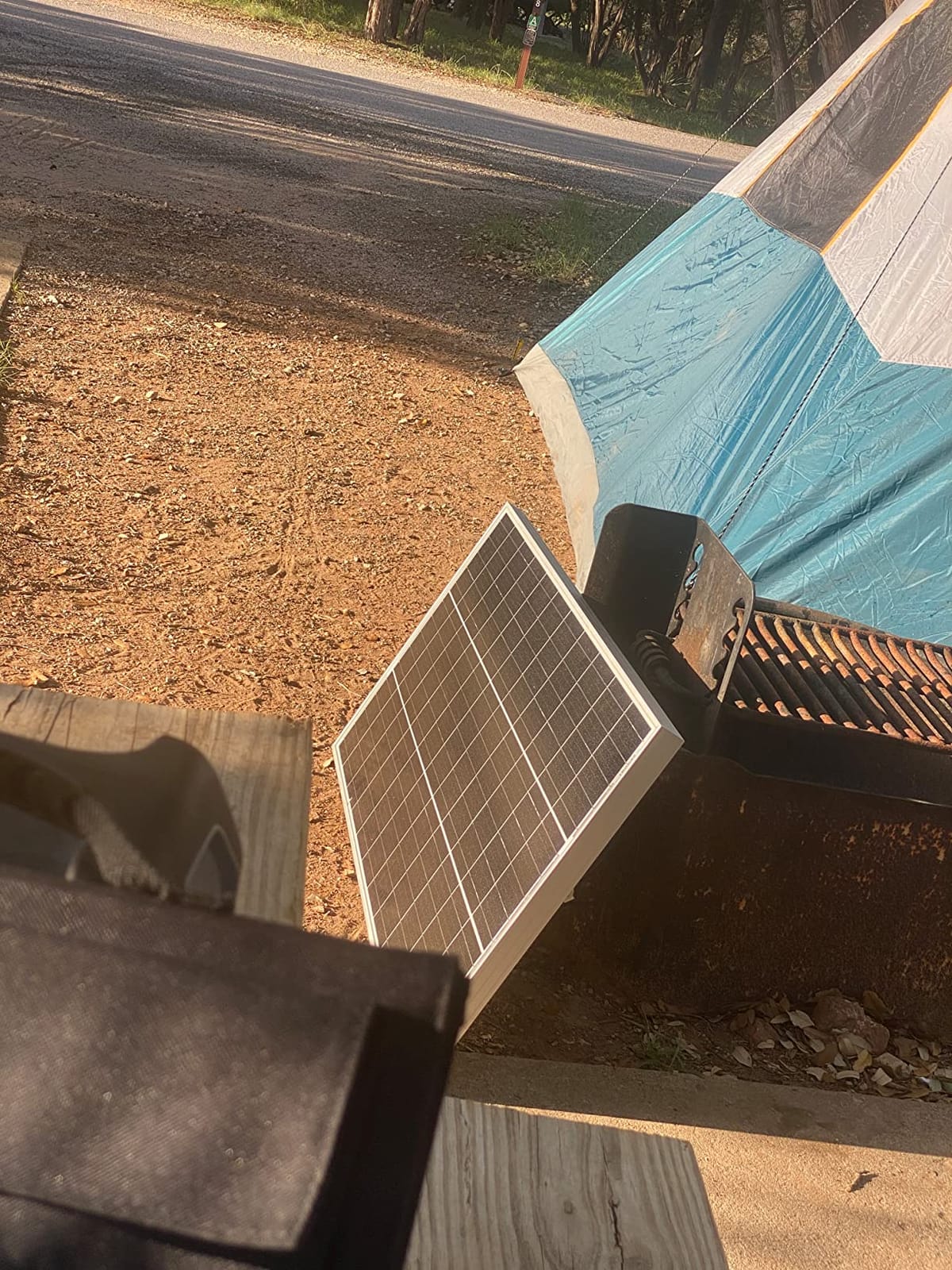
Cold performance is a genuine strength here. The rated discharge range extends to -4F, which is wider than most sealed AGM in the class and comfortably better than unheated lithium, which refuses to charge below freezing. If your winters are hard and your system is generator-assisted rather than solar-only, that difference can decide the purchase.
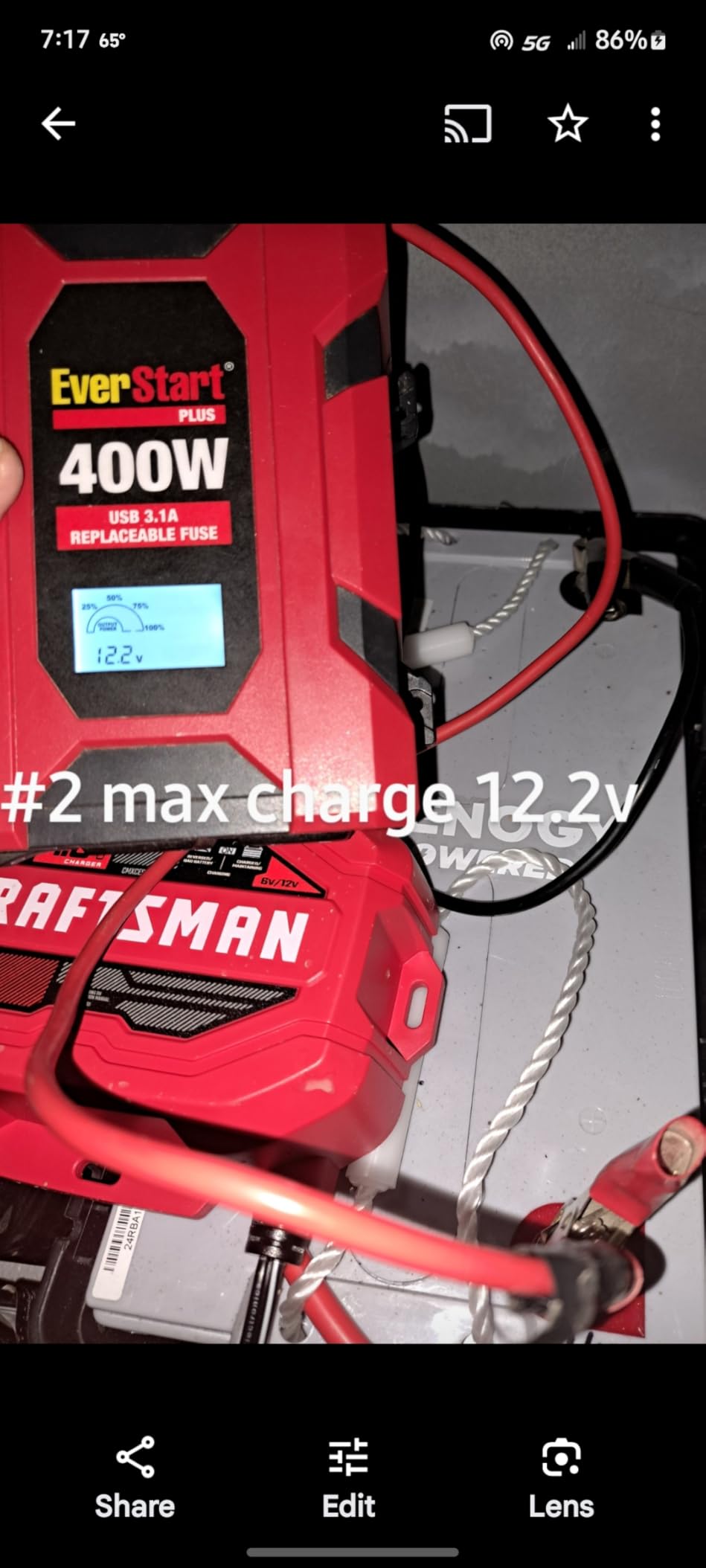
Owners do report a small but persistent stream of batteries arriving discharged or unable to hold a charge out of the box. If you buy these, top each one up fully on a proper charger before you wire anything, and test for voltage drop across the bank when you are done.
Match the bank to your cold nights and cloudy weeks
Lead-acid holds up better than lithium when the array is generating nothing, because there is no charge cutoff to trip. For a winter-heavy site with a generator backup, that reliability can outweigh the efficiency difference. For a summer site with long sunny days, lithium gives you back roughly twice the usable energy per pound.
Plan for a two-person install
At 63.9 pounds this is one of the two heaviest batteries here, and that is the single most common complaint in its reviews. If you are building a bank of eight, budget for a second pair of hands and a route to the install location that does not include stairs. Our [deep cycle battery guide](https://www.thirstybear.com/best-deep-cycle-batteries/) covers mounting and spacing basics.
3. dumfume 12V 200Ah LiFePO4 Packs Serious Storage Into One 12V Case
Dumfume 12V 200Ah LiFePO4 Lithium Battery 200A BMS 2560Wh IP65
12.8V 200Ah LiFePO4
2560Wh
58.9 pounds
200A continuous BMS
Pros
- About 2.5kWh of energy in one 12V case
- 200A continuous BMS with fast overcurrent protection
- IP65 rated for outdoor installs
- Expands to 51.2V 800Ah banks
Cons
- Frequently arrives needing a full charge to 14.6V before first use
- No Bluetooth or built-in monitoring
- A minority report early charging failures
This is the pick for anyone who wants serious storage in a single 12V box. At 200Ah and 2560Wh rated, one battery replaces roughly four AGM 100Ah units in storage terms, and at 58.9 pounds it still needs two hands but nothing more. The 200A continuous BMS also gives you far more headroom for inverter surge than the lead-acid units in this roundup.
Cycle claims need the usual caveat. The listing states 4000-plus cycles at 100 percent depth of discharge and 15000-plus at 60 percent, and independent teardown reviews rate the internal build quality highly. Treat those as vendor figures until your own bank shows the same behaviour, because cycle counts are meaningless without their test conditions.
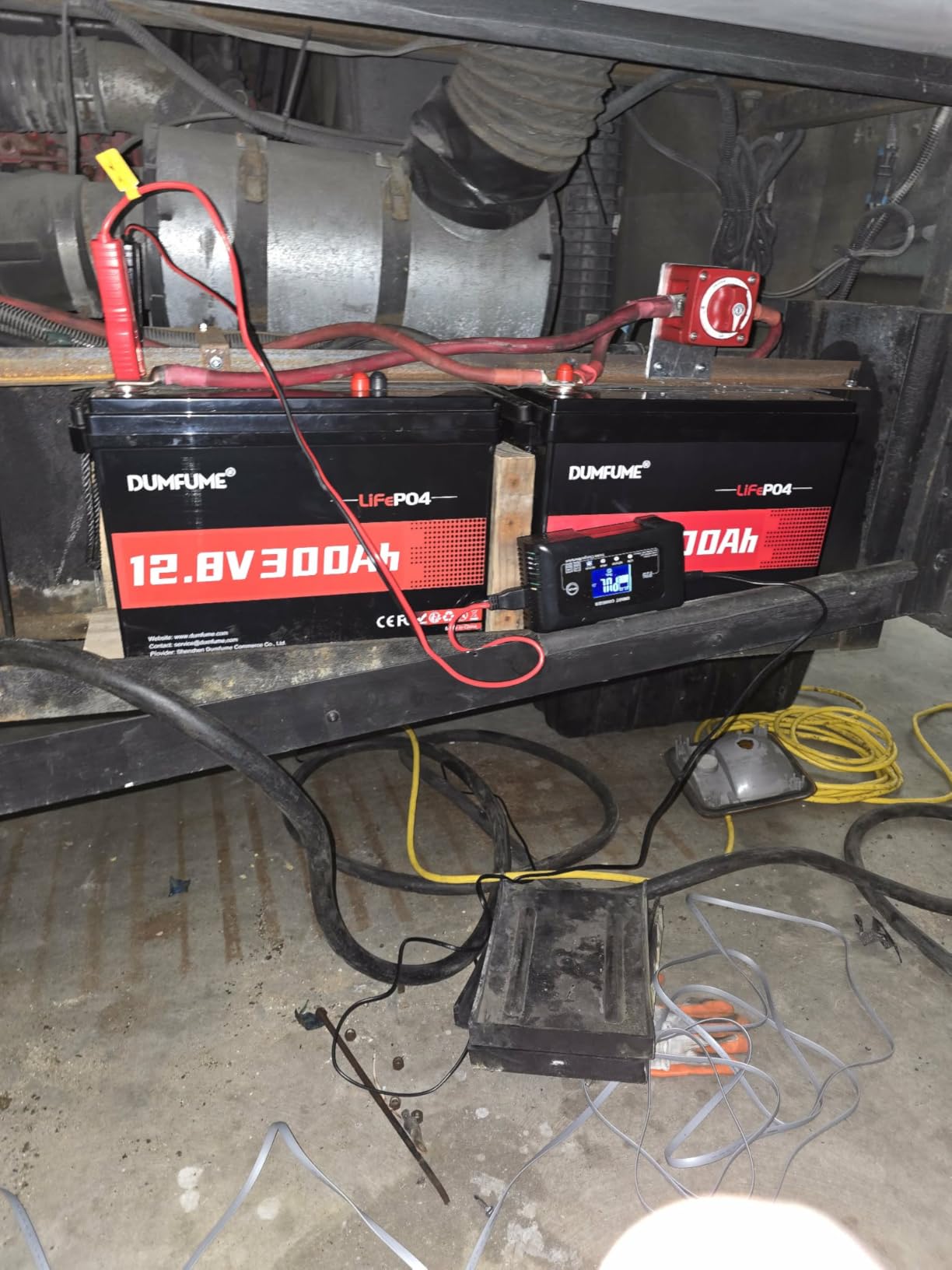
Expansion is the other reason to like it. The design supports 4S4P configurations up to a 51.2V 800Ah bank, so you can start with one unit on a small 12V system and grow into a full 48V array without changing chemistry or form factor. That is a rare flexibility among the lithium picks here.
Owners consistently flag the first charge. Units routinely arrive at a low state of charge and need a full charge to 14.6V before the cells balance properly and the BMS behaves. Plan a dedicated charging session on day one rather than wiring the battery straight into a solar controller and hoping.
Expect zero monitoring and set your own cutoff
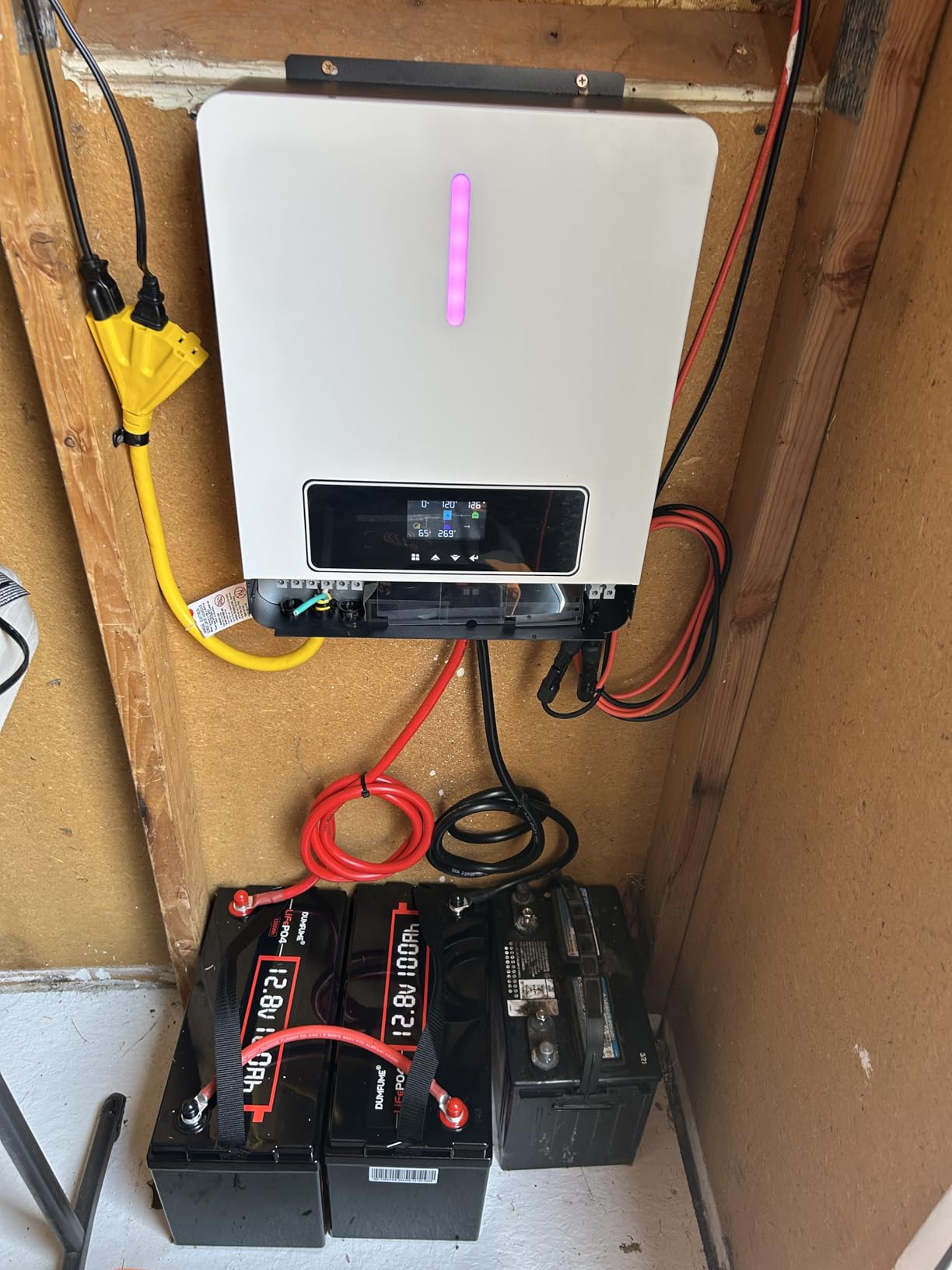
There is no Bluetooth and no state-of-charge display on this model, so your inverter or controller becomes the only window into the bank. Set the low-voltage disconnect to match lithium chemistry, not the lead-acid default, or you will cut the bank off long before the cells are actually empty.
Confirm charge current against your array
Your MPPT controller’s output has to stay inside what the battery can accept, and the array must not push more current than the BMS will take. A BMS shutdown is the most common complaint tied to this issue, and a lithium charge profile is also the most common fix. Check the controller’s lithium profile before your first full sunny day.
4. LiTime 12V 100Ah Group 24 With Bluetooth Is the Top Rated Pick
Litime 12V 100Ah LiFePO4 Battery, Group 24 Lithium Batteries for RV, Camper
12.8V 100Ah Group 24
1280Wh usable
21 pounds
Bluetooth 5.0 monitoring
Pros
- 4.6 stars from 735 reviews
- True Group 24 drop-in fit for standard battery boxes
- About 21.9 pounds for a full 1.28kWh
- App shows voltage current SOC and temperature
Cons
- Not heated
- so charging is blocked below freezing
- Companion app can be glitchy while charging
- Bluetooth range is shorter than expected when fully open
The LiTime Group 24 is the closest like-for-like lithium upgrade of a lead-acid install anywhere in this roundup, and it carries one of the highest average ratings in the group. It drops into a standard battery box, weighs 21.9 pounds against the 60-plus pounds of the AGM units here, and stores 1280Wh at 100 percent depth of discharge.
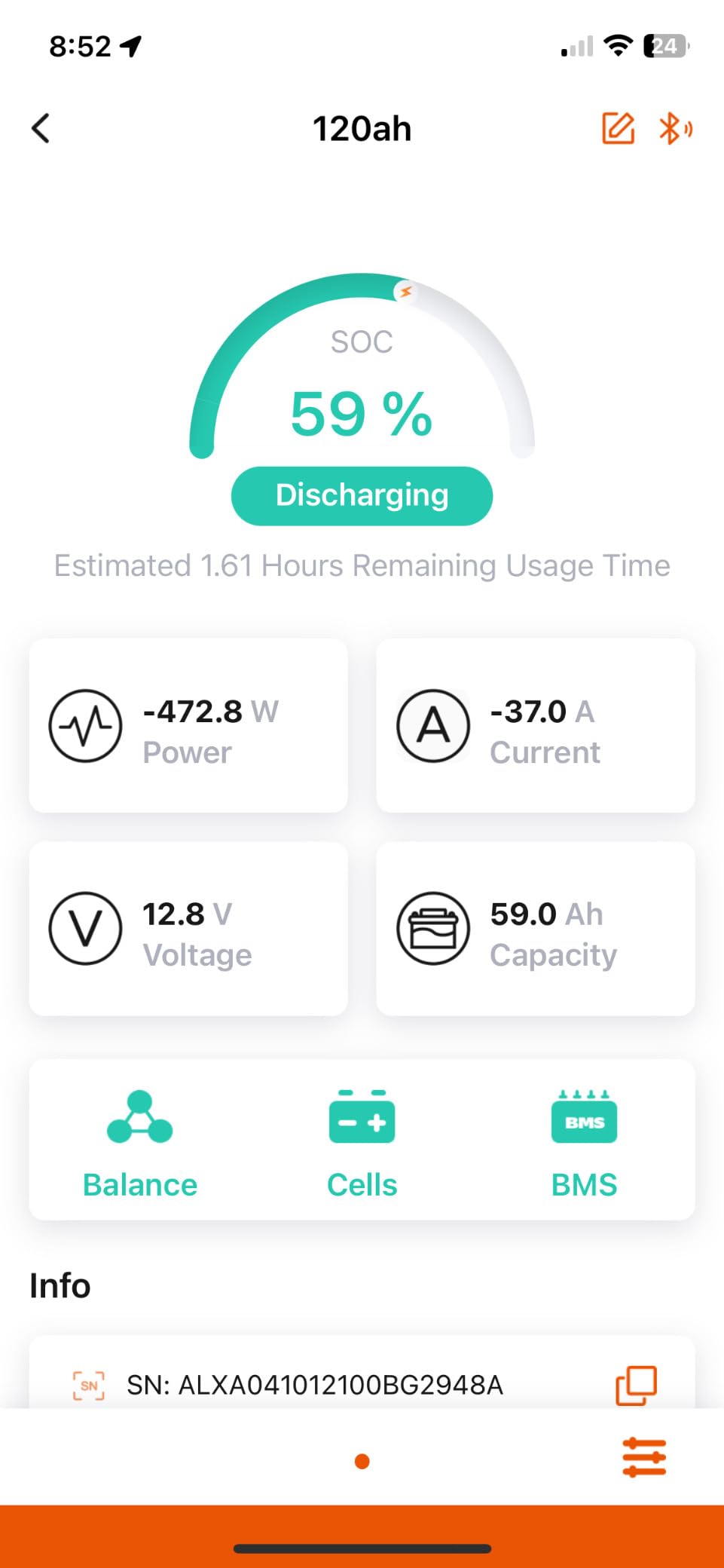
Bluetooth 5.0 monitoring is the feature that separates it from the cheaper lithium units. The app reports voltage, current, state of charge and temperature remotely, with a working range beyond 50 feet in most setups. For a system where you want to check the bank from a chair inside the cabin instead of climbing into a cold equipment room, that is a genuine quality-of-life gain.
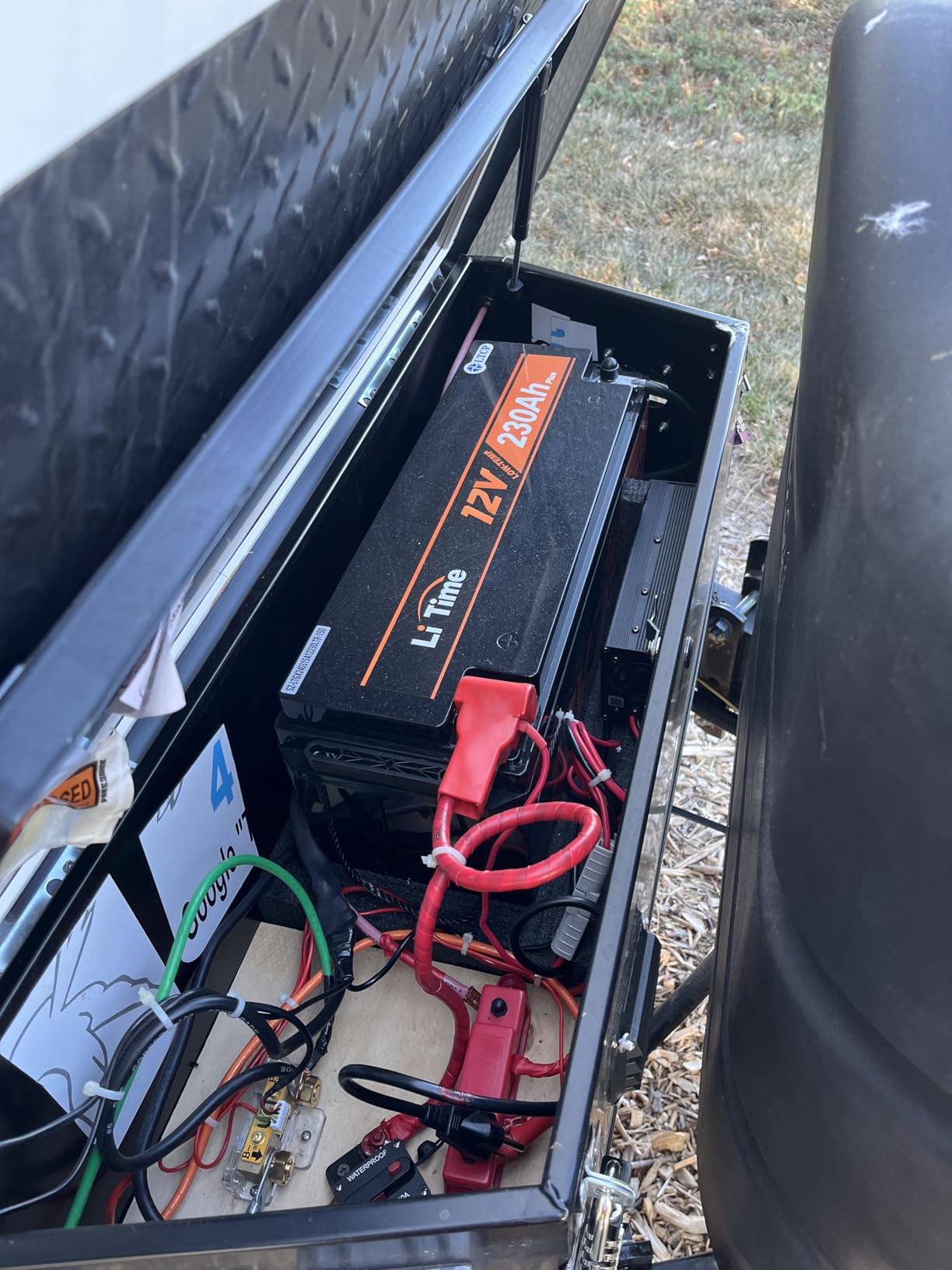
Owners report roughly 65 to 70 percent charge remaining after full days of trolling on a single charge, which tracks with the 100A BMS and the full-depth-discharge rating. A 100A BMS also covers most inverter continuous loads at 12V without forcing a parallel string, though anything heavier wants a second unit.
Expansion runs to 4P4S, or 20.48kWh, so this scales from a weekend cabin to a small homestead. Just remember the same rules as any lithium bank: the charge profile must be set for lithium, and cables need to be sized for the higher current these units can push.
Check whether your winters rule it out
This model has no self-heating, and charging is blocked in freezing conditions. If your site drops below 32F and you are solar-only, the bank simply stops accepting charge until it warms up, which in a cold snap can leave you with nothing. In that situation, look at the ECO-WORTHY pick in this roundup, which has the most generous cold cutoff of the lithium group.
Treat the app as a gauge, not an accountant
Owners report the app can be glitchy while charging, and the range falls off in fully open setups. Read the voltage and state-of-charge figures as a trend rather than a precise remaining-Ah number. If you are making load decisions from the display, confirm with a clamp meter on the bank first.
5. Daakmax 12V 100Ah AGM Is the Budget Lead-Acid Pick
Daakmax 12V 100ah Deep Cycle AGM Battery Rechargeable SLA Maintenance-Free Batteries for Camping Marine Cabin RV Off-Grid System
12V 100Ah sealed AGM
1150A max discharge
1-3 percent self-discharge
1-year warranty
Pros
- Arrives charged and ready to install
- Low 1-3 percent monthly self-discharge
- Vibration-resistant ABS casing with leak-proof seal
- Consistent deep-cycle performance for the money
Cons
- Square-nut terminals are awkward in tight compartments
- Short terminal screws complicate cramped installs
- Only a 1-year warranty
The Daakmax exists for a specific situation: a small off-grid load on a tight budget where lithium would be overkill. Reviewers confirm strong starting and steady deep-cycle performance, and the fact that it arrives charged means you can install and begin charging the same day without a dedicated top-up session.
That is the whole appeal. At 100Ah sealed AGM with a 1 to 3 percent monthly self-discharge rate, it behaves like any other quality sealed lead-acid unit when the load is light and infrequent, which is the exact use case a weekend cabin or a communications-only install describes.
The most repeated complaint across reviews has nothing to do with the electrical side. It is the terminal hardware: square nuts that are fiddly to start by hand, and short screws that make working in a confined battery bay genuinely awkward. Budget extra time for installation, and consider a proper ring-terminal crimper.
Depth of discharge is the other limit, and it is not optional. Plan on roughly 50 percent of the 100Ah rating as your working capacity, or about 0.6 kWh. If your load runs past that, size up rather than running the bank flat and shortening its life.
Good fit for a lighting and comms load
If your evening draw is a couple of lamps, a router and a small appliance, this class of battery serves you well and keeps total system weight down. The failure mode to design around is extended time at low charge, so size conservatively and keep the bank away from deep discharge rather than treating the full 100Ah as spendable.
Know when to step up to lithium or AGM with more warranty
There is a point where the 1-year warranty stops being acceptable, and that is usually when the bank is your primary rather than your backup. If your site sees real winter cold and you depend on stored solar daily, the longer warranties and higher usable capacity of the lithium picks here pay back over time.
6. WattCycle 12V 100Ah LiFePO4 Is Built for a Small Battery Box
Wattcycle 12V 100Ah LiFePO4 Battery, BCI Group 24
12.8V 100Ah LiFePO4
23.2 pounds
BCI Group 24
5-year warranty
Pros
- Compact BCI Group 24 form factor
- Only 23.2 pounds for 1280Wh
- Bank-wide warranty replacement
- Verified capacity in measured charge tests
Cons
- Bluetooth companion apps are unreliable and sometimes never connect
- Some batteries failed to restart after a cold shutdown
- Arrives at roughly 50 percent state of charge
The WattCycle is a compact 100Ah lithium unit, and small size is its distinguishing feature. At 10.2 by 6.6 by 8.2 inches and 23.2 pounds, it fits Group 24 boxes where the larger Group 31 cases will not, which matters in a campervan or a tight equipment cabinet.
It also has one of the wider temperature ranges in the group, rated to discharge from -4F up to 158F. That is discharge rather than charge, so cold charging still needs care, but it means the bank keeps working through winter nights when an unheated lithium that refuses to discharge would have left you dark.
The 100A protection plate disconnects above 300A, which gives a useful buffer for inverter surge. Owners also report measured charge times that matched the 100Ah rating, and several reviewers specifically mention responsive warranty replacements that covered an entire bank rather than a single battery.
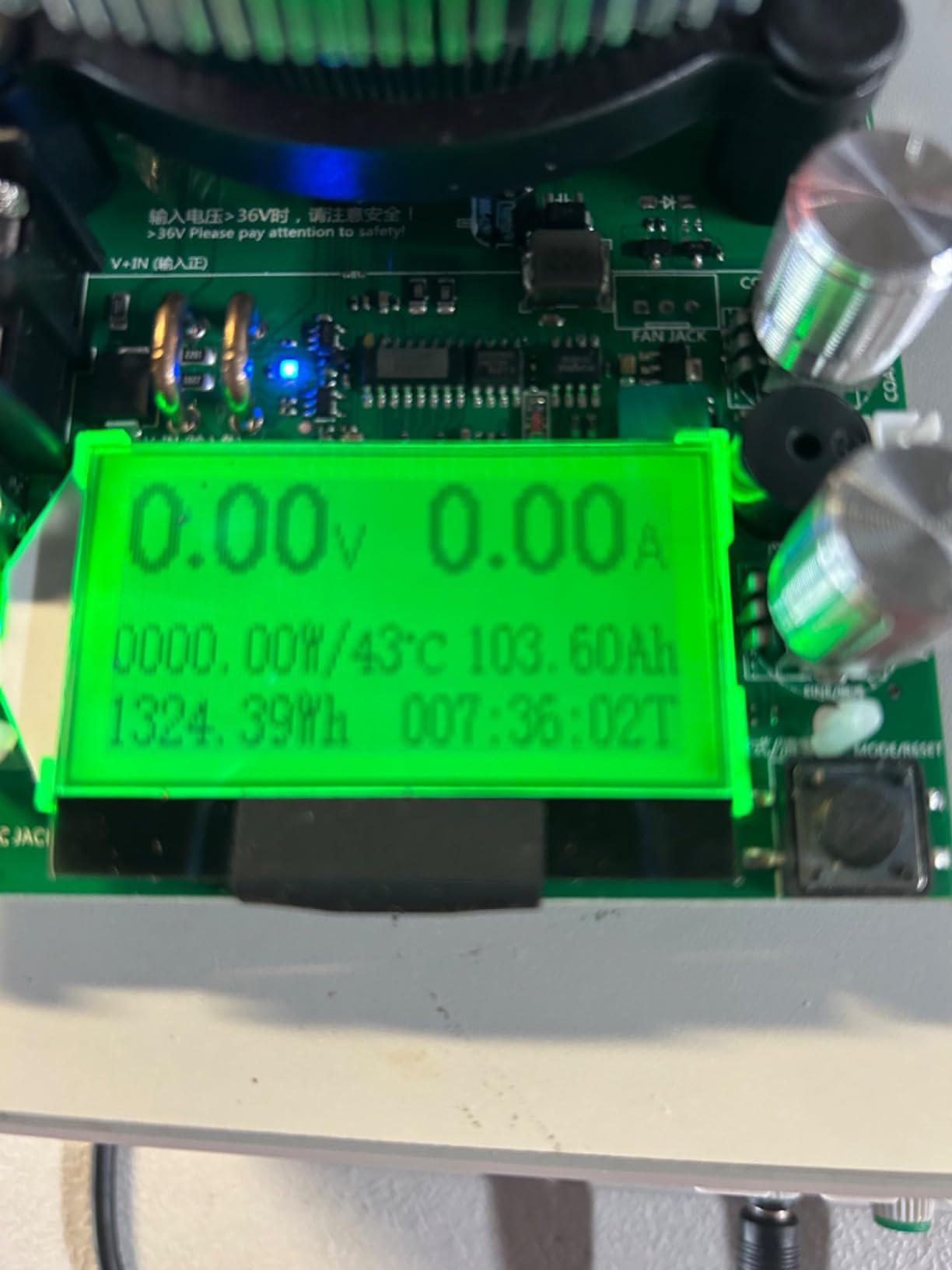
The main complaint is the app. Multiple reviews describe connection failures or an app that will not pair at all, so do not buy this one expecting Bluetooth telemetry to be the centrepiece of your monitoring setup. Pair it with a shunt-based monitor instead if accurate state of charge matters to you.
Budget a full first charge before wiring anything
These typically arrive at roughly 50 percent state of charge, and owners who skipped the initial full charge were the ones reporting trouble later. Give it one complete charge on a lithium profile before it goes into the bank, then recheck that the cells are reading balanced.
Weigh the newer brand name against the warranty
This is a less established name than the leaders in the field, so the five-year warranty is doing a lot of work in the value calculation. The mitigation is straightforward: confirm up front that the vendor will replace every battery in a failed bank, and keep your purchase records where you can find them if a claim comes years later.
7. Power Queen 12V 100Ah Group 31 Balances Fit and Features
Power Queen 12V 100Ah Group 31 LiFePO4 Lithium Battery for RV, Marine
12.8V 100Ah Group 31
1280Wh
about 24 pounds
IP65 with Bluetooth
Pros
- Group 31 footprint with Bluetooth monitoring
- Grade-A cells and a 100A BMS
- Up to 15000 cycles at 60 percent depth
- IP65 waterproof enclosure
Cons
- Roughly 20 percent above some competing 100Ah lithium options
- Accurate state of charge depends on the app
The Group 31 footprint is what distinguishes this one, and it is a bigger case than the Group 24 units elsewhere in this roundup, which gives you more room for busbars and heavier cable lugs. At roughly 24 pounds and 6.82 by 13 by 8.84 inches, it still installs without a lift.
Rated for up to 15000 deep cycles at 60 percent depth of discharge with Grade-A cells, this sits in the same performance class as the other top lithium picks. The 100A BMS covers overcharge, over-discharge, short circuit and overheat, and expansion runs to 4S4P, or a 51.2V 400Ah bank at 20.48kWh.
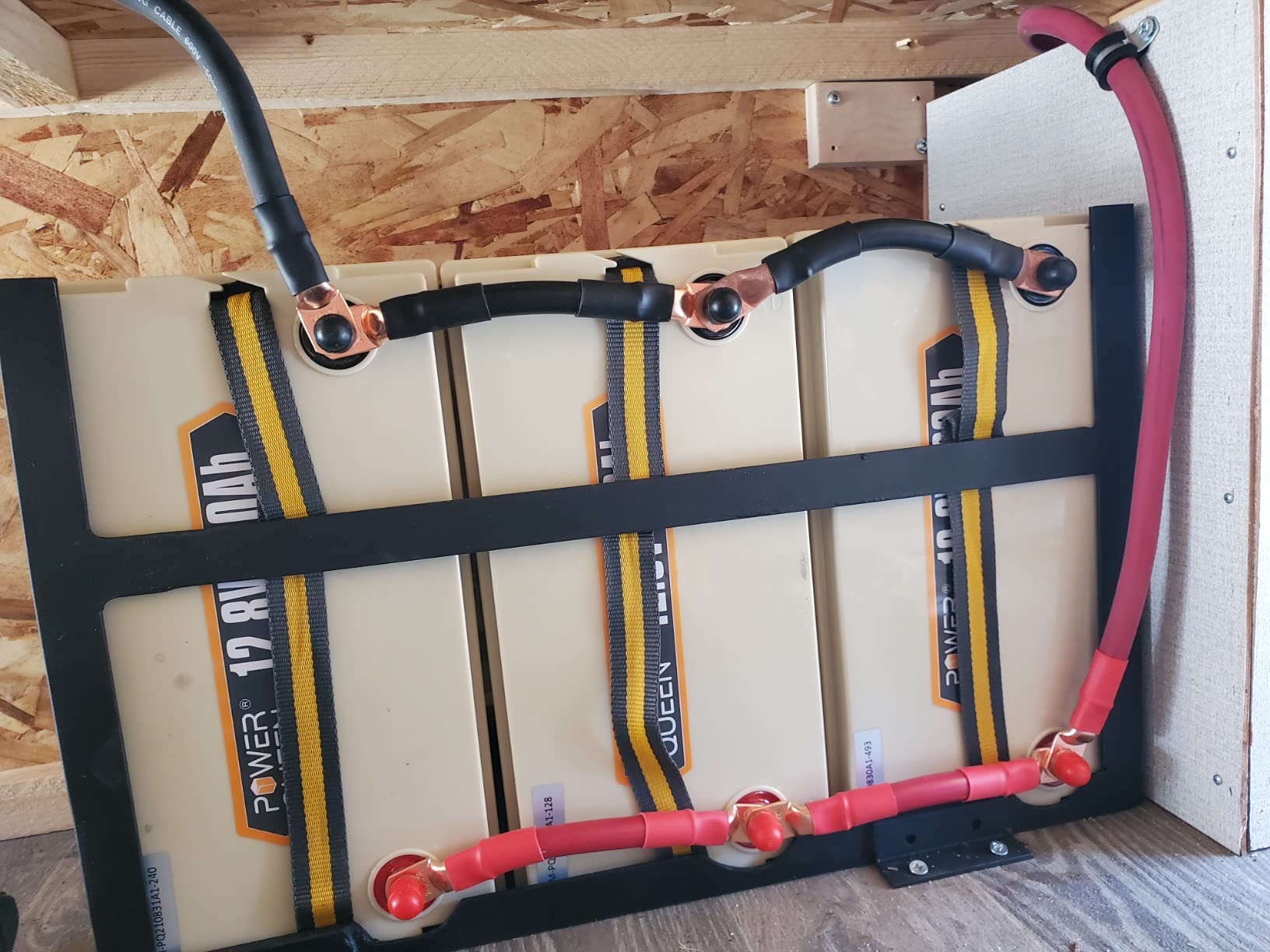
Bluetooth monitoring is included, which is the main thing that separates it from the similarly priced non-smart variants. Owners cite dependable daily performance for RV and marine duty, and the IP65 rating gives more freedom for a wet locker or an outdoor enclosure than an unsealed case would.
Reviewers flag cost as the main downside, noting it runs above some competing 100Ah lithium options. The self-discharge rate of 3 percent is also worth noting if your system idles through long stretches without load, since storage losses compound quietly over a seasonal absence.
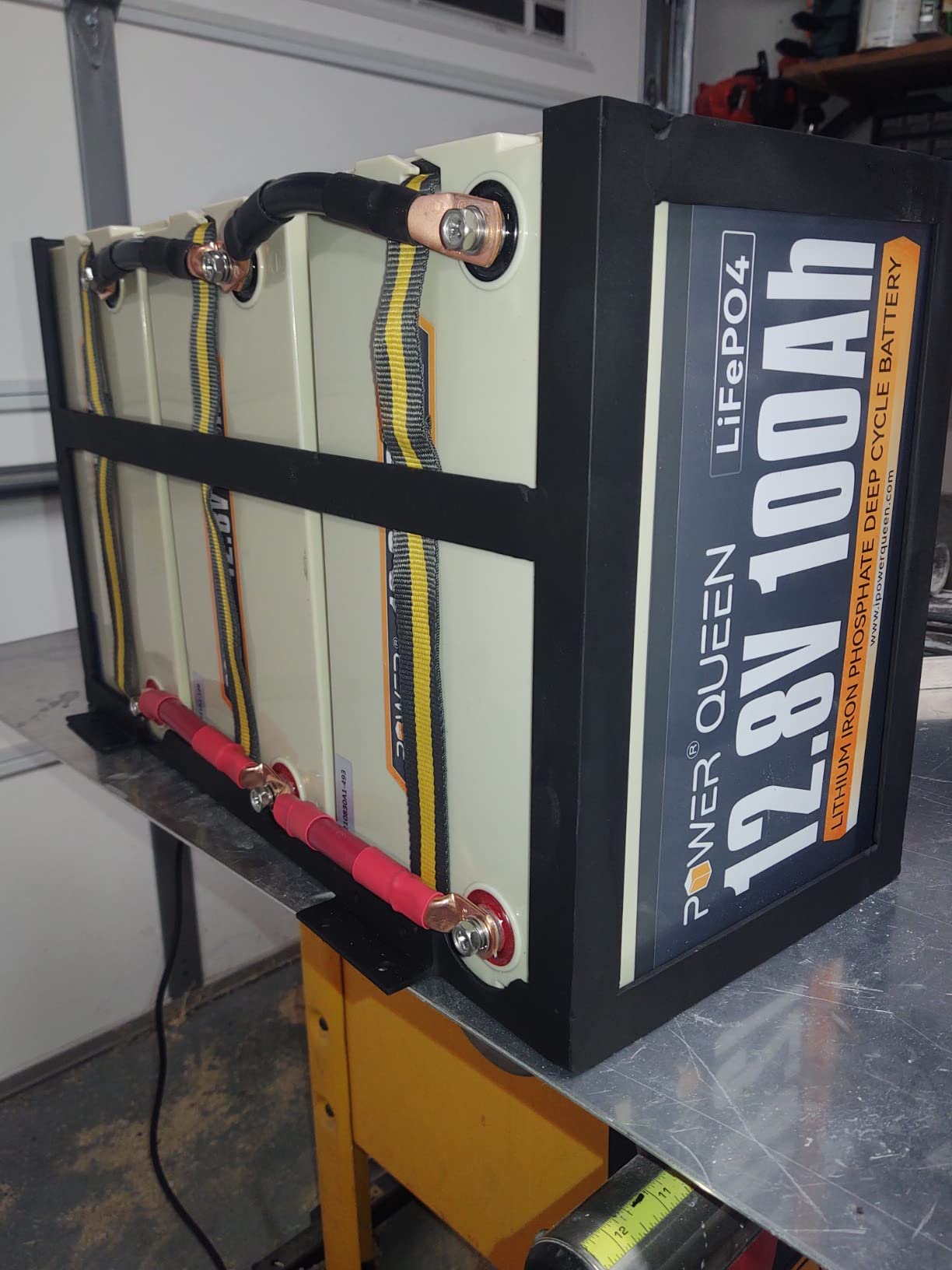
Choose Group 31 when your cable ends are large
If your inverter wants heavy ring terminals and you would rather not crimp oversized lugs into a small case, the Group 31 shell gives you the room. Our [marine battery roundup](https://www.thirstybear.com/best-marine-batteries/) covers the related venting and corrosion questions for wet installs, which apply here too.
Verify state of charge with a second instrument
Accurate readings depend on the app, so treat the display as guidance. Pair it with a clamp meter or a shunt monitor when you need to know exactly how much charge is in the bank before committing to a large overnight draw.
8. ECO-WORTHY 12V 314Ah LiFePO4 Handles the Coldest Cutoff
ECO-WORTHY 12V 314AH LiFePO4 Lithium Battery Bluetooth with SOC LEDs, Low Temp Protection, 4019WH, 200A BMS Up to 15000 Deep Cycle for Off-Grid, RV, Solar Power System, HomeBackup
12.8V 314Ah LiFePO4
4019Wh
60.4 pounds
charging cutoff below -7C
Pros
- 4019Wh stored in one 60.4 pound case
- SOC LED display plus Bluetooth
- Charging cut off below -7C for cold protection
- Buzzer alerts on battery faults
Cons
- Bluetooth voltage and SOC readings reported as inaccurate
- Only a 3-year warranty
- Customer service response times described as slow
This is the cold-climate answer in the roundup, and the reason is a specific number: charging is disabled below -7C, which is about 19F. The lithium batteries here that state a cutoff stop around 32F. That gap is the difference between a bank that recharges through a northern winter and one that sits idle until spring.
The capacity story is unusual too. At 314Ah and 4019Wh, this single battery holds roughly three times the energy of a 100Ah lithium unit while weighing 60.4 pounds, close to the mass of one lead-acid 100Ah case. For a homestead that wants a big bank without a wall of separate cases, that density is the reason to choose it.
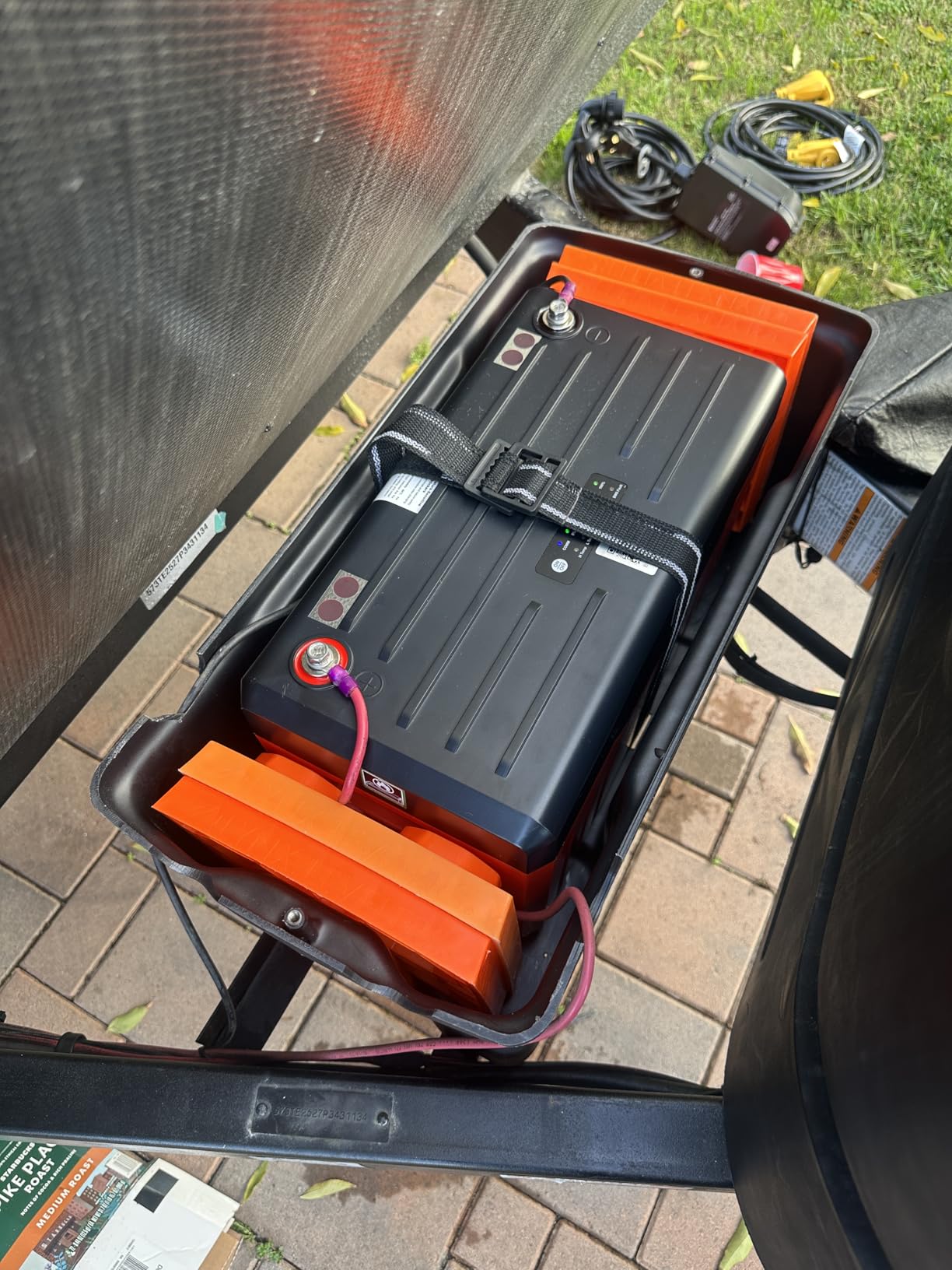
Monitoring is a two-way street here. There is a row of SOC and status LEDs on the case itself, which is genuinely useful when you walk out to the equipment shed, plus Bluetooth for remote checks and a built-in buzzer that alerts you to faults. A 200A BMS handles high and low voltage, overload and temperature protection, and expansion reaches 32.15kWh.
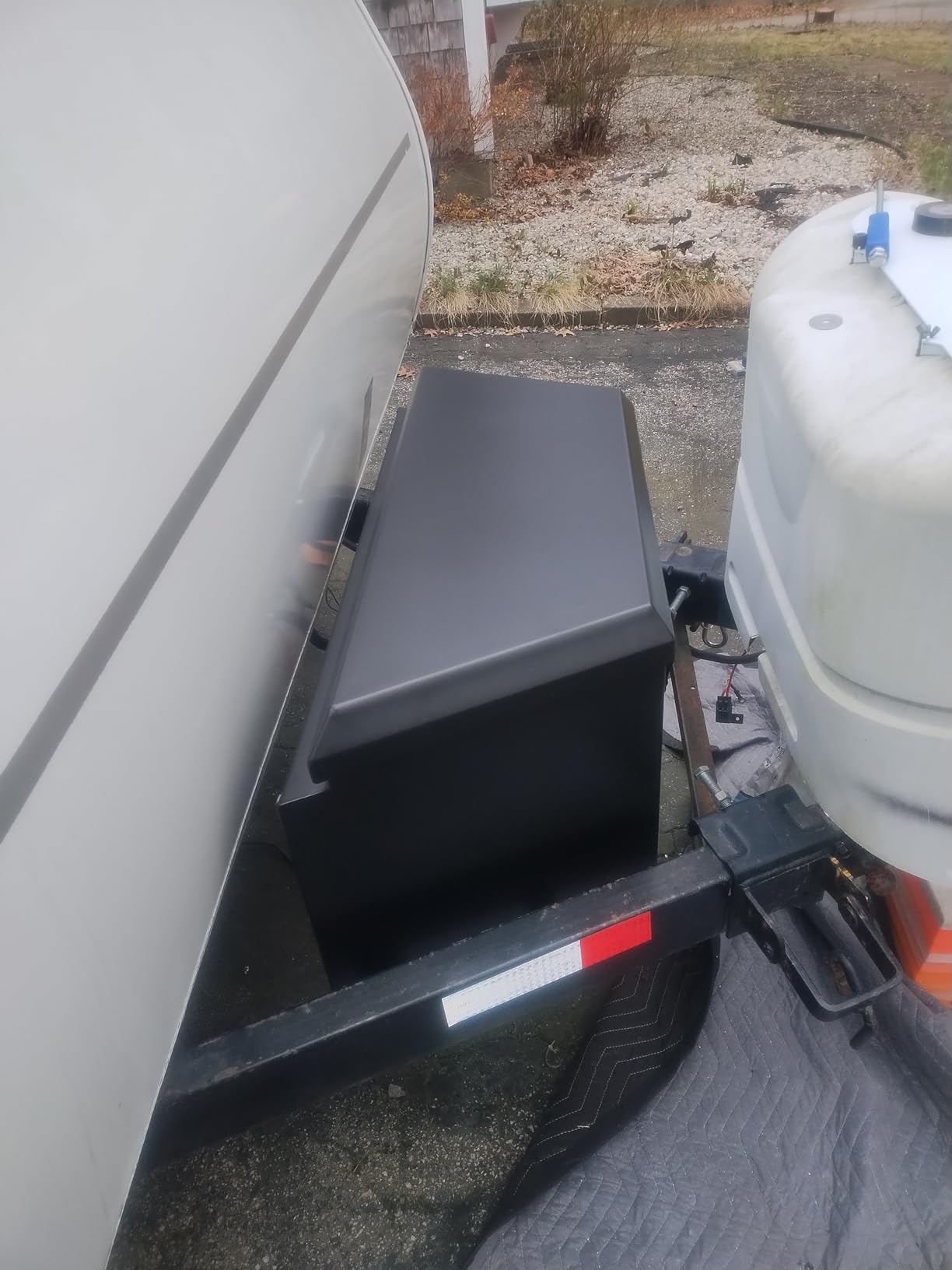
Owners are less enthusiastic about the telemetry accuracy, reporting that voltage and remaining-Ah values in the app can drift noticeably from reality. That is the single most repeated criticism in the reviews, so verify with a meter before you make load-shedding decisions from the phone.
Read the LEDs, distrust the app numbers
The on-board LED display is the trustworthy reference here, and it is one of the few lithium cases in this roundup that gives you something without a phone. The app is a convenience for remote checks rather than a measurement tool, and owners confirm the discrepancy in numbers is noticeable.
Account for the shorter warranty
Three years is shorter than the five years on most lithium competitors here, and that is a real gap on a battery you expect to cycle daily for a decade. Support response times are also described as slow by some buyers, though replacements were issued when units did fail. Budget for the possibility of a mid-life swap.
9. WindyNation Two-Battery 100Ah AGM Bank Saves the Assembly Work
WindyNation 2pcs 100 amp-Hour 100AH 12V 12 Volt AGM Deep Cycle Sealed Lead Acid Battery – Solar RV UPS Off-Grid (2 pcs 100 amp-Hour)
Two 12V 100Ah AGM batteries
67 pounds per pair
10-12 year float life
interconnect cables included
Pros
- Sold as a matched pair with interconnect cables included
- 2/0 gauge cables rated at 320 amps
- 99.995 percent pure virgin lead construction
- Rated float life of 10 to 12 years at 25C
Cons
- About 67 pounds for the pair
- Only around 50 percent usable depth of discharge
- Sold in fixed multi-pack configurations
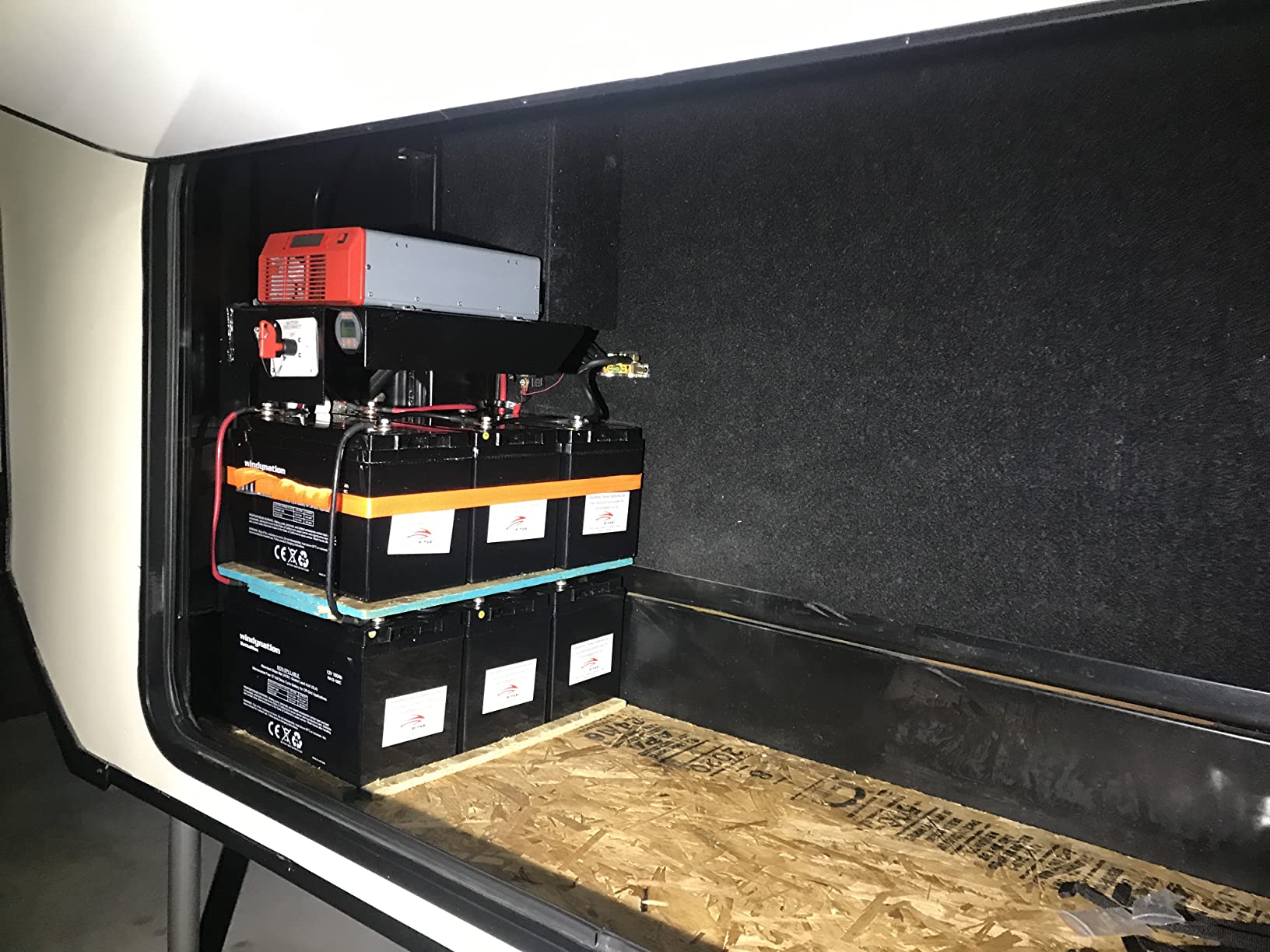
Most lead-acid banks are an assembly project. This one is not, and that is the entire case for it. You get two matched 100Ah batteries in a single pack, with a pair of 2/0 gauge nine-inch interconnect cables rated at 320 amps already sized for the job. For a first-time builder, that removes a loose or undersized inter-bank connection, which is the most common source of early failure.
The construction detail that stands out is the lead purity. These are made from 99.995 percent pure virgin lead rather than recycled lead, and the plates are built for repetitive deep discharge rather than short bursts. The float life rating of 10 to 12 years at 25C is a stationary standby figure, so treat it as a ceiling rather than a daily cycling expectation.
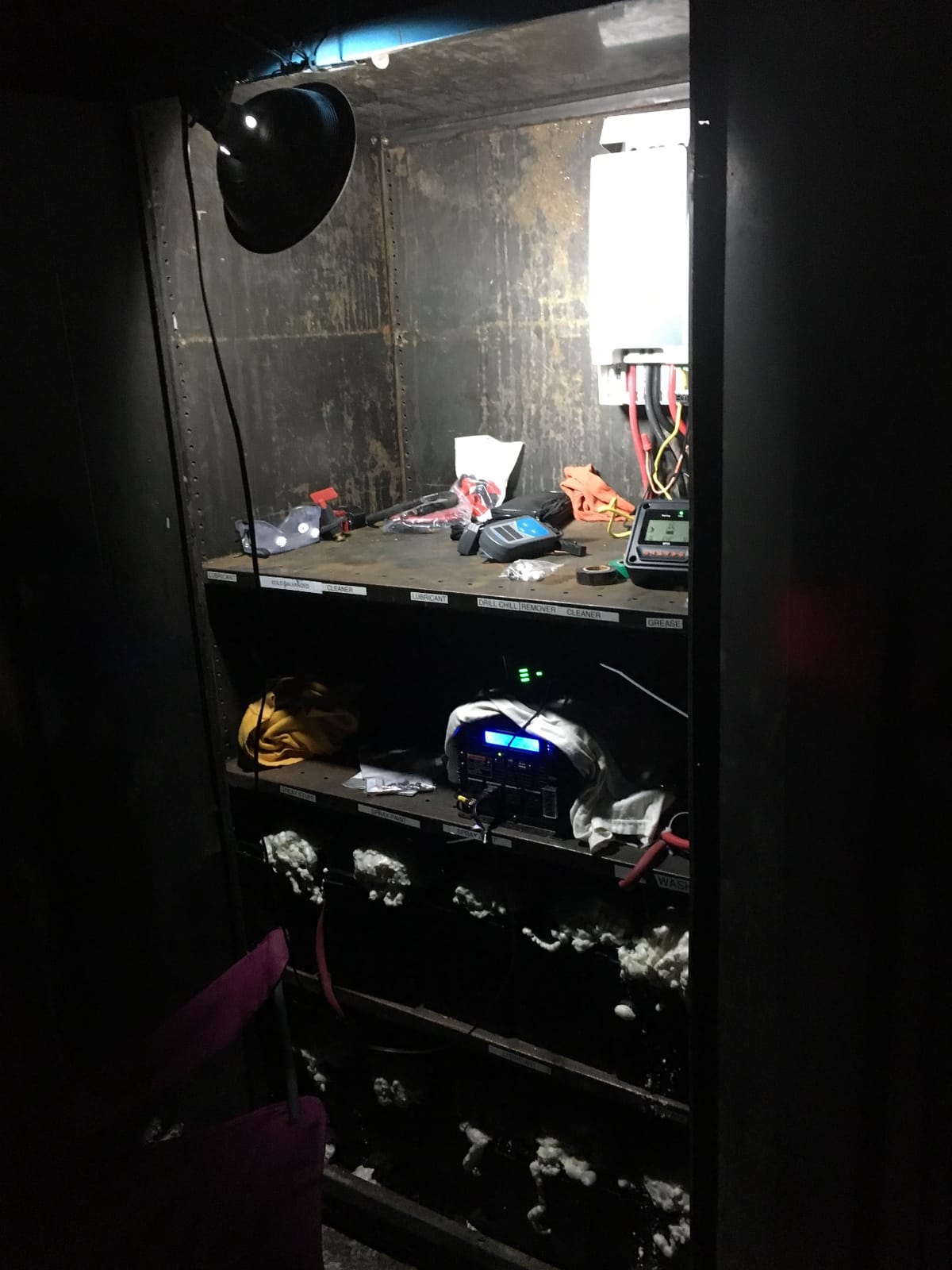
Capacity is quoted two ways, and the difference matters. You get 100Ah at the 10-hour rate and 110Ah at the 20-hour rate, which tells you the manufacturer is quoting honestly across discharge rates. For a solar bank that will see occasional deep draws, the 20-hour figure is the realistic planning number.
Applications are broad: solar, RV, UPS, offshore marine and telecom backup. Our [marine battery guide](https://www.thirstybear.com/best-marine-batteries/) goes deeper on the corrosion and venting questions if this bank is going into a wet environment.
Use this when the bank is standby rather than daily cycling
Long float life and heavy plates are the right priorities for a cabin that draws power a few weeks a year or a home that wants outage backup. If you plan to cycle the bank to 50 percent depth every single day, the cycle-life maths work against lead-acid, and a lithium unit in this roundup will serve you better over ten years.
Expect to carry the weight twice
Roughly 67 pounds for the pair is manageable solo, but a larger bank assembled from these packs gets heavy fast. Check your floor loading and the access route before ordering, and pick up a proper cart if you are moving more than two packs at once.
10. Power Queen 12V 100Ah Trolling Motor Battery Is Built for Boats
Power Queen 12V 100Ah Trolling Motor LiFePO4 Battery for Marine, RV
12.8V 100Ah Group 31
22.16 pounds
IP65
ABYC E-13 compliant
Pros
- Rated for trolling motors up to 120 lb of thrust
- Only 22.16 pounds
- Built-in TVS surge protector steadies motor output
- ABYC E-13 compliant triple-protected BMS
Cons
- No Bluetooth
- so state of charge needs an external monitor
- Charging blocked in sub-freezing conditions
- 10 percent of reviews are one-star
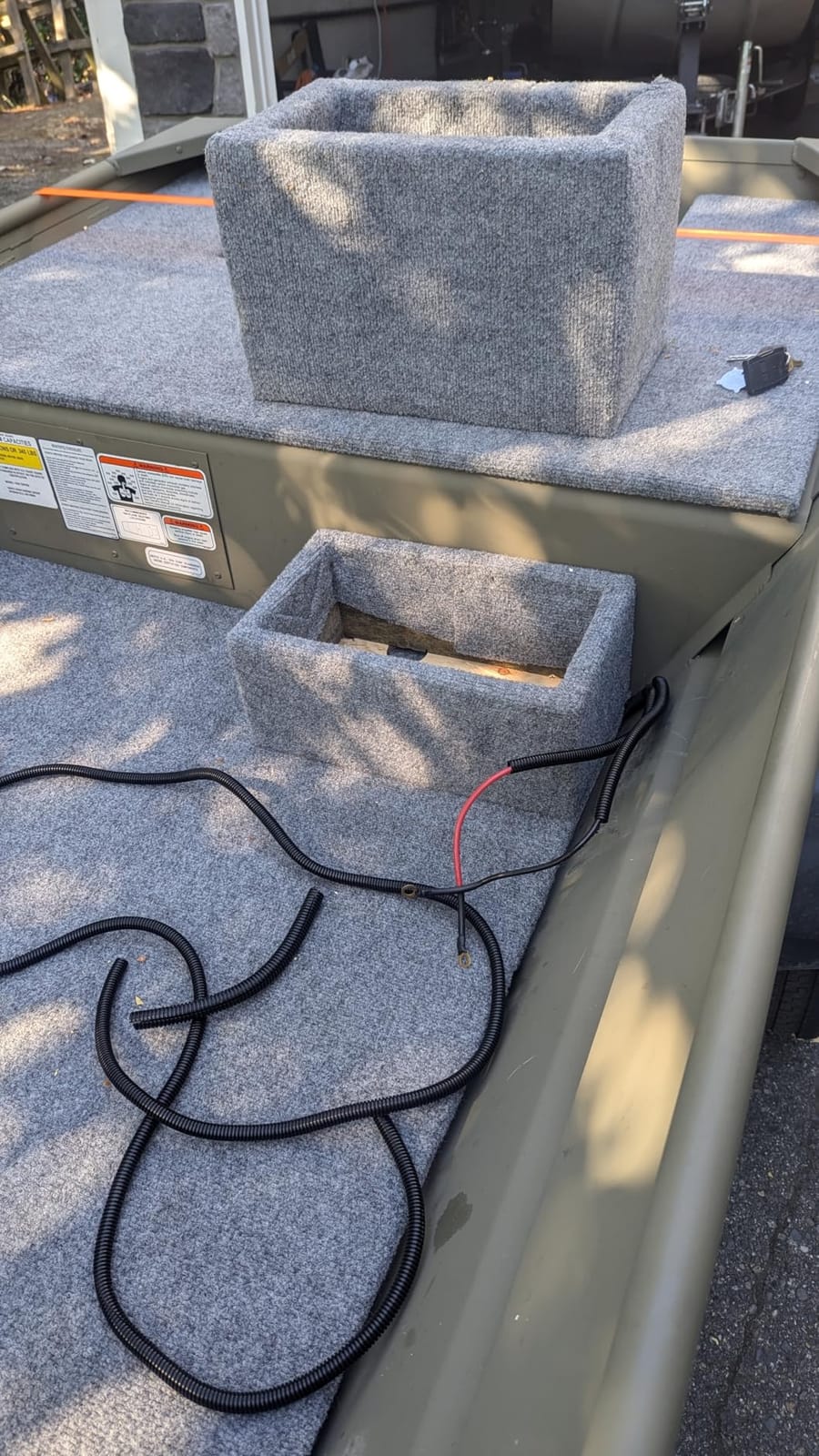
This one is purpose-built rather than adapted. It is rated for trolling motors up to 120 pounds of thrust, and the built-in TVS surge protector steadies output across a 12V to 36V motor, which is the specific complaint that comes up with cheaper lithium on a boat. At 22.16 pounds it is light enough to move between compartments without a second person.
Salt water is the environment it was designed for. The ABYC E-13 compliant BMS carries triple dust, water and salt-spray protection alongside the IP65 enclosure, and the 100A BMS manages the rest. For an off-grid cabin with a boat alongside, that marine qualification is the difference between a battery that lasts and one that corrodes.
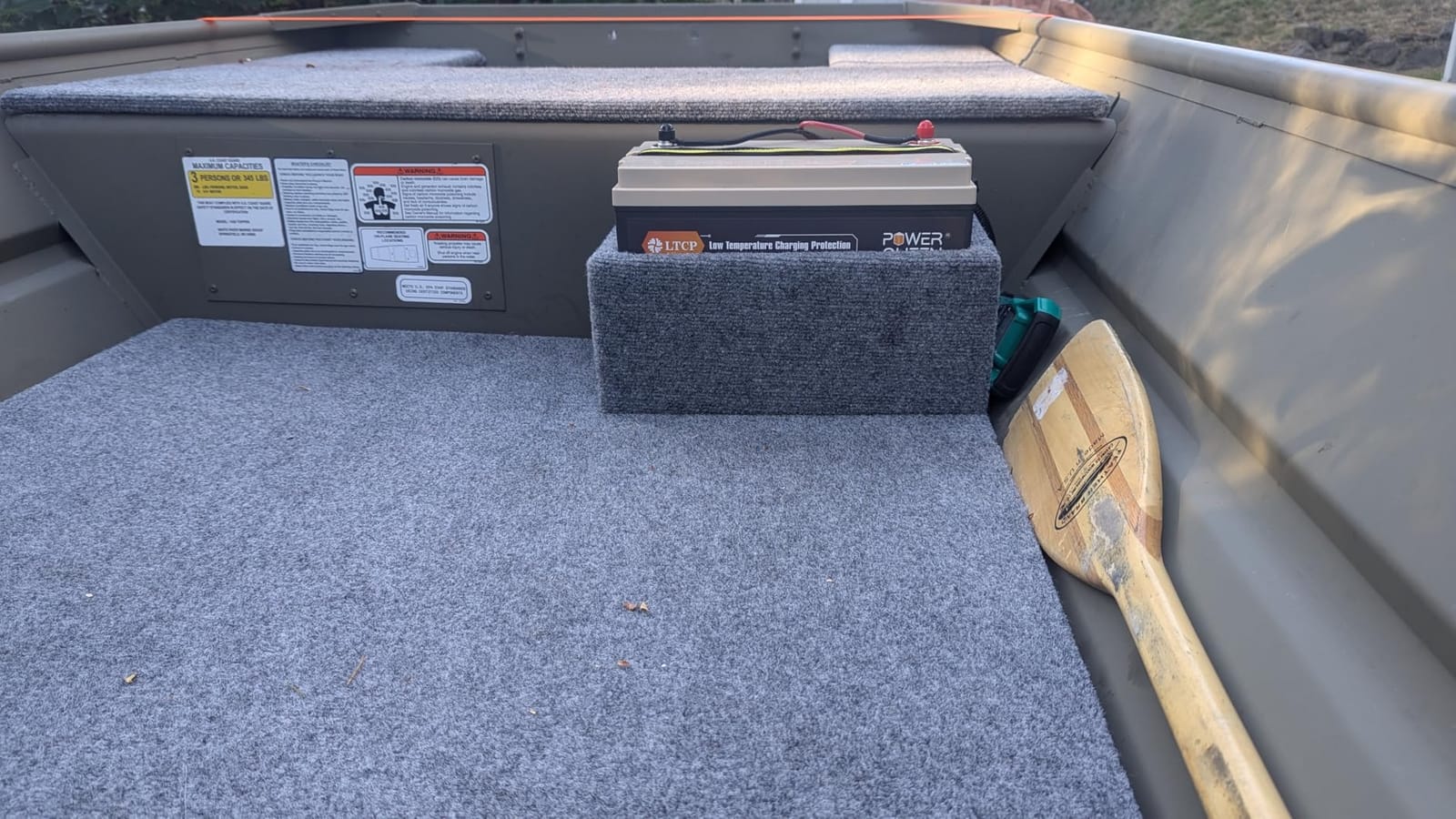
Temperature protection is specified clearly: charging stops below 32F, discharging below -4F. That is the standard lithium compromise, and it means winter boat use in cold climates needs a heated compartment or a shore-power charger rather than a solar-only trickle.
The honest drawback is the review spread. Owners praise the weight and surge handling, but a 10 percent one-star share is on the high side for this class, and the complaints cluster around units that stopped accepting charge. There is no Bluetooth here either, so add an external monitor if you want to know the state of charge before you run out of range.
Confirm your motor falls inside the rating
The 120 lb of thrust ceiling is a real limit, not a marketing average. Check your motor’s actual thrust rating and its peak current draw before you commit, because a motor above that figure will trigger the BMS disconnect and cut you off mid-trip.
Rinse and inspect the terminals on a schedule
No battery rating cancels out salt spray, and owners who pair this with a shore charger and regular terminal care report the best results. A monthly visual check and an annual terminal clean costs nothing and is the difference between a five-year battery and a three-year one.
11. LiTime 12V 100Ah Group 24 Skips the App Entirely
Litime 12v 100Ah RV LiFePO4 Lithium Battery for Van, Marine, Off-Grid
12.8V 100Ah Group 24
1280Wh usable
22.2 pounds
4P4S expansion
Pros
- True BCI Group 24 drop-in with no rewiring
- 1280Wh usable which is about double a comparable AGM
- Reported 8 percent charge loss over five months of winter storage
- 5-year warranty with replacement provided
Cons
- No Bluetooth monitoring on this variant
- Some batteries failed to accept charge after the wake-up procedure
- Warranty returns may require shipping the battery overseas
This is the LiTime Group 24 without the radio, and for plenty of installs that is the better choice. Some people never open the companion app, and some would rather not grant location access to a battery they installed in a locked shed. At 22.2 pounds with 1280Wh of usable energy, the electrical case stands on its own.
It is a genuine BCI Group 24 drop-in, so the wiring stays the same as the AGM it replaces. That matters for anyone upgrading in stages, and our [deep cycle battery guide](https://www.thirstybear.com/best-deep-cycle-batteries/) walks through what else changes beyond the battery when the chemistry does.
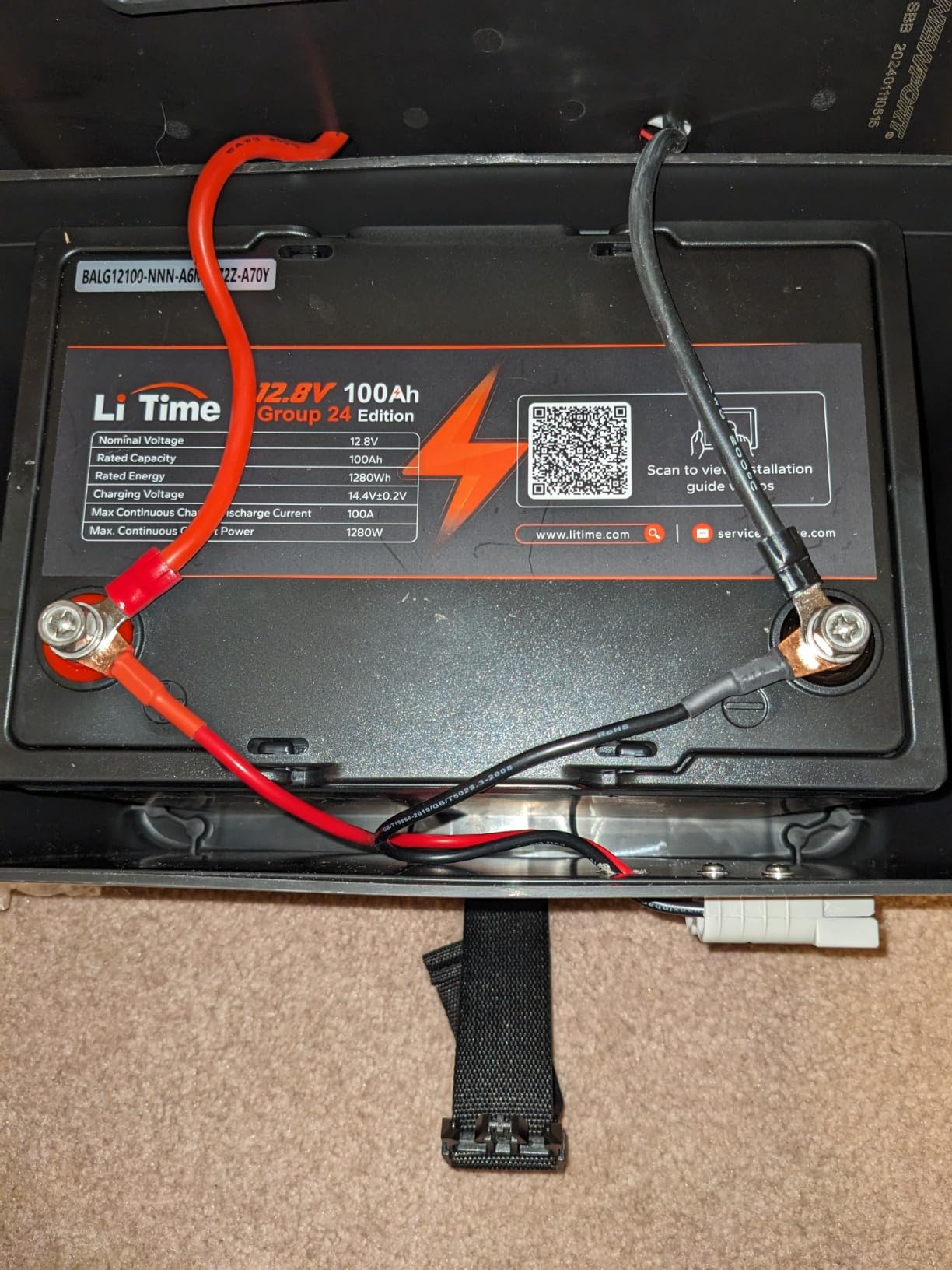
Winter storage data is the standout from the reviews: owners report losing only about 8 percent of charge over five months sitting unused, which reflects a low self-discharge rate. Grade-A LiFePO4 cells with a 100A BMS give overcharge, over-discharge, short circuit and overheat protection, rated for 4000-plus deep cycles.
The caveat is the warranty logistics. Failures are replaced under a five-year warranty, but the process can involve shipping the battery back overseas, which adds weeks to a repair. Owners also report a small number of batteries that would not accept charge after the initial wake-up, so top every unit up fully before you build the bank.
Skip it if you need remote telemetry
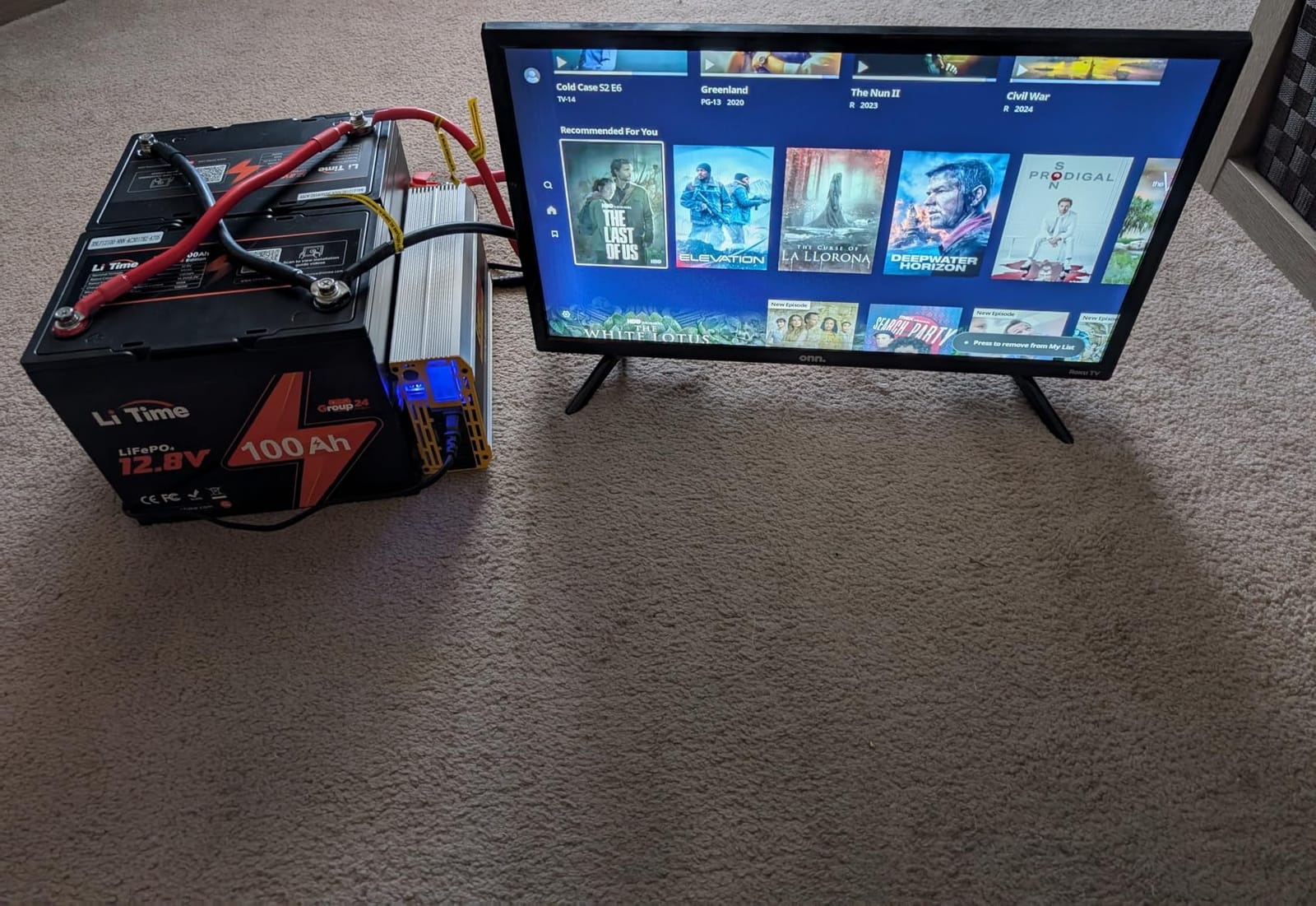
If you want to check the bank from inside the house without walking out to the equipment room, choose the Bluetooth version of the same battery instead. Otherwise, a shunt monitor at the inverter gives you better data than most apps, and it keeps working when the phone does not.
Check what your shore or generator charger supports
Switching from lead-acid to lithium usually means changing the charge profile, and this is the reminder that the battery is only half the job. Set the absorption and float voltages for lithium, confirm the charger’s low-voltage disconnect, and only then connect a bank.
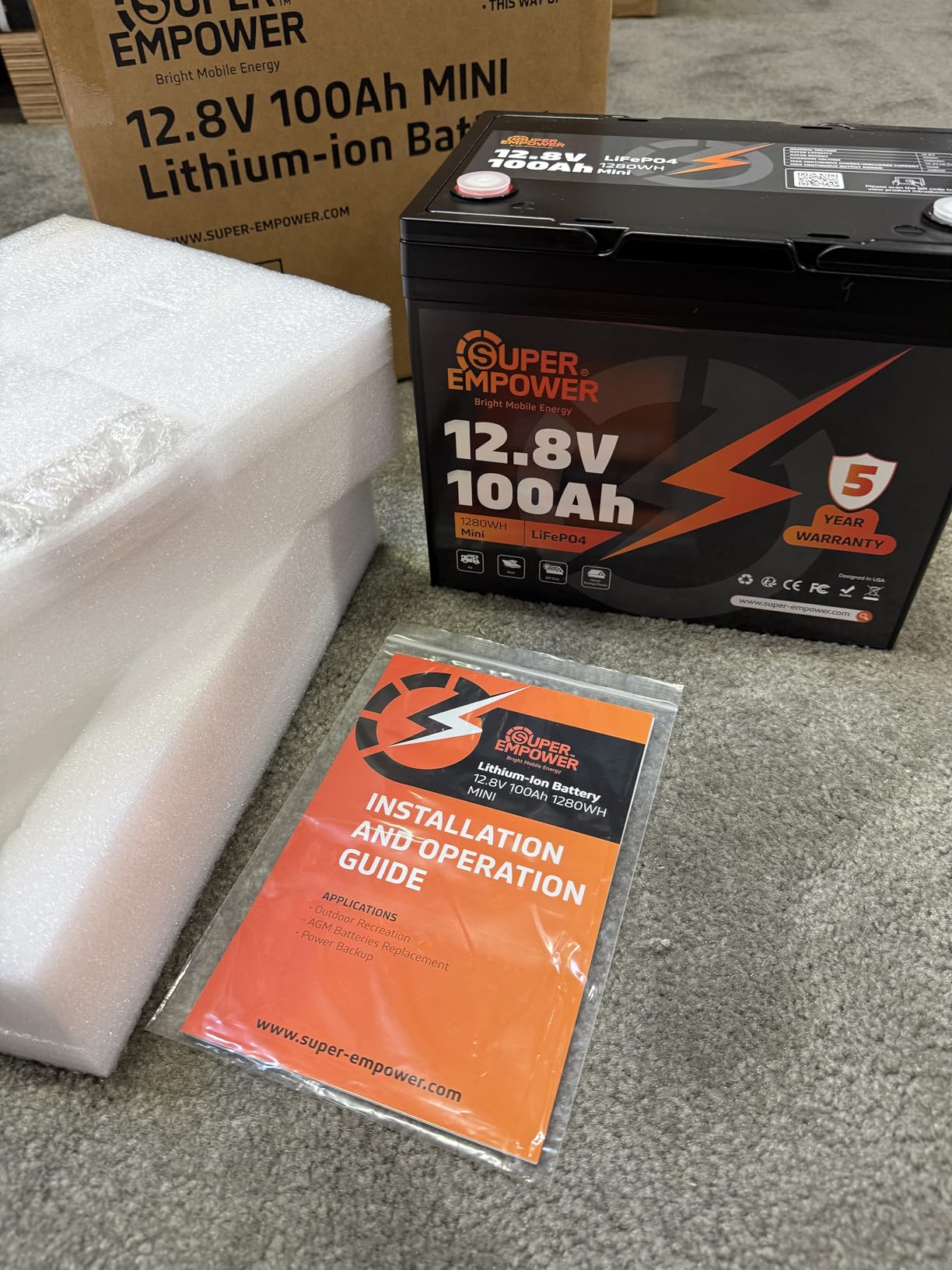
12. SUPER EMPOWER 12V 100Ah LiFePO4 Is an Affordable Way Into Lithium
12V 100Ah LiFePO4 Battery, Group 24 Deep Cycle for RVs & Trolling Motors
12.8V 100Ah LiFePO4
1280Wh
21.6 pounds
5-year warranty
Pros
- Among the most affordable 100Ah lithium options
- True Group 24 drop-in with M8 terminals at 21.6 pounds
- Low-temp cutoff below 32F resuming above 41F
- Works with MPPT and PWM charge controllers
Cons
- No Bluetooth or built-in state-of-charge display
- Not suitable for engine starting
- Non-lithium chargers are not recommended
If your priority is getting off lead-acid without moving the whole design, this is a clean swap. At 1280Wh and 21.6 pounds in a Group 24 case with M8 terminals, it drops into the same box as the AGM units here and roughly doubles your usable storage without a rewire.
The controller compatibility is unusually well specified for a budget unit. It works with both MPPT and PWM solar charge controllers in lithium mode, which widens the range of gear you can pair with it, and the low-temperature cutoff disables charging below 32F and resumes automatically above 41F.
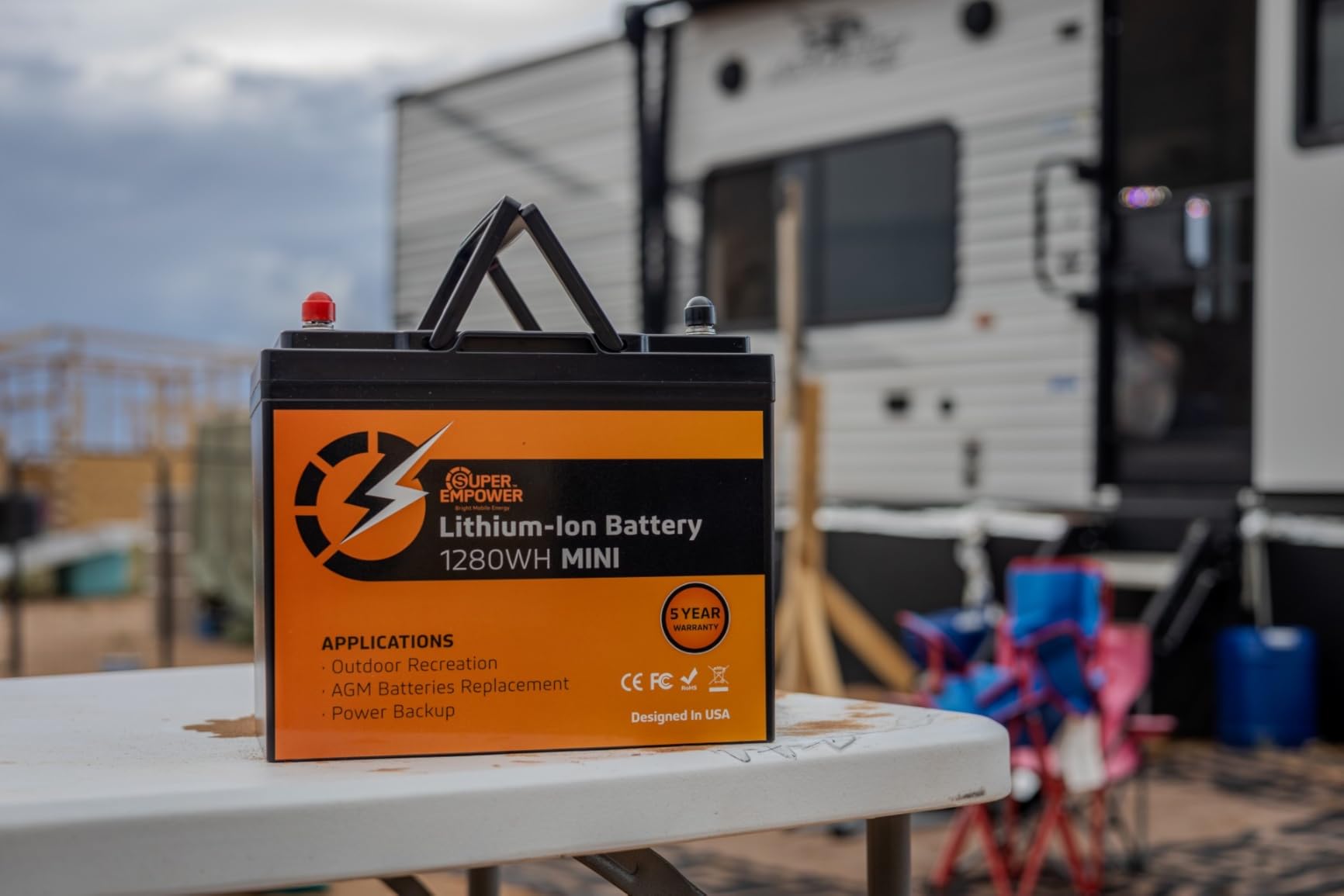
Grade-A cells with a 100A BMS and balancing across multi-battery banks make it a sound choice for a weekend cabin or a first off-grid build. Expansion runs to 4S4P, or 51.2V 400Ah, so a single unit today can become a full 48V array later without changing platforms.
Owners rate it 4.6 across 220 reviews, with the most requested addition being monitoring. There is no Bluetooth and no SOC display on this variant, so the state-of-charge picture comes entirely from your inverter or a separate monitor. Support response within 24 hours and a five-year warranty are both stated.
Use a lithium-profile charger only
Non-lithium chargers are explicitly not recommended, which is the single most important install note here. A lead-acid charger holds the bank at a higher float voltage and will cook cells over time. Set every charger, controller and inverter profile to lithium before the battery goes in.
Add monitoring if the system is your only power
Without a display, you are flying on inverter estimates. If this is your primary power source rather than a weekend backup, budget for a shunt-based monitor so you can see real remaining capacity. Our [car battery guide](https://www.thirstybear.com/best-car-batteries/) covers how starting-battery monitoring differs from storage use, which is a common source of confusion here.
How to Size an Off-Grid Battery Bank
Size your bank by energy, not amp-hours. Amp-hours only tell you how many amps a battery can deliver for how long, and the number that actually matters for an off-grid solar system is the watt-hours you can draw overnight. Here is the sequence we use.
Turn your daily load into amp-hours
Step one is to list everything you run after dark and add up the wattage, then multiply by the hours it runs. That gives you your daily watt-hour demand. Step two is to add a design margin of roughly 30 percent for cloudy stretches and seasonal variation. Step three is to divide that by the usable depth of discharge of your chosen chemistry, which is 100 percent for the lithium units in this roundup and about 50 percent for the AGM units.
Step four accounts for conversion losses between the battery, the inverter and your appliances, so divide again by about 0.9. Finally, convert watt-hours to amp-hours by dividing by your bank voltage. For a cabin drawing 2000Wh a night, that means 2000 times 1.3 for margin, divided by 0.9 for losses, which is about 2889Wh. On an AGM bank at 50 percent depth of discharge that is 482Ah, or five 100Ah batteries. On a LiFePO4 bank at full depth it is 241Ah, or three.
Pick 12V, 24V or 48V
Bank voltage is a decision about current, not about capacity. The same stored energy at 48V moves half the current that 12V does for the same power, which means thinner cables, smaller fusing and lower resistive losses in the inverter. Twelve volts suits loads under roughly 1kW and simple single-inverter builds. Twenty-four volts is the middle ground for loads in the 2kW to 3kW range. Forty-eight volts is the standard choice above that, and it is what most modern off-grid inverters are designed around.
The practical constraint is that the batteries in this roundup are 12V units, so a 48V bank is four of them in series. Check that each battery’s series rating supports that, and confirm your inverter expects 48V nominal before you commit. Our [lithium RV battery picks](https://www.thirstybear.com/best-lithium-rv-batteries/) cover the mobile side of that voltage decision.
Check inverter surge against continuous discharge
Every battery here publishes a continuous current and a peak figure, and they are not interchangeable. Size your continuous path against the continuous rating, then check that the peak figure covers the startup surge of your largest motor load. A well pump or compressor can ask for several times its running current for a second or two, and that is exactly what trips a BMS when the bank is undersized.
Leave headroom in the wiring to match. Parallel strings are usually cheaper than one very large battery, and they give you redundancy as a bonus. If one battery fails you can isolate it and keep running on the rest while you sort it out.
LiFePO4 vs AGM vs Flooded Lead-Acid for Off-Grid Solar
Chemistry choice drives almost every other decision in an off-grid system, from cable gauge to charge profile to how often you think about maintenance. Here is how the three main families compare on the factors that actually change your experience.
Usable depth of discharge is the biggest single difference
Lithium iron phosphate can be discharged to 100 percent of rated capacity without the damage that harms lead-acid, so a 100Ah lithium unit gives you 1280Wh of usable energy at 12V. A 100Ah AGM gives you roughly 600Wh in daily service because you should never take it below half charge. That is a doubling of usable storage for a similar footprint, and it is the single biggest reason lithium wins on a daily-cycling system.
Cycle life numbers only mean something with their test conditions
Flooded lead-acid typically lasts 300 to 1000 deep cycles, AGM around 500 to 1000, and LiFePO4 commonly 4000 or more, with several units in this roundup claiming 15000 cycles at 60 percent depth of discharge. Always read the depth of discharge attached to the figure. A 15000-cycle rating at 60 percent depth and a 4000-cycle rating at 100 percent are not the same claim, and quoting them side by side without that context is the most common misleading practice in this category.
Cold-weather charging is the 32F rule
Lithium cells cannot safely be charged below freezing, because charging a cold cell plates lithium onto the anode and permanently damages it. The batteries here with a stated cutoff block charge below 32F, and the SUPER EMPOWER unit resumes automatically above 41F. The ECO-WORTHY 314Ah in this roundup is the exception, with charging disabled only below -7C, or about 19F. Lead-acid has no such cutoff, which is why generator-assisted systems in cold regions still get argued about on the forums.
Maintenance, weight and space
Flooded lead-acid needs watering, venting and periodic equalization, and it releases gas, so it needs an ventilated enclosure. AGM is sealed and maintenance-free but still heavy, with the AGM units here weighing 57 to 67 pounds per 100Ah battery. Lithium is roughly a third of that weight, needs no servicing and can sit indoors, though you should still confirm fire safety and placement requirements for your local code before installing a large bank inside a living space.
Matching the Battery to Your Inverter and Charge Controller
The battery is the part of an off-grid system that people get wrong second, after sizing. Compatibility issues cause shutdowns, refused charge and in the worst case damaged cells, and all three are avoidable at specification time rather than after commissioning.
Set the LiFePO4 charge profile before anything else
A lithium battery needs a different charge profile from lead-acid: a specific absorption voltage, a shorter or absent equalization stage, and a low-voltage disconnect set to match lithium rather than the lead-acid default. If your charge controller or inverter does not have a lithium profile, you need external charge management, and that is a dealbreaker for an unattended system. This is the single most common mistake in lead-acid to lithium conversions.
Size cables and fuses for the new bank
Two things change at conversion. First, lithium can push higher continuous current, so your cables and fusing must be sized for the higher figure rather than reused from the lead-acid install. Second, if you also change bank voltage, every cable run needs rechecking. Larger battery banks also need a proper battery fuse close to the bank, and a disconnect you can reach without tools in an emergency.
Generator backup changes the answer
Generator-assisted systems behave differently because the generator tops the bank up whenever fuel allows, so the bank sits at high charge most of the time. That makes cold-weather charging lockouts less damaging, since the generator can bring the battery up to temperature before charging. It also reduces how much bank you need, because you are not relying on stored solar alone. Plenty of people reading this have asked whether the conversion is simply a battery swap, and the honest answer is that the batteries are the easy part.
When to Skip Lithium and Buy Lead-Acid Instead
Lithium is not automatically right. In one of the most-read off-grid discussions on the query, a homestead owner running only a small refrigerator through winters near 0F asked specifically for flooded, AGM or gel recommendations and explicitly did not want to be sold lithium again after a previous experience went wrong. That is a reasonable position, and here is when it holds up.
Lead-acid makes more sense when the load is light and infrequent, when the system is a backup rather than a primary supply, when the budget is fixed and the money is better spent on panels, and when you have somewhere ventilated to put a bank that vents gas. The AGM units in this roundup, including the pre-wired WindyNation pair, cover that case well. Experienced builders on the solar DIY forums make the same point from the other direction: lead-acid is close to worthless for daily cycling, so match the chemistry to how often the bank will actually be discharged.
One honest limitation: every battery here is a 12V unit, and there is no flooded or 6V golf cart option in this group. Golf cart and 2V high-capacity flooded banks remain a legitimate budget route for a homestead that cycles rarely, and they carry a decade of field history in some markets, but they need watering, venting and more floor space than anything on this list.
Frequently Asked Questions
Are LiFePO4 batteries better than AGM for off-grid solar?
For a system that discharges the bank every day, yes. LiFePO4 gives roughly double the usable capacity per battery, holds about a third of the weight, charges with less energy lost and needs no watering. AGM wins when the load is light, the bank is a backup rather than a primary supply, or your site is cold and generator-assisted, since lead-acid has no low-temperature charge lockout.
What size solar battery do I need to be off-grid?
Work from your daily energy use rather than amp-hours. List everything running after dark, add wattage times hours for daily watt-hours, add about 30 percent margin, divide by usable depth of discharge (100 percent for LiFePO4, roughly 50 percent for AGM), divide again by 0.9 for conversion losses, then divide by bank voltage to get amp-hours. Divide that by 100Ah to count 12V batteries.
What kills AGM batteries?
Heat and sulfation are the usual causes. Leaving a sealed AGM partially charged for long stretches lets lead sulfate build up on the plates, and running a bank below roughly 50 percent depth of discharge accelerates that further. Sustained high temperature speeds electrolyte loss. Keeping the bank full, avoiding deep discharge and keeping it cool extends life more than any brand difference.
Can I charge a LiFePO4 battery below 32F?
No. Charging a lithium cell below freezing plates lithium onto the anode and permanently reduces capacity, so the batteries here with a stated cutoff block charging below 32F, and the SUPER EMPOWER unit resumes above 41F. The ECO-WORTHY 314Ah in this roundup is the exception, cutting off only below -7C, about 19F. If your winters go colder, use a heated battery compartment or charge from a generator or shore supply instead of solar alone.
How long do deep cycle batteries last off-grid?
Flooded lead-acid typically delivers 300 to 1000 deep cycles, AGM around 500 to 1000, and LiFePO4 commonly 4000 or more, with some units claiming 15000 cycles at 60 percent depth of discharge. On a daily-cycling system, a 4000-cycle rating at 100 percent depth of discharge works out to more than a decade of daily use. Cycle figures are only comparable when read with their test conditions.
The Best Deep Cycle Solar Batteries for Off-Grid in 2026
For most off-grid solar systems, the best deep cycle solar battery for off-grid use in 2026 is the WEIZE 12V 100Ah AGM on proof of durability, the LiTime 12V 100Ah Group 24 with Bluetooth on features and rating, and the Renogy 12V 100Ah AGM on value for a sealed lead-acid build. If your bank cycles daily and you can handle lithium charging rules, the lithium entries give you roughly double the usable energy for a third of the weight, and the ECO-WORTHY 314Ah is the one to look at if your winters go below freezing.
Whichever you pick, set the charge profile for your chemistry before you wire anything, and size the bank from your nightly load rather than from a number in a listing. Our [deep cycle battery guide](https://www.thirstybear.com/best-deep-cycle-batteries/) goes deeper on the install side when you are ready to build.