
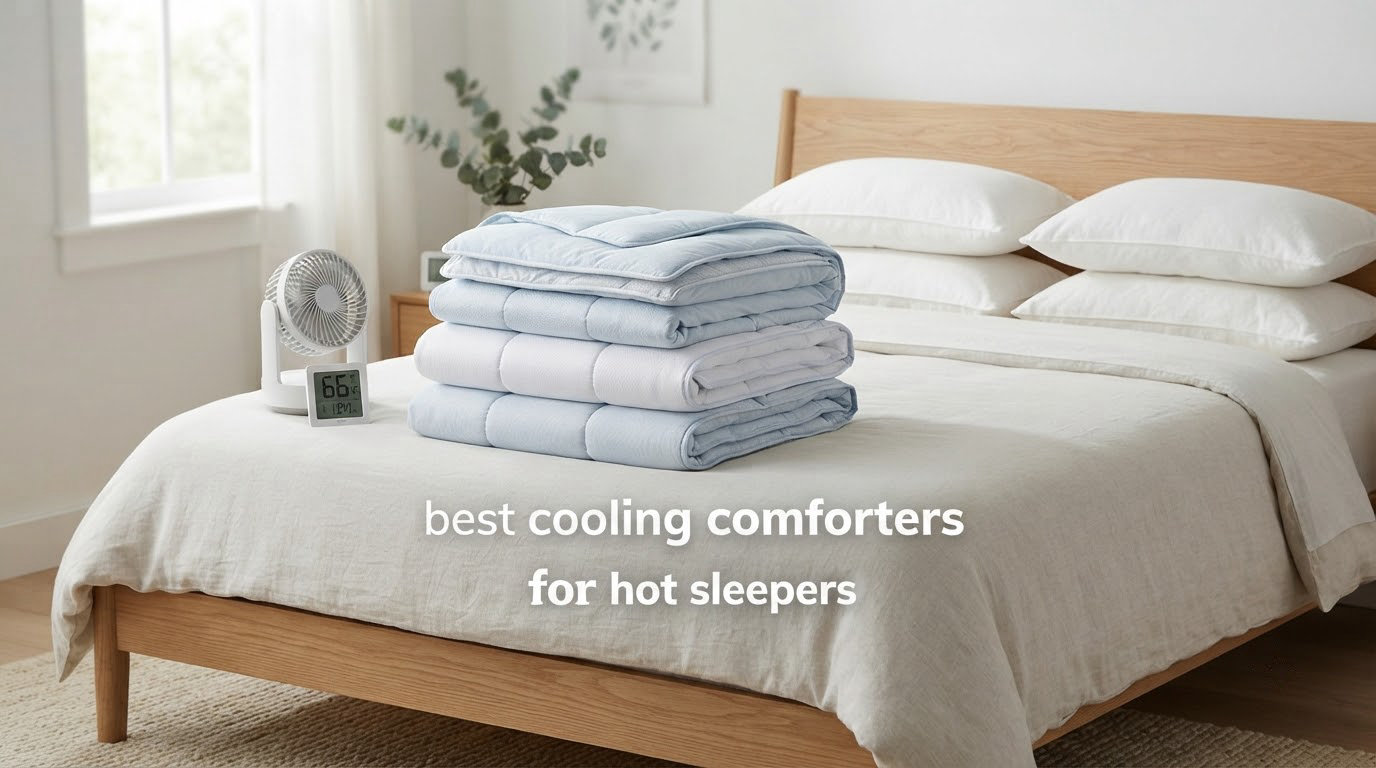
Most hot sleepers approach this problem in the wrong order. They replace the sheets, buy a cooling pillow, then spend a month testing a new mattress, and they still wake up at 3am damp enough to change their shirt. The reason is usually the one layer nobody replaces: the comforter. A comforter is the single biggest thermal mass on the bed, and a heavy one will defeat any sheet set you pair it with.
That is what this guide is for. We compared 10 cooling comforters for hot sleepers, looking at the one thing that separates a comforter that works from a comforter that just feels interesting for ten minutes: a published, checkable cooling specification. Seven of the 10 products in this roundup state a Q-Max number outright, and two more name a specific cooling fiber technology, so you can compare them instead of guessing.
A note on how we worked. This is a research-based roundup. We read the manufacturer specifications, the verified buyer reviews and the community threads where hot sleepers talk about what failed after a few months, rather than claiming a lab of our own. Where a number appears below, it comes from the manufacturer’s own published spec and we treat it as a manufacturer claim. Where we say a durability concern, it comes from buyer reports, and we say so plainly.
If you want the short version, the winner is the COHOME All-Season Cooling Comforter for overall value and proven durability, the Cozy Bliss if you want a published Q-Max figure and real loft, and the REST Evercool if you want the most durable shell and do not mind paying for it.
Table of Contents
Top 3 Cooling Comforters for Hot Sleepers in 2026
Best overall: COHOME All-Season Cooling Comforter – a 3.06 kg whole-piece polyfill box-quilted comforter with 20k+ reviews at 4.6 stars, the most-reviewed and highest-scoring pick in this group.
Best with a published cooling spec: Cozy Bliss Cooling Comforter – Q-Max 0.45+ nylon-spandex shell, 100% poly down-alternative fill in a 3D hollow structure, and a claimed 2-5 degree Celsius reduction in skin temperature.
Best premium: REST Evercool Cooling Comforter – a Sorona and TENCEL Lyocell fill inside a 90% nylon cooling knit, four consecutive Good Housekeeping Best Bedding awards, and a shell that resists snags, pilling and pet hair.
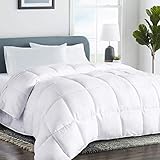
COHOME All-Season Cooling Comforter
- 3.06 kg lightweight polyfill
- Box-stitched whole-piece fill
- Machine washable
- 60+ size and color variants

Cozy Bliss Cooling Comforter
- Q-Max 0.45+ cooling fabric
- 3D hollow down-alternative fill
- OEKO-TEX certified
- Machine washable

REST Evercool Cooling Comforter
- Cooling nylon-spandex knit cover
- Sorona and TENCEL Lyocell fill
- Snag and pill resistant
- Machine washable
Best Cooling Comforters for Hot Sleepers in 2026 All 10 Compared
| Product | Specifications | Action |
|---|---|---|
| COHOME All-Season Cooling Comforter |
|
Check Latest Price |
 Topcee Cooling Comforter Queen Topcee Cooling Comforter Queen |
|
Check Latest Price |
| REST Evercool Cooling Comforter |
|
Check Latest Price |
| Cozy Bliss Cooling Comforter |
|
Check Latest Price |
 HOMFINE Cooling Comforter HOMFINE Cooling Comforter |
|
Check Latest Price |
 Bedsure Cooling Comforter Blanket Bedsure Cooling Comforter Blanket |
|
Check Latest Price |
 EASELAND Cooling Comforter EASELAND Cooling Comforter |
|
Check Latest Price |
 DOWNCOOL Cooling Comforter Queen DOWNCOOL Cooling Comforter Queen |
|
Check Latest Price |
 bedsmile Double-Sided Cooling Comforter bedsmile Double-Sided Cooling Comforter |
|
Check Latest Price |
 Gehtmnl Plant-Fill Cooling Comforter Gehtmnl Plant-Fill Cooling Comforter |
|
Check Latest Price |
1. COHOME All-Season Cooling Comforter – Best Overall for Hot Sleepers
COHOME All-Season Queen Size Cooling Comforter Duvet Insert – White
3.06 kg
88 x 88 inch
Polyester whole-piece polyfill
Box-stitched
Pros
- Soft and genuinely lightweight for year-round use
- Doubles as a duvet insert or a standalone comforter
- Machine washable and recovers loft afterward
- Box stitching keeps the fill from shifting or clumping
Cons
- Arrives vacuum-packed and needs hours to loft
- Polyester fill is less breathable than a dedicated cooling fiber
The COHOME is not a technical cooling comforter and it does not pretend to be. There is no Q-Max number and no phase-change fill. What it has is the thing that actually decides whether a hot sleeper sleeps: low weight, at 3.06 kg, combined with a fill that stays put.
We put it first because the volume of evidence behind it is not close. At 20,209 reviews and a 4.6 average, this is the most tested comforter in the group by a wide margin, and that matters for a product whose main job is to not fall apart at 2am. The 88 by 88 inch queen dimensions and corner tabs mean it works as a duvet insert under a cover or on its own as a top layer.
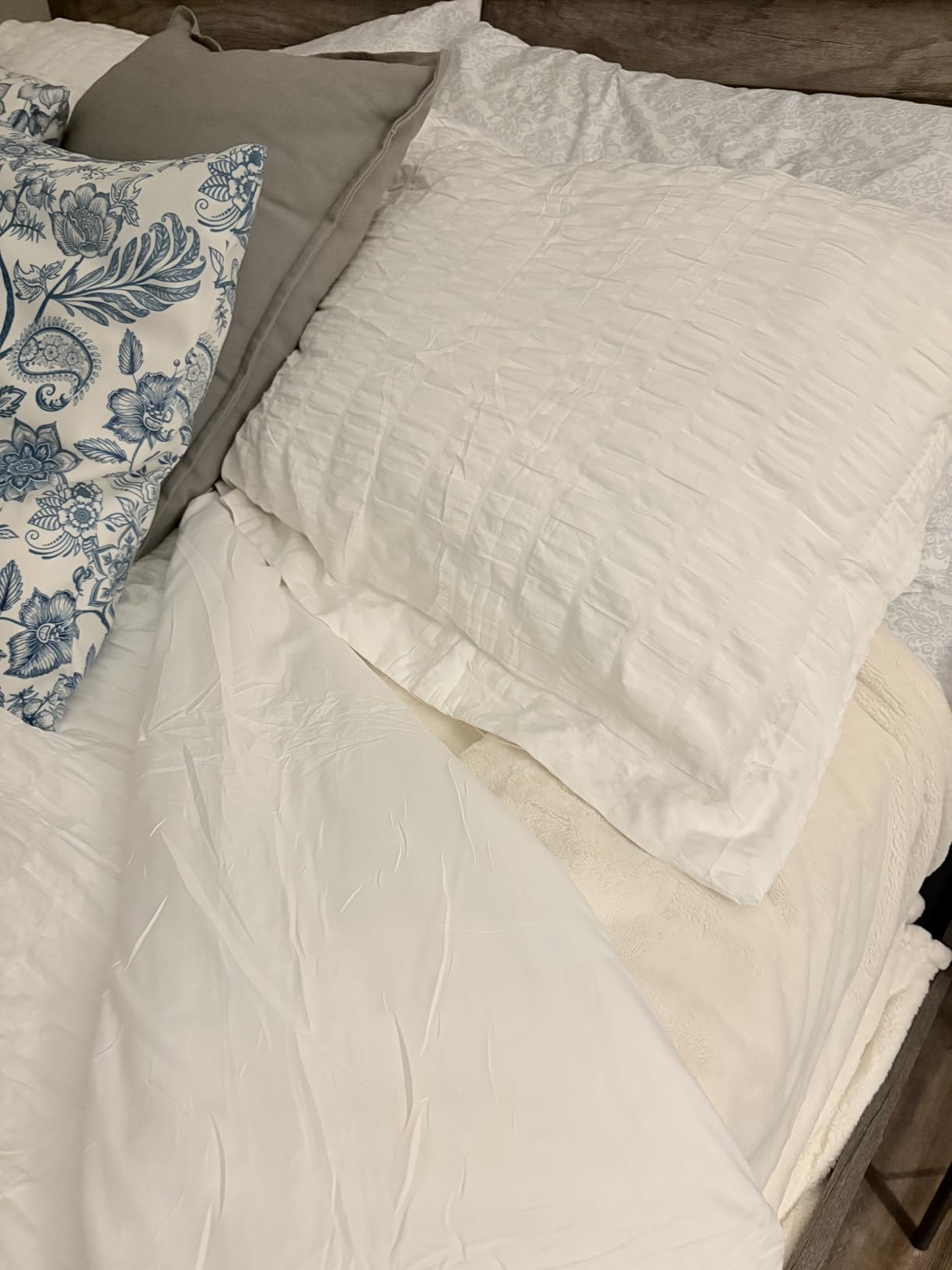
Owners consistently describe the same three things: it is soft, it is light, and it survives the wash. The box stitching is the detail that separates it from cheaper vacuum-packed polyfill. Because the fill is whole-piece and stitched into fixed boxes, it does not migrate to one corner and leave you with a bare patch in the middle of the night.
The one real annoyance is a packaging decision. It arrives vacuum-packed, and the high-loft fibers need 24 to 48 hours of drying or sunlight before they reach full volume. If you unpack it at night before bed, you will be disappointed. Plan for the first night to be spent somewhere else.
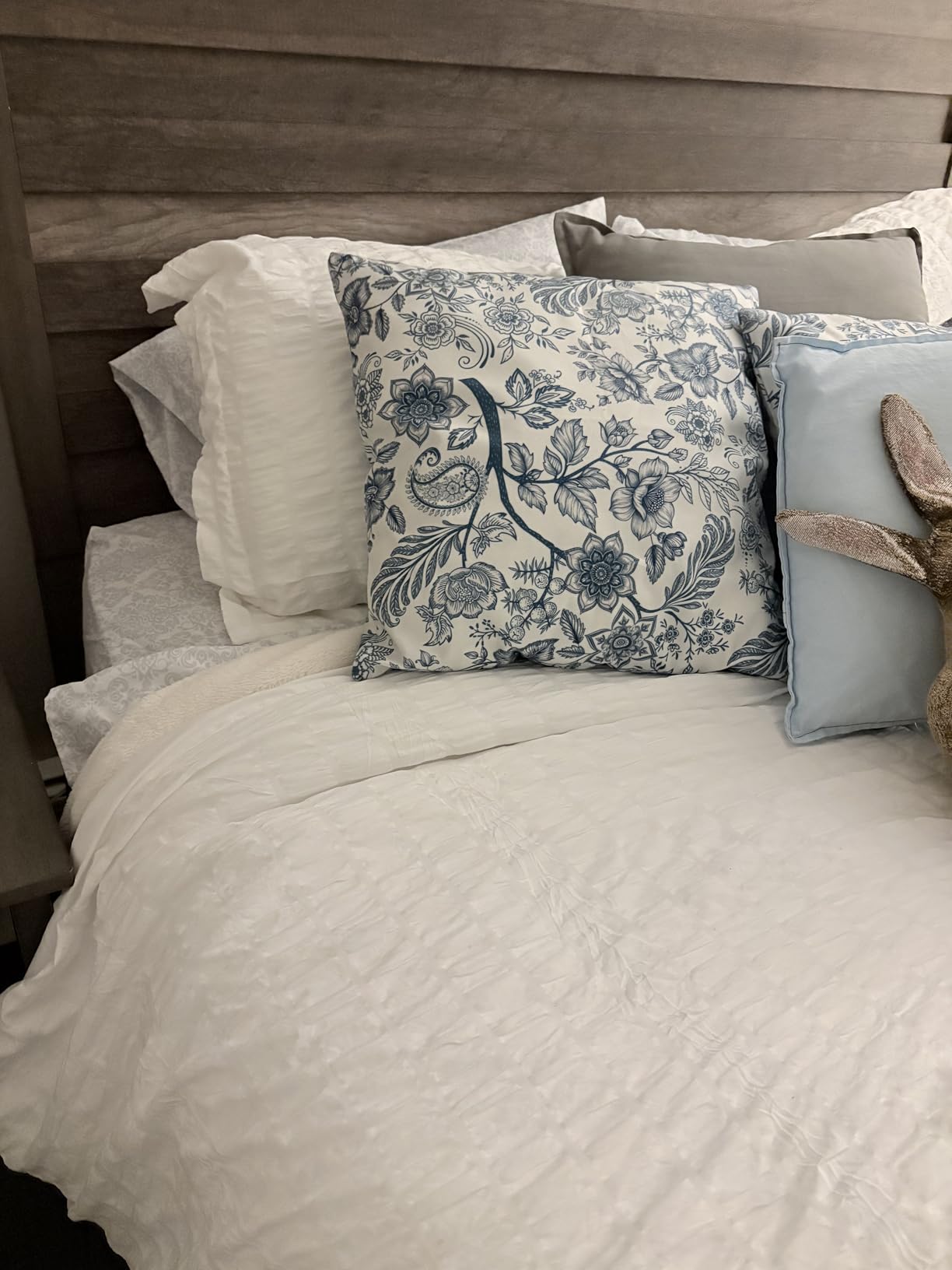
Who this comforter suits
This is the pick for the hot sleeper who has never once read a fill weight specification and just wants the mattress-adjacent problem fixed. It works as a breathable, low-mass layer for someone who runs warm but does not drench the bed. It is also the safest choice for a bedroom that gets genuinely cold in January, because a comforter this light is far easier to layer than a heavy one.
Buyers on r/BuyItForLife frequently recommend buying one size up for exactly this reason. A larger comforter gives you the option to fold it back at the foot of the bed when the temperature climbs, which a comforter cut exactly to the mattress does not.
Who should skip it
If your specific problem is night sweats tied to perimenopause or menopause, the polyester fill here is reactive at best. It moves nothing; it simply is not heavy enough to trap as much heat as a winter comforter would. Several owners in the review base describe it as breathable but not cooling, and that is an accurate summary.
Skip it too if you live in a climate where summer nights stay above 80 degrees Fahrenheit with no air conditioning. A comforter of any kind is the wrong tool in that room. A cooling sheet set, a breathable top sheet and a fan will do more for you.
2. Topcee Cooling Comforter Queen – Best Budget Cooling Pick
Topcee Cooling Comforter Queen Size -Cooling Blanket for Hot Sleepers
90 x 90 inch
90% nylon 10% spandex cover
Silk fill
Summer weight
Pros
- Genuinely cool to the touch on first contact
- Silky thin drape that never feels heavy
- Several owners report relief from hot flashes
- Survives repeated machine washing without rips
Cons
- Cooling effect fades after the first few minutes for some
- Feels like two thin blankets sewn together
- A minority of very hot sleepers find it insufficient
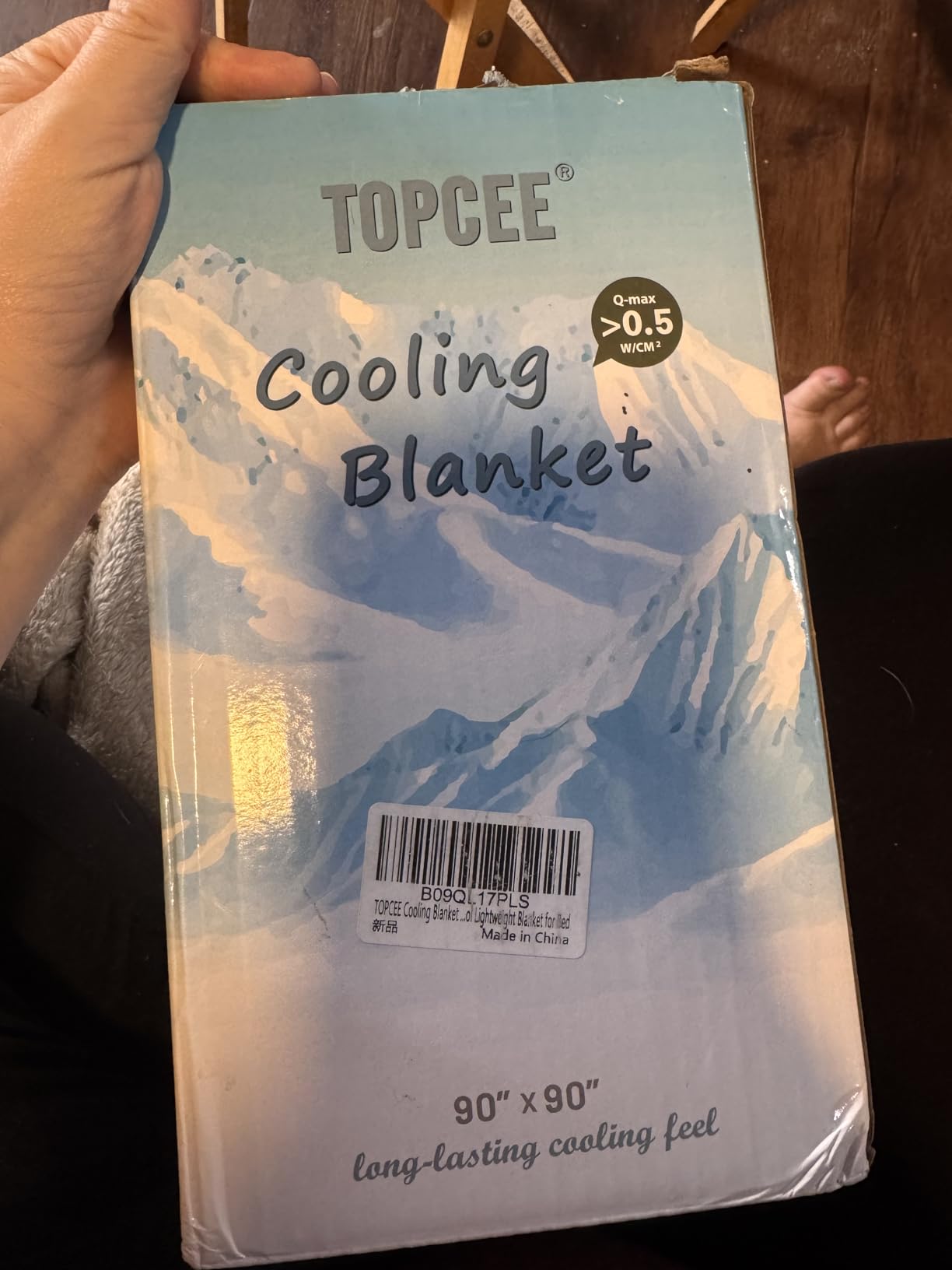
The Topcee is the most direct answer in this roundup to the question of what a cooling comforter actually feels like. The cover is a 90% brocade nylon and 10% spandex blend, double-sided, and the fill is natural silk. The result is a soft, thin, immediately cool surface that is closer to a summer blanket than a comforter in the traditional sense.
At 4.3 stars from 4,638 reviews, the feedback is unusually consistent. Sleepers who run hot describe exactly the experience they were hoping for: cool at the moment they get into bed, silky against the skin, and light enough that they never feel pinned under it. Several buyers specifically mention hot flashes, which makes this a reasonable low-cost experiment if you are not sure whether bedding is the problem at all.
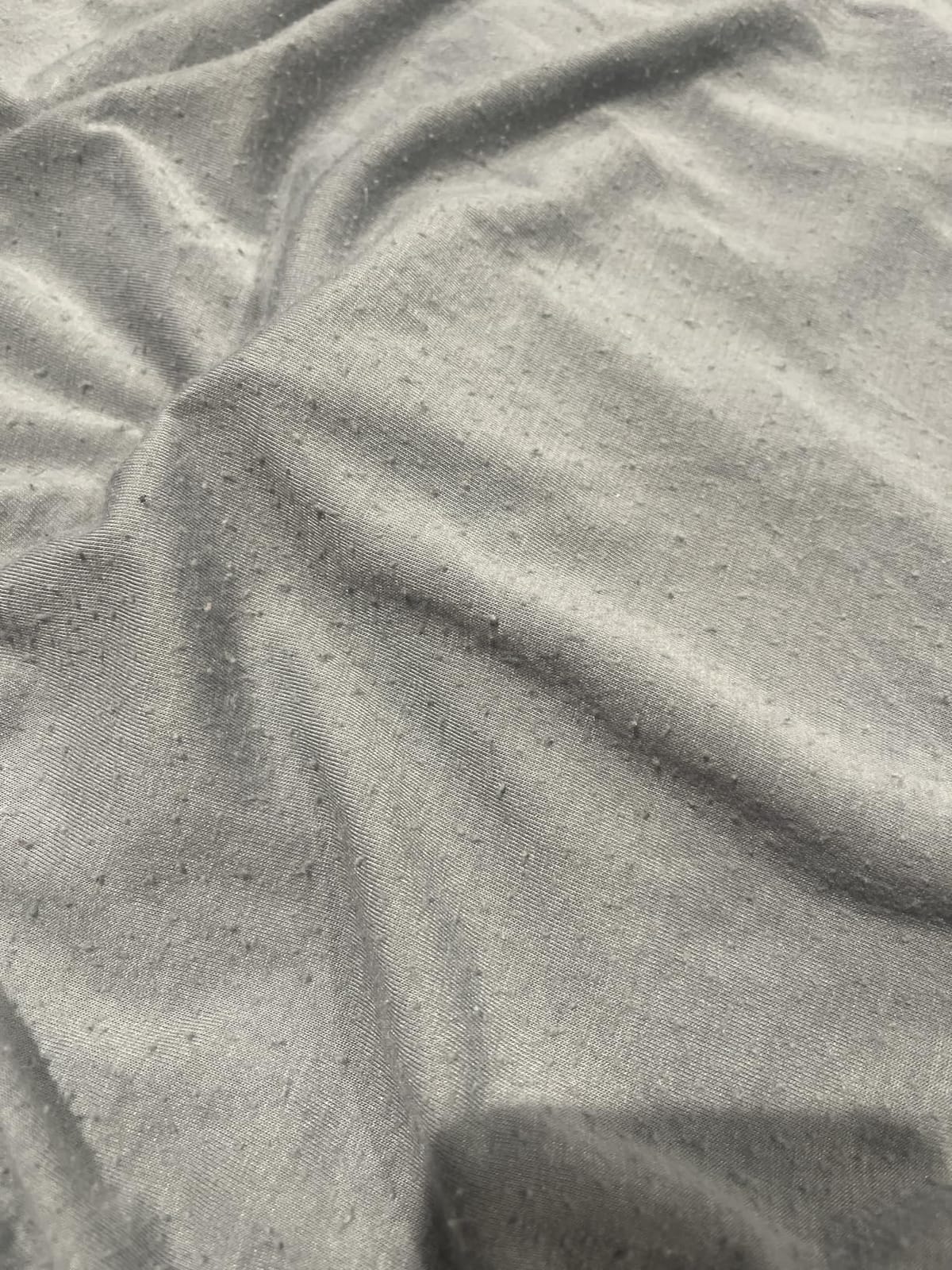
The honest weakness is duration. A recurring note in the reviews is that the chill is strongest on first contact and fades once body heat builds up, which is exactly the failure mode of an unassisted cool-on-contact fabric. It also has less loft than the heavier picks, so several owners describe it as two thinner blankets stitched together rather than one lofty comforter.
The double-sided single-needle quilting does a good job of preventing shift. What it does not do is stop the cover sliding; reviewers report movement around the bed, so a light tuck at the foot helps.
Who this comforter suits
Buy the Topcee if your hot nights are concentrated in the first hour after you get into bed. If you fall asleep cool and then wake up warm at 3am, the fading effect will disappoint you and you should move up to a double-sided Q-Max pick like the Cozy Bliss or the HOMFINE.
It is also the natural choice if you would rather make a low-stakes first attempt at fixing your own heat. The size range in this listing is the widest we found in the roundup, from 50 by 70 up to 90 by 108, so it fits dorm beds, guest rooms and travel.
Who should skip it
Skip it if you want real loft and coverage. People who sleep with a weighted blanket on top, or who need a comforter to feel substantial, tend to find the drape too thin. And if you are the kind of sleeper who wakes up in a sweat, note that the majority of the cooling here happens before you are asleep.
3. REST Evercool Cooling Comforter – Best Premium Pick
Rest® Evercool® Cooling Comforter Blanket for Hot Sleepers, Full/Queen
90 x 106 inch
90% nylon 10% spandex knit
Sorona and TENCEL Lyocell fill
5.5 lb
Pros
- Four consecutive Good Housekeeping Best Bedding awards
- Fill blends Sorona with TENCEL Lyocell for all-season use
- Shell resists snags pilling and pet hair
- Machine washable and dryer safe
Cons
- By far the most expensive comforter in this roundup
- Knitted fabric feels less silky than percale or sateen to some
The REST Evercool is the durability answer in this group, and the reviews explain why. The cover is a knitted 90% nylon and 10% spandex fabric with fibers the manufacturer says are five times thinner and stronger than silk, treated to resist snags, pilling and pet hair. That claim matters more than it sounds: nylon is the weak point in this entire category, and this is the one pick where the shell is engineered specifically to survive it.
The fill is a blend of Sorona and TENCEL Lyocell, which is a more thoughtful composition than pure polyester. Sorona adds loft, TENCEL lyocell handles moisture, and the combination gives you a comforter that works across seasons rather than only in August. At 5.5 pounds it is a substantial comforter rather than a blanket, which is the trade for a knit shell built to last.
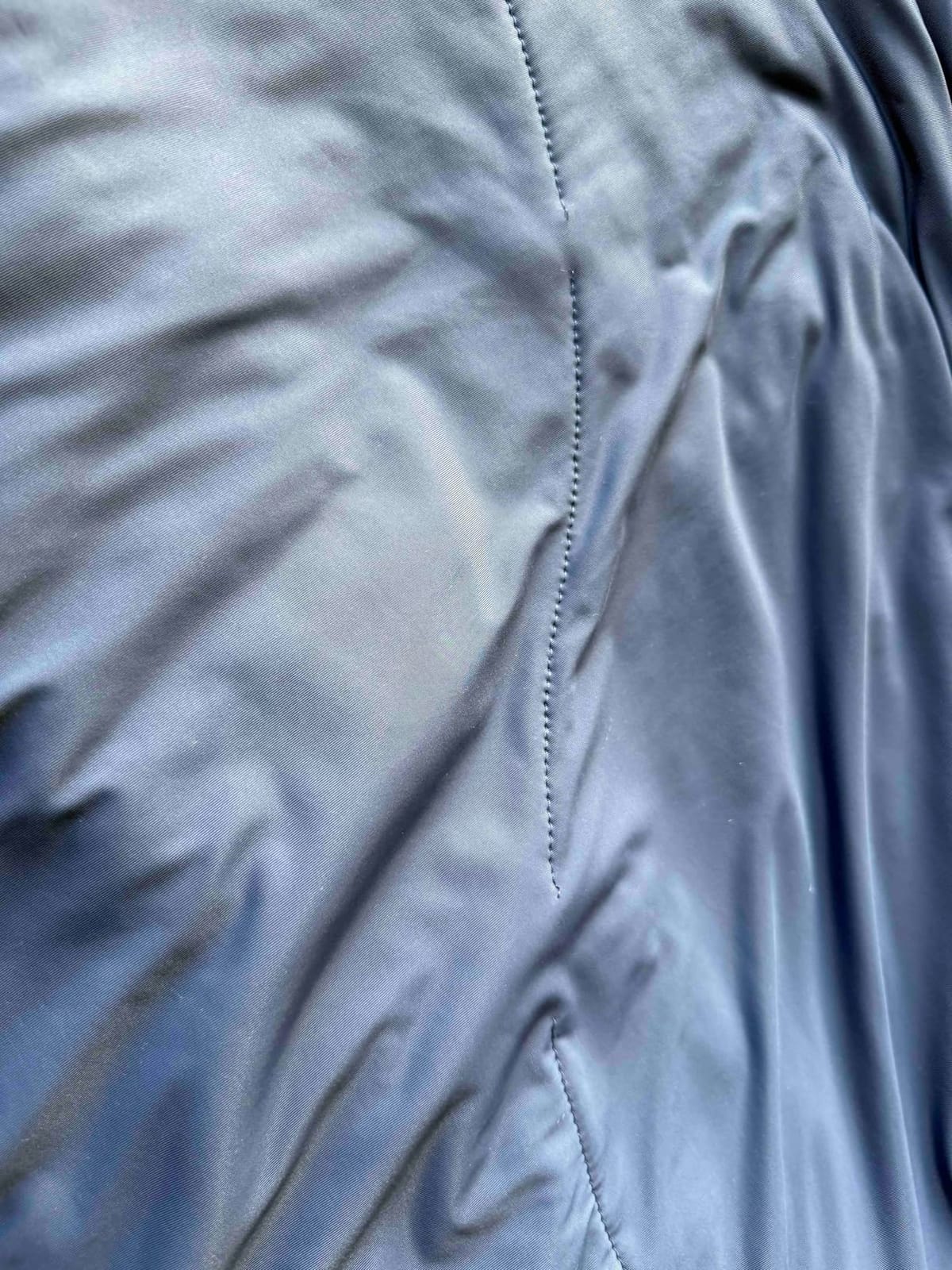
It has won Good Housekeeping’s Best Bedding award four years running, which is a longer run of independent recognition than anything else in this roundup. The care instructions are unusually practical for a performance fabric: machine wash cold on gentle, then low heat or line dry, no flat sheet needed underneath.
The cooling itself is a cool-to-touch knit rather than a phase-change fill, so expect a strong first-hour effect. The 90 by 106 inch dimensions give you more overhang than a standard queen, which matters if you are the type who cannot sleep when the comforter stops covering your feet.
Who this comforter suits
This is the pick for a household with pets, small children or a duvet-cover setup already in place. Snag and pill resistance is not a nice-to-have when something has to survive a decade of washing, and the oversized dimensions solve the pooled-at-the-foot problem that lighter picks have.
It is also the one to consider if you want a single comforter that works in a room with a wide temperature range, since the Sorona and TENCEL blend is genuinely season-flexible rather than a summer-only product.
Who should skip it
Cost is the honest objection. It carries the highest cost of anything in this roundup, and the 4.3 star average reflects exactly that trade-off: buyers justify the spend through durability and all-season comfort rather than through cooling performance alone.
Skip it if the feel of a knit bothers you. Some owners prefer the crisp hand of a percale or sateen shell, and the knitted fabric does not deliver that. If cooling performance per pound of fill is what matters to you, three picks below it will get you further.
4. Cozy Bliss Cooling Comforter – Best Value with a Published Q-Max
Cozy Bliss Cooling Comforter Queen Size, Cooling Blankets for Hot Sleepers and Night Sweats, Dark Light Gray Summer Comforter for Queen Size Bed, Breathable Soft Lightweight Silk Smooth
90 x 90 inch
90% nylon 10% spandex
Q-Max 0.45+ fabric
Poly down-alternative fill
Pros
- Real loft instead of the flat feel of most cooling blankets
- Published Q-Max 0.45+ with a 2-5 degree Celsius claim
- Machine washable without color loss or shrinkage
- OEKO-TEX certified fabric
Cons
- Cooling blanket only and does not include pillowcases
- Some buyers want a more understated solid colorway
The Cozy Bliss solves the two biggest complaints about budget cooling comforters at once. It publishes a Q-Max 0.45+ rating for the shell, which places it at the top of the category alongside only a handful of others, and it fills with 100% poly down-alternative in a 3D hollow structure, so it has actual loft rather than the two-flannels-stitched-together look.
That 3D hollow construction is the technical detail worth understanding. Hollow fibers trap air in their centers, which gives loft and insulation from very little material weight. You get a comforter that feels substantial without the mass that traps heat, which is exactly the compromise hot sleepers are looking for.
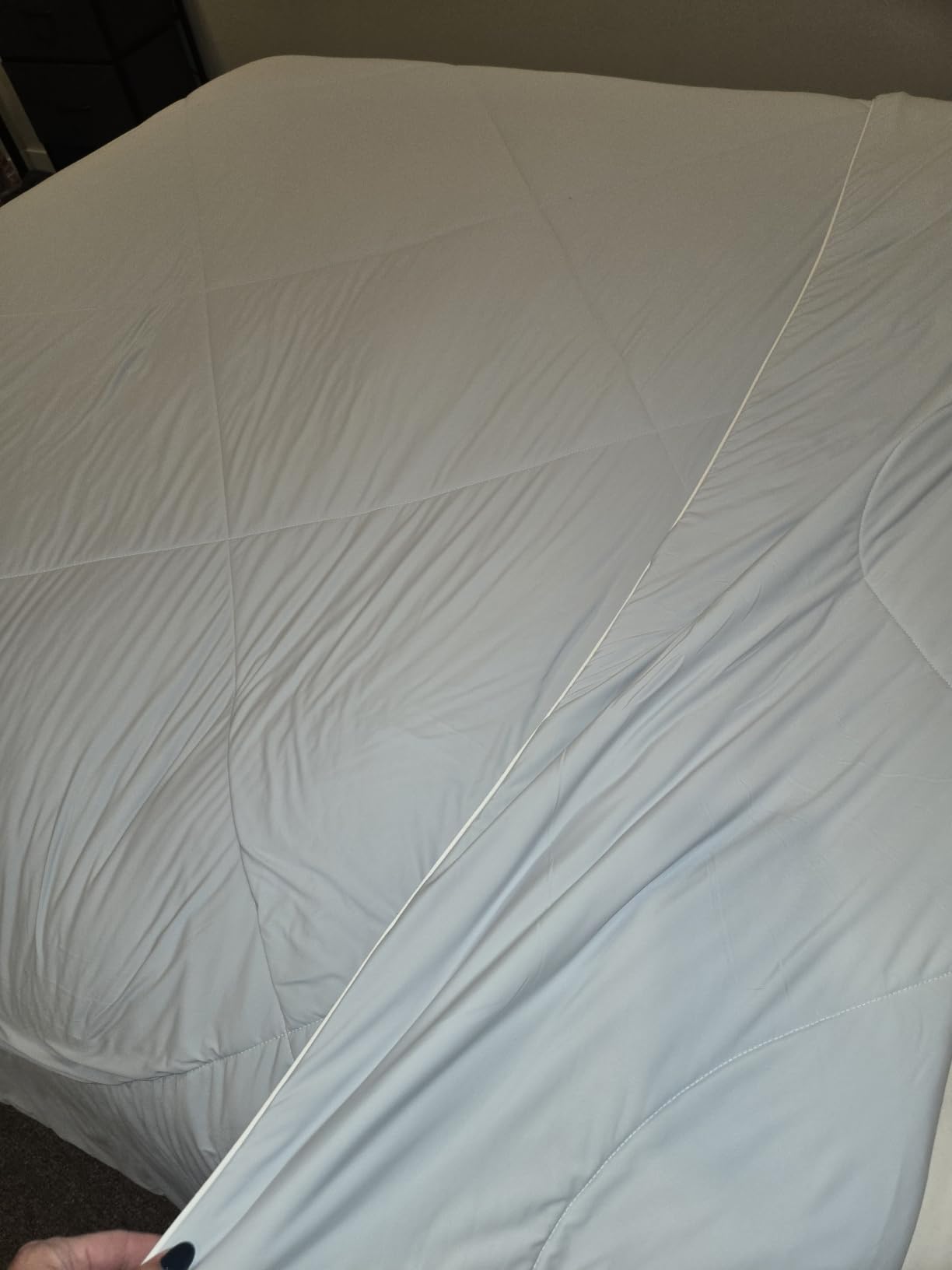
At 4.5 stars from 2,660 reviews, it is tied for the second-highest scoring pick in this group, and the feedback centers on softness, wash durability and how well it dispels night sweats. Single-needle stitching keeps the fill from shifting and clumping through repeated laundering, and owners report no color loss or shrinkage.
One scoping note: the package contains the cooling blanket only and does not include pillowcases. If you are rebuilding a whole bed, budget for that separately.
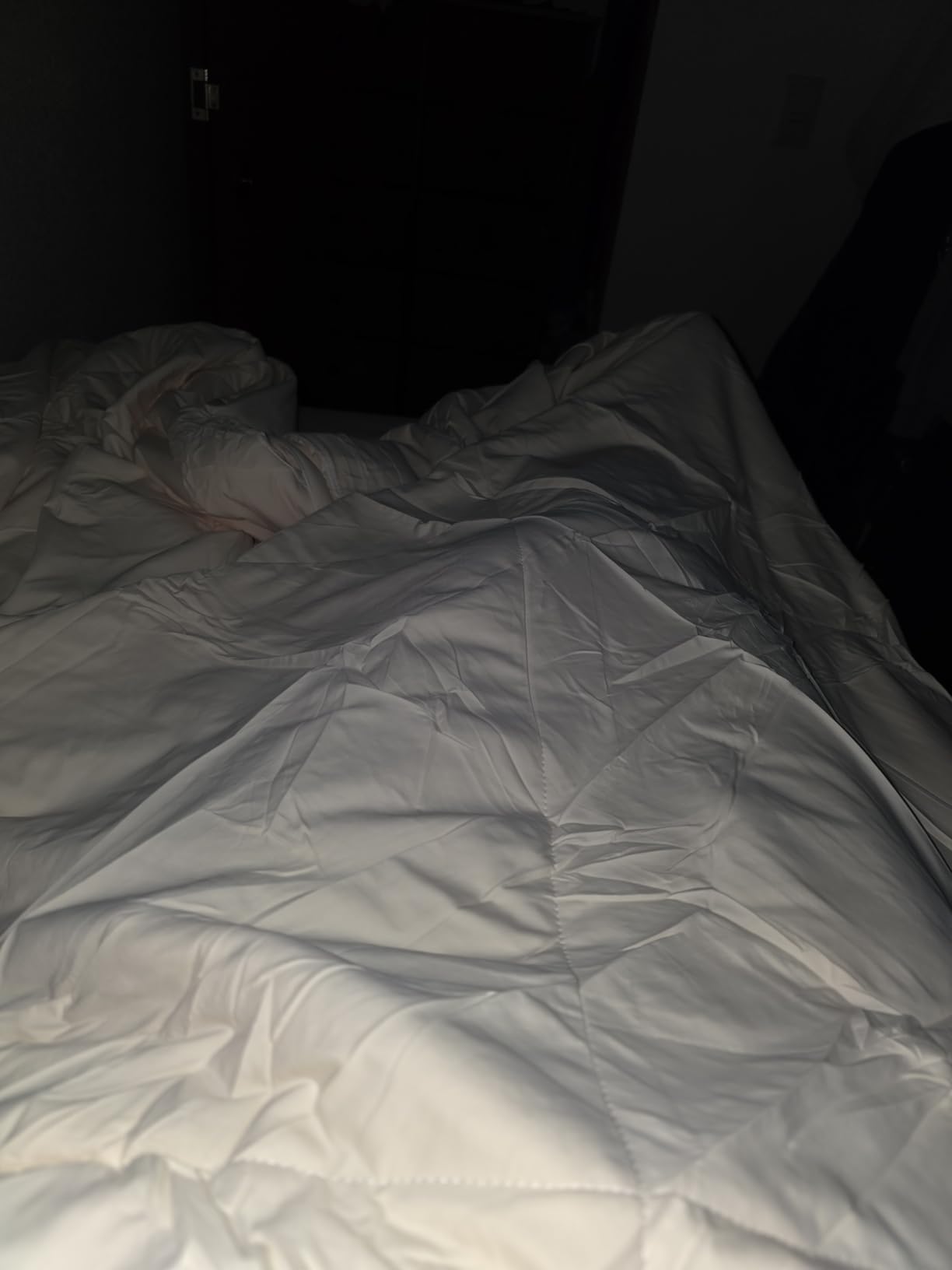
Who this comforter suits
This is our recommendation for a hot sleeper who wants a real comforter, not a sheet folded in triplicate. The loft means you get coverage and that tucked-in feeling, and the published 0.45+ Q-Max figure means you can verify the claim before buying rather than after.
It is also a good pick for autumn and shoulder seasons, since the 3D hollow fill is insulating enough to work when there is a chill in the room. Twin, Full/Queen and King are all available, which makes it workable for a guest room as well as a main bedroom.
Who should skip it
If you have been burned by nylon covers before, read the durability section below before committing. Nylon cooling shells are the weak point in this category, and while this one is OEKO-TEX certified and single-needle stitched, it does not carry the same snag-resistance specification as the REST Evercool. Using it under a duvet cover limits the exposure.
The abstract pattern is also a real consideration. On an exposed bed with no cover, several buyers say it reads busy in a way a solid neutral does not.
5. HOMFINE Cooling Comforter – Best for Night Sweats
HOMFINE Cooling Comforter for Hot Sleepers Queen, Gray 90″x90″
90 x 90 inch
Japanese Q-Max 0.45+ fiber
Double-sided cooling
Polyester fill
Pros
- Cooling lasts through the night rather than just on contact
- Light but substantial enough to read as a comforter
- Soft silky hand with no static
- Preferred by partners of hot sleepers
Cons
- A few buyers say it is not as cool as advertised
- Basic styling that some prefer to layer under a duvet
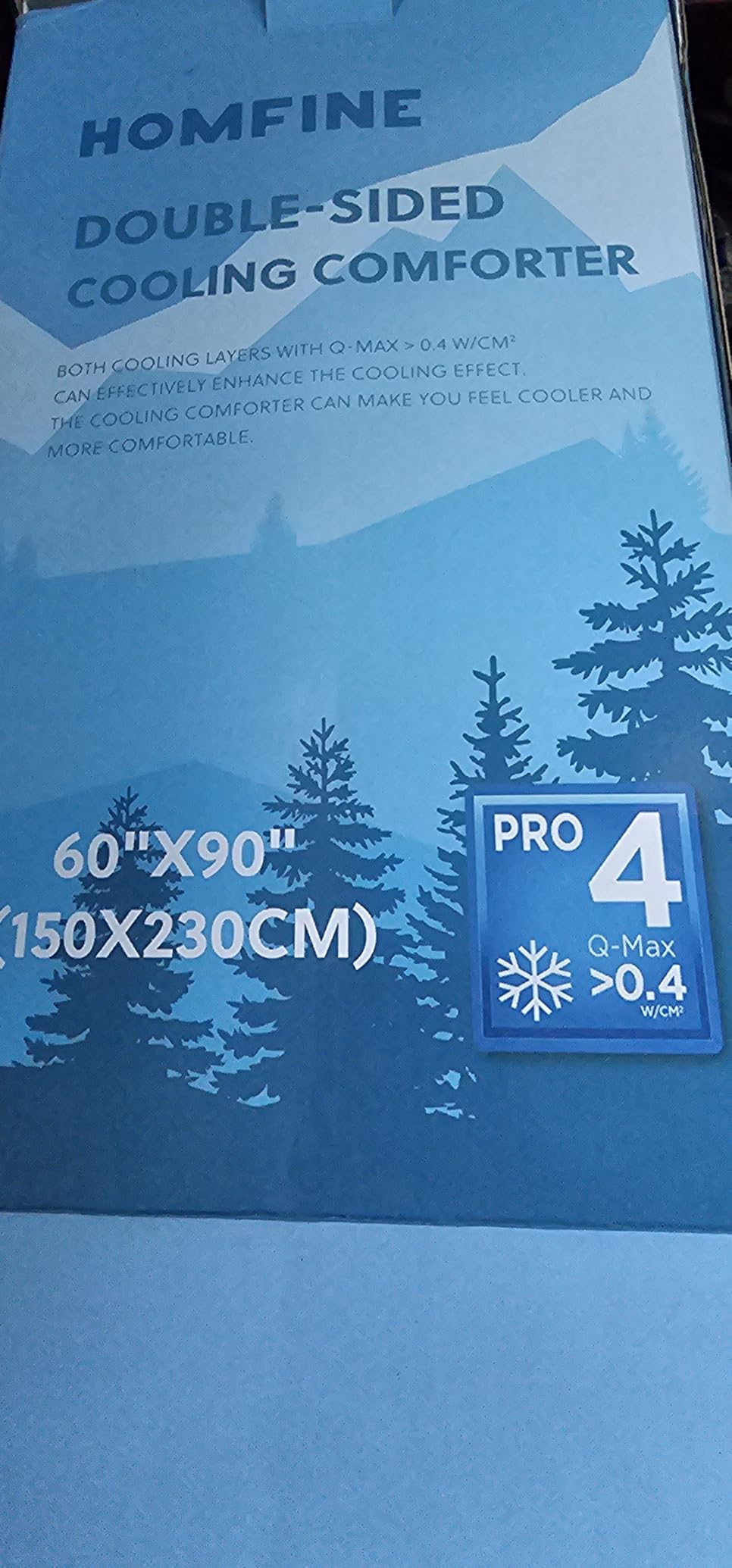
The HOMFINE is built around a specific claim that addresses the number one complaint in the community: cooling that stops working mid-night. Both sides are cooling fabric, and the manufacturer specifies a higher specific heat capacity on the fiber, which is the property that determines how much heat a fabric can absorb before it warms up.
That distinction is the whole point. A fabric with low heat capacity feels cool for a few minutes and then becomes a warm blanket. One with higher heat capacity keeps absorbing, which is what makes the difference between sleeping through the night and waking at 3am. The manufacturer claims a 2-5 degree Celsius reduction in skin temperature.
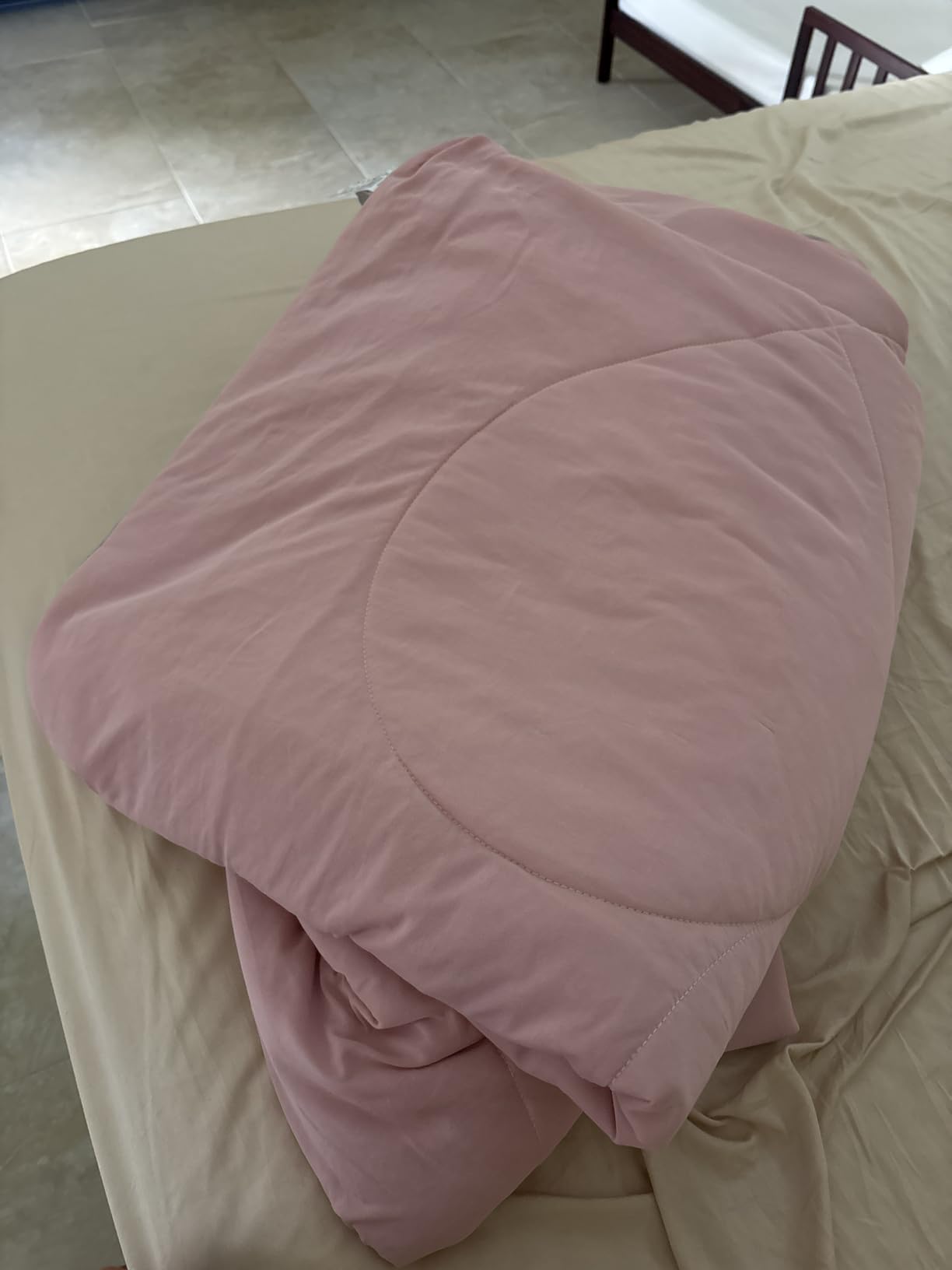
The polyester fill is chosen for air permeability, letting it adjust rather than trap. Single-needle quilting holds the fill in place through repeated washing, and the reviews describe a soft, silky surface with no static cling, which matters a great deal in dry heat.
At 4.4 stars from 1,533 reviews, one theme appears constantly: couples. Partners of hot sleepers mention it as the comforter that works without the non-sleeper needing a separate blanket. That makes it the practical answer to the two-temperature household problem.
Who this comforter suits
If your specific failure mode is waking up damp rather than simply feeling warm at bedtime, this is the pick. Sustained absorption is the relevant mechanism for night sweats, and the double-sided 0.45+ specification is the closest match in this roundup to what that use case needs.
It is also well suited to mixed-temperature couples, since one comforter serves both sleepers without either of you throwing it off. Twin, Queen and King in seven colors give you enough choice to coordinate with an existing bedroom.
Who should skip it
If night sweats are new, unexplained and drenching rather than mild, bedding is a comfort measure and not a treatment. Thyroid conditions, menopause, anxiety, hyperhidrosis and some medications all produce night sweats, and that deserves a conversation with a doctor rather than a comforter swap.
Also skip it if you want the comforter to be the visible top layer. The styling is deliberately basic, and reviewers frequently describe layering it under a duvet. It performs better as a functional inner layer than as a bedroom centerpiece.
6. Bedsure Cooling Comforter Blanket – Best for Couples Who Sleep at Different Temperatures
Bedsure Cooling Comforter Queen Size – Cooling Blankets for Hot Sleepers, Lightweight Comforter for Summer with Dual-Sided Cool Tech, Soft Breathable Cold Blanket for Sleeping, Grey, 88×88 Inches
88 x 88 inch
90% nylon 10% elastane shell
95% polyester 5% bamboo rayon
Q-Max 0.4+
Pros
- Silky cloud-soft feel that is comfortable to sleep under bare
- OEKO-TEX Standard 100 certified fiber
- Four corner rings for duvet cover attachment
- Machine washable without shrinking or losing shape
Cons
- Runs smaller than a standard queen at 88 x 88 inches
- Too lightweight to replace a winter-weight comforter
The Bedsure is the most flexible pick in the roundup because of what it is not tied to. The shell is 90% nylon and 10% elastane with a Q-Max 0.4+ rating, and the fill blends 95% polyester with 5% bamboo-derived rayon specifically to improve airflow, moisture wicking and temperature regulation.
That 5% rayon detail is more than a marketing line. Polyester on its own is hydrophobic and holds moisture against you; a small natural-fiber addition gives perspiration somewhere to go. The manufacturer claims the fabric is up to 10 times more breathable and absorbent than cotton, and the fibers are finer than 1/99 of a human hair.
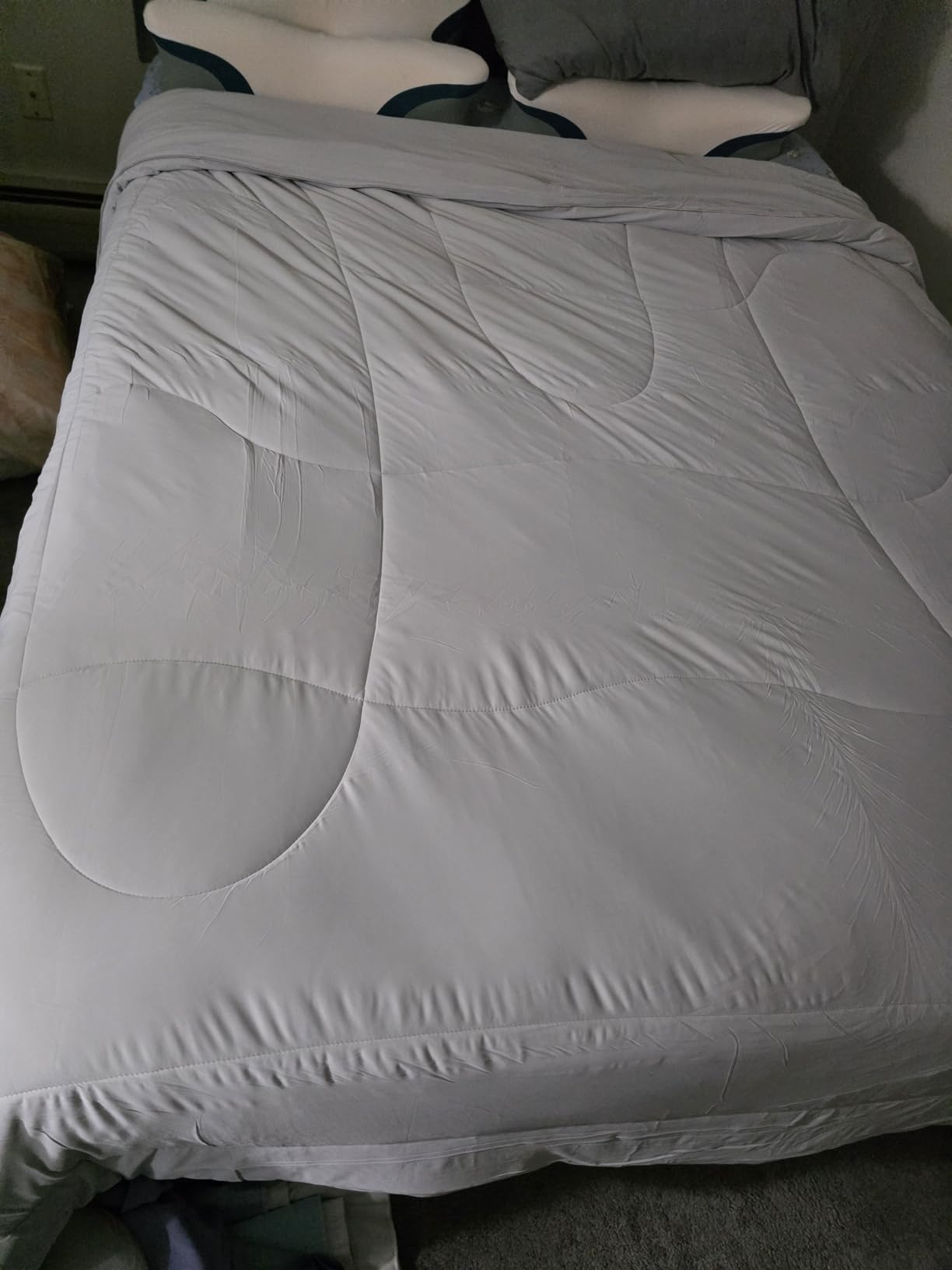
Four corner rings make this the easiest pick to convert into a duvet setup. That single feature solves two problems at once: you can add a cover for durability, and you can split the bedding so each partner uses their own weight. For a household where one person runs hot and one runs cold, a duvet insert plus two covers is the most reliable solution there is.
At 4.4 stars from 1,082 reviews, the consistent feedback is a soft drape that works alone or layered, and wash performance with no shrinkage or shape loss.
Who this comforter suits
Pick the Bedsure if you plan to put it inside a duvet cover. The corner rings are properly engineered for that, the OEKO-TEX STANDARD 100 certification covers the whole fiber, and the anti-pilling and antistatic treatments handle the friction of being covered and washed repeatedly.
It is also the pick we would build a couples setup around, since a duvet insert plus separate covers lets each partner add or remove a layer without disturbing the other. For humid conditions the rayon blend matters, because polyester on its own holds moisture against you while a natural-fiber addition gives perspiration somewhere to go.
Who should skip it
Check your size before ordering. At 88 by 88 inches, this queen measures closer to a standard full than a generous queen, and several buyers note the fit runs small. If you want overhang on both sides, size up.
It is also not a winter comforter at 2.73 kg. For a sleeper who wants one product for every season, the REST Evercool or the COHOME covers more of the year.
7. EASELAND Cooling Comforter – Best for Humid Heat
EASELAND Cooling Comforter Queen, Upgraded Double-Sided Q-MAX 0.45+
90 x 90 inch
90% cooling nylon 10% spandex
Arc-chill Q-Max 0.45+
Double-sided weave
Pros
- Cooling fabric on both sides so it can be flipped
- Precision weave boosts heat dissipation by 40 percent
- Moisture-wicking treatment for humid conditions
- 90-day risk-free sleep trial with US support
Cons
- Striped pattern is less versatile than a solid neutral
- Pill-resistant and snag-proof but still a nylon shell
Humid heat is a different problem from dry heat. In high humidity, air cannot evaporate perspiration, so your skin stays damp even at a lower temperature, and a purely cool-to-the-touch fabric stops helping well before dawn. The EASELAND is the only pick in this roundup that names a moisture-wicking treatment as a first-class feature alongside its Q-Max rating.
The fabric is certified Arc-chill Q-Max 0.45+, and the manufacturer claims it lowers skin temperature by 3.6 to 9 degrees Fahrenheit, a wider range than the 2-5 degree Celsius claims elsewhere in this list. The double-sided precision weave is credited with boosting heat dissipation by 40 percent over a standard weave.
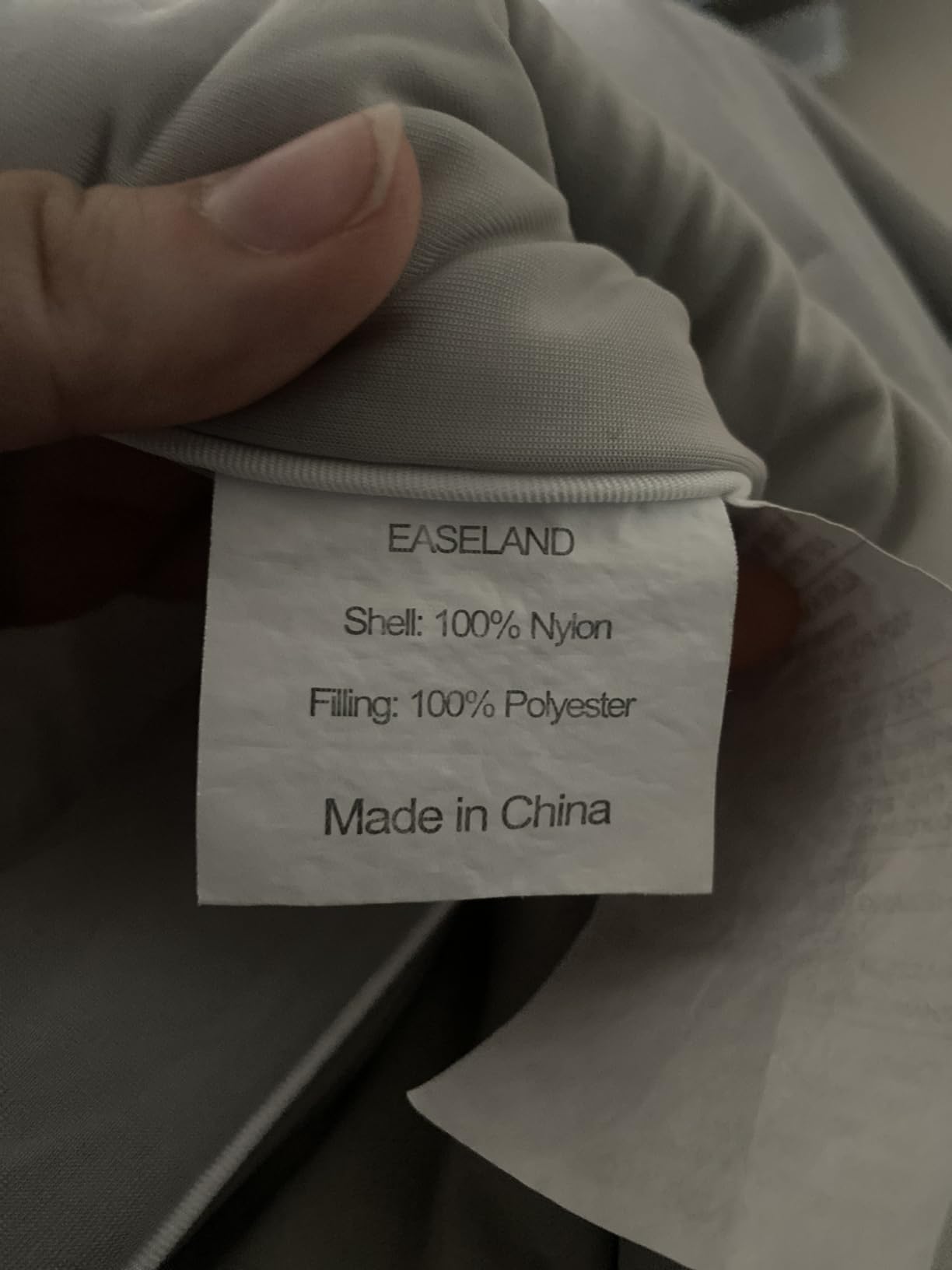
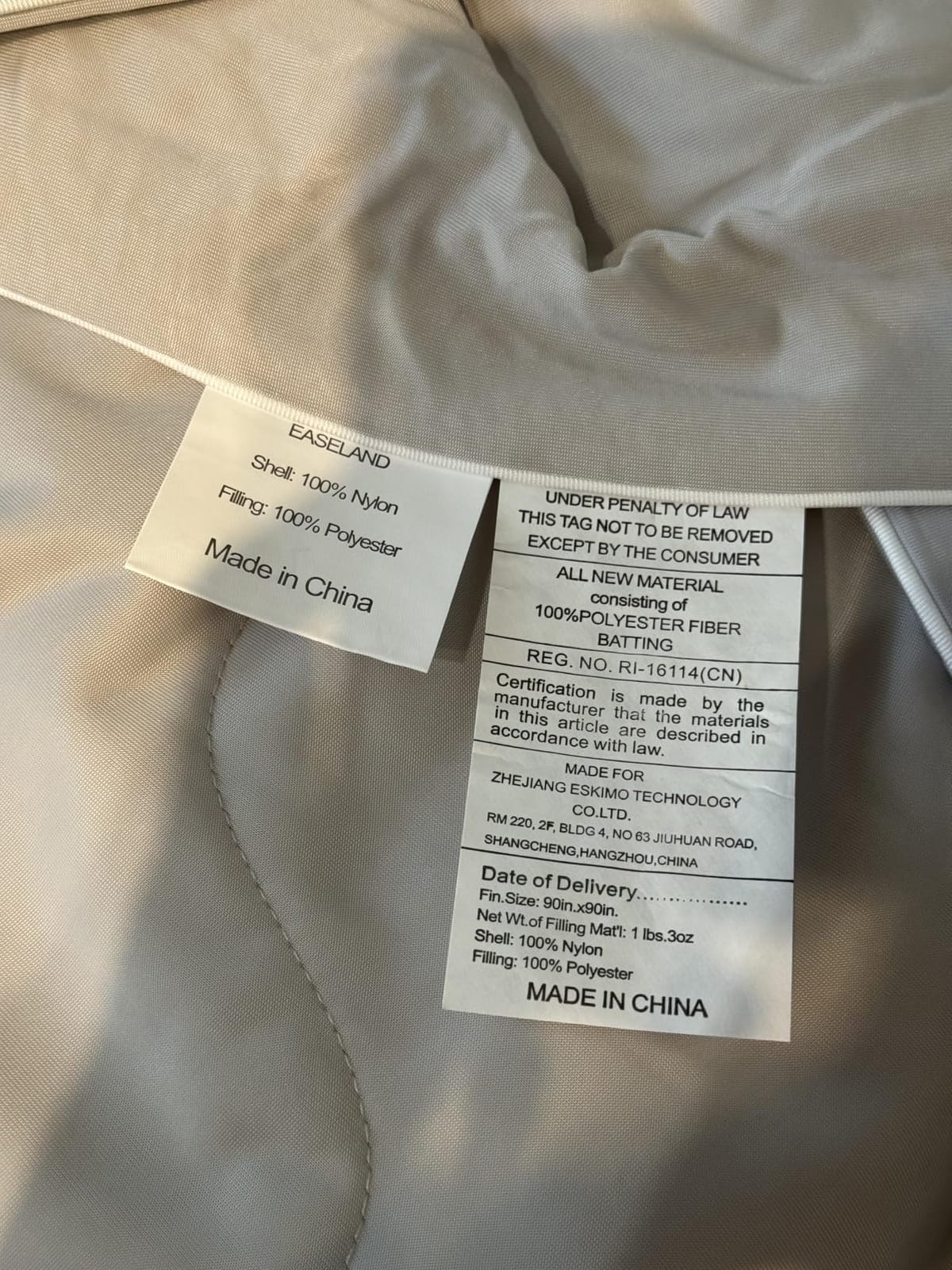
The build quality signals are better than this entry-level tier usually suggests. It is treated to be pill-resistant and snag-proof, it carries OEKO-TEX certification for sensitive skin, and it is backed by a 90-day risk-free sleep trial with US-based support. In a category where second-guessing is common, that trial window is a meaningful part of the purchase.
At 4.5 stars from 1,078 reviews, owner feedback centers on the double-sided chill, quick moisture wicking and how well the comforter survives repeated washing.
Who this comforter suits
This is the one to look at if you live somewhere with long, humid summers and no reliable air conditioning. The moisture-wicking treatment is the differentiator, and the wider claimed temperature range means it keeps working as the room stays warm overnight rather than cooling off after midnight.
It is a good fit for anyone who sleeps on top of the covers rather than under them, since the cooling fabric is on both faces and can simply be flipped to the cooler side.
Who should skip it
The striped pattern is the main drawback on an exposed bed. It is not a neutral, and it does not blend into most bedroom schemes the way a solid gray does. If the comforter is going to be visible, account for that.
Some buyers also find the fabric slicker than they expected, which is a common trait of nylon-spandex shells. It is more noticeable if you move a lot during sleep.
8. DOWNCOOL Cooling Comforter – Best for Travel and Small Rooms
DOWNCOOL Cooling Comforter Queen Size,Grey Cooling Blanket for Hot Sleeper
90 x 90 inch
100% cooling nylon
Dual-side Q-Max 0.4+
2.1 kg
Pros
- Lightest listed weight here at 2.1 kg with a 3-5 degree Celsius claim
- Silky but not overly slippery
- Retains cooling efficiency after multiple washes
- Portable for home
- office and travel
Cons
- Nylon shell can slide off the bed during the night
- Does not hang far enough down the sides on a king
At 2.1 kg, the DOWNCOOL carries the lowest listed weight of any comforter in this roundup, and that single number is the product. If your problem is mass rather than fabric, this is the most direct answer available. The cover is 100% cooling nylon with a dual-side Q-Max 0.4+ fiber, and the manufacturer claims a 3-5 degree Celsius reduction in skin temperature.
The quilt construction is worth noting. Anti-clump honeycomb quilting distributes the fill evenly across the whole surface rather than in channels, which matters in a thin comforter where a shifting fill creates bare patches. The fabric is also anti-static and resistant to lint and pet hair, and it carries OEKO-TEX certification.
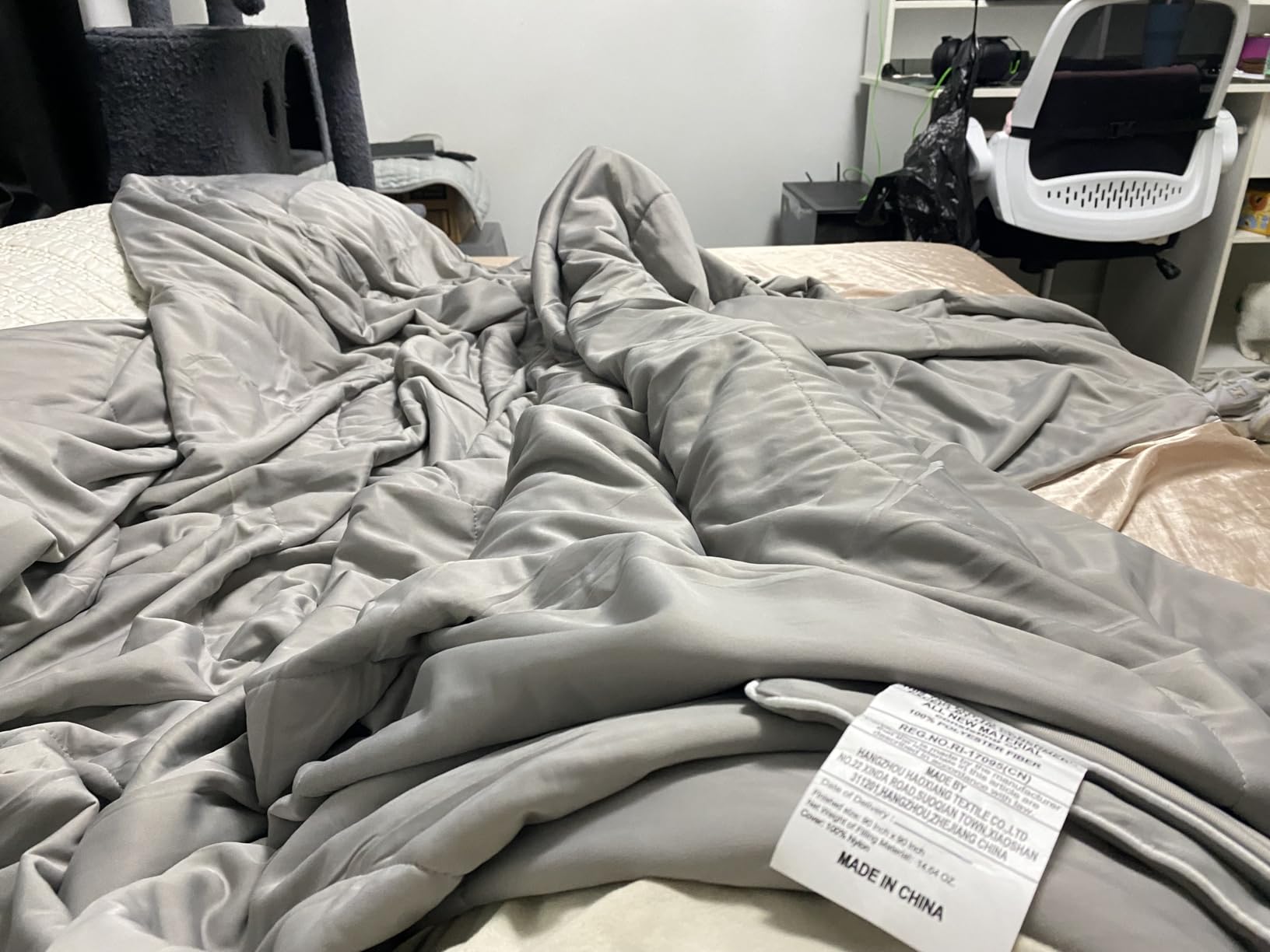
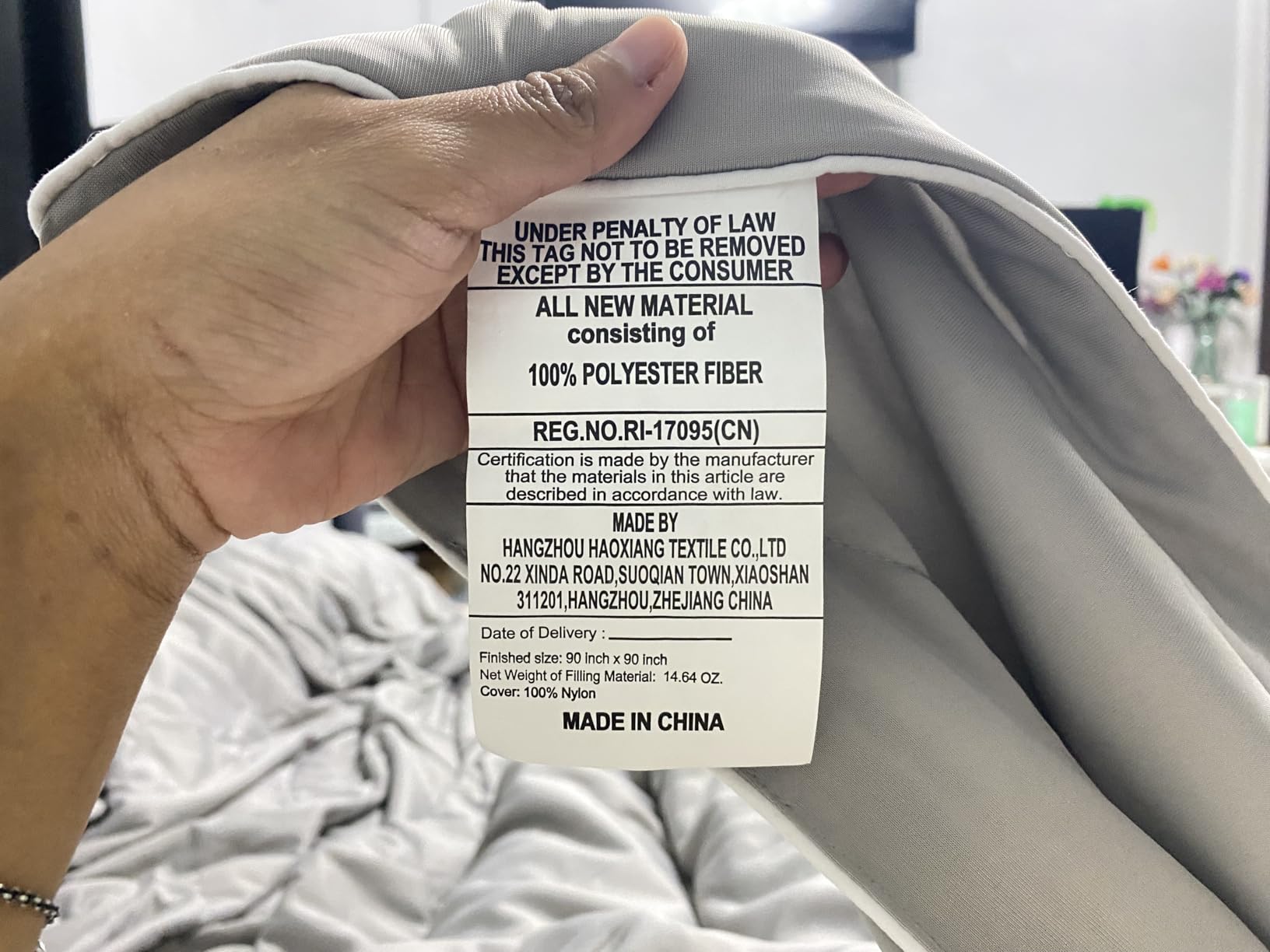
Durability over time is the standout in the reviews. Owners describe a comforter that has held up over a year and multiple washes with no fading, and the manufacturer states it retains cooling efficiency after washing. That is the durability claim you would want from a nylon shell, and it is not universal in this category.
The manufacturer describes it as having a gentle weighted feel, and the reviews describe it as silky without being overly slippery, which separates it from several other nylon shells in this list.
Who this comforter suits
Pick the DOWNCOOL for a small bedroom that holds heat, or a guest room you do not want to over-air condition. The low mass means it does not add meaningfully to the heat load of the bed, which is exactly what you want in a space with poor airflow.
It is also the most portable option here. Owners use it at the office, on a daybed and while travelling, and at 2.1 kg it packs into a carry-on without difficulty.
Who should skip it
The smooth nylon shell does slide. That is a recurring note in the reviews and a recurring note on nylon cooling covers generally, so a light tuck at the foot of the bed is a reasonable habit to build. If you move a lot in your sleep and a shifting comforter bothers you, the REST Evercool knit is a better match.
On a king bed, it also does not hang far enough down the sides to look like a full comforter. Measure first if you have a large frame.
9. bedsmile Double-Sided Cooling Comforter – Best for an Air-Conditioned Bedroom
bedsmile Cooling Comforter Queen Size, Double-Sided Cold Tech Fabric Quilted Bed Comforters Cooling Blanket for Hot Sleepers, Breathable Lightweight Summer Bedding, All-Season Ice Blanket, Dark Gray
90 x 90 inch
ICT Q-Max 0.45+ fabric
Double-sided quilted nylon
2.64 kg
Pros
- Both faces cool evenly so it can be flipped as needed
- Brushed fiber surface adds softness without hurting cooling
- Works as a layer for spring and autumn too
- 90-day after-sales guarantee
Cons
- Cooling is strongest in an air-conditioned room
- Smaller review base than the established picks
The bedsmile is built around a multi-layer double-sided structure intended to improve stitching firmness and reduce fill shift, which is the specific weakness of thin nylon cooling comforters. The cooling fabric uses ICT technology with a Q-Max 0.45+ rating and a claimed 2-5 degree Celsius reduction in skin temperature.
What makes it different is the finish. The fiber surface is brushed for softness, and the manufacturer states the brushing does not reduce the cooling effect. That is a reasonable engineering claim and the reviews support it, describing a soft brushed surface that stays skin-friendly.
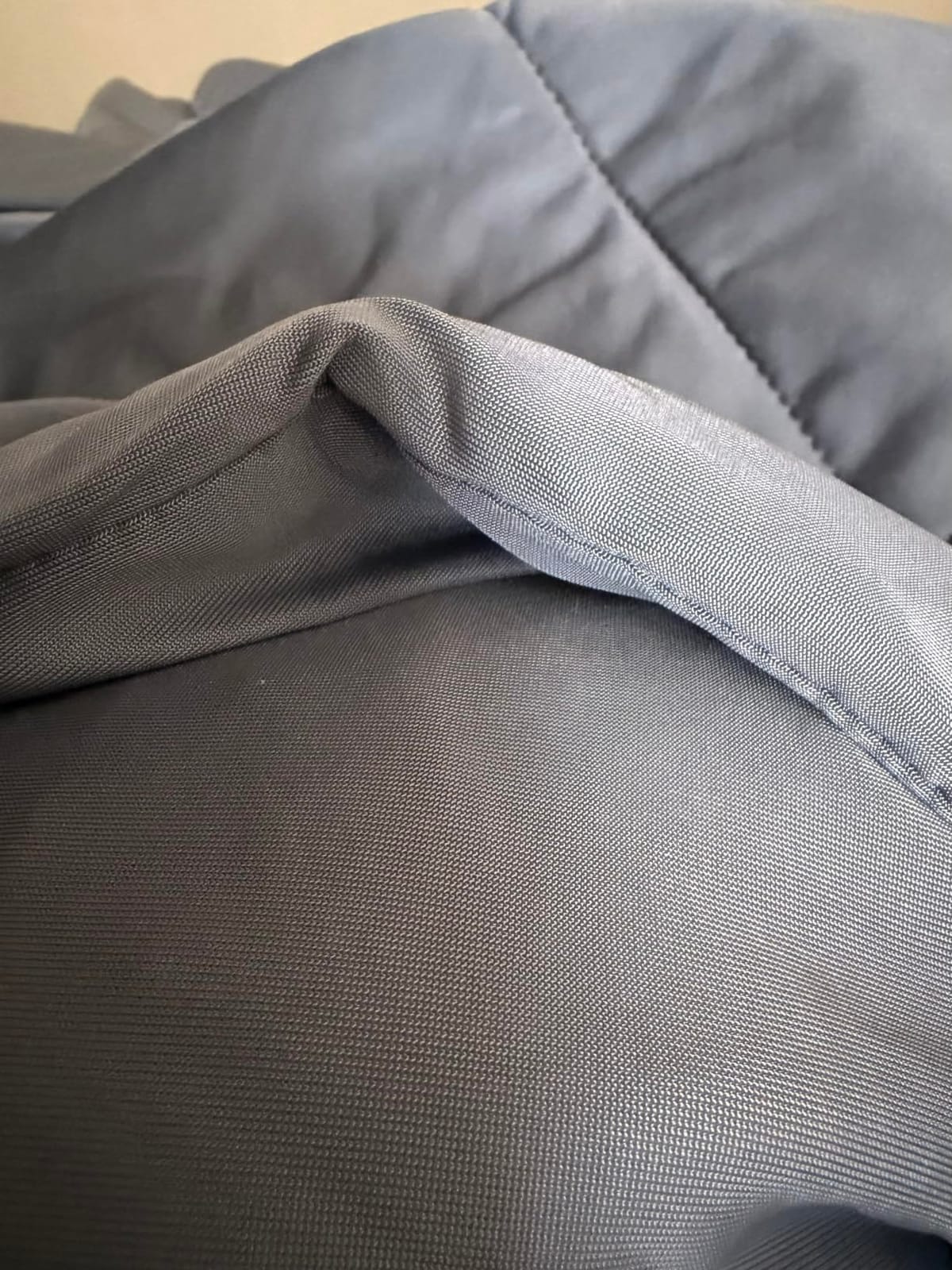
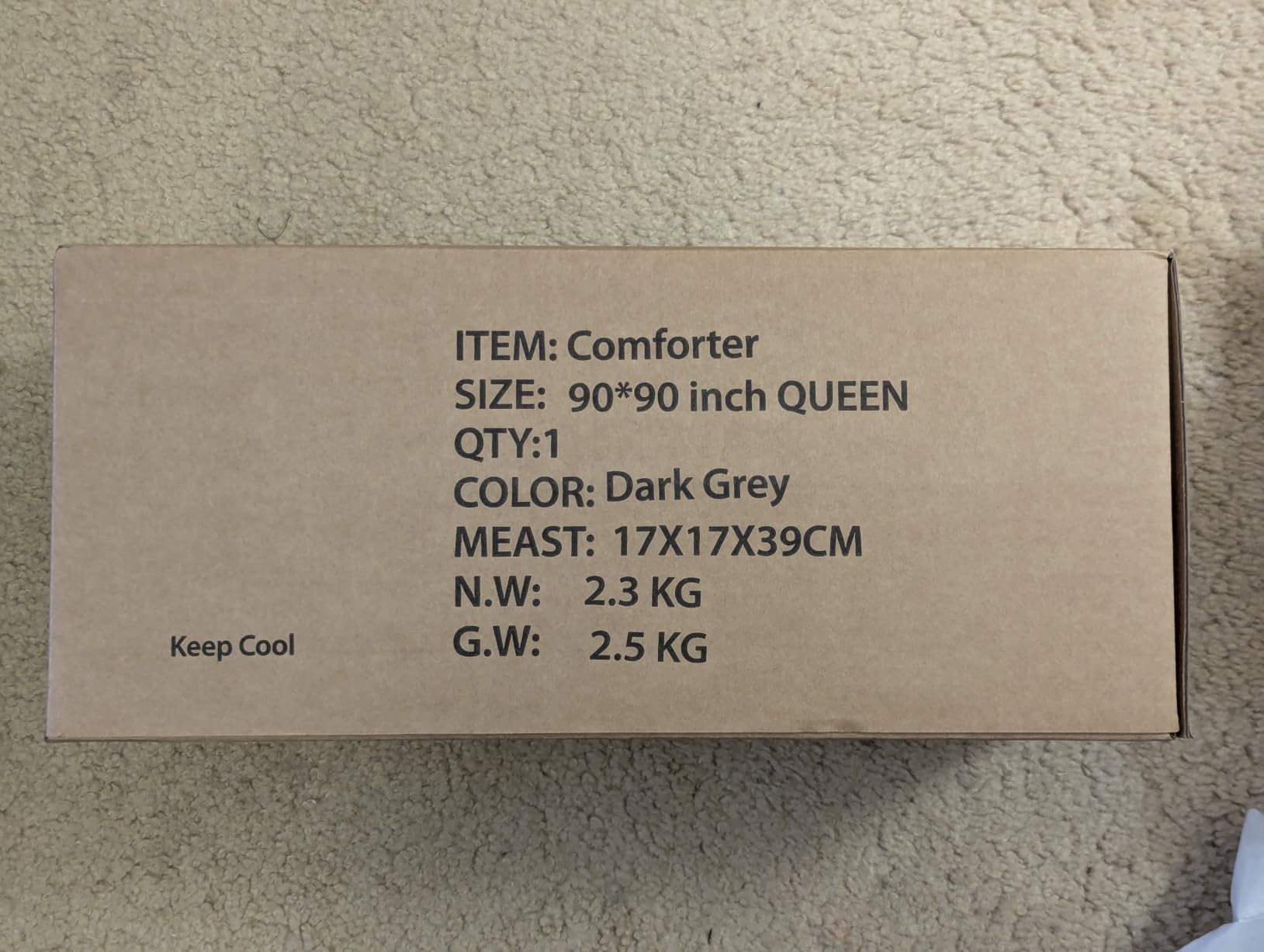
At 2.64 kg it sits in the middle of the weight range here, light enough for summer and substantial enough to work as a spring and autumn layer. Twin, Queen and King are available in multiple colors, and the comforter is backed by a 90-day after-sales guarantee.
One honest note on evidence: this listing has 708 reviews at a 4.3 average. That is a meaningful sample, but it is smaller than the picks above it, and a less established brand carries more unknowns if something goes wrong.
Who this comforter suits
The reviews are specific about where this one performs best, and it is worth repeating rather than glossing over: an air-conditioned room without extra coverings. If you run a fan or air conditioning and want a comforter you can still use in spring and autumn, this is a good fit.
The brushed surface also makes it a good option if the cool-slick feel of nylon bothers you. Many people who reject cooling comforters do so because of texture, not temperature, and the brushing addresses that directly.
Who should skip it
If your bedroom has no cooling and stays hot through the night, buyer feedback suggests the performance drops. In that situation, spend your effort on airflow and a breathable sheet set instead, and consider the cooling mattress pad route to get heat out from under you.
The smaller review base is the other reason to hesitate. It is the least-tested product in this roundup, and in a category where the shell fabric is the failure point, that is a real consideration.
10. Gehtmnl Plant-Fill Cooling Comforter – Best Plant-Based Fill
Gehtmnl Cooling Blanket for Hot Sleepers & Night Sweats – Cooling Comforter, Breathable Lightweight Double-Sided Summer Bedding, Breathable Soft All Season (Frosty Light Grey, Queen(90″x90″))
90 x 90 inch
90% cooling nylon 10% spandex
Plant-based bio-fiber fill
Q-Max 0.4+
Pros
- Plant-based fill for sleepers avoiding polyester
- Claimed wicking of heat and moisture twice as fast as silk
- Lightweight and drapes close to the body
- Reinforced stitching to prevent fill leakage
Cons
- Less coverage than a lofty comforter
- Newer listing with a smaller review base
The Gehtmnl is the pick for a specific objection: sleepers who want cooling performance but refuse to sleep on polyester. The fill is described as a plant-based bio-fiber, breathable and weightless specifically to prevent humidity buildup, and it sits in a 3D hollow structure that the manufacturer positions as a thermal regulator for year-round use.
The shell is 90% cooling nylon and 10% spandex with a Q-Max 0.4+ rating, and the manufacturer claims it wicks heat and moisture twice as fast as silk. That is the moisture-wicking mechanism discussed earlier, so treat it as support for the cool-on-contact effect rather than a substitute for it.
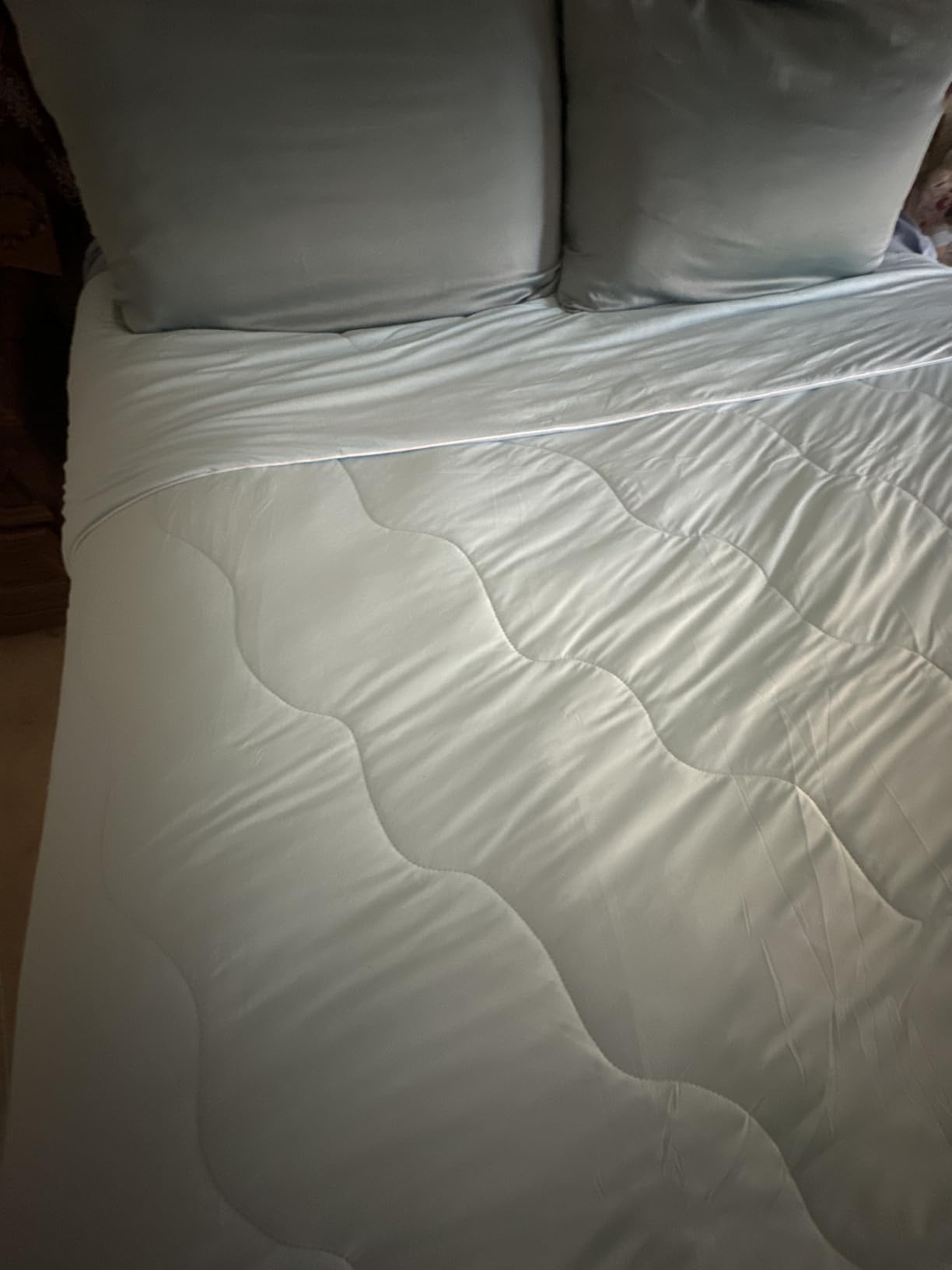
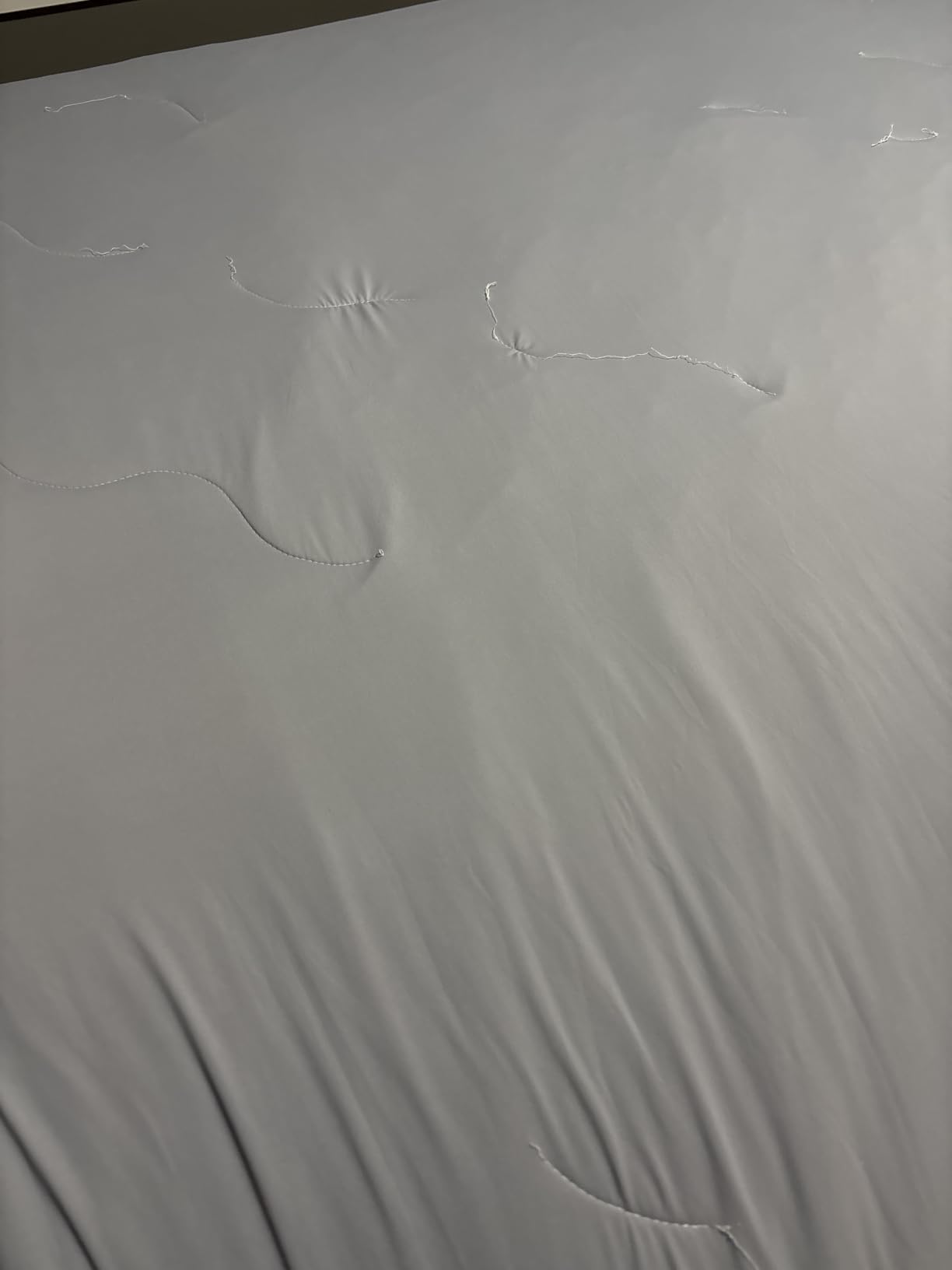
Reinforced stitching is a specific engineering note here. On a thin comforter, seams are the first thing to fail, and this listing states the construction is designed to prevent fill leakage. Owners report the comforter stays soft and intact after washing.
It is machine washable on cold, and the reviews describe it as draping like a second skin with an immediate cool-to-touch feel. At 4.4 stars from 639 reviews, feedback is positive with limited complaints beyond the light weight.
Who this comforter suits
Pick this if you are a hot sleeper with a chemical-sensitivity or material preference that rules out polyester fill. The plant-based fill gives you a genuinely different construction from the synthetic-fill options above, and buyers who wanted that specifically report satisfaction.
It is also reasonable for spring and autumn layering, since the 3D hollow structure is positioned for year-round use rather than peak summer only.
Who should skip it
Coverage is the limitation. A large share of the feedback is that the lightweight fill gives less coverage than a lofty comforter, so if you need the sense of being tucked under something substantial, the Cozy Bliss with its 3D hollow poly fill is a closer fit.
It is also a newer listing with a smaller review base than the established picks, and there is no named fill manufacturer. If you have a strong reaction to fiber types, the Cozy Bliss OEKO-TEX certification is a more verifiable position.
How to choose a cooling comforter: 7 things to check
1. Check the cooling specification before anything else. If a listing says “cool to the touch” with no Q-Max number and no named fiber technology, you cannot evaluate it. A Q-Max of 0.4 is the threshold where the effect is noticeable; 0.45 is where the top of this category sits. Cotton sits around 0.1 to 0.2, which is why plain cotton feels no different from anything else.
2. Work out whether you need first-contact or all-night cooling. This is the single most useful question and almost nobody asks it. If you feel hot the moment you get into bed, a cool-on-contact fiber is all you need. If you fall asleep fine and wake up damp at 3am, you need sustained absorption, which means a double-sided higher-heat-capacity fabric or a phase-change fill. Buying the wrong one is the reason most cooling comforters disappoint.
3. Treat fill weight as the primary variable. Fill weight is measured in GSM, and a hot sleeper should stay at or under roughly 200 GSM. Above 300 GSM, a comforter is insulation regardless of what the cover is made of, and no cooling fabric will rescue it. Weigh the product when it arrives if the listing does not state a figure; the DOWNCOOL at 2.1 kg and the Bedsure at 2.73 kg are both in the workable range, while the COHOME at 3.06 kg sits in the middle of what we found.
4. Know the fill hierarchy. Down alternative and hollow polyester give you loft at low weight and are the safest default for hot sleepers. Natural fills like TENCEL lyocell, bamboo rayon and eucalyptus handle moisture well. Real down clumps when damp and can make a hot sleeper feel worse, and heavy solid polyester above 300 GSM is simply a winter blanket. If you are choosing a down alternative specifically, our down alternative comforter guide goes deeper on construction.
5. Decide between a comforter and a duvet insert. A sewn comforter is simpler and cheaper. A duvet insert with a washable cover is more flexible, and it is the correct answer for couples who sleep at different temperatures, because each person can add or remove a layer without disturbing the other. The Bedsure and the COHOME both have corner ties or tabs for this purpose.
6. Diagnose where the heat actually comes from. If your comforter is the problem, it will feel fine in the first ten minutes and then trap heat. If the heat is coming from the mattress, a comforter cannot fix it and you need airflow under the bedding instead. A cooling mattress pad addresses that case, and a cooling pillow helps if your neck runs warm.
7. Read the care label before you commit. Washing is what degrades cooling performance. High heat and fabric softener both work against the cooling finish, and several brands in this roundup specifically recommend cold water and hang drying to protect the fibers. The bedsmile states hang drying directly. If you already own a comforter you love, a duvet cover is the cheapest way to protect it from everything on this list.
What to avoid when you buy a cooling comforter
There is a short list of things that reliably lead to a disappointing purchase in this category, and each one has a concrete reason.
Any “cooling” claim without a number or a named technology. No Q-Max figure and no named cooling fiber means the product is unevaluable. This is the most common reason a cooling purchase gets returned.
Fill above 300 GSM. At that point a comforter is insulation. A premium shell on a heavy fill is still a heavy blanket, and you have paid extra for the privilege of staying hot.
Down, if you sweat. Down clumps when it absorbs moisture and loses loft in the middle of the night, which leaves a hot sleeper both damp and uncovered.
Single-sided cooling fabric. You will flip it eventually, and then half your comforter does nothing. Every cooling pick in this roundup is double-sided except the silk-fill Topcee, so this is rarely a problem here.
An exposed nylon cover in a house with pets or small children. Verified buyer reviews on nylon cooling covers across this category report seam holes developing within weeks, stitching failure over a couple of months and snagging. The REST Evercool is the pick here with an explicit snag and pill resistance specification. For everything else, use a duvet cover.
A comforter in a room with no airflow and no cooling. A comforter adds thermal mass to a bed. If the room itself is the problem, sheets, a breathable top sheet and a fan will outperform any comforter on this list while costing far less to run.
Frequently Asked Questions
Do cooling comforters actually work?
They work, but the effect varies a lot by mechanism and by person. A fabric with a Q-Max rating of 0.4 or above draws heat away from your skin on contact, which is the strongest effect and the first to fade. Sustained all-night cooling needs higher heat capacity or a phase-change fill. Most owners report meaningful improvement at bedtime, and fewer report being cool at 3am unless the comforter specifies sustained absorption.
What type of comforter is best to keep you cool?
A lightweight down-alternative comforter in the 150 to 200 GSM range with a double-sided cooling shell rated at Q-Max 0.4 or above. Stay at or under roughly 200 GSM: above 300 GSM a comforter is insulation regardless of the cover. The Cozy Bliss, HOMFINE and EASELAND in this roundup all meet that combination, and each states a Q-Max 0.45+ rating.
What comforter is best for night sweats?
Look for sustained absorption rather than first-contact coolness, which means a double-sided fabric with higher specific heat capacity or a phase-change fill. The HOMFINE fits that description, with both faces in Q-Max 0.45+ cooling fiber and a claimed 2-5 degree Celsius reduction in skin temperature. If your night sweats are new and drenching, treat that as a medical question first and bedding second.
What is the best comforter material for hot sleepers?
For the cover, a cooling nylon-spandex knit with a published Q-Max rating of 0.4 or above. For the fill, lightweight down-alternative or hollow polyester in a 3D structure, which gives loft without mass, or a natural fiber such as TENCEL lyocell for moisture handling. Avoid real down, which clumps when damp, and avoid solid polyester fill above 300 GSM.
What is Q-Max and what number is good?
Q-Max is a cooling factor that measures how much heat a fabric draws away from skin on contact. Plain cotton scores roughly 0.1 to 0.2, so it feels no different from any other cotton. Around 0.4 the effect becomes clearly noticeable to most sleepers, and 0.45 is currently the ceiling across this category. If a listing gives you no Q-Max number at all, treat the cooling claim as unverified.
The bottom line on cooling comforters for hot sleepers
If you want the single most reliable answer among the best cooling comforters for hot sleepers, take the COHOME All-Season Cooling Comforter. It is the most-tested option in this roundup with 20,209 reviews at 4.6 stars, its box-stitched fill stays where you put it, and at 3.06 kg it adds far less heat than the comforter you are probably replacing right now.
If your problem is specifically waking up damp, go with the HOMFINE for its double-sided high heat capacity fabric, or the Cozy Bliss if you also want real loft and a published Q-Max 0.45+ rating. If your room runs humid and you have no air conditioning, the EASELAND is the pick with an actual moisture-wicking treatment. And if durability over a decade matters more than the upfront cost, the REST Evercool is the only one here with an explicit snag and pill resistance specification.
Before you order anything, work out whether the heat is coming from the comforter, the mattress or the room. That one diagnostic will save you from buying a cooling comforter to fix a problem a fan would have solved. And whatever you choose, a duvet cover keeps the cooling shell intact and makes the whole thing far easier to wash.