
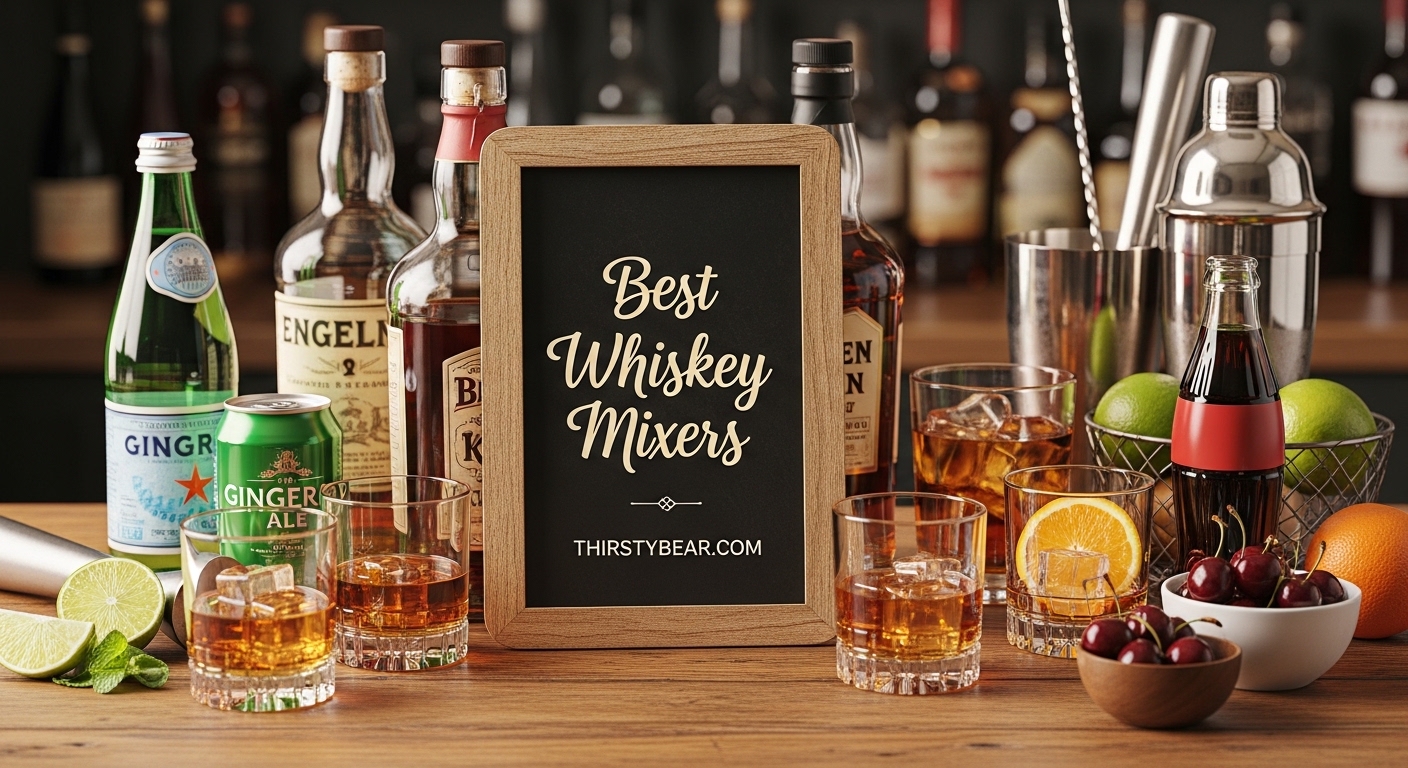
Finding the best whiskey mixers can transform an intimidating spirit into something approachable and enjoyable. Whether you’re new to whiskey or just looking to expand your mixing repertoire, the right mixer complements rather than masks the whiskey’s character. I’ve spent years experimenting with different combinations, and I’m here to share what actually works.
The key to great whiskey mixing is understanding balance. You want mixers that enhance the spirit’s natural flavors—whether that’s caramel notes in bourbon, peat in Scotch, or smoothness in Irish whiskey. From simple two-ingredient highballs to sophisticated classic cocktails, the best whiskey mixers give you flexibility without overwhelming your drink.
This guide covers the most reliable whiskey mixers, plus specific pairing recommendations for bourbon, Scotch, and Irish whiskey. If you’re looking for easy cocktail recipes to practice your mixing skills, check out our best whiskey cocktails for beginners guide for complete recipes.
Table of Contents
Best Whiskey Mixers: The Essentials
Best whiskey mixers fall into a few main categories: carbonated sodas, fruit-based mixers, and cocktail ingredients. Each serves a different purpose and works better with specific whiskey styles. Let’s break down the options so you can build your mixing toolkit with confidence.
Ginger Ale: The Classic Choice
Ginger ale earns its spot as one of the best whiskey mixers for good reason. Its mild sweetness and subtle spice complement whiskey without overpowering it. I’ve found this combination especially welcoming for whiskey newcomers who want something approachable yet flavorful.
The classic Jameson and Ginger is a perfect starting point. Irish whiskey’s smooth profile pairs beautifully with ginger ale’s bite. Use a 1:2 ratio—one part whiskey to two parts ginger ale—over ice for a refreshing highball that lets the whiskey shine through.
For bourbon lovers, ginger ale brings out caramel and vanilla notes. A splash of fresh lime transforms this into a Kentucky Buck, one of my go-to summer drinks. The key is using quality ginger ale rather than overly sweet alternatives—the spicier, the better for cutting through richer whiskeys.
Club Soda: Clean and Crisp
Club soda might seem basic, but it’s arguably the most versatile of the best whiskey mixers. It adds effervescence without flavor, making it perfect for whiskey drinkers who want to experience the spirit’s character with just a bit of dilution and chill.
A whiskey highball—simply whiskey and club soda—lets the whiskey take center stage. This combination is particularly excellent with Japanese whisky, which has a cultural tradition of highball drinking. The bubbles open up the aromatics while the slight dilution tames the alcohol burn.
Try this with lighter bourbons or blended Scotch for a clean, refreshing drink that’s perfect for warm weather. A twist of lemon or lime adds just enough brightness without competing with the whiskey. Club soda also works beautifully with rye whiskey if you enjoy spice-forward spirits.
Cola: Sweet and Familiar
Whiskey and cola is the world’s most popular mixed drink for a reason. The sweetness balances whiskey’s intensity while caramel notes in both create natural harmony. However, cola can mask whiskey flavor more than other best whiskey mixers, so use this when you want something smooth and easy-drinking.
Bourbon and cola is a classic pairing that works with any bourbon quality level. Richer bourbons stand up better to cola’s sweetness, while lighter ones get lost. I recommend using quality cola rather than generic brands—the complex flavor profile makes a noticeable difference.
For a variation, try whiskey and Diet Coke with a splash of lime. The lime cuts the artificial sweetener taste and adds brightness. Just remember that cola-heavy drinks are about enjoyment rather than whiskey appreciation—perfect for parties but save your premium bottles for other applications.
Lemonade: Bright and Refreshing
Lemonade brings acidity and sweetness that transforms whiskey into something entirely different. This combination shines in warm weather and works surprisingly well with most whiskey types. It’s one of the more underappreciated best whiskey mixers but deserves a spot in your rotation.
Bourbon lemonade is a summer staple for good reason. The whiskey’s oak and vanilla notes play beautifully against tart lemonade. I like using homemade lemonade to control sweetness—store-bought versions can be cloying and overshadow the whiskey.
For a lighter option, try Irish whiskey with lemonade. The smoothness of Irish whiskey pairs exceptionally well with citrus. Add a sprig of mint for a whiskey lemonade that feels sophisticated despite being simple to make. This combination proves that some of the best whiskey mixers are also the most accessible.
Sweet Vermouth: Sophisticated Mixology
Sweet vermouth moves us from casual mixing into classic cocktail territory. This fortified wine adds herbal complexity and sweetness that creates depth in whiskey-based cocktails. It’s essential for building sophisticated drinks that showcase mixology skills.
The Manhattan is the prime example—whiskey, sweet vermouth, and bitters. Rye whiskey is traditional here, but bourbon works beautifully too. The vermouth’s herbal notes complement the whiskey’s spice while balancing its strength. Our Manhattan cocktail recipe covers the classic proportions in detail.
Sweet vermouth also appears in the Old Fashioned when you want variation from the standard sugar or simple syrup. The wine character adds sophistication that sugar alone can’t match. Keep opened vermouth refrigerated—it lasts about a month and quality matters.
Ginger Beer: Spicy Kick
Don’t confuse ginger beer with ginger ale. Ginger beer is fermented, less carbonated, and significantly spicier. This makes it one of the more assertive best whiskey mixers, perfect when you want bold flavor that can stand up to robust whiskey.
The Moscow Mule’s whiskey cousin combines bourbon with ginger beer and lime. This drink is spicy, sweet, and refreshing all at once. The ginger beer’s heat complements bourbon’s sweetness while lime adds brightness. Copper mugs aren’t just tradition—they keep the drink icy cold, which tames the spice.
For a twist, try Irish whiskey with ginger beer. The whiskey’s smoothness balances the ginger beer’s heat in a way that’s approachable yet distinctive. This combination has become one of my favorites for casual gatherings—it looks impressive but requires no special skills.
Apple Cider: Seasonal Favorite
Apple cider’s natural sweetness and fruit character make it a fantastic seasonal mixer. Fall is peak season, but quality apple cider works year-round when you crave something different from soda-based mixers. It’s one of the best whiskey mixers for creating cozy, comforting drinks.
Bourbon and apple cider is a classic autumn combination. The caramel and vanilla in bourbon mirror apple’s natural sweetness. Serve warm for a comforting hot drink or over ice for something refreshing. A cinnamon stick garnish bridges the flavors beautifully.
For something lighter, try Irish whiskey with hard cider. The crispness of the cider complements Irish whiskey’s smooth profile without overwhelming it. This combination is particularly refreshing in warmer months and proves that whiskey mixers aren’t limited to traditional sodas.
Coffee: Rich and Complex
Coffee and whiskey create a sophisticated after-dinner combination that’s more than the sum of its parts. This is one of the best whiskey mixers for elevating a simple drink into something special. The key is quality coffee and balanced proportions.
Irish coffee is the classic recipe—hot coffee, Irish whiskey, sugar, and cream. The whiskey adds warmth and complexity to coffee while the cream creates luxurious texture. I’ve found this works best with medium-roast coffee that doesn’t compete with the whiskey’s character.
For a variation, try bourbon with cold brew coffee over ice. The bourbon’s vanilla notes complement coffee’s chocolate undertones in a way that’s refreshing yet sophisticated. This combination works especially well as a summer evening drink when you want something different from traditional cocktails.
Whiskey Type Pairing Guide
Different whiskey styles respond differently to mixers. Understanding these pairings helps you make better choices and avoid combinations that don’t work. Here’s my guidance on matching mixers to whiskey types based on extensive experimentation.
Bourbon has bold sweetness and oak character that pairs well with mixers that complement caramel and vanilla notes. Ginger ale, cola, and lemonade are excellent choices. For something more sophisticated, sweet vermouth in a Manhattan showcases bourbon’s complexity. Bourbon also works beautifully with apple cider—the sweetness is complementary rather than competing.
Check out our complete guide to bourbon mixing for more specific recommendations and recipes.
Scotch varies dramatically by region. Light, grassy Speyside drams work beautifully in highballs with club soda. Peated Islay Scotch is more challenging—its smoky character is best appreciated neat or with minimal dilution. Ginger ale can work with blended Scotch, adding spice without overwhelming delicate flavors. Coffee is surprisingly good with robust Scotchs that have sherry cask influence.
Irish whiskey is smooth and approachable, making it versatile for mixing. Ginger ale is the classic pairing for a reason—the combination is universally appealing. Lemonade brings out Irish whiskey’s brightness. Coffee creates the famous Irish coffee. Even cola works well with Irish whiskey’s triple-distilled smoothness.
Rye whiskey brings spice that needs balancing. Ginger beer’s heat complements rye’s spice in a way that creates harmony rather than conflict. Club soda lets rye’s pepperiness shine while cutting the alcohol burn. Sweet vermouth in a Manhattan is perhaps the perfect rye application—the herbal notes enhance the spice profile.
Pro Tips for Mixing Whiskey
After years of mixing whiskey, I’ve learned a few principles that consistently improve results. These aren’t strict rules—whiskey should be fun—but following these guidelines helps avoid disappointing combinations.
Start with quality ice. Large, clear cubes melt slowly and dilute your drink less. This matters especially for simple whiskey-mixer combinations where dilution is the main variable. Good ice transforms a basic drink into something notably better.
Respect mixing ratios. A 1:2 or 1:3 whiskey-to-mixer ratio is generally safe. Too much mixer and you lose the whiskey’s character. Too little and the drink becomes unbalanced. Measure until you develop intuition—eye-balling leads to inconsistent results.
Don’t mix premium whiskey. Save your $100+ bottles for neat drinking or very minimal additions. Mixing expensive whiskey is financially inefficient and the nuances get lost anyway. Middle-shelf whiskey around $25-40 is the sweet spot for mixing—good enough to have character but not so expensive that you feel guilty using it.
Choose glassware thoughtfully. Highballs deserve tall glasses that preserve carbonation. Cocktails like Manhattans shine in stemmed glasses that showcase color and aroma. The right glass doesn’t change flavor but enhances the drinking experience.
Experiment with garnishes. A lemon twist adds aromatic complexity. Luxardo cherries elevate Manhattans. Mint sprigs make whiskey lemonades feel special. Garnishes are optional but they’re the difference between a drink that works and a drink that impresses.
Healthy Whiskey Mixers
Not everyone wants sugary mixers, and there are plenty of best whiskey mixers for health-conscious drinkers. Club soda with lemon or lime is essentially zero-calorie. Fresh grapefruit juice with soda adds flavor without excessive sugar. Even ginger ale works in moderation if you choose less sweet varieties.
The key is quality over quantity. Fresh-squeezed juices have more flavor with less sugar than packaged alternatives. Natural sodas use real ingredients rather than high-fructose corn syrup. Your drink tastes better and you avoid excessive sugar—win-win.
Reddit whiskey enthusiasts consistently mention that simple mixers like club soda and ginger ale don’t require sweeteners to be delicious. The whiskey provides enough complexity that you don’t need to add sugar for flavor.
If you’re new to cocktail making, our beginner cocktail guide covers fundamental techniques that apply to whiskey mixing and beyond.
Frequently Asked Questions
What are good mixed drinks with whiskey?
Classic options include Whiskey and Ginger Ale, Whiskey and Cola, Whiskey Sour, Manhattan, Old Fashioned, and Irish Coffee. These combinations range from simple two-ingredient drinks to sophisticated cocktails that showcase mixology skills.
What goes with whisky as a mixer?
Top mixers include ginger ale, club soda, cola, lemonade, sweet vermouth, ginger beer, apple cider, and coffee. Each works differently with whiskey styles—ginger ale complements Irish whiskey, club soda suits Japanese whisky, and sweet vermouth shines in classic cocktails like the Manhattan.
Is whisky good for a diabetic patient?
Moderation is crucial. Whiskey itself has no carbohydrates or sugar, making it suitable in limited amounts for diabetics who drink alcohol. However, mixers like cola and sweet juices can spike blood sugar. Club soda with citrus is the safest option. Always consult healthcare providers about alcohol consumption.
What should you not mix with whiskey?
Avoid mixers that completely mask whiskey’s character—overly sweet sodas, heavy cream mixers, and energy drinks can overwhelm the spirit. Also avoid mixing different whiskeys in one drink. Focus on complementary flavors that enhance rather than disguise your whiskey.
Is whiskey good for blood circulation?
Some studies suggest moderate alcohol consumption may have cardiovascular benefits, including potential effects on blood circulation. However, these potential benefits are outweighed by health risks for many people. Always consult healthcare professionals before consuming alcohol for perceived health benefits.
Conclusion
The best whiskey mixers are the ones you enjoy drinking. That said, starting with proven combinations—ginger ale, club soda, cola, lemonade, and sweet vermouth—gives you a solid foundation for experimentation. Each mixer brings something different to the table, from the spicy kick of ginger beer to the sophisticated complexity of sweet vermouth.
Don’t be afraid to try new combinations. Whiskey mixing should be fun and personal. What works for someone else might not work for you, and that’s perfectly fine. The journey from casual mixing to confident experimentation is part of the enjoyment.
Start with simple ratios, use quality ingredients, and pay attention to what you like. Your perfect whiskey-mixer combination is out there waiting to be discovered. Cheers to the adventure of finding the best whiskey mixers for your personal taste.