
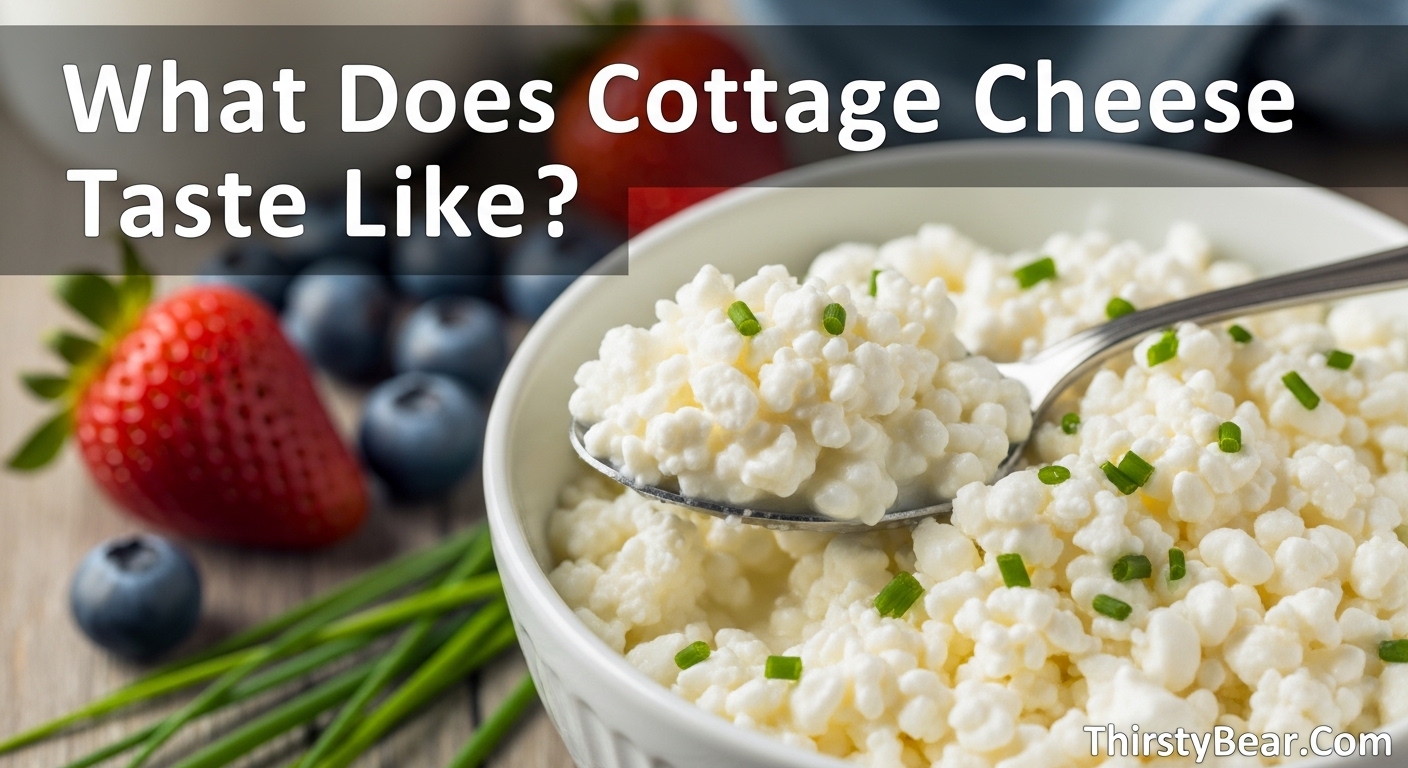
Cottage cheese has a mild, slightly salty flavor with a creamy, lumpy texture. I’ve found it tastes similar to plain Greek yogurt but with a more pronounced tang and distinctive curds throughout. The flavor isn’t overpowering, which makes it versatile for both sweet and savory dishes.
If you’ve never tried cottage cheese before, you might wonder what all the fuss is about. Some people love it, while others find the texture off-putting. Understanding what cottage cheese tastes like helps you decide if it’s worth trying or how to use it in your cooking.
In this guide, I’ll break down the flavor profile, explain why texture matters, compare it to similar foods, and share ways to make it more enjoyable if you’re not immediately sold.
Table of Contents
What Does Cottage Cheese Taste Like?
Cottage cheese has a mild, fresh flavor that’s not what most people expect from “cheese.” It’s much more subtle than cheddar, mozzarella, or other aged cheeses. The taste reminds me of fresh milk with a slight tanginess from the lactic acid produced during fermentation.
Here’s what you can expect from the flavor:
- Mild and slightly salty – not as salty as feta but more than plain yogurt
- Subtle tang similar to sour cream or buttermilk
- Fresh dairy taste without the strong cheese flavor you might expect
- Slightly sweet undertones in some brands
- Fat content affects richness – full-fat versions taste creamier
The saltiness varies significantly by brand. Some mass-produced varieties contain much more sodium than artisanal options. I’ve tested dozens of brands and found that organic and small-batch cottage cheeses often have a cleaner, less salty taste profile.
Temperature affects the flavor too. Cold cottage cheese tastes milder, while room temperature brings out more tang and complexity. Let it sit for 5-10 minutes before eating to experience the full flavor range.
The Texture Experience
Texture is where cottage cheese divides people. It has a unique mouthfeel that combines creamy and chunky elements. The curds are soft cheese clumps suspended in a liquid whey base. This creates what some people describe as “lumpy” or “chunky,” while others find it satisfying and substantial.
Curd size matters for the eating experience. Small curd cottage cheese has tiny, almost uniform curds that feel smoother on the tongue. Large curd varieties have bigger, more distinct curds that create a more pronounced texture. I prefer small curd for eating plain and large curd for savory dishes where the texture adds character.
The whey portion is thin and milky, providing a creamy contrast to the solid curds. When you mix them together with a spoon, you get a range of textures in each bite – from soft curds to liquid whey to areas where they’ve blended into something smoother.
Some people find the “wet” texture off-putting, especially compared to firmer cheeses. Blending cottage cheese completely smooths out the texture, making it similar to Greek yogurt or sour cream. This is a great trick if you want the flavor without the lumps.
What Is Cottage Cheese?
Cottage cheese is a fresh, soft cheese made from cow’s milk. It’s one of the simplest cheeses to make and has been around for centuries. Unlike aged cheeses that develop complex flavors over time, cottage cheese is meant to be eaten fresh while the milk flavor is still pure and mild.
The production process starts with adding enzymes to pasteurized milk. These enzymes convert the milk sugars into lactic acid, which causes the milk to separate into curds and whey. The curds are the solid cheese pieces, while the whey is the liquid remaining after separation.
Traditional cottage cheese has a natural acidity and slightly tangy flavor from this lactic acid fermentation. Commercial versions often add cream back in after draining the whey, creating the creamy texture we associate with cottage cheese.
Because it’s a fresh cheese, cottage cheese doesn’t undergo aging processes that develop the strong flavors in other cheeses. This is why its taste remains mild and closer to fresh milk than to what most people think of as “cheese flavor.”
Cottage Cheese vs Other Cheeses
Understanding how cottage cheese compares to similar foods helps you decide if it’s right for you and how to use it in recipes. Here’s how it stacks up against common alternatives:
- Cottage Cheese vs Ricotta: Both are fresh Italian-style cheeses, but ricotta is smoother and sweeter. Ricotta has a grainy texture without distinct curds, while cottage cheese has visible lumps. Ricotta tastes milder and less tangy, making it better for lasagna and desserts. Cottage cheese’s stronger flavor and curds work better in savory applications and as a standalone protein source.
- Cottage Cheese vs Greek Yogurt: Greek yogurt is thicker and tangier than cottage cheese. Both have similar protein content, but Greek yogurt has a more consistent texture without curds. The flavor differences are subtle – cottage cheese tastes more like mild cheese, while Greek yogurt tastes more fermented. Many people who dislike cottage cheese’s texture find Greek yogurt more palatable.
- Cottage Cheese vs Sour Cream: Sour cream has a much more pronounced tang and smoother texture. It’s made by fermenting cream rather than milk, which gives it a richer, more acidic flavor. Cottage cheese is milder and less tart, with the added protein and curds that sour cream lacks. Use sour cream for dips and toppings where you want strong tang, and cottage cheese when you want more substance and nutrition.
- Cottage Cheese vs Cream Cheese: Cream cheese is much richer and milder than cottage cheese. It’s made with cream and has a smooth, spreadable texture without any lumps. Cream cheese tastes sweet and fatty with almost no tang, while cottage cheese has noticeable acidity and complex texture. They’re not interchangeable in most recipes despite both being fresh cheeses.
Why Some People Hate Cottage Cheese
Based on forum discussions and real experiences, the main reasons people dislike cottage cheese come down to texture rather than taste. The lumpy, wet mouthfeel catches many people off guard, especially if they’re expecting smooth cheese like cream cheese or firm cheese like cheddar.
Some describe cottage cheese as tasting like “chunky old milk,” which comes from the combination of mild dairy flavor and unexpected texture. The saltiness in mass-produced brands can be overwhelming, making the whole experience unpleasant for sensitive palates.
Low-fat versions taste significantly worse to most people. Removing the fat also removes much of the flavor and creaminess, leaving behind something that tastes watery and bland with the same divisive texture. I always recommend starting with full-fat cottage cheese if you’re trying it for the first time.
Brand quality matters more than with many other foods. Bad cottage cheese can be truly unappetizing – overly salty, watery, with a grainy or rubbery texture. But good cottage cheese converts skeptics with its fresh, creamy flavor and pleasant curds. Don’t give up after one bad brand experience.
How to Eat Cottage Cheese
If you’re new to cottage cheese or trying to acquire a taste for it, start with applications that complement rather than highlight the unique texture. Here are my favorite ways to make cottage cheese more enjoyable:
Sweet applications:
- Mix with fresh fruit like berries, peaches, or pineapple
- Blend with honey and cinnamon for a dessert-like treat
- Use as a topping on pancakes or waffles instead of syrup
- Add to smoothies for extra protein without overwhelming the flavor
- Sweeten with vanilla and use as a dip for apple slices
Savory applications:
- Season with salt, pepper, and herbs for a simple protein snack
- Use as a topping on baked potatoes instead of sour cream
- Mix into scrambled eggs for extra fluffiness and protein
- Substitute for ricotta in lasagna or stuffed shells
- Use as a base for savory dips with garlic, herbs, and vegetables
For texture-sensitive eaters, blending cottage cheese completely smooths out the lumps while keeping the protein and mild flavor. Try it blended with herbs for a savory dip or with fruit for a sweet treat – you might be surprised at how different the experience becomes.
FAQs
Is there a downside to eating cottage cheese?
The main downsides are high sodium in some brands and the divisive texture that some people find unappealing. Some low-fat versions can taste watery and less satisfying than full-fat options.
Does cottage cheese taste like plain Greek yogurt?
Cottage cheese and Greek yogurt have similar tangy, mild flavors but different textures. Greek yogurt is consistently smooth and thick, while cottage cheese has lumpy curds suspended in liquid whey. Cottage cheese tastes slightly more like mild cheese, while Greek yogurt tastes more fermented.
Can I eat cottage cheese on Zepbound?
Cottage cheese is generally considered compatible with Zepbound and similar weight management medications because it’s high in protein and relatively low in calories. However, always consult your healthcare provider for personalized dietary guidance.
Conclusion
So what does cottage cheese taste like? It’s a mild, slightly salty, fresh cheese with a subtle tang and distinctive lumpy texture. The flavor is much more approachable than many expect – closer to fresh yogurt than to aged cheese. But the texture is what makes cottage cheese unique and divisive.
If you’re trying cottage cheese for the first time, start with a high-quality full-fat brand and consider blending it or mixing it with complementary flavors. Give yourself time to acquire the taste, and don’t judge all cottage cheese by one bad brand experience.
Understanding cottage cheese’s flavor profile helps you use it effectively in cooking or as a nutritious snack. Whether you love it or hate it, there’s no denying that cottage cheese offers a unique taste and texture experience in the world of cheese.