
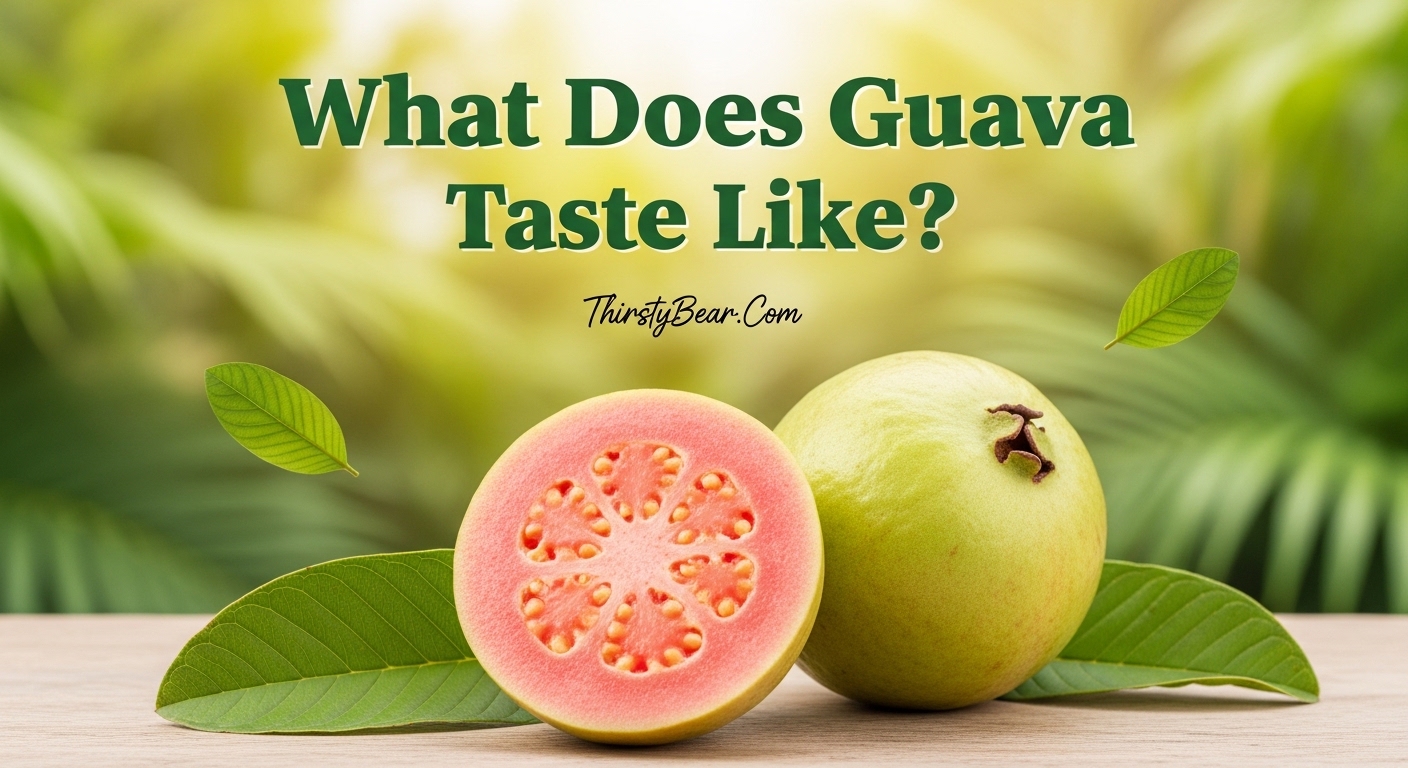
Guava tastes like a unique, fragrant hybrid of a strawberry and a pear, with sweet, floral notes and a musky tropical aroma. When you bite into a ripe guava, you’ll experience a complex flavor profile that combines the familiar sweetness of strawberries with the subtle graininess of pear, all wrapped in an intensely perfumed fragrance that fills the room.
If you’ve never tried this tropical fruit before, you’re in for a sensory experience unlike any other. Native to Mexico and Central America, guava has captivated fruit lovers around the world with its distinctive taste that varies between varieties. In this guide, I’ll walk you through everything you need to know about guava’s flavor profile, texture, and how different varieties taste.
Table of Contents
What is Guava?
Guava (Psidium guajava) is a tropical fruit from the myrtle family, native to Mexico, Central America, and parts of South America. This round or oval fruit grows on small trees that thrive in warm, humid climates. The skin can be green, yellow, or maroon when ripe, while the flesh ranges from white to yellow to deep pink.
The fruit typically measures 2-4 inches in diameter and contains numerous small, edible seeds in its center. Guava has been cultivated for centuries, with archaeological evidence suggesting consumption dates back to 2500 BC in Peru. Today, it’s grown commercially in tropical and subtropical regions worldwide.
What Does Guava Taste Like?
The taste of guava is best described as a sweet and floral experience with tropical undertones. The primary flavor combines strawberry-like sweetness with pear-like subtlety, creating a balanced profile that’s neither too sugary nor too tart. When perfectly ripe, guava offers an intense sweetness that feels natural rather than cloying.
The aroma is perhaps guava’s most distinctive feature. A ripe guava fills the surrounding space with a musky, perfumed fragrance that some find heavenly and others find overwhelming. This strong scent comes from volatile compounds that develop as the fruit ripens.
Texture-wise, guava flesh is similar to a firm pear but denser and less watery. The consistency is smooth and slightly grainy, depending on the variety. The small edible seeds add a slight crunch, though some people prefer to remove them.
The sweetness level varies between varieties, but most ripe guavas fall between 8-12 on the Brix scale (sugar content measurement). This makes guava naturally sweeter than many common fruits like apples or oranges, though not as intense as mangoes at their peak.
Guava Varieties and Their Taste Differences
Not all guavas taste the same. The four main varieties each offer distinct flavor profiles that cater to different preferences:
- Pink Guava: The most common variety in markets, pink guava features deep pink flesh with the strongest, most pronounced flavor. This variety offers the highest sweetness levels and the most intense musky aroma. Pink guava contains lycopene, the same antioxidant that gives tomatoes their red color. The flavor is often described as a cross between strawberry and pear with added tropical complexity.
- White Guava: With pale yellow-white flesh, this variety has a milder, more subtle flavor profile. White guava is less sweet than pink varieties and has a significantly reduced musky aroma. Many people who find pink guava’s perfume overwhelming prefer white guava for its gentler taste. The flavor leans more toward pear with hints of citrus.
- Yellow Guava: Similar to white guava but with yellow flesh, this variety offers a balanced sweetness that’s less intense than pink guava but more flavorful than white. Yellow guava has a pleasant tropical aroma without being overwhelming. The taste often includes subtle citrus notes alongside the classic strawberry-pear profile.
- Lemon Guava: Also known as apple guava, this smaller variety (often the size of a lemon) features yellow skin and creamy yellow flesh. True to its name, lemon guava has a distinct lemon-like tanginess combined with guava’s classic sweetness. The aroma is fresher and less musky than larger guava varieties. This variety is often described as tasting like a cross between a strawberry, a pear, and a lemon.
- Apple Guava: A larger variety that can grow to the size of a grapefruit, apple guava has white to yellow flesh with a mild, sweet flavor. The taste is less complex than other varieties but still maintains the characteristic guava profile. This variety is often preferred for cooking and processing because its milder flavor blends well with other ingredients.
What Does Unripe Guava Taste Like?
Unripe guava offers a completely different taste experience. Green, firm guava is sour, tart, and astringent with a bitter aftertaste similar to grapefruit. The texture is crisp and crunchy like an apple, making unripe guava satisfying to bite into despite the intense sourness.
In many Latin American countries, unripe guava is commonly eaten with salt, chili powder, and lime juice. This preparation balances the sourness with salt and spice, creating a popular snack. The practice is so common that in some regions, unripe guava is more frequently consumed this way than ripe guava is eaten fresh.
As guava ripens, enzymes break down the acids and convert starches to sugars. The transformation from sour to sweet takes 3-5 days at room temperature, depending on initial ripeness. Monitoring this progression can help you catch guava at your preferred stage of sweetness.
Texture and Aroma Experience
Guava offers a multi-sensory experience that goes beyond just taste. The flesh consistency is similar to a firm pear but denser, with a slight graininess that varies between varieties. Pink guava tends to be creamier, while white and yellow varieties have a more defined grainy texture similar to a watermelon but less pronounced.
The seeds are small, hard, and embedded throughout the flesh. They’re edible and provide a slight crunch similar to raspberry seeds but larger. Some people enjoy the texture contrast the seeds provide, while others find them distracting and remove them.
The aroma is perhaps guava’s most distinctive characteristic. A room-temperature ripe guava releases volatile compounds that create a strong, musky, perfumed scent detectable from several feet away. This fragrance intensifies when the fruit is cut open. The smell has been variously described as similar to musk, honey, tropical flowers, or even petrol by those who find it unpleasant.
The strength of this aroma varies between varieties. Pink guava has the most intense smell, white guava the mildest, with yellow and lemon guava falling somewhere in between. If you’re sensitive to strong fruit aromas, white guava varieties offer the most subtle olfactory experience.
How to Tell if Guava is Ripe
Selecting a perfectly ripe guava ensures the best flavor experience. Here’s what to look for:
- Color Changes: Green guavas start to develop yellow tinges as they ripen. The skin color transitions from bright green to yellow-green to full yellow, depending on the variety. Pink guava varieties may develop a slight reddish blush when fully ripe.
- Firmness Test: Gently press the fruit with your thumb. An unripe guava will be hard like an apple. As it ripens, it yields slightly to pressure like a ripe peach or avocado. A guava that’s too soft may be overripe.
- Aroma Indicator: This is the most reliable ripeness signal. A ripe guava releases a strong, sweet, musky fragrance you can smell without cutting it open. If there’s no scent, it’s not ripe yet. If the smell is fermented or unpleasant, it may be past its prime.
- Skin Appearance: Ripe guava skin may develop slight wrinkling, similar to a ripe peach. Small blemishes or spots don’t affect the flesh quality. Avoid guavas with large moldy areas, deep cuts, or extremely soft spots that indicate damage or rot.
How to Cut and Eat Guava
Preparing guava properly enhances the eating experience. Start by washing the fruit thoroughly under running water to remove any residue or dirt. The skin is edible and contains additional fiber and nutrients, though some people prefer to remove it.
- Cutting Techniques: You can eat guava like an apple by biting directly into it, seeds and all. For a more refined experience, cut the guava in half lengthwise. Use a spoon to scoop out the seeded center if you prefer to remove the seeds. The remaining flesh can be cubed for fruit salads or sliced for snacking.
- Seed Removal: If the seeds bother you, cut the guava in half and scoop out the center seeded portion with a spoon. The surrounding seedless flesh is perfectly edible. Alternatively, you can press the flesh through a sieve to separate seeds when making purees or sauces.
- Eating Methods: Fresh guava can be eaten out of hand with a sprinkle of salt or lime juice to enhance flavors. In many cultures, guava is dipped in chamoy (a savory-sour Mexican sauce) or tajín (chili-lime salt). Guava also pairs well with cheese, especially cream cheese or queso fresco, creating a sweet-savory combination.
Common Ways to Enjoy Guava
Beyond fresh eating, guava’s versatility shines in various preparations. The fruit’s natural sweetness and pectin content make it excellent for cooking and baking applications.
- Fresh Consumption: Simply wash and eat whole, or slice and add to fruit salads. Guava pairs exceptionally well with other tropical fruits like mango, pineapple, and papaya. A squeeze of lime juice brightens the flavors and balances the sweetness.
- Juice and Smoothies: Guava juice is popular throughout the tropics. Blend fresh guava with water and strain to remove seeds, or blend whole for a fiber-rich drink. Guava smoothies combine well with yogurt, banana, or coconut milk. The fruit’s natural sweetness often means no added sugar is needed.
- Agua Fresca: This traditional Mexican drink blends fruit with water, lime, and a touch of sweetener. Guava agua fresca is refreshing and perfectly balances the fruit’s intense flavor with subtle tartness. It’s commonly served with meals or as a cooling beverage on hot days.
- Cocktails: Guava’s tropical flavor makes it an excellent cocktail ingredient. The fruit pairs well with rum, tequila, and vodka. Guava margaritas, guava daiquiris, and guava mojitos are popular in tropical regions. The fruit’s sweetness often reduces the need for added syrups. For cocktail recipes with guava, muddling fresh fruit provides the most authentic flavor compared to bottled juices.
- Desserts and Preserves: Guava’s high pectin content makes it ideal for jams, jellies, and fruit pastes. Guava paste (goiabada) is a popular Brazilian sweet often paired with cheese. The fruit works well in desserts like pies, tarts, and ice cream. Guava cheesecake is particularly popular in Hawaiian cuisine.
For more ideas on incorporating guava into your cooking, check out these exotic fruit recipes featuring guava that showcase the fruit’s versatility in both sweet and savory applications.
Health Benefits Overview
Beyond its delightful taste, guava packs impressive nutritional benefits. This tropical fruit is one of the richest natural sources of vitamin C, containing four times more vitamin C than oranges by weight. A single guava provides over 200% of your daily vitamin C requirement, supporting immune function and skin health.
Guava is also rich in antioxidants, particularly lycopene in pink varieties. These compounds help protect cells from damage caused by free radicals. The fruit contains potassium, which supports heart health and helps regulate blood pressure.
Despite its sweet taste, guava has a relatively low glycemic index, making it a suitable fruit option for people monitoring blood sugar levels. The fiber content (about 9 grams per cup) aids digestion and promotes feelings of fullness. At approximately 112 calories per cup, guava provides substantial nutrition for relatively few calories.
Why Some People Think Guava Tastes Bad
Guava isn’t universally loved, and there are valid reasons why some people find it unpleasant. Understanding these potential issues can help you decide whether guava might appeal to you.
- Unripe Bitterness: Many people’s first guava experience is with an unripe fruit, which tastes sour, bitter, and astringent. This unpleasant introduction can turn people off before they experience properly ripe guava. If your first guava tasted like a bitter grapefruit, you likely ate an unripe one.
- Overwhelming Aroma: The strong musky fragrance that guava lovers find heavenly can be overwhelming or even unpleasant to others. People sensitive to strong smells sometimes describe the aroma as similar to petrol or chemicals. If you’re sensitive to strong fruit odors, white guava varieties offer a milder scent experience.
- Texture Preferences: The combination of creamy flesh and crunchy seeds doesn’t appeal to everyone. Some find the seeds distracting or unpleasant, while others dislike the grainy texture. Seed removal can help if the seeds are the issue.
- Fresh vs. Processed: Many people first encounter guava as a flavoring in candies, sodas, or processed foods. These artificial guava flavors often taste dramatically different from fresh guava. Some people who love artificial guava find the fresh fruit disappointing, while others who dislike the artificial flavor are surprised to enjoy fresh guava.
Storage Tips
Proper storage ensures your guava stays fresh and flavorful. Unripe green guavas should be kept at room temperature away from direct sunlight. They typically ripen within 3-5 days. Place them in a paper bag with an apple or banana to accelerate ripening.
Once ripe, guavas can be kept at room temperature for 1-2 days if you plan to eat them soon. For longer storage, place ripe guavas in the refrigerator’s crisper drawer, where they’ll keep for 3-5 days. The cold temperature slows further ripening and preserves the fruit at its peak flavor.
For long-term storage, guava freezes well. Wash, peel, and remove seeds before freezing. Cut the flesh into chunks and freeze in a single layer on a baking sheet, then transfer to freezer bags. Frozen guava works well in smoothies and cooked applications but will have a softer texture when thawed.
Frequently Asked Questions
Why does my stomach hurt after eating guava?
Stomach discomfort after eating guava is usually caused by eating unripe fruit or consuming too much at once. Unripe guava contains tannins that can irritate the digestive system, causing cramping or discomfort. The high fiber content can also cause bloating if you’re not used to fiber-rich foods. Additionally, some people may have a specific sensitivity to compounds in guava. To minimize issues, eat only fully ripe guava in moderate portions and see if symptoms improve.
Is guava juice okay for GERD?
Guava juice may trigger GERD symptoms in some people due to its acidity and natural sugars. While guava itself has a pH around 3.5-5.5 (moderately acidic), the juice concentrates these acids. If you have GERD, consider diluting guava juice with water, drinking it with meals rather than alone, or choosing white guava varieties which are less acidic. Monitor your symptoms and consult with a healthcare provider about which fruits are best for your condition.
Can diabetics eat guava?
Yes, guava can be an excellent fruit choice for diabetics when eaten in moderation. Despite its sweet taste, guava has a relatively low glycemic index (GI) and is rich in fiber, which helps slow sugar absorption. A small guava (about 100g) contains approximately 8-9 grams of carbohydrates. The high vitamin C content and antioxidants provide additional health benefits. However, portion control is important, and diabetics should monitor their blood sugar response and consult their healthcare provider about appropriate serving sizes.
Is guava good for low blood pressure?
Guava may help support healthy blood pressure levels due to its potassium content. One cup of guava provides approximately 688 mg of potassium, which is about 20% of the daily recommended intake. Potassium helps balance sodium in the body and can help lower blood pressure. However, if you have clinically low blood pressure (hypotension), guava alone is not a treatment. People with blood pressure concerns should work with healthcare providers on comprehensive management rather than relying on single foods.
Conclusion
Guava offers a unique tropical taste experience that combines the sweetness of strawberries with the subtlety of pears, wrapped in an intensely fragrant package. Whether you prefer the mild sweetness of white guava or the robust flavor of pink varieties, there’s a guava type to suit different preferences.
The key to enjoying guava is selecting fruit at the right ripeness level and preparing it in ways that suit your taste. From fresh eating to juices, cocktails, and desserts, this versatile fruit offers numerous ways to experience its distinctive flavor profile.
If you’ve never tried fresh guava before, start with a white or yellow variety for a milder introduction. Once you appreciate the basic flavor, explore the more intense pink guava and experience why this tropical fruit has captivated fruit lovers around the world for centuries.