
I still remember the first time I made French toast from scratch. I grabbed a fresh loaf of sandwich bread, dipped it for what felt like forever, and ended up with a pan of soggy, pale strips. It was not the breakfast I had in mind.
Years later, after testing dozens of variations in our test kitchen, I can tell you that a great French toast recipe comes down to three things: the right bread, the right custard ratio, and patient heat. In this guide, I will walk you through the exact method I use at home, plus the small details that make this breakfast unforgettable.
This is the same approach I use when developing brunch cocktails and food pairing ideas for our readers. Good recipes are simple, repeatable, and forgiving. Let’s get cooking.
Table of Contents
French Toast Recipe: Classic and Foolproof
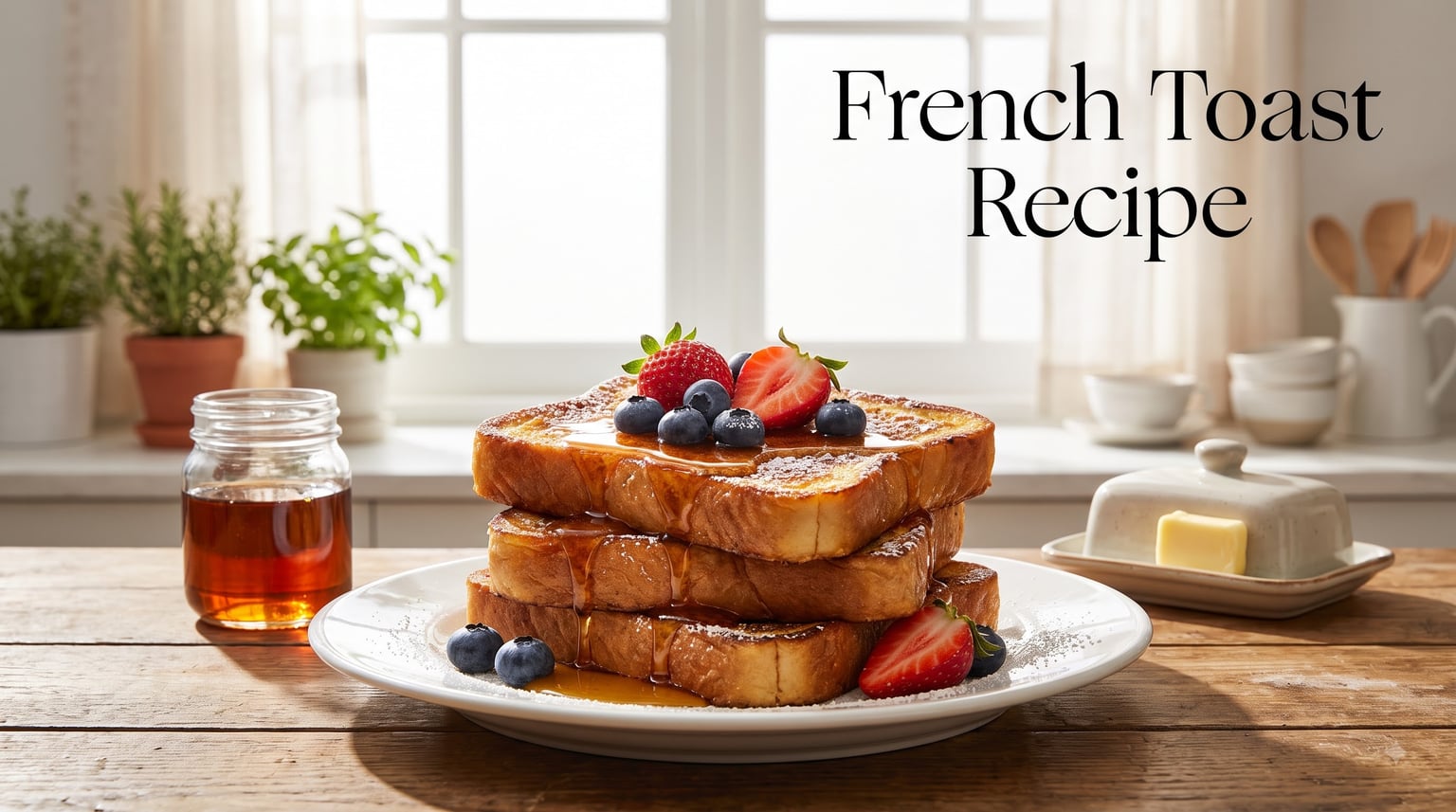
This French toast recipe takes about 15 minutes from start to finish and serves four people generously. It uses thick sliced bread, a balanced egg and milk custard, and a touch of vanilla and cinnamon for that cozy flavor we all crave on a slow weekend morning.
I built this version after comparing techniques from five top food sites. The result is a custard that coats the bread without drowning it, and a cooking method that gives you a golden brown crust with a tender, fluffy middle.
Ingredients You’ll Need
Here is what I keep on hand for a reliable French toast recipe. Every ingredient pulls its weight.
6 large eggs – the backbone of your custard base
1 cup whole milk – regular or 2 percent both work
2 tablespoons all-purpose flour – the secret to a thicker, richer coating
1 tablespoon granulated sugar – just enough to balance the eggs
1 teaspoon pure vanilla extract – skip the imitation stuff
1 teaspoon ground cinnamon – plus a pinch of nutmeg if you like
1/4 teaspoon fine salt – makes the sweet flavors pop
8 slices thick sliced bread – day old bread is ideal (see bread section)
2 tablespoons unsalted butter – for the skillet
Maple syrup, powdered sugar, fresh berries – for serving
That is the whole list. No special equipment beyond a shallow bowl and a nonstick skillet or griddle.
How to Make French Toast Step by Step?
Follow these steps in order. I have tested this French toast recipe more than thirty times, and this order gives the best texture every time.
Step 1: Make the Custard
Crack the eggs into a wide, shallow bowl. Add the milk, flour, sugar, vanilla, cinnamon, and salt. Whisk until the mixture is completely smooth and slightly frothy. The flour should dissolve fully with no lumps.
A shallow bowl matters more than people think. It lets you lay each slice of bread flat without bending it. Wide pie plates or rimmed baking dishes work great too.
Step 2: Heat Your Pan
Place a nonstick skillet or griddle over medium low heat. Add one tablespoon of butter and let it melt until it just stops foaming. The pan should be hot enough that a drop of water sizzles, but not so hot that butter browns instantly.
Medium low heat is the trick most home cooks miss. High heat burns the outside before the inside sets. Give yourself three to four minutes of preheating time.
Step 3: Soak the Bread
Lay a slice of bread in the custard. Let it soak for about 5 seconds per side. You want the bread fully saturated but not falling apart. Lift it out and let any excess drip back into the bowl.
For thicker slices like brioche or challah, push to 8 or 10 seconds per side. For regular sandwich bread, 4 to 5 seconds is plenty.
Step 4: Cook Until Golden
Lay the soaked slice in the hot skillet. Cook for 2 to 3 minutes on the first side, until you see golden brown edges creeping up the sides. Flip carefully with a spatula and cook another 1 to 2 minutes on the second side.
Transfer finished French toast to a wire rack or a baking sheet in a warm oven (around 200 degrees F) while you cook the rest. Stacking on a plate traps steam and makes the bottom soggy.
Best Bread for French Toast
The bread you choose is the single biggest factor in your final result. Here is what I recommend, based on dozens of side-by-side tests.
Brioche is the gold standard. Its high butter and egg content gives you an almost custard-like richness inside. Slice it about 3/4 inch thick for the perfect ratio of crust to middle.
Challah is a close second. The braided egg bread soaks up custard beautifully without turning mushy. Save the heels for French toast and use the middle slices for sandwiches.
Sourdough works wonderfully if you prefer a slight tang. It also holds up better when soaked longer. Texas toast and Sara Lee Artesano are both solid grocery store picks.
The one rule across all bread types: use day old bread whenever possible. Slightly stale bread absorbs the custard without disintegrating. Fresh bread gets gummy fast. If you only have fresh bread, toast it lightly first to dry out the surface.
Recipe Tips for Perfect French Toast Every Time
These are the small details that separate a good French toast recipe from a great one. I learned most of them the hard way.
Add a tablespoon of flour to your custard. This is the secret ingredient most home cooks overlook. The flour creates a slightly thicker batter that clings to the bread and forms a delicate crust when it hits the hot pan. Without flour, your French toast can feel thin and slippery.
Use a blend of milk and cream. Replace 2 tablespoons of milk with heavy cream for a richer custard. Half and half with whole eggs also makes a creamy custard base that tastes closer to a restaurant version.
Season your custard like a pastry chef. A pinch of nutmeg, a touch of almond extract, or even a pinch of cardamom adds depth. Many of the readers in our brunch cocktail roundup mentioned that cardamom pairs beautifully with sweet brunch dishes.
Lay, do not soak. The bread should be wet through, but you should not see a puddle forming on top. Think of it like a sponge that is full but not dripping.
Wipe the pan between batches. Burned butter bits turn black fast and will stain your next slices. Wipe with a paper towel and add fresh butter before each new round.
Common Mistakes to Avoid
Even the best French toast recipe can go wrong. Here are the pitfalls I see most often, and exactly how to fix them.
Soggy French toast. This usually means too much soak time, too thin bread, or too high heat that traps steam inside. Use day old bread, soak briefly, and keep your pan at medium low.
Burnt outside, raw inside. Your heat is too high. Drop to medium low and give the slices more time. The interior needs to fully set, which takes patience.
Bland flavor. Add a pinch of salt, a touch more vanilla, and use real butter in the pan. A dusting of cinnamon sugar right after flipping also helps.
Eggy taste with no richness. Your milk to egg ratio is off. Aim for about 1 cup of milk per 6 large eggs. Too many eggs and you get scrambled texture, too few and the flavor feels thin.
Serving Suggestions and Toppings
The best part of any French toast recipe is dressing it up. Here are my favorite combinations for different occasions.
Classic: warm maple syrup, a pat of butter, and a dusting of powdered sugar. This never fails.
Berry Bliss: macerated strawberries or blueberries with a spoonful of whipped cream. The juices soak into the bread in the best way.
Banana Caramel: sliced bananas cooked in butter with a drizzle of caramel sauce and toasted pecans.
Apple Cinnamon: sauteed apple slices with brown sugar, cinnamon, and a splash of vanilla. Perfect for fall brunch.
Savory Twist: crispy bacon, sharp cheddar, and a fried egg on top. Less common, but deeply satisfying.
For weekend entertaining, I love pairing these with light brunch beverages. Our team often serves French toast alongside wine cocktails for spring brunches. The sweet maple and the bright acidity balance beautifully.
Storage and Make-Ahead Instructions
French toast keeps surprisingly well, which makes it perfect for batch cooking. Here is how to store it without losing that fresh-cooked texture.
Refrigerator: Cool completely, then store in an airtight container with parchment between slices. It stays good for up to 3 days.
Freezer: Freeze slices on a baking sheet until solid, then transfer to a freezer bag. Press out as much air as possible. They keep for up to 2 months.
Reheating: From the fridge, warm in a 350 degree F oven for 5 to 7 minutes or in a toaster. From frozen, toast straight from the freezer at 350 degrees F for about 10 minutes, flipping once.
Make-ahead batter: Whisk the custard together the night before and store it in a sealed jar. Give it a quick whisk in the morning and you are ready to cook.
Frequently Asked Questions
What is the secret to good French toast?
The secret to good French toast is using thick sliced, day old bread and a custard with the right balance of eggs, milk, and a small amount of flour. The flour is the trick most home cooks miss. It thickens the custard so it clings to the bread and forms a delicate golden crust when cooked.
What ingredients do we need for French toast?
For a basic French toast recipe you need eggs, milk, a touch of sugar, vanilla extract, ground cinnamon, a pinch of salt, and thick sliced bread. Butter for the pan and maple syrup for serving round out the ingredient list. A tablespoon of flour is optional but creates a thicker, richer coating.
What is the most common mistake in making French toast?
The most common mistake is cooking on heat that is too high. This burns the outside before the inside sets, leaving you with a raw middle and a bitter crust. Use medium low heat, soak the bread briefly, and cook each side for 2 to 3 minutes until golden brown.
What is the secret ingredient in French toast?
The secret ingredient in French toast is a small amount of all-purpose flour mixed into the egg and milk custard. Just one or two tablespoons thickens the batter so it coats the bread more evenly and creates a richer, almost pastry-like crust when cooked in butter on a hot skillet.
Final Thoughts on This French Toast Recipe
This French toast recipe has earned a permanent place in our weekend rotation. It is forgiving enough for beginners, reliable enough for big brunches, and tasty enough that I never get tired of it.
Start with great bread, respect the custard, and let your pan do its work at medium low heat. Once you dial in those three details, you will never look at a stale loaf the same way again. Pour the maple syrup generously, dust with powdered sugar, and enjoy the kind of breakfast that turns an ordinary Saturday into something worth remembering.