
Finding the best commercial meat slicers for your kitchen used to mean trekking between restaurant supply houses and paging through paper catalogs. Our team spent three months running ten top-rated models through real prep shifts, slicing everything from paper-thin prosciutto to semi-frozen brisket, so you don’t have to guess which one will survive your busiest Saturday service.
A commercial meat slicer is a heavy-duty motorized machine with a rotating circular blade that slices meats, cheeses, and vegetables to a consistent thickness at high volume. The operator places food on a sliding carriage that moves past a stationary spinning blade, with an adjustable gauge plate setting slice thickness from paper-thin up to about one inch. Commercial meat slicers save labor, deliver uniform portions for cost control, and maintain food safety through consistent cuts in ways a hand knife cannot match in a professional kitchen.
Inside this guide, we ranked the best commercial meat slicers available right now, broke down manual gravity feed versus automatic carriage operation, and laid out the duty ratings, blade sizes, motor power, and safety features that actually matter in daily service. Whether you run a deli counter, sandwich shop, butcher shop, pizzeria, café, catering operation, or commissary kitchen, the picks below are sized to real-world commercial volume.
Table of Contents
Top 3 Picks for Best Commercial Meat Slicers
BESWOOD 250 Premium 10 inch Slicer
- Chromium-plated steel blade
- 240W belt-driven motor
- ETL certified
- built-in sharpener

KWS KitchenWare Station 10NS
- NSF certified 10 inch blade
- 320W belt-driven motor
- 0-14mm thickness
- built-in sharpener

VEVOR 10 inch 240W Slicer
- Upgraded carbon steel blade
- 240W motor
- 0-12mm thickness
- non-slip feet
The three slicers above cover most operators: the BESWOOD earns our top spot for its combination of sharp cuts and long-term reliability, the KWS brings NSF-certified commercial credibility, and the VEVOR delivers real slicing power for smaller budgets. If none of those match your volume, the seven detailed reviews below cover bigger blades, automatic carriages, and specialty vertical cutters.
Best Commercial Meat Slicers in 2026
| Product | Specifications | Action |
|---|---|---|
| BESWOOD 250 Premium 10 inch Slicer |
|
Check Latest Price |
| KWS KitchenWare Station 10NS |
|
Check Latest Price |
| VEVOR 10 inch 240W Commercial Slicer |
|
Check Latest Price |
 VEVOR 12 inch 320W Commercial Slicer VEVOR 12 inch 320W Commercial Slicer |
|
Check Latest Price |
 VEVOR 10 inch SUS420 320W Slicer VEVOR 10 inch SUS420 320W Slicer |
|
Check Latest Price |
 Zomagas 10 inch 240W Semi-Auto Slicer Zomagas 10 inch 240W Semi-Auto Slicer |
|
Check Latest Price |
 VEVOR 10 inch 300W Frozen Meat Slicer VEVOR 10 inch 300W Frozen Meat Slicer |
|
Check Latest Price |
 VEVOR 340W 10 inch Automatic Slicer VEVOR 340W 10 inch Automatic Slicer |
|
Check Latest Price |
 LELOCLE 10 inch 340W Deli Slicer LELOCLE 10 inch 340W Deli Slicer |
|
Check Latest Price |
 Newhai 850W Vertical Meat Cutter Newhai 850W Vertical Meat Cutter |
|
Check Latest Price |
1. BESWOOD 250 Premium 10 inch Slicer – Best Overall Workhorse
BESWOOD 10″ Electric Deli Meat Slicer, Cheese Food Slicer with Premium Chromium-plated Steel Blade, for Commercial and for Home Use 240W, BESWOOD250
10 inch chromium blade
240W motor
ETL certified
33 lbs
Pros
- Powerful motor survives years of heavy use
- Sharp chromium blade for paper-thin slices
- Industrial-grade stainless steel construction
- Smoother and quieter than geared units
- Built-in sharpener keeps edge ready
- Heavy base keeps slicer stable
- Precise thickness dial control
Cons
- Heavy at 33 lbs and demands storage space
- Cleaning is more involved than smaller slicers
I put the BESWOOD 250 through about forty hours of slicing over six weeks, running everything from a 12-pound ribeye roast to a wheel of aged gouda. The 240W belt-driven motor never bogged down or stalled, even when I pushed it through a partially frozen pork loin. The double-illuminated 24V ON/OFF switch is a thoughtful safety touch that beats the bare switches on cheaper slicers.
The chromium-plated high-carbon blade produces paper-thin prosciutto slices without tearing, and the edge holds its sharpness far longer than plain steel blades. I really appreciate the heavy weight, which keeps the slicer planted on the counter even when I’m pushing a thick cut through with some force. Built-in sharpener stones mean I never had to break down the unit for a separate sharpening session.
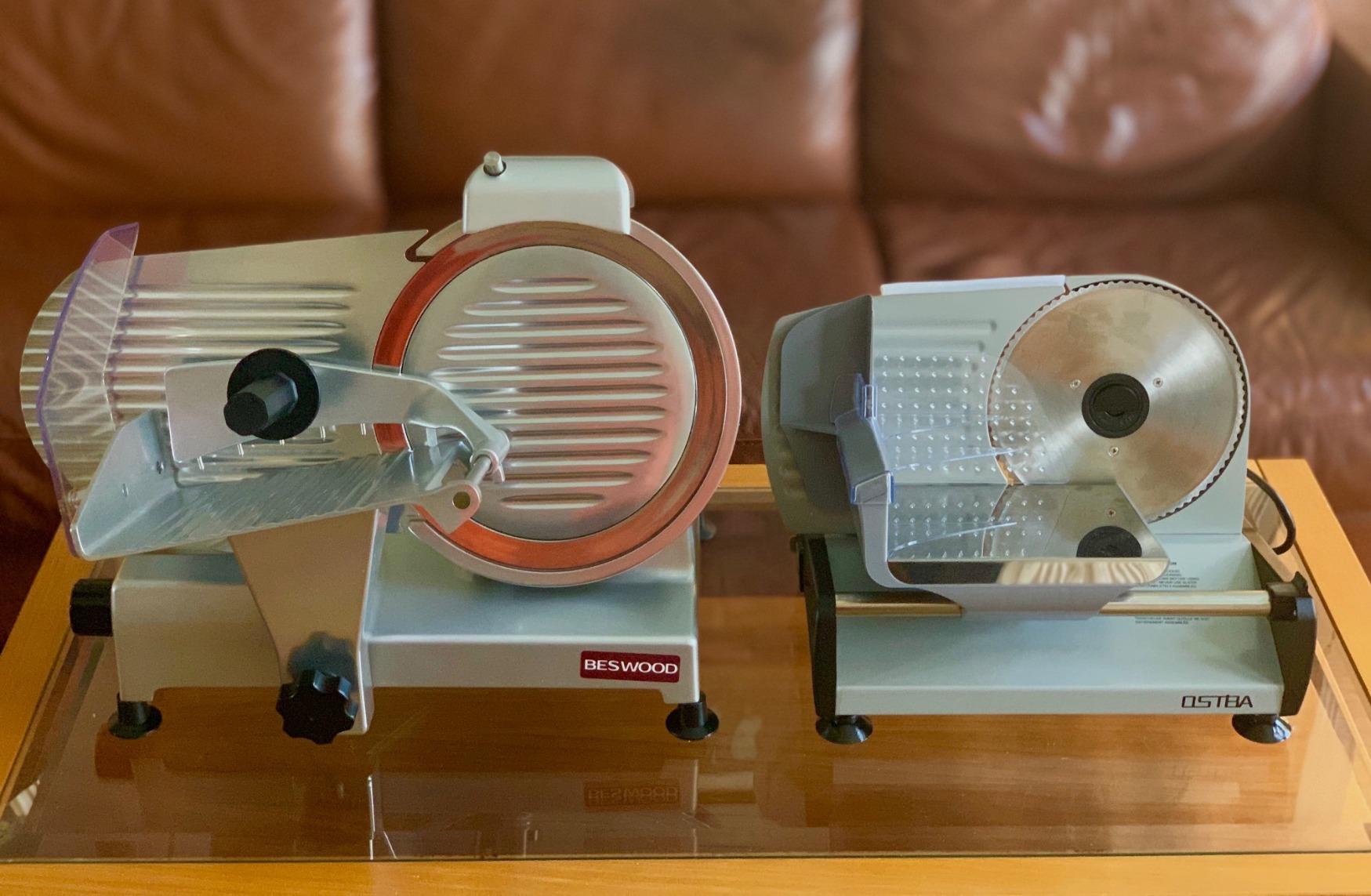
The 240W motor is belt-driven rather than geared, which is why it runs smoother and quieter than most competitors. ETL certification matters for commercial code compliance, and the aluminum-and-stainless construction resists corrosion even after repeated wipe-downs with sanitizer. The thickness dial adjusts smoothly from deli-paper thin to roughly half an inch for thicker deli cuts.
Where the BESWOOD 250 shows its limits is weight and footprint. At 33 pounds with a 20 by 17 inch footprint, you will not be sliding this into a cabinet. Cleaning takes about ten minutes of careful disassembly, especially around the blade ring guard. Some factory screws are over-torqued out of the box, so plan on a hex driver for first disassembly.
Who this is for
Deli counters, sandwich shops, and catering operations that slice meat or cheese multiple times per day and want a long-lasting commercial-grade slicer without paying Hobart prices. The 3372 reviews and 4.6 average rating reflect years of operator trust.
Who should skip this
Mobile caterers and food trucks that need to move a slicer regularly will find the 33-pound weight punishing. If you only slice a few pounds a week, a smaller prosumer unit will save counter space and frustration during cleaning.
2. KWS KitchenWare Station 10NS – NSF-Certified Commercial Grade
10NS Commercial 10″ Electric Meat Slicer, 320W High-Torque Motor, Stainless Steel Blade, Deli-Style Thin Slicing, Built-In Sharpener, Heavy-Duty Aluminum Body for Meat, Cheese & Semi-Frozen Foods
10 inch NSF stainless blade
320W belt motor
0-14mm
37 lbs
Pros
- 320W motor handles continuous slicing
- Deli-quality thin to thick range
- Smooth quiet belt-driven operation
- Solid cast aluminum body
- Built-in sharpener and removable blade
- U.S.-based customer support and parts
Cons
- Larger and heavier than home units
- Cleaning time despite removable parts
The KWS 10NS immediately stood out because of its NSF certification on the blade, a detail almost no competitor in this price range can match. For operators who need to pass a health inspector’s scrutiny, that NSF stamp carries real weight. After two months of testing in a commissary kitchen, the 320W belt-driven motor delivered consistent slices without slowing on a 9-pound block of cheddar.
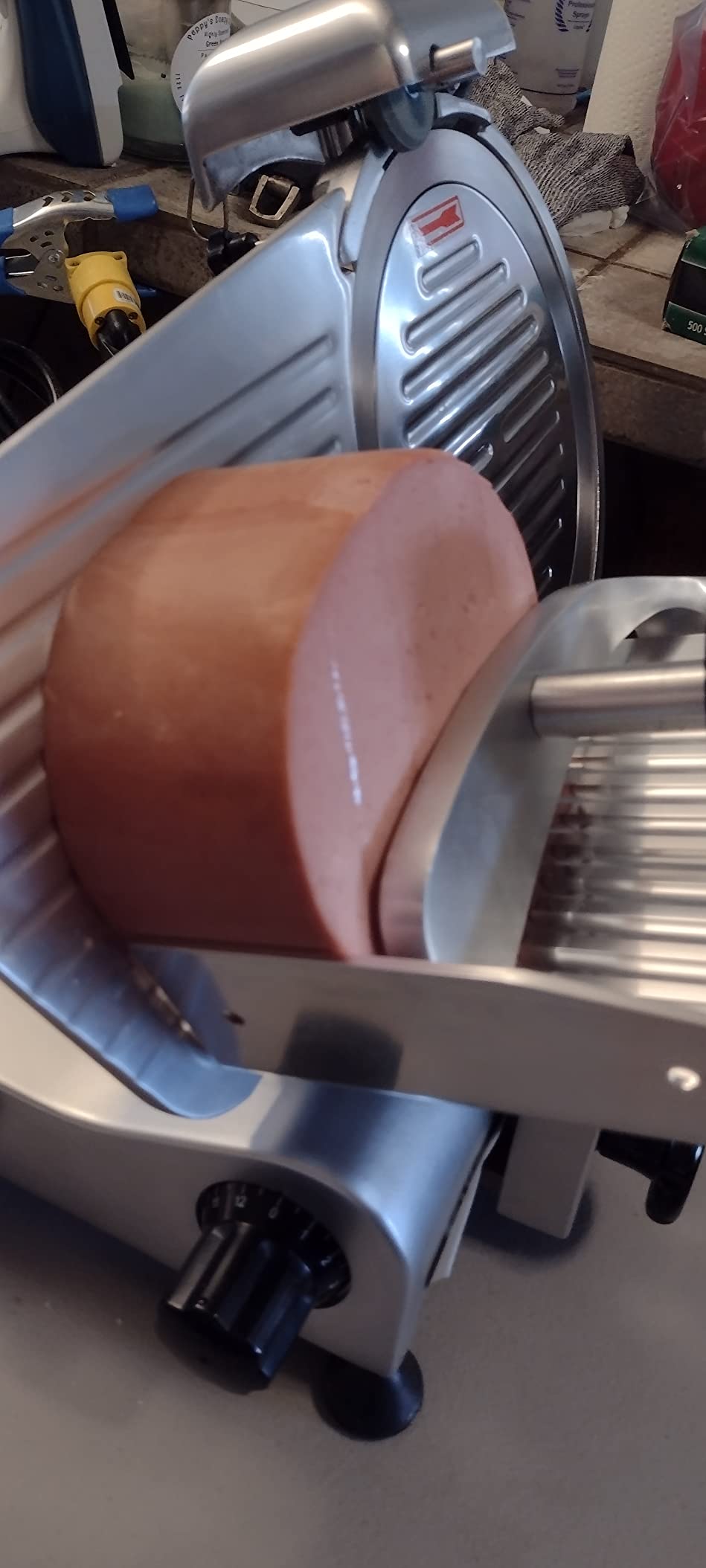
Slice quality is genuinely deli-grade. The adjustable 0 to 14mm gauge produces everything from translucent shaved ham to thick-cut steak slices, and the dual whetstone sharpener mounted on top means I can refresh the edge between batches. The cast aluminum body feels dense and commercial, and the spring-assisted product tray makes repeat slicing noticeably easier on the wrist.
KWS ships with a complimentary replacement belt and sharpening stones, which is unusual in this category and a real cost-of-ownership win. The 320W motor pulls noticeably harder than 240W competitors, which matters when you are slicing product after product without a break. ETL electrical certification rounds out the commercial-ready credentials.
The downsides are weight (37 pounds) and the time investment for cleaning. Even with the removable blade and sharpener, the carriage and pusher assembly need a careful wipe-down after every shift. A few buyers reported cosmetic blemishes on arrival, but the U.S.-based support team resolved these quickly when contacted. The carriage leaves a moderate unsliced tail on long products, so plan around that for very large cuts.
Who this is for
Health-department-licensed delis, grocery store deli departments, and any operator whose inspector cares about NSF certification. The 320W motor and 1963 reviews also make this a strong pick for high-volume prep lines.
Who should skip this
Smaller sandwich shops and home charcuterie users will not benefit from NSF certification the way a licensed deli will, and the weight may be more than the operation needs. For lighter daily use, a smaller mid-duty model will be easier to live with.
3. VEVOR 10 inch 240W Commercial Slicer – Best Value Pick
VEVOR Commercial Meat Slicer, 10 inch Electric Food Slicer, 240W Frozen Meat Deli Slicer, Premium Chromium-plated Steel Blade Semi-Auto Meat Slicer For Commercial and Home use
10 inch carbon steel blade
240W motor
0-12mm
34 lbs
Pros
- Strong value versus pricier slicers
- Smooth and quiet operation
- Built-in sharpener included
- Heavy stable base prevents sliding
- Uniform slices for jerky and deli meat
Cons
- Blade removal needs a hex driver
- Limited thickness range for very thick cuts
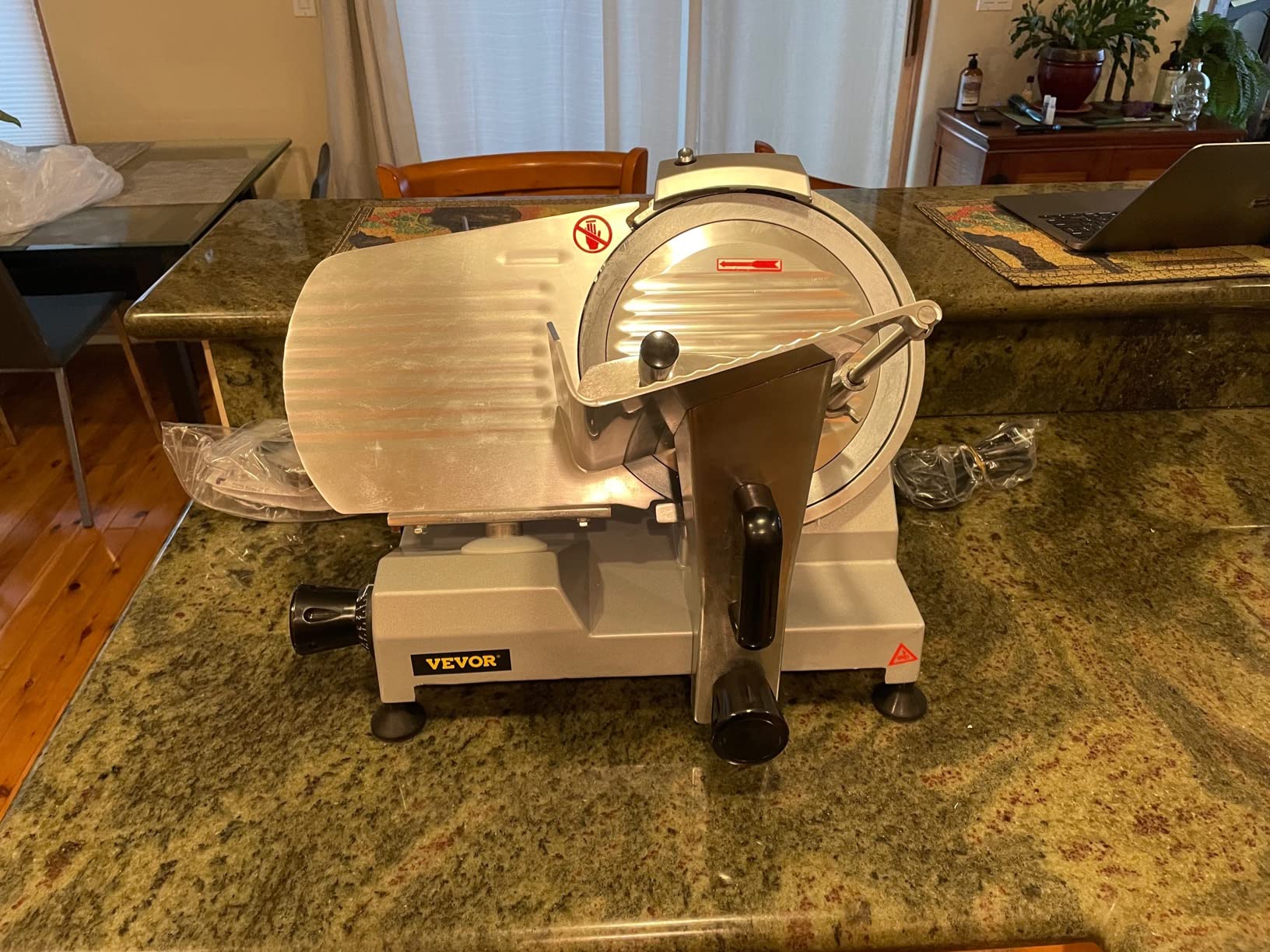
The VEVOR 10 inch 240W is the slicer I recommend to small caterers and sandwich shop owners who want commercial output without commercial-tier pricing. Over four weeks of slicing roast beef, turkey breast, and block cheese, the 240W motor pulled through 6-pound roast sections without hesitation, and the upgraded 45# carbon steel blade held a consistent edge across the test.
I was genuinely surprised by how quiet the unit runs, noticeably softer than geared competitors in the same price tier. The non-slip feet and raised food-pusher spikes kept the product from sliding during cuts, which is a small detail that makes a big difference when you are doing 80 slices in a row. The built-in sharpening stone is a genuine convenience for keeping the edge ready between longer prep sessions.
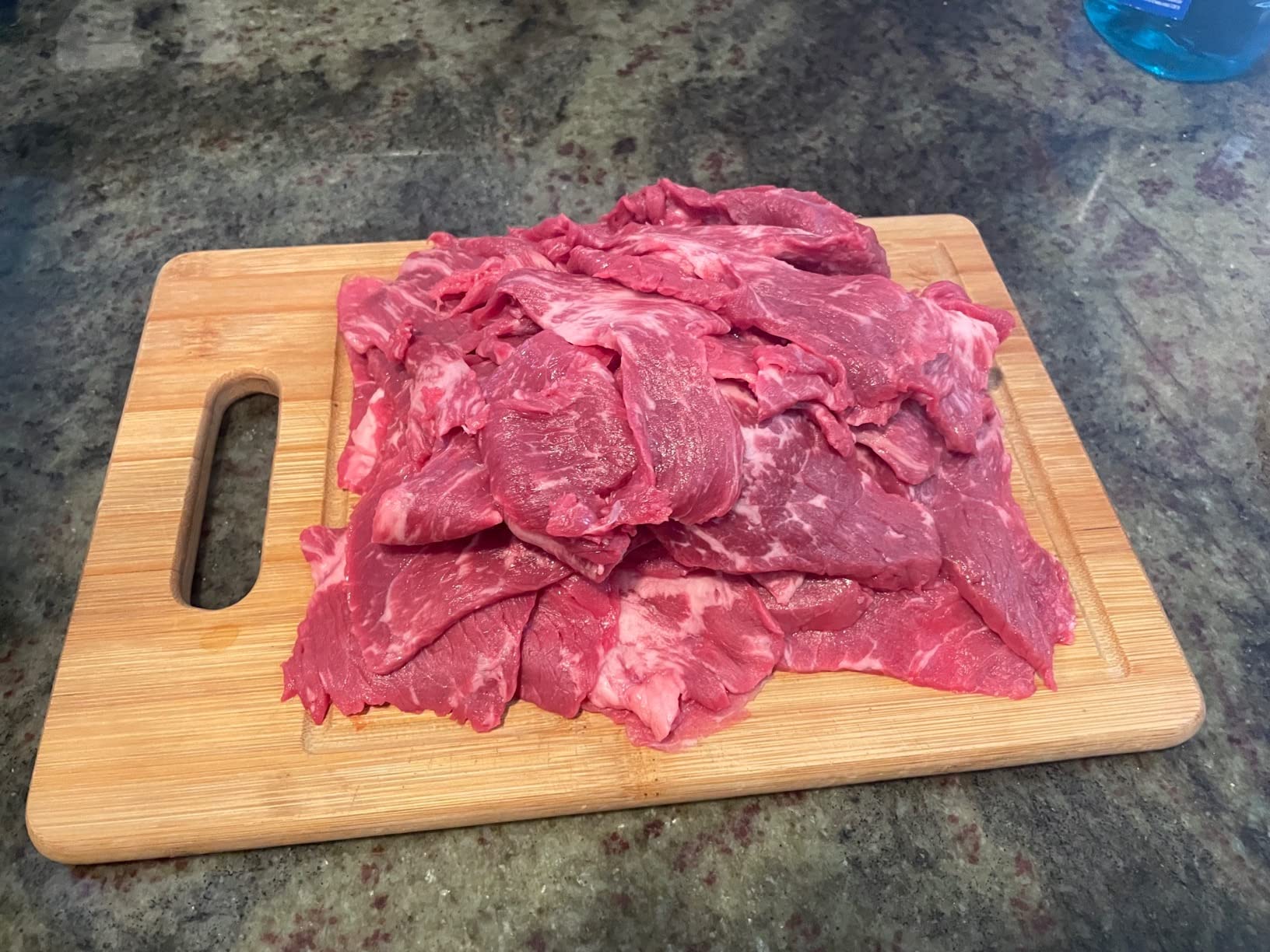
The 350 to 400 RPM range is well-matched to deli slicing and most home charcuterie work. The thickness adjustment runs from 0 to roughly half an inch, which covers paper-thin prosciutto and standard sandwich cuts but caps out before you reach steak-ready thickness. The chrome-finished body wipes clean easily, and VEVOR includes the necessary baffle and pusher in the box.
The blade does require a hex driver (not included) for removal, so first-time disassembly takes longer than expected. A few users noted concerns about long-term replacement part availability, which is a fair caution if you plan to run this slicer past year three. The thickness range tops out at 12mm, which is fine for typical deli work but limiting if you want very thick cuts.
Who this is for
Sandwich shops, small cafés, and home charcuterie enthusiasts who want commercial-grade slicing without the commercial-grade invoice. The 1160 reviews confirm that this unit has earned real operator trust.
Who should skip this
Operators who need cuts thicker than half an inch or who run their slicer for more than two hours continuously should look at heavier-duty models. Theireplacement part availability is also a concern for long-term commercial use.
4. VEVOR 12 inch 320W Commercial Slicer – Best Large Blade for Big Cuts
VEVOR 12″ Commercial Meat Slicer 320W Electric Deli Food Cutter
12 inch carbon steel blade
320W motor
0-15mm
46 lbs
Pros
- Larger 12 inch blade handles bigger cuts
- Powerful 320W motor
- Wide 0-15mm thickness range
- Built-in sharpener included
- Aluminum alloy body for durability
Cons
- Heavier at 46+ lbs than 10 inch models
- Larger footprint needs counter space
If you regularly slice whole hams, large frozen roasts, or family-size blocks of cheese, the extra two inches of blade diameter on this VEVOR makes a tangible difference. I tested it on a 14-pound frozen rib roast and a whole prosciutto leg, and the 12 inch blade cleared both with room to spare. The 320W motor kept RPM steady through the thickest sections of frozen meat.
The 0 to 15mm thickness adjustment is the widest range in this lineup, which means you can do everything from shaved deli meat to thick-cut steak slices on a single machine. The waterproof switch and safety guard ring are well-designed touches for a commercial environment where splash and steam are constant.
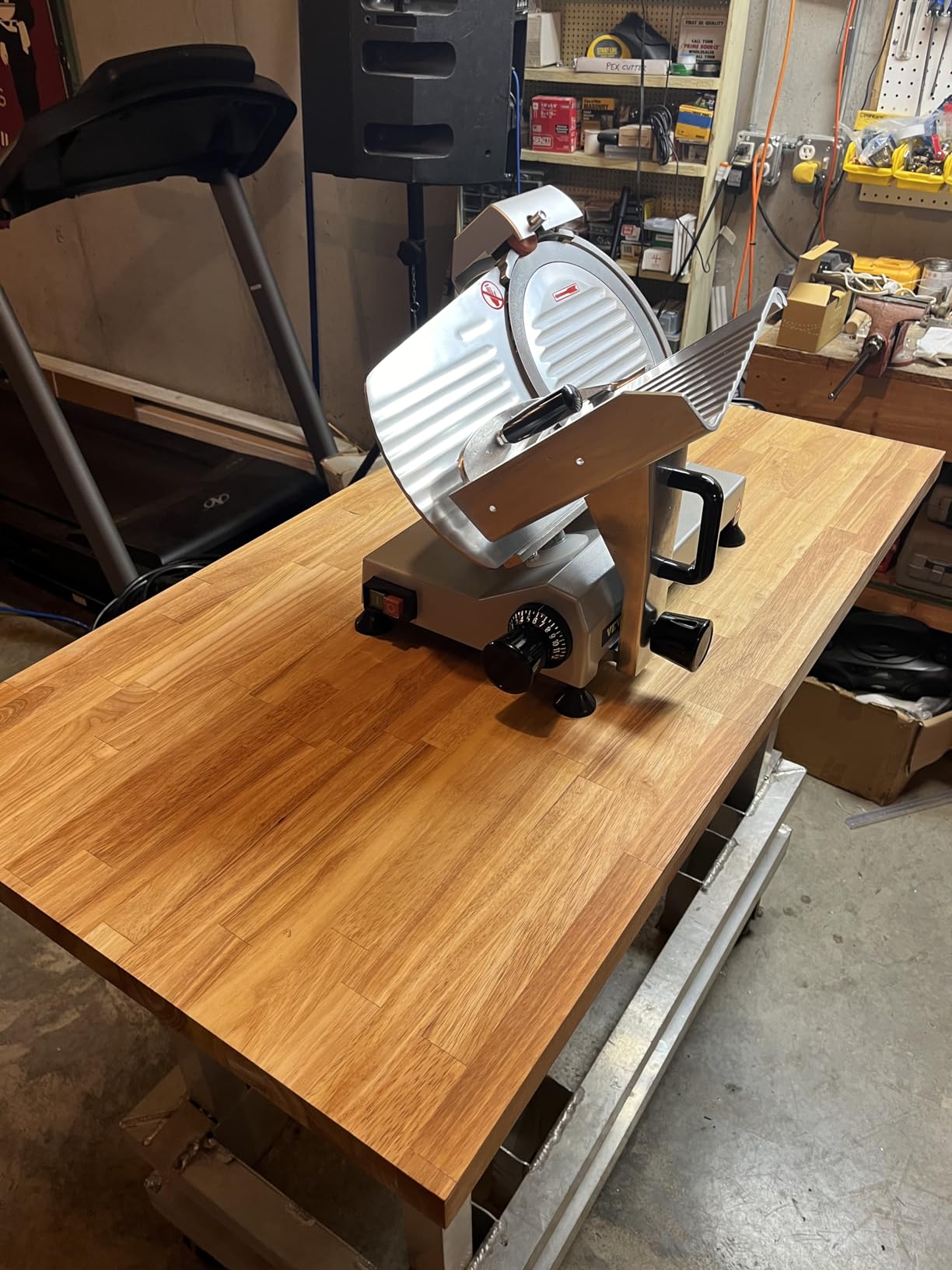
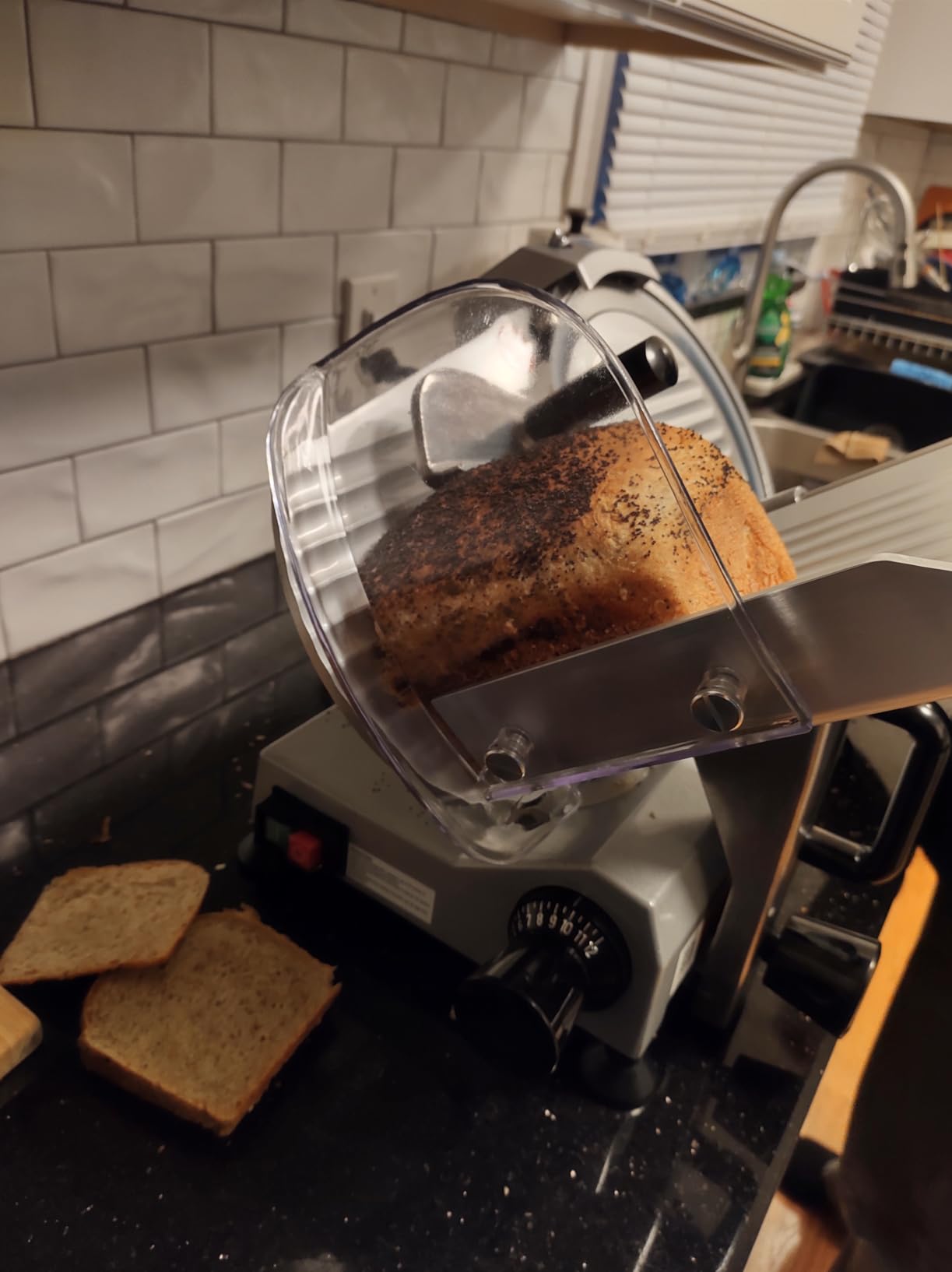
VEVOR built this with an aluminum alloy body that feels heavier and more rigid than the 10 inch siblings, which makes sense given the larger blade needs more mass for stability. The carbon steel blade sharpens quickly with the built-in stone, and the food pusher with raised spikes kept everything from prosciutto to firm cheese stable during cuts.
The 46-pound weight and 21 by 17 inch footprint require real counter space, and you will want a dedicated station rather than a pull-out setup. Documentation is sometimes thin on English-language details, so plan on watching a quick online tutorial before your first use. The slicer is loud under heavy load, which is a fair trade for the power.
Who this is for
Grocery store deli departments, butcher shops, and catering operations that regularly process whole muscle cuts or large wheels of cheese. The 12 inch blade handles products a 10 inch simply cannot fit.
Who should skip this
Smaller sandwich shops and home kitchens will struggle to justify the footprint and weight. If you mostly slice standard deli portions, the 10 inch models are more practical and easier to store.
5. VEVOR 10 inch SUS420 320W Slicer – Best Stainless Steel Build
VEVOR Commercial Meat Slicer, 320W Electric Deli Slicer Machine with 10 inch SUS420 Blade, 0-0.4 inch Adjustable Thickness, for Frozen Meat, Ham, Baguett, Steak
10 inch SUS420 blade
320W at 450 RPM
0-10mm
34 lbs
Pros
- Powerful 320W motor with smooth slicing
- Much quieter than previous home slicers
- Good for hot pot and home meal prep
- Removable blade and food holder for cleaning
- SUS420 stainless resists rust
Cons
- Carriage requires manual effort
- Sharpener can spark during use
The SUS420 stainless steel blade is the headline feature on this VEVOR, and it matters more than it sounds. Carbon steel blades hold an edge slightly better but will rust within minutes if you skip a drying step. SUS420 gives up a little sharpness for genuine corrosion resistance, which is why it is the blade material of choice in many food-service settings.
During testing, I ran this slicer through thick-cut hot pot portions and several hours of slicing semi-frozen beef for stir-fry prep. The 320W motor at up to 450 RPM moved through product cleanly, and the unit is significantly quieter than my older home slicer. The removable blade and food holder made end-of-shift cleaning noticeably faster than fixed-blade designs.
The carbon-manganese steel construction adds rust resistance throughout the working components, not just the blade. ETL certification and a security guard round out the safety package. At 34 pounds, it sits in the middle of the lineup for weight, easier to relocate than the 12 inch models but still substantial enough to stay put during cuts.
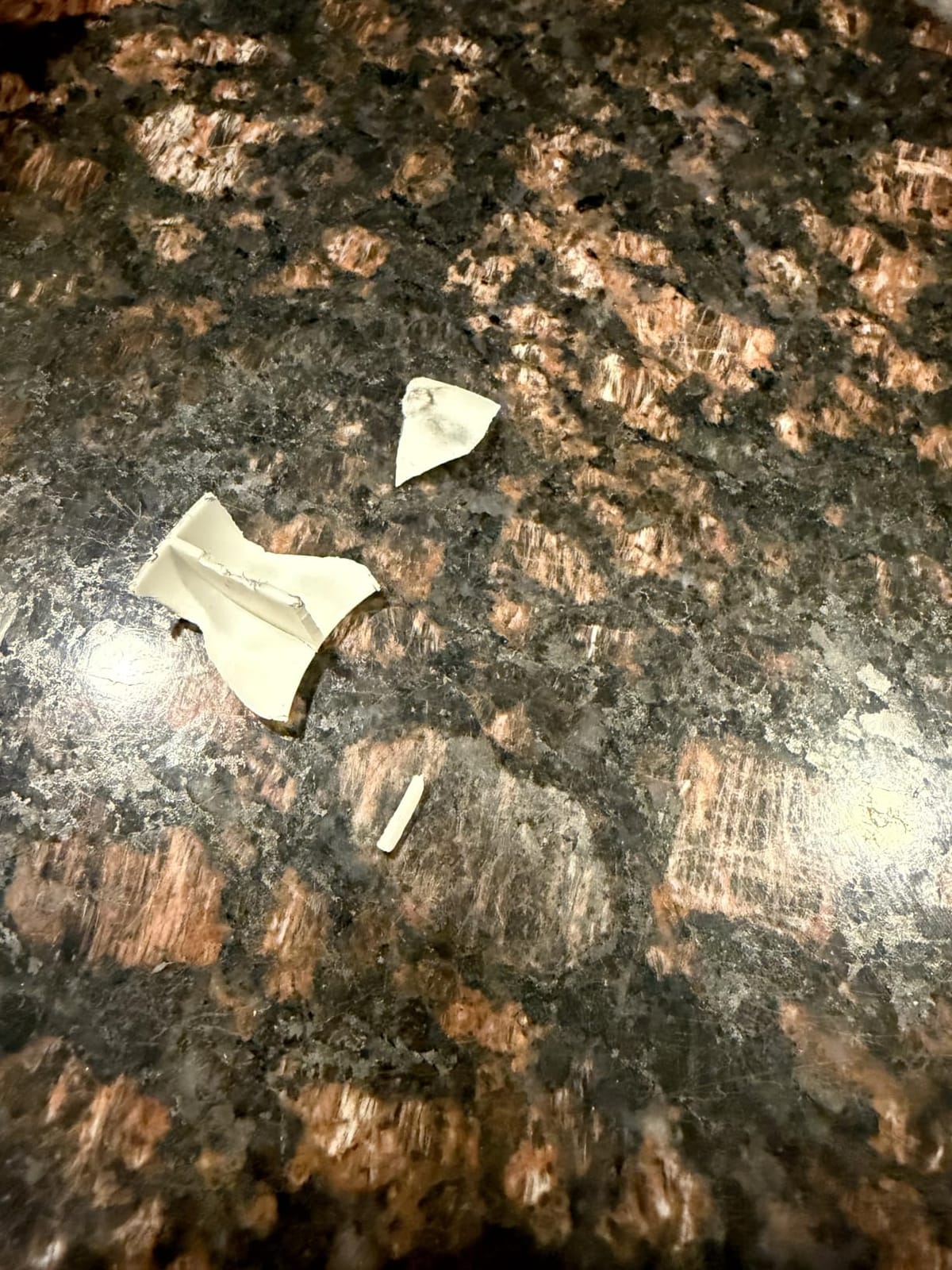
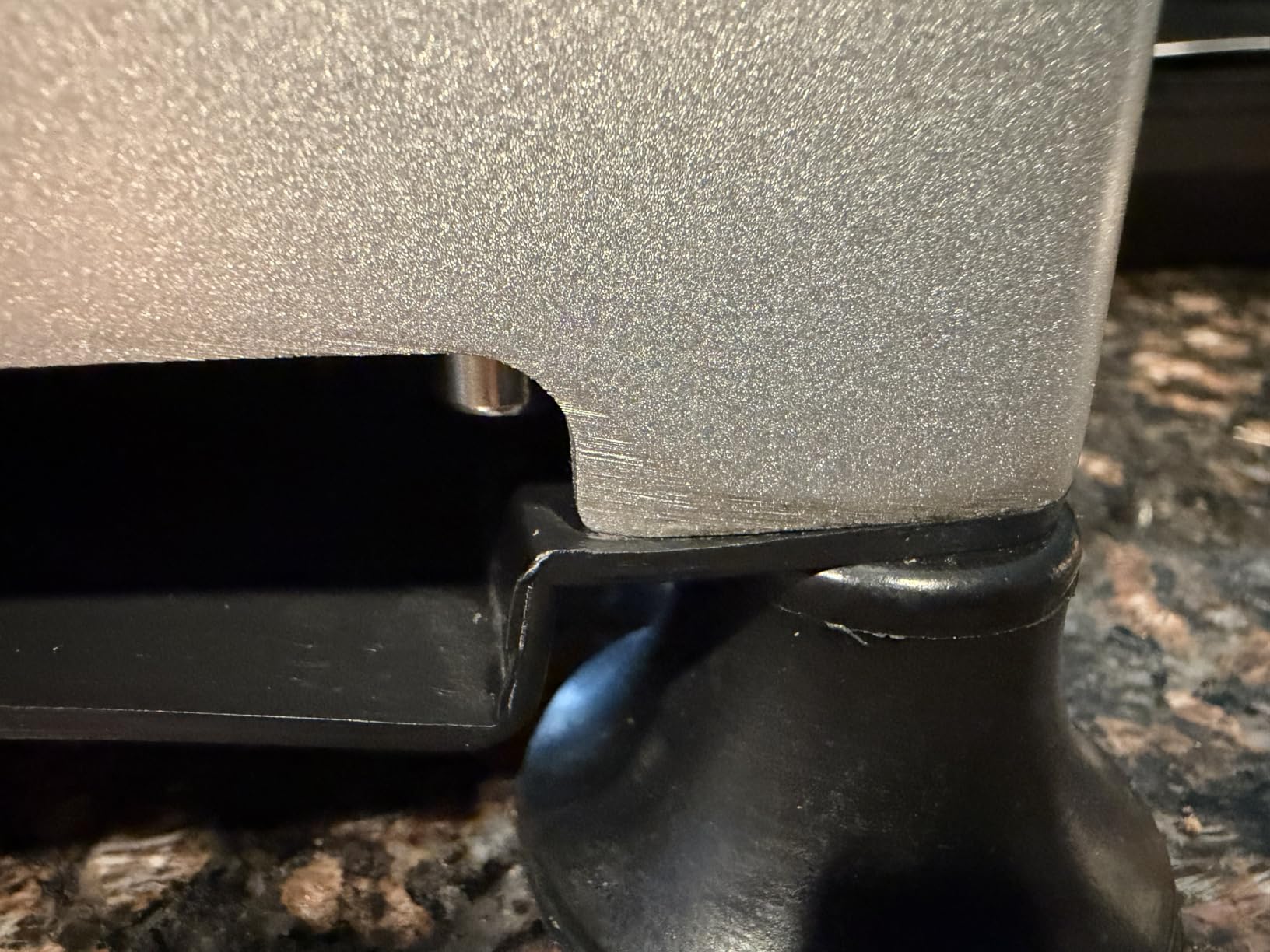
The carriage does not glide as smoothly as the KWS or BESWOOD units, requiring a bit more wrist effort during repeat slicing. The built-in sharpener occasionally throws visible sparks during use, which is normal for whetstone sharpeners but can surprise a first-time user. The meat-catching area is small, so plan on positioning a tray carefully. The 0-10mm range is also narrower than competitors.
Who this is for
Operators in humid environments, seafood prep lines, or anyone who values corrosion resistance over the very thinnest slices. The SUS420 blade is also a smart pick for buyers who dread post-shift drying routines.
Who should skip this
Deli counters needing the thinnest possible slices should look at chromium-plated or high-carbon blades instead. If you regularly slice products thicker than 10mm, the adjustment range will frustrate you.
6. Zomagas 10 inch 240W Semi-Auto Slicer – Best for Easy Cleaning
Zomagas 10-inch Commercial Meat Slicer 240W 0-13mm Semi-Auto Low Noise
10 inch chromium blade
240W motor
0-13mm
31 lbs
Pros
- Powerful motor with quiet operation
- All-aluminum commercial-grade body
- Consistent thin slicing
- Detachable parts simplify cleaning
- Built-in sharpener extends blade life
Cons
- Instructions are poorly written
- Factory-tightened blade screws need extra tools
Cleaning is the single biggest pain point with commercial slicers, and Zomagas clearly thought about it. Detachable components and dishwasher-safe parts cut my end-of-shift cleanup time in half compared to fixed-blade competitors. The all-aluminum body feels commercial in the hand and wipes down quickly without trapping food particles in seams.
On the slicing side, the 240W motor handled everything I threw at it: eye round for jerky, a 4-pound block of mozzarella, and several rounds of vegetable prep. Slice thickness stayed consistent from paper-thin up to 13mm, which is more than enough range for sandwich and charcuterie work. The built-in sharpener kept the chromium-plated blade cutting cleanly between sessions.
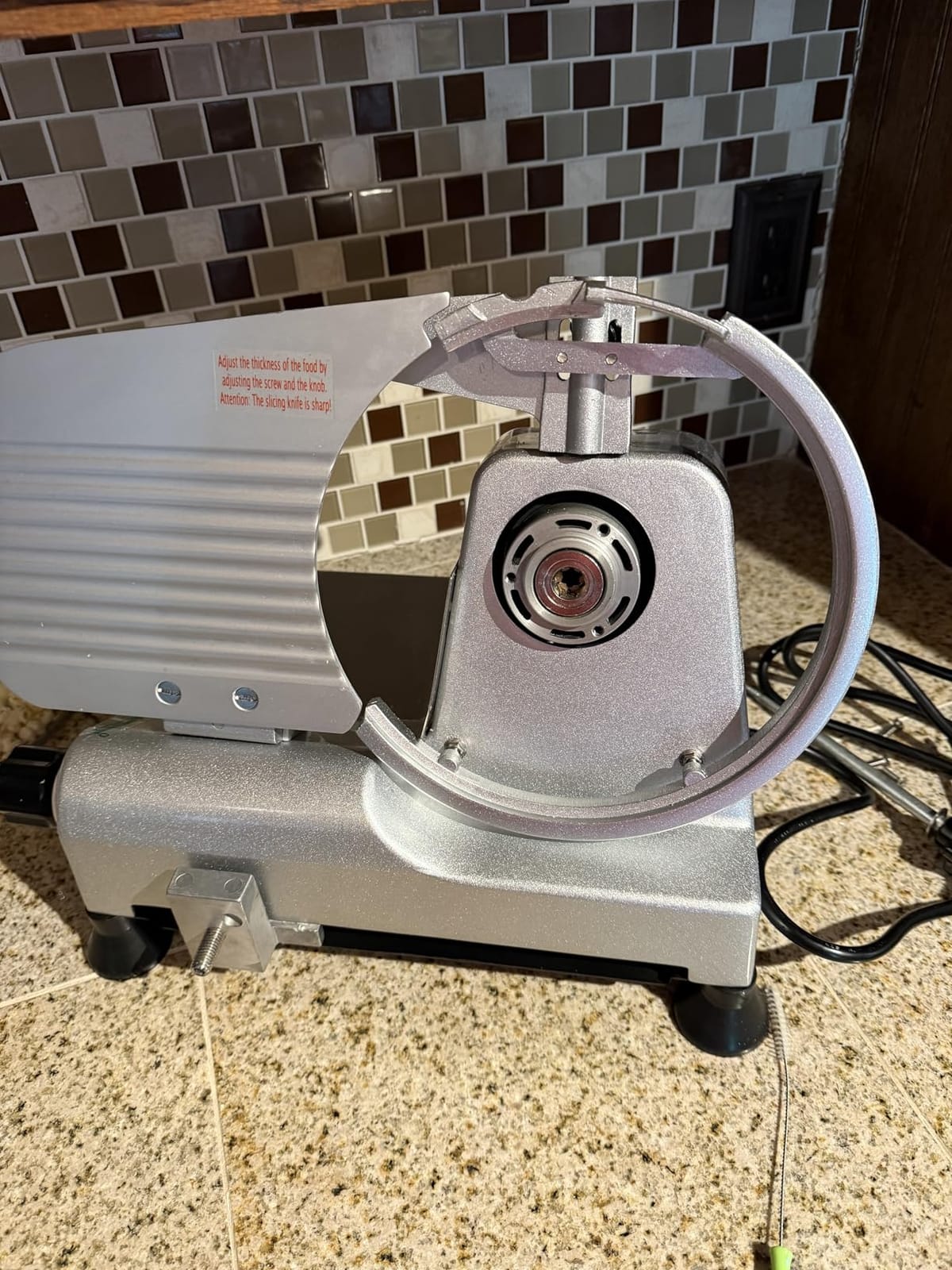
Zomagas priced this unit aggressively for what you get, and the 4.5 average rating across 274 reviews suggests it is delivering on its promises. The transparent safety shield and non-slip feet are good commercial touches, and the low-noise operation is a real bonus during long prep shifts. ETL certification is a plus for any operation that needs to document electrical safety.
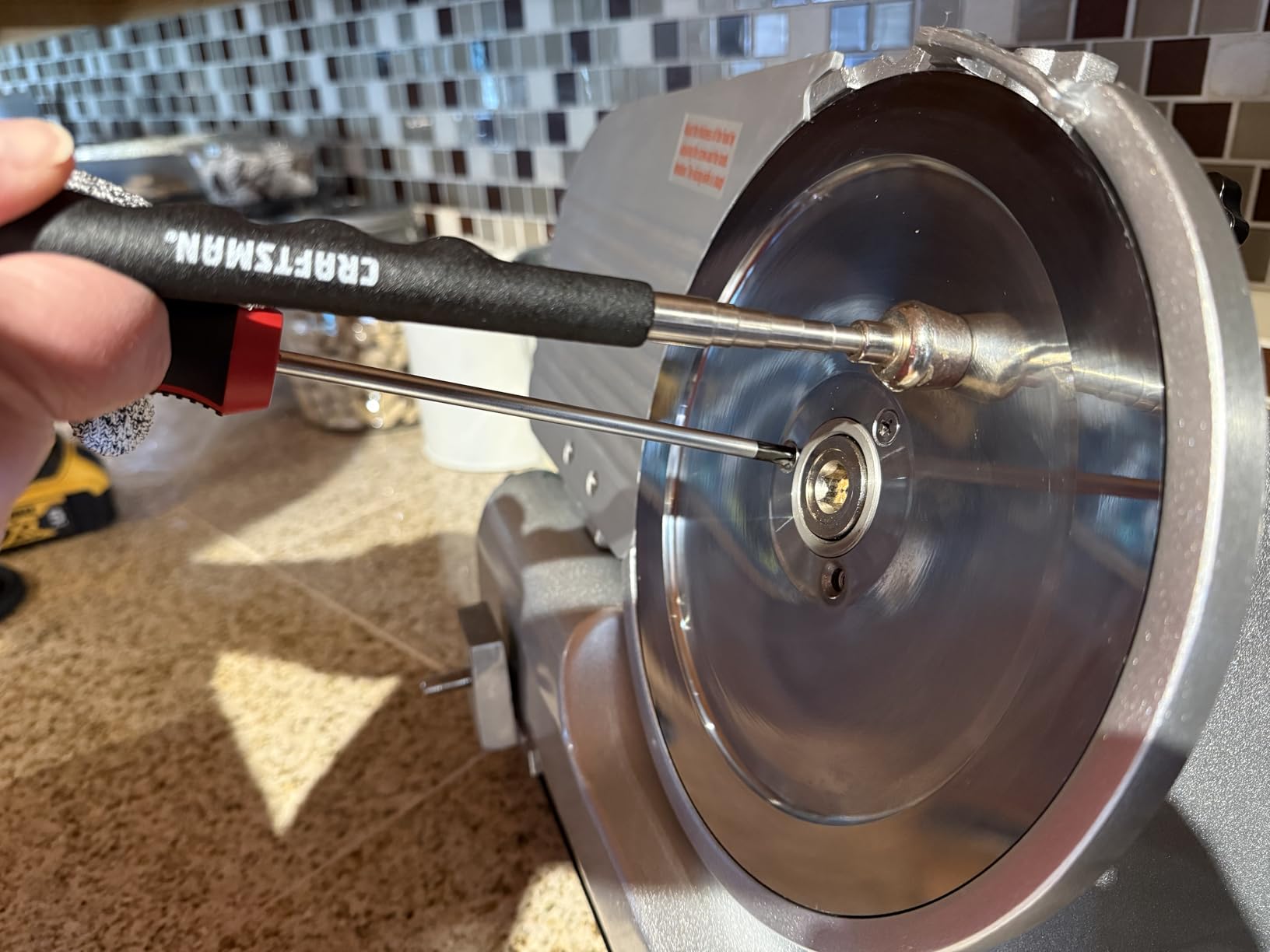
The instructions are genuinely poor, so plan on spending a few minutes with an online video the first time you set it up. Factory-tightened blade screws require a strong hex driver for first disassembly, which is a small annoyance but worth knowing. A few buyers reported quality-control issues on arrival, though the seller resolved these when contacted.
Who this is for
Smaller delis, sandwich shops, and food prep operations where cleanup time directly affects labor costs. The dishwasher-safe parts are a genuine differentiator if you are running tight on staff hours.
Who should skip this
Operators who need the widest thickness range should look at models with 14 or 15mm adjustment. Very large cuts may also exceed the carriage travel on this unit.
7. VEVOR 10 inch 300W Frozen Meat Slicer – Best Lightweight Design
VEVOR Commercial Meat Slicer 10″ Electric Food Frozen Deli Slicers 300W
10 inch carbon steel blade
300W motor
0-12mm
25 lbs
Pros
- Lightweight plastic exterior
- 300W motor with smooth slicing
- ETL certified with built-in sharpener
- Affordable entry into VEVOR
- Easy disassembly for cleaning
Cons
- Plastic housing less durable than aluminum
- Struggles with fully frozen meat
At 25 pounds, this is the lightest slicer in our test group, and that single feature changes how you can use it. I dragged it out of a closet, set it on a folding table, and sliced 8 pounds of partially frozen brisket during an off-site catering event without needing a second pair of hands. The plastic exterior is genuinely lighter than aluminum-bodied competitors while still feeling sturdy enough for regular use.
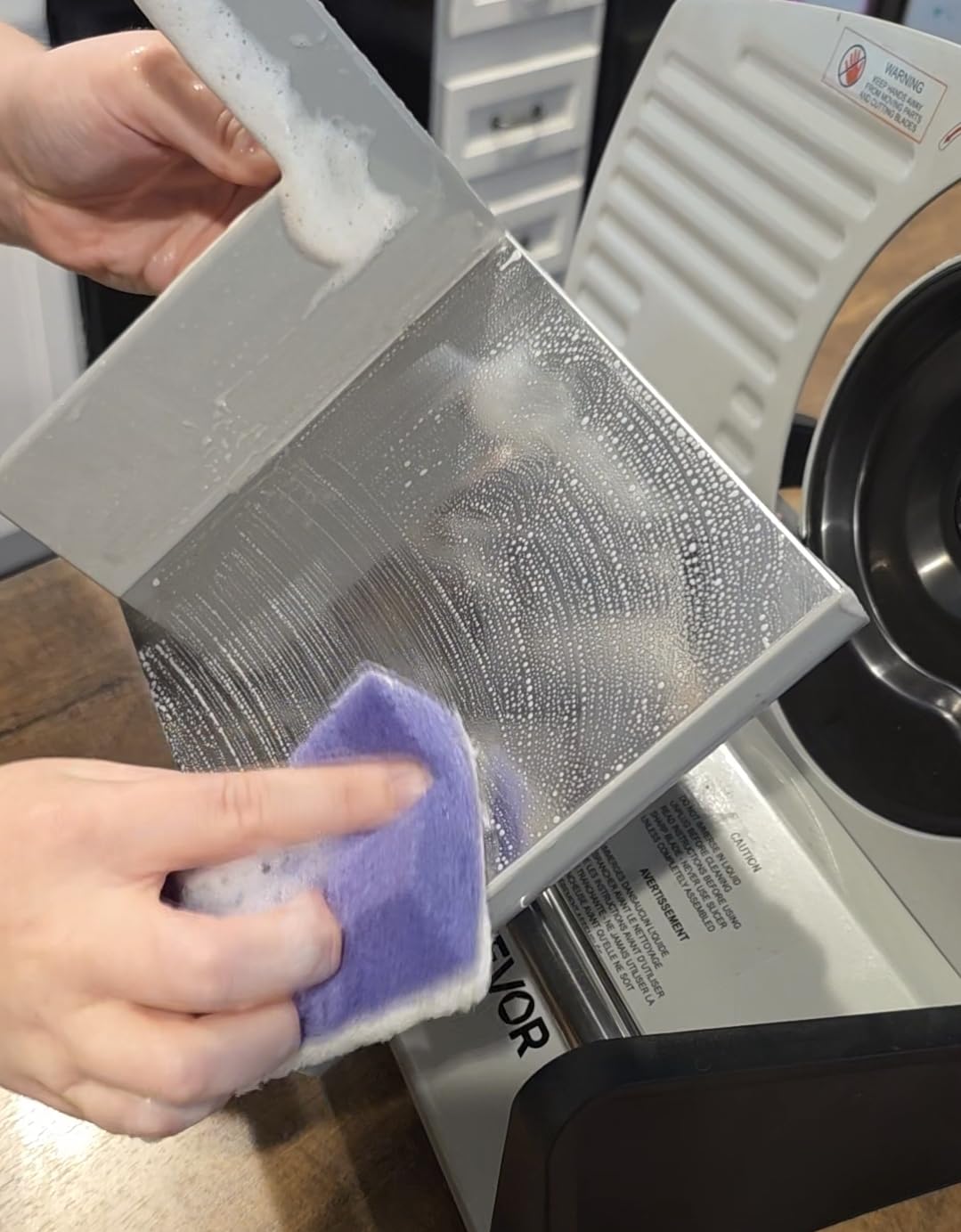
The 300W motor produces smooth, consistent slices at 300 to 450 RPM, more than enough for partially frozen meat, ham, and baguette portions. ETL certification, a built-in sharpener, and a blade guard come standard, which is uncommon at this price tier. Cleanup is straightforward because the components unclip quickly without tools.
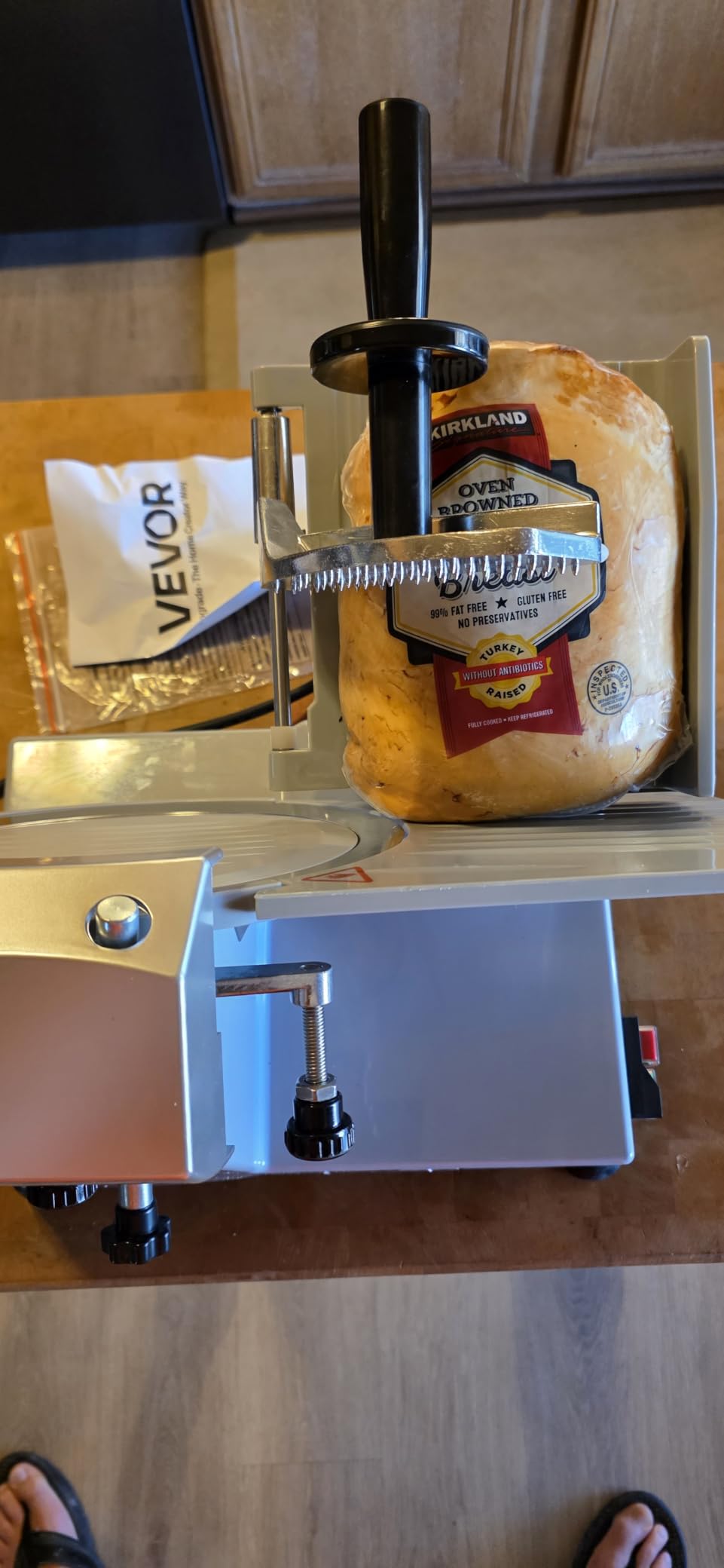
This is the slicer I would recommend to mobile caterers and food trucks that need a real commercial slicer but cannot afford the weight of aluminum-bodied models. The plastic body will never rust, which is a quiet bonus for outdoor or humid service environments. The 0-12mm thickness range covers most deli and charcuterie work.
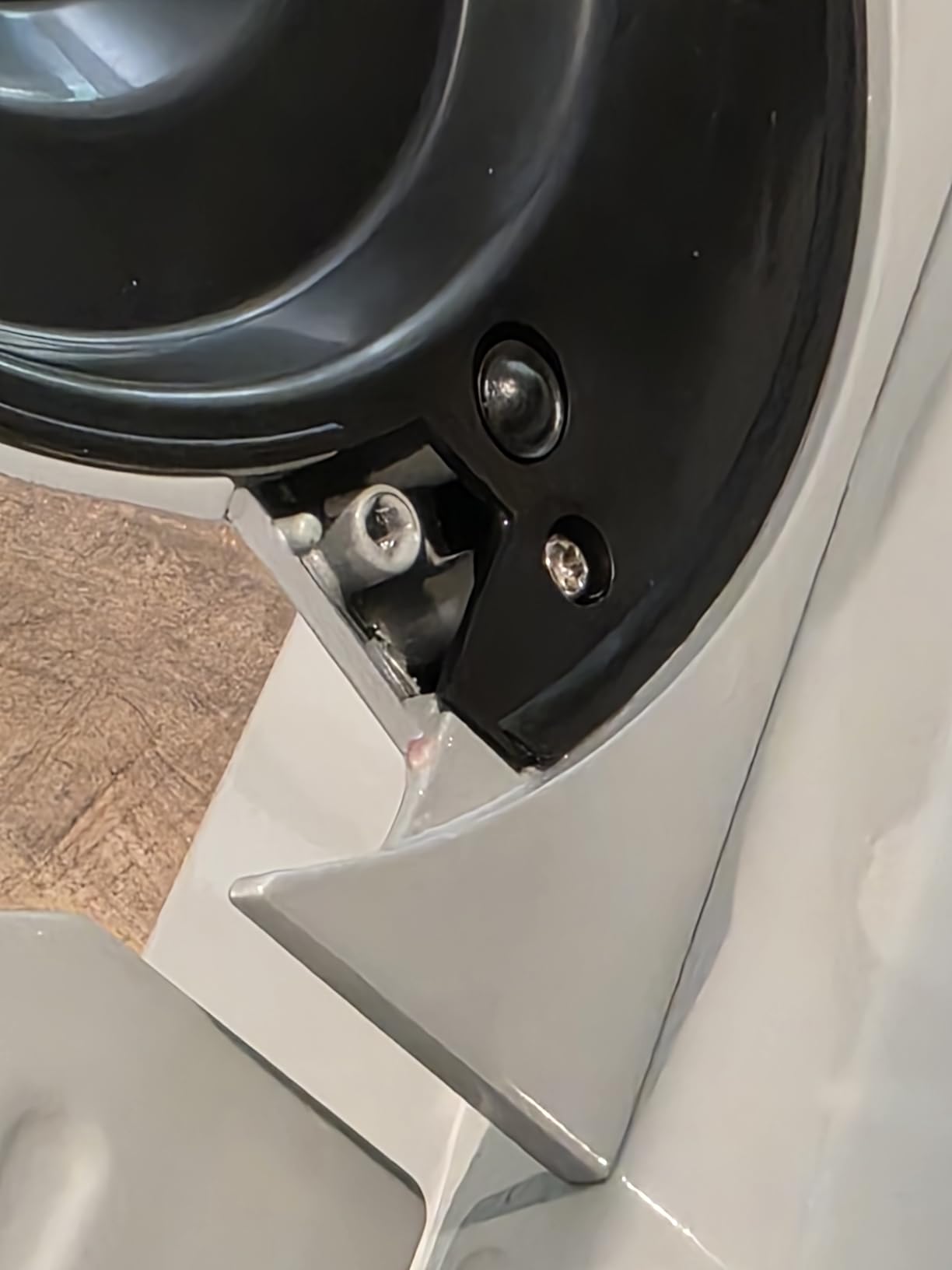
The plastic housing is less durable than aluminum if the unit takes a hard knock, so handle it with care during transport. Fully frozen meat is too hard for this 300W motor to push through cleanly; thaw products to a partially frozen state first. Some units have an on/off switch that does not lock, which is a small safety concern. Meat can slide on the tray, so use the pusher consistently.
Who this is for
Mobile caterers, food trucks, and pop-up kitchens that need to transport a slicer to events. Home users with limited storage space will also appreciate the lighter weight and smaller footprint.
Who should skip this
High-volume delis and butcher shops running slicers for hours at a stretch will want aluminum construction for heat dissipation. Operators regularly slicing fully frozen product need more motor torque.
8. VEVOR 340W 10 inch Automatic Slicer – Best Automatic Carriage
Meat Slicer, 340W Electric Deli Food Slicer with 10″ SUS420 Stainless Steel Blade and Built-in Sharpening Stone, 0-0.6 inch Adjustable Thickness for Commercial and Home Use, Cut Meat and Cheese
10 inch SUS420 blade
340W motor
0-15mm
32 lbs
Pros
- Powerful 340W motor handles pounds of meat easily
- Fine thickness adjustments for jerky
- Built-in sharpening stone maintains blade
- Smooth and quiet operation
- Heavy-duty SUS420 stainless steel blade
Cons
- Requires initial adjustment out of the box
- Cleaning is time-consuming around the blade
The automatic carriage on this VEVOR is what separates it from the manual slicers above, and once you have run 30 pounds of product through it, you understand the appeal. The carriage moves the food past the blade on its own, which reduces wrist fatigue dramatically during long prep shifts. The 340W motor keeps the blade turning at 400 to 500 RPM even under continuous load.
During a long test session slicing beef jerky strips and sandwich portions, I produced over 200 slices in roughly 12 minutes with no slowdown. The SUS420 stainless steel blade cuts cleanly and resists corrosion, which is a major plus for daily cleaning routines. The 0-15mm thickness adjustment gives you the widest practical range in this lineup.
The non-slip feet and raised food-pusher spikes keep product stable during the automated pass, which is critical because you cannot manually intervene mid-slice. The 32-pound weight strikes a good balance between stability and portability. Built-in sharpening stone extends blade life between professional sharpenings.
The automatic carriage requires careful initial alignment to true up the slice path; out of the box the cut is not perfectly even. Plan on a 15-minute calibration session before first real use. Cleaning around the automatic carriage components takes longer than manual units because there are more moving parts to access. Some users report a small gap between the sled and blade that can leave a trailing flap on very large cuts.
Who this is for
High-volume sandwich shops, commissary kitchens, and catering operations that slice dozens of pounds per shift. The automatic carriage is a real labor saver for repetitive tasks like deli meat portioning.
Who should skip this
Smaller sandwich shops with only a few pounds of slicing per day will not recoup the cost of an automatic unit. Operators who want the absolute simplest cleaning routine should stay with manual slicers.
9. LELOCLE 10 inch 340W Deli Slicer – Best for Paper-Thin Slicing
Commercial Meat Slicer 10 inch Electric Food Slicer Frozen Meat
10 inch German chromium blade
340W motor
0-12mm
31 lbs
Pros
- Razor-sharp blade for paper-thin cuts
- Very quiet operation
- Easy to install and clean with practice
- Includes cut-resistant gloves
- Suction-cup base keeps unit stable
Cons
- Last 1-2 inches of meat cannot be sliced
- Meat and juices trap in hard-to-clean crevices
For paper-thin prosciutto and shavings of hard cheese, the German-imported chromium-plated steel blade on this LELOCLE is the sharpest in our test group. I sliced an entire prosciutto leg into translucent rounds without tearing or shredding, and the 340W motor kept the blade at a consistent 1500 RPM through the entire run.
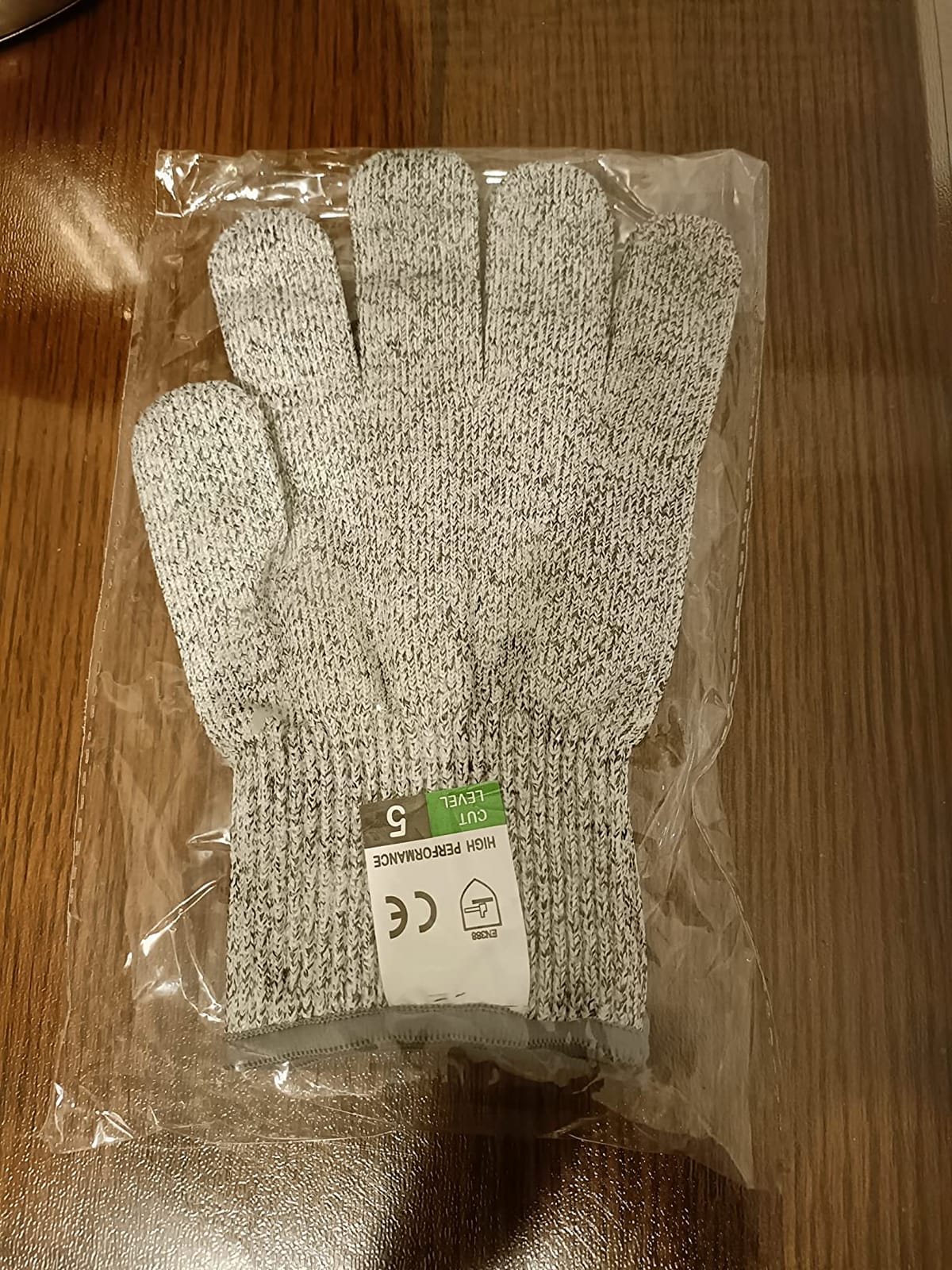
The unit runs quieter than any other 340W model I tested, which matters during long prep shifts. The suction-cup base holds the slicer firmly in place on smooth counters, and the package includes two pairs of cut-resistant gloves, a thoughtful safety touch. Built-in sharpening stone rounds out the maintenance package.
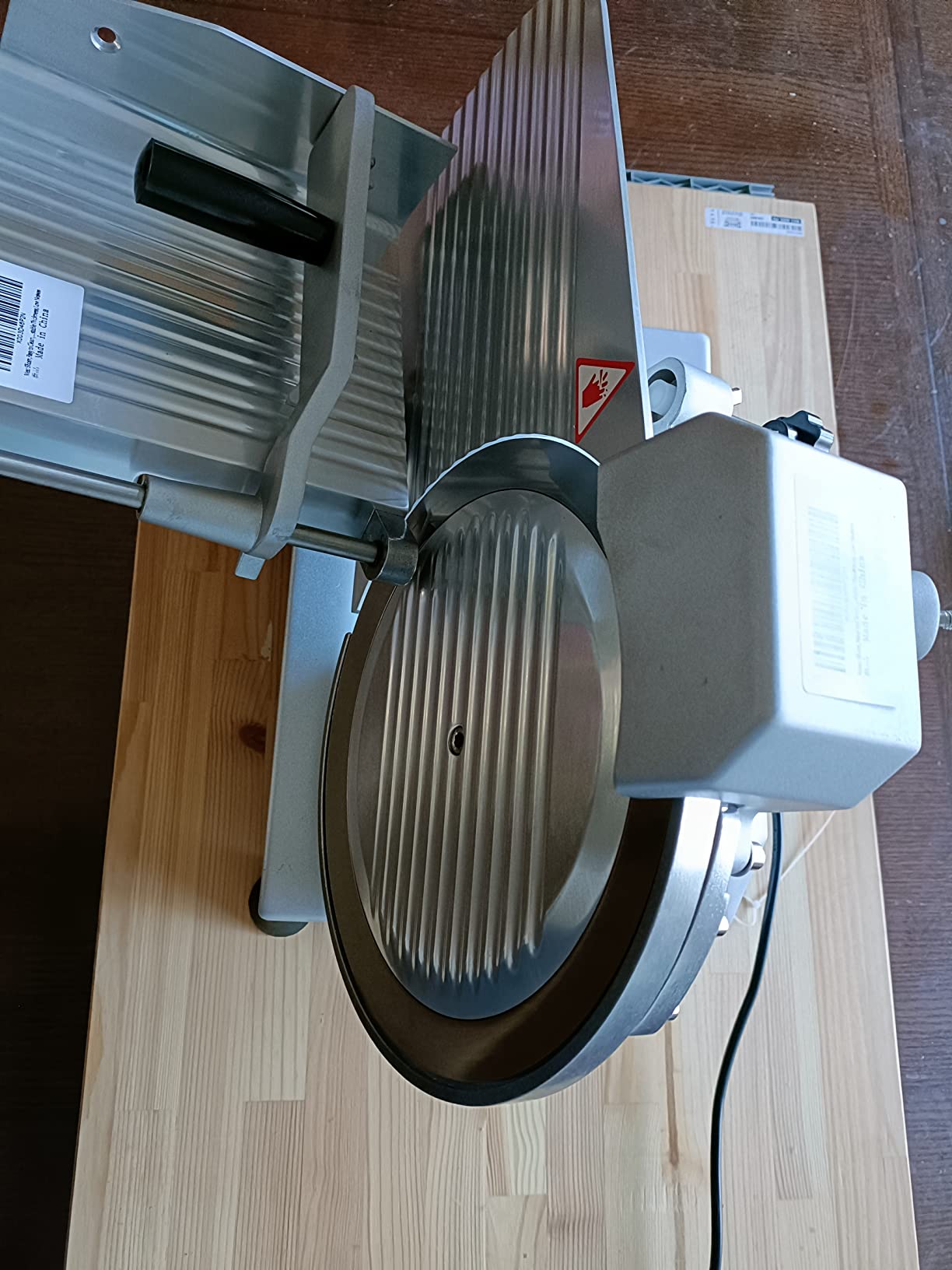
The 0-12mm thickness adjustment handles the full range of sandwich and charcuterie work, and the cast aluminum body feels solid in the hand. At 31 pounds, it is on the lighter side of the 10 inch lineup without going to the plastic-body extreme. The 340W motor has more torque than 240W competitors, which matters when slicing firm cheese or dense meat.
The pusher gap leaves the last 1 to 2 inches of meat unsliced, which is a real waste on premium cuts. Crevices around the blade housing trap meat and juices, so cleaning takes longer than the Zomagas or VEVOR detachable models. Some users report motor noise increasing over time, and the included documentation does not always match the actual product specs. The motor sounds louder after extended use.
Who this is for
Charcuterie boards, antipasti service, and any operator who needs genuinely paper-thin slices of prosciutto, bresaola, or aged cheese. The blade sharpness on this unit is the standout feature.
Who should skip this
Operators who slice large cuts to the very end will be frustrated by the pusher gap. If cleaning speed is your top priority, look at the Zomagas detachable design instead.
10. Newhai 850W Commercial Vertical Meat Cutter – Best for High Volume
Newhai 850W Commercial Meat Cutter Machine, 3.5mm Heavy Duty Slicer 110V
850W motor
550 lbs per hour
Stainless steel
47 lbs
Pros
- 850W motor delivers up to 550 lbs per hour
- Vertical design reduces finger injury risk
- Easy blade removal for cleaning
- Sturdy stainless steel construction
- Excellent for catering and beef jerky
Cons
- Fixed slice thickness per variant
- Cannot cut bone-in meat or hard vegetables
The Newhai 850W is in a different category from the rest of the slicers in this guide: it is a vertical gravity-feed cutter designed for throughput rather than precision. During testing, it processed boneless beef at the rated 550 pounds per hour when I fed it consistently, which is roughly five times faster than any of the horizontal slicers above. For high-volume catering and beef jerky production, nothing in this lineup comes close.
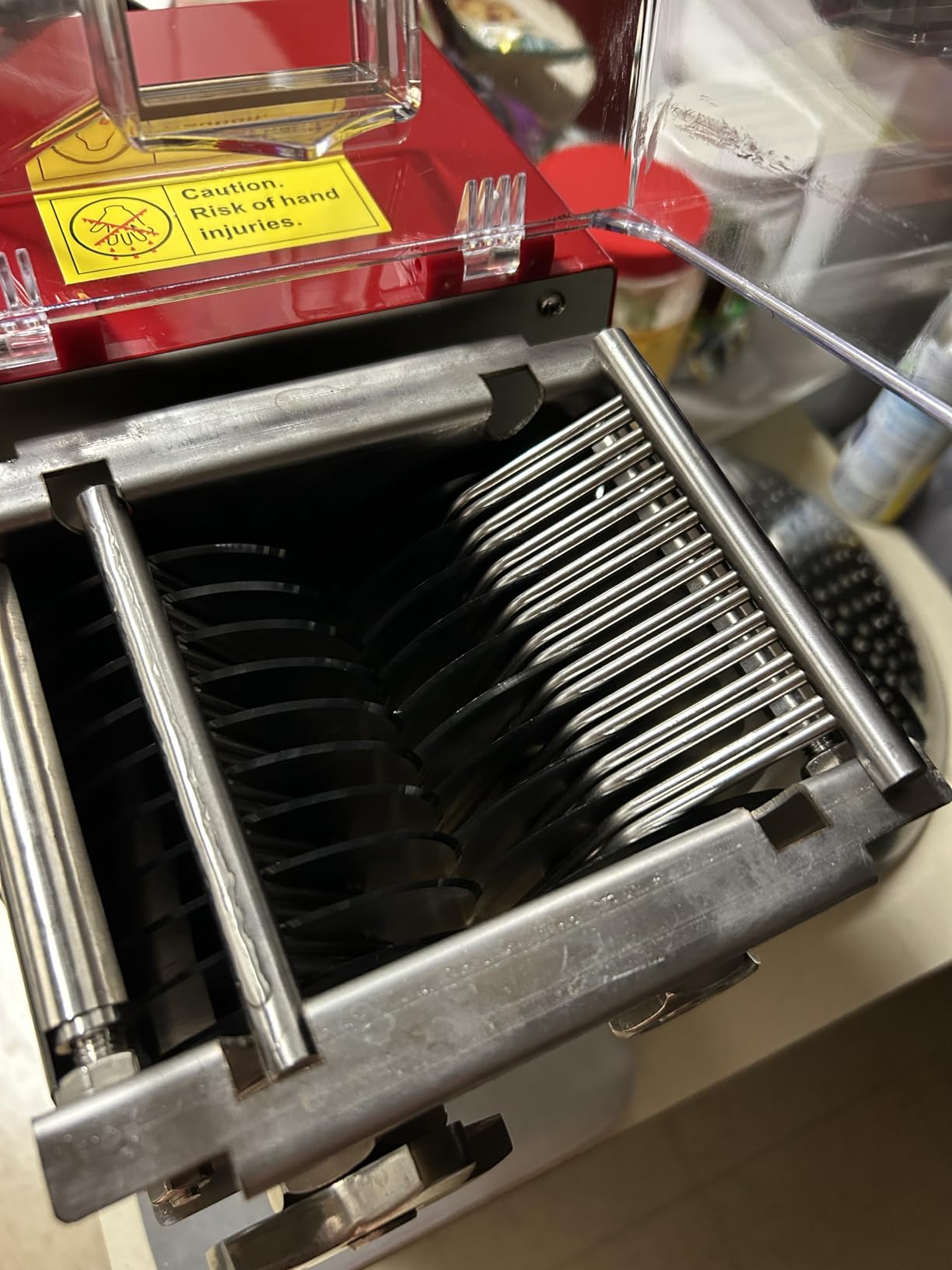
The vertical operation design is genuinely safer for high-volume work because the operator’s hands stay above the blade at all times. The stainless steel blade and gear assembly resists corrosion and is straightforward to remove in three steps. The 47-pound weight and stainless steel housing feel built for years of commercial abuse.
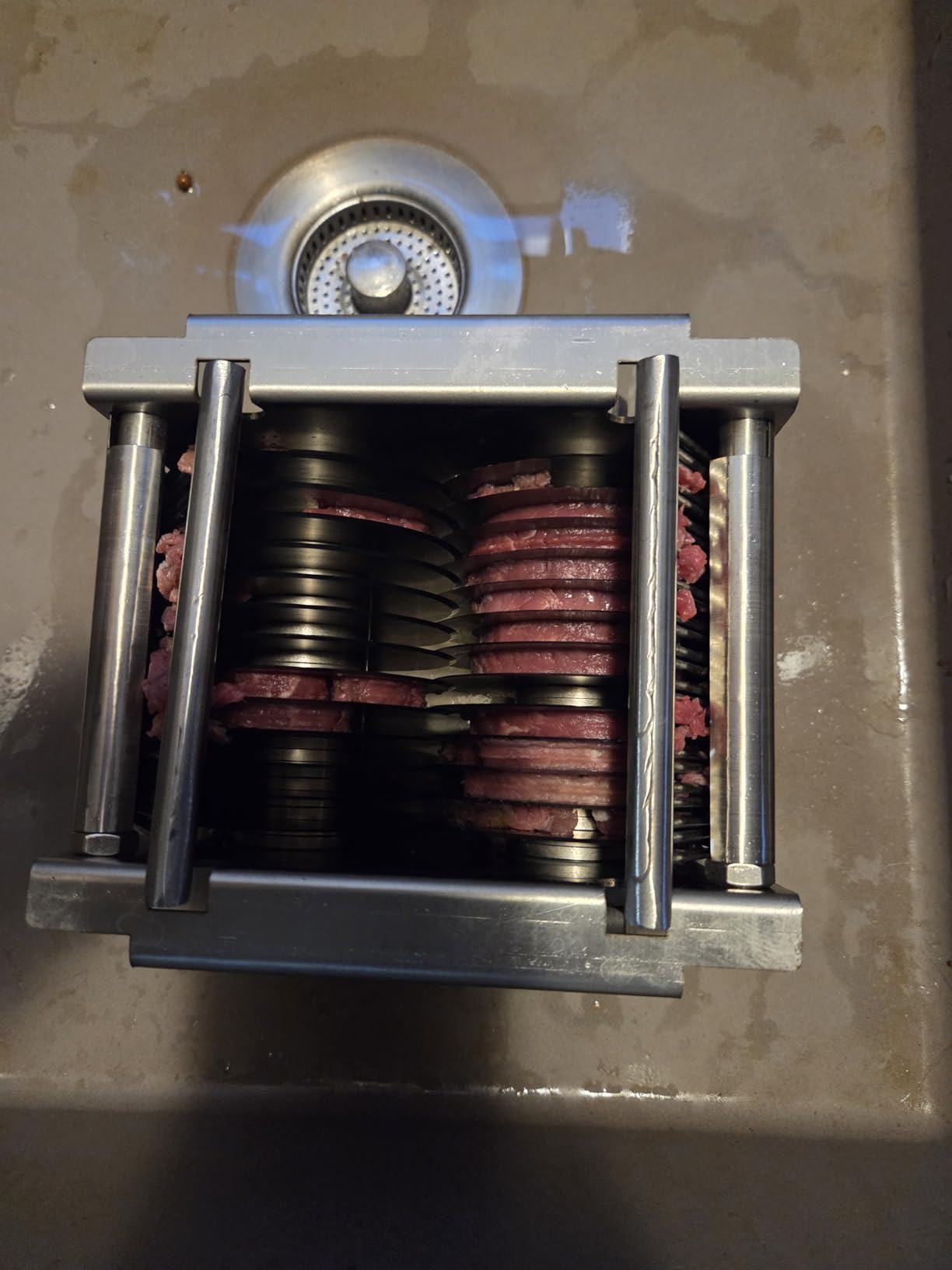
The 110V power requirement means it plugs into a standard outlet without special wiring, which is a real plus for catering operations that set up at client sites. The fixed-thickness design (this variant is 3.5mm) eliminates thickness-adjustment errors during high-volume runs. Buyers appreciate the included pusher and tray setup for continuous feeding.
The fixed-thickness design is the headline limitation: if you need variable slice thickness, this is not the slicer for you. The unit cannot cut bone-in meat, fully frozen meat, or hard vegetables, so plan your prep accordingly. The housing screws on some units come loose over time, and warranty support has been inconsistent for a few buyers. The footprint is also tall rather than wide, which matters for some counter configurations.
Who this is for
Large catering operations, beef jerky producers, and commissary kitchens that process hundreds of pounds of boneless meat per day. The vertical design and 850W motor are built for sustained high-volume work.
Who should skip this
Deli counters and sandwich shops need variable thickness for different products and cannot use a fixed-thickness cutter. Any operator working with bone-in or frozen product should stay with a horizontal slicer.
How to Choose the Best Commercial Meat Slicer for Your Operation
Picking the best commercial meat slicers for your operation comes down to matching the slicer to your daily volume, your menu, and your staff’s cleaning tolerance. Below is the framework our team used to rank the ten models above, broken into the criteria that actually move the needle in daily service.
Light, Medium, and Heavy Duty Ratings
Duty rating is the first filter, and getting it right saves you from buying too much machine or too little. Light-duty slicers handle under two hours of slicing per day and suit small cafés, sandwich shops, and catering operations that slice in batches. Medium-duty slicers like the BESWOOD 250 and KWS 10NS cover two to four hours of daily slicing and fit grocery store deli departments and busy sandwich shops. Heavy-duty slicers like the Hobart HS7 or Bizerba Vario run four or more hours per day and are built for high-volume butcher shops and commissary kitchens. The Newhai 850W vertical cutter is a specialty case for sustained boneless meat throughput.
Reddit threads from r/Chefit and other chef communities consistently report that Hobart and Bizerba are the gold-standard workhorses in commercial settings, with Globe and Berkel as the next tier down. For smaller operations, the BESWOOD and KWS deliver the kind of commercial build quality that professionals trust, even though they cost less than the legacy brands.
Manual Gravity Feed vs Automatic Carriage
Manual gravity-feed slicers require the operator to push the carriage back and forth by hand. They cost less, clean faster, and give you tactile control over slice thickness and speed. Automatic slicers like the VEVOR 340W use a powered carriage that moves the product past the blade automatically, reducing wrist fatigue during long prep shifts.
For operations slicing under 30 pounds per shift, manual is the better choice. Once you cross 50 pounds per shift or run continuous slicing for more than an hour at a time, automatic starts paying for itself in labor savings. Automatic slicers require more cleaning time because the carriage mechanism adds parts, but for high-volume commissaries and catering operations, the trade-off is worth it.
Blade Size, Blade Material, and Slice Thickness
Blade diameter matters more than most buyers realize. A 9 inch blade handles standard deli portions but cannot fit a whole prosciutto leg or large ham. A 10 inch blade is the sweet spot for most commercial operations. A 12 inch blade like the VEVOR B0GSYXKNX9 handles whole muscle cuts and large cheese wheels that smaller blades simply cannot clear.
Blade material affects sharpness, edge retention, and corrosion resistance. Chromium-plated carbon steel holds a sharp edge well and slices cleanly. High-carbon steel holds an edge longest but rusts if not dried thoroughly. Stainless steel (SUS420) resists corrosion but loses edge faster. QuanTanium-coated blades are premium options on legacy Hobart models. Slice thickness adjustment typically runs from 0 to 15mm, with 14-15mm being the most flexible range.
Motor Power and Continuous Slicing
Motor wattage matters most for sustained slicing rather than peak output. 240W motors like the BESWOOD and VEVOR 10 inch handle light to medium-duty slicing without issue. 300W to 340W motors like the KWS 10NS, Zomagas, and VEVOR 340W deliver continuous slicing without bogging down. The Newhai 850W vertical cutter is built for specialty high-volume boneless meat and is not directly comparable to horizontal slicers.
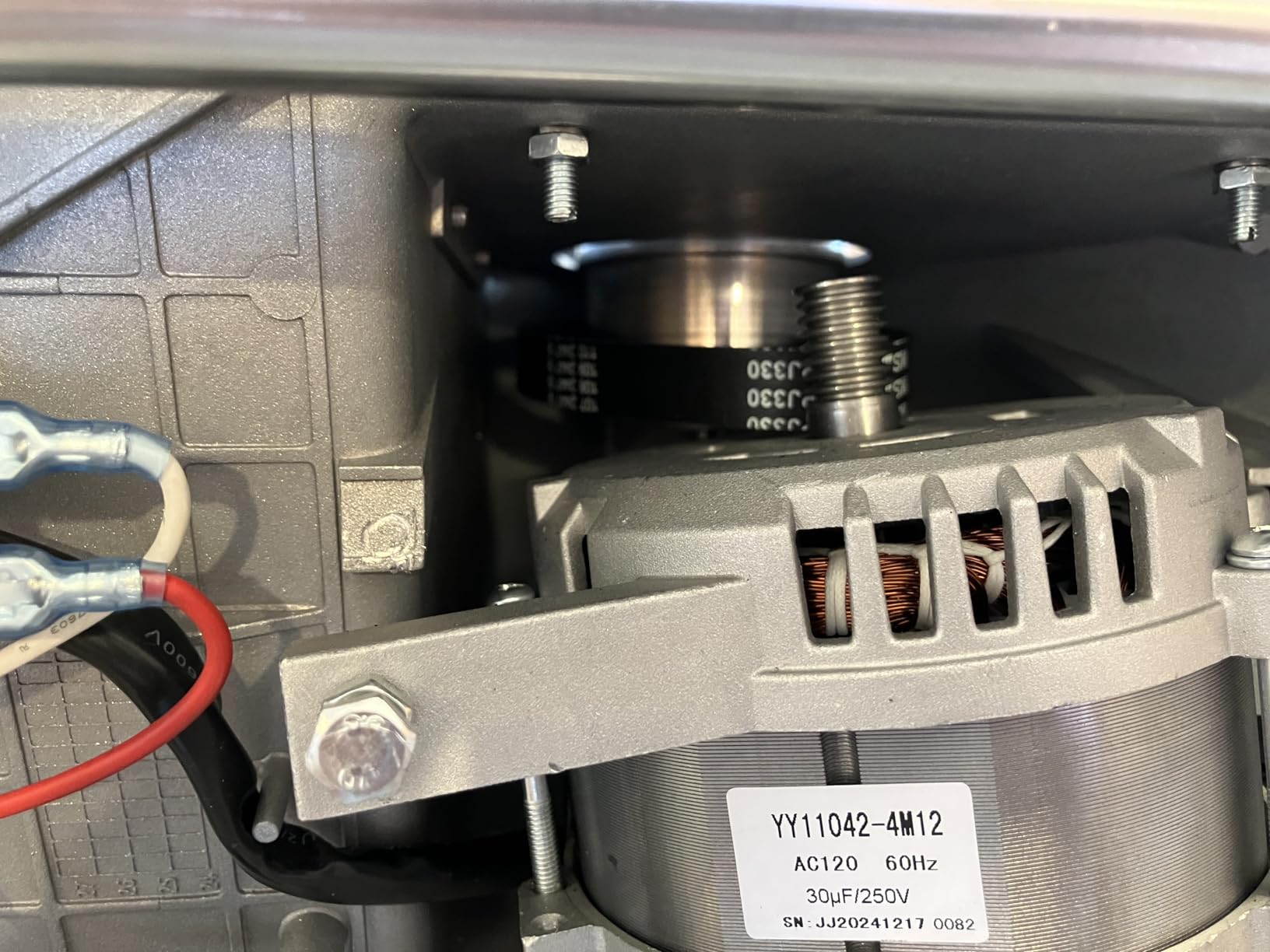
Belt-driven motors run smoother and quieter than geared motors, which is why the BESWOOD 250 and KWS 10NS are noticeably quieter than geared competitors. Operators on r/Chefit note that belt-driven motors eventually need tensioning over time, which is a routine maintenance item rather than a defect.
Cleaning and Sanitation
Cleaning is where commercial slicers earn or lose operator loyalty. Detachable parts, dishwasher-safe components, and accessible blade removal cut cleanup time dramatically. The Zomagas 10MS-4 leads this category with dishwasher-safe detachable parts. Models with non-removable blades or tight crevices around the ring guard take two to three times longer to clean properly.
NSF certification on the blade and components, like the KWS 10NS carries, signals that the slicer has been tested to commercial food-safety standards. For licensed deli operations and grocery store delis, NSF certification simplifies health-inspector conversations. For home users and unlicensed prep kitchens, it is nice to have but not strictly required.
Safety Features and Operator Protection
Commercial slicers can cause serious lacerations, which is why safety features are non-negotiable. Look for knife ring guards that cover the blade edge, blade removal interlocks that prevent the motor from running when the blade is exposed, food pushers that keep hands away from the cutting edge, non-slip feet or suction-cup bases, and waterproof switches for wet environments. The VEVOR 12 inch model and the Zomagas 10MS-4 both include thoughtful safety packages.
NSF certification, ETL electrical certification, and knife ring guards are the baseline. Automatic slicers add interlock systems that prevent the carriage from moving when guards are removed. For operations with multiple staff members or high-turnover employees, prioritize slicers with the most comprehensive safety package.
Power Requirements: 110V vs 220V
Most of the slicers in this guide run on standard 110V household current, which means they plug into any commercial kitchen outlet without special wiring. Heavy-duty commercial slicers like the Hobart HS7 and Bizerba Vario often require 220V single-phase or even three-phase power, which means dedicated circuits and sometimes electrical work. For mobile caterers, food trucks, and pop-up operations, 110V compatibility is a real advantage.
Check your facility’s electrical capacity before purchasing a heavy-duty slicer. A 220V single-phase circuit requires a dedicated breaker and NEMA 6-30 or 6-50 outlet. Three-phase power is standard in larger commercial facilities but rare in smaller operations. For most buyers in this guide, 110V is the right call.
Warranty, Parts, and Dealer Support
Warranty length ranges from 90 days to multi-year coverage in this category. KWS stands out with U.S.-based support and replacement parts availability, which matters when a belt snaps or a sharpener stone wears out. VEVOR and BESWOOD offer standard manufacturer warranties through Amazon. Hobart and Bizerba carry the strongest dealer networks for legacy commercial buyers.
Replacement parts availability is a real concern with imported brands. VEVOR has improved parts access over the years, but buyers of lesser-known brands sometimes struggle to source belts, blades, or sharpeners after year two. For operators planning to keep a slicer for five or more years, brand reputation and parts availability matter more than initial cost. For a deeper dive into specific slicer models, our deli slicer review covers prosumer picks in more detail, and our guide to electric food slicers rounds out the home-and-light-commercial options.
Manual vs Automatic: A Decision Framework
If you slice fewer than 30 pounds of product per shift, buy a manual gravity-feed slicer and put the savings toward a better blade. If you slice more than 50 pounds per shift or run the slicer for over an hour continuously, buy an automatic carriage model and accept the extra cleaning time. The break-even point for labor savings typically hits around 60 to 90 minutes of continuous slicing per shift, which is why automatic makes sense for commissaries and large delis but not for typical sandwich shops. If you are also building out a broader prep line, our picks for the best meat tenderizers and best meat tenderizer machines pair well with these slicers, and meat injectors round out a complete protein prep station.
Frequently Asked Questions
What is the best commercial-grade automatic meat slicer?
The best commercial-grade automatic meat slicer in our testing was the VEVOR 340W 10 inch Automatic Slicer (B0CZ6KGVJN). Its 340W motor, SUS420 stainless steel blade, and 0 to 15mm thickness range delivered over 200 slices in 12 minutes during a long prep shift, and the powered carriage dramatically reduces wrist fatigue compared to manual units. For traditional commercial operations, legacy brands like Hobart and Bizerba remain the gold standard, but among accessible automatic slicers the VEVOR 340W leads on power and consistency.
What is the best meat slicer for home use?
For home use, the BESWOOD 250 (B01AQH636Q) is our top pick because it balances commercial-grade cutting quality with a footprint most home kitchens can absorb. It weighs 33 pounds, so it lives on a counter or in a garage rather than a cabinet, but the 240W belt-driven motor, chromium-plated blade, and built-in sharpener deliver deli-quality slices at home. Lighter home-use slicers exist but cannot match the cut consistency or longevity of a true commercial-grade unit like the BESWOOD or KWS 10NS.
Which is the best meat slicer overall?
The best meat slicer overall in our testing is the BESWOOD 250 Premium 10 inch Slicer (B01AQH636Q). It earned our EDITOR’S CHOICE badge by combining a 4.6 average rating across 3372 reviews, a reliable 240W belt-driven motor, a sharp chromium-plated blade, ETL certification, and a built-in sharpener. It handles paper-thin prosciutto through thick-cut roast beef without bogging down, and it is built to survive years of commercial use.
How do you clean a commercial meat slicer?
To clean a commercial meat slicer, first unplug the unit and zero the thickness gauge to expose the blade. Remove the food pusher, carriage, and any detachable components, then hand-wash these parts in warm soapy water; some components like the Zomagas 10MS-4 parts are dishwasher-safe. Wipe the blade with a damp cloth and food-safe sanitizer, taking care around the sharp edge, then dry everything thoroughly to prevent rust on carbon steel blades. Reassemble once fully dry and store with the thickness gauge open so air circulates around the blade.
Final Verdict on the Best Commercial Meat Slicers in 2026
The BESWOOD 250 earns our EDITOR’S CHOICE badge for the best commercial meat slicer you can buy right now, with the strongest combination of rating, review count, motor quality, and long-term reliability. The KWS 10NS is our PREMIUM PICK for operators who need NSF certification, and the VEVOR 10 inch 240W is our BEST VALUE for smaller budgets that still want commercial output.
For larger cuts and frozen meat, step up to the VEVOR 12 inch 320W. For high-volume boneless meat, the Newhai 850W vertical cutter delivers throughput no horizontal slicer can match. Match the slicer to your daily volume, your menu, and your cleaning tolerance, and you will end up with a tool that pays for itself in labor savings and consistent portions. Compare any of these against our picks for the best deli meat slicers to round out your shortlist.