
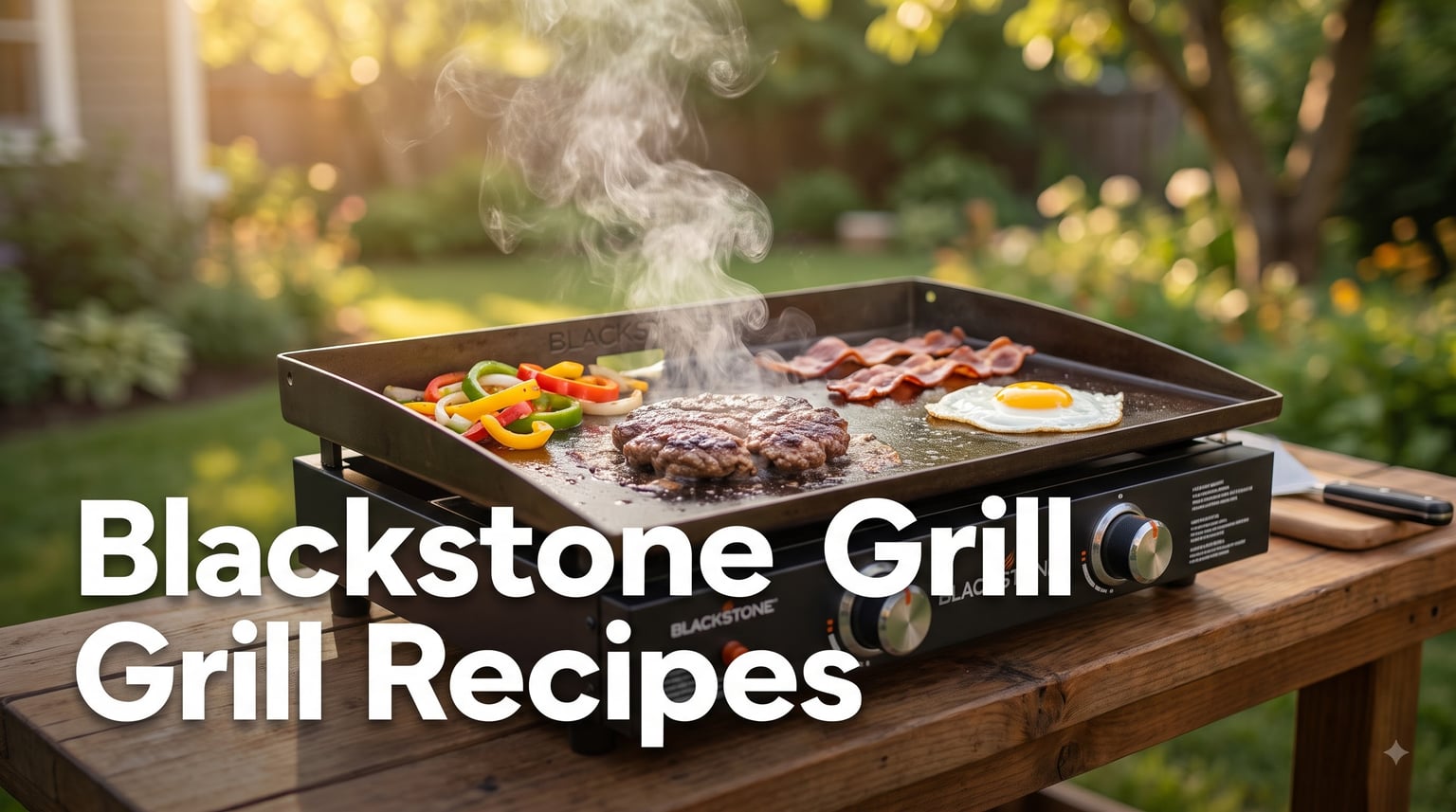
I bought my first Blackstone griddle three summers ago, and it completely changed how I cook outside. The flat top gave me a giant stainless-steel playground where I could sear smash burgers, fry rice, and toast buns at the same time.
After two years of testing and a lot of burnt onions, I’ve pulled together this roundup of Blackstone grill recipes that I actually cook on repeat. Whether you’re brand new to the griddle or just stuck in a burger-and-hot-dog loop, these ideas will help you build a real rotation.
I’ll also share the temperature cheat sheet I wish I’d had on day one, plus a few community favorites from the r/blackstonegriddle crowd that saved me from rookie mistakes. Let’s get cooking.
Table of Contents
What Is a Blackstone Griddle and Why It Works So Well?
A Blackstone griddle is a flat-top outdoor cooker with a rolled-steel cooking surface that sits over two or more gas burners. Think of it as a restaurant-style plancha you can park in your driveway.
The design gives you a few real advantages over a traditional grill. The even heat means no flare-ups, the wide surface lets you cook for a crowd, and the gentle sizzle creates an incredible crust on everything from smash burgers to rice.
Blackstone grill recipes work because the surface gives you complete control. You can hold pancakes warm on the cool side while searing steak on the hot side. You can render bacon fat and then fry eggs in it. The griddle rewards people who think like short-order cooks.
Most home models run on propane and come in 17-inch, 22-inch, 28-inch, and 36-inch sizes. I started with a 22-inch and upgraded to a 36-inch within a year. If you cook for more than four people regularly, go bigger than you think.
Essential Blackstone Griddle Setup and Temperature Guide
Before any of these Blackstone grill recipes work, you need to know your temperatures. The griddle uses a simple rule: medium heat on the burners directly below your food, low or off on the burners you aren’t using.
For most cooking, I run my griddle around 350 to 400 degrees Fahrenheit. That’s the sweet spot for smash burgers, chicken, vegetables, and pancakes. High heat, around 450 to 500 degrees, works for searing steak and getting a hard crust on fajita meat.
Here’s the quick reference I keep taped inside my lid:
Bacon: 325 to 350 degrees, 6 to 8 minutes, render slow for crispy results.
Smash burgers: 400 to 450 degrees, 90 seconds per side with a smash.
Chicken breast: 375 degrees, 5 to 7 minutes per side until 165 internal.
Steak (1 inch thick): 450 degrees, 3 minutes per side, rest 5 minutes.
Pancakes: 325 degrees, 2 minutes per side until bubbles form.
Eggs over easy: 300 degrees, oiled surface, 2 minutes total.
Fajita veggies: 400 degrees, 5 to 7 minutes, toss often.
Always preheat for 5 to 10 minutes before adding food. A cold griddle sticks and produces gray, sad-looking protein. Hot steel is your friend.
On the oil question, yes, you should oil the surface every time you cook. I use avocado oil for high heat (smoke point around 520 degrees) and butter or olive oil for lower-heat cooking like eggs and pancakes. The griddle should look like a wiped-down skillet, not a deep fryer.
Best Blackstone Grill Recipes for Breakfast
Breakfast is where the Blackstone griddle truly shines. You can cook bacon, eggs, hash browns, and toast on the same surface at the same time, which is borderline magical on a Saturday morning.
The classic move is bacon first. Lay strips across the cool side of the griddle at 325 degrees and let them render slowly for 6 to 8 minutes. As the fat pools, push the bacon to the side and crack eggs right into the grease. You’ll get the best fried eggs of your life.
For hash browns, grate russet potatoes, squeeze out the water in a towel, and drop them onto a 375-degree surface with a little oil. Press flat with a spatula, leave them alone for 4 minutes, then flip. Crispy outside, fluffy inside.
Pancakes on the griddle are also a sleeper hit. Set your cool zone to 325 degrees, pour 1/4 cup batter per pancake, and flip when bubbles pop on the surface. You can crank out a dozen in the time it takes to make coffee.
If you want something heartier, try a breakfast smash burger. Use a sausage patty instead of beef, smash it thin on a hot zone, top with cheese, a fried egg, and bacon. It’s diner food at home.
Smash Burgers and Sandwich Recipes for the Blackstone
If there’s one recipe that turns people into Blackstone believers, it’s the smash burger. The griddle gives you the kind of crust that takes restaurants years to master.
Here’s my weeknight method: ball up 2-ounce portions of 80/20 ground beef and refrigerate them. Preheat the griddle to 425 degrees, oil the surface, and drop the balls down. Place a piece of parchment paper on top and smash hard with a stiff spatula for 10 seconds. Season with salt and pepper.
Cook 90 seconds, scrape, flip, add cheese, and stack. The crust that forms against the steel is called the Maillard reaction, and it’s the single best reason to own a griddle. Total cook time is about 4 minutes for a perfect medium smash burger.
If you’re feeding a crowd, the griddle lets you cook 12 patties at once. The Flat Top King community regularly posts photos of party-sized burger sessions, and the method scales without losing quality.
Beyond burgers, the griddle is amazing for sandwiches. Try a Philly cheesesteak with shaved ribeye, onions, and peppers at 400 degrees. Or a Reuben with griddled rye, pastrami, sauerkraut, and Swiss. The dry heat toasts bread better than any pan.
Grilled cheese on the Blackstone is also worth mentioning. Butter the outside of the bread, drop it on a 325-degree zone, and flip once the bottom is golden. Add cheese, close, and cook another 2 minutes.
Chicken and Steak Recipes Worth Trying
Chicken on the Blackstone gets a bad rap because people dry it out. The trick is medium heat, not high. Set your zone to 375 degrees and pound boneless breasts to even thickness before they hit the surface.
Cook 5 to 7 minutes per side, or until the internal temperature hits 165 degrees. Rest for 5 minutes before slicing. Brining the chicken for 30 minutes in salt water makes a huge difference and prevents the chalky texture most home cooks hit.
For chicken thighs, crank the heat to 400 degrees and cook skin-side down for 7 minutes. Flip and finish for another 5 minutes. The fat in thighs keeps them juicy even if you overshoot slightly.
Steak on the Blackstone is a different beast. Use boneless ribeye or strip steak around 1 inch thick. Salt and pepper 40 minutes ahead, then place on a 450-degree zone for 3 minutes per side. Press gently with a spatula to ensure contact.
Don’t move the steak while it sears. The crust needs time to form. After flipping, add a pat of compound butter (butter mixed with garlic and herbs) on top and rest off-heat for 5 minutes.
If you want to go premium, try a reverse-seared tomahawk. Cook on low heat (250 degrees) until internal hits 115 degrees, then crank to 500 degrees and sear 90 seconds per side. It’s the steakhouse experience at home.
Easy Blackstone Dinner Ideas for Weeknights
Weeknight Blackstone grill recipes need to be fast, forgiving, and feed a hungry family. These are the meals I cook when I have 30 minutes between work and hungry kids.
Tacos are the easiest starting point. Season chicken or steak with cumin, chili powder, garlic, and salt. Drop onto a 400-degree zone with sliced peppers and onions. Toss everything together after 5 minutes, squeeze lime over the top, and serve in warm tortillas.
Blackstone fajitas work the same way but with sliced bell peppers, onions, and a hit of soy sauce for color. The flat top lets you char the veggies without losing them through the grates. Total time is 15 minutes.
Fried rice is the unofficial national dish of Blackstone owners. Cook diced chicken or shrimp first, push to the side, and scramble eggs in the same spot. Add cold rice (day-old works best), soy sauce, sesame oil, and frozen peas. Toss for 3 minutes and serve.
Stir fry follows the same playbook. The flat top holds heat better than a wok, so you can cook a full pound of beef and vegetables without crowding. Try flank steak, broccoli, bell peppers, and a simple soy-ginger sauce.
Philly cheesesteak is another 20-minute wonder. Sauté onions and peppers first, then add thin-sliced ribeye. Cook 3 minutes, top with provolone, and let it melt. Pile onto hoagie rolls.
If you want comfort food, smash potatoes are unbeatable. Boil baby potatoes until tender, smash with a spatula on a 400-degree zone with oil, and cook 4 minutes per side until crispy. Top with parmesan, garlic, and parsley.
Blackstone Camping Meals That Actually Work
The griddle was made for camping, and these Blackstone grill recipes are designed for outdoor cooking where you have limited tools and zero patience for complicated prep.
Start with the breakfast burrito. Brown breakfast sausage on the griddle, add diced potatoes and peppers, then scramble in eggs. Spoon into tortillas with cheese and salsa. One pan, full bellies, easy cleanup.
Campfire hash is another winner. Use pre-cooked or canned potatoes, toss with diced ham, onions, and peppers on a 375-degree zone, and brown for 10 minutes. Crack eggs over the top and cover with a metal lid for 5 minutes.
Beef fried rice is a camping classic because it uses one pan and stretches a pound of beef into six servings. The Reddit crowd swears by this one because there’s almost no prep and you can use leftover rice from the night before.
Quesadillas on the Blackstone are also perfect for camping. Butter the outside of flour tortillas, fill with shredded cheese, cooked chicken, and peppers. Cook on a 325-degree zone for 3 minutes per side. Cut into wedges and serve.
For dessert, try a Blackstone s’mores quesadilla. Butter a tortilla, add chocolate chips, mini marshmallows, and crushed graham crackers. Fold and cook 2 minutes per side until golden. Kids lose their minds over this one.
One camping tip: bring a squeeze bottle of oil instead of a jar. It keeps things clean, controlled, and easy to pack out. Also pack extra propane. A 36-inch griddle will eat through a tank in about 8 hours of high-heat cooking.
Side Dishes, Vegetables, and Healthy Options
The griddle isn’t just for meat. Some of the best Blackstone grill recipes are vegetable-focused, and they’re faster than any oven.
Griddled asparagus is a 5-minute side. Toss spears with olive oil, salt, and pepper, then drop onto a 400-degree zone for 3 minutes per side. Finish with lemon juice and parmesan.
Brussels sprouts get next-level crispy when halved and placed cut-side down on a 400-degree surface. Cook 5 minutes, flip, and finish with balsamic glaze. Even Brussels haters come back for seconds.
For something lighter, try a vegetable stir fry with broccoli, snap peas, carrots, and mushrooms. Hit with soy sauce and a touch of honey. The flat top caramelizes vegetables better than any wok.
Sweet potato hash is another healthy winner. Dice sweet potatoes, toss with oil and paprika, and cook on a 375-degree zone for 12 minutes, stirring occasionally. Top with a fried egg for a complete meal.
If you’re counting macros, grilled chicken with a big batch of griddled vegetables keeps protein high and carbs controlled. Cook chicken to 165 internal, then set aside while you cook zucchini, squash, and bell peppers on the same surface.
Tips for Beginners and Common Mistakes to Avoid
After a lot of trial and error, here are the mistakes I see most often on the Blackstone, plus the fixes that actually work.
Sticking smash burgers: The most common complaint in every Reddit thread. The fix is almost always temperature. Your griddle isn’t hot enough. Hit 425 degrees minimum and don’t move the patty for 90 seconds after smashing.
Uneven cooking: If one side of your griddle runs hot, you’re not using the zones. The two-burner design means you have a hot side and a cool side. Use them. Cook proteins on hot, hold veggies and toast on cool.
Flavorless food: The griddle won’t add flavor on its own. You need fat, salt, and seasoning. Cook bacon or sausage early and use the rendered fat as your cooking medium. It adds instant depth to everything else.
Sticky eggs: Don’t crack eggs onto a dry or cold surface. Preheat to 300 degrees and add a thin layer of butter or oil first. The egg should slide freely when you lift the spatula.
Rust forming on the surface: Blackstone griddles are made of cold-rolled steel and will rust if you leave them wet. After cooking, scrape, wipe with a thin layer of oil, and cover the griddle. A 30-second cleanup routine prevents hours of scrubbing later.
Burner flare-ups: Unlike traditional grills, the Blackstone rarely flares because grease falls onto the steel, not the flame. If you see flames, you’re dripping fat onto the burners. Trim excess fat before cooking or move food to the cool side.
Seasoning confusion: Seasoning is the thin layer of polymerized oil that builds up over time. Treat it like cast iron. After cleaning, wipe the warm surface with a thin coat of oil. It takes 5 to 10 cooks to build a good base.
The number one beginner tip is to cook bacon first. It seasons your griddle, gives you rendered fat for flavor, and produces some leftover bacon. That’s three wins from one ingredient.
Frequently Asked Questions About Blackstone Grill Recipes
What is the best food to cook on a Blackstone?
The best foods to cook on a Blackstone are smash burgers, fajitas, fried rice, breakfast hash, Philly cheesesteaks, and grilled vegetables. These dishes benefit from the griddle’s even heat and large cooking surface.
What should you not cook on a Blackstone griddle?
Avoid cooking delicate fish like sole or tilapia, foods that fall through grates, anything that needs indirect low-and-slow smoking, and heavily battered items that can splatter and stick. Stick to foods that benefit from direct contact with a hot flat surface.
Do you put oil down every time you cook on a Blackstone?
Yes, you should put a thin layer of oil on the surface before every cook. Use avocado oil for high-heat cooking and butter or olive oil for low-heat items like eggs and pancakes. The griddle should look like a wiped-down skillet, not a deep fryer.
What is the first thing I should cook on my Blackstone griddle?
Cook bacon first. It seasons the griddle, produces rendered fat for flavor, and gives you breakfast in one step. Bacon is also forgiving on temperature, which is helpful while you’re still learning how your burners work.
How do I keep food from sticking to the Blackstone?
Preheat the griddle fully to your target temperature, add a thin layer of oil, and don’t move food until it releases on its own. Most sticking happens because the surface is too cold or the food is moved too soon. Patience solves almost every sticking issue.
Final Thoughts on Building Your Blackstone Recipe Rotation
The best Blackstone grill recipes aren’t fancy or complicated. They’re fast, full of flavor, and feed people without stress. Start with burgers and breakfast, add a stir fry or two, and you’ll never run out of ideas.
Pick three recipes from this guide to try this week, master them, then add three more. Within a month you’ll have a rotation of Blackstone grill recipes you can pull out for any occasion. Happy cooking.