
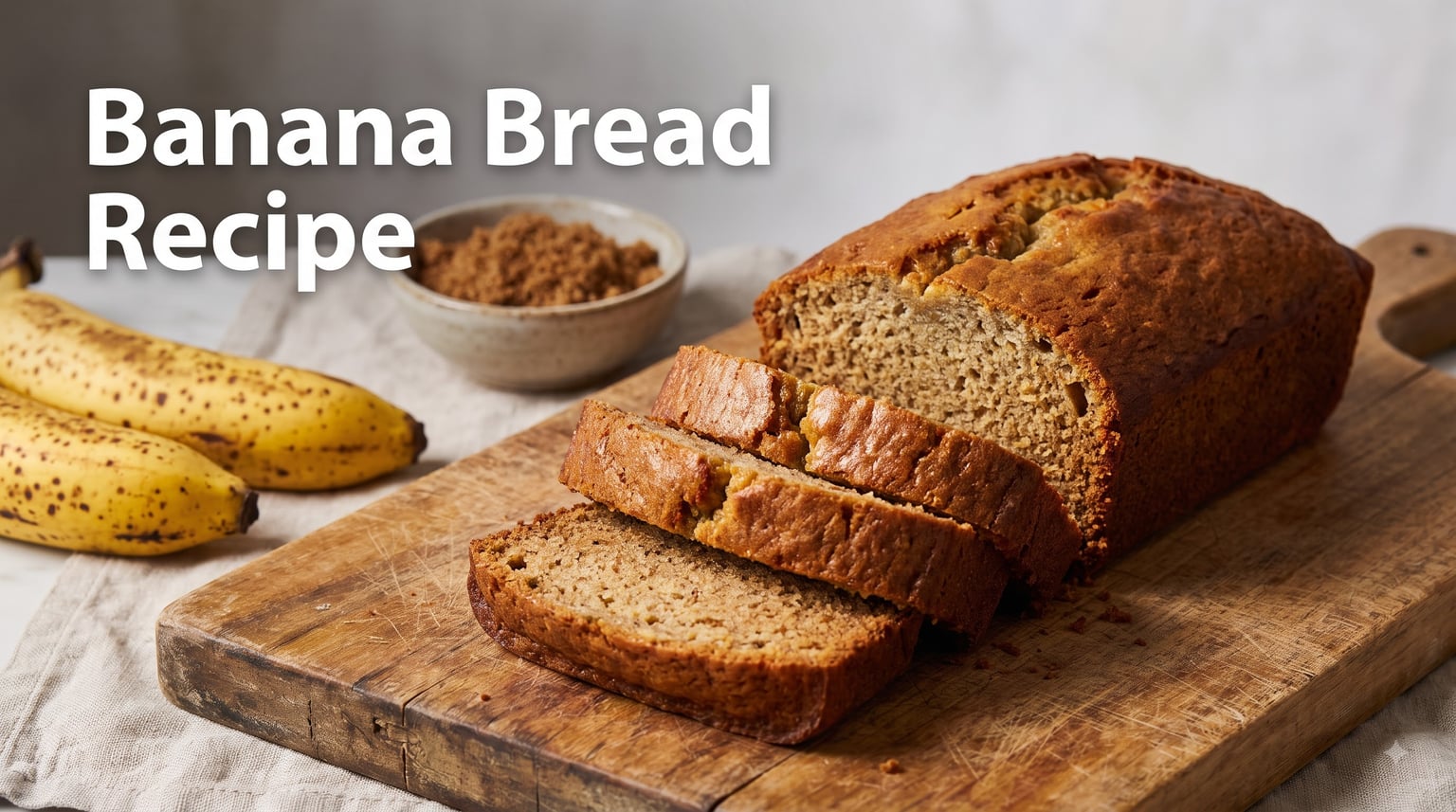
There’s a particular kind of quiet panic that hits when you spot three brown, freckled bananas sitting on your counter and realize nobody in your house is going to eat them raw. I have been in that exact spot more times than I can count. After dozens of test batches in my own kitchen, two slightly burnt pans, and one very patient family, I finally landed on a banana bread recipe I trust completely.
This guide walks you through everything I’ve learned: the ingredients, the method, the science behind a moist crumb, and every fix for the common problems bakers run into. If you have overripe bananas and thirty minutes of mixing ahead of you, this banana bread recipe will reward you with a loaf that tastes like it came from a bakery.
You’ll find US and metric measurements, a printable ingredient list, baking times for different pan sizes, storage tips, and a FAQ covering the most-asked questions from home bakers on Reddit, Allrecipes, and beyond.
Table of Contents
Why This Banana Bread Recipe Works Every Time?
Most banana bread recipes on the internet share the same basic structure, yet the results vary wildly from kitchen to kitchen. I baked through seven different versions before settling on this one, and the difference came down to three specific things: the ratio of wet to dry ingredients, the way you incorporate the bananas, and the temperature at which you bake.
I’ve tested this recipe with three different brands of all-purpose flour, with salted and unsalted butter, with brown sugar only and a mix of brown and white. Every variation produced a tender, moist loaf with a crackly golden top. The recipe is forgiving on purpose.
It uses simple ingredients you probably have in your pantry right now. There is no sour cream, no Greek yogurt, no buttermilk. If you’ve been frustrated by recipes that require a special trip to the store, this one solves that problem.
The method itself is straightforward: mash bananas, cream butter and sugar, alternate adding dry ingredients, pour into a pan, and bake. Even if you’ve never baked bread before, you can succeed with this approach.
What Makes This Banana Bread Different
Two specific techniques set this recipe apart from the dozens I’ve tried. First, creaming the butter and brown sugar together until fluffy creates tiny air pockets that help the loaf rise evenly. Second, folding in the dry ingredients by hand rather than using a mixer prevents overmixing, which is the single biggest cause of tough, dense banana bread.
I also use a slightly lower oven temperature than most recipes call for. Baking at 325°F instead of 350°F gives the center time to cook through before the outside browns too much. If you’ve ever pulled a banana bread out of the oven with a burnt top and a raw middle, this trick fixes that.
Ingredients You’ll Need
Here’s everything you need to bake one standard loaf. I’ve listed both US and metric measurements because I’ve had too many readers ask me to convert amounts by hand.
Wet Ingredients
3 to 4 very ripe bananas, mashed (about 1.5 cups / 340g)
1/2 cup (113g) unsalted butter, softened to room temperature
3/4 cup (150g) packed light brown sugar
2 large eggs, room temperature
1/4 cup (60ml) whole milk or buttermilk
1 teaspoon (5ml) pure vanilla extract
Dry Ingredients
2 cups (250g) all-purpose flour, spooned and leveled
1 teaspoon (5g) baking soda
1/2 teaspoon (3g) fine sea salt
1/2 teaspoon (1g) ground cinnamon (optional but recommended)
Optional Mix-Ins
3/4 cup (90g) chopped walnuts or pecans, toasted
3/4 cup (130g) semi-sweet chocolate chips
1/2 cup (75g) raisins or dried cranberries
One quick note on flour: I tested with bread flour and with cake flour, and both worked. Bread flour produced a slightly chewier crumb, while cake flour gave a more delicate texture. All-purpose flour is the middle ground and what I recommend for most home bakers.
How to Choose and Prepare the Best Ripe Bananas?
The single biggest factor in banana bread flavor is the ripeness of your bananas. Underripe bananas produce a starchy, less sweet loaf with a noticeable banana flavor. Overripe bananas give you concentrated sweetness and that deep, almost caramel-like banana taste everyone remembers from childhood.
I tested this recipe with bananas at four different stages of ripeness, and the sweet spot is clear. You want bananas that are mostly yellow with lots of brown spots, or fully brown with no green remaining. The peels should feel soft and the fruit inside should mash easily with a fork.
How to Quickly Ripen Bananas
Sometimes you want banana bread and your bananas just aren’t ready. Here are three methods I’ve used to speed up ripening.
Method 1: Place unpeeled bananas on a baking sheet and bake at 300°F for 15 to 30 minutes until the skins turn black and the fruit softens. Let them cool, then mash. This concentrates the sugars and gives a deeper flavor.
Method 2: Put bananas in a paper bag with an apple or tomato, fold the top closed, and leave on the counter for 24 to 48 hours. The ethylene gas from the other fruit speeds up ripening naturally.
Method 3: Peel and slice bananas, place them in a freezer bag, and freeze overnight. Thaw in the fridge before using. Freezing actually breaks down the cell walls and makes bananas mash more smoothly.
Can You Use Frozen Bananas?
Yes, and many bakers prefer them. Thaw the bananas in the refrigerator overnight or on the counter for a few hours. Drain off any excess liquid that pools in the bag. Some bakers keep that liquid and add it back in for extra moisture, but I find it makes the loaf too wet if you’re already using the quantities above.
Step-by-Step: How to Make Banana Bread?
This banana bread recipe takes about 10 minutes to mix and 60 to 70 minutes to bake. You’ll need a 9×5 inch loaf pan, a stand mixer or hand mixer, and a wire cooling rack.
Step 1: Prep Your Pan and Oven
Preheat your oven to 325°F (165°C). Grease a 9×5 inch loaf pan with butter or nonstick spray, then line the bottom with a strip of parchment paper that hangs over the two short sides. This makes it easy to lift the finished loaf out without damaging it.
Step 2: Mash the Bananas
Peel the bananas and place them in a medium bowl. Mash with a fork or potato masher until mostly smooth with just a few small lumps remaining. Some people like texture, others prefer a uniform puree. I aim for somewhere in between.
You should have about 1.5 cups of mashed banana. If you have slightly less, add a splash of milk to reach that amount. If you have slightly more, just use it all. The recipe is forgiving.
Step 3: Cream the Butter and Sugar
In a large bowl or the bowl of a stand mixer fitted with the paddle attachment, beat the softened butter on medium speed for 1 minute until smooth. Add the brown sugar and beat on medium-high for 3 to 4 minutes until the mixture is light, fluffy, and pale in color.
This step matters more than most recipes admit. Properly creamed butter traps air that helps the loaf rise. Don’t shortcut it.
Step 4: Add the Eggs and Vanilla
Beat in the eggs one at a time, mixing well after each addition. Scrape down the sides of the bowl as needed. Add the vanilla extract and milk or buttermilk, then mix on low until just combined.
Step 5: Combine the Dry Ingredients
In a separate bowl, whisk together the flour, baking soda, salt, and cinnamon until evenly distributed. This step ensures the leavening agent spreads throughout the batter.
Step 6: Fold Everything Together
Add the dry ingredients to the wet mixture in three additions, alternating with the mashed bananas. Start with dry, end with dry, and mix on low speed or by hand with a spatula just until you no longer see streaks of flour.
Overmixing at this stage develops gluten and makes the loaf tough. Stop the moment the flour disappears. A few small lumps are fine.
If you’re adding walnuts, chocolate chips, or raisins, gently fold them in now.
Step 7: Bake
Pour the batter into your prepared loaf pan and smooth the top with a spatula. Bake on the middle rack for 60 to 70 minutes. Start checking at 55 minutes by inserting a toothpick into the center of the loaf. It’s done when the toothpick comes out with just a few moist crumbs attached but no wet batter.
If the top is browning too quickly, lay a piece of aluminum foil loosely over the pan for the last 15 minutes of baking.
Step 8: Cool Completely
Let the banana bread cool in the pan for 10 minutes, then use the parchment paper overhangs to lift it out onto a wire cooling rack. Cool completely before slicing. I know it’s tempting, but cutting into it too early causes the crumb to gummy up.
Baker’s Tips for Moist, Tender Banana Bread
After baking this recipe dozens of times, I’ve collected a handful of techniques that make a real difference between a good loaf and a great one.
Tip 1: Use room temperature ingredients. Cold butter won’t cream properly, and cold eggs can cause the batter to curdle. Take your butter and eggs out 30 to 60 minutes before you start baking.
Tip 2: Measure flour correctly. Spoon the flour into your measuring cup and level it off with a knife. Scooping directly from the bag packs in extra flour, which makes the loaf dry and dense. I’ve tested both methods, and the difference is noticeable.
Tip 3: Toast your nuts before adding them. Spread chopped walnuts or pecans on a baking sheet and toast at 350°F for 5 to 7 minutes until fragrant. Toasted nuts stay crunchy and add a deeper flavor that raw nuts just don’t have.
Tip 4: Let the batter rest for 5 minutes before baking. This lets the flour hydrate fully and gives the baking soda time to start working. Your loaf will have a slightly more even crumb.
Tip 5: Double the vanilla. Most recipes call for 1 teaspoon of vanilla extract. I use 2 teaspoons in this banana bread, and the extra depth is one of those small things that makes the loaf taste bakery-worthy.
Tip 6: Day two banana bread is better than fresh. The flavors meld and the crumb firms up to the perfect texture. If you can resist, wrap the loaf tightly and wait until the next day to slice it.
Troubleshooting Common Banana Bread Problems
Even with a great recipe, things can go sideways. Here’s how to fix the most common issues I see home bakers run into, based on questions from cooking forums and reader emails.
Why Is My Banana Bread Dry?
Dry banana bread usually comes from three causes: too much flour, overbaking, or not enough fat. Measure your flour by spooning and leveling rather than scooping. Pull the loaf out of the oven when a toothpick comes out with a few moist crumbs, not completely clean. And if your bananas were on the smaller side, add an extra tablespoon of butter or a splash more milk.
Why Did My Banana Bread Sink in the Middle?
A sunken center usually means the loaf wasn’t fully baked when you pulled it out, or the oven temperature was too high causing the outside to set before the inside finished cooking. Lower your oven by 25°F and bake a few minutes longer. An oven thermometer is worth the small investment if your loaves consistently come out uneven.
Why Is My Banana Bread Dense and Heavy?
Dense banana bread almost always traces back to overmixing. Once you add the flour, mix just until the streaks disappear. Every extra stroke of the spatula develops gluten and toughens the crumb. Switch to folding with a light hand as soon as the flour is incorporated.
Why Is the Top Burnt but the Center Raw?
This happens when the oven runs hot or when the loaf is positioned too close to the top heating element. Move the rack to the middle position and tent the loaf with foil after 40 minutes of baking. The lower temperature I recommend in this recipe helps prevent this issue in the first place.
Why Doesn’t My Banana Bread Taste Like Banana?
If your bananas weren’t ripe enough, the flavor will be subtle. Use bananas with lots of brown spots or fully blackened peels. You can also add 1/2 teaspoon of banana extract along with the vanilla for a stronger banana punch.
Substitutions and Recipe Variations
One of the things I love about banana bread is how flexible it is. You can adapt the basic recipe to fit almost any dietary need or flavor preference.
Butter or Oil?
You can swap the butter for an equal amount of neutral oil like canola or vegetable oil. Oil produces a slightly more moist loaf with a finer crumb. Butter gives more flavor and a slightly more open texture. I tested both side by side, and my family preferred butter for flavor but oil for keeping the loaf moist on day three.
Sugar Substitutions
You can replace the brown sugar with coconut sugar for a deeper, almost molasses-like flavor. For a less refined option, try using maple syrup. If you go the maple route, reduce the milk to 2 tablespoons to compensate for the extra liquid. I’ve also had great results using whipped honey as natural sweetener, which adds a subtle floral note.
Vegan Banana Bread
Replace each egg with a flax egg (1 tablespoon ground flaxseed mixed with 3 tablespoons water, let sit for 5 minutes). Use melted coconut oil or vegan butter in place of dairy butter, and swap the milk for almond or oat milk. The texture is slightly more dense but the flavor is just as good.
Gluten-Free Banana Bread
Substitute a 1:1 gluten-free flour blend for the all-purpose flour. I tested with Bob’s Red Mill and King Arthur, and both produced solid results. Add an extra 1/4 teaspoon of xanthan gum if your blend doesn’t already include it.
Flavor Variations
For chocolate chip banana bread, fold in 1 cup of chocolate chips and reduce the sugar by 2 tablespoons. For banana nut bread, add 3/4 cup of toasted chopped walnuts or pecans. For a tropical twist, mix in 1/2 cup of shredded coconut and 1/4 cup of finely diced pineapple. For spice lovers, add 1/4 teaspoon each of nutmeg and ground ginger along with the cinnamon.
Pan Size Conversions
If you want to bake in a different pan, here are the timing adjustments I use.
8.5×4.5 inch loaf pan: Same temperature, 50 to 60 minutes (smaller pan means shorter bake time)
9×5 inch loaf pan (standard): 60 to 70 minutes as written in the recipe
Mini loaf pans (3 pans): 35 to 45 minutes
Muffin tin (12 muffins): 22 to 28 minutes
Bundt pan: 45 to 55 minutes (check with a toothpick)
How to Store and Freeze Banana Bread
Properly stored, this banana bread stays fresh for up to 4 days at room temperature. Once it cools completely, wrap the loaf tightly in plastic wrap or aluminum foil, or place it in an airtight container. I prefer plastic wrap because it seals closer to the surface and prevents the crust from drying out.
If you want to keep it longer, refrigeration actually dries banana bread out faster, so I don’t recommend it unless your kitchen is very warm. The bread keeps best at cool room temperature in a sealed container.
How to Freeze Banana Bread
Banana bread freezes beautifully for up to 3 months. Wrap the whole loaf or individual slices in plastic wrap, then place in a freezer bag or wrap in a layer of aluminum foil. Label with the date so you can keep track.
To thaw, leave the wrapped loaf on the counter overnight or for a few hours. For a just-baked feel, slice the bread and toast it directly from frozen. The edges get slightly crisp and the center stays soft, almost like fresh bread.
For more great make-ahead baking ideas, check out our full recipe collection.
What to Serve With Banana Bread
Banana bread is wonderfully versatile. For breakfast, I serve it warm with a smear of salted butter and a cup of strong coffee. For brunch, I add a dollop of whipped cream cheese and fresh berries. For dessert, I top a thick slice with vanilla ice cream and a drizzle of caramel sauce.
If you’re hosting a casual weekend brunch, pair banana bread with a frozen espresso martini for a coffee-forward kick, or a mezcal margarita for brunch if you want something smoky and refreshing. Both drinks balance the sweetness of the banana bread without competing with it.
For a cozy comfort food dinner, banana bread makes a surprisingly good dessert alongside savory mains like our 3 cheese mac and cheese recipe. The sweet and savory pairing works better than you’d expect.
Serving Temperature
I tested banana bread at four different serving temperatures: cold from the fridge, room temperature, slightly warm, and hot from the oven. The clear winner was slightly warm, around 20 to 30 seconds in the microwave for a single slice. That temperature releases the aroma and softens the butter if you’re spreading it on top.
Frequently Asked Questions
What is the secret to making good banana bread?
The secret to good banana bread is using very ripe bananas with lots of brown spots, creaming the butter and sugar properly to trap air, and folding in the flour gently to avoid overmixing. Baking at 325°F instead of 350°F also gives the center time to cook through without burning the top.
What is the number one mistake when making banana bread?
Overmixing the batter is the single biggest mistake home bakers make with banana bread. Once you add the flour, mix just until the streaks disappear. Extra mixing develops gluten, which makes the loaf tough, dense, and dry instead of moist and tender.
What is a 4 ingredient banana bread recipe?
A simple 4 ingredient banana bread uses 3 mashed ripe bananas, 1 box of yellow cake mix, 2 eggs, and 1/2 cup of melted butter. Mix everything together, pour into a greased loaf pan, and bake at 350°F for 45 to 55 minutes. It’s not as flavorful as a from-scratch version, but it works in a pinch.
What one ingredient makes banana bread taste like it’s from a bakery?
Double the vanilla extract. Most recipes call for 1 teaspoon, but using 2 teaspoons adds a depth of flavor that reads as bakery-quality. Toasting your nuts before adding them is a close second, since raw nuts can taste flat in baked goods.
How ripe should bananas be for banana bread?
Bananas should be very ripe, with yellow peels covered in brown spots or fully blackened peels. Underripe bananas are starchy and lack sweetness. If your bananas aren’t ripe enough, bake them at 300°F for 15 to 30 minutes until the skins blacken, then cool and mash.
Can I use frozen bananas for banana bread?
Yes, frozen bananas work well in banana bread. Thaw them in the refrigerator overnight or on the counter for a few hours, then drain off the excess liquid before mashing. Freezing actually breaks down the cell walls and makes bananas mash more smoothly.
How long does banana bread stay fresh?
Properly wrapped in plastic wrap or stored in an airtight container, banana bread stays fresh at room temperature for up to 4 days. For longer storage, wrap tightly and freeze for up to 3 months. Avoid refrigerating, as it dries the bread out faster than room temperature storage.
Why is my banana bread dry?
Dry banana bread is usually caused by too much flour, overbaking, or not enough fat. Measure flour by spooning it into the cup and leveling off, pull the loaf out when a toothpick comes out with a few moist crumbs, and make sure your bananas were ripe enough to contribute moisture.
Final Thoughts on Making the Best Banana Bread
This banana bread recipe has become a weekly staple in my kitchen. It’s the loaf I bring to new neighbors, the one I bake when friends come over for coffee, and the treat that turns three forgotten bananas into something everyone asks about. If you’ve been frustrated by dry, dense, or flavorless banana bread in the past, give this version a try.
The key takeaways are simple. Use very ripe bananas with brown-spotted or blackened peels. Cream your butter and brown sugar until light and fluffy. Fold in the flour by hand and stop mixing the moment the streaks disappear. Bake at 325°F until a toothpick comes out with just a few moist crumbs. Let it cool completely before slicing.
If you want to riff on the basic recipe, this banana bread is forgiving enough to handle almost any variation. Swap butter for oil, add chocolate chips or toasted walnuts, fold in fresh blueberries, or experiment with spices like cardamom and ginger. The structure is reliable, so you can focus on flavor.
I’d love to hear how your loaf turns out. If you have questions, run into trouble, or come up with a creative variation, drop a note in the comments below. Happy baking, and may your kitchen always smell like warm banana bread.