
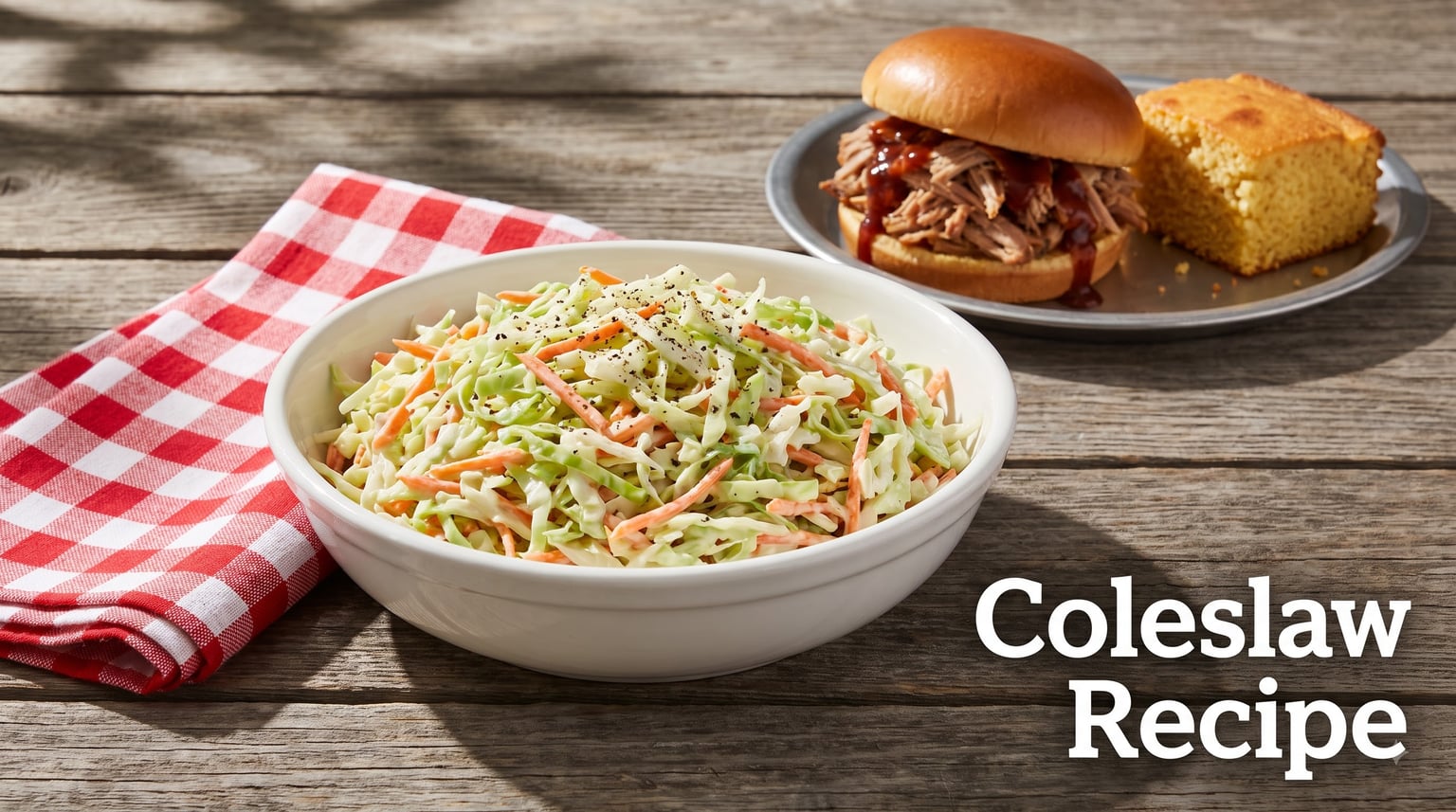
I’ve spent the last several years perfecting this coleslaw recipe, testing it at backyard barbecues, potlucks, and family dinners until it became the version everyone asks for. The result is a creamy, tangy, perfectly balanced slaw with the kind of crunch that holds up even after sitting out at a summer cookout.
This homemade coleslaw recipe uses simple ingredients you probably already have in your kitchen. The secret is in the technique, not fancy components. Once you learn how to salt and drain the cabbage properly, you’ll never deal with watery coleslaw again.
Whether you’re serving it alongside a pulled pork recipe, piling it on a sandwich, or bringing it to a potluck, this is the coleslaw recipe you’ll come back to. Let me walk you through every step.
Table of Contents
Coleslaw Recipe Ingredients
The beauty of a classic coleslaw recipe is that it calls for just a handful of ingredients. Quality matters here, especially with the cabbage and mayonnaise, since those two components carry most of the flavor.
The Vegetables
Green cabbage: One medium head, about 2.5 to 3 pounds, yields roughly 8 cups shredded. Look for heads that feel heavy for their size with tightly packed, crisp leaves.
Red cabbage: I add about 1 cup of shredded red cabbage for color. It’s optional but makes the finished dish look more vibrant on the table.
Carrots: 1 cup of julienned or grated carrots adds sweetness and color. Two medium carrots will do the job.
Onion (optional): Some folks swear by a quarter cup of finely minced sweet onion, like Vidalia. Others say onion doesn’t belong in coleslaw at all. I include it when serving with barbecue and skip it for sandwich slaw.
The Coleslaw Dressing
Mayonnaise: Half a cup of good quality mayonnaise forms the base. Hellman’s (also called Best Foods on the West Coast) is the most commonly recommended brand in cooking communities. Duke’s is the Southern favorite and has a tangier profile with no added sugar. Kewpie mayonnaise brings a rich, umami quality if you want something different.
Apple cider vinegar: 2 tablespoons provide the tang that balances the creamy mayo. White vinegar works too, but apple cider vinegar adds a warmer, fruitier acidity.
Sugar: 2 to 3 tablespoons of granulated sugar give the dressing its signature sweet-tart balance. Start with 2 tablespoons and adjust to taste. Honey works as a natural alternative.
Celery seed: Half a teaspoon is the secret ingredient many people miss. It adds a savory depth that elevates the entire dish. Some people detect a soapy flavor from celery seed, so taste a tiny pinch first if you’ve never used it.
Dijon mustard: 1 teaspoon helps emulsify the dressing and adds subtle complexity. It won’t make the coleslaw taste like mustard.
Salt and pepper: 1 teaspoon of kosher salt and half a teaspoon of black pepper. You’ll also need extra salt for drawing moisture from the cabbage.
Lemon juice: 1 tablespoon of fresh lemon juice brightens everything up. A squeeze at the end makes a bigger difference than you’d expect.
Ingredient Substitutions
No buttermilk? Add half a teaspoon of lemon juice or vinegar to regular milk and let it sit for 5 minutes. No celery seed? A pinch of celery salt works, just reduce the regular salt slightly. Pre-shredded bagged cabbage is fine in a pinch, though it tends to have a slightly chemical taste from preservatives and won’t stay crisp as long.
How to Make Coleslaw?
Making homemade coleslaw from scratch takes about 15 minutes of active prep time. The results are dramatically better than anything from a store deli counter. Here is my step-by-step method.
Step 1: Prepare the Cabbage
Remove any wilted outer leaves from the cabbage head. Cut the head into quarters through the core. Cut out the tough triangular core from each quarter at an angle. Slice each quarter crosswise into thin shreds, aiming for strips about 1/8 inch wide.
Place the shredded cabbage in a large colander set over a bowl. Toss it with 1 teaspoon of kosher salt and let it sit for at least 1 hour. This step draws out excess moisture and prevents watery coleslaw. If you’re short on time, 20 minutes will help, but an hour is ideal.
Step 2: Shred the Carrots
While the cabbage drains, peel and grate the carrots using a box grater or julienne them with a knife for longer, more elegant strips. A food processor with a shredding disc makes quick work of this if you’re making a large batch.
Step 3: Make the Coleslaw Dressing
In a medium bowl, whisk together the mayonnaise, apple cider vinegar, sugar, celery seed, Dijon mustard, salt, pepper, and lemon juice. Keep whisking until the mixture is completely smooth with no sugar granules remaining. The dressing should be creamy and pourable.
Taste the dressing at this point. Want it sweeter? Add more sugar. Too sweet? Add a splash more vinegar. This is your chance to get the balance right before it meets the cabbage.
Step 4: Combine and Toss
Gently squeeze the salted cabbage with your hands to remove excess moisture. Don’t crush it, just press out the water. Transfer the cabbage to a large mixing bowl. Add the shredded carrots and minced onion if using.
Pour about three-quarters of the dressing over the vegetables and toss until everything is evenly coated. Add more dressing as needed. It’s better to start with less and add more than to drown the cabbage.
Step 5: Rest and Refrigerate
Cover the bowl and refrigerate for at least 30 minutes before serving. If you have the time, 2 to 4 hours is even better. Overnight is the gold standard. The resting period lets the flavors meld and the cabbage absorbs the dressing, creating that perfect tender-crisp texture.
Give the coleslaw a final toss before serving and taste for seasoning. It may need an extra pinch of salt or squeeze of lemon after chilling.
The Secret to Perfect Coleslaw
After testing dozens of coleslaw recipes, I can tell you that the single biggest difference between average coleslaw and outstanding coleslaw comes down to two things: salting the cabbage and giving it enough resting time.
Salting the shredded cabbage draws out moisture through osmosis. If you skip this step, the cabbage releases water into your dressing as it sits, diluting the flavor and creating that unappetizing pool of liquid at the bottom of the bowl. Every professional kitchen I’ve worked in does this.
Resting time is equally important. Freshly made coleslaw tastes sharp and one-dimensional. After an hour or two in the fridge, the cabbage softens just enough, the dressing penetrates the vegetable fibers, and the flavors come together. Coleslaw made the day before is almost always better than coleslaw made right before serving.
The dressing-to-cabbage ratio matters too. You want enough dressing to coat every piece lightly, not so much that the cabbage swims in it. Start with three-quarters of the dressing, toss well, and add more only if needed. You can always add more, but you can’t take it back.
One more chef tip from forum communities: a small amount of buttermilk or sour cream added to the dressing gives it a restaurant-quality tang. Just swap out a tablespoon of mayonnaise for a tablespoon of buttermilk. The difference is subtle but noticeable.
How to Prevent Watery Coleslaw
Watery coleslaw is the number one complaint I hear from home cooks. The good news is that it’s completely preventable once you understand why it happens.
Cabbage is roughly 92 percent water. When you dress it and add salt, that water starts to leach out. If you haven’t drawn the moisture out beforehand, it ends up pooling in your dressing. This is why store-bought pre-shredded cabbage bags are so problematic. They often contain cabbage that’s already been sitting and releasing moisture.
The fix is simple. Salt your shredded cabbage and let it drain for an hour before dressing. Use a colander set over a bowl so the liquid can drip away. After draining, give the cabbage a gentle squeeze to remove any remaining surface moisture.
If your coleslaw is already watery, you can drain off the excess liquid and add a spoonful of extra mayonnaise to thicken it back up. It won’t be as good as starting fresh, but it’s salvageable.
For make-ahead coleslaw, store the dressing and the vegetables separately. Toss them together an hour before serving. This keeps everything crisp for much longer.
Coleslaw Recipe Variations
One of the reasons I love this coleslaw recipe is how adaptable it is. Here are six variations I’ve tested and loved, each with a distinct personality.
Southern Style Coleslaw
Southern coleslaw leans sweeter and uses Duke’s mayonnaise for its characteristic tang. Increase the sugar to 3 tablespoons and add a tablespoon of sweet pickle relish. The relish adds a sweet-sour dimension that’s distinctly Southern. This is the coleslaw you’d find at a church potluck in the Carolinas.
KFC-Style Copycat Coleslaw
KFC coleslaw is famous for its fine texture and distinctive flavor. To replicate it, shred the cabbage and carrots very finely, almost to a minced consistency. Use a food processor for the best results. The dressing gets 2 tablespoons of tarragon vinegar instead of apple cider vinegar and a tablespoon of lemon juice. Let it sit for at least 3 hours so the flavors develop and the vegetables soften to that familiar KFC consistency.
Carolina Vinegar-Based Slaw
This is the coleslaw served alongside Carolina pulled pork, and it skips the mayonnaise entirely. Whisk together half a cup of apple cider vinegar, a quarter cup of vegetable oil, 2 tablespoons of sugar, 1 teaspoon of salt, a half teaspoon of black pepper, and a half teaspoon of red pepper flakes. Pour it over the shredded cabbage and carrots while still warm. The result is tangy, bright, and refreshing. It cuts through rich, fatty barbecue like nothing else.
Vinegar-Based No-Mayo Coleslaw
For a lighter option, combine a quarter cup of rice vinegar, 2 tablespoons of olive oil, 1 tablespoon of honey, 1 teaspoon of Dijon mustard, and a pinch of salt. Toss with the shredded cabbage, carrots, and a handful of toasted sesame seeds. This version pairs beautifully with fish tacos or grilled chicken.
Greek Yogurt Healthy Coleslaw
Replace the mayonnaise entirely with plain Greek yogurt for a high-protein, lower-fat version. Add an extra squeeze of lemon juice since yogurt is less acidic than mayonnaise. This version has a fresher, lighter taste and works well for anyone watching their calories without sacrificing creaminess.
Apple Coleslaw
Add 1 cup of julienned Granny Smith apple to the standard recipe. The tart apple complements the creamy dressing and adds another layer of crunch. UK readers tell me this is a traditional variation, and it pairs especially well with pork dishes. A handful of dried cranberries makes it even better for a holiday table.
How to Cut Cabbage for Coleslaw
The way you cut your cabbage affects both the texture and appearance of the finished coleslaw. Here are four methods, ranked from simplest to most professional.
Knife method: Cut the cabbage into quarters, remove the core, and slice crosswise into thin strips. This is the most accessible method and gives you good control over the thickness. Aim for strips about 1/8 inch wide for the best balance of crunch and tenderness.
Box grater: Use the largest holes on a standard box grater for a finer shred. This works well if you prefer a softer, more delicate coleslaw like the KFC style. It’s also the easiest method for beginners.
Mandoline slicer: A mandoline gives you perfectly uniform shreds with minimal effort. Use the julienne blade attachment for restaurant-quality results. Always use the safety guard, as mandoline blades are extremely sharp.
Food processor: A food processor with a slicing or shredding disc is the fastest method for large batches. Be careful not to over-process, as some users note it can make the cabbage too fine and mushy. Pulse in short bursts and check frequently.
No matter which method you choose, keep the shreds consistent in size. Uneven pieces create an inconsistent eating experience and cause the coleslaw to break down unevenly during resting.
What to Serve with Coleslaw
Coleslaw is the ultimate team player. Its cool, creamy crunch provides the perfect counterpoint to rich, smoky, and fried foods. Here are the pairings I reach for most often.
Barbecue Classics
Coleslaw belongs on the barbecue table. Serve it alongside pulled pork, smoked brisket, or ribs. In the South, coleslaw on top of a pulled pork sandwich isn’t optional, it’s tradition. The slaw’s acidity cuts through the fatty richness of the meat and adds a satisfying crunch.
Fried chicken is another natural pairing. The cool, creamy coleslaw soothes the heat and richness of freshly fried bird. Add some macaroni salad and you’ve got a complete picnic spread.
Sandwich and Burger Topping
A scoop of coleslaw on a burger, pulled pork sandwich, or fried fish sandwich adds moisture and crunch without making the bread soggy. Use a slotted spoon to drain excess dressing before piling it on.
Potluck and Party Planning
For a crowd, this recipe doubles and triples easily. As a general rule, plan on 1 cup of coleslaw per person for a side dish serving. For a sandwich topping, figure about a third of a cup per person.
That means one batch (serving 8) works for a small dinner party. For a cookout of 20 people, triple the recipe. For 50 people, you’ll need about 6 quarts of coleslaw, so make a quintuple batch.
If you’re building a full side dish spread, pair the coleslaw with chicken salad, baked beans, cornbread, and potato salad for a classic Southern buffet. Or go comfort food route with creamed peas for a cozy family dinner.
Storage and Make-Ahead Tips
Homemade coleslaw stored properly will last 3 to 5 days in the refrigerator. Here’s how to get the most out of your leftovers and plan ahead for events.
Best Storage Containers
Use an airtight container, preferably glass or BPA-free plastic with a tight-fitting lid. Glass containers don’t absorb odors and keep the coleslaw tasting fresh longer. Avoid metal containers, as the acid in the dressing can react with some metals and create off flavors.
Make-Ahead Timeline
Coleslaw is one of the best make-ahead side dishes. Make it the day before your event and it’ll be at peak flavor. For maximum freshness, store the dressing and vegetables separately. Combine them about an hour before serving.
If you’re planning a multi-day barbecue event, make a fresh batch each day rather than stretching one batch across multiple days. The texture degrades noticeably after day three.
Can You Freeze Coleslaw?
I don’t recommend freezing dressed coleslaw. The mayonnaise separates and the cabbage turns mushy when thawed. However, you can freeze the shredded, undressed cabbage for up to 2 months. Thaw it in the refrigerator, drain well, and dress it fresh.
Food Safety for Outdoor Events
Mayonnaise-based coleslaw should not sit at room temperature for more than 2 hours. At outdoor events in summer heat, that drops to 1 hour. Keep the serving bowl on ice, or set out smaller portions and refill from the refrigerator as needed.
Frequently Asked Questions
What’s the secret to a good coleslaw?
The secret to good coleslaw is salting the shredded cabbage and letting it drain for at least an hour before dressing. This removes excess moisture that would otherwise water down your dressing. Resting the dressed coleslaw in the refrigerator for 2 to 4 hours, or overnight, also lets flavors develop and the cabbage absorb the dressing for that perfect tender-crisp texture.
What are the ingredients for coleslaw?
Classic coleslaw ingredients are shredded green cabbage, shredded carrots, mayonnaise, apple cider vinegar, sugar, celery seed, Dijon mustard, salt, pepper, and lemon juice. Optional additions include red cabbage for color, minced sweet onion, and buttermilk for extra tang.
Why is KFC coleslaw so good?
KFC coleslaw stands out because the cabbage and carrots are finely minced to an almost paste-like consistency, creating a smooth texture. The dressing uses tarragon vinegar and lemon juice for a distinctive flavor, and it rests for several hours so the vegetables soften and absorb the dressing fully. You can replicate it at home by processing the vegetables very finely and letting the finished slaw sit for at least 3 hours.
What are some common mistakes to avoid when making coleslaw?
Common coleslaw mistakes include skipping the salt-and-drain step which causes watery slaw, using too much dressing which overwhelms the vegetables, not letting it rest long enough for flavors to develop, using pre-shredded bagged cabbage which has preservative flavors, and overdressing too far ahead of serving. Also avoid cutting cabbage unevenly, as inconsistent shreds create an uneven eating experience.
How long does homemade coleslaw last in the fridge?
Homemade coleslaw lasts 3 to 5 days in the refrigerator when stored in an airtight container. For best quality, consume it within 3 days. After that, the cabbage continues to soften and the dressing thins out. Do not freeze dressed coleslaw, as mayonnaise separates and the texture becomes mushy.
Can I make coleslaw without mayonnaise?
Yes, you can make coleslaw without mayonnaise. A Carolina-style vinegar slaw uses apple cider vinegar, oil, sugar, and seasonings. A healthier option replaces mayo with plain Greek yogurt. You can also make an Asian-inspired slaw with rice vinegar, sesame oil, and soy sauce. These versions are lighter and work well for anyone with egg allergies or dietary restrictions.
What is the difference between coleslaw and slaw?
Coleslaw traditionally refers to a cabbage-based salad with a creamy mayonnaise or vinegar dressing. Slaw is a broader term that can include any shredded vegetable salad, such as broccoli slaw or apple slaw. In practice, the terms are used interchangeably in most recipes and restaurants.
Conclusion
This coleslaw recipe is everything a side dish should be: simple to make, easy to customize, and universally loved. The key techniques are salting and draining the cabbage, making a well-balanced dressing, and giving the finished slaw enough time to rest in the refrigerator.
Once you master the base recipe, the six variations give you options for any occasion, from a backyard barbecue to a holiday dinner. And remember, coleslaw made the day before is always better than coleslaw made at the last minute. For a complete meal, pair it with a rice dressing recipe or serve it on top of your favorite sandwich.
Give this homemade coleslaw recipe a try and adjust the sugar, vinegar, and seasonings to match your own taste. The best coleslaw is the one that matches your preferences, and now you have the foundation to make it exactly how you like it.