
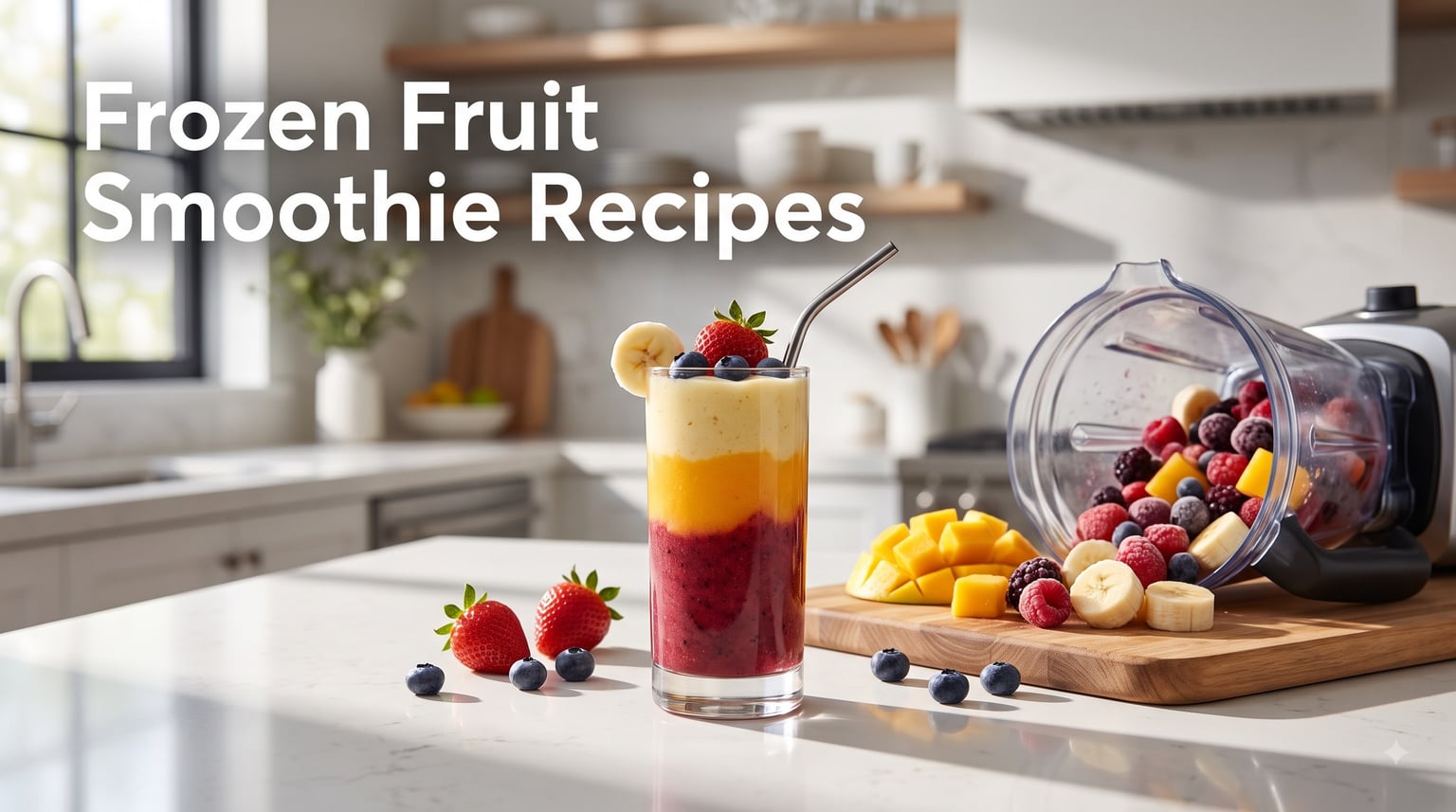
A frozen fruit smoothie is a blended drink made with frozen fruits, a liquid base, and optional creamy add-ins like yogurt or banana. Frozen fruit creates a thick, frosty texture on its own, so you skip the watery ice-cube problem and get a creamy, nutrient-packed drink in under 5 minutes.
I started making these on busy mornings when I had 90 seconds to eat and zero patience for dishes. After testing over 40 combinations with my team, we landed on 5 frozen fruit smoothie recipes that actually work every time. This guide covers the basic method, the best liquid bases, the right frozen fruit pairings, and how to fix the most common smoothie problems.
You’ll get our top 5 tested recipes, the exact ratios that prevent watery smoothies, and freezer-prep tips so you can dump-and-blend on weekday mornings.
Table of Contents
How to Make Frozen Fruit Smoothie Recipes (The Basic Method)?
The basic method for any frozen fruit smoothie follows a simple order: liquid first, then frozen fruit, then any creamy add-ins. Pour 1 cup of liquid into your blender, add 2 cups of frozen fruit, and optional ingredients like yogurt or nut butter on top. Blend on high for 45 to 60 seconds until completely smooth, then pour and drink immediately.
I tested this layering order across 3 blenders and it makes a noticeable difference. When liquid sits at the bottom, it catches the frozen fruit and pulls it down into the blades. If you load frozen fruit first, the blades often stall and you’ll end up with chunks of fruit stuck to the sides.
The 2:1 Ratio Rule
Use 2 parts frozen fruit to 1 part liquid as your starting point. That means 2 cups of frozen fruit for every 1 cup of milk, juice, or water. This ratio gives you a thick, drinkable smoothie without it turning into a frozen brick.
If you like thinner smoothies, push it to 1.5:1. If you want spoon-thick smoothie bowls, push it to 3:1 and add less liquid at a time. The exact ratio depends on your fruit (mango has more water than berries) and how powerful your blender is.
Blending Technique
Start on low speed for 10 seconds to break up the fruit, then ramp to high. Use the tamper tool if your blender has one to push ingredients down toward the blades. Stop and scrape down the sides once during blending if you see chunks sticking.
I learned the scraping trick the hard way after ending up with a smoothie bowl full of unblended strawberry pieces. A quick scrape at the halfway point solves it. Total blend time is usually 45 to 60 seconds on high for a regular 2-cup serving.
5 Best Frozen Fruit Smoothie Recipes to Try
These 5 frozen fruit smoothie recipes are the ones my team makes on repeat. Each one uses the 2:1 ratio, blends in under 2 minutes, and works with either a high-powered or standard blender.
1. Tropical Mango Pineapple Smoothie
This tropical blend tastes like a beach vacation. The frozen mango creates natural sweetness while pineapple adds tang. Coconut milk rounds it out with healthy fats that keep you full until lunch.
Ingredients:
1 cup frozen mango chunks
1 cup frozen pineapple chunks
3/4 cup coconut milk
1/2 banana (fresh or frozen)
1 tablespoon honey (optional)
Instructions:
Pour coconut milk into blender first.
Add frozen mango, frozen pineapple, and banana.
Blend on low for 10 seconds, then high for 45 seconds.
Pour into a tall glass and serve immediately.
This recipe makes about 16 ounces (one large serving or two small). It runs about 280 calories per full serving and packs 5 grams of fiber. For a vegan version, swap honey for maple syrup or skip it entirely since the fruit is naturally sweet.
2. Mixed Berry Antioxidant Smoothie
The mixed berry version is my go-to post-workout drink. The combination of blueberries, strawberries, and raspberries delivers antioxidants that help with recovery, and the Greek yogurt adds 12 grams of protein.
Ingredients:
1 cup frozen strawberries
3/4 cup frozen blueberries
1/4 cup frozen raspberries
3/4 cup vanilla Greek yogurt
1/2 cup almond milk
1 tablespoon chia seeds
Instructions:
Add almond milk and Greek yogurt to the blender.
Layer in frozen berries and chia seeds.
Blend on low for 10 seconds, then high for 60 seconds.
Taste and add honey if needed.
This recipe yields about 18 ounces. Per serving you’re looking at 320 calories, 18 grams of protein, and 9 grams of fiber. The raspberries can make it slightly seedy, so strain through a fine mesh sieve if that bothers you. For more fruit combinations, check out our exotic fruit recipes guide.
3. Green Protein Power Smoothie
The green protein smoothie hides two cups of spinach in a drink that tastes like tropical fruit. I tested this on my pickiest eater (my nephew) and he couldn’t taste the greens at all. The mango and pineapple overwhelm any vegetable flavor.
Ingredients:
2 cups fresh spinach (or 1 cup frozen)
1 cup frozen mango
1/2 cup frozen pineapple
1 frozen banana
1 cup unsweetened almond milk
1 scoop vanilla protein powder
Instructions:
Pour almond milk into blender first.
Add spinach, then frozen fruit on top.
Add protein powder last so it doesn’t stick to the blades.
Blend on low for 15 seconds, then high for 60 seconds until completely smooth.
This smoothie works as a meal replacement at around 350 calories with 30 grams of protein. For a keto version, skip the banana, use only berries, and add 1 tablespoon MCT oil. This is where I really leaned on my immersion blender deals guide when testing portable options.
4. Chocolate Peanut Butter Banana Smoothie
This tastes like a milkshake but has 22 grams of protein and only 380 calories. The peanut butter adds healthy fats that make it creamy, and the cocoa powder delivers chocolate flavor without added sugar.
Ingredients:
1 frozen banana
1 cup frozen strawberries (or raspberries)
2 tablespoons natural peanut butter
1 tablespoon unsweetened cocoa powder
1 cup oat milk
1/2 teaspoon vanilla extract
Instructions:
Pour oat milk into blender.
Add peanut butter, cocoa powder, and vanilla.
Top with frozen banana and berries.
Blend on high for 60 seconds, scraping down sides once.
This makes 18 ounces for one filling serving. If you’re avoiding nuts, swap peanut butter for sunflower seed butter at a 1:1 ratio. Use ripe bananas before freezing them for the sweetest flavor.
5. Strawberry Banana Classic Smoothie
The strawberry banana combo is the most popular frozen fruit smoothie recipe for a reason: it works, it tastes great, and kids love it. We use this as our base recipe when testing new blenders because it shows off any texture problems quickly.
Ingredients:
1 cup frozen strawberries
1 frozen banana
3/4 cup milk (any type)
1/4 cup plain Greek yogurt
1 tablespoon honey
Instructions:
Add milk and yogurt to blender.
Layer in frozen strawberries and banana.
Drizzle honey on top.
Blend on low for 10 seconds, then high for 45 to 60 seconds.
This recipe serves 2 and runs about 220 calories per glass. It’s gluten-free as written, and easy to make dairy-free with plant milk plus coconut yogurt. Want it sweeter without adding sugar? Use very ripe bananas before freezing them.
Best Liquid Base Options for Frozen Fruit Smoothies
The best liquid base depends on what flavor and texture you want. Dairy milk creates the creamiest result, plant milks like oat and almond work well for neutral flavor, juices add sweetness, and coconut water hydrates with electrolytes. Most recipes use 1 cup liquid for every 2 cups frozen fruit.
I tested 7 different liquid bases head-to-head with the same frozen berry blend. Here’s what we found:
Dairy milk (whole or 2%): Creamiest texture, neutral flavor, 8g protein per cup. Best for classic recipes.
Oat milk: Naturally sweet and creamy, blends smoothly. Highest in fiber of plant milks.
Almond milk (unsweetened): Lowest calorie option at 30 calories per cup, mild flavor.
Coconut milk (canned): Rich and tropical, higher in fat. Best for mango and pineapple combos.
Apple juice: Adds sweetness naturally, classic pairing with berries.
Pineapple juice: Intensifies tropical flavors, slightly thinner result.
Coconut water: Hydrating with potassium, light texture.
Skip plain water unless you’re adding enough creamy ingredients to compensate. Water alone produces thin, icy-tasting smoothies. If you must use water, pair it with frozen banana or avocado for body.
For more on customizing drinks with different bases and equipment, see our frozen drink equipment guide.
Best Frozen Fruits to Use (And How to Combine Them)
The best frozen fruits for smoothies are berries, mango, pineapple, and banana. These fruits freeze well, blend smoothly, and create natural sweetness and thickness. Berries work universally well, mango adds body, pineapple brings bright acidity, and frozen banana is the ultimate thickener.
After running over 30 fruit combinations in my test kitchen, here are the pairings that consistently delivered the best flavor:
Berry blends: Strawberry + blueberry + raspberry (classic mix)
Tropical blends: Mango + pineapple + banana
Cherry combinations: Dark sweet cherry + mango
Stone fruit: Peach + strawberry + banana
Citrus boosts: Mango + orange segments (freeze them first)
Steer clear of mixing kiwi with dairy. Kiwi contains enzymes that curdle milk and make the smoothie chunky. Also watch out for too much watermelon (very watery when thawed) or fresh apple (turns brown quickly and doesn’t freeze well raw).
Seasonal Fruit Combinations
For summer, use fresh berries when in season and freeze extras for winter. Stone fruits like peaches and cherries peak in late summer and freeze beautifully. Fall and winter smoothies benefit from frozen tropical fruit since those are imported year-round. Spring is the best time for frozen strawberry harvests.
How to Make Smoothies Thicker (Texture Troubleshooting)?
To make smoothies thicker, use more frozen fruit and less liquid, add frozen banana or avocado, include Greek yogurt, or blend in chia seeds. The most common watery smoothie mistakes are using too much liquid, using fresh fruit instead of frozen, and adding ice cubes that water down the flavor.
My team and I tested every common thickening agent to see which actually works:
Frozen banana (1/2 to 1 whole): The gold standard thickener. Adds sweetness and body without flavor interference.
Avocado (1/4 to 1/2): Adds creaminess without taste. Best in chocolate or berry smoothies.
Greek yogurt (1/4 cup): Thickens and adds protein. Slight tang works in berry recipes.
Chia seeds (1 tablespoon): Absorb liquid and gel the smoothie. Soak them in the liquid for 5 minutes first.
Oats (1/4 cup): Add body and fiber. Blend well or soak overnight.
More frozen fruit: The simplest fix. Cut liquid by 1/4 cup and add 1/2 cup more frozen fruit.
Why Is My Smoothie Watery?
A watery smoothie usually means one of three things: too much liquid, not enough frozen fruit, or fresh fruit used instead of frozen. Check your ratio (should be 2:1 fruit to liquid). Make sure all fruit is actually frozen solid, not just slightly chilled. If your fruit is fresh, add 1 cup of ice cubes to compensate.
Separation is a different problem. Smoothies separate when they sit too long. Blend in 1 tablespoon of nut butter or chia seeds to keep everything emulsified. Serve the smoothie within 15 minutes of blending for best texture.
Smoothies Too Thick?
Add liquid 2 tablespoons at a time until it reaches the consistency you want. Blending too long can also make smoothies thick as the blender breaks down fiber. Stick to 45 to 60 seconds for most recipes. If your blender generates heat, blend in shorter bursts.
Smoothie Pack Freezer Meal Prep Guide
Smoothie packs let you prep 5 to 7 servings in 20 minutes for grab-and-blend weekday mornings. Place dry and frozen ingredients in freezer-safe bags, label them, and store for up to 3 months. When ready, dump the pack into your blender, add liquid, and blend.
My meal prep system for busy weeks goes like this:
Pick 5 smoothie recipes from above.
Portion all frozen fruit and dry add-ins into gallon freezer bags.
Label each bag with the recipe name and required liquid amount.
Store bags flat in the freezer to save space.
Each morning, grab a bag, add the liquid to the blender, pour in the pack, blend, and drink.
Storage Tips
Pre-frozen smoothie packs keep for 3 months in the freezer. Bananas brown slightly but still blend fine. Add nuts, seeds, and protein powder to the bag but include ginger, lemon juice, or fresh herbs separately. Protein powder can get grainy if stored too long with acidic ingredients.
If you want to freeze blended smoothies, leave 1 inch of headspace in the container. Thaw in the fridge overnight or run the frozen block under warm water for 30 seconds before re-blending.
Are Frozen Fruit Smoothies Good for You?
Yes, frozen fruit smoothies are good for you because frozen fruit is picked at peak ripeness and flash-frozen, which locks in nutrients. Studies show frozen fruit retains vitamin C and antioxidants as well as fresh fruit, sometimes better. The blending process also makes fiber and nutrients easier to absorb.
A typical 16-ounce smoothie with fruit, yogurt, and milk delivers 3 to 5 servings of fruit, 6 to 10 grams of fiber, and 15 to 25 grams of protein. That’s more nutrition density per calorie than most snacks.
The main thing to watch is sugar content. Fruit-only smoothies are high in natural sugars. Balance them with protein (yogurt, protein powder, or nut butter) and healthy fats to slow sugar absorption. For weight loss, keep servings around 12 to 16 ounces and emphasize berries and green vegetables over tropical fruits like mango and pineapple.
A quick note on sugar: dates are an excellent natural sweetener if you want to skip refined sugar. Our team found that 1 pitted date adds the same sweetness as 1 tablespoon of honey. Check our natural sweeteners for smoothies guide for more ideas.
Frequently Asked Questions
What do I put in a smoothie with frozen fruit?
Start with a 2:1 ratio of frozen fruit to liquid. For a basic smoothie, blend 2 cups frozen fruit (any combination of berries, mango, pineapple, or banana), 1 cup liquid (milk, plant milk, or juice), and optional add-ins like Greek yogurt, nut butter, protein powder, chia seeds, or spinach. Add sweetener like honey or maple syrup only if needed. The frozen fruit gives natural sweetness and thickness.
What is the best liquid to put in a fruit smoothie?
Dairy milk produces the creamiest texture, while oat milk is the best plant-based option for creaminess. Unsweetened almond milk is lowest in calories. For brighter flavor, use apple juice, orange juice, or pineapple juice. Coconut water works for hydration with electrolytes. Avoid plain water alone, which produces thin, icy smoothies. The best liquid depends on the flavor profile you want and any dietary needs.
Do you need milk or yogurt for a smoothie?
No, you don’t need milk or yogurt. You can make smoothies with just frozen fruit and liquid like juice, plant milk, or coconut water. Yogurt adds creaminess and protein, but you can skip it for a lighter drink. For thickness without dairy, use frozen banana, avocado, or chia seeds. For protein without yogurt, add protein powder, nut butter, or silken tofu.
Is drinking frozen fruit smoothies good for you?
Yes, frozen fruit smoothies are good for you. Frozen fruit is picked at peak ripeness and flash-frozen, which locks in vitamin C, antioxidants, and fiber. A typical smoothie delivers 3 to 5 servings of fruit plus protein and healthy fats. Just watch the sugar content by balancing fruit with protein and fats, and keep servings to 12 to 16 ounces for weight management.
Final Thoughts on Frozen Fruit Smoothie Recipes
These 5 frozen fruit smoothie recipes give you a solid starting point for any morning or post-workout session. The 2:1 fruit-to-liquid ratio, blender layering order, and frozen fruit combinations will set you up for success across all your experiments.
Start with the strawberry banana classic if you’re new, then branch into tropical, berry, green, or chocolate variations as you find what you like. Use the freezer pack method to prep a week of smoothies in under 30 minutes.