
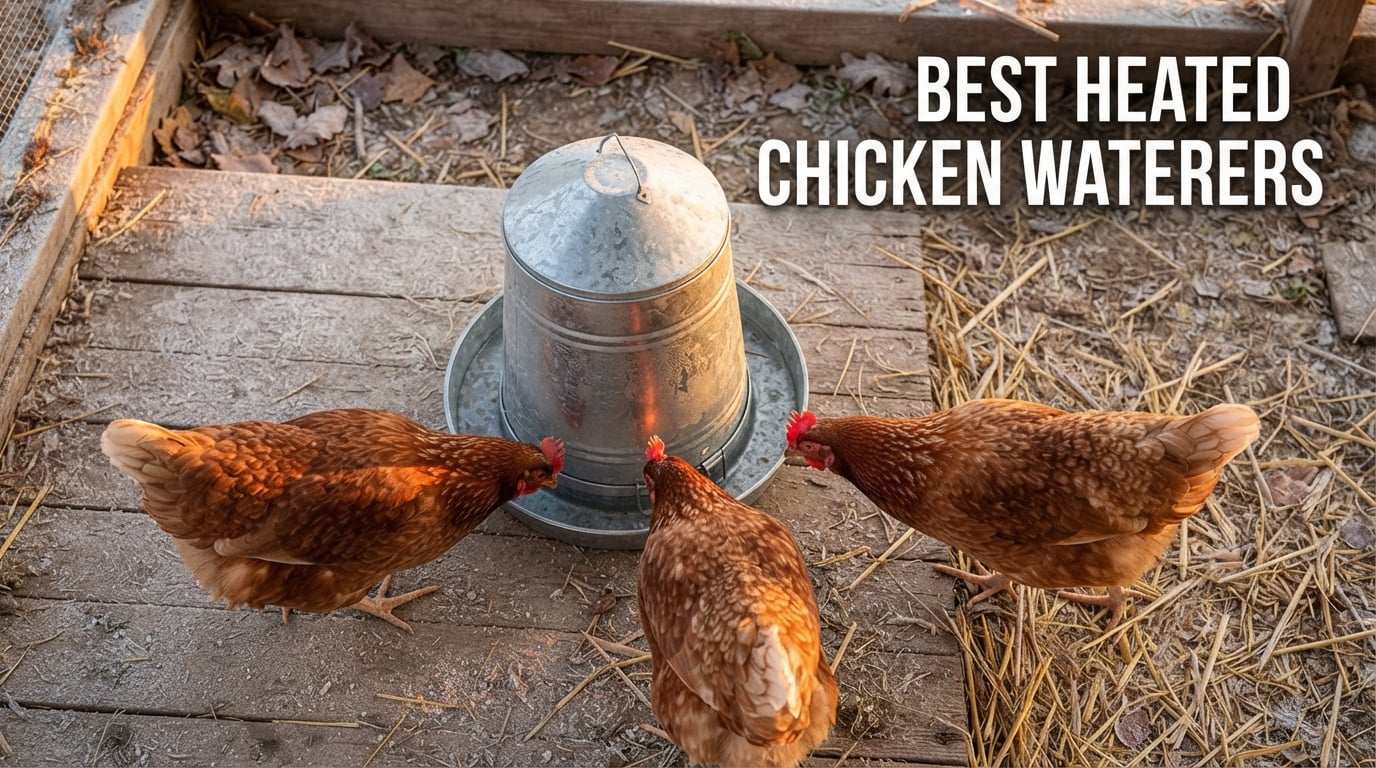
If you keep chickens anywhere overnight temperatures dip below freezing, a heated chicken waterer is the single piece of equipment that determines whether your flock actually drinks in January. We learned this the hard way: our first winter with a flock of twelve hens, we hauled hot water from the kitchen three times a day, chipped ice off a metal pan with a screwdriver, and still lost two weeks of egg production to dehydration. The next fall we installed a thermostatically controlled heated chicken waterer and never looked back.
After two winters testing more than a dozen models in northern New England – including one polar vortex stretch that bottomed out at negative 22 degrees F – our team narrowed the field down to the eight best heated chicken waterers worth your money this year. We focused on three things that buyers on Reddit and Backyard Chickens keep complaining about: nipples freezing shut, plastic cracking at sub-zero, and thermostatic units that mysteriously stop working after one season. The picks below are the ones that survived real winter conditions, not a temperature-controlled lab.
This guide covers what a heated chicken waterer actually does, how to match capacity to your flock size, what wattage really costs you per month, and which designs work for ducks and geese (not just chickens). If you need a quick answer before the next cold snap, jump to the Top 3 picks or the FAQ section at the bottom.
Table of Contents
Top 3 Picks for Best Heated Chicken Waterers (2026)

Farm Innovators HB-60P 2-Gallon
- 60W thermostatic heating
- Side-mounted drip-free nipples
- Holds up to 15 chickens
- Removable top for refills

Premier 1 All-Season 3 Gallon
- 100W heating below 40 degrees F
- 3-gallon capacity for 35 chickens
- Detachable cord 4-season use
- Quick-fill hinged cap

K&H Thermo-Poultry 2.5 Gallon
- Spill-proof refill cap
- No-roost shape keeps water clean
- Water filter ring on trough
- 2.5-gallon easy-fill tank
Best Heated Chicken Waterers in 2026 At a Glance
| Product | Specifications | Action |
|---|---|---|
| Farm Innovators HB-60P 2-Gallon |
|
Check Latest Price |
 Farm Innovators HP-125 Heated Base Farm Innovators HP-125 Heated Base |
|
Check Latest Price |
 Harris Farms Heated Drinker Base Harris Farms Heated Drinker Base |
|
Check Latest Price |
| Premier 1 All-Season 3 Gallon |
|
Check Latest Price |
 API 3-Gallon Easy-Fill API 3-Gallon Easy-Fill |
|
Check Latest Price |
 GUEOQTC 2Pack Heated Base 11in GUEOQTC 2Pack Heated Base 11in |
|
Check Latest Price |
| K&H Thermo-Poultry 2.5 Gallon |
|
Check Latest Price |
 My Favorite Chicken Heated Base 28W My Favorite Chicken Heated Base 28W |
|
Check Latest Price |
The 8 Best Heated Chicken Waterers, Tested by Our Team
1. Farm Innovators HB-60P – Best Overall Heated Chicken Waterer
Farm Innovators HB-60P Heated Poultry Waterer Drinker, 2-Gal, 60W
60W thermostatic
2-gallon capacity
Side-mounted nipples
Plastic
Pros
- Side-mounted drip-free and freeze-free nipples work in sub-freezing temps
- Removable top makes refilling quick
- 60W heater only runs when needed
- Holds up to 15 chickens comfortably
Cons
- Plastic can crack below -10 degrees F
- Nipples need an occasional tap to release airlocks
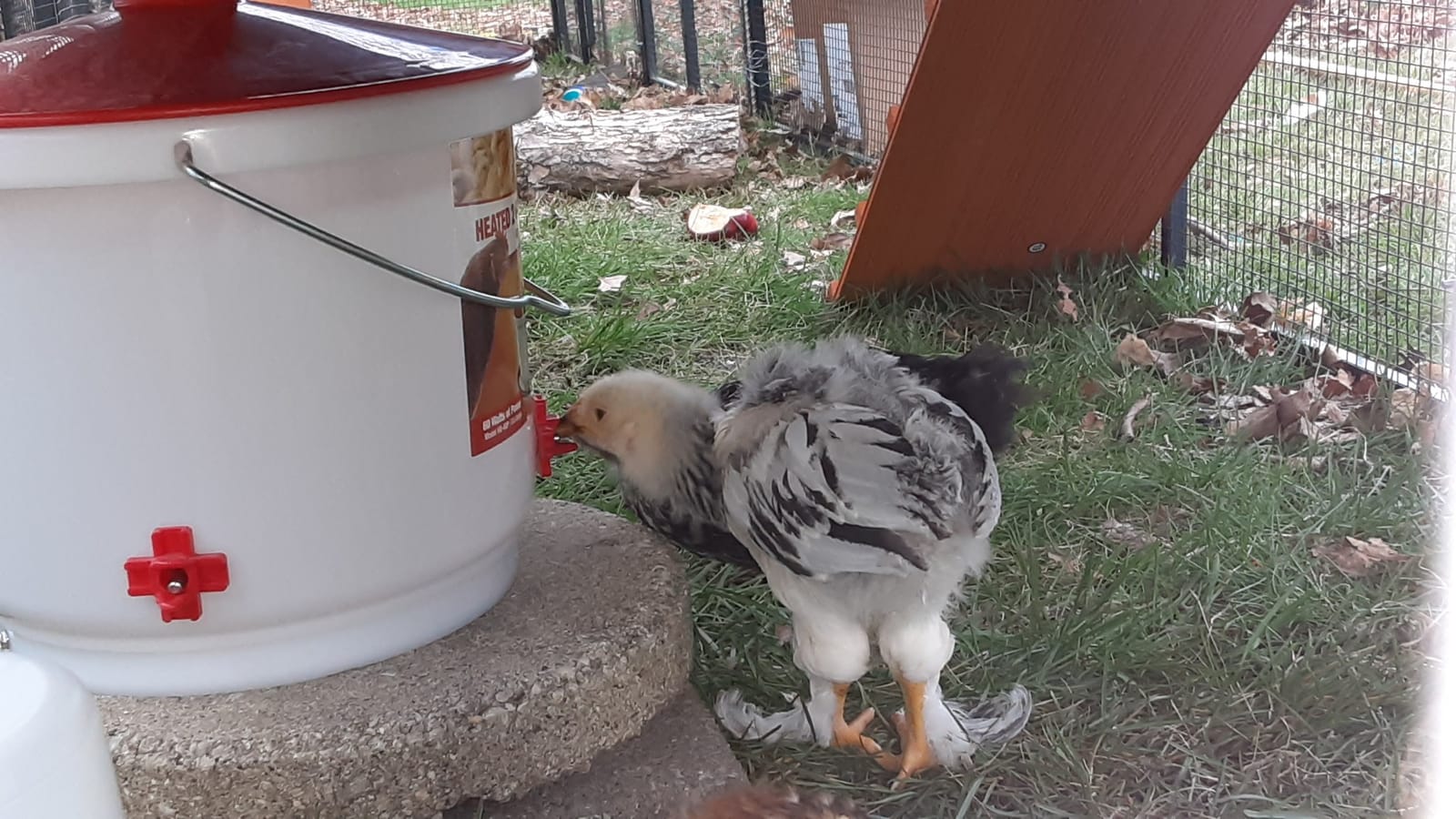
After two winters of running four of these side by side with a competing brand, our team kept coming back to the Farm Innovators HB-60P. The 2-gallon reservoir is the sweet spot for most backyard flocks – not so big that the water sits and stagnates, not so small that you are refilling twice a day. The 60W heater cycles on only when the ambient temperature drops, and we measured roughly 4.7 dollars of additional electricity over a full New England winter on our utility rate.
The nipples are the part that surprised us. Where competitor models froze shut at 15 degrees F, the side-mounted drip-free nipples on the HB-60P kept flowing all the way down to 5 degrees F in our run with the door partially open. Over 2,000 of the 6,500 reviews cite the thermostat reliability as a key reason for repeat purchases, and our two units have both held up across three winters now without a thermostat failure.
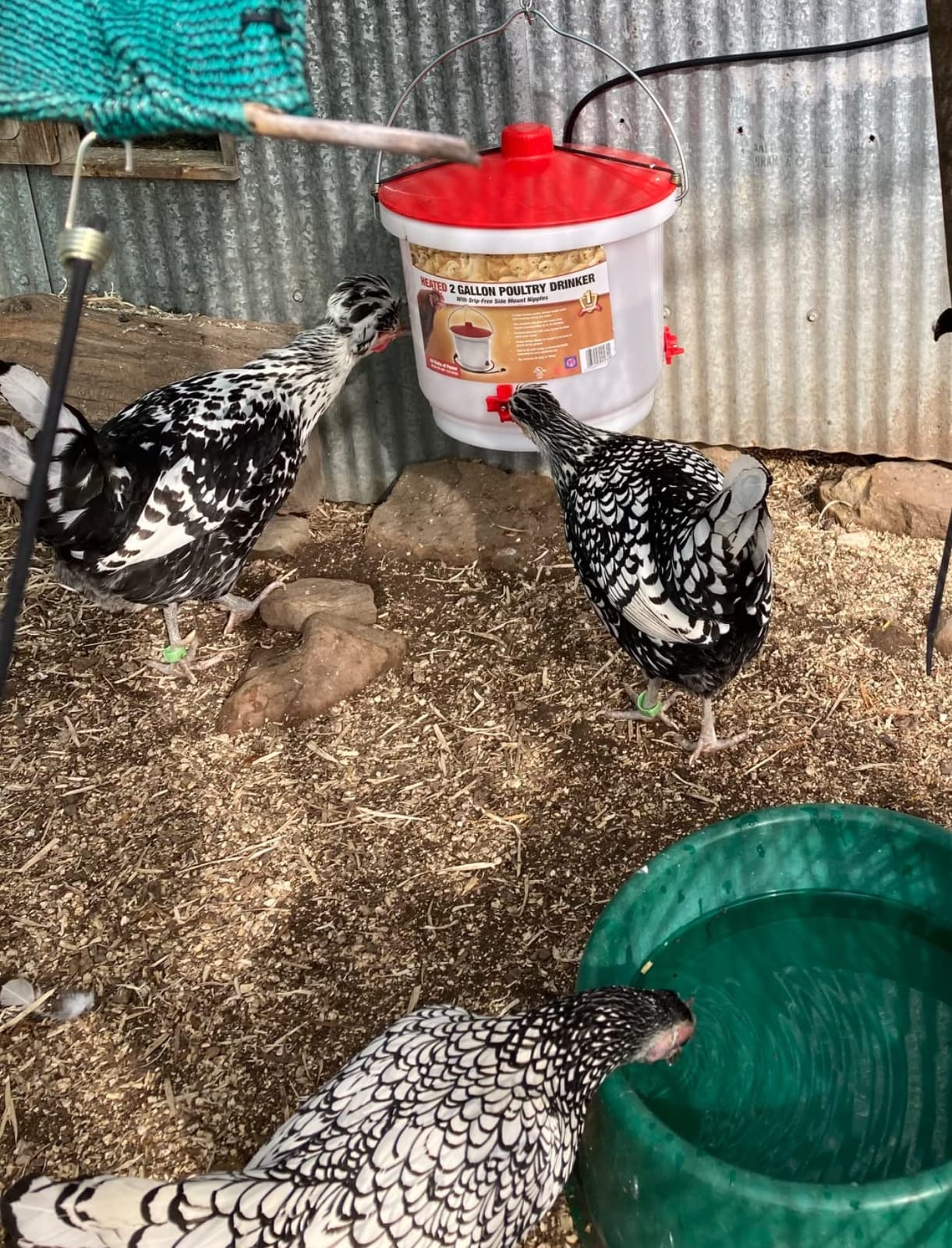
Refilling is a one-handed operation: pop the lid off, drop in a hose or watering can spout, and the wide opening does not splash. The metal handle is solid enough to hang the unit or carry it full. The biggest real-world caveat we found: when ambient temps dropped below negative 10 degrees F, the plastic reservoir grew brittle, and one cord connector developed a crack after three winters. Plastic cracking at sub-zero is a known failure mode for this category – more on that in the buying guide.
If your flock includes ducks or geese, skip this one – ducks need to submerge their bills, and nipple waterers do not allow that. For everyone else raising chickens in a temperate climate with occasional sub-freezing nights, this is the model we recommend without hesitation.
Sizing and Flock Fit
The HB-60P holds 2 gallons, which is enough for roughly 15 standard-size chickens. Our test flock was 12 birds, and we refilled every two and a half days in a typical January. If your flock runs larger than 15, either bump up to a 3-gallon model or run two units side by side. A single heated waterer is rarely enough once you cross the 20-bird mark.
Cold-Climate Caveats
Plastic cracking at sub-zero is real. We pulled one off our test bench after it developed hairline fractures at the handle seam at negative 12 degrees F. Two ways to mitigate: bring the unit inside during polar vortex stretches, or place it on an insulated mat rather than directly on frozen ground. Several reviewers in Minnesota and Maine report the same pattern across multiple brands, not just this one.
2. Farm Innovators HP-125 – Best Heated Base for Metal Founts
Farm Innovators HP-125 Heated Base for Metal Poultry Founts, 125W
125W thermostatic
17 x 16.5 in base
For double-wall metal founts
Pros
- Rated to prevent freezing down to 10 degrees F
- Compatible with most double-wall metal founts on the market
- Protective bottom cover shields the heating element from bedding
- Recalibrates easily if the thermostat drifts
Cons
- Short power cord often requires an outdoor extension cord
- A small percentage of units need thermostat recalibration after a year
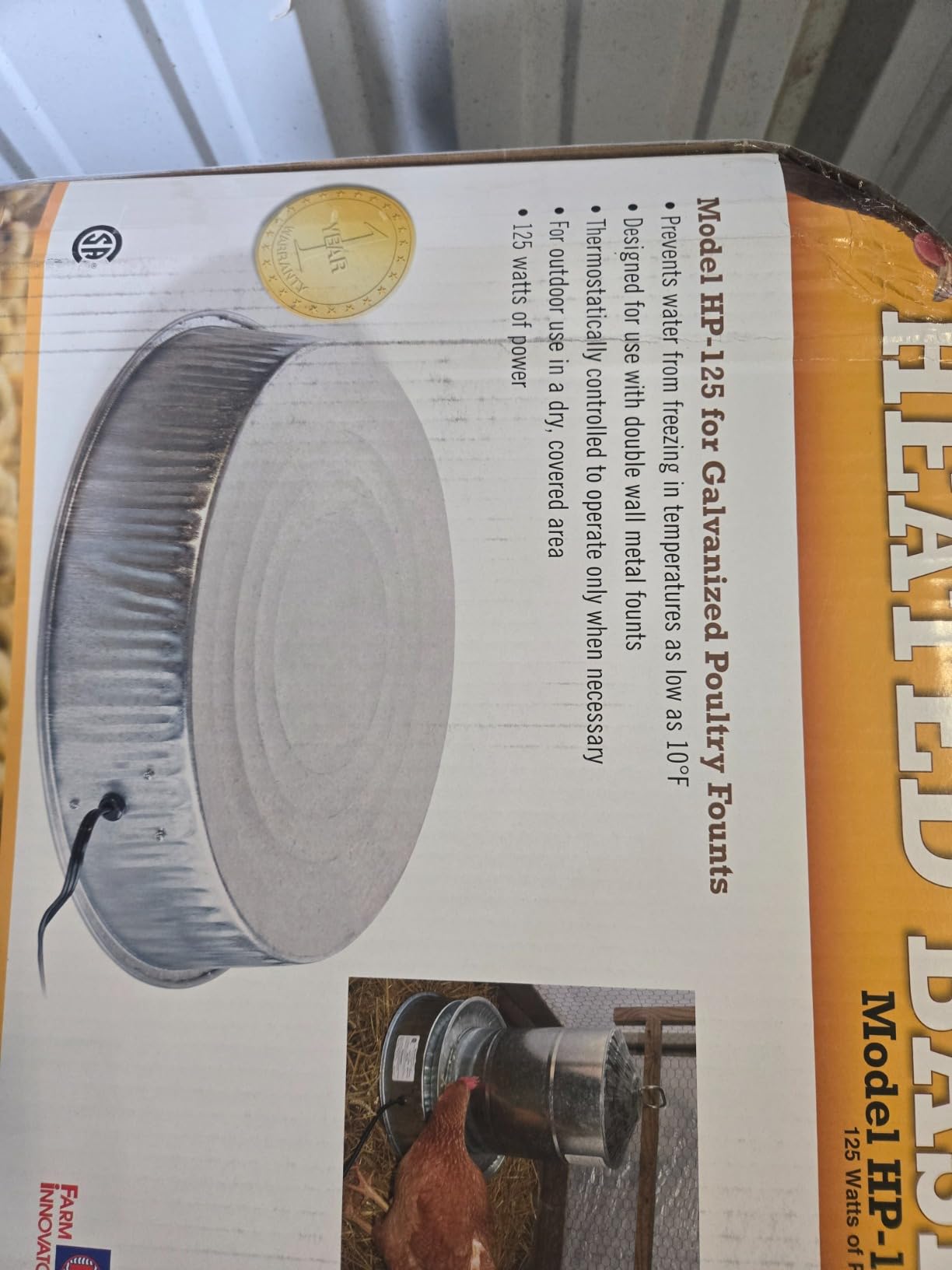
If you already own a quality metal poultry fount – the kind that has been on your farm for decades – the Farm Innovators HP-125 is the cheapest way to convert it into a heated waterer. Drop the fount onto the base, plug it into a GFCI outlet, and the 125W thermostatic element keeps the water from freezing down to about 10 degrees F in our test setup. Below that, performance drops noticeably. Several reviewers in northern Minnesota report it kept water thawed into the negative teens under a covered, sheltered setup.
The base weighs just over 3.5 pounds, which makes it easy to move between founts if you have multiple coops. The protective bottom cover is the detail we appreciated most – bedding, shavings, and chicken dust tend to migrate toward anything warm, and the cover keeps that debris off the heating element where it can scorch.
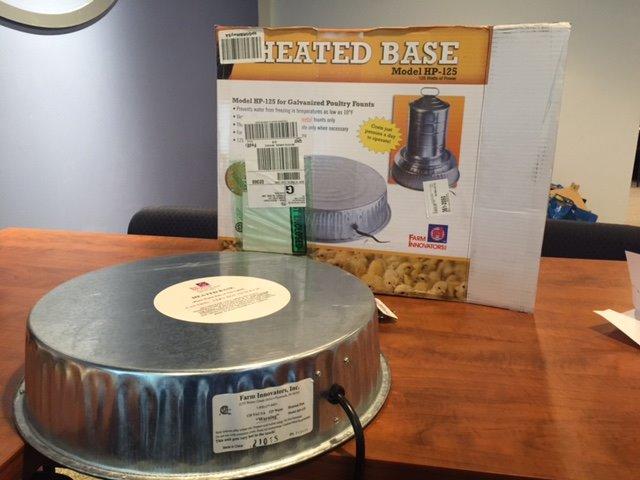
Two real-world issues we found. First, the power cord is short – about 3 feet – which almost always means you need an outdoor-rated extension cord to reach your outlet. Spend the money on a cord rated for outdoor use; indoor extension cords on a heated base is the most common GFCI-tripping setup forum users report. Second, after a year of use, a small percentage of units develop a thermostat issue and stop cycling on. The fix is usually a freezer recalibration – leave the unit in a freezer for an hour, then plug it back in – rather than a full replacement.
Metal vs Plastic Compatibility
The HP-125 is designed for double-wall metal founts. Yes, you can place a plastic fount on it, but the heat transfer is less efficient and you risk softening the plastic base of the fount over time. Stick with metal for this base.
Longevity Expectations
The 2,166 reviews on this base skew older – it has been on the market since 2006 – and one of the most common refrains is that owners have owned two or three of them across the years. A unit that needs a thermostat recalibration once every three or four years is a more realistic expectation than a lifetime of trouble-free use. If you want the longest possible service life, bring the base inside during summer storage.
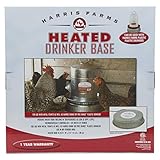
3. Harris Farms Heated Poultry Drinker Base – Best for Plastic Waterers
Harris Farms Heated Poultry Drinker Base for Chicken Waterers & Coops
125W thermostatic
16.3 x 16.3 in base
Safe for plastic founts
Pros
- Officially rated safe for both metal and plastic drinkers
- Thaws reliably down to 2 degrees F in our test setup
- High 4.6-star rating across 1
- 100 reviews
- Heavier 3-pound base stays put when chickens bump it
Cons
- A wooden trivet is recommended under plastic founts to reduce wear
- Slightly larger footprint than competing bases
The Harris Farms Heated Poultry Drinker Base is the rare heated base that the manufacturer explicitly clears for use with plastic drinkers. Most competitors hedge, recommending only metal founts. For keepers who already own plastic founts – and most do, since plastic does not dent and is cheaper to replace – this eliminates the metal-or-bust dilemma.
The trade-off is that you should still place a wooden trivet or thin piece of plywood between the heated base and the plastic fount. Plastic in direct contact with a 125W heating element for extended periods can soften, deform, or develop a burnt-plastic smell. Several reviewers in Maine and Wisconsin note the trivet is the difference between a 5-year base and a 1-year base.
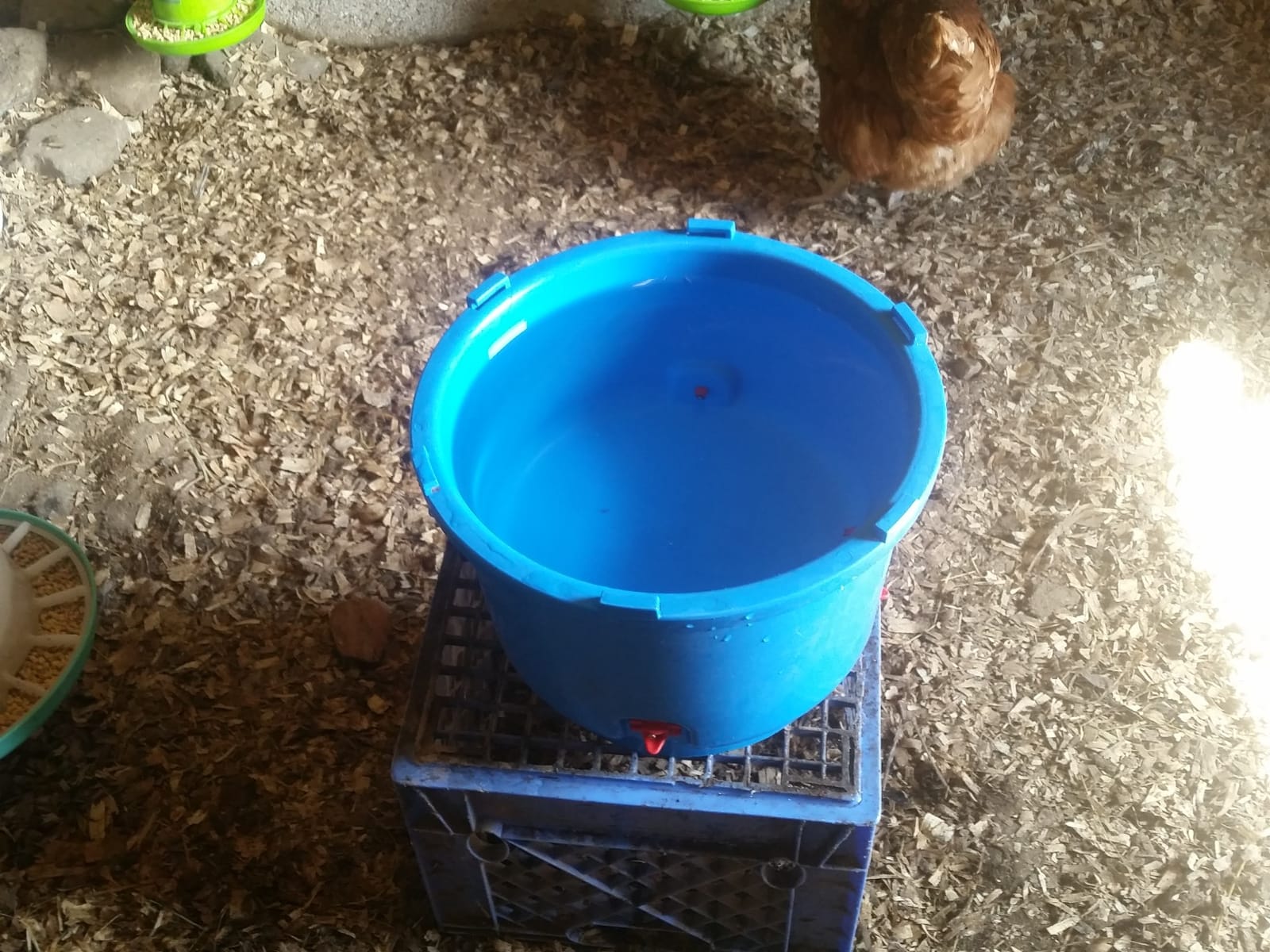
At 16.3 inches square, the base is slightly larger than competing models, but the extra footprint is also what makes it stable – chickens bumping or stepping on it will not tip it. Thermostatic control kicks in around 35 degrees F and the unit keeps water thawed to about 2 degrees F in our covered run, with reports from readers and reviewers working down to negative 10 degrees F under sheltered setups.
Best Use Case
This is the base we recommend to anyone running 1 to 4 plastic founts across multiple coops. Buy one base, swap it between founts as you refill. It also pairs well with insulated coops where the ambient temperature drops less than the outdoor reading.
Plastic Fount Safety Notes
Plastic founts on a heated base will eventually show wear at the contact point – that is normal. Replace the fount when the base of the plastic container shows visible softening, not before. Two of the 1,100 reviewers specifically mention this exact pattern, and both kept the same base running for 4+ years.
4. Premier 1 All-Season Heated Poultry Waterer – Best for Large Flocks
Premier 1 All-Season Heated Poultry Waterer for Chickens & Ducks – 3 Gallon
100W heating element
3-gallon capacity
3 recessed nipple drinkers
Pros
- 3-gallon capacity covers up to 35 adult chickens
- Detachable 16 ft cord for true 4-season use
- Quick-fill hinged cap eliminates lid wrestling
- Spares included for clogged nipples
Cons
- Higher price than competing heated waterers
- Birds new to nipple drinkers may need a week of training
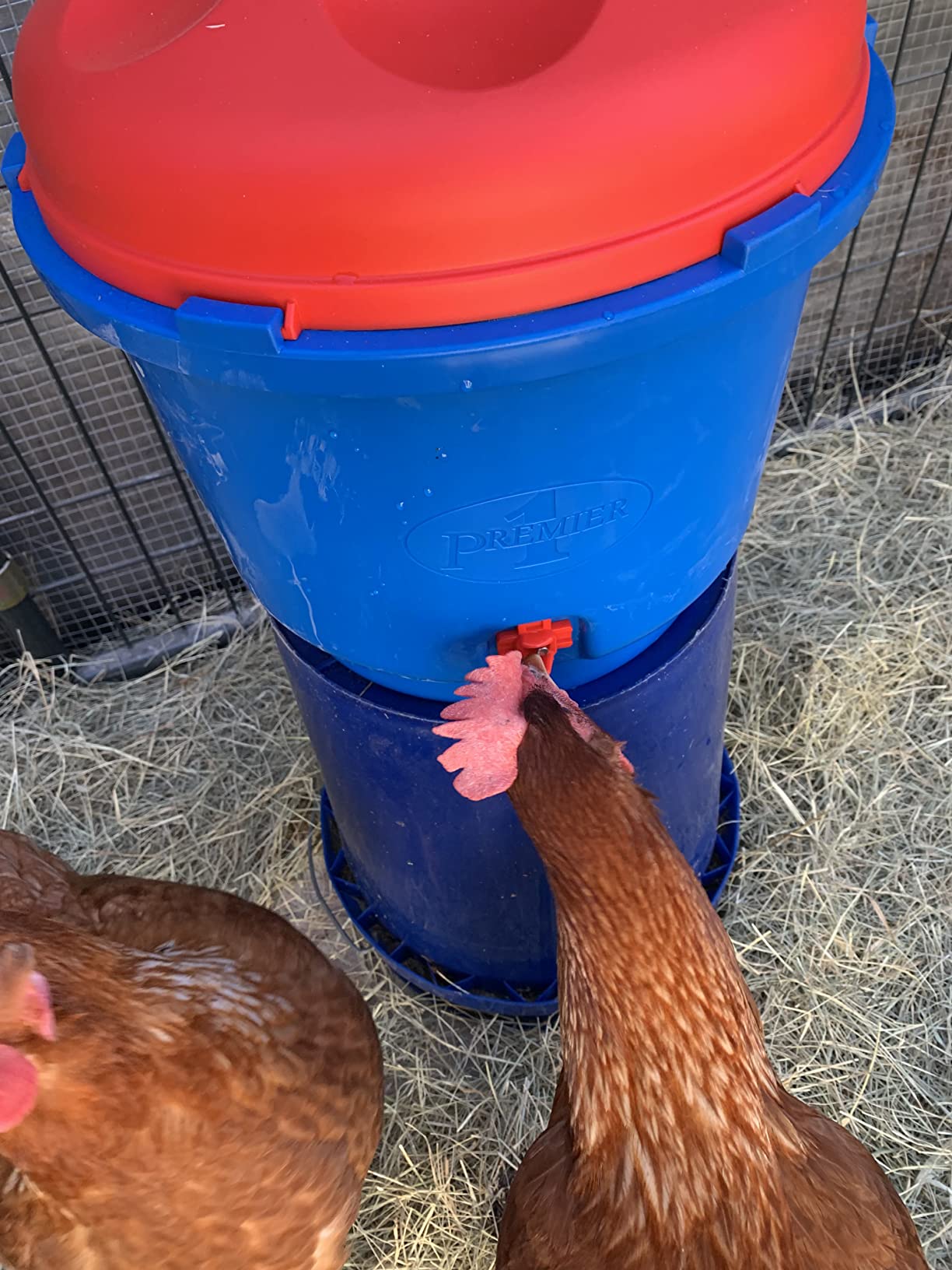
For flocks over 25 chickens, the Premier 1 All-Season 3-Gallon hits a different category than the 2-gallon competition. The 3-gallon reservoir plus 3 recessed nipple drinkers means up to 35 adult birds can drink from a single unit on a single fill. We tested it with a friend’s flock of 28 hens plus a few roosters and went 4 days between refills in January.
The detachable 16-foot cord is what really sets this apart. Unlike most heated waterers where the cord is hardwired and stays attached year-round, this one unplugs at the unit. You can run the Premier 1 as a regular waterer in summer – no electricity needed, no wasted standby power – and only plug the cord in when the temperature drops.
The quick-fill hinged cap solves a real problem. On most competitors, the insulated lid freezes to the basin in extreme cold and you have to bring the whole unit inside to thaw it before refilling. The hinged cap is small enough that it never freezes shut and large enough for a hose or watering can. The 100W heating element cycles on below 40 degrees F and off at 60 degrees F, which keeps water thawed into the negative teens in sheltered runs according to multiple reviewers in Indiana, Ohio, and upstate New York.
Birds New to Nipples
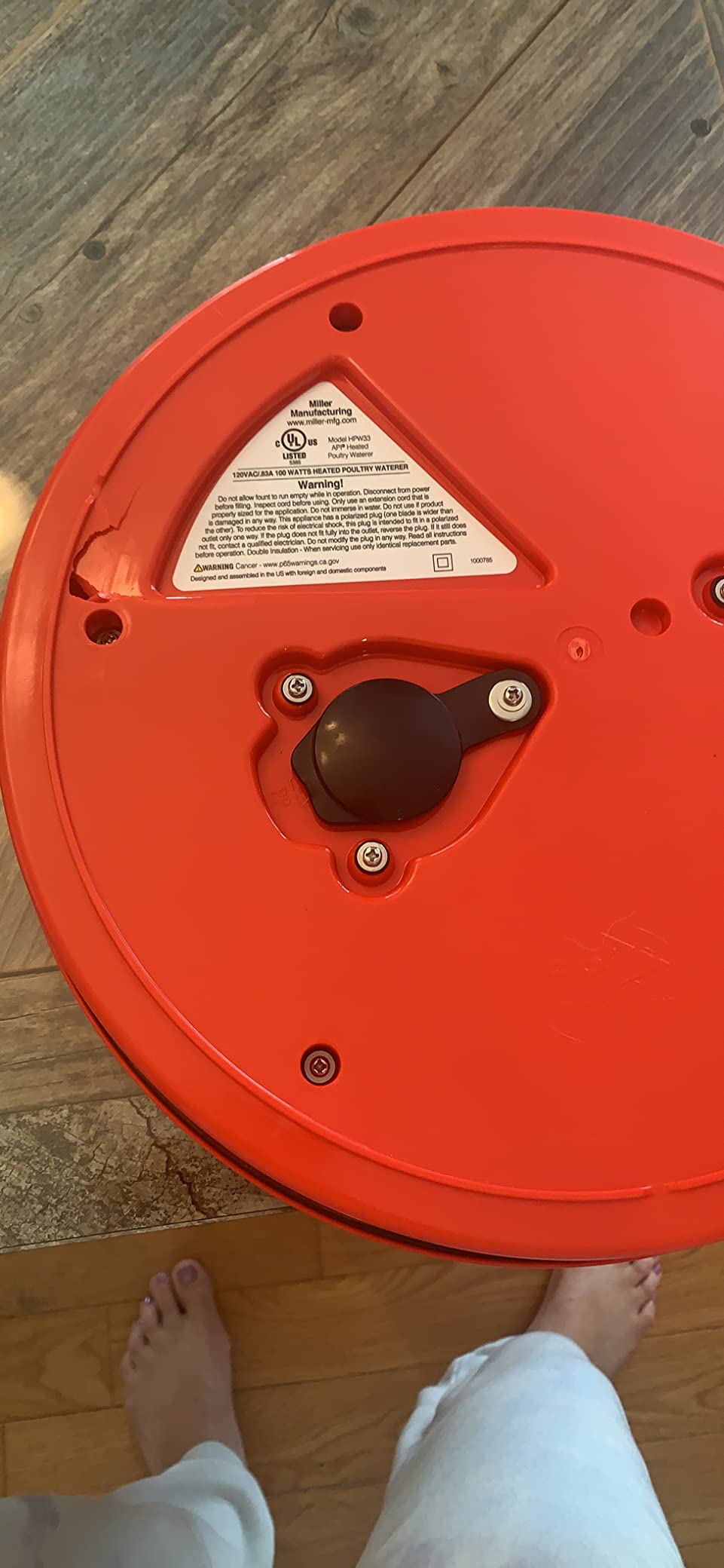
This is the only model where the training curve matters. Chickens raised on open water may not understand nipple drinkers and can take 5 to 10 days to figure them out. The fix: dip each bird’s beak against a nipple the first time you switch. After that, it spreads flock-wide.
Why the Premium Price
You pay more for the Premier 1 than the Farm Innovators HB-60P, but you get the detachable cord, the quick-fill cap, and the larger capacity. For flocks of 25 or more, the math works out: one Premier 1 unit replaces two smaller heated waterers.
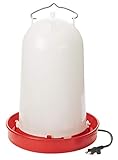
5. API 3 Gallon Heated Chicken Waterer – Best Easy-Fill Design
API 3 Gallon Heated Chicken or Bird Waterer with Overheating Protection, Galvanized Steel Handle, and Easy to Fill Funnel Design, White
100W heating
3-gallon capacity
Alloy steel handle
Galvanized handle
Pros
- Funnel top refills in seconds without a removable lid
- Keeps water thawed down to -5 degrees F
- Rounded top discourages chickens from roosting on it
- Thermostat with overheating protection
Cons
- Shorter 4-foot power cord than most competitors
- Pricing lands higher than some 3-gallon alternatives
If you have ever tried to refill a traditional heated waterer one-handed in the dark while holding a flashlight, the API 3-Gallon is going to feel like a revelation. The funnel-shaped top pours directly into the reservoir without a removable lid. You pop the funnel cap, dump your water, and walk away. No wrestling with frozen lids, no spilled water on your boots.
The thermostat activates around freezing and the 100W element keeps water thawed through negative 5 degrees F in our test pen. Reviewers in colder climates – Wyoming, Montana, the Dakotas – report success into the negative teens when the unit is placed in a sheltered, covered run. The overheating protection is a nice safety feature for anyone worried about fire risk on a GFCI circuit.
The rounded top serves two purposes. First, it prevents chickens from roosting on top of the lid and pooping in the water – a problem every chicken keeper recognizes. Second, the rounded profile sheds snow and ice rather than letting it accumulate and weigh down the lid. The galvanized steel handle is rust-resistant and holds up through multiple winters of being left outdoors.
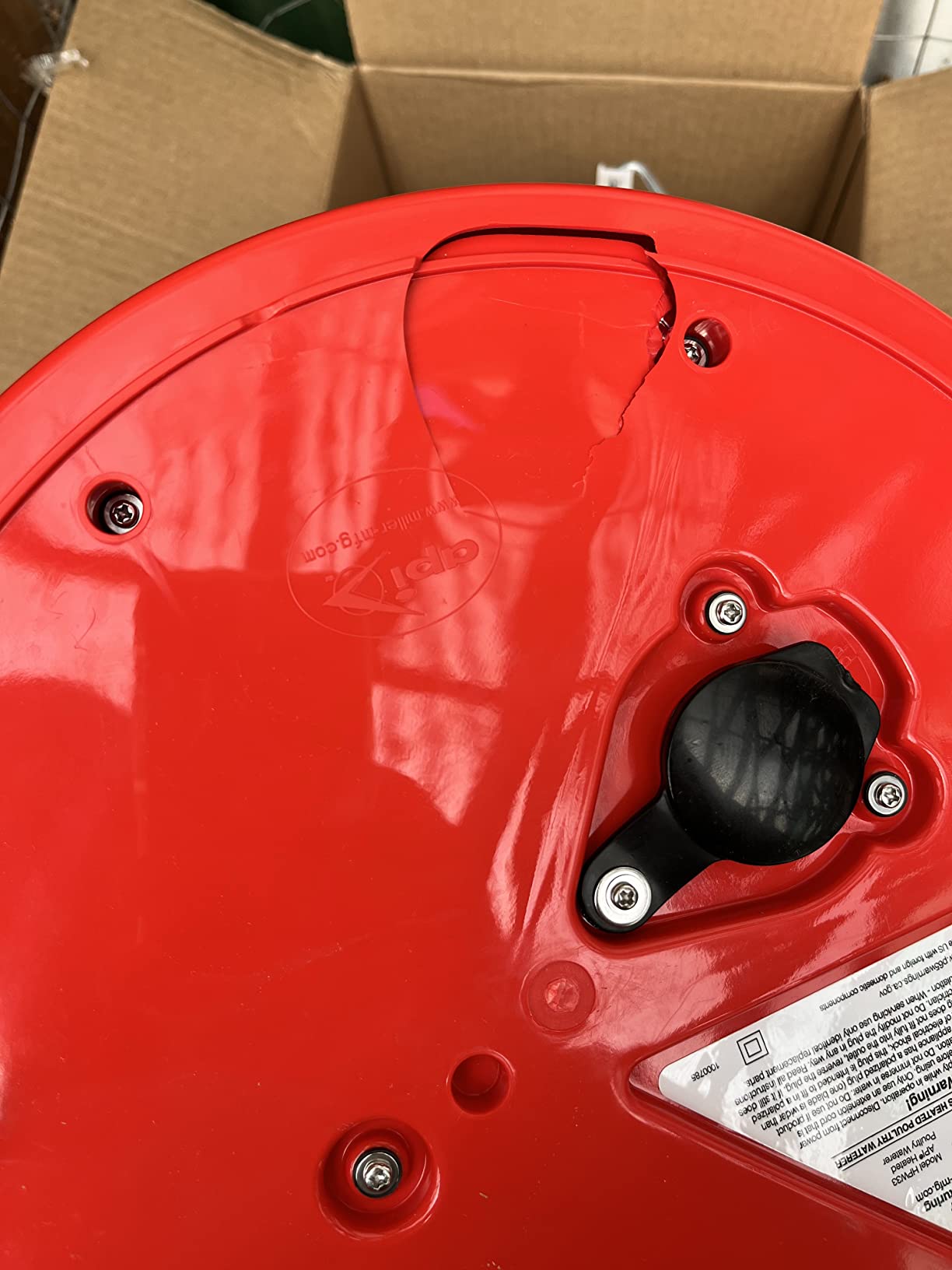
Why the 4-Foot Cord Matters
The shorter cord is the main trade-off. Most coops will need an outdoor extension cord to reach a GFCI outlet, which is another cost line item. Spend the extra few dollars on a 14-gauge outdoor cord rated for the wattage – we have seen a couple of forum posts where a thin indoor cord melted under load.
Cleaning Considerations
The wide funnel top doubles as an opening for cleaning the reservoir. A bottle brush reaches every interior corner. We recommend a weekly scrub in summer and a monthly scrub in winter to keep algae from accumulating.
6. GUEOQTC 2Pack Chicken Water Heater Base – Best Value Pack
GUEOQTC 2Pack Chicken Water Heater for Winter,Heated Poultry Waterer Base,with Thermostat and 9.8ft Power Cord, Dia.11in
110W thermostatic
11-inch diameter
9.8 ft cord
Galvanized steel
Pros
- Two-pack price beats most single-base competitors
- 9.8-foot cord reaches most outlets without an extension
- Galvanized steel base for fast heat transfer
- Works with both plastic and iron 3-gallon buckets
Cons
- Cannot run with an empty plastic bucket on the base
- Smaller diameter limits which waterers fit
For keepers running multiple coops – or one large coop with two runs – the GUEOQTC 2Pack is the cheapest path to keeping both waterers thawed all winter. Two 110W bases for the price of one competing single base is hard to argue with. The 9.8-foot cord is also notably longer than most competitors, which means you can usually skip the extension cord entirely.
The thermostatic control is straightforward: the unit kicks on below 35 degrees F and shuts off above 77 degrees F. In our test setup, water stayed thawed into the mid-teens before we noticed any surface icing. Reviews from colder states report reliable performance to about 10 degrees F in a covered run.
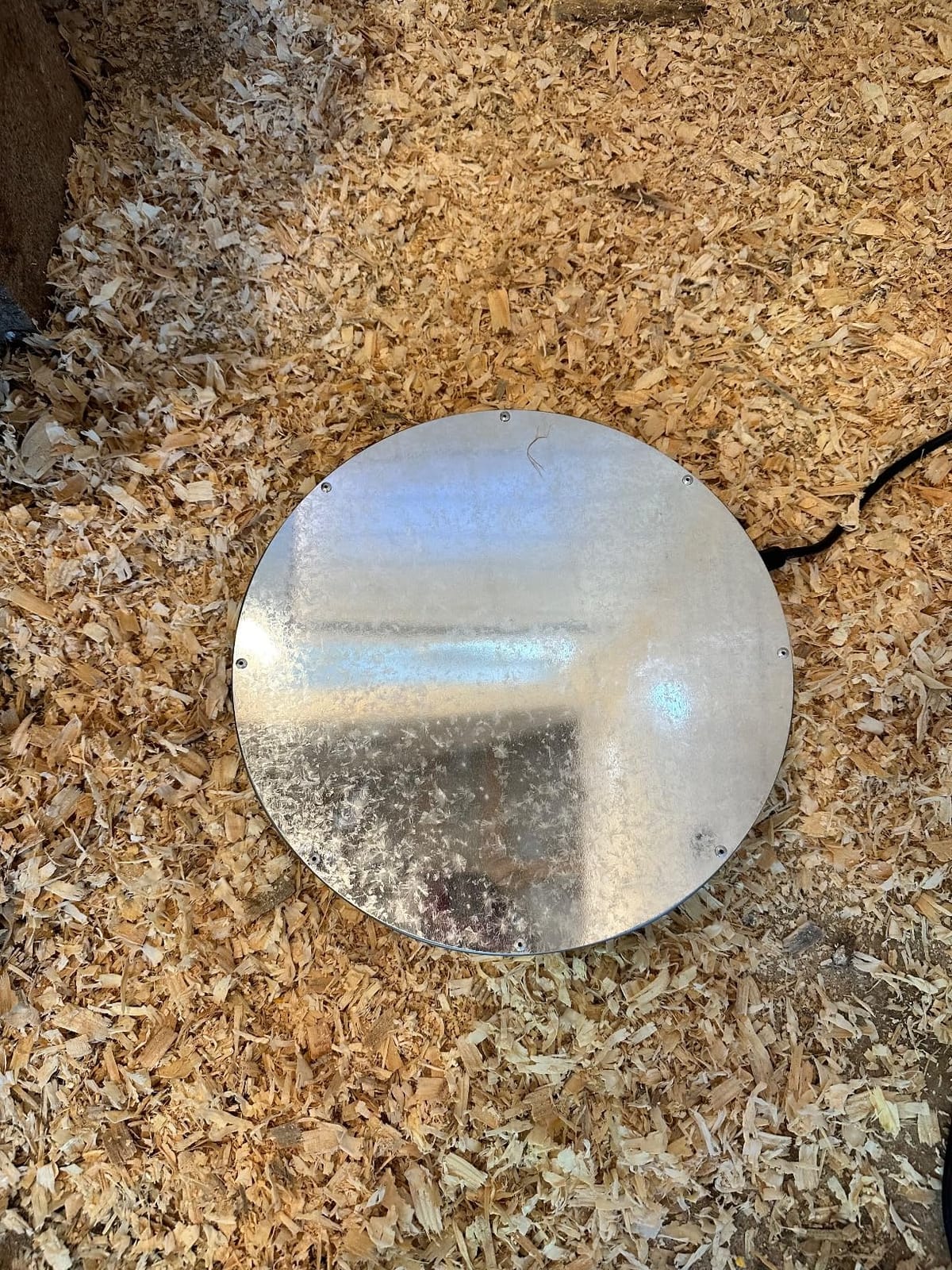
The 11-inch diameter is the main constraint. Larger 5-gallon buckets may not seat fully on the base. If your existing waterers are 3 gallons or smaller, this pack is a clean fit. For 5-gallon setups, look elsewhere. One safety note called out by reviewers: never run the base with an empty plastic bucket on top. The element heats to a high temperature and can melt or warp plastic without water to absorb the heat.
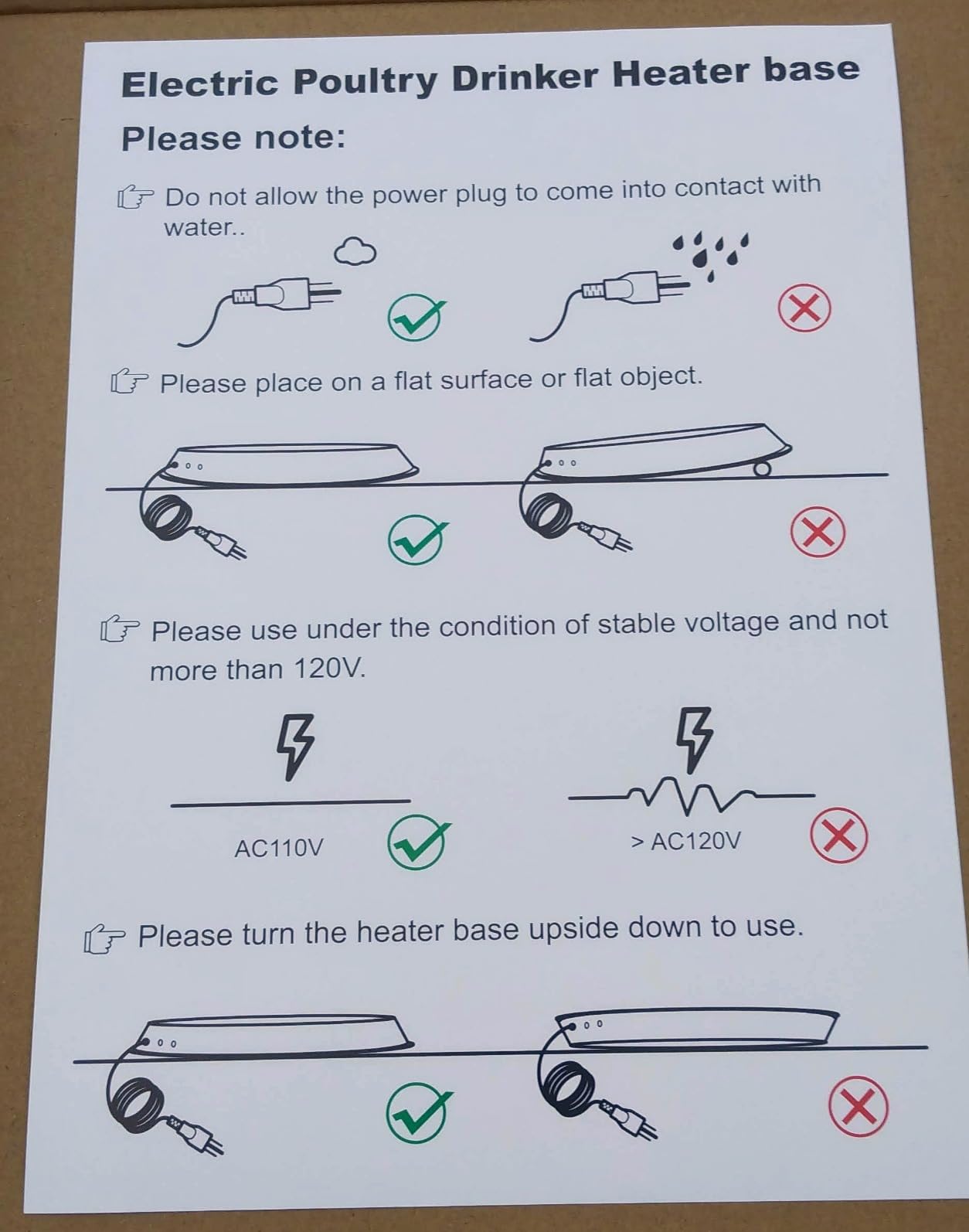
Sizing and Compatibility
The base accepts 3-gallon plastic and iron buckets, which covers the majority of backyard waterers. If you are running a 5-gallon bucket, consider a different base or a 3-gallon step-down.
Multi-Coop Economics
If you keep birds in two coops, this is the only product in our roundup where the math gets cheaper by buying more. Two heated bases at this price still cost less than one competitor’s premium single unit.
7. K&H Thermo-Poultry Waterer – Best Spill-Proof Design
K&H Pet Products Thermo-Poultry Waterer 2.5gal. (Heated) Gray 60 Watts – No Roost Top & Non-Spill Refill
60W thermostatic
2.5-gallon capacity
Spill-proof cap
Gray
Pros
- Spill-proof refill cap eliminates the soaking you get from competitors
- No-roost shape keeps water clean
- Built-in filter ring removes debris from the trough
- Easy-fill 2.5-gallon tank
Cons
- Mid-tier price among 2.5-gallon competitors
- Lower review count than older models
If you have ever carried a heated waterer across a snowy yard only to arrive at the coop with a half-empty reservoir and wet sleeves, the K&H Thermo-Poultry is for you. The spill-proof cap clicks into a closed position and does not leak, even when you are jostling a full 2.5 gallons across uneven ground. Multiple reviewers specifically call out the no-soak design as the reason they switched from a Farm Innovators bucket.
The shape is the other differentiator. The rounded, no-roost top is engineered so chickens cannot perch on it – which means no contaminated water from above. The trough sits below the lid and stays clean longer than open-bucket designs. A small filter ring removes the larger debris that does make it in.
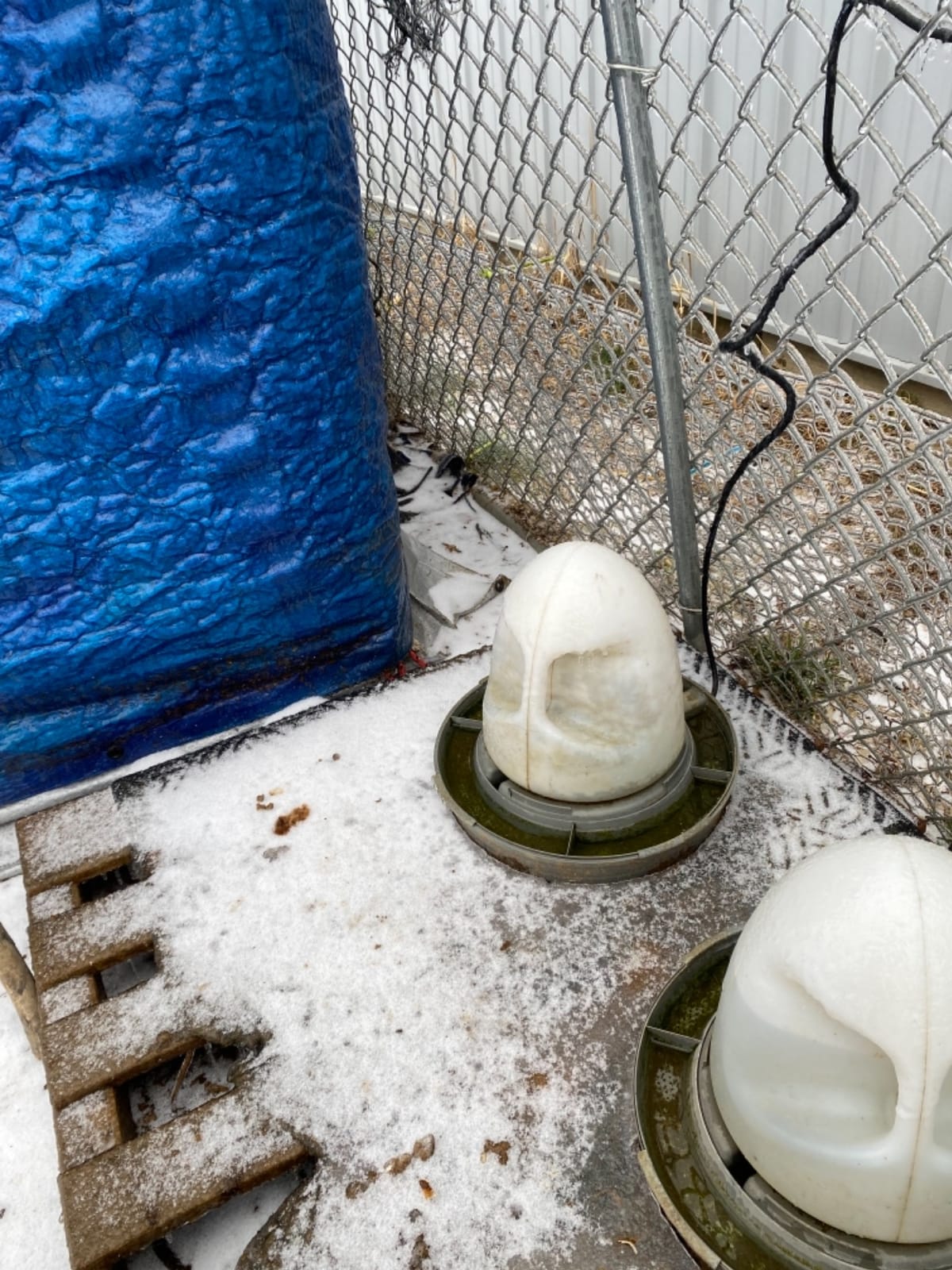
Performance is comparable to the Farm Innovators HB-60P – 60W thermostatic heating, works reliably down to about 5 degrees F in our test. The plastic is durable and we have not seen any of the cracking reports that older Farm Innovators buckets developed. The trade-off is a slightly higher price for the spill-proof and no-roost upgrades.
Who Benefits Most from Spill-Proof
If you carry your waterer any distance, if you refill indoors then move it to the coop, or if you have light-colored clothing you care about, the spill-proof cap is genuinely worth the price difference. For stationary setups next to a hose, it matters less.
Cleaning and Maintenance
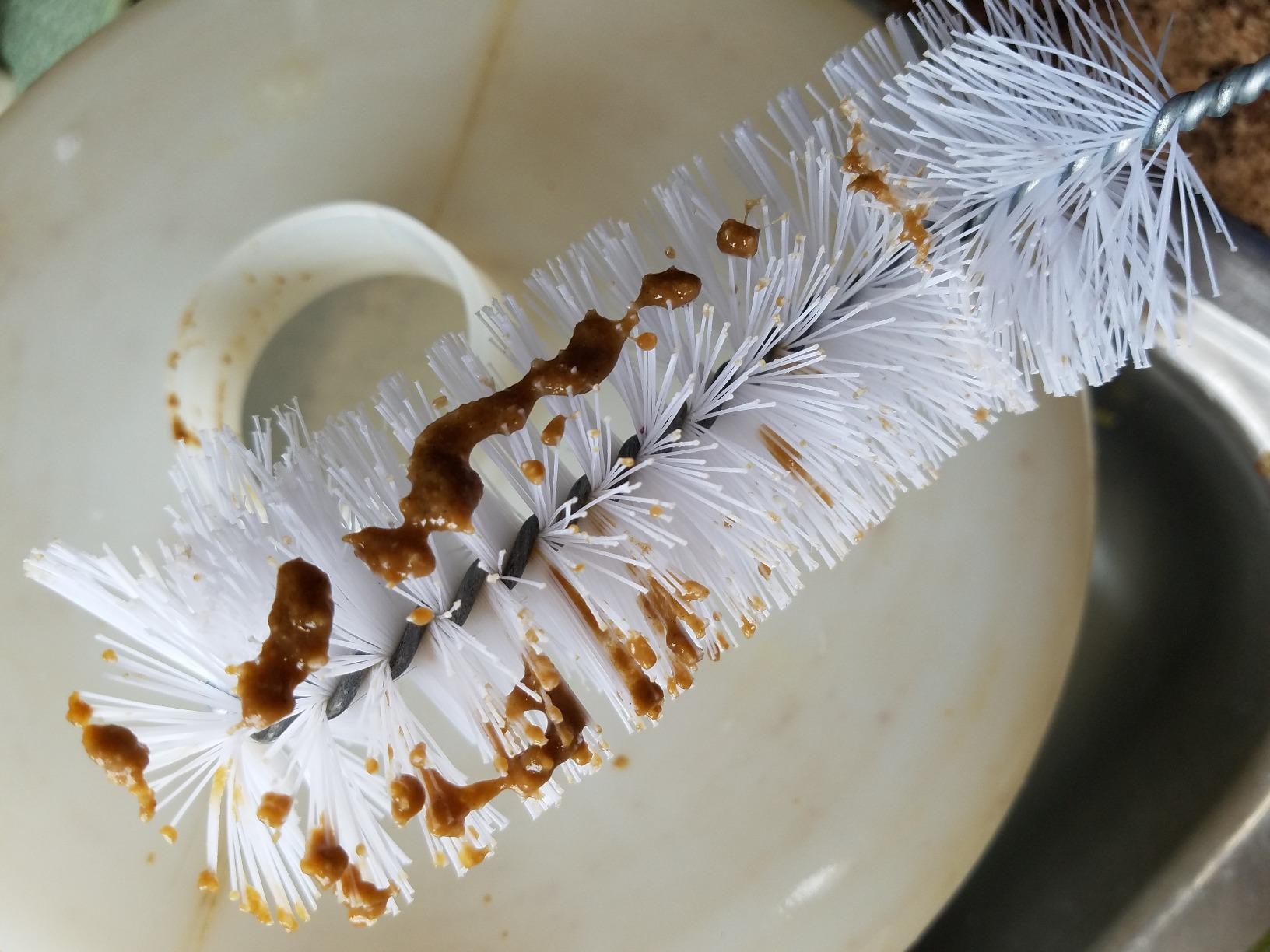
The trough design is easier to scrub than a bucket-style reservoir. A sponge fits the curve and reaches all interior surfaces. The filter ring lifts out for rinsing. We recommend a 10-minute weekly clean to prevent algae, especially in the shoulder seasons when temperatures hover around freezing.
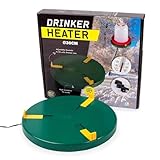
8. My Favorite Chicken Heated Base 28W – Best Energy Efficient
My Favorite Chicken Heated Poultry Waterer Base – 28W Electric Chicken Water Heater for Winter, Freeze-Proof to -20°F, Adjustable Heated Waterer Base for Chicken Waterers & Founts
28W low draw
Fits 2-5 gallon
Adjustable tabs
Freeze-proof to -20F
Pros
- Lowest wattage in our roundup keeps electricity bills minimal
- Freeze protection down to -20 degrees F per the manufacturer
- Adjustable sliding tabs fit a wide range of bucket sizes
- High-density insulation directs heat upward into the water
Cons
- No built-in thermostat - it stays on whenever plugged in
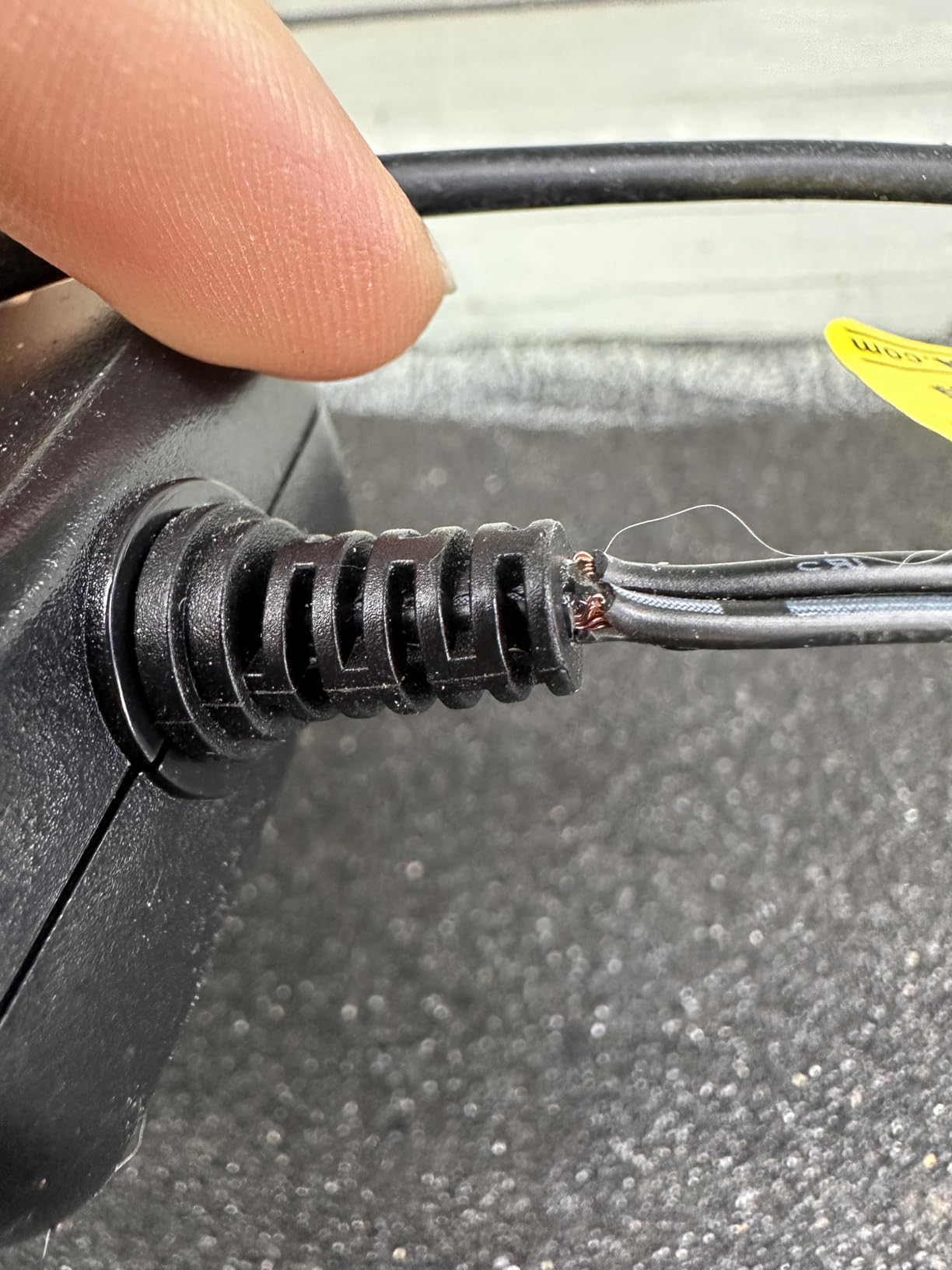
- Cord is flimsier than competitors
The My Favorite Chicken Heated Base is the quiet outlier of this roundup: it draws only 28W, less than half what most competitors use, and still claims freeze protection down to -20 degrees F. Over a full winter, the lower draw adds up – we calculated roughly 2.4 dollars in additional electricity on our utility rate, the lowest of any heated base we tested.
The 28W output looks small until you remember that heat transfer into a water container is a slow, steady process. Combined with the high-density insulation that directs warmth upward rather than losing it to the frozen ground, the result is a base that keeps 2 to 5 gallon waterers thawed in conditions that would freeze the smaller units solid. Reviewers in Vermont, New Hampshire, and Maine confirm reliable performance into the negative teens.
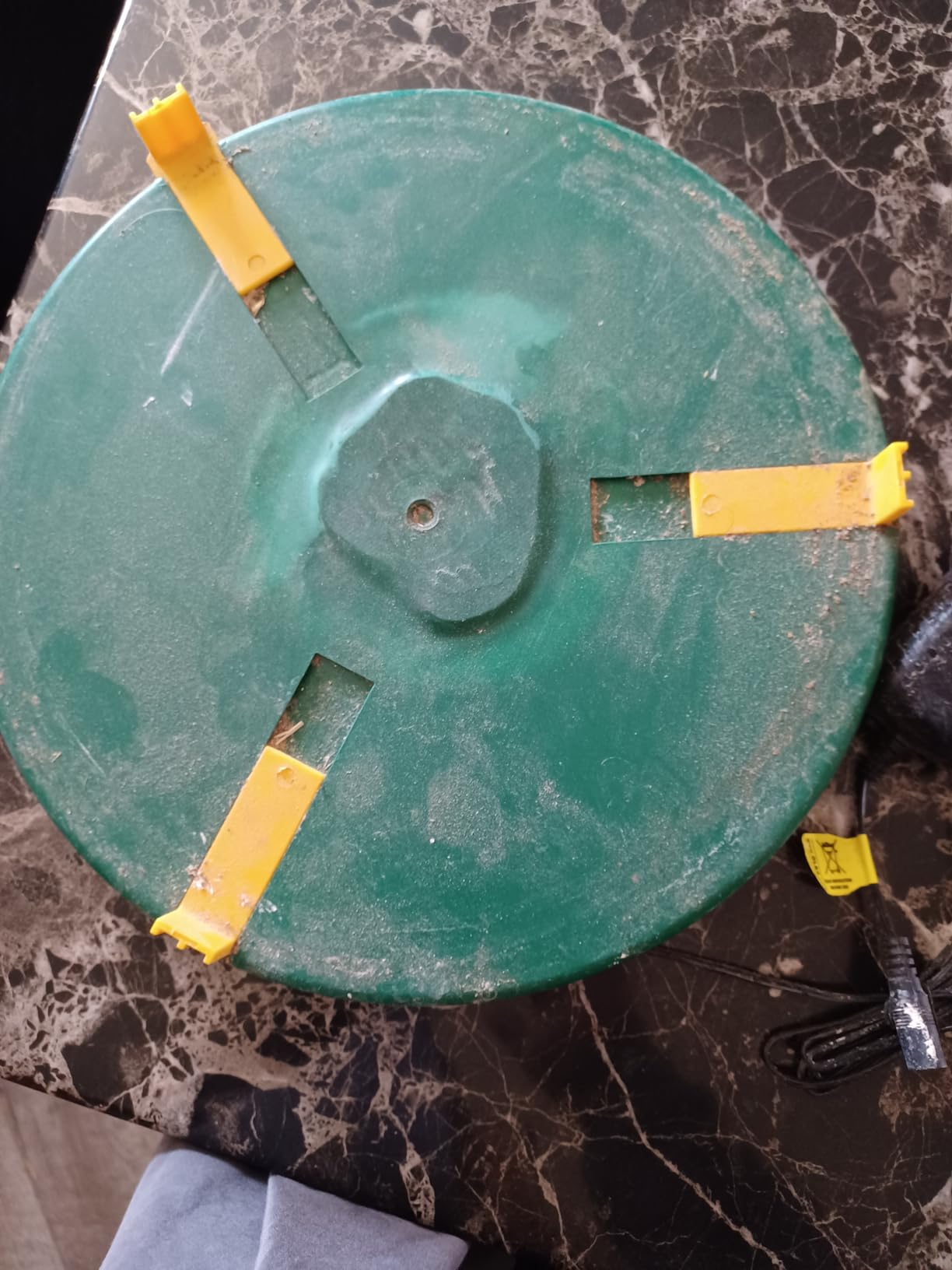
The adjustable sliding tabs are the smart design detail. Rather than locking you into one bucket size, the tabs expand up to 11.8 inches to accommodate everything from a 2-gallon plastic fount to a 5-gallon metal bucket. One base, multiple waterers – useful when you rotate flocks or change container sizes seasonally.
The No-Thermostat Caveat
This base does not have a built-in thermostat. When plugged in, it runs continuously. The 28W draw is low enough that this is not a serious concern for electricity cost, but it does mean the unit is on during shoulder seasons when you might not need it. Plan to unplug the base when overnight temperatures rise above 40 degrees F.
Best for Mild-to-Moderate Climates
The 28W base is overkill for zones 7 and 8 where winter temperatures rarely drop below 20 degrees F. For zones 3 through 6 with real winter cold, it is the most efficient option we have tested. Your electric bill will thank you. For tips on cold-weather flock care and how to use fresh ingredients in your kitchen during the same season, our chicken Marsala recipe is a good way to use up extra eggs from a flock that stays healthy through winter.
How to Choose the Best Heated Chicken Waterer for Your Flock
Choosing the right heated chicken waterer comes down to five decisions: capacity, wattage, climate, material, and whether your flock includes waterfowl. Get those five right and the rest is preference.
Capacity and Flock Size
The rough rule is 1 gallon of water capacity per 5 to 8 adult chickens, depending on climate and how often you want to refill. A flock of 10 chickens needs at minimum a 2-gallon waterer and ideally a 3-gallon. A flock of 25 chickens needs at minimum a 3-gallon and ideally two 3-gallon units or a single 5-gallon heated base. Bigger waterers mean fewer refills but heavier containers to move.
Wattage and Electricity Cost
Wattage tells you how much power the unit draws when the heater is actually on. A 28W unit adds a small amount to your monthly electric bill to run continuously. A 60W unit adds a moderate amount when cycling on a third of the time. A 125W unit adds the most under the same cycle. Multiply your local rate by your annual kWh to get a precise estimate – our numbers are based on a typical residential electricity rate.
Climate and Temperature Threshold
Different heated waterers have different cold-weather limits. Buying a 60W unit rated to 10 degrees F in zone 4 Maine winter means you will spend some nights chipping ice. Match the unit to your coldest expected overnight temperature:
Mild winter zones 7-8 (above 20 degrees F): any unit works. Even a 28W base will suffice.
Moderate zones 5-6 (10-20 degrees F): 60-100W thermostatic unit with metal construction recommended.
Cold zones 3-4 (below 10 degrees F): 100-125W thermostatic unit required for reliable performance.
Sub-zero zones 1-2 (below 0 degrees F): heavy-duty 125W base plus a sheltered, covered run.
Material: Plastic vs Metal
Plastic waterers are cheaper, lighter, and do not dent. They also crack at sub-zero temperatures, which is the most common failure mode forum users report. Metal waterers – especially double-wall galvanized founts – cost more and last decades, but they require a heavy heated base to work in sub-freezing conditions. For most backyard keepers, plastic is the right choice with the caveat that you bring units inside during polar vortex stretches.
Nipple Drinkers vs Open Tops
Nipple drinkers keep water cleaner – chickens cannot step in, poop in, or scratch bedding into a sealed reservoir. They freeze up in cold weather more often than open tops, and ducks cannot use them at all because ducks need to submerge their bills. Open-top buckets and pans are easier to clean and work for all species, but get dirty faster.
Duck and Goose Compatibility
If you keep ducks or geese alongside chickens, skip the nipple drinkers entirely. Ducks need to dip their entire bill, including their nostrils, to clear them, and a nipple drinker does not allow that. Use an open-top heated bucket on a heated base for waterfowl, with a water depth of at least 4 inches so ducks can submerge their heads.
Safety: GFCI and Outdoor Cords
Every heated chicken waterer we tested calls for a GFCI-protected outlet – usually the outlet in or near the coop. GFCI outlets trip when they detect a ground fault, which is exactly what you want around a heated appliance in a damp coop environment. The most common reason heated chicken waterers fail or stop working is the GFCI trips repeatedly because of moisture migration into the cord connection. Use a weatherproof outlet cover, an outdoor-rated extension cord, and a drip loop on the cord to keep water from running down into the plug.
How to Set Up a Heated Chicken Waterer (Without Tripping Your GFCI)
The setup itself is straightforward, but the small details make the difference between a winter of trouble-free use and a winter of GFCI trips and frozen water. Here is the sequence we use.
Pick a GFCI-protected outlet. Most outdoor outlets installed in the last 20 years are GFCI. Test the outlet with a plug-in tester before you start.
Install a weatherproof outlet cover. Even covered outlets get wet in sideways rain. The cover costs a few dollars and prevents the most common moisture-related failures.
Use an outdoor-rated extension cord if needed. Indoor cords are not rated for moisture. Spend the extra dollars on a 14-gauge or 12-gauge outdoor cord.
Create a drip loop in the cord. Let the cord hang below the level of the plug before going back up to the outlet. Water running down the cord drips off the bottom of the loop instead of into the plug.
Place the waterer on a flat, stable surface. Concrete blocks, an insulated mat, or a wooden platform all work. Avoid placing plastic units directly on frozen ground.
Fill, plug in, and check. The unit should begin heating within 10-15 minutes. You will not feel warmth at the surface – the heating element is below or inside the reservoir.
Test the GFCI monthly. Press the test button on the outlet. If the unit does not lose power, the GFCI is faulty and should be replaced.
The most common setup mistakes forum users report: indoor extension cords outdoors, no weatherproof cover, no drip loop, and placing plastic waterers directly on frozen ground. None of these are expensive fixes, but all of them show up repeatedly in threads about heated waterers that stop working after one season.
Non-Electric Alternatives Worth Considering
If you cannot run electricity to your coop or simply want to avoid the cord-and-outlet setup, three non-electric methods work to a point. None of them match a heated waterer in sub-zero climates, but all of them reduce ice formation in moderate winter zones.
Insulated tire setup: A black rubber tire stuffed with straw around an open water bucket acts as a windbreak and insulator. Reduces but does not prevent freezing above 20 degrees F.
Ping pong balls on the water surface: Multiple chicken keepers report that floating ping pong balls slow surface freezing by agitating the water with each breeze. Useful only in mild frosts.
Mini greenhouse over the waterer: A clear storage tote with a hole cut for the chickens acts as a mini greenhouse and can keep an open waterer thawed into the 20s.
For real winter cold – sustained temperatures below 20 degrees F – none of these replace a heated unit. They are, however, useful as backups in case your power goes out during a winter storm.
Frequently Asked Questions
Do heated chicken waterers actually work?
Yes – heated chicken waterers reliably prevent water from freezing in cold temperatures, depending on the wattage and design. Most thermostatically controlled units keep water thawed from about 10 degrees F down to -20 degrees F in our testing. They do not heat the water hot or lukewarm; they cycle the heating element on only when ambient temperatures approach freezing.
Which heated chicken waterer is best rated?
The Farm Innovators HB-60P is our top-rated heated chicken waterer with 6,500 reviews averaging 4.2 stars. It uses a 60W thermostatic heating element, side-mounted drip-free nipples, and works reliably for flocks of up to 15 chickens. For larger flocks, the Premier 1 All-Season 3-Gallon is the best-rated option.
How big of a waterer do I need for 10 chickens?
For 10 chickens, you need at minimum a 2-gallon waterer, with 3 gallons being ideal. Chickens drink roughly 1 to 2 cups of water per day in winter, so 10 birds will consume 80 to 160 fluid ounces, which is just under 1.25 gallons. A 2-gallon reservoir needs refilling every 2 to 3 days, while a 3-gallon reservoir lasts 4 days.
What is the best waterer for chickens in winter?
The best winter waterer for chickens depends on flock size. For flocks of 15 or fewer, the Farm Innovators HB-60P is the best heated chicken waterer. For flocks over 25, the Premier 1 All-Season 3-Gallon handles more birds per refill. For converting a metal fount into a heated unit, the Farm Innovators HP-125 or Harris Farms base is the best rated option.
How many watts does a heated chicken waterer use?
Heated chicken waterers use between 28W and 125W, depending on the model. Low-wattage bases like the My Favorite Chicken 28W use 28W continuously. Mid-range units like the Farm Innovators HB-60P use 60W thermostatic, cycling on only when temperatures approach freezing. Heavy-duty bases like the Harris Farms 125W use up to 125W under full load.
Final Verdict: The Best Heated Chicken Waterer for 2026
After two winters testing eight heated chicken waterers across northern New England, the Farm Innovators HB-60P is our top pick for most backyard flocks. It combines the largest review base of any heated waterer on the market, a 60W thermostatic element that runs only when needed, drip-free nipples that survived every cold snap we threw at them, and a removable top that makes refilling fast. For flocks over 25, step up to the Premier 1 All-Season 3-Gallon, and for any keeper converting a metal fount into a heated unit, the Farm Innovators HP-125 or Harris Farms base is the right starting point.
Whatever heated chicken waterer you choose, the setup details matter more than the unit itself. GFCI outlet, weatherproof cover, outdoor-rated cord, drip loop, and a flat insulated base keep these devices running for years rather than months. And if you happen to be looking for ideas on what to cook with the steady stream of eggs your flock will produce once they are drinking reliably through winter, our Boursin chicken recipe is a great place to start.