
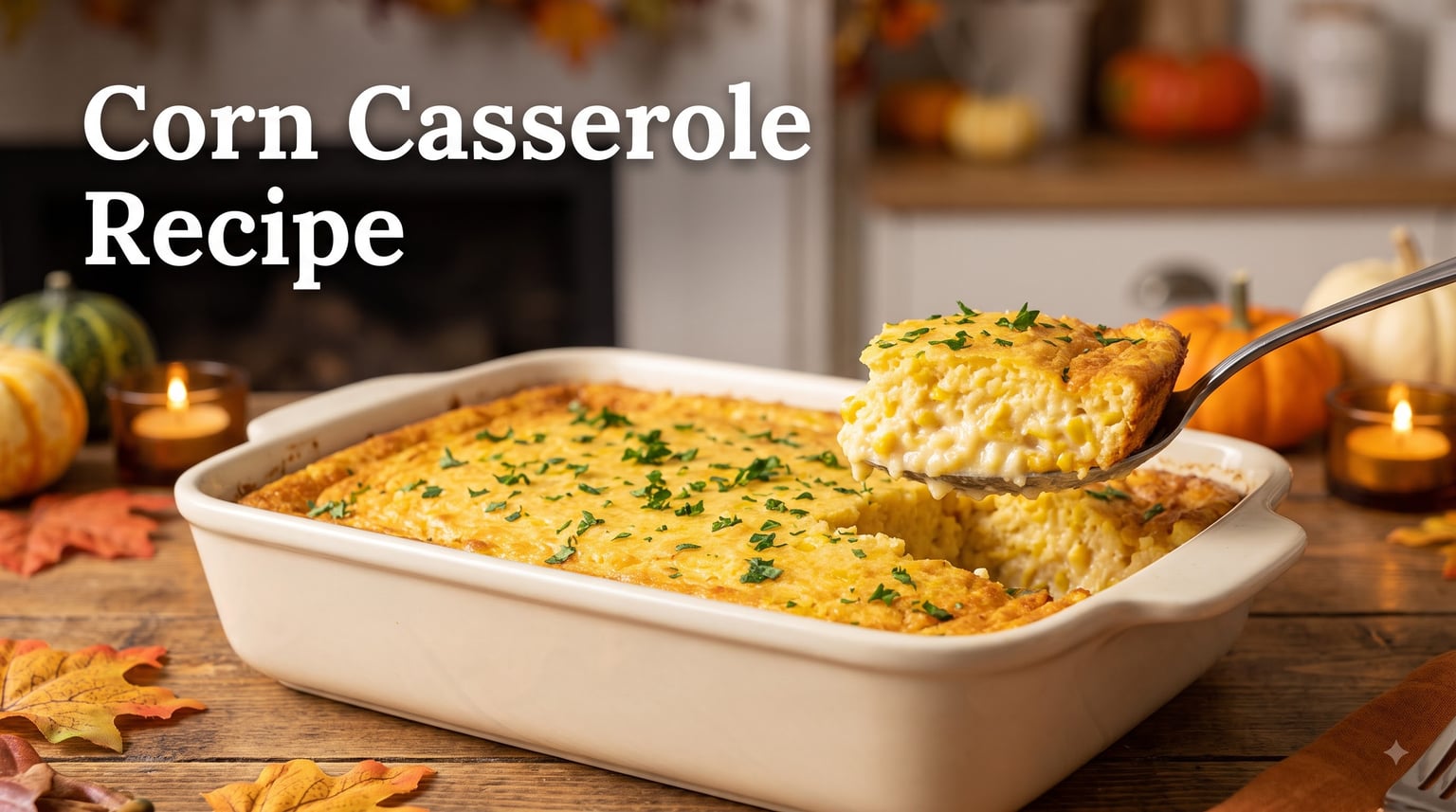
I made this corn casserole recipe for the first Thanksgiving I hosted, and it vanished in fifteen minutes. That was the moment I understood why this dish shows up on every holiday table from Texas to Tennessee. It takes ten minutes to put together, bakes while the turkey rests, and somehow makes everyone at the table happy.
I’ve spent the last few years testing every version I could find – Paula Deen’s original, my grandmother’s handwritten card, the Jiffy box itself, and a dozen reader suggestions. This guide pulls together the best of all of them into one reliable, creamy corn casserole recipe that works every single time. You’ll get the oven method, the slow cooker version, make-ahead tips, troubleshooting for that dreaded “mushy” texture, and a dozen variations to keep things interesting.
If you’ve ever wondered whether corn casserole and corn pudding are the same thing (they’re not, technically), whether you can skip the Jiffy mix (you can), or whether you really need to put an egg in there (depends on the style you want), this guide answers all of that too. Let’s get cooking.
Table of Contents
What Is Corn Casserole?
Corn casserole is a creamy, savory side dish made by baking a mixture of Jiffy corn muffin mix, creamed corn, whole kernel corn, sour cream, melted butter, and usually eggs. The result is softer and more custard-like than cornbread – closer to a savory pudding than a bread. It’s a staple at Thanksgiving, Christmas, Easter, and just about any potluck where comfort food is welcome.
The dish gained massive popularity after Paula Deen featured her version in the early 2000s, but the recipe existed long before that under names like corn pudding, corn bake, and corn soufflé. Today, the term “corn casserole” has become the catchall label, especially in the Midwest and South.

Corn Pudding vs Corn Casserole vs Corn Soufflé: What’s the Difference?
Here’s the part that confuses everyone: these three names often get used interchangeably, but they refer to slightly different textures and ingredient ratios. Let me clear it up once and for all.
Corn casserole uses a boxed corn muffin mix (almost always Jiffy) as the base. The mix gives it structure, but the sour cream and creamed corn keep it moist and custard-like. It sets firmly enough to slice and serve in squares.
Corn pudding is the Southern, often heirloom version. It relies more on eggs, milk or cream, and sometimes cracker crumbs or flour instead of Jiffy mix. The texture is softer, almost spoonable, and less structured. Think of it as the savory cousin of bread pudding.
Corn soufflé uses whipped egg whites folded into the base for a lighter, airier rise. It’s the showiest version but also the most fragile – it deflates fast and needs to be served immediately. Cracker Barrel’s famous side is technically a soufflé.
The recipe below lands squarely in “corn casserole” territory – it uses Jiffy mix, sets up nicely, and travels well. If you want a softer spoonable texture, skip the Jiffy and use the corn pudding variation I share later.
Corn Casserole Ingredients
You’ll only need six simple ingredients for this version, most of which you probably already have in the pantry. Here’s the full list, plus the small swaps that make this recipe flexible for almost any kitchen.
The classic 5-ingredient base:
1 box (8.5 oz) Jiffy corn muffin mix
1 can (15 oz) whole kernel corn, drained
1 can (14.75 oz) creamed corn
1 cup sour cream (full-fat for the creamiest result)
1/2 cup (1 stick) unsalted butter, melted
Optional sixth ingredient:
2 large eggs, lightly beaten (adds structure and a slightly cakier texture)
Paula Deen’s version uses these exact ingredients plus eggs and a sprinkle of sugar. My recipe skips the sugar – I find the creamed corn sweet enough – but you can add 1 to 2 tablespoons if you prefer that classic sweet-savory balance.
Can you make corn casserole without Jiffy mix? Yes. The most reliable substitute is 1 cup of cornmeal mixed with 1 cup of all-purpose flour, 3 tablespoons of sugar, 1 tablespoon of baking powder, and 1/2 teaspoon of salt. That gives you roughly the same flavor and lift as a box of Jiffy. If you need a gluten-free version, swap in a 1:1 gluten-free cornbread mix – Krusteaz and Bob’s Red Mill both make solid ones.
What are the 5 ingredients in corn casserole?
The classic 5 ingredients are one box of Jiffy corn muffin mix, one can of drained whole kernel corn, one can of creamed corn, one cup of sour cream, and half a cup of melted butter. Many recipes add two eggs as a sixth ingredient for extra structure.
Do you put an egg in corn casserole?
Eggs are optional but common. They add structure, a slightly cakier texture, and help the casserole hold its shape when sliced. Omit them for a softer, more spoonable corn pudding texture.
Step-by-Step: How to Make Corn Casserole in the Oven
This is the method I use 90% of the time. It takes about 10 minutes to assemble, 45 to 55 minutes to bake, and produces a golden, creamy casserole that serves 8 to 10 as a side.
Step 1: Preheat and prep your dish. Preheat your oven to 350°F (175°C). Grease a 9×13-inch baking dish with butter or nonstick spray. A 2-quart dish works fine too, but the casserole will be thicker and need an extra 5 to 10 minutes of bake time.
Step 2: Drain the whole kernel corn. Open the can of whole kernel corn and drain it well in a colander. Pat it dry with a paper towel. This step matters more than people think – extra liquid is the number one reason corn casserole turns out mushy.
Step 3: Melt the butter. Melt the stick of butter in a small saucepan over low heat, or in the microwave in 20-second bursts. Let it cool for a minute so it doesn’t scramble the eggs in the next step.
Step 4: Combine the wet ingredients. In a large mixing bowl, whisk together the melted butter, sour cream, and eggs (if using) until smooth and slightly fluffy. The sour cream should be at room temperature so it blends without lumps.
Step 5: Add the corn. Stir in the drained whole kernel corn and the entire can of creamed corn (don’t drain it – the liquid is what makes the casserole creamy).
Step 6: Fold in the Jiffy mix. Add the box of Jiffy corn muffin mix and stir just until everything is combined. Don’t overmix – a few small lumps are fine. Overmixing develops the gluten and makes the casserole tough instead of tender.
Step 7: Transfer and smooth. Pour the batter into your prepared baking dish and smooth the top with a spatula. It will look loose and pourable – that’s correct.
Step 8: Bake until golden. Bake at 350°F for 45 to 55 minutes. The casserole is done when the top is golden brown, the edges pull slightly away from the dish, and the center sets (it should jiggle only slightly when you tap the pan). An instant-read thermometer inserted in the center should read 165°F.
Step 9: Rest before serving. Let the casserole rest on the counter for 10 minutes before scooping. This lets the structure set so it doesn’t fall apart on the spoon.

Visual cues for doneness
If you don’t have a thermometer, watch for these three signs: the top turns a deep golden brown (not pale yellow), the edges look slightly puffed and pulled away from the dish, and the center feels set when you gently press it with your finger. If the middle still looks wet, give it another 5 to 10 minutes. Most under-done casseroles just need more time, not more heat.
Slow Cooker Corn Casserole (Crock Pot Method)
The slow cooker version is perfect for holidays when your oven is already full of turkey, rolls, and sweet potatoes. It frees up oven space and keeps the casserole warm for hours without overcooking.
Step 1: Grease the inside of a 4 to 6 quart slow cooker with butter or nonstick spray.
Step 2: Mix all the ingredients in a bowl exactly the same way as the oven version.
Step 3: Pour the batter into the slow cooker and smooth the top.
Step 4: Cover and cook on LOW for 4 to 5 hours, or on HIGH for 2 to 3 hours. The casserole is done when the edges are set and the center reaches 165°F.
Step 5: Turn the slow cooker to the “warm” setting if you’re holding the casserole for more than 30 minutes before serving. This keeps it at the perfect temperature without drying it out.
One warning: every slow cooker runs a little differently. Older models run hot and may burn the edges. If yours tends to cook aggressively, set a kitchen timer for the lower end of the range and check the center with a thermometer.
Make-Ahead Corn Casserole Instructions
Corn casserole is one of the best make-ahead holiday sides because it reheats beautifully and actually tastes better the next day after the flavors have had time to meld. Here are the three approaches I use, depending on how far ahead I’m planning.
Up to 24 hours ahead (assemble and refrigerate): Mix everything together as directed, pour into your baking dish, cover tightly with plastic wrap, and refrigerate. When you’re ready to bake, remove the casserole from the fridge 30 minutes beforehand to take the chill off. Bake at 350°F for 50 to 60 minutes (it’ll need a few extra minutes since it’s starting cold).
1 to 2 days ahead (bake and reheat): Bake the casserole completely, let it cool to room temperature, cover tightly, and refrigerate. To reheat, cover with foil and warm in a 325°F oven for 20 to 25 minutes until heated through. Remove the foil for the last 5 minutes to refresh the top.
Up to 1 month ahead (freeze unbaked): Mix the casserole, pour it into a freezer-safe dish (or your baking dish wrapped in foil), and freeze. Thaw overnight in the refrigerator, then bake as directed, adding about 10 extra minutes to the bake time.
The most reliable approach for Thanksgiving is the first one – assemble the morning of, refrigerate all day, and bake right after you pull the turkey out to rest. The timing lines up perfectly and the casserole comes out hot and fresh.
Can you make corn casserole ahead of time?
Yes. You can assemble the casserole up to 24 hours in advance and refrigerate it covered, then bake as directed with 5 to 10 extra minutes of bake time. Fully baked corn casserole also reheats well from the fridge for up to 3 days.
Storage, Freezing, and Reheating
Corn casserole stores surprisingly well if you keep it covered and don’t let it sit out at room temperature for more than two hours. Here’s how to handle leftovers.
Refrigerator storage: Transfer leftover casserole to an airtight container or cover the baking dish tightly with foil. It keeps well for up to 4 days. The texture stays creamy and the flavor actually improves on day two.
Freezer storage: Corn casserole freezes beautifully for up to 2 months. Cut it into portions, wrap each piece tightly in plastic wrap, then place in a freezer bag or airtight container. For best results, freeze it the same day you bake it.
Reheating from the fridge: Cover with foil and warm in a 325°F oven for 15 to 20 minutes. Individual portions microwave well at 50% power in 1-minute bursts, stirring in between.
Reheating from frozen: Thaw overnight in the refrigerator, then reheat as above. If you’re in a rush, you can reheat from frozen at 300°F for 35 to 45 minutes, covered with foil.
One important note: don’t refreeze corn casserole after thawing. The dairy-based ingredients break down and the texture turns grainy on the second freeze.
Recipe Variations to Try
Once you’ve nailed the classic version, these variations keep things interesting all year long. Each one starts with the base recipe and adds or swaps a few ingredients.
Cheesy corn casserole: Fold in 1 to 1.5 cups of freshly shredded sharp cheddar cheese (or a Mexican blend) just before baking. The cheese melts into pockets of gooey goodness. Sprinkle a little extra on top during the last 10 minutes for a golden cheese crust.
Jalapeño popper corn casserole: Add 2 to 3 finely diced fresh jalapeños (seeds removed for less heat) and 8 oz of softened cream cheese along with the sour cream. Top with crumbled bacon and extra cheese for the full popper experience.
Mexican street corn casserole: Stir in 1/2 cup of crumbled cotija cheese, 1/4 cup of chopped cilantro, the juice of 1 lime, and 1 teaspoon of chili powder. Top with a drizzle of Mexican crema and more cotija before serving.
Corn casserole without Jiffy: Replace the Jiffy mix with 1 cup cornmeal, 1 cup flour, 3 tablespoons sugar, 1 tablespoon baking powder, and 1/2 teaspoon salt. The texture is slightly more rustic but the flavor is excellent.
Gluten-free corn casserole: Use a gluten-free cornbread mix (Krusteaz and Bob’s Red Mill both work well) in place of the Jiffy. Everything else stays the same.
Sweet corn casserole: Add 1/4 cup of sugar and 1/4 cup of honey to the batter for a sweeter, more dessert-like side. This is the way a lot of Southern families prefer it.
Corn casserole with cream cheese: Beat 4 oz of softened cream cheese into the sour cream before adding the other ingredients. It makes the casserole extra rich and tangy – almost like a cross between corn casserole and cheesecake.

Troubleshooting: Why Is My Corn Casserole Mushy (or Runny, or Dry)?
This is the question I get asked more than any other, and the answer usually comes down to one of three things. Let me walk through the most common problems and how to fix them.
Problem: The casserole is soupy or runny in the center. Most likely cause – the corn wasn’t drained well enough, the casserole didn’t bake long enough, or the oven temperature was off. Solution: drain the canned corn thoroughly (even pat it dry with paper towels), make sure your oven is actually at 350°F with an oven thermometer, and bake until the center reaches 165°F internally. If it’s still jiggly in the middle, give it another 10 minutes.
Problem: The casserole is too dry or cake-like. Most likely cause – too much Jiffy mix, or the sour cream was measured too low. Solution: stick to the exact measurements in this recipe. If you’ve already added too much mix, fold in an extra 2 to 4 tablespoons of sour cream before baking to add moisture back.
Problem: The top burns before the center cooks. Most likely cause – the dish is too close to the top heating element, or the oven runs hot. Solution: move the rack to the middle position, tent the top with foil if it’s browning too fast, and lower the temperature to 325°F with extra bake time.
Problem: The casserole has a gummy or gluey texture. Most likely cause – overmixing the batter. Solution: stir just until the Jiffy is incorporated and no dry streaks remain. A few lumps are fine. Overmixing develops gluten in the mix and creates that unpleasant chewy texture.
Problem: The casserole tastes bland. Most likely cause – it needs salt and seasoning. Solution: add 1/2 teaspoon of salt to the batter (Jiffy has some but not enough for a full casserole), and finish with flaky salt on top after baking. A pinch of black pepper or a dash of smoked paprika also helps.
Important texture note: Corn casserole is supposed to be soft and creamy – closer to a savory pudding than a sliceable bread. If you’re expecting something cornbread-like, you’ll be disappointed. The “mushy” texture is correct, as long as the center is set and not liquid.
Serving Suggestions: What to Pair With Corn Casserole
Corn casserole plays well with just about any roasted meat, but it really shines on a holiday table. Here are my favorite main dish pairings.
The classic move is to serve it alongside a roasted turkey – try our herb butter turkey recipe for a holiday centerpiece that the corn casserole complements perfectly. The sweetness of the corn balances the savory herb butter beautifully.
For a Southern-themed spread, pair it with Louisiana rice dressing recipe for a one-two comfort food punch that always gets rave reviews. Both dishes use similar pantry ingredients and bake at similar temperatures.
If you’re building out a full Thanksgiving plate, our creamed peas recipes round out the trio – the bright green color, fresh flavor, and creamy texture make it a perfect counterpoint to the rich, golden corn casserole.
Corn casserole also works for weeknight dinners with roast chicken, pork chops, meatloaf, or grilled sausages. It reheats well enough that leftovers make a quick lunch alongside scrambled eggs or a green salad.
Frequently Asked Questions
Can you freeze corn casserole?
Yes. Cool the casserole completely, then wrap tightly in plastic wrap and foil or transfer to a freezer-safe container. It keeps for up to 2 months. Thaw overnight in the refrigerator before reheating in a 325°F oven.
How long to bake corn casserole?
Bake at 350°F for 45 to 55 minutes. The casserole is done when the top is golden brown, the edges pull away from the dish, and the center reaches 165°F on an instant-read thermometer.
Can you make corn casserole without Jiffy?
Yes. Replace the Jiffy mix with 1 cup cornmeal, 1 cup all-purpose flour, 3 tablespoons sugar, 1 tablespoon baking powder, and 1/2 teaspoon salt. For gluten-free, use a 1:1 gluten-free cornbread mix.
Final Thoughts on This Corn Casserole Recipe
This corn casserole recipe earns its spot on the holiday table because it checks every box: easy enough for a weeknight, impressive enough for Thanksgiving, make-ahead friendly, freezer-friendly, and endlessly customizable. Whether you stick with the classic 5-ingredient version or branch out into cheesy, spicy, or gluten-free territory, the technique stays the same – mix gently, bake until set, and let it rest before serving.
If you’re new to corn casserole, start with the basic recipe below exactly as written. Once you’ve made it a few times, you’ll start to feel out which variations your family prefers. My house leans toward the cheesy jalapeño version, but the classic is always the one that disappears first.
Give this corn casserole recipe a try for your next gathering and let us know how it turns out in the comments. Happy cooking.