
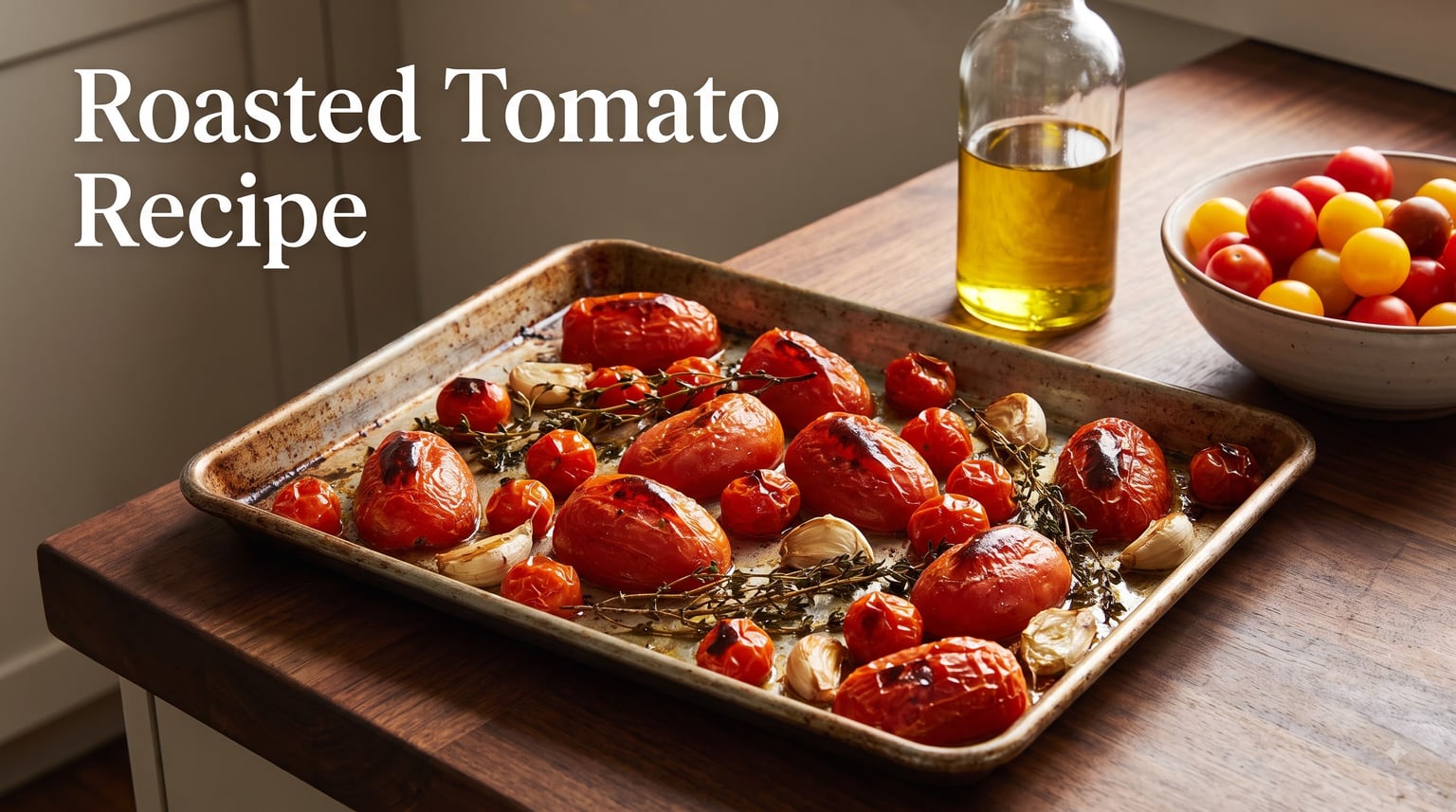
I have roasted more tomatoes than I can count over the years, and I can tell you one thing with absolute certainty: there is no easier way to transform a bland tomato into something you will crave. A good roasted tomato recipe takes 15 minutes of prep and rewards you with deep, sweet, savory flavor that fresh tomatoes simply cannot match. Whether you are working with perfect summer heirlooms or mealy grocery-store Roma tomatoes in January, roasting fixes everything.
In this guide, I will walk you through my go-to roasted tomato recipe with exact ingredients, step-by-step instructions, and the temperature methods I have tested side by side. I will also cover the air fryer method, oil-free roasting, troubleshooting tips for watery or burnt tomatoes, and creative ways to use what you make — including roasted tomatoes for pizza toppings that will change your homemade pizza night forever.
If you have ever wondered why your roasted tomatoes come out soggy, how long they actually need in the oven, or whether you should roast them skin side up or down, you are in the right place. Let’s get roasting.
Table of Contents
Why Roasting Transforms Ordinary Tomatoes?
Roasting works because it does two things at once: it drives off water and it triggers caramelization. Tomatoes are roughly 94 percent water, which dilutes their natural sugars and flavor compounds. When you expose them to sustained oven heat, that moisture evaporates and everything left behind becomes intensely concentrated.
At the same time, the natural sugars in the tomato (mostly fructose and glucose) begin to caramelize at around 320 degrees Fahrenheit. This is what creates those deeply browned, almost jammy edges that taste sweet, savory, and slightly smoky all at once. That combination of concentrated sweetness and browned Maillard-reaction complexity is what people mean when they describe umami flavor in roasted tomatoes.
There is also a health angle worth mentioning. Tomatoes contain lycopene, a powerful antioxidant, and studies show that cooking tomatoes actually increases the bioavailability of lycopene compared to eating them raw. Heat breaks down the plant cell walls, making it easier for your body to absorb. So roasting does not just taste better — it is genuinely more nutritious.
The best part is that roasting rescues tomatoes that would otherwise be disappointing. Those pale, firm, flavorless Roma tomatoes sitting on the grocery store shelf in February? Twenty minutes in a hot oven turns them into something rich and sweet. I have tested this with winter tomatoes specifically, and the difference is dramatic.
Best Tomatoes for Roasting
You can roast almost any tomato, but different varieties behave differently in the oven. Here is what I have learned after testing the main types.
Cherry and Grape Tomatoes
These are my everyday roasting go-to. They have a high skin-to-flesh ratio, which means they blister beautifully and concentrate quickly. Cherry tomatoes tend to be sweeter and burst open as they roast, creating a juicy, jammy texture. Grape tomatoes are slightly more oval and hold their shape a bit better, making them ideal for salads and pasta toppings where you want distinct pieces.
For cherry and grape tomatoes, I recommend roasting them whole at 400 degrees Fahrenheit for 20 to 25 minutes. They are done when the skins have wrinkled and split and the juices have started to caramelize on the pan.
Roma and Plum Tomatoes
Roma tomatoes (also called plum tomatoes) are the workhorses of the tomato world. They have fewer seeds, less water, and denser flesh than round tomatoes, which makes them perfect for roasting into a concentrated sauce base. Cut them in half lengthwise and roast them cut side up at 400 degrees for 35 to 45 minutes for a quick method, or at 275 degrees for 2 hours for a slow, deeply flavored result.
Campari Tomatoes
Campari tomatoes are a middle ground — slightly larger than cherry tomatoes, noticeably sweeter than Romas, and consistently good year-round. They roast beautifully when halved and treated like cherry tomatoes. If you find them at your grocery store, they are an excellent choice for this roasted tomato recipe.
Beefsteak and Heirloom Tomatoes
Large slicing tomatoes and heirlooms can be roasted, but they require a bit more attention. They contain a lot of water and can turn mushy if you are not careful. I recommend slicing them into thick wedges, removing the watery seed pockets, and roasting at 400 degrees for 30 to 40 minutes. Save these for the height of summer when they are at peak flavor.
Seasonal Considerations
Summer tomatoes need almost no help — they are already sweet and flavorful, and roasting just intensifies what is already there. Use cherry, Campari, and heirloom varieties at high heat for a shorter time to preserve their fresh character. Winter tomatoes benefit from the slow-roast method at a lower temperature, which gives them more time to concentrate and develop sweetness they are missing naturally.
Roasted Tomato Recipe
This is the recipe I make every week. It uses the quick high-heat method at 400 degrees Fahrenheit and works with cherry, grape, Campari, or halved Roma tomatoes. The ingredient list is intentionally simple because the whole point is to let the tomato flavor shine.
Ingredients
2 pounds cherry, grape, or Campari tomatoes (or 6 to 8 Roma tomatoes halved lengthwise)
3 tablespoons extra virgin olive oil
1 teaspoon kosher salt (or 1/2 teaspoon fine sea salt)
1/2 teaspoon freshly ground black pepper
3 cloves garlic, smashed and peeled (optional but recommended)
2 sprigs fresh thyme or 1 teaspoon dried oregano (optional)
This recipe serves 4 as a side dish and yields about 2 cups of roasted tomatoes. Total time is roughly 35 minutes including prep.
Equipment
You will need a rimmed baking sheet (also called a sheet pan or half-sheet pan) and either parchment paper or a silicone baking mat. A rimmed pan is essential — tomatoes release a lot of juice as they roast, and a flat cookie sheet will send that juice straight to the bottom of your oven.
Step 1: Prep the Oven and Pan
Preheat your oven to 400 degrees Fahrenheit. Line a rimmed baking sheet with parchment paper. This prevents sticking and makes cleanup trivial, but it also slightly reduces browning on the bottom of the tomatoes. If you want maximum caramelization, skip the parchment and oil the pan directly.
Step 2: Prepare the Tomatoes
If using cherry or grape tomatoes, leave them whole. If using Roma or Campari tomatoes, cut them in half lengthwise. For larger tomatoes, cut them into wedges about 1 inch thick. Place all the tomatoes in a large mixing bowl.
Step 3: Season and Toss
Drizzle the olive oil over the tomatoes, then add the salt, pepper, garlic cloves, and thyme sprigs. Toss everything together with your hands or a large spoon until every tomato is evenly coated with oil and seasoning. This should take about 30 seconds — you want a glossy sheen on each tomato.
Step 4: Arrange on the Pan
Transfer the tomatoes to your prepared baking sheet and spread them out in a single layer. This is important: if the tomatoes are crowded or stacked, they will steam instead of roast and you will end up with something soggy. Give them space. Tuck the garlic cloves and thyme sprigs in among the tomatoes.
For halved Roma or Campari tomatoes, arrange them cut side up. This lets the moisture evaporate from the open side while the skin side protects the flesh from drying out too quickly. More on this in the FAQ below.
Step 5: Roast
Place the pan in the middle rack of your preheated oven and roast for 25 to 35 minutes. Cherry and grape tomatoes will be done closer to 25 minutes. Roma halves will take 30 to 35 minutes. You are looking for visual cues: the skins should be wrinkled and lightly blistered, the edges should be starting to brown, and the tomatoes should look visibly shrunken and jammy.
I recommend checking at the 20-minute mark and then every 5 minutes after. Ovens vary, and the exact time depends on the size and water content of your tomatoes.
Step 6: Cool and Serve
Remove the pan from the oven and let the tomatoes sit for 5 minutes. They will be very hot and releasing steam. During this rest, the juices on the pan will thicken slightly into a syrupy glaze. Scrape everything — tomatoes, garlic, pan juices, and all — into a serving bowl. Pick out the thyme stems if you used fresh sprigs.
Taste and adjust the salt if needed. The tomatoes are ready to serve immediately, or you can let them cool to room temperature for a salad or antipasti spread.
Quick Roast vs Slow Roast: Which Method to Choose
One of the most common questions I see in cooking forums is about which roasting temperature to use. The conflicting advice is understandable — recipes range from 250 degrees to 450 degrees, and they all claim to produce great results. After testing both methods extensively, here is the honest comparison.
The Quick High-Heat Method (400 to 450 Degrees F)
This is what I use for weeknight cooking. At 400 to 450 degrees, tomatoes roast in 20 to 35 minutes. The high heat creates quick blistering and caramelization on the outside while keeping the inside juicy. The result is tomatoes with a fresh, bright character and pronounced char. Cherry and grape tomatoes excel at this temperature because their small size means they cook through before the outside burns.
Use this method when you want roasted tomatoes ready fast, when you are using smaller tomato varieties, or when you want to preserve some of the fresh tomato brightness rather than cooking it all the way down.
The Slow Low-Temperature Method (250 to 300 Degrees F)
This is the method that produces the deepest, most complex flavor. At 275 degrees, tomatoes take 2 to 3 hours to roast. The low heat draws out moisture gradually without aggressive browning, resulting in tomatoes that are deeply shriveled, intensely sweet, and almost confit-like in texture. The flavor is richer and more savory than the quick method.
Use this method when you have time, when you are roasting Roma or plum tomatoes for sauce, when you are dealing with watery winter tomatoes, or when you want to store them submerged in olive oil for weeks in the refrigerator.
Can You Combine Both Methods?
Yes, and this is a great trick. Start the tomatoes at 275 degrees for 90 minutes to concentrate the flavor slowly, then bump the oven to 450 degrees for the last 10 minutes to get some char and blistering. You get the deep flavor of slow roasting with the visual appeal of high-heat blistering. I do this when I want to impress dinner guests.
Air Fryer Roasted Tomatoes
Every competitor recipe I reviewed skipped the air fryer entirely, which is a missed opportunity. The air fryer is actually an excellent tool for roasting tomatoes because its powerful convection fan mimics the effect of a very hot oven with aggressive air circulation. Tomatoes blister and concentrate quickly.
To roast tomatoes in an air fryer, preheat to 400 degrees Fahrenheit. Toss cherry or grape tomatoes with olive oil, salt, and pepper exactly as you would for the oven method. Arrange them in a single layer in the air fryer basket — do not overcrowd, or they will steam. Cook for 10 to 14 minutes, shaking the basket halfway through.
The air fryer works best with cherry and grape tomatoes. Halved Roma tomatoes also do well but may need 15 to 18 minutes. I do not recommend large tomato wedges in the air fryer because the outside tends to char before the inside softens.
Seasoning Variations and Flavor Pairings
The basic recipe above uses garlic, thyme, salt, and pepper, but roasted tomatoes are a blank canvas. Here are the variations I come back to most often.
Herb Pairings by Tomato Type
For cherry and grape tomatoes, fresh thyme and oregano are my top picks. Their slightly earthy, peppery notes complement the sweetness of small tomatoes. For Roma tomatoes headed toward sauce territory, basil and rosemary are better choices. Add fresh basil after roasting rather than before, because it turns bitter and black under high heat. Dried oregano can go in before roasting with no problem.
Garlic, Shallot, and Onion Additions
Roasting aromatics alongside your tomatoes is a simple way to add complexity. Smashed garlic cloves soften into sweet, spreadable pods that are delicious smeared on bread with the roasted tomatoes. Sliced shallots mellow and caramelize beautifully. Quartered onions add a savory depth that is especially good if you plan to blend everything into a sauce afterward.
The Bacon Fat Trick
Several home cooks on Reddit swear by substituting a spoonful of bacon fat for some of the olive oil. I tried it, and it adds a smoky, savory richness that olive oil alone cannot match. If you eat bacon, save the rendered fat in a jar in the refrigerator and use a tablespoon of it in place of an equal amount of olive oil. This is especially good for tomatoes destined to top a steak or burger.
Oil-Free Roasted Tomatoes
If you are avoiding oil for dietary reasons, you can absolutely roast tomatoes without it. Tomatoes contain enough natural moisture to roast and concentrate on their own. Place them on parchment paper (never directly on a bare pan without oil — they will stick badly) and season with salt, pepper, and herbs. They will not blister and char the same way, and they will dry out a bit more, but the concentrated flavor is still excellent. Add a splash of balsamic vinegar in the last 5 minutes for extra depth.
Troubleshooting Common Roasting Problems
I read through hundreds of forum posts about roasted tomatoes, and the same handful of problems come up over and over. Here are the fixes.
Why Are My Roasted Tomatoes Watery?
This is the number one complaint, and it almost always comes down to one of two things: overcrowding or too-low heat. When tomatoes are packed too tightly on the pan, the moisture they release cannot evaporate and they end up steaming in a puddle of their own juice. Spread them out so there is visible space between each tomato.
If the pan is not crowded and they are still watery, your oven temperature may be running low. Get an inexpensive oven thermometer and check. Many home ovens are off by 25 to 50 degrees. Also, resist the temptation to add extra olive oil — too much oil creates a barrier that traps moisture inside the tomato.
Tomatoes Burning Instead of Roasting
If your tomatoes are charring on the bottom before they soften, the pan is too close to the heat source. Move it to the center rack. If you are using the 450-degree method, switch to 400 degrees and add 5 to 10 minutes to the cooking time. Cherry tomatoes burn faster than larger varieties, so check them at 15 minutes if your oven runs hot.
Tomatoes Sticking to the Pan
Sticking happens when there is not enough oil or when you skip the parchment paper. If you want to roast directly on the pan for better browning, make sure every tomato is thoroughly coated in oil before arranging them. After roasting, let the tomatoes cool for 5 minutes on the pan before trying to move them. As they cool, they release from the pan naturally.
Inconsistent Results Batch to Batch
If your roasted tomatoes come out differently every time, the likely culprit is variation in tomato size and water content. A pint of cherry tomatoes from the farmers market in August will behave very differently from a pint from the grocery store in December. Adjust your cooking time based on visual cues — wrinkled skins, split flesh, and browned edges — rather than relying on a fixed timer.
How to Store and Freeze Roasted Tomatoes
One of the best things about roasted tomatoes is that they store beautifully, meaning you can make a big batch and enjoy them all week.
Refrigerator Storage
Let the roasted tomatoes cool to room temperature, then transfer them to an airtight container along with all the pan juices and oil. They will keep in the refrigerator for 4 to 5 days. The flavor actually improves after a day in the fridge as the ingredients meld.
The Olive Oil Method
For longer refrigerator storage, pack the cooled roasted tomatoes into a clean glass jar and cover them completely with olive oil. Make sure the tomatoes are fully submerged — exposure to air is what causes spoilage. Stored this way, they will last 2 to 3 weeks in the refrigerator. The oil itself becomes infused with tomato flavor and is fantastic for drizzling on bread or using in salad dressings.
Freezing Roasted Tomatoes
Roasted tomatoes freeze exceptionally well, and this is the strategy I use to preserve summer tomatoes for winter cooking. Let them cool completely, then spread them in a single layer on a parchment-lined baking sheet and freeze until solid (about 2 hours). Transfer the frozen tomatoes to a freezer-safe bag or container, press out as much air as possible, and freeze for up to 6 months.
You can also freeze roasted tomatoes in ice cube trays with a little of the pan juice for individual portions that are perfect for dropping into soups and sauces. Frozen roasted tomatoes do not need to be thawed before using in cooked dishes — just add them directly to a simmering sauce or soup.
What to Do With Roasted Tomatoes
Once you have a batch of roasted tomatoes, the possibilities are nearly endless. Here are my favorite ways to use them.
Pasta Sauce
This is the classic use. Toss warm roasted tomatoes directly with cooked pasta and a splash of pasta water. The tomatoes will break down slightly and coat the noodles in a rich, glossy sauce. For an even smoother sauce, transfer everything to a blender with a handful of fresh basil. If you are looking for inspiration, these roasted tomatoes are an incredible upgrade for roasted tomatoes for pasta dishes.
Bruschetta and Crostini
Pile roasted tomatoes onto slices of toasted baguette that have been rubbed with garlic and drizzled with olive oil. Top with a shaving of Parmesan or a smear of ricotta. This is one of the easiest appetizers you can make, and it looks impressive.
Pizza Topping
Roasted tomatoes are a fantastic alternative to raw tomato sauce on homemade pizza. Spread them across the dough, add mozzarella, and bake. For an authentic Italian pie, try these roasted tomatoes for pizza toppings on a Neapolitan-style Margherita.
Bloody Mary and Cocktails
Blend roasted tomatoes and strain them to create a rich tomato juice base for Bloody Marys. The roasted flavor adds a depth that commercial tomato juice cannot match. Try using roasted tomatoes for Bloody Marys or experimenting with roasted tomato cocktail variations for a twist on the Bloody Molly.
Avocado Toast, Sandwiches, and Panini
Layer roasted tomatoes on avocado toast for what Reddit users have called a game-changer. They also add incredible flavor to grilled cheese sandwiches, panini, and any sandwich that could use a hit of concentrated tomato flavor without the sogginess of raw tomato slices.
Soup Base and Grain Bowls
Blend roasted tomatoes with stock and a little cream for an instant roasted tomato soup that tastes like it simmered for hours. Or spoon them over grain bowls, roasted vegetables, or scrambled eggs for a savory, flavor-packed meal. You can even use them as a premium topping for roasted tomatoes for nacho topping.
Frequently Asked Questions
What is the best recipe for roasted tomatoes?
The best roasted tomato recipe uses 2 pounds of cherry or Roma tomatoes tossed with 3 tablespoons of olive oil, 1 teaspoon kosher salt, 1/2 teaspoon black pepper, and optional garlic and thyme. Roast at 400 degrees Fahrenheit for 25 to 35 minutes on a parchment-lined baking sheet until the skins wrinkle and the edges caramelize.
How long do tomatoes need to be roasted?
Tomatoes need 20 to 35 minutes at 400 degrees Fahrenheit using the quick high-heat method. Cherry and grape tomatoes take 20 to 25 minutes. Halved Roma tomatoes take 30 to 35 minutes. For the slow-roast method at 275 degrees, tomatoes need 2 to 3 hours. Look for wrinkled skins, split flesh, and browned edges as visual cues for doneness.
How does Jamie Oliver roast tomatoes in the oven?
Jamie Oliver typically roasts tomatoes by halving them, tossing with olive oil, garlic, and fresh herbs like thyme or oregano, and roasting at around 350 degrees Fahrenheit for 40 to 50 minutes. His method is a middle-ground temperature approach between the quick high-heat method and the slow low-temperature method.
Is it better to roast tomatoes skin side up or down?
Roast halved tomatoes skin side down (cut side up). This allows moisture to evaporate from the exposed flesh while the skin protects the tomato from drying out too quickly. If you roast cut side down, the flesh can stick to the pan and the skin traps moisture inside, resulting in steamed rather than roasted tomatoes.
Can you freeze roasted tomatoes?
Yes, roasted tomatoes freeze very well. Cool them completely, spread on a parchment-lined baking sheet, freeze until solid, then transfer to a freezer bag for up to 6 months. You can also freeze them in ice cube trays with pan juice for individual portions. Add frozen roasted tomatoes directly to soups and sauces without thawing.
Why are my roasted tomatoes watery?
Watery roasted tomatoes are caused by overcrowding the pan or oven temperature running too low. Spread tomatoes in a single layer with space between them so moisture can evaporate. Use an oven thermometer to verify your oven temperature. Avoid adding too much olive oil, which creates a barrier that traps moisture inside the tomatoes.
Conclusion
A great roasted tomato recipe is one of the most useful tools in any home cook’s repertoire. It takes a handful of inexpensive ingredients, works with any tomato variety you can find, and produces a finished product that is dramatically more flavorful than what you started with. Whether you use the quick 400-degree method for a weeknight side dish or the slow 275-degree method for deeply concentrated sauce tomatoes, the technique is the same: oil, salt, heat, and patience.
I encourage you to start with the basic recipe, then experiment with the seasoning variations, the air fryer method, and the storage strategies. Once you have a jar of roasted tomatoes in your refrigerator, you will find yourself reaching for them constantly — on toast, in pasta, on pizza, and straight off the spoon. Happy roasting.