
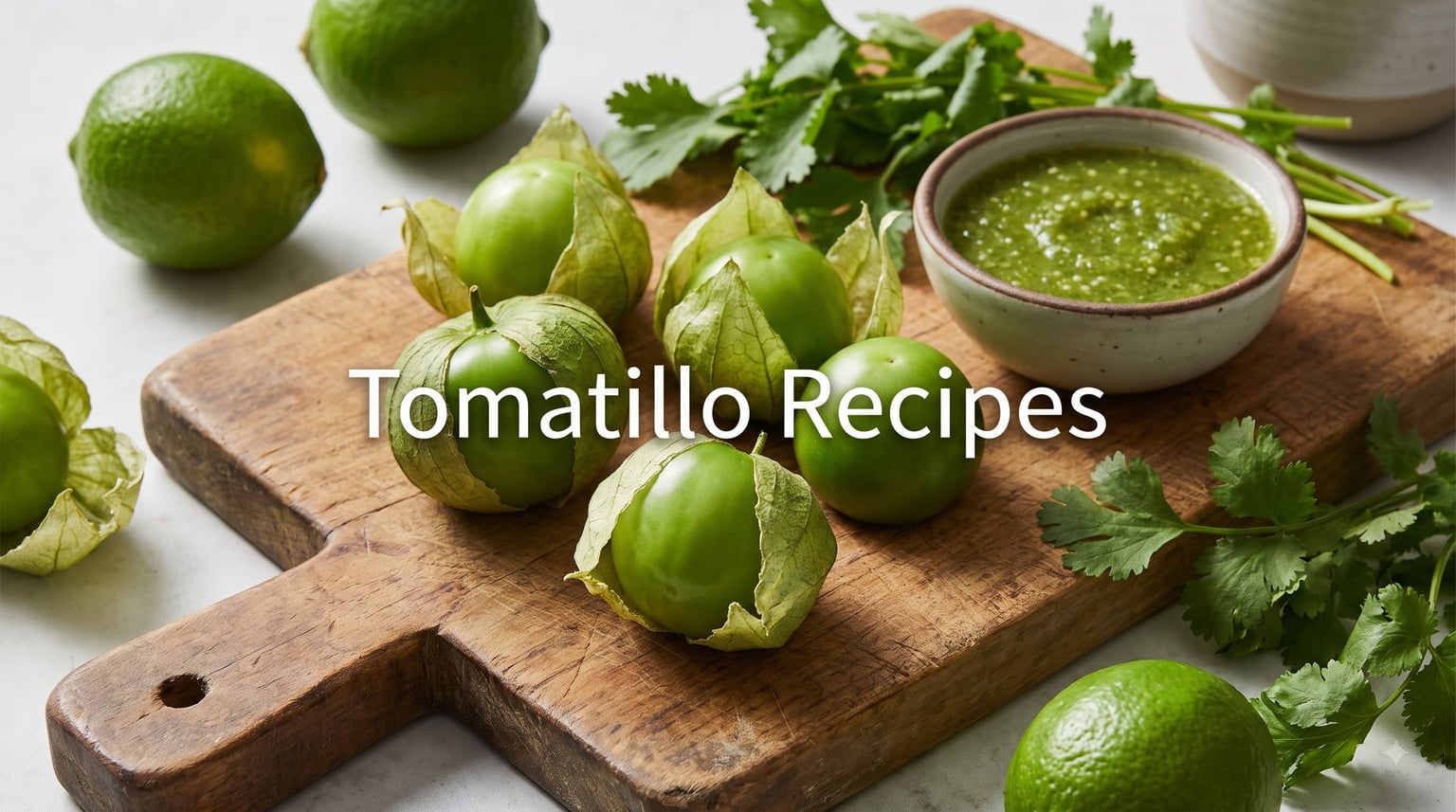
I have spent years cooking with tomatillos, and these tomatillo recipes cover everything from the classic salsa verde to creative dishes you probably have not tried. Whether you grew a bumper crop in your garden or grabbed a basket at the farmers market, this guide gives you real recipes with clear steps and honest tips from my kitchen.
Tomatillos are the backbone of authentic Mexican green sauces. Their tart, citrusy flavor is impossible to replicate with any other ingredient. Once you learn how to prep them, a whole world of cooking opens up.
This guide covers preparation techniques, my go-to salsa verde recipe, hearty main dishes, fusion ideas beyond Mexican cuisine, breakfast recipes, and complete preservation methods. If you want to explore more recipes on Thirsty Bear, we have plenty more to discover after you master these.
Table of Contents
What Are Tomatillos?
Tomatillos are small, round vegetables in the nightshade family, closely related to tomatoes but with a distinctly different flavor. Each one comes wrapped in a papery husk that you remove before cooking. Underneath, the skin is firm and slightly sticky, with a bright green color when ripe.
The flavor is tart, citrusy, and slightly herbal. Think of a green tomato crossed with a lemon, but milder and more complex. When roasted, tomatillos develop a deep sweetness with smoky undertones. Raw, they add a zesty punch to salsas and salads.
Tomatillos vs Green Tomatoes
People confuse these constantly, and I get asked about it all the time. They are not the same thing. Tomatillos are a completely different species (Physalis ixocarpa) and grow inside that papery husk. Green tomatoes are simply unripe red tomatoes. The flavors are different too. Tomatillos have that signature tartness. Green tomatoes are more acidic and bitter without the same brightness. You can sometimes substitute one for the other, but the dish will taste noticeably different.
How to Tell When Tomatillos Are Ripe
Ripe tomatillos are firm, bright green, and fill out their husk. The husk should look papery and dry but not shriveled or moldy. If the husk has split open to reveal the fruit underneath, that is fine. It just means the tomatillo grew large. Avoid tomatillos that are yellowing, soft, or have dark blemishes. A slight stickiness under the husk is normal and rinses right off.
How to Prepare Tomatillos
Preparing tomatillos is simple once you know the steps. The process takes about five minutes, and getting it right makes a real difference in your final dish.
Step 1: Remove the Husks
Peel back the papery husk from the top of each tomatillo. It should come off easily by hand. Discard the husks. You cannot eat them, and they add a bitter flavor if left on.
Step 2: Wash Off the Sticky Residue
Under the husk, tomatillos have a naturally sticky, slightly waxy coating. Rinse each one thoroughly under warm water and rub gently with your fingers. This residue does not hurt you, but it can make your salsa taste slightly bitter and interfere with proper roasting.
Step 3: Choose Your Cooking Method
Three primary methods work for tomatillos, and each produces a different result. Here is how I compare them:
Roasting: Broil on a baking sheet for 5 to 7 minutes per side until lightly charred. This method brings out sweetness and smoky depth. Best for salsas, enchilada sauces, and any dish where you want complex flavor.
Boiling: Simmer in water for 8 to 10 minutes until soft but not falling apart. Boiling produces a softer, more mellow flavor. Great for chile verde and soups where you want a gentler taste.
Raw: No cooking required. Raw tomatillos are bright, sharp, and refreshing. Use them in quick salsas, salads, and garnishes where you want maximum tartness.
I roast for most recipes because the char adds so much dimension. But raw tomatillo salsa on a hot summer day is hard to beat.
Essential Salsa Verde Recipe
This is the salsa verde I make at least once a week. It takes about 25 minutes and works on everything from tacos to eggs to grilled chicken. Once you nail this, you have the foundation for dozens of other dishes.
Prep time: 10 minutes | Cook time: 15 minutes | Servings: About 2 cups
Ingredients
1 pound fresh tomatillos (about 12 to 15 medium), husked and rinsed
1 to 2 jalapeño or serrano peppers, stems removed
Half a white onion, roughly chopped
2 cloves garlic, unpeeled
Half a cup of fresh cilantro, stems and leaves
1 tablespoon fresh lime juice
1 teaspoon salt, plus more to taste
Instructions
Step 1: Preheat your broiler to high. Spread the tomatillos, peppers, and unpeeled garlic on a rimmed baking sheet.
Step 2: Broil for 5 to 7 minutes until the tomatillos are softened and lightly charred on top. Flip everything and broil another 4 to 5 minutes on the other side.
Step 3: Let everything cool for about 5 minutes. Peel the garlic cloves.
Step 4: Transfer the tomatillos, peppers, garlic, and any juices from the pan into a blender. Add the onion, cilantro, lime juice, and salt.
Step 5: Blend until you reach your desired consistency. I like it slightly chunky for texture, but smooth works too.
Step 6: Taste and adjust salt and lime. Let it sit for 15 minutes before serving so the flavors meld.
Tips
For a milder salsa, remove the seeds and membranes from the peppers before blending. For more heat, add an extra serrano. This salsa keeps in the fridge for up to a week and actually tastes better on day two. If you want to serve this alongside bar food recipes featuring tomatillos, it makes a fantastic dip for nachos and wings.
Main Dish Tomatillo Recipes
Salsa verde is just the beginning. These main dishes use tomatillos as the star ingredient, and they are the recipes I turn to when I want a full meal.
Chile Verde (Pork in Green Sauce)
Chile verde is tender pork slow-cooked in a rich tomatillo and pepper sauce. This is comfort food at its best.
Prep time: 15 minutes | Cook time: 2 hours | Servings: 6
Cut 2 pounds of pork shoulder into 1-inch cubes. Season generously with salt and brown in batches in a Dutch oven with a little oil. Remove the pork and set aside.
In the same pot, sauté one chopped onion until soft. Add 3 cloves minced garlic and cook for another minute. Return the pork to the pot.
Puree 1.5 pounds of roasted tomatillos with 2 roasted poblano peppers, 2 jalapeños, 1 cup cilantro, and half a cup of chicken broth. Pour this mixture over the pork.
Add enough additional broth to almost cover the pork. Simmer covered for 1.5 to 2 hours until the pork is fork-tender. Serve with rice, beans, and warm tortillas. This dish pairs beautifully with a cold beer. Check out our best beer pairings for tomatillo-based dishes for specific recommendations.
Enchiladas Verdes
These enchiladas use your salsa verde as the sauce. Make a batch of the essential recipe above, then assemble and bake.
Prep time: 20 minutes | Cook time: 20 minutes | Servings: 6
Mix 3 cups of shredded rotisserie chicken with half a cup of salsa verde and a cup of crumbled queso fresco. Fill 12 corn tortillas with the mixture, roll them up, and place seam-side down in a baking dish.
Pour 2 cups of salsa verde over the top. Sprinkle with a cup of shredded Monterey Jack cheese. Bake at 375 degrees for 20 minutes until bubbly and golden.
Tomatillo Chicken Soup
This bright, brothy soup is lighter than chile verde but packs serious flavor. Sauté diced onion, carrot, and celery in a pot. Add 1.5 pounds of bone-in chicken thighs, 4 cups of broth, and a cup of chopped roasted tomatillos. Simmer for 35 minutes. Remove the chicken, shred it, and return to the pot. Stir in cilantro and lime juice before serving.
Tomatillo Recipes Beyond Salsa and Mexican Cuisine
This is where most guides stop, but forums are full of people asking what to make with tomatillos besides salsa. Here are three creative applications I have tested and loved.
Raw Tomatillo Salad
Thinly slice raw tomatillos and toss with shaved red onion, avocado chunks, cilantro, lime juice, and a drizzle of olive oil. The tart crunch of raw tomatillo is refreshing and unexpected. I serve this alongside grilled fish, and it always gets people asking what is in it.
Tomatillo Chutney (Indian-Inspired)
One of the most common searches is for Indian tomatillo recipes. This chutney is my answer. Toast 1 teaspoon each of mustard seeds and cumin seeds in oil until they pop. Add a chopped onion and cook until soft. Add 8 chopped tomatillos, 2 chopped green chilies, a pinch of turmeric, and half a teaspoon of salt.
Cook for 10 to 12 minutes until the tomatillos break down into a chunky sauce. Finish with a squeeze of lime and fresh cilantro. Serve with rice, flatbread, or grilled meats. This is one of the most rewarding non-Mexican tomatillo recipes I have made.
Tomatillo Pasta Sauce
Roast 1 pound of tomatillos with garlic and a few cloves of unpeeled garlic. Blend with olive oil, basil, and Parmesan. Toss with your favorite pasta. The tartness cuts through rich cheeses beautifully. Reddit users report loving this unexpected application, and I can confirm it works.
If you want to explore other unique ingredients, check out our guide on recipes using other unique ingredients like taro.
Breakfast Tomatillo Recipes
Tomatillos belong at breakfast too. These two dishes are weekend staples in my house.
Huevos Divorciados
Fry two eggs and serve on a plate with two corn tortillas. Pour red salsa on one side and salsa verde on the other, divided down the middle. The name means “divorced eggs” because the two sauces never touch. Add refried beans on the side.
Tomatillo Breakfast Tacos
Scramble eggs with crumbled chorizo. Fill warm flour tortillas and top with salsa verde, cotija cheese, and cilantro. These take 10 minutes and taste better than any breakfast taco I have ordered at a restaurant.
How to Store and Preserve Tomatillos
Whether you are dealing with a garden overflow or stocking up at the market, proper storage and preservation keep your tomatillos useful for months.
Refrigerator Storage
Keep fresh tomatillos in the refrigerator with their husks on. Place them loose in a paper bag or a breathable container. They last 2 to 3 weeks this way. Do not wash them until you are ready to use them. The husk protects the fruit and the sticky residue helps preserve freshness.
Freezing Tomatillos
Yes, you can freeze tomatillos, and it works extremely well. You have two options. Freeze them raw with husks removed but unwashed, in a single layer on a baking sheet, then transfer to freezer bags. They last up to a year.
Alternatively, roast them first, then freeze the roasted tomatillos in portions. This saves time later since they are already cooked. Frozen tomatillos work perfectly in cooked recipes like chile verde and enchilada sauce. The texture softens, so they are not ideal for raw applications after freezing.
Canning Tomatillos
Canning is popular but requires attention to safety. Tomatillos are slightly acidic but not acidic enough for water-bath canning on their own. You must add bottled lemon juice or citric acid to each jar to reach safe acidity levels. Follow a tested recipe from a reliable source like the National Center for Home Food Preservation.
I pressure-can tomatillo salsa verde following a tested recipe. The key is never improvising the acid levels. Botulism is a real risk with improperly canned low-acid foods.
Pickled Tomatillos
Quick-pickled tomatillos are one of my favorite preservation methods. Slice tomatillos thin and pack into jars with sliced onion and jalapeño. Bring equal parts vinegar and water to a boil with a tablespoon of salt and a tablespoon of sugar per cup of liquid. Pour over the tomatillos and refrigerate. They are ready in 24 hours and last 3 weeks in the fridge. These are fantastic on tacos, sandwiches, and burgers.
Beverage Pairings for Tomatillo Dishes
Tomatillo-based dishes pair wonderfully with the right drinks. For spicy dishes like chile verde, a cold Mexican lager cuts through the heat. Our guide to the best beers for chili covers specific bottles that work well with these flavors.
For cocktail pairings, margaritas are a natural match. The acidity in a good margarita mirrors the tartness of tomatillos. Try our blood orange margarita recipe or browse our Cinco de Mayo cocktail recipes for more options that complement Mexican food.
If you want to learn about other unique Mexican ingredients to try, our huitlacoche guide is a great companion to this one.
Frequently Asked Questions
What is the best way to use tomatillos?
The best way to use tomatillos is roasting them for salsa verde. Roasting brings out their natural sweetness and adds smoky depth. Beyond salsa, tomatillos work well in chile verde, enchilada sauces, soups, raw salads, Indian-inspired chutneys, and pasta sauces. Roasting under a broiler for 5 to 7 minutes per side is the most versatile preparation method.
Is it okay to eat tomatillos raw?
Yes, tomatillos are safe to eat raw. Raw tomatillos have a bright, tart, citrusy flavor that works well in fresh salsas, salads, and garnishes. Always remove the papery husk and wash off the sticky residue before eating. The flavor is sharper and more acidic than cooked tomatillos.
Can you freeze tomatillos for later use?
Yes, you can freeze tomatillos. Remove the husks and freeze them whole on a baking sheet, then transfer to freezer bags. They last up to a year. You can also roast them first and freeze the roasted fruit in portions. Frozen tomatillos work best in cooked dishes since freezing softens their texture.
What are the health benefits of tomatillos?
Tomatillos are low in calories and high in vitamin C, vitamin K, and fiber. They contain antioxidants called withanolides that have anti-inflammatory properties. They also provide potassium, niacin, and manganese. Their natural acidity supports digestion, and they are naturally low in fat and sodium.
Conclusion
Tomatillo recipes go far beyond salsa verde once you know the basics. With proper husking, washing, and cooking techniques, you can build everything from hearty chile verde to bright raw salads and Indian-inspired chutneys. Stock up, freeze what you cannot use right away, and start experimenting.
Pick one recipe from this guide and make it this week. Once you taste the difference fresh tomatillos make, you will never go back to canned. These tomatillo recipes are just the beginning of what this versatile ingredient can do in your kitchen.