
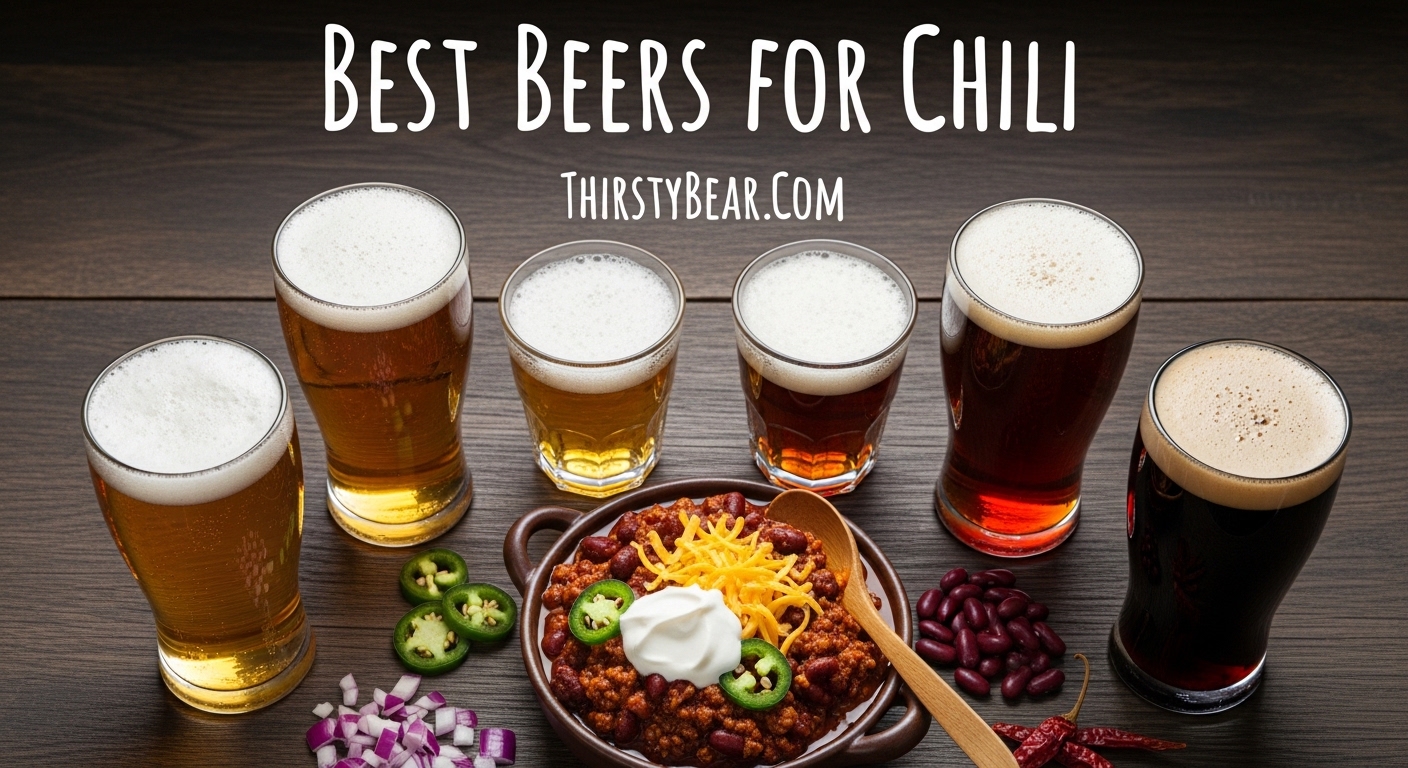
There’s nothing quite like a pot of simmering chili on a cold day, but the secret ingredient that takes it from good to great might already be in your refrigerator. The best beers for chili add depth, richness, and complexity that water or broth simply cannot match. Whether you’re making classic Texas beef chili, a vegetarian bean version, or something in between, choosing the right beer transforms your dish into something memorable.
After years of cooking with beer and testing countless varieties in our test kitchen, I’ve learned that not all beers are created equal when it comes to chili. The right choice enhances meat flavors, balances spice heat, and creates that velvety texture that makes restaurant-quality chili so satisfying. Let me walk you through everything you need to know about selecting and using beer in your favorite chili recipes.
Understanding the difference between lager vs ale is the first step in choosing the right beer for cooking. Both can work well in chili, but they bring different characteristics to your dish. Let’s explore why beer works so well in cooking and which styles will give you the best results.
Table of Contents
Why Beer Works in Chili
Beer isn’t just for drinking—it’s a powerful cooking ingredient that chemistry has proven to enhance food in multiple ways. When you add beer to chili, several things happen that improve both flavor and texture.
The enzymes in beer help break down proteins in meat, making it more tender. This is especially important for tougher cuts like chuck or brisket that often find their way into chili recipes. I’ve noticed that beef simmered in beer stays noticeably more tender than meat cooked in water alone.
Beer adds body and richness to your chili through its malt content. The sugars in malt caramelize during cooking, creating a deeper color and thicker consistency. This natural thickening effect means you can achieve that perfect chili consistency without adding extra thickeners.
The flavor compounds in beer complement chili ingredients beautifully. Dark beers contribute notes of chocolate, coffee, and caramel that pair perfectly with beef, spices, and tomatoes. Meanwhile, the carbonation in beer helps lift flavors and adds a subtle brightness that balances the heaviness of a rich chili.
Perhaps most importantly, the natural sweetness in beer helps balance spice heat. When you’re working with chili powder, cumin, and hot peppers, that touch of malt sweetness creates a more rounded, harmonious flavor profile that keeps people coming back for another bowl.
Best Beers for Chili: Complete Guide
Dark Beers for Chili: Stouts and Porters
Dark beers are widely considered the best beers for chili, and for good reason. Stouts and porters bring a roasted, malt-forward character that complements beef and spices perfectly. The stout vs porter differences matter less in cooking than they do in drinking—both work exceptionally well.
Guinness is perhaps the most famous stout for cooking, and it delivers consistent results. Its roasted barley flavor adds depth without overwhelming your chili, and its smooth body contributes to that velvety texture we all love. I’ve used Guinness in countless chili batches, and it never fails to deliver rich, complex results.
Porters offer slightly more sweetness than stouts, with prominent caramel and toffee notes. Brands like Deschutes Black Butte Porter or Samuel Smith’s Taddy Porter add a wonderful malt backbone that makes beef chili taste exceptionally rich. If you find Guinness too bitter, try a porter instead.
For something different, consider a smoked porter. The subtle smokiness adds another layer of flavor that pairs beautifully with chili’s spice profile. I’ve found that smoked porters work particularly well in chili recipes that already include smoked paprika or chipotle peppers.
When using dark beers, remember that a little goes a long way. One 12-ounce bottle is typically perfect for a batch serving 6-8 people. More than that can make your chili taste overly bitter or heavy.
Brown Ales and Red Ales for Balanced Flavor
If you want beer flavor without the darkness of stouts and porters, brown ales and red ales offer an excellent middle ground. These beers provide malt character and caramel notes while keeping your chili lighter in color and flavor.
New Belgium Fat Tire is a popular amber ale that works beautifully in chili. Its balanced malt profile with subtle caramel and biscuit notes adds depth without overpowering other ingredients. I’ve had great success using Fat Tire in chili that needs to appeal to a wide range of palates.
Smithwick’s Irish Red Ale brings a nice malt sweetness with a slightly dry finish. It’s an excellent choice when you want noticeable beer flavor but prefer a cleaner finish than darker beers provide. The red color it imparts to your chili is quite attractive as well.
Samuel Smith’s Nut Brown Ale offers a wonderful nutty character that pairs exceptionally well with the cumin and coriander often found in chili recipes. The brown malt adds a toasty quality that reminds me of bread fresh from the oven.
Brown ales like Newcastle or Brooklyn Brown Ale are also solid choices. They provide enough malt character to enhance your chili while remaining versatile enough to work with various spice levels and protein choices.
Mexican Beers: Authentic Choice for Chili
When it comes to authenticity, Mexican beers are hard to beat for chili, especially Tex-Mex or Southwestern styles. These beers have been used in traditional cooking for generations and bring a cultural authenticity that resonates in every bite.
Negra Modelo is perhaps the most celebrated Mexican beer for chili cooking. This dark Vienna lager offers a perfect balance of malt sweetness and drinkability. Famous chef Rick Bayless has endorsed Negra Modelo for Mexican cooking, and after using it in my chili recipes, I understand why. It adds a subtle caramel sweetness without being heavy.
Dos Equis Amber is another excellent choice. Its amber color and medium body make it versatile enough for both cooking and serving alongside your chili. The malt character is present but not overpowering, allowing your spices to shine through.
While Corona is often mentioned, its light character means it contributes less flavor than darker Mexican options. That said, if you prefer a lighter beer presence in your chili, Corona works fine. I’ve used it successfully in white chicken chili where a delicate touch is preferred.
For authentic Mexican chili, consider using a combination of Mexican beer and traditional ingredients like cumin, oregano, and chocolate. The beer ties these flavors together in a way that feels both traditional and sophisticated.
Amber Lagers and Bock Beers
Amber lagers and bock beers occupy a sweet spot between light lagers and dark ales. They offer enough malt character to enhance your chili while remaining approachable and versatile.
Shiner Bock has achieved legendary status in Texas chili circles, and for good reason. This dark amber lager from Texas adds a wonderful malt sweetness with hints of caramel and toast. It’s become my go-to beer for Texas-style beef chili, where its character complements the bold spices perfectly.
Samuel Adams Boston Lager brings a balanced malt profile with a slight hop bitterness that can actually enhance spice perception. The caramel notes add depth without making your chili too heavy. I’ve found it works well in both traditional and vegetarian chili recipes.
Vienna lagers like Negra Modelo (mentioned above) or domestic versions like Great Lakes Eliot Ness offer excellent malt character with clean finishes. They’re particularly good when you want beer flavor without the roasted notes of stouts and porters.
Traditional bocks and doppelbocks are richer and maltier than amber lagers. They work best in hearty beef chili where their full body won’t overwhelm other ingredients. Brands like Paulaner Salvator or Ayinger Celebrator deliver exceptional results, though they’re pricier options.
Wheat Beers and Light Lagers
While dark beers get most of the attention, wheat beers and light lagers have their place in certain chili recipes. These lighter options work best when you want subtle beer flavor or when cooking lighter chili styles.
Hefeweizens and witbiers like Allagash White or Weihenstephaner Hefeweissbier can add interesting fruity and spicy notes to chili. The banana and clove characteristics from wheat beer yeast can complement certain spice blends beautifully. I’ve had success using wheat beers in vegetarian chili where their lightness doesn’t compete with vegetable flavors.
Pilsners like Victory Prima Pils or imported Czech options offer crisp, clean character with subtle hop bitterness. They work well in lighter chicken or turkey chili where a heavy beer would overwhelm delicate flavors. The slight bitterness can actually enhance the perception of spice without making the chili bitter.
When it comes to budget-friendly options, light American lagers like Yuengling Light Lager or Miller High Life can still improve your chili. While they contribute less flavor than craft options, they still provide the tenderizing and thickening benefits of beer. Many experienced home cooks swear by these affordable options, noting that subtle flavors of expensive craft beers get lost in bold chili anyway.
Beers to Avoid in Chili
Not every beer belongs in your chili pot. Some styles can create unpleasant flavors or textures that will have you reaching for the takeout menu instead.
IPAs and other heavily hopped beers are generally poor choices for chili cooking. The intense hop bitterness that beer lovers enjoy in a glass becomes unpleasant when concentrated through cooking. I once made the mistake of using a double IPA in chili, and the resulting bitterness was nearly inedible.
If you do choose to use an IPA, be very selective. Milder examples like Sierra Nevada Pale Ale can work if used sparingly, and some cooks actually like how the hop bitterness accentuates spice heat. Just remember that cooking concentrates flavors, so what seems balanced in the bottle may become overwhelming in the pot.
Very light American lagers like Bud Light or Coors Light contribute minimal flavor to your chili. While they won’t ruin your recipe, they also won’t provide much benefit beyond the liquid itself. If budget is a concern, slightly more flavorful options like Yuengling Traditional Lager offer better value for cooking.
Sour beers and wild ales are generally too acidic for chili cooking. Their tartness can clash with tomato-based chili and create an unbalanced flavor profile. Save your Berliner weisses and lambics for drinking, not cooking.
How to Cook with Beer: Tips and Techniques
Knowing which beer to use is only half the battle. How you incorporate it into your cooking process matters just as much for achieving the best results.
Timing is crucial when adding beer to chili. I recommend adding it after you’ve browned your meat and aromatics but before adding tomatoes and beans. This allows the beer to reduce slightly and concentrate its flavors. If you add it too late, the raw beer flavor won’t have time to cook out and mellow.
The amount of beer you need depends on your recipe size, but a good rule of thumb is one 12-ounce bottle for a batch serving 6-8 people. For larger quantities, scale up accordingly but avoid making beer your primary liquid—broth or stock should still form the base of your chili.
Consider reducing your beer before adding other ingredients. This technique, often used in professional kitchens, concentrates the beer’s flavor compounds and evaporates some of the alcohol. Simply simmer the beer in your pot for 5-10 minutes before proceeding with your recipe.
Deglazing your pan with beer after browning meat is a pro technique that adds tremendous flavor. The beer lifts those flavorful browned bits from the bottom of your pan, incorporating them into your chili. This step alone can elevate your chili from good to great.
Beer Alternatives for Non-Drinkers
Not everyone cooks with alcohol, and that’s perfectly fine. There are several alternatives that can help you achieve similar results without using beer.
Beef broth or stock is the most direct substitute for beer in chili. While it lacks the complexity of beer, it still provides body and richness. For closer approximation, try using a combination of beef broth and a splash of balsamic vinegar or Worcestershire sauce to mimic beer’s depth.
Red wine can work well in chili, especially darker styles like cabernet sauvignon or merlot. It provides tannins and acid that beer lacks, which can actually benefit certain chili styles. Just use less wine than you would beer—about half the amount is typically sufficient.
Non-alcoholic beer is an option if you want beer flavor without the alcohol. Many grocery stores now carry quality non-alcoholic versions of popular styles. While the flavor isn’t identical to traditional beer, it’s closer than other substitutes.
For a stout-like effect without beer, try adding a small amount of strong coffee or espresso to your chili. This provides those roasted, bitter notes that make stouts so effective in cooking. A tablespoon or two is usually plenty—coffee’s flavor is quite concentrated.
Beer Selection by Chili Style
Different chili styles benefit from different beer choices. Tailoring your beer selection to your specific recipe can yield the best results.
For traditional Texas chili, which focuses on beef and spices without beans, dark beers like stout or porter are ideal. The rich malt character stands up to bold spices and complements beef beautifully. Shiner Bock is also a Texas tradition for this style.
Cincinnati chili, with its unique spice blend and Mediterranean influences, works well with amber lagers or brown ales. The beer shouldn’t overpower the cinnamon and allspice notes that define this regional style. Negra Modelo or Samuel Adams Boston Lager are excellent choices.
Vegetarian chili often benefits from lighter beer choices that won’t overwhelm vegetable flavors. Wheat beers, amber ales, or even light lagers can work well here. The goal is enhancement without domination.
White chili, typically made with chicken, white beans, and green chilies, pairs beautifully with light lagers or wheat beers. Dark beers would muddy the delicate flavors and unappealing color of this lighter chili style. Corona or a similar light Mexican lager is often perfect.
Spicy chili loaded with hot peppers can benefit from malty beers that provide sweetness to balance the heat. Brown ales, bocks, or amber lagers work better than very bitter or very light options in these fiery recipes.
Conclusion
Choosing the best beers for chili transforms a simple dish into something extraordinary. The right beer adds depth, tenderness, and complexity that elevates your cooking to new heights. Whether you prefer the rich character of stouts, the balanced sweetness of amber lagers, or the authentic touch of Mexican beers, there’s a perfect option for your recipe.
After years of experimentation, I’ve found that dark beers like Guinness and Negra Modelo consistently deliver the best results in most chili recipes. They provide the perfect balance of flavor, body, and sweetness that complements beef, spices, and tomatoes. However, don’t be afraid to experiment and find what works best for your taste preferences and specific recipes.
Remember that cooking with beer shouldn’t be intimidating. Start with reliable choices like the ones mentioned here, then branch out as you gain confidence. The most important thing is to enjoy the process and the delicious results.
For more guidance on best beer for cooking by recipe type, explore our comprehensive guide covering everything from soups to desserts. The world of cooking with beer is vast and rewarding—your chili is just the beginning.
FAQs
What kind of beer tastes best in chili?
Dark, malt-forward beers like stouts and porters taste best in chili. Guinness, Negra Modelo, and Shiner Bock are consistently top choices. These beers add rich, complex flavors that complement beef and spices without overwhelming other ingredients. Lighter beers work too but contribute less depth.
What beer styles pair best with chili?
Stouts, porters, brown ales, and amber lagers pair best with chili. Dark beers provide roasted, caramel notes that complement beef and spices. Mexican lagers like Negra Modelo offer authentic flavor for Tex-Mex styles. Avoid heavily hopped IPAs which can make chili bitter.
Do people use beer in chili?
Yes, beer is a traditional and popular ingredient in chili recipes worldwide. Home cooks and professional chefs alike use beer to add depth, tenderize meat, and enhance flavor. It’s particularly common in Texas-style chili, Mexican-inspired recipes, and hearty beef versions.
What alcohol goes best with chili?
Beer is the most common alcohol for cooking chili, but red wine also works well. Dark beers like stout and porter are top choices. For drinking WITH chili, amber lagers, brown ales, and Mexican beers pair excellently. Avoid sweet wines or spirits which can clash with savory spices.
Is Guinness good for chili?
Yes, Guinness is excellent for chili. Its roasted barley flavor adds depth and richness without overwhelming other ingredients. The smooth body contributes to velvety texture. One bottle per batch of 6-8 servings is ideal. Guinness is consistently one of the most recommended beers for beef chili.
Should I use light or dark beer for chili?
Dark beer is generally better for chili, especially beef-based recipes. Stouts, porters, and brown ales provide more flavor complexity and depth. Light beer can work for delicate recipes like white chicken chili or when you want subtle beer presence. For best results, choose malt-forward over hoppy beers.
Can I use IPA in chili?
You can use IPA in chili, but use caution. The hop bitterness that’s pleasant in a glass becomes concentrated and unpleasant when cooked. If using IPA, choose mild examples like Sierra Nevada Pale Ale and use sparingly. Some cooks like how IPAs accentuate spice heat, but most prefer malt-forward beers.
How much beer should I put in chili?
Use one 12-ounce bottle of beer for a batch serving 6-8 people. Scale up proportionally for larger quantities. Beer should complement, not replace, your base liquid (broth or stock). Too much beer can make chili bitter or overly beer-flavored. Start with less and add more if needed.
Does beer cook out in chili?
Most alcohol evaporates during cooking, but some flavor compounds remain. After 1-2 hours of simmering, approximately 60-85% of alcohol cooks out. The beer flavor mellows and integrates with other ingredients. If you need to avoid alcohol completely, use non-alcoholic beer or broth substitutes.
What can I use instead of beer in chili?
Beef broth is the best substitute for beer in chili. For stout-like flavor, add strong coffee or espresso. Red wine works in some recipes. Non-alcoholic beer provides beer flavor without alcohol. A combination of broth with balsamic vinegar or Worcestershire sauce can mimic beer’s depth.
Does cheap beer work better for cooking?
Many cooks prefer using affordable beer for cooking, including budget brands. The subtle flavors of expensive craft beers often get lost in bold chili recipes. Options like Pabst, Lone Star, or Yuengling work perfectly well and are more economical. Focus on malt character over price when choosing cooking beer.
Will beer make my chili bitter?
Beer can make chili bitter if you choose the wrong style. IPAs and heavily hopped beers are the main culprit—cooking concentrates their bitterness. Malt-forward beers like stouts, porters, and brown ales add sweetness rather than bitterness. Avoid very hoppy styles unless you specifically want to increase spice perception.