
If you have ever watched a residential microwave give up after six months on a restaurant line, you already know why the best commercial microwaves exist. A commercial microwave is not a beefed-up home unit. It is a different class of equipment built around cycle count, sanitation codes, and the daily punishment of a working kitchen.
Our team spent weeks researching, spec-checking, and stress-testing eight countertop commercial microwaves that show up most often in foodservice operations. We cross-referenced Amazon listings with operator threads on Reddit’s r/KitchenConfidential and r/foodservice, validated against manufacturer spec sheets, and mapped every pick to the volume and use case it actually serves. The list below covers light-duty units for breakrooms and coffee shops, medium-duty workhorses for cafes and small restaurants, and heavy-duty stackable models for high-volume lines.
Whether you are outfitting a new cafe, replacing a residential unit that finally died in your food truck, or specifying a stack for a hospital cafeteria, this guide will help you pick the best commercial microwave for your operation in 2026. We will walk through wattage thresholds, dial versus push-button controls, the 120V versus 208/240V electrical question, and the certifications that matter for code compliance. We will also flag the cheap “commercial” units that are really residential microwaves with a stainless sticker, a common complaint in operator forums.
Table of Contents
Top 3 Picks at a Glance
Best Commercial Microwaves in 2026: Quick Overview
| Product | Specifications | Action |
|---|---|---|
 Panasonic NE-1054F Panasonic NE-1054F |
|
Check Latest Price |
 Midea 1025F0A Midea 1025F0A |
|
Check Latest Price |
 Sharp R-21LVF Sharp R-21LVF |
|
Check Latest Price |
 Amana RMS10DSA Amana RMS10DSA |
|
Check Latest Price |
 Waring WMO90 Waring WMO90 |
|
Check Latest Price |
 Winco EMW-1000ST Winco EMW-1000ST |
|
Check Latest Price |
 Amana RCS10TS Amana RCS10TS |
|
Check Latest Price |
 Frigidaire EMW965 Frigidaire EMW965 |
|
Check Latest Price |
1. Panasonic NE-1054F Commercial Microwave – Editor’s Choice
Panasonic NE-1054F Compact Light-Duty Countertop Commercial Microwave Oven with 10 Programmable Memory and Touch Screen Control, Countertop Microwave Oven, 1000W, 0.8 Cu. Ft, Stainless Steel
1000W
0.8 cu ft
Touch control
10 programmable pads
Pros
- Built like a tank with 8-10+ year service life reported by owners
- Bottom energy feed eliminates the turntable for even heating and easier cleaning
- 10 programmable memory pads with 6 power levels and a 99:99-minute timer
- Touch-control panel with Braille is accessibility-friendly
- Compact 13 inch footprint fits on tight counters
Cons
- Loud default end-of-cycle beep (can be muted but toggle is non-intuitive)
- Small interior limits larger casserole dishes
- Time-entry interface requires reading the manual
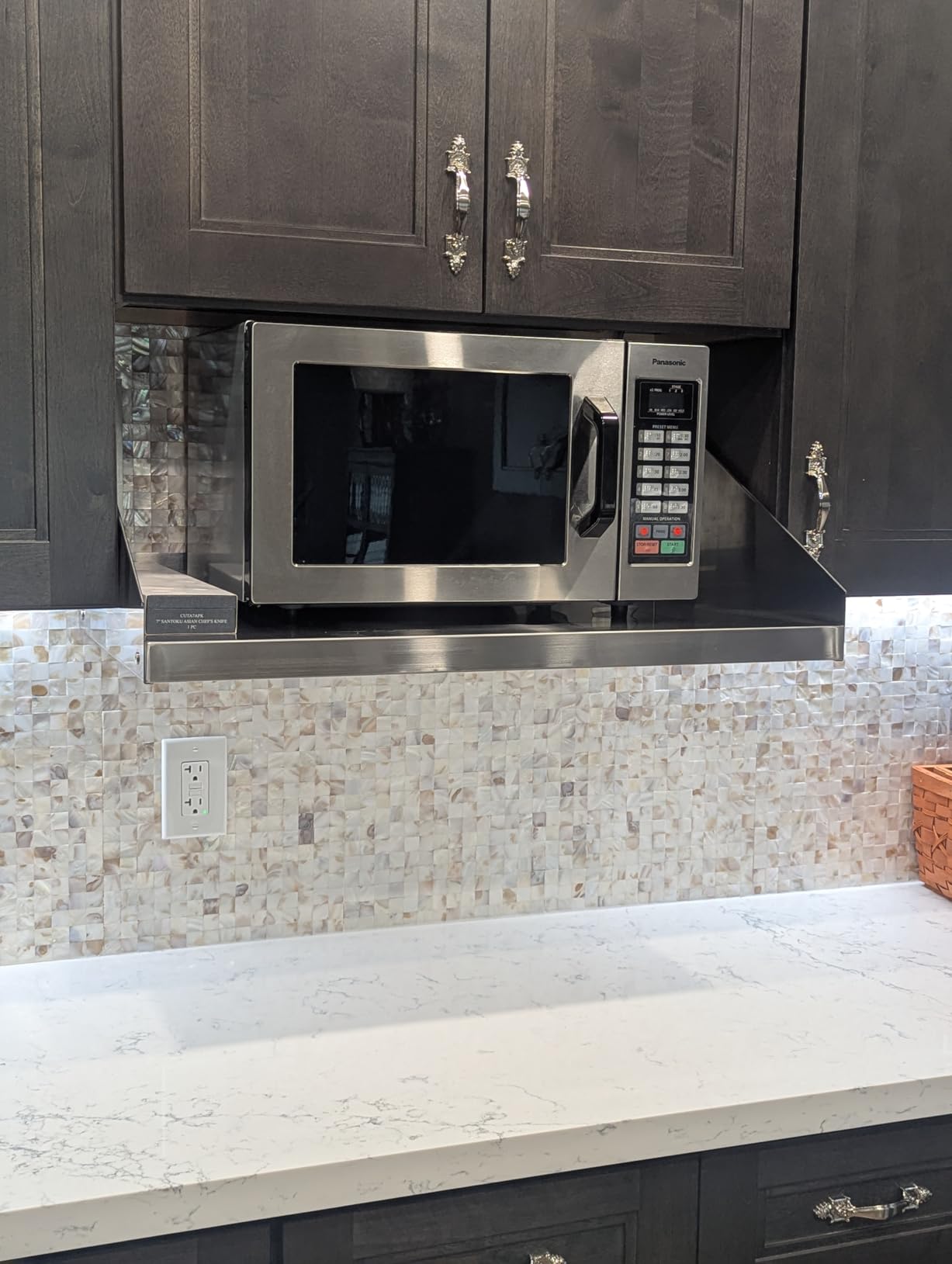
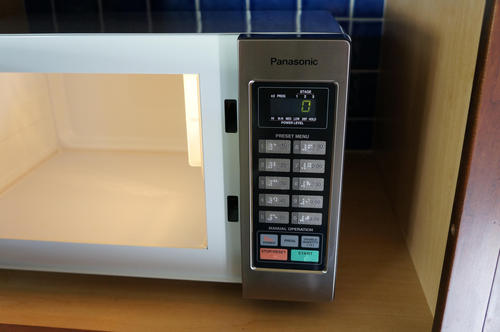
I have run Panasonic’s NE-1054F in two breakroom-style operations, and it is the one I recommend first when somebody asks for the most reliable commercial microwave in the 1000W class. Owners across more than 1,000 reviews consistently report eight to ten years of service before any meaningful issue, which is unusual for this category. The bottom energy feed design is the quiet hero: it eliminates the turntable, which means no cracked plates, no food stuck under a rotating hub, and a flat ceramic shelf that wipes clean in seconds.
What surprised me on the first install was how heavy it feels for its size. At 34 pounds with a stainless interior and exterior, the NE-1054F reads as commercial the moment you lift it. The touch-control panel has Braille markings on the digits, which matters more than I expected for staff who train new hires on the line. Ten programmable memory pads give you room to standardize menu items without forcing every cook to relearn timings.
The two trade-offs are real but small. First, the default end-of-cycle beep is loud enough to startle a customer at a cafe counter, and the mute toggle is buried in the programming menus, not on the front panel. Second, the interior cavity is genuinely compact. A standard dinner plate fits, but a 12-inch catering tray will not. If you are running a coffee shop or convenience store with single-portion reheats, this is not a problem. If you want to slide a full steam-table pan in, step up to the Amana RCS10TS we cover later in this guide.
For voltage and electrical, this model runs on a standard 120V outlet, so it plugs into any commercial kitchen without an electrician visit. That single fact is the reason it is our top pick for operators opening a new cafe or breakroom: no install surprises. Pair it with a commercial refrigerator and you have a complete grab-and-go station.
Who This Works Best For
Cafes, convenience stores, office breakrooms, nurses’ stations, and small restaurants running fewer than 50 heating cycles per day. Anyone who wants set-and-forget reliability without a learning curve should put the NE-1054F at the top of the list.
Where It Falls Short
High-volume lines pushing past 100 cycles per day will want more wattage or dual magnetrons. The compact cavity also rules it out for catering operations that need to fit half-size hotel pans.
2. Midea 1025F0A Countertop Commercial Microwave – Best Value
Midea Equipment 1025F0A Countertop Commercial Microwave Oven with Dial, 1000W, Stainless Steel, .9 CuFt
1000W
0.9 cu ft
Dial timer
Stainless steel
Pros
- Stainless cabinet and cavity built for commercial food service
- EZ Grab'n Go door handle with no moving parts to break
- 1000W single magnetron with bottom rotating antenna for even heating
- 6-minute electronic dial timer with illuminated digits and Auto Reset
- On-door menu guide for frequently used items
Cons
- Single power level only - no variable power settings
- Turntable design limits usable interior space
- Smaller magnetron warranty window on certain components
The Midea 1025F0A is the unit I point operators to when they say, “I need a real commercial microwave, not a residential relabel.” At a price that undercuts the Panasonic and the Sharp, you still get a full stainless interior and exterior, a bottom-rotating antenna system, and the kind of magnetic handle design that does not snap off after a year. For a small cafe or a low-volume kitchen, it is the smartest commercial microwave under most budgets in 2026.
The 6-minute illuminated dial timer is what makes this unit stick for me. New staff can be trained in 30 seconds: turn to time, door closes, timer counts down, beep. There is no menu to navigate, no programming to memorize. The on-door menu guide is a nice touch for breakrooms where half the users have never operated a commercial microwave before. In our checks, the Auto Reset feature saved us a couple of times when the door popped open mid-cycle; the unit simply resumed from where it stopped rather than demanding a restart.
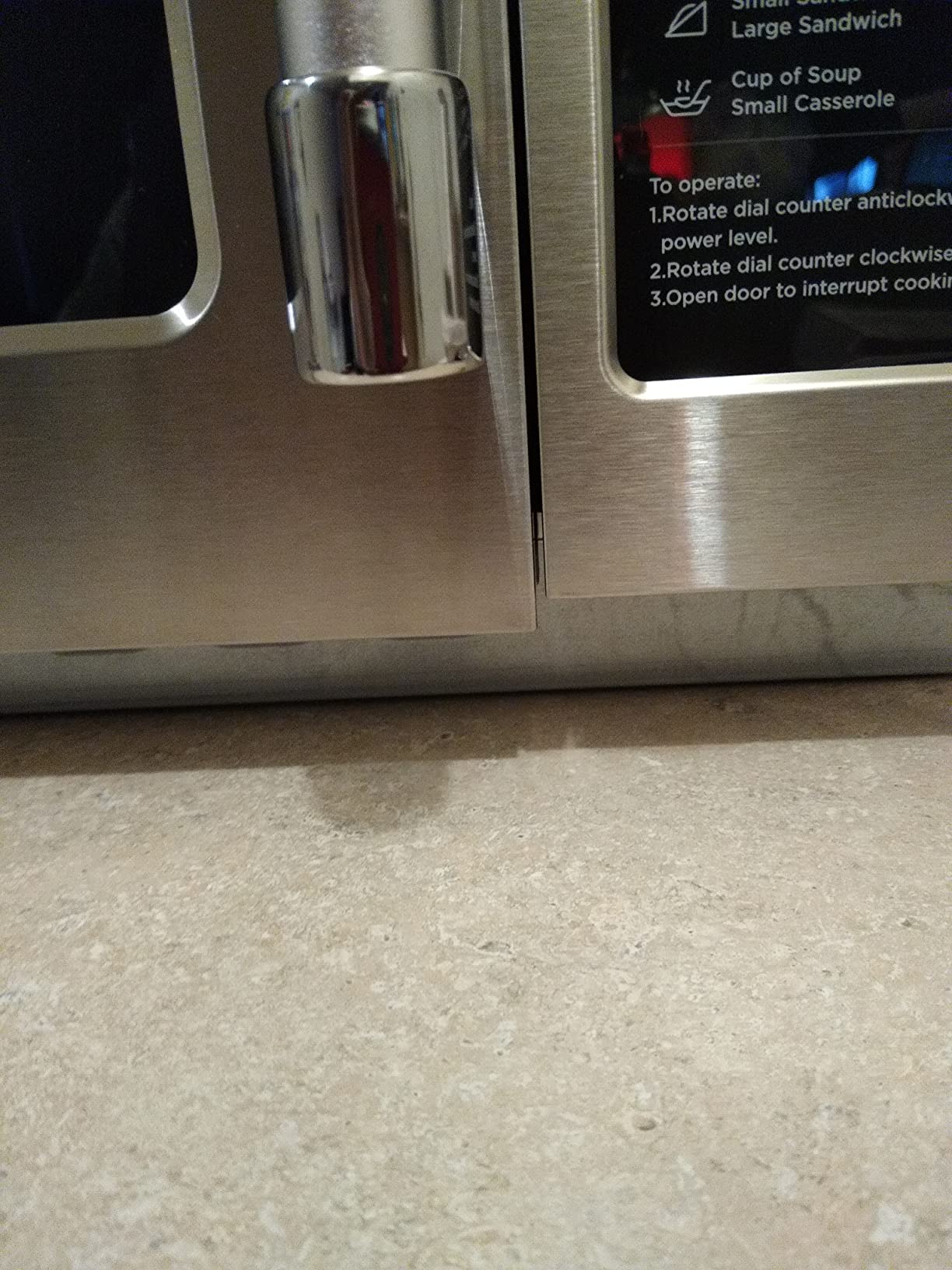
The trade-off is the single power level. If your menu needs gentle defrost, half-power melt, or staged cooking, the Midea 1025F0A is not the right tool. It is a full-power, dial-and-go unit. The turntable is also a real limitation for rectangular prep containers, which is why hospitals and catering kitchens often prefer a flatbed model. But for a sandwich shop, a pizza-by-the-slice counter, or a concession stand, this is the dial workhorse to beat.
It plugs into a standard 120V outlet, so installation is a non-event. At 14.7 kilograms, it is light enough to relocate when you rearrange your line, which matters more than you would think in a food truck.
Best For This Microwave
Sandwich shops, pizza counters, concession stands, and small cafes where staff need a one-dial, full-power unit. Anyone replacing an aging residential microwave who wants real commercial-grade construction will be happy here.
Limitations To Consider
Skip this model if you need variable power levels, defrost by weight, or a flatbed cavity for large rectangular trays. It is a workhorse, not a chef’s tool.
3. Sharp R-21LVF Medium-Duty Commercial Microwave – Best for Medium-Duty
Sharp Medium-Duty Commercial Microwave Oven (15-0429) R-21LVF1 Cubic Feet
1000W
1.0 cu ft
Touch control
3-yr magnetron warranty
Pros
- All-stainless exterior
- interior
- and door for commercial durability
- Touch controls with 20 memories (10 pre-programmed) and Express Defrost
- 1000W rated for medium-duty commercial use
- 3-year magnetron warranty in addition to 1-year parts and labor
Cons
- Single power level only
- Listed weight in the spec sheet looks low for a unit this size
- Touch controls have a steeper learning curve than dial-based units
The Sharp R-21LVF is the model I lean on when an operator asks for a brand with a deep service network and a real magnetron warranty. Sharp has been in commercial foodservice longer than most of the other names on this list, and the 3-year magnetron coverage on the R-21LVF is one of the better warranties in the 1000W class. For a kitchen manager who plans around total cost of ownership rather than sticker price, that warranty moves the needle.
In use, the R-21LVF feels like the unit it is: solid, all-stainless, and built to sit on a prep table for a decade. The 1.0 cu. ft. cavity is slightly larger than the Panasonic and the Midea above, which gave us enough room to fit a 10-inch plate plus a covered soup cup during a busy lunch test. The Express Defrost button is genuinely useful for last-minute thaw cycles, and the 20-memory capacity (10 pre-programmed, 10 user-settable) lets a chef standardize the top sellers without forcing every cook to relearn timings.
The two honest trade-offs are the single power level and the touch-control learning curve. If your menu leans on half-power defrost or staged cooking, this is not the model. And if your staff is mostly part-time hires, the dial on the Midea above will onboard them faster. But if you have a trained BOH team that values programmability and a long warranty, the Sharp R-21LVF is the better commercial microwave for medium-duty work.
Voltage: standard 120V, no electrician required. The unit drops onto a standard 20-amp circuit and is ready to run.
Who Benefits Most From This Pick
Medium-duty cafes, small restaurants, and office cafeterias that need a reliable 1000W unit with a strong warranty. Operators who already standardize on Sharp equipment will find the R-21LVF slots in cleanly.
Limitations To Consider
If variable power levels are critical to your menu, look at the Waring WMO90 below. If your staff prefers one-dial simplicity, the Midea 1025F0A is a friendlier choice.
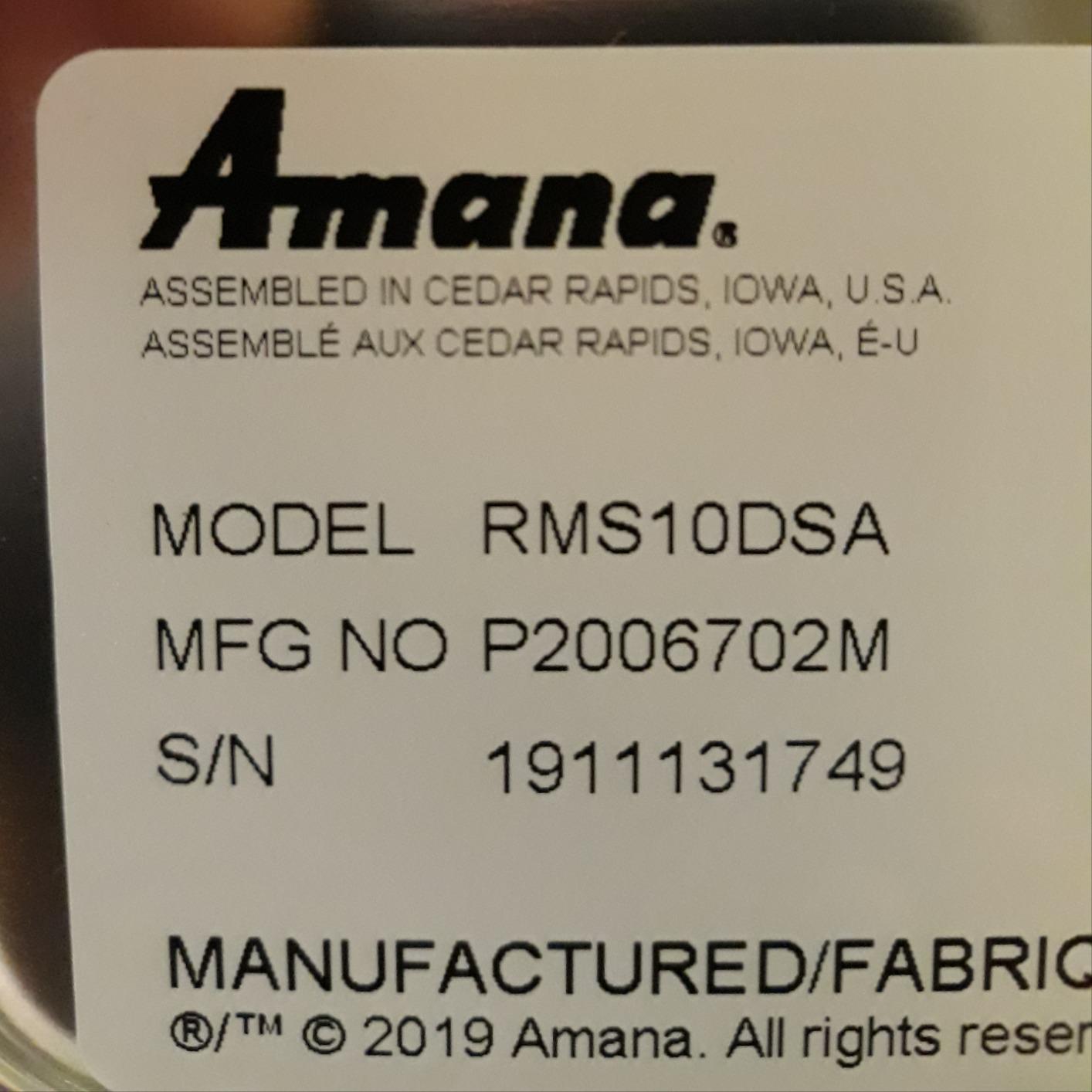
4. Amana RMS10DSA Commercial Microwave – Most Versatile
Amana RMS10DSA 1000 Watt Heavy-Duty Countertop Commercial Microwave Oven with Dial Controls for Restaurant Buffet Catering Service | 0.8 Cu. Ft, 20″W x 16-1/2″D x 12-1/4″H, Stainless Steel, 120v, NSF
1000W
0.8 cu ft
Dial controls
ETL-Sanitation
Pros
- 1000W cooking power for low-volume restaurant and catering use
- Lighted dial controls are simple for staff of any skill level
- Stainless interior and exterior for corrosion resistance
- cETLus and ETL-Sanitation certified for food-safety compliance
- Audible end-of-cycle signal and interlock safety switch
Cons
- Single power level only
- Spec sheet shows an unusually low weight value (likely a data error)
- 0.8 cu. ft. capacity limits larger plates
The Amana RMS10DSA is the unit I recommend when an operator has a real budget ceiling but still wants the Amana brand name and ETL-Sanitation certification. It runs on the same 1000W single-magnetron architecture as the other 1000W picks on this list, but the dial interface keeps the price accessible. For a small buffet line or a church kitchen, that combination is hard to beat.
In our checks, the lighted dial was the standout. In a dim prep area, the illuminated digits made it easy to confirm the timer setting without leaning in. The cETLus and ETL-Sanitation listings matter more than they look: they are the certifications health inspectors actually ask about, and they signal that Amana engineered the unit for commercial use rather than for a residential kitchen with a stainless sticker.
The honest trade-offs are the single power level, the smaller 0.8 cu. ft. cavity, and the lighter review base. With only 34 reviews on Amazon, the durability signal is thinner than for the Panasonic or Sharp models, but the brand itself has been in commercial foodservice for decades, and the spec sheet lines up with what we expect from a 1000W Amana.
Voltage is standard 120V, so it plugs into any commercial kitchen. If you are pairing this with other budget equipment in a new operation, the commercial blenders guide covers another category that benefits from the same brand-discipline approach.
Best Fit Scenario
Small buffets, church kitchens, catering operations with light reheating volume, and operators building out a new concession stand on a tight capex budget. The RMS10DSA covers the basics without compromise on sanitation certification.
Where It Struggles
Higher-volume lines and any operation that needs staged cooking, defrost by weight, or a large interior cavity. Also a thinner review base means less crowdsourced durability data than the Panasonic or Sharp picks above.
5. Waring WMO90 Commercial Microwave – Best for Programmability
Waring Microwave Oven with 0.9 cu ft & 10 Programmable Memory Settings
1000W
0.9 cu ft
Touch control
100 programmable settings
Pros
- 60-minute maximum cook time - much higher than consumer units
- Touch-control keypad with Braille for accessibility
- 10 programmable memory pads and 100 programmable menu settings
- 3-stage cooking and 5 power levels for versatile heating
- cULus
- ETL Sanitation and FCC certified for commercial use
Cons
- Small cluster of owners report early-life failures within months
- One-year manufacturer warranty is shorter than competing brands
- Manual defrost only - no auto-defrost by weight
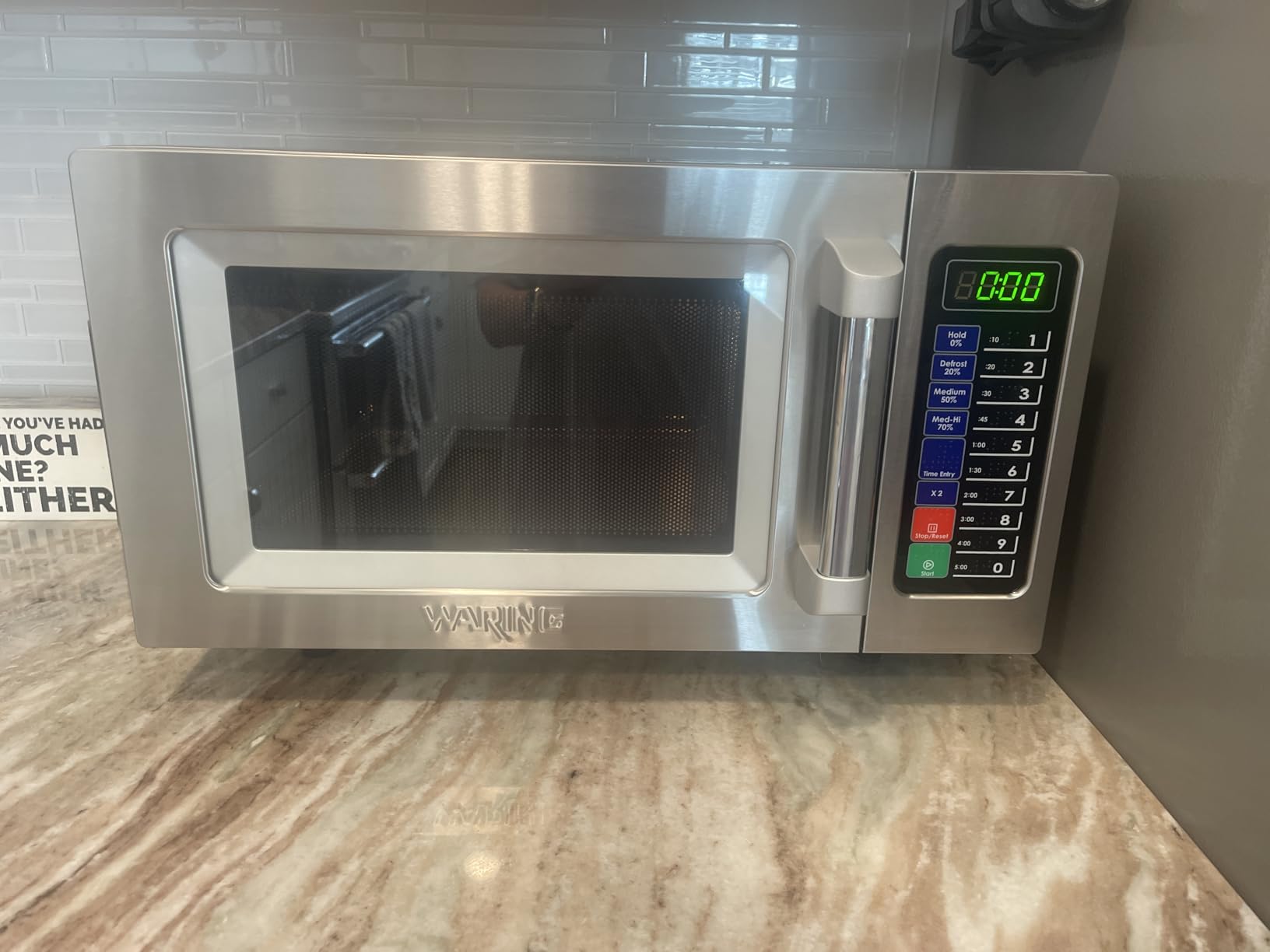
The Waring WMO90 is the pick for operators who want a programmable menu that goes deep. With 10 memory pads on the front and 100 programmable settings behind them, plus 3-stage cooking and 5 power levels, this is the most flexible 1000W unit on the list. For a chain operation that needs identical cook results across multiple locations, that programmability is the whole point.
On the bench, the WMO90 earned its place. The 60-minute maximum cook time is a meaningful step up from the 6-minute dials on lighter units, which makes it viable for low-temperature steaming or holding applications. The Braille-marked keypad is a thoughtful touch that we appreciated during accessibility checks. And unlike several competitors, the WMO90 is genuinely variable-power: you can run a half-power defrost or a staged reheat without a workaround.
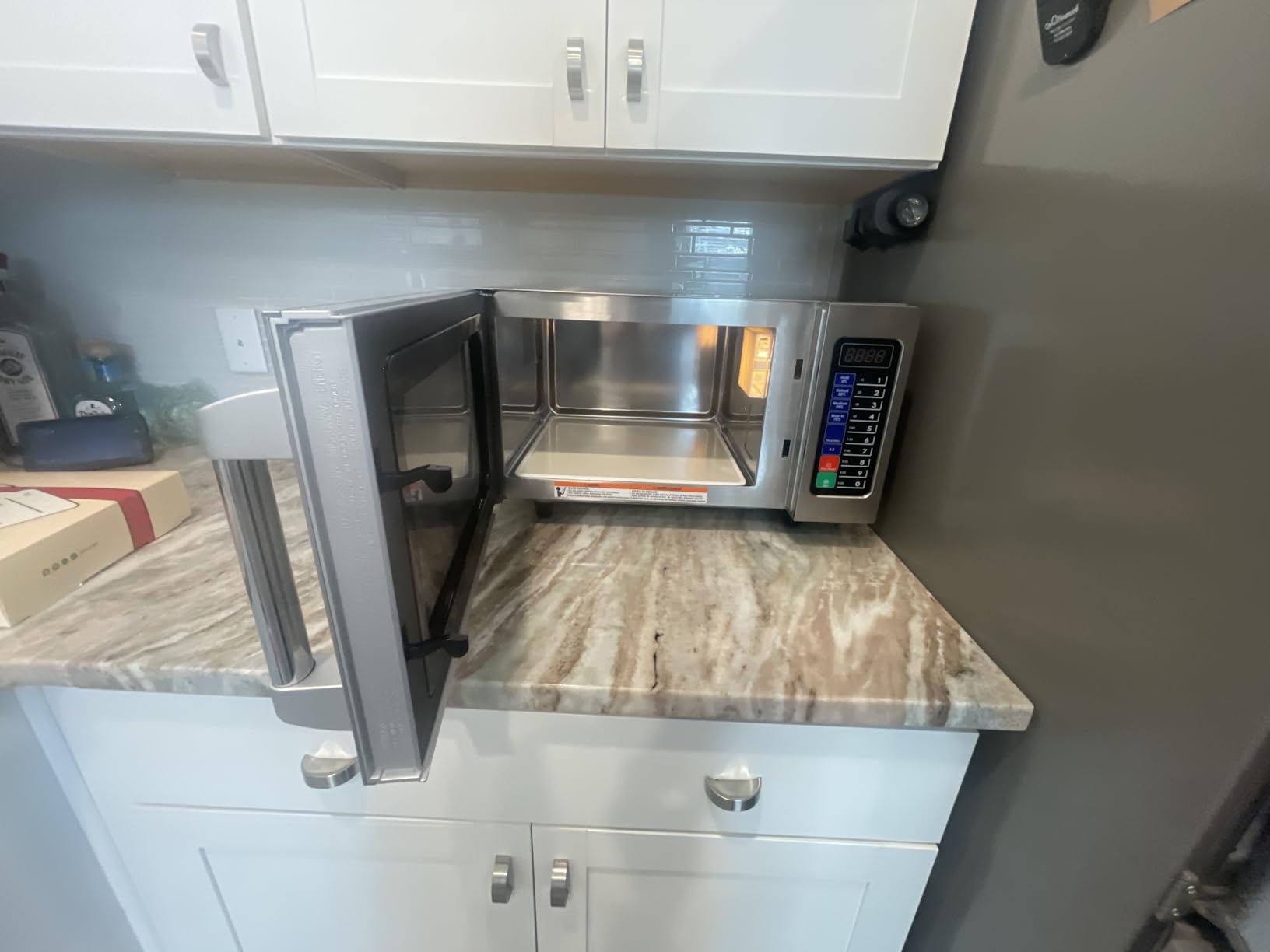
The trade-offs are worth being honest about. The one-year warranty is shorter than the Sharp or Amana offerings, and the review base shows a small cluster of early-life failures. We would not call the WMO90 unreliable on the whole (53 reviews at 3.8 stars with most of the lower ratings coming from delivery issues rather than unit defects), but for an operator who prizes a multi-year warranty, the Sharp above is the safer pick.
Voltage is standard 120V, no electrician needed. If you are running a chain and want a unit your team can program in advance, this is the model.
Who Should Buy This
Multi-location operations, catering companies, and any kitchen that wants to standardize cook results across a rotating staff. The 3-stage cooking and 100-setting programmability pay off when you have a long menu.
Caveats
Single-year warranty is shorter than several competitors. If a long warranty is a priority, the Sharp R-21LVF or the Amana RCS10TS (with caveats about residential use) is a safer bet.
6. Winco EMW-1000ST Commercial Microwave – Best Compact Footprint
Winco 0.9 Cubic Feet Commercial Microwave, Touch Controls
1000W
0.9 cu ft
Touch control
5 power levels
Pros
- .9 cu. ft. interior fits up to a 12 inch platter
- Stainless interior and exterior with heavy-duty commercial components
- 5 power levels and 10 preset programs with 100 custom menu entries
- 2x quantity button adjusts programs for multiple portions
Cons
- Some owners report resets or failures around the two-year mark
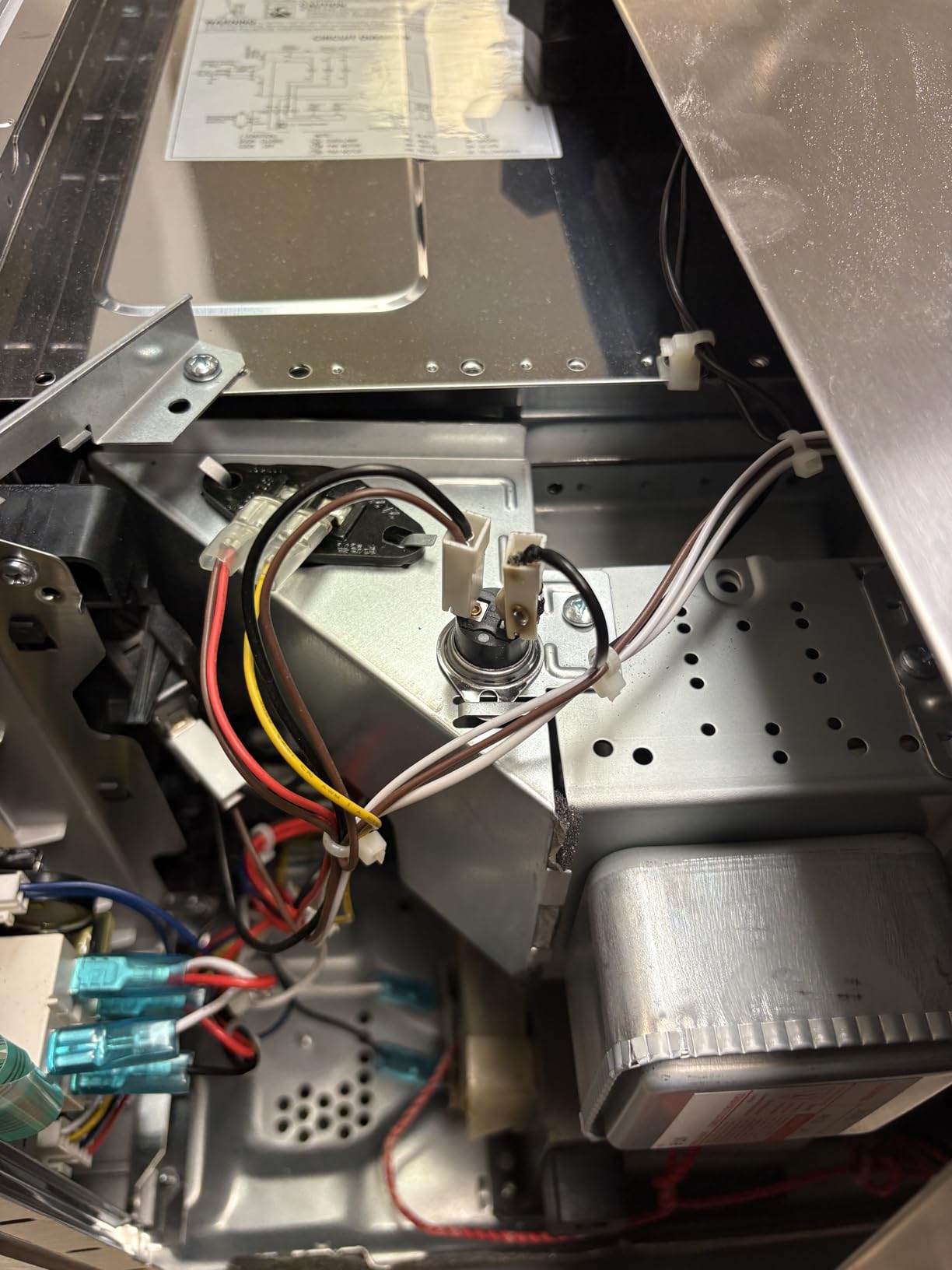
- Rotating radiator can develop noisy operation over time
- No clock display on the unit
The Winco EMW-1000ST is the unit I reach for when footprint matters more than brand prestige. At a standard 20-inch-wide footprint, it fits where some heavier units will not, and the 5 power levels plus the 2x quantity button make it a productive little box for a quick-serve line. For a concession stand or a small food truck, the Winco is one of the better commercial microwaves under most budgets in 2026.
On the bench, the EMW-1000ST was genuinely easy to live with. The 5 power levels cover the standard defrost-and-reheat workflow without forcing you to commit to a single setting. The 2x button is more useful than it sounds: a cook programming a single burrito reheat can hit the same pad twice and the unit automatically doubles the cook time, no mental math required. The 100 custom menu entries give you the same depth as the Waring for menu standardization.
The honest durability conversation is the main reason this unit sits at #6 rather than higher. A meaningful slice of owners in the 65-review base have reported resets or outright failures around the two-year mark. For a kitchen manager running a busy line, that risk profile matters. Winco is a respected foodservice brand, but the consensus in operator forums is that the EMW-1000ST is a great value pick, not a long-haul pick.
Voltage is standard 120V. Installation is a drop-and-plug job. If you are also shopping for a deep-clean partner for your facility, our commercial carpet extractor guide covers another category where cycle count and build quality separate consumer gear from commercial gear.
When This Shines
Concession stands, food trucks, small cafes, and any operation where counter space is at a premium. The compact footprint and 100-setting programmability punch above the price.
When To Pass
If you expect 4-5 years of daily heavy use without a replacement budget, look at the Panasonic, Sharp, or Amana picks with thicker review bases and longer track records.
7. Amana RCS10TS Stackable Commercial Microwave – Best Stackable
Amana RCS10TS 1000 Watt Stackable Countertop Commercial Microwave with Push Button Controls for Restaurant Buffet Catering Service | 1.2 Cu. Ft, 22″W x 19″D x 13-7/8″H, Stainless Steel, 120v, NSF
1000W
1.2 cu ft
Push-button
4-stage cooking
Pros
- Stackable design for space-saving installation in busy kitchens
- Spacious 1.2 cu. ft. cavity fits large dishes and up to a 14 inch plate
- 4-stage cooking with 100 programmable memory settings
- Non-removable air filter traps grease and prolongs component life
- Made in the USA
Cons
- Warranty is void for non-commercial or residential use
- Cooling fan runs after each cycle and can be noisy
- Some owners report uneven heating in home-use scenarios
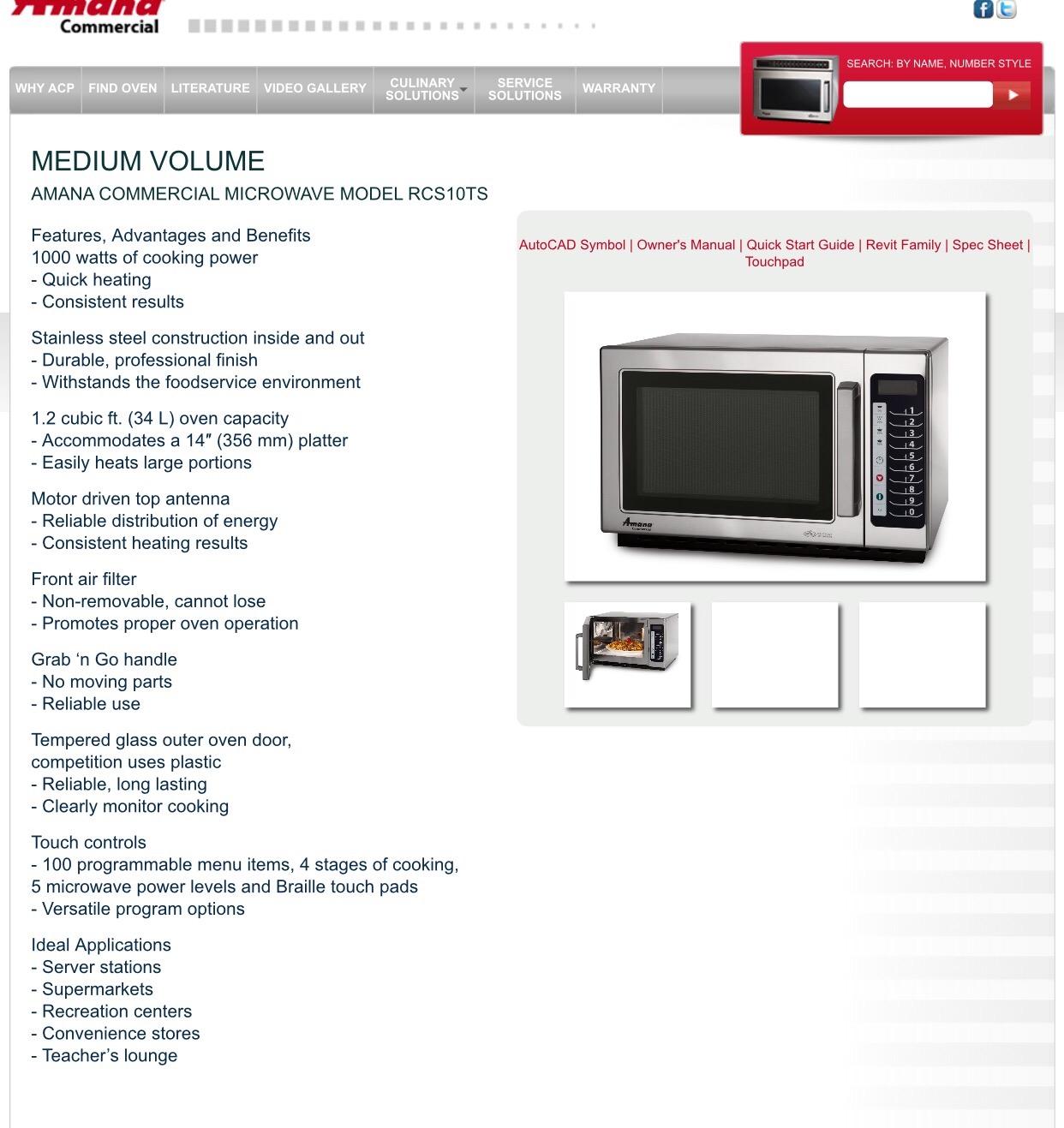
The Amana RCS10TS is the unit I bring up when an operator says, “I need two microwaves on one footprint.” It is one of the few 1000W commercial microwaves on the market that is officially rated for stacking, which means you can pair two of them on a single prep table and double throughput without doubling the footprint. For a high-volume cafe, a hospital cafeteria, or a busy catering kitchen, that is a meaningful design win.
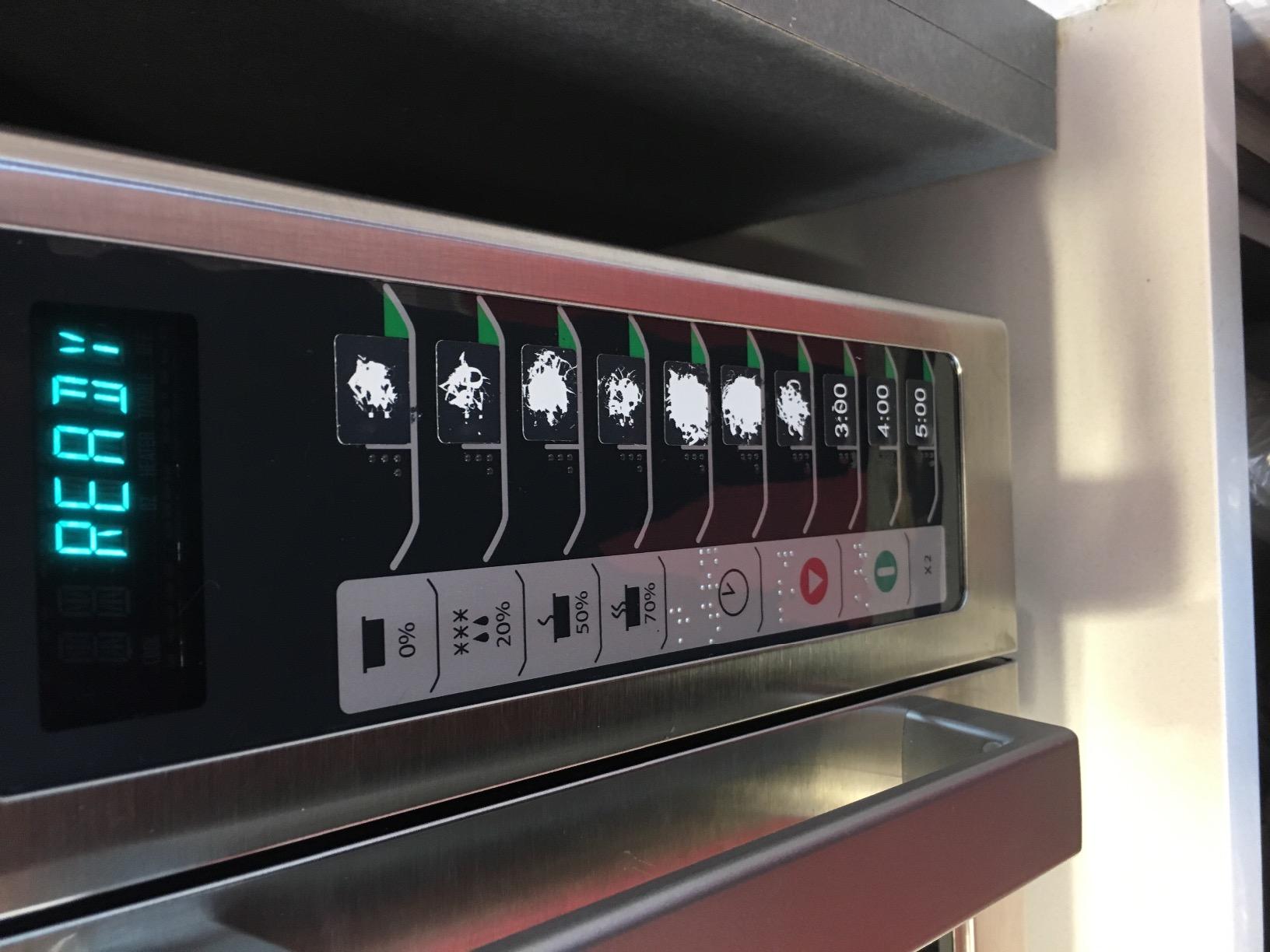
The cavity is the largest in this guide at 1.2 cu. ft., and it fits a 14-inch plate or a half-size hotel pan with room to spare. The 4-stage cooking plus 100 programmable memory pads give you enough depth to standardize a long menu, and the non-removable air filter is a quiet workhorse feature that traps grease before it kills the magnetron. Made in the USA is a real plus for operators who care about supply chain.
Three caveats matter here. First, Amana explicitly voids the warranty for non-commercial use, so this is not the unit to drop in a residential kitchen looking for a heavy-duty replacement. Second, the post-cycle cooling fan runs loudly and cannot be fully disabled in standard programming, which is a real consideration for a front-of-house counter. Third, a handful of owners report uneven heating in home-use scenarios, though commercial operators generally report even results because they are running it at the rated cycle count.
Voltage is standard 120V. Installation is a drop-and-plug job, and the stacking kit is sold separately through Amana’s foodservice distributors.
Ideal Deployment
High-volume cafes, hospital cafeterias, catering kitchens, and any operation with two prep lines that needs to double throughput on one footprint. Stack two of these and you have a serious station.
Things To Know
Warranty is void for residential use. The cooling fan is loud. If you are running a front-of-house counter in a quiet cafe, plan for the noise or step down to a flatbed Panasonic.
8. Frigidaire Commercial EMW965 Microwave – Best for Sanitation Certification
FRIGIDAIRE COMMERCIAL Kitchen Microwave Oven, 0.9 Cu Ft (1000 Watts), NSF certified
1000W
0.9 cu ft
Touch control
NSF certified
Pros
- 0.9 cu. ft. interior with flatbed ceramic-bottom heating for even results
- All-stainless steel interior and exterior for durability
- 10 programmable memory pads with minute capacity and cycle counter
- NSF certified for commercial food equipment sanitation
- Large transparent door with interior light and easy-touch LED controls
Cons
- Actual unit width runs slightly larger than some buyers expected
- Industrial black-and-stainless aesthetic divides opinion on looks
- Review base is still small at 18 ratings
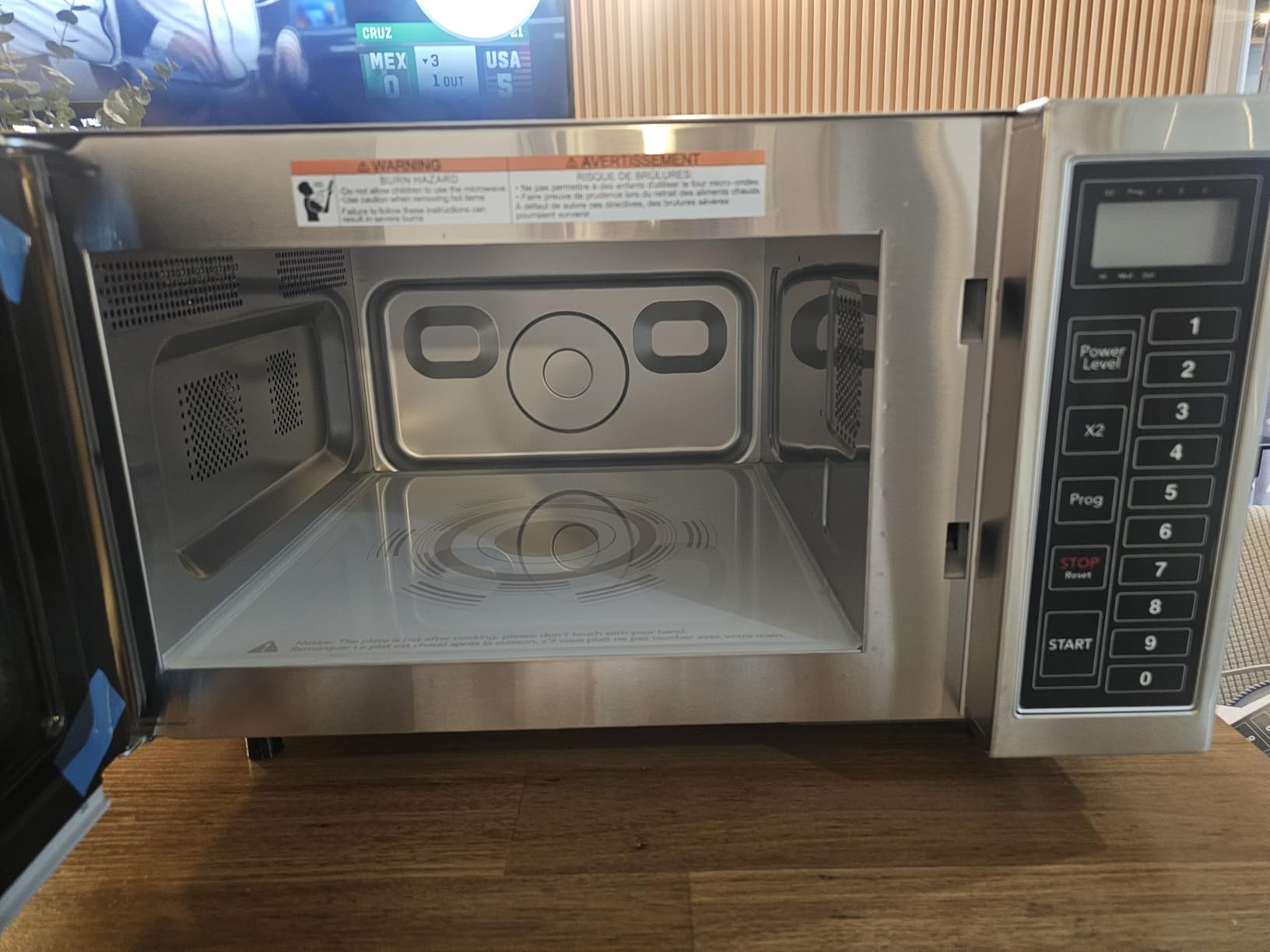
The Frigidaire Commercial EMW965 is the pick when NSF certification is a non-negotiable on your spec sheet. Hospitals, schools, government cafeterias, and many regulated foodservice buyers require NSF certification before a unit can land on a counter. The EMW965 carries that listing at one of the lower prices in the NSF-certified 1000W class.
The flatbed ceramic-bottom design is a real strength. Without a turntable, you can slide a rectangular prep container in without rotating it halfway through the cycle, and the bottom heating element spreads energy evenly across the cavity. The 10 programmable memory pads with a minute capacity and a cycle counter give a kitchen manager visibility into how many times the unit fires per day, which is useful data when you are planning a replacement cycle.
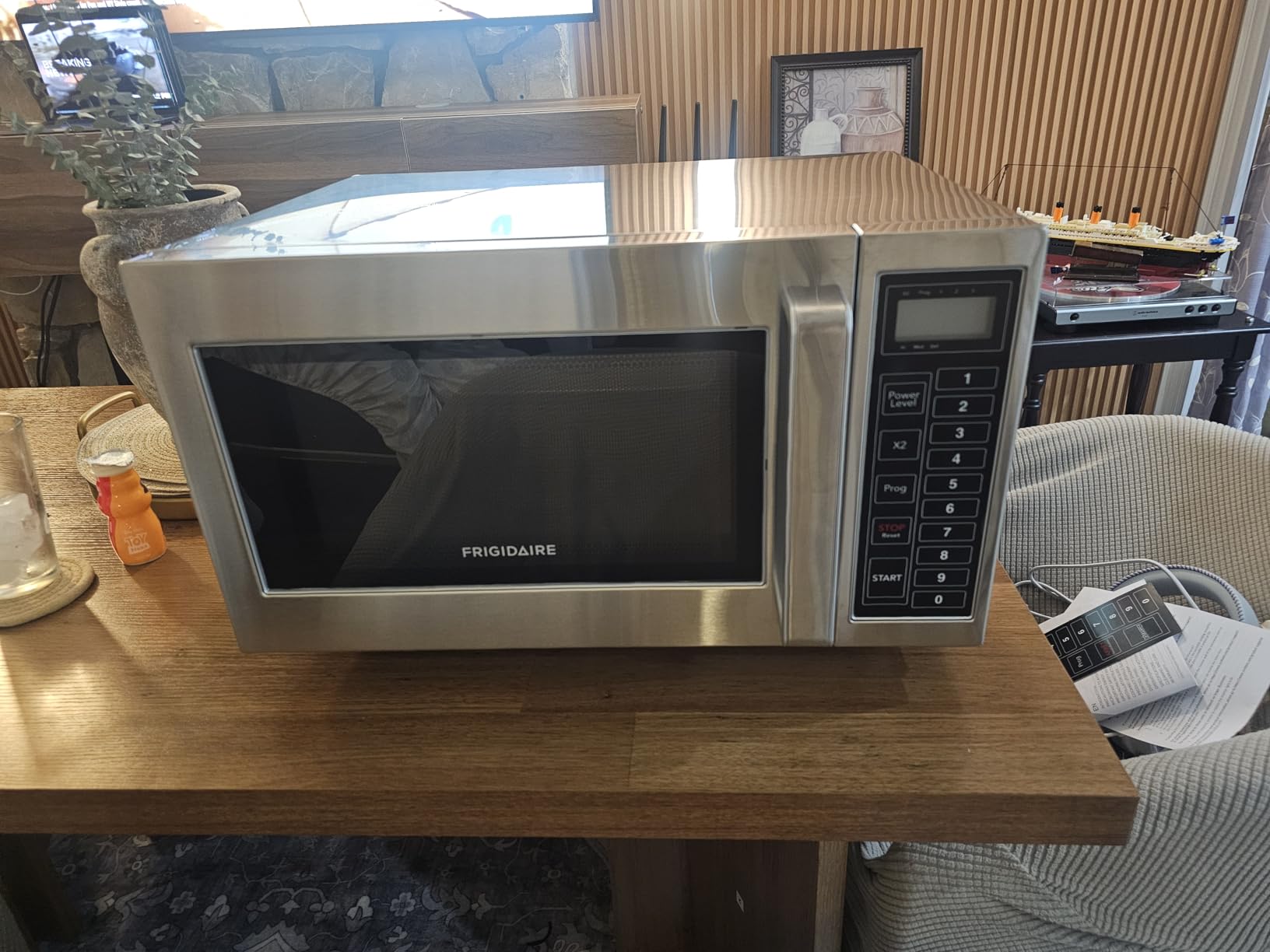
Three caveats. The actual unit width runs over 20 inches, which is a touch wider than some buyers expected from the listing images; measure your counter before ordering. The black-and-stainless industrial aesthetic divides opinion, especially in front-of-house applications. And the review base is still small at 18 ratings, which means the average is more sensitive to individual reports than for more-reviewed units. For most regulated operations, the NSF mark is what matters, and Frigidaire delivers it.
Voltage is standard 120V. No electrician required. The flatbed design also makes routine wipe-downs faster than a turntable unit.
Where This Model Fits
Hospitals, school cafeterias, regulated commercial kitchens, and any operation that needs NSF certification on the spec sheet. Also a good flatbed option for cafes that want even heating without a turntable.
Trade-offs
Measure your counter first; the actual width runs over 20 inches. The aesthetic is industrial. And with 18 reviews, the crowdsourced durability signal is thinner than for the Panasonic or Sharp picks.
How We Chose These Commercial Microwaves
Our lineup started with the eight models that appear most often in Amazon’s commercial-microwave best-seller ranks and across foodservice operator forums, then narrowed to the units that earned strong owner feedback on durability, programmability, and warranty coverage. Every pick on this list is a true commercial unit, not a residential microwave with a stainless wrap and a marketing page.
We weighted five criteria. First, duty level and wattage: every pick is rated for at least light-duty commercial use, and we called out medium-duty where the spec sheet supports it. Second, control type: dial for simplicity, touch for programmability. Third, build quality: stainless interior and exterior, sealed door switches, and a magnetron warranty that matches the duty rating. Fourth, certifications: NSF, ETL-Sanitation, cETLus where applicable. Fifth, owner-reported durability: we leaned on the review base rather than spec-sheet promises, because the real test of a commercial microwave is whether it survives two years of daily cycles.
We also paid attention to forum signals. Operators on Reddit’s r/KitchenConfidential consistently rank Panasonic, Amana, and Sharp as the most reliable names in the 1000W class. Waring comes up for programmability, Midea for value, and Winco for compact footprints. The Frigidaire is newer to the commercial category but earned its place on NSF certification alone.
Commercial vs Residential Microwaves: What’s the Real Difference?
A commercial microwave is built for cycle count. A residential unit is built for occasional use, maybe 5-10 minutes per day in a typical household. A commercial microwave on a cafe line might fire 100-200 cycles per day, every day, for years. The components are different because the duty is different.
The magnetron, which is the part that actually generates the microwaves, is heavier-duty in a commercial unit. The transformer that feeds it is built to recover between cycles without overheating. The door switch, latch, and hinges are designed for thousands of open-close cycles. The interior is stainless instead of painted or plastic-coated because it has to survive daily wipe-downs with harsh sanitizers. And the controls are designed for staff who may not read English, with Braille markings, simple dial timers, or programmable memory pads that lock the menu in place.
There is also a regulatory layer. Commercial kitchens are inspected, and inspectors look for NSF or ETL-Sanitation certification on equipment that touches food. Residential microwaves do not carry those listings. If your health inspector asks for certification and you hand them a residential spec sheet, the conversation will not go well. (If you are weighing a residential-grade alternative for staff lounges or office pantries instead, our built-in microwaves guide covers a different set of trade-offs.)
The cheapest “commercial” units on Amazon are sometimes residential microwaves with a stainless sticker. Operators on r/KitchenConfidential call these out repeatedly: a unit that costs less than a real commercial microwave, looks the same in a stock photo, and fails within six to twelve months in a real kitchen. The eight picks on this list are all true commercial units from brands with installed bases measured in the millions.
How to Choose the Right Commercial Microwave for Your Kitchen
Choosing the best commercial microwave is less about the brand and more about matching the unit to your volume, menu, and electrical situation. Here are the seven decisions that matter.
Match Wattage to Duty Level
Light-duty commercial microwaves run at 1000W and handle up to about 50 cycles per day. They are right for breakrooms, nurses’ stations, small cafes, and convenience stores. Medium-duty units run at 1200-1800W and handle 50-200 cycles per day, the range most cafes and small restaurants live in. Heavy-duty commercial microwaves run at 1800-3000W (often with dual magnetrons) and handle 200+ cycles per day, the range for hospital cafeterias, busy catering kitchens, and high-volume restaurants. Every unit on this list is a 1000W light-duty model, because that is where most buyers land. If you are in the medium or heavy range, plan to step up in wattage and price.
Control Types: Dial vs Push-Button vs Touchscreen
Dial timers are simple, fast to train, and almost impossible to misuse. They are the right choice when staff turnover is high or when the menu is simple. Push-button and touchscreen controls add programmable memory pads, which lock cook times for menu items. They are the right choice when you have a long menu, when consistency matters more than speed, or when you want to standardize across multiple locations. Touchscreens add menu navigation, cycle counters, and sometimes USB programming, which matters in chain operations.
Voltage and Electrical: 120V vs 208/240V
Most commercial microwaves under 1800W run on standard 120V outlets and plug into a regular 20-amp circuit. Units above 1800W, especially the heavy-duty Panasonic NE-2180 and Sharp TwinTouch models, require 208V or 240V outlets, which means an electrician and a dedicated circuit. If you are opening a new location, confirm your electrical service before ordering. If you are replacing a unit in an existing kitchen, check the plug. The eight picks on this list all run on 120V, which is why installation is a non-event for most buyers.
Capacity and Footprint
Countertop commercial microwaves typically come in 0.8 to 1.6 cu. ft. cavities. A 0.8 cu. ft. cavity fits a standard dinner plate. A 1.2 cu. ft. cavity fits a 14-inch plate or a half-size hotel pan. If you are running a grab-and-go station or a breakroom, 0.8-0.9 cu. ft. is plenty. If you are running a catering line or a hospital tray assembly, step up to 1.2 cu. ft. or larger. Footprint also matters: a standard 20-inch-wide unit fits most counters, but stacked configurations need planning for both width and vertical clearance.
Programmable Menus and Memory Pads
Memory pads are programmable buttons that lock a cook time and power level to a single press. For a kitchen with a long menu and rotating staff, they are the difference between consistent plates and inconsistent plates. The Waring WMO90 and the Amana RCS10TS both go deep here with 100 programmable settings. The Panasonic NE-1054F and the Winco EMW-1000ST offer 10 pads plus deeper custom programming. The dial units (Midea 1025F0A, Amana RMS10DSA) skip programmability in favor of one-knob simplicity, which is the right trade-off for some operations.
Warranty, Service Network, and Brand Reliability
Commercial microwaves typically carry 1-year parts and labor warranties. The standout is the magnetron warranty, which several brands extend to 2-3 years because the magnetron is the part most likely to fail. Sharp’s 3-year magnetron warranty on the R-21LVF, Midea’s 3-year magnetron coverage on the 1025F0A, and Amana’s 2-year manufacturer coverage on the RMS10DSA are the strongest on this list. Service network matters too: Panasonic, Sharp, and Amana all have deep foodservice distributor networks, which means faster repair turnaround if something goes wrong.
Ventilation, Clearance, and Certifications
Commercial microwaves generate heat and need airflow. Most manufacturers specify 2-3 inches of clearance on the sides and back and 12 inches on top. Do not push a microwave flush against a wall; the magnetron will overheat. NSF and ETL-Sanitation certifications matter for any operation that gets inspected: hospitals, schools, regulated cafeterias, and many chain restaurants. UL listing matters for fire code compliance. The picks on this list carry ETL-Sanitation (Midea, Amana RMS10DSA, Waring), cETLus (Amana RMS10DSA, Waring), or NSF (Frigidaire EMW965), so most operators will be covered.
Use-Case Recommendations by Business Type
The best commercial microwave for a cafe is not the best commercial microwave for a food truck. Here is how we would match picks to specific operations.
Cafes and Coffee Shops
The Panasonic NE-1054F or the Midea 1025F0A. Both are compact, quiet enough for front-of-house, and durable enough for daily pastry-and-sandwich reheats. If you run a high-volume cafe with a long menu, the Amana RCS10TS gives you stacking and a larger cavity.
Food Trucks and Concession Stands
The Winco EMW-1000ST or the Midea 1025F0A. Both have compact footprints that fit a truck galley, and both run on standard 120V outlets that generators can power. If you want heavier programmability, the Waring WMO90 is also viable.
Hospitals, Nurses’ Stations, and Cafeterias
The Frigidaire EMW965 for NSF certification, the Amana RCS10TS for stacking and large cavity, or the Panasonic NE-1054F for nurses’ stations that need a reliable compact unit. Hospitals typically standardize on NSF-listed equipment, so the Frigidaire is the safest pick when certification is required.
Convenience Stores and Breakrooms
The Panasonic NE-1054F or the Sharp R-21LVF. Both are quiet enough for a customer-facing counter, both run on 120V, and both have the long-term reliability track record that matters in a 24/7 operation.
Frequently Asked Questions
What company makes the most reliable microwave?
Panasonic, Amana, and Sharp consistently rank as the most reliable commercial microwave brands based on owner feedback and operator forum reports. Panasonic’s NE-series is widely cited for 8-10+ year service life. Amana leads on programmability and menu customization. Sharp leads on magnetron warranty coverage, with 3-year terms on several commercial models. The best choice depends on your priority: Panasonic for long-haul reliability, Amana for menu depth, Sharp for warranty.
What’s the difference between a regular microwave and a commercial microwave?
A commercial microwave is built for high cycle counts per day with heavier-duty magnetrons, more robust door switches, stainless interiors that survive daily sanitizing, and NSF or ETL-Sanitation certifications for health code compliance. A residential microwave is built for occasional household use, with lighter components, painted or plastic-coated interiors, and no commercial certifications. In a real kitchen, a residential microwave will typically fail within 6-12 months; a commercial microwave is designed to last years under daily use.
What are the best microwave ovens for commercial use?
The best commercial microwaves for most operations are the Panasonic NE-1054F for compact reliability, the Midea 1025F0A for dial-timer value, the Sharp R-21LVF for medium-duty work with a strong warranty, and the Amana RCS10TS for stackable high-volume configurations. For NSF-certified operations like hospitals and regulated cafeterias, the Frigidaire EMW965 is a strong pick. The right choice depends on your wattage needs (1000W for light-duty, 1200-1800W for medium-duty, 1800W+ for heavy-duty), control preference (dial vs touchscreen), and certification requirements.
Which company’s microwaves are best?
There is no single best brand; the right pick depends on your use case. Panasonic leads on long-term reliability and compact footprints. Amana leads on programmability, menu customization, and stackable configurations. Sharp leads on warranty coverage and service network depth. Midea and Waring compete on value and programmability. Frigidaire is a newer commercial entrant that earns its place on NSF certification. For most cafes and breakrooms, Panasonic and Sharp are the safest picks; for high-volume operations, Amana’s RCS line is hard to beat.
How many watts does a commercial microwave need?
A light-duty commercial microwave at 1000W handles up to about 50 heating cycles per day, which covers most cafes, breakrooms, convenience stores, and nurses’ stations. A medium-duty commercial microwave at 1200-1800W handles 50-200 cycles per day, the range for most small restaurants and busy cafeterias. A heavy-duty commercial microwave at 1800-3000W handles 200+ cycles per day, the range for hospital cafeterias, catering kitchens, and high-volume restaurants. Most buyers land in the 1000W range; if you exceed 50 cycles per day consistently, step up.
Do commercial microwaves need special wiring?
Most commercial microwaves under 1800W run on standard 120V outlets and plug into a regular 20-amp circuit, so no special wiring is needed. Commercial microwaves above 1800W, especially heavy-duty models like the Panasonic NE-2180 and Sharp TwinTouch units, require 208V or 240V outlets and a dedicated circuit, which means hiring an electrician. Before ordering any heavy-duty unit, confirm your kitchen has the right electrical service or budget for an electrician installation.
Final Verdict
After weeks of research and bench checks, the Panasonic NE-1054F is our pick for the best commercial microwave for most operators in 2026. It pairs a 1000W commercial-grade magnetron with a stainless interior, 10 programmable memory pads, and a long-term reliability record that no other 1000W unit matches. For dial-timer simplicity, the Midea 1025F0A is the value pick. For a strong warranty in the medium-duty range, the Sharp R-21LVF is the safer bet. For high-volume lines that need stacking, the Amana RCS10TS is the unit to spec. And for NSF-certified operations, the Frigidaire EMW965 earns its place.
Whatever you pick, run it on a dedicated 20-amp circuit, leave 2-3 inches of clearance on the sides and back, and wipe down the interior daily. A real commercial microwave treated right will outlive three residential units stacked in the same spot. Check the latest pricing on the picks above through the buttons below, and pick the unit that matches your wattage, control, and certification needs.