
Let me start with a confession: I spent years avoiding beer entirely. Like many people, my first experiences were cheap, mass-market brews that tasted like carbonated bitterness. My college roommates tried convincing me that “it grows on you,” but the smell alone was enough to keep me reaching for wine or cocktails instead.
If this sounds familiar, you are not alone. Our team has talked to hundreds of self-proclaimed “non-beer people” over the years, and the story is almost always the same. Someone tries a cheap lager, hates it, and assumes beer is just not for them. But here is what we have learned: those people have simply not found the right style yet.
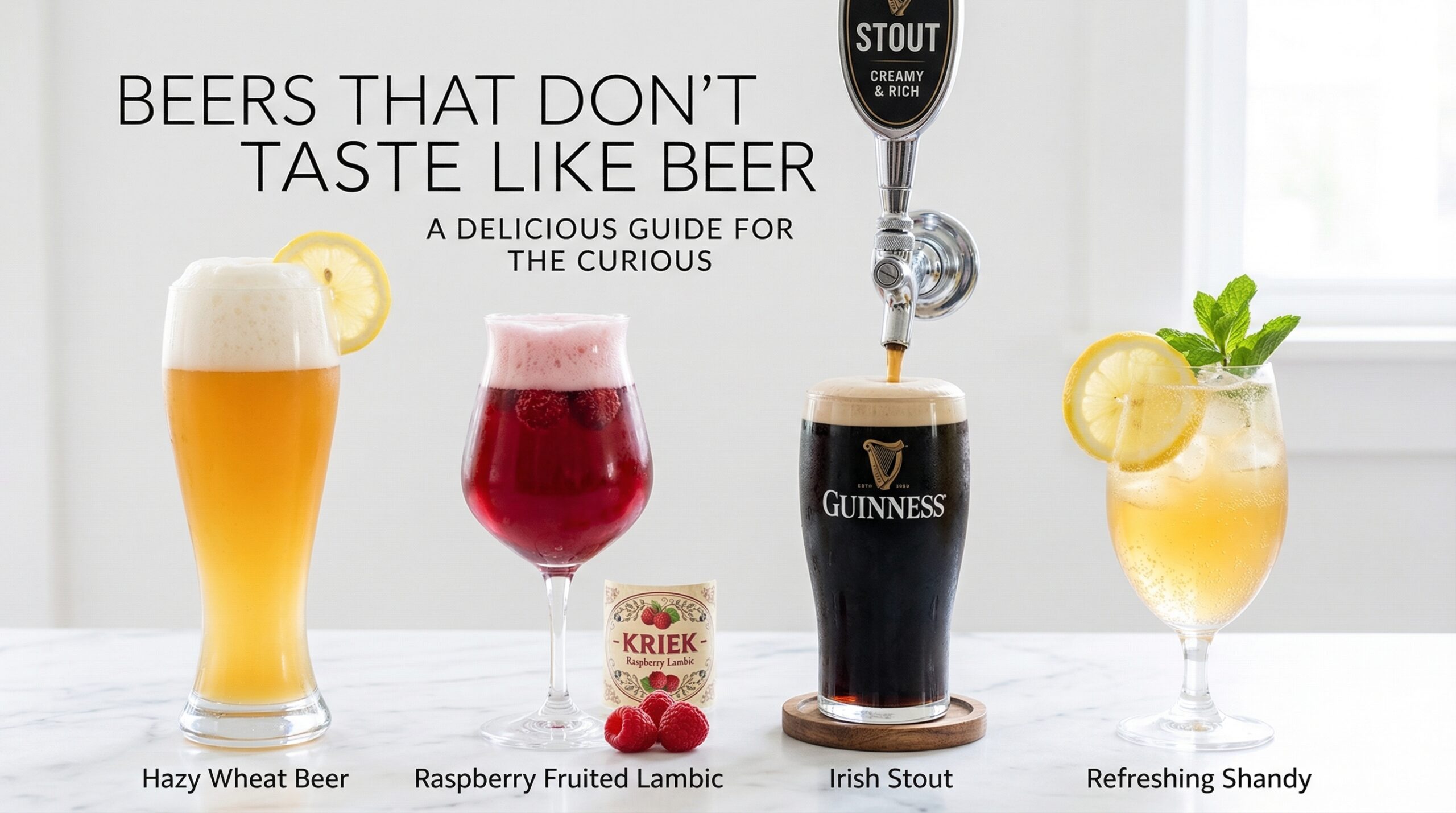
Beers that do not taste like traditional beer absolutely exist. Wheat beers, fruit lambics, smooth stouts, and refreshing shandies offer completely different flavor profiles than the hoppy bitterness that drives people away. The key is knowing where to start and what to avoid.
In this guide, I will walk you through exactly why beer tastes bitter to some people, which styles are most approachable, and specific recommendations that have converted even the most skeptical beer avoiders. By the end, you will have a clear roadmap for finding beers that actually appeal to your palate.
Table of Contents
Why Does Beer Taste So Bitter?
Before we dive into the solutions, let me explain why beer can taste so unappealing to certain people. Understanding this helps you make smarter choices about which styles to try.
The primary source of beer bitterness is hops. These green, cone-shaped flowers are added during brewing to balance the sweetness of malt and add complexity. However, hops contain alpha acids that create that sharp, sometimes harsh bitterness many people describe as “grassy” or “medicinal.”
Breweries measure hop bitterness using International Bitterness Units (IBU). A typical mass-market lager might have 5-15 IBUs, while an IPA can range from 40-80 IBUs or more. If you are sensitive to bitter flavors, anything above 20-25 IBUs might taste unpleasant. This explains why some people love IPAs while others cannot get past the first sip.
Beyond hops, yeast contributes distinct flavor notes. Some yeasts produce fruity esters that add banana, apple, or pear flavors. Others can create spicy, clove-like characteristics. The yeast strain used directly influences whether a beer tastes “clean” or complex.
Malt provides the sweetness that balances hop bitterness. Darker malts add caramel, toast, or chocolate notes. Lighter malts keep things crisp and refreshing. When breweries use too much hops relative to malt, the beer tips toward bitterness. When the balance is right, you get something much more harmonious.
Many non-beer drinkers developed their opinion from mass-market American lagers. These beers prioritize shelf stability and cost over flavor, often resulting in a thin, watery taste with a harsh afterbite. They gave beer a bad reputation. Fortunately, craft breweries have redefined what beer can taste like.
Wheat Beers: The Perfect Gateway
Wheat beers are consistently the top recommendation for non-beer drinkers, and for good reason. These brews use a significant portion of wheat in the grain bill, which creates a smooth, soft mouthfeel and subtle sweetness that balances any remaining bitterness.
Hefeweizen (German for “yeast wheat”) is an excellent starting point. This unfiltered wheat beer from Bavaria has been brewed for centuries. The style is known for its hazy appearance, banana and clove aromas from the yeast, and a refreshing finish that never feels heavy. Weihenstephaner, Franziskaner, and Paulaner all produce excellent examples.
Witbier (Belgian white beer) offers another approachable option. Brewed with unmalted wheat and spices like coriander and orange peel, these beers taste bright and citrusy. Allagash White and Hoegaarden are widely available examples that showcase how refreshing wheat beer can be.
What makes wheat beers work for non-beer drinkers is their low bitterness. Most hefeweizens and witbiers fall in the 10-20 IBU range, well below the threshold where hop flavor becomes dominant. The wheat also creates a creamy body that feels more like a proper beverage than a cheap macro lager.
Fruit Beers and Lambics
If wheat beers still sound too “beery” to you, fruit beers open up an entirely different world. These brews incorporate real fruit or fruit extracts, creating flavors that range from mildly sweet to dessert-like.
Lambics represent one of the most unique styles in brewing. Traditional Belgian lambics use wild yeast fermentation and are often blended with fruit. Lindemans Framboise (raspberry) has become something of a legend among non-beer drinkers. On beer forums and in our conversations with craft beer enthusiasts, this consistently emerges as the top recommendation for wine drinkers trying to acquire a taste for beer.
The reason Lindemans Framboise works so well is its flavor profile. It tastes more like raspberry soda or a fruity wine than traditional beer. The sweetness masks any hop presence, while the carbonation provides that familiar beer mouthfeel. Many people describe it as “drinking dessert.”
Other fruit lambics worth trying include Lindemans Kriek (cherry), Boon Mari Parle (raspberry), and Montseny Guava. These styles are typically low in alcohol (2-5% ABV) and sweet enough to drink like juice. They are perfect for patio afternoons, brunches, or any situation where you want something refreshing without the intensity of a standard beer.
For those curious about beer but not ready to commit fully, fruit beers serve as an ideal bridge. You get the carbonation and social aspect of beer drinking without any of the bitter flavors that turned you off in the first place.
Shandies and Beer-Soda Hybrids
Sometimes called “beer disguised as lemonade,” shandies have become incredibly popular for good reason. A shandy is simply beer mixed with lemonade, lemon-lime soda, or another non-alcoholic beverage. The result tastes more like a refreshing soda than a traditional brew.
The classic formula involves equal parts lager and lemonade, though some breweries produce pre-mixed versions. Leinenkugel’s Summer Shandy is widely available in the United States and offers a citrus-forward profile that goes down easily. Tsingtao makes a popular shandy in China, and European breweries have offered these refreshing options for decades.
If you prefer something with more savory notes, micheladas might appeal to you. This Mexican-style drink combines light beer with tomato juice, lime, spices, and hot sauce. Think of it as a beer-based Bloody Mary. Micheladas taste mostly like tomato juice and spices, with the fizz of beer providing body rather than flavor.
The appeal of shandies and micheladas for non-beer drinkers is their versatility. You can enjoy them at a backyard BBQ, a baseball game, or a poolside gathering without feeling like you are drinking something you dislike. They are also typically lower in alcohol, making them sessionable summer options.
Stouts and Porters
Here is a surprising fact: some of the richest, most flavorful beers are also among the smoothest options for non-beer drinkers. Stouts and porters often get stereotyped as “heavy” or “only for dark beer lovers,” but this reputation is largely undeserved.
Irish stouts like Guinness have far less roast bitterness than people expect. The famous draft stout tastes creamy, slightly sweet, and surprisingly smooth. Many non-beer drinkers who tried Guinness expecting an overwhelming coffee or chocolate flavor were pleasantly surprised by how drinkable it was.
Sweet stouts (also called milk stouts) take smoothness even further. These brews add lactose (milk sugar) during brewing, creating a residual sweetness that lingers on the palate. Left Hand Milk Stout and Samuel Adams Cream Stout are excellent examples. Some people compare the taste to chocolate milk or melted ice cream.
For those who enjoy coffee or chocolate, oatmeal stouts deliver those flavors in a surprisingly accessible package. The oats add body and smoothness while the roasted grains provide subtle coffee and cocoa notes. These are perfect after-dinner drinks that feel indulgent without being overly alcoholic.
The key to enjoying stouts as a non-beer drinker is adjusting your expectations. You are not getting a watery lager or a bitter IPA. Instead, you are getting something closer to a dessert in a glass, with enough carbonation to keep it feeling like beer.
Smooth and Light Beer Options
Not everyone wants fruit flavors or dessert profiles. Some non-beer drinkers simply want something clean, smooth, and refreshing without all the intensity. Several beer styles deliver exactly that.
Japanese beers like Asahi, Sapporo, and Kirin Ichiban are famous for their smoothness. These rice lagers have very low bitterness and a crisp, clean finish. If you have tried and disliked American mass-market lagers, smooth Japanese beer brands offer a much higher quality alternative. Our team has found that these work exceptionally well for people transitioning from wine or spirits.
German helles (Munich-style lagers) provide another smooth option. Unlike hoppy American pale lagers, helles emphasizes malt sweetness and a rounded, full body. A good helles tastes like bread and honey with just enough hops for balance.
Kolsches from the Cologne region of Germany represent yet another smooth style. These golden ales are fermented warm but aged cold, resulting in a clean, fruity character with a dry finish. They are incredibly refreshing when served chilled and pair well with a wide range of foods.
For those interested in exploring beyond traditional brewing, consider trying some non-alcoholic beer options. The quality of NA beers has improved dramatically in recent years, and several craft breweries now produce options that actually taste good. Athletic Brewing, Partake, and others have built loyal followings among both sober-curious consumers and people who simply want a lower-alcohol alternative.
What to Drink at a Brewery
Walking into a craft brewery as a non-beer drinker can feel intimidating. Walls of taps, unfamiliar names, and beer enthusiasts discussing IBUs and hop varieties might seem overwhelming. But breweries are actually ideal places to find something you enjoy.
The best strategy is to talk to the staff. Brewery employees taste their own products regularly and know exactly which styles are smoothest and most approachable. Tell them you do not typically enjoy beer and ask for recommendations. Most will point you toward their wheat beers, fruit sours, or lighter offerings.
Many breweries offer sampler trays or tasting flights. This lets you try four to eight different styles without committing to a full pour. Take advantage of this option, especially if it is your first visit. You might discover that a style you expected to hate is actually enjoyable when brewed with quality ingredients.
Do not overlook seasonal or experimental beers. Breweries often release limited-edition brews featuring unusual ingredients like lavender, honey, passion fruit, or coffee. These creative offerings frequently appeal to non-traditional beer drinkers because they taste nothing like mass-market products.
Pairing Beer with Food
One aspect that surprises many non-beer drinkers is how versatile beer can be at the dinner table. Unlike wine, beer comes in countless flavor profiles that can complement or contrast with a wide range of foods.
Wheat beers and witbiers pair beautifully with light dishes, salads, seafood, and chicken. Their citrus notes brighten herb-infused dishes, while their carbonation cuts through creamy sauces. Try a glass of Allagash White with grilled chicken or a shrimp boil.
Fruit lambics complement desserts exceptionally well. Lindemans Framboise with chocolate cake or fruit tarts creates a decadent combination. The sweetness of the beer matches the sweetness of the dessert without becoming cloying.
Stouts and porters work with rich, hearty dishes. A smooth Guinness pairs with beef stew, pot roast, or shepherd’s pie. The roasted flavors in stouts also complement grilled meats, BBQ, and smoky dishes.
If you are cooking with beer, consider using the same styles you enjoy drinking. A hefeweizen makes excellent beer bread, while a sweet stout can elevate chocolate desserts. Check out our beer bread recipe for a simple way to incorporate beer into your cooking.
Your Next Steps
Armed with this knowledge, you are ready to explore beers that do not taste like traditional beer. Start with one style from this guide that matches your flavor preferences. If you enjoy sweet, fruity drinks, try Lindemans Framboise. If you prefer something smooth and clean, grab a Japanese lager or German helles.
Do not be discouraged if the first style you try is not a perfect match. Beer has enormous diversity, and finding your preferences takes experimentation. Keep trying different styles until you discover what works for your palate.
Remember that you do not have to abandon your other favorite drinks either. If you enjoy cocktails, explore our lychee martini recipe or other alternative cocktail recipes. The goal is expanding your beverage horizons, not forcing yourself to drink something you genuinely dislike.
Beers that do not taste like beer exist precisely because brewers understand that not everyone wants the same thing. The craft beer revolution has given us more options than ever before, and non-beer drinkers have more delicious choices than at any other point in history.
Frequently Asked Questions
Which beer is good for acid reflux?
Low-alcohol, smooth beers like hefeweizen, witbier, or Japanese lagers are gentler on acid reflux. Avoid high-IBU IPAs and very carbonated styles.
Is zero alcohol beer safe for pregnancy?
Zero alcohol beer contains trace amounts (up to 0.5% ABV). Most medical professionals recommend avoiding it entirely during pregnancy.
What is the best drink if you don’t like beer?
If you do not like beer, try cider, wine, or craft cocktails. For beer alternatives, fruit lambics, shandies, or witbiers offer sweet and fruity profiles.
What is the smoothest beer to drink?
Japanese lagers like Asahi and Sapporo are among the smoothest beers. Belgian witbiers and German hefeweizens also offer smooth, easy-drinking experiences.
What’s the best beer for someone who doesn’t like beer?
Lindemans Framboise, Allagash White, and Franziskaner hefeweizen are consistently recommended as the easiest beers for non-beer drinkers due to their fruity, sweet, and smooth profiles.
What to drink at a brewery if you don’t like beer?
Ask about fruit sours, wheat beers, or seasonal experimental beers. Many breweries offer samplers so you can try multiple styles without committing to a full pour.