
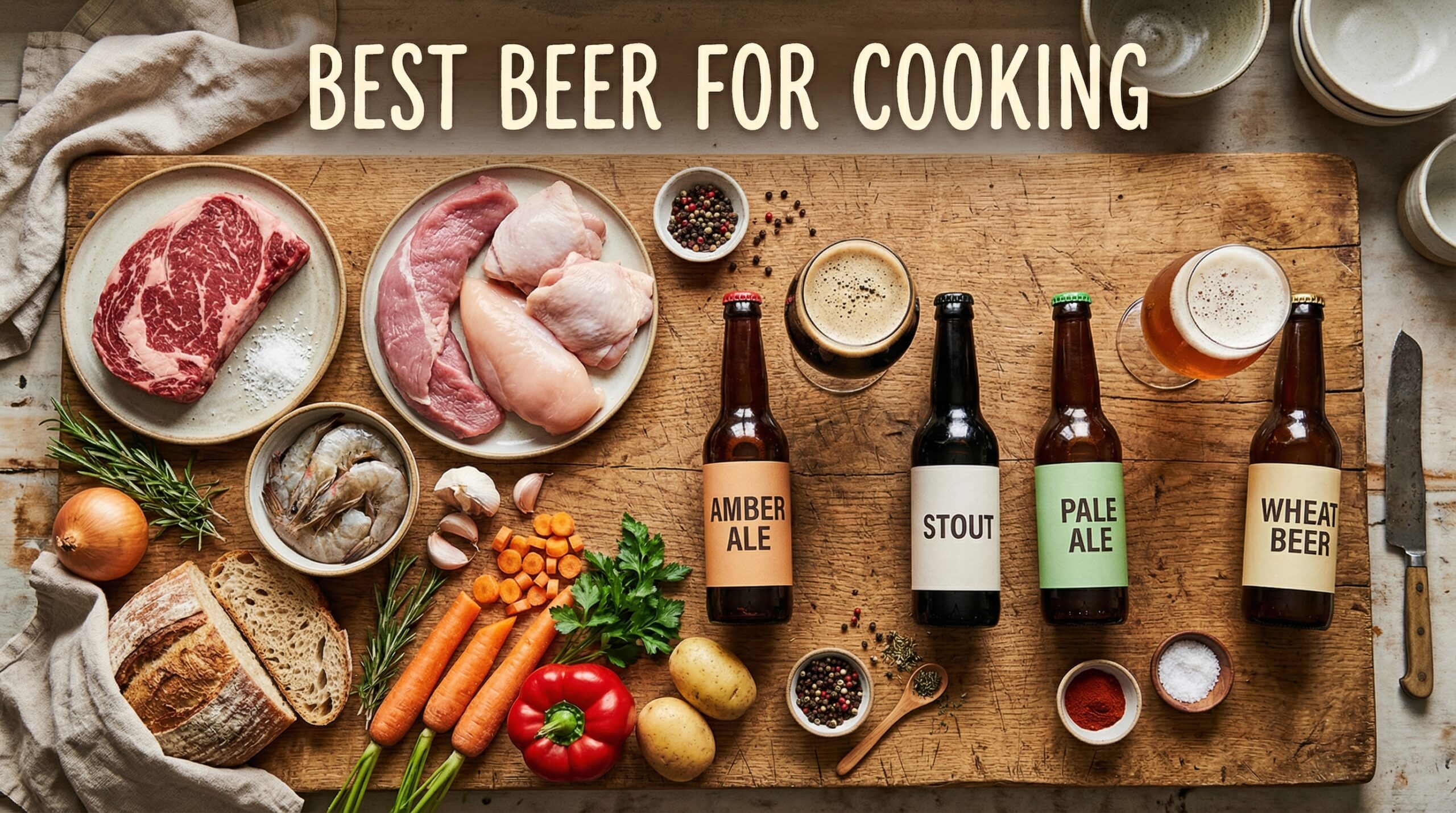
Cooking with beer transforms ordinary dishes into extraordinary meals. The right beer adds depth, tenderness, and complex flavors that elevate everything from hearty stews to crispy batters. In this guide, our team shares everything you need to know about matching beer styles to your recipes for the best culinary results.
Whether you are braising a pot roast, baking bread, or preparing a quick batter for frying, the beer you choose matters more than you might think. We have tested countless combinations in our kitchen philosophy to bring you clear, practical guidance on using beer as a cooking ingredient.
Table of Contents
Why Beer Works in Cooking
Beer brings three key elements to cooking that make it invaluable in the kitchen. First, the malt sweetness adds rich, caramel-like flavors that balance savory dishes. Second, the hops contribute bitterness that cuts through fatty foods and adds complexity. Third, the carbonation works magic in batters, helping them rise and crisp up beautifully.
When beer simmers in a dish, the alcohol evaporates while the flavors concentrate and meld with the other ingredients. This process creates layers of taste that are hard to achieve with other liquids. The result is dishes with remarkable depth and satisfying mouthfeel.
Beer Types Overview: Lagers vs Ales, Light vs Dark
Understanding the difference between beer styles helps you make better cooking choices. Beers broadly divide into two categories: lagers and ales. Lagers ferment at cooler temperatures and tend toward crisp, clean flavors. Ales ferment warmer and develop more complex, fruity ester profiles.
For cooking purposes, you also need to understand light versus dark beers. Light beers offer subtle flavor that does not overpower dishes. Dark beers deliver robust, roasty notes ideal for hearty meals. Matching the intensity of your beer to your dish ensures balanced results.
Light Beers for Cooking
Light beers include pilsners, pale lagers, and wheat beers. These styles bring mild malt sweetness and low bitterness to dishes. They work well when you want beer flavor without dominating the dish. Light beers excel in recipes where you want moisture and subtle complexity.
Dark Beers for Cooking
Dark beers encompass stouts, porters, bocks, and schwarzbiers. These styles deliver rich, roasted flavors with notes of chocolate, coffee, and caramel. Dark beers shine in beef dishes, chili, baked goods, and any recipe that benefits from bold, malty depth.
Best Beer for Beef Dishes
Beef deserves bold flavors, and dark beers deliver exactly that. Stouts and porters bring roasty, meaty qualities that complement beef perfectly. The malty sweetness balances the savory richness of beef while tenderizing the meat during long cooking.
Bock beers, with their strong malt character, work exceptionally well in beef stews and braised dishes. The concentrated malt flavors stand up to long cooking times without becoming bitter. Try Guinness or other dry stouts for classic beef preparations.
For burgers or quick-cooking beef dishes, amber ales offer a happy medium. They provide enough flavor to enhance beef without overwhelming it. The caramel sweetness of amber ales pairs naturally with grilled beef.
Best Beer for Pork Dishes
Pork’s mild flavor profile makes it incredibly versatile for beer cooking. Amber ales bring sweet, toasty notes that enhance pork without masking its delicate taste. The moderate hop bitterness helps balance the natural fattiness of pork cuts.
Marzens and Vienna lagers offer rich malt character ideal for pork roasts and schnitzel. These styles bring honey and biscuit flavors that caramelize beautifully during roasting. The result is pork with gorgeous golden exterior and tender, flavorful interior.
For barbecue applications, brown ales add wonderful nutty complexity. Their lower carbonation means less splattering on the grill while their flavor profile stands up to bold barbecue sauces and smoky cooking methods.
Best Beer for Chicken
Chicken’s subtle flavor requires a lighter touch when selecting beer. Pilsners remain our top recommendation for chicken dishes. Their clean, crisp profile enhances chicken without competing with other seasonings you might use.
Wheat ales bring gentle citrus and spice notes that brighten chicken preparations. Hefeweizens work particularly well in summer dishes, chicken salads, and light braising applications. The banana and clove undertones add interesting complexity.
Saisons offer herbal, peppery notes that pair wonderfully with roasted chicken. Their dry finish prevents dishes from tasting heavy. For crispy-skinned chicken, the carbonation in lighter beers helps achieve that desirable golden crust.
Best Beer for Seafood
Seafood demands beers that complement rather than overpower delicate fish flavors. Pale ales with their mild hop character and citrus notes work beautifully with shellfish and white fish. The brightness enhances the natural sweetness of seafood.
Wheat beers bring refreshing qualities that match well with shrimp, clams, and mussels. Their low bitterness and subtle fruitiness make them ideal for seafood boils and steaming preparations. The carbonation keeps dishes light and lively.
Gose beers, with their saline and citrus character, have become favorites for seafood cooking. The saltiness echoes the ocean while the acidity brightens rich fish dishes. They excel in chowders, ceviches, and grilled seafood preparations.
Best Beer for Chili
Chili benefits enormously from beer cooking, and forum discussions confirm this pairing is crowd-pleasing. Stouts and porters add tremendous depth to chili, creating rich, complex flavors that develop over long simmering. The roasted notes complement beans and beef equally well.
Saisons bring peppery, fruity characteristics that add intrigue to chili recipes. Their high carbonation lightens the dish while their dry finish prevents the chili from tasting heavy or flat. This style appeals to those who prefer lighter-bodied chili.
Mexican-style lagers work wonderfully for everyday chili preparation. Their clean flavor supports bold chili spices without adding competing notes. Brands like Modelo or Pacifico bring enough character for excellent results without complexity.
Best Beer for Baking
Baking with beer opens up delicious possibilities for bread, cakes, and desserts. Wheat beers create wonderfully moist baked goods with subtle fruitiness. Their effervescence lightens batters while adding pleasant complexity to the final product.
Stouts transform baking into something special. Chocolate stouts in brownies create fudgy, intensely flavored desserts. Guinness in soda bread produces dense, flavorful loaves with beautiful color. The roasty notes complement cocoa and coffee flavors naturally.
Porters offer similar baking benefits to stouts with slightly less intensity. They work well in cakes, cookies, and quick breads where you want beer flavor without overwhelming sweetness. Brown ales provide nutty, malty qualities perfect for gingerbread and spice cakes.
Best Beer for Batters and Frying
Beer batter achieves its legendary crispy texture thanks to carbonation. The bubbles create steam during frying, which lifts the batter and promotes browning. This process results in light, crunchy coatings that stay crispy longer than traditional batters.
Lagers make ideal frying beers due to their clean flavor and high carbonation. Pale lagers like Coors or Miller produce consistently crispy results without strong flavor interference. The mild sweetness balances savory fried foods perfectly.
Pale ales work when you want slightly more flavor in your fried dishes. The mild hop character adds complexity to fish and vegetable batters. Amber ales can work for heartier fried foods, though their darker color may cause faster browning.
The golden rule for beer batter: avoid overly hoppy or bitter beers. IPAs intensify bitterness dramatically when fried, creating unpleasant harsh notes. Stick with clean, balanced styles for the best crispy results.
Practical Tips for Cooking with Beer
Choose beers you would actually drink. This fundamental rule ensures your dishes taste good. Never cook with stale, skunky, or expired beer. The flavor concentrates during cooking, so poor-quality beer produces poor-quality results.
Match beer weight to dish intensity. Light dishes need light beers. Heavy, rich dishes can handle dark, bold beers. This principle guides virtually every decision when selecting cooking beer.
Consider cooking time when selecting beer. Long-simmering dishes can use hoppier beers because extended cooking reduces bitter sharpness. Quick-cooking recipes need milder beers to avoid overwhelming bitterness.
Watch for alcohol evaporation timing. Most alcohol burns off within the first 15-20 minutes of cooking. If a recipe calls for beer early, the alcohol contributes flavor differently than beer added near the end of cooking.
Common Mistakes to Avoid
Using expensive craft beer is rarely worth it in cooking. The complex flavors that make craft beer special often get lost or distorted during cooking. Save your rare bottles for drinking and use affordable options for cooking.
Avoiding skunky or light-struck beer matters more than avoiding cheap beer. A budget lager in good condition outperforms an expensive but damaged beer every time. Freshness trumps price when cooking with beer.
Not reducing beer enough leads to acidic, sharp flavors. When a recipe calls for beer to be added and then cooked down, follow through completely. Unreduced beer tastes sour and flat compared to properly concentrated versions.
Adding beer too early in recipes that want bright, fresh character defeats the purpose. Some dishes benefit from beer added near the end to preserve its delicate aromatics. Match your timing to your desired outcome.
Quick Reference: Beer Style to Recipe Matching
- Lagers (Pale, Pilsner): All-purpose cooking, frying, chicken, seafood, light dishes
- Wheat Beers: Baking, chicken, seafood, salads, light frying
- Amber Ale / Marzen: Pork, burgers, grilled dishes, moderate-flavor foods
- Stout / Porter: Beef, chili, baking, rich stews, dark gravies
- Bock / Doppelbock: Hearty beef dishes, game meats, robust preparations
- Saison: Chili, chicken, vegetable dishes, bright, herb-forward recipes
- Brown Ale: Pork, barbecue, nuts, baked goods, warm spice dishes
Frequently Asked Questions
What is the best beer for recipes?
The best beer for cooking depends on your recipe, but pale ales and amber ales work as versatile defaults. For hearty dishes like beef stew or chili, stouts and porters add wonderful depth. For light dishes like chicken or seafood, pilsners and wheat beers complement without overpowering.
What kind of beer is best for baking?
Wheat ales create moist, flavorful breads and cakes. Stouts like Guinness produce rich soda bread and decadent chocolate desserts. Porters work well in brownies and cookies. Avoid overly hoppy beers in baking as bitterness concentrates during baking.
What type of beer is used in cooking?
Both lagers and ales work in cooking. Lagers bring clean, crisp flavors ideal for light dishes and frying. Ales offer more complex, fruity notes that enhance heartier preparations. The choice depends on your specific recipe and desired flavor profile.
What is the best beer to use when making beer batter?
Pale lagers and pilsners make the best beer batter because of their high carbonation and clean flavor. The carbonation creates crispy, light textures while the mild malt sweetness balances savory fried foods. Avoid IPAs and other bitter styles.
Final Thoughts
Cooking with beer opens up exciting possibilities in your kitchen. The key is matching beer style to your recipe type for harmonious results. Light dishes deserve light beers, while hearty preparations benefit from bold, malty styles. Remember to cook with beers you would enjoy drinking, and your dishes will consistently taste better.
Start experimenting with the guidance above and discover how beer elevates your cooking. Whether you are simmering a weekend chili, baking fresh bread, or crisping up fish and chips, the right beer makes all the difference. Explore our craft beer styles we brew for inspiration, or dive into Spanish cuisine traditions where beer and food pairings shine.