
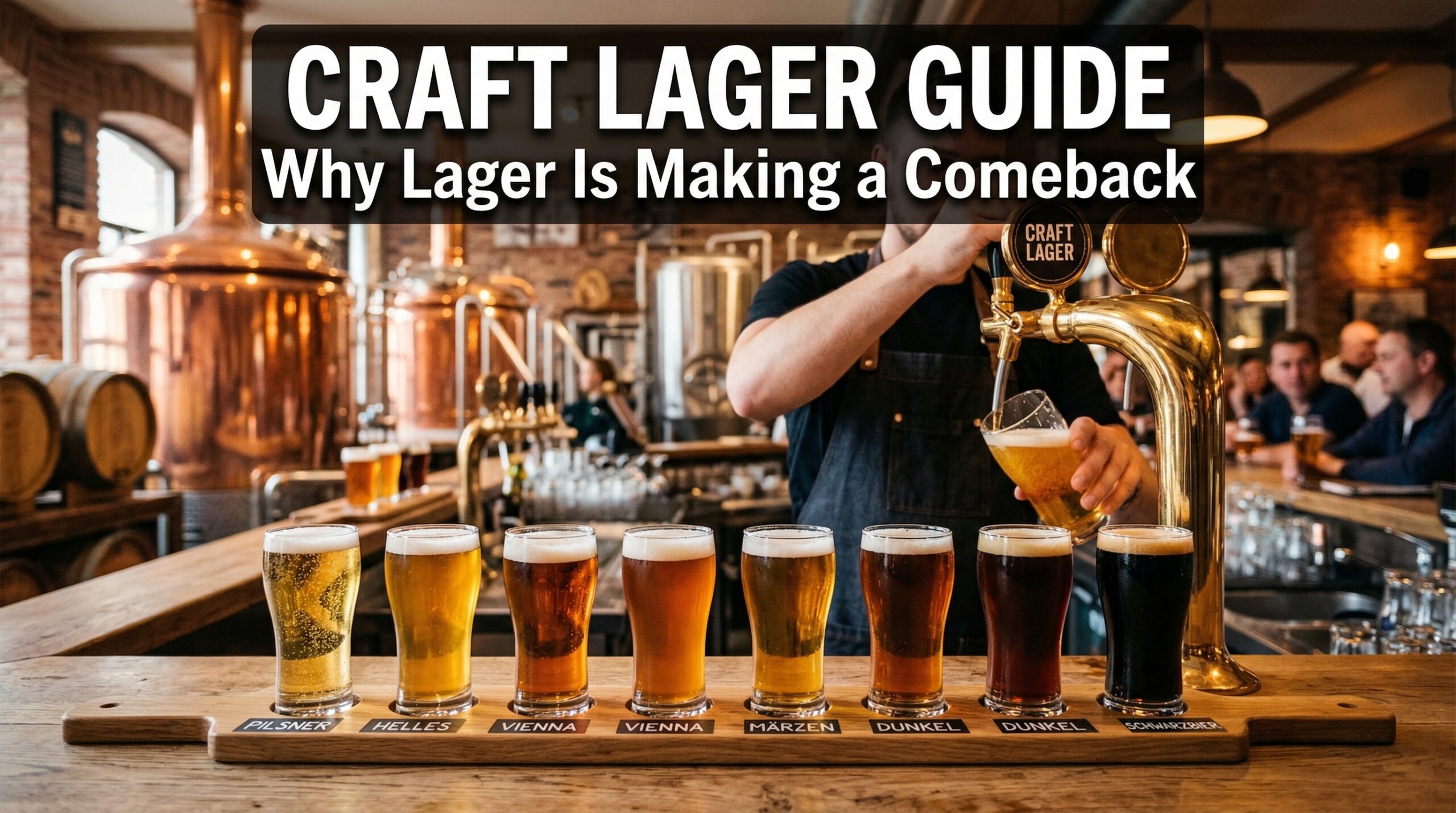
If you have spent any time in the craft beer world over the past decade, you likely noticed the explosion of hazy IPAs, barrel-aged stouts, and experimental sours. Those styles dominated tap lists and beer conversations alike. But something is shifting. Lager, the beer your grandfather called “a real man’s drink” before it became synonymous with mass-market light beers, is quietly reclaiming its place at the table. This craft lager guide explains why lager is making a comeback and what it means for beer lovers in 2026.
The craft beer landscape has always moved in cycles. What feels revolutionary today becomes old news tomorrow. After years of chasing extreme hop profiles and barrel-induced complexity, many drinkers are finding their palates yearning for something different. That is where craft lager enters the picture. This guide walks through everything you need to know about this refreshing revival, from the brewing science behind it to the specific styles worth seeking out.
Table of Contents
Why Lagers Are Making a Comeback Right Now
Lagers currently account for roughly 70% of global beer consumption, yet the craft beer world spent years treating them as an afterthought. That disconnect is finally closing. Our team has watched this trend develop over the past few years, and the data supports what many beer lovers are already sensing: the pendulum is swinging back toward balance, refreshment, and drinkability.
Consumer Fatigue with Hop Complexity
After a decade of living in hop drenched territory, some drinkers have simply had enough. The appeal of a 100 IBU double IPA fades when your palate craves something clean and refreshing after a long day. Forum discussions consistently highlight this shift. One Reddit user captured it perfectly: “I still appreciate a good IPA, but I cannot drink three of them anymore. Give me a crisp pilsner any day.” This sentiment appears repeatedly across craft beer communities, driving the lager resurgence.
The Rise of Sessionable Beer Culture
Economic and lifestyle shifts are reshaping how people approach drinking. The “craft beer for its own sake” mentality of the early 2010s has matured into something more practical. Modern beer enthusiasts want quality they can enjoy over an entire evening without reaching for antacids by midnight. A well crafted craft lager delivers exactly that: flavor without aggression, complexity without exhaustion, and a clean finish that invites another sip. This sessionability makes lager an everyday option rather than a special occasion splurge.
Appreciation for Brewing Craftsmanship
Here is what many casual beer drinkers miss: making a great lager requires serious skill. Unlike hop forward styles where intense additions can mask fermentation flaws, a lager offers nowhere to hide. Every imperfection in the brewing process becomes apparent on the first sip. Experienced brewers often cite lager brewing as the ultimate test of foundational technique. As craft beer culture continues maturing, many enthusiasts are learning to appreciate this precision rather than dismissing it as “simple” or “boring.”
The Art of Lager Brewing: Techniques and Challenges
Understanding why lager is harder to make than ale reveals why the style deserves respect. The brewing differences go far beyond labeling and represent fundamentally different approaches to fermentation.
Bottom Fermentation Explained
Ale yeasts work at warmer temperatures and rise to the top of the fermentation vessel. Lager yeasts prefer cooler conditions and settle at the bottom. This bottom fermentation process requires maintaining temperatures between 45 and 55 degrees Fahrenheit throughout fermentation. At these temperatures, yeast activity slows considerably, extending fermentation timelines from days to weeks. The result is a cleaner, more refined flavor profile where malt and hops speak clearly without yeast derived esters competing for attention.
The Lagering Process: Why Patience Matters
True lager production does not end when primary fermentation completes. The name itself comes from the German word for storage. After fermentation, lagers undergo a conditioning period at near freezing temperatures lasting weeks or even months. This extended lagering allows flavors to smooth out, carbonation to integrate, and any remaining yeast characters to clean up. Most ale styles reach their peak within weeks of brewing. A proper Czech style pilsner might need two months from grain to glass. This timeline creates real challenges for breweries operating on thin margins and high turnover expectations, making the craft lager commitment a statement about priorities over profit.
Equipment and Temperature Control
Consistent cold temperatures throughout fermentation and conditioning require serious infrastructure investment. Most home brewers and smaller craft breweries find this challenging without proper glycol chilling systems. This technical barrier explains why many craft breweries historically avoided lagers despite their flavor appeal. The breweries that do commit to quality lager production, like those discussed in our article on craft brewery and organic brewing techniques, demonstrate real dedication to the craft. To explore more beer styles worth knowing, check out our comprehensive brewery guide.
Popular Craft Lager Styles to Explore
The lager family extends far beyond the pale American versions most drinkers know. Understanding the major styles helps you navigate menus and tap lists with confidence.
German and Czech Pilsners
These two styles share roots but express differently. A German pilsner leans drier and showcases noble hop bitterness with a crisp finish. Czech pilsners (sometimes called CzechPremium) offer more malt backbone and residual sweetness, with lower carbonation and a richer mouthfeel. Both represent the gold standard for demonstrating what great lager can achieve. If you have never tried a properly crafted pilsner from a German or Czech brewery, you owe yourself that education.
Munich Helles
Literally meaning “bright” in German, Helles emerged in Munich during the 1870s as a response to darker lagers that dominated Bavaria at the time. The style aims for balance: enough malt presence to provide character without overwhelming, enough hop bitterness to provide structure without dominance. Augustiner Helles from Munich remains the benchmark example that few American breweries successfully replicate. When you find a quality Helles, you understand why Germans have been drinking the same few pints at beer gardens for over a century.
Vienna and Munich Dunkel
These amber to dark lagers showcase malts in ways that pilsners and Helles do not. Vienna lagers, originally developed in Austria, feature toasted malt character with gentle sweetness. Munich dunkels push darker with Munich malt providing chocolate and caramel notes. Both styles disappeared from most of the world during the mid 20th century as pale lagers took over. Craft breweries reviving these historic recipes represent exactly the kind of brewing heritage worth preserving.
Schwarzbier: The Dark Refreshment
Black beer sounds like an oxymoron, but Schwarzbier delivers exactly that. German for “black beer,” this style offers the roasted character of a stout or porter while maintaining lager’s characteristic crispness and drinkability. The contrast between dark appearance and surprisingly light feel makes Schwarzbier both interesting and approachable. Few styles better demonstrate the versatility of bottom fermented brewing.
Hoppy Lagers and Dry Hopped Pilsners
The modern craft approach to lager innovation often involves incorporating late hopping and dry hopping techniques borrowed from ale production. These hoppy lagers present familiar hop aromatics and flavors while maintaining the clean fermentation character that defines lager. Some brewers use this hybrid approach to introduce IPA drinkers to lager possibilities. Others view it as pure innovation expanding the style’s boundaries.
Flavor Profiles: What Makes Lager Refreshing
The sensory experience of great lager differs significantly from what most American beer drinkers expect. Understanding these differences helps you appreciate what the style offers.
The Clean Finish Factor
Lager’s signature characteristic is cleanliness. Without the fruity esters produced by warm fermentation, flavors arrive unfiltered and direct. Malt sweetness presents as gentle rather than prominent. Hop bitterness registers as crisp rather than lingering. This clean finish explains why lager serves so well as a palate cleanser during meals and why the style pairs remarkably well with diverse cuisines.
Malt Backbone and Grain Forward Character
Quality craft lagers showcase malt as a featured ingredient rather than merely a source of fermentable sugars. Different malt selections create distinct signatures: pilsner malt provides the lightest, most refined character; Vienna malt adds depth and toast; Munich malt brings rich caramel and chocolate notes. This malt focus creates beers that feel substantial without being heavy, appealing to drinkers who want flavor intensity without alcohol warmth.
Noble Hops and Subtle Bitterness
The classic European lager styles rely on noble hop varieties: Saaz, Hallertau, Tettnang, and Spalt. These hops provide delicate aromatic qualities and clean bitterness that complements rather than dominates. Unlike American craft hops that scream for attention, noble hops whisper. This subtlety requires attentive brewing because the hops cannot mask mistakes. The reward is beers of remarkable elegance and nuance.
Finding and Enjoying Craft Lagers
Location and handling dramatically affect your lager experience. Here is what you need to know to find quality examples.
Where to Source Quality Craft Lagers
Regional breweries dedicated to lager excellence offer the best starting point. Breweries like Chuckanut in Washington, Holy Mountain in Colorado, Wayfinder in Oregon, Jacks Abby in Massachusetts, and Schilling in New Hampshire have built reputations specifically around lager quality. These producers demonstrate that American craft brewing can match European tradition while adding creative innovation.
Japanese beer culture also offers excellent reference points for quality lager. As detailed in our Japanese beer brands including quality lagers guide, breweries like Asahi, Kirin, and Sapporo produce examples worth studying, particularly their respective flagship lagers.
Temperature and Freshness Matter
Lager demands proper service temperature more than most styles. Too cold masks the subtle flavors that define great examples. Too warm accelerates oxidation and dulls hop character. Most sources recommend serving craft lagers between 45 and 50 degrees Fahrenheit, letting them warm slightly in the glass to release aromatics. Freshness dating also proves critical. Unlike hop forward ales that can age dramatically, lagers deteriorate relatively quickly. Always check dates when available and seek the freshest examples possible.
The 3:30-300 Rule Explained
Some brewers and retailers reference the 3:30-300 rule for beer storage. This suggests keeping lagers at 33 degrees Fahrenheit during storage and serving them around 45 degrees. The reference to 300 relates to shelf life: approximately 300 days represents the maximum ideal storage window for most craft lagers. While not a universal standard, this guideline emphasizes the importance of cold chain integrity and rotation speed for lager quality.
Homebrewing Lagers: Getting Started
For those interested in brewing at home, lager production offers both challenges and rewards worth pursuing.
Equipment Considerations
Lager brewing requires reliable cold temperature control that most home setups lack initially. While ale fermentation happens comfortably at room temperature in most climates, lager demands consistent temperatures between 45 and 55 degrees. This usually means investing in a fermentation chamber or chest freezer with temperature controller. The equipment investment pays dividends in brewing consistency and skill development.
The Learning Curve Benefit
Experienced homebrewers consistently report that learning lager brewing improves their overall technique. Without hops or strong yeast characters to hide behind, you must pay attention to every detail: mash temperature, water chemistry, fermentation health, and conditioning. These foundational skills carry over to all your brewing. Even if you primarily make ales, understanding lager production makes you a more complete brewer.
Starting Simple
Begin your lager journey with approachable styles like American pale lager or German pilsner rather than attempting complex Vienna or Schwarzbier recipes. Success with simpler styles builds confidence and technique before tackling the nuance required for darker malt expressions. Patience matters more than anything else: resist racking to secondary too early, and allow adequate conditioning time before packaging.
Food Pairing Guide for Craft Lagers
Lager’s clean character and refreshing qualities make it remarkably versatile at the table.
Why Lagers Excel at Food Pairing
The carbonation and acidity in properly fermented lagers cut through fats and cleanse the palate between bites. The malt character provides subtle sweetness that balances spicy foods without competing with delicate dishes. This versatility explains why European beer cultures developed lager styles specifically matched to their cuisines over centuries.
Style Specific Recommendations
Pilsners and Helles work beautifully with poultry, seafood, and light pasta dishes. Their gentle hop bitterness complements herb seasoned foods without overwhelming. Dunkels and Vienna lagers pair wonderfully with roasted meats, braised dishes, and umami rich foods like mushrooms. Schwarzbier handles BBQ remarkably well, its roasted character standing up to smoke and spice while the carbonation refreshes between bites. Even something as simple as a beer bread recipe using craft beer can showcase how lager’s subtle malt character enhances baking.
Everyday Pairing Ideas
Do not overthink food pairing with lager. The style handles casual fare exceptionally well. Pizza, burgers, tacos, and sandwiches all find excellent partners in quality craft lagers. The clean finish prevents palate fatigue during extended meals, making lager an ideal choice for gatherings where diverse food options appear. For those exploring non-alcoholic beer options, many NA beers in the lager style offer similar pairing flexibility.
FAQ: Common Questions About Craft Lagers
Is craft beer dying out?
No, craft beer is not dying out. The market remains strong with over 9,000 craft breweries operating in the United States alone. However, consumer preferences are evolving. While hop forward IPAs dominated the 2010s, many drinkers are now seeking more balanced, sessionable options like craft lagers. This shift represents a maturation of craft beer culture rather than a decline.
Are lagers making a comeback?
Yes, lagers are definitely making a comeback in the craft beer world. After years of being overlooked in favor of hoppier styles, craft lagers are experiencing a renaissance. This revival is driven by consumer fatigue with extreme flavors, appreciation for brewing craftsmanship, and a cultural shift toward moderation and sessionability. Major craft breweries are now dedicating significant resources to lager production, and specialty lager focused breweries are emerging worldwide.
What is the 3:30-300 rule for beer?
The 3:30-300 rule is a storage and serving guideline for lagers. It suggests storing beer at 33 degrees Fahrenheit and serving it around 45 degrees. The 300 refers to approximately 300 days as the maximum ideal storage window for most craft lagers before flavor quality begins declining. While not a universal standard, it emphasizes the importance of cold storage and freshness for optimal lager enjoyment.
Why is lager so refreshing?
Lager’s refreshing quality comes from several factors working together. The cold fermentation and conditioning process produces a cleaner, crisper beer without the fruity esters found in ales. The brisk carbonation provides palate cleansing effect. The moderate alcohol levels prevent palate fatigue during extended drinking sessions. Additionally, the balanced malt to hop ratio creates thirst quenching character without heaviness or cloying sweetness.
The Future of Craft Lager in 2026 and Beyond
The craft lager movement shows no signs of slowing down. As more breweries invest in lager specific equipment and consumers continue seeking balanced, drinkable options, the style will only grow stronger. This is not a passing trend but rather a correction toward brewing’s full range of possibilities.
For beer enthusiasts who have spent years exploring hop bombs and barrel aged extremes, craft lager offers fresh territory to explore. For newcomers to craft beer, the style provides an accessible entry point without sacrificing quality or character. Either way, now represents an exciting time to discover what great lager can deliver.
Seek out regional lager specialists when possible. Ask your local brewery what lagers they offer beyond the standard pale option. Visit beer focused restaurants and notice how their lager selections complement the food. Your palate will thank you for the variety, and you might just find yourself reaching for a crisp craft lager more often than you expected.