
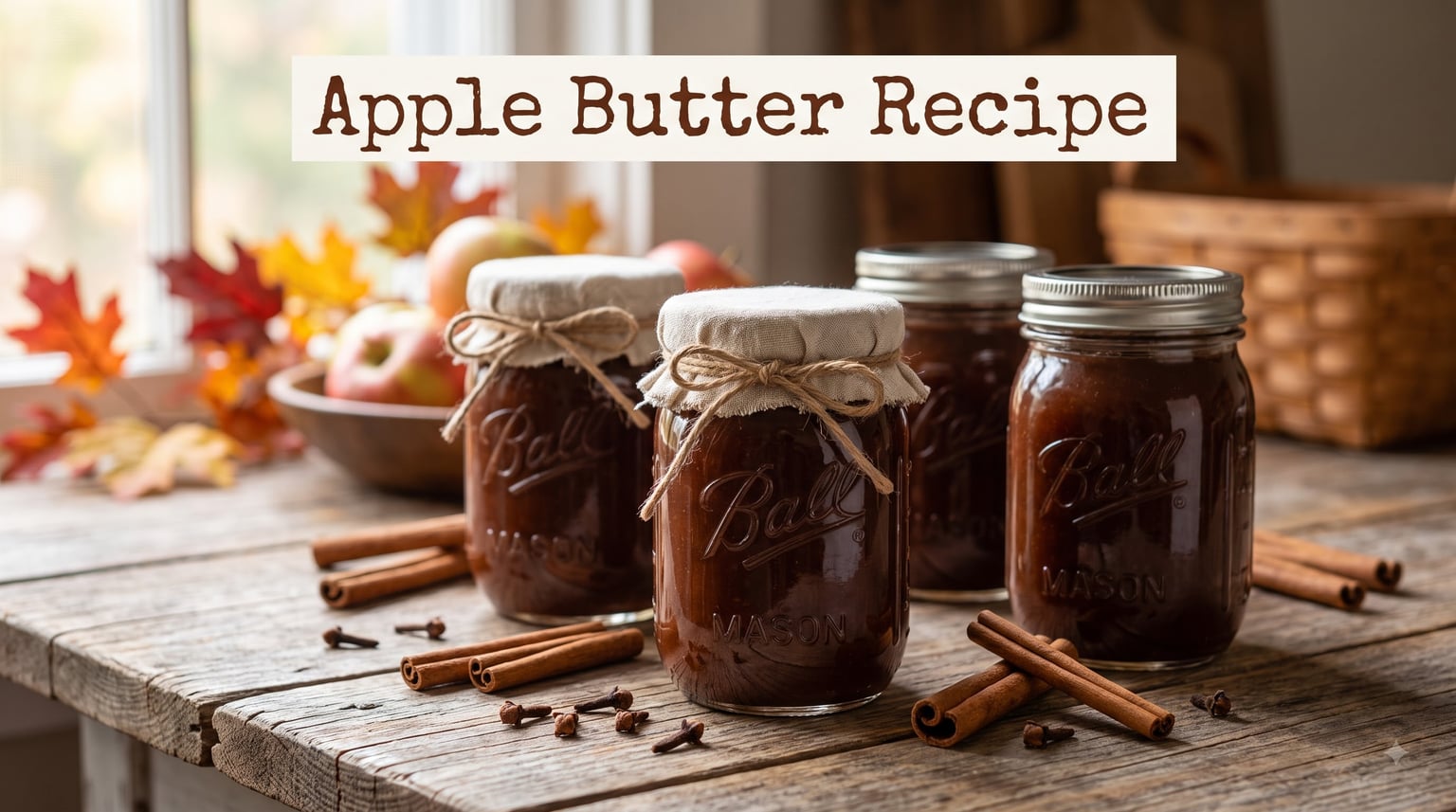
Every October, our kitchen turns into a slow-cooking operation. Three slow cookers line the counter, the windows fog up with apple-scented steam, and the dog won’t leave the room because something sweet is happening.
After testing this apple butter recipe across six batches, three apple varieties, and every method from oven to Instant Pot, I can tell you this: homemade apple butter is one of those projects that rewards patience with something store-bought jars simply can’t match. Dark, silky, spiced, and spreadable. Nothing complicated. Just time and apples.
This guide covers everything our team learned. The slow cooker method is hands-off. The stovetop version works in 90 minutes flat. I’ll walk you through apple selection, the great peeling debate, three variations worth trying, troubleshooting for when batches go wrong, and safe canning if you want shelf-stable jars to give as gifts.
Table of Contents
What Is Apple Butter, Exactly?
Apple butter is a concentrated fruit spread made by slow-cooking apples with sugar and spices until the mixture caramelizes into a thick, dark, spreadable paste. Despite the name, there’s no actual butter in it. The “butter” refers to the silky, soft texture you can spread like softened dairy butter.
The slow cooking does two jobs at once. It breaks down the apples’ natural pectin until they collapse into a smooth puree. Then it drives off moisture until the mixture reduces to a fraction of its original volume. What’s left is intensely apple-flavored and naturally sweet, even with less sugar than you’d expect.
Apple butter vs applesauce comes down to three things. Apple butter is darker (deep brown, almost mahogany) because of caramelization. It is thicker, with a spreadable, almost spread-like consistency. And it is spiced, typically with cinnamon, cloves, and sometimes allspice or nutmeg. Apple sauce is pale, loose, and unspiced.
Both are cooked apples, but apple butter is what happens when you take applesauce and keep going. The difference in flavor is remarkable. Apple sauce tastes like cooked apples. Apple butter tastes like autumn in a jar.
The Best Apples for Apple Butter
The best apple butter uses a mix of sweet and tart apples. A 60/40 split works well, with the majority sweet and the minority tart. Mixing varieties gives you a more complex, layered flavor than any single apple can produce.
Top sweet apples for apple butter:
Golden Delicious: The classic apple butter apple. Holds shape during cooking, mashes smoothly, has balanced sweetness with floral notes. Most professional recipes call for Golden Delicious for good reason.
Fuji: Very sweet, low acidity, crisp flesh that breaks down nicely. Good for bulk batches.
Gala: Mild and sweet, great for kids’ palates. Adds a subtle honeyed note.
McIntosh: Cooks down quickly into a smooth texture. Traditional New England choice with a hint of tartness.
Top tart apples to blend in:
Granny Smith: Sharp acidity balances sweet varieties. Don’t use alone, or the butter will be too tart, but a few Granny Smiths in the mix add brightness.
Braeburn: Sweet-tart with a spicy note that complements cinnamon beautifully.
Jonathan or Winesap: Heritage varieties with deep, almost wine-like flavors. Heirloom apple butter at its finest.
One question I get all the time: do you have to peel apples for apple butter? The answer is no. The peels contain pectin and color compounds that actually improve the texture and deepen the color. Our recipe explicitly skips peeling. The peels break down completely during the long cook and disappear into the puree when you blend.
Ingredients and Equipment
Ingredients (Makes 3 Half-Pints)
4 lbs mixed apples (about 8-10 medium), cored and quartered
1 cup granulated sugar
1/2 cup brown sugar, packed
1 tablespoon ground cinnamon
1 teaspoon ground cloves
1/2 teaspoon ground allspice
1/2 teaspoon salt
2 tablespoons lemon juice
1/2 cup water or apple cider
1 vanilla bean, split (or 1 tablespoon vanilla extract at the end)
Equipment You’ll Need
Slow cooker (6-quart minimum) OR heavy-bottomed Dutch oven
Immersion blender or stand blender
Wooden spoon or silicone spatula
Apple corer or sharp knife
Cutting board
Half-pint mason jars with lids (for storage/canning)
Candy thermometer (recommended for doneness testing)
An immersion blender is the single most useful tool for apple butter. It lets you puree right in the pot without transferring hot liquid. If you don’t own one, a stand blender works, but work in small batches because hot apple puree expands violently if you fill the jar too high.
How to Make Apple Butter in the Slow Cooker
The slow cooker method is hands-off and produces the deepest flavor. Total active time is about 15 minutes. Total cook time runs 8-10 hours, mostly unattended.
Step 1: Prep the apples. Wash thoroughly. Core and quarter each apple. Don’t peel. Toss the cores and any bruised spots but keep the flesh.
Step 2: Load the slow cooker. Add all apple pieces to a 6-quart slow cooker. Pour in water or apple cider. Sprinkle the sugars, spices, salt, and lemon juice over the top. Add the split vanilla bean (if using extract, save it for the end).
Step 3: Cook on low. Cover and cook on LOW for 6 hours. The apples should be completely soft and collapsing. Resist lifting the lid during this phase, since every peek releases steam and extends cooking time.
Step 4: Puree the mixture. Remove the vanilla bean and scrape out the seeds back into the pot. Use an immersion blender to puree until completely smooth. No apple chunks should remain. This takes about 60 seconds.
Step 5: Cook down to thicken. Leave the lid off or set it slightly ajar. Cook on LOW for another 3-4 hours, stirring every 30 minutes. The butter is ready when a spoon drawn across the bottom leaves a clean track that holds for a few seconds before filling in. If using extract, stir it in now.
Step 6: Test for doneness. Place a small spoonful on a cold plate (keep one in the freezer). Put it back in the freezer for 2 minutes. If the dollop holds its shape and wrinkles slightly when pushed, the butter is done. If it spreads and stays liquid, keep cooking.
Step 7: Jar and store. Ladle hot butter into sterilized half-pint jars, leaving 1/4 inch headspace. Wipe rims clean, seal with lids, and process in a water bath for 10 minutes (15 minutes above 6,000 feet altitude) for shelf-stable storage. Or simply refrigerate.
Apple Butter Recipe on the Stovetop
Need it faster? The stovetop version finishes in about 90 minutes of active cooking. It requires more stirring but delivers the same deep flavor in a fraction of the time.
Step 1: Combine in a Dutch oven. Add cored, quartered apples to a heavy-bottomed Dutch oven with water or apple cider, lemon juice, sugars, salt, and spices. Stir to coat evenly.
Step 2: Bring to a simmer. Heat over medium until the mixture comes to a gentle boil, then reduce to medium-low. Cover and cook for 30-40 minutes, stirring every 10 minutes, until the apples are completely soft.
Step 3: Puree smooth. Remove from heat. Use an immersion blender directly in the pot until silky. Or transfer carefully to a stand blender in batches.
Step 4: Reduce to butter consistency. Return to medium-low heat. Simmer uncovered for 45-60 minutes, stirring frequently to prevent scorching on the bottom. The mixture should reduce by about half and darken visibly.
Step 5: Doneness test. Same freezer plate test as the slow cooker method. When the dollop holds shape and wrinkles when nudged, the butter is ready.
Step 6: Jar. Ladle into sterilized jars and process as above, or refrigerate for immediate use.
Apple Butter Variations Worth Trying
Once you’ve nailed the base recipe, the variations open up a wide world of flavor. Here are three of our team’s favorites.
Sugar-Free Apple Butter
Skip the sugars entirely and let the apples do the work. Pick naturally sweet varieties like Fuji or Gala, and add 1/4 cup apple cider concentrate to boost the natural sugars. Cook down until very thick. The result is intensely apple-flavored and diet-friendly. One forum regular on r/Cooking noted this method saved her diabetic father-in-law’s holiday tradition without sacrificing flavor.
Traditional Appalachian Apple Butter
The classic method used copper kettles over open fires. To approximate that smoky depth at home, add 1/2 teaspoon smoked paprika and a tiny pinch of ground star anise. Some traditional recipes include a splash of apple cider vinegar at the end for tang. The combination gives a rich, almost savory undertone that pairs beautifully with pork.
Spiced Bourbon Apple Butter
Adults-only and excellent on cheddar biscuits or stirred into cocktails. After pureeing, stir in 2 tablespoons of your favorite bourbon and 1/2 teaspoon smoked salt. The bourbon cooks off the sharp alcohol but leaves warm vanilla-oak notes behind. Stays shelf-stable the same as the base recipe.
Troubleshooting Common Apple Butter Problems
Even with a good recipe, batches sometimes go sideways. Here are the issues we hit most often and exactly how to fix them.
Too thin or watery: It needs to cook longer. Apple butter thickens dramatically in the last 30 minutes of cooking. Keep going until the freezer plate test shows clean edges.
Too thick: Stir in a small amount of apple cider or water (1 tablespoon at a time) until it loosens. This sometimes happens if you over-reduce.
Scorched on the bottom: Immediately transfer the unburnt top portion to a clean pot. The scorched bottom flavor is impossible to fix once it spreads. Lower your heat and stir more often from now on.
Too sweet: Add an extra tablespoon of lemon juice and a pinch of salt. These balance without making the recipe acidic.
Too dark or bitter: You’ve reduced too far. Stir in a bit of water to stretch it back. Next batch, pull it earlier.
How to Store Homemade Apple Butter
Storage depends on whether you processed it in a water bath or not. Each method gives different shelf life.
Refrigerator: Unprocessed apple butter (just ladled into jars and cooled) keeps in the fridge for 2-4 weeks. Always use clean utensils to scoop.
Freezer: Apple butter freezes beautifully for 6-12 months. Leave 1/2 inch of headspace in jars to allow for expansion. Thaw overnight in the fridge before using.
Water bath canning for shelf stability: Process in a boiling water bath for 10 minutes (or 15 minutes above 6,000 feet). Properly sealed and processed jars last 12-18 months in a cool, dark pantry. Always check the seal before opening. If a lid pops or feels loose, refrigerate and use within 2 weeks.
If you want to give jars as gifts, canning is the way to go. I include a packet of cornbread mix tucked into a small basket with a jar of apple butter and a hand-labeled tag. The recipients always remember the gesture because the jars don’t look mass-produced.
Creative Ways to Use Apple Butter
Toast and biscuits are just the start. Once a jar is in your fridge, you’ll find ways to use it everywhere.
Breakfast: Stir into oatmeal, swirl into Greek yogurt, drizzle over pancakes, waffles, or French toast.
Baking: Replace the sugar in spice cake recipes (cup-for-cup reduction by half). Swirl into coffee cake or babka filling.
Pork glaze: Brush on grilled pork tenderloin in the last 5 minutes, or stir into pulled pork BBQ sauce. It pairs remarkably well with our slow cooker pulled pork recipe.
Cocktails: This is the big one. Stir a tablespoon into bourbon, rye, or spiced rum drinks. Our team’s apple butter old fashioned is one of the best cold-weather cocktails we’ve served in two years.
Cheese boards: Serve alongside sharp cheddar, aged gouda, or blue cheese. The sweet-savory contrast is universally loved.
Glaze for vegetables: Toss roasted carrots, sweet potatoes, or Brussels sprouts with a spoonful before serving.
Frozen treats: Spoon over vanilla ice cream or fold into whipped cream for apple butter chantilly.
For more fall entertaining inspiration, our list of spiced cocktail recipes for cold nights works beautifully alongside this apple butter recipe. The spices echo each other, and the apple base provides a thread through the whole menu.
Frequently Asked Questions
How do you make apple butter?
Cook 4 lbs cored, quartered apples with 1 cup sugar, 1/2 cup brown sugar, 2 tablespoons lemon juice, and spices (cinnamon, cloves, allspice) on low in a slow cooker for 6 hours. Puree with an immersion blender, then cook uncovered 3-4 more hours until a spoonful on a cold plate holds its shape.
What is the difference between apple butter and applesauce?
Apple butter is cooked much longer, reducing by more than half, which caramelizes the natural sugars and turns the spread dark brown. Applesauce is pale, loose, and unspiced. Apple butter has a spreadable, almost butter-like consistency, while applesauce is pourable and chunky.
How long does homemade apple butter last?
Refrigerated apple butter keeps 2-4 weeks. Frozen, it lasts 6-12 months. Water bath canned and properly sealed, it stays shelf-stable for 12-18 months in a cool, dark pantry. Always check seals before storage and discard any jars with popped lids.
What are the best apples for apple butter?
A mix of sweet and tart works best. Use Golden Delicious, Fuji, Gala, or McIntosh as the base (60% of the batch) and add Granny Smith, Braeburn, or Jonathan apples for tartness (40% of the batch). Single-variety apple butter often lacks complexity.
Do you have to peel apples for apple butter?
No. The peels contain natural pectin and color compounds that improve texture and deepen the spread’s mahogany color. The peels break down fully during long cooking and disappear into the puree when blended. Our recipe skips peeling entirely.
Can you freeze apple butter?
Yes. Apple butter freezes very well. Ladle cooled butter into freezer-safe jars leaving 1/2 inch of headspace for expansion, then freeze for up to 12 months. Thaw overnight in the refrigerator before using.
How do you know when apple butter is done?
Use the freezer plate test: place a small spoonful on a chilled plate, return to the freezer for 2 minutes, then push it with your finger. The dollop should hold its shape and wrinkle slightly. Properly finished apple butter should also reach 220°F on a candy thermometer.
Can you make apple butter without sugar?
Yes. Skip both sugars and use naturally sweet varieties like Fuji and Gala. Add 1/4 cup apple cider concentrate to boost natural sweetness and compensate for lost volume. Cook down until very thick. The result is intensely apple-flavored and works for diabetic and low-sugar diets.
Final Thoughts on This Apple Butter Recipe
Apple butter sits at that rare intersection of pantry staple and special-occasion gift. The cooking is forgiving, the ingredients are straightforward, and the result is something far better than what’s on most grocery shelves.
If this is your first batch, start with the slow cooker method and a 60/40 mix of Golden Delicious and Granny Smith. Stay close during the final reduction, stir often, and trust the freezer plate test over the clock. Once you taste the difference between homemade and store-bought, you’ll understand why this recipe has been in our kitchen rotation every October for years.
Pick up a couple of extra pounds of apples at your next farmer’s market visit and set aside a weekend. A few hours of unattended simmering will give you jars of deep, spiced, silky apple butter that will outlast the season that birthed them.