

If your Wi-Fi still stutters in the back bedroom and the box came from your internet provider, you are in the right place. The Amazon eero 6 leads this list because it fixes coverage problems in most homes without any cable pulling, and its app takes about as long to set up as making coffee.
Two other shapes of answer come up constantly: the TP-Link Deco S4 when a whole house needs covering and the money is tight, and the TP-Link Archer AX21 when one solid box will do the job in a flat or a small house. Prime Big Deal Days runs October 6-7, 2026, and router pricing is one of the categories that tends to move most during it.
Table of Contents
Our Top 3 Picks for Best Amazon Prime Big Deal Days Wi-Fi Router Deals in 2026


One of these three will fit most readers. The eero 6 suits people who want fewer decisions. The Deco S4 suits people whose problem is walls and floors. The Archer AX21 suits people who just want the box that came from the provider replaced by something better.
Best Amazon Prime Big Deal Days Wi-Fi Router Deals Compared
| Product | Specifications | Action |
|---|---|---|
| Amazon eero 6 |
|
Check Deal Price |
 TP-Link Deco S4 TP-Link Deco S4 |
|
Check Deal Price |
| TP-Link Archer AX21 |
|
Check Deal Price |
 TP-Link Deco X55 TP-Link Deco X55 |
|
Check Deal Price |
 TP-Link Archer AX55 TP-Link Archer AX55 |
|
Check Deal Price |
 TP-Link Archer A8 TP-Link Archer A8 |
|
Check Deal Price |
 TP-Link Archer AXE75 TP-Link Archer AXE75 |
|
Check Deal Price |
 TP-Link Archer A54 TP-Link Archer A54 |
|
Check Deal Price |
 Amazon eero 7 Amazon eero 7 |
|
Check Deal Price |
 ASUS RT-AX1800S ASUS RT-AX1800S |
|
Check Deal Price |
Read that table as five questions rather than a ranking. What kind of box is it, which radio standard does it speak, how fast is it rated, and how many wired ports can you actually use.
How We Chose
We compared the specs that decide day-to-day experience: coverage figures, radio generation, port speed and count, backhaul support and warranty length. Ratings and owner reviews on Amazon shaped the ordering, and we checked the listings again in October 2026. Nothing here depends on a price holding still.
1. Amazon eero 6: Editor’s Choice for Whole-Home Coverage
Amazon eero 6
Type: Mesh
Wi-Fi: Wi-Fi 6
Speed: 900 Mbps plan
Use: whole-home coverage
Pros
- Setup finishes in minutes through the eero app
- TrueMesh roaming keeps one network name
- Handles 75+ connected devices
- Built-in Zigbee hub for Alexa
- Automatic software updates
Cons
- Only two Ethernet ports so one goes to the modem
- Some owners report streaming dropouts
- Extra features sit behind a subscription

This is the pick for people who are done troubleshooting. The eero 6 covers up to 1500 sq. ft. and handles internet plans up to 900 Mbps, which covers most households short of gigabit service.
Owners consistently mention one thing above all: it works. One reviewer describes the signal eliminating dead spots in a 1050 sq. ft. home, which is roughly what most people mean by a house. The app shows every connected device and lets you rename or block any of them in a couple of taps.
- Covers up to 1500 sq. ft. and supports plans up to 900 Mbps
- 75+ simultaneous devices, fine for a family with cameras and consoles
- Two auto-sensing Gigabit Ethernet ports, one of which the modem takes
- Built-in Zigbee hub so smart lights and sensors need no extra bridge
- Cross-compatible hardware means adding a second unit later is painless
Compared with the TP-Link Deco X55, the eero is the pick when you have no Ethernet in the walls and no interest in running some. The Deco is faster on paper and gives you three ports per node, but it wants more thought about placement.
Good to know: the two Ethernet ports are the real limitation. Once the modem occupies one, everything else wants a small switch. And eero Plus is a paid add-on, so ad blocking and the deeper parental tools cost extra.
2. TP-Link Deco S4: Best for Big Homes on a Budget
TP-Link Deco S4
Type: Mesh
Wi-Fi: Wi-Fi 5
Speed: AC1900 class
Use: 5500 sq ft coverage
Pros
- Three nodes cover up to 5500 sq ft
- Wired Ethernet backhaul supported
- Two Gigabit ports per node
- Up to 100 connected devices
- Works alongside an existing modem
Cons
- Wi-Fi 5 only so no 6 GHz band
- App-only management with no web interface
- Ethernet backhaul needs a managed switch
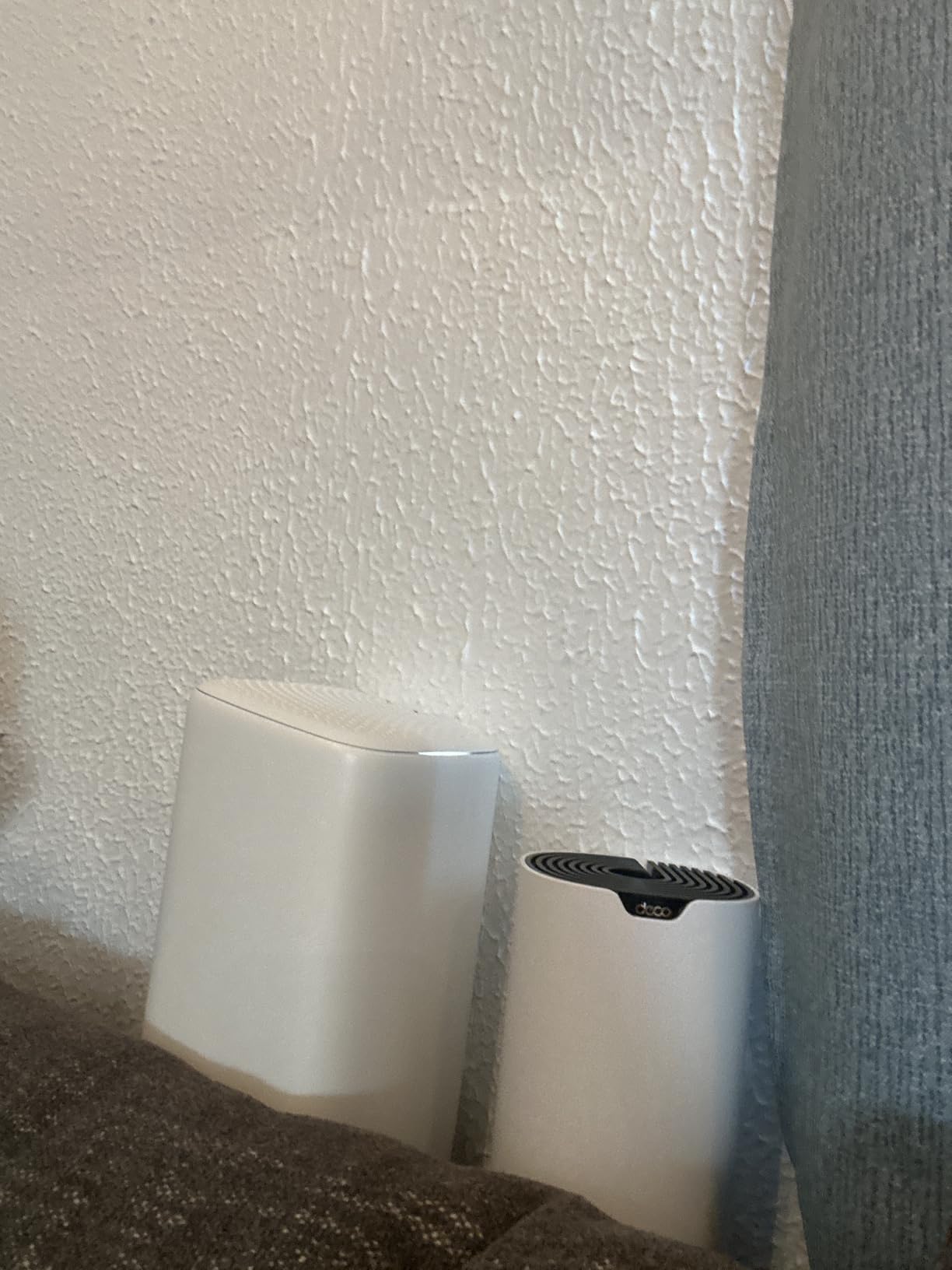
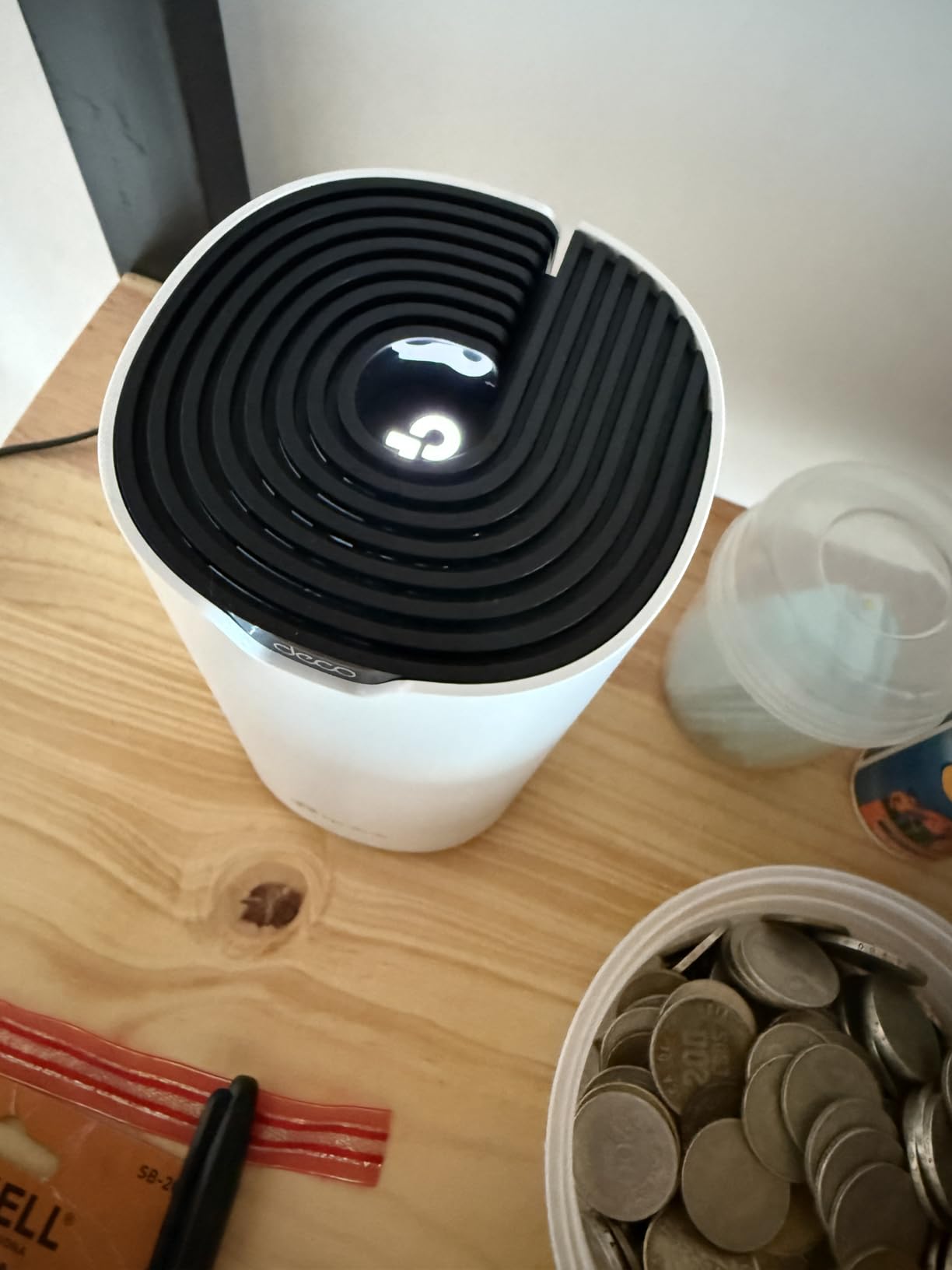
Three small white boxes, one network name, and coverage on every floor. That is the whole pitch of the Deco S4, and owners with thick walls say it delivers. It is the pick when square footage is the problem rather than raw speed.
The listed coverage is up to 5500 sq. ft. across the three-pack, with support for up to 100 connected devices. Each node carries two Gigabit Ethernet ports, so six wired connections in total, and any node can act as a router or an access point.
- Up to 5500 sq. ft. of combined coverage across three nodes
- Wired Ethernet backhaul turns the mesh into a hard-wired system where cable exists
- Each node measures 3.57 by 3.57 by 6.39 inches and disappears on a shelf
- Parental controls with per-profile time limits and site blocking
- Two-year manufacturer warranty and broad ISP compatibility
Two things to know before you buy. It is a Wi-Fi 5 system, so a gigabit fibre line will not get the benefit of the newer bands. And management happens entirely in the Deco app, which some people like and others find limiting.
If your home has cable in the walls, run it. Owners who plugged the nodes into Ethernet report noticeably steadier results than the wireless default, though it takes a managed switch with loop prevention to do it cleanly.
3. TP-Link Archer AX21: Best for Small Homes
TP-Link Archer AX21
Type: Router
Wi-Fi: Wi-Fi 6
Speed: AX1800 class
Use: flats and small houses
Pros
- AX1800 class with 1200 Mbps on 5 GHz
- Five Gigabit ports for wired devices
- OFDMA and MU-MIMO handle busy homes
- Built-in OpenVPN and PPTP servers
- WPA3 with CISA Secure-by-Design pledge
Cons
- Dual-band only so no 6 GHz
- Needs a separate modem
- Some older IoT devices need band steering turned off
A single box in a flat or a small house rarely goes wrong, and this is the box most people end up buying. It weighs 1.1 pounds, measures just over 10 inches long, and carries five Gigabit ports, which is more wired capacity than most routers at twice the class.
The radio is dual-band Wi-Fi 6, rated at up to 1200 Mbps on 5 GHz and up to 574 Mbps on 2.4 GHz for an AX1800 class total. Four fixed high-gain antennas with beamforming and an FEM chipset do the reach work, while OFDMA and MU-MIMO keep a house full of phones from fighting each other.
Owners rate the Tether app for setup and firmware updates, and several mention the built-in VPN server as a quiet bonus. There is a two-year warranty and a support line behind it.
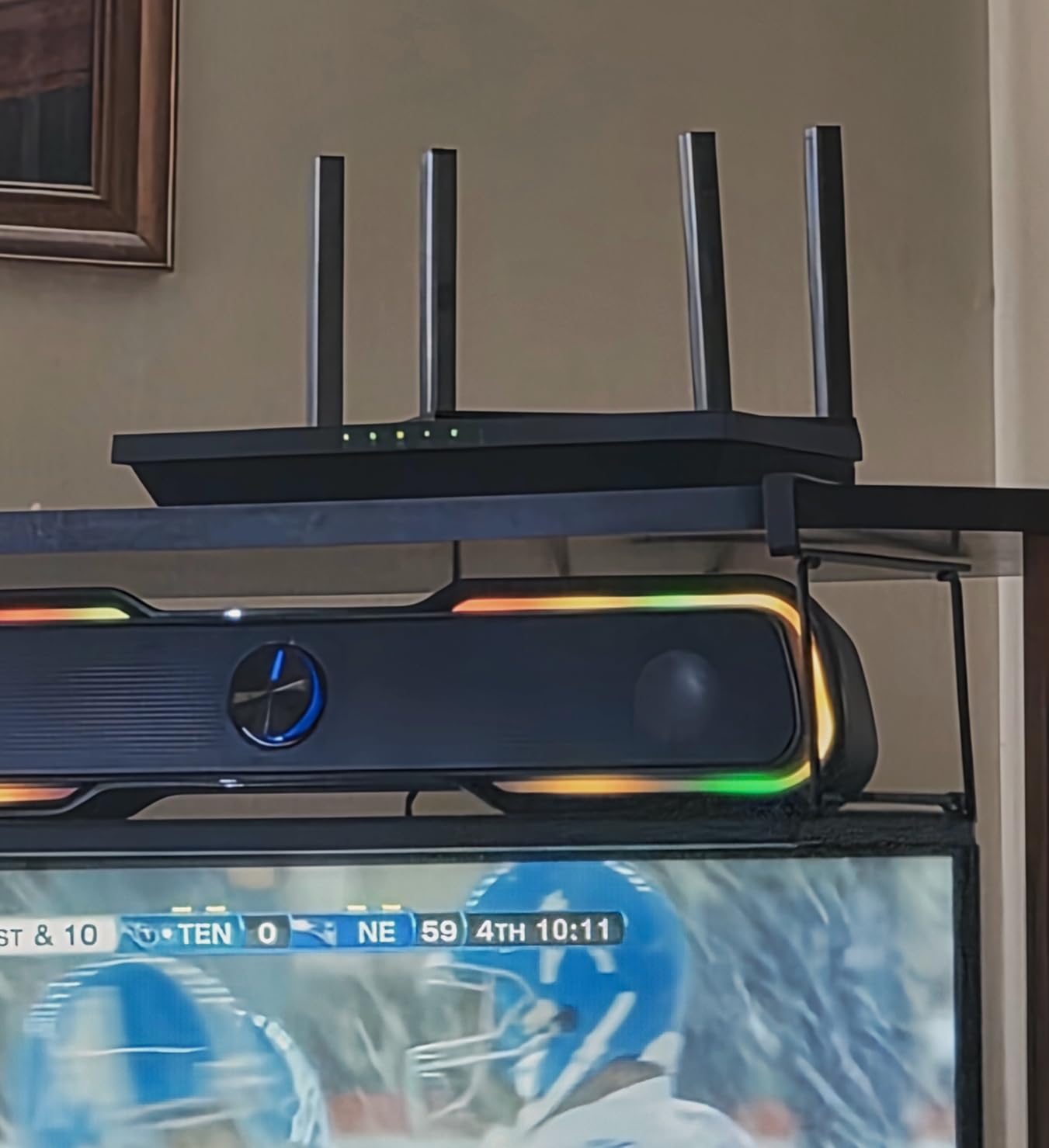
Skip it if you have a gigabit-plus fibre plan, because the WAN port tops out at Gigabit and you will lose the extra speed at the wall. For that situation, look at the Archer AXE75 with its 2.5 Gbps WAN port.
Compared with the eero 6: this one gives you more ports and more settings, the eero gives you a smoother app and easier expansion. If your place is small and has no dead zones, the Archer is the more capable of the two.
4. TP-Link Deco X55: Best for Big Homes with Wired Backhaul
TP-Link Deco X55
Type: Mesh
Wi-Fi: Wi-Fi 6
Speed: AX3000 class
Use: 6500 sq ft coverage
Pros
- Three nodes cover up to 6500 sq ft
- Three Gigabit ports on every node
- AX3000 class with 2402 Mbps on 5 GHz
- HomeShield basics included at no cost
- Handles 150 connected devices
Cons
- Node placement needs trial and error
- One node must stay the main unit
- App can misreport offline clients
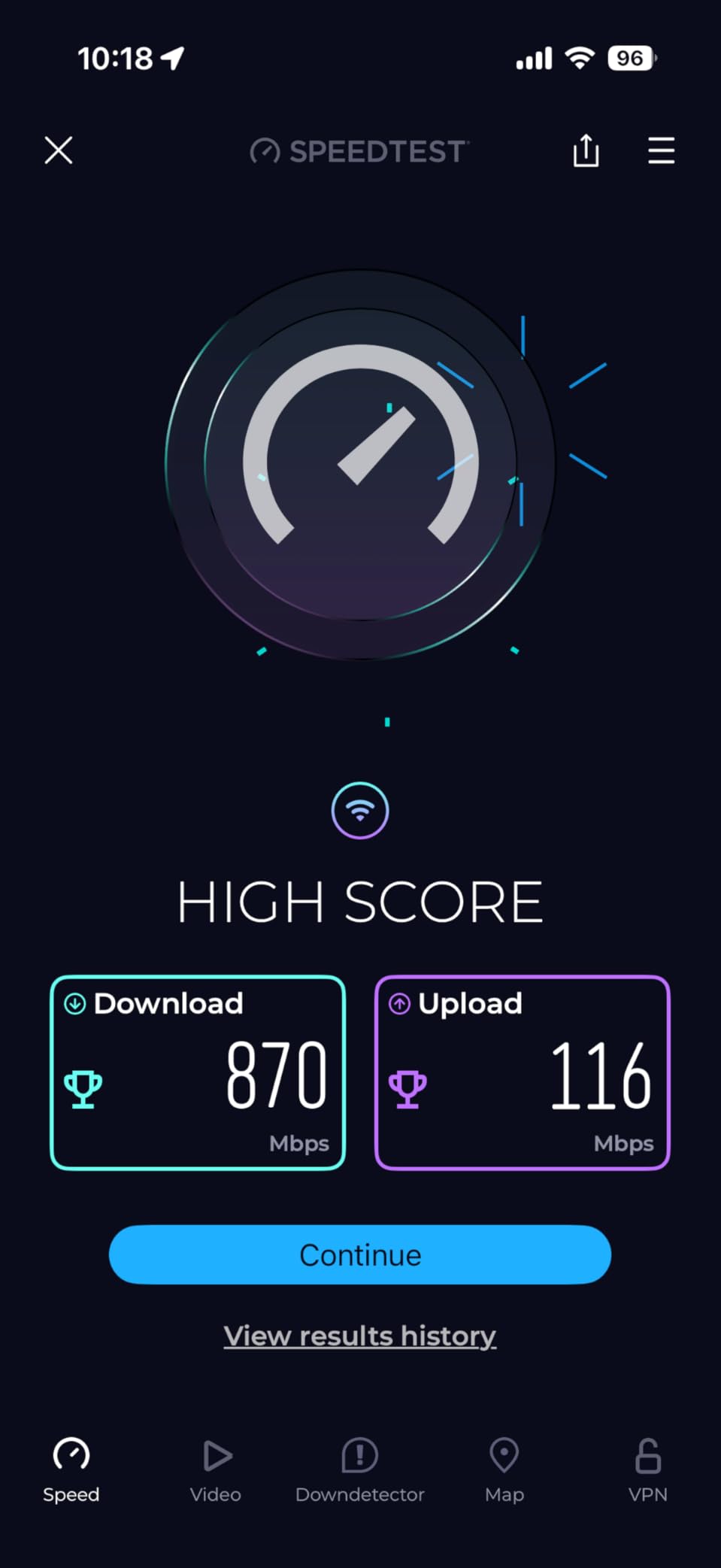
This is the mesh for people who already know where they want coverage and have Ethernet going to the right rooms. Three nodes cover up to 6500 sq. ft. and carry three Gigabit ports each, which means wired backhaul and a local switch without sacrificing a socket.
The radios are Wi-Fi 6 at an AX3000 class, with 2402 Mbps on 5 GHz and 574 Mbps on 2.4 GHz. Owners describe setup finishing inside ten minutes for most people, and one long-term review reported camera signal strength climbing from about 55 percent to about 95 percent after installation.
- Up to 6500 sq. ft. and 150 connected devices
- Three Gigabit Ethernet ports per node for daisy-chained wired backhaul
- HomeShield basic security, QoS and parental controls at no cost
- AI-driven mesh learns the layout and steers devices to the right band
- Any node can run as a router or an access point
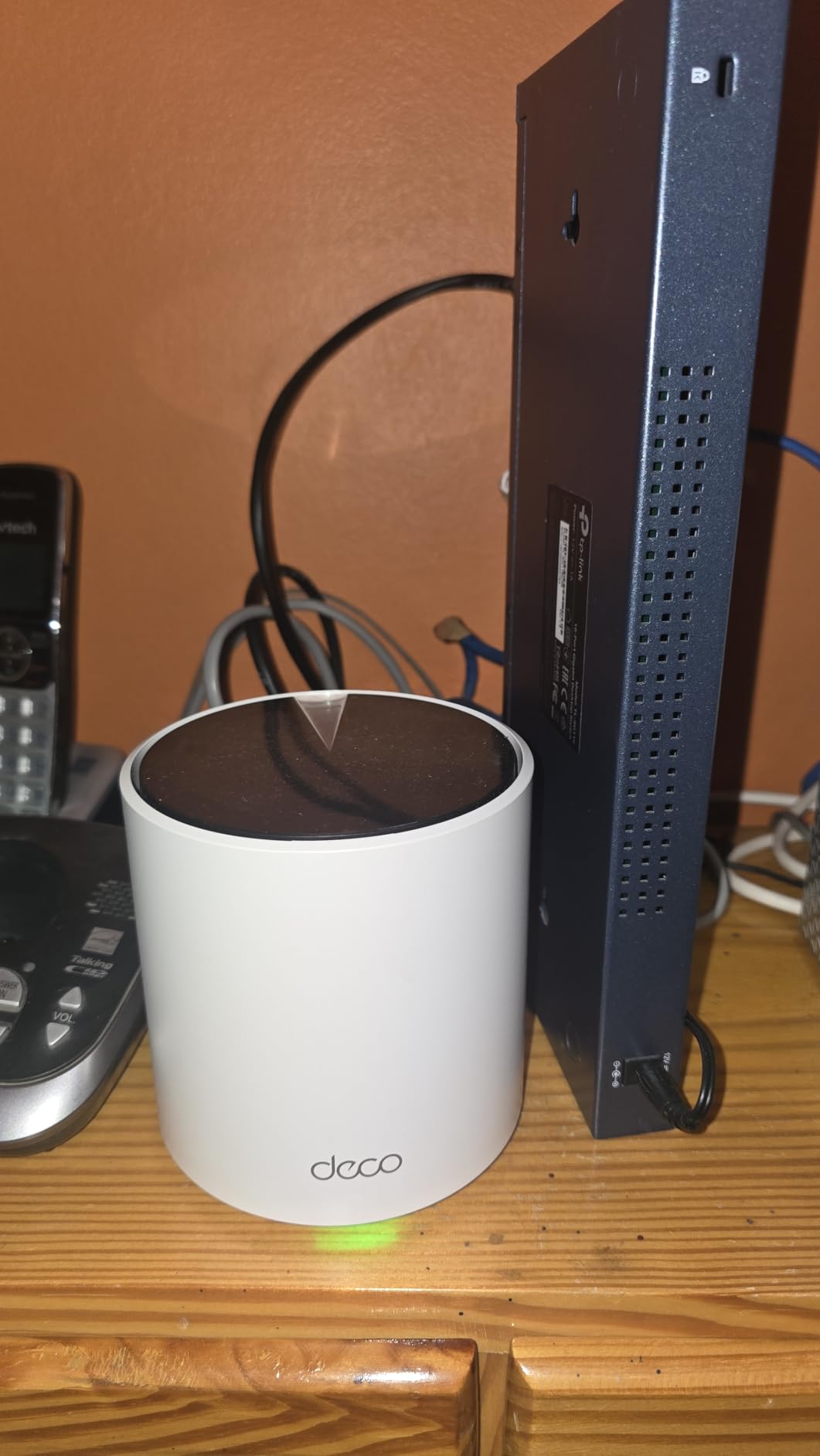
The complaint owners keep repeating is placement. One extra wall between nodes cuts speed noticeably, and the nodes do not always pick the closest parent unit on their own, so expect to move things around once. It is also worth knowing one node has to stay connected as the main unit.
Versus the Deco S4, you are paying for Wi-Fi 6 speed, a third port per node and a 1000 sq. ft. coverage difference. If your internet is faster than gigabit or you want the spare port, take this one.
5. TP-Link Archer AX55: Best for Gigabit Plans
TP-Link Archer AX55
Type: Router
Wi-Fi: Wi-Fi 6
Speed: AX3000 class
Use: gigabit service
Pros
- Full 2402 Mbps on the 5 GHz band
- Large heat sink resists thermal throttling
- Supports VPN server and VPN client
- USB 3.0 port and 512 MB of memory
- Target Wake Time saves device battery
Cons
- Dual-band only so no 6 GHz
- Large 13 inch footprint
- Advanced HomeShield needs a subscription
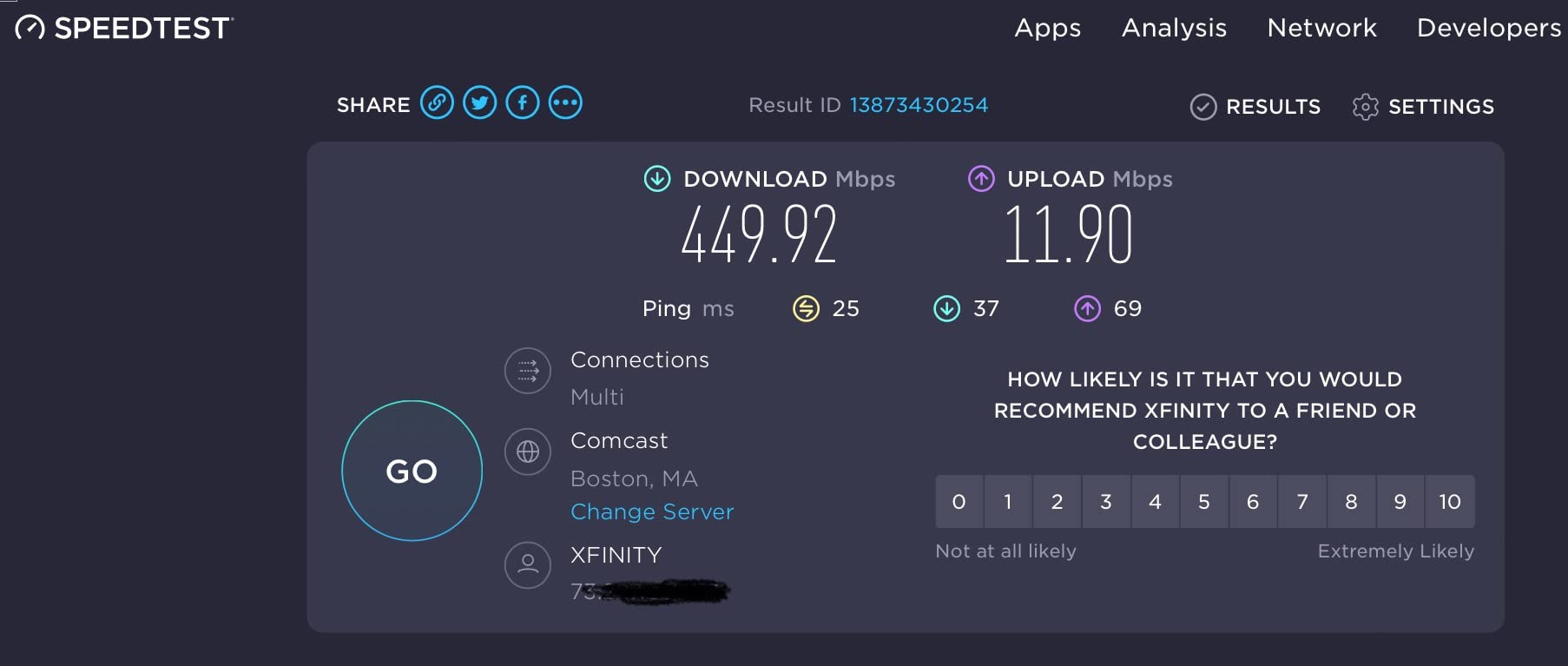
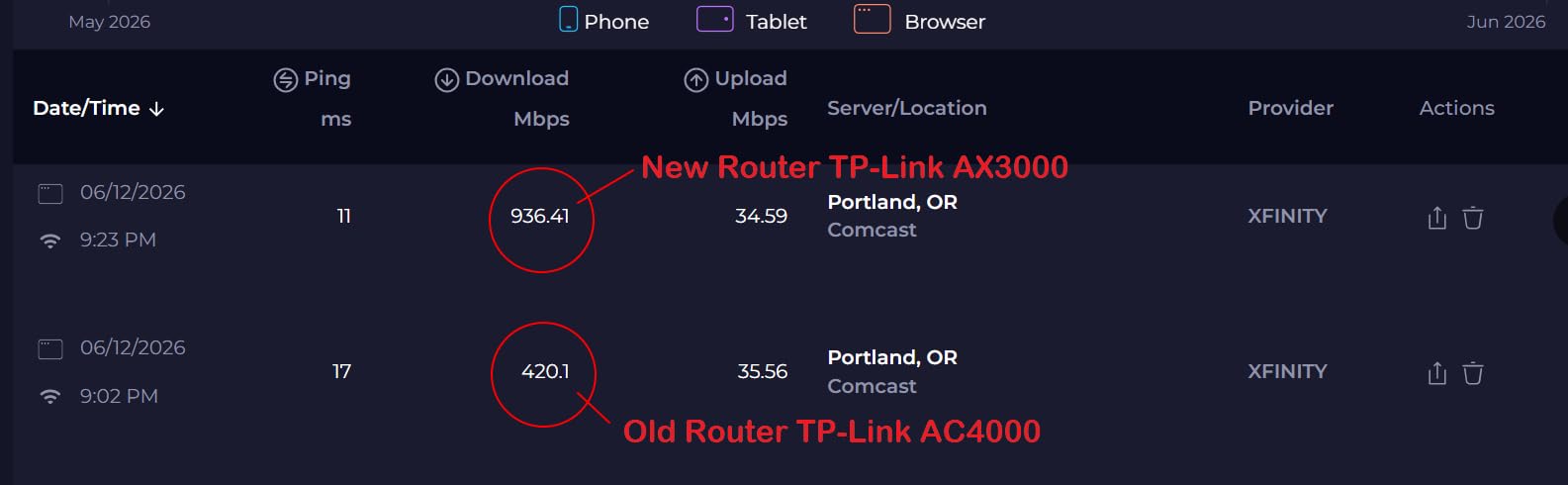
If your plan is gigabit and your current router is not, this is the standalone box that matches it. It runs at up to 2402 Mbps on 5 GHz and 574 Mbps on 2.4 GHz, so it has the radio headroom for the speed you are paying your provider for.
Owners single out two details. OFDMA and MU-MIMO hold latency down when many devices are online at once, and the larger heat sink stops the box slowing itself down during long heavy transfers, which is a real problem in cheaper enclosures.
The extras are unusually complete for a single router: both VPN server and VPN client, a USB 3.0 port, 512 MB of RAM and Target Wake Time to stretch phone and laptop batteries.
Be aware of the size. At 12.99 by 9.45 by 2.87 inches it is much larger than the Archer AX21, and it weighs 1.7 pounds, so it needs a real shelf rather than a small side table.
Its limit is the same as the AX21: dual-band only, no 6 GHz. If you own or plan to own Wi-Fi 6E or Wi-Fi 7 gear, step up to the Archer AXE75.
6. TP-Link Archer A8: Best for Wired Devices
TP-Link Archer A8
Type: Router
Wi-Fi: Wi-Fi 5
Speed: AC1900 class
Use: wired-heavy homes
Pros
- Four Gigabit LAN ports for wired devices
- MU-MIMO with three data streams
- Beamforming coverage up to 1200 sq ft
- OneMesh ready for later expansion
- Tether app setup and parental controls
Cons
- Wi-Fi 5 only so no Wi-Fi 6 features
- Coverage rated at about 1200 sq ft
- Single band cannot use 6 GHz
Most people buying a router think about radio coverage first and forget that a desk, a television and a console are all wired. The Archer A8 leads this list on ports: four Gigabit LAN alongside the Gigabit WAN, at the entry end of the range.
The wireless side is Wi-Fi 5, up to 1300 Mbps on 5 GHz and 600 Mbps on 2.4 GHz, with MU-MIMO across three streams and beamforming rated for about 1200 sq. ft. That is a real limitation upstairs, and it is the reason this sits mid-list rather than higher.
Useful details: it weighs 14.56 ounces, works with the Tether app and is OneMesh compatible, so you can add TP-Link OneMesh extenders later instead of starting over.
Compared with the Archer A54: both are Wi-Fi 5, but the A8 gives you Gigabit wired ports and a faster 5 GHz radio for very little more money. The A54 is the choice only when the smallest possible spend matters more than anything else.
7. TP-Link Archer AXE75: Best for 6 GHz Devices
TP-Link Archer AXE75
Type: Router
Wi-Fi: Wi-Fi 6E
Speed: AXE5400 class
Use: gigabit-plus service
Pros
- True tri-band with a dedicated 6 GHz radio
- 2.5 Gbps WAN port for gigabit-plus plans
- Dual-core 1.0 GHz CPU with 512 MB memory
- 160 MHz channels for speed
- EasyMesh ready for later expansion
Cons
- HomeShield extras need a subscription
- Tether app struggles to identify some devices
- Bulky 12.9 inch footprint
This is the only standalone router here with a 6 GHz radio, and that matters more than the model name suggests. The 6 GHz band is wide and almost empty, so a recent phone or laptop on it gets a fast link without competing with the neighbours.
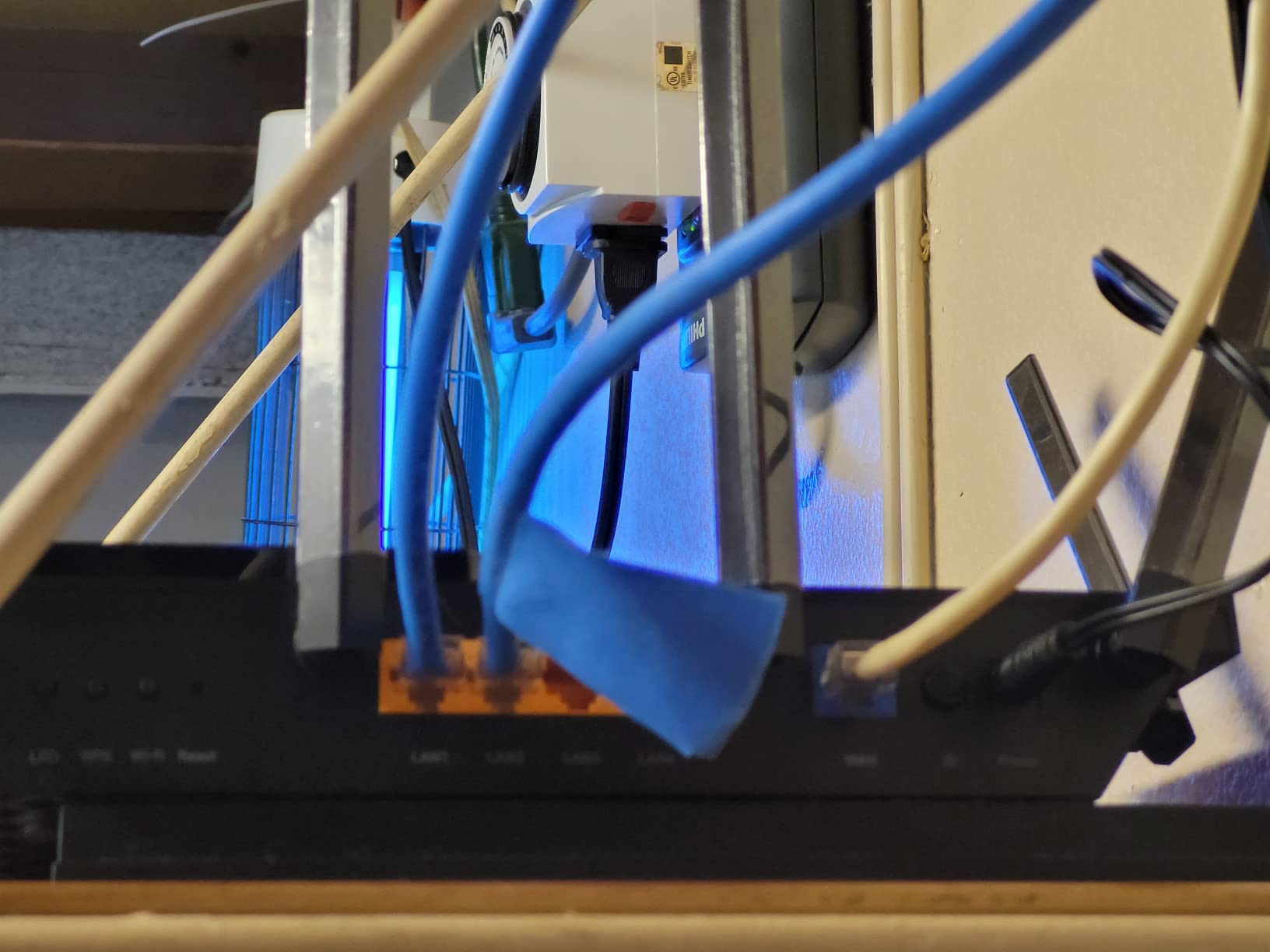
It is true tri-band: 2402 Mbps on 6 GHz, 2402 Mbps on 5 GHz and 574 Mbps on 2.4 GHz, or 5400 Mbps total, across 160 MHz channels. The WAN port is 2.5 Gbps, so a gigabit-plus fibre plan is not throttled at the wall.
- 2.5 Gbps WAN port for gigabit and faster service
- 1.0 GHz dual-core processor with 512 MB of memory
- VPN server and client support for OpenVPN, PPTP and L2TP
- EasyMesh compatible, so one unit can grow into a whole-home network
- Home, Guest and IoT networks keep smart devices separated
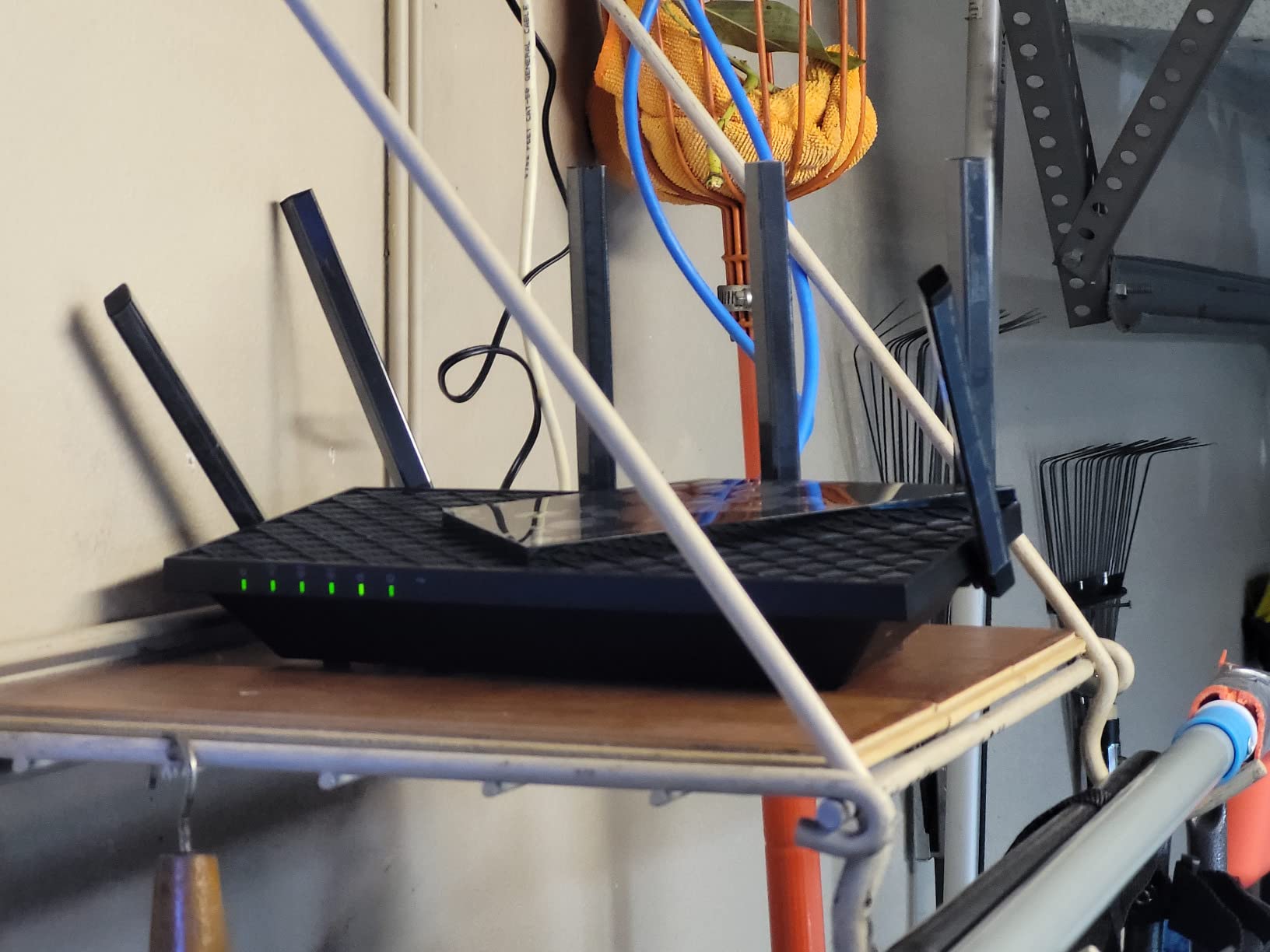
Owners report large gains on gigabit service, with wireless results in the 500 to 800 Mbps range. The recurring gripes are practical rather than technical: the Tether app struggles to identify some clients, and a few settings are not at their defaults out of the box.
Pair it with Deco X55 nodes later if the house outgrows it, since both speak EasyMesh. If you do not own any 6 GHz client yet, the Archer AX55 gives you similar real-world speed for less.
8. TP-Link Archer A54: Budget Pick
TP-Link Archer A54
Type: Router
Wi-Fi: Wi-Fi 5
Speed: AC1200 class
Use: small homes
Pros
- Lowest spend of any pick here
- EasyMesh compatible for later expansion
- Access Point mode for wired homes
- IGMP snooping and VLAN tagging for IPTV
- Tether app keeps settings manageable
Cons
- Four 10/100 Mbps Ethernet ports only
- Coverage rated at about 1000 sq ft
- Wi-Fi 5 with no 6 GHz support
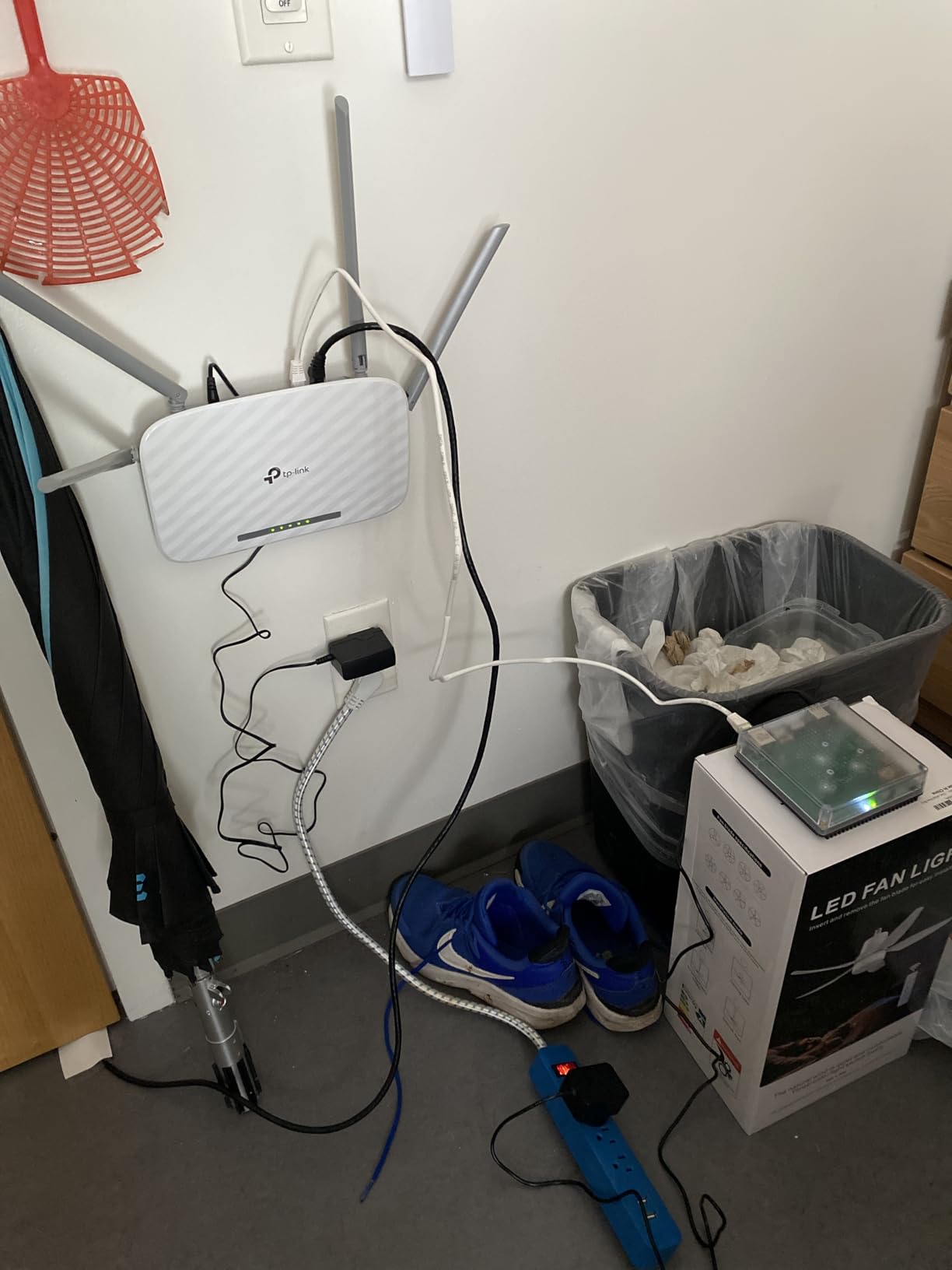
The A54 is here because a cheap replacement for a provider-supplied box is a perfectly good upgrade for a studio or a one-bedroom flat. It is dual-band Wi-Fi 5, up to 867 Mbps on 5 GHz and 300 Mbps on 2.4 GHz, rated for about 1000 sq. ft.
Owners treat it as a step up from ISP hardware, with the Tether app handling setup and firmware. It also does the unglamorous jobs well: guest networks, IPv6, access point mode and IGMP proxy and snooping for IPTV.
Now the catch, and it is a real one. All four LAN ports are 10/100 Mbps, not Gigabit. If you plan to wire a desktop, a games console or a NAS, buy the Archer A8 instead and pay the difference.
EasyMesh compatibility means a better box can be added later without starting again. That is the sensible upgrade path for anyone starting here.
9. Amazon eero 7: Best for Wi-Fi 7
Amazon eero 7
Type: Mesh
Wi-Fi: Wi-Fi 7
Speed: 1.8 Gbps wireless
Use: gigabit-plus plans
Pros
- Wi-Fi 7 with Multi-Link Operation
- Two 2.5 GbE ports on every node
- Three nodes cover up to 6000 sq ft
- Supports 120+ devices
- Three-year warranty and works with older eero nodes
Cons
- Advanced features sit behind eero Plus
- Limited advanced configuration options
- Highest total outlay in this roundup
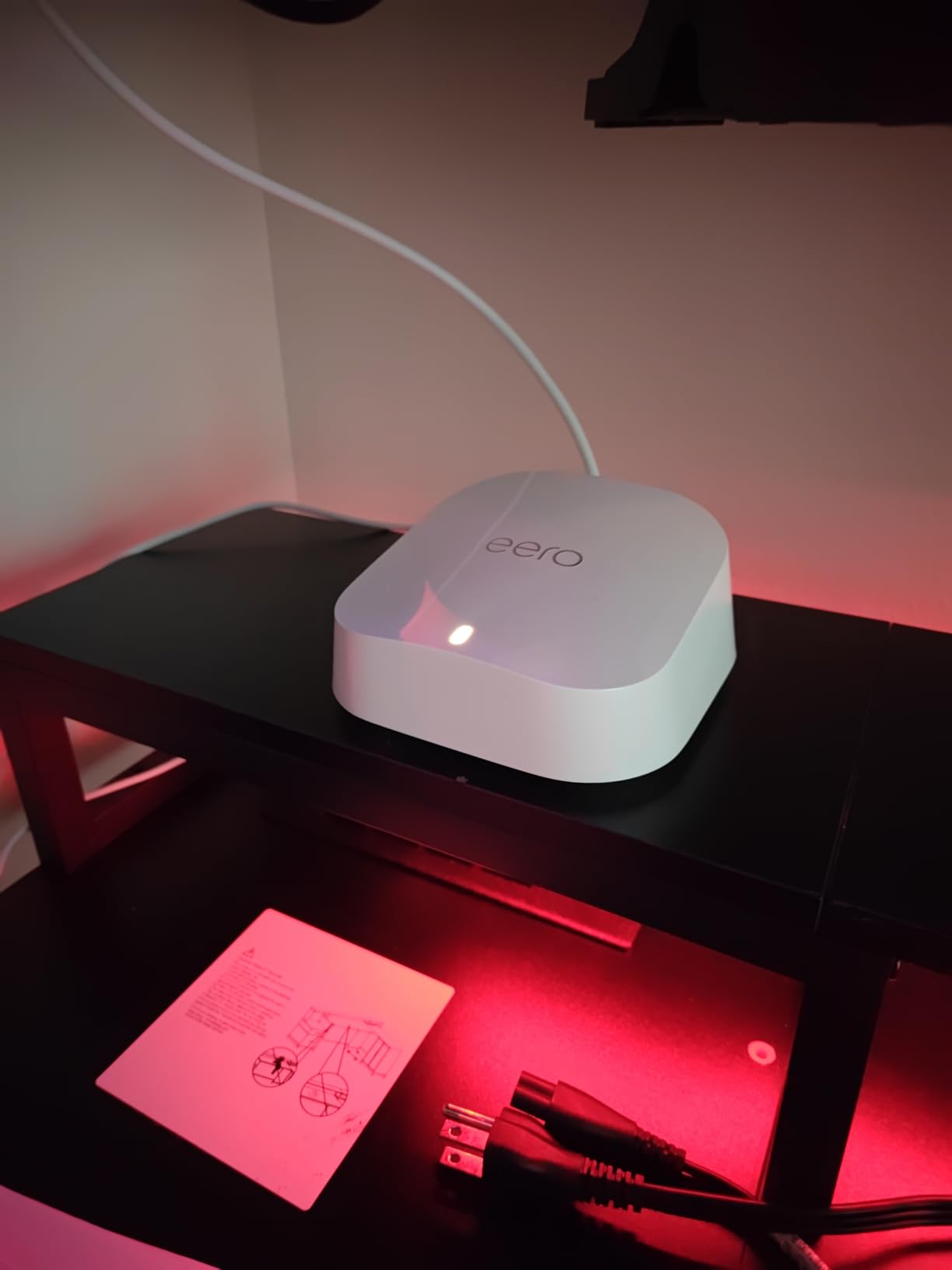
The newest eero generation and the only Wi-Fi 7 system here. Three nodes cover up to 6000 sq. ft. and 120+ devices, each with two auto-sensing 2.5 GbE ports, and the wireless side reaches up to 1.8 Gbps.
Multi-Link Operation is the headline feature. It lets a device use more than one radio connection at a time, which owners expect to help both throughput and steadiness on the links that matter.
The review base is still young compared with the other picks, but it is solidly positive, and buyers single out backward compatibility. Existing eero units from earlier generations can join the same network.
Two honest caveats. Advanced security, ad blocking, parental controls and the VPN feature are part of the optional eero Plus subscription, and the configuration options are thinner than anything ASUS or TP-Link offers.
Unless your plan is faster than gigabit or you already own Wi-Fi 7 devices, the eero 6 does the same job for less. This one is for people buying at the top of the range on purpose.
10. ASUS RT-AX1800S: Best for Tinkerers
ASUS RT-AX1800S
Type: Router
Wi-Fi: Wi-Fi 6
Speed: AX1800 class
Use: settings-heavy homes
Pros
- AiProtection Classic security with no subscription
- Deep QoS firewall and VPN settings
- Five Gigabit ports
- Compact 9 inch body
- AiMesh pairs with other ASUS routers
Cons
- Firmware bug can drop the 2.4 GHz radio on some units
- Parental controls lack per-site history
- Some recent laptops report connection trouble

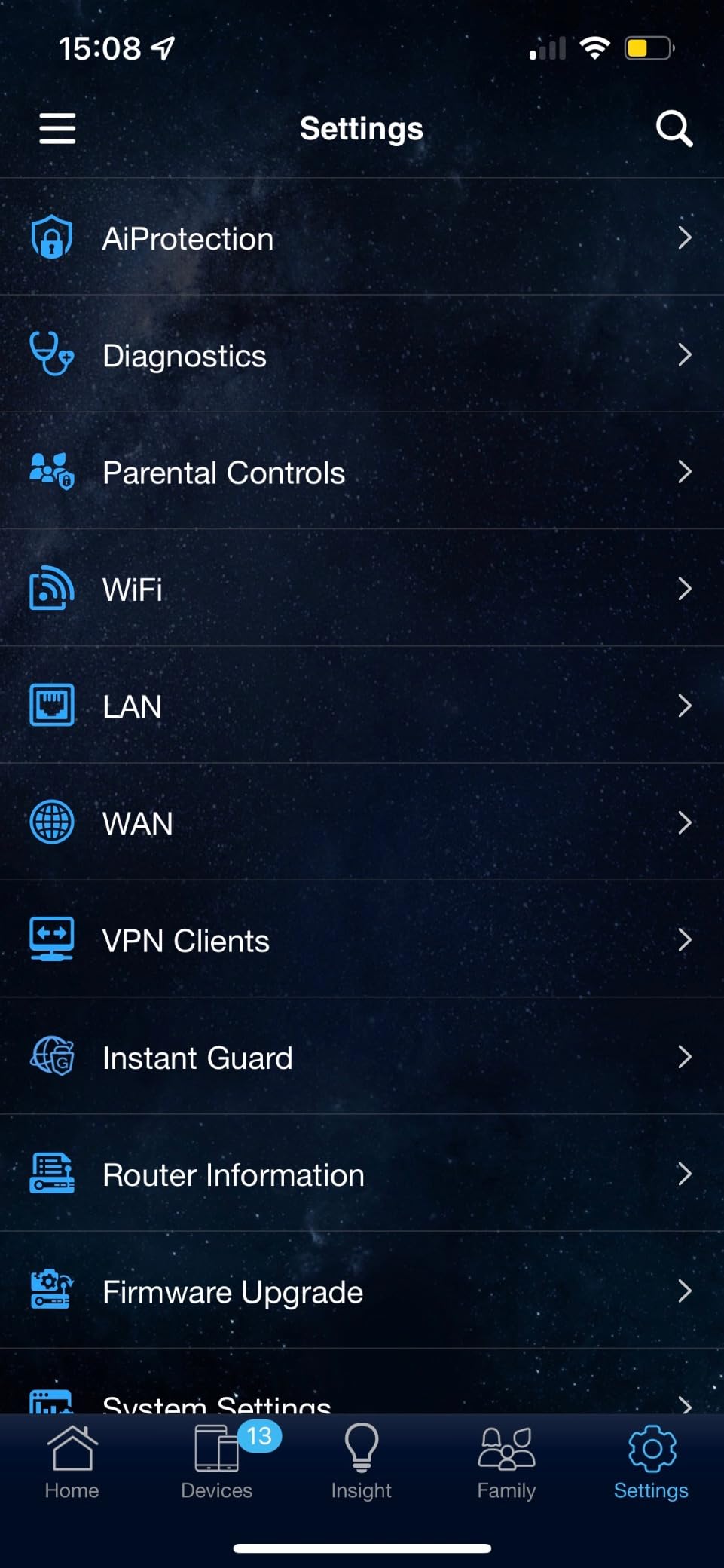
Everyone else on this list locks you into an app. The ASUS RT-AX1800S gives you a full browser interface with real QoS, firewall rules and VPN configuration, and it is the only pick here with commercial-grade security included at no cost.
AiProtection Classic, powered by Trend Micro, handles the threat filtering and parental controls without a subscription. ASUS Instant Guard gives one-click VPN access when you are out, and AiMesh pairing takes about ten minutes if you already own an ASUS router.
- Wi-Fi 6 with 1024-QAM and an AX1800 class rate
- Dual-core processor with four VPE cores and 256 MB of RAM
- Five Gigabit ports: one WAN and four LAN
- Four retractable antennas in a 9.06 inch body
- Three-year warranty, longer than most routers here
There is a documented firmware issue worth knowing about. On MT7915-based units, a known ASUSWRT bug can shut down the 2.4 GHz radio shortly after boot when Smart Connect and 2.4 GHz Wi-Fi 6 are both enabled, so check for the current firmware before you rely on it.
Parental controls also stop short of per-site history and custom blacklists. If those two gaps do not matter to you, the trade for free security and deep control is a good one.
How to Choose Wi-Fi Routers During Prime Big Deal Days
How much coverage does your home need?
Match the box to the square footage, not to the marketing. Up to 1200 sq. ft. is a single-room router such as the Archer A8 or A54, up to 1500 sq. ft. is the eero 6, and anything above 3000 sq. ft. across two floors wants a mesh. Thick masonry walls count as roughly double the floor area.
Which Wi-Fi generation should you choose?
Wi-Fi 5 still handles browsing, video calls and a few streaming streams, which is why the Deco S4 and Archer A8 remain sensible choices. Wi-Fi 6 adds capacity for crowded devices, and Wi-Fi 6E or 7 adds a 6 GHz band only worth buying when your phones and laptops can use it.
How do you compare router speed ratings?
Ignore the summed class name and read the per-band numbers. AX1800 means about 1200 Mbps on 5 GHz and 574 Mbps on 2.4 GHz; AX3000 roughly doubles the 5 GHz figure to 2402 Mbps. Real wireless results land far below both, and your internet plan speed is the ceiling anyway.
Which router features are worth it?
Prioritise 2.5 GbE WAN if your plan is gigabit or faster, otherwise you are paying for speed the router cannot pass. Then look at Ethernet port count, wired backhaul support on mesh, and whether the security suite is free or a subscription. The ASUS RT-AX1800S and the Deco X55 include real security features at no cost.
How do you set up and maintain a new router?
Put it in the open rather than a cupboard, update the firmware on day one, change the admin password, and confirm WPA3 is enabled. Keep the provider-supplied router for a fortnight in case your provider needs it during activation.
How to Shop Wi-Fi Router Deals During the Sale
Check the model number before anything else, because Archer AX21 and AX55 listings sit in the same family and look alike in a thumbnail. Confirm whether the listing is one unit or a three-pack, read what is in the box, and note who the seller and shipper are. Most offers during Prime Big Deal Days need a Prime membership, where a free trial counts, and the prices move through the event.
- Match the radio generation to the devices you already own
- Check the WAN port speed against your internet plan
- Count Ethernet ports if anything will be wired
- Look for free parental controls and security rather than trials
- Confirm the box contains the number of nodes you expect
- Update firmware and change the admin password on day one
Frequently Asked Questions
When does Amazon Prime Big Deal Days take place?
Amazon Prime Big Deal Days runs October 6-7, 2026. Wi-Fi routers are one of the categories that tend to shift most across those two days, so it is worth looking at the listings before the event opens and again during it.
Do I need Prime to buy a Wi-Fi router during Prime Big Deal Days?
Most router offers during the event need an active Prime membership, and a free trial counts. A small number of listings run without Prime, so check the membership note on each product page before you assume either way.
Which Amazon Prime Big Deal Days Wi-Fi Router Deals are worth watching?
The Amazon eero 6 is the one to watch for most households, the TP-Link Deco S4 covers large homes cheaply, and the TP-Link Archer AX21 handles flats and small houses. Deals shift through the event, so compare the current listing rather than an earlier screenshot.
Is Wi-Fi 6 or Wi-Fi 7 better for a new home router?
Wi-Fi 6 is enough for most homes and every device most people own today. Wi-Fi 7 adds a wider 6 GHz band and multi-link operation, which pays off only if you already own Wi-Fi 7 clients or plan faster than gigabit service.
Should I buy a mesh system instead of a single router?
Buy mesh when you have more than about 1500 sq. ft., more than one floor, or dead zones that a single router cannot reach. A single router such as the Archer AX21 or AX55 is simpler and cheaper for a flat or a small house.
What router specifications matter most for gaming and streaming?
Stable latency matters more than headline speed, so look for OFDMA and MU-MIMO to handle busy households, and a 2.5 Gbps WAN port if your plan is gigabit or faster. Wired backhaul on a mesh system keeps far rooms steady during large downloads.
Final Verdict: Best Amazon Prime Big Deal Days Wi-Fi Router Deals
The Amazon eero 6 is the pick most worth watching during the sale, and the TP-Link Deco S4 is the budget-friendly alternative for anyone covering a whole house. For a flat or small house, the TP-Link Archer AX21 does the job with five Gigabit ports. Larger homes with cable in the walls suit the Deco X55, gigabit service suits the Archer AX55, and a gigabit-plus plan with newer devices points to the Archer AXE75 or the eero 7.
Check the current listings for each of these during Prime Big Deal Days and compare them against the coverage and port needs you actually have.