

A teen’s art desk is not a kids art table and it is not an adult drafting table. It sits in the gap between the two, and most buying guides completely ignore that gap. A 13-year-old sketching in a bedroom needs a surface at their elbow height, a tilt they can reach with one hand, and storage for a backpack of supplies. A 17-year-old building an AP Art portfolio needs a 47 inch top, a pencil ledge that holds a T-square, and a frame that does not wobble when they lean across it to reach the far corner.
That is why the best art desks for teens are judged differently than art desks for kids or for professionals. We spent weeks reading specifications, review patterns and assembly notes across twelve current models to work out which ones actually survive a teenager. What follows is that research, ranked.
If your teen is still on a plastic table sized for a five-year-old, start with our kids art table roundup to see whether a transition is due. If you are shopping for the rest of their room setup, our tech gift guide for teens covers the drawing tablet and monitor side of a digital setup.
Table of Contents
Top 3 Best Art Desks for Teens in 2026

Yaheetech Adjustable Drafting Table
- 27.5 to 36.5 inch height
- 0 to 60 degree tilt
- Storage drawers and stool included

ZENY Adjustable Drafting Table
- Height and tilt adjustment
- Slide-out side surface
- Two drawers and shelf

MEEDEN Wood Drafting Table
- Solid beech frame
- 29.7 to 38.4 inch height
- Bonus T-square included
The Yaheetech is the one we would put in a teenager’s room without hesitating. It has the widest height range of any drafting-style desk we reviewed at 27.5 to 36.5 inches, a 60 degree tilt, and a retractable side surface that becomes a laptop or reference shelf. The ZENY is the value pick, offering similar adjustability plus a slide-out extension for a lower outlay. The MEEDEN is the one to buy if the desk has to look like furniture in a bedroom rather than equipment in a classroom.
The 12 Best Art Desks for Teens at a Glance in 2026
| Product | Specifications | Action |
|---|---|---|
| Yaheetech Adjustable Drafting Table with Stool |
|
Check Latest Price |
| ZENY Adjustable Drafting Table with Tilted Top |
|
Check Latest Price |
| MEEDEN Wood Adjustable Drafting Table |
|
Check Latest Price |
 Yaheetech Glass Drafting Table with Storage Yaheetech Glass Drafting Table with Storage |
|
Check Latest Price |
 BBBuy Drafting Table Work Station with Stool BBBuy Drafting Table Work Station with Stool |
|
Check Latest Price |
 JupiterForce Glass Drafting Table on Wheels JupiterForce Glass Drafting Table on Wheels |
|
Check Latest Price |
 X-cosrack Adjustable Drafting Table with Monitor Stand X-cosrack Adjustable Drafting Table with Monitor Stand |
|
Check Latest Price |
 VECELO Drafting Table with 65 Degree Tilt VECELO Drafting Table with 65 Degree Tilt |
|
Check Latest Price |
 Tribesigns Drafting Table with Storage Drawers Tribesigns Drafting Table with Storage Drawers |
|
Check Latest Price |
 DJAR 5-Position Desktop Drafting Table DJAR 5-Position Desktop Drafting Table |
|
Check Latest Price |
 Topeakmart Height Adjustable Drafting Work Station Topeakmart Height Adjustable Drafting Work Station |
|
Check Latest Price |
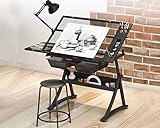 Landpink Glass Drafting Table with Drawers Landpink Glass Drafting Table with Drawers |
|
Check Latest Price |
1. Yaheetech Adjustable Drafting Table with Storage Drawers and Stool
Yaheetech Adjustable Drafting Table Art Desk,Storage Drawers & Stool,Black
Height 27.5-36.5 inch
Tilt 0-60 degrees
47.5 inch wide top
Two drawers plus shelf
Stool included
Pros
- Widest height range we tested
- Metal pencil ledge stops supplies sliding when tilted
- Retractable 15 by 23.6 inch side surface
- Locks firmly in multiple positions
Cons
- Fabric drawers slide tightly and tear easily
- Included stool can arrive wobbly
- Side surface does not fully tuck under the top
This is the desk we kept coming back to while testing. The height adjustment runs from 27.5 to 36.5 inches, which is the difference between a 12-year-old working comfortably and a 16-year-old hunching over the page. The metal pencil ledge runs along the low edge of the top and stops pens, markers and brushes from sliding off every time the angle changes.
The whole unit weighs 51.8 pounds, and that weight is doing real structural work. A teen who plants both forearms on the surface while inking does not get the wobble that lighter frames produce. Reviewers consistently describe it as sturdy and versatile, praising the tilt range, the height adjustment and the storage for paint and craft supplies.
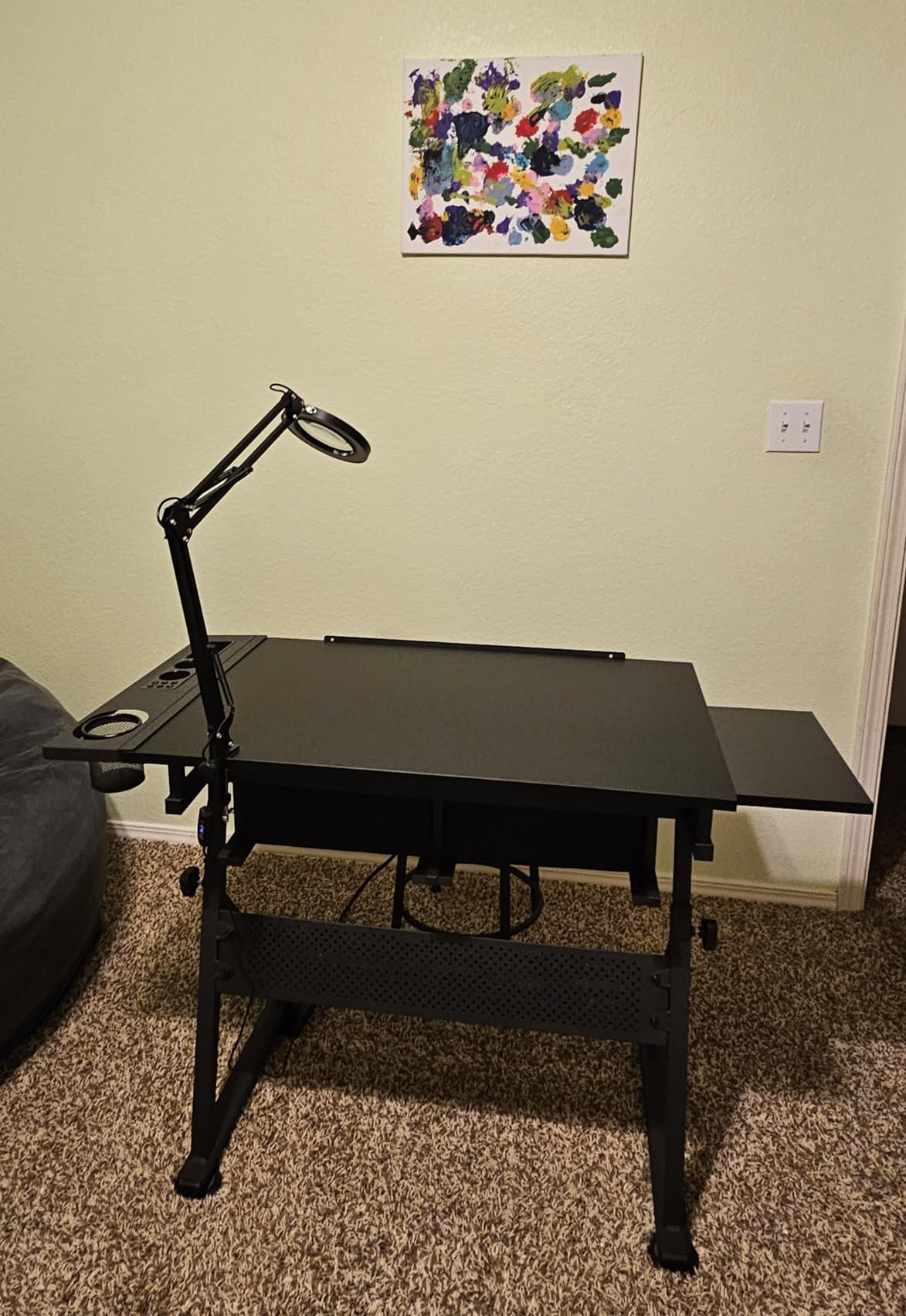
Two details matter more for a teen than the spec sheet suggests. The retractable side surface measures 15 by 23.6 inches and gives a usable second work area for a laptop or reference images, but it does not fully tuck under the main top, so plan the wall clearance before you buy. The second is the drawers, which are canvas-like, sit under the work surface and slide tightly.
Assembly takes roughly one to two hours and is manageable solo with a Phillips screwdriver, though the instruction layout is a little awkward. If the included stool matters to you, check it over on arrival, because some units arrive wobbly even when reassembled correctly. A better seat is an easy swap later.
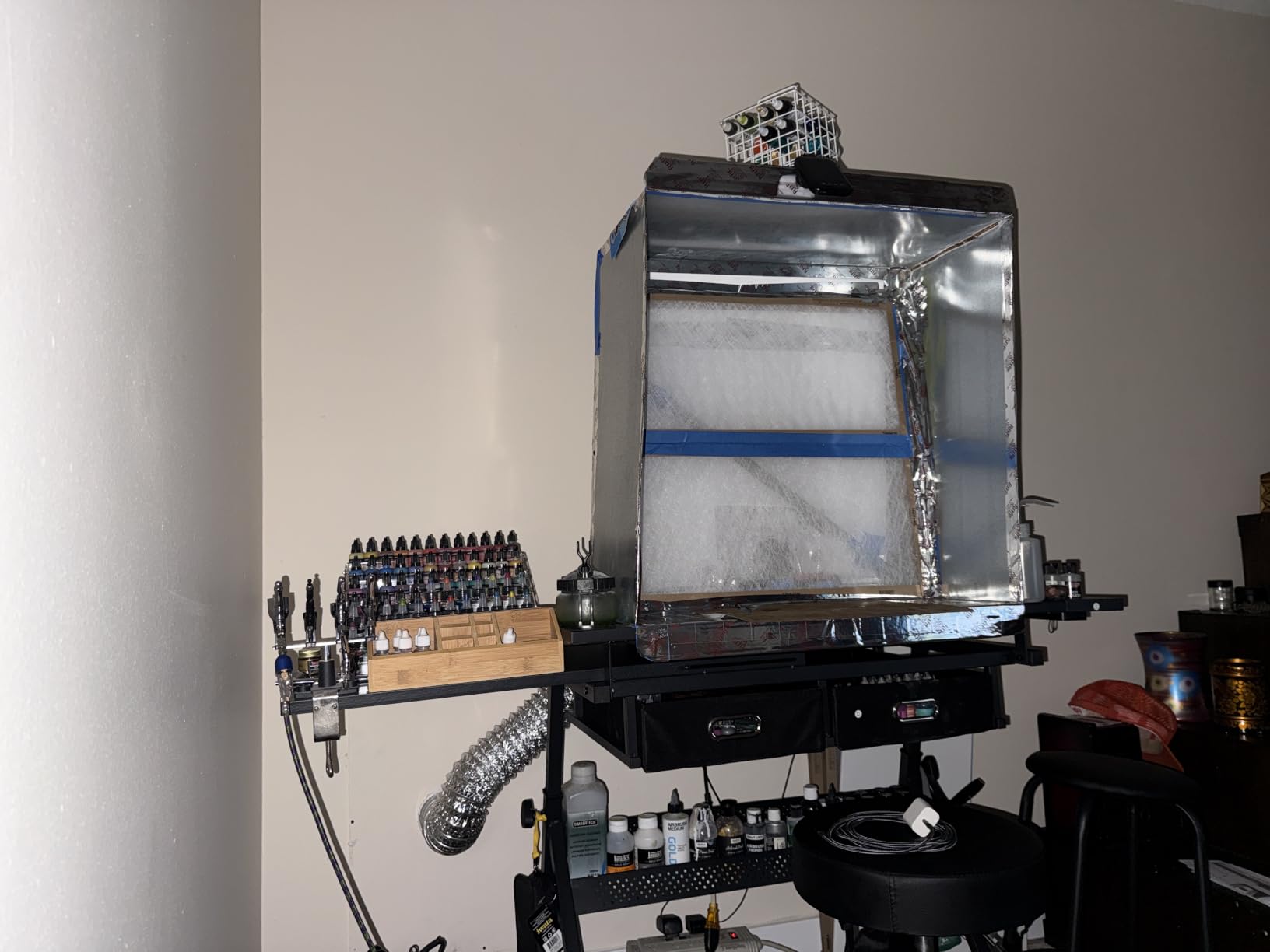
Check the height range before anything else
This desk covers the widest seated height band of the drafting-style models we reviewed, which means it works for a younger teen now and an older teen later. That single feature is what makes it a buy-once option rather than another birthday replacement.
Buyers also single out the tilt lock as reliable, which matters more than it sounds. A top that drifts out of angle mid-session pushes a teen back to a flat posture, and that is exactly the habit a tilting surface is meant to break.
Check the drawers if your teen is hard on supplies
The loose fabric drawers are the most repeated complaint in the reviews, and they are the reason this desk sits where it does rather than higher. They are fine for pencils, erasers and paper, less fine for a haul of markers or a water cup that tips.
If your teen works with oils, hot glue or anything that needs wiping, keep a cheap desk pad or a sheet of glass on the surface. It takes seconds and it protects the finish. Nobody in the review data suggested a replacement drawer solved it, so plan around the storage rather than on it.
2. ZENY Adjustable Drafting Table with Tilted Top and Stool
ZENY Drafting Table Art Desk Drawing Table Height Adjustable Artist Table with Tilted Tabletop, Drafting Stool and Storage Drawer for Reading, Writing, Crafting, Painting Art
Height 28-35.8 inch
Tilt 0-60 degrees
34 by 23.6 inch main top
Slide-out surface and stool
Pros
- Height and tilt both adjust smoothly and are easy to reach
- Slide-out side table adds real workspace
- Two drawers plus a lower shelf for paper and art books
- Pencil ledge stops pens rolling when tilted
Cons
- Included stool tends to wobble
- Shallow brush and pen holders
- Sharp plastic feet can scratch hard flooring
The ZENY is the strongest performer on paper in this group, holding a 4.6 rating across more than 3,000 reviews. The main top is 34 by 23.6 inches and a second 15 by 23.6 inch surface slides out from the side, which is what makes it work in a bedroom where a single 47 inch desk would not fit against the wall.
Height runs from 28 to 35.8 inches and the top tilts up to 60 degrees. Both controls sit within reach of a seated teen, which matters more than the raw numbers, because a teen who cannot operate the tilt on their own stops tilting the desk.
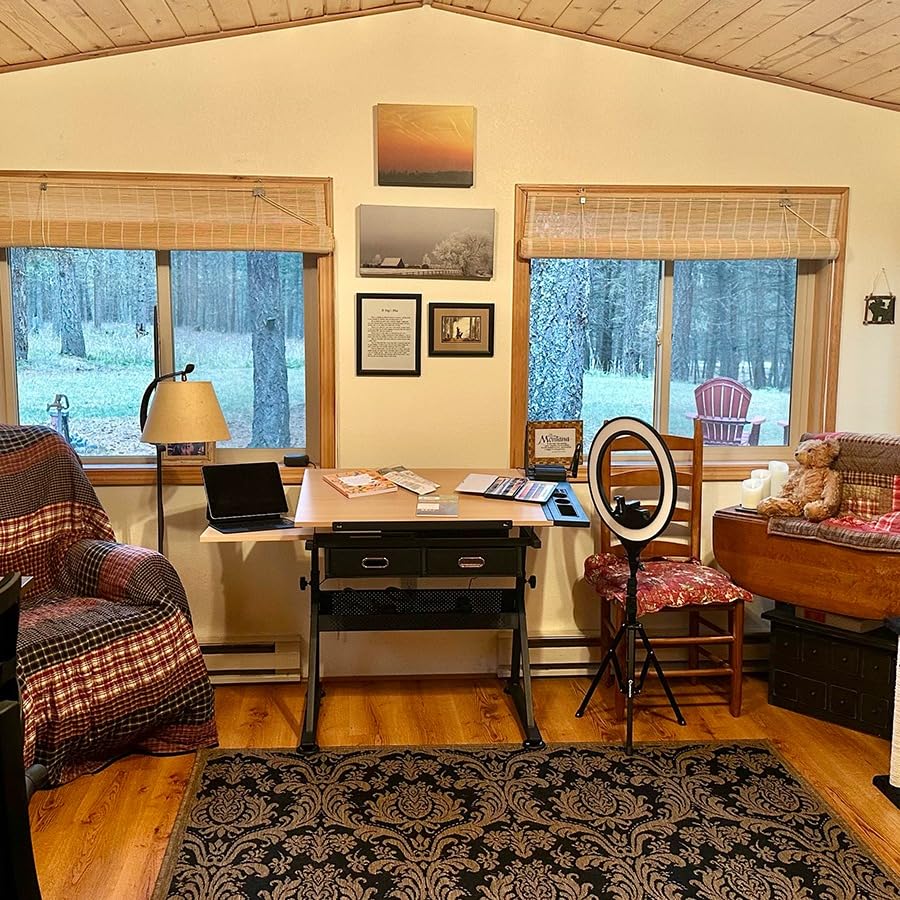
Owners rate it as good value with a genuinely useful tilt and adequate storage, and many report it working for both a child and an adult in the same house. Storage is two slide-out drawers plus an under-table shelf, with 30 liters of listed volume. That is enough to keep a term’s worth of paper and reference books off the floor.
The recurring gripes are all small ones. The stool is flimsy, the tool holders are shallow enough that brushes fall out when tilted, and the instructions lean on text more than diagrams, so allow about two hours solo. A small number of buyers found MDF or veneer defects or missing screws on arrival, which is worth checking within the return window.
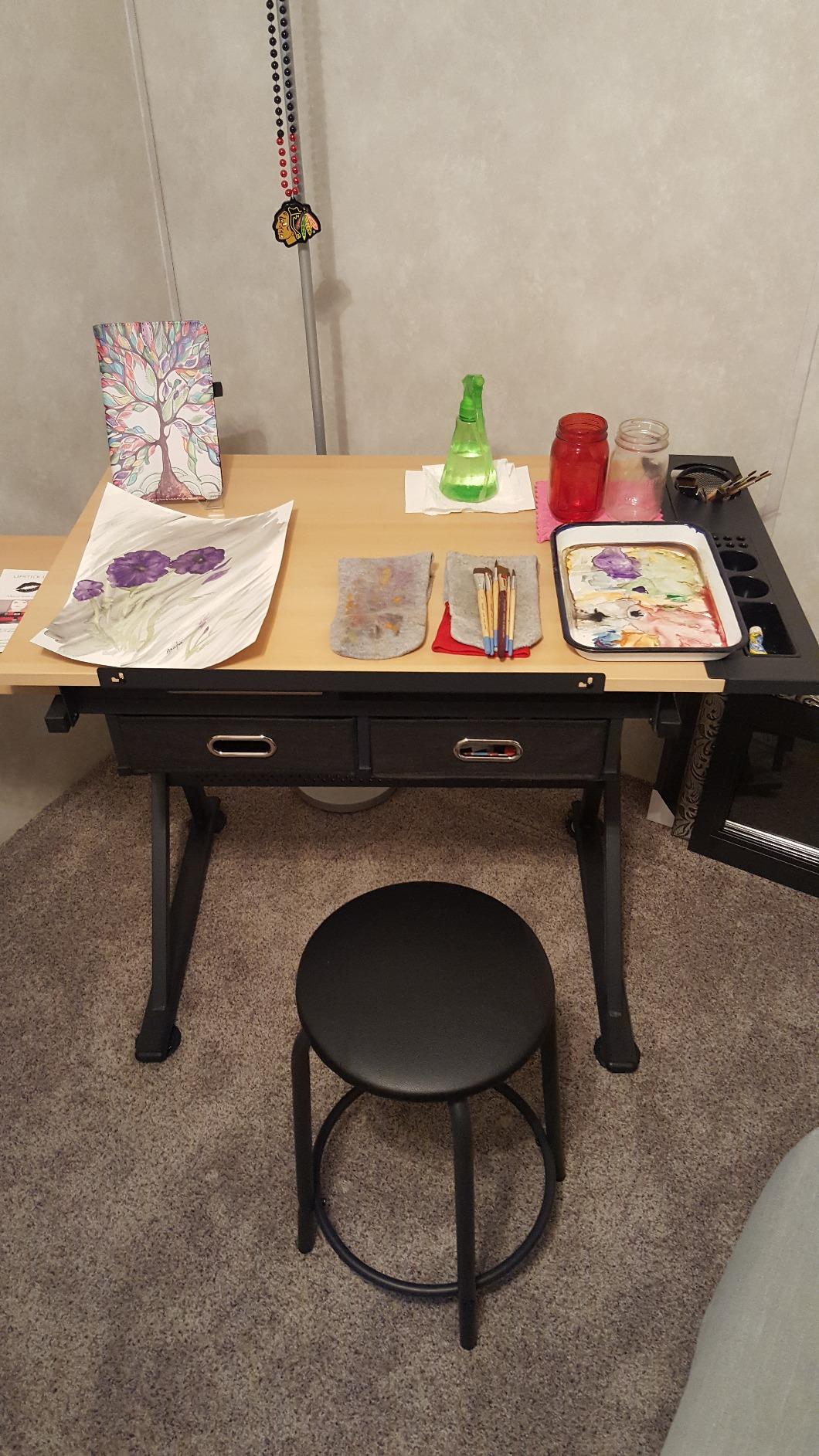
Check this one for a shared room
Reviewers specifically mention that it fits an adult and a school-age child in the same home. If a younger sibling also draws, or a parent wants a surface for the same room, the height and tilt range covers both without a second purchase.
It is also the pick to shortlist if your teen moves between drawing and schoolwork, because the flat configuration is a normal desk. Laptops, worksheets and a sketchbook all fit on the main top once the tilt is back to zero.
Check the feet if you have wood flooring
Sharp plastic feet can scratch hard flooring, and this is one of the few complaints that shows up consistently enough to plan around. Felt pads solve it in under a minute and cost almost nothing.
Also weigh whether the shallow tool holders matter for your teen’s medium. For pencil and ink work they are fine. For a brush-heavy painting setup, add a separate caddy, because anything not seated in a pencil ledge or groove will slide when the top tilts.
3. MEEDEN Wood Adjustable Drafting Table with T-Square
MEEDEN Wood Adjustable Drafting Table: 35.5″ x 23.5″ Art Drawing Desk
35.5 by 23.5 inch surface
Height 29.7-38.4 inch
Tilt to 60 degrees
Solid beech legs
Pros
- Solid beech construction feels more premium than metal and MDF rivals
- Wobble-free cross support keeps the top steady
- Height and tilt adjust to suit kids and adults
- Includes a 24 inch T-square with inch and metric markings
Cons
- No built-in storage for art supplies
- Heavier and costlier than fabric and metal desks
- Assembly takes two people about 20 minutes
Every other drafting desk in this roundup is engineered wood or particle board in a metal frame. The MEEDEN is the exception, with solid beech legs joined using traditional wood joints and cross support on the sides. That build is why it holds still when a teen leans across the surface, and it is why the natural finish looks at home in a bedroom instead of looking like equipment.
The work surface is 35.5 by 23.5 inches with a 25 inch pencil ledge, and the height adjusts from 29.7 to 38.4 inches. The upper end of that range is tall enough for a standing sketch session, which is the one feature none of the fabric-drawer competitors here can offer.
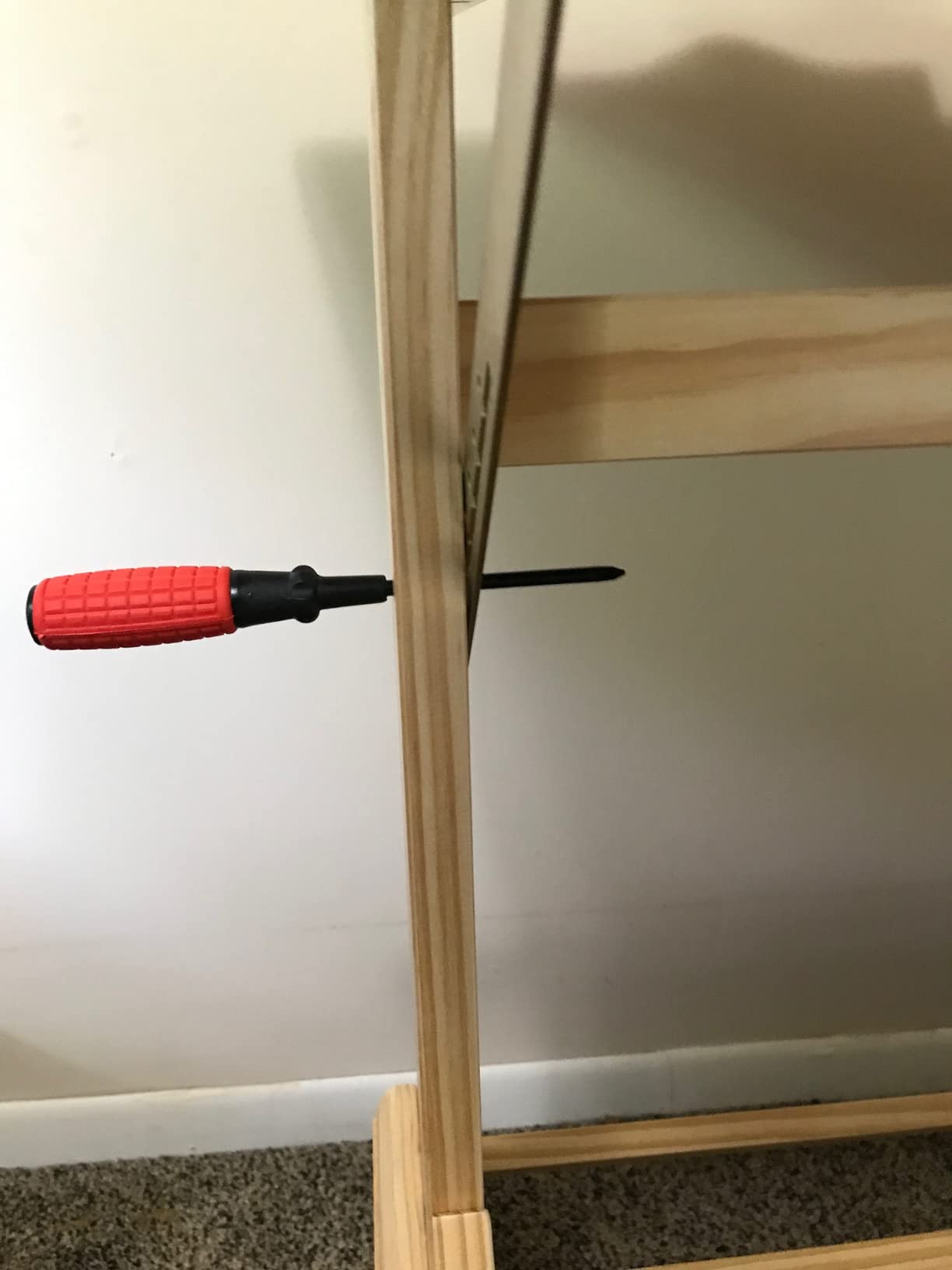
A bonus 24 inch T-square with both inch and metric calibrations ships in the box. That sounds like a gimmick until you watch a teen measure for a canvas or lay out a comic panel grid, which is exactly the kind of small convenience that keeps a desk in daily rotation.
The trade-off is storage. There is none built in, and that is the drawback reviewers cite most often. A separate rolling cart or a wall-mounted shelf handles the supply problem, but plan for it in the budget and in the floor space.
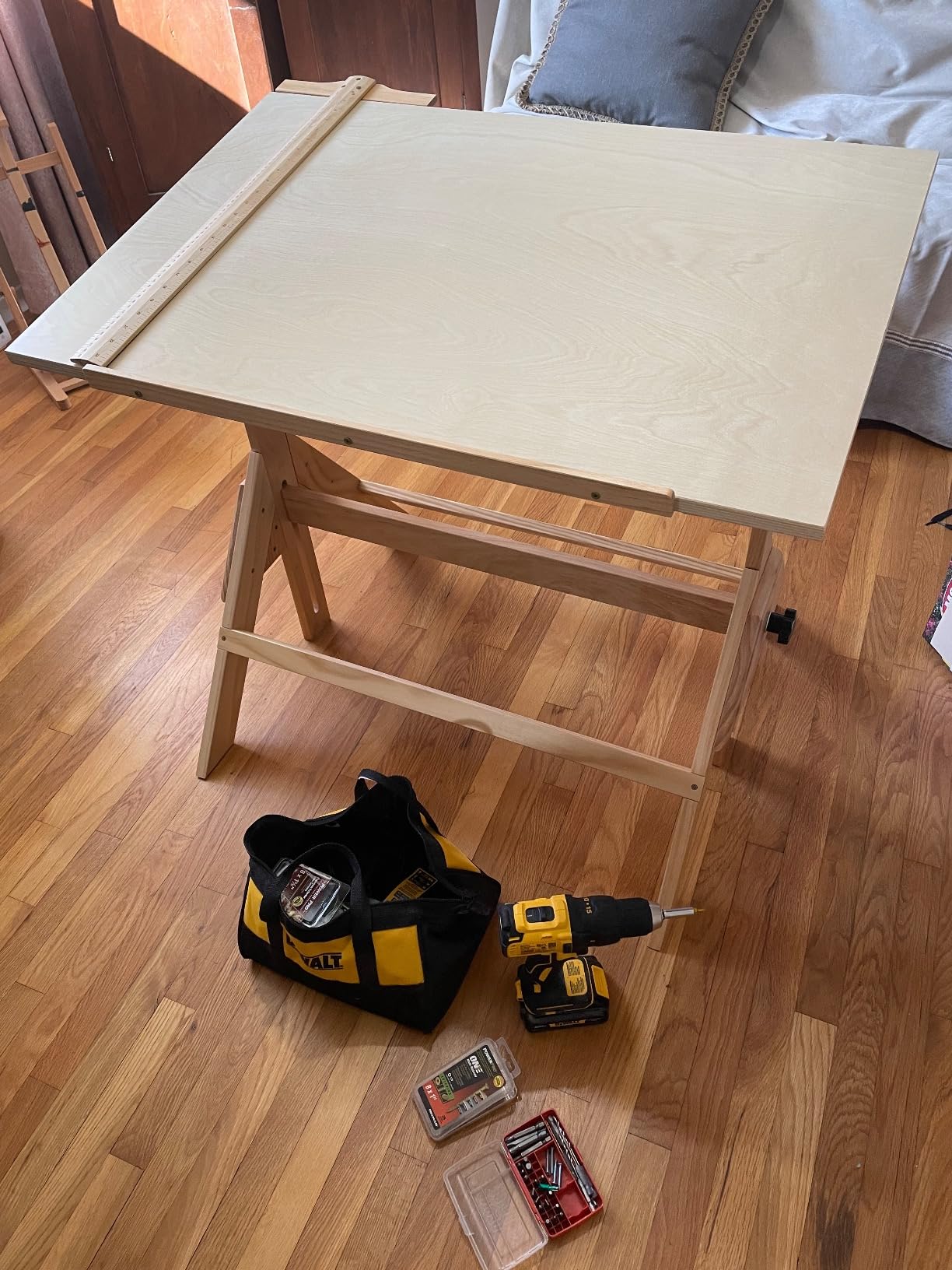
Check this one for a bedroom that has to look adult
Solid beech and a polished natural finish are the reasons to choose this over a metal frame. A teen who is self-conscious about an art corner doubling as a study space tends to leave a nice-looking desk out in the open instead of shoving it in a corner, and a desk that stays out gets used.
It is also the sturdiest option here for a teen who works with heavier media, including clay or a loaded palette leaning against the lip. A cross-braced wood frame does not develop the flex that particle board panels do under sustained pressure.
Check that you can store supplies elsewhere
No drawers, no shelf, no tray. If your teen’s art habit involves more than a sketchbook and a few pencils, budget for a separate storage solution, which is also why this desk fits a room where floor and shelf space are already spoken for.
Assembly is a two-person job of about 20 minutes, so budget for a second pair of hands. The solid wood also means it is one of the heavier units in the group, which is useful for stability and inconvenient if you ever need to move rooms.
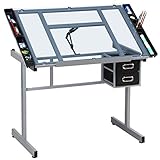
4. Yaheetech Glass Drafting Table with Storage and Swappable Feet
Yaheetech Glass Drafting Table with Storage, Adjustable Art Drawing Desk
Tempered glass top
Tilt 0-60 degrees
Height 31.5-49.2 inch
Flat feet or locking casters
Pros
- Glass top is durable and wipes clean after paint or ink
- Works as a light table with a light underneath
- Two sets of feet let you choose stability or mobility
- Four stationery trays with honeycomb pen holes
Cons
- Fabric drawers are light duty
- Glass surface shows fingerprints and smudges
- Height range is narrower than some competitors
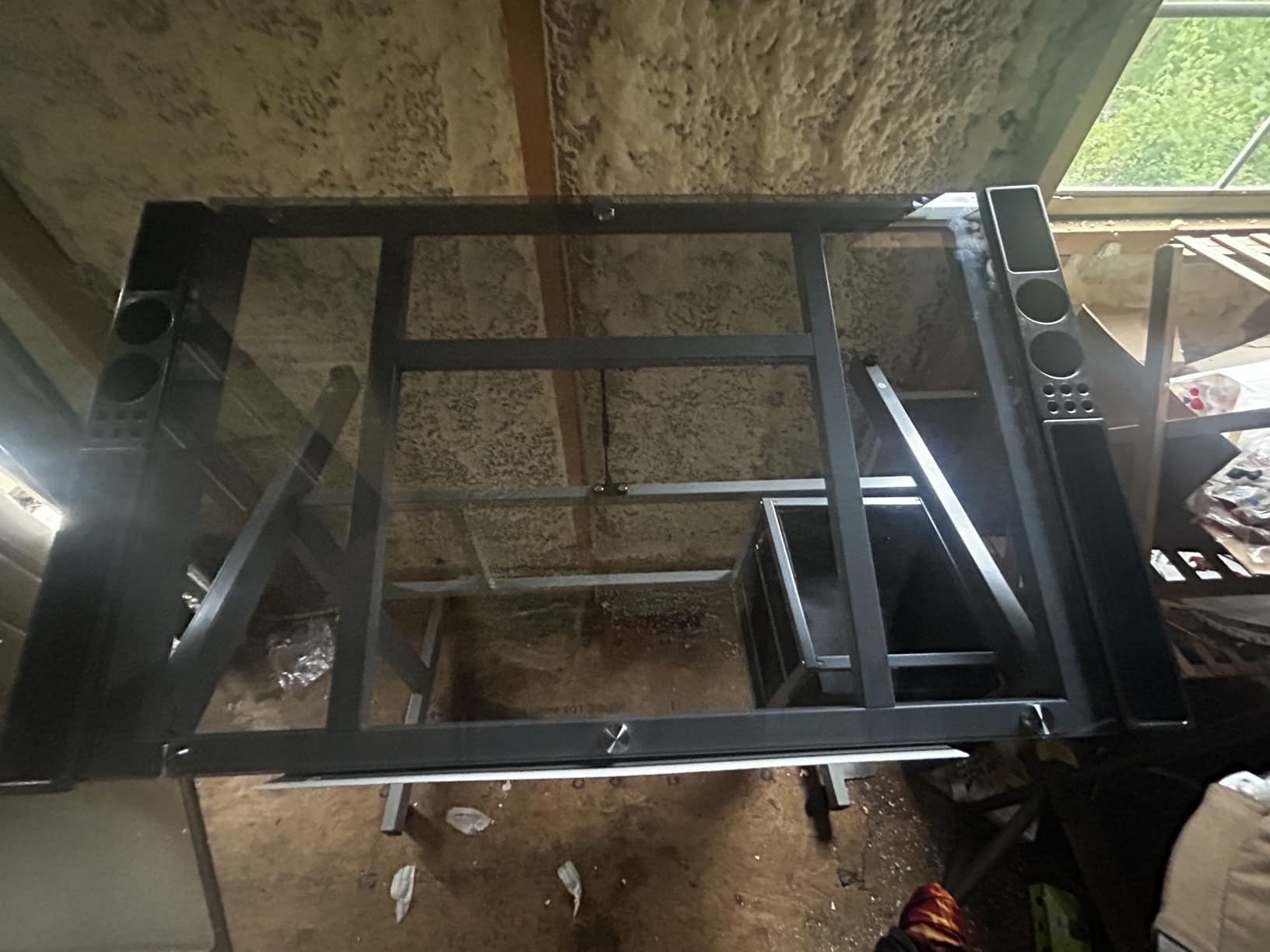
This is the desk to buy if the clean-up burden is what stops your teen from painting at home. A tempered glass top wipes down after acrylic, ink or marker with a damp cloth, and the filleted edges take the sharpness risk out of a glass surface in a shared room. The frame is powder-coated steel, and the top tilts through 0 to 60 degrees.
The feature no competitor here has is swappable feet. The desk ships with a flat set and a set of 360 degree swivel casters, two of which lock, so you can change the whole character of the desk in a minute. Locked casters give a stable drawing surface; casters let a teenager roll the entire station out of the way to do homework or make the bed.
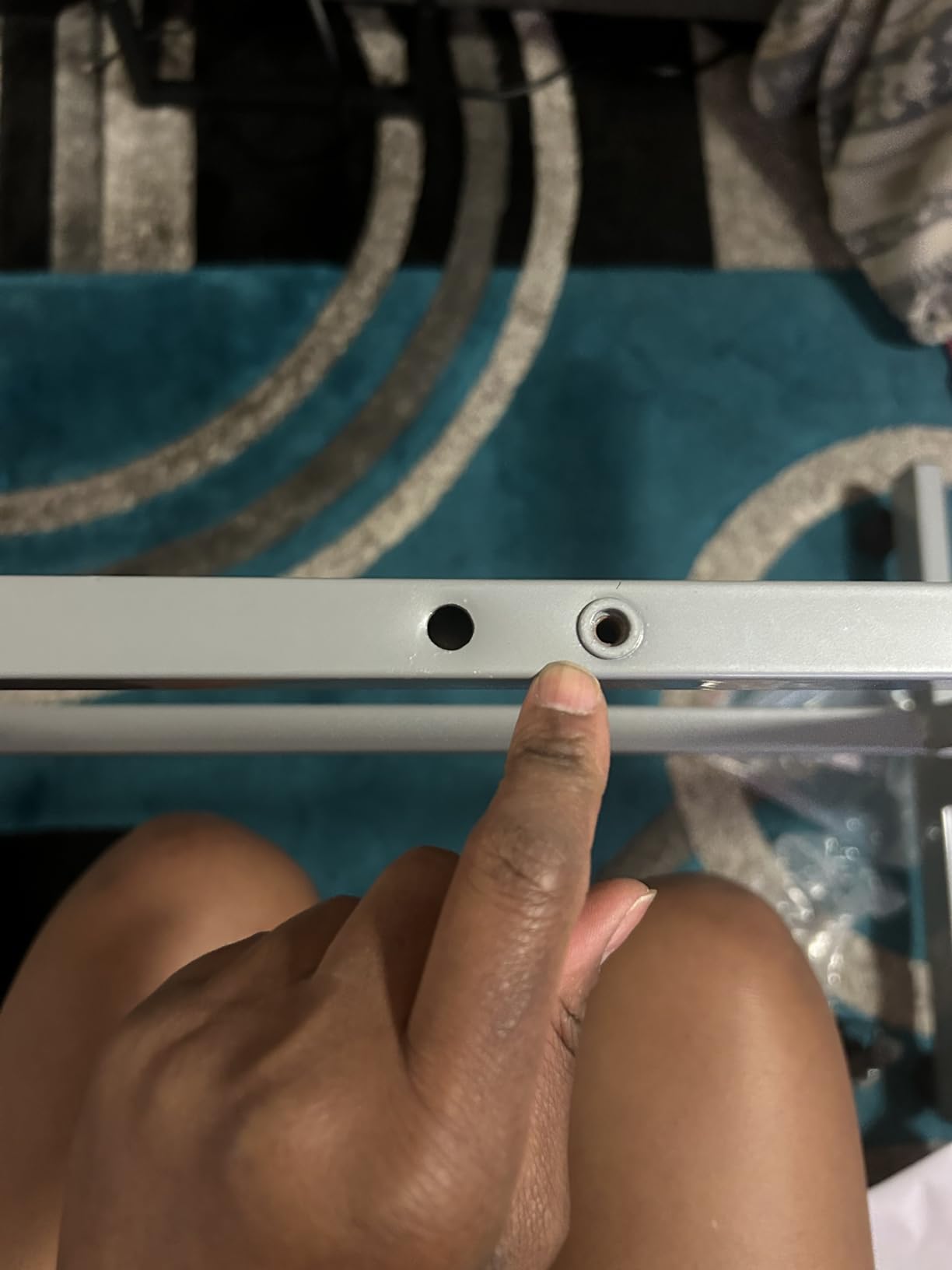
Organization is handled by four embedded stationery trays with honeycomb pen holes, plus two non-woven fabric drawers. Buyers like the durable glass, the smooth tilt and the foot swap, and the reservations are consistent: the fabric drawers are light duty and glass naturally shows fingerprints.
Height runs from 31.5 to 49.2 inches, which is a narrower seated band than the Yaheetech at number one. If you expect a younger teen working for several years, check that 31.5 inch floor height suits them or add a footrest.
Check the height if a younger teen is the main user
The 31.5 inch minimum is workable for many 15 and 16 year olds but can be too tall for a 13-year-old seated. Measure the teenager’s elbow height when seated before committing, because this is the one area where the glass models are less accommodating than the metal-frame models.
In exchange, the maximum of 49.2 inches is a genuine standing height, so a taller teen can stand and draw without a separate perch desk.
Check whether fingerprints bother your teen
Glass shows smudges and prints in a way laminate does not, and reviewers raise this on their own. A microfiber cloth kept on the side tray makes it a thirty-second fix.
For messy media, the glass also unlocks something the wood desks cannot do. Put a light source underneath and the same surface becomes a light table, which is how many illustrators trace and plan layered pieces.
5. BBBuy Drafting Table Work Station with Stool and Storage Drawers
BBBuy Drafting Table Drawing Desk Art&Craft Work Station Height Adjustable Tilting Tabletop Craft Table Desk w/Stool and 2 Storage Drawers for Home Office Study Room, Natural
Height 28-35.8 inch
One-hand ratcheting tilt
Two drawers and a shelf
Stool included
Pros
- One-hand ratcheting tilt is easy for a kid to operate
- Sheet stopper on the lip keeps paper from sliding
- Two drawers plus a shelf hold artwork and supplies
- Non-slip foot pads protect wood floors
Cons
- Height adjustment needs holding about 20 pounds of weight
- Instructions are complicated and parts can be missing
- Included stool is high and uncomfortable for long sessions
This is the entry point on the list, and the reason it works is the one-hand ratcheting tilt. A teen can pull the top up to 45 degrees without wrestling a knob or holding weight, which is the difference between a tilting surface that gets used daily and one that stays flat. A sheet stopper on the lip keeps paper from sliding downhill.
The age range is listed as adult, teens and children, and the height runs from 28 to 35.8 inches, covering most of the teen years. The work surface is 42.5 by 23.6 inches with a 23.6 inch pencil ledge, and two non-woven drawers plus a lower shelf handle paper and supplies.
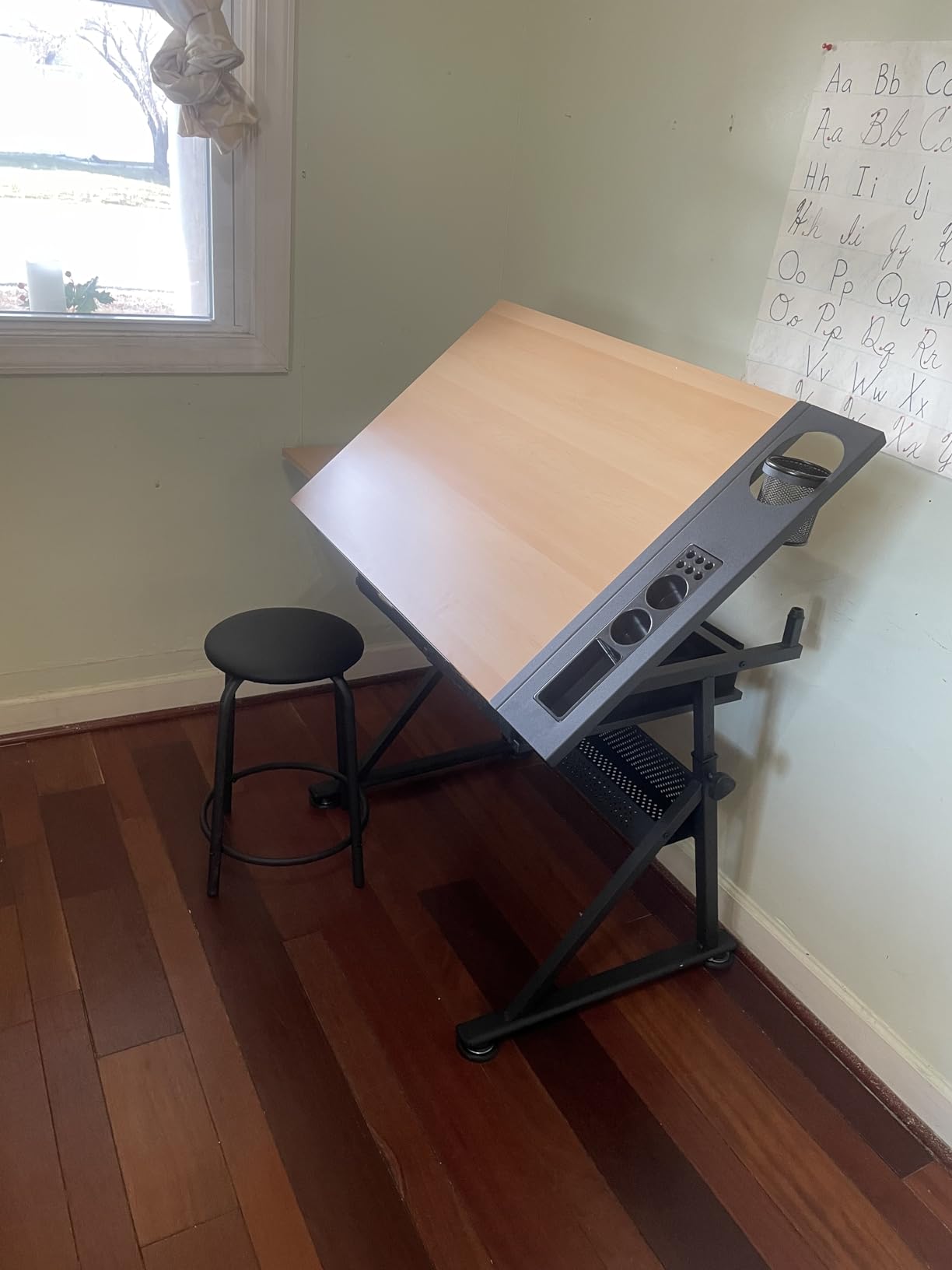
Most owners are surprised by the sturdiness for the money, and children in particular seem to work at it happily. The catch is the height adjustment, which reviewers describe as needing roughly 20 pounds of held weight and two sets of hands, so it is not a solo job if a teen is under about 14.
Other recurring notes are complicated instructions with occasionally missing parts, drawers that can stick and rub the legs, and a stool that is more decorative than comfortable. Some units arrive with warped or dented pieces, so inspect everything before assembly day.
Check this one for a first art desk
If your teen is around 12 to 14 and this is their first dedicated art surface, the simple one-hand tilt is the most valuable feature in the whole category. Easy mechanisms survive being operated by someone still learning to manage a desk.
The wide 42.5 inch top also gives room for a large sheet of paper, which is where a lot of starter desks fall short. Hobby groups note repeatedly that teens outgrow small kid-sized art tables quickly, and this one spans the gap better than most.
Check the height mechanism before the teen uses it alone
Ratcheting a 20 pound top up single-handed is fine for an adult and unreliable for a younger teen. Plan to set the height once with a parent and treat the tilt as the part your teen operates day to day.
Budget for a better seat. The included stool runs high and reviewers describe discomfort over long sessions, and swapping in a chair they already like costs nothing and improves the hours they spend drawing.
6. JupiterForce Glass Drafting Table with Wheels and Sliding Drawers
JupiterForce Adjustable Drafting Table Art Desk Drawing Table Versatile Art Craft Work Station Glass Tabletop w/2 Slide Drawers and Wheels for Reading, Writing, Painting Home Office
Glass top tilting 0-60 degrees
Height 31.5-49.5 inch
Four swivel casters
Two sliding drawers
Pros
- Toughened glass top is durable and easy to clean
- Wide 0 to 60 degree tilt suits long drawing sessions
- Four 360 degree casters with two lockable
- Workable angle has helped users stop slouching
Cons
- Shallow side pockets let brushes fall out when tilted
- Plastic caster wheels can be inadequate
- Some units arrive with misaligned hinge flanges
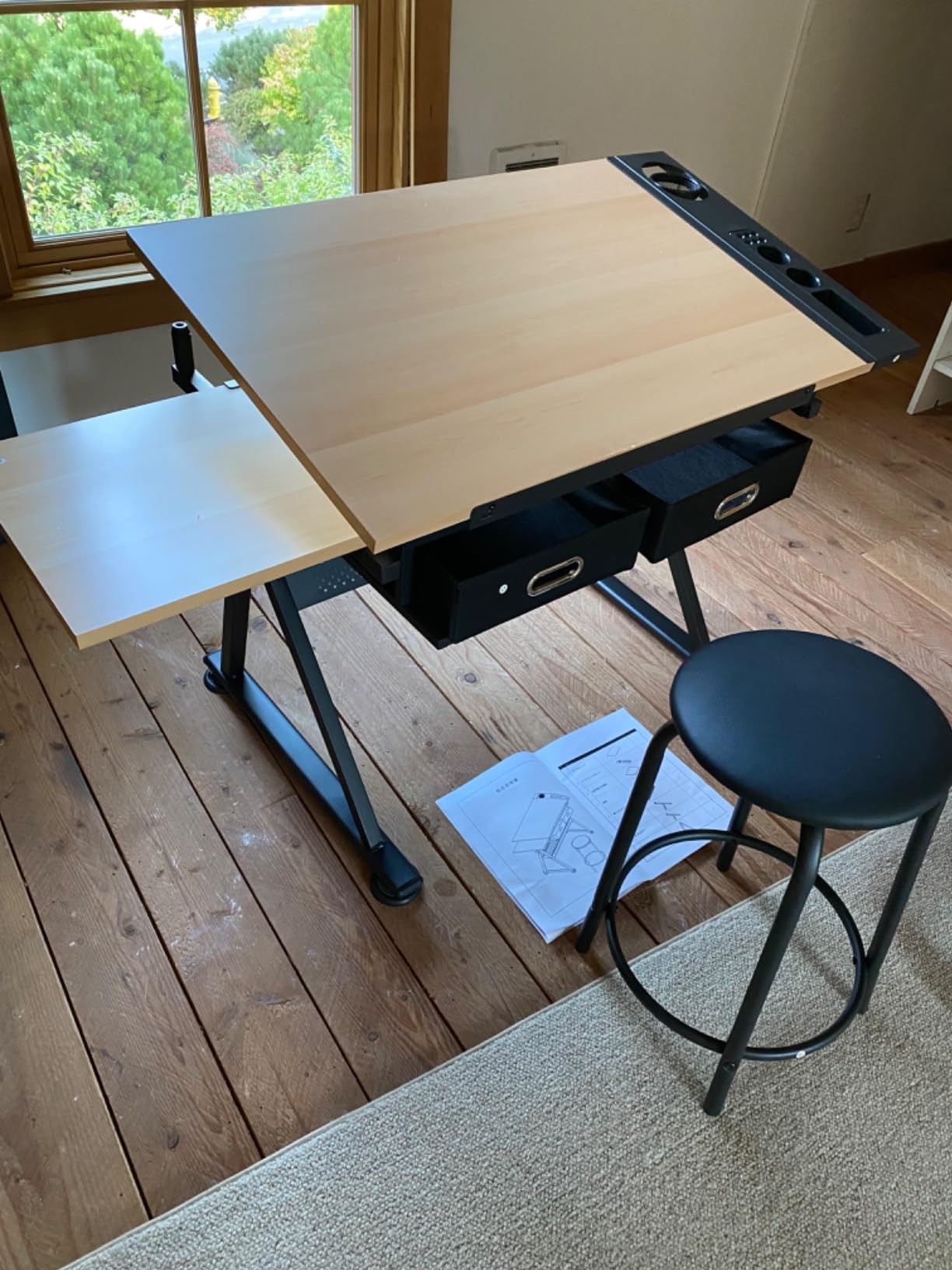
At 99 pounds this is the heaviest unit we reviewed, and that mass is the point. The welded alloy steel frame and toughened glass top do not shift when a teen leans on the far edge to reach across a wide drawing. Owners also mention that working at the angle helped them stop slouching, which is the ergonomic argument for a tilting surface in a single sentence.
The glass top tilts from 0 to 60 degrees and the height runs from 31.5 to 49.5 inches on a 41.25 by 24 inch work surface. Four 360 degree swivel casters, two of them lockable, let a teenager move the whole station; reviewers find customer service responsive when a unit arrives with a problem.
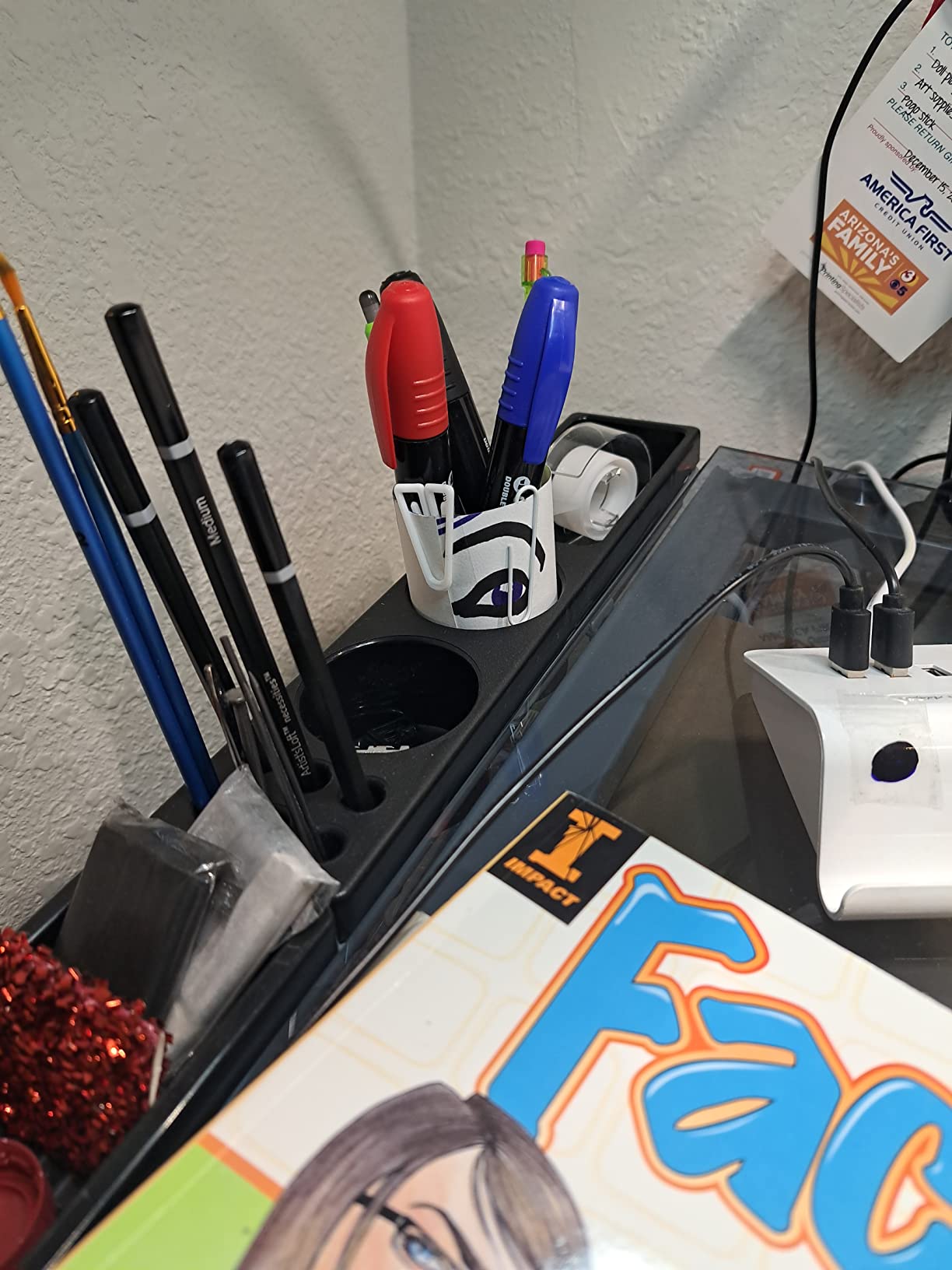
The trade-offs are specific. The side pockets are shallow, so brushes and markers fall out when the top is tilted, and the plastic caster wheels can feel inadequate on carpet. Some units arrive with misaligned hinge flanges, and the object stopper retainer holes may need aligning during assembly.
Storage is two sliding drawers plus four removable single-slot supply trays, and the drawers on some units lack a cover, which means contents are visible through the glass. That reads as a design quirk rather than a fault once you know what to expect.
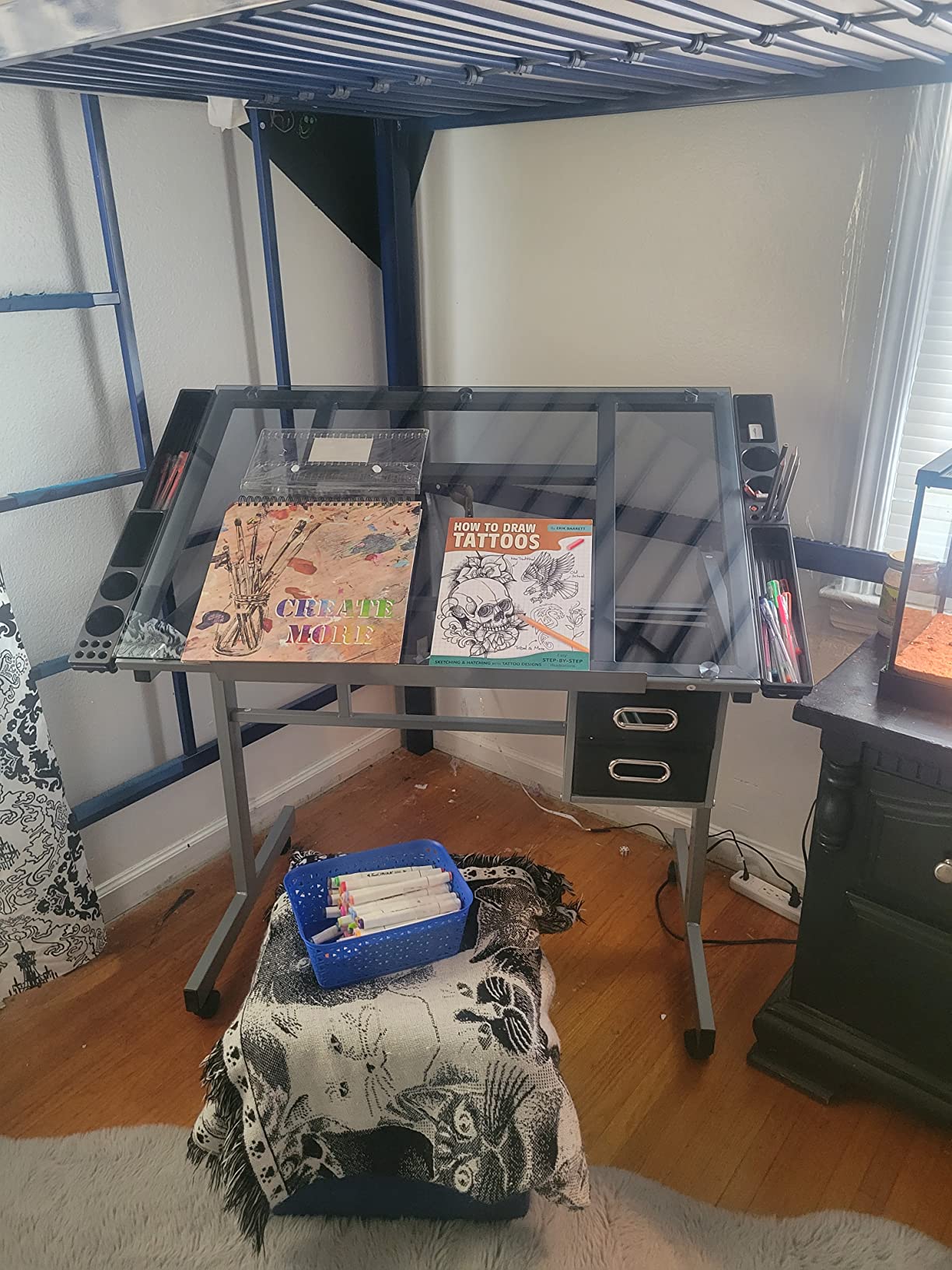
Check this one for a teen who moves between stations
The casters are the reason to pick this over the other glass models. A locked set gives a stable drawing surface, and an unlocked set lets one desk serve a bedroom corner, a schoolwork session and a floor-based sketching setup on the same day.
At nearly 100 pounds it is not moved casually, so check that the route to the spot is clear of thresholds and that the floor is flat. On carpet, expect the wheels to be the least pleasant part of the experience.
Check the tool pockets if you work in anything but pencils
Shallow side pockets and a tilting top are a bad combination for brushes. Anything not clipped or seated in a groove will end up on the floor, so a desktop caddy on the fixed portion of the surface is the practical fix.
If your teen is drawn to messy media, the glass earns its place here. It cleans with a damp cloth, and with drawers that show their contents through the top, a teenage eye is more forgiving of a small spill than a woodgrain surface is.
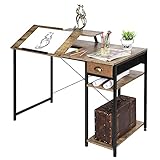
7. X-cosrack Adjustable Drafting Table with Monitor Stand and Drawer
X-cosrack Adjustable Drafting Table with Storage Drawer & Monitor Stand
Tilt to 45 degrees
43.3 by 21.6 inch top
Drawer and two side shelves
Removable monitor riser
Pros
- Doubles as a drafting surface and a full computer desk
- Usable space for paint bottles and water
- Removable 4.3 inch monitor riser doubles as a reference shelf
- Compact footprint suits small rooms
Cons
- Assembly instructions are diagram-heavy and easy to misread
- Drawer is a lightweight fabric and faux-leather cube
- Not real solid wood despite the woodgrain finish
- Fixed height with no sit-to-stand adjustment
This is the only desk in the roundup built like a computer desk first, and for a small bedroom that changes the math. At 43.3 by 21.6 inches it is narrower than the drafting models and shallower than the drafting models, with a drawer and two side shelves holding the things a bare drafting table has nowhere to put, including paint bottles and a water cup.
The tilt goes to 45 degrees, which is less than most of the field, and the height is fixed with no sit-to-stand option. The removable 4.3 inch monitor riser is the sleeper feature for a teen doing digital work, doubling as a reference shelf when the monitor is away.
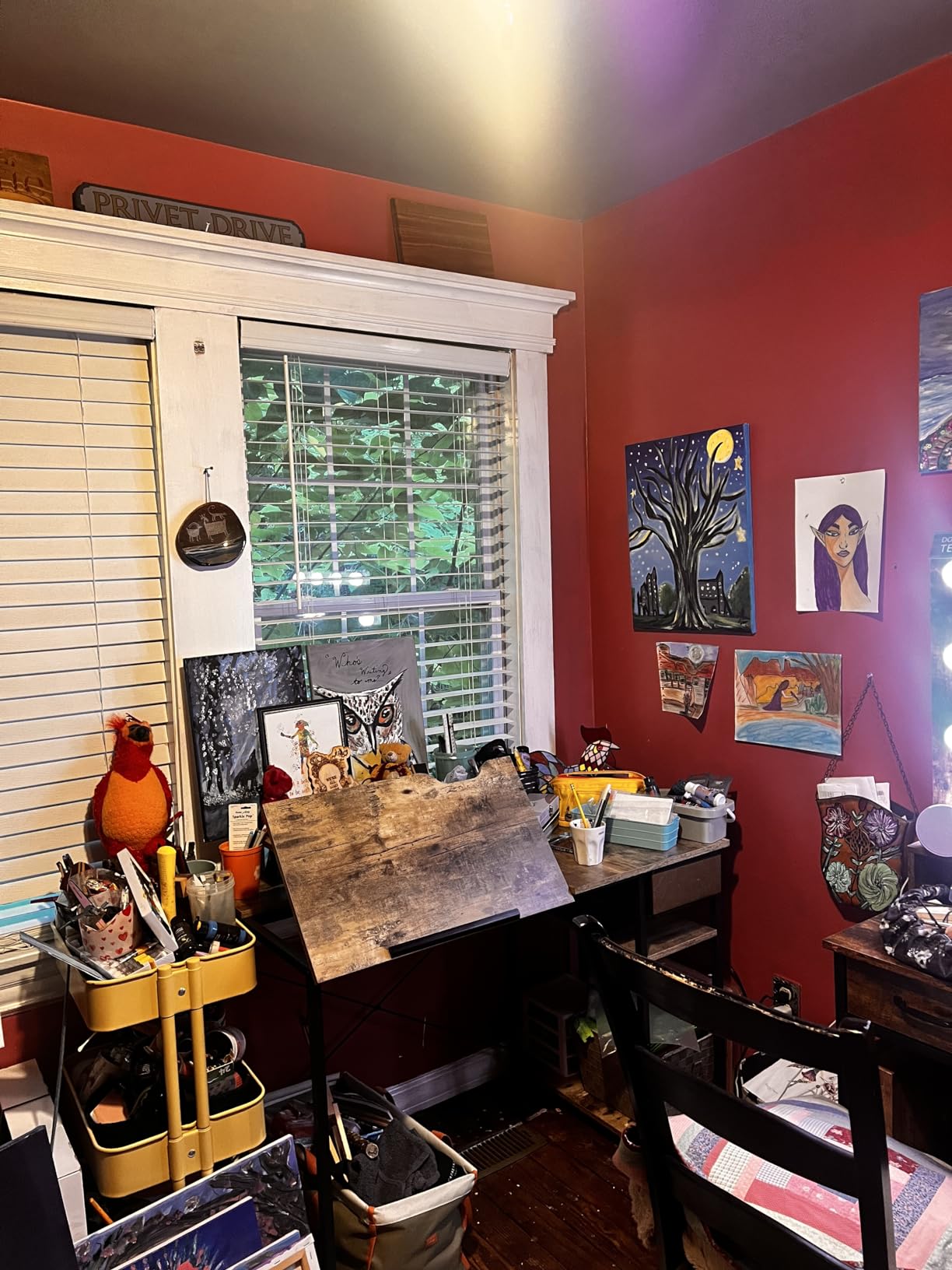
Buyers like that it doubles as a real computer desk, and many mention that it works well for teens. It is the lowest rated pick here at 4.3, and the complaints explain the gap: confusing assembly, an inexpensive drawer, and occasional missing pre-drilled holes or undersized brackets.
The top is high-grade MDF in a rustic brown woodgrain finish rather than solid wood, and the frame is metal with cross structure and adjustable feet. Buyers rate the cross structure and the adjustable feet as keeping it stable.
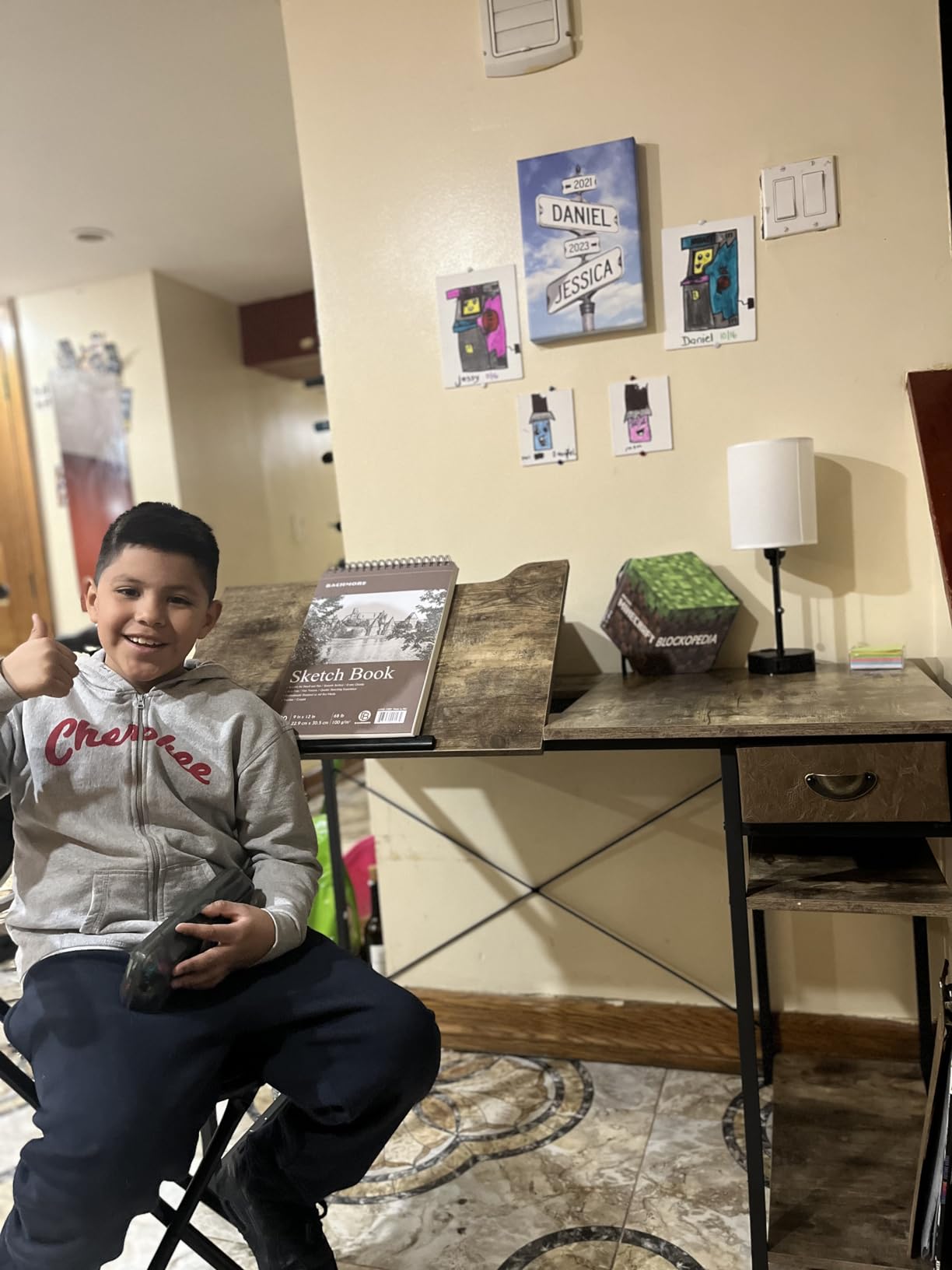
Check this one if the desk has to do two jobs
Most drafting tables in this roundup become a flat desk when the tilt is at zero. This one is designed as a desk with a tilt added, so a teen doing homework in the evening and sketching after school is the intended use rather than a workaround.
It is also the pick to shortlist for a dorm or a small bedroom where a 47 to 55 inch footprint simply will not work. The X-Large top is 42.7 inches wide, which fits a standard bedroom wall.
Check the drawer and the assembly instructions
The drawer is a lightweight fabric and faux-leather cube, which means it is fine for sketchbooks and not for a box of oil paints. Treat it as a catch-all rather than a place to store anything breakable.
Assembly is diagram-heavy and easy to misread, and some units report missing pre-drilled holes or undersized brackets. Have a second person read the diagrams while you build, and check the hardware count before starting.
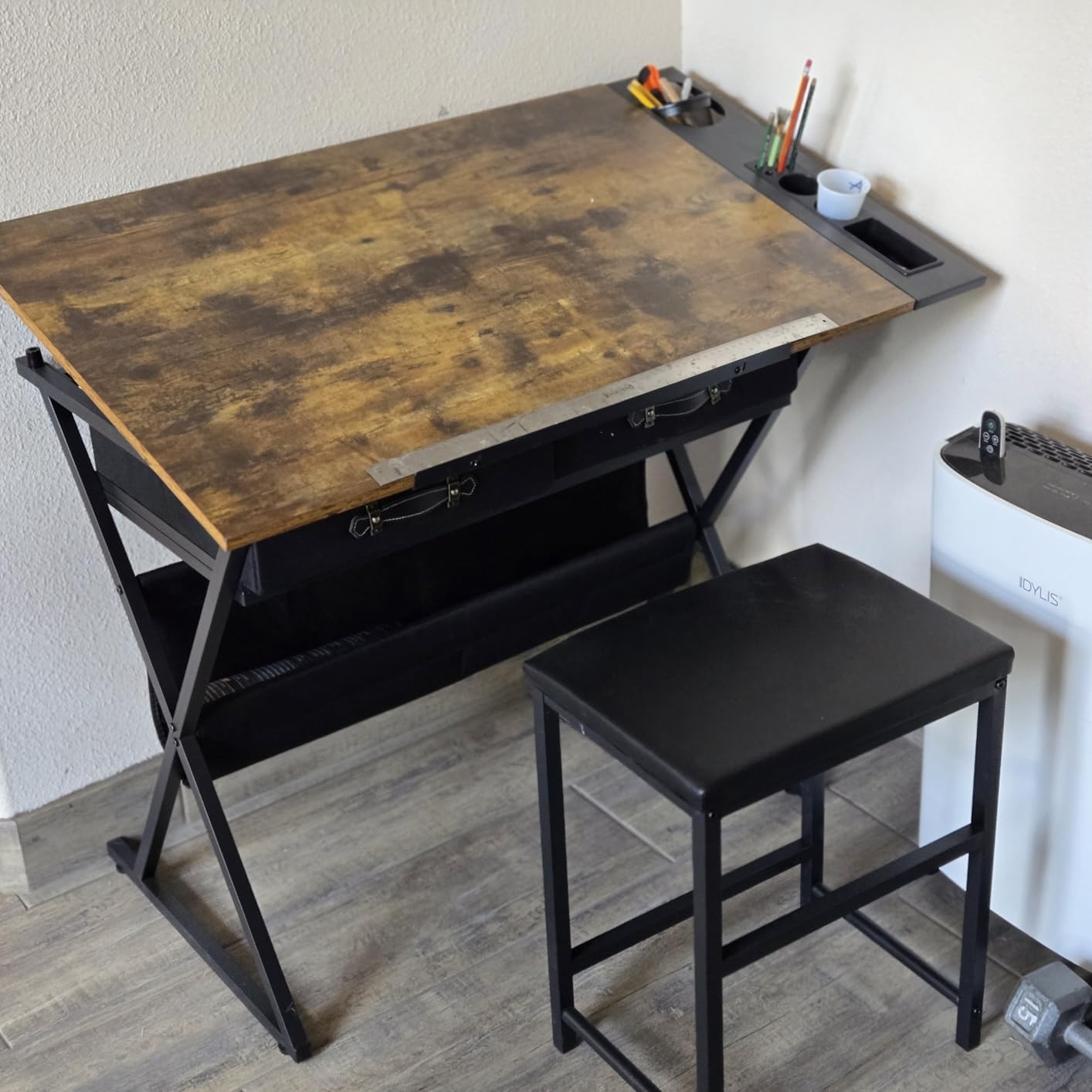
8. VECELO Drafting Table with 65 Degree Tilt, Drawers and Stool
VECELO Drafting Table Art Desk Art Table Adjustable Drawing Table Tilted Tabletop with 2 Storage Drawers and Stool, Drawing Desk for Artist Painters Drawing, Crafting, Reading, Writing, Rustic Brown
Tilt 0-65 degrees
40.2 by 23.7 inch top
Two fabric drawers and a shelf
Stool included
Pros
- Wide 0 to 65 degree tilt for sketching and painting
- Triangular metal leg design feels stable
- Pencil box keeps brushes from rolling when tilted
- 20 inch foam-cushioned stool in a matching finish
Cons
- Fixed height with no adjustment
- Top weight capacity is only 55 pounds
- Fabric drawers are light duty
- Rustic brown finish shows wear over time
The tilt is the headline here. Sixty-five degrees is steeper than the 60 degree on the two Yaheetech models and the ZENY, and it puts a page at a genuine easel angle for a teen who works from observation or does continuous line drawing. The pencil box along the side keeps brushes seated when the top is steep, which is the failure point on most competitors at this angle.
The frame is heavy-duty metal with a triangular leg design, and at 30.1 pounds the top has real solidity without being a burden to move around a room. The top is 12 millimeter MDF, 40.2 by 23.7 inches, with a working surface diagonal of 49.1 inches.
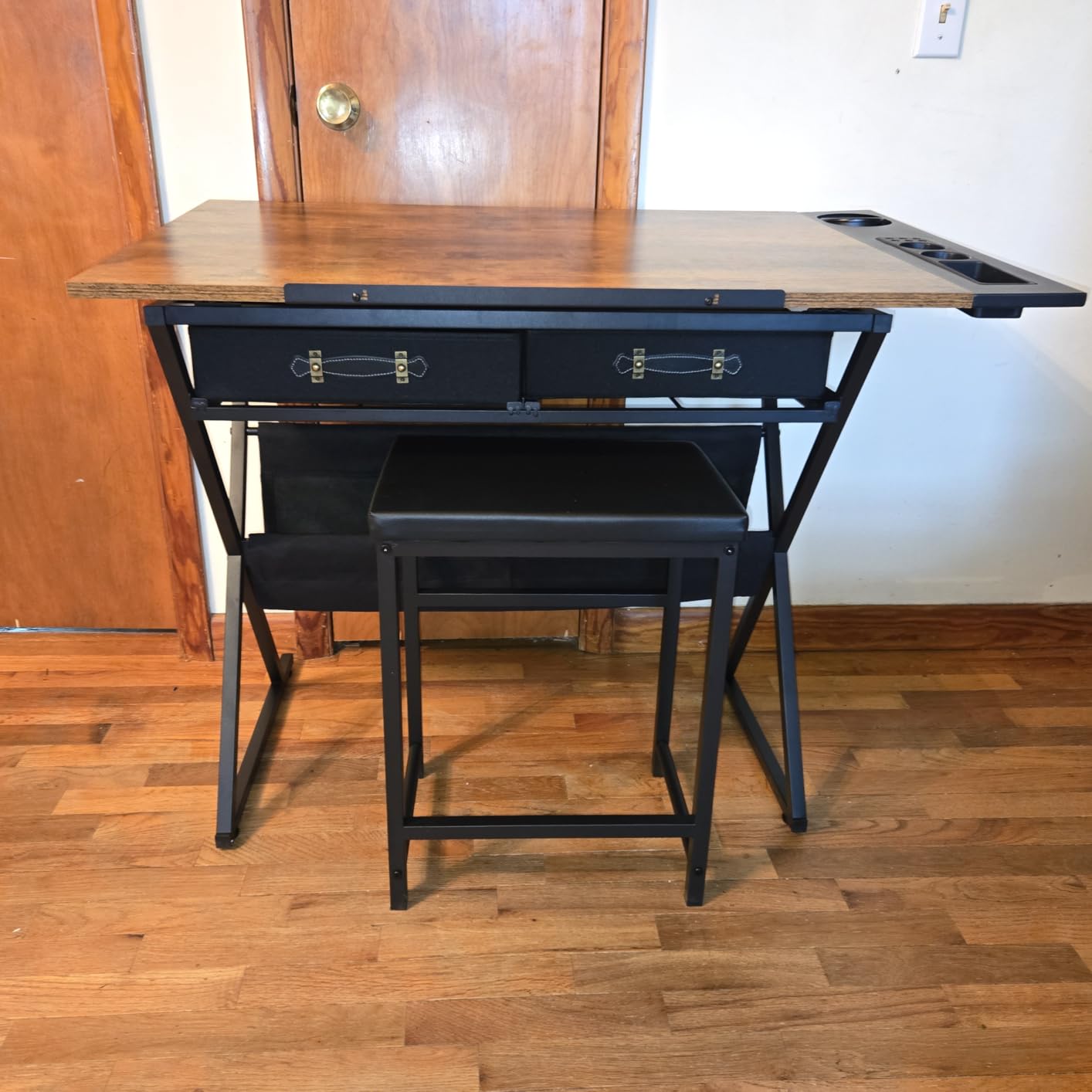
Reviewers like the wide tilt, the sturdy triangular-leg frame and the convenience of a matching 20 inch foam-cushioned stool in the box. The recurring limitations are the fixed sitting height, the modest 55 pound top capacity and fabric drawers that suit art supplies rather than heavy equipment.
Storage is two non-woven fabric drawers plus a fabric shelf underneath. The finish is rustic brown, which reviewers note shows wear over time, so if the desk lives in a room where appearance matters this is worth weighing against the MEEDEN at number three.
Check this one for observational drawing and painting
A steep tilt changes how a teen sees a subject, and this is the desk that goes steepest. For life drawing, portrait study or anything where the model is a real object on a table rather than a photo, the working angle is the feature you are paying for.
The 40.2 inch width also handles a mid-size drawing pad laid flat, which is where many narrower desks start to feel tight once a teen moves past 11 by 14 paper.
Check the height if your teen is on the taller side
Height is fixed at 29.5 inches, which is a sitting height only. There is no sit-to-stand range, so a teen who prefers to stand while drawing will need something else in the room.
The 55 pound top rating is generous for paper, pencils and light paint, but if your teen leans hard on the far edge with a loaded palette, check the weight before assuming. For clay, watercolour palettes or a laptop plus a drawing tablet, treat the number as a ceiling.
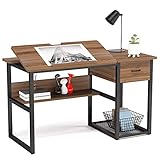
9. Tribesigns Drafting Table with Storage Drawers and 80 Degree Tilt
Tribesigns Drafting Table with Storage Drawers, Drawing Computer Desk Artist Craft Table Painting Desk Workstation with Shelves and Tiltable Tabletop for Students, Home Office
Tilt 0-80 degrees in 12 angles
47.2 inch wide top
Rated to 250 lb
Three storage zones
Pros
- Widest tilt in the roundup at 80 degrees across 12 locked angles
- Half the top stays flat for books while the other half tilts
- Large surface with open shelf drawer and bottom shelf
- 0.6 inch particle board top rated to 250 lb
- Sized and styled for a teen bedroom or dorm
Cons
- Most expensive option in this group
- Fixed height with no sit-to-stand use
- Assembly is a two-person job
This is the biggest surface we reviewed at 47.2 inches wide with a 60.64 inch working diagonal, and the design detail that makes it work in a teen’s room is the split top. Roughly half stays flat for books, a laptop and supplies while the other half tilts, so a teen can draw without clearing their entire workspace first.
The tilt runs from 0 to 80 degrees across 12 locked angles, the widest range in the roundup, and the 0.6 inch particle board top is rated to 250 pounds. That rating is the highest listed here and comfortably covers a teen leaning across the surface with a palette, a water jar and a tablet all in play.
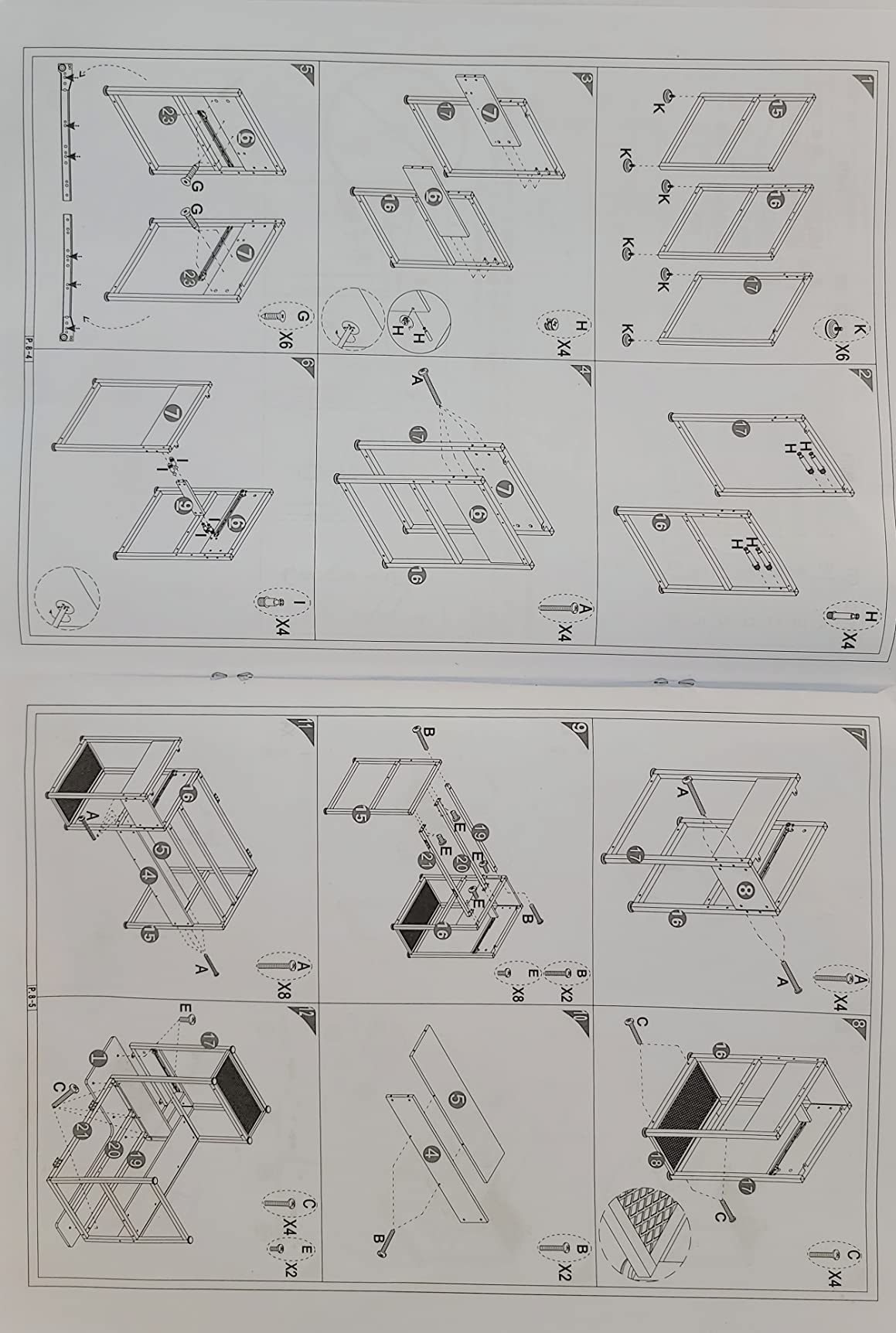
Storage is the reason to stretch to this one. An open shelf, a roller-glide box drawer and a bottom shelf give 139.74 liters of listed volume, which is a full art supply haul in furniture form. Owners highlight the large surface, the 12-position tilt and the storage, and it is frequently bought for a teen’s room.
The reservations are the ones you would expect at this end of the range. It is the most expensive option here, the height is fixed, and assembly needs two people. The metal frame and particle board top also mean the finish is more utilitarian than the beech on the MEEDEN.
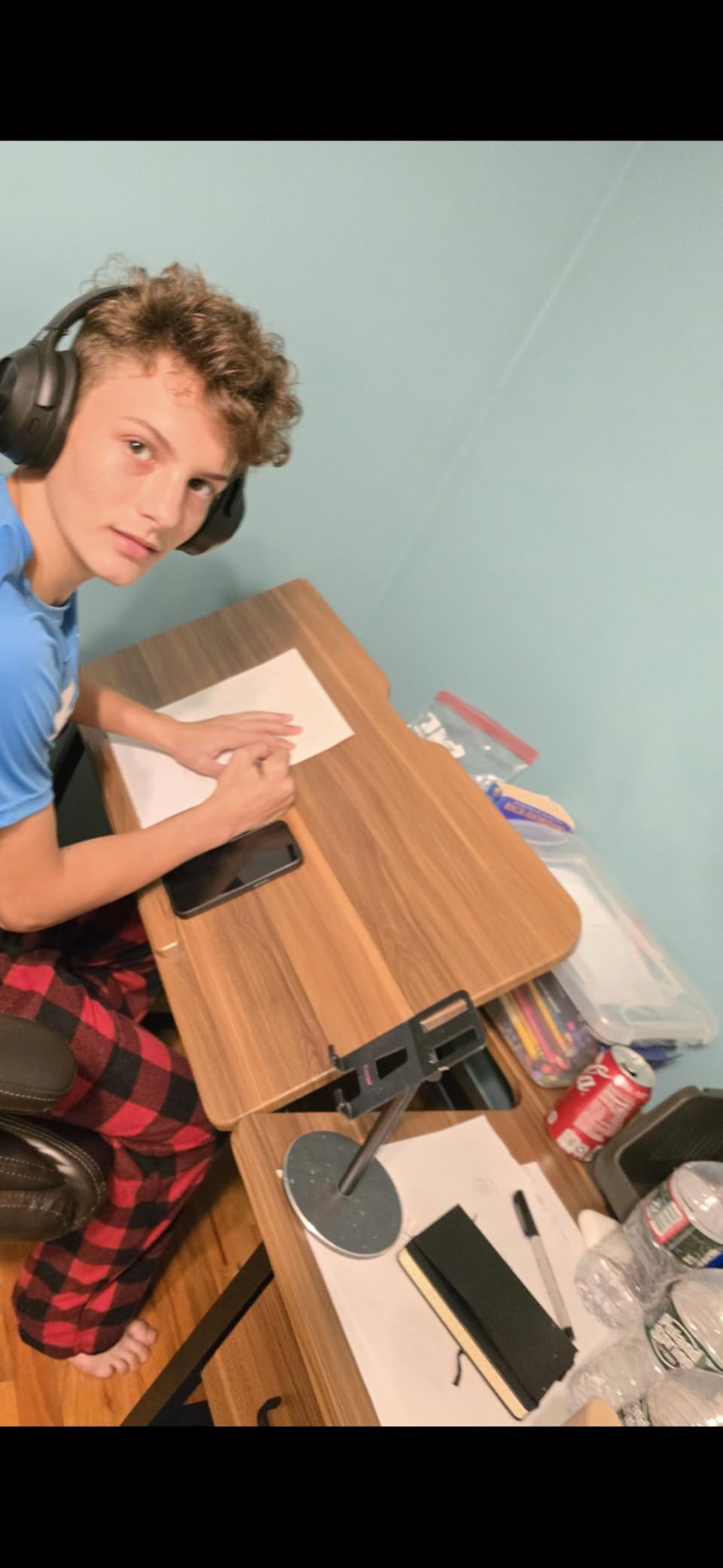
Check this one for portfolio and AP Art work
An older teen assembling a portfolio is working with mounted boards, large sheets and a laptop for reference, all at once. The split top is built for exactly that, and a 47 inch width means a 36 inch board sits flat with room to spare.
The manufacturer lists the age range as teen, and the walnut and black styling is the least classroom-like in the group, which helps if the desk is going to sit in a bedroom rather than a school room.
Check the price against your storage budget
The built-in storage volume is what separates this from every cheaper pick, so if you would otherwise buy a rolling cart and shelving, do that arithmetic before deciding. Many families find the desk plus a cart is the better value at a lower total.
Two things to plan for: assembly with a second person, and the fixed height. There is no sit-to-stand range, so a teen who works standing will still need a perch or an alternative surface.
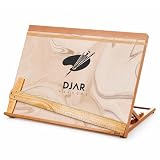
10. DJAR 5-Position Desktop Drafting Table for Painting
DJAR 5-Position Drafting Table for Painting, 25 3/5 Inches by 19 Inches
Five angles from flat to 70 degrees
Beech wood construction
27 by 19 inch surface
Folds flat for storage
Pros
- Compact desktop format for a small room
- Solid beech wood with a smooth waterproof finish
- Five angle positions from flat to 70 degrees
- Folds flat for corner storage
- T-ruler and rubber cord included
Cons
- Small 27 by 19 inch surface limits large work
- Desktop format with no storage or height adjustment
- Best suited to sketching and small paintings
This is not a desk. It is a desktop drafting board, and including it is deliberate, because for some teens the missing piece is not a desk but a surface that tilts. If your teen already has a study desk and wants to draw at an angle, this is the smallest sensible answer, and it costs a fraction of the floor models.
The construction is beech wood with a waterproof finish, a non-slip rubber block at the base for stability, and five angle positions from flat up to 70 degrees. A T-ruler and a rubber cord for fixing paper are included, and the unit folds flat for corner storage when the drawing session ends.
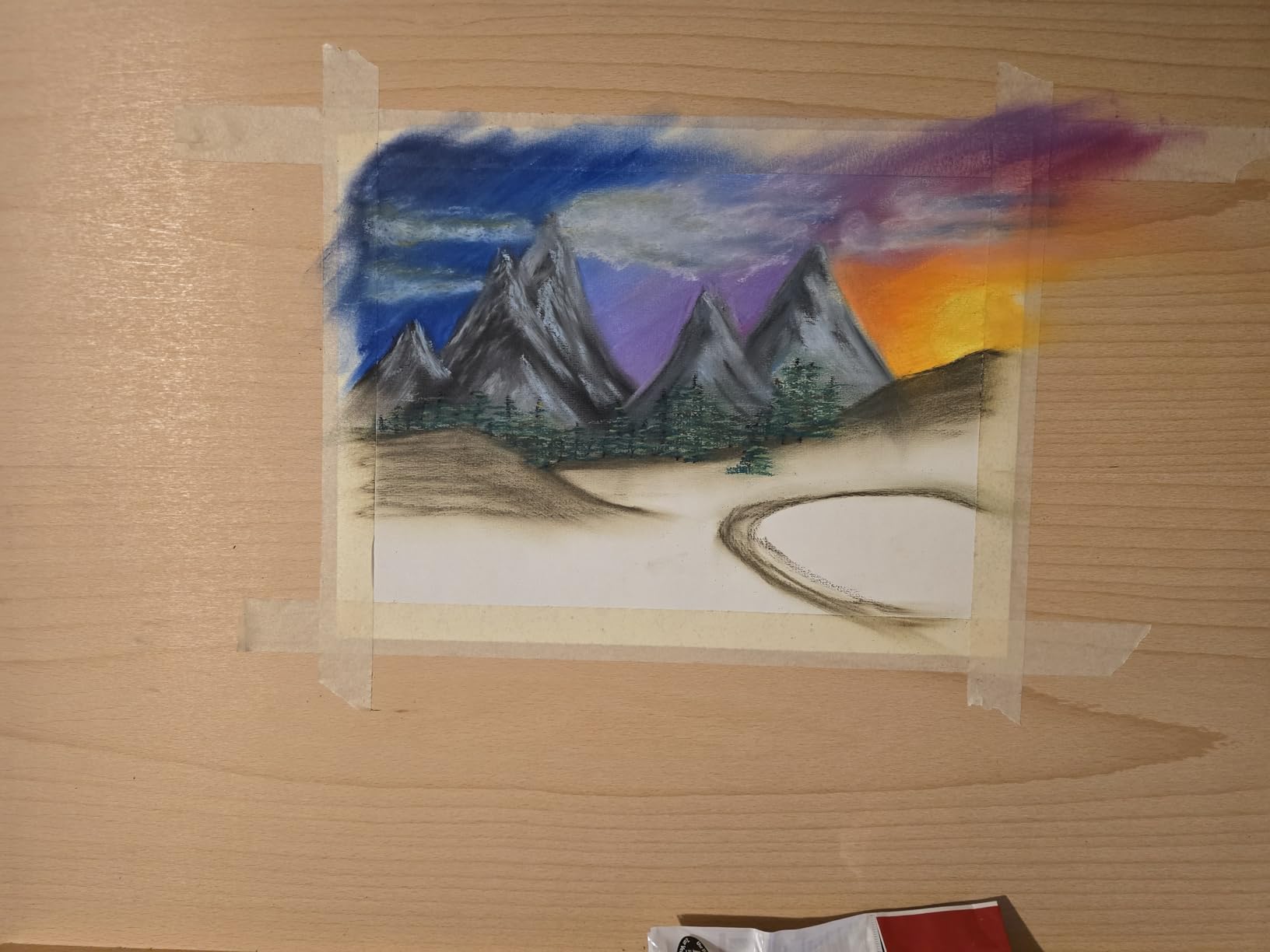
Buyers treat this as a low-cost starter easel and are positive about the beech construction, the five-position adjustment and the fold-flat storage. The consistent limitation is size, at 27 by 19 inches it suits sketching, studies and small pieces rather than large canvases.
There is no storage, no height adjustment and no stool, and it is a desktop item rather than a floor-standing one. Those are not flaws in context. They are simply the trade for a board that fits on a shelf and a budget that a teen can replace in a year if they outgrow it.
Check this one for a teen who already has a desk
If the family already has a study desk that works, adding an angle is the cheapest way to improve drawing posture and reduce the hunch over a flat page. It also travels, so it can move between a bedroom and a kitchen table for homeschool setups.
Because it sits on top of an existing surface, the total working height is the desk height plus 19 inches when the legs are down, so check that a seated teenager can still reach the top edge of the board comfortably.
Check the size against the paper you actually use
At 27 by 19 inches, this handles sketchbooks, postcard-sized studies and small watercolour blocks comfortably. It gets tight at 11 by 14 paper, and it is not the answer for a teen working on a 24 by 36 sheet or a stretched canvas.
If your teen is already producing finished work at that size, skip to one of the floor models. If they are building up to it, this is a reasonable first step that can be handed down rather than discarded.
11. Topeakmart Height Adjustable Drafting Work Station
Topeakmart Tilting Drafting Table Art Craft Desk with Stool, Black
Tilt 0-40 degrees in 10 positions
35.4 by 23.6 inch surface
Three drawers plus a long shelf
Stool included
Pros
- Highest rated in the roundup at 4.7 with a sturdy build
- Tilt locks in 10 positions for a stable drawing angle
- Large 35.4 by 23.6 inch work surface
- Right-side auxiliary counter holds a lamp or laptop
- Three drawers hold more than expected
Cons
- Fabric drawers are weak and can catch in the rails
- Tilt range tops out at 40 degrees
- Included stool is basic
- Assembly instructions can be confusing
The highest-rated model in the group at 4.7, with owners describing the table as very sturdy and well made. The powder-coated steel frame and laminated MDF top come in at 49.4 pounds, and the tilt locks into 10 height positions, which is the most positive description of a tilt lock we found in any of the reviews.
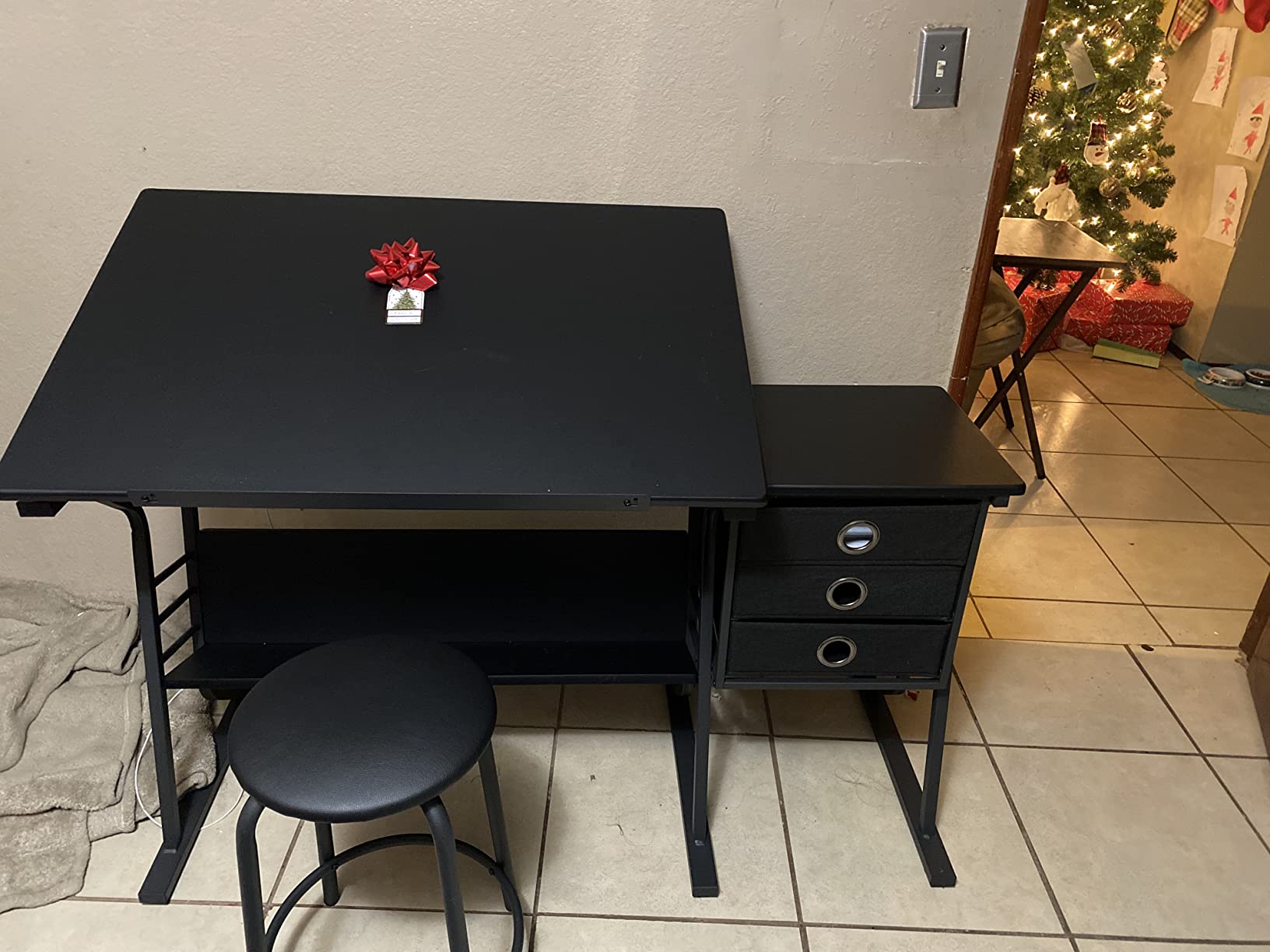
Height adjusts from 29 to 43.7 inches, which is a genuinely useful sit-to-stand range, and the 35.4 by 23.6 inch work surface has a removable pencil ledge. A right-side auxiliary counter holds a lamp or a laptop without crowding the drawing area.
The auxiliary counter on the right is a small design decision that pays off daily. A task lamp at the correct height, or a laptop showing a reference without taking over the drawing surface, is what keeps a desk in rotation.
Check this one for a teen who works long sessions
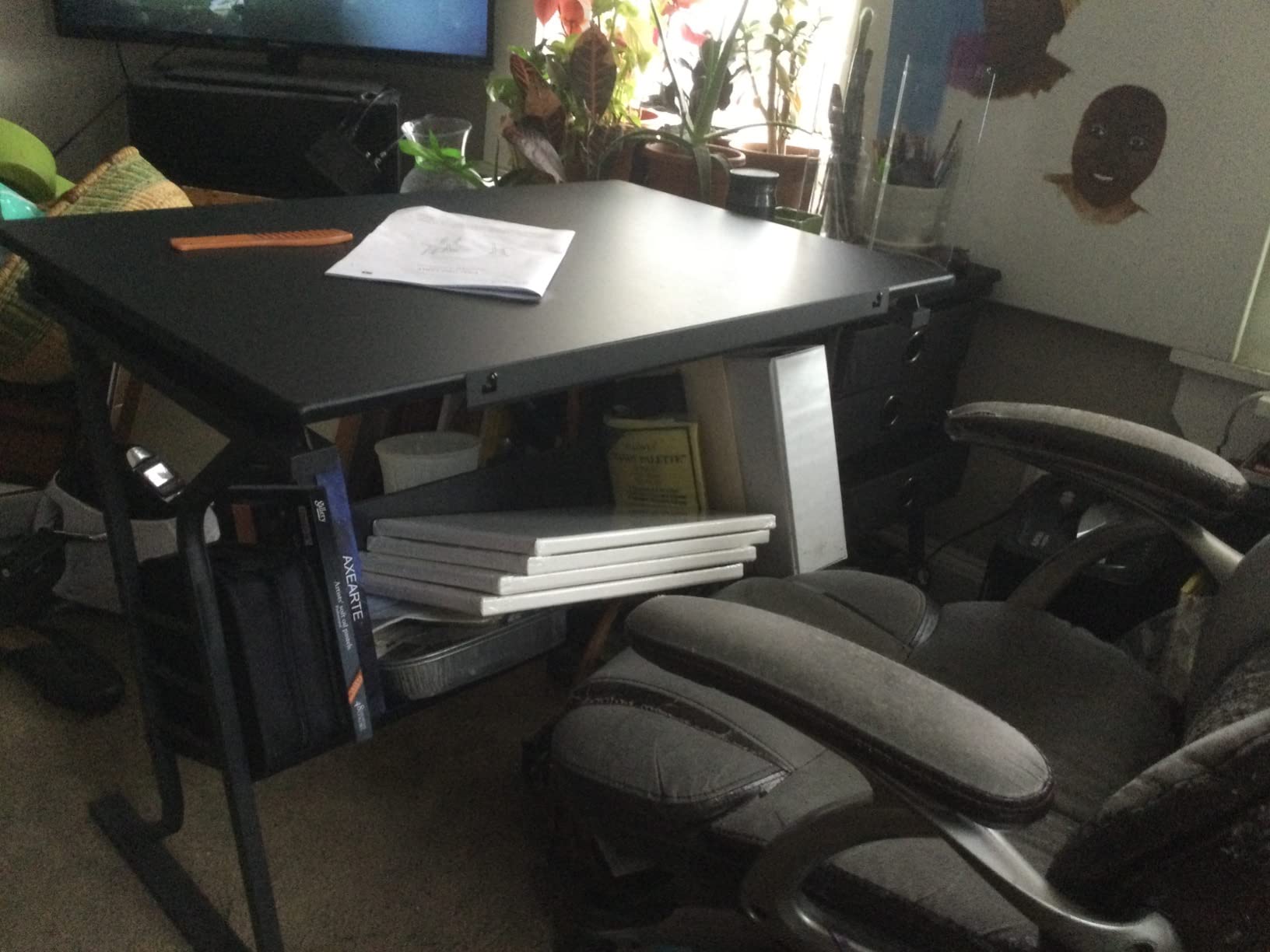
Owners describe a robust tilt mechanism and drawers that hold more than expected, and the ten locked positions mean the angle stays where it is put. For a teen doing several hours of focused work, a mechanism that does not drift is worth more than a wider tilt range.
Sturdiness matters here because this desk is rated to hold a teen leaning on the far edge. The steel frame does not flex the way lighter all-MDF frames do, which is why owners keep describing it as better made than it cost.
Check the tilt limit and the drawers
The tilt tops out at 40 degrees, the lowest ceiling in this roundup. That is enough for comfortable drawing and tracing, but it is not an easel angle, so this is not the desk for a teen who wants to work steeply or paint on an upright surface.
The fabric drawers are the dominant complaint, sagging and catching in the rails according to reviewers. There are three of them plus a long under-table shelf, so the storage volume is generous even if the drawers themselves are the weak link.
12. Landpink Glass Drafting Table with Three Drawers and 75 Degree Tilt
Landpink Glass Drafting Table Art Desk – Adjustable Professhional Artwork Drawing Drafting Table Desk, Glass-Topped Art Table for Craft Station Studio Home Office School w/Drawers (Black)
Tilt 0-75 degrees
Height 24-35.8 inch
Glass top with steel frame
Three drawers, stool not included
Pros
- Widest tilt here at 0 to 75 degrees with an automatic locking buckle
- Height adjusts from 24 to 35.8 inch for sitting or standing
- Glass top wipes clean after ink or paint and can be lit from below
- Three drawers plus compartments for pens and paint
- Small footprint suits a studio or school room
Cons
- No stool included
- Suction cups holding the glass are hard to press in by hand
- Some screw holes for the side table and drawers do not line up
- Drawers lack handles and are stiff to open one-handed
This one combines two things no other model here does at once. The tilt reaches 75 degrees with an automatic locking buckle, so the top holds a steep angle without the teen holding it, and the height runs from 24 to 35.8 inches, which covers both a seated 13-year-old and standing work by a taller teen without a separate perch.
The glass top sits in a powder-coated steel frame and can be lit from underneath, turning the same surface into a light table for tracing and layered illustration. Buyers are enthusiastic about the tilt, the sit-to-stand range and the fact that the glass is reported to help posture and cleans easily.
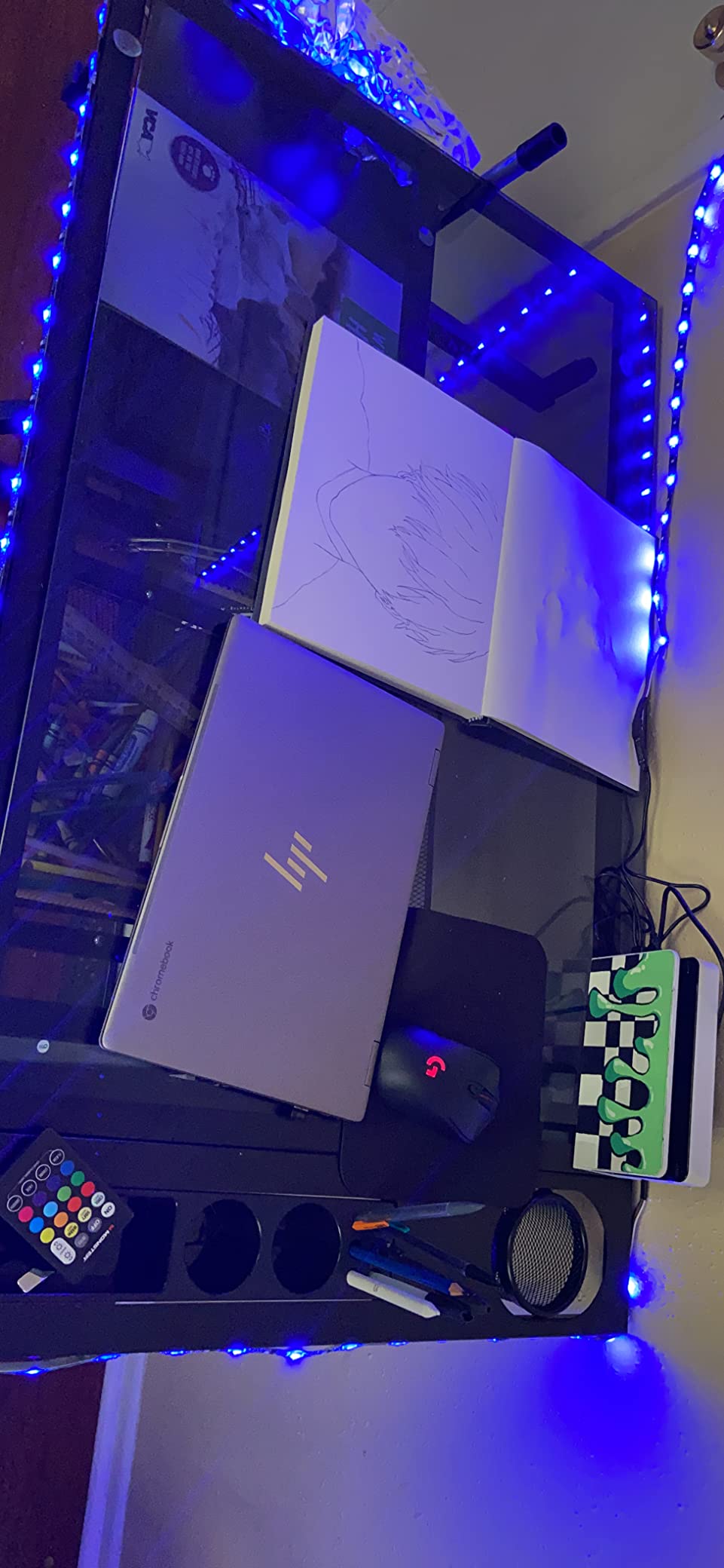
Storage is the most generous on this model, with a bottom drawer and two middle drawers on ball-bearing glides plus compartments and hanging storage. The footprint is small for a desk with this much storage, which reviewers note suits a studio or school room.
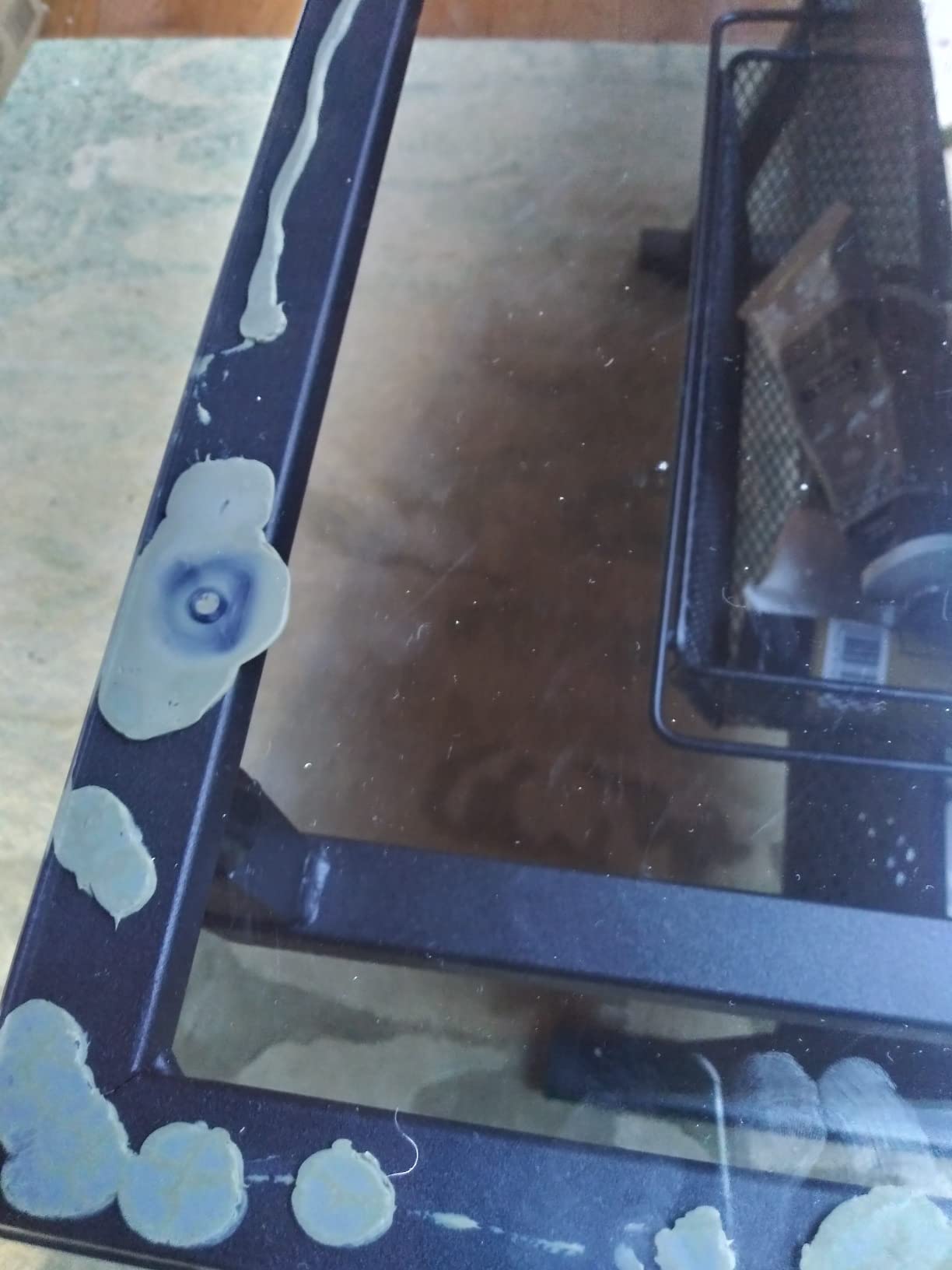
The recurring issues are small assembly annoyances. The suction cups holding the glass are hard to press in by hand, screw holes for the side table and drawers do not always line up, and the handleless drawers are stiff to open one-handed. No stool is included, which buyers mention often but rarely treat as a deal breaker.
Check this one for steep drawing angles
Seventy-five degrees is close to vertical, and the automatic locking buckle means the position holds without a teen bracing it. That is the desk for observational work, where seeing the subject at a true angle rather than looking down at it changes the drawing.
The lower height setting of 24 inches is also the lowest minimum in the group, which makes this an option for a smaller teen who would struggle with the 31.5 inch floors of the other glass models.
Check the assembly fiddliness before you commit
Two people are recommended for assembly, and the details that catch people are specific. The glass suction cups need firm, even pressure, and a few screw holes for the side table and drawers may need aligning rather than forcing.
Plan to add a seat. There is no stool in the box, and given the 24 to 35.8 inch height range, a height-adjustable chair is a better long-term fit than a fixed drafting stool.
Art Desk vs Drafting Table vs Regular Study Desk
The three terms get used interchangeably, and the difference is not marketing. A regular study desk is built for a flat surface at a fixed height, with storage for school materials. A drafting table is built around a tilting top with a pencil ledge along the low edge, which is what stops a page sliding when the angle changes. An art desk is the broader category that includes both, plus storage sized for media.
So are drafting tables good for artists? For a teen, the answer is usually yes if the main medium is drawing, and less clearly if it is digital. The tilt reduces the hunch over a flat page, keeps the shoulder relaxed and lets light fall evenly across the sheet, and those three benefits are real even for a beginner.
Do people use drafting tables anymore? They do, but the users have changed. The adult professional uses one for eight hours a day at a standing height. A teenager typically uses one for one to two hours, then uses the same desk flat for homework. That usage pattern is why a dual-purpose desk like the X-cosrack at number seven has its audience.
One more distinction worth making. Advertised surface area is not usable surface area. A 34 inch top with a 23.6 inch pencil ledge gives a working drawing area closer to 30 inches, because the ledge is designed to be used. When comparing sizes, subtract the ledge.
How to Choose an Art Desk: Size, Height and Storage by Teen Age
The question we get most often is what is the best age for an art desk, and the honest answer is that it depends on elbow height, not birthday. A 13-year-old and a 17-year-old can be the same height, and the taller of the two needs a different desk. Measure the teenager seated, from the floor to the underside of the elbow, and match it to the desk’s minimum height.
Here is the practical guidance we would give by age band.
Ages 12 to 14. Look for a low minimum height between 27 and 29 inches, a one-hand tilt mechanism, and rounded or filleted edges. At this age the desk is new, the mechanism needs to be operable by small hands, and a glass top is worth considering precisely because of the edge treatment. Storage matters less than durability here, since the main risk is damage rather than overflow.
Ages 15 to 16. This is when paper size starts to matter. Move up to a surface of at least 40 inches wide so an 11 by 14 sheet sits flat with room around it. Storage becomes important now, because supplies have multiplied. Two drawers and a shelf is the practical minimum, and a tilt range of 60 degrees or more covers sketching, tracing and painting.
Ages 17 to 18. Prioritise surface area and top strength. A 47 inch top with a fixed flat section handles a mounted portfolio board, a laptop and reference material at once, and a top rated well above 100 pounds survives a leaned-on arm. Height adjustment into a standing range is worth paying for at this stage, particularly for AP Art coursework.
Storage. Fabric and non-woven drawers hold paper and pencils well and cost almost nothing, but reviewers across this group report they tear, sag and catch in the rails. Treat them as a temporary landing place for consumables. If your teen is storing oil paint, clay or a hot glue gun, put that weight in a solid drawer or a separate cart, not in a canvas cube.
Height adjustability. Most drafting tables here run between 28 and 36 inches at minimum, which suits a seated teen but leaves standing use to the models that go past 43 inches. A tilt mechanism matters more day to day than a height crank, so if you can only have one adjustable feature, take the tilt.
Cleaning and paint resistance. A tempered glass top wipes clean after acrylic, ink and marker with a damp cloth. Laminate is serviceable if you catch spills early. Bare wood and unfinished MDF stain, and no reviewer recommends them for a teen who paints. If you are buying wood for looks, put a sheet of glass or a clear desk pad over the working area.
Footprint and assembly. Measure the wall before you order, because a slide-out or retractable side surface needs clearance to open, and the Yaheetech at number one does not fully tuck away. Then check the assembly notes. Several of these desks are listed as two-person jobs, and reviews repeatedly mention missing or unlabeled parts, so set aside an evening and check the hardware count before you start.
Watching a younger sibling grow into it. Hobby groups note repeatedly that families buy kid-sized art tables twice because teens outgrow them fast. The desks with the widest seated height range are the ones that survive that second purchase, which is why the Yaheetech at number one and the ZENY at number two top this list.
Frequently Asked Questions
What is the best age for an art desk?
Match the desk to elbow height rather than birthday. Ages 12 to 14 need a low minimum height around 27 to 29 inches and a one-hand tilt. Ages 15 to 16 want a 40 inch or wider top for 11 by 14 paper. Ages 17 to 18 benefit most from a 47 inch surface, a stronger top and height adjustment into a standing range.
Are drafting tables good for artists?
For a teen who draws, yes. The tilting top reduces the hunch over a flat page, keeps the shoulder relaxed and lets light fall evenly across the sheet, while the pencil ledge stops a page sliding when the angle changes. A drafting table is less useful for a teen working only on a drawing tablet, where a flat desk and a monitor riser matter more.
What should I get a teenager who loves to draw?
Get a desk with a tilt that locks, a surface at least 40 inches wide, and a pencil ledge. Add storage only when the supply pile is already overflowing, and always add a desk pad or glass sheet if they work in anything wet or messy. Our top pick is the Yaheetech adjustable drafting table for its 27.5 to 36.5 inch height range.
How tall should an art desk be for a teenager?
Measure the teenager seated, from the floor to the underside of the elbow, and match that to the desk’s minimum height. Most drafting tables in this roundup sit at 28 inches or higher at their lowest setting, which suits most 15 and 16 year olds. Younger teens may need a footrest, and taller teens should look for a range that extends past 43 inches.
Do people use drafting tables anymore?
Yes, though the users have changed. Adult professionals stand at one for eight hours, while a teenager typically uses one for one to two hours and then uses the same desk flat for homework. That dual-purpose pattern is why desks that convert between a drafting surface and a normal study desk have become the most practical pick for a bedroom or dorm.
Final Verdict
The best art desks for teens are the ones that match a teenager’s elbow height, tilt surface and real storage, and the difference between a good one and a bad one is rarely the spec sheet. The Yaheetech adjustable drafting table takes our overall recommendation because its 27.5 to 36.5 inch height range covers the widest stretch of the teen years, its tilt locks firmly, and it has been tested by more owners than anything else on this list.
Buy the ZENY if you want a second strong option with a slide-out side surface for less outlay. Buy the MEEDEN if the desk has to look like furniture rather than equipment, and buy the Tribesigns if an older teen is assembling a portfolio and needs the surface area more than the adjustable height.
Whatever you choose, measure first. Check the teenager’s seated elbow height, measure the wall for clearance, and check the drawer type against the media they actually use. Those three checks prevent most of the disappointment we found in the reviews. Once the desk is set up, the rest is a matter of protecting the surface and keeping the supplies within reach, and our teen gift guide covers the tools that go on it.