
If you swing the driver under 90 mph, the TaylorMade SIM2 MAX is the best all-round choice in this lineup, because it pairs a forgiving forged ring head with a stock build that keeps the ball on line at lower speeds. Below that, I break down eight drivers by loft, shaft, head weight and bias so you can match a club to the speed you actually produce rather than the speed a spec sheet assumes.
Slow swing speed is not a flaw in your technique. It is the number that decides which driver head, which loft and which shaft weight will give you the most carry distance, and getting it wrong is the single most expensive mistake in this category. A club that is too heavy or too stiff does not punish you with a bad swing. It just takes your distance away quietly, round after round, and you blame your swing for it.
What to look for comes down to four things, and they matter in this order. First, total weight, because a club you can move through the air faster is worth more to you than any face technology. Second, loft angle, since a higher loft buys launch and spin that a slow swing cannot manufacture on its own. Third, shaft flex and the gram weight behind that flex letter. Fourth, draw bias, which only matters if you fight a slice.
Total weight: lighter builds reduce the mass you have to accelerate, so aim for the lightest club you can comfortably control through impact.
Loft angle: 10.5 to 12 degrees or higher is where slower swingers belong, because loft sets launch and spin together and you need both.
Shaft flex and weight: a Senior or A flex lightweight graphite shaft is the right family, and the gram weight matters more than the letter.
Draw bias: if you slice, choose a head with internal heel weighting so the club does some of the correcting for you.
I spent the last two months reading spec sheets and owner reviews on every driver below, then cross-checking the published numbers against what golfers report after a season with them. I have not run these clubs on a launch monitor, so every figure here comes from the manufacturer listing or from owner feedback, and I flag it that way. If you want the short version, the SIM2 MAX leads on rating and review volume, the Cleveland HiBore XL Lite is the one to buy if you slice, and the Intech Behemoth is the cheapest way to add carry distance. For the wider picture, our general best golf drivers roundup covers the faster end of the spectrum.
Table of Contents
Top 3 Drivers for Slow Swing Speeds in 2026

TaylorMade SIM2 MAX
- Forged ring construction
- Speed injected Twist Face
- Thru-Slot Speed Pocket

Cleveland HiBore XL Lite
- Lite build 32g lighter
- Internal draw-biased weighting
- 1.5 degree hosel sleeve
Intech Behemoth 520cc
- 520cc oversized head
- Senior flex graphite shaft
- 6061 aluminum construction
Those three cover very different golfers. The SIM2 MAX is the default answer for most people under 90 mph, the HiBore XL Lite is the answer when a slice is costing you strokes, and the Behemoth is the answer when the budget is the deciding factor and tournament play does not matter to you.
Best Golf Drivers for Slow Swing Speeds (October 2026)
| Product | Specifications | Action |
|---|---|---|
| TaylorMade SIM2 MAX |
|
Check Latest Price |
| Intech Behemoth 520cc |
|
Check Latest Price |
 Money Club High Launch 12.5 Money Club High Launch 12.5 |
|
Check Latest Price |
 Cleveland Launcher XL 2 Cleveland Launcher XL 2 |
|
Check Latest Price |
 Cobra DS-Adapt MAX-K Cobra DS-Adapt MAX-K |
|
Check Latest Price |
| Cleveland HiBore XL Lite |
|
Check Latest Price |
 Majek K-Series 12.5 Majek K-Series 12.5 |
|
Check Latest Price |
 Callaway Paradym Callaway Paradym |
|
Check Latest Price |
Two patterns jump out of that list. Every model aimed at slower swingers here is either high loft, light build, or both, and only two of the eight come with a stock shaft that is already in a softer family. That is the part most buyers overlook.
1. TaylorMade SIM2 MAX Driver: The Best All-Round Pick for Slower Swings
TaylorMade Golf SIM 2 MAX DRIVER 10.5 DEGREE MENS RIGHT HAND GRAPHITE STIFF
10.5 degree loft
Stiff Ventus Blue shaft
47g Golf Pride grip
Titanium forged ring head
Pros
- Very forgiving across the face
- Retains direction on heel and toe strikes
- Helps correct a slice
- Large high-MOI head
- Solid sound at center
Cons
- Stiff stock shaft suits genuine slow speeds less well
- Shaft durability and warranty questions reported
- No adjustment wrench included
This is the driver I would hand to a friend who plays a few times a week and carries the ball around 200 yards. It carries a 4.5 average across 736 owner reviews, and the praise repeats the same three things: forgiveness, straight ball flight, and distance that shows up on the scorecard. The SIM Inertia Generator head is an asymmetric design built to move through air faster, and the Speed Injected Twist Face is tuned close to the legal limit with corrective face curvature for strikes away from the center.
What stands out for a slow swinger is the Split Mass Weighting. Rather than piling weight low and back to chase forgiveness, the mass is split to keep the club stable through the face, which is why owners report that off-center strikes still finish in a reasonable direction. The Thru-Slot Speed Pocket adds a little more help on low-face strikes, which is exactly where a slower swing tends to lose energy.
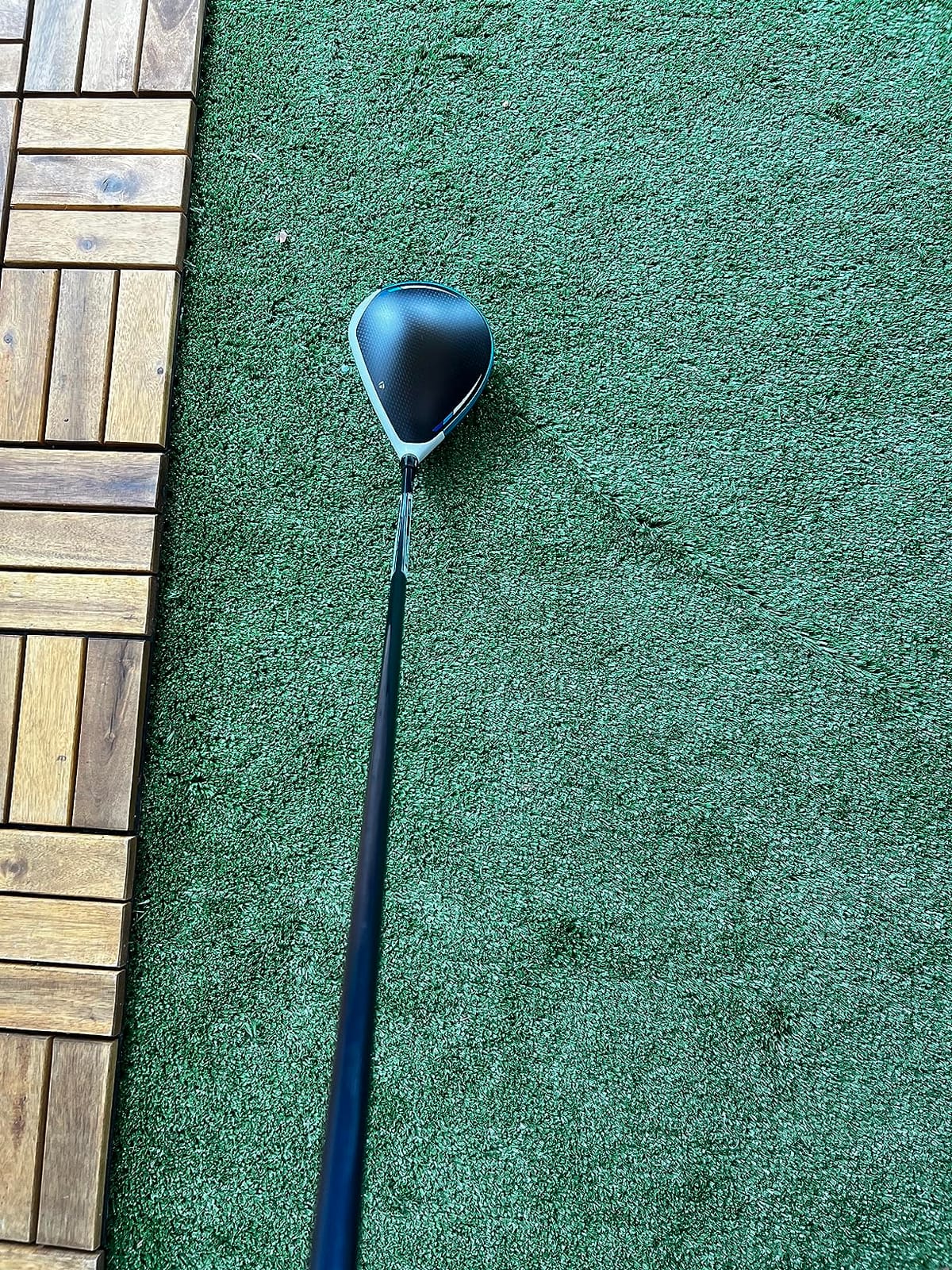
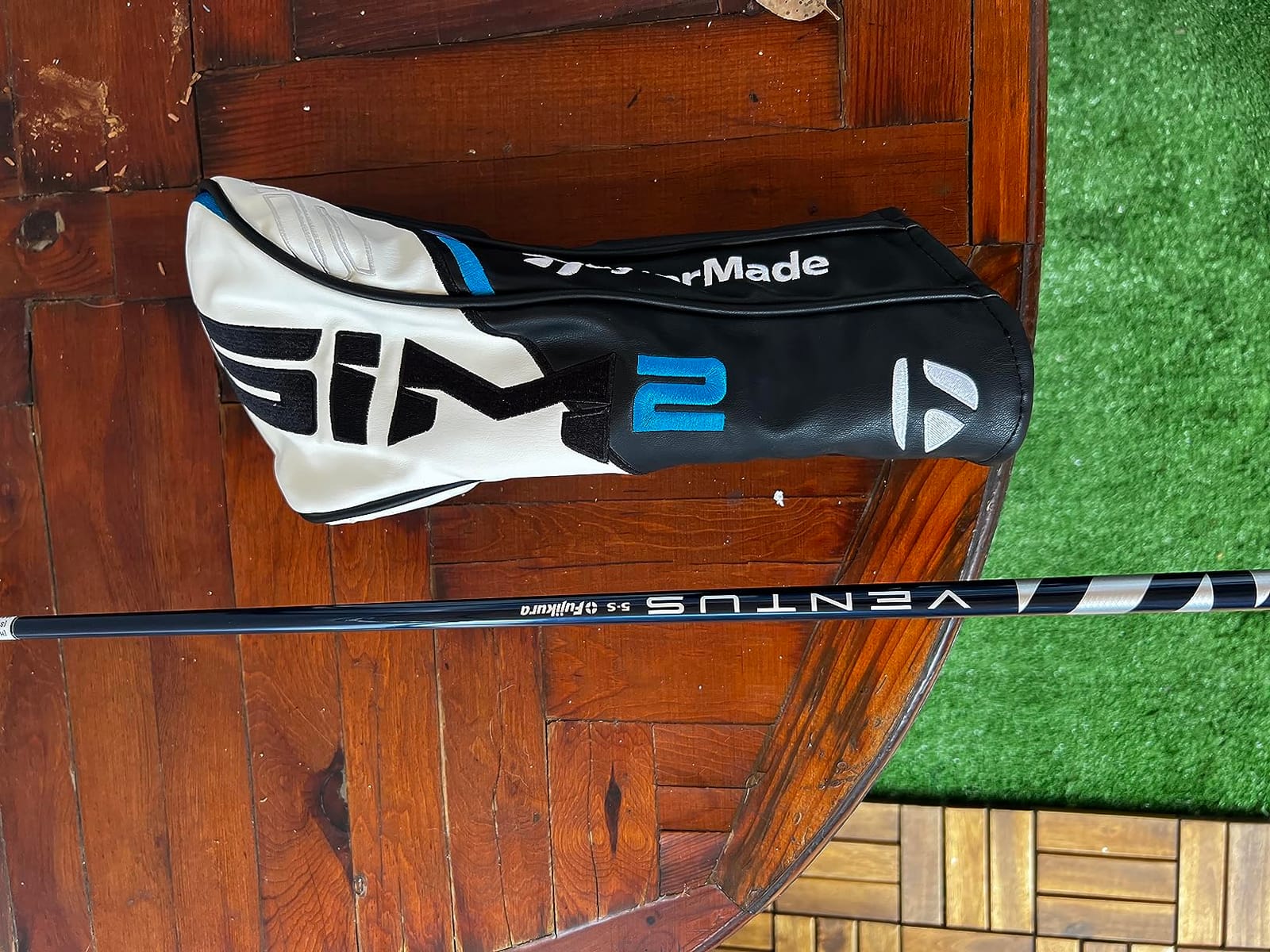
Here is the honest caveat, and it matters at this speed. The stock shaft is a stiff Ventus Blue with a 47g Golf Pride Z-Grip standard grip, and stiff is not the natural home of a swing under 85 mph. Owners who play well with it usually have enough speed to load the shaft. If you are genuinely at the slow end, this head is the right call but the shaft is the piece that needs changing, and that is a regoing job rather than a factory spec.
Two smaller notes from reviews. A few owners report a shaft failure and an unresolved warranty claim, which is worth weighing against the two year manufacturer warranty on paper. And the club does not ship with the torque wrench needed to adjust the sole weights, so if you plan to fine-tune the head you will need to buy one.
When this head suits your speed
This works best for golfers in the middle of the slow range, roughly 75 to 90 mph, who want one club that handles bad contact without demanding a perfect low-point strike. If you already generate reasonable club speed and simply need help keeping the ball on line, the head is doing exactly what it was designed to do.
It also suits anyone who wants more than a distance number. The straightness reports are consistent across reviews, and for high handicap golfers that is usually worth more than an extra five yards.
When this head works against you
A truly slow swing, say under 75 mph, will struggle to load a stiff shaft, and a ball that launches low and spins less carries far less than the loft suggests it should. That is the failure mode the whole slow-swing category exists to solve, and this is not the club built for it out of the box.
It is also a poor choice if you need significant draw bias. This head corrects a slice through stability rather than through deliberate heel weighting, so a strong slicer will probably get straighter but will not get the directional help a dedicated draw head gives you.
2. Intech Behemoth 520cc Driver: The Cheapest Way to Add Carry Distance
Intech Behemoth Non-Conforming Driver, Right Handed, Senior Flex, 10.5°
10.5 degree loft
520cc non-conforming head
Senior flex graphite shaft
6061 aluminum
Pros
- Very forgiving oversized head
- Adds noticeable carry distance
- Senior flex suits slow speeds
- Distinctive looks
Cons
- 520cc head is not legal for tournament play
- Face can be hard to control
- Will not convert higher swing speeds
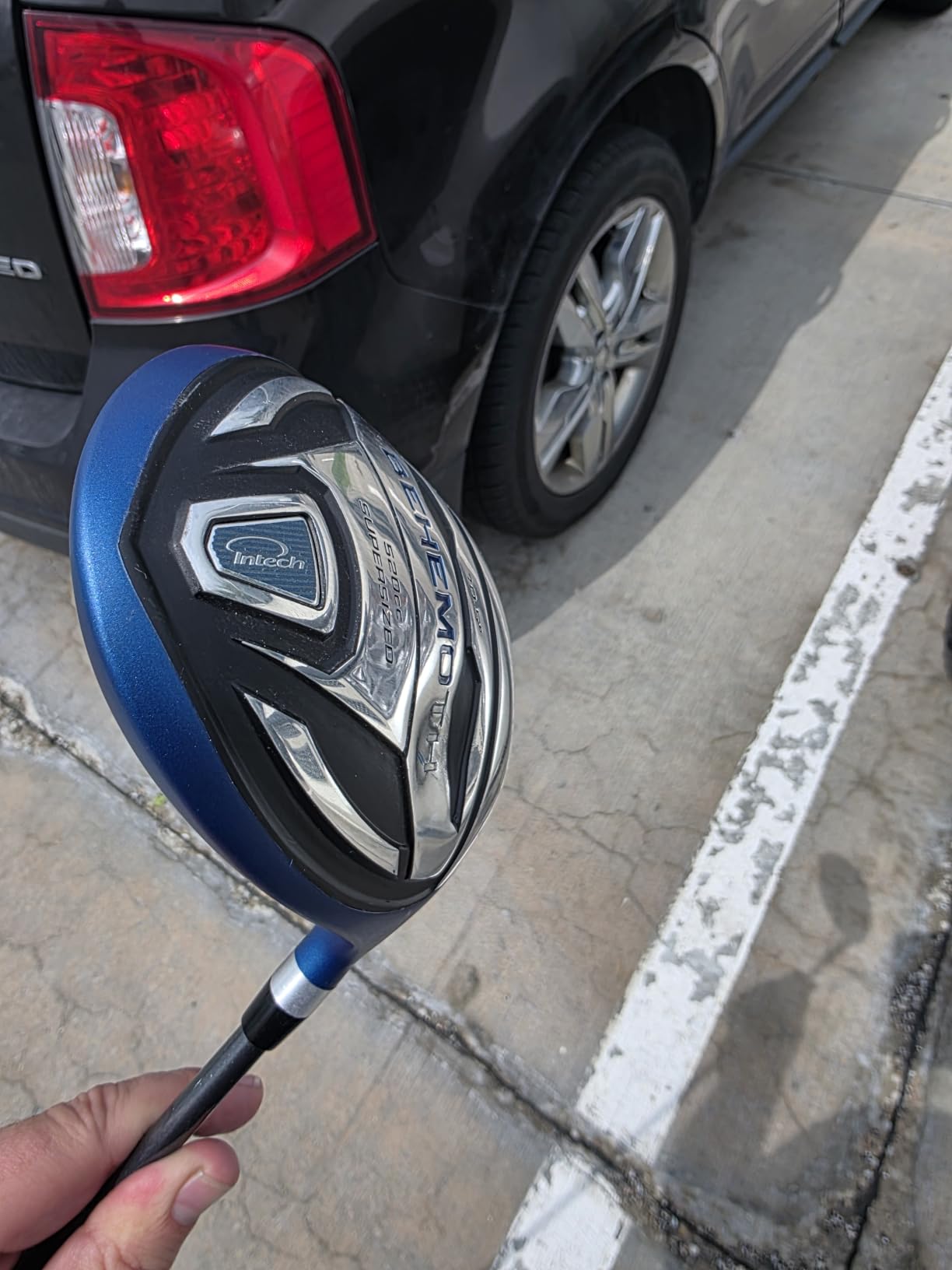
Owners consistently describe the same result: the ball goes further, and it goes straighter than it did with whatever they were using before. A 500-review set of comments on an entry-level club is unusual, and reading them makes one thing clear. This is not a club that fools anyone about what it is. It is an oversized head with a senior flex shaft, and for a high handicap golfer playing a limited number of rounds, that combination produces more carry distance than a premium tour driver ever will.
The Behemoth is a 520cc head, which the listing states exceeds the USGA maximum by 13 percent. Military grade 6061 aluminum replaces titanium, and the design is essentially one large moment of inertia. There is a very large sweet spot, and the consequences of a poor strike are softened in a way a smaller, more concentrated head cannot match.
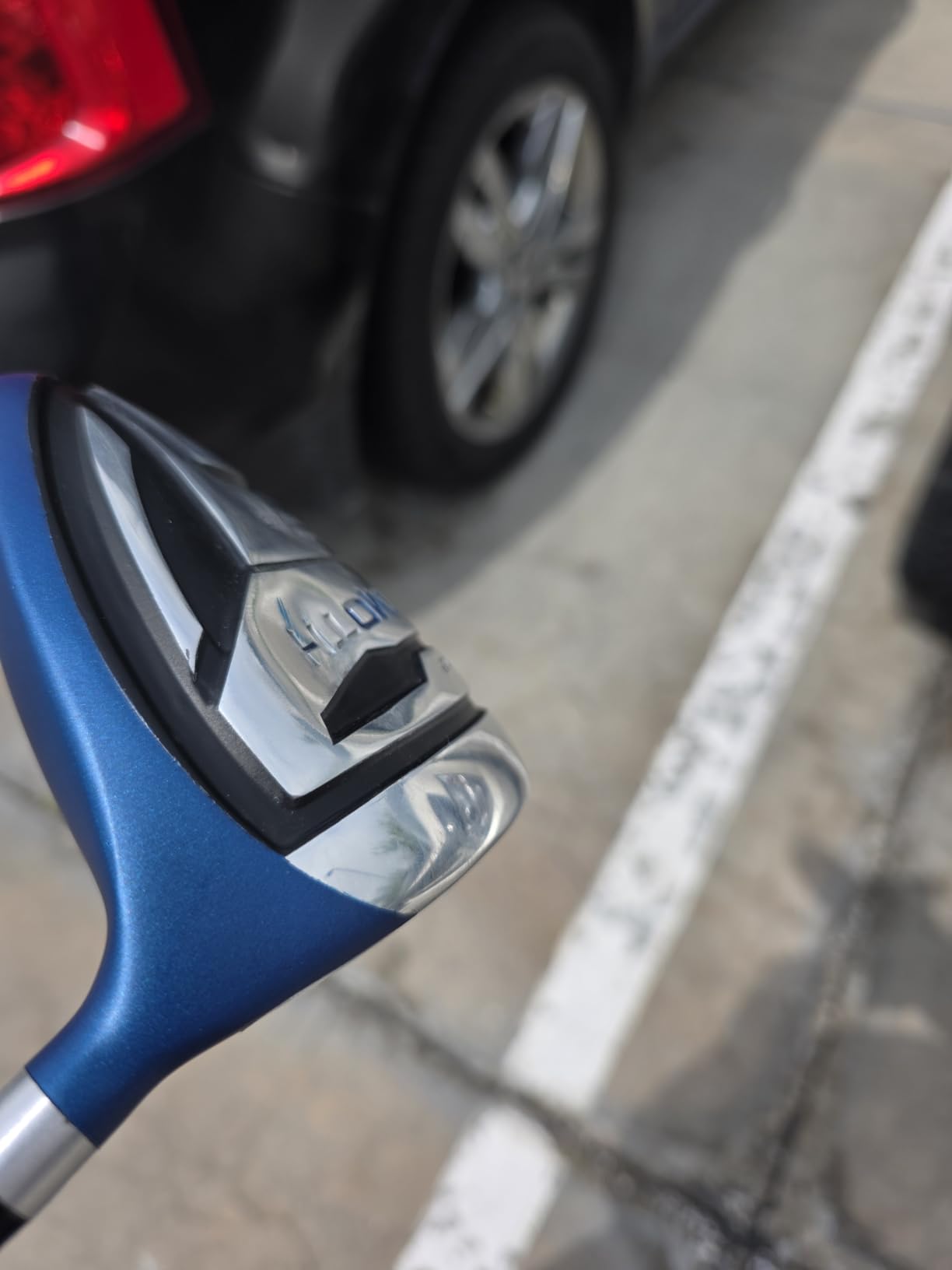
The senior flex graphite shaft is the part that matters for your swing. Flex letters are not standardised across makers, so the useful question is what this shaft actually weighs in the hand, and for most listings in this category the answer is that it is a soft-feeling shaft in roughly the 45 to 55 gram range. That is the band most sub-85 mph golfers should be shopping in.
The durability reports are the part to weigh carefully. Multiple reviews describe shafts snapping or breaking within roughly ten swings. That is not a normal failure pattern for a graphite shaft and it suggests a quality control issue rather than a design flaw, but if you are buying on this budget you are accepting a wider variance in what arrives.
When this head suits your speed
This is for recreational golfers and high handicap players who want forgiveness above all else and who play on casual rounds rather than in tournaments. The oversized volume keeps direction honest even when the strike is poor, and the senior flex shaft is in the right family for a genuinely slow swing.
It is also the practical choice for a second club bag, a shared bag, or anyone who has put a dent in a better driver and needs something that absorbs mistakes.
When this head works against you
It cannot be used in competitive tournament play because the head is not conforming, and that rules it out for anyone who plays in league or club events under R&A and USGA equipment rules. That is not a minor detail, it removes the club from an entire category of play.
It also will not help you if your speed is on the higher side. Reviews note that senior flex does not convert faster swings into extra distance, and a few owners report the face producing a slice on some swings because the head is so large and light that it is easy to lose control of the face through impact.
3. Money Club High Launch 12.5 Degree Driver: Maximum Loft on a Small Budget
Senior Men’s Money Club High Launch 520cc 12.5° Golf Driver. Right Handed Premium Ultra Forgiving Senior Lite Flex Graphite Shaft with Tour Velvet Grip
12.5 degree loft
520cc non-conforming head
Senior lite flex graphite
Velvet grip
Pros
- High loft gets the ball airborne
- Generous oversized head is forgiving
- Lightweight senior flex shaft
- Very low entry price
Cons
- Non-conforming head not legal for tournament play
- Basic construction and clubface feel
- Velvet grip wears with use
This club does one thing and does it deliberately. The 12.5 degree loft is the highest static loft in this roundup, and for a swing under 80 mph that is a real advantage. Loft sets launch angle and spin at the same time, so a slow swing gets both of the things it cannot produce alone, and that shows up as more carry rather than more total distance.
Owners describe forgiving performance on off-center hits and a lightweight shaft that suits slower speeds. The 150 owner reviews hold a 4.0 average, and the recurring theme is that people bought this expecting very little and were satisfied with the launch behaviour in particular.
Compare it directly with the Behemoth above, which shares the 520cc non-conforming format but sits at 10.5 degrees. If your ball is already getting airborne and you are losing it to a slice or a low strike, the extra two and a half degrees here buys you more margin. If your main problem is contact quality rather than launch, the slightly lower loft and larger moment of inertia of the Behemoth is the better shape.
When this head suits your speed
It fits golfers in the slowest band, under 75 mph, who struggle to get any real height on the ball. At 12.5 degrees you start with the most help available, which is the right call when launch is the limiting factor rather than face contact.
It also suits a buyer who wants a spare senior club for a specific course or a second bag, and who does not need tournament legality for that particular club.
When this head works against you
Like the Behemoth, the 520cc head is not conforming, so competitive play is out. Beyond that, the honest limitation is refinement. Owners note that the construction and clubface performance lack the feel of a premium driver, and the black velvet grip is reported to wear down with regular use, which matters for a bigger hand.
If you generate decent club speed already, 12.5 degrees will produce a flight you do not want. High loft with real speed is a ballooning shot that loses its forward roll, and most golfers who graduate out of this speed band find the loft excessive within a season.
4. Cleveland Launcher XL 2 Driver: Adjustability for a Proper Fitting
Cleveland Golf Launcher XL 2 Driver, Graphite, Regular, 10.5 Degrees, Right Hand
12-position adjustable hosel
Action Mass counterbalance
MainFrame XL face
Lamkin Crossline 360 grip
Pros
- High launch with generous MOI
- Low and deep weighting
- 12 loft and lie settings
- Stable through impact
Cons
- Adjustment wrench sold separately
- Mallet profile can look oversized
- Regular flex is not for very low speeds
The Launcher XL 2 is the only adjustable driver in this roundup that is genuinely cheap enough to be worth adjusting. The hosel gives 12 loft, face and lie settings, and at this level of pricing that is an unusual amount of fitting capability. A fitter can move the effective loft through a useful range rather than telling you to accept the stock 10.5 degrees.
That matters for slow swings because the difference between 10.5 and 12 degrees is meaningful when you are trying to launch. It also means you can dial the face angle closed later if a draw bias is not in your favour, which is a change you cannot make on a fixed hosel at all.
The head itself is built around forgiveness. Low and deep weighting keeps the centre of gravity back and low, the Rebound Frame uses alternating flex zones to send more energy into the ball, and the Action Mass counterbalance stabilises the club through the downswing so the face stays put. Owners highlight easy launch, distance, and consistency of direction on mishits, with a 4.2 average across 110 reviews.
When this head suits your speed
This suits golfers in the 75 to 90 mph band who suspect the stock loft is slightly wrong for them, and who would rather adjust the club than buy a different head. If you have been fitted before and were told you needed more loft, this is the cheapest way to act on that advice.
It is also a sensible choice for a high handicap player who needs both a high launch window and stability on a bad strike, which is precisely what the low and deep weighting delivers.
When this head works against you
The stock build is regular flex, and the most common limitation owners report is that regular flex is not right for very low swing speeds without custom work. Also, the adjustment wrench is not included, so the headline feature costs extra to actually use.
Be prepared for the size as well. Reviewers note that the mallet head profile can look larger than some golfers prefer at address, and visual comfort matters more than people admit. If you have spent time being intimidated by modern large-headed drivers, try this one before you commit.
5. Cobra DS-Adapt MAX-K Driver: The Most Adjustable Head Here
Cobra Golf Darkspeed Adapt MAX-K Driver
FutureFit33 hosel
33 loft and lie settings
45.5 inch length
Forged H.O.T. face insert
Pros
- Very forgiving in the neutral setting
- Reduces big misses
- 33 independent loft and lie settings
- High MOI keeps flight on line
Cons
- Adjustment wrench not included
- 460cc mallet can intimidate
- One report of a dented head on arrival
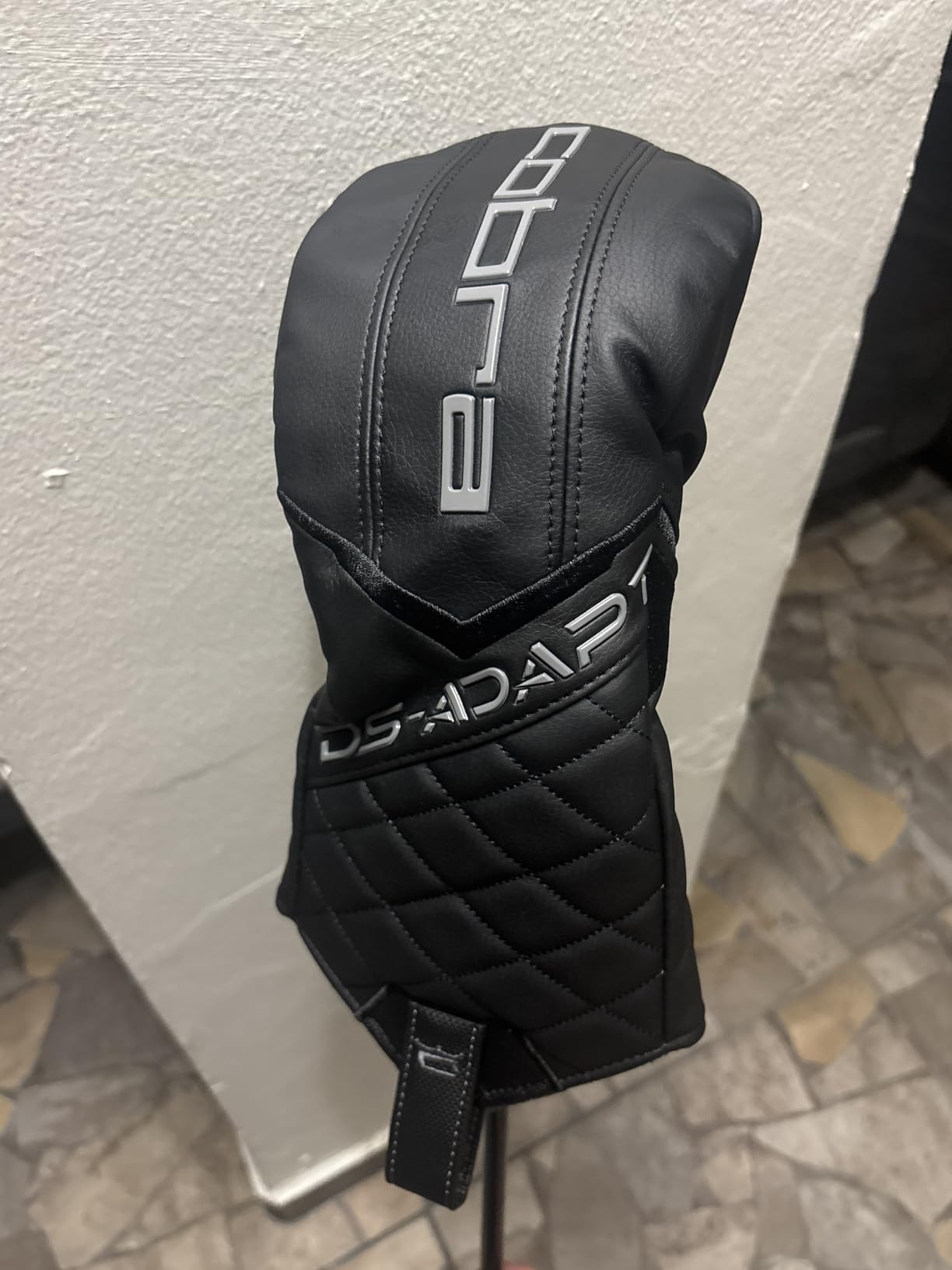
No other club here gives you 33 settings. The FutureFit33 hosel adjusts loft and lie independently by plus or minus 1.5 degrees each way, in 0.75 degree increments, which gives 15 loft positions and 15 lie positions rather than a single 12-setting sleeve. For a golfer with no idea what loft they should be playing, that is the difference between guessing and adjusting.
The SMARTpad design is worth understanding. It keeps the face square across the settings, so a loft change does not also open or close your face. That is a real problem with some adjustable heads, where adding loft quietly adds draw and you lose the ball right or left without knowing why.
The weighting is the other story. A fixed external back weight works with an internal weight pad to produce a combined moment of inertia up to 10,000, which is the number Cobra publishes for this head. In plain terms, that is a very high resistance to twisting on off-centre hits, and it is why owners who previously hooked or pushed report straighter and longer results.
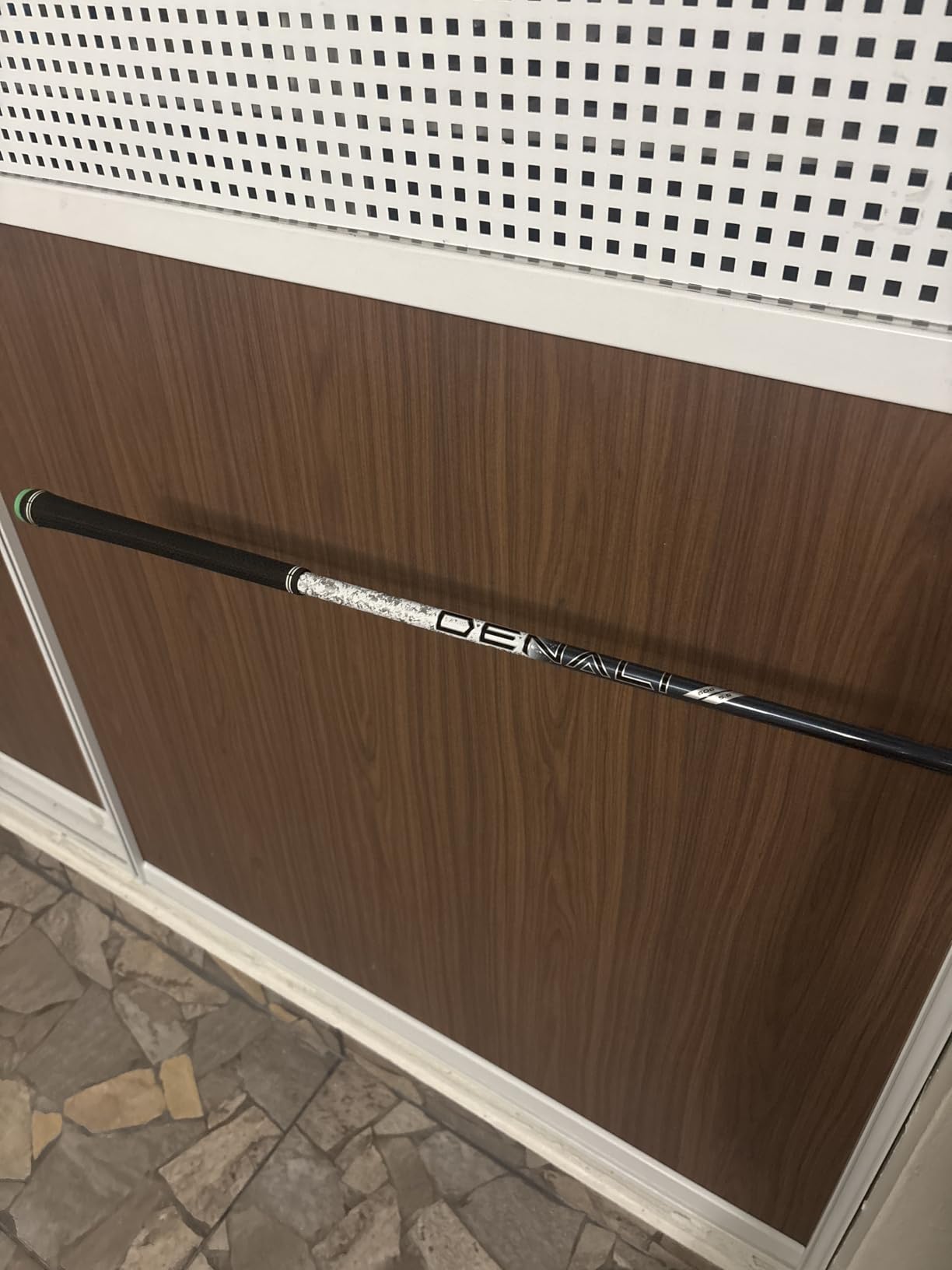
Two practical notes. The stock shaft is a True Temper Denali Blue 60, and 60 in that model name refers to the weight class, which is at the heavy end of what a slow swinger should be using. If your speed is at the bottom of the range, this is the club to have regripped and reshafted rather than the club to buy as it stands.
The club is also 45.5 inches, which is slightly shorter than the standard 45.75 to 46 inch builds elsewhere in this list. Shorter generally means easier strike quality, and that is usually a good trade at a slow speed, though it costs a small amount of potential clubhead speed.
When this head suits your speed
It is the right choice if you have no clear idea which loft you need and want the club to be able to answer that question for you. Golfers with two different swing speeds through the season, or who are rebuilding a golf swing, get real value from 33 independent settings.
It also suits anyone whose main problem is direction rather than distance. The high moment of inertia and the neutral default setting are built for players whose miss is a big one in either direction.
When this head works against you
The shaft is the issue. A 60 class shaft is a meaningful amount of mass for a golfer whose entire problem is mass, and pairing this head with that stock build is the closest thing to the stiff and heavy mistake in this roundup.
Reviewers also flag that the wrench is not included, that the 460cc mallet can look intimidating if you are new to modern drivers, and there is at least one report of a head arriving dirty and dented. Check the packaging on arrival if you buy this one.
6. Cleveland HiBore XL Lite Driver: Built to Kill a Slice
Cleveland Golf HiBore XL Lite Driver, Graphite, Regular, 10.5 Degrees, Right Hand
32g lighter than standard HiBore XL
Internal draw-biased weighting
1.5 degree hosel sleeve
MainFrame XL face
Pros
- Light build aimed at clubhead speed
- Very forgiving on mishits
- Draw bias makes slicing hard
- Owners report 40 to 60 yards more carry
Cons
- Plain exterior styling
- Regular flex still firmer than some need
- One report of a torn grip on arrival
The name tells you the design brief. The Lite build is 32 grams lighter than the standard HiBore XL, and the manufacturer states that this is done specifically to increase clubhead speed. On a swing in the low 80s, taking 32 grams off the club is a real, repeatable change in how fast the head moves through the air rather than a subtle feel change.
What makes this the pick for slicers is the internal draw-biased weighting, which pushes weight toward the heel inside the head. That pulls the club closed at impact, so a face that would normally send the ball right finishes left instead. Add a large ball-striking area from the A.I.-shaped chassis and the MainFrame XL variable thickness face, and you have a head that both launches and curves the right way.
Owner feedback is unusually specific and unusually positive. Golfers report large carry gains, many in the 40 to 60 yard range from switching into it, and near elimination of the slice. The 41 reviews hold a 4.3 average, and the review summary describes older and low-speed players reporting dramatic distance and accuracy gains.
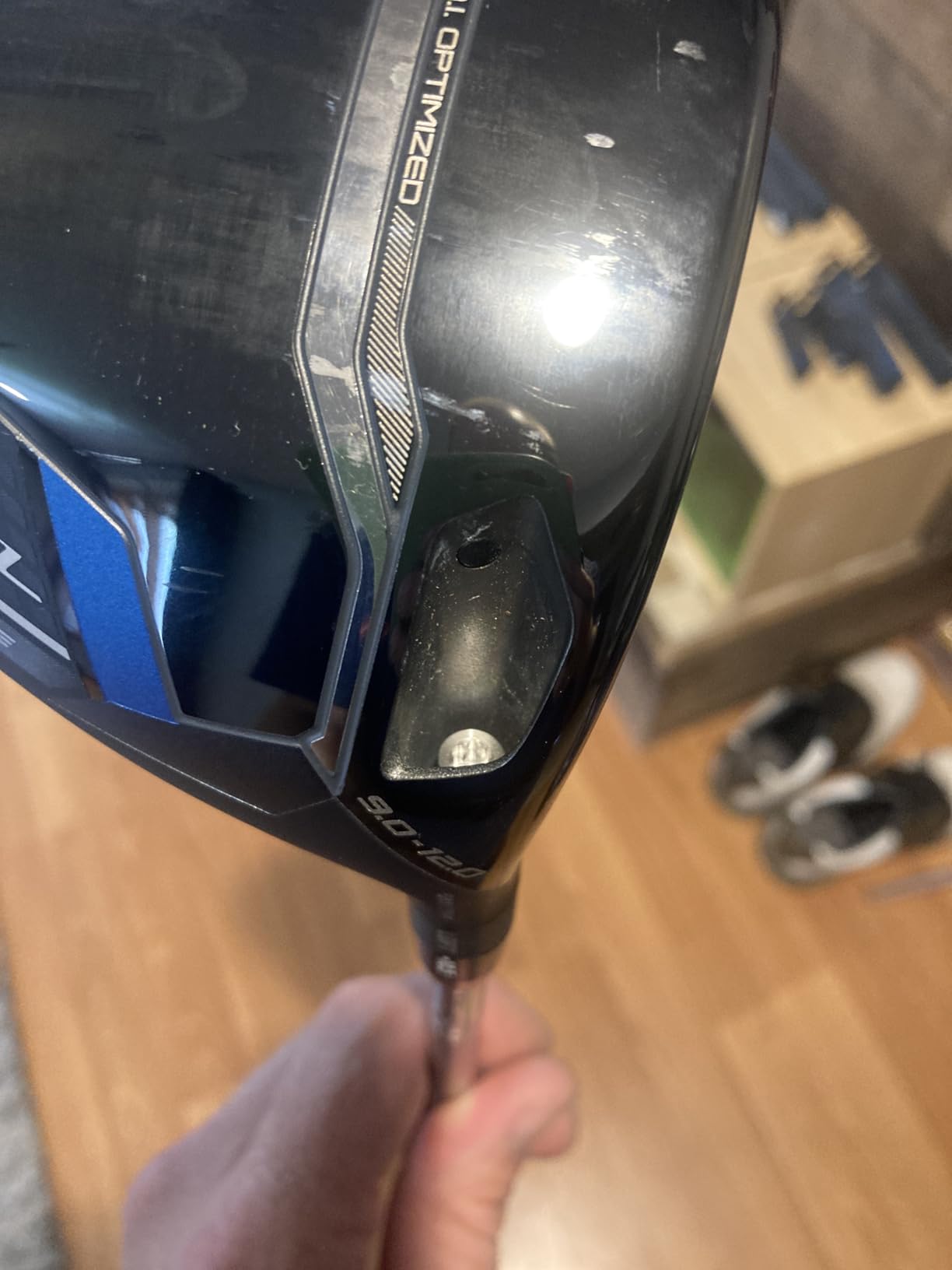
There is a catch, and it is the mirror image of the benefit. Internal draw bias is too much help for a golfer who already hooks. Reviews specifically mention needing a grip adjustment and an open face setting to eliminate a hook tendency, so if your miss is left, this head will make it worse until you change the setup.
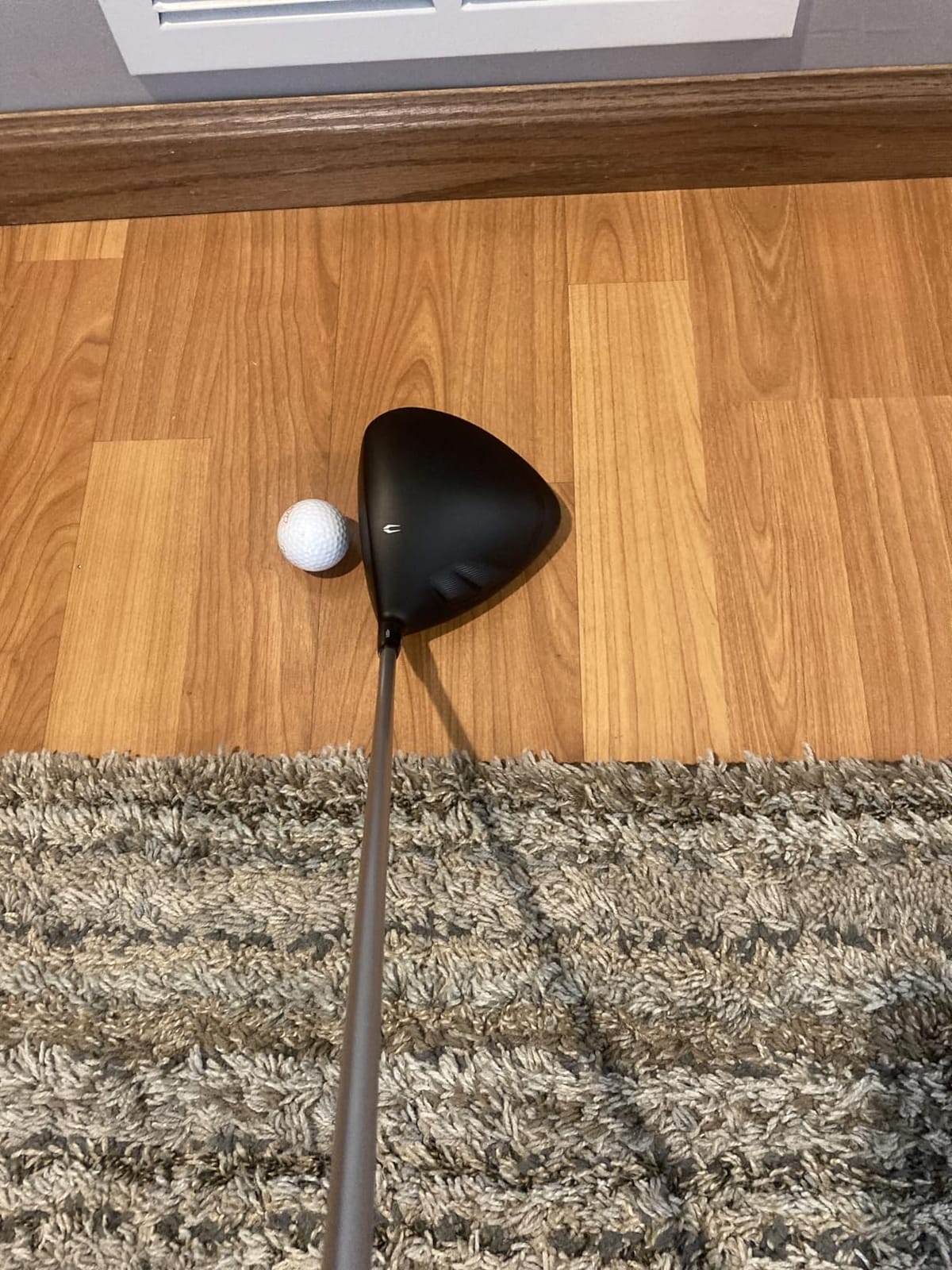
The other issue is presentation. The plain exterior styling is criticised repeatedly, and for a club that people look at on address for the rest of their playing life, that is a legitimate factor. One owner also reported poor factory assembly with a torn, partially installed grip.
When this head suits your speed
This is the right club if a slice is the specific thing costing you strokes, and you are in the slow band where you need both more speed and a straighter ball. Removing 32 grams and adding heel weighting solves two problems at once, which no other head in this roundup does.
It also suits golfers who want to hit the ball a bit shorter on the tee, because the draw bias and the added forgiveness pull dispersion in tight without making the shot feel forced.
When this head works against you
If you already produce a left miss, the draw weighting is the wrong direction entirely and you will need to correct it at setup before the club becomes playable. The regular flex is also reported as still firmer than some slow swingers prefer, so the shaft may not be the family you want even though the head is right.
And if you care about how the club looks in the bag, the styling is the weakest in this lineup by a distance.
7. Majek K-Series 12.5 Degree Driver: A Legal Oversized Head for High Launch
Senior Men’s Majek High Launch Golf K Series 460cc 12.5° Driver Right Handed Premium Ultra Forgiving Senior Flex Graphite Shaft Tour Velvet Grip
12.5 degree loft
460cc USGA legal head
Senior flex graphite
45.5 inch length
Pros
- Legal maximum oversized head for tournament play
- High launch loft suits slow speeds
- Forgiving on off-center strikes
- Solid balance for an older golfer
Cons
- Can encourage a slice above 50 percent swing speed
- Some find the swing weight heavy
- Thin metallic sound
This is the answer to a problem nobody else here solves. You want 12.5 degrees of launch, you want an oversized head, and you also want to be able to play in a tournament. The K-Series gives you all three, because 460cc is the maximum head volume permitted under the Rules of Golf, and the 12.5 degree loft sits at the top of the legal range.
Owners like the balance. Reviews describe good weight and balance for an older or slower-swinging golfer, and a forgiving response to off-centre strikes from the 460cc head. At 45.5 inches with a senior size velvet grip and a senior flex graphite shaft, the package is coherent for the golfer it is aimed at.
There is also a broader point here worth making. Several forums have a dedicated thread on drivers for golfers under 90 mph that consistently favours exactly this approach, a legal maximum volume head with a high launch loft, over the oversized non-conforming alternatives that dominate cheap listings. Legality is not a compromise in this category. At these lofts it is available.
When this head suits your speed
It suits golfers under about 80 mph who play competitively in league or club events and therefore cannot use a 520cc head. That is a genuine constraint rather than a preference, and this club clears it while still delivering the high launch you need.
It is also a sensible tournament-day option to keep in the bag alongside a cheaper oversized practice driver, since the two serve the same purpose in different settings.
When this head works against you
Owners report that the club tends to encourage a slice at higher than 50 percent swing speed, which is a warning for anyone whose speed is climbing. A 12.5 degree loft on a fast swing plus a large head is a lot of launch combined with a face that is easy to open.
Some golfers also find the swing weight a little heavy for a club at this loft, and the impact sound is described as thin and metallic with limited power compared with premium drivers. It is not the most exciting sounding club here, and sound matters more than buyers expect.
8. Callaway Paradym Driver: Neutral Flight With Adjustable Weight
Callaway 2023 Paradym Driver, 12°, Graphite, Light, Standard
12 degree loft
Cavity back carbon head
Adjustable perimeter weighting
High launch low spin
Pros
- High MOI with adjustable perimeter weighting
- High launch and low spin flight
- Neutral shape reduces slice and hook
- Refined traditional looks
Cons
- Regular flex may be stiff for very slow speeds
- 12 degree loft can spin the ball for some golfers
- Older model year
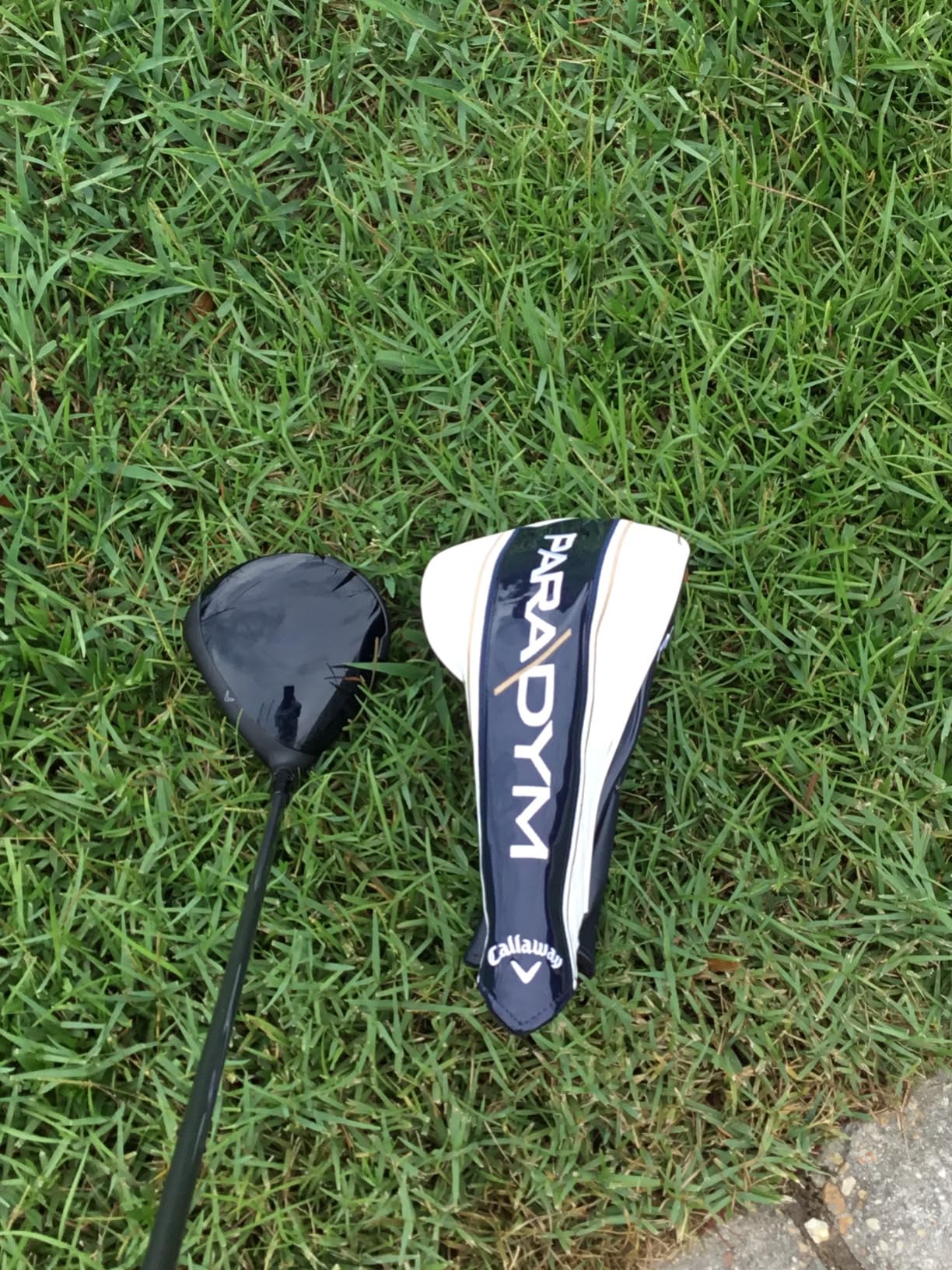
The Paradym is the odd one out in a good way. It is the only cavity back here, and the only one where the selling point is a neutral flight shape rather than maximum launch or maximum forgiveness. The adjustable perimeter weighting lets you shift mass around the head, and the high moment of inertia does the stability work.
High launch with low spin is a combination that sounds contradictory but is exactly what a slower swing needs in moderation. You want enough launch to hold the ball up, and low spin to stop it ballooning and losing its forward roll. Owners report that the neutral shape reduces both slice and hook, which makes this the club for a golfer who hits it both ways on different days.
The 12 degree loft in this listing is on the high side for a modern driver, and that is a real consideration. It suits a slower swing and will produce a higher, softer flight than a 10.5 degree head. Reviewers note the loft can spin the ball more than some golfers want.
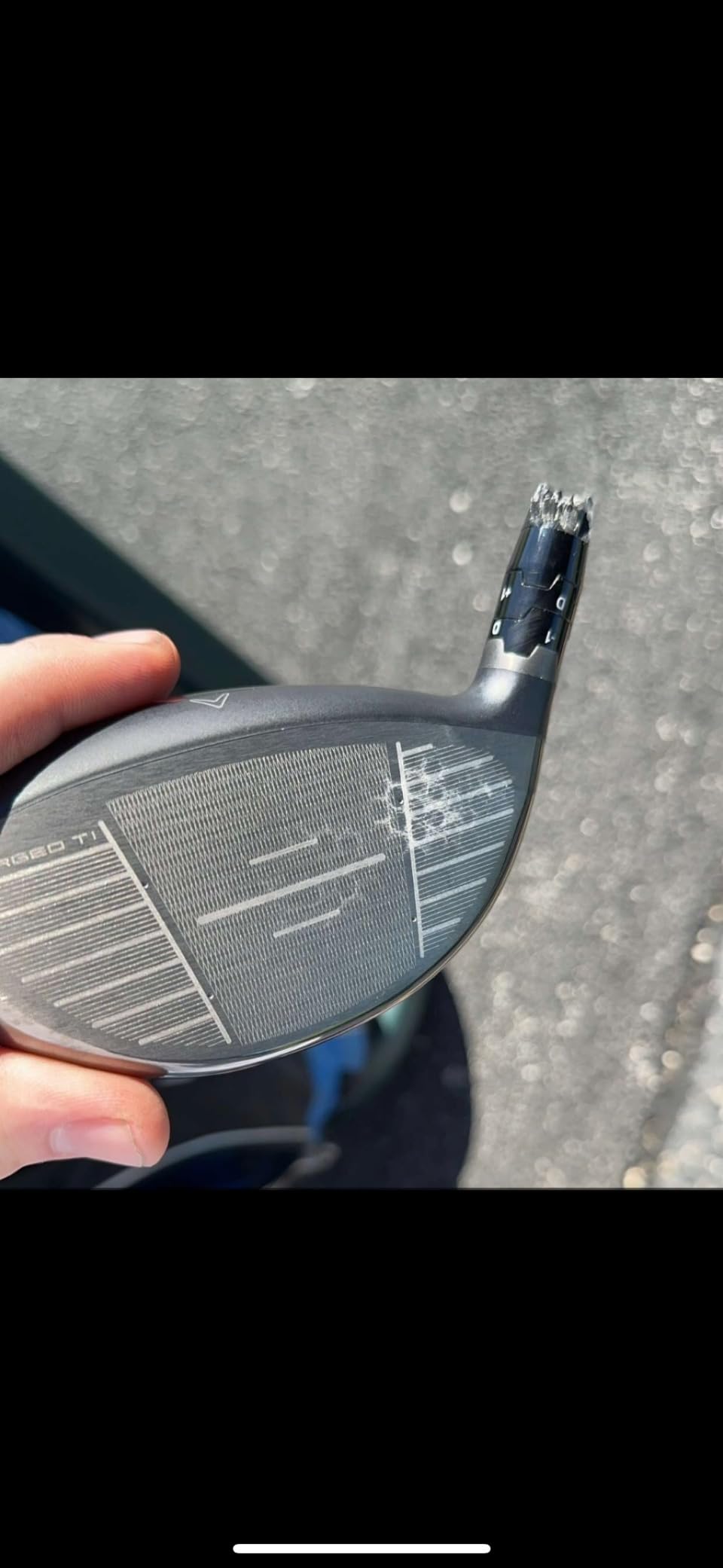
Two practical points. The stock shaft is regular flex graphite, and owners flag that regular flex may be too stiff for very slow swing speeds without custom fitting. The other is model age. This is a 2023 design, so the head technology is a generation behind the newest releases here, though that is a minor concern for most golfers since head performance changes incrementally between years.
What you give up versus the newer models is the extreme adjustability. There is no loft sleeve on this listing, so the 12 degrees is what you get. If you are unsure about your loft, that is worth weighing before you buy.
When this head suits your speed
It fits golfers who do not have a consistent miss. Because the shape is neutral rather than biased, it is the safest choice here for a player who hooks one day and slices the next, and the perimeter weighting lets you nudge the balance if one tendency dominates.
It is also worth considering if you dislike the look of the oversized mallets that dominate this category. A traditional cavity back profile is easy to align and easy to look at down on the ball.
When this head works against you
If you are a pure slicer or a pure hooker, a dedicated bias head in this roundup will correct you faster and more predictably than a neutral design can. Neutral means the club does not fight you, but it also does not actively help you.
For a genuinely slow swing the regular flex shaft is the bigger problem, and the fixed 12 degree loft leaves you no way to reduce it if that proves too much launch.
How to Choose: Shaft Weight, Loft and Spin Without Guessing
Match the shaft in grams, not by flex letter
Flex letters are a marketing convenience, not a measurement. A Senior flex shaft from one maker can weigh noticeably more than a Senior flex shaft from another, which is why golfers buy a Senior shaft and then find it is too heavy for them. Ask for the gram weight. Under 75 mph, shop around 40 to 45 grams. Between 75 and 85 mph, 45 to 55 grams is the useful range. Between 85 and 95 mph, 55 to 60 grams is reasonable, and 50 grams is not too light for a driver in that band.
Then check the grip. A 47g standard rubber grip on a 45 gram shaft pushes the effective weight back up, which is exactly the effect that undoes a light build. Several forums describe this as the moment that changes how people think about club weight, and it is a real, measurable effect rather than a talking point.
Our best golf swing trainers guide is worth a look if the problem is actually speed rather than equipment. A few mph of genuine club speed is worth more than any loft change, and a driver cannot supply it.
Choose loft by launch, not by handicap
Under 75 mph, start at 12 degrees or more. Between 75 and 85 mph, 10.5 to 12 degrees. Between 85 and 95 mph, 10.5 degrees is the working number. The direct answer to the most common loft question is that a 10.5 degree head is easier to hit than a 9.5 for a slow swing, because the extra loft does the launching for you and the ball stays up longer.
If you are choosing between two drivers and can only take one, take the higher loft. There are very few mistakes at slow speeds that cost more distance than too little loft.
The stiff shaft mistake to avoid
This is the most common expensive error in the category. A shaft that is too stiff for your club speed will not load properly at the top of the backswing, which means the face arrives at the ball early and open. The result is a low launch, insufficient backspin, and a carry number that collapses even though the club is technically a good one. The ball does not launch, the spin drops too low, and distance falls away even when the strike is solid.
The same applies to weight. A shaft that is too heavy for your speed is the reason many golfers who think they need a different head actually need a rego. If you are buying a head from this roundup and the stock shaft does not match your gram target, plan for the shaft change in your budget from the start.
Pick a ball that suits a slow swing too
Three of the most common questions attached to this query are about the ball, not the club, and no driver review will answer them. A slow swing generates lower ball speed, and low ball speed is exactly what a low compression ball is designed for. A high compression ball needs high speed to launch properly, and if you are below that threshold the ball simply squashes and comes out low.
The practical rule is a two-piece ball with a Surlyn cover at the low compression end. It costs a fraction of the premium urethane balls, it feels soft, and it is the category most fitting guides point slower swingers toward. Once you are consistently hitting above 90 mph, a premium urethane ball is where the extra distance starts to appear.
Measure your speed, and check availability
If you do not have access to a launch monitor, an indoor simulator is the accurate route, and it is cheaper than most people expect. If that is not practical, carry distance is a usable proxy. Around 200 yards of average carry for a good strike usually points to the middle of the slow range, and 230 yards plus puts you in the 85 to 95 mph band.
Two practical availability notes before you commit. Left-handed versions of the lightweight and senior-focused builds are noticeably harder to find than right-handed ones, so check that your handedness is stocked for the specific model rather than the brand. And on the Japanese brands that appear in this category regularly, the same model is often badged differently in the US and the UK, so search by the head design and the loft rather than the name alone.
Frequently Asked Questions
What is the best lightweight driver for low swing speeds?
For most golfers under 90 mph, the TaylorMade SIM2 MAX is the strongest all-round choice, with a forgiving forged ring head and a 10.5 degree loft. If your main problem is a slice rather than contact, the Cleveland HiBore XL Lite adds internal draw-biased weighting and a build 32 grams lighter than the standard model. At the budget end, the Intech Behemoth 520cc gives you a very large head on a senior flex shaft.
What is the best driver shaft for slower swing speeds?
Shop by gram weight rather than flex letter, because flex labels are not standardised. Under 75 mph, look for roughly 40 to 45 grams. Between 75 and 85 mph, 45 to 55 grams is the useful range. Between 85 and 95 mph, 55 to 60 grams works well. Pair the light shaft with a light grip, since a standard 47g grip can put the weight savings back.
Is a 50g shaft too light for a driver?
No. A 50 gram shaft is in the useful range for a golfer in the 85 to 95 mph band. It is the middle of the window rather than the edge of it. Below 75 mph you would want to go lighter, and above 95 mph you would want more mass to control the head. The number alone means very little without the club speed behind it.
What happens if your swing speed is too slow for a stiff shaft?
The shaft will not load at the top of the backswing, so the face arrives at the ball open and early. The ball launches low, the spin drops below what the loft should produce, and carry distance falls even on solid strikes. The club often gets blamed, when in practice a softer or lighter shaft is the fix.
What golf ball should I use if I have a slow swing speed?
A low compression two-piece ball with a Surlyn cover is the standard answer, because low ball speed is exactly the condition a low compression ball is built for. It feels soft, it compresses at impact instead of resisting, and it costs far less than a premium urethane ball. Hold the premium ball until you are consistently above 90 mph of club speed.
What driver loft is best for someone with a slow swing speed?
Under 75 mph, start at 12 degrees or higher. Between 75 and 85 mph, 10.5 to 12 degrees is the working range. Between 85 and 95 mph, 10.5 degrees is the right number. Loft sets launch angle and backspin together, and a slow swing needs both, so erring toward more loft rather than less.
What is the best driver for seniors with slow swing speeds?
Senior is a speed and weight category rather than an age category, so match the total weight and loft instead. Golfers in the 75 to 85 mph band are usually best served by a 10.5 to 12 degree head on a shaft around 45 to 55 grams. The Cleveland HiBore XL Lite and the Majek K-Series 12.5 are both built around that logic.
Is a 9.5 or 10.5 driver easier to hit?
A 10.5 degree head is easier to hit for a slow swing. The extra loft increases launch angle and backspin at the same time, and neither of those can be produced by clubhead speed alone. A 9.5 degree tour-level head relies on raw speed to keep the ball airborne, which is why it underperforms below about 95 mph.
Best Golf Drivers for Slow Swing Speeds: The Final Word
The TaylorMade SIM2 MAX is our pick as the best golf drivers for slow swing speeds choice for most people, because it has the strongest combination of owner rating, review volume and forgiveness in this group. If you slice, the Cleveland HiBore XL Lite is the more targeted answer. If you are buying strictly on budget for casual rounds, the Intech Behemoth 520cc will add carry distance for less than any other head here, and the Majek K-Series 12.5 is what to buy instead if you need tournament legality at the same launch.
One last instruction. Check the shaft weight against your club speed before you commit to any head on this list, because in this category the shaft is usually the part that decides whether the club works. The full ranked comparison is above, and the guides on our general driver roundup and swing trainer picks cover the rest of the equipment picture.