
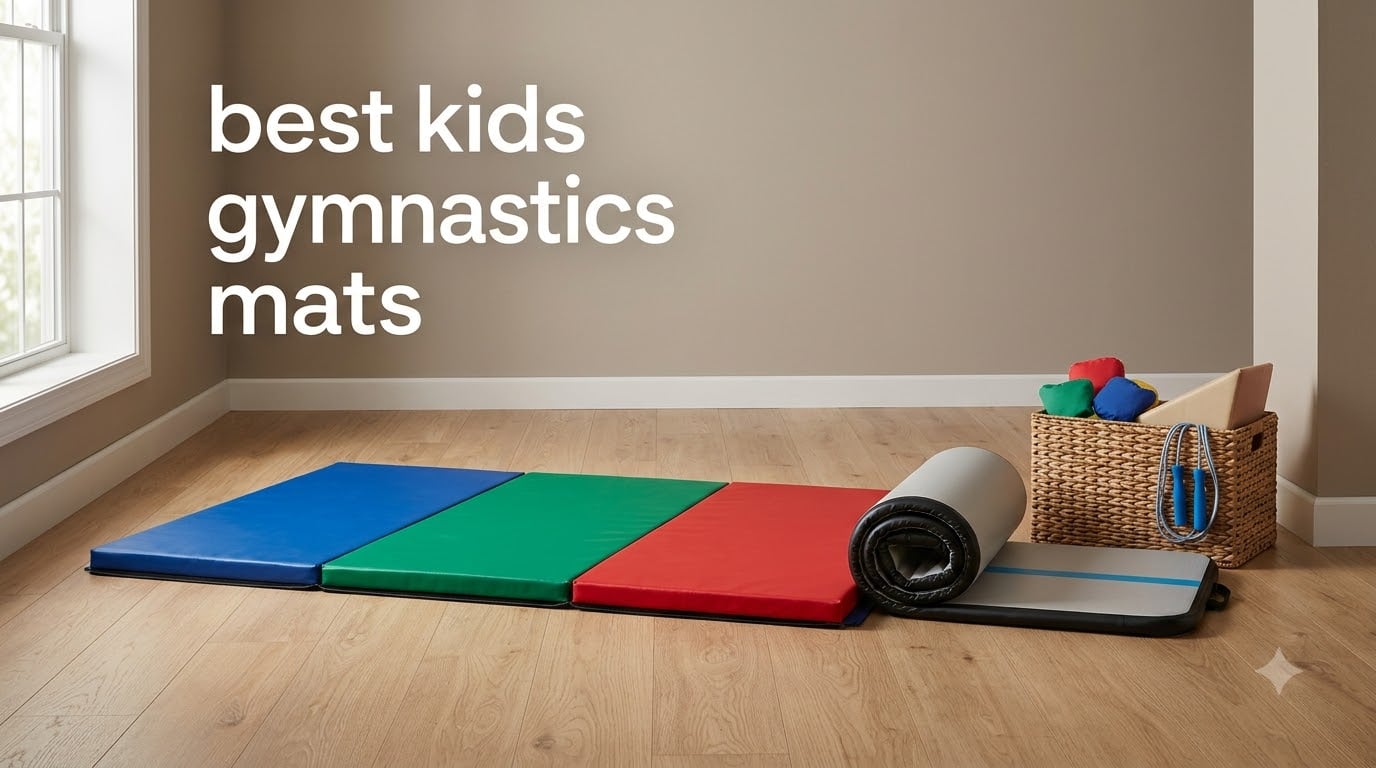
The best kids gymnastics mats give a child a stable, cushioned place to practice forward rolls, cartwheels, handstands, stretching, and active play at home. I compared eight folding foam and inflatable options for thickness, surface grip, cleaning, portability, room requirements, and long-term durability.
My short answer is simple: a 2-inch folding mat suits most beginners, while a thinner tri-fold is easier for small rooms and younger children. Families wanting a bouncier surface should consider an air track, but those products need inflation, careful supervision, and protection from sharp objects.
This guide focuses on real product specifications and supplied customer feedback. For a broader look at home equipment, see our guide to the best gymnastics mats, and pair the mat with one of our reviewed gymnastics bars for home practice.
Table of Contents
Top 3 Kids Gymnastics Mat Picks
Kids Gymnastics Mats in 2026
| Product | Specifications | Action |
|---|---|---|
 BalanceFrom 3-Panel Mat BalanceFrom 3-Panel Mat |
|
Check Latest Price |
 Antsy Pants Tri-Fold Mat Antsy Pants Tri-Fold Mat |
|
Check Latest Price |
 New Bounce Rainbow Mat New Bounce Rainbow Mat |
|
Check Latest Price |
 CAP Barbell Folding Mat CAP Barbell Folding Mat |
|
Check Latest Price |
 HearthSong 5-Panel Mat HearthSong 5-Panel Mat |
|
Check Latest Price |
 CZGBRO Air Tumble Track CZGBRO Air Tumble Track |
|
Check Latest Price |
 Oneofics 3×6 Mat Oneofics 3×6 Mat |
|
Check Latest Price |
 Polar Aurora 4×10 Mat Polar Aurora 4×10 Mat |
|
Check Latest Price |
1. BalanceFrom 3-Panel Mat — Best Overall
BalanceFrom 2″ Thick Three Fold Folding Exercise Mat with Carrying Handles for MMA, Gymnastics and Home Gym Protective Flooring (Pink)
6 x 2 ft
2-inch foam
Tri-fold vinyl mat
Pros
- Strong joint cushioning
- Non-slip easy-clean vinyl
- Lightweight folding design
- Connectable edges
Cons
- Some buyers found it slightly undersized
- No separate Velcro pieces included
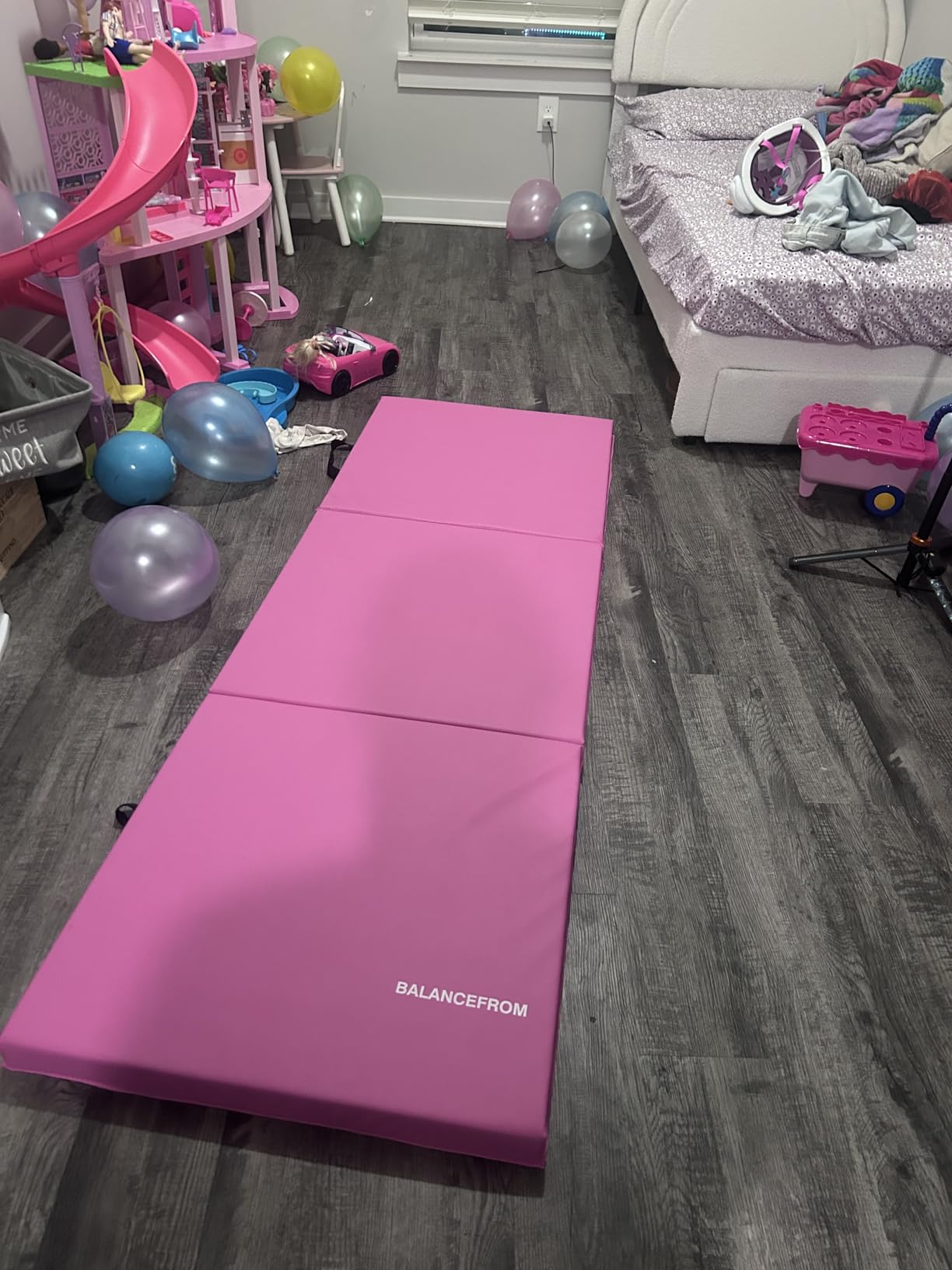
I would choose the BalanceFrom for most families starting a home practice area. Its 2-inch foam is noticeably more supportive than the 1-inch and 1.25-inch mats in this group, so forward rolls, knee work, and beginner tumbling feel less harsh on a hard floor.
The three-panel format is easy to move between a living room, garage, or playroom. Customer reviewers also like the double-sided vinyl cover because it resists moisture and wipes clean after active play.
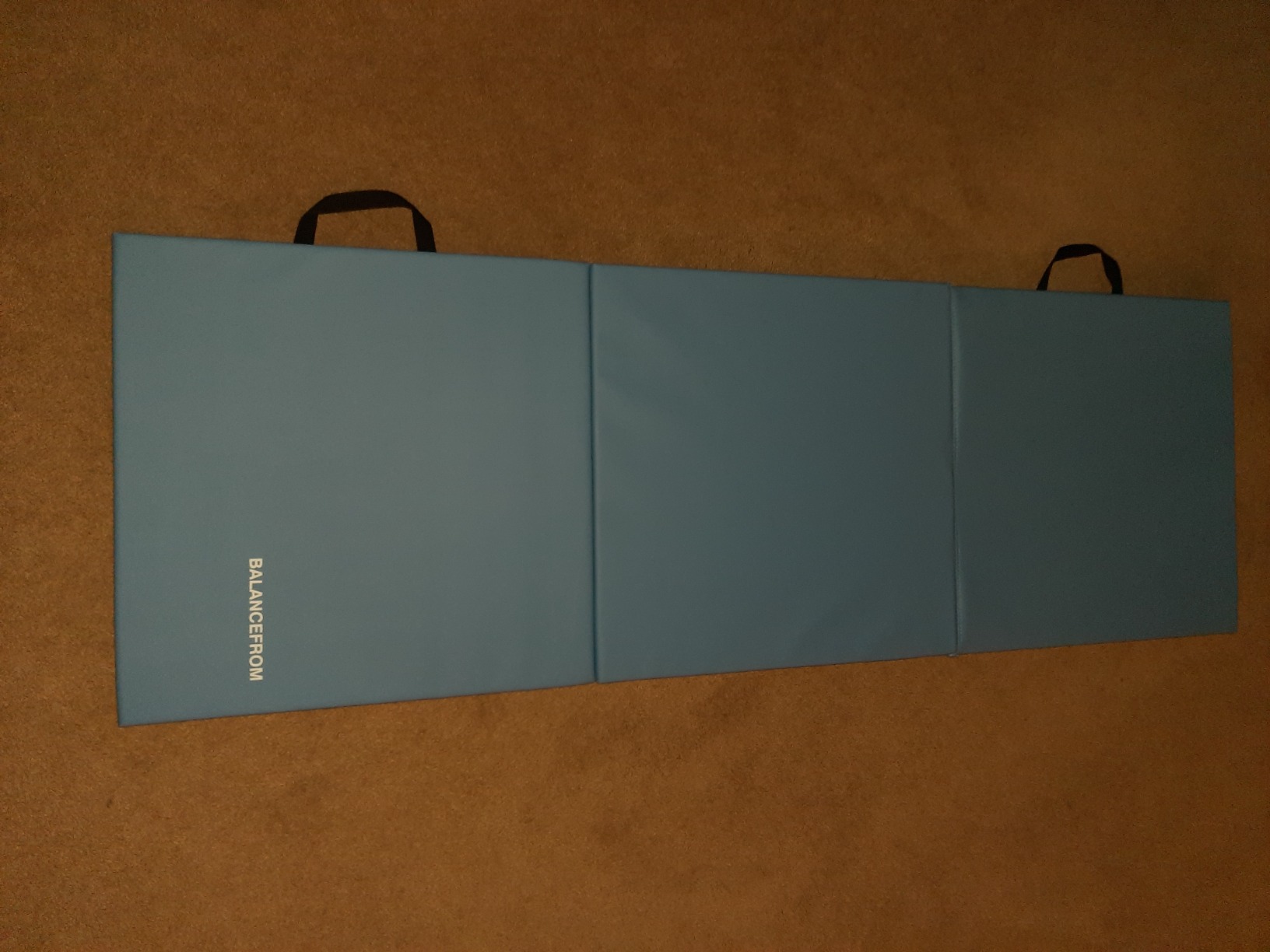
One limitation is that a few customers found the usable length slightly below the stated 6 feet. I would measure the full practice run, including room for approach and finish, rather than only the space occupied by the mat.
Who should buy this mat?
Choose it for a first serious kids gymnastics mat, shared family workouts, and children learning rolls, cartwheels, bridges, and stretching. Its firm support and huge review base make it the safest all-around recommendation.
It is less attractive for someone who wants to roll the mat instead of folding it. The thick foam also feels less stable for push-ups than a thinner exercise mat, according to some customers.
What should you check before buying?
Confirm the advertised dimensions, floor space, and whether you need extra connector strips. Test the folded surface for gaps, then add a non-slip underlay if your room has smooth flooring.
The supplied product data identifies a textured vinyl surface and carrying handles. Those details matter in daily use because grip improves control while the 3-pound weight makes setup easier.
2. Antsy Pants Tri-Fold Mat — Best for Young Beginners
Antsy Pants Tumbling Mat for Kids – 5-Fold Gymnastics Mat, Easy to Clean, Sturdy, Foldable Tumbling Mats, Padded, Lightweight, Portable, Gymnastics Equipment for Active Play
77 x 30 in
1-inch foam
2-pound tri-fold
Pros
- Light and easy to carry
- Balanced cushioning and support
- Easy-clean tear-resistant cover
- Expandable ends
Cons
- Can slide on hardwood
- Thinner than some buyers expected
- Pet claws may mark it
The Antsy Pants is my pick for a younger child who wants a defined place for rolls, yoga, and active play. It weighs only 2 pounds and has a handle, which makes it much easier for a parent to deploy and put away than the heavier full-size mats.
Its foam offers useful stability for beginner work without creating a deep, soft landing zone. The hook-and-loop ends also let a family expand the practice area by joining it to another compatible mat or a beam.
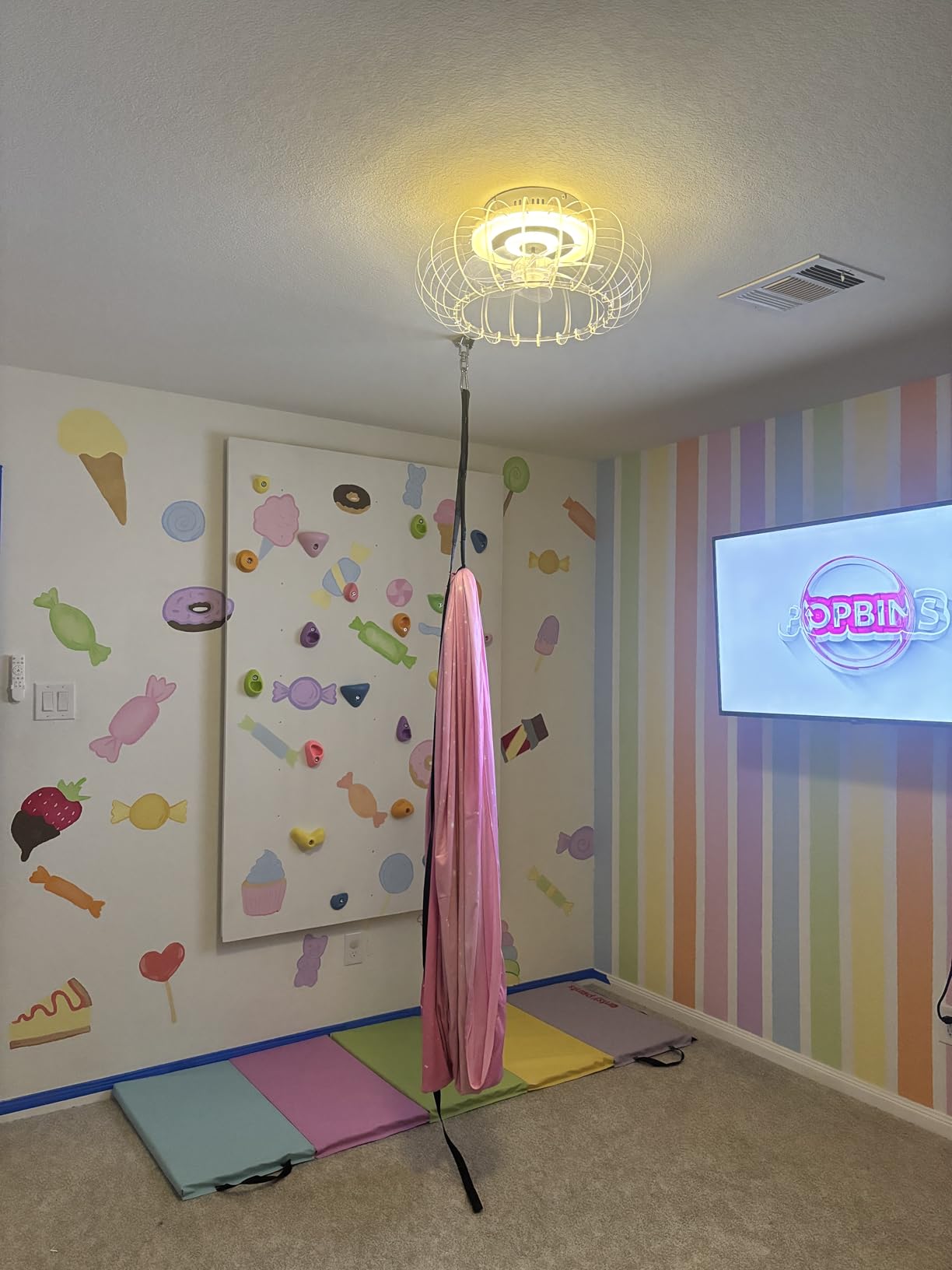
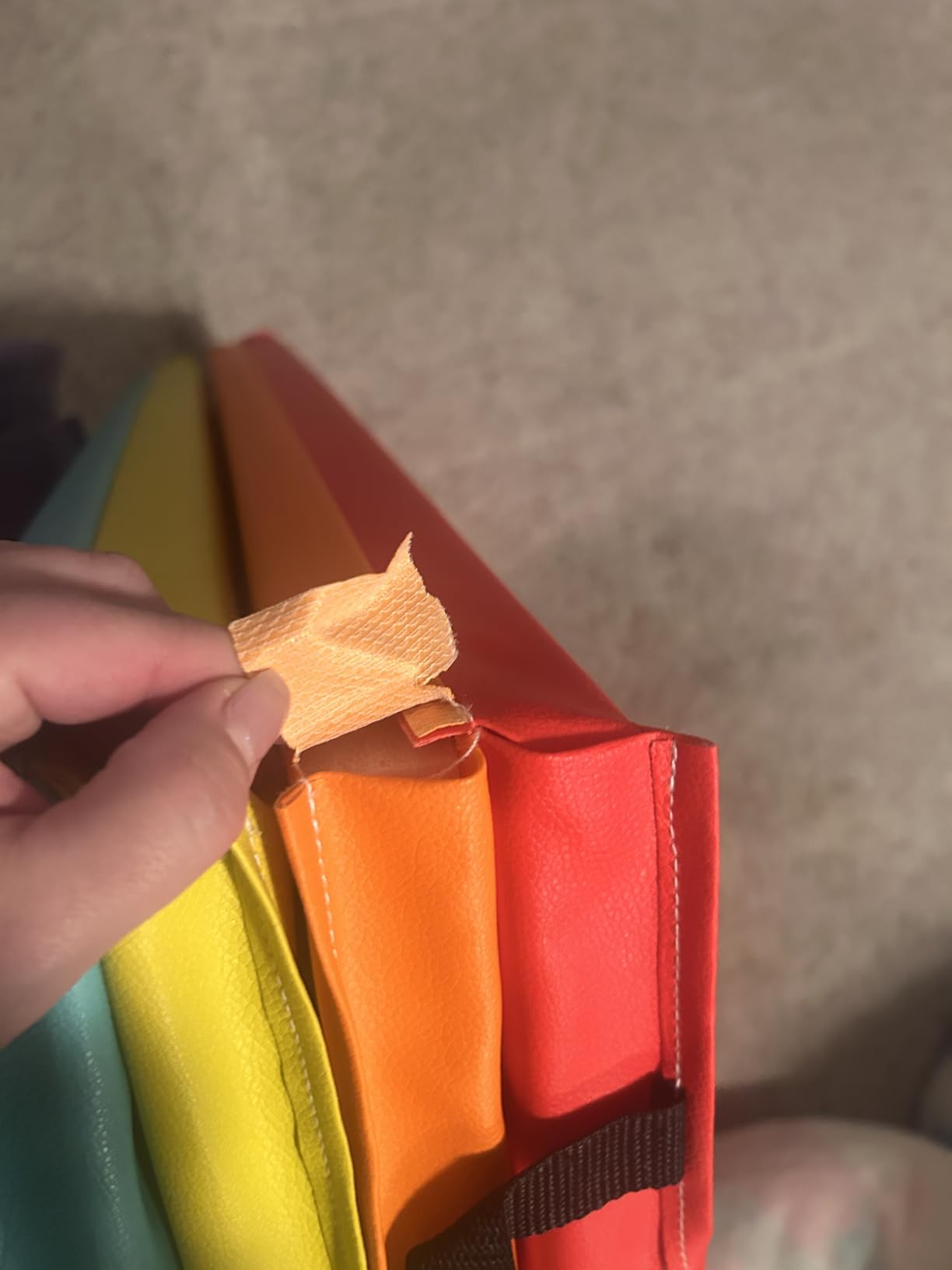
Customer feedback is especially strong on storage, cleaning, and everyday durability. On smooth floors, I would use a rug pad or approved non-slip underlay because reviewers report more movement on hardwood than on carpet.
Who should buy this mat?
Pick the Antsy Pants for toddlers through early elementary-age children practicing basic movement, stretching, and low-height skills. It is also a strong option for small homes where a 6-foot mat must be folded away after every session.
It is not the first choice for high-impact landings or advanced tumbling. The 1-inch profile can feel too thin once a child is working on larger skills.
How does it fit a small room?
The open size is generous for one child, while the tri-fold design reduces its storage footprint. Leave a clear margin beyond each end so a cartwheel or roll does not end on the bare floor.
Its light weight improves portability, but lightness does not prevent sliding. I would check the floor and mat interface before every active session.
3. New Bounce Rainbow Mat — Best for Active Play
New-Bounce Tumbling Mat for Kids, 1.5″ Folding Escersize Mat
78 x 30 in
1.5-inch foam
Five rainbow panels
Pros
- Bright child-friendly design
- Supportive 1.5-inch padding
- Sturdy hook-and-loop closures
- Works for many activities
Cons
- Some buyers expected more panels
- The surface can feel smaller than expected
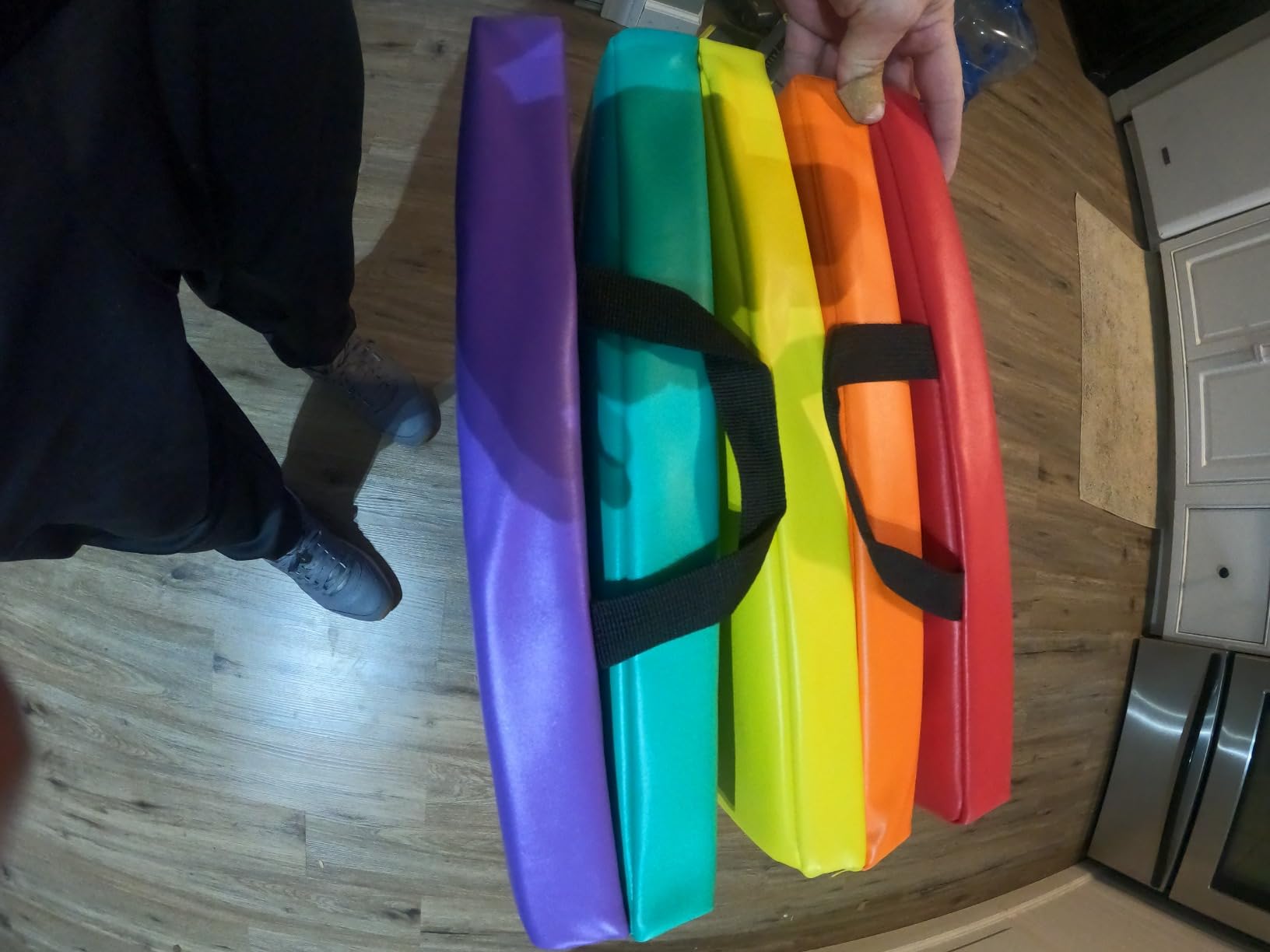
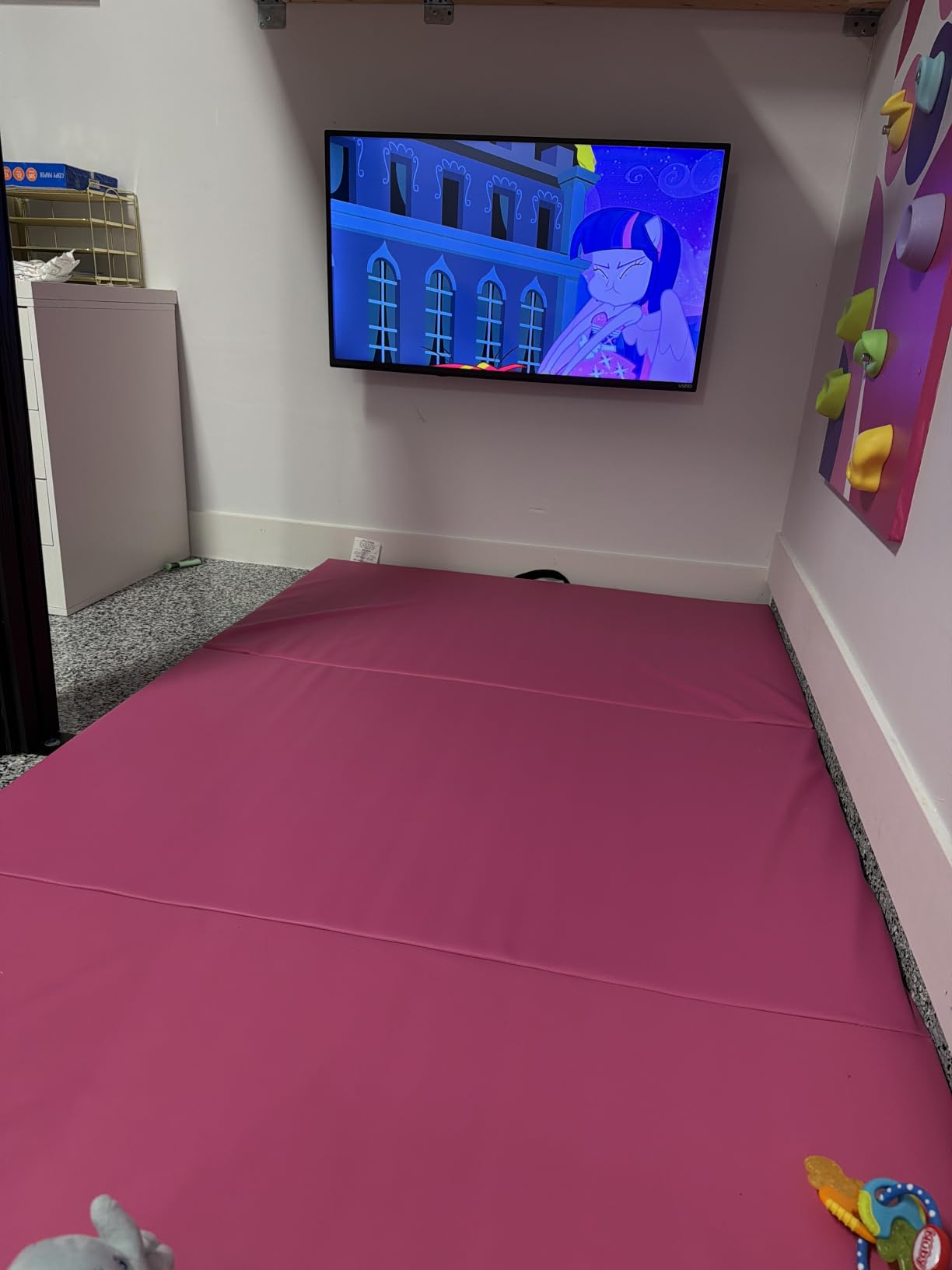
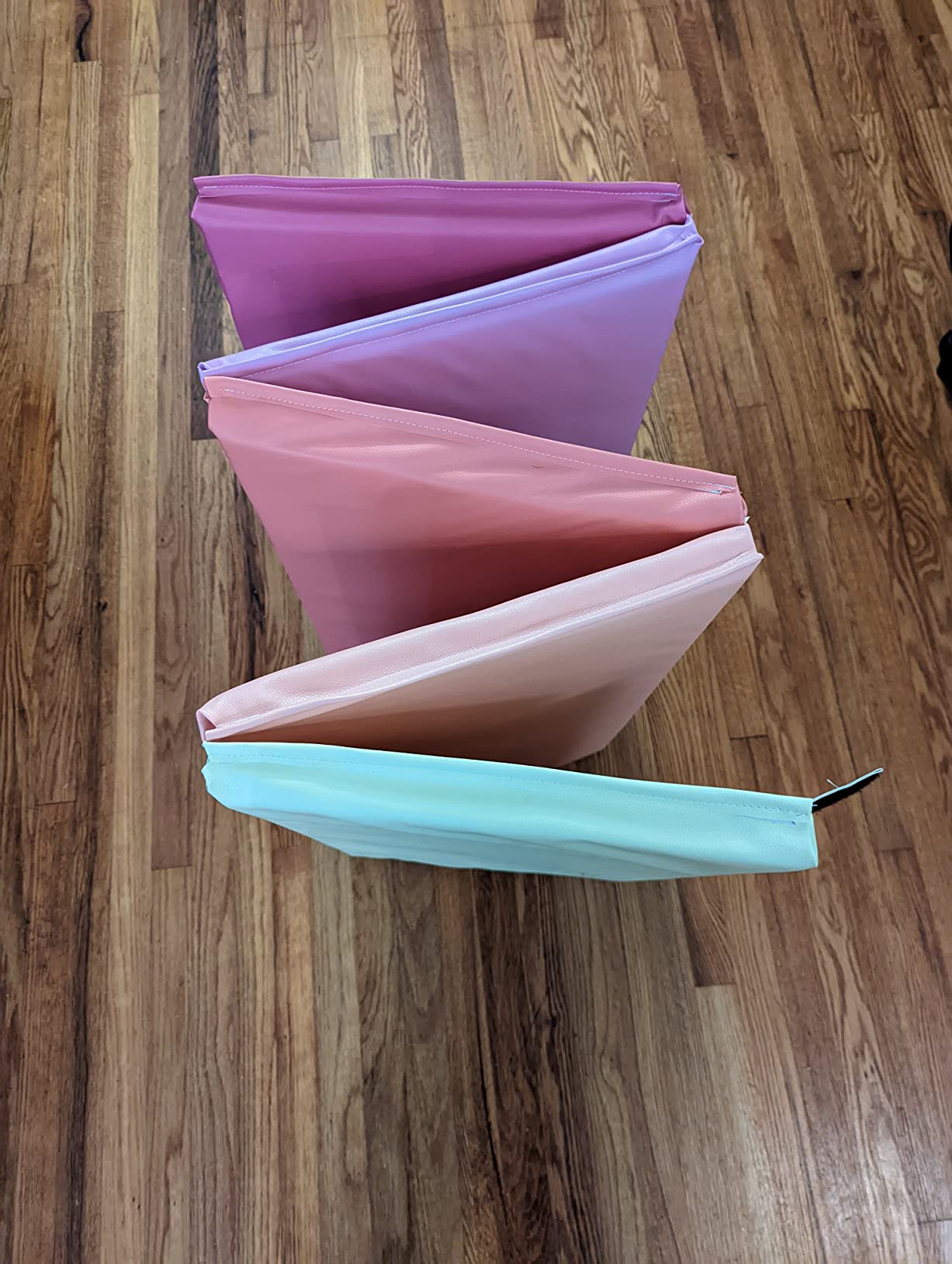
New Bounce makes basic movement inviting with a rainbow design that children can use for gymnastics, pretend play, stretching, or a soft rest surface. The five panels fold into a compact shape and include strong closures that also serve as carrying straps.
I see the 1.5-inch thickness as a useful middle ground. It provides more cushioning than the Antsy Pants and HearthSong while remaining easier to carry than the largest folding mats.
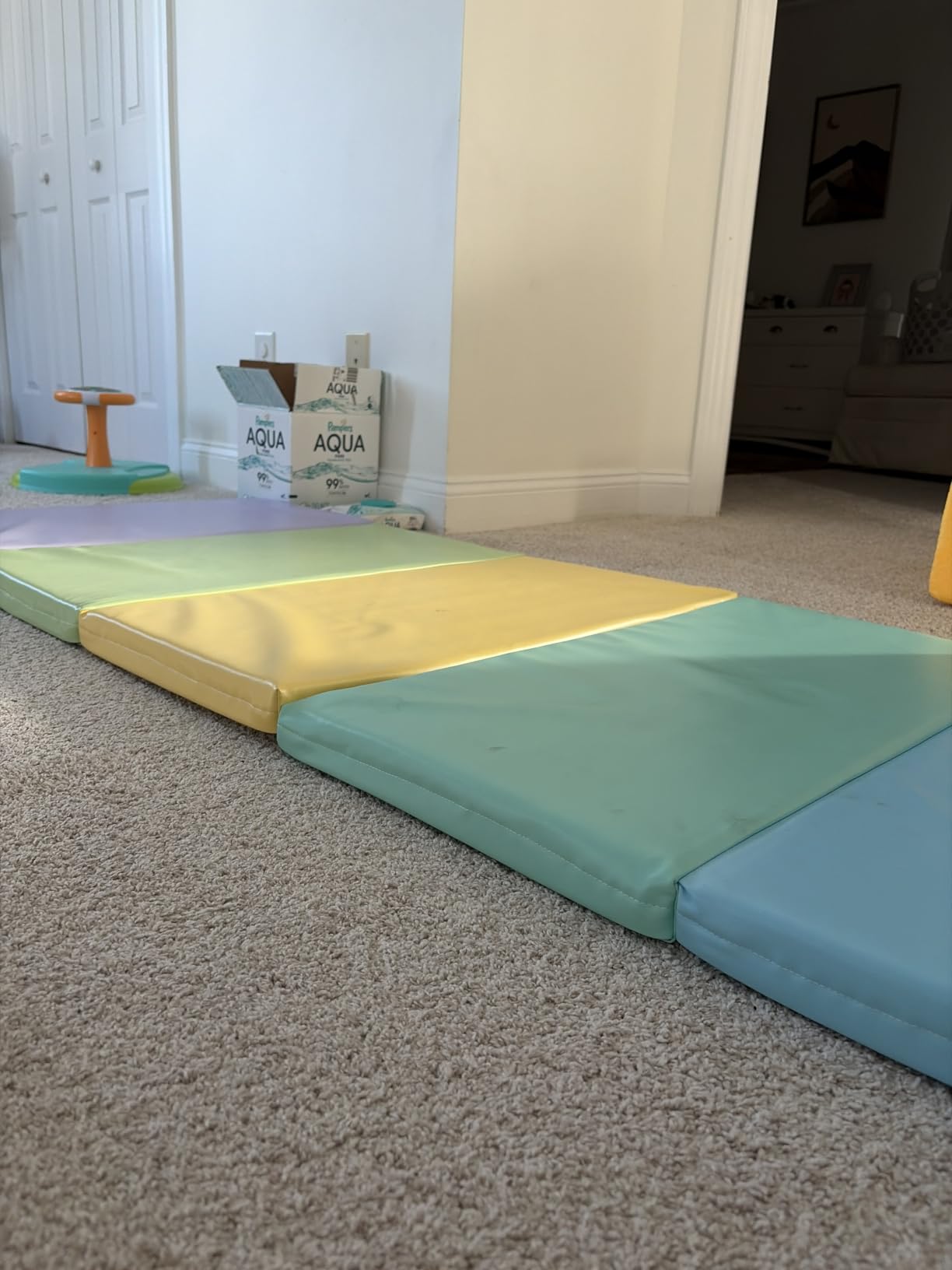
The product information says the mat is suitable for indoor and outdoor fun and is made without harmful chemicals. I would still keep it on a clean, level surface, wipe it with a damp cloth and mild detergent, and store it dry.
Who should buy this mat?
Choose it for children who respond to color and may use the mat for more than gymnastics. Its wide range of applications can make it useful in a playroom, nursery, daycare, or family exercise corner.
Buyers expecting a large, soft play surface may find the 30-inch width modest. Measure the child and the intended activities before ordering.
Is the 1.5-inch thickness enough?
It is a sensible beginner thickness for rolls, cartwheels, stretching, and low-height practice. Children attempting higher or more forceful skills need coaching, adequate clearance, and equipment matched to the skill level.
The firm foam supports technique better than a deep inflatable surface. That balance is useful when a child is still learning body position and control.
4. CAP Barbell Folding Mat — Best for Supportive Cushioning
CAP Barbell Folding Exercise Mat – Durable, Anti-Tear, Thick Padding for Fitness, Aerobics, Gymnastics & Home Workouts. 72″L x 24″W x 2″Thick. BLACK
72 x 24 in
2-inch high-density foam
Nylon surface
Pros
- Firm impact absorption
- 10P-free
- lead-free and mercury-free
- Built-in carrying handles
- Connectable ends
Cons
- Does not roll
- Some users found it too soft for standing stretches
The CAP Barbell focuses on firm, supportive foam rather than a plush feel. That makes it a good fit for children who need stable floor work and for households sharing the mat with adults doing mobility, aerobics, or strength exercises.
Its 2-inch profile offers more impact absorption than the thinner beginner mats. Reviewers with joint concerns also praise the cushioning, although a few prefer a firmer surface for static standing stretches.
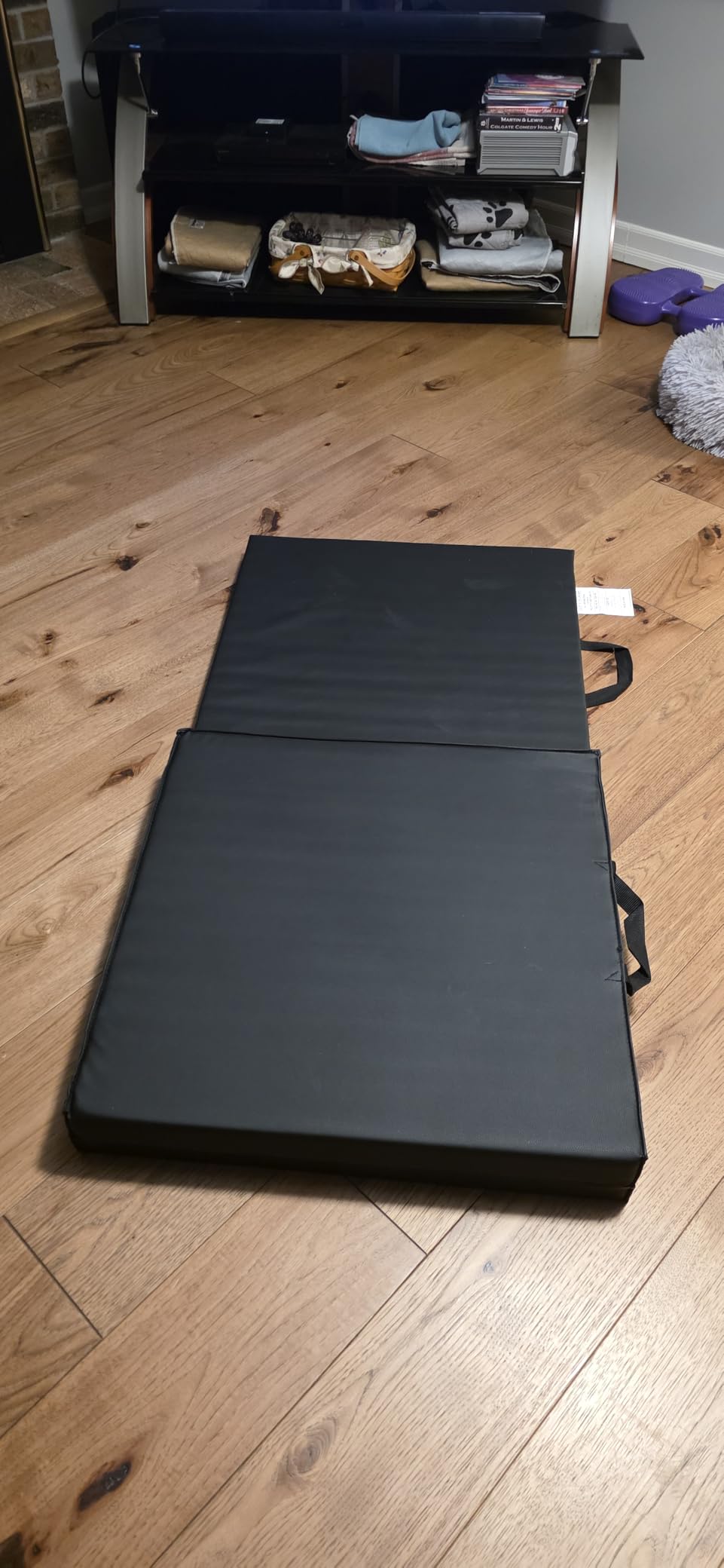
I value the product’s stated material safeguards: it is free from 10 harmful phthalates, lead, and mercury. That makes it especially relevant for families asking about non-toxic gymnastics mat materials for kids.
Who should buy this mat?
Buy it for supportive padding, compact folding, and a straightforward fitness-mat design. The black nylon surface is practical for frequent use and is easier to match with existing home gym equipment.
It is not ideal if you need a mat that rolls. Its four-pound weight is still easy to carry, but the folded panels are the storage mechanism.
What makes the foam different?
High-density foam limits the squish that can undermine balance work while retaining impact cushioning. I would choose density and surface stability alongside thickness, since a thick but overly soft mat is not automatically safer.
The product also includes hook-and-loop closures for expanding a workout area. Check the closure orientation and floor clearance before joining multiple units.
5. HearthSong 5-Panel Mat — Best for Easy Folding
Hearthsong Tumbling Mat for Kids, 5-Panel Thick 1.25″ Foldable Exercise Mat for Yoga, Pilates, Stretching, Folding Gymnastics Mats at Home, Gym Workout (Multicolor)
77 x 30 in
1.25-inch foam
Five folding panels
Pros
- Soft yet durable cushioning
- Lightweight with two straps
- Built-in mat connections
- Easy-clean vinyl cover
Cons
- Some buyers found it smaller than expected
- Color choice is limited
HearthSong is designed for children aged 3 and up, with enough length for rolls and beginner flips but only 1.25 inches of foam. I like that it combines a soft, durable feel with a broad folding pattern that stores neatly.
The two carrying straps and built-in attachments are practical for families that move the mat between rooms. Reviewers also praise the easy-clean cover and the balance between softness and durability.
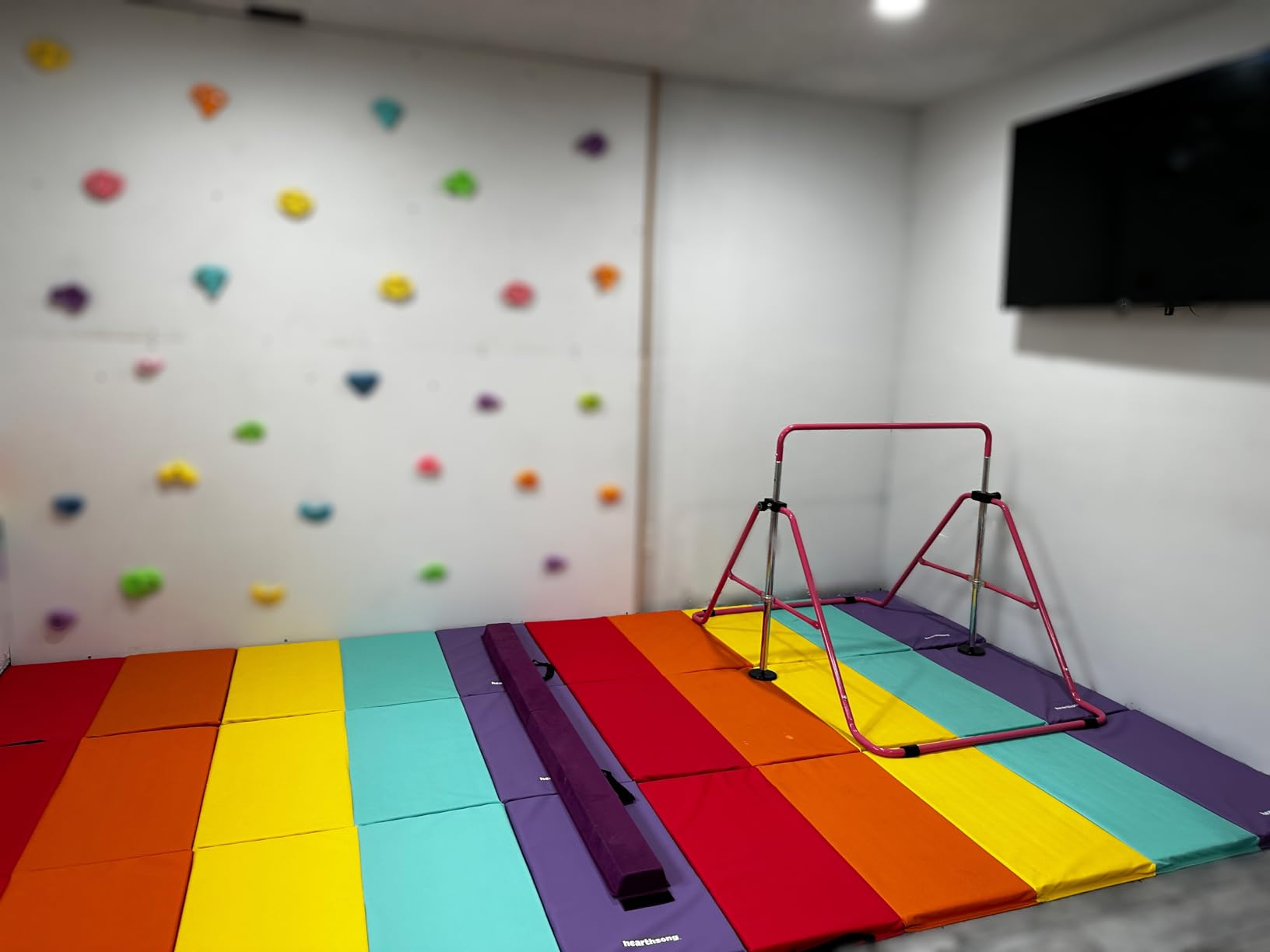
Because it is a thinner mat, I would reserve it for low-to-moderate-height practice and closely supervise the first attempts at new skills. It is best treated as a home learning surface, not a replacement for coached instruction or full gym equipment.
Who should buy this mat?
Choose it for preschool and early elementary practice, stretching, martial arts, yoga, and active play. The child-focused size and five-panel format are easier to manage than a full 10-foot mat.
Families with older or taller children may want a longer or thicker option. A 2-inch model gives more room for growth and harder landings.
Can the panels be connected?
The built-in attachments are intended to join multiple compatible mats. This can create a larger practice zone, but I would test the seam and remove gaps before use.
Use a separate non-slip layer if the joined setup moves on a smooth floor. A stable base matters as much as the foam thickness once a skill becomes dynamic.
6. CZGBRO Air Tumble Track — Best Air Mat
CZGBRO Gymnastics Air Mat Tumble Track, Tumbling Mats, Pink 10FT
10 x 3.3 ft
4-inch inflatable
PVC track
Pros
- Bouncy training surface
- Waterproof PVC
- Center guide line
- Electric pump and carry handles
Cons
- Inflation adds setup time
- One report mentioned pump trouble
- Longer sizes suit taller users better
The CZGBRO is the only inflatable option in this lineup and the best fit for children who enjoy bounce-assisted practice. Its 4-inch profile feels much more springy than the foam mats, while a center line helps the child stay aligned.
The electric pump is a major convenience for a family setting up the track repeatedly. The product information says inflation and deflation take less than a minute, but I would still allow time for a proper pressure check and firm, level placement.
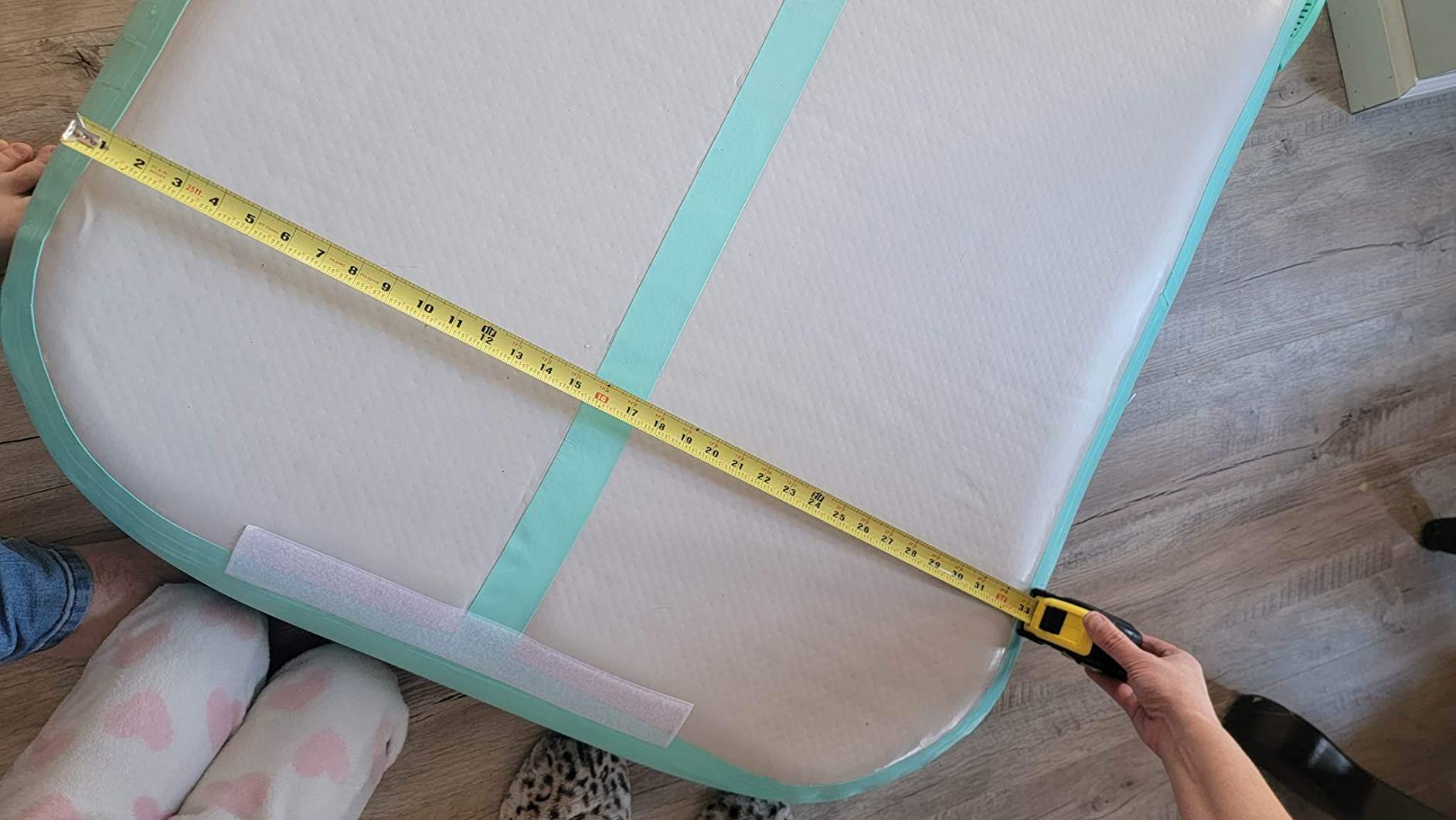
Forum users raise two sensible concerns about air tracks: punctures and setup time. I would keep the track away from pet claws, sharp toys, rough concrete, and abrasive outdoor surfaces, and I would inspect it before each session.
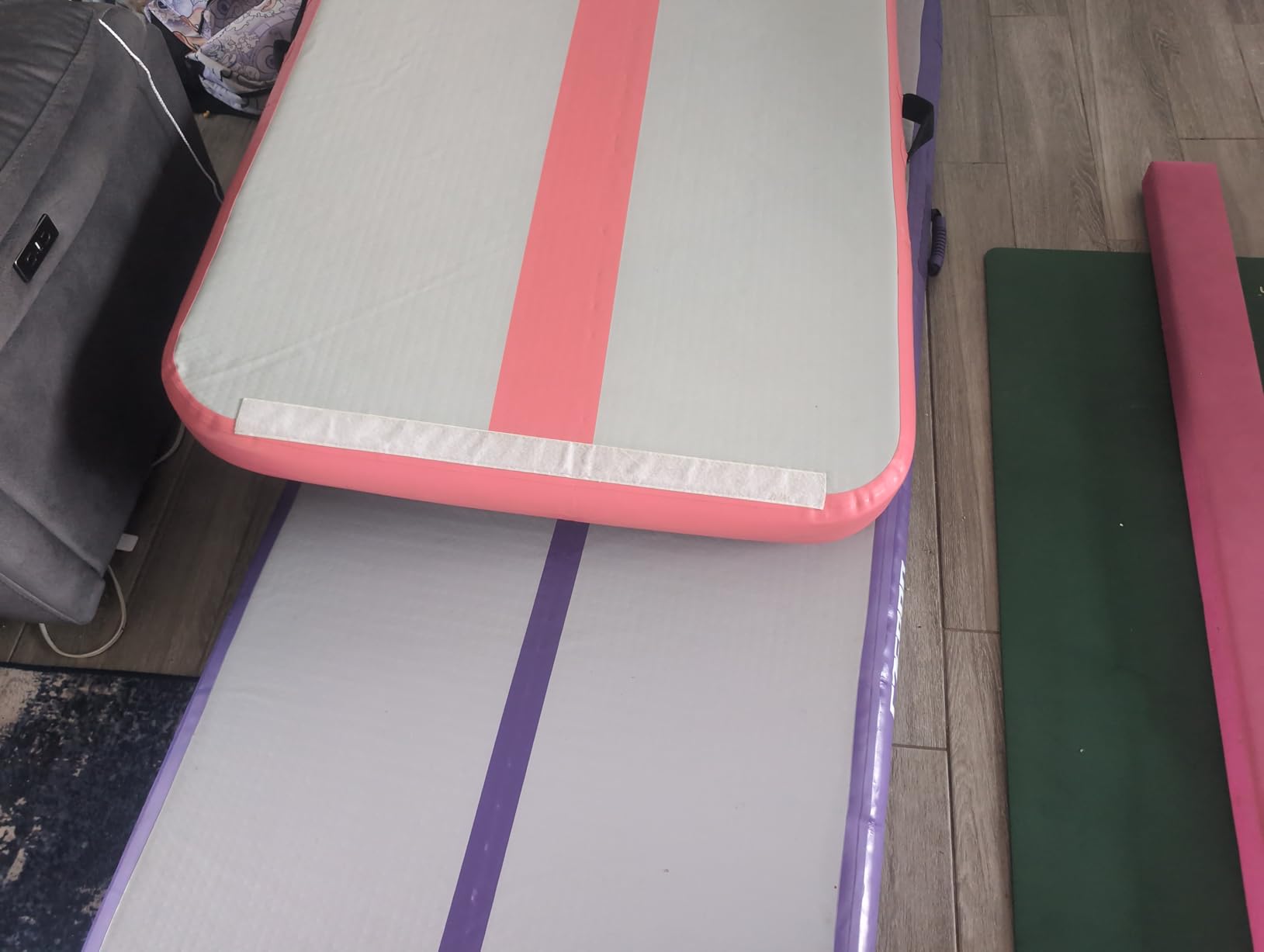
Who should buy an air track?
Buy one for a child who wants a bouncy gymnastics experience and has a clean, open practice area. It can also support cheerleading, yoga, and general active play.
It is less convenient for families who want to unfold and start practicing immediately. A slow leak or damaged pump can also interrupt a session, so inspect the equipment and keep the setup instructions.
Is an air track safe for home use?
It can be safe when inflated correctly, placed on a clear level surface, and used under adult supervision. A child should learn skills progressively, and no mat can make an advanced or high-risk skill safe without coaching.
For indoor-outdoor versatility, wipe the PVC clean and follow the maker’s care guidance. Avoid using the same setup on a surface that could abrade the bottom.
7. Oneofics 3×6 Mat — Best for Wider Practice Space
Oneofics Gymnastics Mat, 3’x6’x2” Thick 4-Panel Kids’ Folding Tumbling Mat
72 x 36 in
2-inch EPE foam
Four panels
Pros
- Wide landing area
- High-density cushioning
- Waterproof tear-resistant PU cover
- Easy folding and cleaning
Cons
- Some buyers found it smaller than expected
- Four-panel fold takes familiarization
The Oneofics offers a useful combination for a growing gymnast: a 2-inch foam layer and a 36-inch width. That extra width gives a child more room when a cartwheel or roll drifts slightly off line.
Its high-density EPE foam is covered with PU leather that is waterproof, tear-resistant, and easy to wipe. I would favor that stable, low-maintenance surface for a family playroom that sees more than gymnastics.
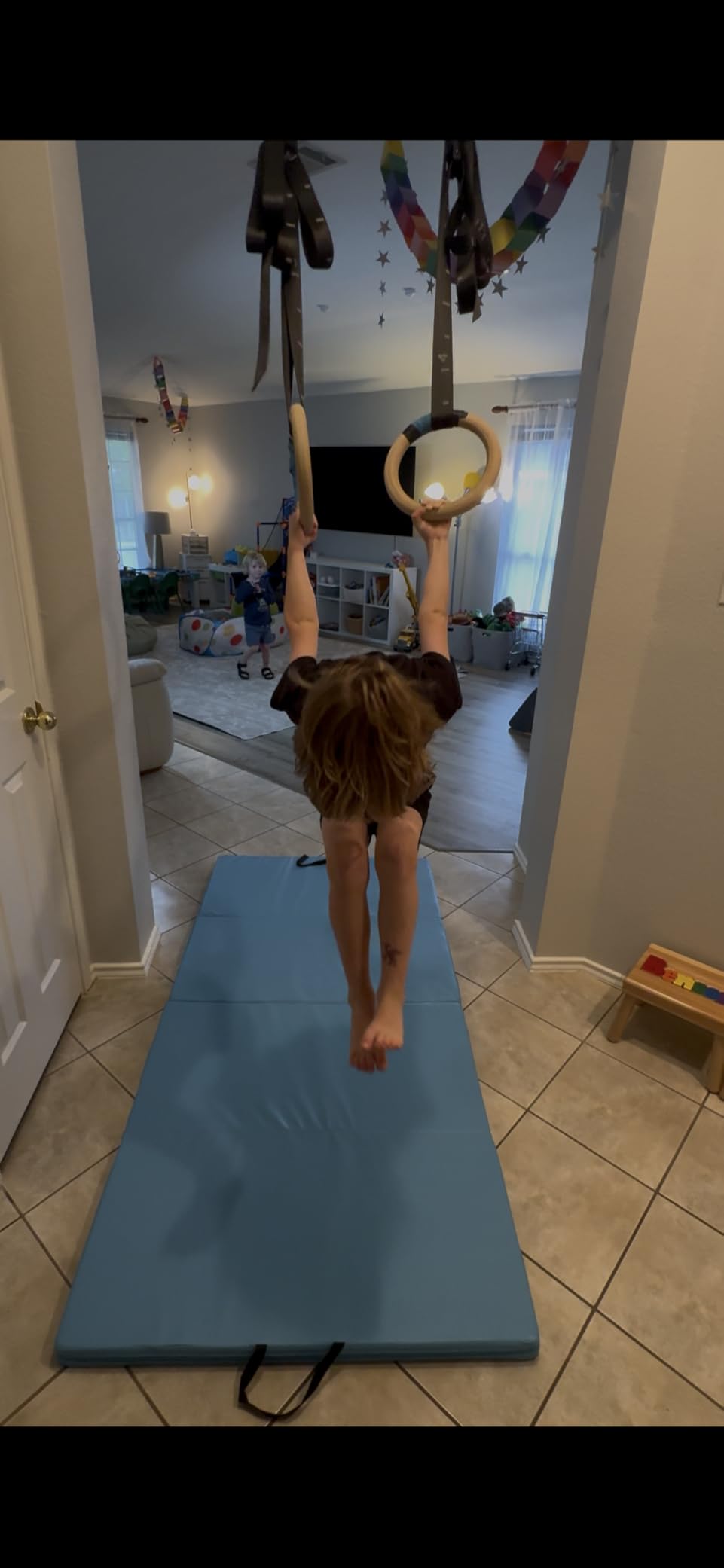
The four-panel construction folds into a manageable package and includes two handles. It is heavier than the Antsy Pants, but still reasonable for one adult to reposition.
Who should buy this mat?
Choose it for children who need a wider surface or for families that want more protection during beginner tumbling. It is especially appealing when the child is between a thin toddler mat and a full gym-length model.
Its 6-foot length may still feel short for older children. Compare the child’s height with the full practice path, not only the mat’s footprint.
How should you maintain the cover?
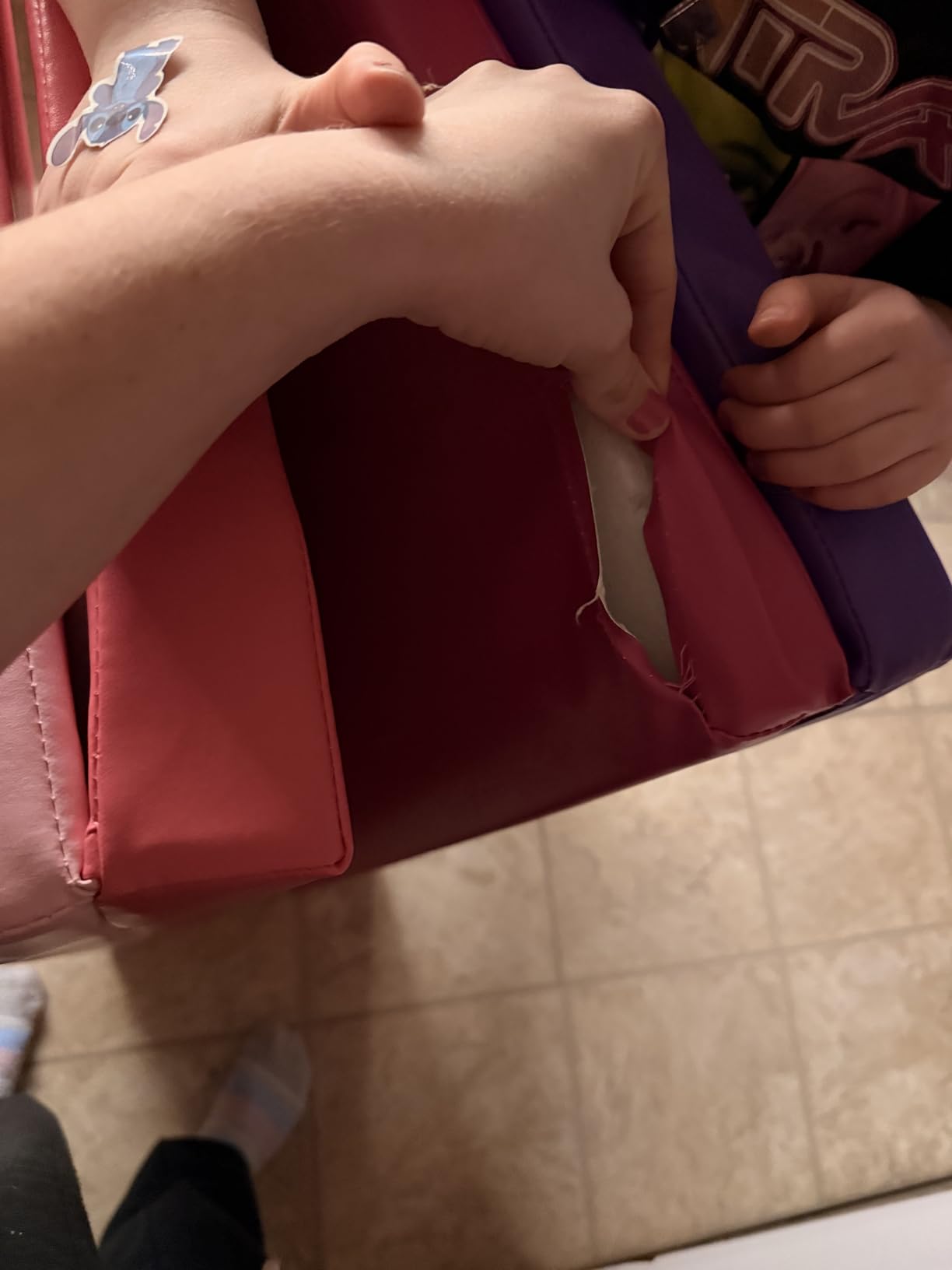
Wipe spills promptly and follow the manufacturer’s cleaning instructions. Keep sharp objects, pet claws, and abrasive grit away from the PU surface to preserve the cover and seams.
Check the fold lines and handles periodically. Four-panel mats create seams, and a small gap can affect a landing or a roll.
8. Polar Aurora 4×10 Mat — Best for Full-Body Practice
Polar Aurora 4’x10’x2 Thick Folding Gymnastics Exercise Mat Aerobics Stretching Yoga Mats (Blue)
115 x 47 in
2-inch EPE foam
Four panels
Pros
- Large full-body practice area
- Balanced softness and firmness
- Non-slip surface
- PU leather cover
Cons
- Velcro may weaken over time
- Panels can leave small gaps
- Stitching and zippers may wear with heavy use
The Polar Aurora is the roomiest folding mat in this group. At approximately 115 by 47 inches, it gives a child or adult enough space for full-body stretches, tumbling practice, aerobics, and floor exercises without feeling confined.
Reviewers consistently describe the foam as firm enough for stability and soft enough to protect joints. The non-slip surface is also a strong feature because sliding is one of the most common complaints in home mat discussions.
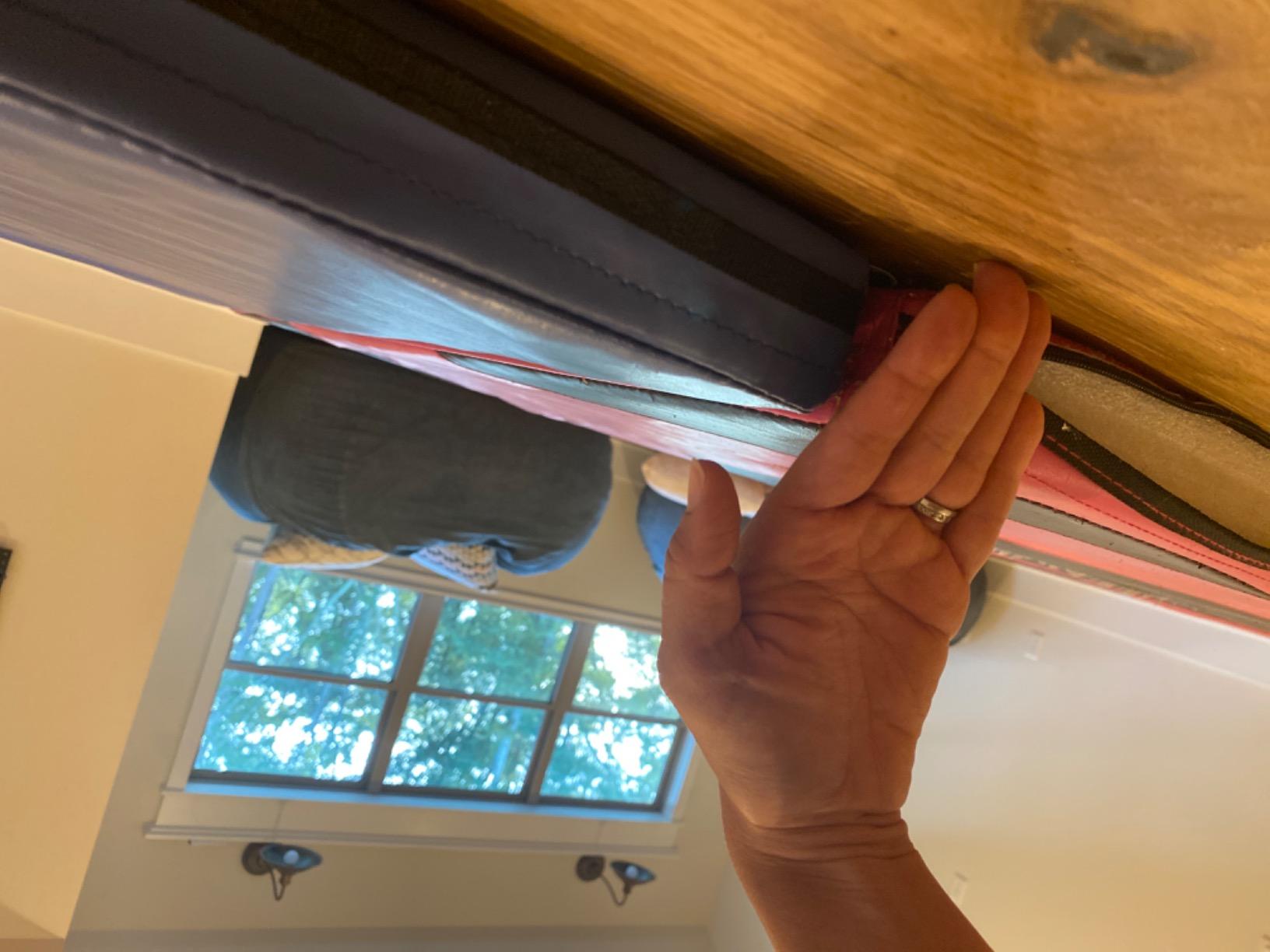
Its 17.6-pound weight and four-panel format are still manageable for a larger home or garage. The trade-off is more folding effort and a larger storage footprint than the 6-foot models.
Who should buy this mat?
Buy it for a dedicated practice space, a tall child, a family that shares workouts, or anyone who wants generous room for rolls and stretches. It is the closest foam alternative here to a small home gym floor.
It is not the best choice for a tiny apartment or a family that needs to store the mat behind a door after every session. Measure both the open dimensions and the storage path.
How long will the folding system last?
Customer feedback reports years of daily use for many mats, but long-term wear can show up first at the Velcro, zippers, and panel seams. Inspect these areas, keep the mat dry, and repair small damage before it spreads.
For very heavy or advanced use, a coach’s equipment advice is worth seeking. A mat can provide cushioning, but it cannot correct poor technique or replace spotting.
How to Choose the Best Kids Gymnastics Mat
Start with the skill and the landing height
For toddlers, stretching, yoga, and floor play, a 1-inch to 1.25-inch mat is often enough. For beginner cartwheels, rolls, and low-height tumbling, I usually recommend 1.5 to 2 inches of foam because the extra cushioning gives a more forgiving practice surface.
Thickness alone does not tell the whole story. Dense foam generally feels more stable, while softer foam can slow balance work; compare density, surface grip, and panel construction together.
Match the mat to the room
Measure the room’s longest clear run, then add space for approach and finish. A 6-foot mat fits many playrooms, while a 10-foot model is better for a garage or dedicated exercise area.
Small rooms favor tri-fold or four-panel mats because they stand upright, slip behind furniture, or fit in a closet. Confirm the folded height and doorway width before choosing a large mat.
Choose a surface your child can control
A textured vinyl or PU cover helps with traction and cleaning. If the floor is hardwood or tile, use an approved non-slip underlay, because reviewers repeatedly identify sliding as a practical problem.
Check that the mat lays flat after folding. Panel gaps can interrupt a roll, so inspect the seam and connector placement before practice.
Compare foam with an air track
Foam mats are quick to unfold, stable for balance work, and generally simpler to maintain. Air tracks provide bounce and can make repeated practice more playful, but they require inflation, pressure checks, puncture awareness, and more setup discipline.
Air-track users should also account for pets and sharp objects. The forum insights specifically flag cat claws as a common puncture concern, so a garage or shared play area may be a better location than a pet-friendly room.
Consider materials, cleaning, and storage
Look for clear material disclosures, especially when a young child will use the mat. The CAP product states that its cover is free from 10 harmful phthalates, lead, and mercury; that is one useful example, not a guarantee for every mat.
Vinyl and PU covers are common because they wipe clean and resist moisture. Wipe with a damp cloth and mild detergent, let the mat dry fully, and store it away from heat, moisture, and sharp objects.
Frequently Asked Questions
How to choose the right gymnastics mat for kids?
Choose by skill level, available space, and the child’s size. Most beginners do well with a 1.5 to 2-inch foam mat, a stable non-slip surface, and enough length for the full movement. Use a smaller foldable mat in a tight room and an air track when bounce is the priority.
What is the best thickness for a gymnastics mat?
A 1-inch to 1.25-inch mat suits stretching, yoga, toddler play, and basic movement. A 1.5-inch to 2-inch mat is a better starting point for beginner tumbling and cartwheels, while advanced skills still need coaching and proper safety equipment.
What is the best play mat for kids?
The best play mat is the one that matches the activity and room. A foldable foam mat is easy to store and clean for general play, while a wider 2-inch model offers more cushioning and room for a child learning tumbling. Look for a wipe-clean cover and a surface that does not slide.
What are the best air mats for gymnastics at home?
The best home air mat is stable when properly inflated, placed on a clear level surface, and inspected before use. A 4-inch PVC air track offers bounce and a long practice path, but families should account for inflation time, puncture risk, pets, and adult supervision.
Final Recommendation
The BalanceFrom 3-Panel Mat is my overall pick for the best kids gymnastics mats in 2026. Its 2-inch foam, non-slip vinyl surface, folding design, and 32k-plus customer reviews make it the strongest all-around choice for a family beginning home practice.
Choose the Antsy Pants for a lighter mat in a small room, the New Bounce for colorful active play, or the CZGBRO when bounce matters most. Measure your space, match the thickness to the skill, add a non-slip underlay, and supervise every new skill.