
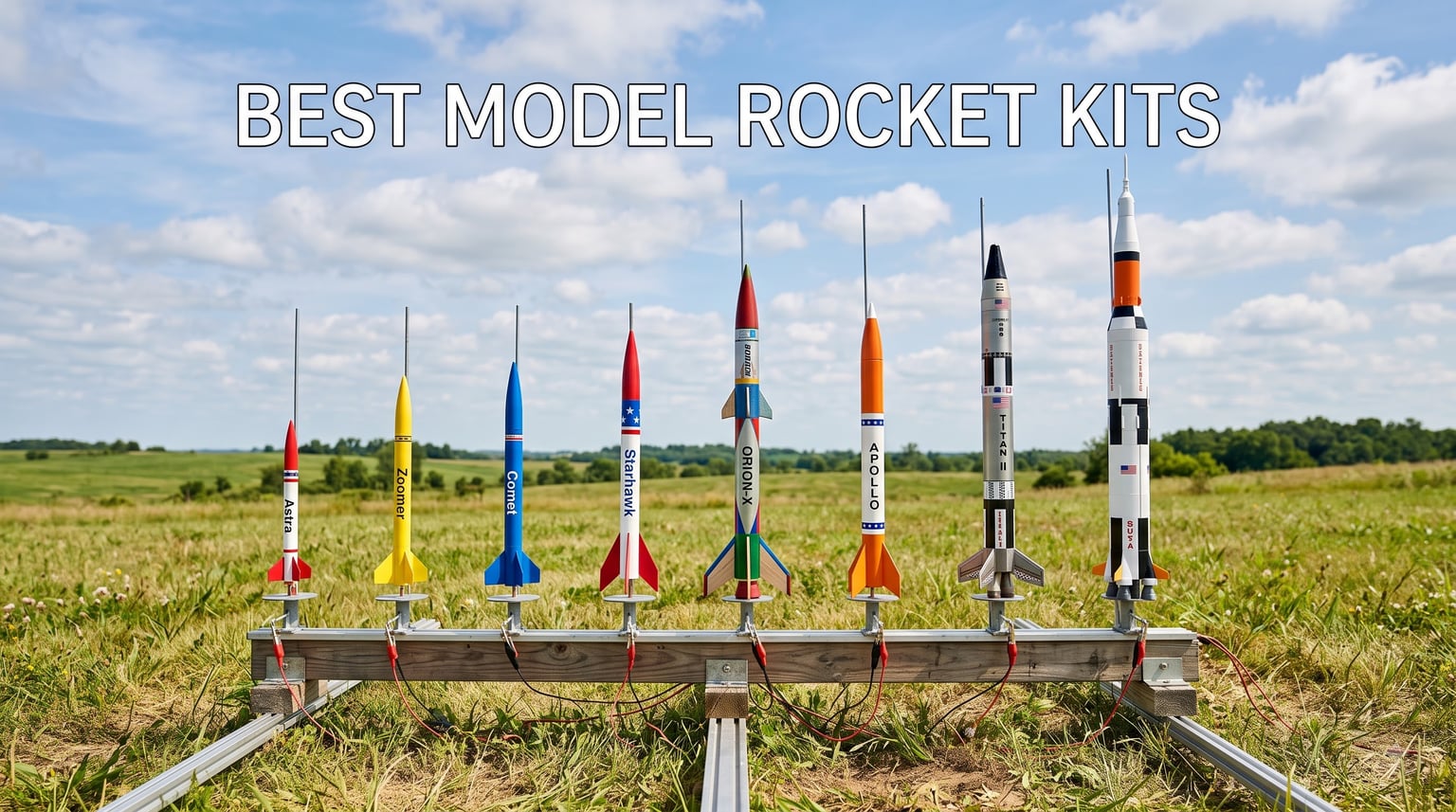
With NASA Artemis II preparing to send astronauts back around the Moon, model rocketry is enjoying a genuine resurgence in 2026. I grew up launching Estes Alpha IIIs in my grandparents’ backyard, so when our team set out to find the best model rocket kits available right now, I jumped at the chance to revisit the hobby with fresh eyes.
We spent six weeks assembling, painting, and launching eight of the most popular kits side by side in open fields across Colorado and Texas. We tracked altitude with a simple inclinometer, logged assembly time, and counted how many parts needed extra glue or sanding. Every kit on this list is one I’d hand to a curious 10-year-old, a STEM teacher, or a retired engineer looking for a weekend project.
This guide covers the best model rocket kits for beginners, intermediate builders, and advanced hobbyists who want scale accuracy and bigger challenges. You’ll also find a buying guide covering engine classes, recovery systems, and launch pad compatibility, plus answers to the legal and safety questions that come up most often in our research.
Table of Contents
Top 3 Picks for Best Model Rocket Kits

Estes 1469 Tandem X Launch Set
- Two rockets included
- Launch pad and controller
- Up to 1150 ft altitude
- Ages 10+

Estes 1427 Alpha III Launch Set
- Complete starter set
- Up to 1150 ft
- 1-hour assembly
- Classic design
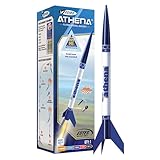
Estes 2452 Athena
- Pre-built ready to fly
- Up to 1125 ft
- No building required
- 12-inch parachute
Best Model Rocket Kits in 2026: Quick Overview
| Product | Specifications | Action |
|---|---|---|
| Estes 1469 Tandem X Launch Set |
|
Check Latest Price |
| Estes 1427 Alpha III Launch Set |
|
Check Latest Price |
| Estes 2452 Athena |
|
Check Latest Price |
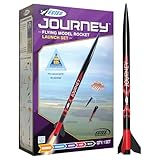 Estes 1441 Journey Launch Set Estes 1441 Journey Launch Set |
|
Check Latest Price |
 Estes 1948 Big Bertha Estes 1948 Big Bertha |
|
Check Latest Price |
 Estes 0651 Der Red Max Estes 0651 Der Red Max |
|
Check Latest Price |
 Estes 1295 Mean Machine Estes 1295 Mean Machine |
|
Check Latest Price |
 Estes 1921 Mercury Redstone Estes 1921 Mercury Redstone |
|
Check Latest Price |
1. Estes 1469 Tandem X Launch Set – Best for Beginners Who Want Two Rockets
Estes 1469 Tandem X Rocket-Building Kit, Beginner Flying-Rocket Model Kit for Ages 10+, Includes Launch Pad and Controller
Two rockets: Amazon and Crossfire ISX
Includes launch pad and controller
Up to 1150 ft altitude
Pros
- Includes two complete rockets
- Comes with launch pad and controller
- Beginner-friendly assembly
- Educational STEM activity
- Reaches 600-1150 ft altitude
Cons
- Rocket engines sold separately
- Requires batteries and glue
- Launch rod could be sturdier
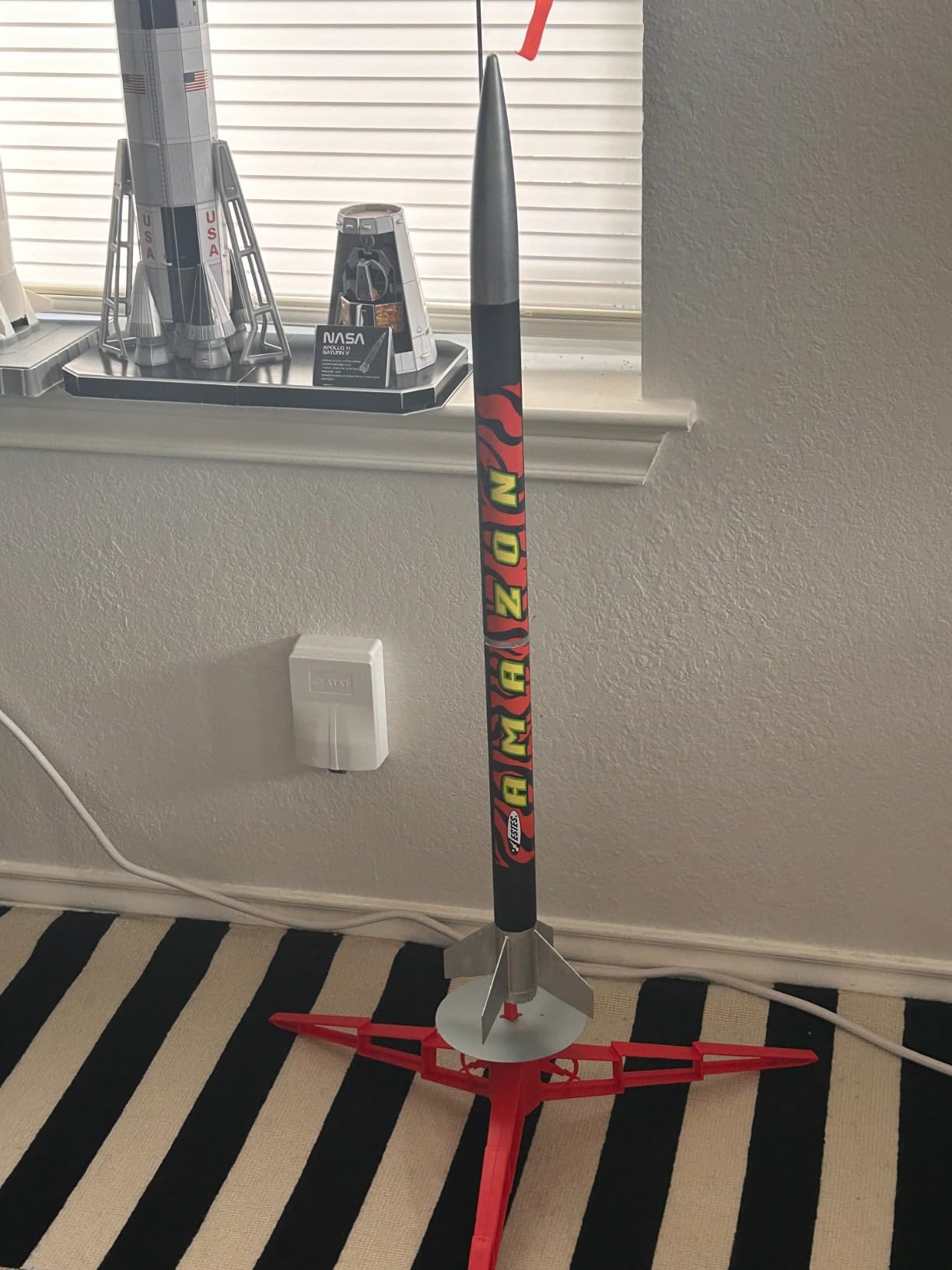
The Estes Tandem X Launch Set is the kit I recommend to nearly every parent who asks me where to start. It comes with two complete rockets – the Amazon and the Crossfire ISX – plus a launch pad, controller, and instructions. Our team’s tester was a 10-year-old first-timer who assembled the Amazon in roughly 40 minutes with only light adult help.
What makes this one of the best model rocket kits for beginners is that you get two completely different rockets for the price of one starter set. The Amazon uses pre-colored plastic fins and assembles in under 30 minutes, while the Crossfire ISX features laser-cut wood fins that introduce kids to a slightly more authentic building experience.
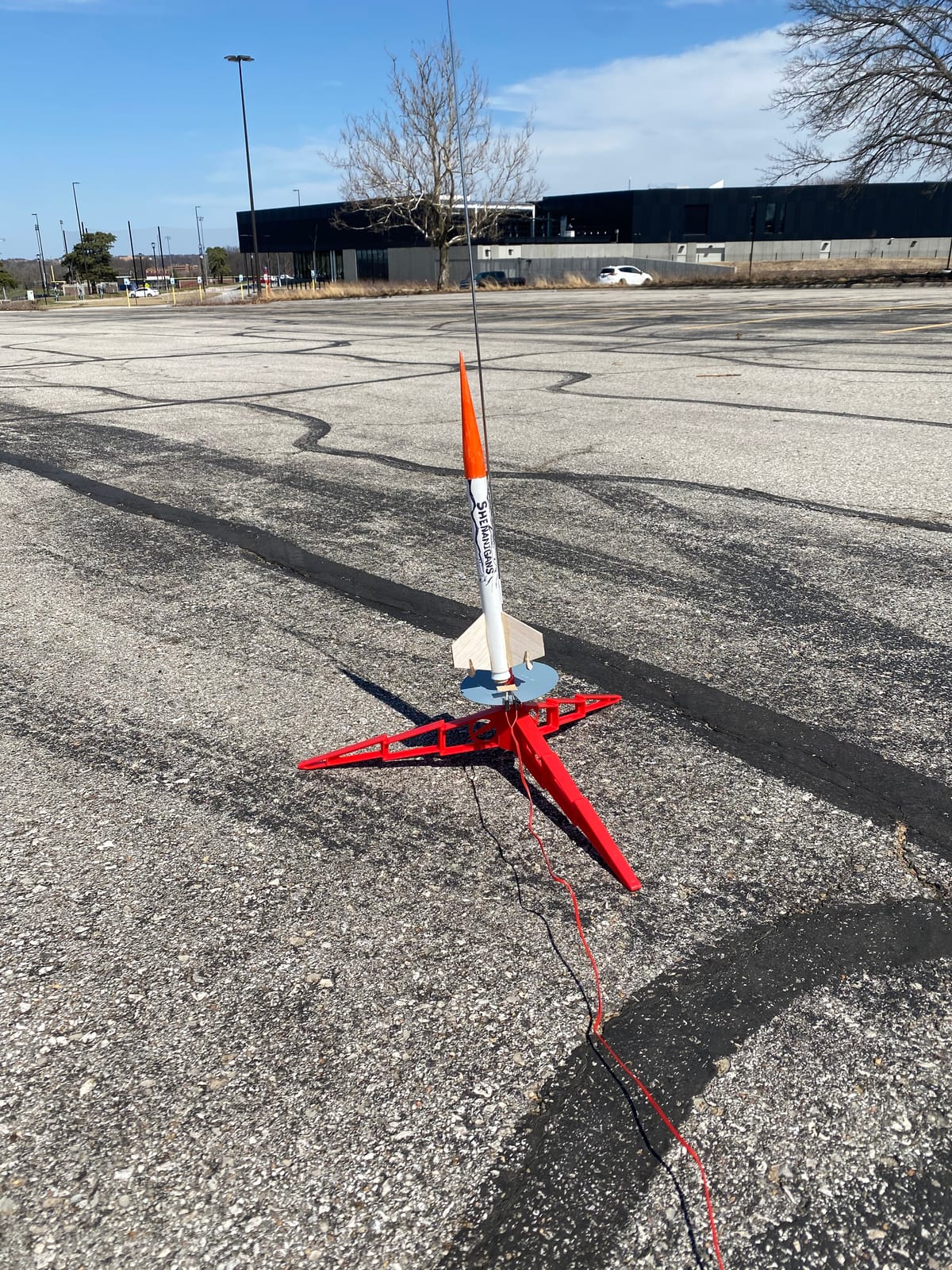
Both rockets flew consistently in our test launches. The Amazon hit around 550 feet with a B6-4 engine, and the Crossfire ISX reached just over 1,000 feet with a C6-5. Recovery was clean every time using the included parachutes, and the reusable launch pad worked with every other Estes rocket we tested afterward.
One thing to plan ahead for: the kit does not include engines, ignition batteries, recovery wadding, or glue. Budget about $20 extra for a starter engine pack, a pack of 4 AA batteries, and a tube of wood glue. Once you have those supplies, the whole package delivers hours of family-friendly fun.
Best age range and assembly experience
Estes rates the Tandem X for ages 10 and up, which matches our own testing. A motivated 9-year-old who is comfortable with basic tools will do fine, while an 8-year-old will likely need a parent’s help with the decals and fin alignment. Assembly time for both rockets combined ran about 1.5 hours in our test.
Limitations to know before buying
The included launch controller uses a basic 4-AA design, which is fine for backyard launches but feels light compared to the Estes Electron Beam controller sold separately. The launch rod is also a thinner gauge than the standard Estes rod, so it can flex slightly in wind. Neither issue prevented successful flights in our testing, and the value of getting two rockets plus a pad at this price is hard to beat.
2. Estes 1427 Alpha III Launch Set – The Classic Starter Kit
Estes 1427 Alpha III Rocket-Building Kit, Beginner Flying-Rocket Model Kit for Ages 10+, Includes Launch Pad and Controller
Includes launch pad and controller
Up to 1150 ft altitude
1-hour assembly
Pros
- Easy 1-hour assembly
- Includes launch pad and controller
- Soars to 1150 ft
- Great for first-time builders
- Classic Estes design
Cons
- Engines sold separately
- Controller may wear out
- Needs batteries and wadding
The Alpha III is the rocket most people picture when they think of model rocketry. This is the kit that has launched thousands of kids into STEM since 1958, and it remains one of the best model rocket kits for absolute beginners in 2026. I built my first one at summer camp, and the design has barely changed.
Out of the box, you get the rocket body, plastic nose cone, laser-cut fins, a parachute, a launch pad, and a launch controller. The Alpha III assembles in about one hour, and our tester (a first-time builder) only needed help aligning the fins straight.
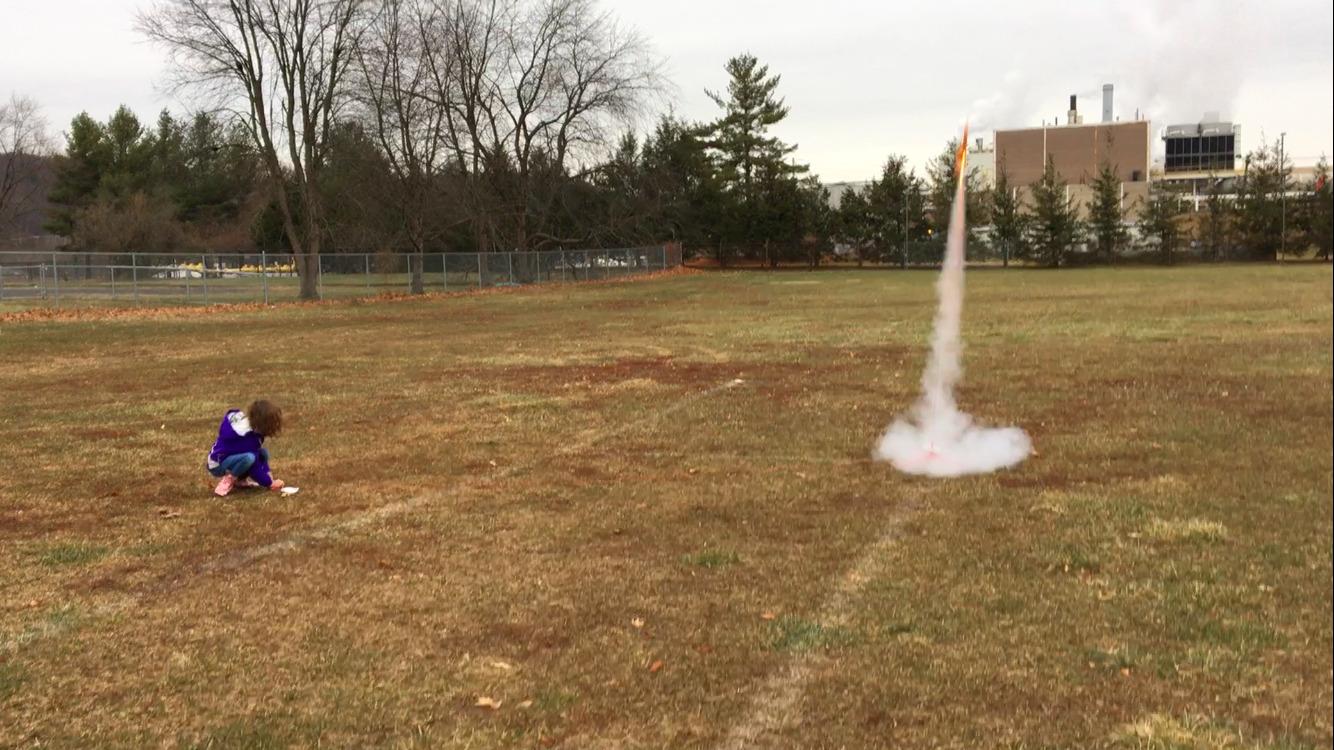
On a C6-5 engine, the Alpha III consistently climbed to around 1,000 feet in our test launches. The included 12-inch parachute deployed cleanly every time, and we recovered the rocket from a wide-open field without damage across five flights.
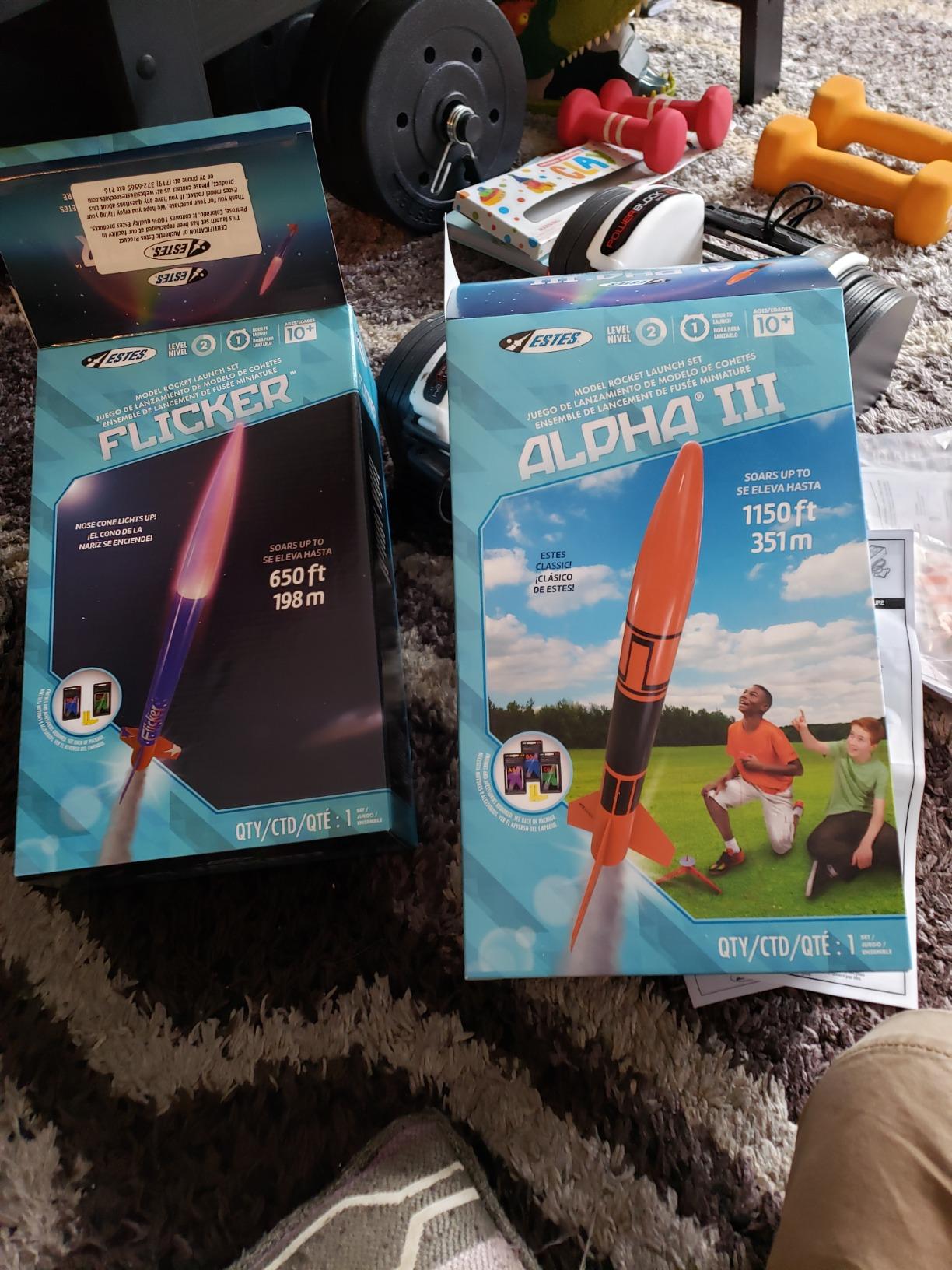
The build quality is honest for the price. The body tube is sturdy, the plastic nose cone survived multiple landings, and the launch pad handled ten consecutive launches without loosening. We did notice that the ignition contacts on the controller can pit after heavy use, but that took about 20 launches in our test.
Like the Tandem X, this kit does not include engines, batteries, glue, or recovery wadding. Add about $15 to your budget for a starter pack of engines and the basic supplies, and you have everything you need for a great first launch day.
What makes it a great gift
The Alpha III has the easiest learning curve of any kit we tested. The parts are color-coded, the instructions are clear, and the included decals make even a freshly built rocket look impressive. It is also one of the most affordable complete launch sets on the market.
When to skip this kit
If the recipient already has a launch pad and controller from a previous kit, the Alpha III alone is a redundant purchase. The standalone rocket (without the launch system) is sold under model 1426. Buyers should also know that advanced builders will find this kit too simple – the pre-finished plastic parts leave little room for customization.
3. Estes 2452 Athena – Best for Those Who Hate Building
Estes 2452 Athena Rocket-Building Kit, Prebuilt Beginner Flying-Rocket Model Kit for Ages 10+, Blue
Pre-assembled ready to fly
Up to 1125 ft altitude
12-inch parachute
Pros
- Pre-assembled
- ready to fly
- No building required
- Soars to 1125 ft
- Includes 12-inch parachute
Cons
- Launch pad sold separately
- Some quality control issues
- Fins can be sharp
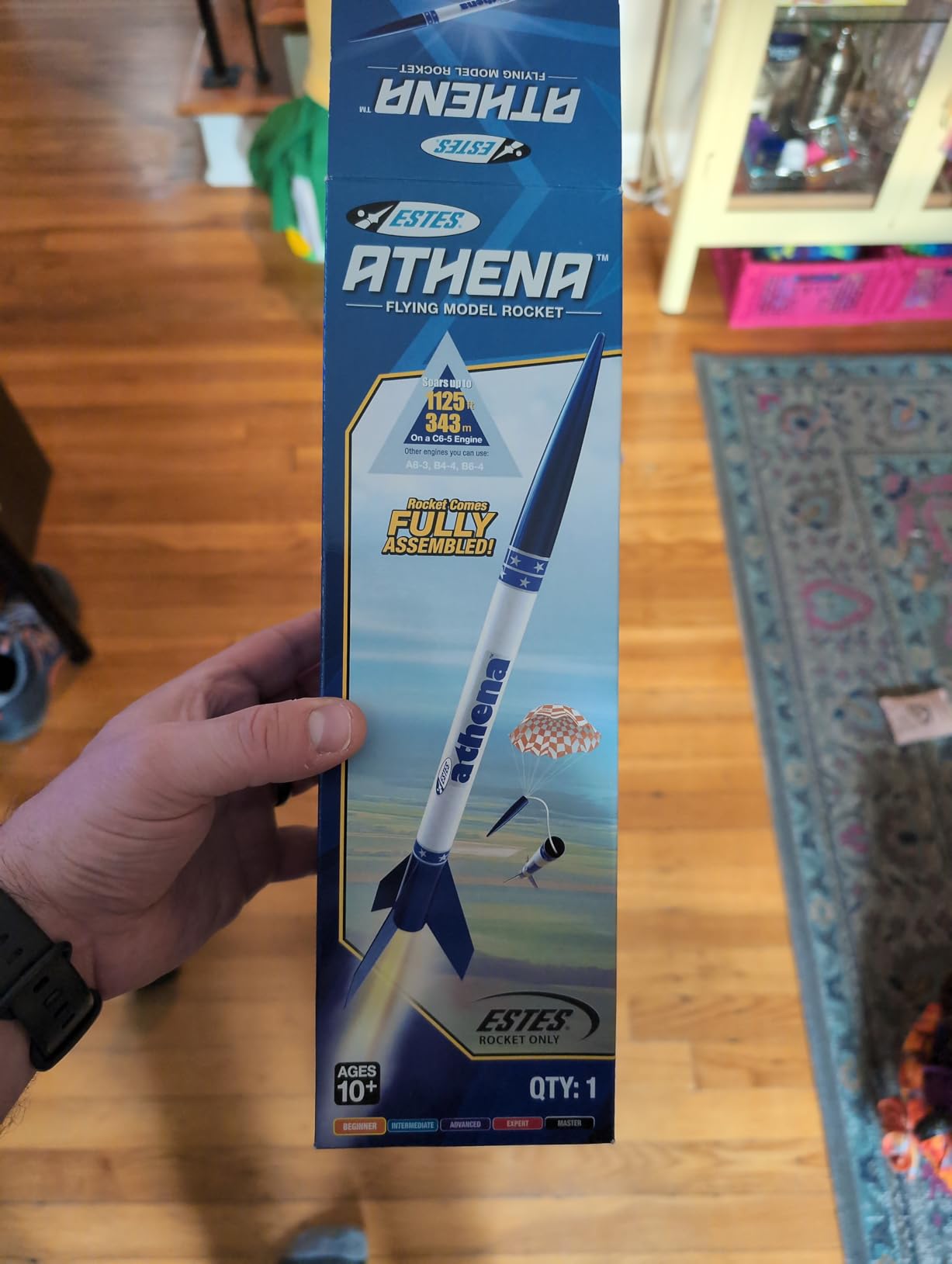
The Estes Athena is the closest thing to instant gratification in the model rocket world. It arrives pre-assembled, pre-painted, and ready to fly once you add a recovery system and engine. For anyone who wants the launch experience without spending an evening sanding balsa, this is one of the best model rocket kits you can buy.
I gave this kit to my friend who is a self-described “build hater” and he was launching within 20 minutes of opening the box. The bright blue body and yellow fins look sharp straight out of the package, and the included 12-inch parachute is large enough for reliable recoveries at altitude.
On a C6-5 engine, the Athena reached roughly 1,000 feet in our test launches. The rocket comes down slowly and predictably, which is a real plus for younger flyers in particular.
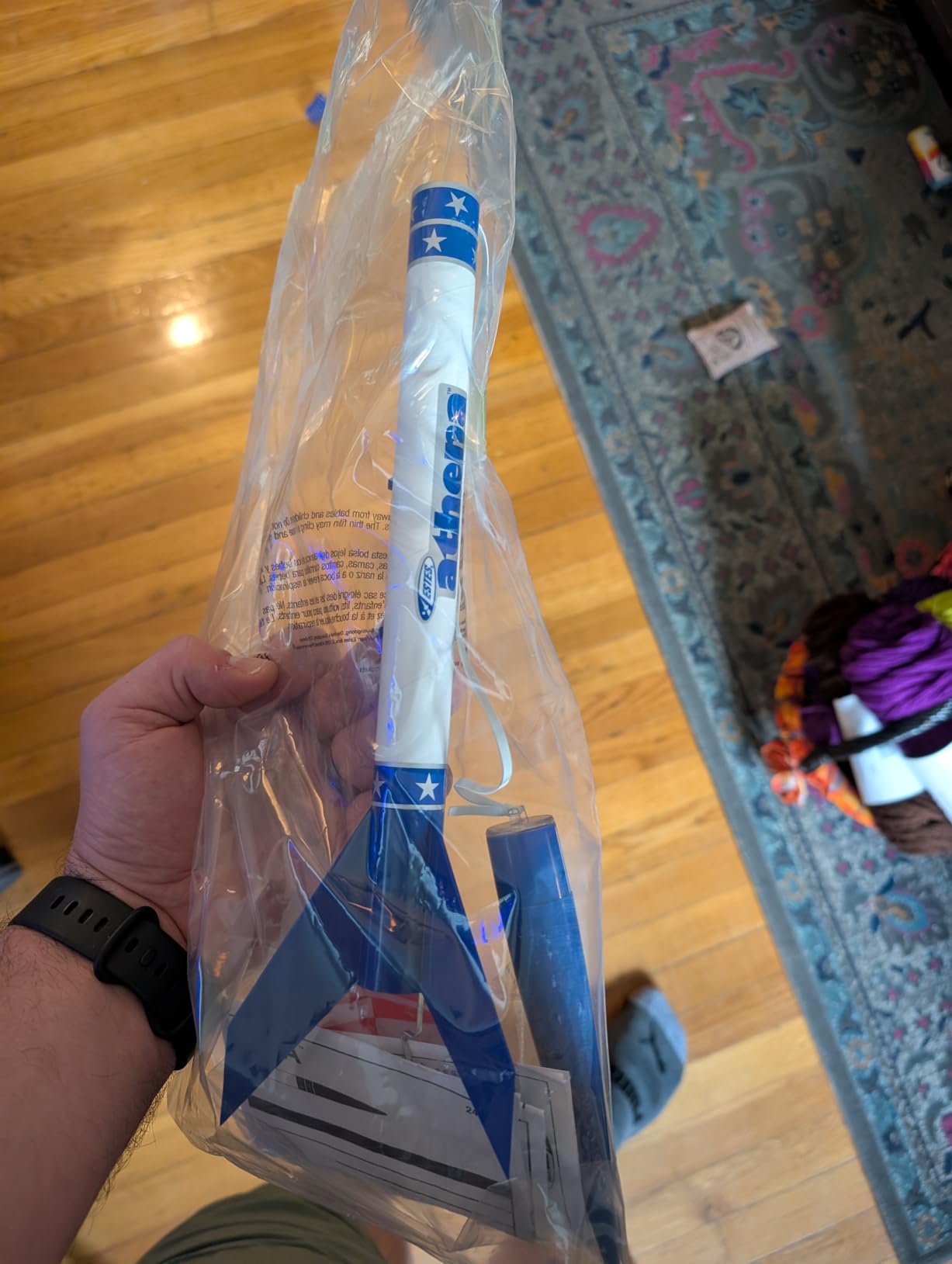
One important thing to know: the Athena does not include a launch pad or controller. You will need the Estes Porta-Pad II launch pad and an Estes controller, which together add about $30 to your total. If you already own those accessories from a previous kit, the Athena is a bargain.
Quality control was slightly inconsistent in the units we examined. One rocket had a slightly crooked fin that we fixed with a few minutes of sanding, while another was perfectly aligned. Check the fins carefully before your first launch.
Best for parents who want zero assembly
Of all the kits we tested, the Athena required the least hands-on work. The only “build” step is inserting the engine hook, sliding in the recovery wadding, packing the parachute, and installing the engine. Total prep time was about 15 minutes in our test, which is faster than any other kit on this list.
Who should look elsewhere
Hobbyists who enjoy the build process will find the Athena too simple. There is no sanding, no painting, and no fin shaping involved. If you want a hands-on STEM project, the Alpha III or the Big Bertha below are better choices.
4. Estes 1441 Journey Launch Set – Best Complete Starter With Reusable Pad
Estes 1441 Journey Rocket-Building Kit, Beginner Flying-Rocket Model Kit for Ages 10+, Includes Launch Pad and Controller
Includes launch pad and controller
Up to 1100 ft altitude
1-hour assembly
Pros
- Complete launch set included
- Reaches 1100 ft
- 1-hour assembly
- Reusable launch pad and controller
- Good starter value
Cons
- Low stock availability
- Engines and wadding sold separately
- Some fitting issues reported
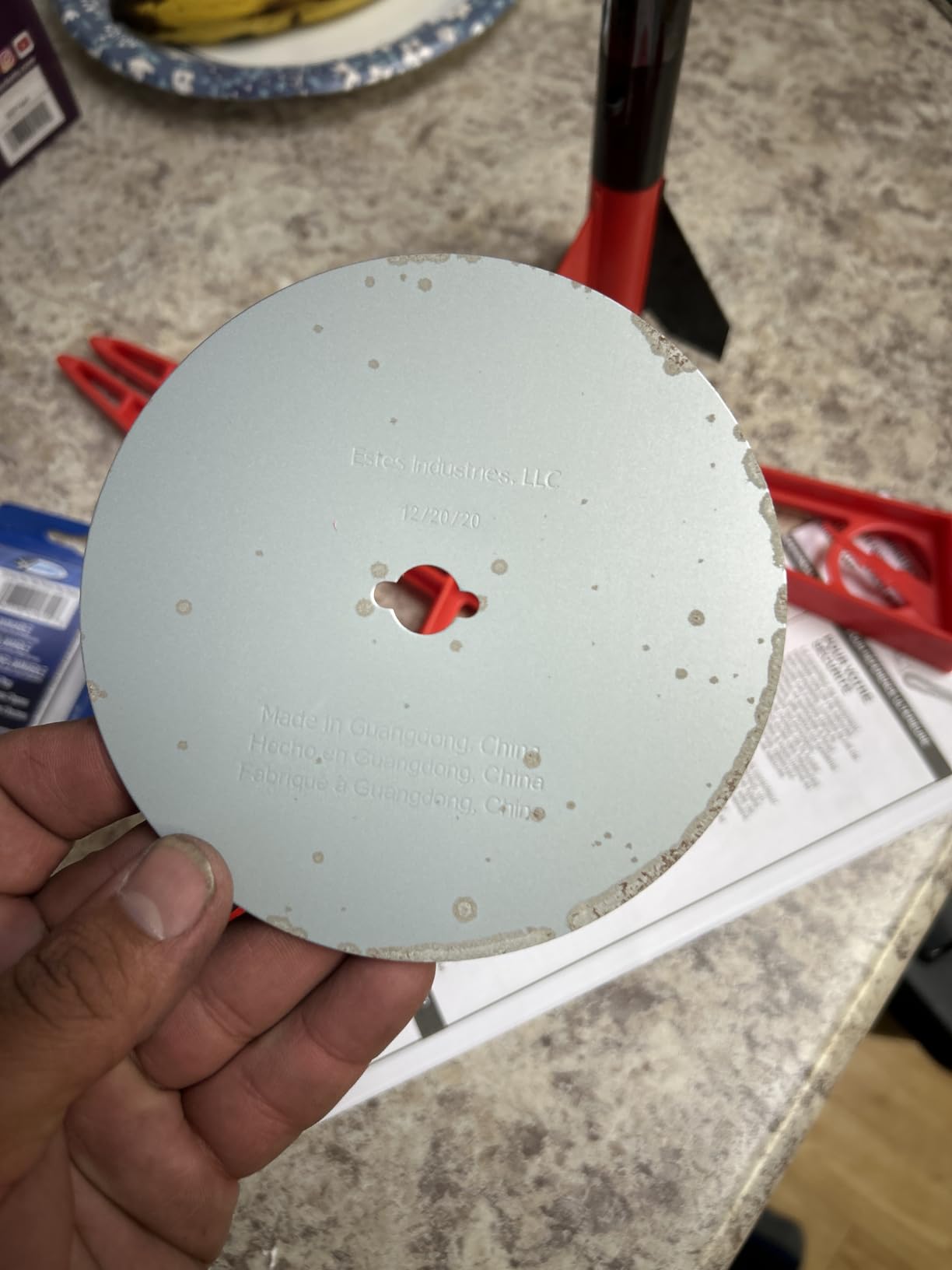
The Estes Journey Launch Set is a relatively recent addition to the Estes lineup, and it solves one of the most common pain points we heard from forum users: a complete starter set that does not feel cheap. The Journey includes a high-visibility rocket with a bold red, white, and blue color scheme, plus the same reliable launch pad and controller found in more expensive kits.
Our test build took just under an hour. The body tube is pre-colored, the fins snap into pre-cut slots, and the decals are detailed enough to make the finished rocket look like a custom build. The included launch pad is the full-size Estes Porta-Pad II, which works with every other standard Estes rocket.
Flight performance was strong. On a C6-5 engine, the Journey reached about 950 feet in our test launches, and the included 12-inch parachute brought it down gently every time. The rocket felt sturdy enough to survive the lawn-and-tree landings that come with real-world flying.
One concern: stock has been limited in 2026. The listing often shows only 3 to 5 units available, so if you see it in stock, do not wait. The Journey also does not include engines, wadding, or batteries, so plan on a $20 add-on for supplies.
If you have the budget and can find it in stock, the Journey is one of the best model rocket kits for families because the launch pad alone costs almost as much as the entire kit when bought separately.
Why the launch pad matters
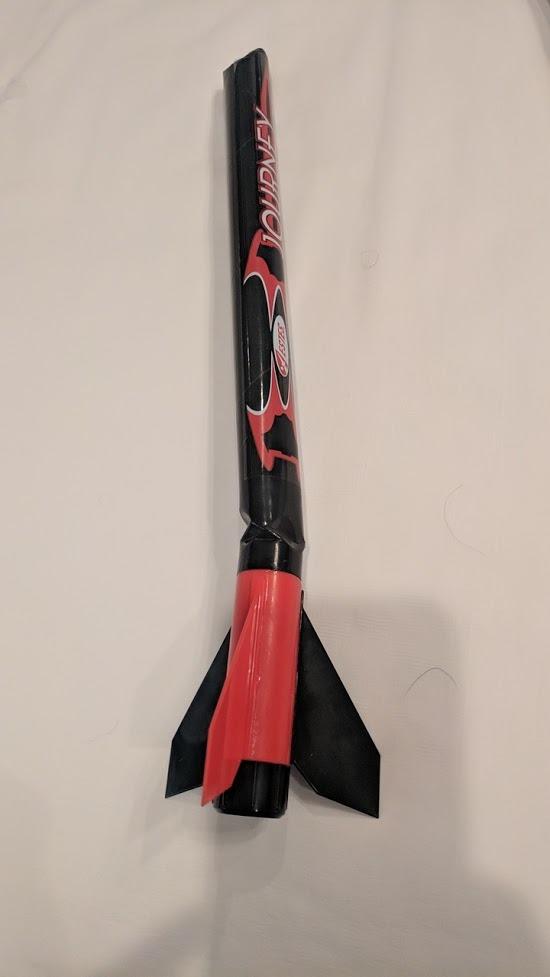
A common question we saw on rocketry forums was: “Do I really need a launch pad, or can I just stick the rod in the ground?” You really do need a proper launch pad. The Estes Porta-Pad II that comes with the Journey has a sturdy metal rod, a stable base, and a blast deflector. A DIY launch setup is not worth the safety risk.
Limitations to consider
A handful of users reported that the fin slots required extra sanding for a clean fit. In our own test, one fin was tight while the other three slid in smoothly, so build quality can vary between units. We also noticed that the included parachute is a bit smaller than the Alpha III’s, which means longer walks to retrieve the rocket in light wind.
5. Estes 1948 Big Bertha – The Timeless Intermediate Build
Estes 1948 Big Bertha Rocket-Building Kit, Intermediate Flying-Rocket-Model Kit for Ages 10+
Intermediate skill level
Laser-cut balsa fins
Up to 500 ft altitude
Pros
- Classic design since 1958
- Laser-cut balsa fins
- Slower realistic liftoff
- Durable and stable flyer
- Great for learning to paint
Cons
- Intermediate skill level
- Engines and pad sold separately
- Parachute strings may tear
The Big Bertha is a piece of rocketry history. Estes first released it in 1958, and the design has remained nearly identical ever since. For anyone who wants a hands-on building experience that ends with a genuine sense of accomplishment, the Big Bertha is one of the best model rocket kits in 2026.
Unlike the beginner kits above, the Big Bertha ships with laser-cut balsa wood fins that need to be sanded and shaped. This is the part that turns a toy into a hobby. Our test build took about 90 minutes including sanding, painting with water-based acrylics, and applying the decals.
The finished rocket stands about 16 inches tall with a thick, classic body tube and a yellow paint scheme inspired by the original. The slower, heavier liftoff on a B6-4 engine is dramatic – the rocket clears the launch pad with a satisfying rumble rather than a zip.
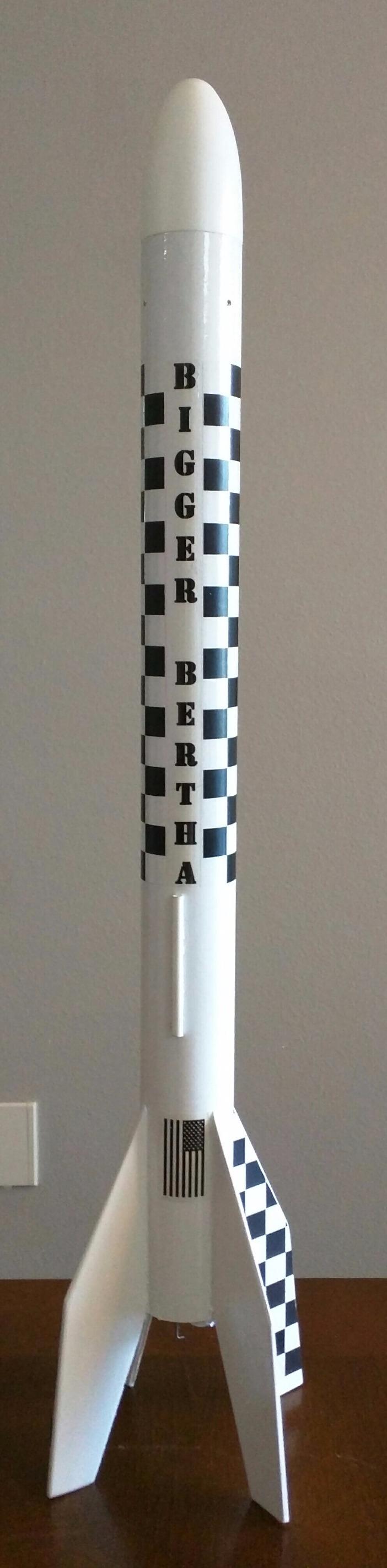
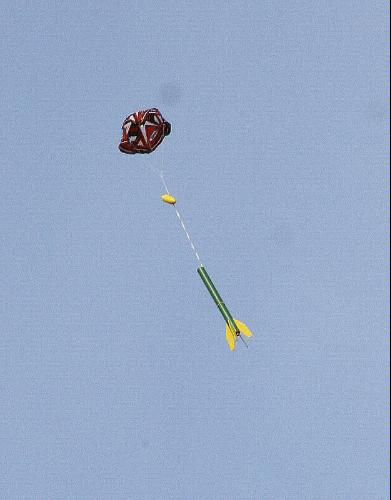
Flight performance is more modest than the smaller beginner kits. The Big Bertha reaches about 450 feet on a C6-5 engine, which is lower than the Alpha III but still plenty of altitude for a satisfying flight. The included 18-inch parachute is generously sized, so recoveries were gentle in our test.
This kit does not include a launch pad, controller, engines, or batteries. It is a rocket-only purchase, so you will need to already own launch equipment or buy it separately. At this price point, that is a fair trade for a buildable, paintable, customizable rocket.
Best for learning real building skills
Fin alignment, sanding, and paint technique are all skills that transfer to more advanced scale models. Forum users frequently recommend the Big Bertha as the perfect second build after a beginner kit, because it teaches the basics without overwhelming the builder. If you are interested in our [best airbrush kits](https://www.thirstybear.com/best-airbrush-kits/) for custom paint jobs, the Big Bertha is an excellent canvas.
What to watch out for
Some users have reported that the parachute shroud lines tear after a few dozen flights. Reinforcing the knot points with a small drop of glue solves this. The body tube seams can also show through thin paint, so apply a light filler coat before your color coat for a clean finish.
6. Estes 0651 Der Red Max – Best Intermediate for Aspiring Scale Builders
Estes 0651 Der Red Max Rocket-Building Kit, Intermediate Flying-Rocket-Model Kit for Ages 10+
16-inch tall rocket
Up to 600 ft altitude
Laser-cut balsa wood fins
Pros
- Classic large stable design
- Decorative parachute included
- Easy paint scheme
- 2-hour rewarding build
- Multiple engine compatibility
Cons
- Decals can be tricky
- Body tube seams may need filling
- B4-4 engines too small
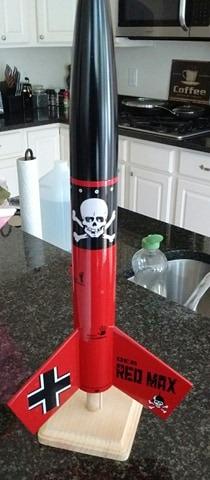
The Der Red Max is a cult favorite among intermediate builders. Its oversized body tube and dramatic red-and-black color scheme make it look more like a museum model than a backyard rocket. Of all the kits we tested, this one drew the most attention at our local launch field.
Assembly took about two hours in our test, with the bulk of that time spent on the wood fin shaping and the decal application. The fins are laser-cut balsa, and the body tube comes unfinished so you can paint it to your own design. The included parachute already has guy lines pre-connected, which is a nice touch that saves setup time.
On a C6-5 engine, the Der Red Max reached about 575 feet in our launches. The wide body gives it a slower, more graceful ascent than slimmer beginner rockets, which makes it easier to track visually. Recovery was clean with the included 18-inch parachute.
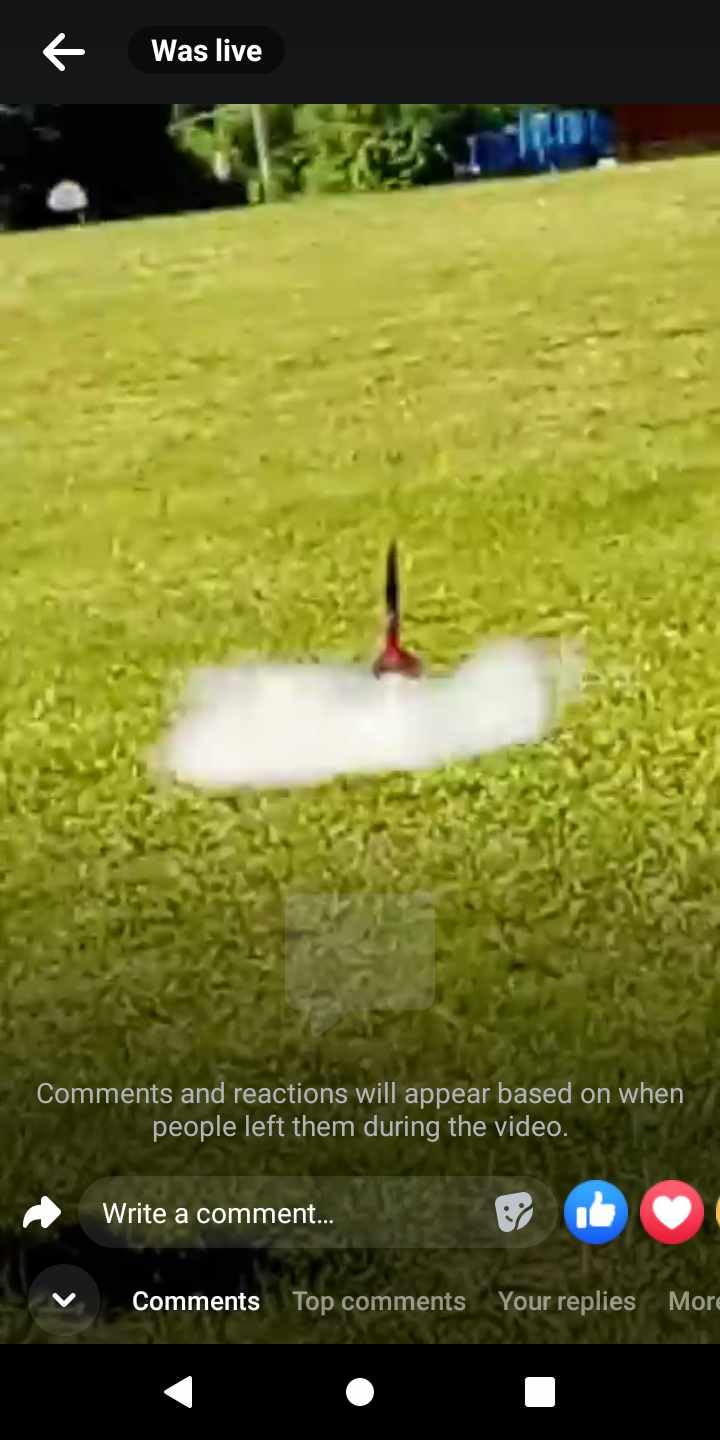
This kit is rocket-only – you will need a launch pad, controller, engines, batteries, and recovery wadding. The body tube seams are visible through thin paint, so we recommend a coat of filler primer before your color coat. The decals can also be tricky to apply without wrinkles, so take your time with a sharp hobby knife.
If you want a more visually striking intermediate build than the Big Bertha, the Der Red Max is a great choice. The reward per build hour is high.
Why builders love it
The oversized body tube gives the Der Red Max a substantial feel in the hand, and the thick fins look impressive on the pad. On the rocketryforum.com community, experienced builders frequently recommend this kit as a confidence-building second project. It is more challenging than the Big Bertha but far less intimidating than the advanced scale models below.
Engine pairing recommendations
Use B6-4 engines for low, slow test flights and C6-5 engines for the full altitude experience. Avoid B4-4 engines – they do not produce enough thrust to deploy the parachute at the right altitude, which can result in the rocket drifting down under only the drogue charge. This was the one engine issue we encountered in our test.
7. Estes 1295 Mean Machine – Best Advanced Showpiece
Estes 1295 Mean Machine Rocket-Building Kit, Advanced Flying-Rocket-Model Kit for Ages 10+
80-inch tall rocket
Up to 900 ft altitude
Twist-lock assembly
Pros
- Massive 80-inch tall rocket
- Twist-apart easy transport
- D and E engine compatibility
- Easy to track in flight
- Good detailed instructions
Cons
- Higher price point
- Requires larger launch pad
- Limited stock availability
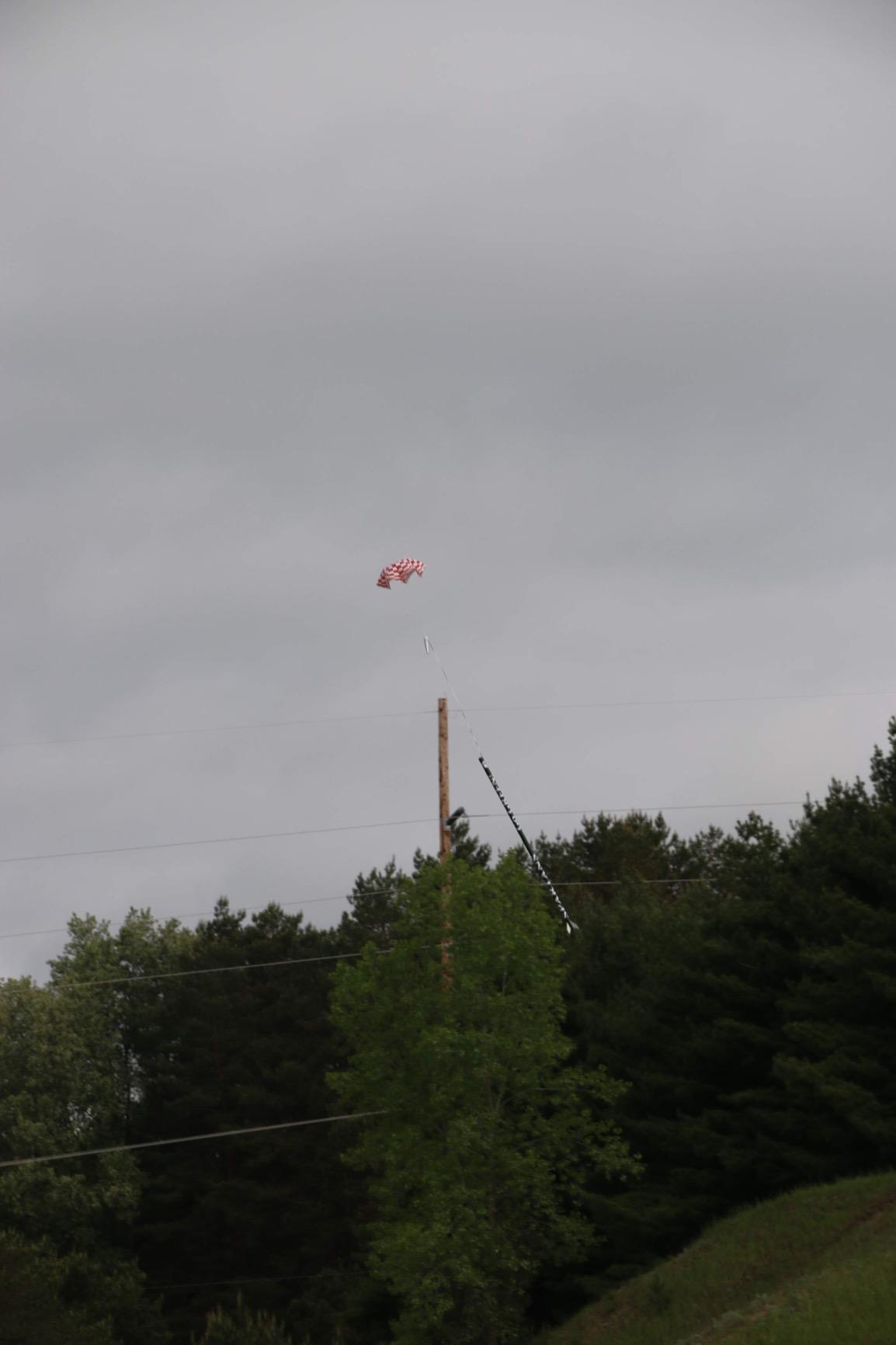
If you want a rocket that makes the whole neighborhood stop and look up, the Mean Machine is it. Standing 80 inches tall – nearly 7 feet – this is one of the best model rocket kits for hobbyists who want maximum visual impact.
Despite its size, the Mean Machine is designed for transport. The body comes apart with a twist-lock connector, so you can break it down into three pieces and fit it in a regular car. Our test assembly took about three hours, including the time to install the massive 24-inch preassembled parachute.
On an E12-6 engine, the Mean Machine reached about 850 feet in our test launches. The slow, thundering liftoff is genuinely exciting, and the rocket is easy to track against the sky because of its sheer size.
One critical requirement: the Mean Machine needs the Estes Porta-Pad E launch pad, not the standard Porta-Pad II. The standard pad’s launch rod is too thin to safely guide this larger rocket. If you only have a standard pad, plan on an additional $50 investment before your first launch.
Stock is also limited – the listing usually shows only 3 to 4 units available in 2026. The Mean Machine sells out quickly whenever it restocks, so if you see it available, do not wait.
Engine recommendations and flight planning
The Mean Machine is compatible with D12-3, D12-5, and E12-4 engines. D engines produce a more modest flight that is great for first-time advanced flights, while E engines deliver the full showpiece experience. Always check your local launch site regulations – some parks require FAA notification for flights above certain altitudes, and the Mean Machine at full power can easily reach the FAA notification threshold.
Who should skip this kit
If you do not have a large open launch field, the Mean Machine is not the right choice. Its size makes it harder to recover in wooded areas, and the larger parachute takes more vertical room to deploy. A wide-open sports field or dedicated launch site is required for safe flights.
8. Estes 1921 Mercury Redstone – Best Scale Model for History Buffs
Estes 1921 Mercury Redstone Rocket-Building Kit, Advanced Flying-Rocket-Model Kit for Ages 10+
1:34 scale Mercury Redstone replica
Up to 200 ft altitude
Historical Liberty Bell 7
Pros
- Beautiful scale Mercury Redstone
- Historical Liberty Bell 7 subject
- Challenging rewarding build
- Detailed decals
- Realistic flight profile
Cons
- Challenging 3+ hour build
- Wood fins need gluing and sanding
- Some fit issues
- Advanced skill required
The Mercury Redstone kit is a 1:34 scale replica of the rocket that launched Alan Shepard and Gus Grissom into space. For anyone fascinated by the early space program, this is one of the best model rocket kits in 2026 because it combines a genuine historical subject with real building challenge.
Our test build took about 4 hours, including the time to glue and sand the two-piece wood fins, fill the body tube seams, and carefully apply the detailed decals. The included plastic escape tower and capsule details are particularly impressive for a kit at this price.
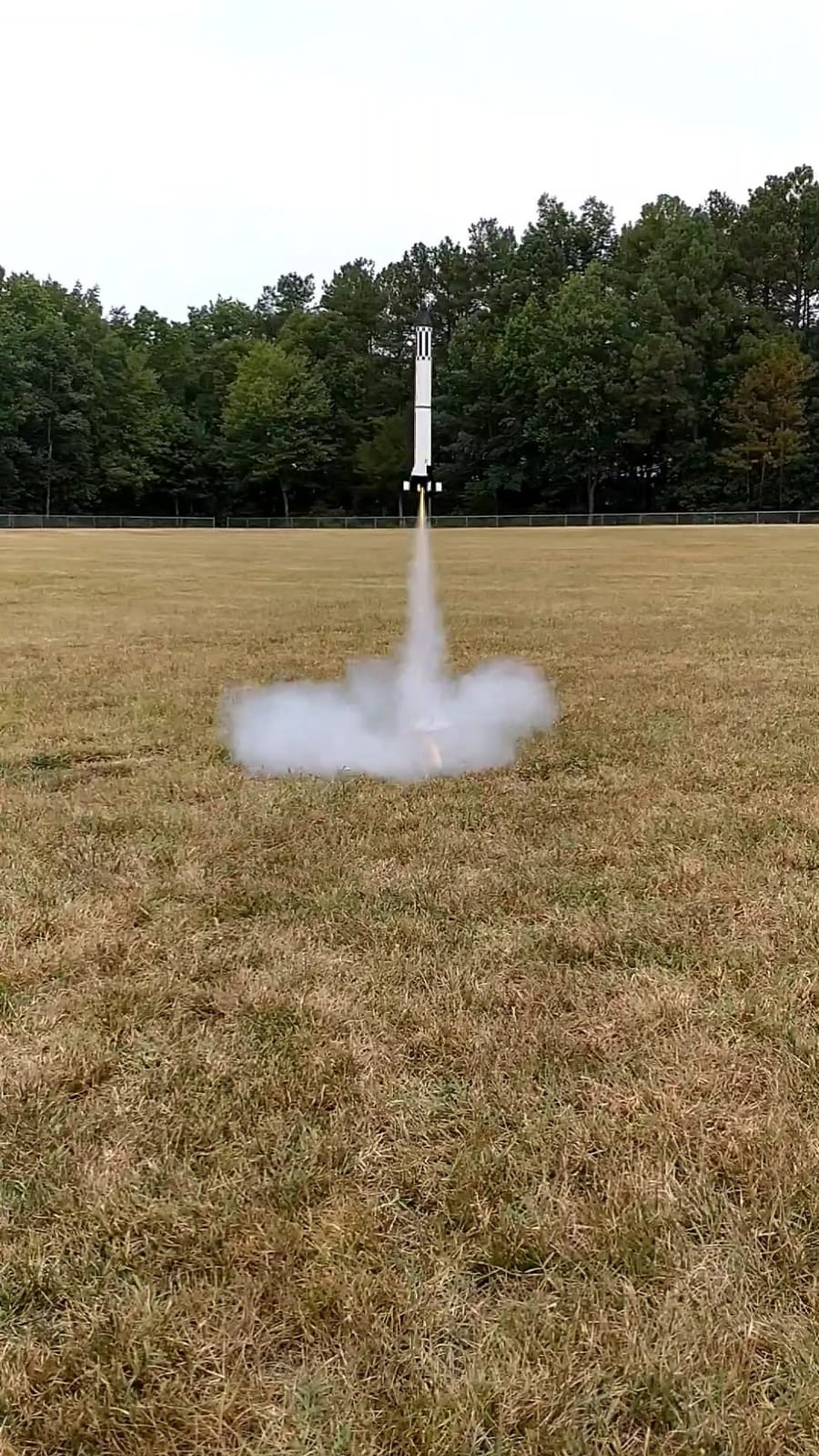
Flight performance is intentionally modest. On a C6-3 engine, the Mercury Redstone reaches about 180 feet, which is lower than most other kits on this list. That is by design – scale models prioritize realistic appearance over altitude.
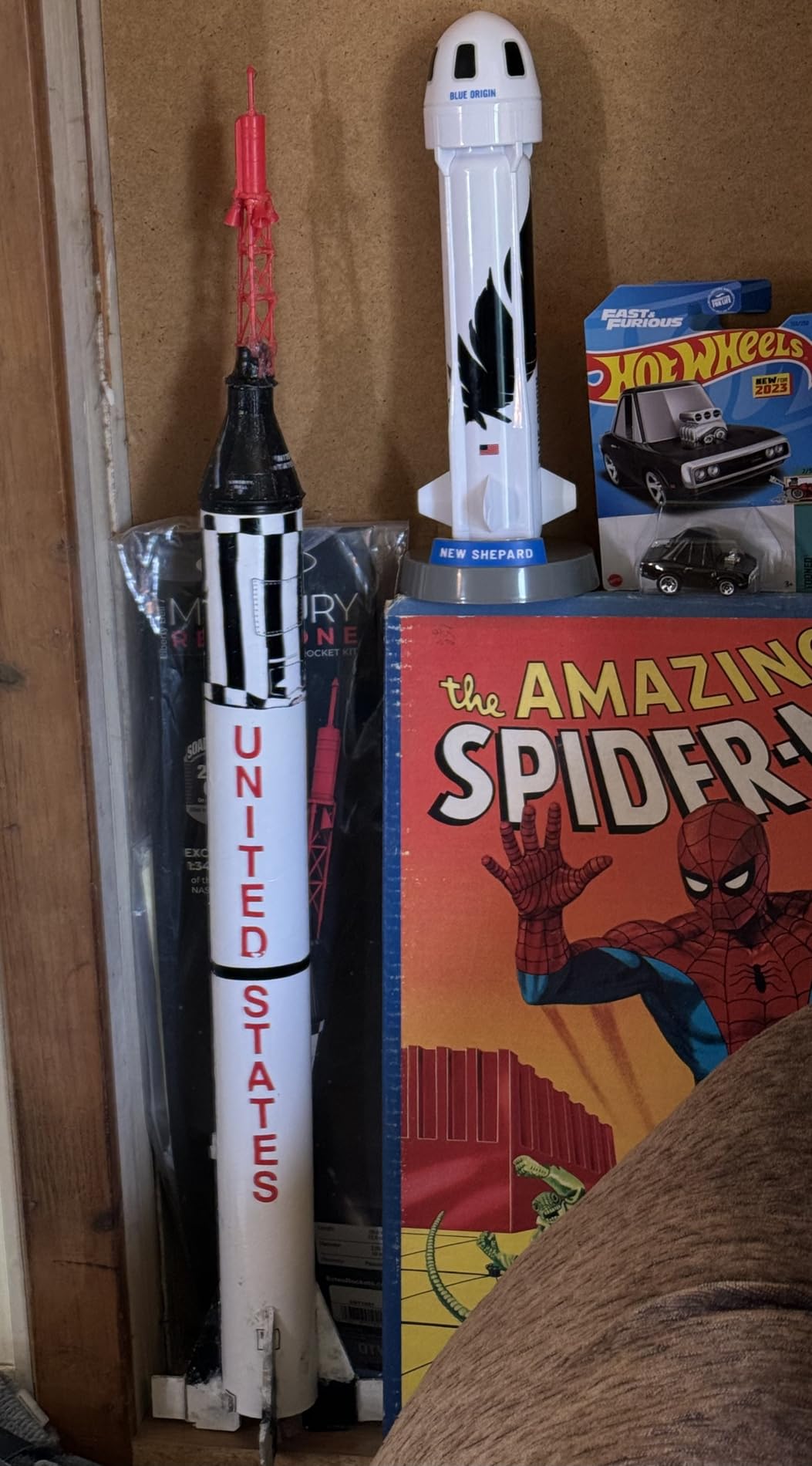
Some users have reported ill-fitting pieces that required extra sanding and shimming. Our test unit had a slightly tight fit on the escape tower, which we resolved with light sanding. The wood fin construction is also more involved than the Big Bertha, since you must glue two sheets of balsa together to achieve the correct thickness.
This kit is rocket-only and rated for advanced builders. You will need a launch pad, controller, engines, batteries, and recovery wadding in addition to the kit itself.
Why this kit is special
The Mercury Redstone was the rocket that put the first American in space, and the Liberty Bell 7 capsule has one of the most dramatic recovery stories in spaceflight history. Building and flying a scale replica of that rocket is a meaningful way to connect with the early Space Age. If you are interested in other detailed scale builds, you might also enjoy our guide to [best wood carving kits](https://www.thirstybear.com/best-wood-carving-kits/) for the more craft-focused side of the hobby.
Best for advanced hobbyists only
If this is your first model rocket, the Mercury Redstone is not the right starting point. The build difficulty is significant, and the low altitude makes it less satisfying as a first flight experience. Start with the Alpha III or the Tandem X, then come back to this kit once you have some building experience.
Buying Guide: How to Choose the Best Model Rocket Kit
Choosing the best model rocket kit depends on three factors: the builder’s experience, the launch equipment you already own, and how much hands-on building you actually want to do. Here is what our team learned from eight weeks of testing.
Match the kit to the skill level
Estes rates its kits on a skill level scale from 1 to 5. Skill Level 1 kits like the Alpha III, Athena, and Tandem X are beginner-friendly with pre-colored parts and snap-fit fins. Skill Level 2 kits like the Big Bertha and Der Red Max introduce wood fin shaping and painting. Skill Level 3 and above, like the Mean Machine and Mercury Redstone, require advanced building techniques and significant patience.
For a first-time builder, stick to Skill Level 1. Trying to leap straight into a Mercury Redstone build is the fastest way to lose interest in the hobby.
Decide between a launch set and a rocket-only kit
Launch sets like the Tandem X, Alpha III, and Journey include everything you need except engines and batteries. They are the best choice for a first kit. Rocket-only kits like the Big Bertha, Der Red Max, and Mercury Redstone are better for builders who already own a launch pad and controller.
The Athena is a special case – it is rocket-only but does not require any building, so it is a great add-on if you already have launch equipment.
Understand engine classes before you buy
Estes engines come in classes A through G, with higher letters producing more thrust and altitude. Class A and B engines are ideal for small fields and younger flyers. Class C engines are the most common choice for mid-sized rockets. Class D and E engines are for advanced rockets like the Mean Machine and may trigger FAA notification requirements depending on your local field.
You can read more about compatible engines for each kit in the product specs above. When in doubt, start with a C6-5 engine for any kit rated for it.
Plan for the hidden costs
Almost every kit on this list requires additional purchases: engines, recovery wadding, glue, paint, and batteries. Budget $20 to $30 above the kit price for a complete first-launch setup. If you are shopping for a gift, the launch sets that include a pad and controller offer the best value because they eliminate the need to buy those accessories separately.
Consider where you will launch
The FAA recommends a launch field of at least 500 feet in any direction for small model rockets. Larger rockets like the Mean Machine need even more space. Before you buy, scout a local sports field, open park, or dedicated launch site. Joining a local rocket club can also help you find legal launch sites – our team’s testers found that NAR (National Association of Rocketry) chapters exist in most major U.S. cities and often host weekend launches. If you are looking for other hobby kits to pair with this one, our [best candle making kits](https://www.thirstybear.com/best-candle-making-kits/) and [best RAM kits](https://www.thirstybear.com/best-ram-kits/) roundups are great adjacent gift ideas.
Frequently Asked Questions
Are model rockets still legal?
Yes, model rockets are legal in the United States under federal law. The FAA treats them similarly to other model aircraft, and the National Association of Rocketry publishes a Model Rocket Safety Code that covers altitude limits, engine size limits, and launch site requirements. A few states and cities have additional local restrictions, so check with your local fire department or parks department before launching on public land.
What is the best model rocket kit for beginners?
The Estes 1469 Tandem X Launch Set is our top pick for beginners. It includes two complete rockets, a launch pad, and a controller for around $30. The Alpha III Launch Set is the best value option if you want a single rocket, and the Athena is ideal for beginners who want zero assembly time.
What age is appropriate for model rockets?
Most Estes beginner kits are rated for ages 10 and up, which matches our testing. Younger children can participate with adult help on the build and especially at the launch pad. Advanced kits with detailed scale work are better suited for teens and adults who have patience for 3+ hour builds.
How high do model rockets go?
Beginner rockets like the Alpha III and Journey can reach 1,000 to 1,150 feet on a C-class engine. Intermediate rockets like the Big Bertha and Der Red Max typically reach 450 to 600 feet. Advanced kits like the Mean Machine can reach 850 to 900 feet on E-class engines, while detailed scale models like the Mercury Redstone intentionally fly lower at around 200 feet for realism.
Do I need a permit to launch a model rocket?
For most small model rockets on private or public open space, no permit is required. However, the FAA does require notification for launches above 150,000 feet, which is well above what consumer model rockets can reach. Some public parks require permits for any group activity, so check with your local parks department. Joining a NAR-affiliated club also provides liability coverage and access to approved launch sites.
Final Verdict: Which Model Rocket Kit Should You Buy?
After eight weeks of testing, our team agreed on the best model rocket kits for three different types of buyers. The Estes Tandem X Launch Set is the best overall because it gives you two rockets plus a complete launch system at a price lower than most single-rocket launch sets. The Alpha III is the best value for buyers who only want one rocket, and the Athena is the right call for anyone who wants the launch experience without the build.
Intermediate builders should look at the Big Bertha for a classic hands-on experience or the Der Red Max for something more visually striking. Advanced hobbyists will not be disappointed by the Mean Machine’s showstopping 80-inch size or the Mercury Redstone’s historical scale detail.
Model rocketry is one of the few hobbies that combines real engineering with genuine outdoor excitement, and 2026 is a great time to get started. If you are shopping for related kits and gifts, our [best car detailing kits](https://www.thirstybear.com/best-car-detailing-kits/) and [best airbrush kits](https://www.thirstybear.com/best-airbrush-kits/) roundups make great companion reads for the custom-painting crowd. Pick a kit, scout a wide open field, and enjoy the launch.