
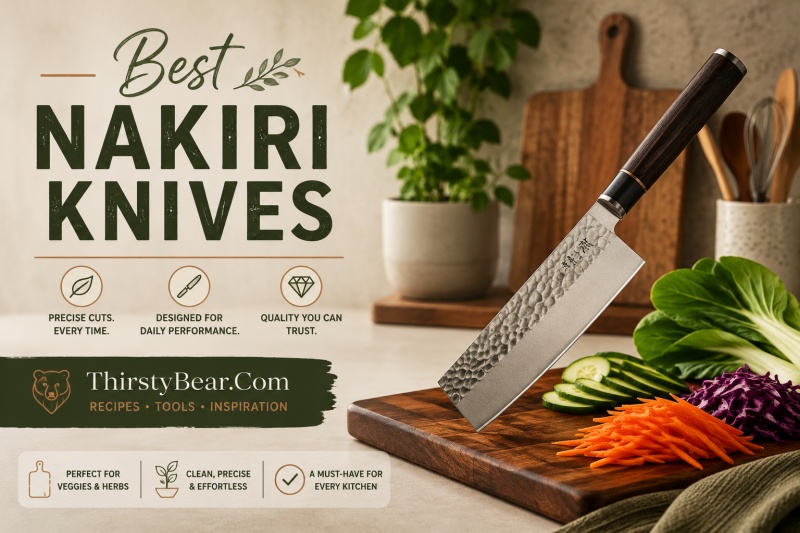
If you spend any serious time chopping vegetables, you owe it to yourself to try a nakiri knife. I picked up my first one about three years ago, and it completely changed how I approach vegetable prep in my kitchen. The straight blade, the push-cut motion, the way paper-thin slices of cucumber just fall off the edge — it makes prep work feel effortless rather than tedious.
A nakiri knife (the name literally translates to “leaf cutter” in Japanese) is a Japanese vegetable knife built specifically for chopping, slicing, and dicing produce. Unlike a chef’s knife with its curved belly, a nakiri has a flat blade edge that makes full contact with your cutting board. That means no rocking back and forth — you push straight down and forward, and every cut is clean from edge to edge.
Our team spent weeks testing and researching to find the best nakiri knives available in 2026. We compared blade steels, handle materials, edge retention, and real-world cutting performance across eight top-rated options. Whether you are a weekend meal prepper or a daily home cook who tears through piles of onions and bell peppers, this guide will help you find the right nakiri for your kitchen.
Table of Contents
Top 3 Picks for Best Nakiri Knives (September 2026)

TUO Nakiri Knife 6.5 inch
- German High Carbon Steel
- Pakkawood Handle
- HRC 56 Hardness
- Full Tang Construction

PAUDIN Nakiri Knife 7 inch
- 5Cr15Mov Stainless Steel
- Wave Pattern Blade
- Pakkawood Handle
- Razor Sharp Edge

Dalstrong Shogun Series Elite 6 inch
- AUS-10V Super Steel
- 66-Layer Damascus
- G10 Handle
- HRC 62+ Hardness
Best Nakiri Knives in September 2026
| Product | Specifications | Action |
|---|---|---|
| TUO Nakiri Knife 6.5 inch |
|
Check Latest Price |
| PAUDIN Nakiri Knife 7 inch |
|
Check Latest Price |
 Mercer Culinary Genesis 7 inch Mercer Culinary Genesis 7 inch |
|
Check Latest Price |
 FINDKING Dynasty Series 7 inch FINDKING Dynasty Series 7 inch |
|
Check Latest Price |
 imarku Nakiri Knife 7 inch imarku Nakiri Knife 7 inch |
|
Check Latest Price |
 KYOKU Shogun Series 7 inch KYOKU Shogun Series 7 inch |
|
Check Latest Price |
| Dalstrong Shogun Elite 6 inch |
|
Check Latest Price |
 Wusthof Classic 7 inch Wusthof Classic 7 inch |
|
Check Latest Price |
1. TUO Nakiri Knife 6.5 inch – Best Overall for Home Cooks
TUO Nakiri Knife 6.5″ Japanese Vegetable Cleaver, Chef Knife for Kitchen Vegetable Chopping, German High Carbon Stainless Steel, Ergo Pakkawood Handle
German 1.4116 High Carbon Steel
6.5 inch Blade
Pakkawood Handle
8.16 oz
HRC 56
Pros
- Razor sharp out of the box
- Excellent balance and comfort
- Lifetime guarantee
- Strong edge retention with proper maintenance
- Resistant to rust and chipping
Cons
- Printed grain on Pakkawood handle
- Not dishwasher safe
- Some units may need honing on arrival
I have been using the TUO Nakiri for several months now, and it has become my go-to knife for everyday vegetable prep. The 6.5-inch blade hits a sweet spot — big enough to power through a head of cabbage but nimble enough for mincing garlic and slicing cherry tomatoes. The German 1.4116 high-carbon stainless steel strikes a great balance between sharpness and durability. It arrived shaving-sharp right out of the box.
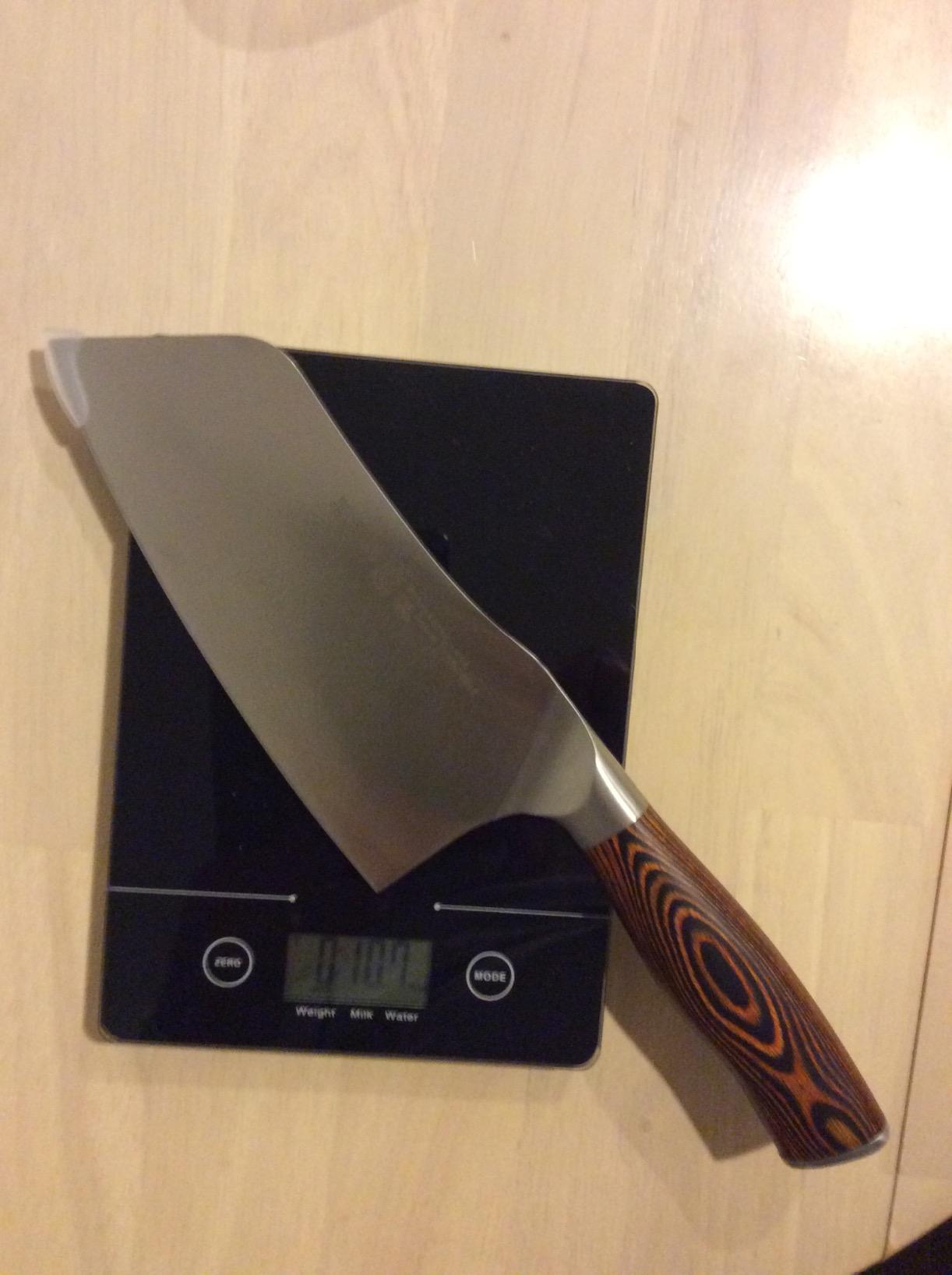
The handle is where the TUO really shines for home cooks. The Pakkawood ergonomic shape fits naturally in your hand, and the full tang construction gives it a solid, balanced feel. At just over 8 ounces, it has enough weight to do the work for you without feeling heavy or unwieldy during longer prep sessions. I have chopped my way through 10-pound bags of onions for meal prep without any hand fatigue.
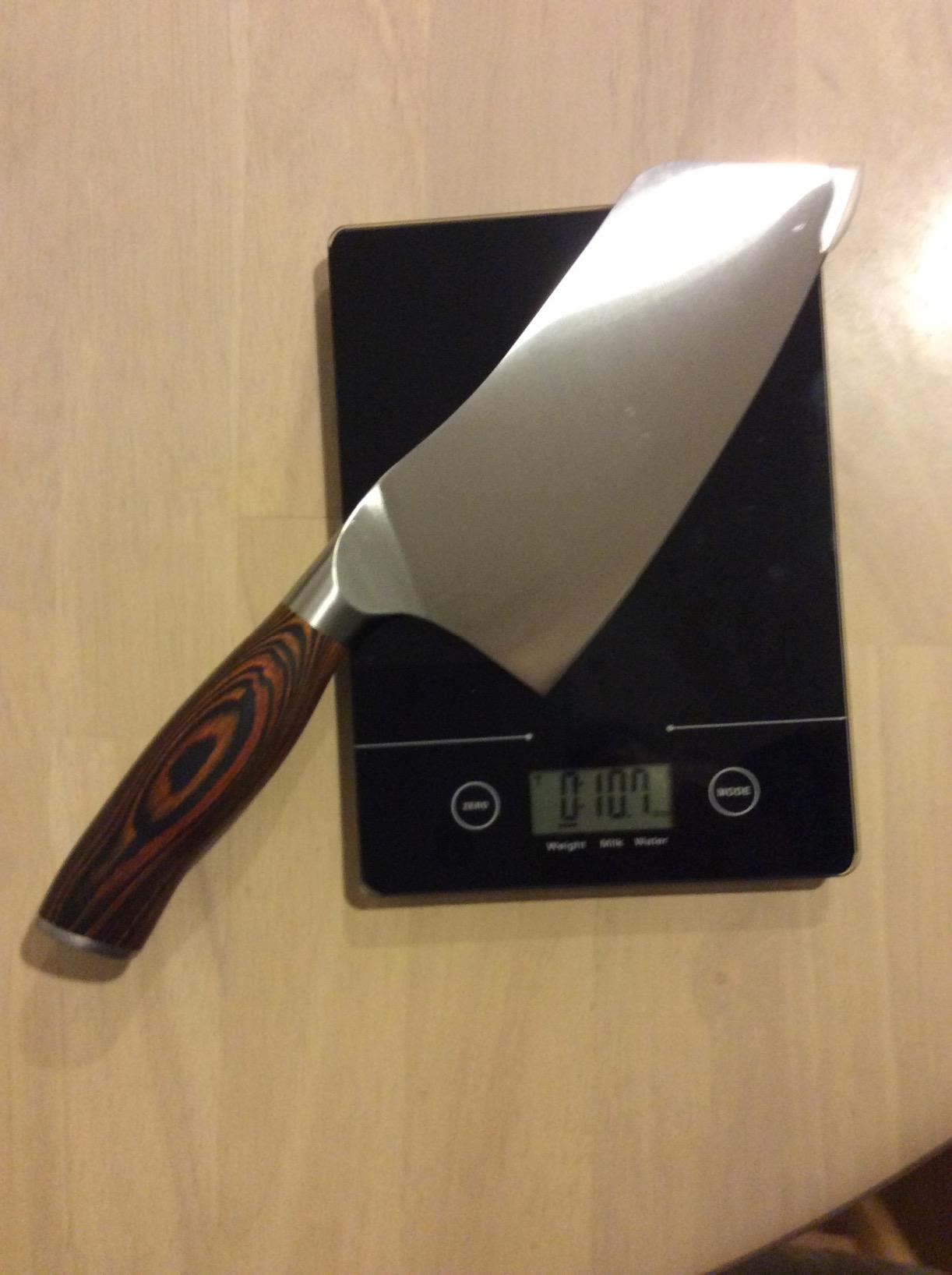
Edge retention has been impressive for this price range. I hone it on a ceramic rod about once a week, and it has held its working edge through three months of near-daily use. The vacuum heat treatment to HRC 56 gives you enough hardness for good edge retention while keeping the steel tough enough that you will not chip it on a sweet potato or butternut squash.
One thing to note: the Pakkawood handle has a printed wood grain rather than natural wood grain. It looks good from a distance and feels solid in hand, but if you are particular about authentic materials, this might bother you. That said, the synthetic construction means it will not shrink, crack, or warp over time — a real advantage in a busy kitchen where knives get wet and washed frequently.
Who Should Buy the TUO Nakiri
This is the knife I would hand to any home cook who wants to try a nakiri for the first time. It performs like a knife costing twice as much, and the lifetime guarantee from TUO means you are covered if anything goes wrong. If you meal prep regularly or cook vegetable-forward meals several times a week, this knife will pay for itself in time saved within the first month.
With nearly 20,000 reviews and a 4.7-star rating, the community has spoken — this is one of the most trusted nakiri knives on the market. The 81% five-star rating tells you that the overwhelming majority of buyers are genuinely happy with their purchase.
What to Keep in Mind
The 6.5-inch blade is slightly shorter than the traditional 7-inch nakiri standard. If you have large hands or regularly prep very large vegetables like full heads of cabbage, you might prefer a longer blade. Also, hand-washing is required — the heat and chemicals of a dishwasher will degrade both the edge and the handle over time.
2. PAUDIN Nakiri Knife 7 inch – Best Value Pick
PAUDIN Nakiri Knife – 7″ Razor Sharp Meat Cleaver and Vegetable Kitchen Knife, High Carbon Stainless Steel, Multipurpose Asian Chef Knife for Home and Kitchen with Ergonomic Handle
5Cr15Mov Stainless Steel
7 inch Blade
Pakkawood Handle
225g
HRC 56+
Pros
- Razor sharp out of the box
- Excellent on tough vegetables
- Wave pattern reduces food friction
- Easy to re-sharpen
- Attractive Damascus-like appearance
Cons
- Handle may develop small splits over time
- Not suitable for bones or frozen foods
- Not dishwasher safe
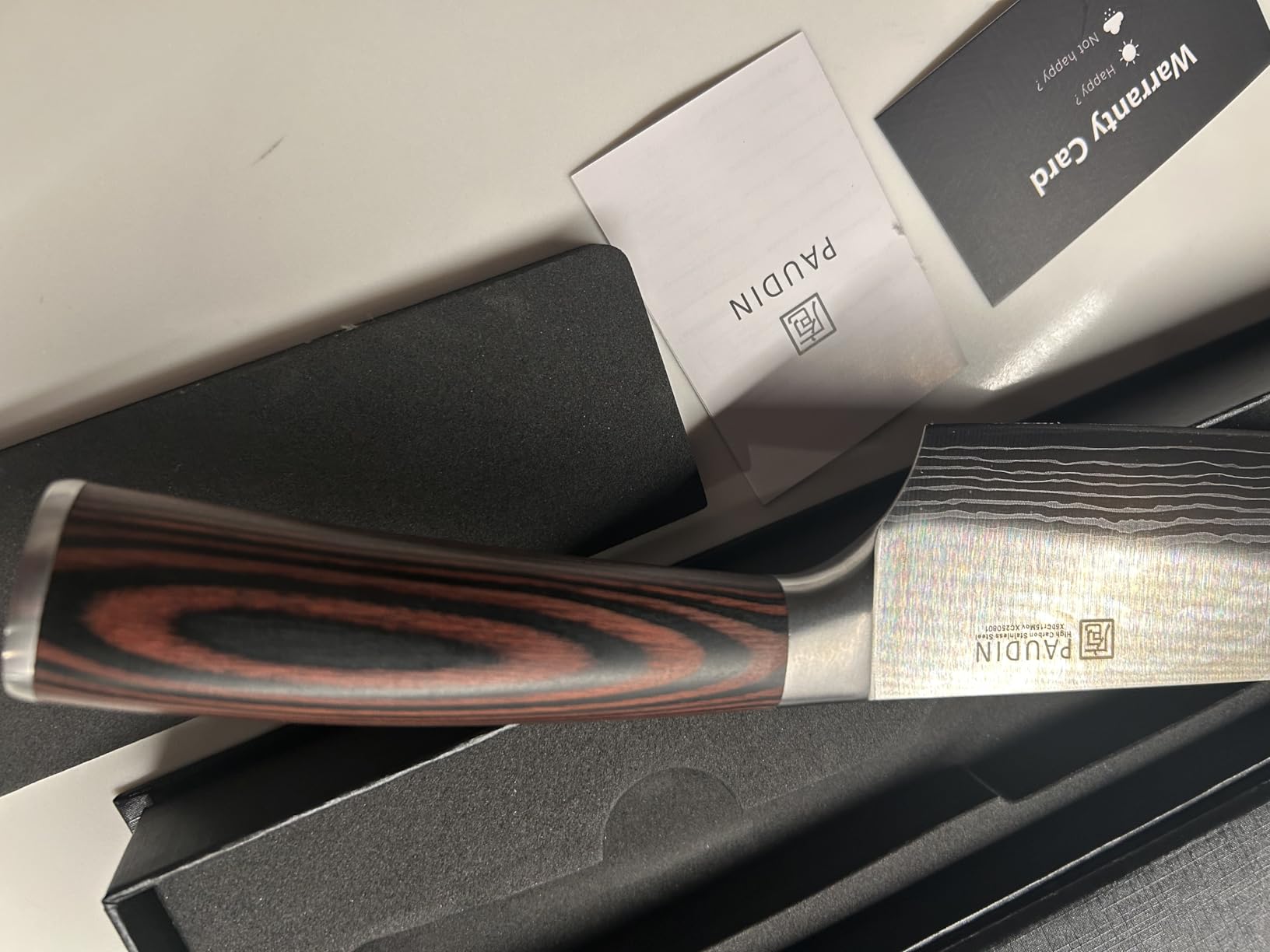
The PAUDIN Nakiri surprised me with how sharp it arrived. I ran it through the standard paper test and it sliced cleanly with zero tearing — something I do not always see at this price point. The 5Cr15Mov stainless steel blade has a decorative wave pattern that gives it a Damascus-style appearance, and functionally those waves do help reduce friction when cutting through starchy vegetables like potatoes.
At 7 inches, this blade gives you the full traditional nakiri experience. I found the extra half-inch compared to the TUO made a noticeable difference when processing large cabbages and splitting whole butternut squashes. The ergonomic Pakkawood handle sits comfortably in the hand, and the balance point at the pinch grip felt natural right away.
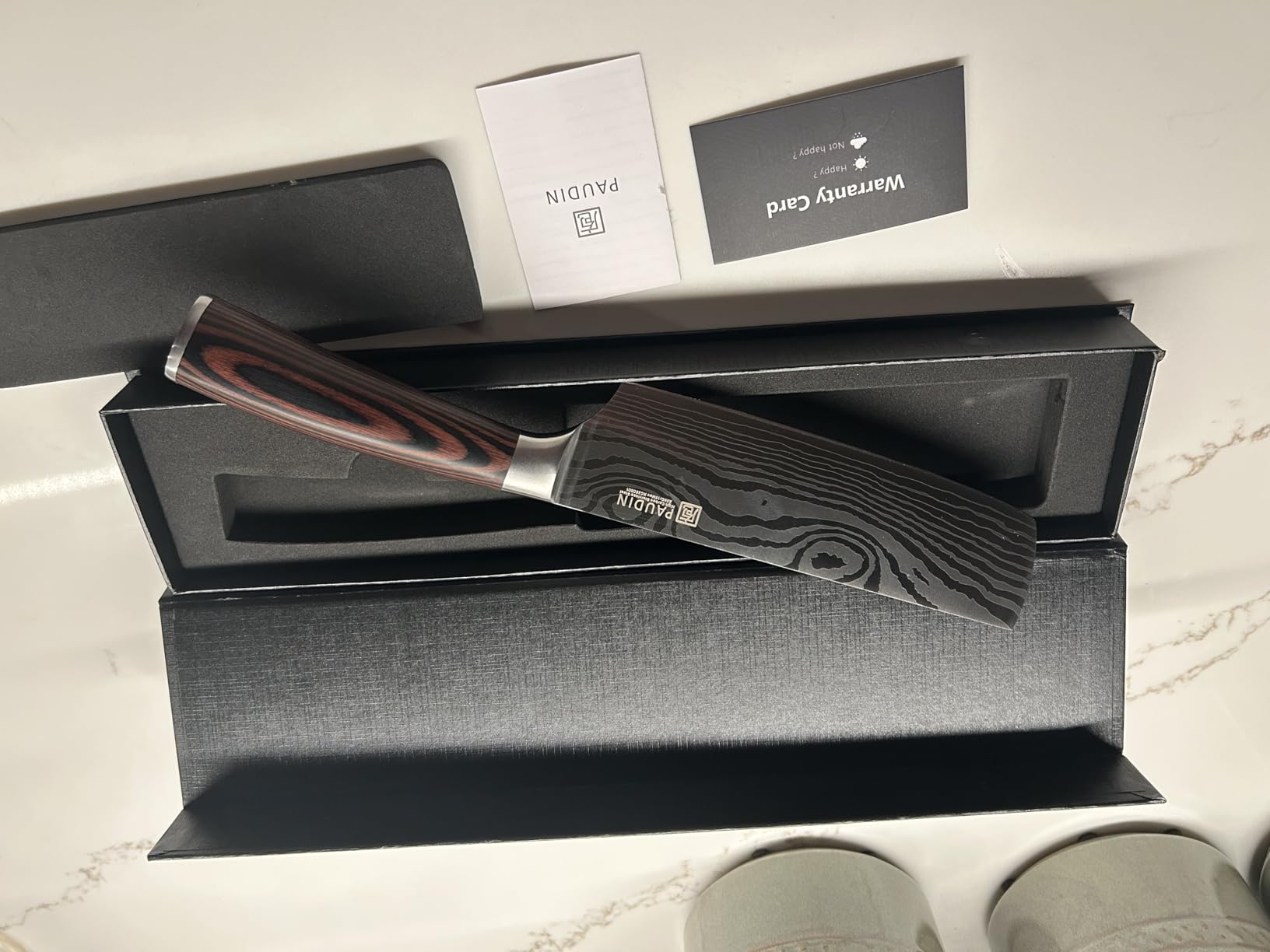
Where the PAUDIN really earns its “Best Value” badge is in the cutting performance relative to cost. I used it to dice three pounds of sweet potatoes, slice a bag of bell peppers, and mince a full head of shallots in one session, and it maintained its edge throughout. The blade glides through root vegetables with minimal resistance, and the wide profile makes scooping ingredients off the board easy.
Long-term durability is solid but not flawless. A few users have reported small handle splits developing over time, though PAUDIN’s customer service is known for sending quick replacements. The 100% satisfaction guarantee means you can try it risk-free, which is a nice safety net for a knife in this price tier.
Who Should Buy the PAUDIN Nakiri
If you want a full 7-inch nakiri with attractive styling and strong cutting performance without spending much, this is your knife. It is ideal for beginner to intermediate home cooks who want to experience what a proper Japanese vegetable knife can do. The gift-ready packaging also makes it a solid present for anyone who loves to cook.
With over 4,600 reviews and an 82% five-star rating, buyer satisfaction is remarkably high. The consistent praise for sharpness and vegetable-cutting performance confirms this is not just a pretty blade — it delivers where it counts.
What to Keep in Mind
The wave pattern on the blade is decorative, not true Damascus steel. It looks great but will not give you the same performance benefits as layered Damascus construction. Also, this knife is strictly for vegetables and boneless proteins — do not try to cut through bones, frozen foods, or hard shells, as the edge will chip.
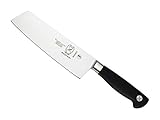
3. Mercer Culinary Genesis 7 inch – Best Professional Grip
Mercer Culinary M20907 Genesis 7-Inch Nakiri Vegetable Knife,Black
High Carbon German Steel
7 inch Blade
Santoprene Handle
0.25 lbs
Forged
Pros
- Razor sharp out of the box
- Non-slip Santoprene handle
- Excellent balance
- Holds edge well with honing
- Lifetime warranty
Cons
- Heavier than typical nakiri knives
- Limited stock availability
- Blade extremely sharp requires careful handling
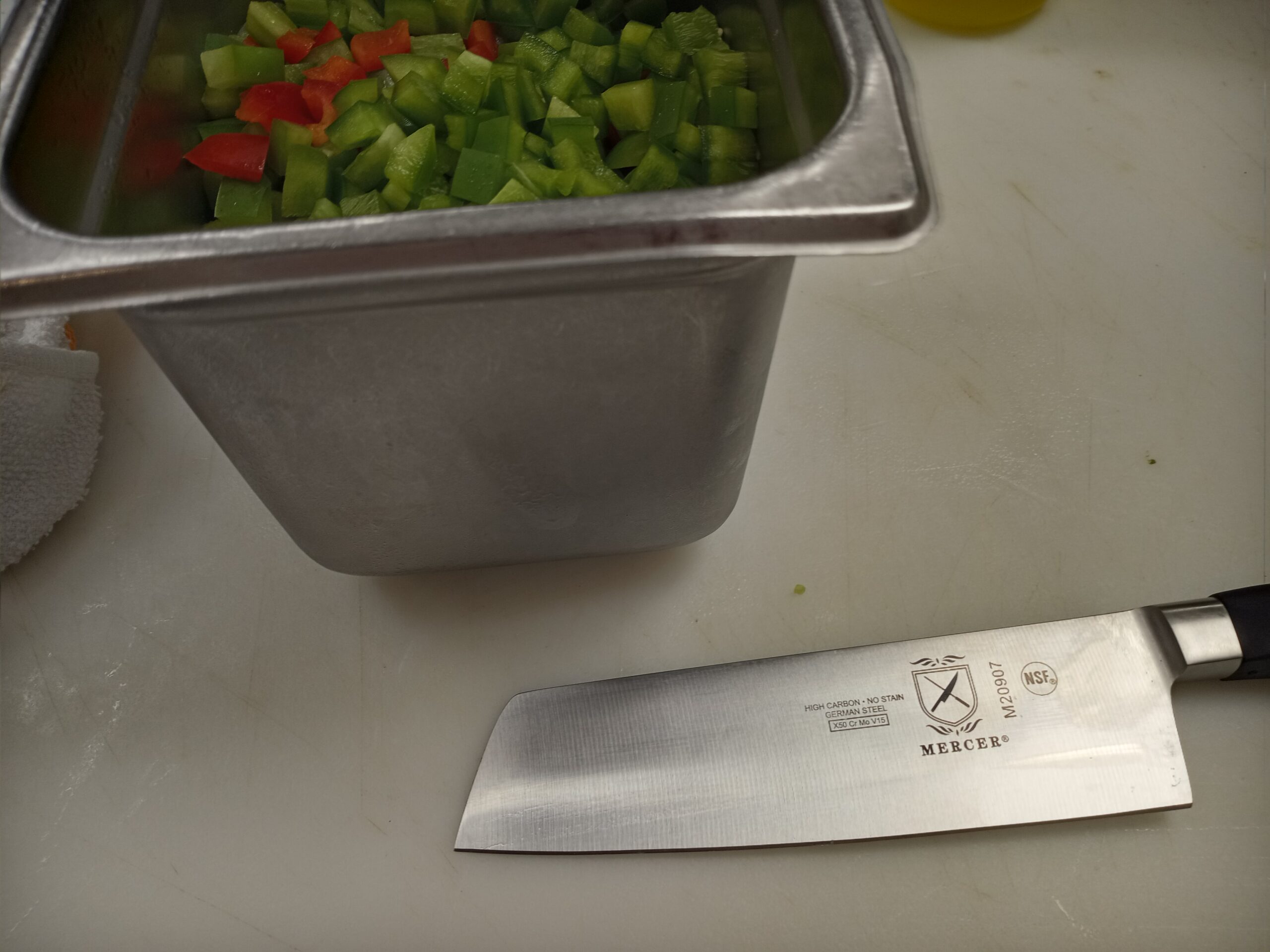
The Mercer Culinary Genesis feels like a professional tool the moment you pick it up. The Santoprene handle is the standout feature — it provides a non-slip grip even when your hands are wet or slick with vegetable juice. In a busy kitchen where you are washing your hands between tasks constantly, that grip security matters more than you might expect.
This knife earned the highest rating in our lineup at 4.8 stars, and after using it, I understand why. The taper-ground edge is exceptionally efficient. Push-cutting through carrots, celery, and onions requires almost no downward pressure — you just guide the blade and it does the work. The precision-forged high-carbon German steel holds its edge remarkably well with regular honing on a ceramic rod.
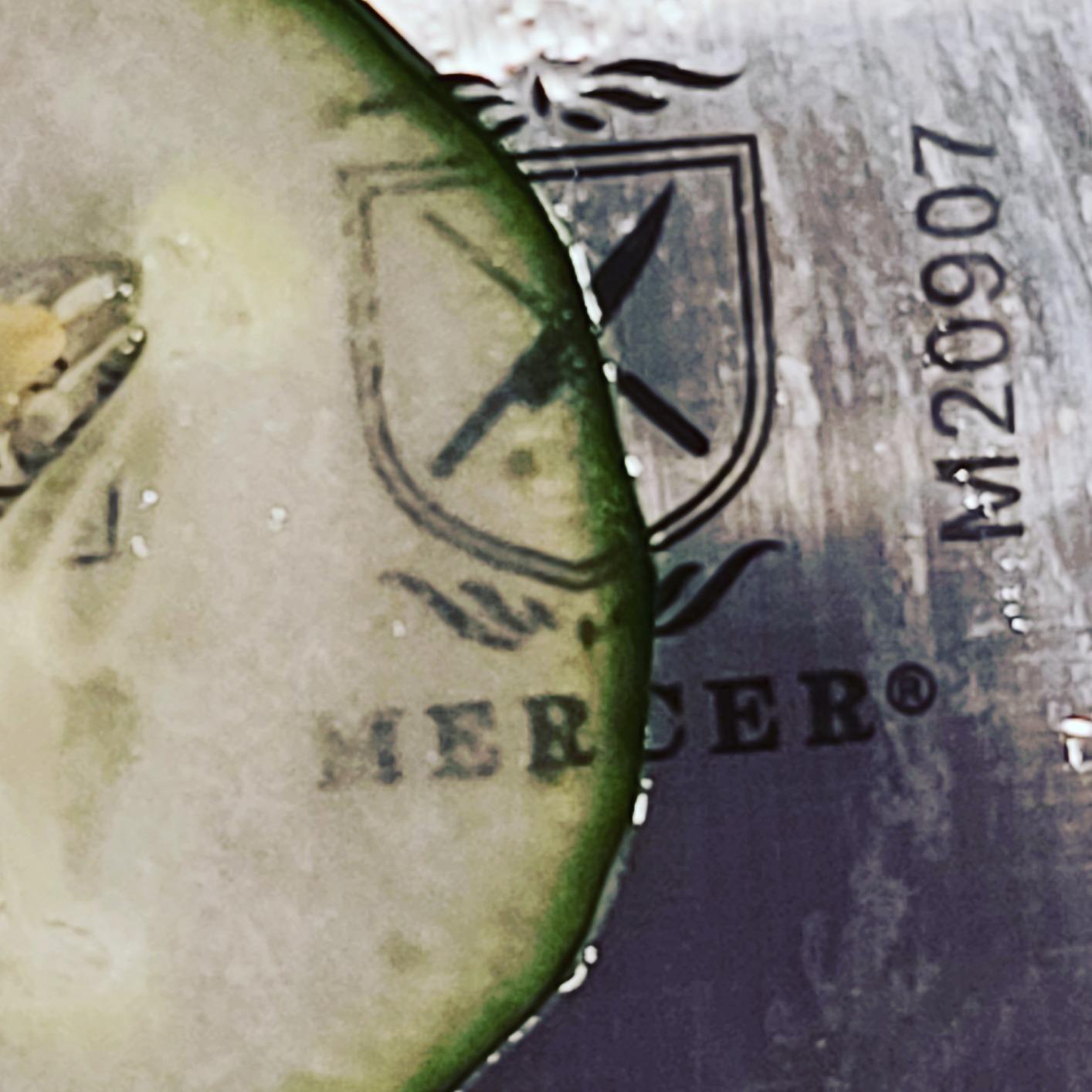
At just 4 ounces (0.25 pounds), the Mercer is one of the lightest nakiri knives I have tested. That lightness makes it incredibly nimble for fine work like mincing herbs or slicing thin rounds of radish. Yet the blade still has enough substance to chop through dense root vegetables without flexing or bouncing. It is a well-engineered piece of cutlery.
The 85% five-star rating from 670 reviews speaks to consistent quality. This is a knife that professionals and serious home cooks reach for daily. Mercer backs it with a lifetime warranty, which is impressive for a knife in this price range. The only real drawback is availability — when we last checked, stock was running low with only a handful remaining.
Who Should Buy the Mercer Genesis
If you work in a professional kitchen or do heavy vegetable prep in a home setting where wet hands are the norm, the Santoprene handle makes this the safest and most comfortable option. It is also a great choice if you prefer a lighter knife that reduces fatigue during long prep sessions. Cooking school students and culinary professionals consistently recommend Mercer as a reliable workhorse brand.
What to Keep in Mind
The blade arrives extremely sharp — sharper than most people expect. Take extra care during your first few uses until you adjust to the edge. Also, this knife tends to sell out, so if you see it in stock and want one, do not wait too long to make a decision.
4. FINDKING Nakiri Knife 7 inch – Best Japanese Style Handle
FINDKING Japanese Nakiri Knife 7 Inch, Vegetable Cleaver with High Carbon Steel Blade, Rosewood Octagonal Handle, for Vegetable Prep, Slicing, Chopping and Mincing, Dynasty Series
9Cr18MoV High Carbon Steel
7 inch Blade
African Rosewood Handle
249g
Hammered
Pros
- Razor sharp with excellent edge retention
- Hammered texture reduces sticking
- Authentic octagonal rosewood handle
- Professional performance at entry-level price
Cons
- Black blade finish may wear over time
- Shipping packaging could be improved
- Rear blade curve requires careful handling
The FINDKING Dynasty Series is the knife I would recommend to anyone wanting an authentic Japanese knife experience without the premium price tag. The African rosewood octagonal handle is the real deal — it is the traditional Japanese wa-handle shape that provides a secure, comfortable grip whether you hold it in a pinch grip or a full grip. The wood has a warm, natural feel that synthetic handles just cannot replicate.
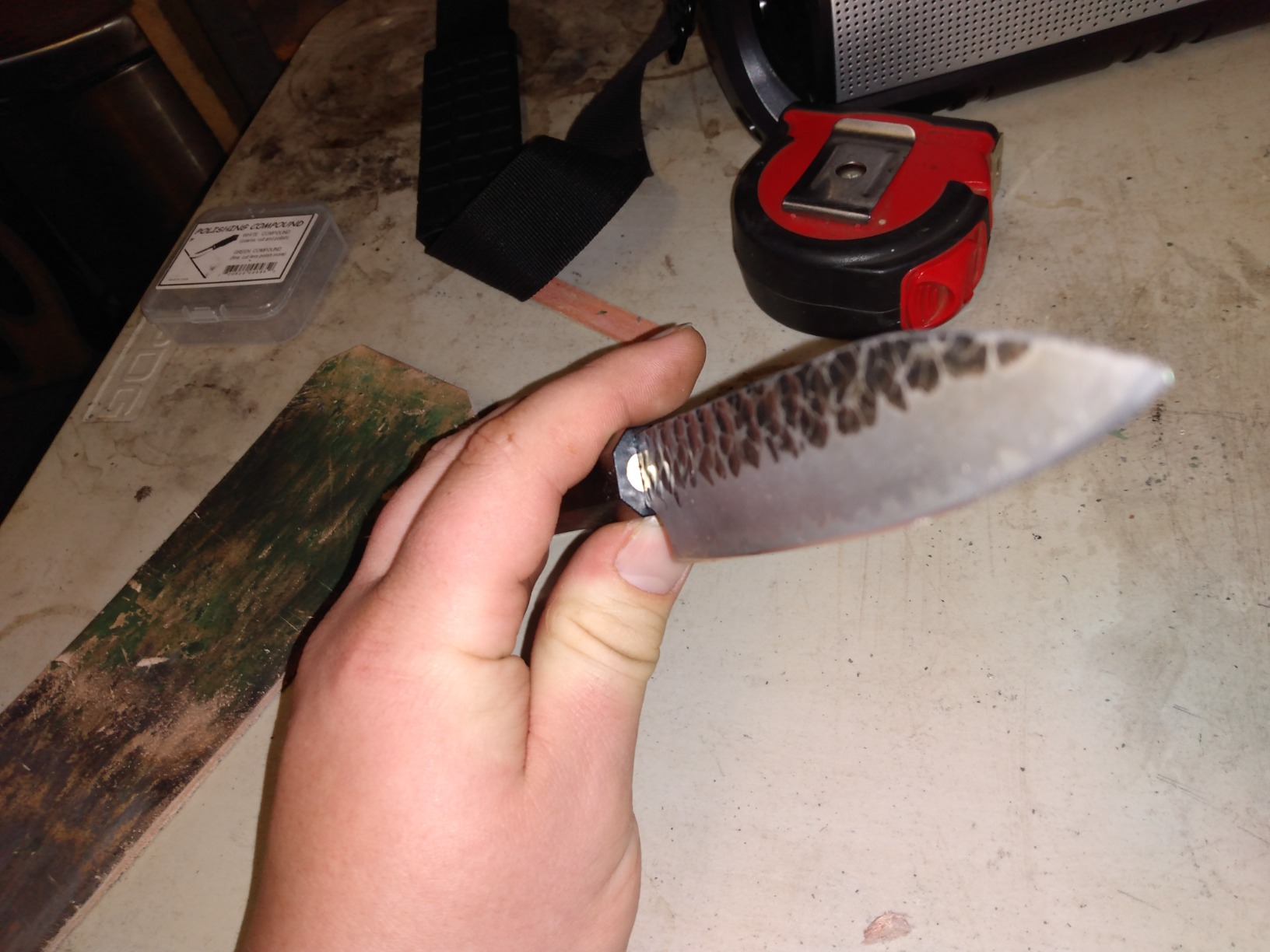
The 9Cr18MoV high-carbon steel is harder than the German steel found in many competitors, and that translates to noticeably better edge retention. I went over two months between sharpenings with regular honing, which is impressive for a knife at this price. The hammered surface texture on the blade creates small air pockets that reduce food sticking — a feature you will appreciate every time you slice through sticky potatoes or daikon radish.
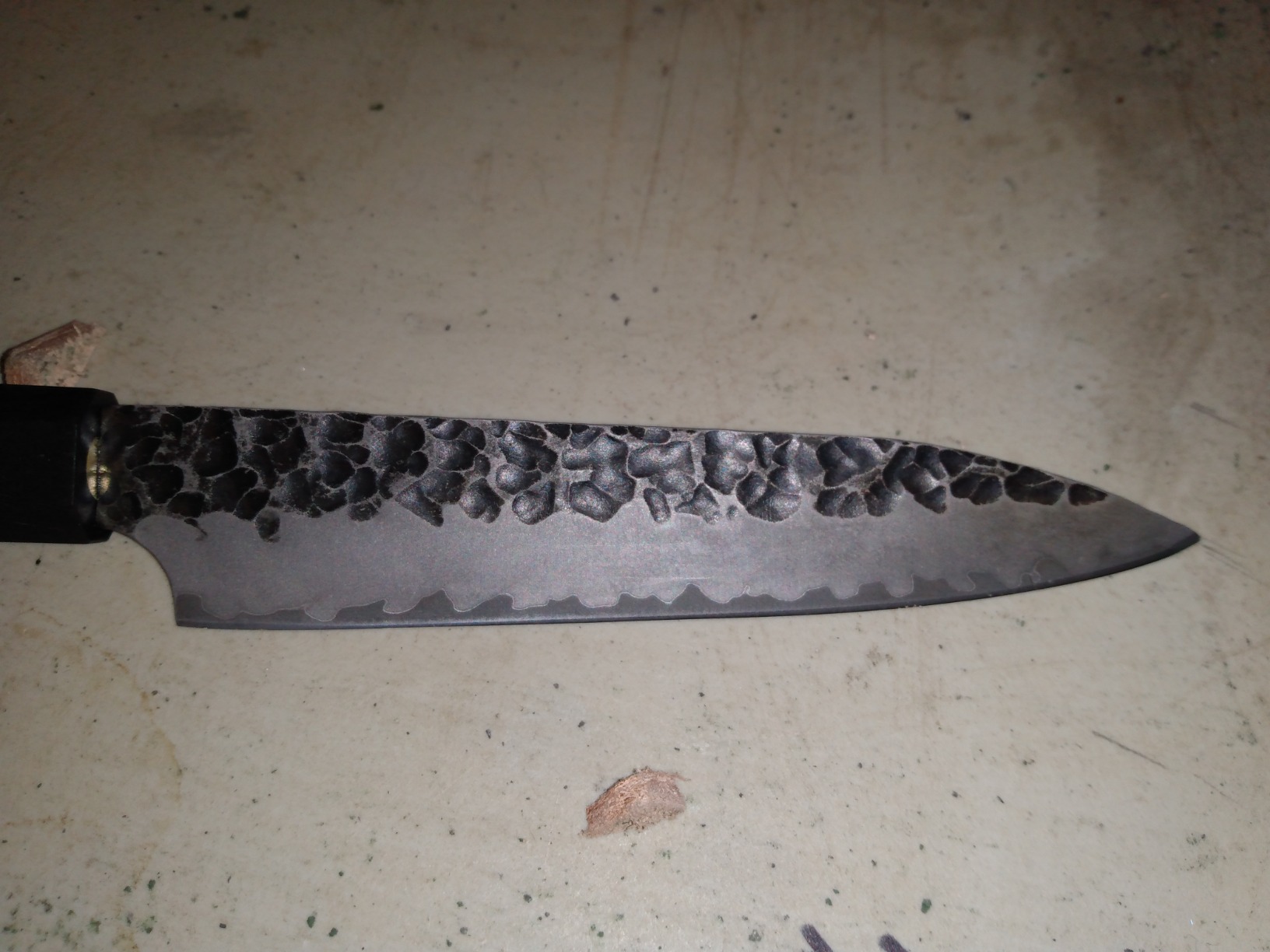
In my testing, the FINDKING handled everything from paper-thin tomato slices to aggressive chopping through hard butternut squash. The flat blade edge makes full board contact, so you get clean cuts all the way through without the ingredient remaining connected at the bottom. The wide blade profile also works well as a bench scraper for moving diced vegetables from board to pan.
The 4,800+ reviews with a 79% five-star rating confirm that this knife punches well above its weight class. Forum users on r/chefknives frequently recommend FINDKING as a step-up from budget German steel, noting that the harder steel holds an edge significantly longer. It is available in multiple sizes from 5 to 12 inches if you want to build out a full set.
Who Should Buy the FINDKING Dynasty
If you appreciate traditional Japanese knife aesthetics and want an octagonal wooden handle over synthetic options, this is your best bet in the mid-range category. It is also ideal for cooks who prioritize edge retention and do not want to sharpen their knives frequently. The hammered finish makes it a practical choice for anyone who gets annoyed by ingredients sticking to the blade.
What to Keep in Mind
The black blade finish is applied rather than natural — some users report it wearing over time with heavy use. This does not affect performance but changes the appearance. The rear of the blade curves slightly back toward the handle, so pay attention to your finger placement when chopping aggressively. Hand washing is required.
5. imarku Nakiri Knife 7 inch – Best Hammered Texture
imarku Nakiri Knife 7 Inch, Japanese High Carbon Stainless Steel Chopper
SUS440A Stainless Steel
7 inch Blade
FSC-Certified Pakkawood
HRC 58+
Handmade
Pros
- Wickedly sharp out of the box
- Handmade hammered texture reduces sticking
- FSC-Certified ergonomic handle
- Suitable for left and right handed users
- 24/7 customer support
Cons
- Made in China not Japan
- Included sharpener may be too aggressive
- Handle longer than some expect
The imarku Nakiri is one of the most popular nakiri knives on Amazon right now, and for good reason. It holds the number one best-seller spot in its category, with over 10,000 reviews backing it up. The handmade hammered texture on the SUS440A stainless steel blade is not just decorative — those hammered dimples create air pockets that genuinely reduce food resistance and sticking during cutting.
I found the HRC 58+ hardness to be a noticeable step up from softer steels. The blade holds its working edge longer than most knives in this price range, and the seamless blade-to-handle transition means there are no crevices for food particles to get trapped in. That hygiene-focused design is something I really appreciate during messy prep sessions with raw vegetables and herbs.
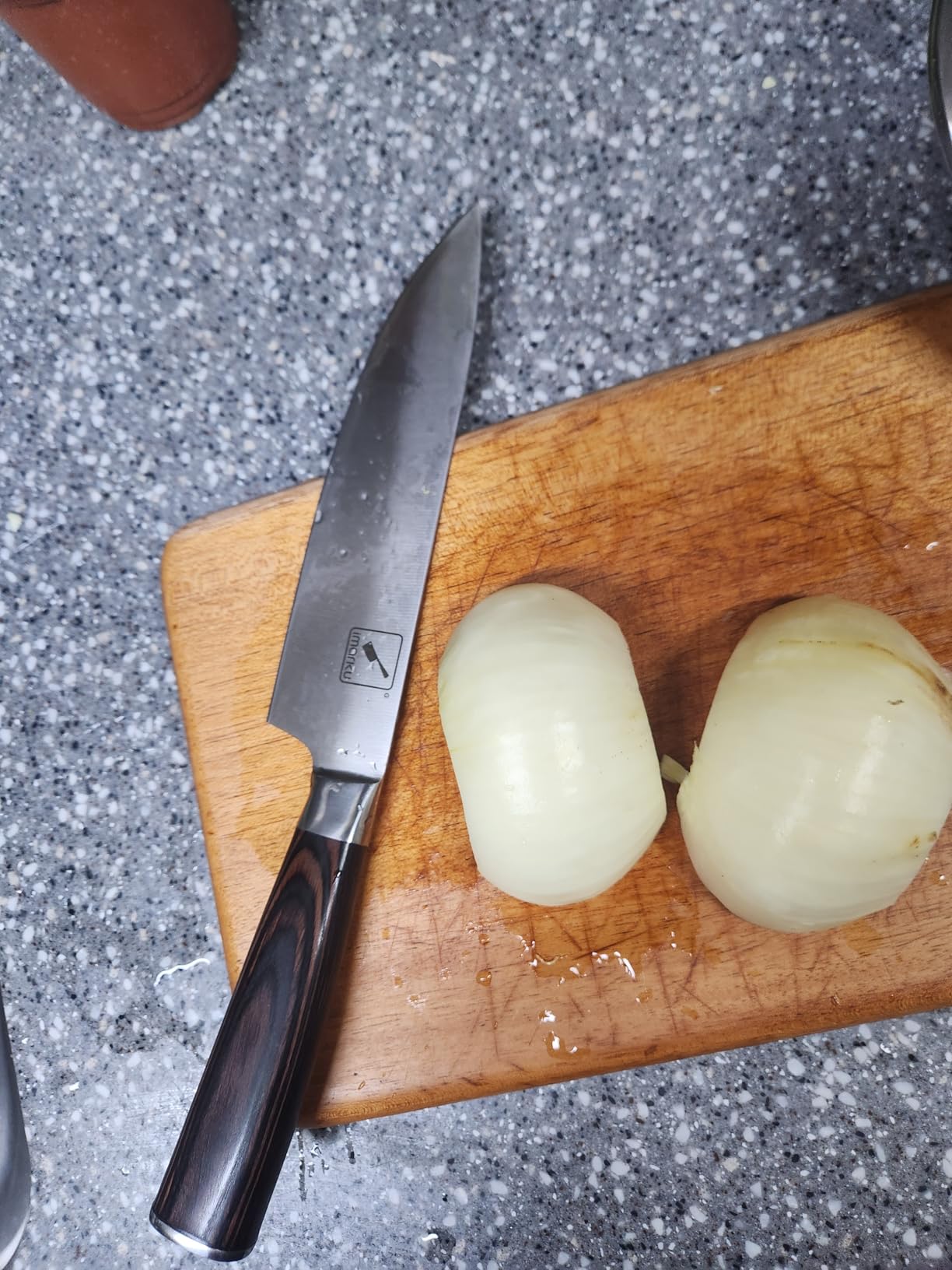
The FSC-certified Pakkawood handle is comfortable for both small and large hands. I handed this knife to three different people in my household, and everyone found the grip natural. The ergonomic shape reduces hand fatigue during extended prep sessions, and the non-slip properties mean you maintain control even with wet hands. It is also one of the few nakiri knives suitable for both left- and right-handed users without modification.
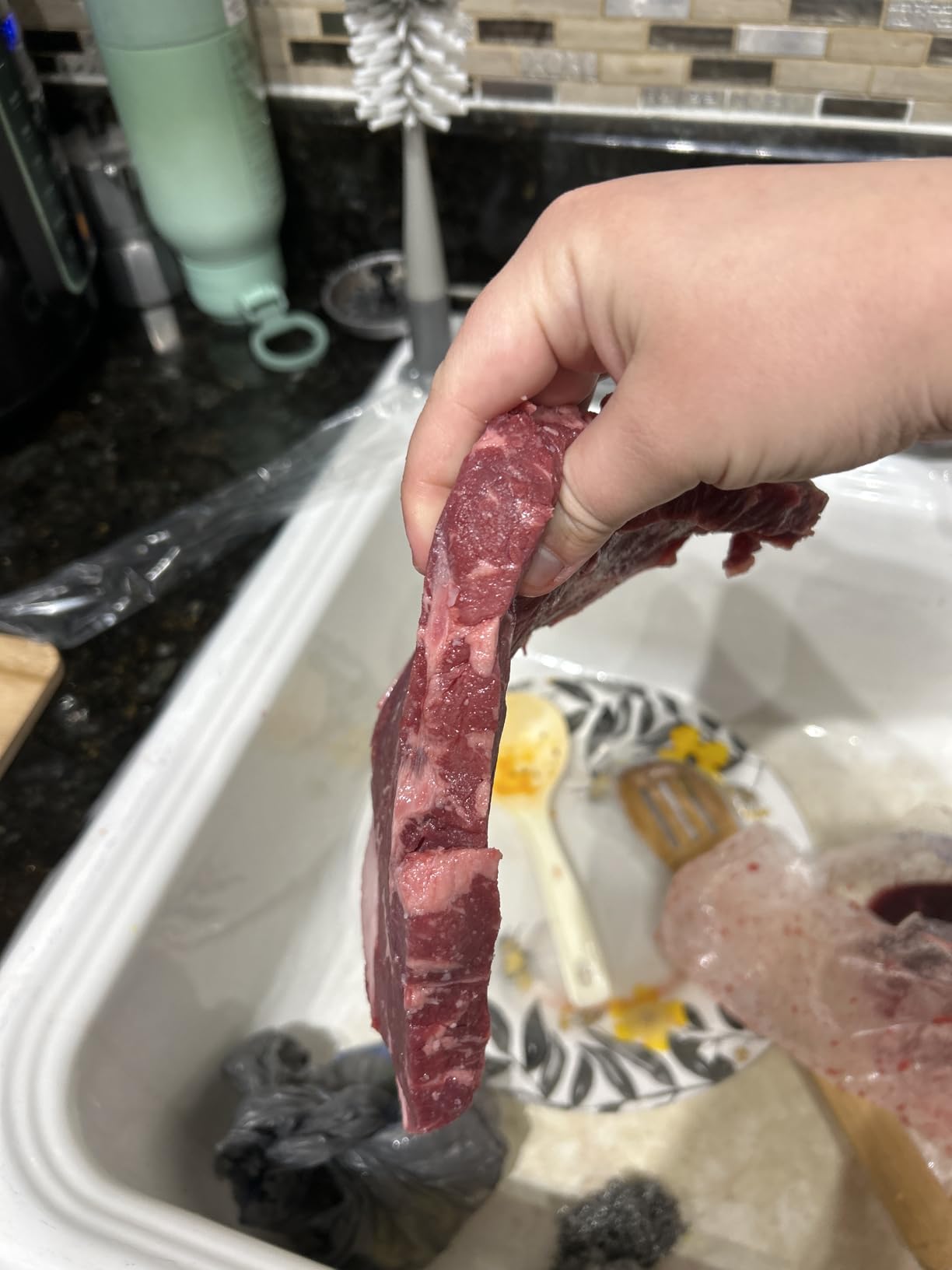
The premium gift box packaging makes this an attractive gift option. imarku includes 24/7 customer support, and their responsiveness is well-documented in reviews. The knife arrives sharp enough to slice through ripe tomatoes with zero pressure — always the sign of a well-finished edge from the factory.
Who Should Buy the imarku Nakiri
If you want a knife that combines modern manufacturing precision with a traditional hammered aesthetic, the imarku delivers both. It is especially good for households with both left- and right-handed cooks since the symmetric design accommodates both. The gift packaging and strong customer support make it a safe choice if you are buying your first nakiri and want a smooth experience.
With over 10,000 reviews and consistent praise for out-of-the-box sharpness, this is one of the most battle-tested nakiri knives available online. The 79% five-star rating across that many reviews is statistically very strong.
What to Keep in Mind
Despite the Japanese-inspired design, this knife is made in China. If authentic Japanese manufacturing is important to you, you may prefer a different option. The included block sharpener that comes with some packages can be too aggressive on the fine edge — I would recommend using a whetstone or ceramic rod instead for maintenance.
6. KYOKU Nakiri Knife 7 inch – Best Damascus Blade
KYOKU Nakiri Knife – 7″ – Shogun Series – Japanese Style VG10 Steel Core Damascus Blade – with Sheath & Case
VG10 Steel Core Damascus
7 inch Blade
G10 Handle
0.3 kg
Full Tang
Pros
- Beautiful Damascus pattern
- Includes protective sheath and case
- Excellent value for Damascus construction
- Razor sharp out of the box
- Comfortable G10 handle
Cons
- Sheath design requires careful handling
- Handle can get slick when wet
- Damascus pattern is subtle
The KYOKU Shogun Series brings true Damascus construction to a price point where you would normally find basic stamped blades. The VG10 steel core with layered Damascus cladding gives you the best of both worlds — the edge-taking ability and retention of high-carbon VG10 steel with the corrosion resistance and visual appeal of Damascus layers. Looking at the blade under good light, the layered pattern is subtle but unmistakable.
Performance-wise, the VG10 core steel is a significant step up from the entry-level steels in our lineup. It takes a sharper edge and holds it longer than 5Cr15Mov or German 1.4116 steel. I noticed the difference immediately when slicing tomatoes — the KYOKU glides through the skin with virtually no deformation, whereas softer steels require a slight sawing motion to break the skin on the first cut.
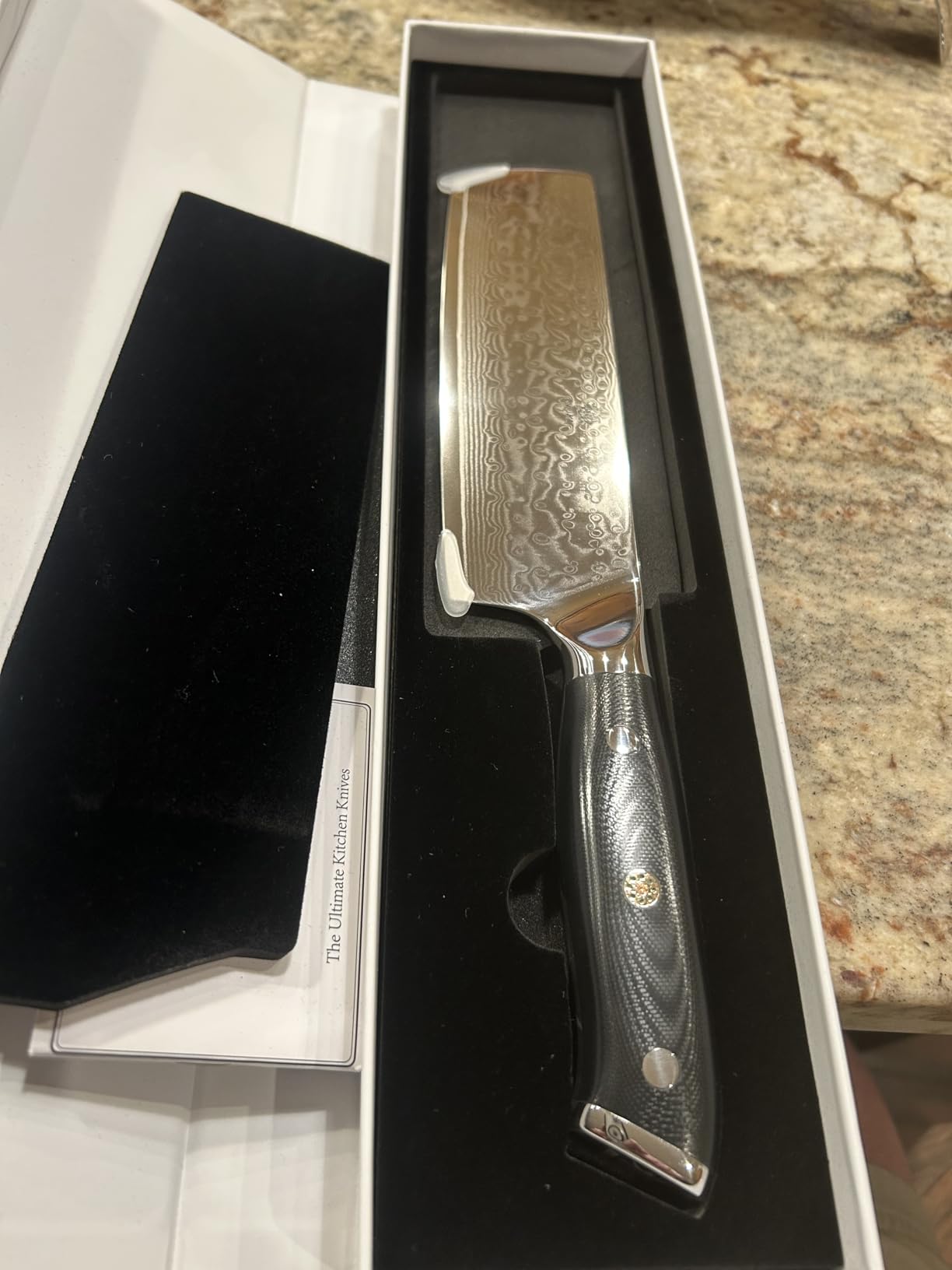
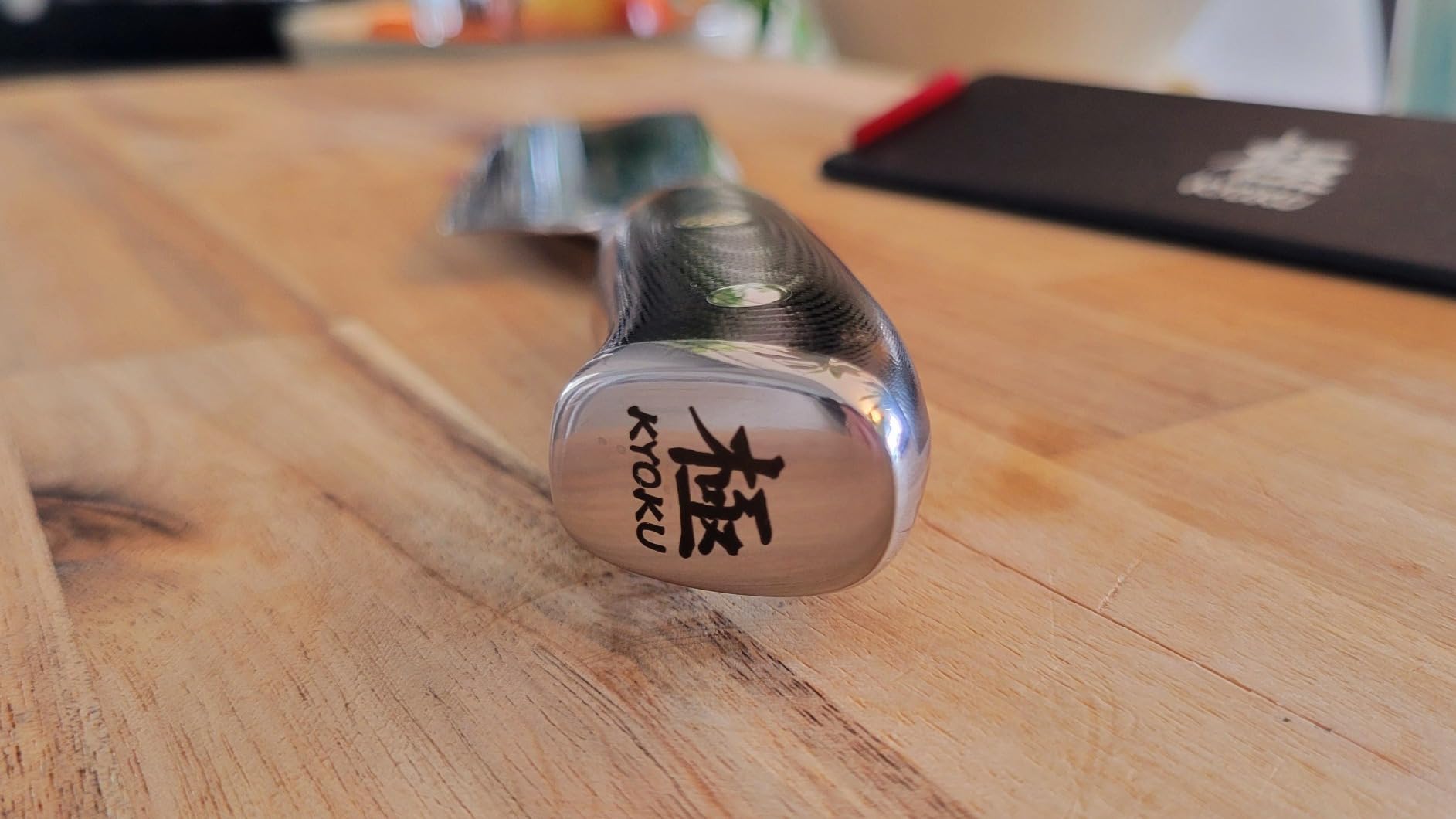
The G10 handle is a military-grade fiberglass laminate that is virtually indestructible under normal kitchen conditions. It will not crack, warp, absorb moisture, or degrade over time. The full tang construction gives the knife a confident, well-balanced feel. At 300 grams total weight, it has enough heft to power through dense vegetables while still feeling nimble enough for precise work.
KYOKU includes a protective sheath and case, which is a thoughtful addition that most competitors skip. The sheath protects the edge during storage and makes it safe to transport if you are taking your knife to a cooking class or a friend’s kitchen. With a 4.7-star rating and 81% five-star reviews, buyers consistently praise the balance of quality and value.
Who Should Buy the KYOKU Shogun
If you want the prestige and performance of Damascus steel without the premium price tag, the KYOKU is the best option in our lineup. The VG10 core steel gives you genuine high-end cutting performance, and the included sheath adds practical value. This is a strong choice for experienced home cooks who want to upgrade from basic stainless steel to something with more character and better edge properties.
What to Keep in Mind
The Damascus pattern is more subtle than the marketing photos suggest. If you are expecting bold, dramatic layers, you might be slightly underwhelmed by the visual pattern in hand. The handle can also become slippery with wet or oily hands, so maintain a firm grip during extended prep sessions. Be careful when sheathing and unsheathing — the edge is very sharp and the sheath opening is tight.
7. Dalstrong Nakiri Knife 6 inch – Premium Pick
Dalstrong 6″ Nakiri Vegetable Knife – 67-Layer Damascus AUS-10V
AUS-10V Super Steel
6 inch Blade
66-Layer Damascus
G10 Handle
HRC 62+
Pros
- Exceptional razor-sharp edge
- 66-layer Damascus construction
- Hammered Tsuchime finish
- Spectacular edge retention
- Military-grade G10 handle
- Lifetime warranty
Cons
- Heavier than typical nakiri knives
- Narrow blade tip
- Not dishwasher safe
The Dalstrong Shogun Series Elite is the kind of knife that makes you understand why people become knife enthusiasts. The AUS-10V super steel core at 62+ Rockwell hardness is in a different league from the other steels in our lineup. This steel takes an edge so fine that it almost feels unfair comparing it to standard stainless steel knives. Slicing through a ripe tomato with this knife requires less pressure than I use to butter toast.
The 66-layer Damascus construction with a hammered Tsuchime finish is not just beautiful — it is functional. The layered cladding protects the hard core steel from corrosion and impact, while the hammered dimples reduce food sticking. Every time I use this knife, someone in my kitchen comments on how stunning it looks. The blade geometry is hand-finished using the traditional three-step Honbazuke method at an 8-12 degree angle per side, which is significantly more acute than factory knives.
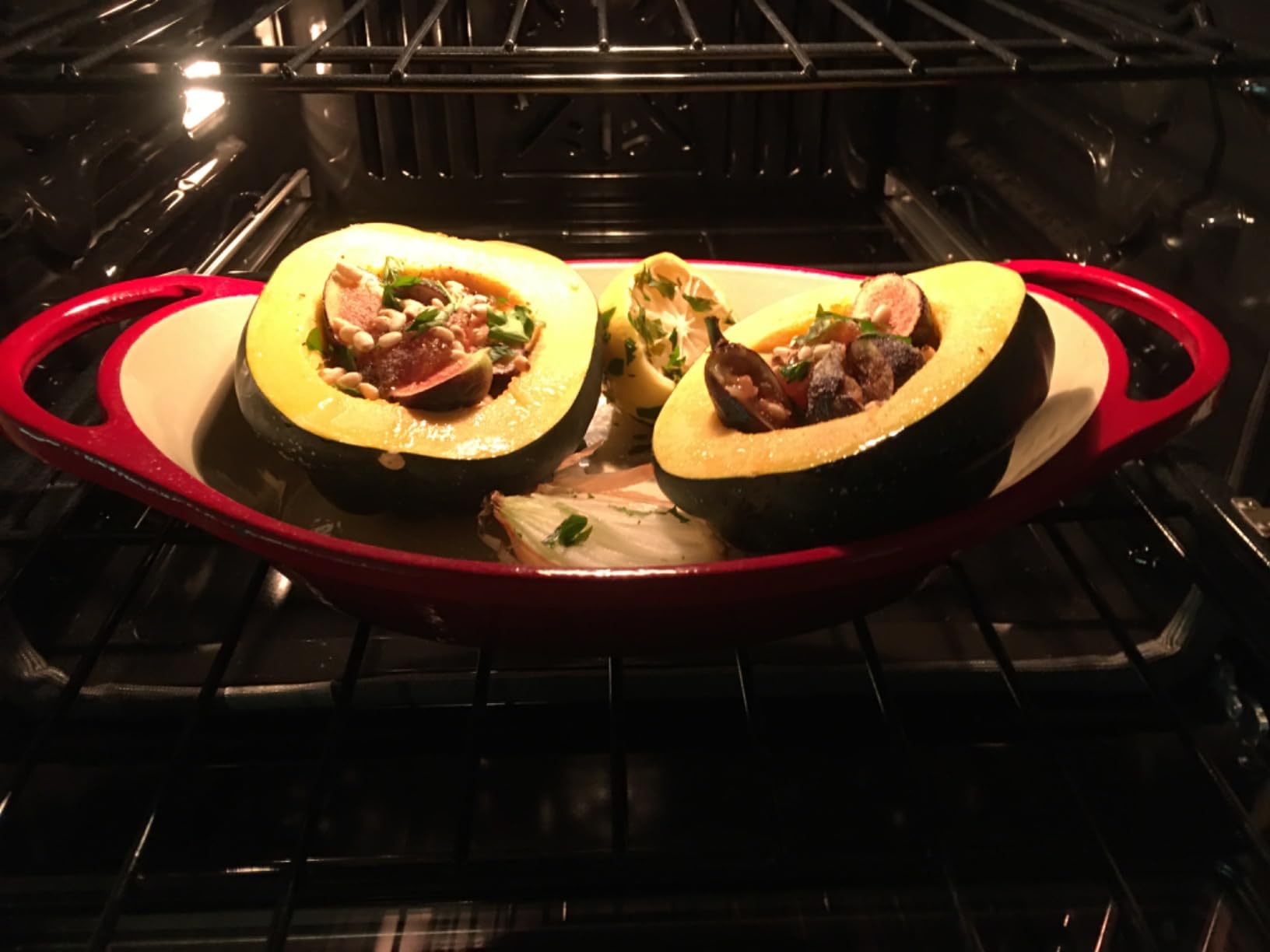
Edge retention is where the Dalstrong separates itself from the pack. After six weeks of regular use with only light honing, the blade still slices paper cleanly. That HRC 62+ hardness means you sharpen far less frequently — a real advantage if you find sharpening tedious or do not own good whetstones. The trade-off is that when it does need sharpening, you need quality abrasives to work the hard steel effectively.
The 87% five-star rating is the highest in our lineup, and it is well-deserved. Dalstrong includes a protective sheath and backs the knife with a lifetime warranty against defects. At 292 grams, it is heavier than most nakiri knives, but the full tang G10 handle distributes that weight so well that it never feels cumbersome.

Who Should Buy the Dalstrong Shogun Elite
If you are a serious home cook or semi-professional who wants one of the finest nakiri knives available, the Dalstrong Shogun Series Elite delivers professional-grade performance. The AUS-10V super steel core gives you edge retention that cheaper knives simply cannot match. It is also the right pick if you appreciate craftsmanship and want a knife that makes a statement in your kitchen.
Forum users on r/chefknives and Kitchen Knife Forums frequently cite Dalstrong as the point where you get genuine high-end steel performance without stepping into the $300+ hand-forged territory. For dedicated vegetable prep, this knife is an investment that pays dividends in speed and precision.
What to Keep in Mind
The 6-inch blade is slightly shorter than the 7-inch standard, and the tip narrows more than typical nakiri profiles. If you are used to a full rectangular blade, the tapered tip takes a few sessions to get comfortable with. The hard steel is more brittle than softer options — avoid prying, twisting, or cutting on hard surfaces like glass or stone cutting boards. The included sheath is excellent for storage and transport.
8. Wusthof Classic 7 inch Nakiri – Best German Craftsmanship
WÜSTHOF Classic 7″ Nakiri Knife, Black
High Carbon Stainless Steel
7 inch Blade
Hollow Edge
Polypropylene Handle
5.92 oz
Pros
- Exceptional German craftsmanship
- Hollow edge prevents sticking
- Precision Edge Technology (PEtec)
- Perfect balance and handling
- Lifetime warranty
- Made in Solingen Germany
Cons
- Premium price point
- Not dishwasher safe
- Hollow edge requires careful maintenance
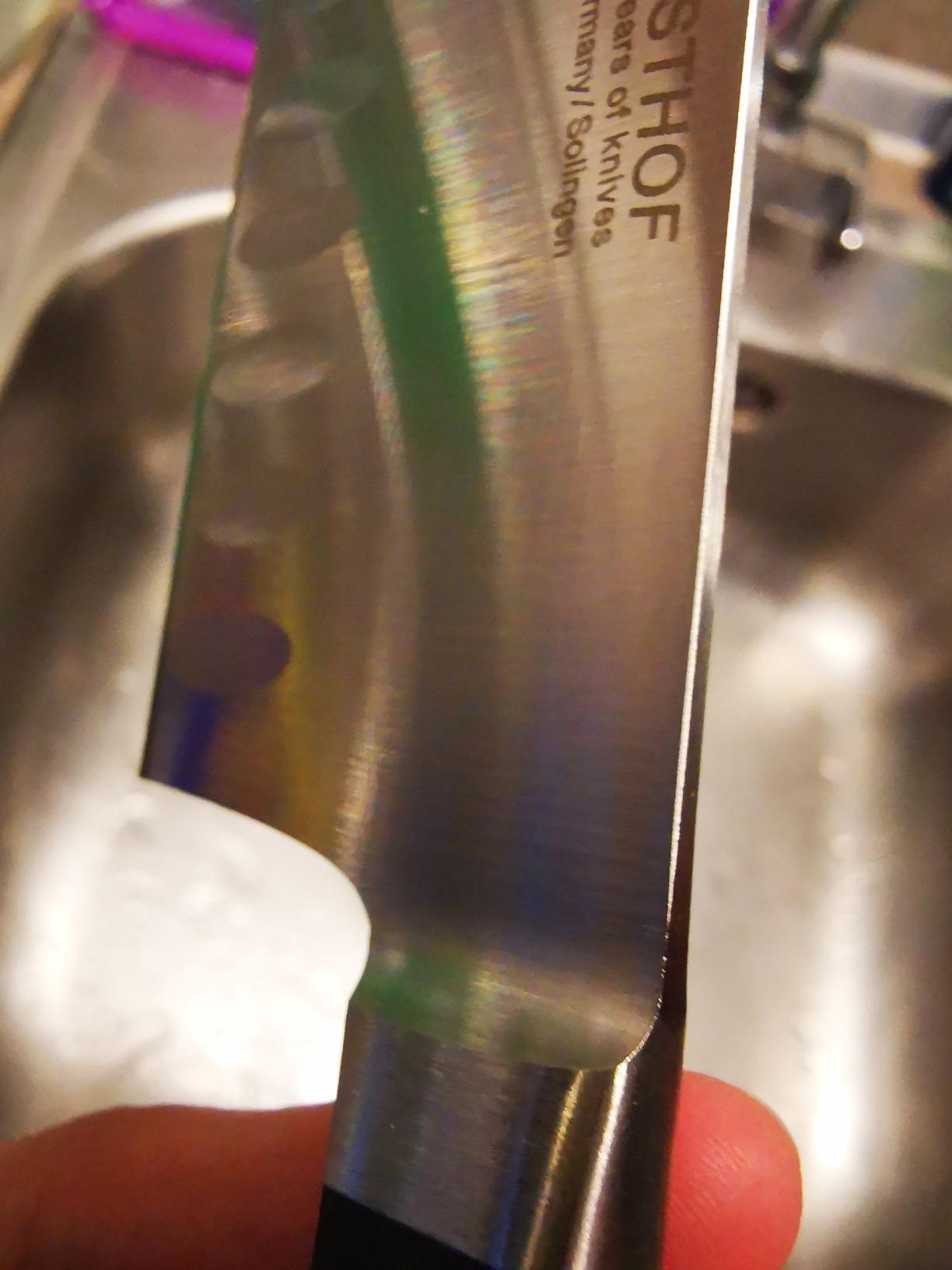
Wusthof has been forging knives in Solingen, Germany since 1814, and that 200-plus years of experience shows in every detail of this knife. The Classic 7-inch Nakiri features their Precision Edge Technology (PEtec), which Wusthof claims makes the blade 20% sharper with twice the edge retention compared to their previous generation. Having used it, I believe them — this knife arrived sharper than any German knife I have ever handled.
The hollow edge is what sets this nakiri apart from the others in our lineup. The evenly spaced vertical indentations on the blade create air pockets between the steel and the food, which dramatically reduces sticking. If you have ever been annoyed by thin slices of cucumber or potato suction-cupping themselves to the blade, the hollow edge solves that problem completely. It is a small detail that makes a big difference during high-volume prep.
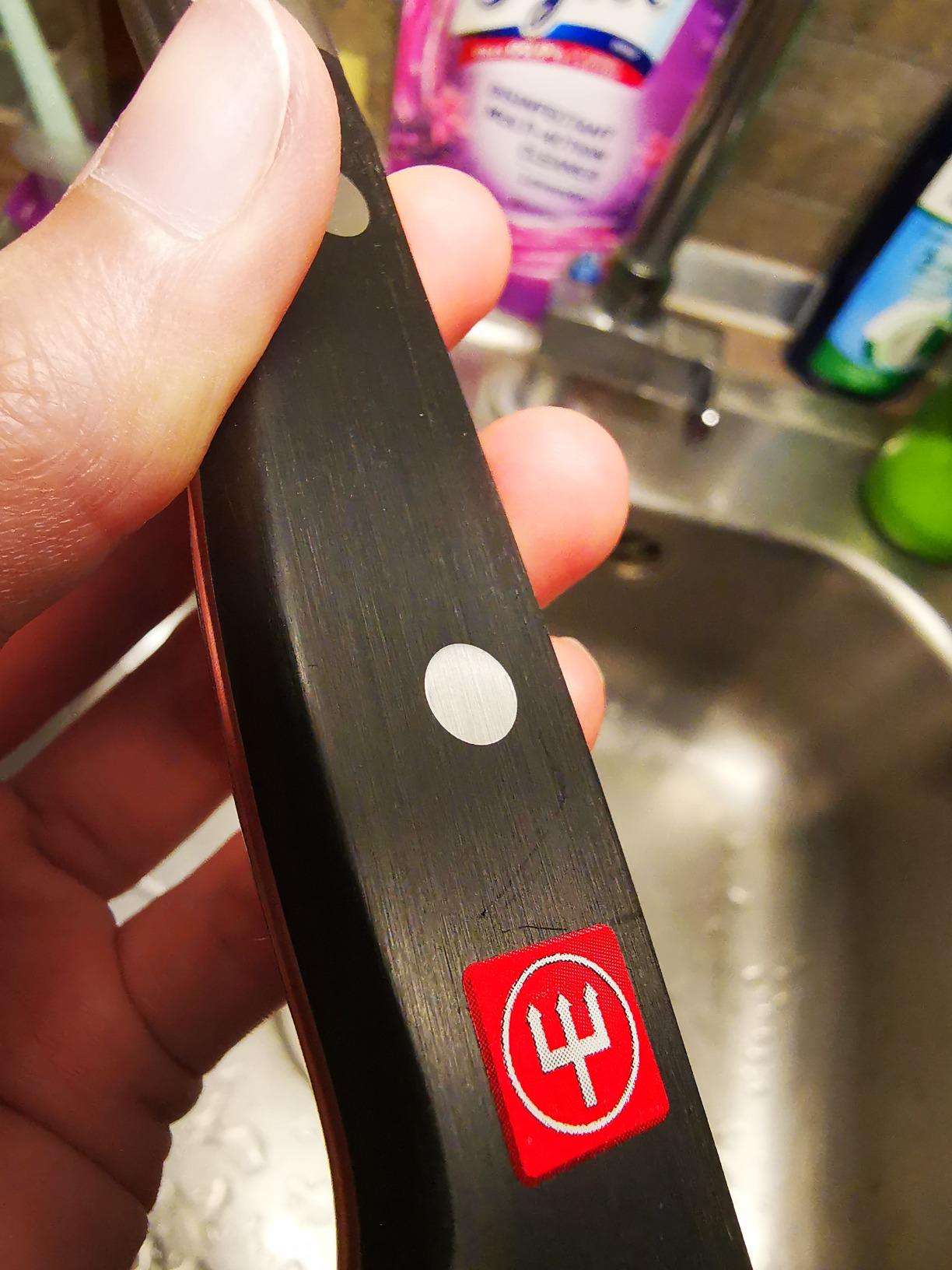
At just 5.92 ounces, the Wusthof is the lightest knife in our lineup by a significant margin. That lightness gives it incredible agility for detailed work, and the balance point right at the bolster feels intuitive from the first cut. The classic triple-riveted polypropylene handle is comfortable, durable, and impervious to moisture — it will look and perform the same in ten years as it does today.
The 88% five-star rating is the highest in our lineup, reflecting the consistent quality that Wusthof is known for worldwide. Professional chefs and dedicated home cooks trust the Classic line for good reason. The full bolster and finger guard provide safety and confidence during aggressive chopping, and the lifetime warranty covers manufacturing defects.
Who Should Buy the Wusthof Classic Nakiri
If you value heritage craftsmanship and want a nakiri from one of the world’s most respected knife makers, the Wusthof Classic is worth every penny. The hollow edge makes it especially good for cooks who frequently slice thin, wet vegetables that tend to stick to blades. It is also ideal for anyone who already owns Wusthof Classic knives and wants a matching nakiri for their collection.
The PEtec edge technology and 58 HRC hardness give you German-steel reliability with Japanese-knife sharpness — a combination that works beautifully for vegetable-focused prep work. At 5.92 ounces, it is the lightest option in our lineup, making it perfect for cooks who prefer nimble, precise tools.
What to Keep in Mind
This is the most expensive knife in our lineup alongside the Dalstrong, and it represents traditional German forging rather than Japanese steel traditions. The hollow edge indentations require a bit more care when sharpening — you need to maintain the flat sections of the edge without accidentally grinding into the hollows. A quality whetstone or professional sharpening service is recommended for maintenance.
How to Choose the Best Nakiri Knife for Your Kitchen
Picking the right nakiri knife comes down to understanding a few key factors that affect how the knife performs and feels in your hand. I have broken down the most important considerations below based on my testing experience and feedback from cooking communities.
Blade Steel: What Matters and What Does Not
The steel type is the single biggest factor in edge retention, sharpness, and maintenance requirements. Here is what you need to know about the steels in our lineup.
German steels like 1.4116 (found in the TUO) and high-carbon German steel (Mercer) offer great toughness and are forgiving of less-than-perfect cutting technique. They sharpen easily on a ceramic rod or steel, but they lose their edge faster than harder Japanese steels. HRC ratings typically sit around 54-58.
Mid-range steels like 9Cr18MoV (FINDKING), SUS440A (imarku), and 5Cr15Mov (PAUDIN) sit between German softness and Japanese hardness. They offer better edge retention than German steel while remaining relatively easy to maintain. HRC ratings range from 56-58.
Premium steels like VG10 (KYOKU) and AUS-10V (Dalstrong) deliver the best edge retention and can take the sharpest edges. The Dalstrong’s HRC 62+ rating means it holds its edge for months with proper care. The trade-off is that harder steel is more brittle — you need to be careful not to chip the edge on hard surfaces or bones.
Handle Material: Comfort vs Durability
Pakkawood handles (TUO, PAUDIN, imarku) offer a warm, wood-like feel with the moisture resistance of synthetic material. They are comfortable and durable, though the wood grain is usually printed rather than natural. Natural wood handles like the FINDKING’s African rosewood provide authentic aesthetics and excellent grip but require more care to prevent cracking.
Santoprene handles (Mercer) deliver the best wet-grip performance in our lineup. If you frequently work with wet hands, this rubberized material provides non-slip security that wood and Pakkawood cannot match. G10 handles (KYOKU, Dalstrong) are military-grade fiberglass laminates that are virtually indestructible and impervious to moisture.
Blade Length and Weight
Most nakiri knives come in at 6.5 to 7 inches. The extra half-inch of a 7-inch blade makes a real difference when processing large vegetables like whole cabbages or extra-large onions. If you have small hands or prefer more control for detailed work, the 6.5-inch TUO or 6-inch Dalstrong might feel more comfortable.
Weight ranges from the ultralight Wusthof at 5.92 ounces to the Dalstrong at 10.3 ounces (292 grams). Lighter knives offer more agility and less fatigue during long sessions. Heavier knives do more of the work for you — gravity helps drive the blade through dense vegetables. Neither is objectively better; it comes down to your cutting style and preference.
Maintenance and Sharpening
All nakiri knives should be hand-washed and dried immediately after use. The two main sharpening methods are whetstones and ceramic rods. Whetstones give you the sharpest edge and are essential for harder steels like AUS-10V and VG10. Ceramic honing rods work well for touch-ups between full sharpenings on softer steels.
Avoid pull-through sharpeners, glass cutting boards, and storing knives loose in a drawer. These are the fastest ways to destroy a good edge. A blade guard, magnetic strip, or knife block will keep your nakiri’s edge protected between uses.
Push-Cut Technique: The Right Way to Use a Nakiri
Nakiri knives are designed for push-cutting, not rock-chopping. The motion is different from what most Western cooks are used to. Instead of rocking the blade back and forth on the board, you push the blade straight down and slightly forward in a single smooth motion. This technique gives you cleaner cuts and better board contact.
Start by placing the flat of the blade against the vegetable, then push forward and down simultaneously. The straight edge does the work without needing the rocking motion. It takes a few sessions to feel natural if you are used to a Western chef’s knife, but once it clicks, you will wonder why you ever cut vegetables any other way.
FAQs
What is a nakiri knife used for?
A nakiri knife is a Japanese vegetable knife designed specifically for chopping, slicing, and dicing vegetables. Its flat blade edge makes full contact with the cutting board, allowing clean push-cuts through produce without crushing. The name translates to leaf cutter in Japanese, reflecting its vegetable-focused design. Nakiri knives excel at tasks like slicing tomatoes, dicing onions, chopping cabbage, mincing herbs, and cutting bell peppers.
What is the difference between a nakiri knife and a santoku knife?
A nakiri knife has a rectangular blade with a flat edge designed for push-cutting vegetables, while a santoku has a sheepsfoot blade with a slight curve for both push-cutting and light rocking. Nakiri knives are taller and provide more knuckle clearance, making them better for high-volume vegetable prep. Santoku knives are more versatile general-purpose knives that also handle proteins, but the nakiri gives you superior precision and speed on vegetables specifically.
How do you sharpen a nakiri knife?
Sharpen a nakiri knife using a whetstone (1000/6000 grit combination works well) or a ceramic honing rod for touch-ups. Place the blade flat against the whetstone at a 10-15 degree angle and draw it across in smooth strokes, alternating sides. For harder steels like VG10 or AUS-10V, start with a coarser stone around 1000 grit and finish with 3000-6000 grit. Avoid pull-through sharpeners as they can damage the fine edge. Hone regularly with a ceramic rod between full sharpenings.
What is the difference between a nakiri knife and an usuba knife?
A nakiri knife has a double-bevel edge (sharpened on both sides) making it suitable for both right- and left-handed users, while an usuba has a single-bevel edge (sharpened on one side) that requires specific handedness. Usuba knives are traditional Japanese professional tools that can achieve sharper edges but are harder to maintain and use. Nakiri knives are more practical for most home cooks because the double-bevel design is easier to sharpen and more forgiving of technique.
What size nakiri knife is best?
A 7-inch nakiri knife is the most versatile size for most home cooks, providing enough blade length to handle large vegetables like cabbage and squash while remaining maneuverable. A 6 to 6.5-inch nakiri offers more control for detailed work and is better for cooks with smaller hands. Most nakiri knives fall between 5.5 and 7 inches, with 7 inches being the traditional standard length that balances capacity and control.
Final Thoughts on the Best Nakiri Knives
After testing all eight knives across weeks of daily vegetable prep, a few clear winners emerged. The TUO Nakiri is the best overall pick for most home cooks — it delivers sharp, balanced performance with a lifetime warranty at a price that makes it an easy decision. For budget-conscious shoppers, the PAUDIN gives you a full 7-inch blade with real cutting ability at a fraction of what you might expect to pay.
At the premium end, the Dalstrong Shogun Series Elite with its AUS-10V super steel is the knife I reach for when I want the finest cuts possible. The Wusthof Classic earns its place for cooks who value German craftsmanship and the practical benefits of a hollow edge. And the FINDKING offers the most authentic Japanese knife experience with its octagonal rosewood handle and hammered blade.
Any of these best nakiri knives will transform your vegetable prep in 2026. The key is matching the knife to your cooking style, hand size, and maintenance preferences. Pick the one that fits your needs, learn the push-cut technique, and you will wonder how you ever managed without a nakiri in your kitchen.