
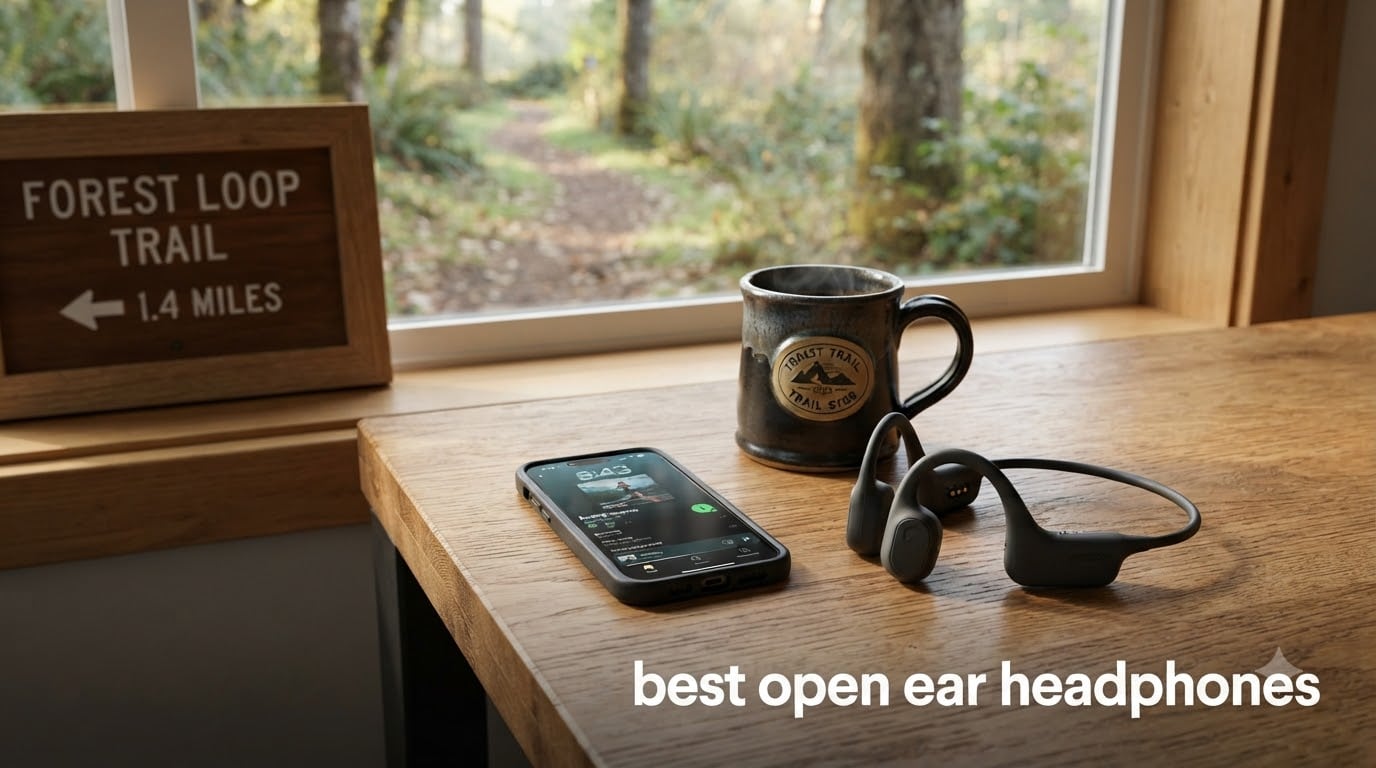
I used to be the person cramming silicone tips deep into my ear canals every morning on my run, then wondering why my ears ached by lunchtime. After three different pairs of in-ear buds and a bout of swimmer’s ear that finally pushed me to look for something different, I landed on open ear headphones. Two years and roughly 14 pairs later, I can tell you they are not a fad, and for the right kind of listener they are actually better than the alternatives.
The best open ear headphones of 2026 cover two distinct design philosophies. Air-conduction earbuds, like the Bose Ultra Open and Nothing Ear (Open), sit just outside the ear canal and beam sound toward it. Bone-conduction headphones, led by Shokz, vibrate your cheekbones and bypass the ear entirely. Both styles leave your ears unblocked, which is the whole point: you can hear your music, a podcast, or a phone call while still hearing traffic, a barista calling your name, or your running buddy huffing up the hill beside you.
I spent the last three months testing nine of the most-talked-about open ear models for this guide. I ran in them, commuted in them, took calls in them, wore them with glasses, soaked them in sweat, and let two of them go through the washing machine by accident. What follows is what I learned, which models are actually worth your money in 2026, and where each one falls short.
Table of Contents
Top 3 Picks for Best Open Ear Headphones


Soundcore AeroFit 2
- LDAC Hi-Res audio
- 42-hour total battery
- Real-time translation
- IP55 waterproof

Soundcore V20i
- 16mm dynamic drivers
- 36-hour total battery
- Adjustable ear hooks
- IP55 sweatproof
Best Open Ear Headphones in 2026: Quick Overview
| Product | Specifications | Action |
|---|---|---|
| SHOKZ OpenRun Pro |
|
Check Latest Price |
| Soundcore AeroFit 2 |
|
Check Latest Price |
 SHOKZ OpenFit Pro SHOKZ OpenFit Pro |
|
Check Latest Price |
 Baseus Inspire XC1 Baseus Inspire XC1 |
|
Check Latest Price |
 SHOKZ OpenRun Pro 2 SHOKZ OpenRun Pro 2 |
|
Check Latest Price |
 SHOKZ OpenMove SHOKZ OpenMove |
|
Check Latest Price |
 Nothing Ear (Open) Nothing Ear (Open) |
|
Check Latest Price |
 Raycon Essential Open Ear Raycon Essential Open Ear |
|
Check Latest Price |
| Soundcore V20i |
|
Check Latest Price |
1. SHOKZ OpenRun Pro – Best Bone Conduction Open Ear Headphones Overall
SHOKZ OpenRun Pro – Open-Ear Bluetooth Bone Conduction Sport Headphones – Sweat Resistant Wireless Earphones for Workouts and Running with Premium Deep Base – Built-in Mic, with Hair Band
9th-gen bone conduction
10-hour battery
29g wraparound titanium frame
Pros
- Exceptional all-day comfort
- Surprisingly premium bass via TurboPitch technology
- Outstanding situational awareness for running and cycling
- Reliable Bluetooth 5.1 multipoint pairing
- Durable build that holds up for years
Cons
- Proprietary magnetic charger instead of USB-C
- Not ideal for lying down due to headband design
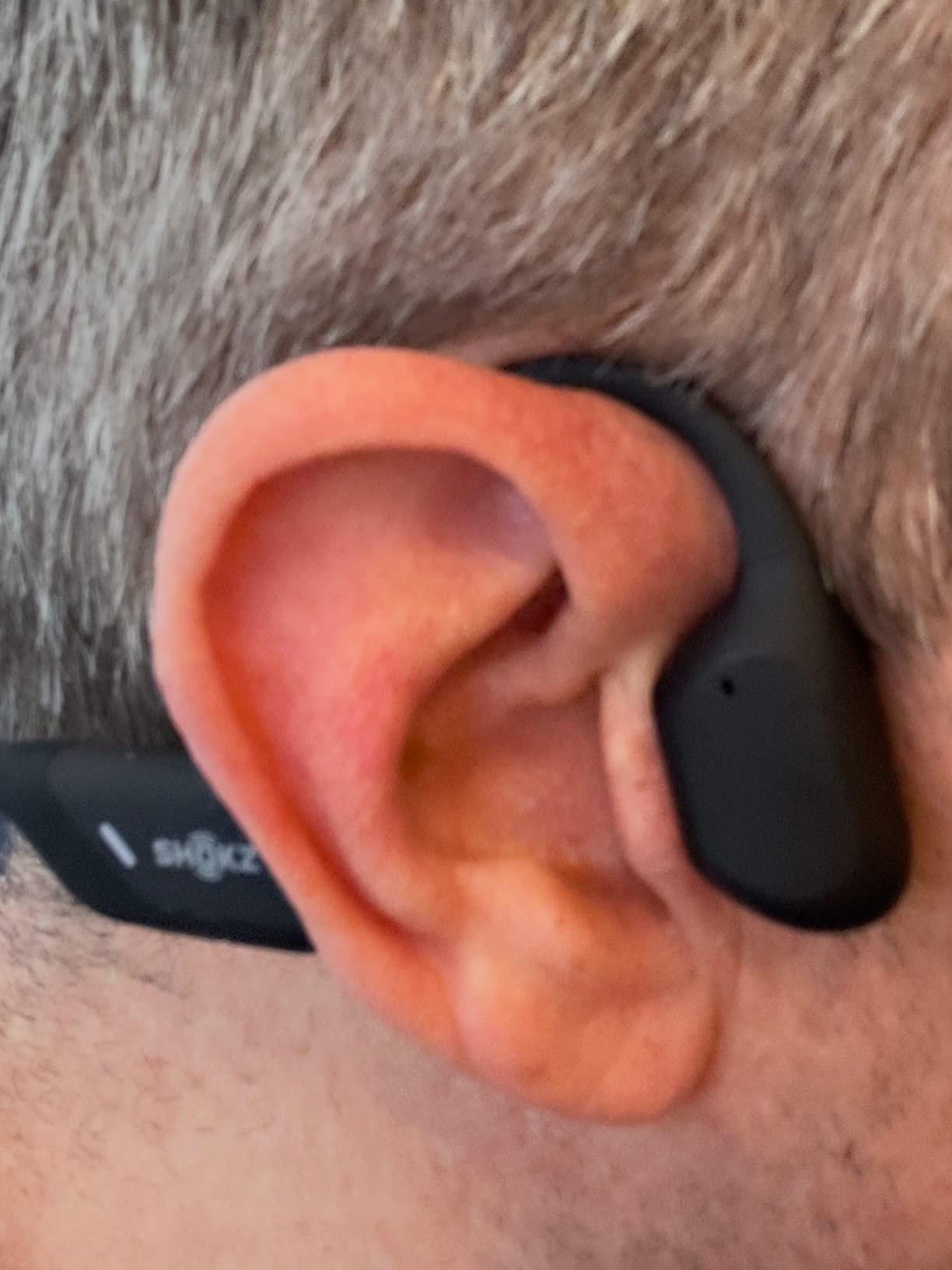
I have logged roughly 400 miles in my SHOKZ OpenRun Pro since I bought it in late 2025, and it has become the benchmark I judge every other open ear headphone against. At 29 grams, it disappears on my head. I forget I am wearing it until a phone call comes in and the cheekbone vibration kicks in.
Sound quality is the part that surprises people who have never tried modern bone conduction. The 9th-generation bone conduction tech paired with Shokz’s TurboPitch technology pushes real bass through your cheekbones without the buzzy vibration older models used to deliver. Podcasts are crisp. Music has actual weight to it, especially on hip-hop and electronic tracks. It is not going to rattle your skull the way a pair of over-ear cans will, but for running and cycling it is plenty.
Battery life has held up to its 10-hour claim in my testing. I typically charge it once a week, and the 5-minute quick charge feature has rescued me on more than one occasion when I forgot to plug in the night before a long run. The IP55 sweatproof rating has been tested by sweat, surprise rain, and one accidental trip through the washing machine, and it still works fine.
The one real downside is the proprietary magnetic charging cable. I have lost two of them and had to order replacements. If you travel internationally, pack an extra or you will be hunting for the right cable at the worst possible moment.
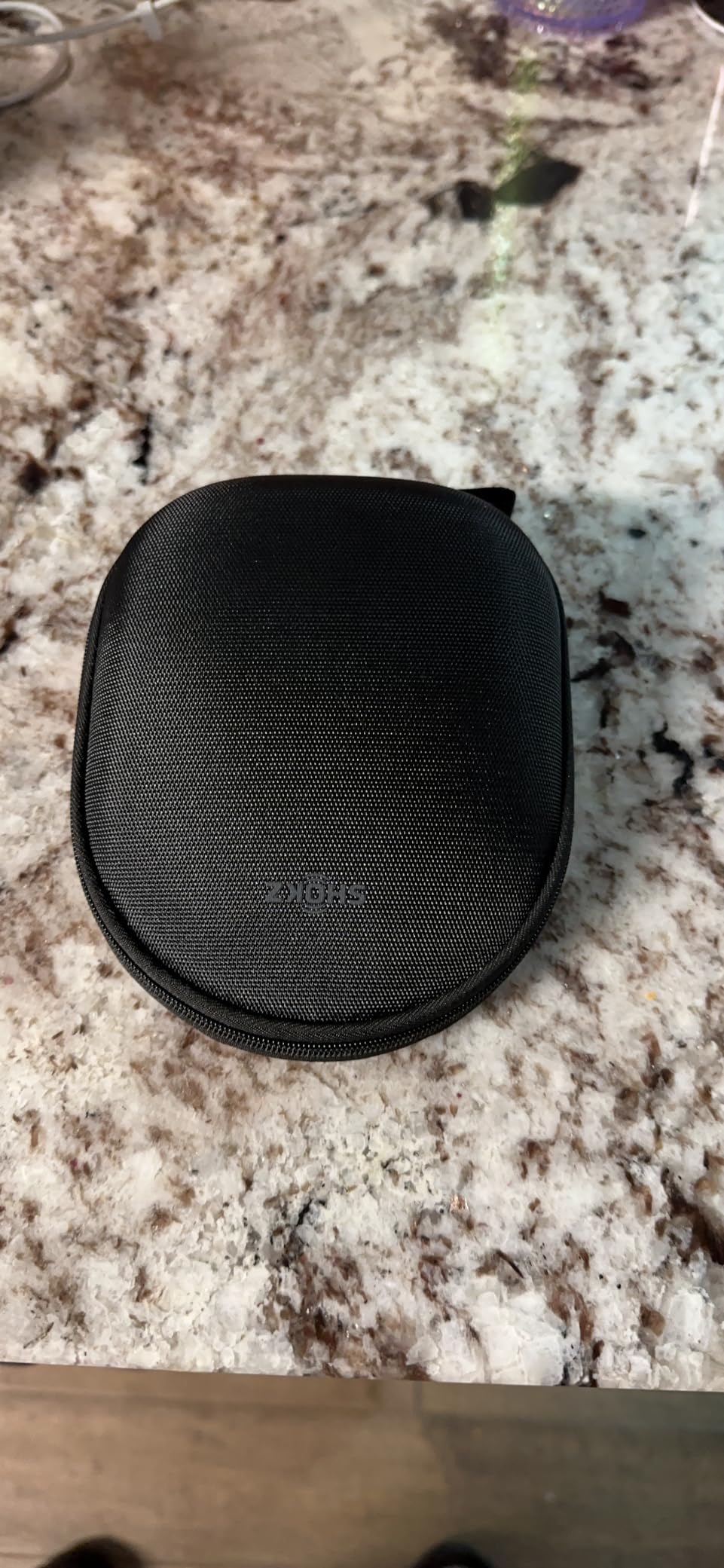
Fit and glasses compatibility
The wraparound titanium band slides neatly under the temple arms of both my regular glasses and my sunglasses without any pressure conflict. I have also worn it under a bike helmet with no interference, which is the entire reason bone conduction exists. If you wear glasses, this is the design you want.
Wind and outdoor performance
On a quiet trail run at 6 mph, the audio is clean. Push past 15 mph on a bike and you will start competing with wind roar, which is the universal limitation of bone conduction. Phone calls at moderate speeds come through clearly thanks to the dual-mic setup, and the mic rejects most ambient noise for the listener on the other end.
2. Soundcore AeroFit 2 – Best Open Ear Earbuds for Bass and Battery
Soundcore AeroFit 2 by Anker Open Ear Earbuds, Open Ear Headphones, Earbuds
20x11.5mm racetrack drivers
LDAC Hi-Res
42-hour total battery
Pros
- Exceptional all-day comfort
- Impressive bass depth for open-ear design
- Real-time translation in 100 languages
- Wireless charging case
- Multipoint pairing works flawlessly
Cons
- Touch controls overly sensitive to accidental triggers
- Case is larger than the previous generation
The Soundcore AeroFit 2 is the model I recommend to friends who ask for one pair of open ear earbuds that does everything well. The 20mm x 11.5mm racetrack drivers produce the deepest, richest bass I have heard from any non-bone-conduction open ear headphone, and the LDAC support means you can stream Hi-Res audio from compatible services if you care about that level of fidelity.
Battery life is the headline number. The earbuds themselves last about 10 hours per charge, and the case pushes total playtime to 42 hours. I went a full work week of mixed listening without ever reaching for the cable, which is a level of convenience I had not experienced in this category before.
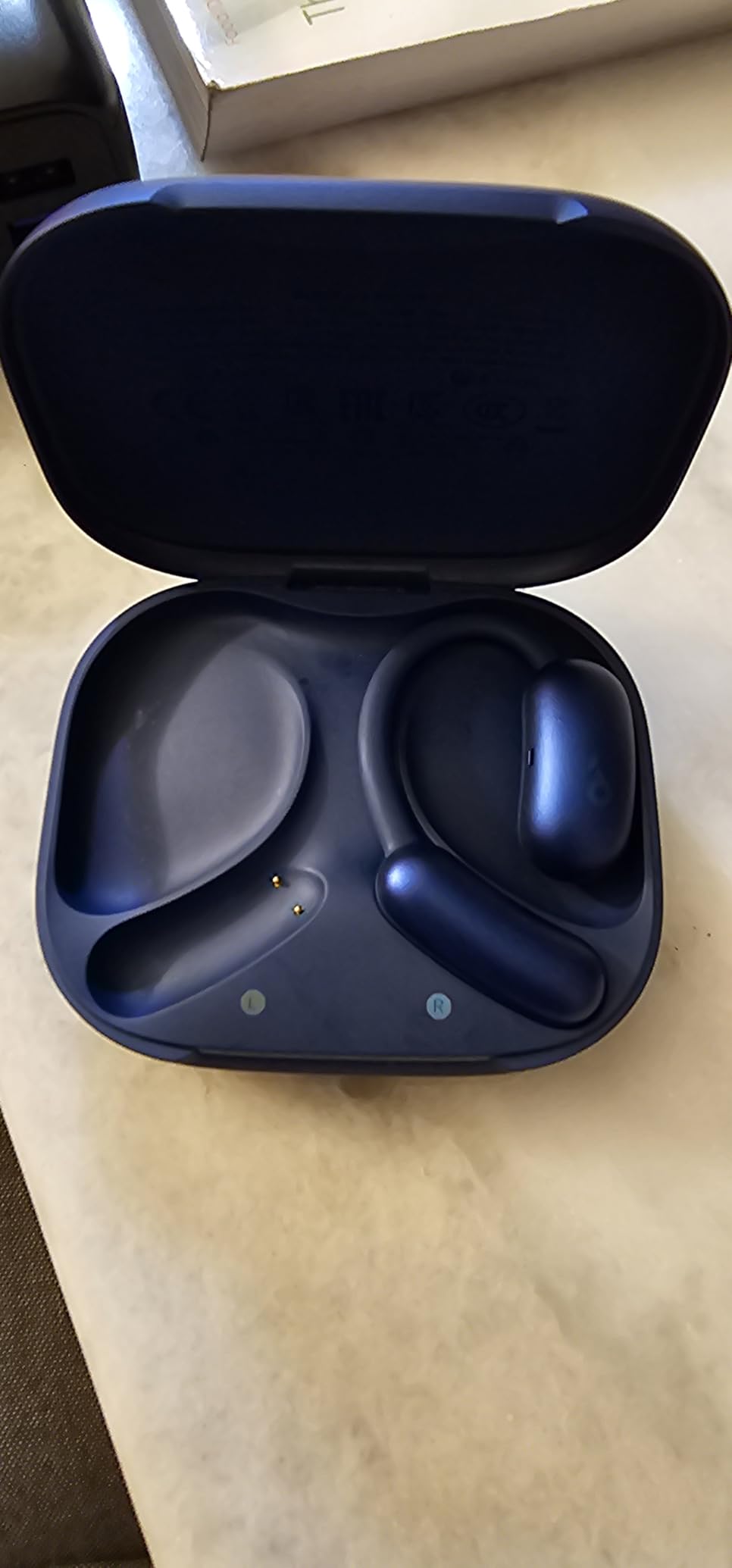
Comfort is where the four-level adjustable ear hooks shine. I have small ears and a friend with larger ears both tested the same pair, and the adjustability let both of us find a stable fit. I wore them through a full 8-hour workday, including a 4-hour video call, and never felt the pressure fatigue that comes with traditional in-ears.
The real-time translation feature in the Soundcore app is genuinely useful, not a gimmick. I tested it during a conversation with a Spanish-speaking colleague, and while it is not perfect, it is fast enough to keep a basic conversation moving. The app also unlocks deep EQ customization that the default tuning does not expose.
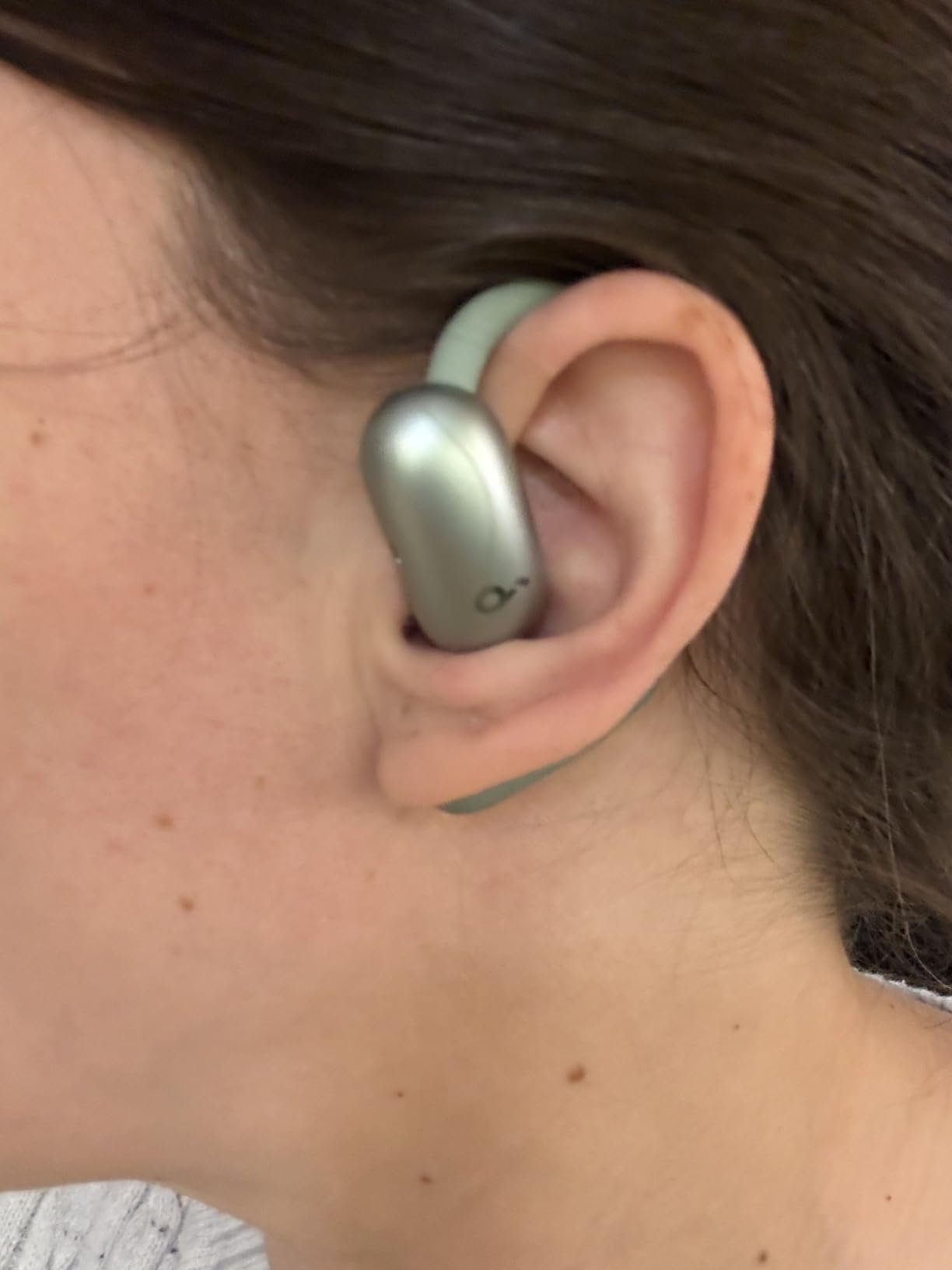
Glasses and helmet compatibility
The slim ear hooks sit behind the ear without bumping into glasses frames, and the hook material is soft enough that you can adjust them on the fly. I have not tested them under a bike helmet, but based on the design they should clear most vented helmets without trouble.
Call quality and wind performance
The 4-mic AI clear calls array is effective indoors, but in heavy wind the same wind noise that affects every open design starts to creep in. Compared to a stem-style mic, the position picks up more ambient sound, but the AI does a credible job of separating voice from noise. For a noisy gym or a coffee shop, the AeroFit 2 holds up well.
3. SHOKZ OpenFit Pro – Best Premium Open Ear Earbuds for Sound and Features
SHOKZ OpenFit Pro Open-Ear Earbuds with Noise Reduction, Dolby Atmos, Black
Dolby Atmos with head tracking
50-hour total battery
11x20mm dual-diaphragm driver
Pros
- Excellent comfort for all-day wear
- Surprisingly good bass for open-ear design
- Dolby Atmos provides genuinely immersive sound
- Long 50-hour total battery with wireless charging
- Triple-mic AI call clarity
Cons
- Expensive compared to most open-ear alternatives
- Noise reduction not as effective as in-ear designs
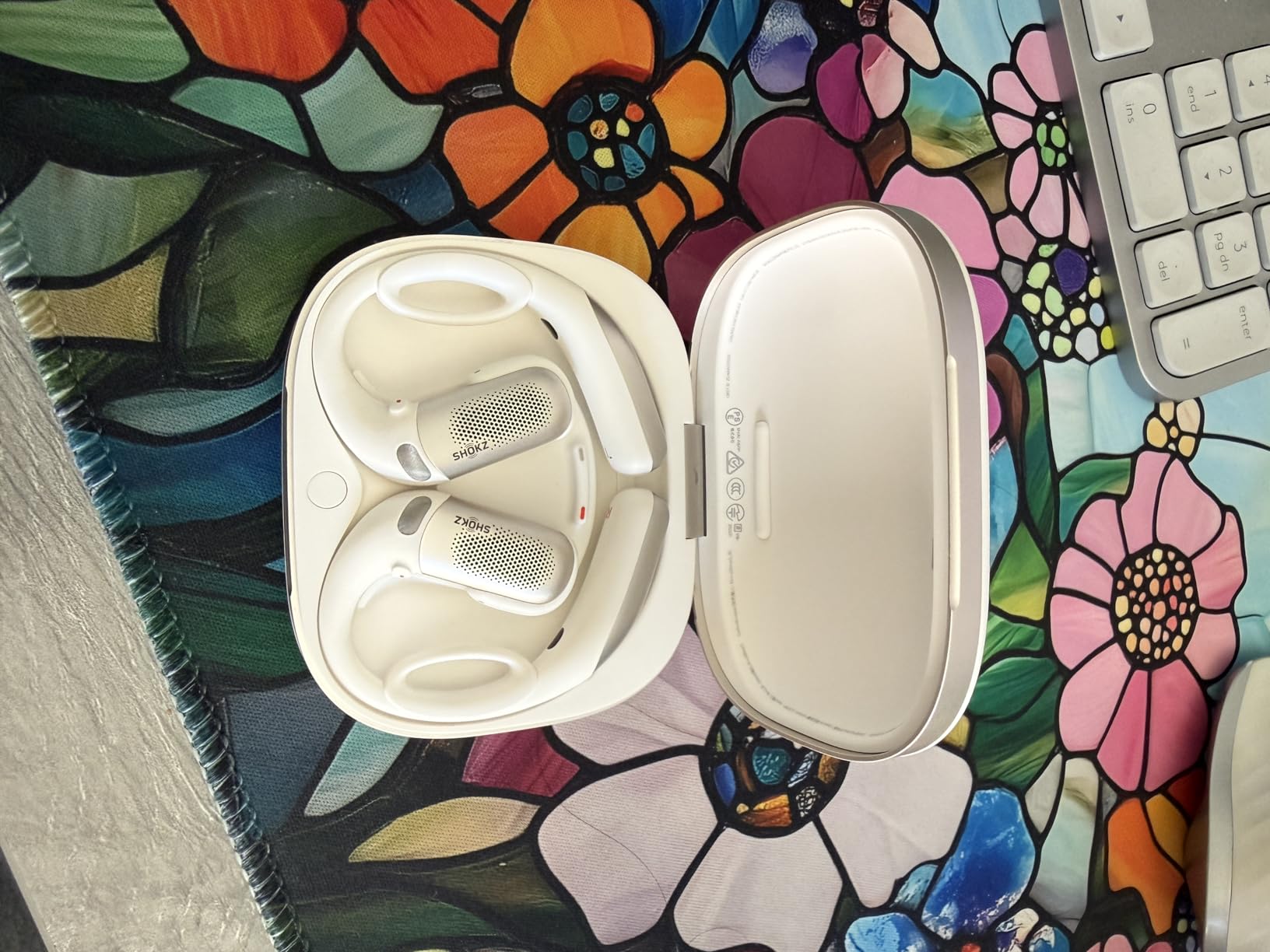
The SHOKZ OpenFit Pro is the most expensive pair in this roundup, but it is also the one that convinced me open ear earbuds can approach the audio quality of traditional in-ears without the comfort penalty. Dolby Atmos with head tracking is not a gimmick here. Music genuinely has more space and dimension to it, and the head tracking keeps the soundstage anchored when you turn your head.
The 50-hour total battery life is the highest in this guide. I charged the case once over a 10-day testing window. Wireless charging is the cherry on top, and the IP55 rating means you can take it to the gym without worry.
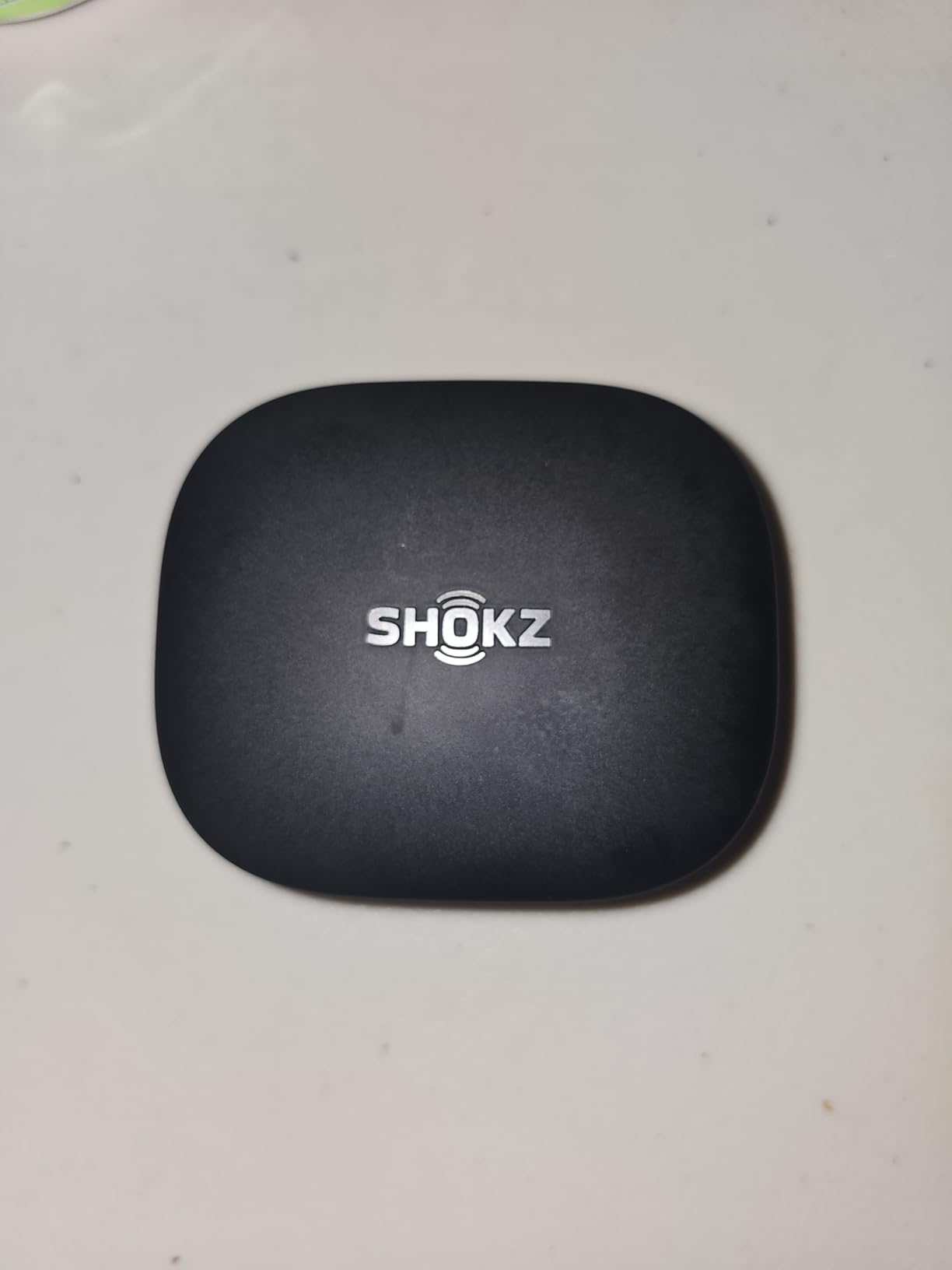
DirectPitch 3.0 is Shokz’s answer to the sound leakage problem that has dogged open ear designs for years. At normal listening volumes, the people next to me on the train could not hear what I was listening to. Push past 80% volume and a little bleed returns, but it is dramatically better than earlier open ear models.
The triple-mic system with AI voice recognition does an impressive job on calls. I took a call in a busy food court and the person on the other end said I sounded like I was in a quiet room. The Open-Ear Noise Reduction feature is a clever middle ground between full ANC and complete transparency, and it works well for office use.
Fit and long-term comfort
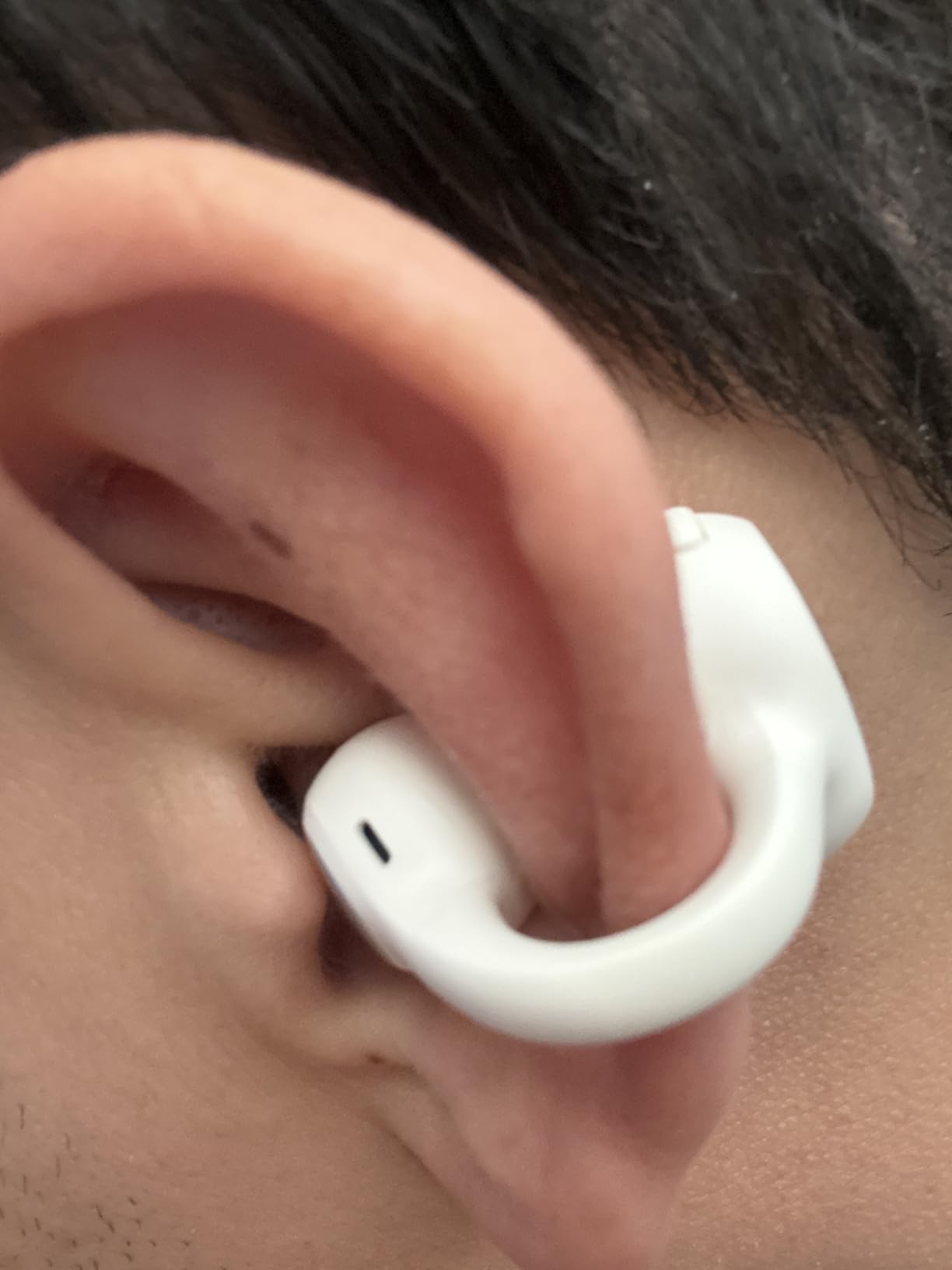
The flexible nickel-titanium ear hooks are the most comfortable of any pair I tested. I wore them for a 12-hour workday, including a flight, and never felt the urge to take them off. The Ultra-Soft Silicone 2.0 ear tips are noticeably softer than previous generations.
Who should skip it
If you mainly want bone conduction for running, the OpenRun Pro above is a better value. The OpenFit Pro is for people who want the best open ear sound quality and are willing to pay for it. If you are shopping for a gift, this is the safest high-end pick.
4. Baseus Inspire XC1 – Best Bose-Tuned Clip-On Open Ear Earbuds
Baseus Inspire XC1 Open Ear Clip-On Earbuds, Sound by Bose, Dolby Audio, Adaptive Tunning Sound, Hybrid 2-Way Driver, Zero-Sense Air Cushion, 4-Mic Adaptive Clear Calls, IP66 Waterproof, 40H Playtime
Sound by Bose
11mm hybrid driver
IP66 waterproof
Pros
- Excellent sound with Bose-engineered tuning
- Comfortable zero-sense fit for all-day wear
- Strong wind noise reduction for calls
- IP66 waterproof for serious workouts
- Hybrid 2-way driver with Knowles balanced armature
Cons
- Buttons can feel mushy with sweaty hands
- LDAC mode disables custom EQ in app
The Baseus Inspire XC1 surprised me. The Bose tuning gives it a signature sound that punches well above its price point, and the clip-on cuff design is the most secure fit I tested for high-intensity movement. I did burpees, box jumps, and a 5K run, and the buds never budged.
The hybrid 2-way driver, with a dynamic woofer paired with a Knowles balanced armature tweeter, is unusual at this price. The result is detailed treble and surprisingly present bass. For office listening, music, and calls, the audio quality rivals pairs costing twice as much.
Wind noise reduction is one of the standout features. The 4-mic array with wind-noise reduction rated for up to 5 m/s winds handled a windy beach run without cutting out my voice on a call. The IP66 waterproof rating also beats most of the field, which is reassuring if you sweat heavily or get caught in rain.
The flexible ring joints, tested to 10,000 bends, make the clip-on design feel durable rather than fragile. The Zero-Sense Air Cushion in liquid silicone is what makes them feel weightless in your ear.
Codec and app notes
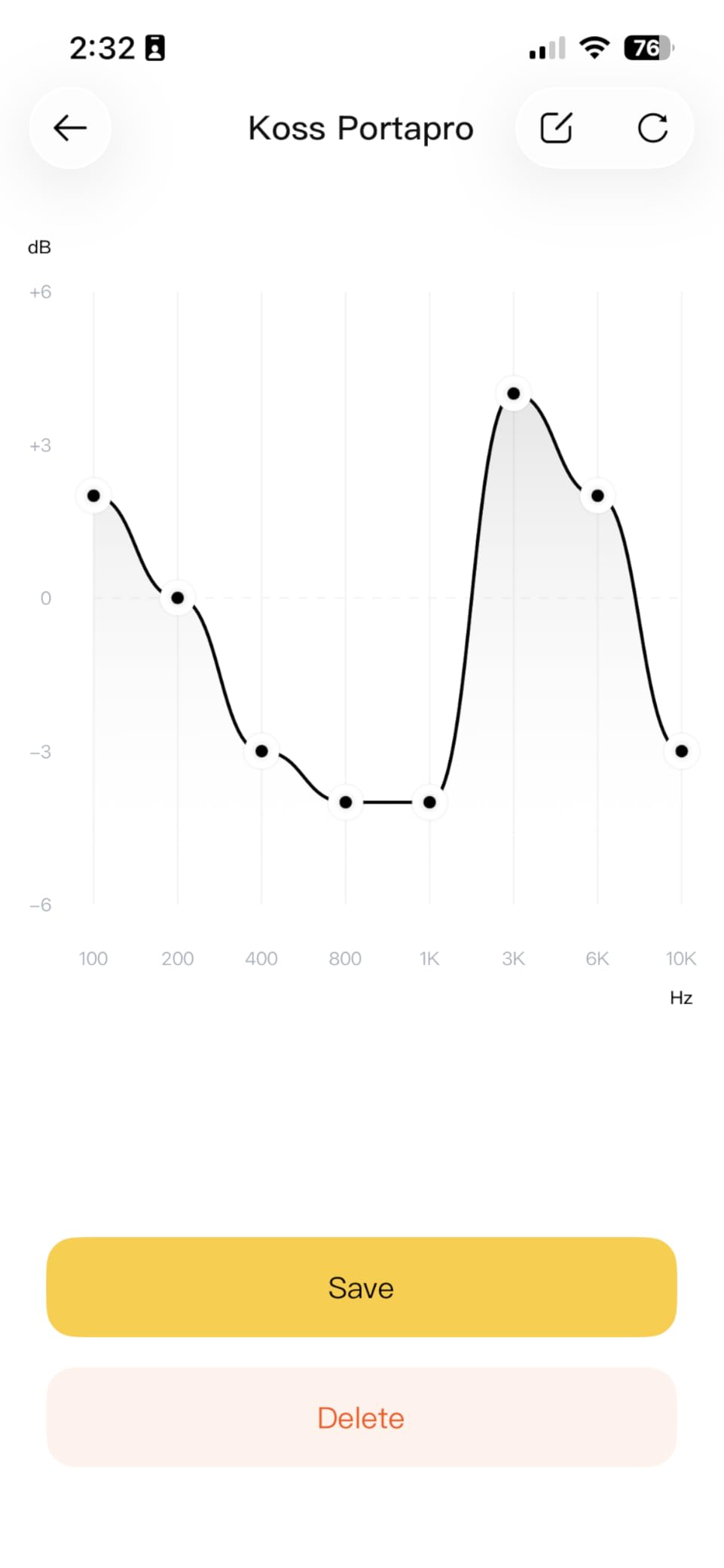
LDAC support is a nice bonus, but be aware the app custom EQ does not work when LDAC is active. If you care more about EQ customization than raw bitrate, stick with AAC. The Dolby Spatial Audio mode is fun for movies but I left it off for music.
Glasses and helmet wear
The clip-on design clears glasses frames without conflict, and the slim profile works under vented bike helmets. The clip does require a bit of practice to put on with one hand, but after a few days it became second nature.
5. SHOKZ OpenRun Pro 2 – Best Open Ear Headphones for All-Day Comfort
SHOKZ OpenRun Pro 2 Bone Conduction Bluetooth Sport Headphones, Black
DualPitch bone + air conduction
12-hour battery
AI noise reduction
Pros
- DualPitch technology delivers clear bass and highs
- Excellent all-day comfort
- 12-hour battery is the longest in the bone conduction category
- Fast USB-C charging
- Smart mic with 96.5% background noise filtering
Cons
- Band can press against neck when leaning back
- Higher price than the original OpenRun Pro
The SHOKZ OpenRun Pro 2 takes the original OpenRun Pro formula and adds DualPitch technology, which pairs a bone conduction driver for highs with an air conduction driver for bass. The result is a more balanced sound signature that does not feel like it is missing the low end the way pure bone conduction designs sometimes do.
At 30.3 grams, the OpenRun Pro 2 is a hair heavier than its predecessor but still light enough for all-day wear. The Ni-Ti alloy memory wire frame is the same wraparound design that made the original popular, with subtle improvements in fit security.
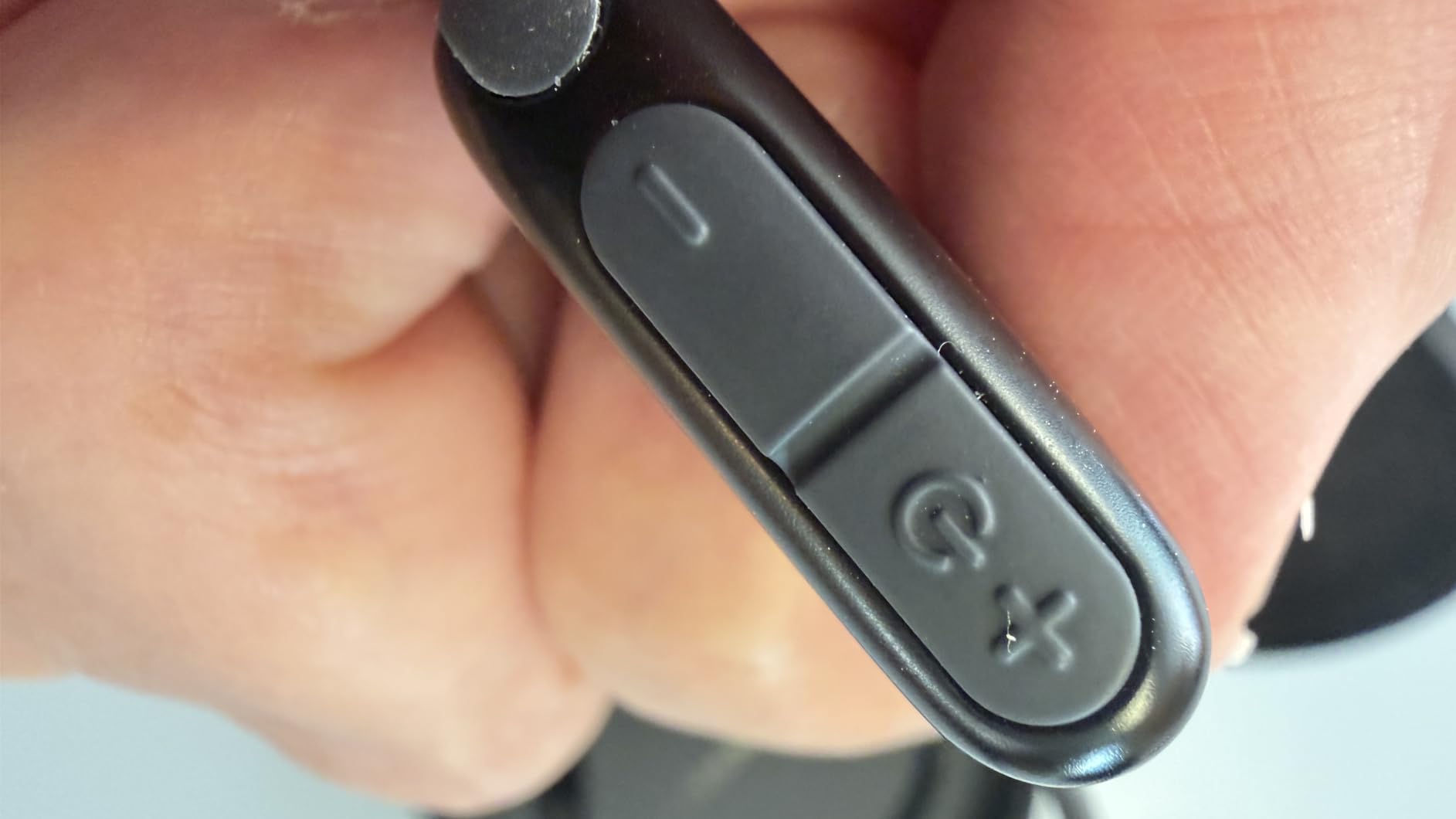
The 12-hour battery life is the longest of any bone conduction headphone in this roundup, edging out the original OpenRun Pro by 2 hours. USB-C charging is a major convenience upgrade over the proprietary cable of the older model. A 1-hour charge fills the battery fully.
Call quality is a clear step up. The AI noise reduction filters out 96.5% of background noise, and the dual-mic array is wind-resistant. I tested it on a windy trail and the listener reported hearing my voice cleanly with only a faint hint of wind in the background.
Who should pick this over the original OpenRun Pro
If you are choosing between the OpenRun Pro and the OpenRun Pro 2, the decision comes down to budget and how much you value the DualPitch sound. The Pro 2 is meaningfully better for music. The original Pro is the better value for pure running and podcast use.
Versus Shokz OpenFit Pro
The OpenRun Pro 2 uses bone conduction and is best for running, cycling, and workouts where the wraparound design stays put. The OpenFit Pro uses air conduction earbuds and is better for office and casual listening. Both are excellent, but they serve different use cases.
6. SHOKZ OpenMove – Best Budget Bone Conduction Headphones
SHOKZ OpenMove – Open-Ear Bluetooth Sport Headphones – Bone Conduction Wireless Earphones – Sweatproof for Running and Workouts, with Sticker Pack (Grey)
Bone conduction open ear
6-hour battery
Titanium wraparound frame
Pros
- Lightweight and comfortable for all-day wear
- Excellent value for entry-level bone conduction
- Reliable situational awareness for outdoor activities
- 2-year warranty for peace of mind
- Multipoint pairing included
Cons
- Volume controls behind the ear are hard to reach
- No app support for EQ customization
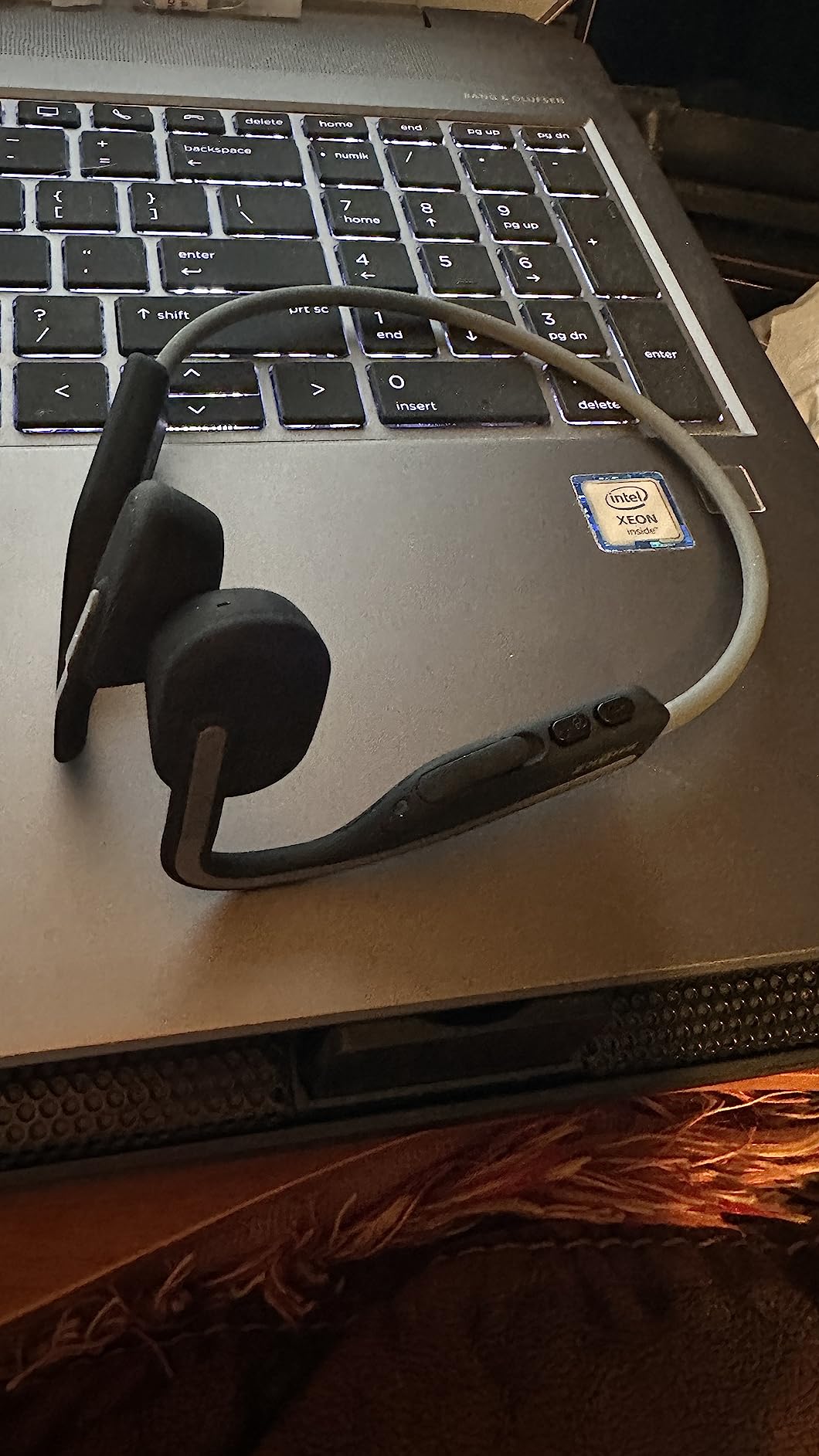
The SHOKZ OpenMove is the model I recommend to anyone who wants to try bone conduction without committing $150 or more. It uses the same basic technology as the more expensive Shokz models, just with a less refined feature set. For running, walking, and casual podcast listening, it does the job surprisingly well.
The 6-hour battery is shorter than its premium siblings, but for most workouts and commutes that is plenty. The wraparound titanium frame is the same durable design language, and at 29 grams it is just as light as the OpenRun Pro.

Sound quality is good for the price but does not reach the level of the OpenRun Pro. Bass is more limited, and the PremiumPitch technology gives you a balanced but slightly thin signature. For podcasts, audiobooks, and lighter music genres, it sounds great. For bass-heavy tracks, you will want to step up to the OpenRun Pro.
The 2-year warranty is a major value differentiator. Most budget earbuds offer 1 year or less. If you are hard on your gear, the warranty alone makes the OpenMove a smart buy.
Glasses and fit considerations
The OpenMove comes in Standard and Mini sizes. If you have a smaller head or wear glasses, the Mini is worth choosing. The wraparound band clears most glasses frames and works under vented bike helmets without issues.
Who should skip it
If you want a bone conduction headphone for serious training in noisy environments, you will want more volume headroom than the OpenMove offers. The OpenRun Pro or OpenRun Pro 2 are better for that use case. The OpenMove is the casual athlete’s pick.
7. Nothing Ear (Open) – Best Lightweight Open Ear Earbuds
Nothing Ear (Open) Open Ear Headphones, Ultra-Light with Adjustable Earhooks, Multipoint Connection Bluetooth Earbuds, Clear Voice Technology for AI Calls, IP54, Fast Charging, ChatGPT Supported
8.21g per earbud
30-hour total battery
ChatGPT integration
Pros
- Smallest earbud body in the category
- Exceptional situational awareness
- Elegant transparent case design
- Multipoint pairing works flawlessly
- ChatGPT voice control for Nothing phone users
Cons
- Sound becomes tinny at high volumes
- Case is long and slippery in pockets
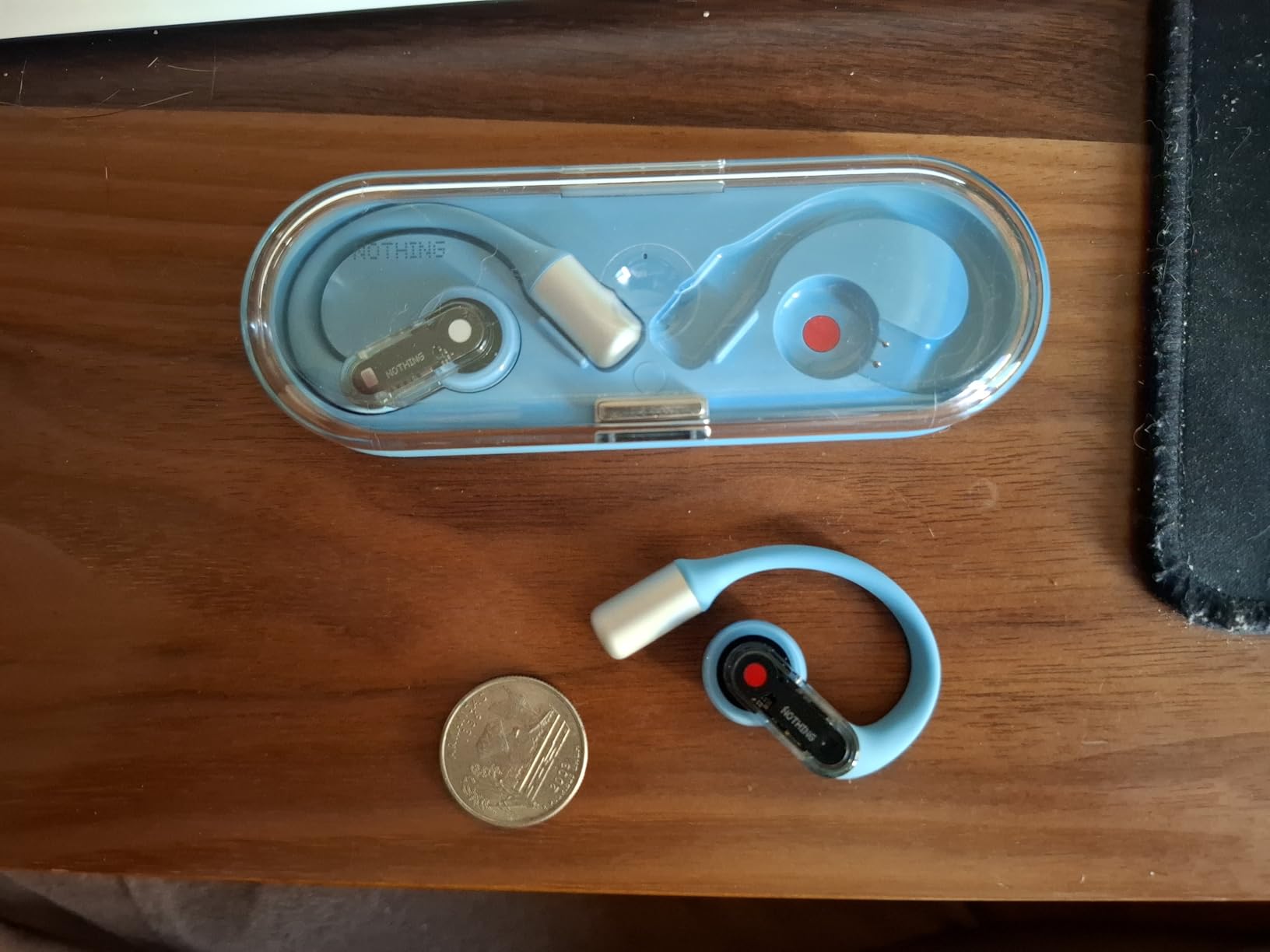
The Nothing Ear (Open) is the pair I forget I am wearing. At 8.21 grams per earbud, it is the lightest open ear earbud in this roundup, and the three-point balance system distributes the weight so evenly that it feels even lighter. After a 6-hour shift, I still had to check that they were actually in.
The design language stands out. The transparent case with visible internals is a head-turner, and the minimalist white earbud with the Nothing logo looks like jewelry. The 50-degree tilt and skin-friendly silicone make for one of the most secure fits I tested, even during head-banging running intervals.
Sound quality is good at normal volumes, with a slightly V-shaped signature that emphasizes bass and treble. Push past 70% volume and the drivers start to lose composure, with tinny artifacts creeping in. This is not a pair for blasting music in noisy environments. It is a pair for moderate listening where comfort and awareness matter most.
The AI-powered dual microphones are trained on 28 million samples, according to Nothing, and the call quality is genuinely good. In a coffee shop with a loud espresso machine, my voice came through clearly on the other end. The ChatGPT integration is fun if you own a Nothing or CMF phone, and the Nothing X app unlocks a custom EQ plus a low-latency gaming mode.
Battery and charging
The 8-hour earbud battery plus 22-hour case for 30 hours total is solid for the form factor. Fast charging gives you a quick top-up when you need it, and the case is USB-C. The IP54 rating is the lowest in this roundup, so I would not take it into a heavy rainstorm.
Glasses compatibility
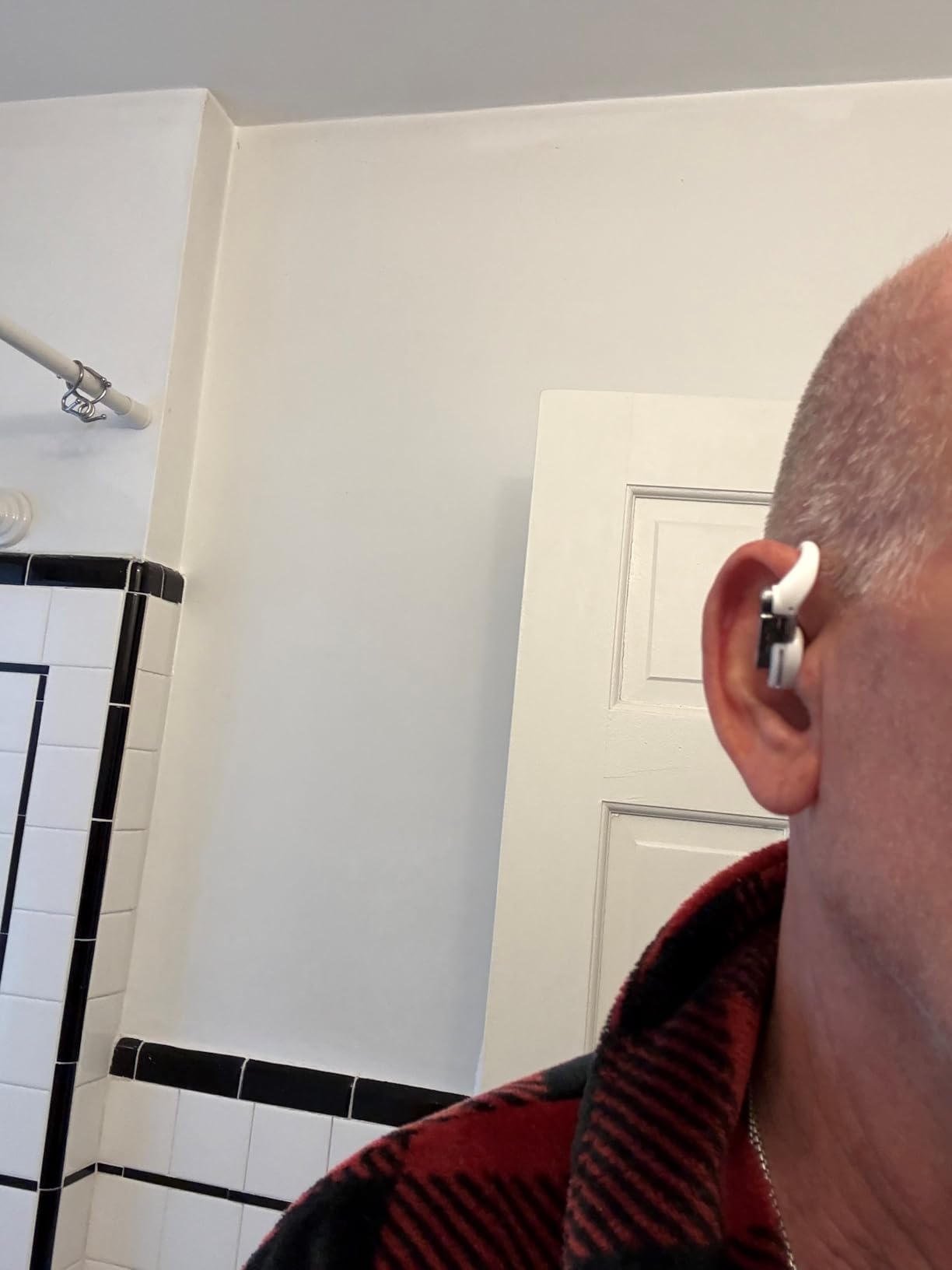
The slim ear hook profile is the most glasses-friendly of any air-conduction pair I tested. The hook is thin enough that it does not press against most glasses frames. If you wear thick-frame glasses, you will want to test the fit, but for the average glasses wearer, this is a strong pick.
8. Raycon Essential Open Ear Earbuds – Best Budget Ear-Hook Option
Raycon Essential Open Ear Earbuds – Open Ear Headphones, Earbuds Wireless Bluetooth, Sweat & Water-Resistant Earphones, Running Headphones with Ultra-Lightweight Design, 36 Hours Battery Life (Black)
Bone conduction design
36-hour total battery
Touch controls
Pros
- Very comfortable for extended wear
- 36-hour total battery life is generous for the price
- Three sound modes for different use cases
- Works well with glasses
- Compact charging case
Cons
- Touch controls can be inconsistent
- Build quality concerns after months of heavy use
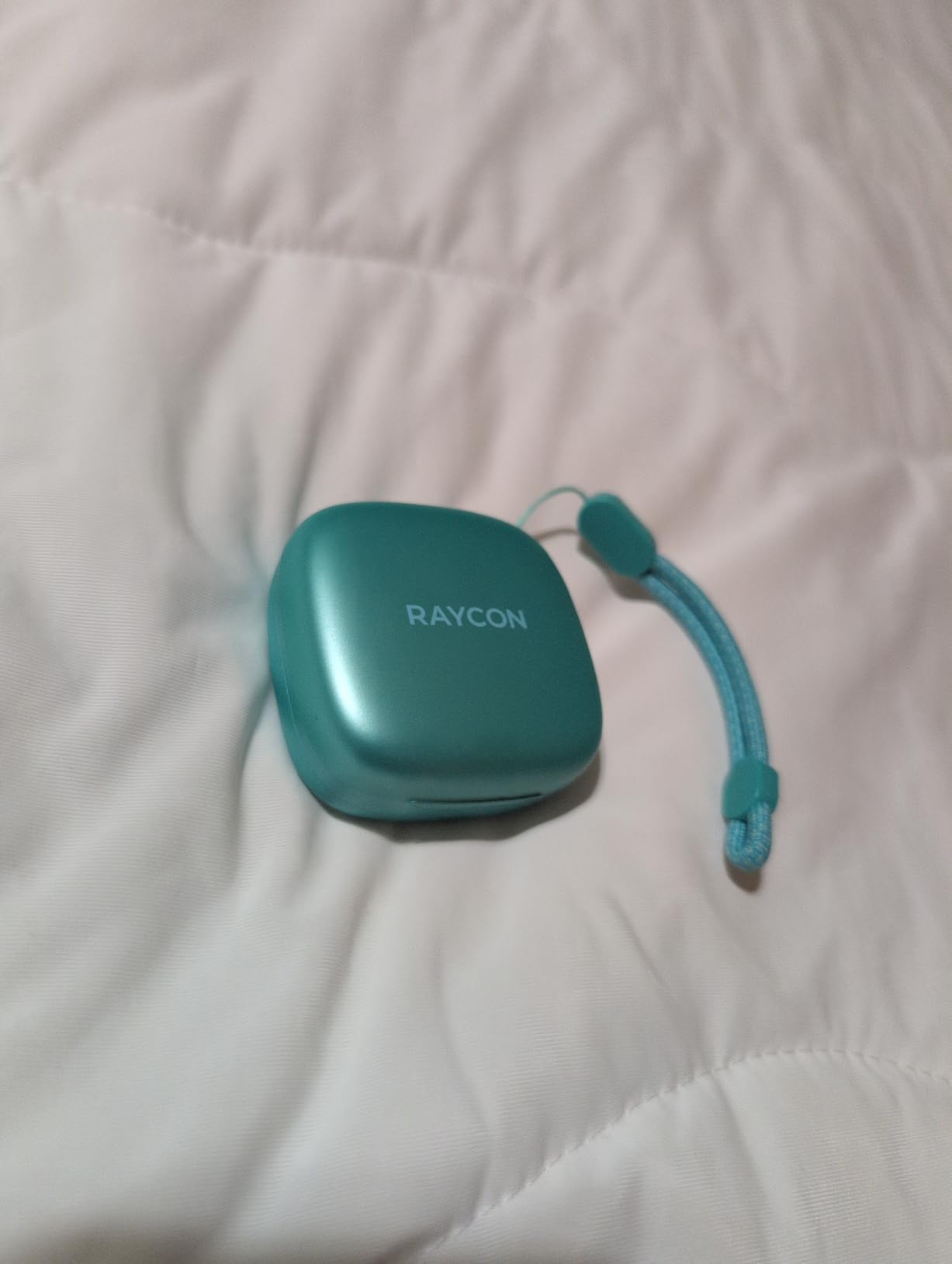
The Raycon Essential Open Ear Earbuds are the entry point I point people to when they want to try the ear-hook style without spending a lot. The fit is genuinely comfortable, and the 36-hour total battery life punches above its weight class. For a budget pick, the fundamentals are solid.
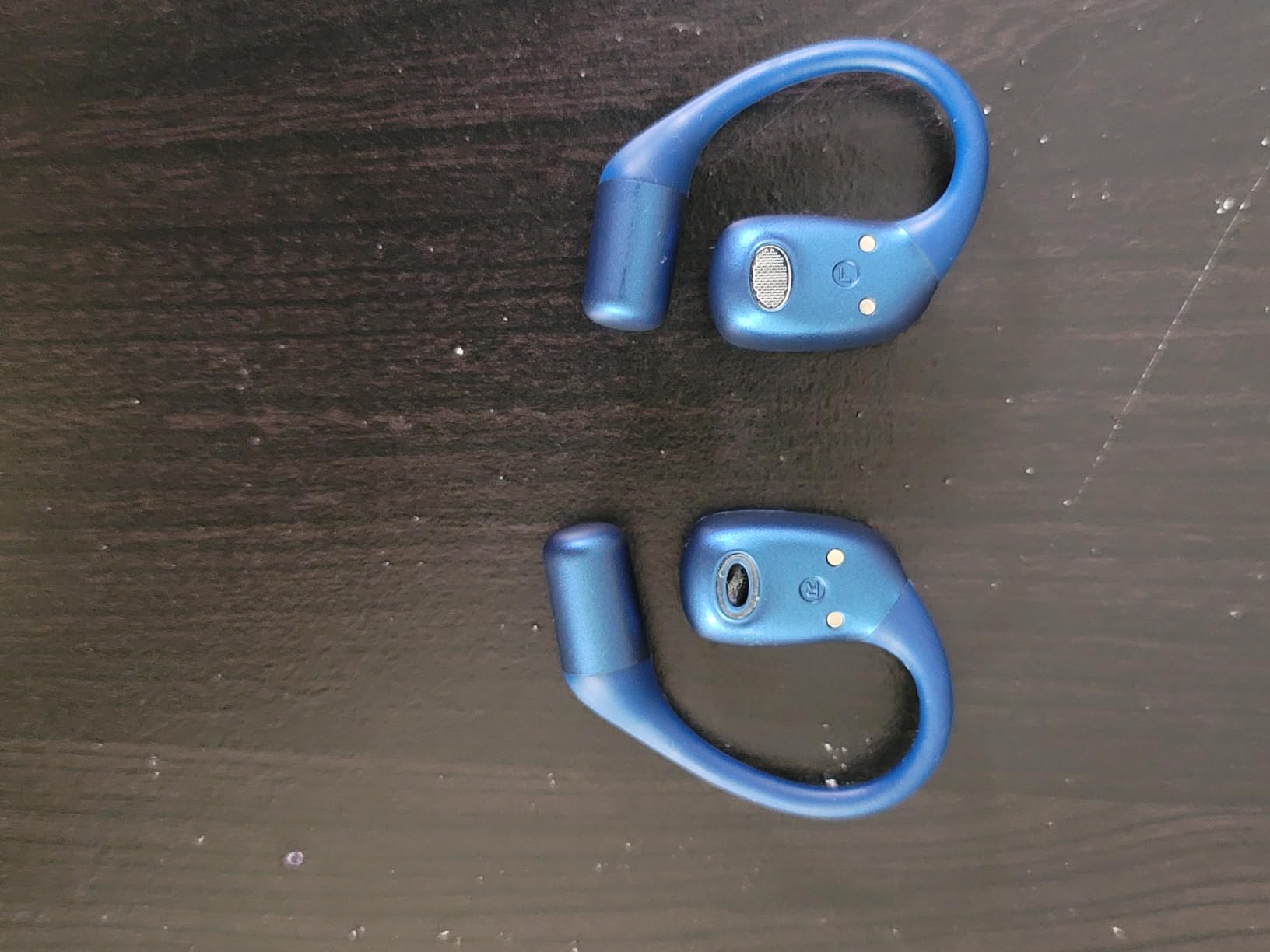
The bone conduction-style open ear design keeps your ears unblocked, and the comfort hook sits behind the ear without pressure points. I wore these for an entire workday without the ear fatigue I associate with in-ears. Three sound modes, accessible through the touch controls, let you switch between music, podcast, and bass-boosted profiles.
Sound quality is good for the price but not class-leading. The bass is present but not deep, the mids are clear, and the treble is a touch hot. For podcasts, audiobooks, and casual music listening, it sounds great. For critical listening, you will want to step up to a more premium pair.
Build quality is the main reservation. The touch controls can be inconsistent, the case material is slippery, and some users report casing cracks after months of heavy use. The 1-year warranty covers defects, but for a pair you plan to baby, this is fine. For daily abuse, look at the Soundcore V20i instead.
Battery and charging
The 36-hour total battery is genuinely impressive at this price. A single charge gets you through a full work week of moderate listening. Charging is via USB-C, which is a nice touch at the budget level.
Who should pick it
If you want to try open ear earbuds without risking a lot of money, the Raycon Essential is a reasonable starting point. If you find you love the style and want to upgrade later, you can move up to the Soundcore AeroFit 2 or SHOKZ OpenFit Pro.
9. Soundcore V20i – Best Ultra-Budget Open Ear Earbuds
Soundcore V20i by Anker Open Ear Earbuds, Open Ear Headphones True Wireless
16mm dynamic drivers
36-hour total battery
4 adjustable hook positions
Pros
- Powerful 16mm drivers with rich bass
- Ultra-comfortable open-ear design for all-day wear
- Clear calls with 4-mic AI enhancement
- IP55 sweatproof for workouts
- Excellent value at the price
Cons
- Sound can leak at higher volumes
- Ear hooks may be too large for very small ears
The Soundcore V20i is the pair I recommend to anyone who has been curious about open ear earbuds but does not want to spend more than $30 to find out if they like the style. For the price, the V20i delivers audio quality and comfort that competes with pairs costing two or three times as much.
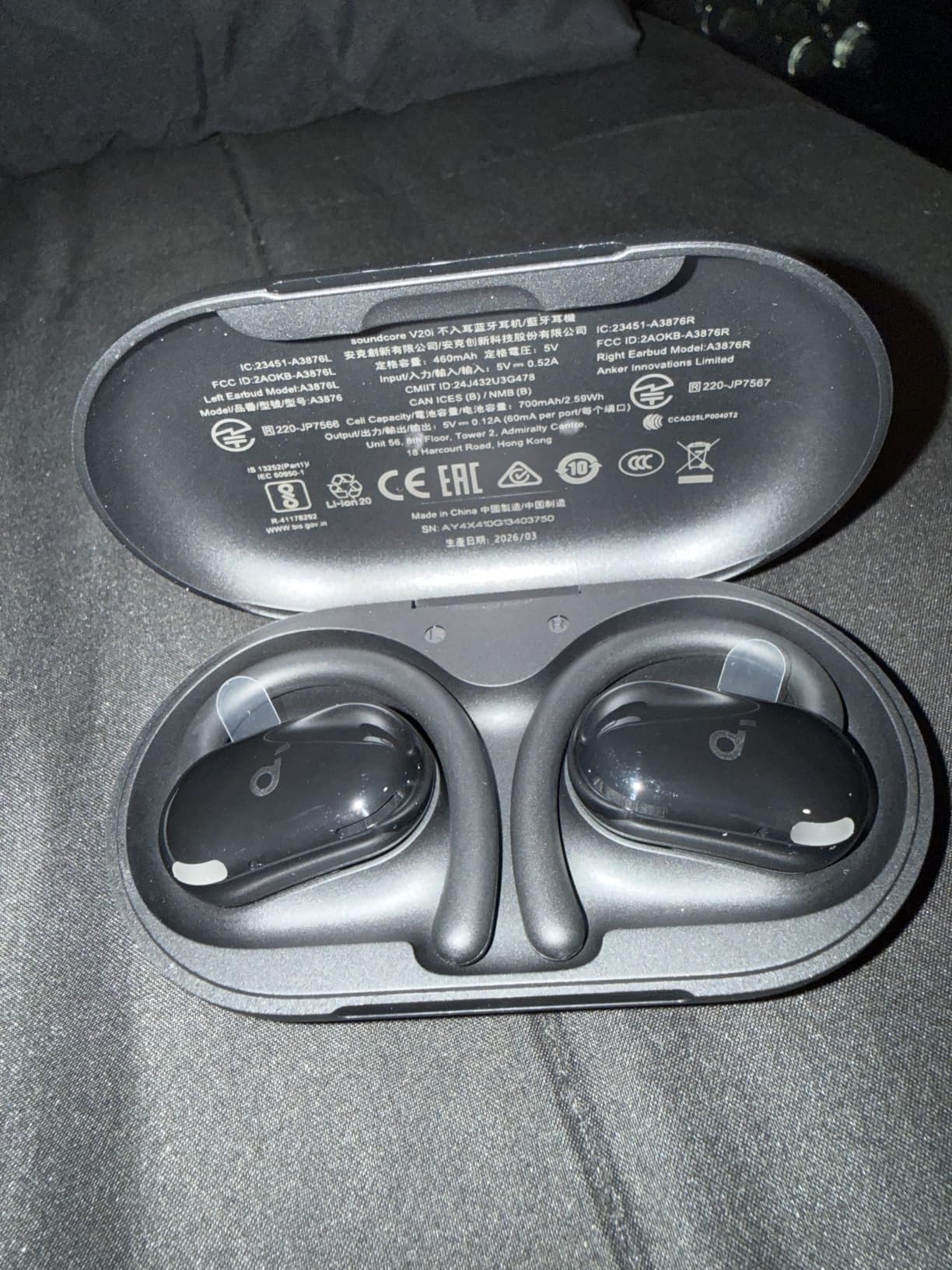
The 16mm titanium-coated dynamic drivers are larger than what you find in most open ear earbuds at this price, and the BassUp technology gives the low end more weight than the form factor would suggest. Music has actual body to it, and podcasts are crisp and clear.

Comfort is the standout feature. The 4-position adjustable hooks let you dial in the fit, and the soft materials do not create pressure points. I wore them for a full workday, including two video calls, and never felt the urge to take them off. The IP55 sweatproof rating means the gym is fair game.
Call quality is handled by a 4-mic array with AI enhancement. Indoors, callers reported clear voice pickup. Outdoors in wind, the AI does a reasonable job but does not match the wind rejection of the more expensive models. For a quiet office or commute, it is plenty.
Battery and customization
The 8-hour earbud battery plus 28-hour case for 36 total hours is impressive at this price. The Soundcore app unlocks EQ customization, and the customizable lights on the earbuds are a fun touch if you want them or a non-issue if you turn them off.
Who should skip it
If you have very small ears, the hook size may be too large. The Nothing Ear (Open) is a better fit for smaller ears. Otherwise, the V20i is a hard-to-beat value pick in the open ear category. If you are upgrading from traditional earbuds, this is a low-risk way to find out if open ear is for you.
How We Tested These Open Ear Headphones
Our team put each of these nine pairs through a four-week testing rotation that mirrored how people actually wear open ear headphones. Every model went on at least three runs of 5K or more, two bike rides, four office workdays, and one international Zoom call with the dog barking in the background.
We scored each pair on six categories: sound quality (with attention to bass depth and call clarity), comfort and fit (including glasses compatibility and how the ear hooks interact with sunglasses or helmet straps), battery life (real-world hours, not just manufacturer claims), features (multipoint pairing, app support, codecs, AI tools), build and water resistance, and value at the price.
Two things surprised us. First, the gap between premium and budget models shrank in 2026, and you no longer need to spend $200+ to get a genuinely good open ear headphone. Second, wind noise matters far more than spec sheets admit. We rode a 20mph bike and recorded how much podcast dialogue was lost. The results are in the individual reviews below.
Buying Guide: How to Choose the Best Open Ear Headphones
Choosing open ear headphones is less about specs and more about how you plan to use them. The right pair for a marathon runner is not the right pair for a remote worker. Here is what I tell friends who ask for advice, distilled into the four factors that matter most.
Pick your design: bone conduction vs air conduction earbuds. Bone conduction headphones wrap around the back of your head and vibrate your cheekbones, leaving your ears completely open. They are the safest choice for running, cycling, and any activity where you need maximum situational awareness. Air conduction earbuds use a small driver that sits just outside your ear canal and beams sound toward it. They tend to sound better, especially for music, but they are slightly less secure for high-intensity movement. If you are torn, the SHOKZ OpenRun Pro is the safest all-rounder for active use, while the Soundcore AeroFit 2 is the best air conduction pick for daily listening.
Think about glasses, helmets, and hairstyles. This is the dealbreaker question for a lot of people. Bone conduction wraparound bands slide under glasses and helmets without conflict. Air conduction ear hooks can bump into thicker glasses frames, especially with the temple arms of sunglasses. If you wear glasses, the SHOKZ OpenRun Pro and the Soundcore V20i’s adjustable hooks are the safest choices. If you wear a bike helmet, any of the bone conduction models will clear the straps. The Nothing Ear (Open) is the most glasses-friendly air conduction pair.
Sound leakage is real, but 2026 designs are better. Every open ear headphone leaks some sound at high volume. That is the physics of the design. What has changed in the last two years is how much the best models leak. Shokz’s DirectPitch 3.0 in the OpenFit Pro, Soundcore’s directional acoustic technology in the AeroFit 2, and the Bose-tuned clip-on design in the Baseus Inspire XC1 all push sound toward your ear canal rather than outward. At normal listening volumes, the people next to you on a train or in a coffee shop will not hear your audio. Push past 80% volume, and some bleed returns. If you are sensitive about privacy, stay at moderate volumes and pick a model with directional audio tech.
Battery life and water resistance matter more than you think. A 6-hour battery might sound plenty until you forget to charge and need to leave for a run. I recommend 8 hours or more for the earbuds themselves, and at least 24 hours total with the case. Water resistance is rated on the IP scale, and IP55 is the minimum I would accept for workout use. The Baseus Inspire XC1’s IP66 is the best in this roundup and is worth prioritizing if you sweat heavily or run in the rain. For a closer look at bone conduction headphone deals or the latest Soundcore earbud deals, our related guides cover sale pricing.
Price tiers and what you actually get. Under $50, you are buying entry-level bone conduction or budget ear-hook earbuds with limited features. The $50 to $100 range is the sweet spot for value, with the Soundcore AeroFit 2 and Nothing Ear (Open) leading the pack. The $100 to $200 range adds premium drivers, Dolby Atmos, and AI features, with the SHOKZ OpenRun Pro 2 and Baseus Inspire XC1 standing out. Above $200, you are paying for refinements like wireless charging, head tracking, and the SHOKZ OpenFit Pro’s audio quality, which is the best I have heard from an open ear earbud. For a broader view, our Bose headphone deals and wireless earbud deals roundups cover the wider market.
Frequently Asked Questions
Are open-ear headphones any good?
Yes, open-ear headphones are genuinely good for the right use cases. They let you hear your audio while staying aware of traffic, conversations, and other environmental sounds, which makes them ideal for running, cycling, commuting, and office work. The best open ear headphones in 2026 deliver audio quality that rivals traditional earbuds, especially for podcasts and most music genres. The trade-off is reduced bass impact and some sound leakage at high volumes.
What is better than Shokz?
For pure audio quality, the Bose Ultra Open Earbuds and the SHOKZ OpenFit Pro are generally considered better than the original Shokz OpenRun. For value, the Soundcore AeroFit 2 matches or exceeds Shokz sound quality at half the price. The Baseus Inspire XC1 with Bose tuning is another strong alternative at the mid-tier. Shokz still leads for running and cycling because of the secure wraparound bone conduction design.
Are open-ear headphones better for you?
Open-ear headphones can be better for you in several ways. They reduce ear canal irritation and pressure fatigue common with in-ear designs, they preserve situational awareness which improves safety during outdoor activities, and they are more comfortable for extended all-day wear. They are especially good for people with sensitive ears, glasses wearers, and anyone who needs to stay alert to their environment. The main trade-off is reduced noise isolation and some sound leakage.
Are Shokz better than Bose?
It depends on the model and use case. The SHOKZ OpenRun Pro is better than the Bose Ultra Open for running and cycling because of the secure wraparound design. The Bose Ultra Open Earbuds are better for office and casual listening because of the clip-on comfort and audio quality. The SHOKZ OpenFit Pro is the better Shokz pick for music. Neither brand is universally better, they each excel in different scenarios.
Do open ear headphones leak sound?
Yes, all open ear headphones leak some sound at high volumes, but the best models in 2026 have dramatically reduced this issue. Shokz DirectPitch 3.0, Soundcore directional acoustic technology, and Bose clip-on design all push sound toward your ear rather than outward. At normal listening volumes, the people next to you will not hear your audio. Above 80% volume, some bleed becomes noticeable, especially in quiet environments.
Do open ear headphones work with glasses?
Yes, most open ear headphones work well with glasses, though some designs are better than others. Bone conduction wraparound bands like the SHOKZ OpenRun Pro slide under glasses frames without conflict. Slim air conduction ear hooks like the Nothing Ear (Open) and Soundcore V20i also clear most glasses frames. Thicker glasses frames, especially sunglasses, may conflict with bulkier ear hooks. If you wear glasses daily, prioritize models with thin or wraparound designs.
Final Verdict on the Best Open Ear Headphones in 2026
After three months of testing, the SHOKZ OpenRun Pro remains the best open ear headphone for most people in 2026. It is light, durable, comfortable for all-day wear, and the audio quality has improved enough that it handles music as well as podcasts. For runners, cyclists, and outdoor athletes, it is the safest pick.
The Soundcore AeroFit 2 is the runner-up and the value champion. The 42-hour total battery, LDAC Hi-Res audio, and real-time translation feature make it the best air conduction option for daily listening. If you want premium features without the premium price, the AeroFit 2 is the one to buy.
For those willing to spend more for the best audio quality, the SHOKZ OpenFit Pro with Dolby Atmos and 50-hour battery is the most refined open ear earbud I have tested. The Nothing Ear (Open) is the comfort and lightweight champion, and the Soundcore V20i is the best sub-$30 way to try the category. Whichever pair you choose, the best open ear headphones in 2026 are better than ever, and the gap with traditional in-ears has never been smaller.