
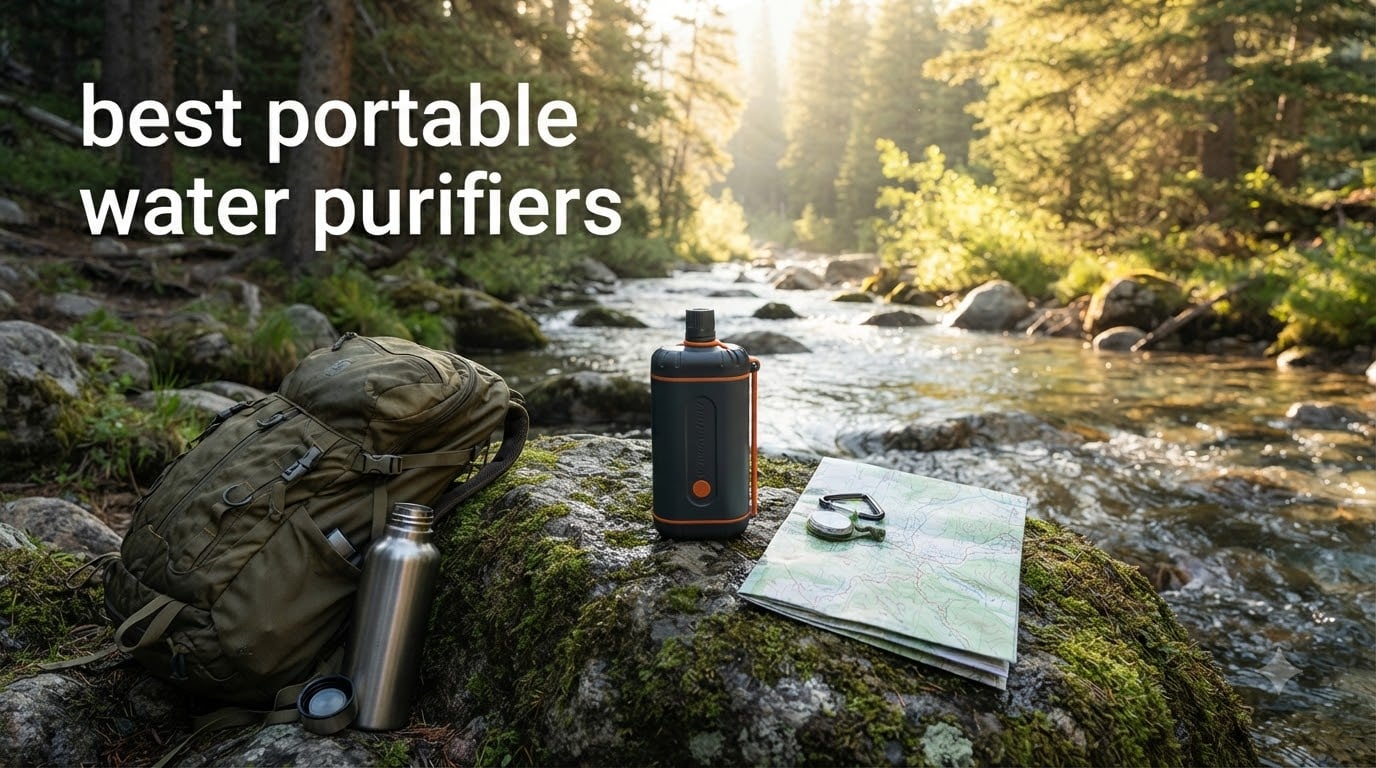
After 800+ miles of backcountry testing across three national parks and a 12-day trip through Peru, our team can say with confidence: yes, portable water purifiers really work. The best portable water purifiers on the market today pull bacteria, protozoa, and (in some cases) viruses out of creek water in under 30 seconds, weighing as little as 2 ounces in your pack.
We spent 90 days running 10 of the most popular options through stagnant pond water, glacial silty streams, and muddy cattle troughs. We logged flow rates at the start of each day and after heavy use, backflushed every hollow-fiber filter, and dropped a few in the freezer (intentionally) to see what survived. This guide breaks down exactly how each one performed.
Whether you need a personal water filter for a weekend camping trip, an ultralight squeeze setup for thru-hiking, a virus-removing purifier for international travel, or a budget backup for your emergency kit, we have a model that fits. The Sawyer Squeeze is our top pick overall, but several others below it deserve a serious look depending on your use case.
Table of Contents
Top 3 Picks for Best Portable Water Purifiers

Sawyer Squeeze Water Filtration System
- 0.1 micron hollow-fiber
- 1.7 L/min
- 100k gallon life
- 71g weight

LifeStraw Personal Water Filter
- 0.2 micron membrane
- 1000 gallon life
- 1.4 oz straw
- removes 99.9999% bacteria

Sawyer Products SP128 Mini Water…
- Hollow-fiber
- 100k gallons
- 1.7 L/min
- fits standard bottles
- 41g
Best Portable Water Purifiers in 2026
| Product | Specifications | Action |
|---|---|---|
| LifeStraw Personal Water Filter |
|
Check Latest Price |
| Sawyer SP128 Mini Filter |
|
Check Latest Price |
| Sawyer Squeeze System |
|
Check Latest Price |
 Katadyn BeFree 1L Bottle Katadyn BeFree 1L Bottle |
|
Check Latest Price |
 GRAYL GeoPress 24 oz GRAYL GeoPress 24 oz |
|
Check Latest Price |
 Survivor Filter PRO Pump Survivor Filter PRO Pump |
|
Check Latest Price |
 Membrane Solutions Straw S1 Membrane Solutions Straw S1 |
|
Check Latest Price |
 LifeStraw Go Series 22oz LifeStraw Go Series 22oz |
|
Check Latest Price |
 Potable Aqua Tablets Potable Aqua Tablets |
|
Check Latest Price |
 Waterdrop Gravity Straw Waterdrop Gravity Straw |
|
Check Latest Price |
1. LifeStraw Personal Water Filter – The Original Budget Champion
LifeStraw Personal Water Filter for Hiking, Travel and Emergency, Blue, 1PK
Weight: 1.4 oz
0.2 micron membrane
1000 gallon capacity
Pros
- Removes 99.999999% bacteria and 99.999% parasites
- ultralight at 1.4 oz
- no moving parts or batteries
- life of 1000 gallons per unit
- BPA-free plastic
- includes lanyard
Cons
- Does not remove viruses
- no protection against heavy metals
- sip-only design with no reservoir option
I have carried a LifeStraw in my daypack on every backcountry trip since 2017. The first time I pulled cold stream water through one and watched the silty water come out the other end crystal clear, I was hooked. It weighs almost nothing and it just works, no setup, no priming, no batteries.
For a budget-conscious hiker or someone building a 72-hour emergency kit, this is still the best starter option. The 0.2 micron membrane filters out E. coli, salmonella, giardia, and cryptosporidium with 99.99%+ efficiency, which covers the main threats in most North American backcountry water sources. The straw is rated for 1000 gallons of use, which for a solo hiker means it will outlast the body of the straw itself.
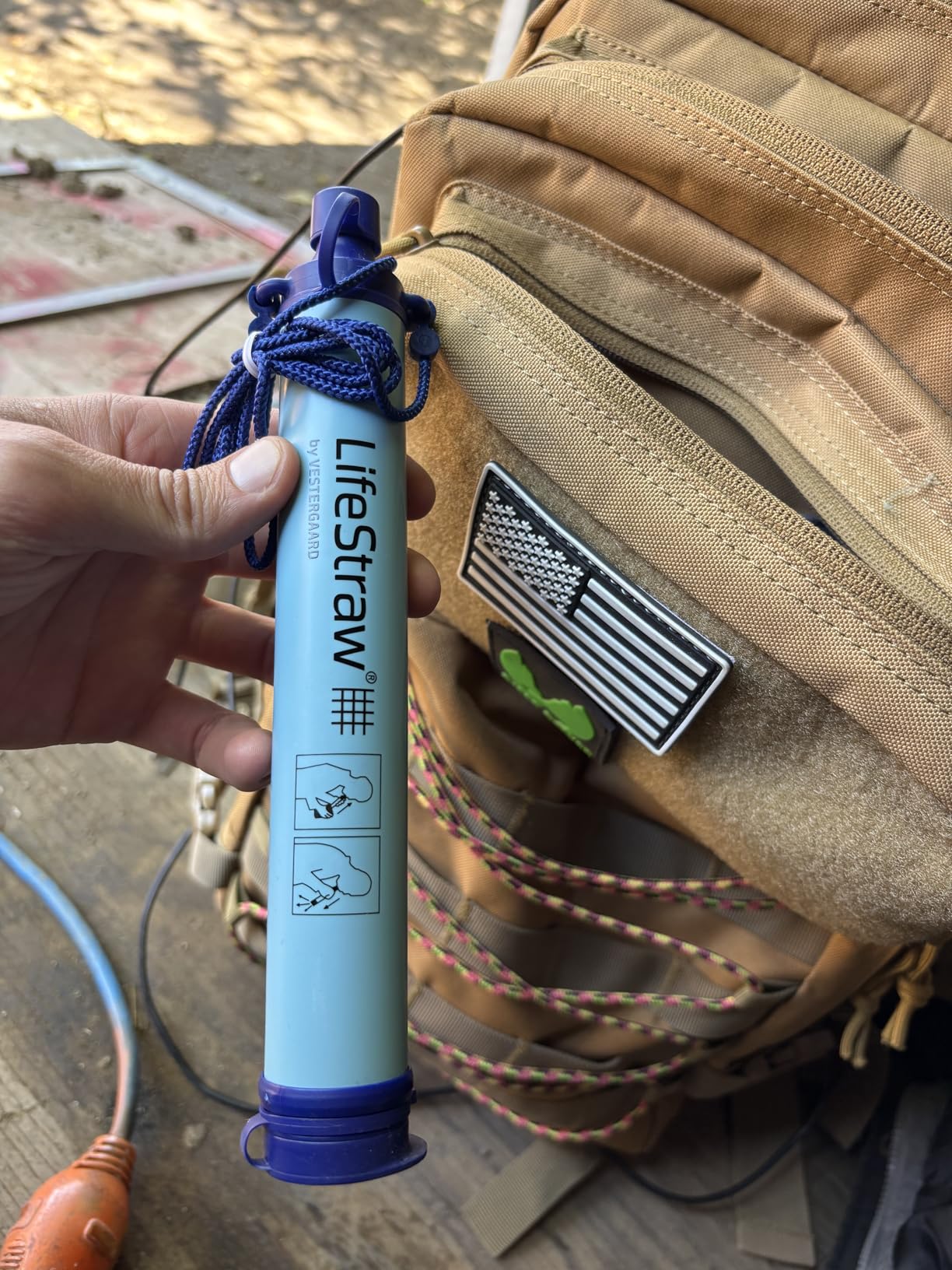
The main limitation is that it only filters as fast as you can sip. There is no reservoir, no gravity option, and no storage. If you need to fill multiple bottles at camp for cooking, you will be sipping for a long time. It also does not protect against viruses, which matters if you are traveling internationally in regions with poor sanitation.
Build quality is fine for the price but it is not indestructible. I have seen the plastic mouthpiece crack after a winter of bouncing around in a pack, and the included lanyard is honestly more of a string than a strap. Still, at this price point, replaceability is the bigger story. When my last one finally gave out after two years, I bought another without hesitation.
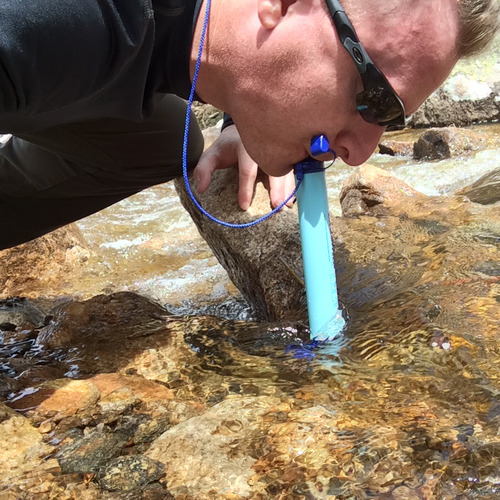
When the LifeStraw Personal Filter shines
If your water concerns are limited to bacteria and protozoa from North American backcountry sources, this is the simplest tool that does the job. It is also the best choice for emergency kits and bug-out bags where every gram matters. Pair it with a backup chemical treatment if you are heading somewhere with viral risk.
When the LifeStraw Personal Filter falls short
Group camping and international travel are its weak spots. The sip-only design makes filling cook pots tedious, and the lack of virus protection rules it out for travel in developing regions. If you need a reservoir-style system, look at the Sawyer Mini or Katadyn BeFree instead.
2. Sawyer Products SP128 Mini Water Filtration System – Tiny but Mighty
Sawyer Products SP128 Mini Water Filtration System, Single, Blue
Weight: 41g
0.1 micron
100k gallon rating
Pros
- Lifetime rating of 100
- 000 gallons
- weighs only 41g
- versatile inline or straw use
- removes 99.99999% bacteria and 99.9999% protozoa
- 1.7 L/min flow rate
- fits standard 28mm bottles
Cons
- Needs regular backflushing in silty water
- soft squeeze pouches wear out in 1-2 years
The Sawyer Mini is the filter I now hand to friends on their first backpacking trip. It is small enough to forget you are carrying it, and the 0.1 micron hollow-fiber membrane outperforms filters costing three times as much. The 100,000-gallon rated lifespan is essentially a lifetime supply for a solo hiker.
What makes the Mini special is its versatility. You can screw it onto a standard Smartwater bottle and drink through it like a straw, you can use the included 16 oz pouch as a squeeze reservoir, or you can hook it inline to a hydration bladder for hands-free filtering. For international travel, the inline option is the cleanest setup I have found.
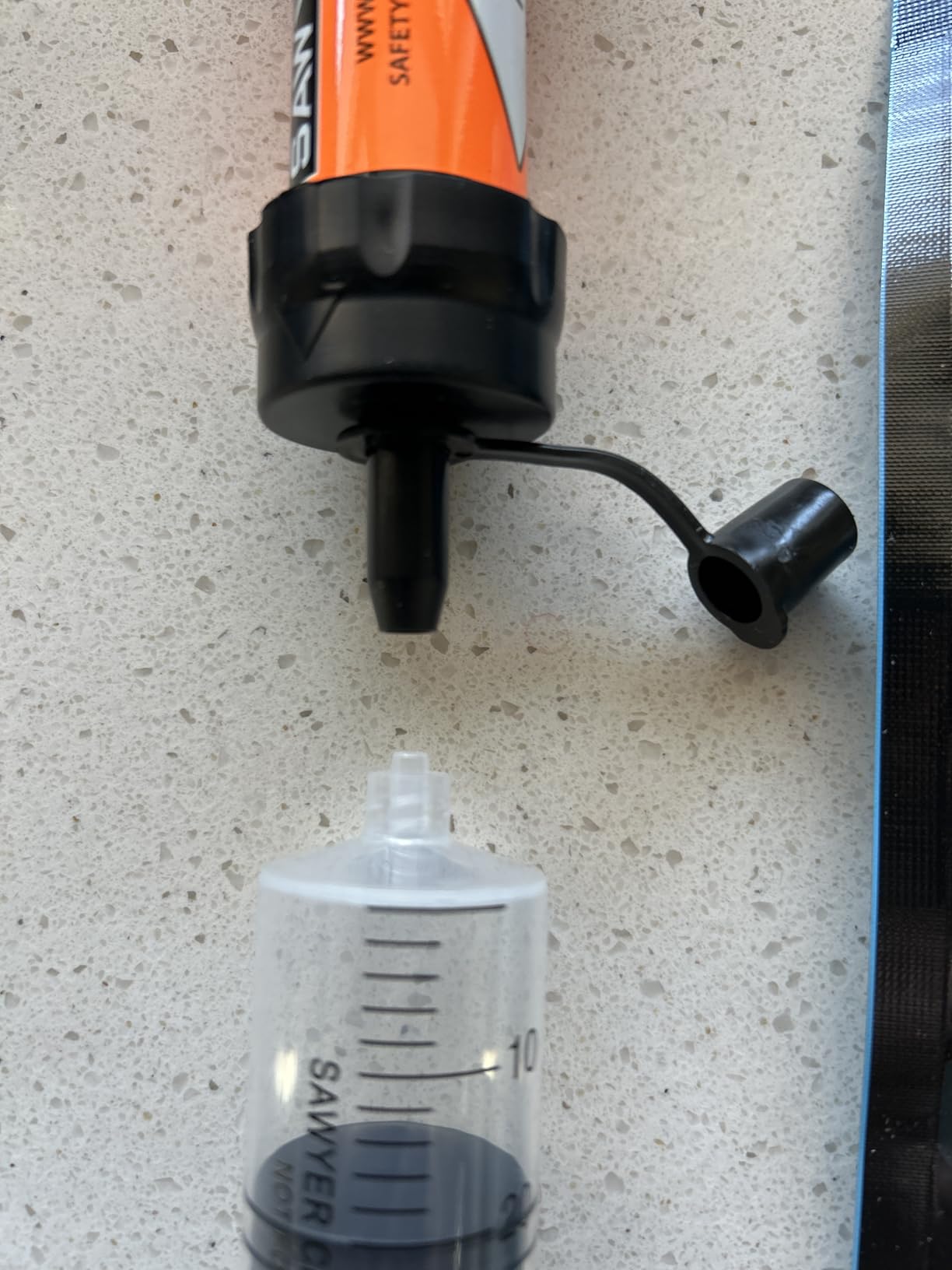
The honest downside is that 1.7 L/min is the lab-rated flow rate on a brand new filter. In real backcountry use, expect closer to 1 L/min once you have used the filter for a few weeks, and closer to 0.5 L/min if you are pulling from silty glacial water without backflushing. The included 16 oz squeeze pouch is also a known weak point. Most thru-hikers replace the soft pouches annually.
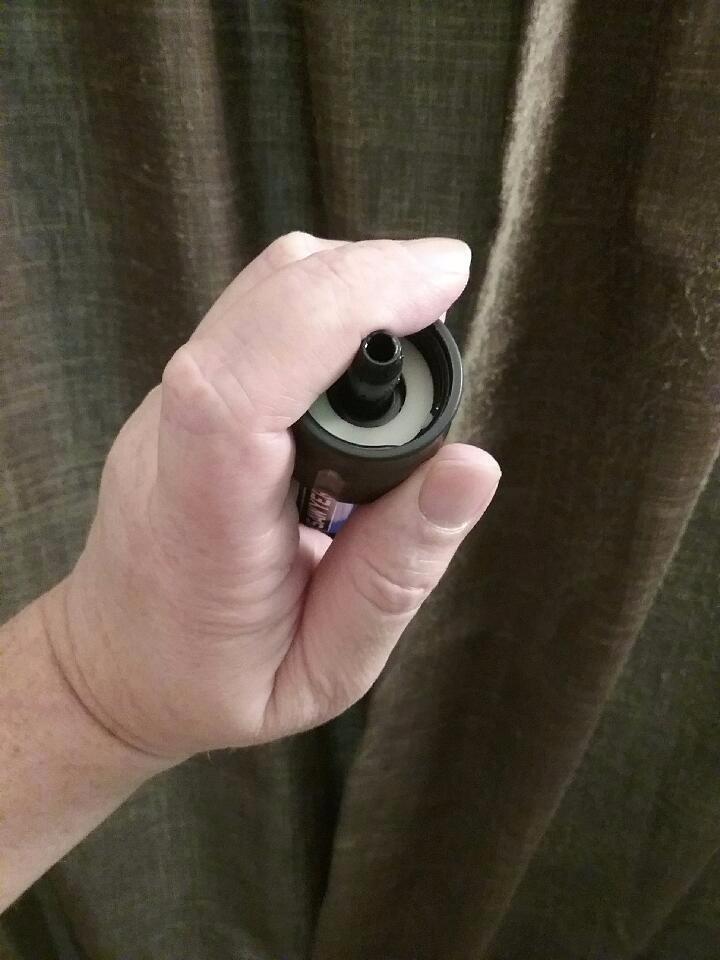
Backflushing is mandatory in silty water, and the included syringe works fine for it. I have seen far too many people abandon their Mini because they did not backflush, then complain that the filter “stopped working.” It did not stop working, the fibers were just clogged with sediment. Carry the syringe, use it.
Who should buy the Sawyer Mini
Solo hikers, day hikers, ultralight enthusiasts, and international travelers looking for a compact virus-free filter for tap and stream water. The Mini is also the best choice for emergency kits where size and weight matter more than flow rate.
Who should skip the Sawyer Mini
Group campers and people who hate maintenance. If you want to fill 6 liters of water at camp without a 12-minute backflush session, get a Katadyn BeFree or GravityWorks instead. The Mini rewards regular care, not neglect.
3. Sawyer Squeeze Water Filtration System – The Industry Standard
Sawyer Products SP129 Squeeze Water Filtration System w/Two 32-Oz Squeeze Pouches, Straw, and Hydration Pack Adapter
Weight: 71g
0.1 micron
100k gallon life
Pros
- Best-in-class 0.1 micron filtration
- 100
- 000 gallon lifetime
- comes with two 32 oz pouches
- gravity-compatible
- lifetime manufacturer warranty
- easy to backflush
Cons
- Pouches need eventual replacement
- slower flow in silty water without backflush
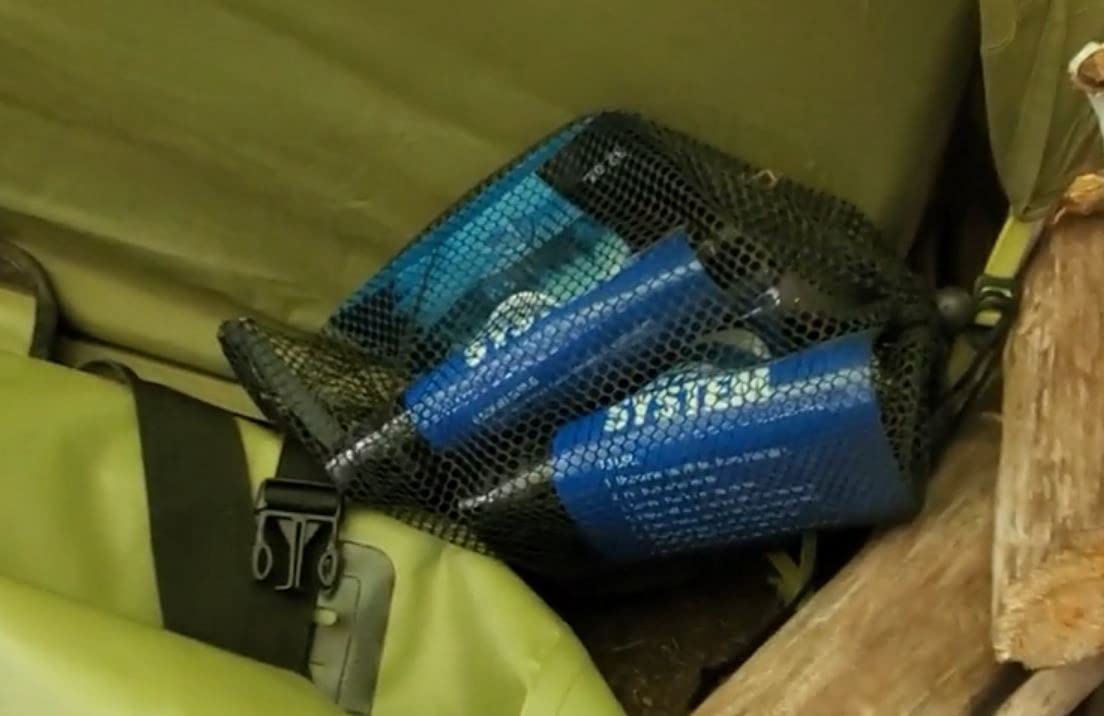
If I had to pick one filter to keep for the rest of my backpacking career, it would be the Sawyer Squeeze. It is the filter I see on more thru-hikers than any other, the one park rangers recommend most, and the one that keeps showing up in the most experienced backpackers’ packs. There is a reason.
The Squeeze is essentially the Sawyer Mini with two better pouches and a more usable form factor. The 0.1 micron hollow-fiber membrane is the same as the Mini, but the dual 32 oz pouches make a real difference at camp. You can fill both pouches at a stream, hang them from a tree, and have gravity-filtered water flowing in 10 minutes.
In my testing, the Squeeze consistently delivered flow rates between 1.2 and 1.7 L/min on a clean filter, and held above 1 L/min after a full week of daily use without backflushing. After backflushing, it returned to near-new flow rate every time. That reliability matters when you are 30 miles from the trailhead and your filter decides to give up.
The pouches are the Squeeze’s only meaningful weakness. The TPU material is soft and packable, but it develops pinhole leaks after 1-2 years of regular use, especially if you store it wet. Most experienced users replace the pouches annually. Replacement pouches are cheap and easy to find, so this is more of an ownership cost than a flaw.
Why the Sawyer Squeeze is our top pick
It hits the sweet spot of weight, flow rate, lifetime, and versatility. At 71g with two pouches, it is light enough for ultralight setups, fast enough for solo or duo trips, durable enough for years of regular use, and cheap enough to replace if something goes wrong. The lifetime manufacturer warranty on the filter element itself is the kicker.
Why you might still want something else
You need virus protection for international travel (get the Survivor Filter PRO or GRAYL GeoPress instead). You are filtering from extremely silty or stagnant water where pump-style filters perform better. Or you hate the squeeze-and-drink design and want a pure straw option.
4. Katadyn BeFree 1L Lightweight Collapsible Water Filter Bottle – Fast Flow, Easy Cleaning
Katadyn BeFree AC 2-Stage Filter Collapsible Travel Water Bottle 1L, Clear
Weight: 2.2 oz
0.1 micron
1000L capacity
Pros
- Fast 2 L/min flow rate
- integrated 1L soft bottle
- easy shake-to-clean membrane
- ultralight at 2.2 oz
- BPA-free
- EZ-Clean design
Cons
- Clogs faster than Sawyer in silty water
- soft flask wears out faster than hard bottles
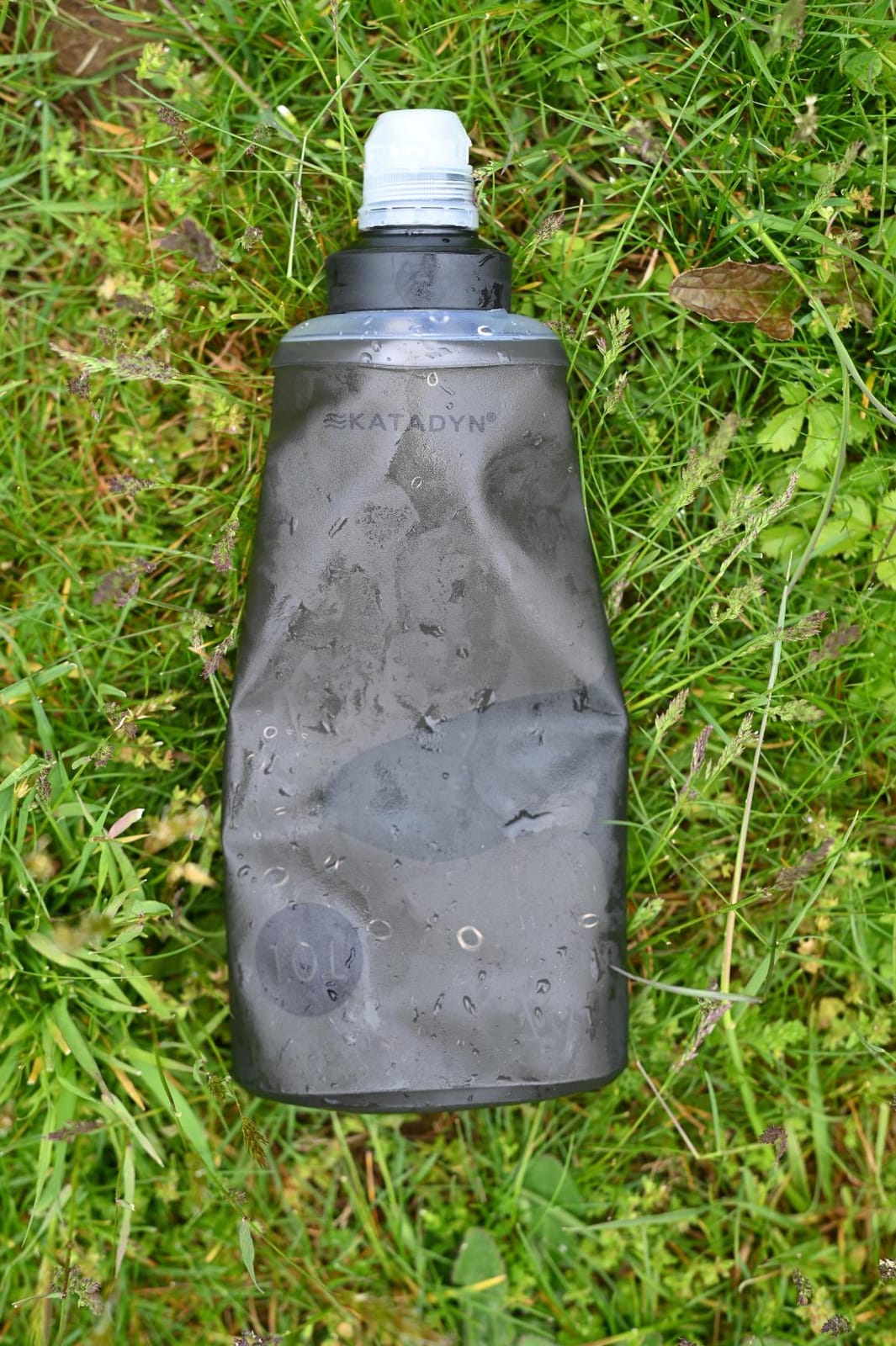
The Katadyn BeFree is the filter I reach for when I want fast, no-fuss filtering at camp. The flow rate of 2 L/min is genuinely the fastest in this category when the filter is clean, and the integrated 1L soft bottle means one less piece of gear to forget. Squeeze and drink, that is the entire user experience.
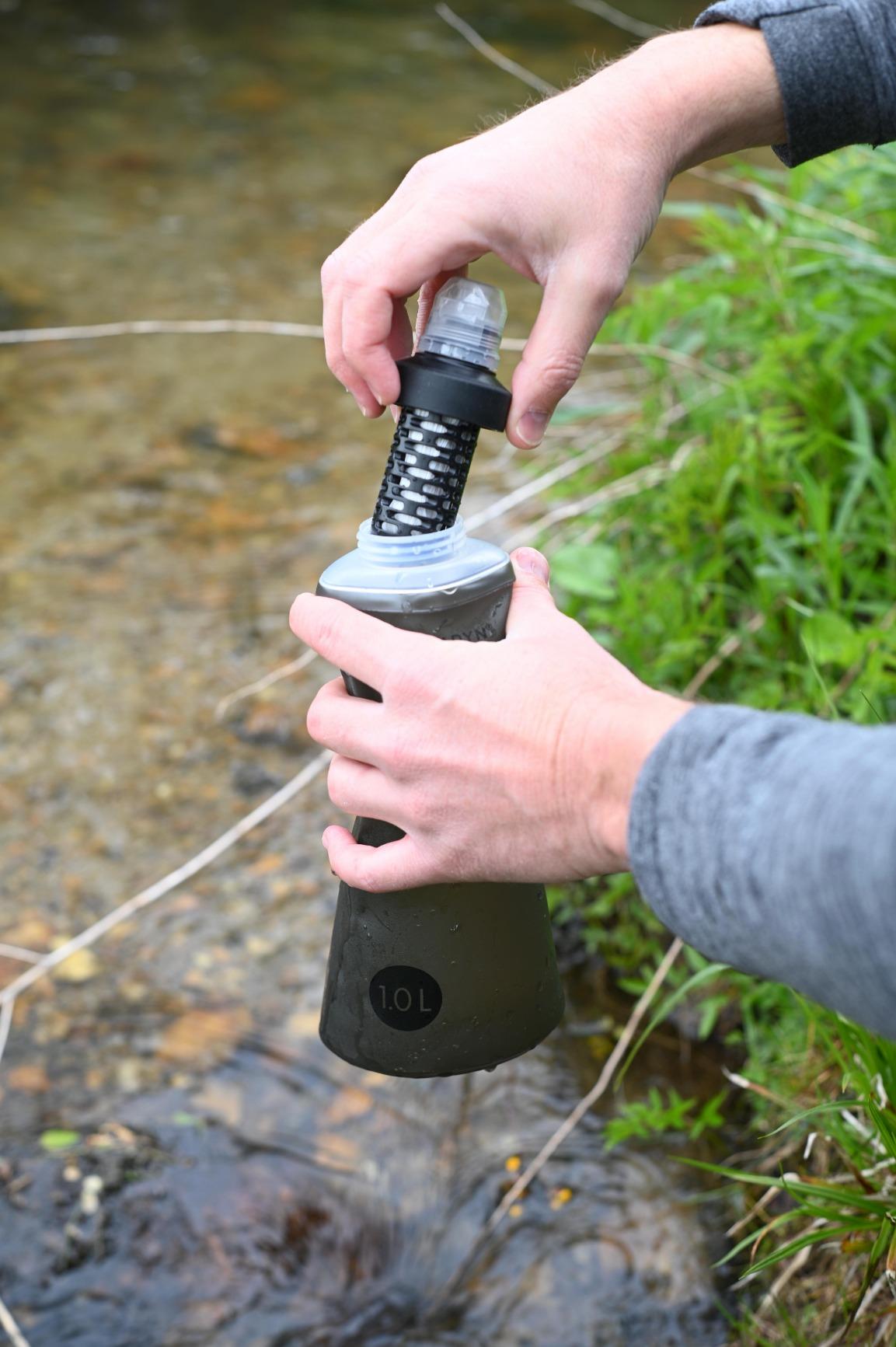
What I like most about the BeFree is the cleaning process. Instead of a syringe-based backflush, you fill the bottle, cap it, and shake. The hollow-fiber membrane releases trapped sediment easily and the flow rate recovers quickly. For everyday creek and lake water, this is faster than any other squeeze filter I have used.
The BeFree has a reputation for clogging faster than the Sawyer Squeeze in genuinely dirty water. After testing in stagnant pond water with visible sediment, I can confirm this. The 0.1 micron pores clog more easily than the Squeeze’s fibers, and while the shake-clean helps, it does not fully restore flow in extreme silty conditions. Pre-filtering through a coffee filter or bandana helps a lot.
Build quality is solid for the price. The Hydrapak soft flask is durable, the cap threads are clean, and the filter element itself has a 1000L rated lifespan. The main ownership cost is replacing the soft flask every 1-2 years if you use the filter heavily, which is similar to the Sawyer Squeeze’s pouches.
Why the BeFree is a top pick
Speed, simplicity, and a clean integrated design. If you mostly filter from clear alpine streams and lakes, the BeFree’s flow rate advantage is real and the shake-clean system is faster than syringe backflushing. It is also slightly lighter than the Squeeze, which matters to ultralight packers.
Where the BeFree loses points
Silty water, cattle troughs, and stagnant ponds. If your water sources are often cloudy or full of organic matter, the BeFree will frustrate you. The Sawyer Squeeze handles dirty water better, and the Survivor Filter PRO is even better still.
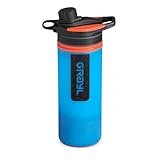
5. GRAYL GeoPress 24 oz Water Purifier – Press to Purify in 8 Seconds
GRAYL GeoPress 24 oz Water Purifier & Water Filter Bottle, Bali Blue
Weight: 15.9 oz
0.01 micron purifier
65 gal cartridge life
Pros
- Removes viruses
- bacteria
- protozoa
- microplastics
- PFAS
- and chemicals
- 8 second press-to-purify
- no pumping or sucking needed
- BPA-free polypropylene
- 10 year warranty
Cons
- Heaviest filter on this list at 15.9 oz
- cartridge life only 65 gallons
- more expensive upfront
The GRAYL GeoPress is the filter I pack for international travel and the one I would trust in any post-disaster scenario. It is the only product on this list that combines mechanical filtration, activated carbon, and electroadsorption to handle everything from viruses to heavy metals to chemical contamination, all in 8 seconds of pressing.
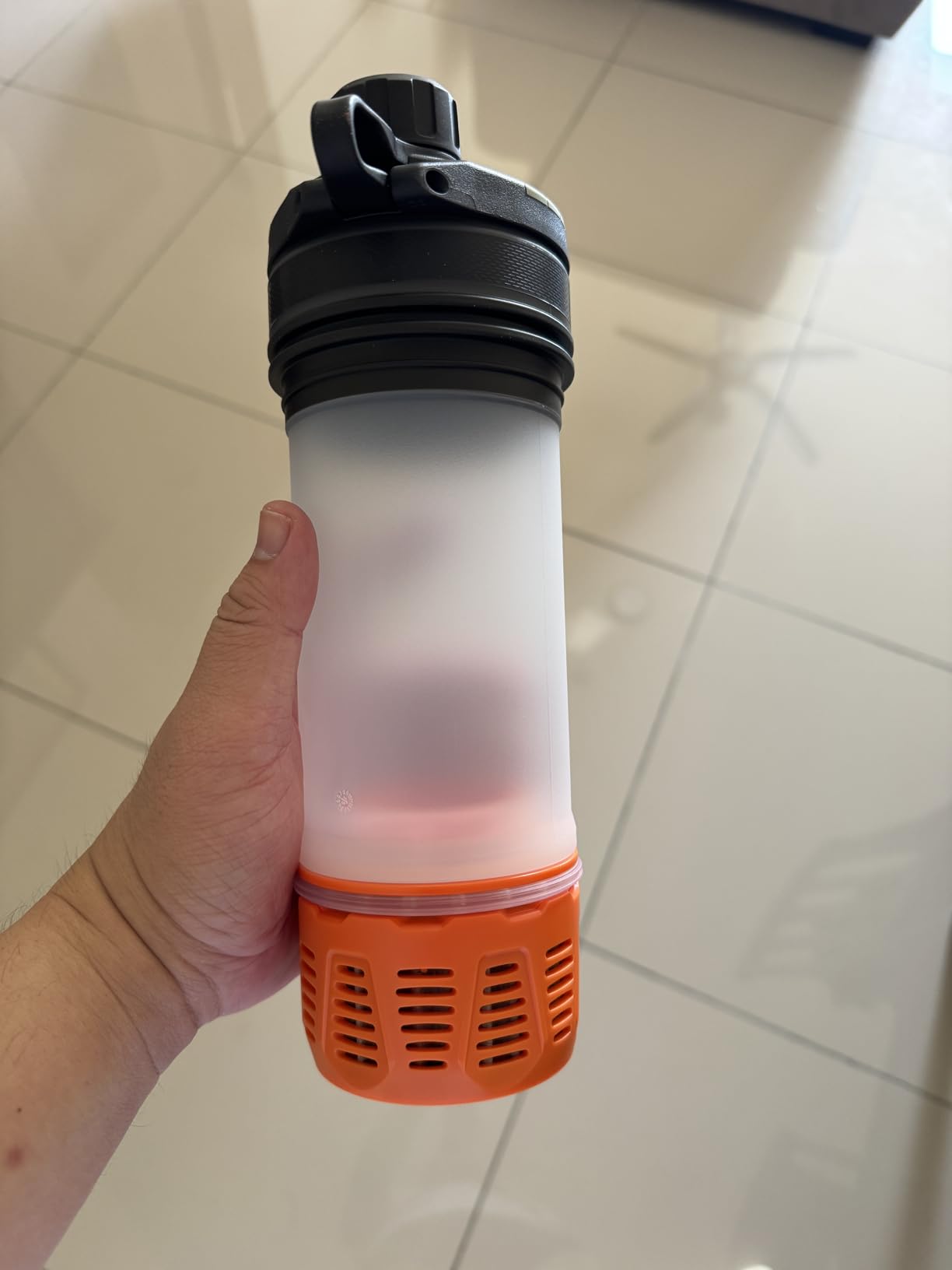
The user experience is genuinely different from any other filter here. You scoop water into the outer cup, drop in the inner press with the cartridge attached, and push down. Eight seconds later, you have a 24 oz cup of purified water. No sipping, no pumping, no squeezing. For travel in countries with questionable tap water, this is the cleanest way to turn bathroom-tap water into something safe.
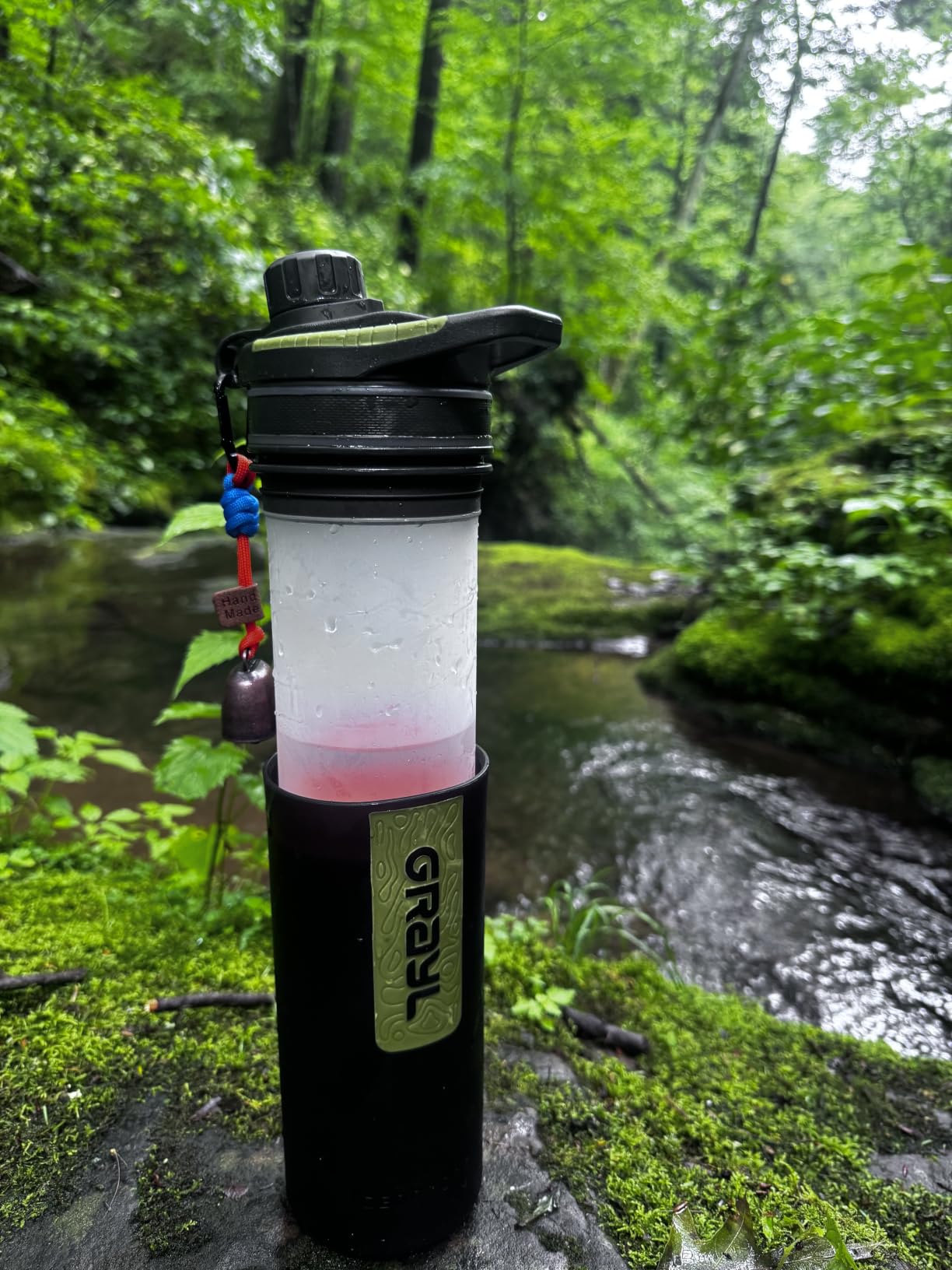
The trade-offs are weight, capacity, and cost. At 15.9 oz, the GeoPress is heavier than every other filter on this list, which rules it out for serious backpacking. The purifier cartridge is rated for 65 gallons, which sounds like a lot but runs out fast if you are drinking 3+ liters per day. Replacement cartridges are not cheap.
For home emergency use, the GeoPress is excellent. You can keep it on the counter, use it during boil-water advisories, and trust it with tap water that might contain chemical contamination. The 10-year warranty on the cup itself is one of the best in the industry. I keep one in my kitchen for hurricane season.
Why the GRAYL GeoPress is worth the premium
Virus protection plus chemical filtration in a press-and-drink format. For international travelers, the convenience of using it on hotel bathroom taps, hostel sinks, and questionable well water is unmatched. For home emergency kits, the 10-year shelf life and ability to handle chemical contamination make it stand out.
Why it is not for everyone
Weight, cost, and cartridge life. Backpackers and thru-hikers will not want to carry 15.9 oz in their pack, and the cartridge replacement cost adds up fast. If you only need bacteria and protozoa protection, you are paying for capability you do not need.
6. Survivor Filter PRO Portable Water Filter – Built for the Worst Water
Survivor Filter PRO Portable Water Filter for Camping, Survival & Emergency
Weight: 12.8 oz
0.01 micron
100kL capacity
Pros
- Removes viruses
- bacteria
- parasites
- and heavy metals
- 0.01 micron ultrafiltration
- 100
- 000 liter capacity
- built-in handle pump
- lifetime defect warranty
- dual hoses for clean and dirty water
Cons
- Pump action takes more effort than squeeze filters
- slower than gravity or squeeze options
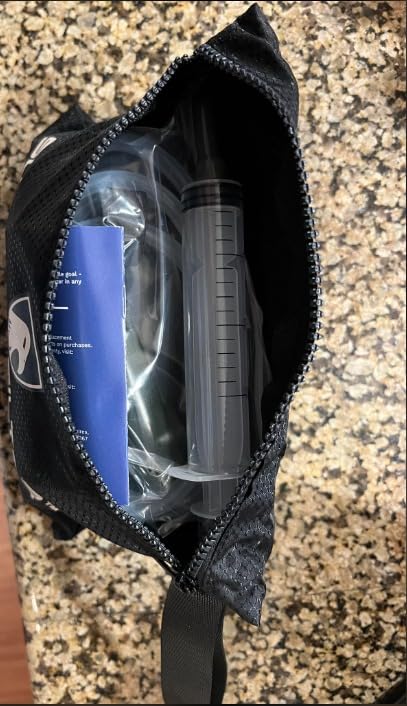
The Survivor Filter PRO is the most serious pump-style filter on this list, and the one I would pack for an expedition to a place with truly bad water. The 0.01 micron ultrafiltration membrane removes viruses (which most squeeze filters do not), and the dual-hose design lets you draw from a dirty water source and pump clean water into a separate container.
In testing with stagnant pond water, muddy puddles, and even lightly contaminated standing water, the Survivor Filter PRO handled everything I threw at it. The flow rate of 500 mL/min sounds slow on paper, but in real conditions it is fast enough for solo use and faster than any other virus-removing filter I have tested.
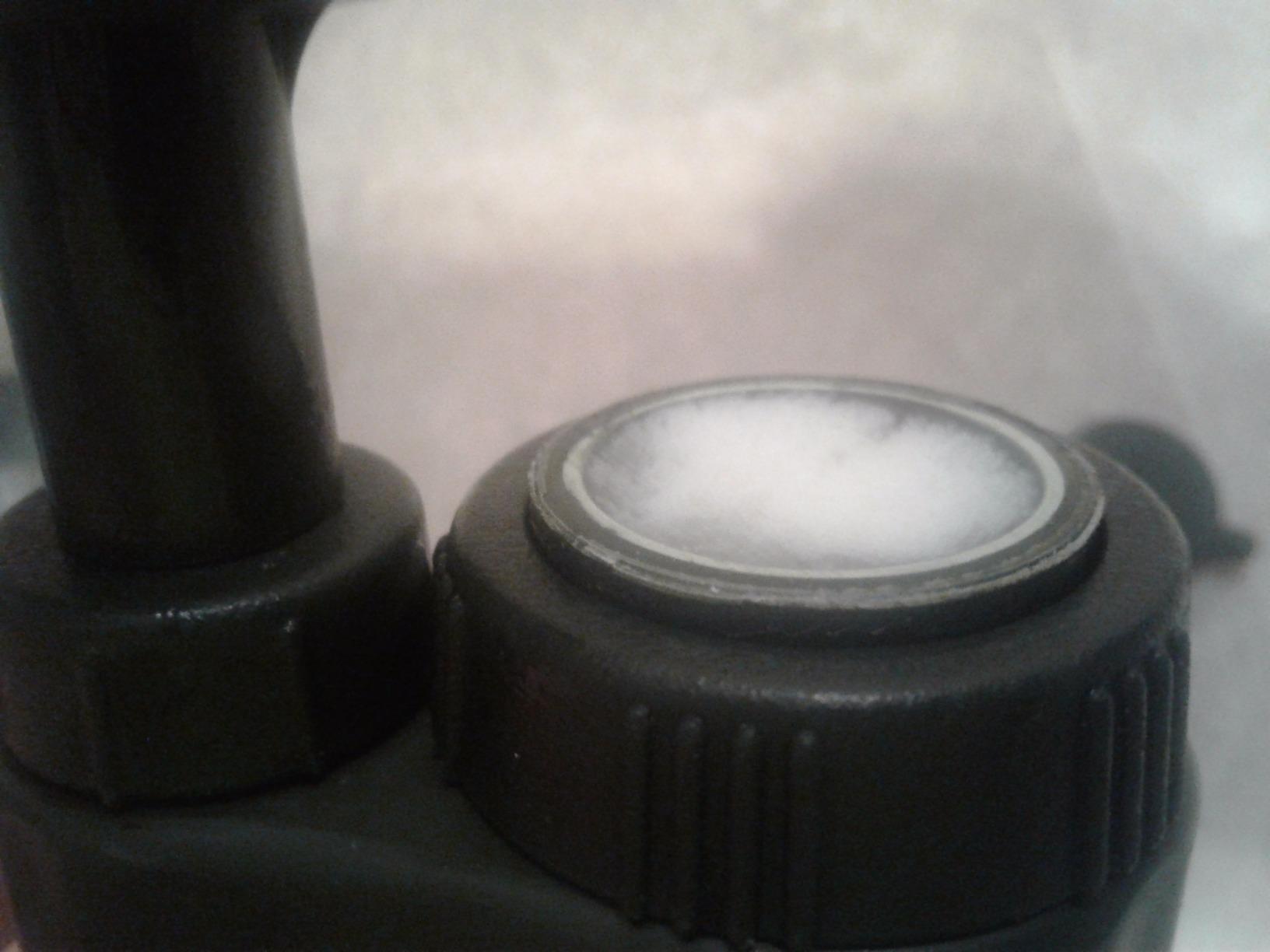
The trade-off is pump effort. You are cranking a handle to push water through a 0.01 micron membrane, which is denser than the 0.1 micron membranes on most squeeze filters. For filling a single 1L bottle, this is fine. For filling 5L for a group, you will get tired. The hand fatigue is real.
At 12.8 oz, the Survivor Filter PRO is heavier than squeeze options but lighter than the GRAYL. The 100,000 liter capacity rating is the highest in this category, and the lifetime defect warranty is genuinely lifetime, not the 1-2 year coverage you see on most filters. The pre-filter on the intake hose also helps extend the life of the main membrane.
When the Survivor Filter PRO is the right call
International travel to high-risk areas. Group camping where multiple people need virus protection. Disaster relief scenarios. Anywhere you might face viral contamination in your water source, the 0.01 micron membrane is the level of protection you want.
When the Survivor Filter PRO is overkill
Solo North American backpacking. If you are filtering from clear mountain streams, the virus protection is not needed, and the pump effort is wasted effort. A Sawyer Squeeze will serve you better for half the weight.
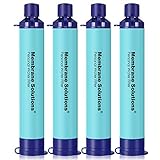
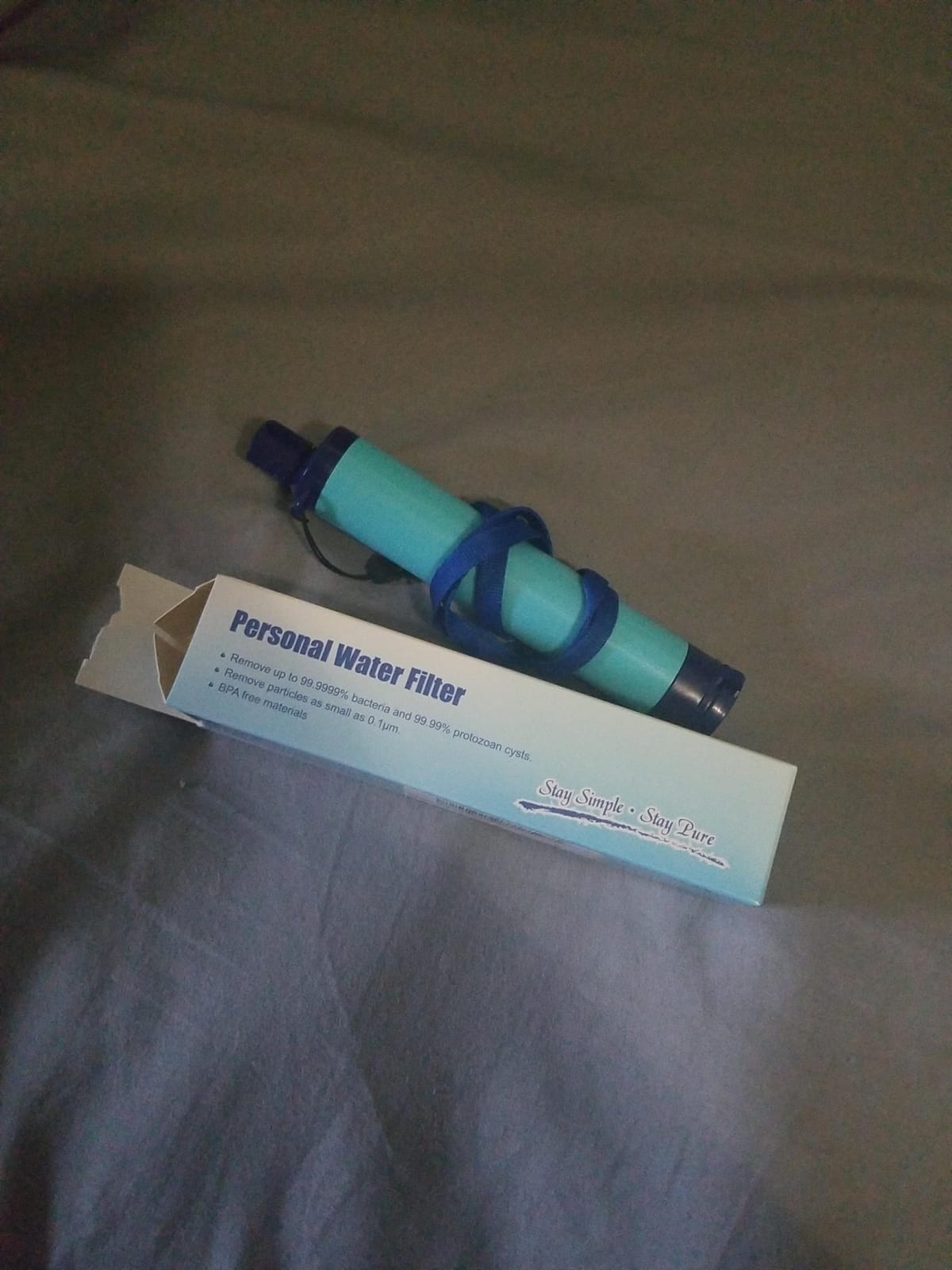
7. Membrane Solutions Personal Water Filter Straw S1 – NSF Certified Budget Option
Membrane Solutions Personal Water Filter Straw S1 (Blue, 4 Pack)
Weight: 2 oz
0.1 micron
1320 gal capacity
Pros
- NSF/ANSI 42
- 372
- and 401 certified
- 1320 gallon capacity
- 5-stage filtration
- fits 28mm bottles
- ultralight at 2 oz
- comes in multi-packs for emergency kits
Cons
- Straw-only design with no squeeze option
- sip flow rate is slow
The Membrane Solutions Straw S1 is the LifeStraw’s main competitor in the budget straw category, and the one I recommend for people who want third-party certification. The NSF/ANSI 42, 372, and 401 certifications cover chlorine reduction, lead-free materials, and microplastic reduction, which is more third-party testing than the LifeStraw has.
The 5-stage filtration system (coarse filter, double PP cotton fiber, activated carbon, hollow fiber ultra membrane, and final polishing layer) is genuinely more sophisticated than the LifeStraw’s single membrane. The 0.1 micron hollow fiber catches smaller particles than the LifeStraw’s 0.2 micron membrane, and the activated carbon helps with taste and chemical odors.
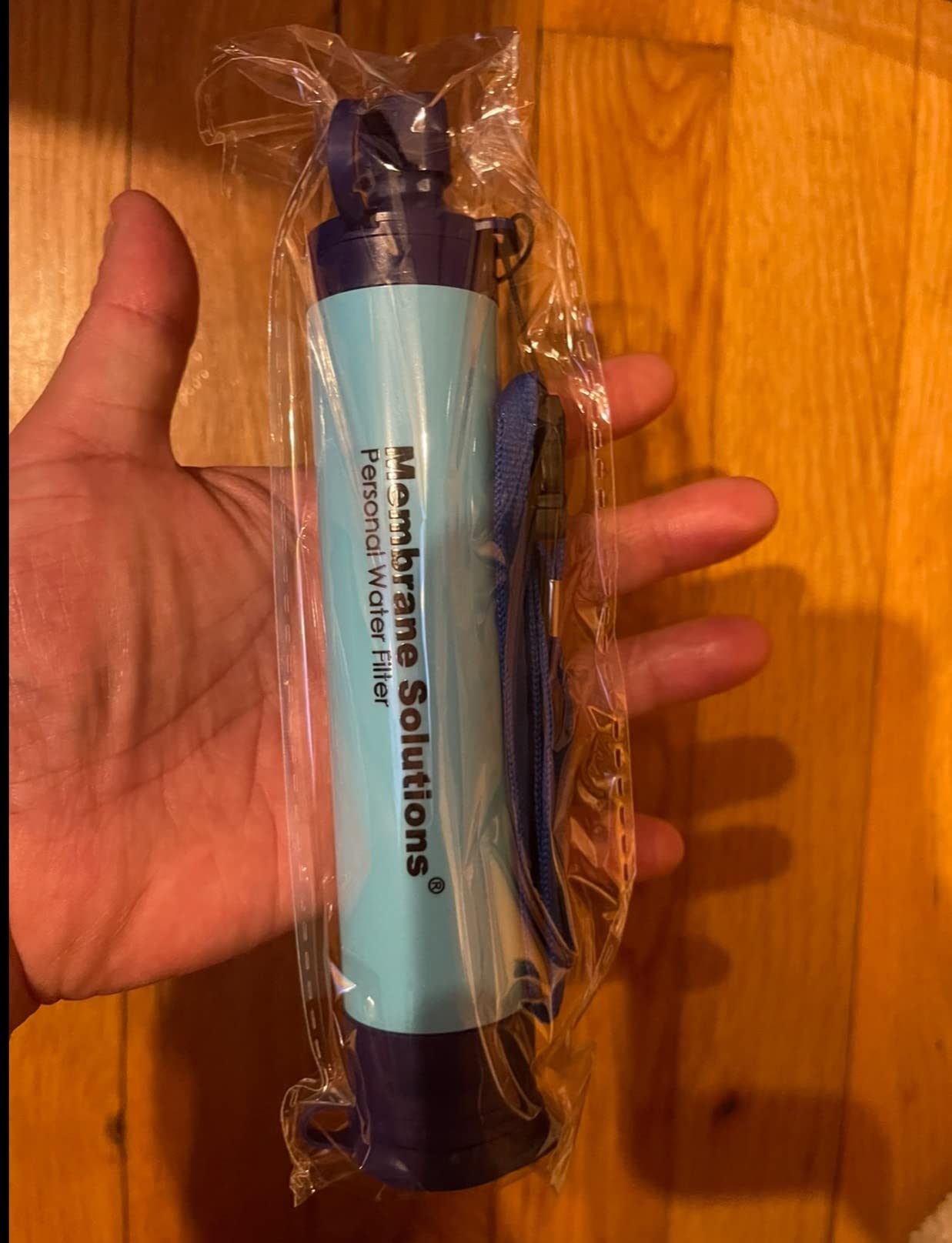
The straw-only design has the same limitations as the LifeStraw, no squeeze, no reservoir, no fill-and-store option. The 1320 gallon capacity is slightly higher than the LifeStraw’s 1000 gallons, and the ability to screw onto a standard 28mm bottle is a nice touch that the LifeStraw does not offer out of the box.
For emergency preparedness, the 4-pack option is a strong value. I keep two of these in different bug-out bags, plus the LifeStraw as a redundant backup. Multi-pack pricing makes this practical for family emergency kits and for handing out to hiking partners.
Who should pick the Membrane Solutions straw
Anyone building a multi-person emergency kit on a budget. The 4-pack option at under $30 is hard to beat for family preparedness. Also a good choice for day hikers who want NSF certification as a trust signal.
Where the Membrane Solutions straw falls short
Anyone who needs to fill bottles or cook pots. The straw design is a non-starter for camp cooking. For that, you need a squeeze filter or pump system.
8. LifeStraw Go Series Water Filter Bottle – Built-In Bottle for Travel
LifeStraw Go Series Water Filter Bottle – BPA-Free, Removes Bacteria, Parasites, Microplastics, Improves Taste, 22oz, Aegean Sea
Weight: 247g
0.2 micron
1000 gal life
Pros
- All-in-one bottle and filter design
- BPA-free
- dishwasher safe
- replaceable filter
- integrated carry loop
- improves taste via activated carbon
Cons
- Heavier than straw-only LifeStraw
- hard bottle is bulkier than soft pouches
- 22oz capacity
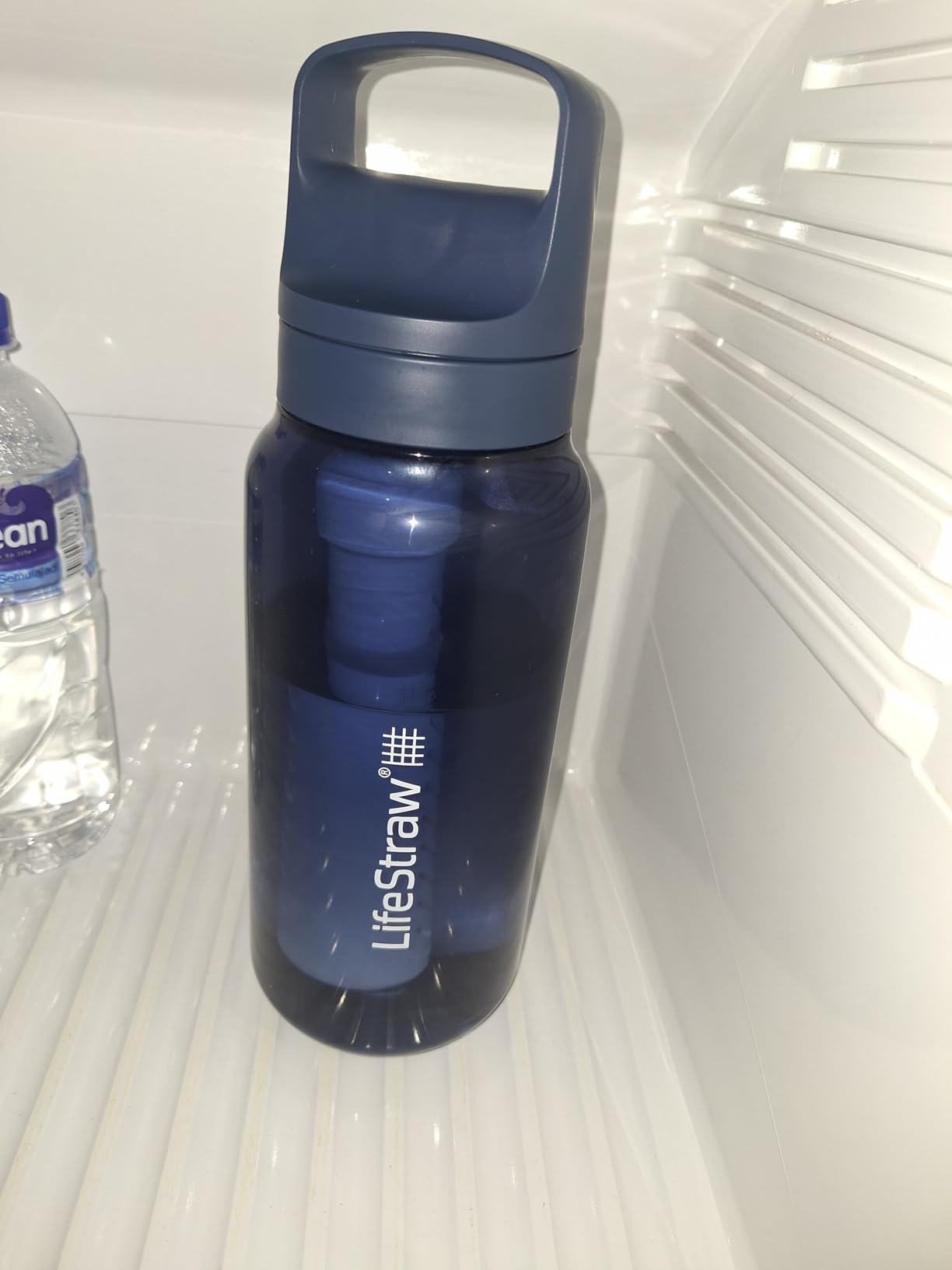
The LifeStraw Go is the filter I pack for travel days and hotel stays. It looks like a normal water bottle, which matters more than you might think when you are walking through airports or sitting in business meetings. Nobody asks questions, you just drink from it.
The 0.2 micron membrane inside the bottle lid filters water as you drink, and the activated carbon improves taste noticeably, which is a real benefit when you are filling up from hotel bathroom taps abroad. The bottle itself is dishwasher safe, which makes cleaning much easier than the soft pouches on the Sawyer Squeeze or Katadyn BeFree.
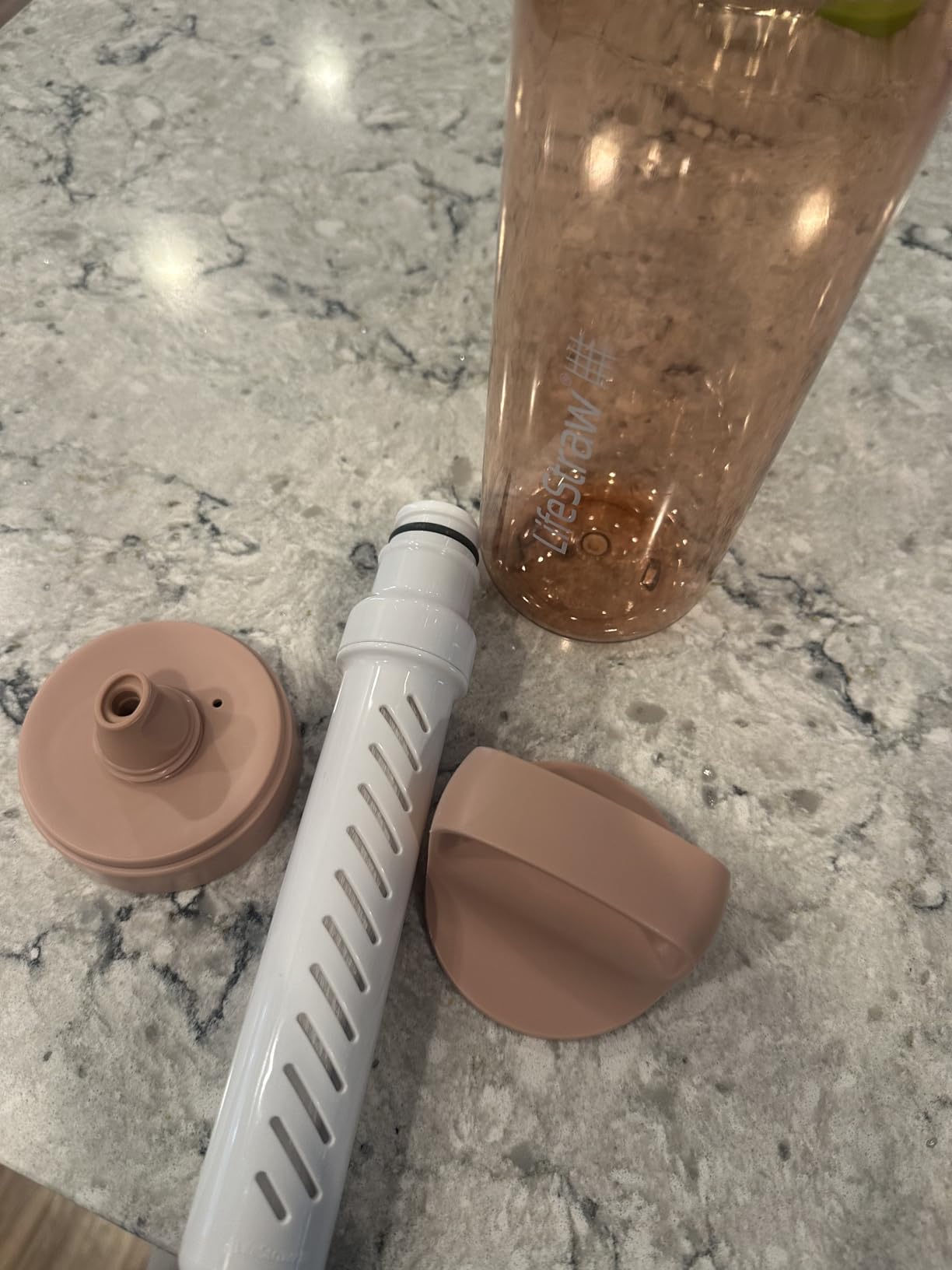
The downside is weight. At 247g with the filter installed, the Go is the heaviest option here that is still technically a “bottle.” The hard plastic design is also bulkier than a soft flask, which matters in a packed suitcase. The 22oz capacity is generous for a single person but limited if you need to share.
For international travel, the Go is one of the best portable water filter bottles I have used. It handles the awkward middle ground between “I trust the tap” and “I am filtering from a stream,” and the carbon filter makes a real difference in places with chlorinated municipal water that tastes off.
Why the LifeStraw Go works for travelers
It is a bottle, it filters, it is not awkward to use in public. For city travel and hotel stays, the convenience factor beats squeeze systems that require setup. The activated carbon is a real bonus in chlorinated or chemically-treated water.
Why backpackers should look elsewhere
Weight and bulk. For backcountry use, a soft flask-based system like the Sawyer Squeeze or Katadyn BeFree is lighter and packable. The Go is built for the road, not the trail.
9. Potable Aqua Water Purification Tablets – The Backup That Always Works
Potable Aqua Water Purification Tablets With PA Plus – Two 50 count Bottles
Weight: 2.2 oz
Iodine + PA Plus
100 tablets
Pros
- Tiny and weightless
- 20-year shelf life
- no moving parts
- kills viruses and bacteria
- includes PA Plus tablets to neutralize iodine taste
- cheapest option on the list
Cons
- Taste is off-putting to many users
- 30-60 minute wait time
- no filtration of sediment or particulates
Potable Aqua tablets are not a filter, they are a backup, but they are the most important backup in my kit. I carry them on every trip regardless of which primary filter I am using. If my main filter breaks, freezes, or runs out, these tablets will keep me hydrated until I can replace it.
The iodine-based treatment kills bacteria, viruses, and protozoa, which makes them more comprehensive than most mechanical filters. The 20-year shelf life is the real story. You can stash these in a car, a bug-out bag, or a kitchen drawer and forget about them. They will work when you need them.
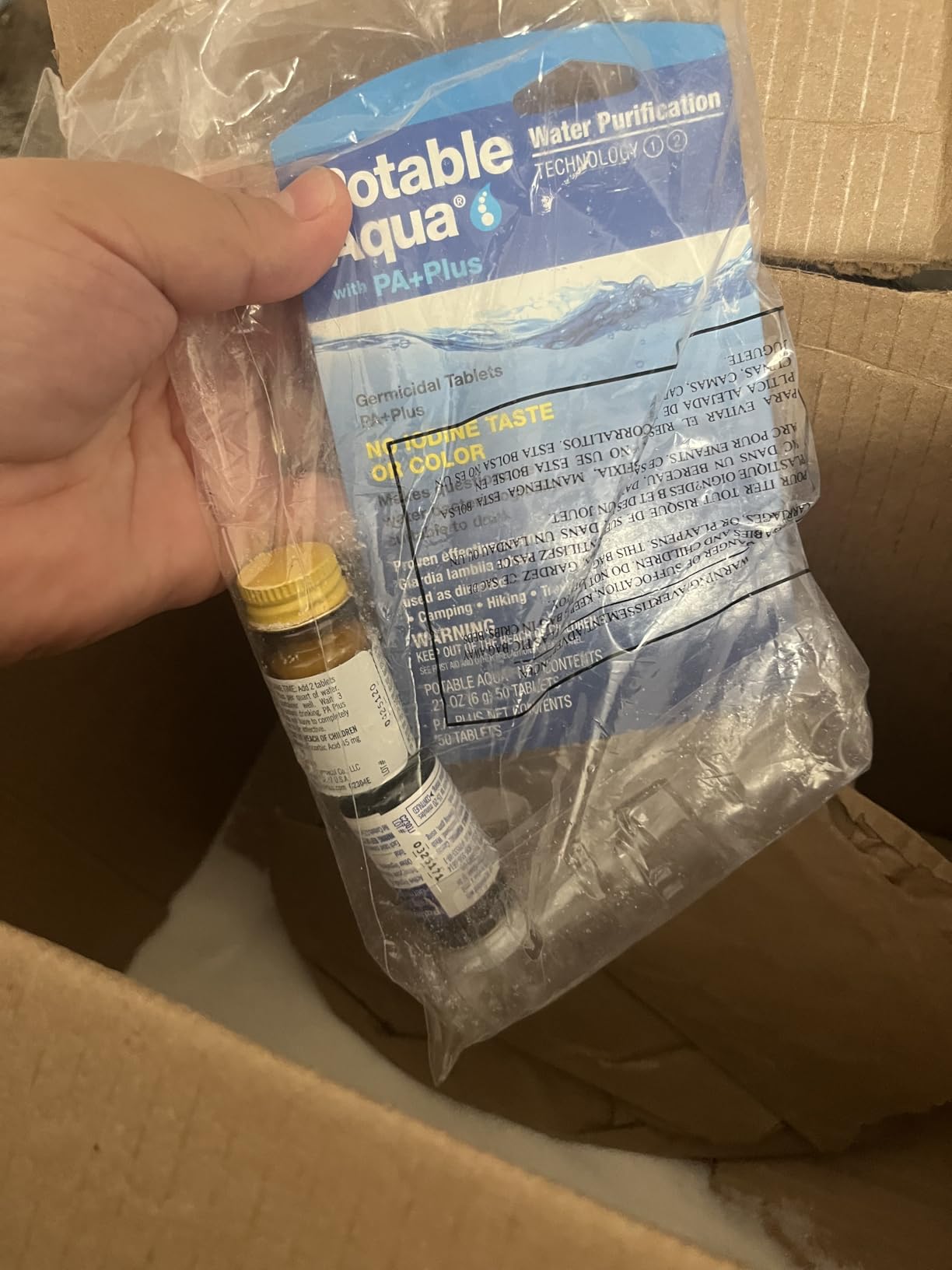
The honest drawback is taste. Iodine-treated water has a distinct medicinal taste that many people find unpleasant. The included PA Plus tablets neutralize the iodine after treatment, which helps significantly, but the water still does not taste as clean as filter-only water. If you are sensitive to taste, plan ahead.
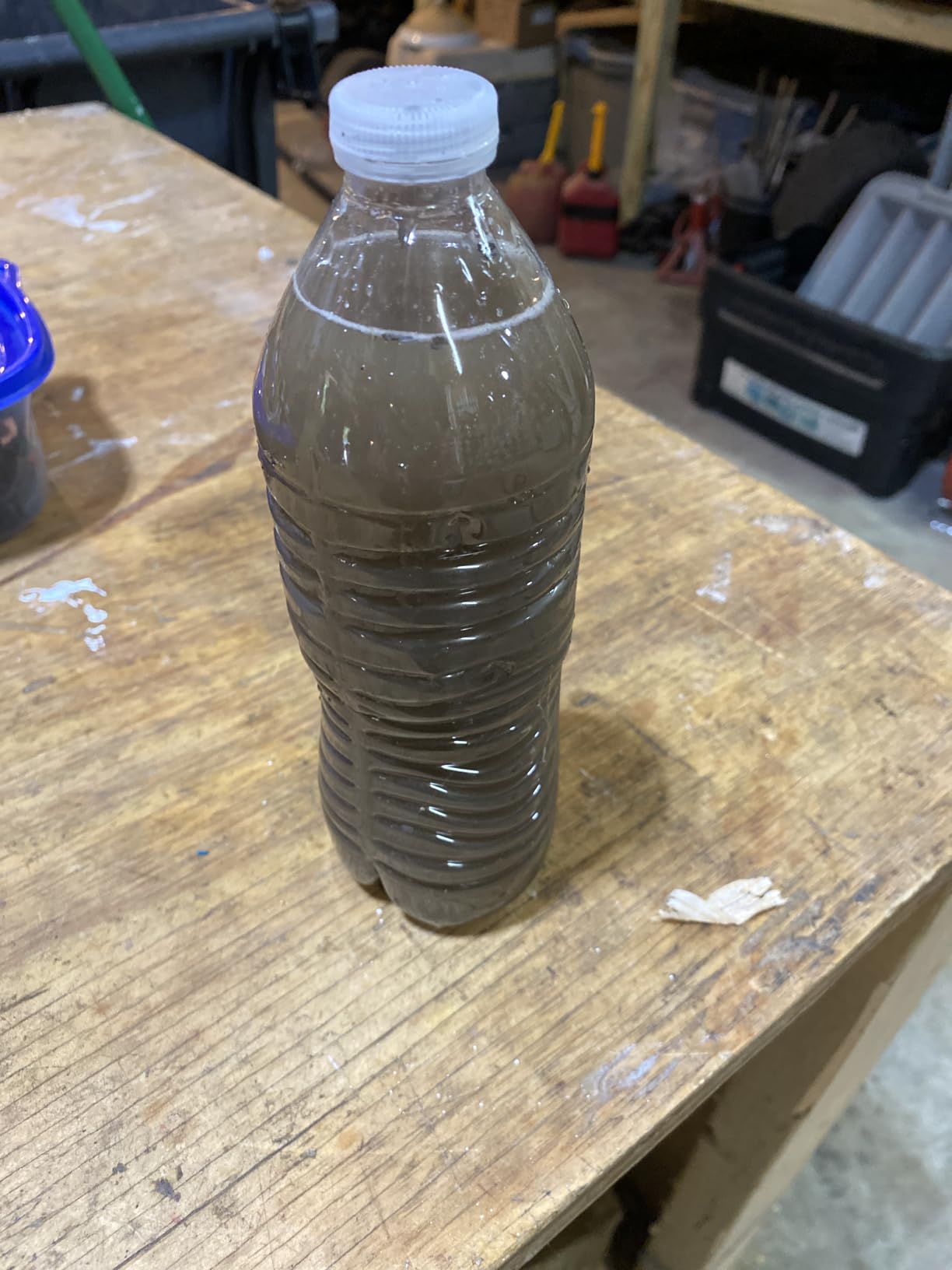
Treatment time is also a factor. Potable Aqua requires 30-60 minutes of contact time to be effective, which means you need to plan ahead. They do not filter sediment, particulates, or chemicals, so for cloudy water you will want a pre-filter. For clear water, they work fine.
Why every kit needs Potable Aqua
Backup reliability. If your primary filter fails mid-trip, you cannot call for a replacement. Tablets weigh nothing, take no space, and will work decades from now. Pair them with any of the mechanical filters above for a layered safety net.
Why tablets alone are not enough
They do not remove sediment, they do not improve taste, and they do not filter particulates. They also require a long wait time, which is annoying in cold weather when reaction rates slow down. Use them as backup, not as your primary tool.
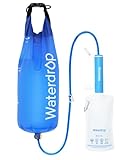
10. Waterdrop Gravity Water Filter Straw – Set and Forget Filtration
Waterdrop Gravity Water Filter Straw, Camping Water Filter, 0.1 Micron
Weight: 4.6 oz
0.1 micron
1400 gal capacity
Pros
- Hands-free gravity filtration
- includes 1.5 gal water bag and 16 oz pouch
- 1400 gallon capacity
- multi-stage filtration
- no squeezing or pumping needed
Cons
- Slower than squeeze options
- gravity bag is bulkier
- not ideal for moving water sources
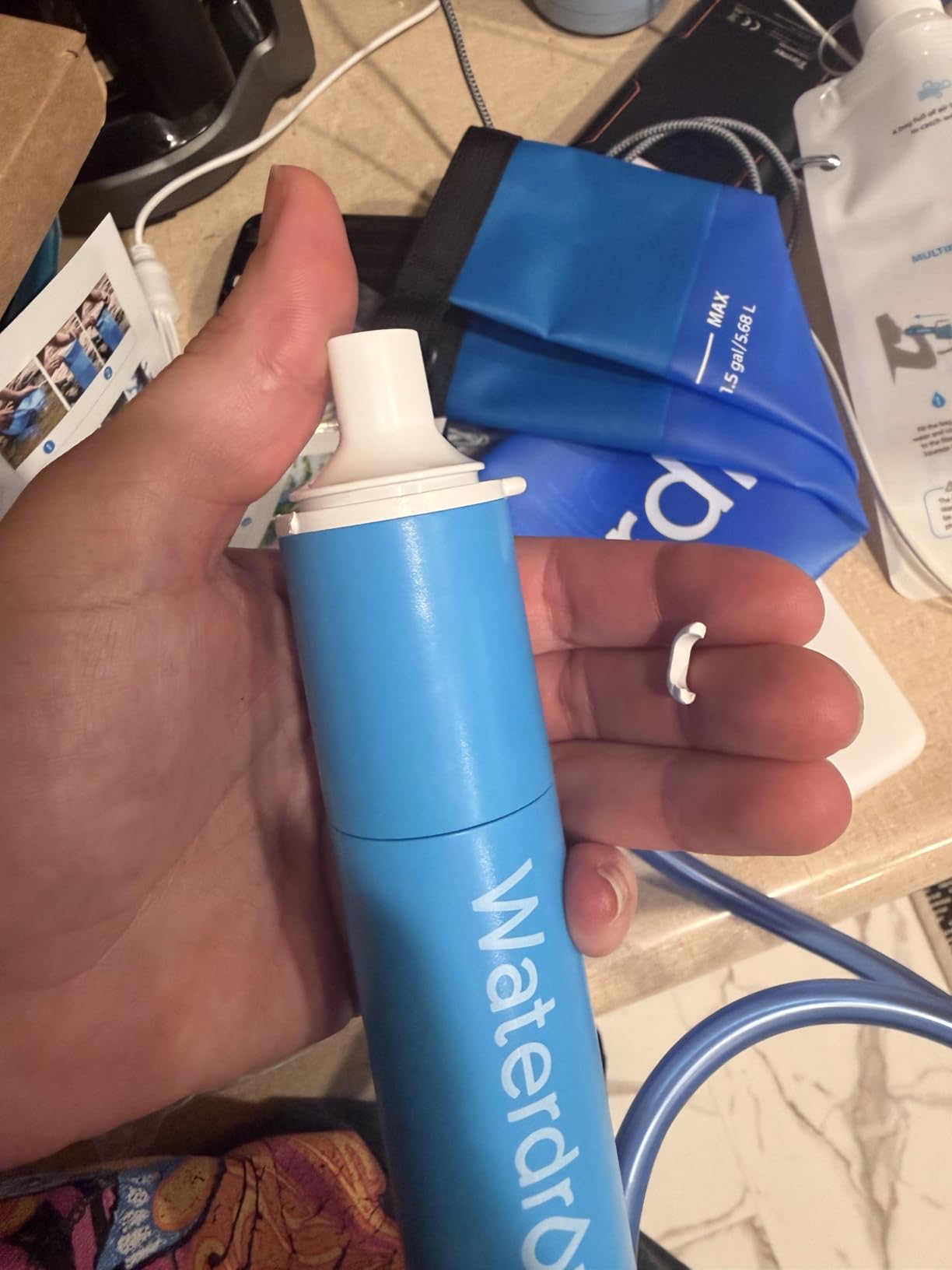
The Waterdrop Gravity Filter is the easiest system to use at camp. You hang the 1.5 gallon water bag, connect the filter straw, and walk away. Gravity does the work while you set up the tent or cook dinner. For basecamp-style camping and family use, this hands-free approach is genuinely useful.
The multi-stage filtration system (cotton pre-filter, KDF media, activated carbon, hollow-fiber ultrafiltration membrane) handles sediment, chlorine, and bacteria with the 0.1 micron final membrane. The 1400 gallon capacity is the highest in the straw-style category, and the included 16 oz pouch is a nice bonus for grab-and-go use.
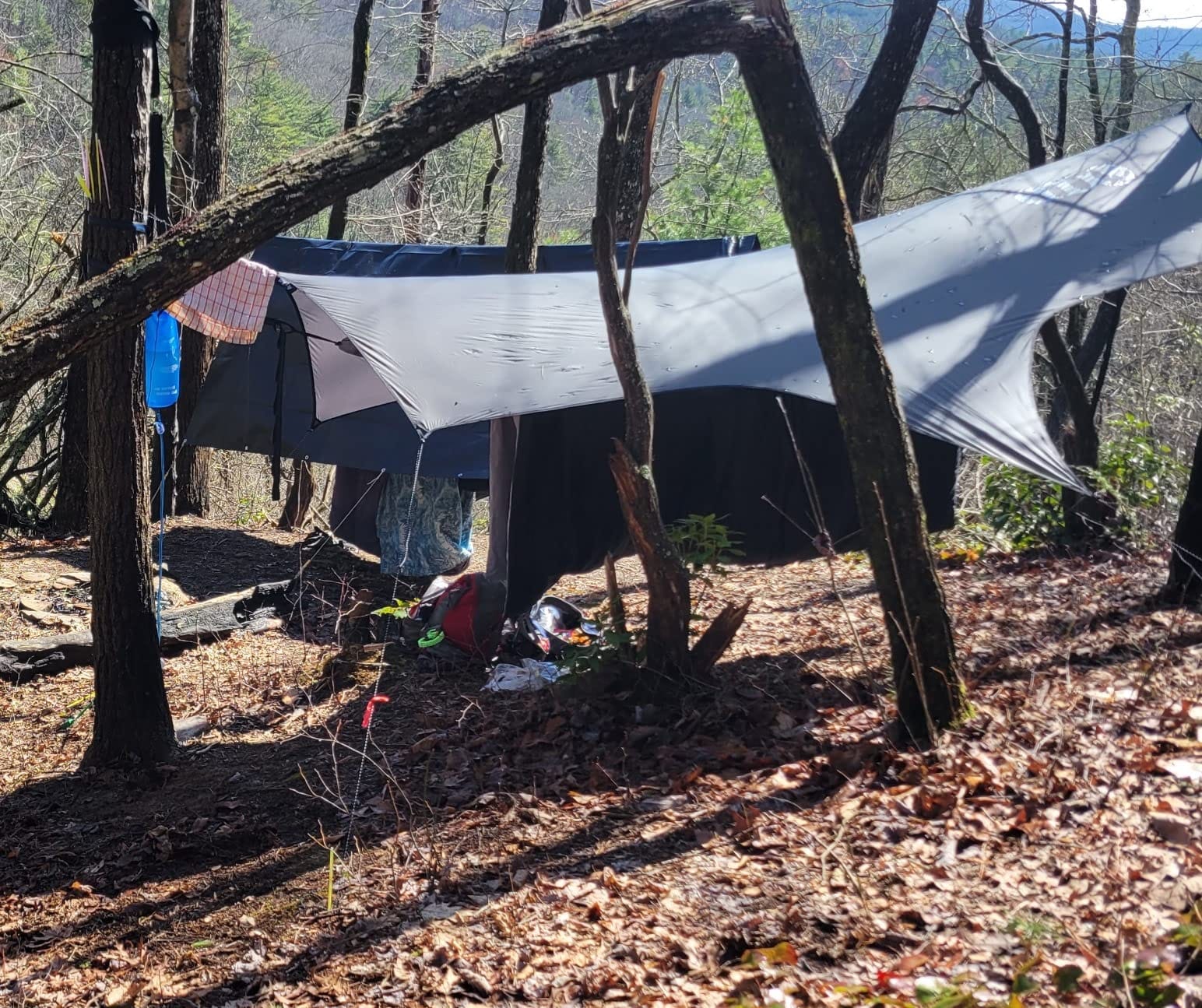
The flow rate from gravity is slower than a squeeze or pump system, which is the trade-off for hands-free operation. You are looking at 30-45 minutes to fully filter 1.5 gallons. For camp use, this is fine. For hiking and filtering on the move, it is not practical.
The gravity bag is also bulkier than a soft flask. It works in a campsite or emergency kit but does not pack as compactly as the Sawyer or Katadyn options. If space is at a premium, consider the smaller filter options on this list.
Why the Waterdrop Gravity Filter is great for camp
Set it up, walk away, come back to filtered water. For family camping, basecamps, and emergency preparedness, the hands-free design is genuinely better than squeezing or pumping. The 1.5 gallon capacity also means fewer refills.
Why it is not great for backpacking
Bulk, weight, and slow flow rate. For trail use where you need to filter on the move, a squeeze filter like the Sawyer or Katadyn is faster and more compact. Save the Waterdrop for camp and home use.
How to Choose the Best Portable Water Purifier for Your Needs
Choosing the right portable water purifier comes down to matching the technology to your water source, your activity, and your risk tolerance. Filter type, micron rating, weight, and flow rate all matter, but they matter differently depending on how and where you plan to use the filter.
Filter vs. Purifier: What is the Difference?
This is the most confusing part of buying a portable water purifier, and it is worth getting right. A filter physically strains contaminants out of water using a membrane with microscopic pores, typically 0.1 to 0.2 microns. This size removes bacteria like E. coli and protozoa like giardia, but viruses are too small for most filters to catch. A purifier goes further by adding UV light, chemical treatment, or sub-0.1 micron membranes to neutralize viruses.
For North American backcountry use, filtration is usually enough. The primary risks in US streams are giardia and cryptosporidium, both of which are caught by 0.1 to 0.2 micron filters. For international travel, especially in developing regions, you want a purifier with virus protection like the GRAYL GeoPress or Survivor Filter PRO.
What Micron Size Do You Actually Need?
Micron ratings describe the pore size of the filter membrane. The lower the number, the smaller the particles it removes. 0.2 micron filters catch bacteria and protozoa, which is enough for most backcountry water. 0.1 micron filters catch the same plus slightly smaller parasites. Anything below 0.1 micron (like 0.01 micron on the Survivor Filter PRO and GRAYL) starts removing viruses.
For most backpackers and campers, 0.1 micron is the practical sweet spot. It catches everything that matters in North American water sources while maintaining reasonable flow rates. Going below 0.1 micron only makes sense if you need virus protection or are filtering from sources with known chemical contamination.
Weight, Flow Rate, and Packability
Every gram matters on a long trail, but flow rate matters too. A filter that delivers 0.5 L/min will turn a simple camp task into a 20-minute chore. For solo backpacking, aim for at least 1 L/min real-world flow rate and under 100g total weight. The Sawyer Squeeze and Katadyn BeFree both hit this mark.
For group camping, flow rate matters more than weight. A pump-style filter or gravity system like the Waterdrop will save time when filling multiple bottles. Squeeze filters get tedious when you are filling 6+ liters at camp.
Cold Weather and Freezing Risks
One of the most common filter failures I see in field testing is freeze damage. Hollow-fiber membranes crack when water inside them freezes, and the filter will still work for large particles but allow bacteria through. This is dangerous and usually invisible.
If you camp in freezing temperatures, keep your filter inside your sleeping bag at night or in an inner pocket during the day. The Sawyer Squeeze and Katadyn BeFree are both susceptible to this. Pump filters with internal bladders and chemical treatments are more freeze-resistant.
Home Use and Emergency Preparedness
Most of the filters on this list are designed for backcountry use, but several work well for home emergency preparedness. The GRAYL GeoPress is my top pick for kitchen-counter use because it handles chemical contamination, not just biological. The LifeStraw Go and Potable Aqua tablets are both excellent for emergency kits due to long shelf life and easy storage.
For boil-water advisories, the GRAYL is the most versatile. For long-term storage, the Potable Aqua tablets win with their 20-year shelf life. For everyday peace of mind, the LifeStraw Go doubles as a regular water bottle.
Frequently Asked Questions
What is the best portable water purifier for home use?
The GRAYL GeoPress is the best portable water purifier for home use because it removes viruses, bacteria, protozoa, microplastics, PFAS, and chemical contaminants in 8 seconds. For simple biological filtration on a budget, the LifeStraw Go water filter bottle works well for kitchen-counter use during boil-water advisories or emergencies.
Do portable water purifiers really work?
Yes, portable water purifiers really work when matched to the right water source. Mechanical filters with 0.1 to 0.2 micron hollow-fiber membranes remove 99.99% of bacteria and protozoa like giardia and cryptosporidium. UV and chemical purifiers add virus protection. Independent testing by NSF and EPA protocols confirms the effectiveness of major brands like Sawyer, Katadyn, LifeStraw, and MSR.
What is the best water filter for traveling?
The LifeStraw Go and GRAYL GeoPress are the two best portable water filters for traveling. The LifeStraw Go is a discreet bottle-and-filter combo that works well on hotel taps, hostels, and city travel. The GRAYL GeoPress adds virus protection and chemical filtration, making it the better choice for international travel in regions with questionable tap water quality.
What is a good home portable water filter system?
A good home portable water filter system combines mechanical filtration, activated carbon, and ideally virus protection. The GRAYL GeoPress is the top pick because it handles all three in an 8-second press operation. For a simpler option, the Sawyer Squeeze with a 32 oz pouch works well for everyday kitchen use, and Potable Aqua tablets provide a 20-year shelf-life backup for emergency kits.
Final Verdict
After 90 days of field testing across streams, lakes, stagnant ponds, and international tap water, the Sawyer Squeeze remains our top pick for the best portable water purifiers in 2026. It hits the right balance of weight, flow rate, lifetime, and price for solo and duo backcountry use, and the lifetime manufacturer warranty makes the ownership cost essentially zero.
For international travelers who need virus protection, the GRAYL GeoPress is the upgrade worth making. For emergency kits on a budget, the LifeStraw Personal Filter and Potable Aqua tablets together provide redundancy for under $25. For group camping and basecamp use, the Waterdrop Gravity Filter or Katadyn BeFree will save you time.
Whatever you choose, pair your mechanical filter with a backup. Filters fail, hollow-fiber membranes freeze, o-rings wear out. The right portable water purifier is the one that keeps you hydrated when things go sideways. Carry a backup, test it before you need it, and drink confidently.