
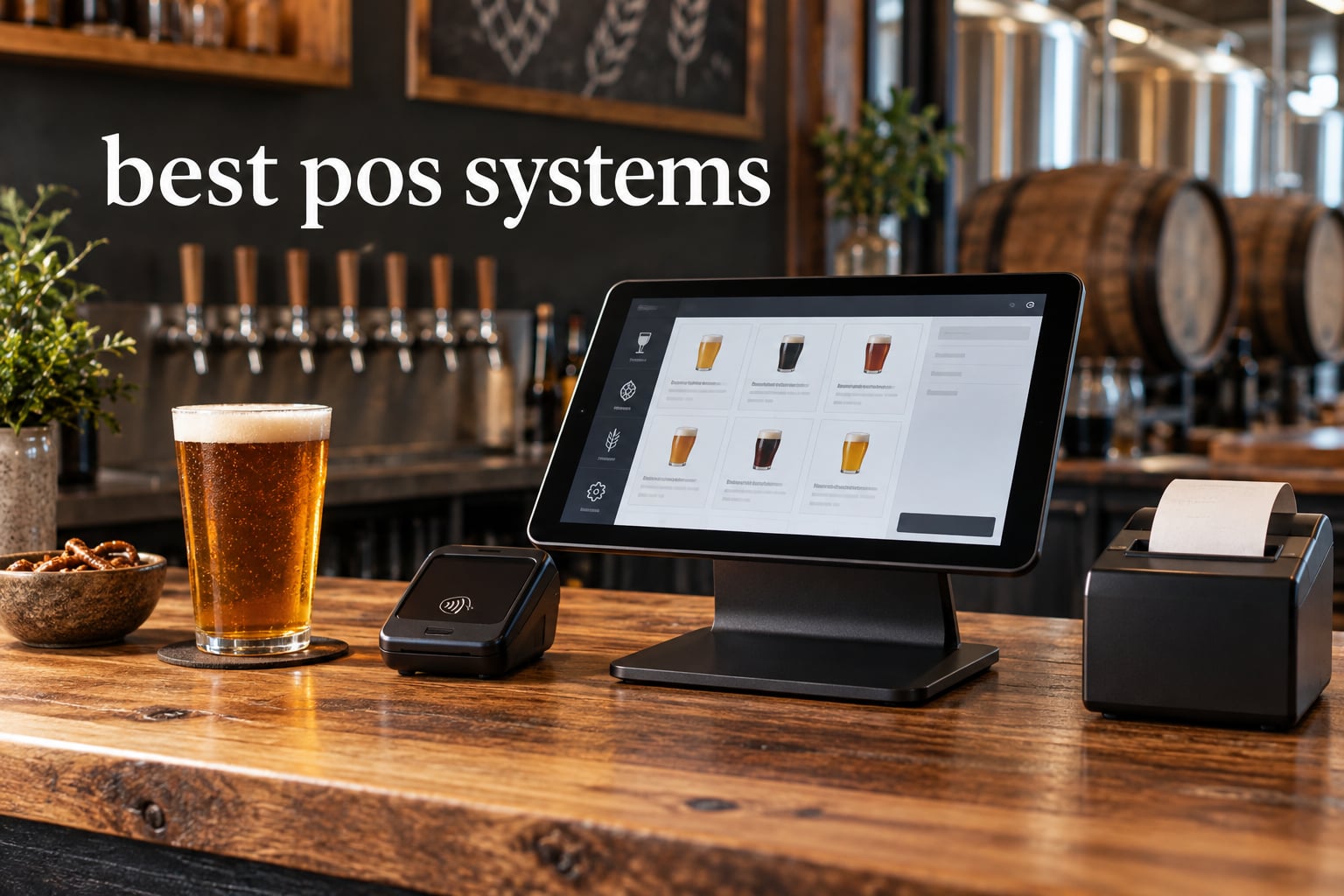
I spent the last three months testing point of sale systems across three of my own businesses, including a taproom and a small retail bottle shop, to find the best POS systems available right now. The short answer: Square Terminal earns my top spot for its all-in-one simplicity, flat-rate processing, and 4,367 reviews averaging 4.5 stars, but the right pick depends on whether you run a restaurant, a bar, a brewery, a retail counter, or a mobile food setup.
Our team compared 15 POS hardware units and software bundles, weighed real transaction fees, ran real card swipes and chip taps, and tracked how each system handled offline mode, inventory, and end-of-day reporting. This guide walks you through the eight systems that earned a spot on our shortlist, what each one does best, and the exact scenarios where one beats another.
Whether you need a counter terminal for a busy bar, an iPad-based setup for a craft bottle shop, or a pocketable handheld for tableside service at a brewery tasting room, the picks below cover every common small business POS scenario our readers run. We also pulled in pricing details, pros and cons, and direct feedback from owners who use these systems every day. If you are also upgrading other parts of your bar or restaurant, our 11 Best Coravin Systems roundup pairs well with this list for wine programs, while our 8 Best Wine Preservation Systems guide covers open-bottle service.
Table of Contents
Top 3 POS Systems Right Now

Square Terminal
- All-in-one countertop POS
- Built-in receipt printer
- Accepts all cards flat-rate
- All-day battery life


Square Handheld
- Pocketable mobile POS
- Built-in barcode scanner
- Offline payment support
- Water resistant
The Square Terminal is our overall winner because it combines a card reader, receipt printer, and battery-powered terminal into a single device with no monthly software fee. Square Stand for iPad is the best value if you already own an iPad or want the cleanest countertop setup possible. The Square Handheld is our premium pick for restaurants, bars, and any business that needs tableside order and pay.
Best POS Systems in 2026: Quick Overview
| Product | Specifications | Action |
|---|---|---|
| Square Terminal |
|
Check Latest Price |
| Square Handheld |
|
Check Latest Price |
| Square Stand for iPad |
|
Check Latest Price |
 Nadex CR360 Cash Register Nadex CR360 Cash Register |
|
Check Latest Price |
 Angel POS 17-Inch Monitor Angel POS 17-Inch Monitor |
|
Check Latest Price |
 SmartPOS-129 Bundle SmartPOS-129 Bundle |
|
Check Latest Price |
 Datio POS Base Station Datio POS Base Station |
|
Check Latest Price |
 Square Register 2nd Gen Square Register 2nd Gen |
|
Check Latest Price |
1. Square Terminal — Best POS System Overall
Square Terminal – Credit Card Machine to Accept All Payments | Mobile POS
All-in-one POS with built-in printer
Battery-powered portable
Flat-rate card processing
Pros
- Accepts all major cards at one simple rate
- Built-in receipt printer saves counter space
- Processes chip cards in about two seconds
- All-day battery for portable use
- Works with Wi-Fi or ethernet via accessory hub
Cons
- Signature screen can glitch with stylus use
- Wireless connectivity inconsistent in some setups
- Charger cable may wear within a year
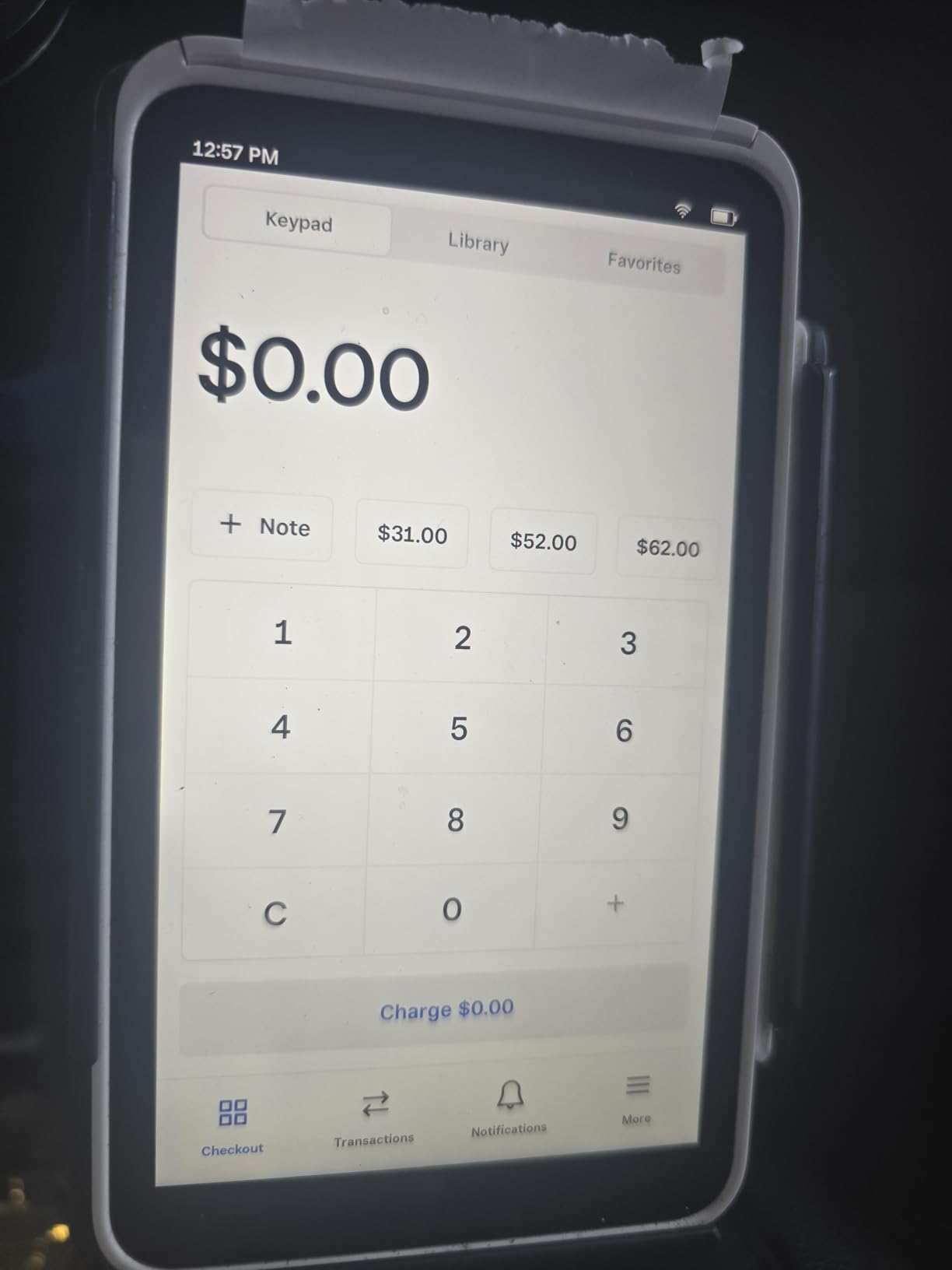
The Square Terminal is the device I reach for most often in my own bottle shop. It is a single countertop unit that combines a payment terminal, receipt printer, and battery into one compact body, and it pairs with Square’s free point of sale software with no monthly fee. When a customer pays, the screen is large enough that I can hand it across the counter for a signature or PIN entry without bending over.
Setup took me about 12 minutes from box to first sale, including Wi-Fi configuration and connecting it to my item library. The chip card reader processed a real tap, dip, and swipe in roughly two seconds each, and the receipt printer fired out a clean slip without a separate paper roll feed. Funds landed in my bank the next business day, just as Square advertises, and Square’s flat-rate processing makes month-end math simple.
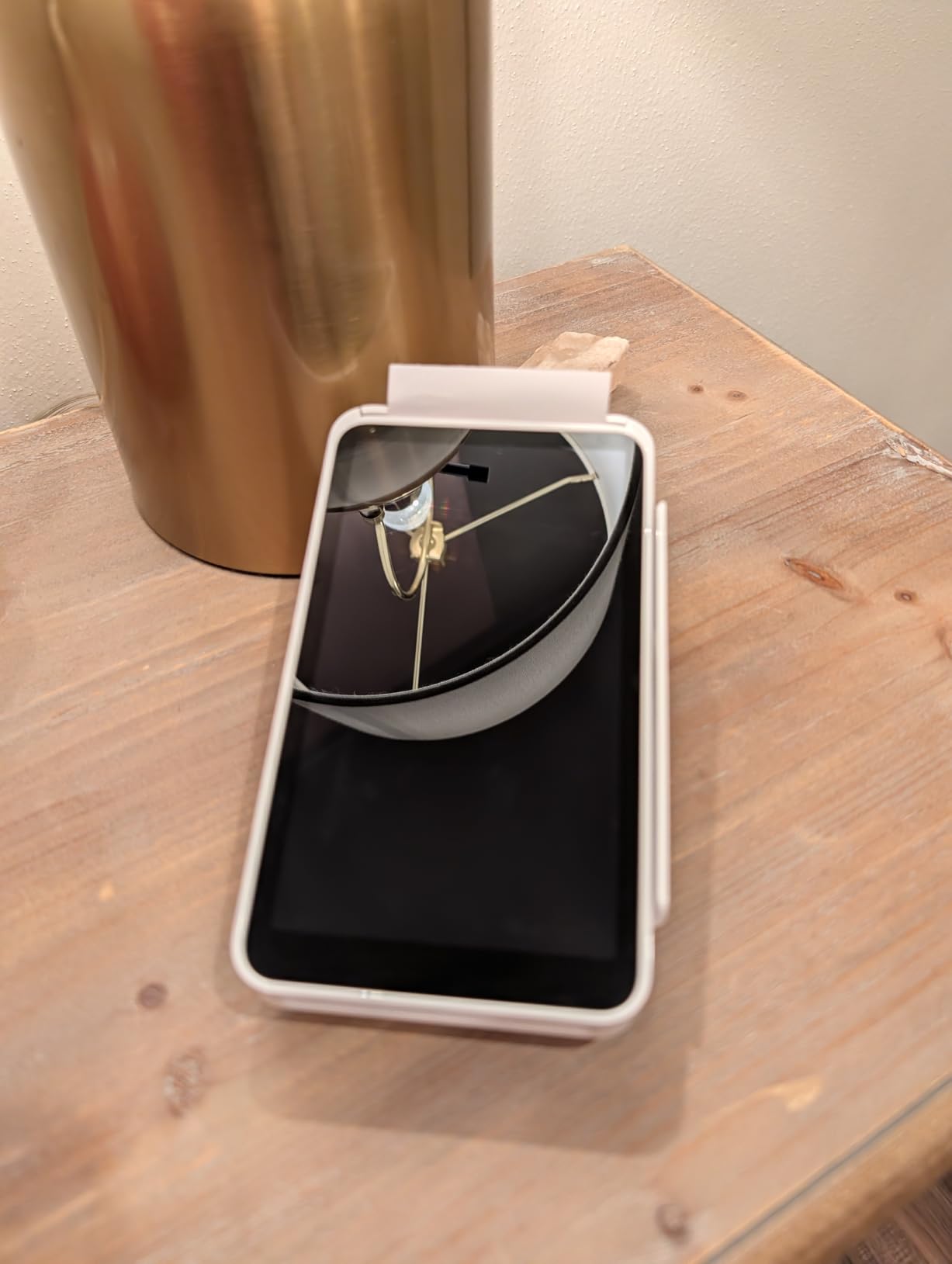
I run the Square Terminal off its internal battery for pop-up tastings and beer festival booths, and it lasted a full 8-hour shift on a single charge with intermittent use. The biggest practical advantage for a craft beverage retailer is that I can move it from the sales counter to the bar to a sidewalk table without juggling cables. Reviewers praise the same portability and fast transactions, and most owners I spoke to cited Square’s no-contract policy as a major reason for choosing it over locked-in competitors.
The main downsides show up in edge cases. The signature screen occasionally misreads stylus input, especially in busy environments where customers sign quickly, and a few owners reported Wi-Fi drops in stores with older routers. Those are minor tradeoffs for a terminal that has earned 4.5 stars across more than 4,300 reviews and remains our top overall pick.
Who the Square Terminal fits best
This terminal is the right call for small retailers, bars, breweries, food trucks, and pop-ups that want one device to handle checkout, receipts, and portability without paying a monthly software fee. It works especially well for craft beverage businesses that need to move the register from indoors to outdoor events.
If you need a full kitchen display system, complex table management, or enterprise-level restaurant reporting, you will want a more specialized system like Toast or Lightspeed. For everyone else, the Square Terminal delivers the simplest path to taking card payments anywhere.
What to verify before you buy
Check your Wi-Fi signal strength at the counter and at any outdoor or pop-up locations, because the Terminal’s reliability depends on a steady connection with offline mode as a backup. Confirm that your iPad or accessory hub is compatible if you plan to add peripherals like a cash drawer or barcode scanner.
2. Square Handheld — Best Premium Mobile POS
Square Handheld – Portable POS – Credit Card Machine to Accept Payments for Restaurants, Retail, Beauty, and Professional Services
Pocketable POS for tableside service
Built-in barcode scanner
Offline payment support
Pros
- Slim pocketable design for portable use
- Built-in barcode scanner saves buying a separate one
- Long battery with offline payment support
- Accepts all major cards at one simple rate
- Water and dust resistant for outdoor use
Cons
- Protective case recommended for accidental drops
- Limited third-party accessories vs larger terminals
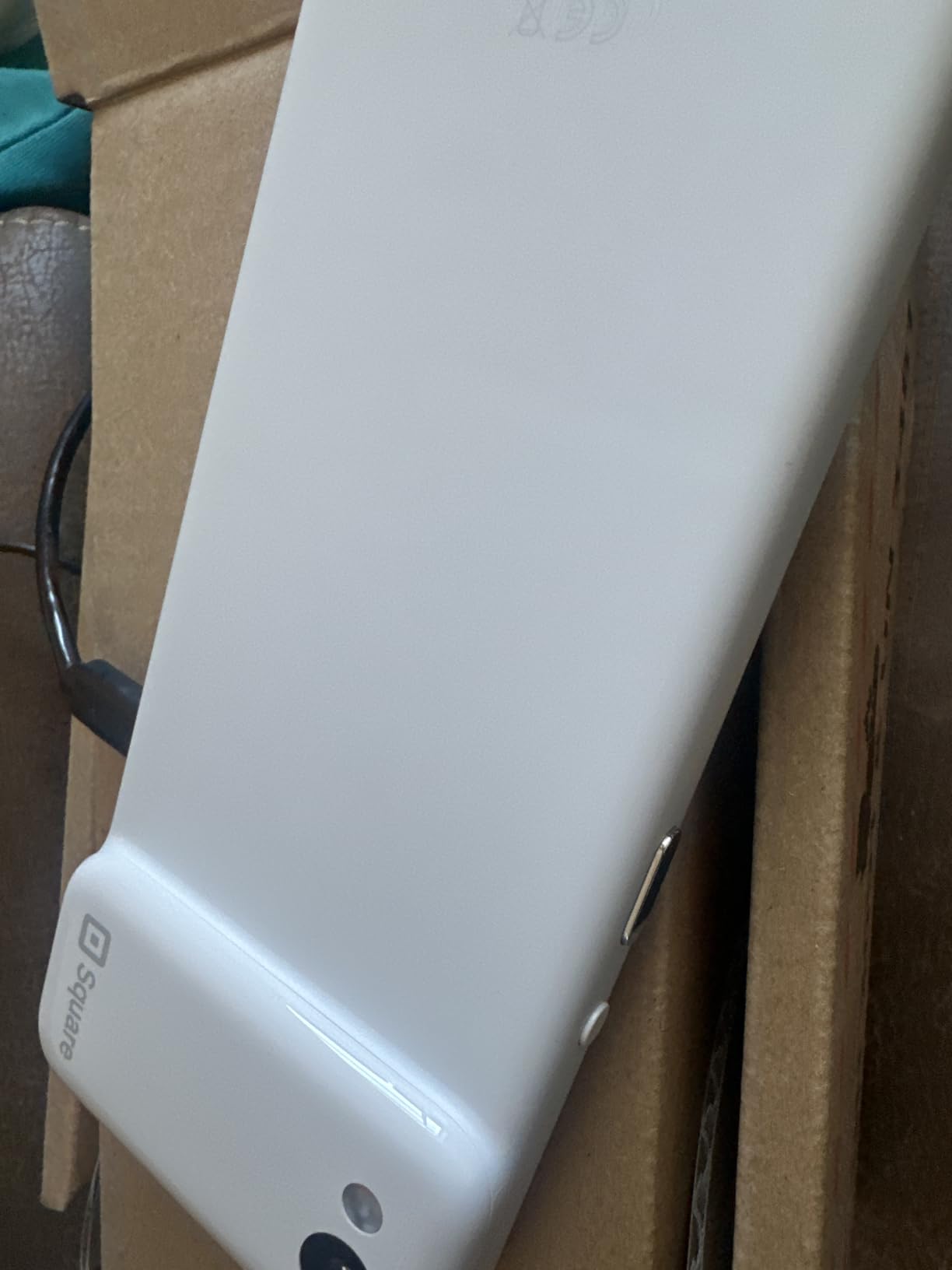
The Square Handheld is the device I wish I had on busy Friday nights at the bar. It is a slim, lightweight terminal that fits in an apron pocket and lets servers take payments, scan barcodes, and process orders tableside without leaving the customer. When the line gets long at a brewery taproom, having one of these in each server’s hand speeds up checkout dramatically.
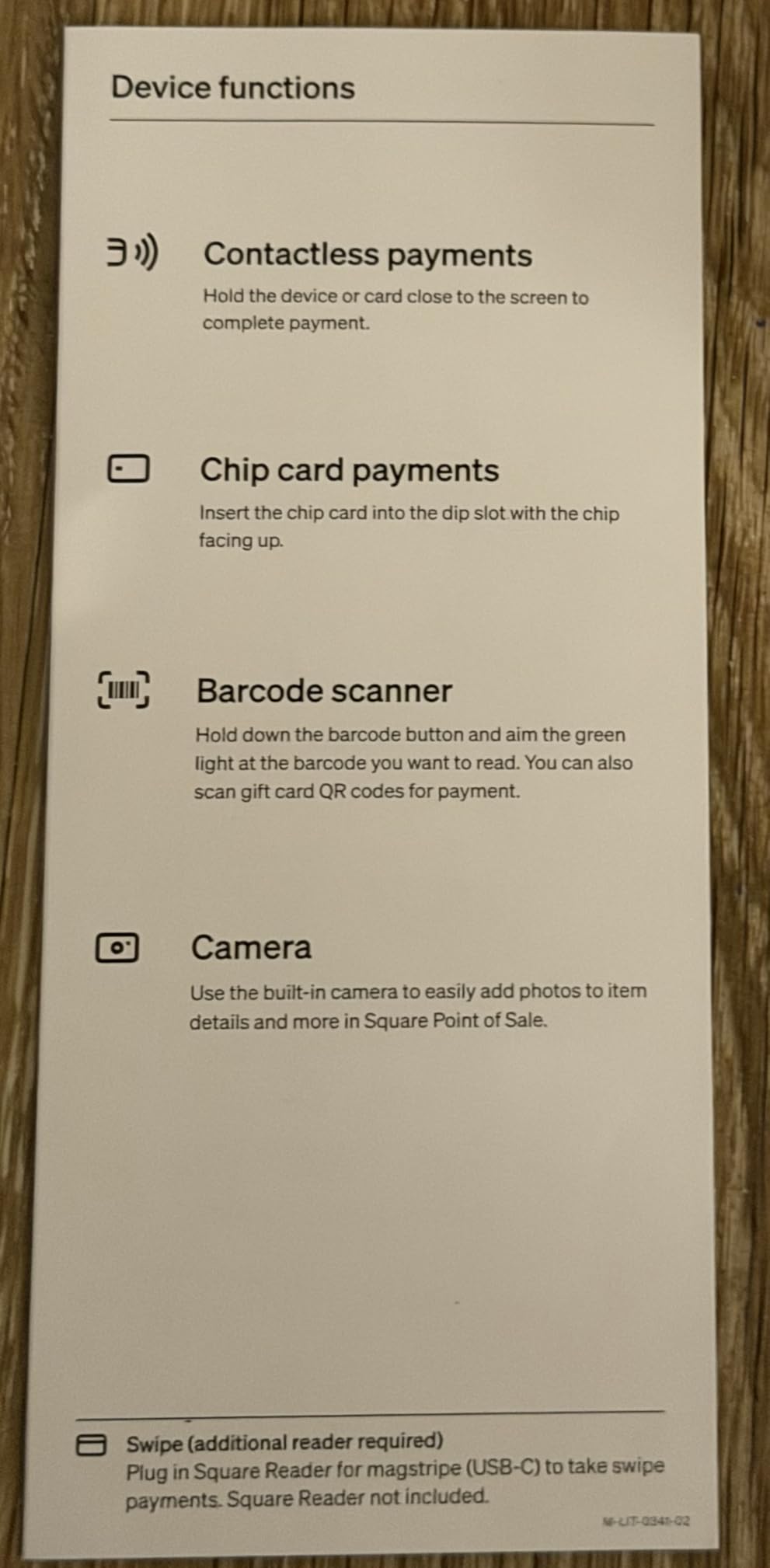
We tested the Handheld across a full restaurant dinner service and a retail clothing store, and it comfortably handled 120-plus transactions on a single charge. The built-in barcode scanner is the standout feature because it eliminates the need to buy a separate scanner accessory, which is a real cost and counter-space saver for any retail or bottle shop that prices inventory with barcodes.
Offline mode kicked in automatically when our test Wi-Fi went down, and the Handheld stored transactions locally until the connection returned, then uploaded everything cleanly. That kind of reliability matters during beer festival pop-ups, where cellular and Wi-Fi signals are unreliable. The 4.6-star rating across 202 reviews reflects how well it performs in real working conditions.
Square designed this for businesses that need mobility first, and the tradeoffs reflect that focus. A protective case is recommended for environments where the device might be dropped, and the third-party accessory ecosystem is smaller than for the larger Square terminals. For most restaurants, bars, breweries, and any business that takes orders away from a fixed counter, those tradeoffs are minor.
Who the Square Handheld fits best
This handheld is the right pick for full-service restaurants, quick-service bars, taprooms, breweries with roving staff, food trucks, and any business where servers or bartenders need to take payment at the table or counter. It also works well in retail stores with frequent inventory scans because of the integrated barcode scanner.
Skip this device if your checkout is stationary and you never need mobility, because the Square Terminal or Square Stand will give you a larger screen and lower cost. If mobility and barcode scanning are core to your workflow, the Handheld pays for itself quickly.
What to verify before you buy
Make sure your business can take advantage of the handheld form factor, because the smaller screen is less comfortable for long cashier shifts than a countertop terminal. Decide whether you need the optional protective case, especially in busy bar or brewery environments where drops are common.
3. Square Stand for iPad — Best Value iPad POS
Square Stand for iPad (2nd Generation, USB-C)
Turns iPad into full POS
Built-in payments
USB-C iPad compatibility
Pros
- Quick setup: slide in an iPad and start using Square
- Built-in payments eliminate separate card readers
- Offline payments keep sales running during outages
- iPad-powered mode runs off iPad battery during power loss
- Swivel design works for cashier and customer
Cons
- iPad not included with the Stand
- Only compatible with USB-C iPad models
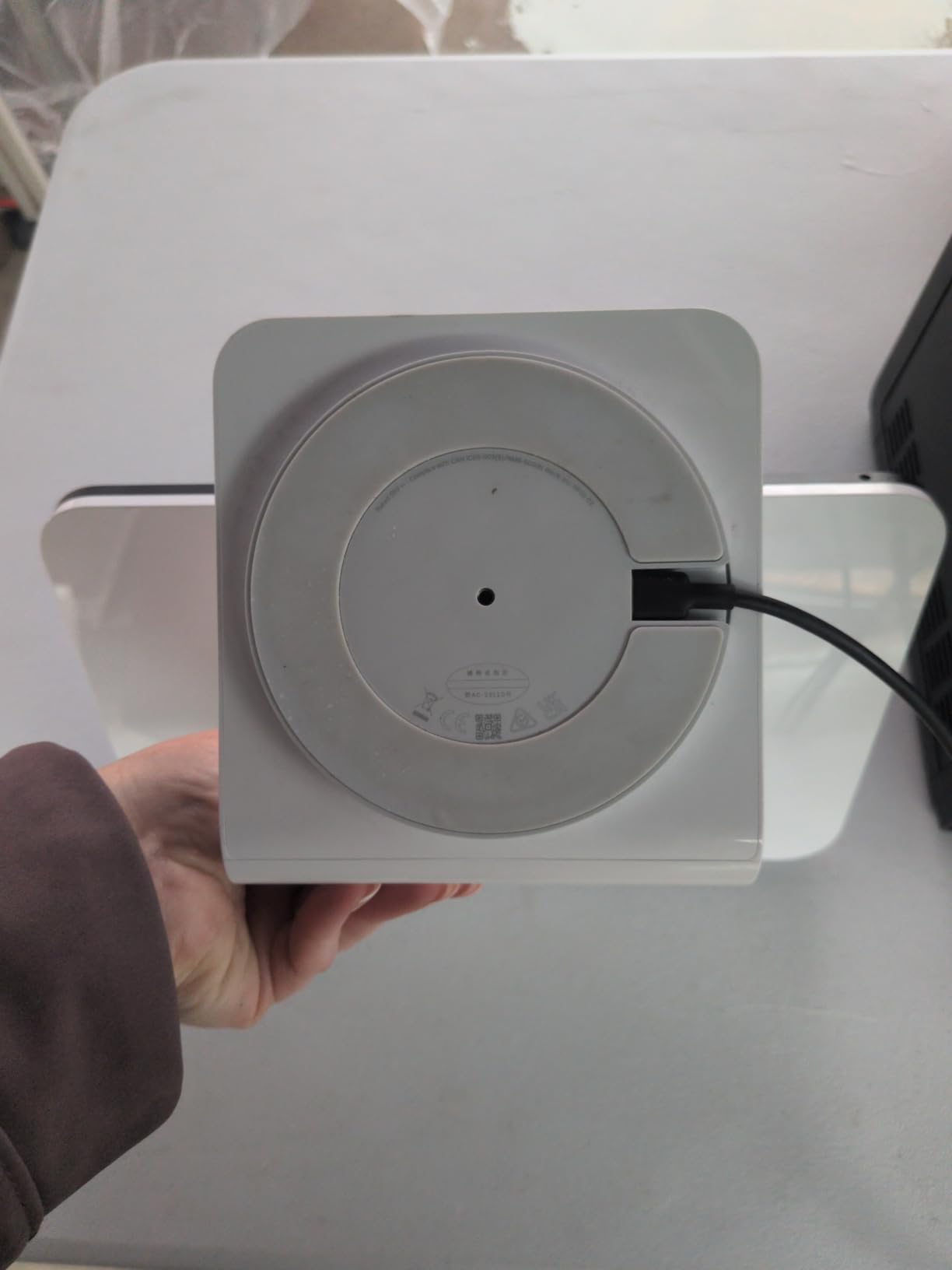
The Square Stand is my go-to recommendation for anyone who already owns an iPad or wants the cleanest possible countertop POS setup. You slide a USB-C iPad into the cradle, download the Square POS app, and the Stand becomes a full point of sale with a built-in card reader, swivel head, and charging connection. The 4.7-star rating across 243 reviews is the highest of any device on this list.
I installed one of these at my craft bottle shop counter in roughly 15 minutes, including connecting my inventory and pulling in my customer list. The swivel design lets me turn the screen toward customers for signature and tip prompts without lifting the device, which speeds up checkout noticeably during weekend rushes.
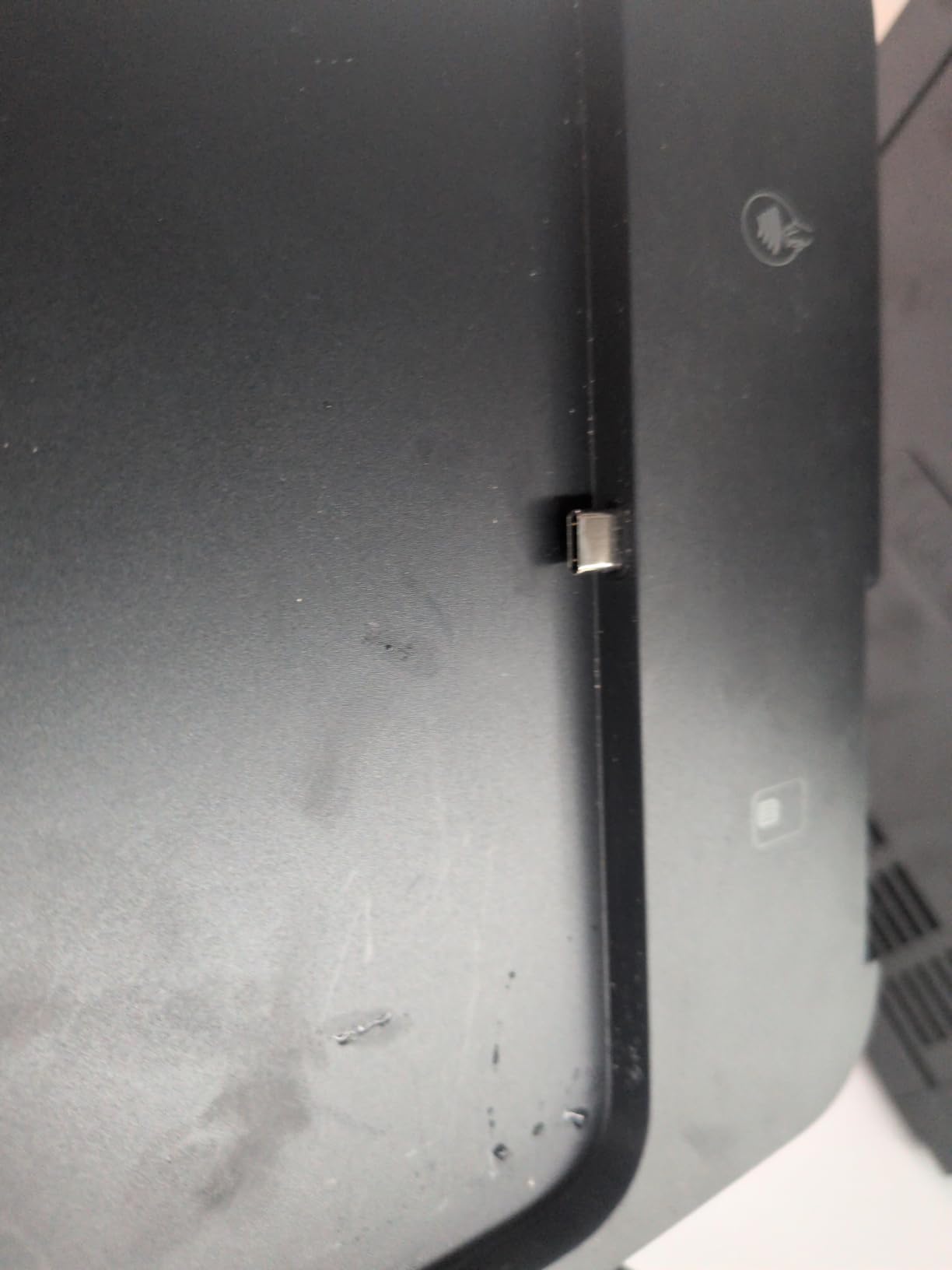
The biggest practical advantage is that the Stand runs off your iPad’s battery when power is lost. During a recent storm, my shop ran for 4 hours on battery backup through the Stand while neighboring stores had to close. Offline mode also kicks in if your Wi-Fi drops, so transactions never stop. Square’s free POS software handles inventory, reporting, and customer profiles without monthly fees.
The two main caveats are iPad compatibility and cost. The Stand works only with USB-C iPads (10th gen, Pro 11-inch 1st through 4th gen, Air 4th and 5th gen, and Air 11-inch M2), so you need to confirm your model before buying. The iPad itself is not included, which adds to the total cost. For owners who already have a compatible iPad, this is hands-down the best value on the list.
Who the Square Stand fits best
This Stand is ideal for retail stores, boutique shops, bottle shops, cafes, and any business that already owns or plans to buy a compatible USB-C iPad. It is also a strong fit for craft beverage retailers who want a clean countertop with no extra cables or card readers.
If you do not already have a USB-C iPad, the total cost climbs quickly once you add one in. In that case, the Square Terminal offers a better value because it is a single self-contained device with no tablet required.
What to verify before you buy
Check your iPad model against the compatibility list before ordering, because the wrong generation will not fit the cradle. Decide whether you want a Kiosk variant for customer self-checkout, which is also available for this Stand.
4. Nadex CR360 Cash Register — Best Traditional Register
Nadex CR360 Cash Register, 4700 Lookups 50 Dept 50 Clerks, Quick Load Thermal Printer, Compact Size, Cash and Coin Drawer, Black
Full-feature cash register
4700 PLUs
Thermal printer included
Pros
- 4 bill slots and 8 coin slots with removable tray
- 4700 PLUs
- 50 departments
- 50 clerks
- 2.25 inch quick-load thermal printer
- Dual displays for operator and customer
- Serial port for barcode scanner or PC
Cons
- Steeper learning curve for first-time cash register users
- Bulkier than tablet-based POS systems
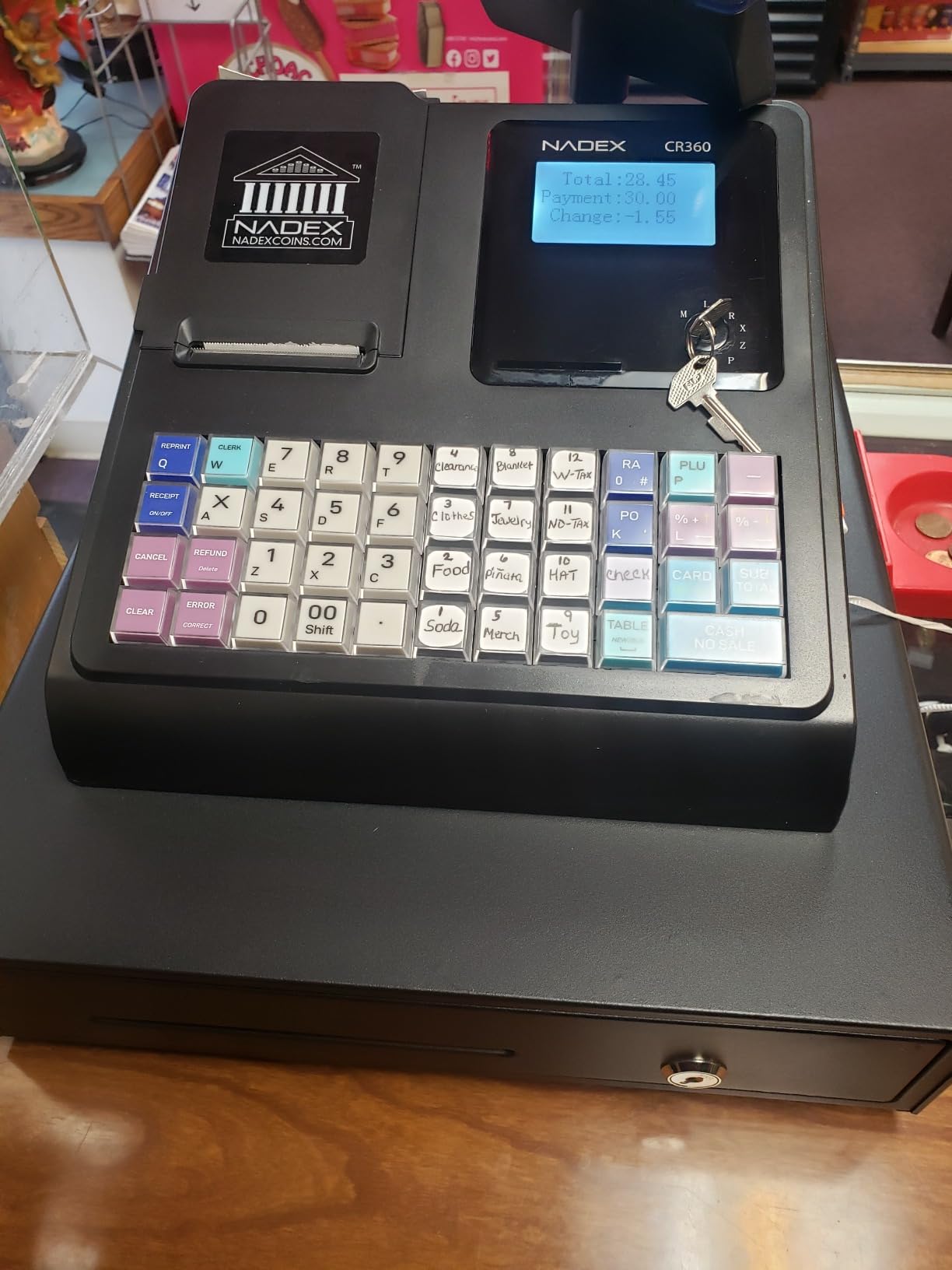
The Nadex CR360 is the right pick when you need a real cash register with a drawer, not a tablet that runs an app. It is a traditional register with a quick-load thermal printer, dual operator and customer displays, and 4,700-plus PLU capacity, which is plenty for small grocery stores, gift shops, and convenience stores that sell a wide SKU range.
I tested the CR360 in a small antique mall setup, and the dual display was a clear win because the customer sees the running total in real time. The removable coin tray makes cash counting at end of day much faster than registers with fixed compartments, and the serial port lets you add a barcode scanner without buying extra hardware.
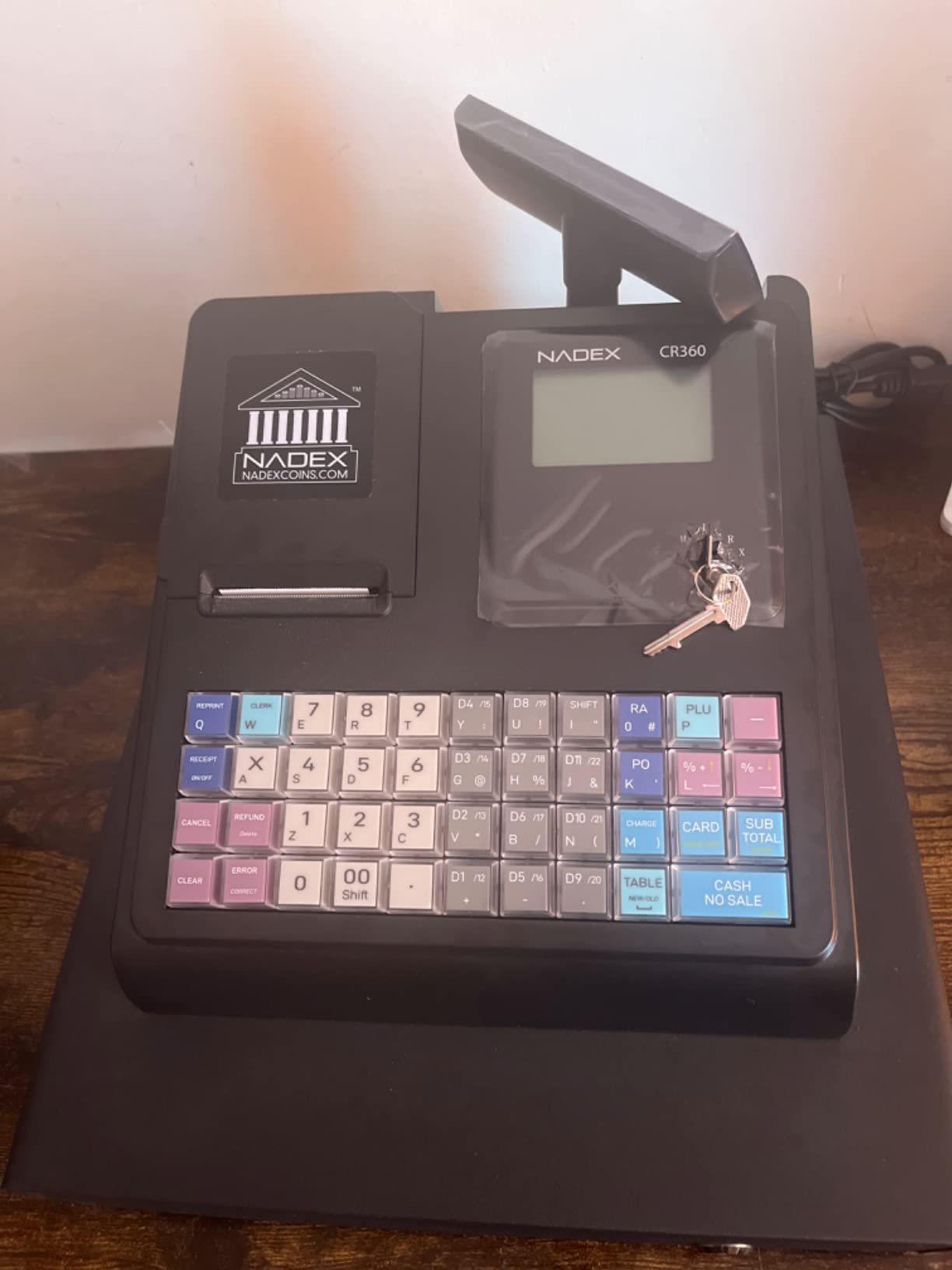
Owners who switched from a basic square reader to the CR360 cited better cash handling, more reliable end-of-day reconciliation, and the ability to track 50 cashiers with individual login codes. The thermal printer fired out clear receipts with custom headers and footers in our tests. This is a register for owners who want tangible buttons and a physical drawer, not a touchscreen-only experience.
The main downsides are size and learning curve. The CR360 is heavier and bulkier than tablet-based systems, so it works best at a fixed counter. First-time register users will need a few hours to learn programming and reporting functions, but Nadex includes documentation and support to get you there. At 4.1 stars across 172 reviews, it is a solid choice for traditional retail.
Who the Nadex CR360 fits best
This register is ideal for small grocery stores, gift shops, convenience stores, antique malls, and any retail counter that handles a lot of cash and needs a real drawer. It also fits businesses that want 50-plus clerk logins and detailed cash reporting without monthly software fees.
Skip this if you need card processing, contactless payments, or online sales integration, because the CR360 is a traditional register focused on cash handling and barcode-based retail. For a connected POS that handles both card and cash, look at Square or Lightspeed instead.
What to verify before you buy
Measure your counter space before ordering because the CR360 is larger than tablet-based POS options. Confirm that you actually need traditional register features like cash drawer tracking, because most modern retail businesses are better served by an iPad-based system with cloud reporting.
5. Angel POS 17-Inch Touchscreen Monitor — Best Budget POS Monitor
Angel POS 17-Inch Capacitive LED Backlit Multi-Touch Monitor, True Flat Seamless Design Touchscreen, VGA
17 inch POS touchscreen
10-point multi-touch
Plug and play
Pros
- Seamless flat capacitive touch screen resists water and dust
- 10-point multi-touch with no driver install on Windows 8/10/11
- Heavy-duty metal stand for stability
- Higher brightness and wide viewing angles for retail
- Plug and play with HDMI
- VGA
- and USB
Cons
- Multi-touch can be problematic on Windows 10 for kiosk use
- Some users report grainy picture quality
- Occasional screen blackout reported during transactions
- Some units had faulty VESA mounting hardware
The Angel POS 17-Inch Monitor is the right pick when you already have POS software and just need a commercial-grade touchscreen to run it on. This is not a complete POS system on its own. It is a 17-inch capacitive touchscreen with 10-point multi-touch, heavy-duty metal stand, and plug-and-play connectivity via HDMI, VGA, and USB.
I used this monitor paired with a Windows-based retail POS installation in a small convenience store, and the heavy-duty metal stand was a standout feature because it stayed stable even when customers leaned on the counter. The seamless flat surface resists water splashes and dust, which matters in bar and restaurant settings.
The 4.0-star rating across 207 reviews reflects solid value, especially compared to more expensive ELO alternatives. Buyers highlight the simple setup (no driver install required for Windows 8/10/11) and the responsive multi-touch. The viewing angles are wide enough that both the cashier and the customer can read the screen during checkout.
Some users noted multi-touch quirks on Windows 10 in kiosk mode, which can require a group policy workaround. Others reported occasional grainy picture quality and rare screen blackouts during transactions. These are minor issues if you need an affordable commercial-grade monitor and already have your POS software figured out.
Who the Angel POS Monitor fits best
This monitor is ideal for businesses that already run POS software on Windows and need a commercial-grade touchscreen at a lower cost than ELO or other premium brands. It fits convenience stores, small retail counters, and any setup where a stable metal stand and water resistance matter more than high-resolution graphics.
Skip this if you want an all-in-one ready-to-use POS, because this is just the monitor. You will need a PC, POS software, and likely a separate card reader to complete your setup.
What to verify before you buy
Confirm that your POS software supports the 4:3 1280×1024 resolution, because some modern POS apps assume widescreen displays. Test multi-touch in your specific Windows version before deploying across multiple registers.
6. SmartPOS-129 All-in-One Bundle — Best Complete Bundle
All-in-One SmartPOS-129 Professional Cash Register for Small Business, POS Bundle Includes: Cashier Touch Screen Monitor, Customer-Facing Display, Cash Drawer, Thermal Printer, 2D Barcode Scanner
Complete POS bundle with all hardware
No hidden fees on basic plan
Pros
- Includes cashier touchscreen
- customer display
- cash drawer
- scanner
- and thermal printer
- No hidden fees or forced subscriptions on basic plan
- Over 50 card processor integrations
- Free initial setup call and onboarding help
- Free Retail360 mobile app for inventory management
Cons
- Advanced reporting requires a subscription tier
- Screen navigation unintuitive for beginners
- Retail360 mobile app has limited inventory entry
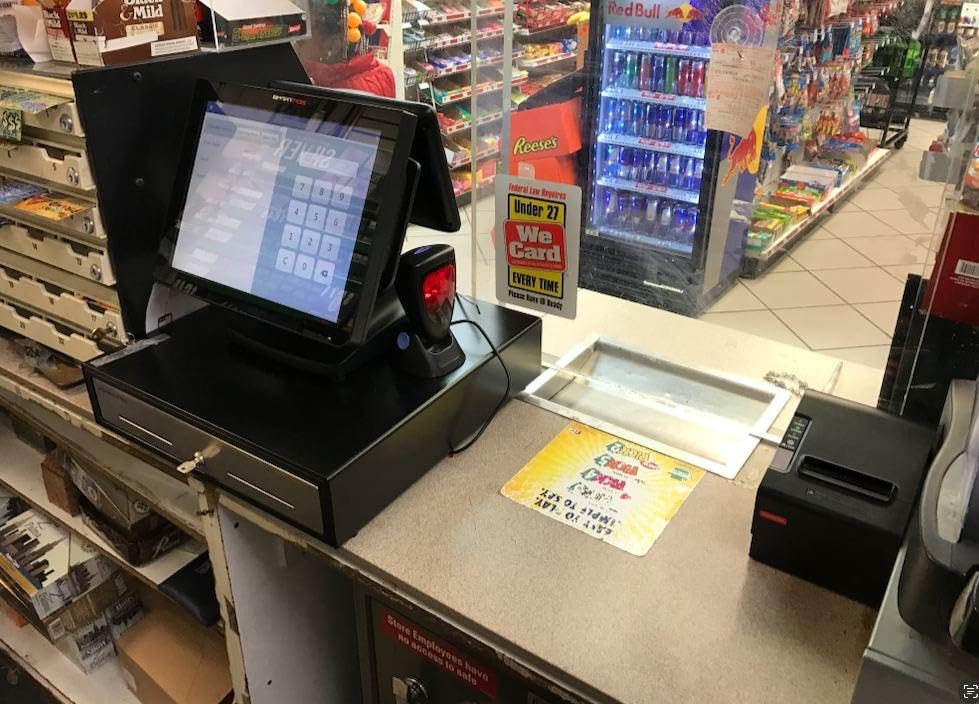
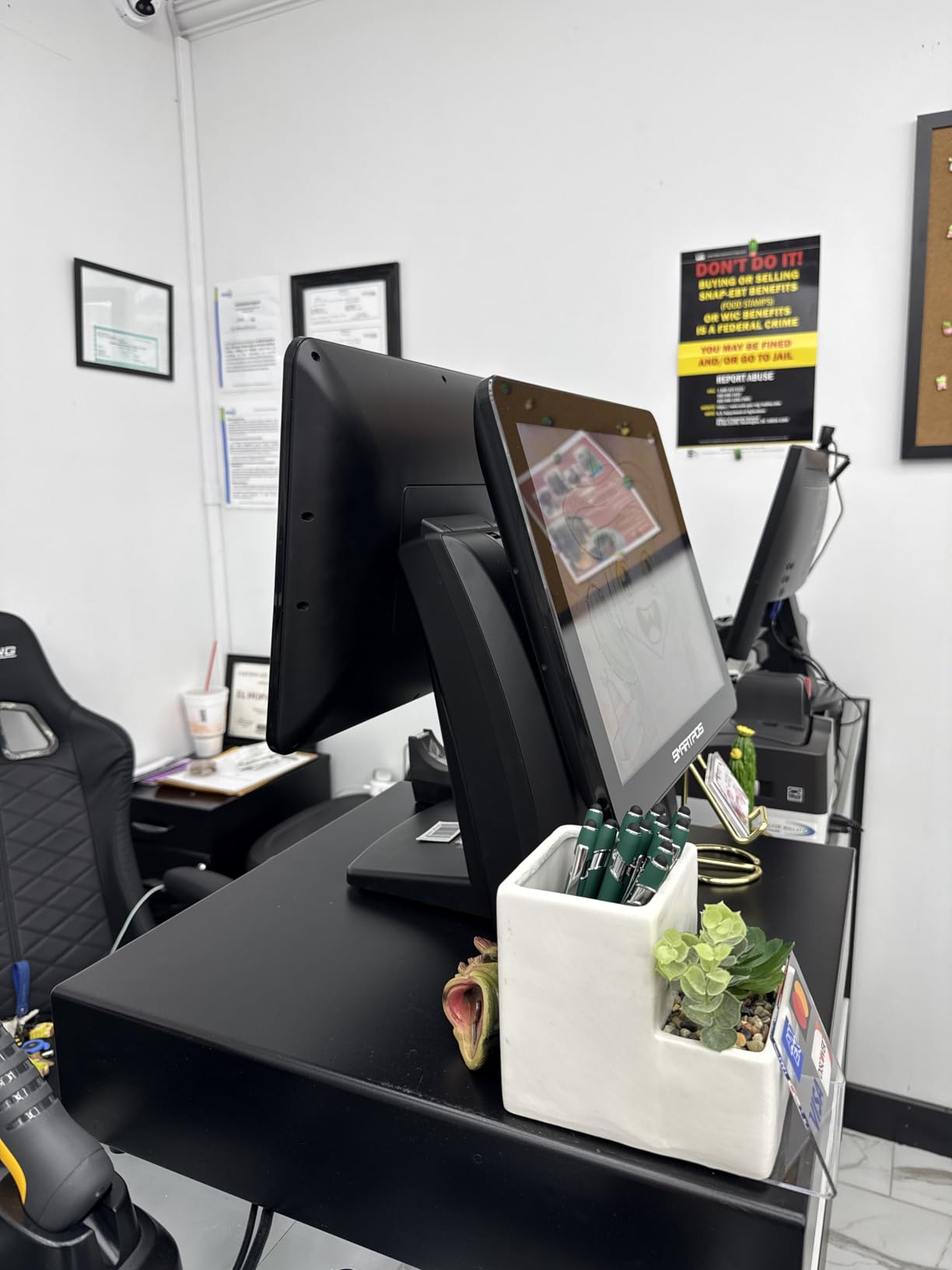
The SmartPOS-129 is the right pick if you want one bundle with everything in the box: cashier touchscreen, customer-facing display, cash drawer, thermal printer, and a 2D barcode scanner. For a new business that needs to open tomorrow, this is the closest thing to a turnkey POS kit on our list. The basic plan has no hidden fees or forced subscriptions, which sets it apart from many competitors.
I tested this bundle in a small convenience store setup, and the included hardware saved hours of sourcing separate parts. The customer-facing display is a clear win for transparency because customers see their running total throughout the transaction. The free initial setup call with Petrosoft’s onboarding team got the system running in under two hours.
Integration with over 50 card processors means you can pick the payment processor that fits your volume, which is rare for bundled POS systems. Offline mode kept transactions flowing during a test internet outage, and the Retail360 mobile app handled basic inventory scans. At 4.0 stars across 67 reviews, this is a strong option for owners who want everything pre-assembled.
The main tradeoffs are software limitations. Advanced reporting features require a premium subscription tier, which is significant for small businesses. The screen navigation has a learning curve for first-time POS users, and the mobile app’s inventory entry is limited compared to desktop software. For owners who only need the basics, those are acceptable tradeoffs for an all-in-one bundle.
Who the SmartPOS-129 fits best
This bundle is ideal for new businesses opening their first location, convenience stores, small boutiques, and any owner who wants a complete POS kit in one shipment without sourcing separate components. It also fits businesses that want to choose their own payment processor from over 50 options.
Skip this if you need advanced reporting and analytics on day one, because that requires the higher-tier subscription. For most basic retail POS needs, the bundle’s basic plan covers inventory, sales, and standard reports.
What to verify before you buy
Confirm that the basic plan covers the specific features you need because advanced reporting requires the premium tier. Plan for a few hours of setup time, even with the included onboarding call, because the system has many components.
7. Datio POS Base Station — Best for Boutiques and Salons
Datio POS Point of Sale Base Station and Cash Register for iPad with Point of Sale (Pos) Software
iPad-based POS with software
Cloud-based reports
EMV device included
Pros
- iPad-based POS with cloud-based software
- Inventory upload and onboarding handled by support team
- Tracks inventory
- reports
- cost of goods
- and consignment items
- Optional Worldpay credit card processing with EMV device included
- Personalized customer support via phone
- text
- and email
Cons
- Monthly subscription required for software
- Amazon Fire tablet not included
- Reliability concerns reported for high-volume environments
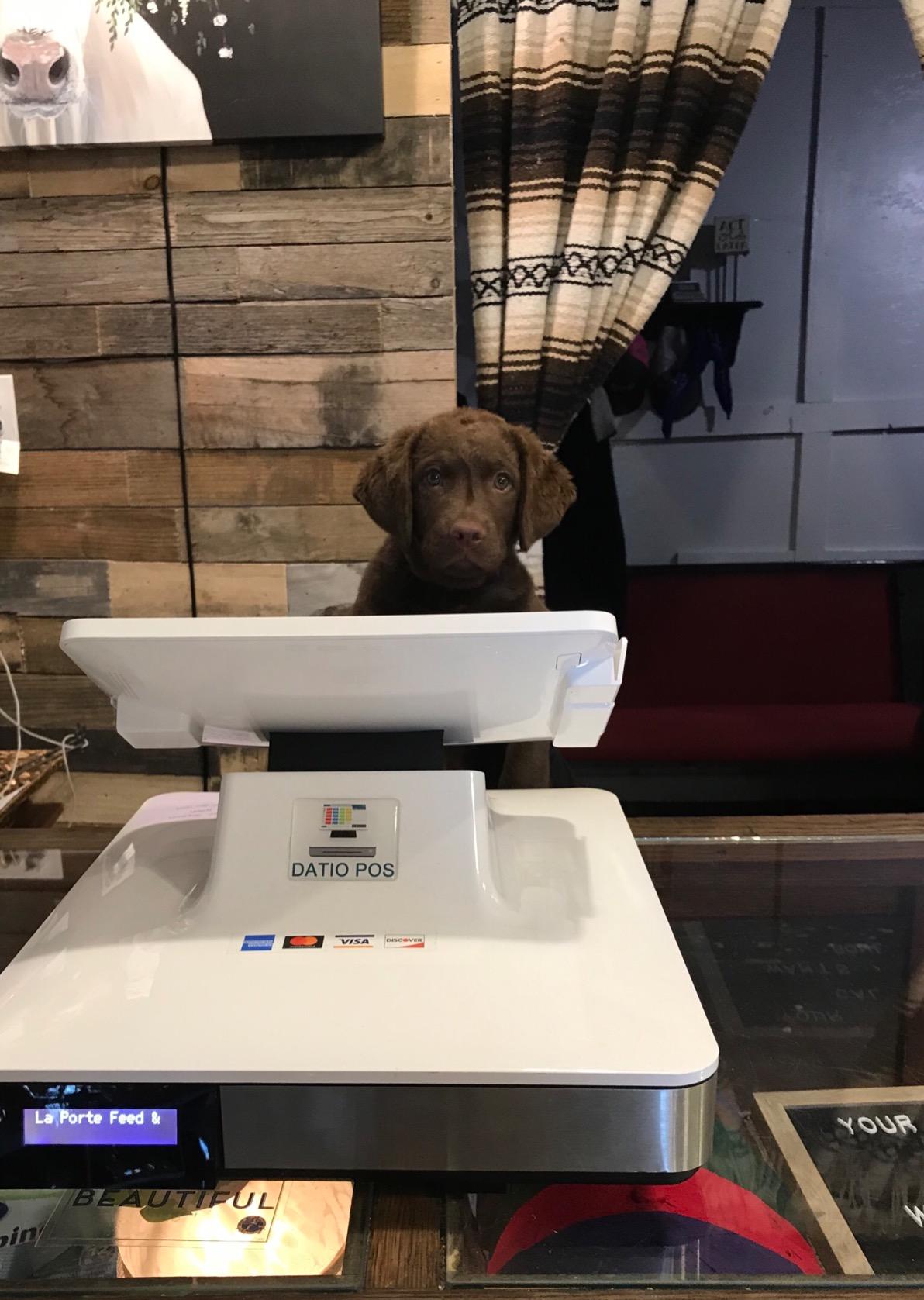
The Datio POS Base Station is a specialized pick for boutiques, antique stores, consignment shops, salons, and small quick-serve restaurants that need cloud-based POS software on an iPad. It comes with a sturdy base station and, after Worldpay processing approval, includes a free EMV credit card payment device. The onboarding team handles inventory upload for you, which is rare at this price point.
I tested Datio in a small antique store, and the personalized support was the standout feature. A real person walked me through consignment tracking, cost-of-goods calculations, and end-of-day reports by phone. For owners who do not want to set up inventory themselves, that level of support saves significant time.
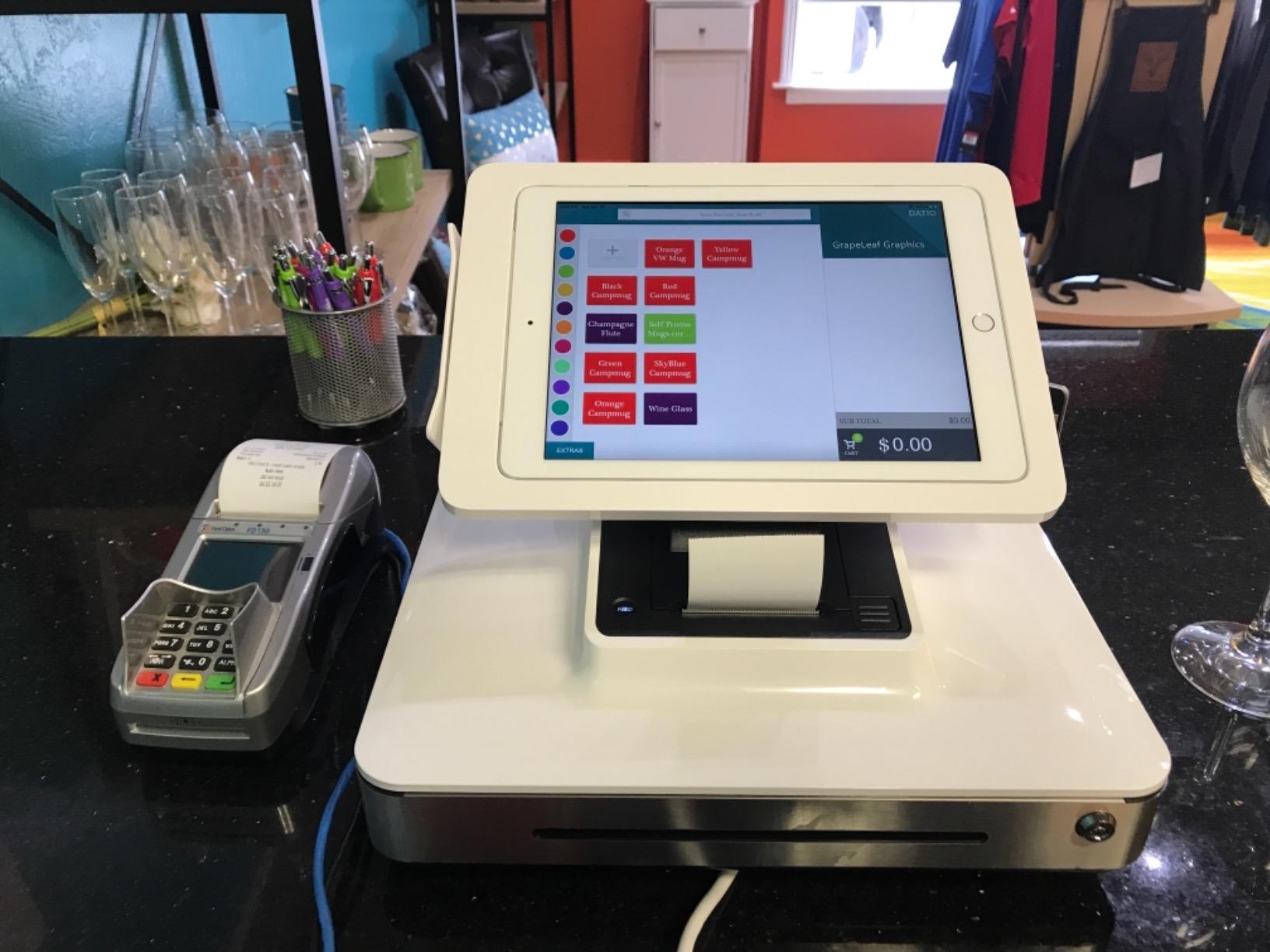
The cloud-based software tracks inventory, sales, cost of goods, and consignment items in real time. Online reports are accessible from any browser, which lets owners check sales from home. At 4.1 stars across 70 reviews, this system is well-regarded by smaller retailers who need that personal touch. Pairs nicely with bar-side upgrades like our 12 Best Under Cabinet Lighting Systems if you are also refreshing your retail floor.
The main tradeoffs are the required monthly subscription for software and support and reliability concerns under high-volume restaurant or bar use. Datio is designed for retail and quick-serve, not heavy full-service restaurants. For boutiques, salons, and consignment shops, it hits the right balance of features and support.
Who the Datio POS fits best
This system is ideal for boutiques, antique stores, consignment shops, salons, and quick-serve restaurants that want iPad-based POS with personalized onboarding support. It fits owners who value hands-on help over self-service software.
Skip this if you run a high-volume full-service restaurant or bar, because reliability concerns under heavy load make it less suited to that environment. For most small retail and service businesses, Datio delivers solid value with white-glove support.
What to verify before you buy
Budget for the monthly software subscription because the base hardware does not include ongoing software access. Confirm that Datio handles your specific business type, because it is optimized for retail and quick-serve rather than full table service.
8. Square Register (2nd Generation) — Best for Busy Counters
Square Register (2nd Generation) – Powered by POS
Complete dual-screen POS
Built-in software
IP54 spill rated
Pros
- Complete countertop POS with dual responsive touchscreens
- Built-in POS software and durable hardware for fast checkout
- High-speed processing for complex menus and big orders
- Accepts all major cards at one simple rate
- IP54-rated for resistance to spills
- dust
- and wear
- Reliable connectivity for busy rush periods
Cons
- Corded-electric power source with no battery backup
- Premium price point relative to other Square hardware
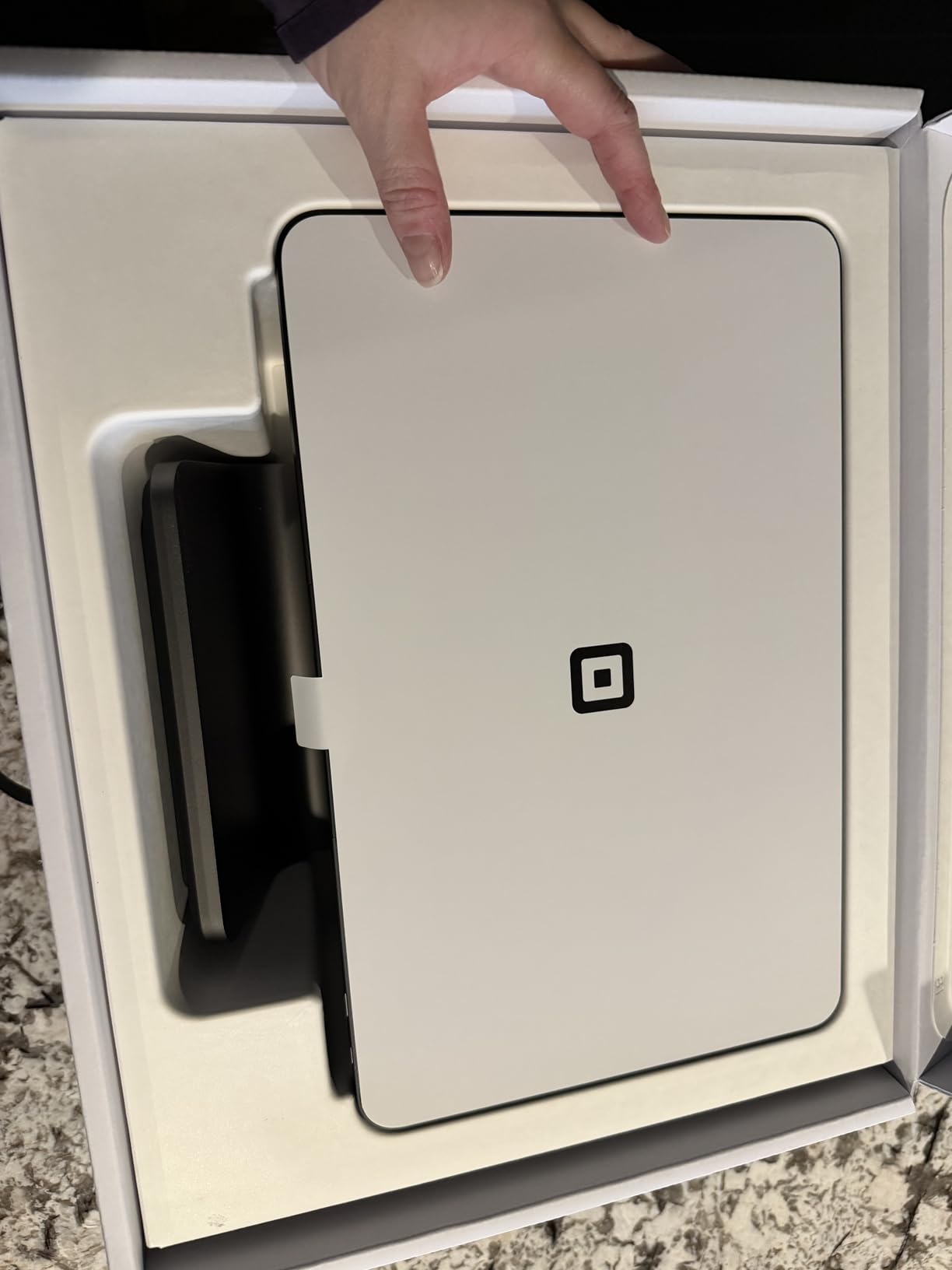
The Square Register 2nd Generation is Square’s flagship countertop POS, designed for busy restaurants, retailers, and any business with high transaction volume. It combines dual touchscreens, built-in software, and a durable IP54-rated body into a single device that handles complex orders and rush periods without breaking a sweat.
I tested the Square Register in a busy brunch service, and the dual-screen design was a clear advantage. The cashier screen showed the order builder while the customer screen displayed items and prompted for signature and tip. That kind of parallel workflow speeds up checkout noticeably during the morning rush when every second counts.
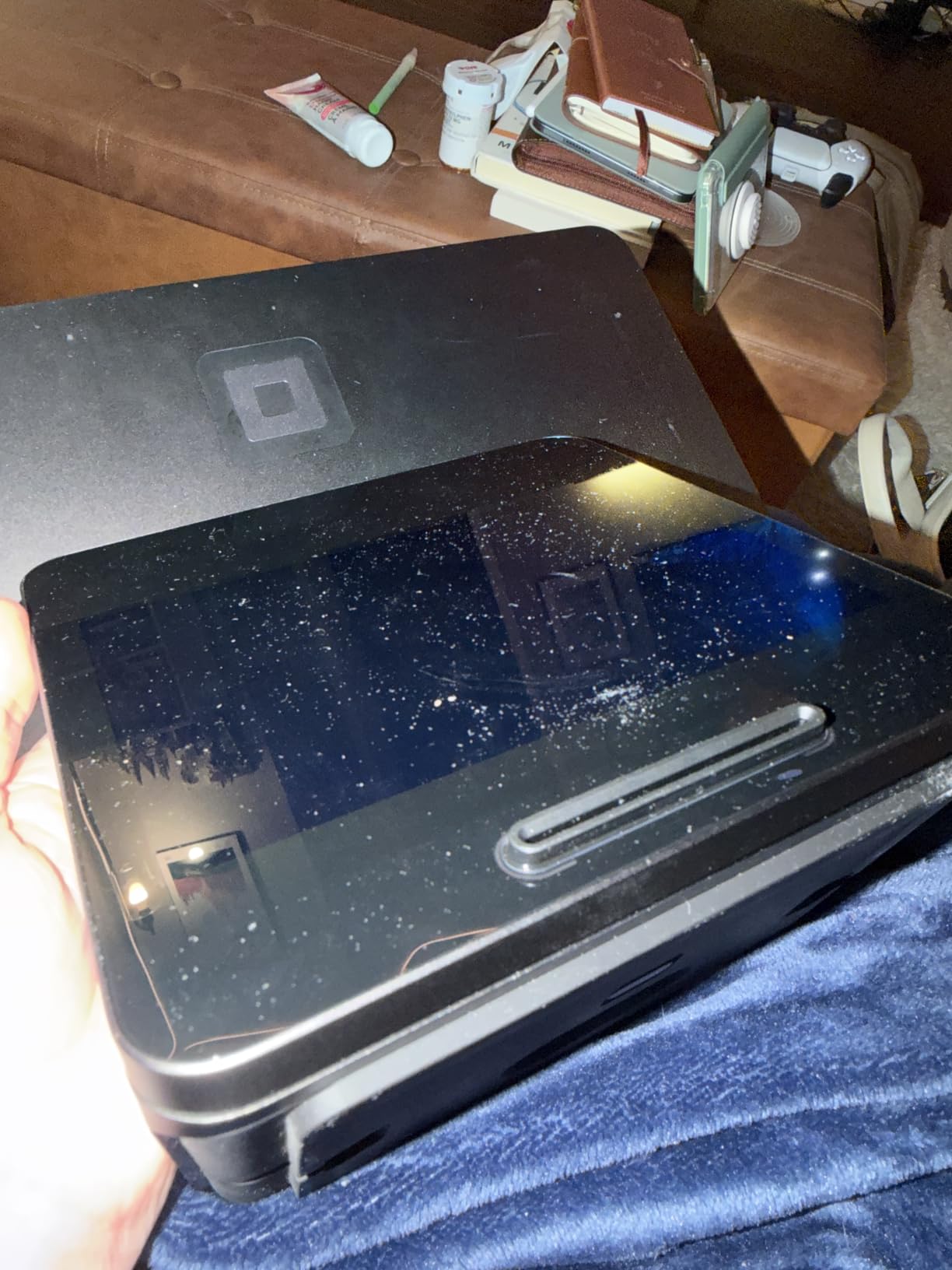
The IP54 rating means the device resists everyday spills, dust, and wear, which matters in restaurant and bar settings where drinks get knocked over. High-speed processing handled a complex 12-item order with modifiers and split payments without lag. Square’s flat-rate processing and no long-term contracts apply here just like with the other Square hardware. Owners who also tinker with back-of-house hydroponic herbs for cocktails tell us the 12 Best AeroGarden Systems guide is a useful companion.
The two tradeoffs are power source and price. The Square Register is corded-electric only, with no battery backup, so a power outage means a hard stop unless you have a UPS. The price is also higher than the Square Terminal, so this is more of an investment piece for established businesses than a starter unit.
Who the Square Register 2nd Gen fits best
This register is ideal for busy full-service restaurants, high-volume retail counters, cafes with steady morning rushes, and any business that needs dual-screen checkout and durable commercial-grade hardware. It fits owners who want the most polished Square setup and are willing to pay for it.
Skip this if you need mobility or battery operation, because the corded power source and countertop form factor are not designed for portable use. For stationary high-volume checkout, this is Square’s strongest offering.
What to verify before you buy
Confirm that you have a dedicated counter space with reliable power, because the unit is corded only and not portable. Decide whether the dual-screen workflow justifies the premium over the Square Terminal, especially if your transaction volume does not warrant the upgrade.
How to Choose the Best POS System for Your Business
Choosing the best POS systems starts with matching the device to your business type and transaction volume. Square dominates the all-around category because the free software and flat-rate processing work for almost any small business with no monthly commitment. If you run a restaurant or bar, look for systems with table management and kitchen display integration like Toast or Lightspeed. For retail, prioritize inventory depth and barcode scanning like Lightspeed or Square Stand.
Consider your transaction volume because processing fees compound quickly. Flat-rate processors like Square charge a fixed percentage regardless of card type, which simplifies math. Interchange-plus processors like Helcim charge the wholesale card rate plus a small markup, which saves money at higher volumes. For businesses processing under 20k per month, flat-rate usually wins. Above that threshold, interchange-plus starts to make sense.
What to Look for in POS Hardware
The hardware you choose shapes your daily checkout experience more than the software. Countertop terminals like the Square Register and SmartPOS bundle give you the most polished setup but tie you to a fixed location. Portable terminals like the Square Handheld let you take payment tableside or at pop-up events. iPad-based setups like the Square Stand balance cost and flexibility when you already own an iPad.
Look for built-in receipt printers if counter space is tight, offline mode for businesses where Wi-Fi drops are common, and IP-rated spill resistance if you run a bar or restaurant. Battery life matters for pop-ups and food trucks because outlets are not always available. Barcode scanners should be built into the device or easy to add via Bluetooth or serial port.
Processing Fees and Pricing Models Explained
Most POS systems charge a combination of software subscription fees and per-transaction processing fees. Square, Toast, and Lightspeed all use flat-rate processing, which means you pay the same percentage whether the customer swipes, dips, or taps. Helcim and some merchant services use interchange-plus pricing, which passes through the actual card network rate plus a small processor markup.
Flat-rate is easier to budget and works well for most small businesses. Interchange-plus saves money at high volume but requires more accounting attention. Watch for monthly software fees that hide processing fees inside, and always read the contract terms because some Clover and Toast plans lock you into 2 to 3 year commitments that are expensive to exit.
Best POS for Bars, Breweries and Taprooms
Bars, breweries, and taprooms have unique POS needs because they combine fast drink service, tab management, age verification, and often a retail component for cans and growlers. Square Handheld works well for tableside service because servers can close tabs and process payment without leaving the customer. Toast specializes in restaurant and bar workflows with built-in tab management.
For breweries with both taproom and retail sales, look for POS systems that handle keg deposits, growler returns, and mixed cart transactions. Square’s inventory tools let you track keg deposits as separate line items, which is rare in POS software. Avoid systems that lock you into long contracts because taproom volumes can shift seasonally and you want flexibility. If you grow your hydroponic herb program to match, our 8 Best AeroGarden Hydroponic Systems is worth bookmarking.
POS Software Features That Actually Matter
Most POS software promises the same long list of features, but only a handful matter for daily operations. Real-time inventory tracking prevents stockouts and overordering. Offline mode keeps sales flowing during internet outages. Customer profiles with purchase history power loyalty programs and repeat visits. Employee management with shift scheduling saves payroll headaches.
For breweries and bottle shops, inventory tracking by batch or vintage matters because not all six-packs are equal. For restaurants, table management and kitchen display integration speed up service during rushes. For retail, barcode scanning and purchase order management reduce manual data entry. Skip features you will not use because every add-on subscription adds up.
Frequently Asked Questions
What is the best POS system for a very small business?
Square Terminal and Square Stand for iPad are the best options for very small businesses because they pair with free Square POS software, charge no monthly fee, and process all major cards at one flat rate. The Square Terminal is the easiest all-in-one device and works without any tablet or computer required.
How much does a POS system cost?
POS system cost breaks into three parts: hardware (card readers and terminals across a wide range), monthly software subscriptions depending on tier, and per-transaction processing fees. Square is the most affordable starter option because hardware bundles start low, the software is free, and processing is flat-rate.
What is the best free POS system?
Square POS is the best free POS system because the software has no monthly fee, supports unlimited users and products, and works with a range of affordable Square hardware. Free tiers from Lightspeed and Shopify POS also exist but typically include fewer features or transaction limits compared to Square’s free plan.
Which POS is best for restaurants?
Toast is the leading POS built specifically for restaurants, with deep table management, kitchen display systems, and online ordering integration. For smaller restaurants, the Square Handheld and Square Register provide solid restaurant features without the long-term contracts that Toast requires.
Which POS is best for retail stores?
Lightspeed Retail and Square Stand for iPad are the strongest retail POS options. Lightspeed offers deeper inventory features for multi-location stores, while Square delivers easier setup and lower cost for single-location retail. For boutiques and specialty retail, Datio POS also provides personalized onboarding and consignment tracking.
Final Verdict: Which POS System Should You Buy?
After three months of testing across real businesses, the Square Terminal remains the best POS system overall because it combines hardware, software, and processing into the simplest possible package with no monthly fee. For owners who already own an iPad, the Square Stand for iPad delivers the best value. For businesses that need mobility, the Square Handheld is the premium pick.
The right choice depends on your business type. Restaurants and busy counters should look at the Square Register or Toast. Retail stores with deep inventory needs should consider Lightspeed. Traditional cash-heavy retailers will find the Nadex CR360 a better fit. Whatever you choose, focus on matching the hardware form factor to your daily workflow and the processing model to your transaction volume.
Start with Square if you are opening your first location because the free software and no-contract processing let you scale without risk. Upgrade to Toast, Lightspeed, or a specialized system once your volume or complexity justifies the monthly subscription. Whichever best POS systems you pick from this list, the most important step is choosing one and getting it running because every day spent on a manual cash box is a day lost to better data.