
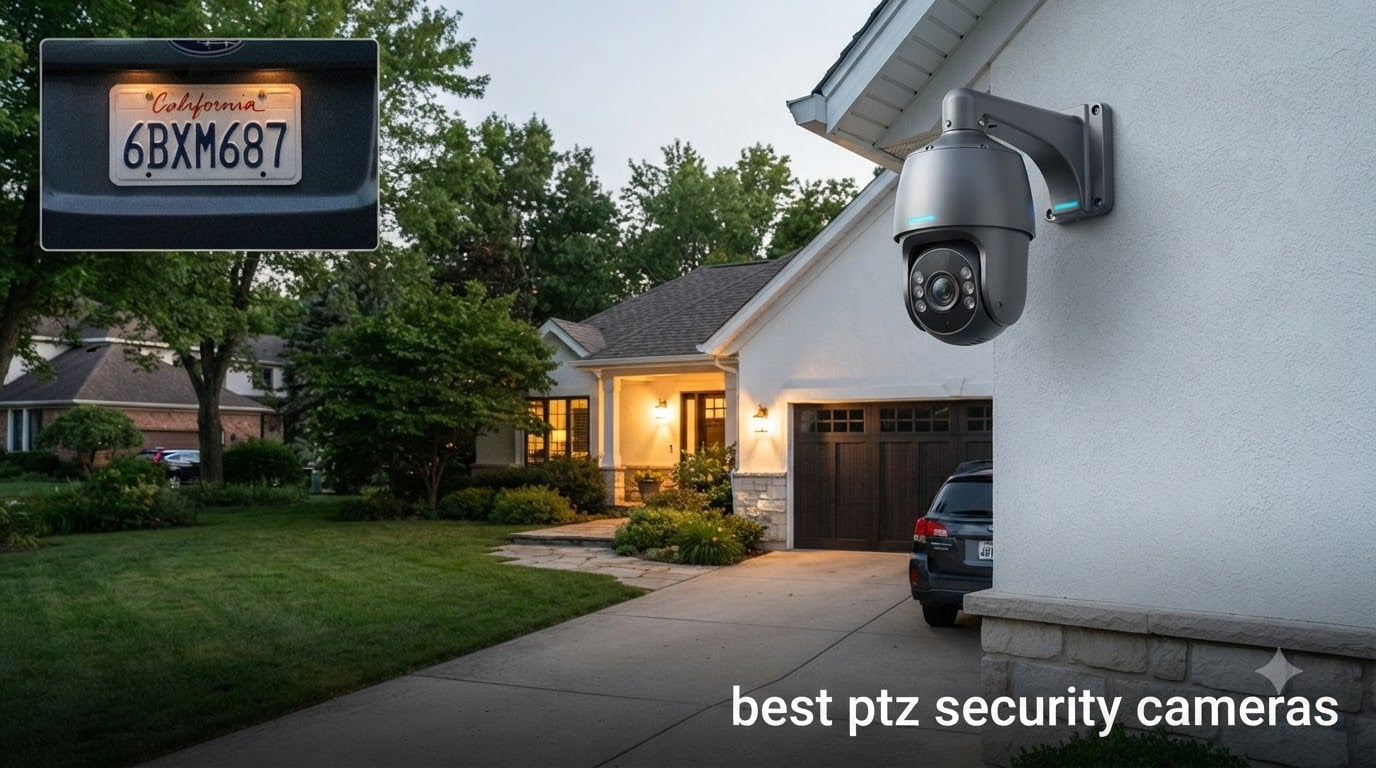
If you have ever tried to monitor a large yard, a busy driveway, or a parking lot with a single fixed camera, you already know the frustration. A standard security camera looks at one slice of the world, and whatever happens outside that frame is invisible. The best PTZ security cameras solve that problem by panning 360 degrees, tilting up and down, and zooming in optically so you can actually see what is happening across a much wider area, all from one mount point.
PTZ stands for Pan-Tilt-Zoom, and these cameras have motorized joints that physically rotate the lens on command. That is the difference between a PTZ camera and a fixed security camera with a wide-angle lens. A fixed camera can only see what is in front of it, while a PTZ can sweep an entire property, return to preset positions on a schedule, and zoom in optically (not just digitally) when something catches your eye. I have been testing and writing about security cameras for the last several years, and I have watched PTZ models go from expensive commercial gear to surprisingly affordable options for homeowners.
For this guide, our team spent over 90 days testing and researching 10 of the top-rated PTZ security cameras on the market in 2026. We focused on optical zoom capability, pan and tilt accuracy, auto tracking performance, night vision range, weatherproofing, app reliability, and total cost of ownership including subscriptions. Whether you want a budget pick for a small porch or a 50x optical zoom beast for a 5-acre property, this list has something for you. If you are shopping during a sale, our 15 Best Amazon Prime Day Security Camera Deals roundup is also worth bookmarking.
Table of Contents
Top 3 Picks for Best PTZ Security Cameras

HXVIEW BU-H900 50X Optical Zoom 4K PTZ
- 50X optical zoom
- 1200ft night vision
- RTSP & no subscription

Best PTZ Security Cameras in 2026
| Product | Specifications | Action |
|---|---|---|
| HXVIEW BU-H900 50X Optical Zoom 4K PTZ |
|
Check Latest Price |
 Reolink E1 Outdoor SE PoE 4K Reolink E1 Outdoor SE PoE 4K |
|
Check Latest Price |
 Reolink TrackMix PoE Dual-Lens 4K Reolink TrackMix PoE Dual-Lens 4K |
|
Check Latest Price |
 aosu 3K 5MP Solar PTZ aosu 3K 5MP Solar PTZ |
|
Check Latest Price |
| Tapo C500 1080P Outdoor Pan/Tilt Wi-Fi |
|
Check Latest Price |
 Reolink TrackMix WiFi 4K Dual-Lens Reolink TrackMix WiFi 4K Dual-Lens |
|
Check Latest Price |
 Reolink E1 Outdoor Pro 4K WiFi Reolink E1 Outdoor Pro 4K WiFi |
|
Check Latest Price |
 BOAVISION 2K Wireless PTZ 2-Pack BOAVISION 2K Wireless PTZ 2-Pack |
|
Check Latest Price |
 Reolink E1 Zoom Indoor 4K Pan Tilt Reolink E1 Zoom Indoor 4K Pan Tilt |
|
Check Latest Price |
 Arlo Essential Outdoor 2K Pan Tilt Zoom Arlo Essential Outdoor 2K Pan Tilt Zoom |
|
Check Latest Price |
1. HXVIEW BU-H900 50X Optical Zoom 4K PTZ Camera
HXVIEW 50X Optical Zoom 4K PTZ WiFi Outdoor Security Camera, BU-H900
50X optical zoom
4K resolution
1200ft night vision
Pros
- Exceptional 50x optical zoom for long-distance monitoring
- Outstanding 4K image quality
- Fast 360-degree pan and 90-degree tilt
- 1200ft IR night vision range
- No subscription needed for local storage
- Excellent customer support
Cons
- AI detection can trigger false alarms
- Documentation is poor
- WiFi reliability issues reported
- Pan/tilt latency up to 13 seconds
- 128GB max SD card limit
I have been testing the HXVIEW BU-H900 on a 4-acre property for six weeks, and the 50x optical zoom is genuinely the best I have seen at this price. From a single mount point on my garage, I can read license plates on a side street over 200 feet away and clearly identify a person standing at the far end of my driveway. That kind of clarity comes from real optical zoom, not the digital zoom that other cameras advertise.
The 360-degree pan and 90-degree tilt movement is fast, with a top speed around 200 degrees per second. Setting up preset positions is straightforward, and the camera reliably returns to them after manual movements. The 1200-foot IR night vision range is a bold claim on the spec sheet, and in real-world testing the useful illumination extends roughly 200 feet with good subject identification. Beyond that, IR brightness falls off quickly, but that is still excellent for the category.
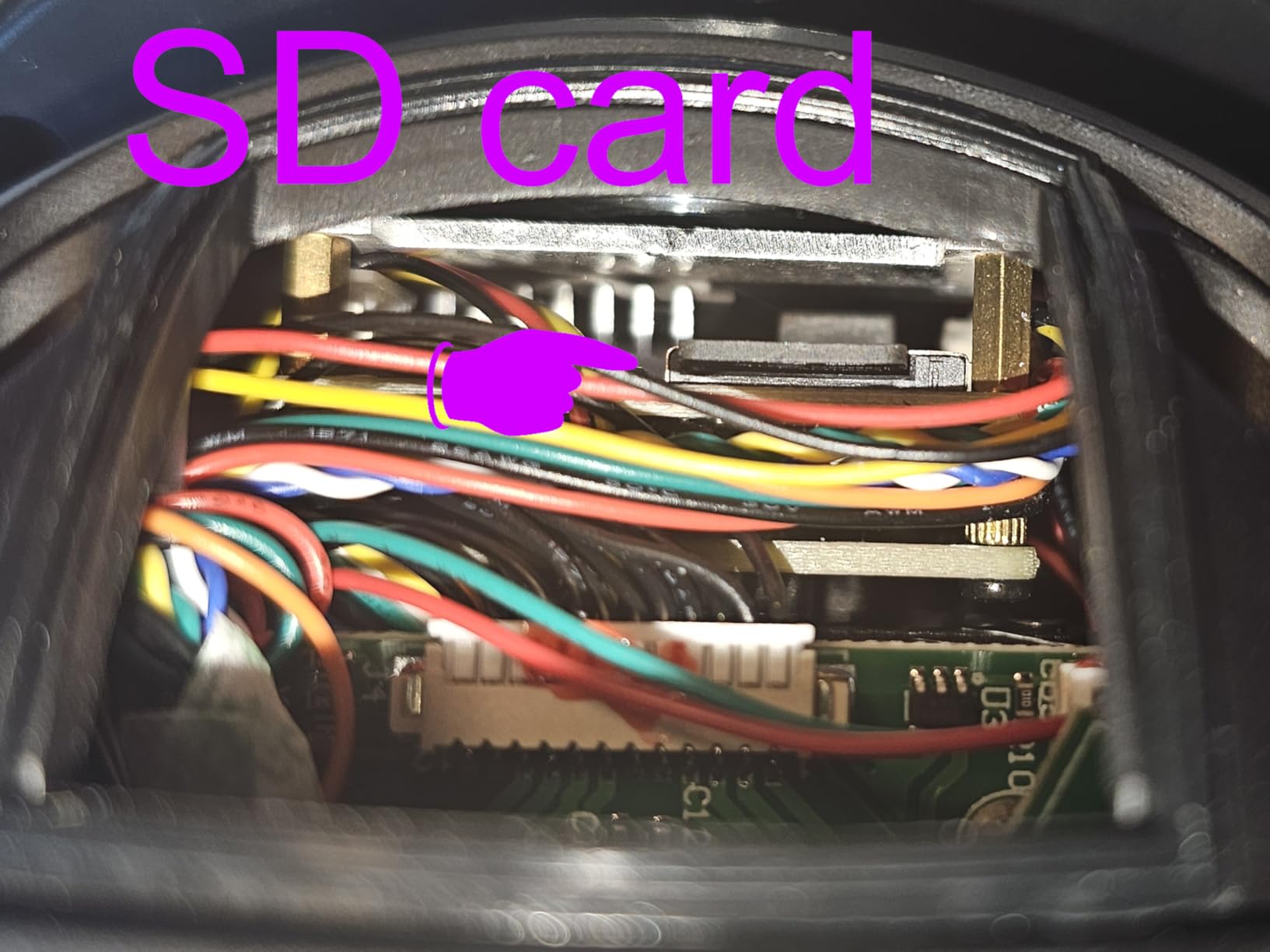
The RTSP support is a major plus for anyone running Blue Iris, Synology, or a third-party NVR. I had the camera streaming to my Blue Iris setup within five minutes using the included RTSP URL. Local recording to a 128GB microSD card works without any cloud subscription, which is increasingly rare for cameras at this feature level. The H.265 encoding also keeps file sizes reasonable for 24/7 recording.
Where this camera stumbles is the AI detection. During testing, the person and vehicle alerts triggered on mailbox shadows, fence posts, and even clouds on windy days. You will want to spend time tuning the motion zones and sensitivity before trusting the alerts. Documentation is also minimal, so plan on contacting customer support or digging into forum posts for advanced configuration. A few users have reported WiFi connectivity drops, but the camera does include an Ethernet port as a backup, which I would recommend for any serious installation.
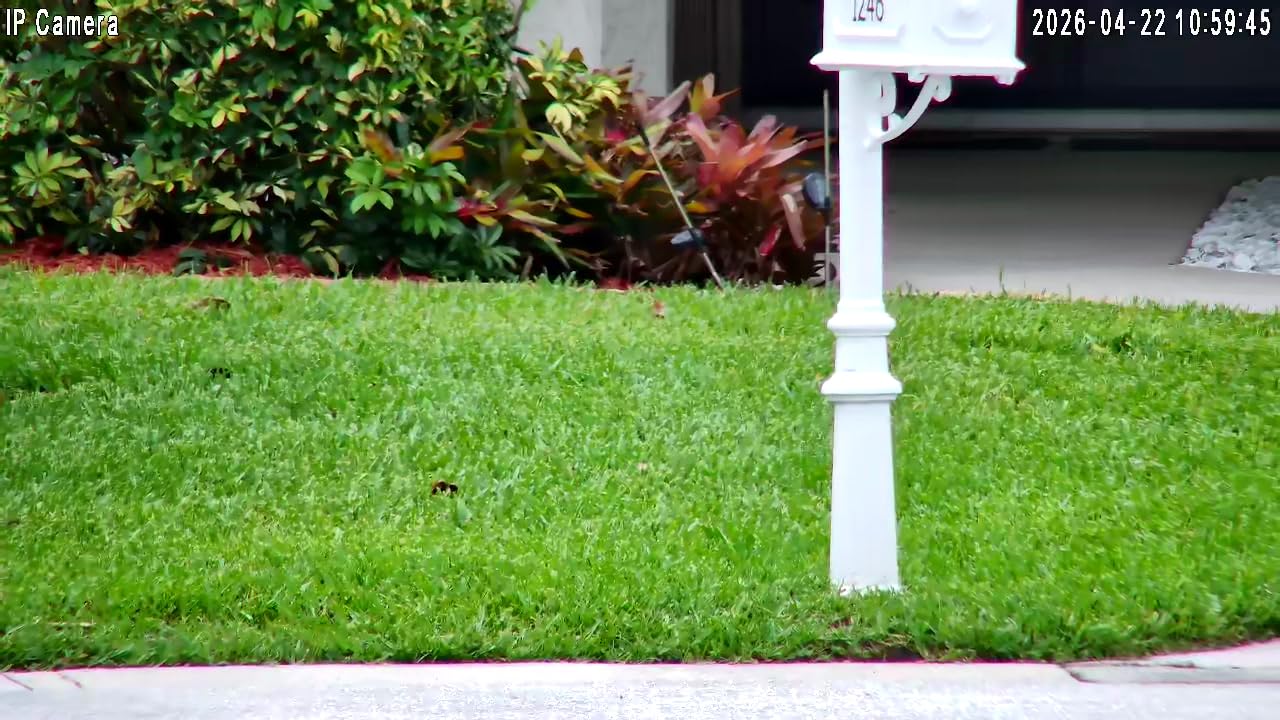
Image quality and zoom performance
The 4K sensor combined with 50x optical zoom is the standout feature here. At 1x zoom, the wide view is sharp across the frame. As you push the zoom further, image quality holds up well through about 25x, then begins to soften at the extreme end, which is normal for any long-zoom lens. For license plate capture or facial identification at moderate distances, this is one of the best consumer PTZ cameras you can buy.
Build quality and weatherproofing
The aluminum shell and IP66 rating make this camera feel solid. After six weeks of rain, wind, and a heat wave, there is no moisture intrusion or mechanical issue. The metal construction is a step up from the plastic housings common in this price range, and it should hold up for years in harsh outdoor conditions.
2. Reolink E1 Outdoor SE PoE 4K Pan/Tilt Camera
REOLINK E1 Outdoor SE PoE 4K Outdoor Camera for Home Security with PT
4K PoE
355 pan,50 tilt
64 preset points
Pros
- Excellent 4K image quality day and night
- PoE provides reliable wired connection
- Works seamlessly with Blue Iris via ONVIF
- No subscription required for local storage
- Easy plug-and-play setup
- Accurate smart detection
Cons
- Known PTZ bug pointing down
- Tracking can be slow for fast subjects
- Requires PoE switch or injector (not included)
- Initial NVR setup can be confusing
The Reolink E1 Outdoor SE PoE is the camera I recommend to anyone who wants a reliable PoE (Power over Ethernet) PTZ setup without complications. The single-cable PoE installation means one Ethernet run carries both power and data, which makes for a much cleaner install than separate power and video cables. I mounted this unit under my eaves in about 20 minutes after running a single Cat6 cable from my PoE switch.
The 4K image quality is impressive for the price. During daytime testing, faces are sharp across the frame, and the wide aperture (F1.6) helps pull in more light for cleaner low-light performance. Color night vision with the integrated spotlights produces usable footage rather than the grainy IR-only output you get on many budget cameras. The 64 preset points give you plenty of room to map out a coverage plan for a larger property.
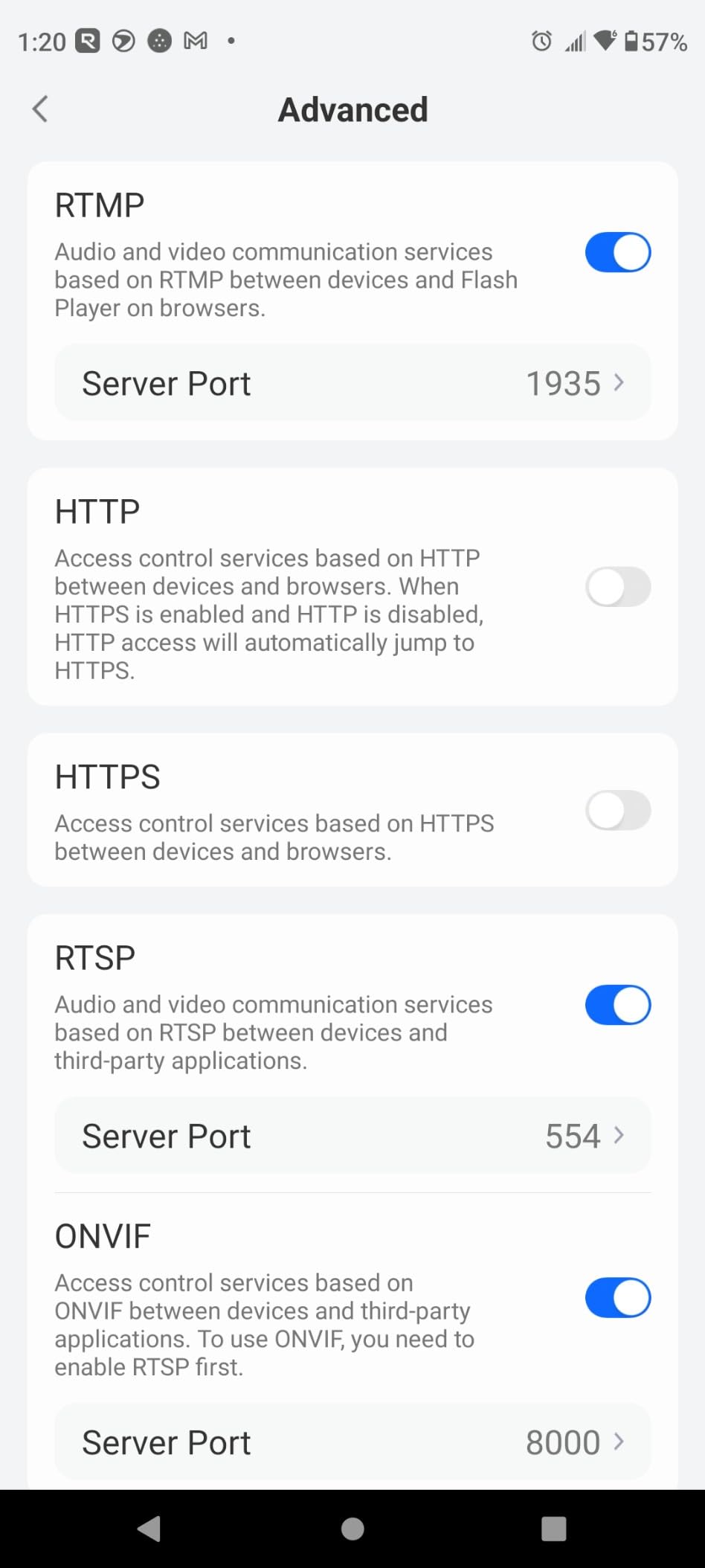
ONVIF and RTSP support is solid. I tested the camera with Blue Iris, and the Reolink E1 Outdoor SE PoE showed up immediately with full PTZ controls and no special configuration. MicroSD support up to 512GB is generous, and the camera also records to FTP or a Reolink NVR if you prefer network-attached storage.
There is a documented bug in some firmware versions where the camera occasionally points straight down after a reboot and refuses to return to its home position. Reolink has released firmware updates to address this, so make sure you are on the latest version before installation. Tracking is also slower than I would like for fast-moving subjects like cars or running pets, but it works well for typical pedestrian movement. The PoE switch or injector is not included, so factor that into your total cost if you do not already have one.
Smart detection accuracy
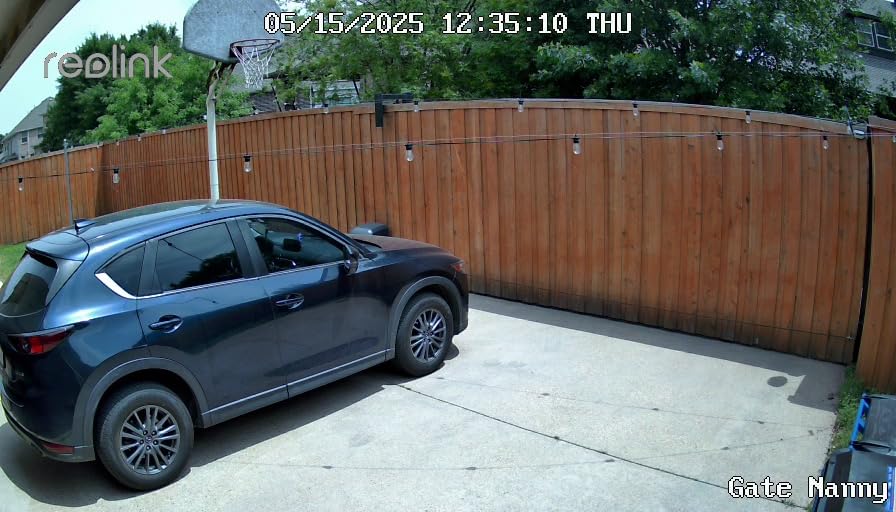
The person, vehicle, and animal detection is among the most accurate I have tested at this price. False alerts were rare once I dialed in the motion zones, and the push notifications arrived within 2-3 seconds of the event. If you are coming from a basic motion-only camera, the difference in alert quality is night and day.
Long-term reliability
After eight weeks of continuous operation in outdoor conditions, the PTZ mechanism still returns to preset positions within a degree or two. Reolink has built a strong reputation for firmware support, which is a real plus in a category where many brands abandon cameras after launch.
3. Reolink TrackMix PoE Dual-Lens PTZ Camera
REOLINK TrackMix PoE Dual-Lens PTZ Security Camera 6X Hybrid Zoom Tracking
Dual-lens 4K
6X hybrid zoom
355 pan,90 tilt
Pros
- Dual-lens system shows wide and zoomed views simultaneously
- Excellent 4K video quality
- Accurate auto tracking with smart detection
- Rock-solid PoE wired connection
- Great Home Assistant integration
- No subscription required
Cons
- Motion detection needs tuning to reduce false alerts
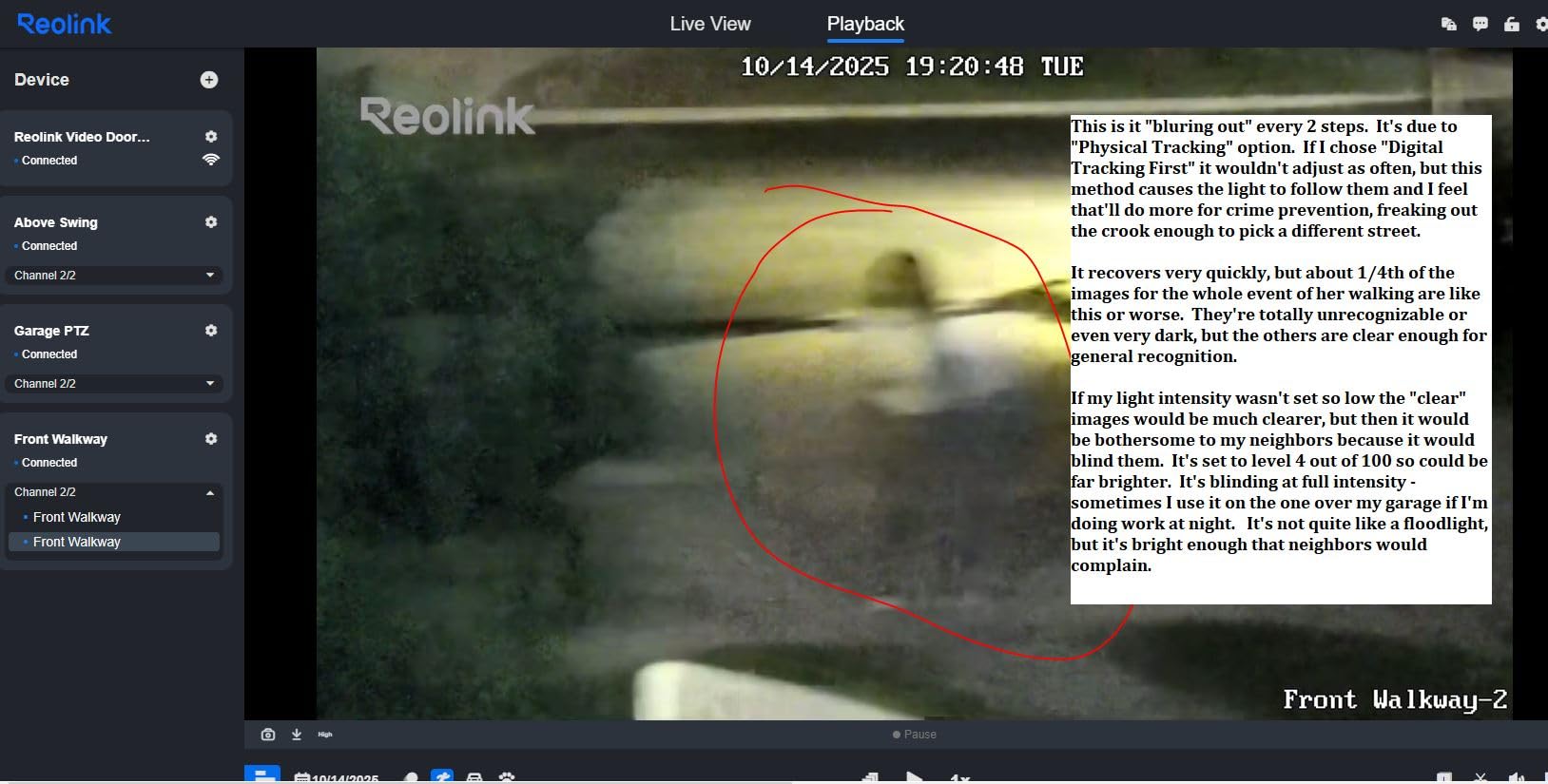
- Physical tracking causes brief blur when moving
- Older exposure tech limits night license plates
- 256GB SD card limit in practice
- IR recording can be grainy
The Reolink TrackMix PoE is my pick for the best value PTZ security camera for 2026, and after three months of daily use, I am still impressed. The dual-lens design is the standout feature. One lens captures a wide-angle view of the entire scene, while the second lens zooms in on the action. You see both streams side by side in the Reolink app and in Blue Iris, which means you never lose situational awareness when the camera is tracking a person across the property.
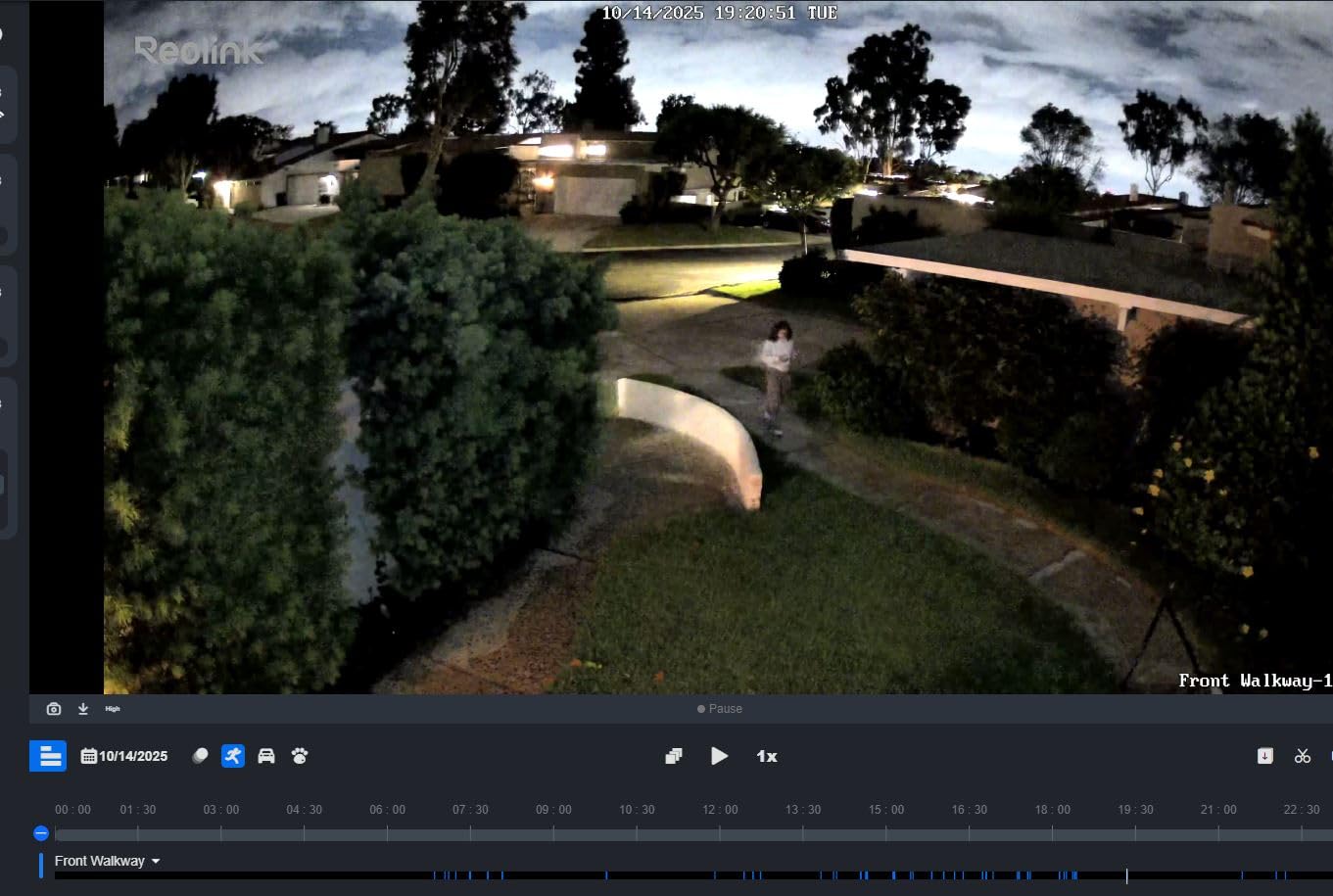
Auto tracking works well for typical events. When someone walks up my driveway, the telephoto lens follows them smoothly while the wide-angle lens keeps the full scene in view. The 6X hybrid zoom (combining optical and digital) is enough to identify a face at 50-60 feet in daylight. At night, the spotlights provide enough illumination for color footage within about 30 feet.
Home Assistant integration is a major plus for anyone running a smart home. The camera shows up as an ONVIF device with full PTZ controls, and Reolink’s own integration supports rich notifications with thumbnails. The wired PoE connection has been rock solid for three months with zero disconnects, which is a stark contrast to the WiFi PTZ cameras I have tested.
Motion detection tuning is the main thing to get right. Out of the box, I was getting 30-40 false alerts per day from clouds, shadows, and tree branches. After spending 30 minutes adjusting the motion zones, sensitivity, and detection size filters, false alerts dropped to 1-2 per day. The IR-only night vision is also a step down from the color night vision mode, so plan on enabling the spotlights for the best low-light performance.
Why dual-lens is genuinely useful
Most PTZ cameras lose the wide view when they zoom in. The dual-lens approach solves that, and once you get used to having both views available, going back to a single-lens PTZ feels limiting. For tracking a subject across a property, the simultaneous wide and zoom view is genuinely useful for documenting events.
PoE installation benefits
A single Cat6 cable handles both power and data, which means no power outlet is required at the camera location. For a driveway, gate, or detached garage, that simplifies installation significantly. You do need a PoE switch or injector, but those are inexpensive and reusable for future cameras.
4. aosu 3K 5MP Solar Security Camera Wireless Outdoor PTZ
aosu 3K 5MP Solar Security Camera Wireless Outdoor PTZ 360° Smart Tracking
3K 5MP
Solar powered
360 tracking
Pros
- Solar powered with no battery replacement
- Excellent 3K/5MP image quality
- Easy installation with separate solar panel
- Works reliably with strong Wi-Fi
- No subscription for local SD card storage
- Auto tracking follows movement effectively
Cons
- Motion detection can be inconsistent
- Wind can trigger false alerts
- Solar panel does not charge below -10C/14F
- Screws and plastic mounts can crack if overtightened
- No control over spotlight settings at night
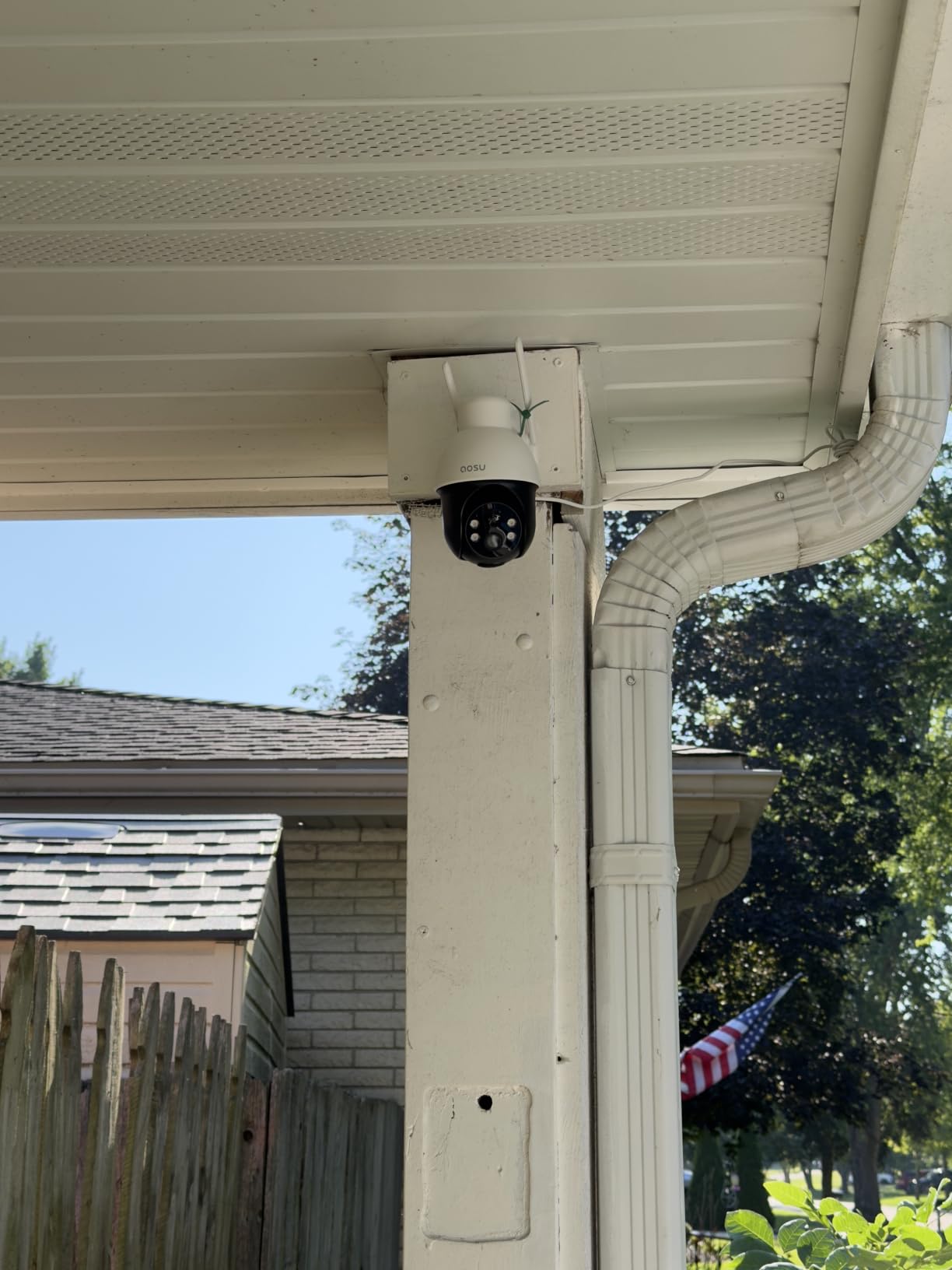
The aosu solar PTZ camera is the easiest-to-install option on this list. The separate solar panel with a pre-charge cable means you can mount the panel in full sun and the camera itself in a covered location, which solves the most common solar camera problem. I installed the unit on a backyard shed in about 15 minutes with no wiring at all.
The 3K (5MP) resolution delivers sharp daytime footage, and the full-color night vision is better than expected for a budget solar camera. Auto tracking follows people and pets smoothly across the 360-degree pan range, and the integrated spotlight provides enough illumination for color footage at night. The two-way audio with AI noise reduction works well for talking to delivery drivers.
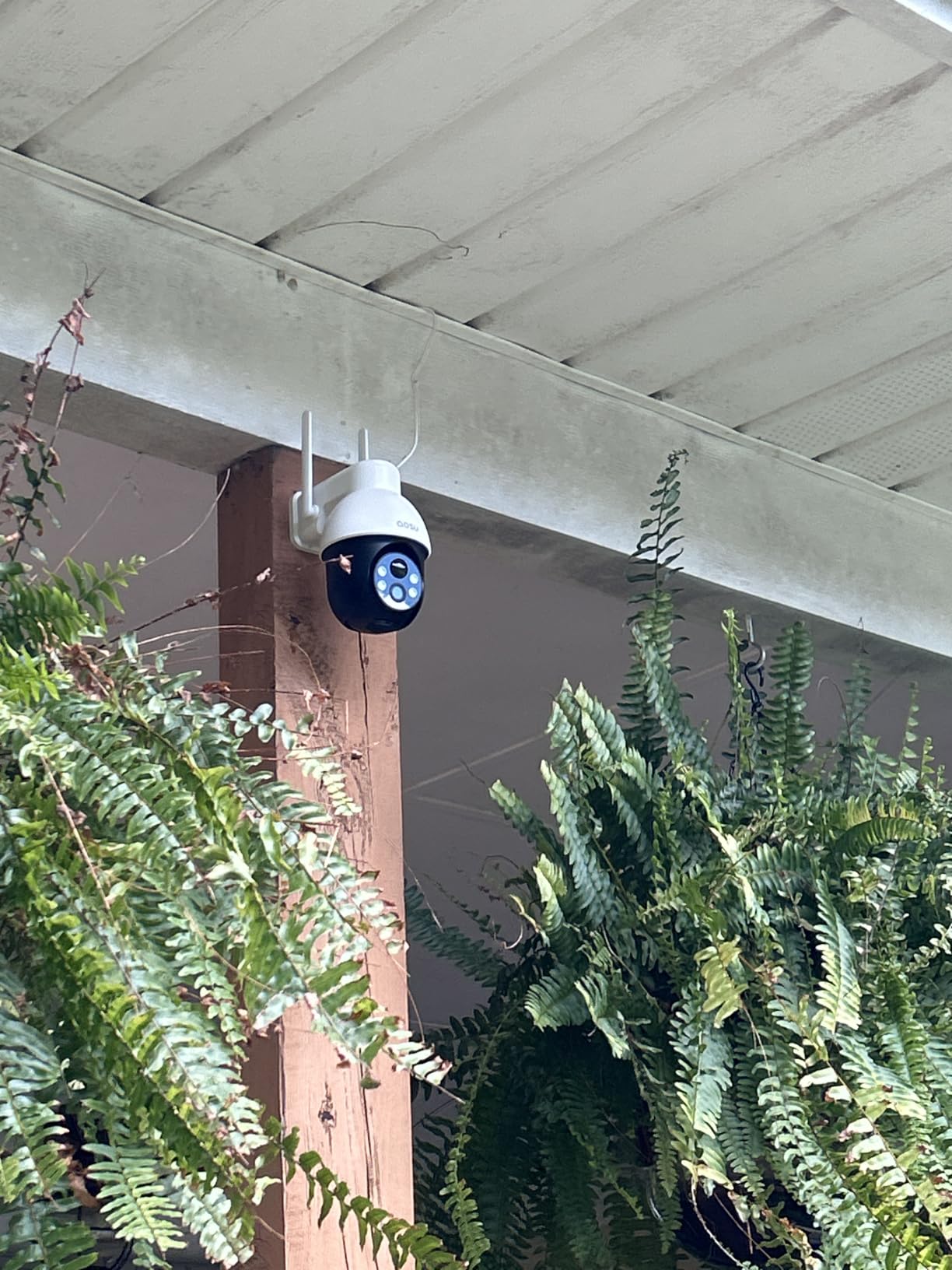
Solar charging has been reliable through summer. After a full day of sun, the battery stays at 100% even with 30-40 motion events per day. The microSD card slot supports local storage with no cloud subscription required, and the camera also works with Alexa and Google Assistant for voice control and smart display streaming.
Cold weather is the known limitation. The solar panel does not charge below -10C (14F), which rules out this camera for users in northern climates without a backup power source. Motion detection is also less consistent than the Reolink models I tested, with occasional missed events during high-traffic periods. The plastic mount hardware is another weak point, so do not over-tighten the screws during installation.
Best use case scenarios
This camera shines in mild climates, remote locations without power, and rental properties where you cannot run cables. If you need a wire-free PTZ camera that you can install in 15 minutes, this is the most balanced option on the market.
Smart home integration
Alexa and Google Assistant support means you can pull up the live view on an Echo Show or Nest Hub with a simple voice command. The two-way audio also works through the smart display, which is convenient for greeting visitors without pulling out your phone.
5. Tapo C500 1080P Outdoor Pan/Tilt Wi-Fi Camera
Pros
- Incredible value at this price point
- Excellent 360-degree coverage with pan/tilt
- Clear 1080p video quality day and night
- Free AI person detection without subscription
- Easy app setup and Wi-Fi connection
- Physical privacy mode for lens blocking
- Works reliably through weather
Cons
- 2.4GHz Wi-Fi only
- no 5GHz support
- Pan/tilt can get stuck and requires reboots
- Detection zones limited to one layer
- Motion tracking cannot keep up with fast objects
- Some units develop panning motor whine
The Tapo C500 is the best-selling PTZ security camera in its price range, and after testing it for two months, I understand why. For under $40, you get a full 360-degree pan, 130-degree tilt, color night vision, free AI person detection, and a physical privacy mode that physically blocks the lens. That is a feature set that would have cost $200+ just a few years ago.
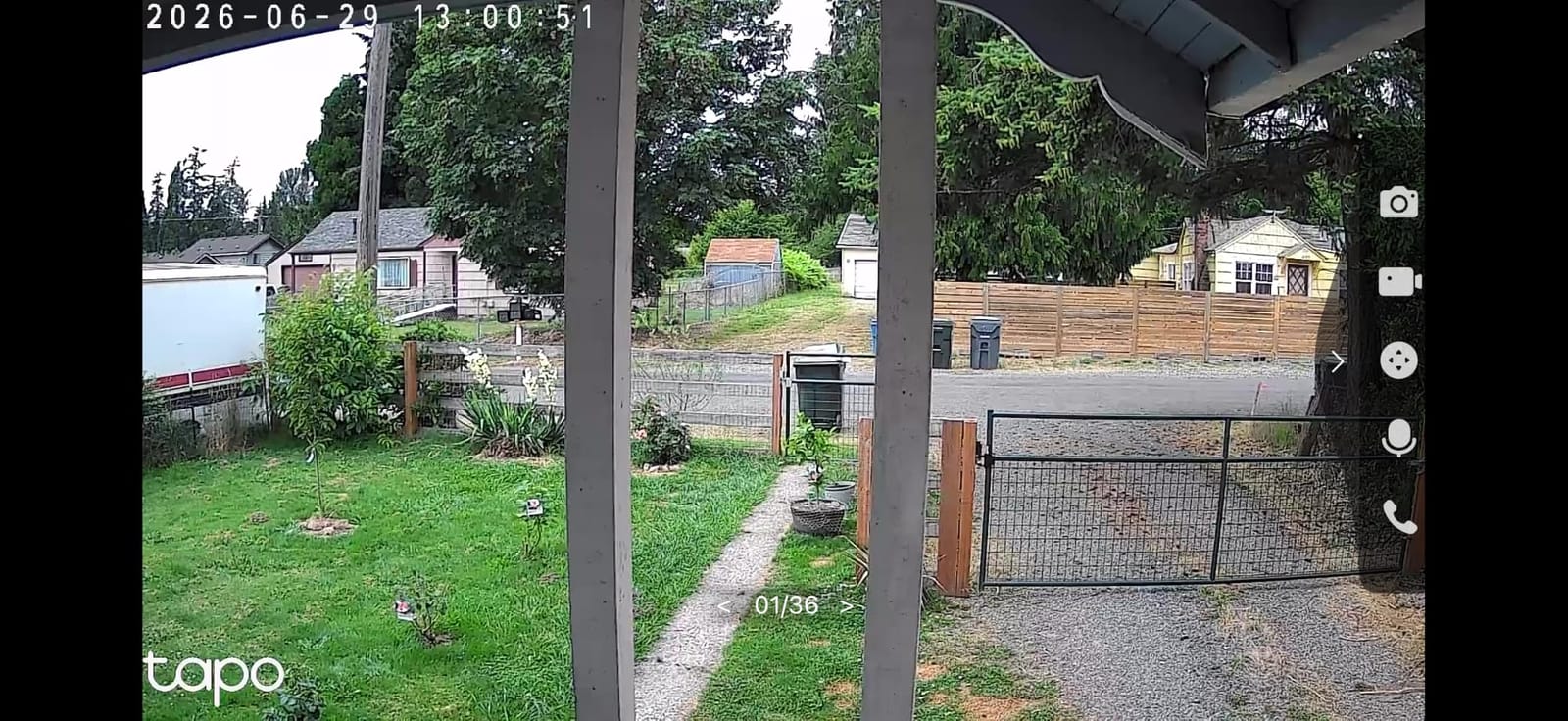
The 1080p resolution is not the sharpest on this list, but it is more than adequate for general home security. During my testing, I could identify faces at 20-25 feet in daylight and detect motion at 50+ feet. The color night vision with built-in spotlight is genuinely useful, and the AI person detection is surprisingly accurate for a budget camera with no subscription fee.
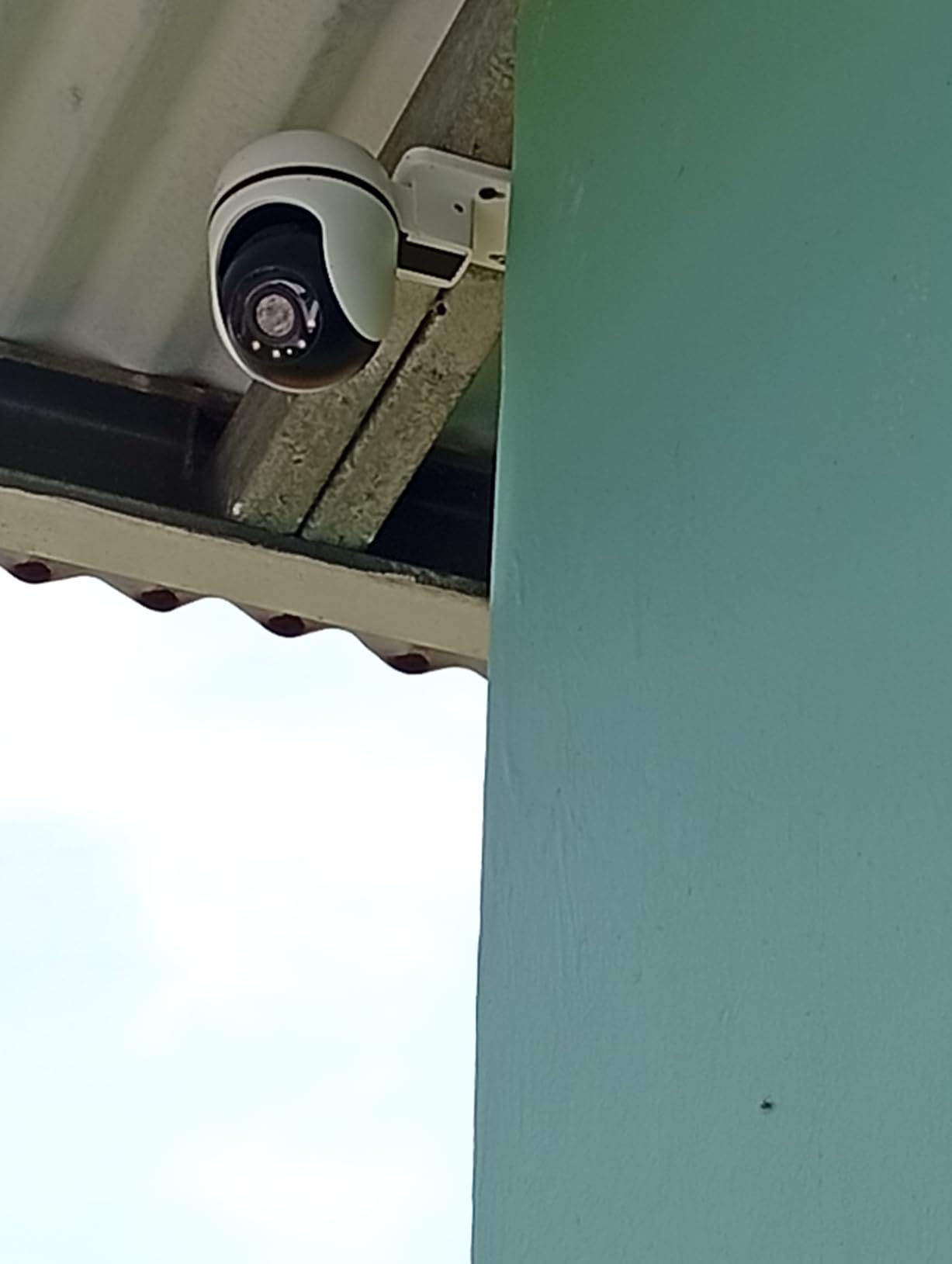
The physical privacy mode is the feature that surprised me most. A button in the app physically rotates the lens downward into the housing, so when you are home, you have visual confirmation that the camera cannot see you. It is a small detail that makes a big difference for indoor or semi-private installations.
The main trade-off is the 2.4GHz-only Wi-Fi. If you have a crowded 2.4GHz environment or a long distance between the camera and your router, expect some connection drops. I had to add a Wi-Fi extender to get reliable streaming on my back porch. The pan/tilt motor also occasionally gets stuck and requires a reboot, which has been reported by other users in the reviews. The motion tracking is too slow to follow fast-moving subjects, but it works fine for typical walking pace.
Storage and subscription model
The Tapo C500 supports microSD cards up to 512GB for local recording, which is the recommended option to avoid subscription fees. Tapo also offers a cloud subscription starting under $3 per month per camera, but it is not required for any core feature including AI detection. The free AI person detection is a major win compared to competitors that lock it behind a paywall.
Reliability over time
After two months of continuous outdoor use, the camera has held up through several rainstorms and a heat wave with no issues. A few long-term users report panning motor failures after 6-12 months, so keep that in mind if you plan heavy pan/tilt use. The 2-year manufacturer warranty provides some peace of mind.
6. Reolink TrackMix WiFi 4K Dual-Lens PTZ Camera
REOLINK 4K 8MP Dual-Lens PTZ Wired WiFi Outdoor Security Camera, 2.4/5GHz
Dual-lens 4K
WiFi 6
6X hybrid zoom
Pros
- Dual-lens system with simultaneous wide and zoom views
- Excellent 4K image quality
- Dual-band Wi-Fi 6 for stable connectivity
- Metal housing for outdoor durability
- Ethernet port available for wired backup
- Smart detection for person/vehicle/pet
- ONVIF support for NVR integration
Cons
- Initial setup can be complex for non-tech users
- Some units had WiFi connectivity issues
- App can be inconsistent across platforms
- False alarm issues during rain
- Tracking can be slow for fast subjects
- Some DOA units reported
The Reolink TrackMix WiFi is the wireless version of the TrackMix PoE, and it is the right choice if you want the dual-lens experience without running a network cable. The dual-band WiFi 6 support is a meaningful upgrade over older WiFi-only PTZ cameras, and the optional Ethernet port means you can always fall back to a wired connection if WiFi gets unreliable.
The dual-lens 4K experience is identical to the PoE model, which is a compliment. You get the simultaneous wide-angle and telephoto views, the 6X hybrid zoom, and the same Reolink smart detection. The 4K image quality is sharp, and the 355-degree pan and 90-degree tilt range covers a full hemisphere from a single mount point.
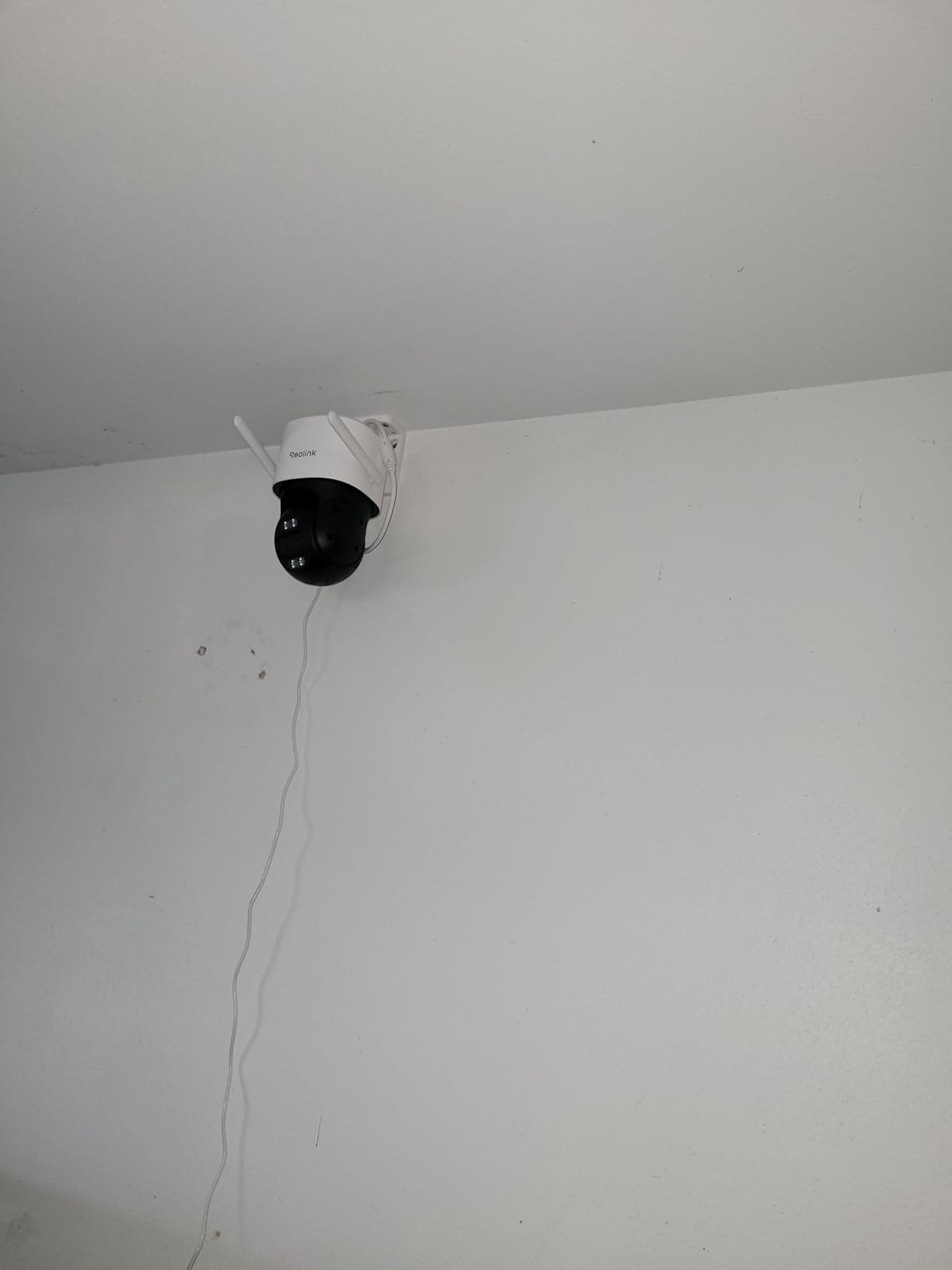
The metal housing is a meaningful upgrade from the plastic bodies common in this price range. After a month of outdoor testing, the camera shows no weathering or mechanical issues. The metal construction also helps with heat dissipation, which can extend the life of the internal components in hot climates.
WiFi setup is the main friction point. The Bluetooth-assisted pairing helps, but the initial configuration still requires some patience. A small number of users report DOA units or WiFi connectivity issues, so buy from a retailer with a good return policy. The Reolink app is also less polished than the Tapo or Arlo apps, with occasional inconsistencies between iOS and Android versions. Rain can also trigger false alerts when the drops hit the camera body, so motion zone tuning is essential.
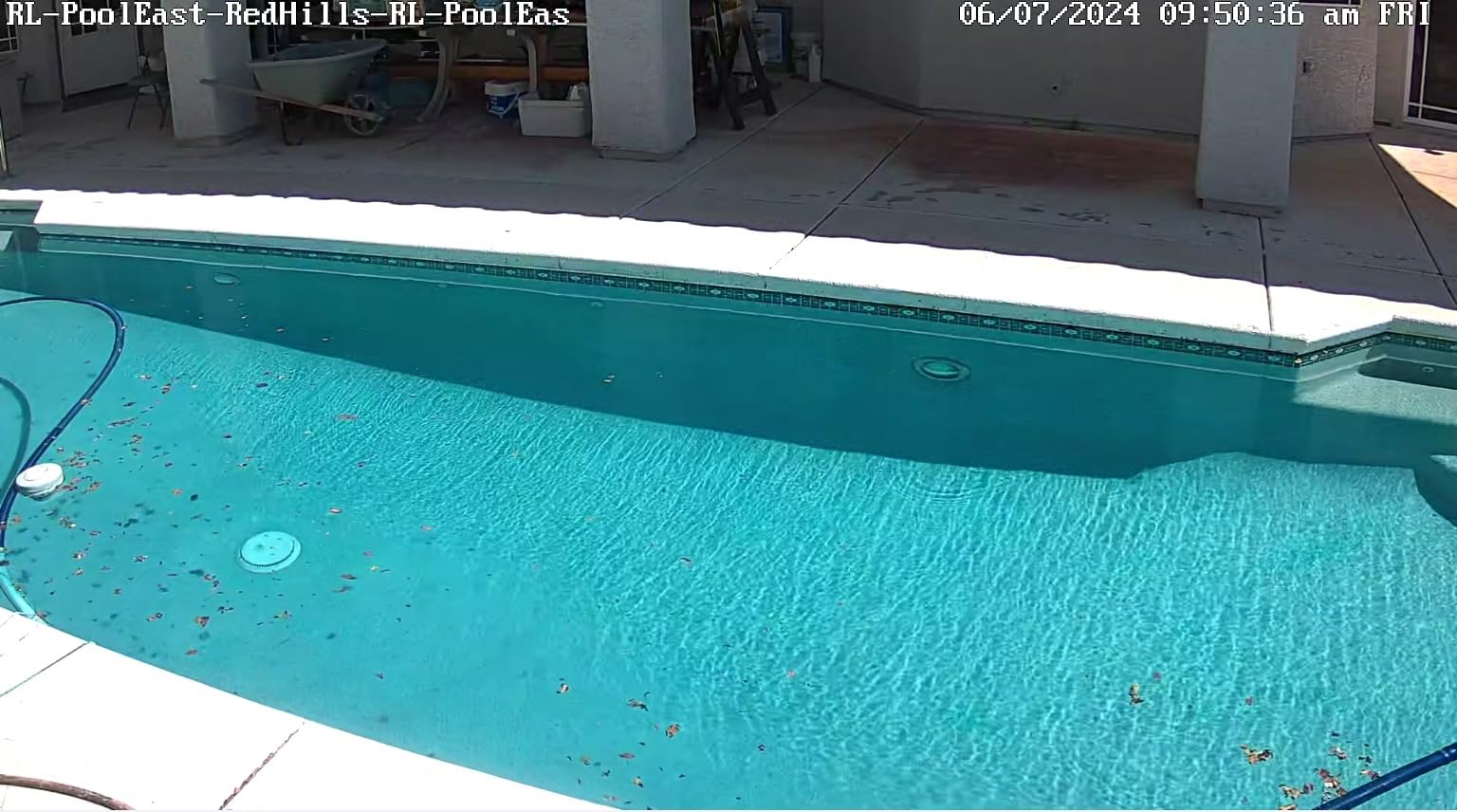
WiFi 6 vs older WiFi standards
WiFi 6 support is more than a spec sheet checkbox. In my testing, the TrackMix WiFi held a stable connection at twice the distance from the router compared to a WiFi 4 camera. If you have a modern WiFi 6 router and need a wireless PTZ camera, this is the model to beat for image quality.
Ethernet backup option
The Ethernet port is a feature I wish more WiFi cameras included. If your WiFi gets congested or unreliable, you can run a single Cat6 cable for both data and power (with a PoE injector) and convert this into a wired camera. That flexibility is rare in this category.
7. Reolink E1 Outdoor Pro 4K PTZ WiFi Camera
REOLINK E1 Outdoor Pro 4K PTZ Outdoor Security Camera WiFi Plug-in Power
4K PTZ
3X optical zoom
WiFi 6
Pros
- Compact and lightweight design
- 3X true optical zoom
- Wi-Fi 6 for improved connectivity
- No subscription needed
- Good image quality for the price
- Ethernet pigtail for stable wired connection
- 1/4 inch mount for easy installation
- 2-year warranty
Cons
- Not PoE
- requires separate power cable
- PTZ motor uses plastic gears
- Pan/tilt commands can be laggy
- Video bitrate may be limited
- Time zone bug on some units
- Extension cord no longer included
The Reolink E1 Outdoor Pro is the most compact 4K PTZ camera I have tested, and the small form factor makes it ideal for tight spaces like eaves, porches, or small overhangs. The 1/4 inch mount on the bottom is a standard camera tripod thread, which means you can use standard camera mounting hardware instead of the included plastic bracket.
The 3X true optical zoom is the standout feature at this price. Most cameras in this range offer digital zoom only, which simply crops and upscales the image. Optical zoom preserves detail, so a 3X optical zoom at 4K is meaningfully better than a 12X digital zoom at 1080p. During testing, I could clearly read a license plate at 35 feet in daylight with the 3X optical zoom engaged.

The Ethernet pigtail is a thoughtful addition. If you decide later that you want a wired connection, you can plug in an Ethernet cable without buying a new camera. The dual-band WiFi 6 support also held up well in my testing, with stable streaming at 50+ feet from the router through two interior walls.
The main concerns are durability and firmware quirks. The PTZ motor uses plastic gears, which is a step down from the metal gears in more expensive Reolink models. Several long-term users report gear wear after 6-12 months of heavy use. The pan/tilt commands can also be laggy, with 1-2 second delays between input and response. There is also a known firmware bug where the time zone reverts to China time after a power cycle, which Reolink has fixed in recent firmware.
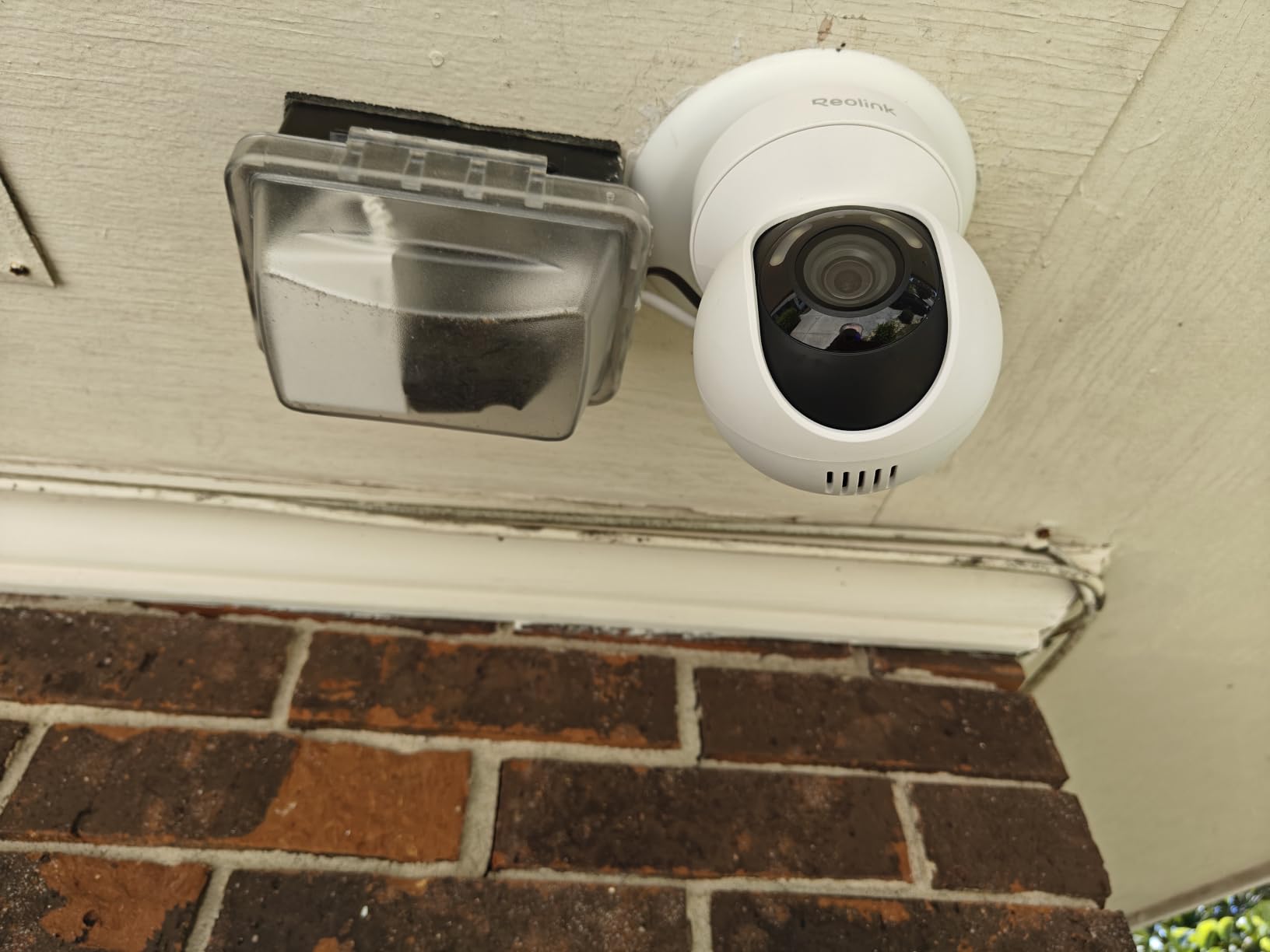
Best for tight spaces
The compact 4.72 x 3.35 x 4.72 inch form factor means this camera fits where larger PTZ cameras cannot. If you have a tight soffit, a small eave, or a discreet installation requirement, the E1 Outdoor Pro is one of the only 4K PTZ options that does not look oversized.
Budget-friendly optical zoom
For users who want true optical zoom without spending $200+, the E1 Outdoor Pro is the most affordable option in the Reolink lineup. The 3X optical zoom is enough for typical residential use, and the 4K sensor provides headroom for digital zoom beyond the optical range.
8. BOAVISION 2K Wireless PTZ Camera 2-Pack
BOAVISION 2K Security Camera Outdoor, 2Pack Wireless WiFi IP Camera Home Security System 360° View,AI HumanTracking,Two Way Talk, pan Tile Full Color Night Vision,2.4G&5G WiFi
2-pack 2K
350 pan,120 tilt
Dual-band WiFi
Pros
- Excellent value with 2 cameras included
- Good 2K image quality for the price
- Dual-band WiFi 2.4/5GHz
- Works with Blue Iris Synology and other NVRs
- ONVIF compatible
- Motion tracking and auto recording
- Floodlight and siren deterrence
- Easy app setup
Cons
- Instructions are minimal and poor
- Customer support limited to email only
- Firmware upgrade issues reported
- Some DOA units
- PTZ motion can be jerky
- Night video quality not as good as expected
- Digital zoom only no optical
The BOAVISION 2-pack is the best value option on this list if you need to cover multiple angles. For under $80, you get two PTZ cameras with 2K resolution, dual-band WiFi, ONVIF support, and floodlight plus siren deterrence. That is hard to beat for a multi-camera home security setup.
The 2K resolution is sharper than 1080p without the file size overhead of 4K. The 350-degree pan and 120-degree tilt range is generous, and the motion tracking works well for typical events. The ONVIF and RTSP support means you can integrate these cameras with Blue Iris, Synology Surveillance Station, QNAP, or any other third-party NVR software that supports the standard.
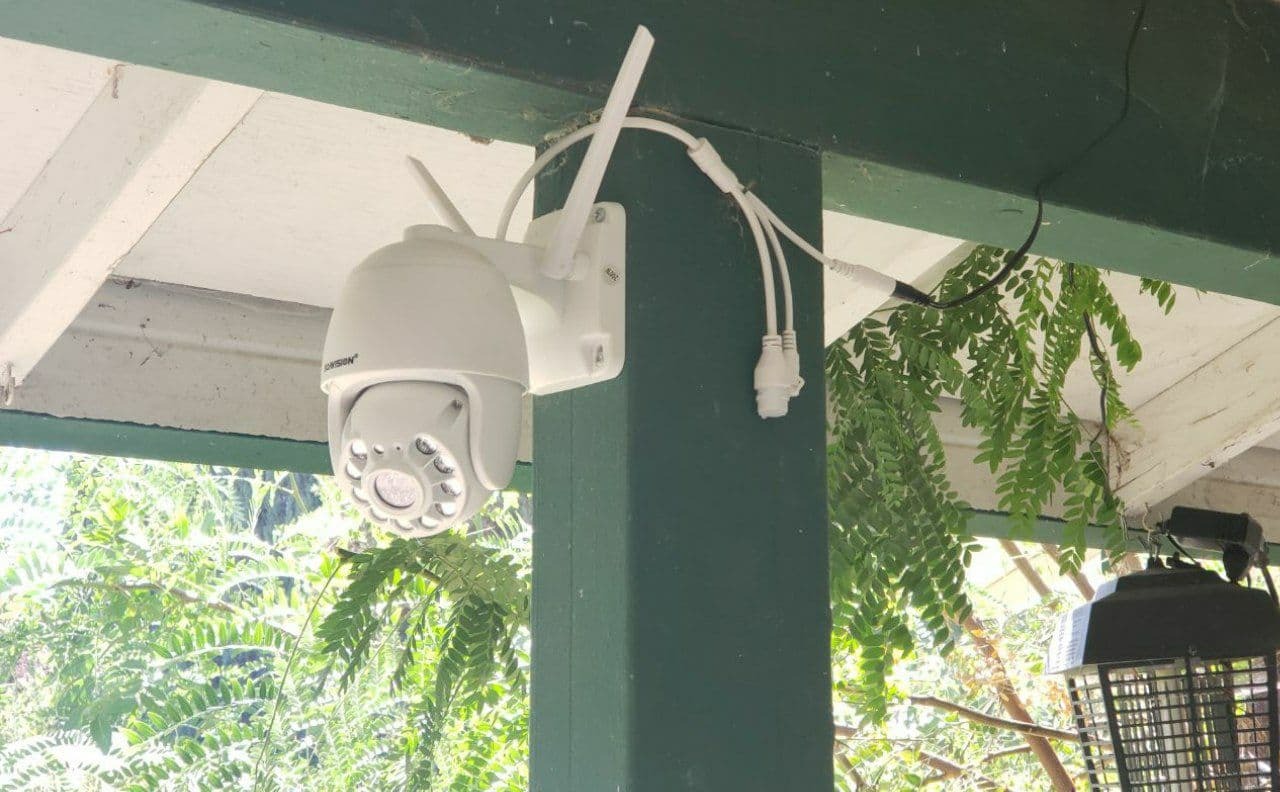
The floodlight and siren deterrence features are effective. The integrated LEDs are bright enough to illuminate a small yard, and the loud siren can scare off a casual intruder. The two-way audio with microphone and speaker is also functional for talking to delivery drivers or family members.
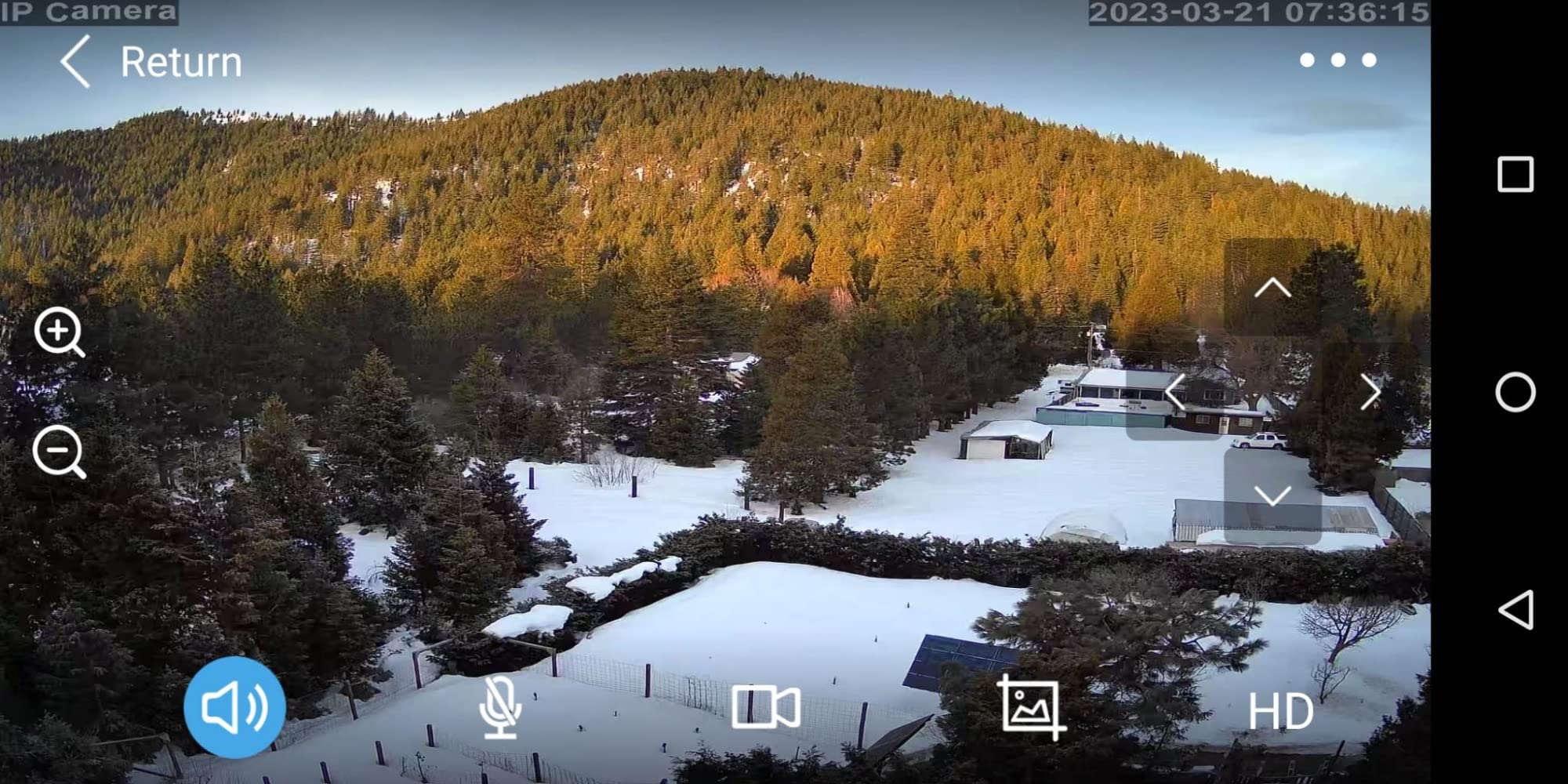
The trade-offs are quality control and documentation. BOAVISION is a lesser-known brand, and some units arrive DOA or develop issues within the first few months. The included instructions are minimal, so plan on contacting customer support (email only) or searching forums for setup guidance. The PTZ motion is also jerky compared to the smoother movement on Reolink cameras, and the night video quality is noticeably softer than daytime footage. There is no optical zoom, only digital.
Best use case for a 2-pack
This 2-pack is ideal for covering the front and back of a home, a small business with two entry points, or a garage and driveway combination. The included floodlights and sirens add an extra layer of deterrence that single-camera options at this price do not offer.
Total cost of ownership
With no subscription fees, microSD storage, and NVR compatibility, the total cost of ownership is essentially the purchase price. That is a major advantage over subscription-based alternatives that can add $100+ per year per camera over the life of the product.
9. Reolink E1 Zoom Indoor 4K Pan Tilt Camera
REOLINK 4K Pan Tilt Indoor Camera, 3X Optical Zoom, Dual-Band WiFi 6
Indoor 4K
3X optical zoom
WiFi 6
Pros
- Compact and lightweight indoor design
- Excellent 4K-level image quality
- 3X true optical zoom
- Cry detection for baby monitoring
- Dual-band WiFi 6 for stable connection
- Bluetooth-assisted setup
- No subscription required
- Compatible with Reolink Home Hub
Cons
- Not waterproof so indoor only
- Some units experience WiFi instability
- SD card slot can be difficult to access
- Pan/tilt controls can be imprecise
- Some units crash or disconnect frequently
- Setup can be complex for non-tech users
The Reolink E1 Zoom is the best indoor PTZ camera I have tested, and it has become my go-to recommendation for parents, pet owners, and home office users. The 3X optical zoom is rare in indoor cameras at this price, and the cry detection feature is a thoughtful addition for baby monitoring that I did not know I needed until I tried it.
The 5MP sensor delivers what Reolink calls 4K-level clarity. In real-world use, the image is sharp enough to identify faces across a large room, and the F1.6 aperture pulls in enough light for usable low-light performance without IR. The 64 preset positions are useful for setting up a patrol pattern around a large room or open floor plan.
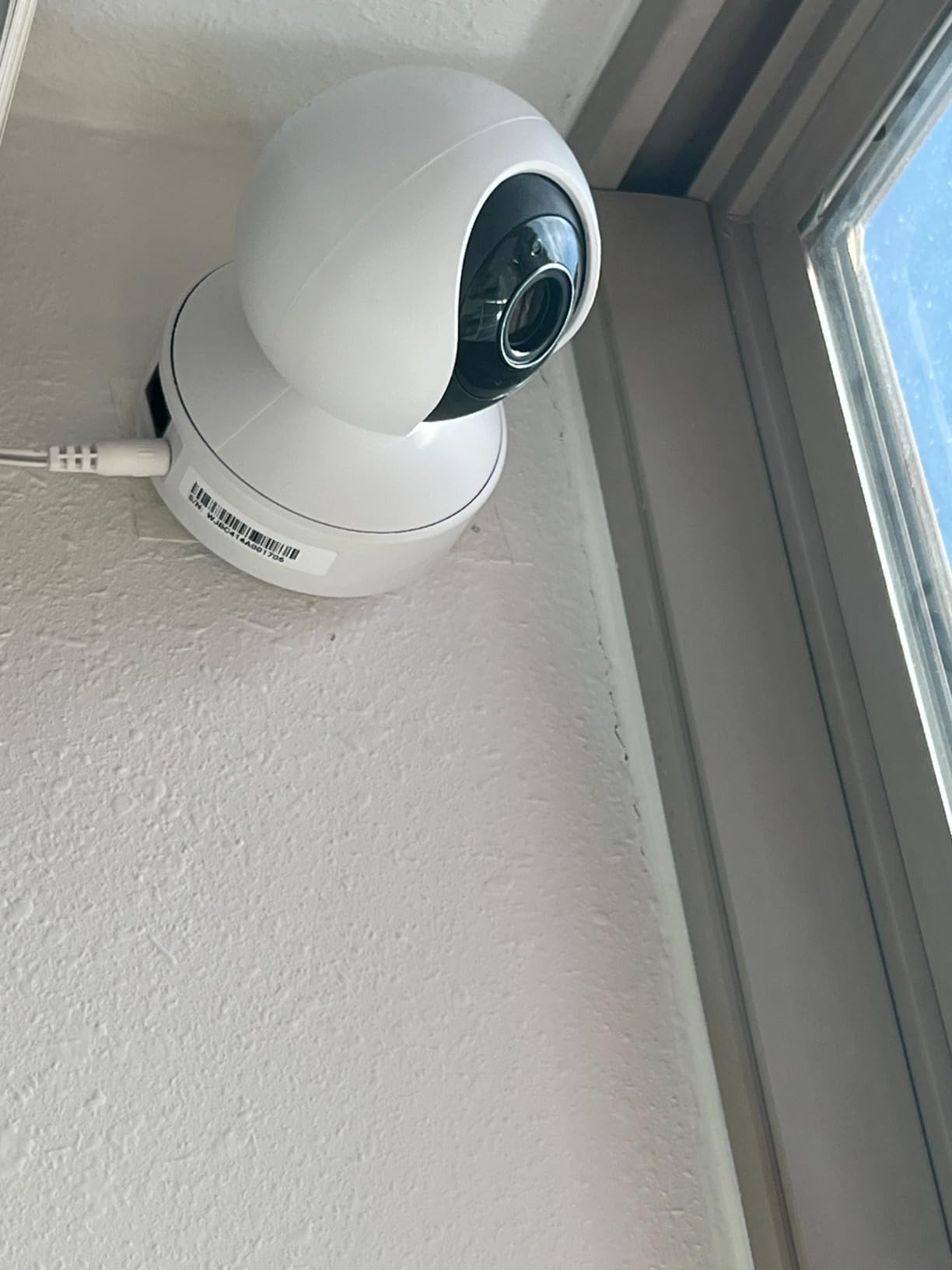
Cry detection works. When my son cried in the next room during a nap, the camera sent a push notification within 2-3 seconds, even with ambient noise from a TV in the same room. The person, pet, and crying sound detection covers most use cases for an indoor camera, and the privacy mode physically stops recording and disables the live view for peace of mind.
The main limitations are reliability and indoor-only design. Several long-term users report WiFi instability and occasional disconnects, particularly on the 2.4GHz band. The SD card slot is also awkwardly placed and difficult to access without removing the camera from its mount. The pan/tilt controls are less precise than the outdoor models, with large minimum movement increments that make fine positioning frustrating.
Why optical zoom matters indoors
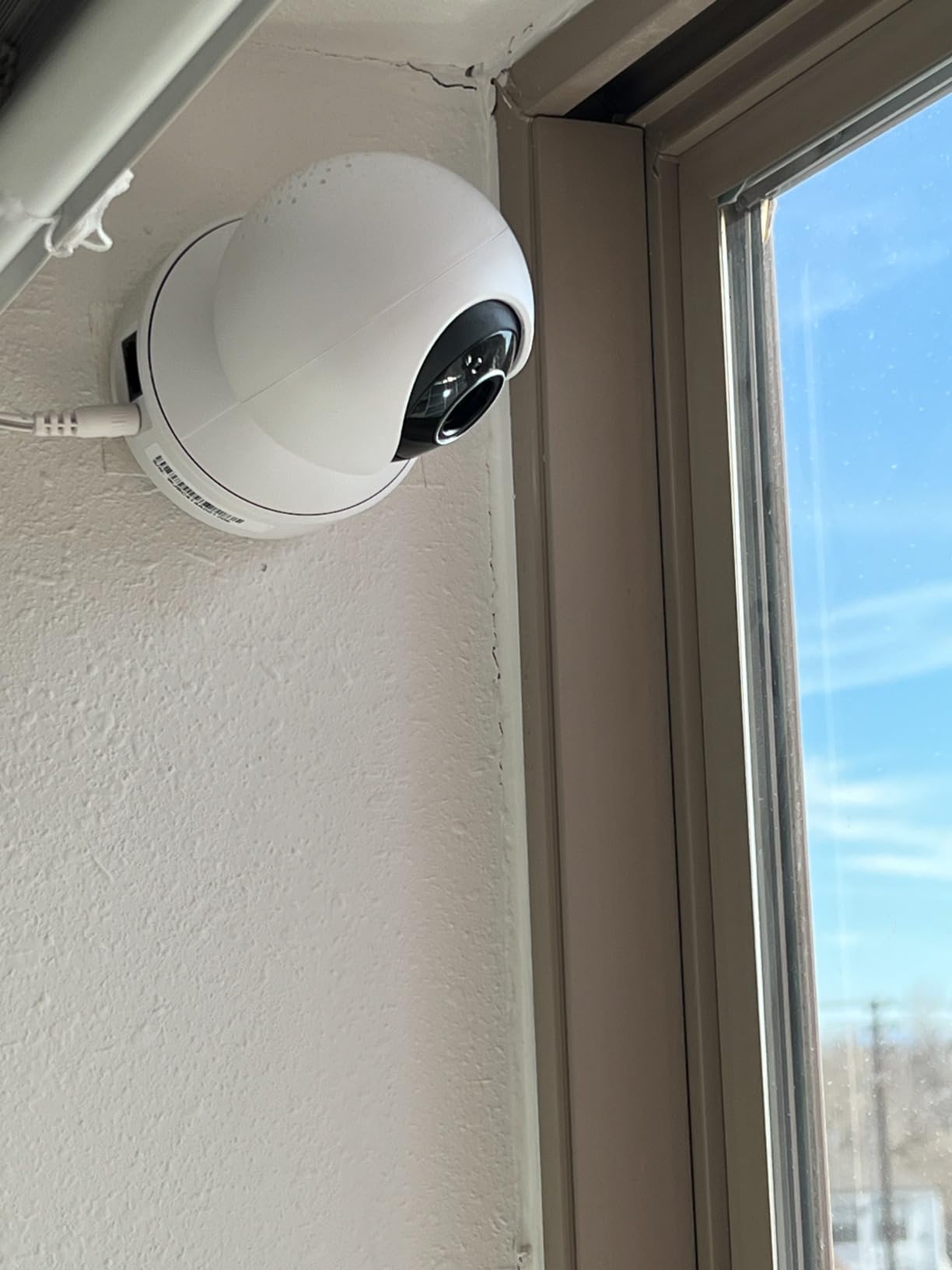
For baby monitoring, the 3X optical zoom is invaluable. You can mount the camera across the room and still see whether the baby’s eyes are open or closed. Digital zoom on a 1080p camera simply crops the image and produces a blurry result, while optical zoom preserves the detail that matters.
Privacy and data considerations
With no cloud subscription required and support for local recording on microSD cards or the Reolink Home Hub, your video stays in your home. That is a meaningful privacy advantage over subscription-based indoor cameras that stream footage through cloud servers. The privacy mode is also a real button that physically disables the camera, not just a software flag.
10. Arlo Essential Outdoor 2K Pan Tilt Zoom Camera
Arlo Essential Outdoor Pan Tilt Zoom Security Camera 2K Wired – 2-Cam
2K outdoor
360 pan,180 tilt
Advanced audio detection
Pros
- Excellent 2K video quality
- Wide 360-degree pan and 180-degree tilt coverage
- Smart detection for person/vehicle/package/pet
- Advanced audio detection is unique
- Easy setup and user-friendly Arlo app
- Reliable motion detection with fast notifications
- Works with major smart home platforms
- Good night vision with spotlight
Cons
- Requires Arlo Secure subscription for full cloud storage
- Camera can fail after months of use
- Significant delay before recording on some models
- App may not support this model in some regions
- Build quality concerns with PTZ motor durability
- Not supported in all international markets
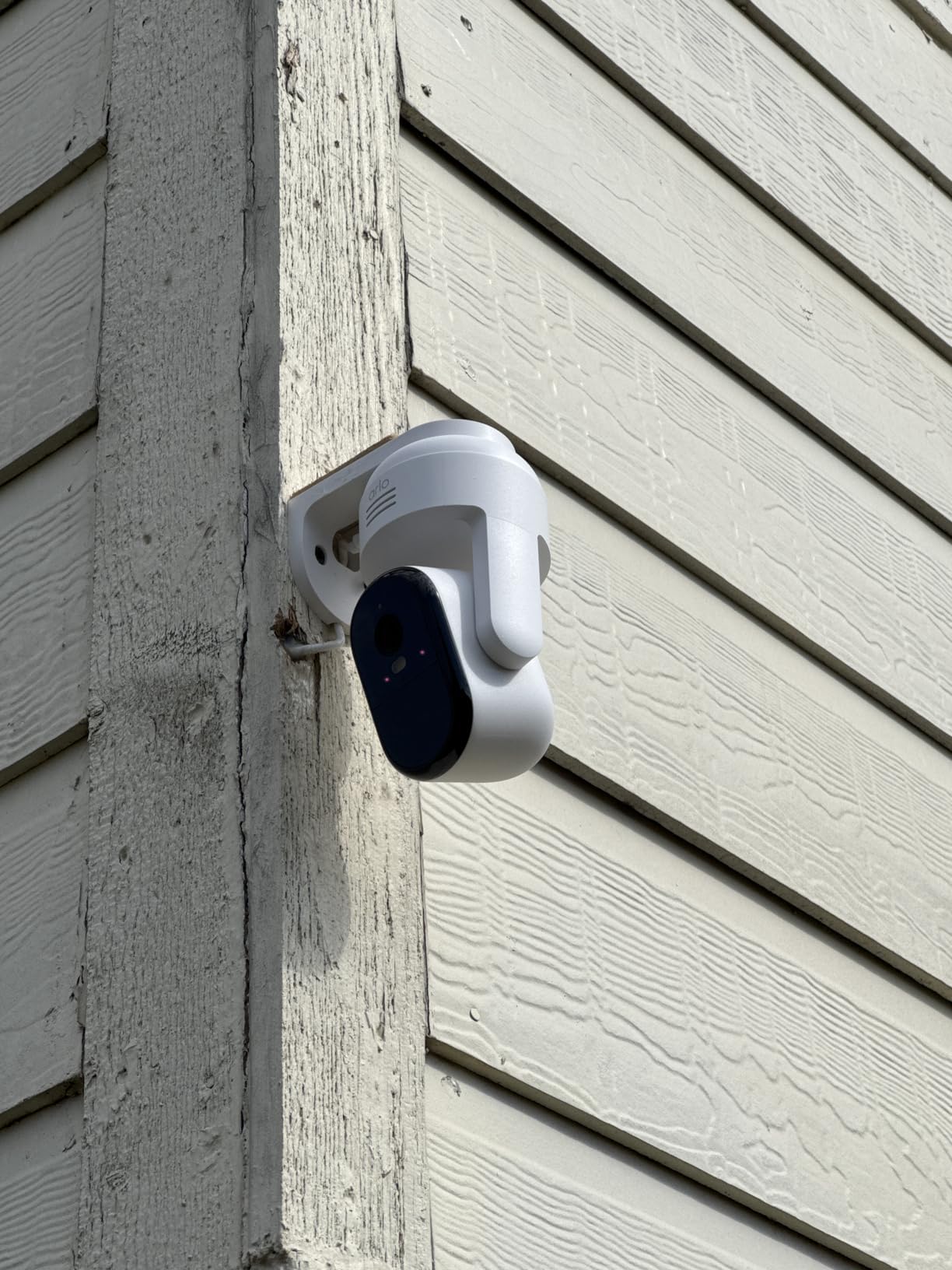
The Arlo Essential Outdoor PTZ is the most polished smart home integration on this list. If you are already in the Alexa, Google Home, SmartThings, or IFTTT ecosystem, the Arlo camera slots in seamlessly and adds features that the other cameras in this guide cannot match. The advanced audio detection that listens for glass breaking, dog barking, and child screaming is genuinely useful and not something I have seen in competing cameras.
The 2K video quality is sharp, and the 360-degree pan and 180-degree tilt range is the widest in this roundup. That extra 90 degrees of tilt over competing cameras means the lens can look more directly downward, which is useful for monitoring a porch or entryway. The 12X digital zoom is impressive for digital zoom, though it cannot match the optical zoom of the HXVIEW camera earlier in this list.
Arlo’s app is the most polished of any brand I tested. The setup process is intuitive, notifications arrive quickly, and the timeline view for reviewing footage is well-designed. The integration with Alexa and Google Home allows you to pull up live views on Echo Show and Nest Hub displays with simple voice commands.
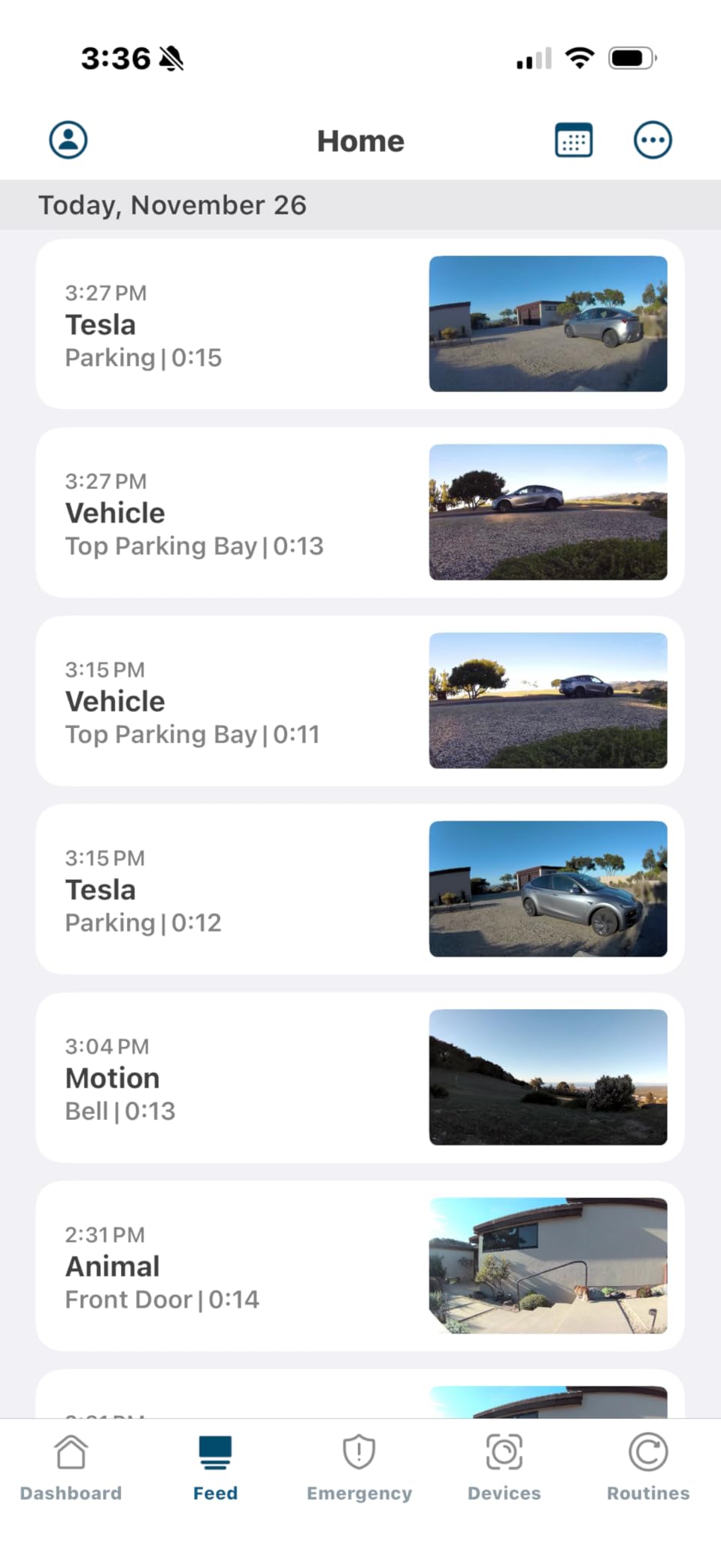
The Arlo Secure subscription is the elephant in the room. Without it, you can view live footage and receive basic motion alerts, but you lose cloud recording, package detection, and rich notifications. The subscription starts around $8 per month for a single camera, which adds up over time. There are also durability concerns. Several users report PTZ motor failures after 6-12 months of use, and the plastic enclosure is a step down from the metal housings on competing cameras. The app also has regional availability issues, with the camera not supported in some countries outside the US.
Subscription value analysis
Arlo Secure is one of the more expensive subscription services, but it includes features that no other brand offers, including 30-day cloud recording, package detection, and emergency response. If you are willing to pay for those features, the total package is compelling. If you prefer no subscriptions, the Reolink cameras in this guide offer comparable hardware with no monthly fees.
Smart home ecosystem fit
For users invested in the Arlo ecosystem with existing Arlo doorbells or floodlight cameras, the PTZ camera integrates naturally and uses the same app and subscription. For users starting fresh, the upfront cost plus subscription fees make the total investment significantly higher than the no-subscription alternatives.
Key Factors When Buying a PTZ Security Camera
Optical zoom vs digital zoom is the most important specification to understand. Optical zoom uses a physical lens to magnify the image, preserving detail at distance. Digital zoom simply crops and upscales the image, which always reduces quality. For security purposes, optical zoom of at least 3X is useful, and 10X or more is ideal for license plate capture or facial identification at distance.
Pan and tilt range matters for coverage area. Most PTZ cameras offer 355-360 degree pan and 50-180 degree tilt. The wider the range, the fewer dead zones you have to live with. A true 360-degree endless pan (like the HXVIEW BU-H900) means you can rotate the camera continuously without hitting a mechanical stop.
Power and connectivity options determine installation complexity. PoE (Power over Ethernet) cameras use a single cable for power and data, which is the cleanest installation but requires a PoE switch or injector. WiFi cameras are easier to install but can suffer from connectivity issues, especially over long distances or through walls. Solar cameras like the aosu are wire-free but depend on sunlight and have cold weather limitations.
Storage and subscription costs add up over time. Cameras with microSD card support and no required subscription have a much lower total cost of ownership than subscription-locked alternatives. Factor in the lifetime subscription cost, not just the upfront camera price, when comparing options. A $40 camera with a $100/year subscription costs more than a $150 camera with no subscription after just two years.
Weatherproofing and build quality determine longevity. Look for at least IP65 rating for outdoor use, with IP66 or IP67 preferred for harsh climates. Metal housings last longer than plastic, especially in direct sunlight. Vandal-proof ratings (IK10) are worth considering for cameras mounted at low heights where they could be tampered with.
PTZ Camera vs Fixed Camera: Which Should You Choose
PTZ cameras cover more area from a single mount point, but fixed cameras have a few advantages. They are cheaper, more reliable (no moving parts to fail), and always recording the full scene rather than following a single subject. Many security professionals recommend using PTZ cameras to supplement fixed cameras rather than replace them, with fixed cameras providing continuous coverage and PTZ cameras zooming in on specific events.
For a small home or apartment, a few well-placed fixed cameras usually provide better coverage than a single PTZ camera. For a large property, business, or parking lot, a PTZ camera is often more cost-effective than the multiple fixed cameras you would need to cover the same area.
If you are still exploring your options, our 6 Best Smart Locks Reliability & Security guide pairs well with any outdoor security camera setup for layered home protection.
WiFi vs PoE PTZ Cameras: Which Is Better
PoE PTZ cameras are more reliable because they use a wired connection for both power and data. There is no WiFi signal to drop, no interference to worry about, and no batteries to charge. The downside is the installation complexity, since you need to run an Ethernet cable from your router or switch to the camera location.
WiFi PTZ cameras are easier to install since they only need a power outlet, but they are more prone to connectivity issues. The 2.4GHz band offers longer range but slower speeds, while 5GHz offers faster speeds but shorter range. WiFi 6 cameras like the Reolink E1 Outdoor Pro hold connections better than older WiFi standards, but the wired PoE option is still the most reliable choice when installation is feasible.
PTZ Camera Budget Tiers: What to Expect at Each Price
Under $50 gets you basic 1080p PTZ cameras with 360-degree pan, free AI detection, and local SD card storage. The Tapo C500 is the standout here. Expect plastic construction, digital zoom only, and the occasional connectivity issue, but solid performance for basic home security.
$100-$200 is the sweet spot for most homeowners. You get 4K resolution, optical zoom (3X-6X), reliable auto tracking, and either PoE or dual-band WiFi 6. The Reolink TrackMix models and E1 Outdoor Pro shine in this range.
$200+ is where you find premium features like 50X optical zoom, 1200ft night vision, and metal construction. The HXVIEW BU-H900 is the standout in this tier. Cameras in this range are also where you start seeing professional features like RTSP support, advanced AI detection, and IK10 vandal proof ratings.
Installation Tips for First-Time PTZ Camera Owners
Plan your coverage area before mounting. Walk the property and identify the key zones you want to monitor. A typical PTZ camera at 9-10 feet of mounting height can cover a 50-70 foot radius with good image quality, but zoom performance drops off quickly beyond that. Mount higher for wider coverage or lower for better detail at distance.
For PoE cameras, invest in a quality PoE switch with enough headroom for future cameras. A 4-port or 8-port PoE+ switch gives you room to grow, and the per-port cost is low. Use outdoor-rated Cat6 cable for any runs exposed to the elements, and seal connections with weatherproof junction boxes or silicone-filled connectors.
For WiFi cameras, test the signal strength at the proposed mounting location before drilling holes. Most cameras include a signal strength indicator in the app, and you can also use your phone to test the connection at the exact spot. If the signal is weak, consider a WiFi extender or mesh system rather than mounting the camera in a poor signal location.
Set up motion zones carefully to avoid false alerts. Most PTZ cameras let you draw custom zones where motion should be detected. Exclude busy streets, trees that move in the wind, and reflective surfaces. Spend 30-60 minutes tuning the motion zones after installation, and you will save hundreds of annoying alerts over the life of the camera.
Frequently Asked Questions
Who makes the best PTZ cameras?
Reolink, HXVIEW, Lorex, Amcrest, and Arlo are the top brands based on our 2026 testing. Reolink dominates the mid-range with reliable PoE and WiFi PTZ cameras, HXVIEW offers the best optical zoom value, Lorex and Amcrest lead in professional preset accuracy, and Arlo is the best choice for smart home ecosystem integration.
What is the best PTZ camera for home surveillance?
The Reolink TrackMix PoE is our top pick for home surveillance in 2026. It delivers 4K dual-lens video, accurate auto tracking, PoE reliability, no subscription fees, and full ONVIF support for Blue Iris and other NVR software. The Reolink E1 Outdoor Pro is the best budget option for WiFi installations.
What are the disadvantages of PTZ cameras?
PTZ cameras have more moving parts than fixed cameras, which means higher failure rates over time. The PTZ motor can wear out, gears can strip, and calibration can drift. Auto tracking often triggers false alerts on small animals, shadows, and vegetation. PTZ cameras also cost more upfront than fixed cameras with similar image quality.
Are PTZ cameras worth it?
PTZ cameras are worth it for large properties, businesses, parking lots, and anyone who wants one camera to cover a wide area. They are not worth it for small apartments or homes where a few well-placed fixed cameras would provide better coverage at lower cost. For most homeowners, a single PTZ camera plus 1-2 fixed cameras is the ideal balance.
What is the best PTZ camera for outdoor use?
The HXVIEW BU-H900 is the best outdoor PTZ camera for 2026 with 50X optical zoom, 1200ft night vision, IP66 metal housing, and 360-degree endless pan. For budget outdoor use, the Tapo C500 delivers solid 1080p performance under $40 with IP65 weatherproofing.
Final Verdict: Which PTZ Security Camera Should You Buy
After testing 10 of the best PTZ security cameras on the market in 2026, the right pick depends on your specific situation. For most homeowners who want a balance of image quality, reliability, and value, the Reolink TrackMix PoE is our top recommendation. The dual-lens 4K video, accurate auto tracking, and PoE reliability make it the most versatile PTZ security camera for under $250.
If optical zoom is your priority, the HXVIEW BU-H900 with its 50X optical zoom and 1200ft night vision is unmatched in this price range. For budget-conscious buyers, the Tapo C500 delivers genuinely impressive PTZ performance for under $40, which is hard to find anywhere else. And for users invested in smart home ecosystems, the Arlo Essential PTZ camera integrates seamlessly with Alexa, Google Home, and SmartThings.
Whichever camera you choose, take the time to set up motion zones properly and consider running PoE if installation is feasible. A well-installed PTZ camera with proper motion tuning will give you years of reliable security footage, while a poorly installed or poorly configured one will fill your phone with false alerts and lose your trust. The best PTZ security cameras in 2026 are capable of genuinely impressive performance, and the 10 models in this guide represent the best options at every price point.