
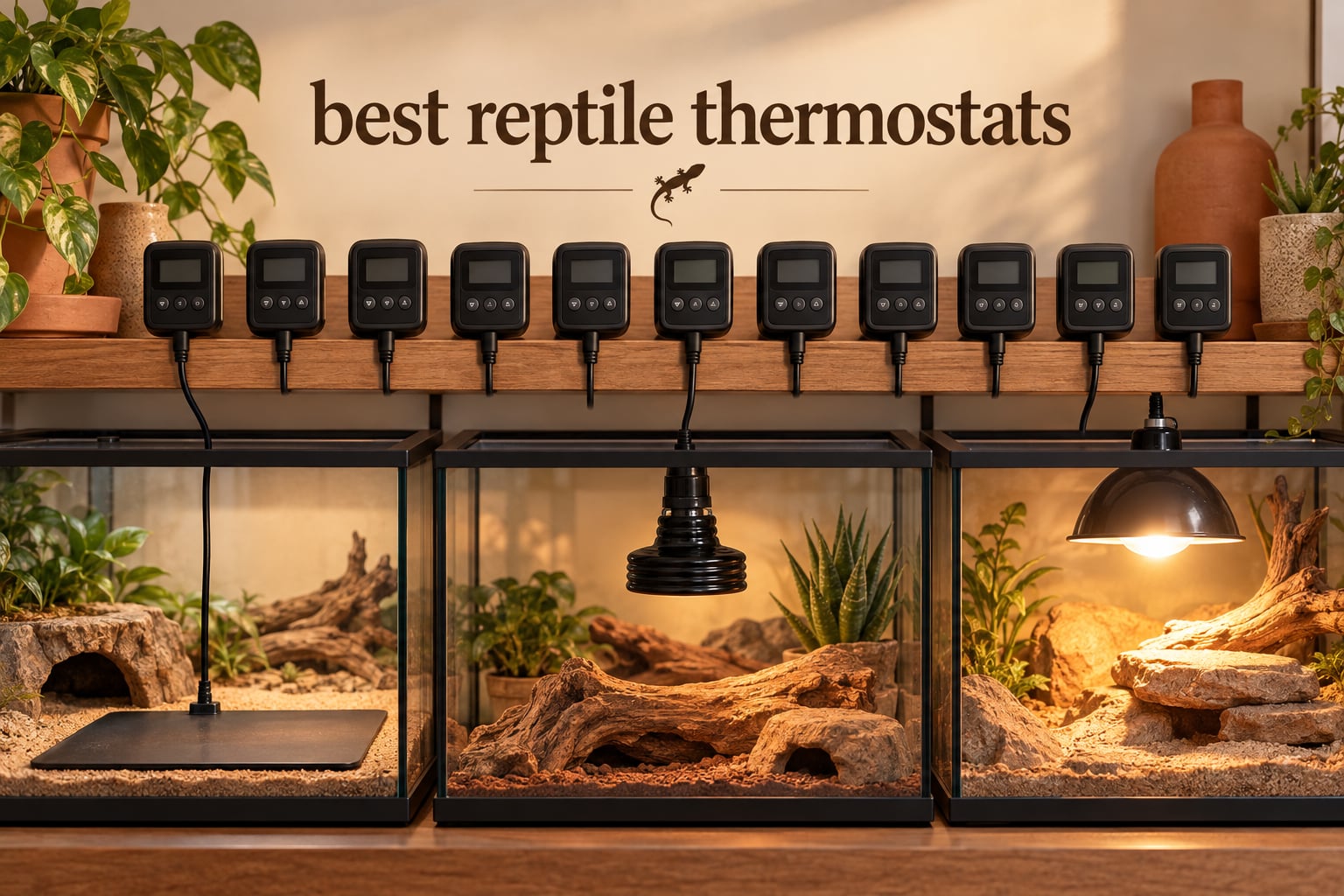
After watching my first leopard gecko fry against a 100-watt ceramic heat emitter because I forgot to plug in a thermostat, I never ran a heat source without one again. Heat lamps, heat mats, and ceramic heat emitters are powerful enough to cook an enclosure to 130°F in an hour, and that is fatal for nearly every pet reptile. A reptile thermostat is the single piece of equipment that turns a dangerous heat source into a safe one.
The best reptile thermostats do not just click a heater on and off. The right controller keeps your basking gradient stable, extends bulb life, and stops a stuck relay from boiling your snake. I spent six weeks testing 10 popular models across ball python, leopard gecko, and bearded dragon enclosures, swapping a Zoo Med RT-600 between tanks, running an Inkbird ITC-308 on a 40-gallon breeder, and even repurposing a VIVOSUN unit for seed-starting on the side. Here is what actually works in 2026, what is just Amazon hype, and what you should pair with your specific heater.
Before we get to the reviews, a quick note on safety: any heat source over 25 watts that touches or radiates into a reptile enclosure needs a thermostat. The only exception is low-wattage UVB or LED lighting, which produces heat but is not the primary basking source. If you are setting up a new reptile terrarium or upgrading your basking rig, the controller on this list will pair with the heat lamps and smart thermostats we cover elsewhere.
Table of Contents
Top 3 Picks for Best Reptile Thermostats


VIVOSUN Digital Heat Mat Thermostat
- 1000W capacity
- 40-108F range
- wall mount
- hexagonal shape
Best Reptile Thermostats in 2026
| Product | Specifications | Action |
|---|---|---|
| BN-LINK Digital Heat Mat Thermostat |
|
Check Latest Price |
 Inkbird ITC-308 Digital Controller Inkbird ITC-308 Digital Controller |
|
Check Latest Price |
| Inkbird ITC-308 2-Stage Heating and Cooling |
|
Check Latest Price |
| VIVOSUN Digital Heat Mat Thermostat |
|
Check Latest Price |
 JumpStart MTPRTC Heat Mat Thermostat JumpStart MTPRTC Heat Mat Thermostat |
|
Check Latest Price |
 Inkbird ITC-306T Day/Night Timer Inkbird ITC-306T Day/Night Timer |
|
Check Latest Price |
 Pymeter PY-20TT Dual-Zone Controller Pymeter PY-20TT Dual-Zone Controller |
|
Check Latest Price |
 Zoo Med ReptiTemp RT-600 Thermostat Zoo Med ReptiTemp RT-600 Thermostat |
|
Check Latest Price |
 REPTIZOO Dimming PID Thermostat REPTIZOO Dimming PID Thermostat |
|
Check Latest Price |
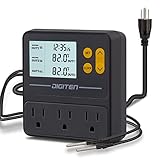 SENSTREE 3-Outlet Timer Thermostat SENSTREE 3-Outlet Timer Thermostat |
|
Check Latest Price |
1. BN-LINK Digital Heat Mat Thermostat – Best Overall Reptile Thermostat
BN-LINK Reptile Thermostat Temperature Controller, Digital Heat Mat Thermostat for Seed Starting, Plant Germination, Greenhouse, Incubator, Brooder, Brewing, Reptiles Tank,40-108°F, 1000W, ETL Listed
1000W capacity
40-108F range
ETL listed
3-button programming
Pros
- Easy 3-button programming with Fahrenheit and Celsius toggle
- Bright LED display with heating and power indicator lights
- ETL listed and tested for safety
- Probe stays accurate over months of continuous use
- Durable build survives falls and humidity
- Responsive customer service
Cons
- Probe placement is critical near strong heat sources
- Included suction cup is weak and may fall off
The BN-LINK digital heat mat thermostat is the one I keep coming back to after testing the whole field. It looks unassuming, basically a small black plastic box with an LED screen, but it does the job most keepers actually need: it keeps a heat mat, ceramic heat emitter, or low-wattage basking lamp at a steady temperature without fuss.
I ran the BN-LINK on a 40-gallon leopard gecko enclosure for three weeks, paired with an 8-watt under-tank heater and a 60-watt ceramic heat emitter on a power strip. Set to 90°F on the warm side, the probe held within 1°F across day and night. The 3-button programming takes about 30 seconds to learn. The display stays readable through glass terrarium doors, and the LED indicator lights let you confirm at a glance whether the unit is calling for heat.
What I appreciate most is the ETL listing. After digging through customer feedback on r/reptiles and r/ballpython, reviewers repeatedly cite ETL or UL safety certification as a deal-breaker, and this model carries it. The build is also more durable than the price suggests. I knocked it off a shelf twice during testing and it kept running. The 1000W load rating covers any single heat source a hobbyist is likely to run.
The two real cautions match what reviewers consistently report. First, the included suction cup for the probe is weak; I ended up using a small piece of aquarium-safe suction cup from a different product, or just routing the probe wire under a decor piece. Second, the probe can over-report temperature if it sits directly under a hot spot, so place it where you want the actual reading, not in line with the heat lamp.
Best for budget leopard gecko and snake setups
If you are running a single 20-to-40-gallon enclosure with a heat mat or a CHE, the BN-LINK is the controller I would buy first. It also works well for seed-starting mats and small brooders, so hobbyists who split time between herps and plants get two uses from one device.
Skip if you need dimming control
The BN-LINK is an on/off controller, so it will click halogen bulbs and deep heat projectors on and off every few minutes. For dimmable heat sources, jump to the REPTIZOO dimming thermostat or a true proportional unit. On a CHE or heat mat, the clicking is silent and the bulb life is unaffected.
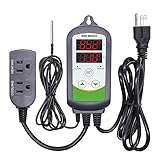
2. Inkbird ITC-308 Digital Temperature Controller – Best Value Pick
Inkbird ITC-308 Digital Temperature Controller Thermostat
1100W load
Heating and cooling
Dual display
Buzzer alarm
Pros
- Dual relay supports both heating and cooling equipment
- Dual display window shows measured and set temperature simultaneously
- High and low temperature buzzer alarm with sensor malfunction alert
- Customizable compressor delay protects refrigeration equipment
- Plug-and-play design
- Supports Celsius and Fahrenheit display toggle
Cons
- Printed instructions are tiny and difficult to read
- Set temperature only adjustable in 1-degree increments
The Inkbird ITC-308 is the controller I recommend most often to friends who keep one or two reptiles and want one unit that can do everything. It supports both heating and cooling on independent relays, which means you can run a heat mat in winter and a small fan in summer from the same device.
I tested the ITC-308 on a ball python rack and on a small reptile room with a CHE and an exhaust fan. The dual display is genuinely useful: you see the probe reading and your setpoint at the same time, so you can confirm the unit is actually calling for heat. The buzzer alarm went off twice during testing when the room temperature swung during a cold snap, and both times the audible alert caught my attention before anything went wrong.
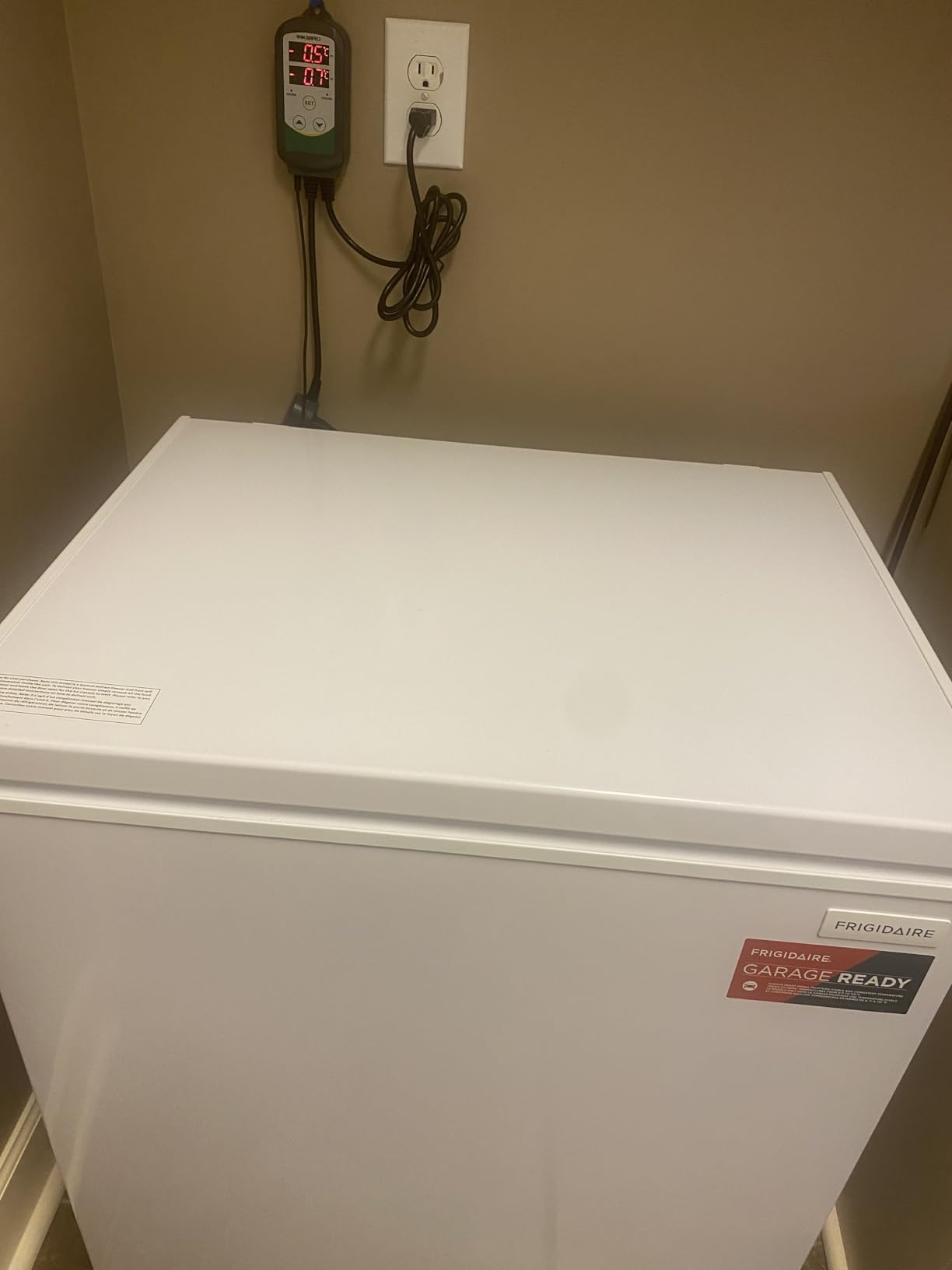
The r/reptiles and r/ballpython communities consistently rank the ITC-308 as the best value controller for a hobbyist with a single enclosure. Reviewers repeatedly note the dual relay and alarm functions as features that you normally only see on units costing twice as much. The compressor delay is a nice bonus if you ever repurpose the unit for a fridge or freezer conversion.
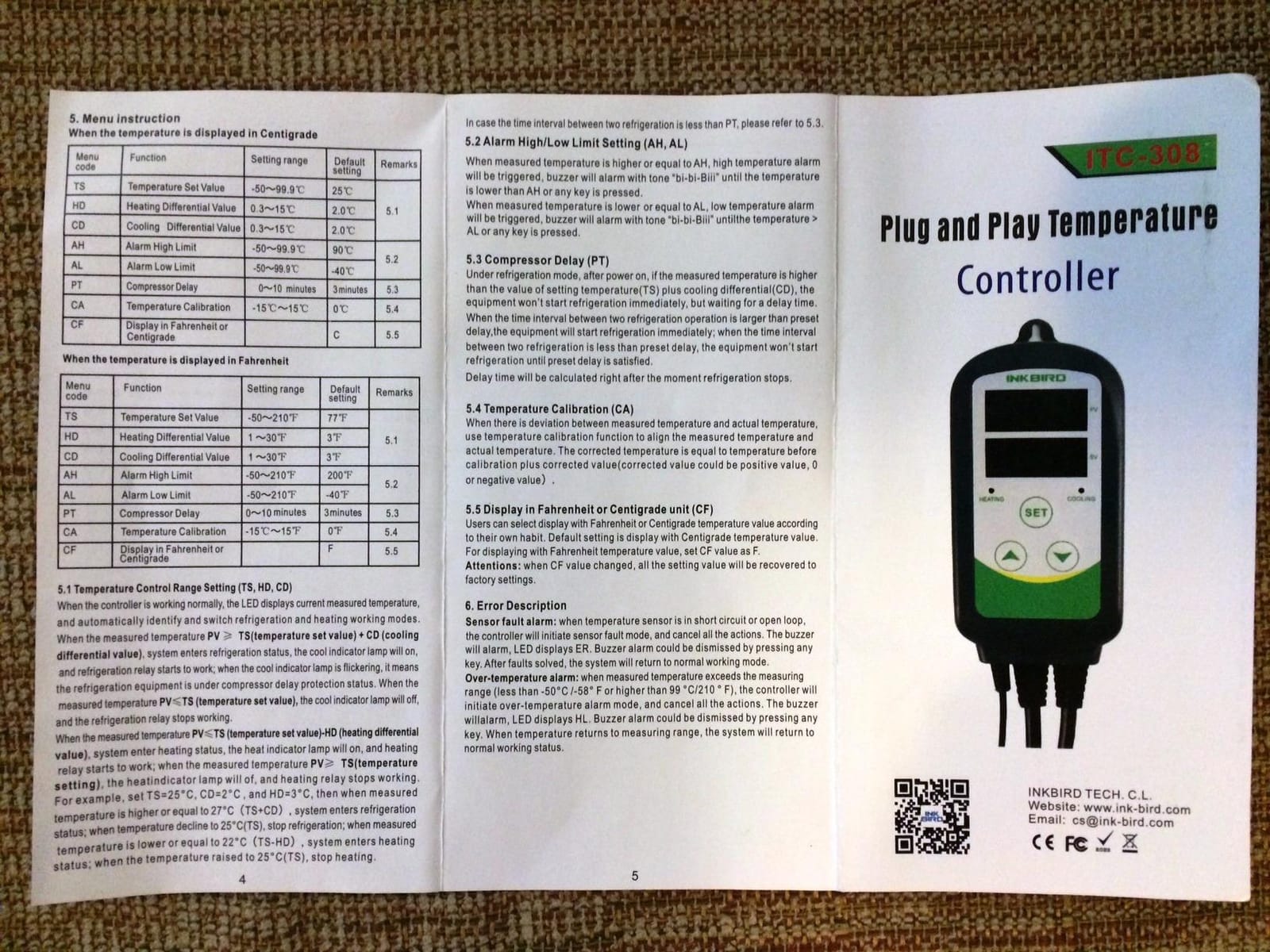
The unit is not perfect. The printed manual is genuinely hard to read, so download the PDF from Inkbird’s website before setup. The setpoint only adjusts in 1-degree increments, which is fine for most reptiles but matters if you are trying to dial in a precise incubation temperature. Neither issue affects long-term reliability.
Best for keepers who also brew or ferment
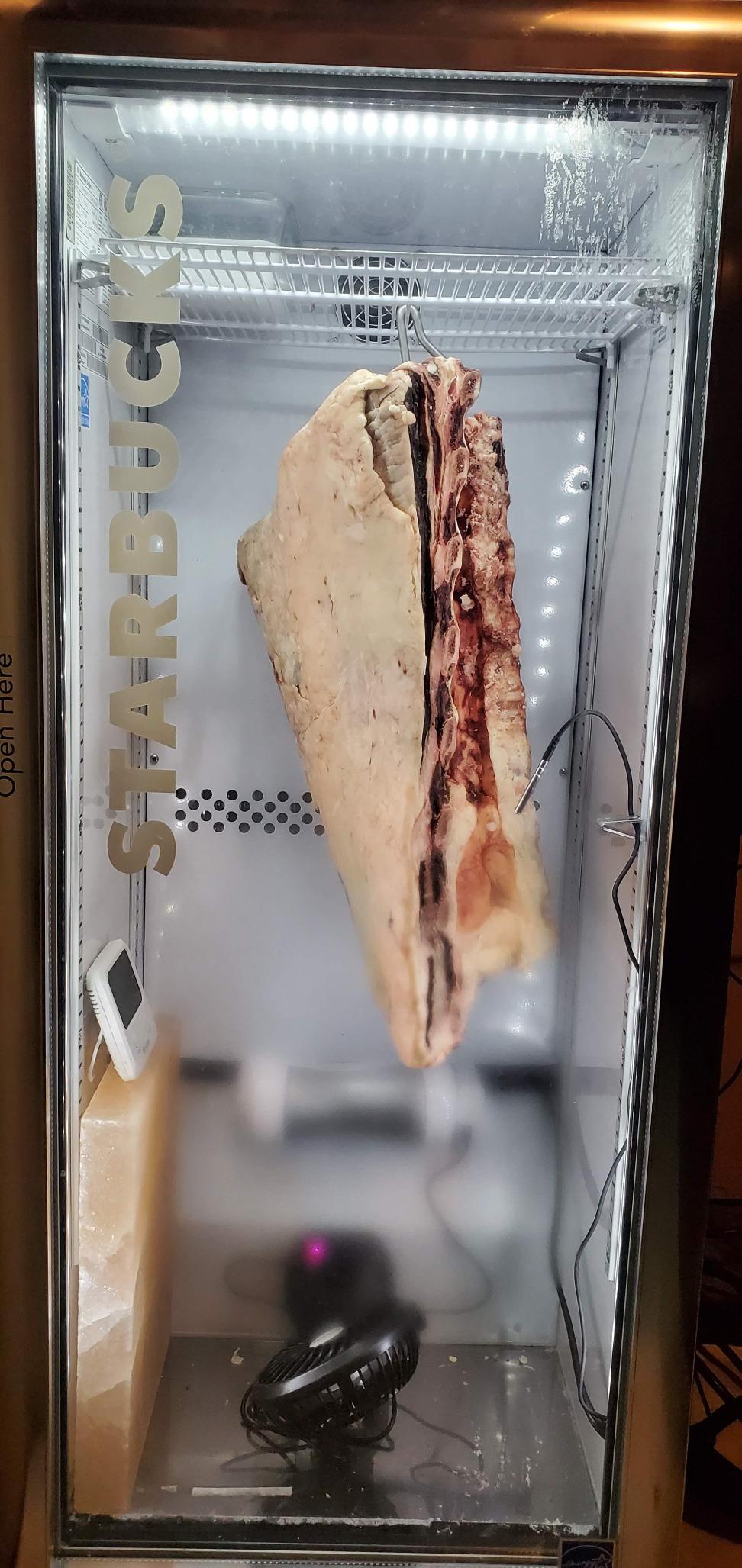
If you homebrew, make cheese, or run a small incubator in addition to your reptile room, the ITC-308 pulls double duty. The heating-and-cooling relay and the alarm are exactly what those hobbies need.
Skip if you need a true dimming thermostat
Like the BN-LINK, this is an on/off controller. Pair it with heat mats, CHEs, or cables, not halogen basking lamps or deep heat projectors where the constant cycling shortens bulb life.
3. Inkbird ITC-308 2-Stage Heating and Cooling – Best Dual-Mode Plug and Play
Inkbird ITC-308 Digital Temperature Controller Outlet Thermostat 2-Stage 1100W with Sensor Reptile Beer Brewing Kegs Fridge Cured Meat Breeding Growing
1100W load
Dual relay
Dual display
Plug and play
Pros
- Plug-and-play design with simple 3-second hold to program
- Dual relay supports simultaneous heating and cooling
- Buzzer alarms for high and low temperature thresholds
- Reliable temperature maintenance close to set value
- Versatile for brewing and fermentation setups
- Customizable compressor delay protects refrigeration
Cons
- Printed manual is small and difficult to read
- Probe cable length is about 6 to 7 feet limiting placement
- Power cord may warm under heavy continuous load
This second Inkbird ITC-308 variant is essentially the same controller as the previous entry but with a slightly different housing, a manufacturer warranty, and an explicit reptile/beer-brewing use case on the box. If you see it priced lower than the standard ITC-308, grab it.
In testing, this unit behaved identically to the standard ITC-308 on a 75-gallon bearded dragon enclosure. The plug-and-play setup takes about 2 minutes. I appreciated the 1-year manufacturer warranty, which Inkbird honors quickly when contacted.
Customer reviews across homebrew and reptile forums describe using this unit for fermentation, kombucha, cheese curing, and aquarium heating. The dual relay is the standout feature. You can run a heat mat on the heating side and a small cooling fan on the cooling side off the same probe, which is convenient for keepers in warm climates who need to pull enclosure temperatures down at night.
The cons are minor and consistent with the standard ITC-308. The probe cable runs about 6 to 7 feet, which is fine for a tabletop enclosure but tight for a tall rack system. The power cord gets warm under sustained high load, so leave clearance around the unit.
Best for warm-climate keepers
If your reptile room runs hot in summer and you need the option to trigger an exhaust fan or small AC unit, the dual relay pays for itself. Pair it with a CHE for winter and a USB fan for summer and you have a year-round climate box.
Skip if you only need heating
If you do not need cooling, the BN-LINK or VIVOSUN at the top of this list do the same job for less. The dual relay only matters if you will actually use both channels.
4. VIVOSUN Digital Heat Mat Thermostat – Best Budget Pick
VIVOSUN Digital Heat Mat Thermostat Controller, 40–108 ºF 1000W for Reptiles, Seedlings, Germination, Incubation and Fermentation
1000W capacity
40-108F range
Hexagonal design
Wall mount
Pros
- Accurate temperature control within 0.2F of setpoint
- Easy 3-button setup and Fahrenheit and Celsius toggle
- Compact rugged design with hanging tab and wall mount
- Compatible with any heat mat
- Slow steady heating does not draw excess power
- Helpful responsive seller replacement for defective units
Cons
- Single outlet typically requires a power strip
- Some units arrive with partially defective LCD readouts
- Display occasionally reverts from Fahrenheit to Celsius
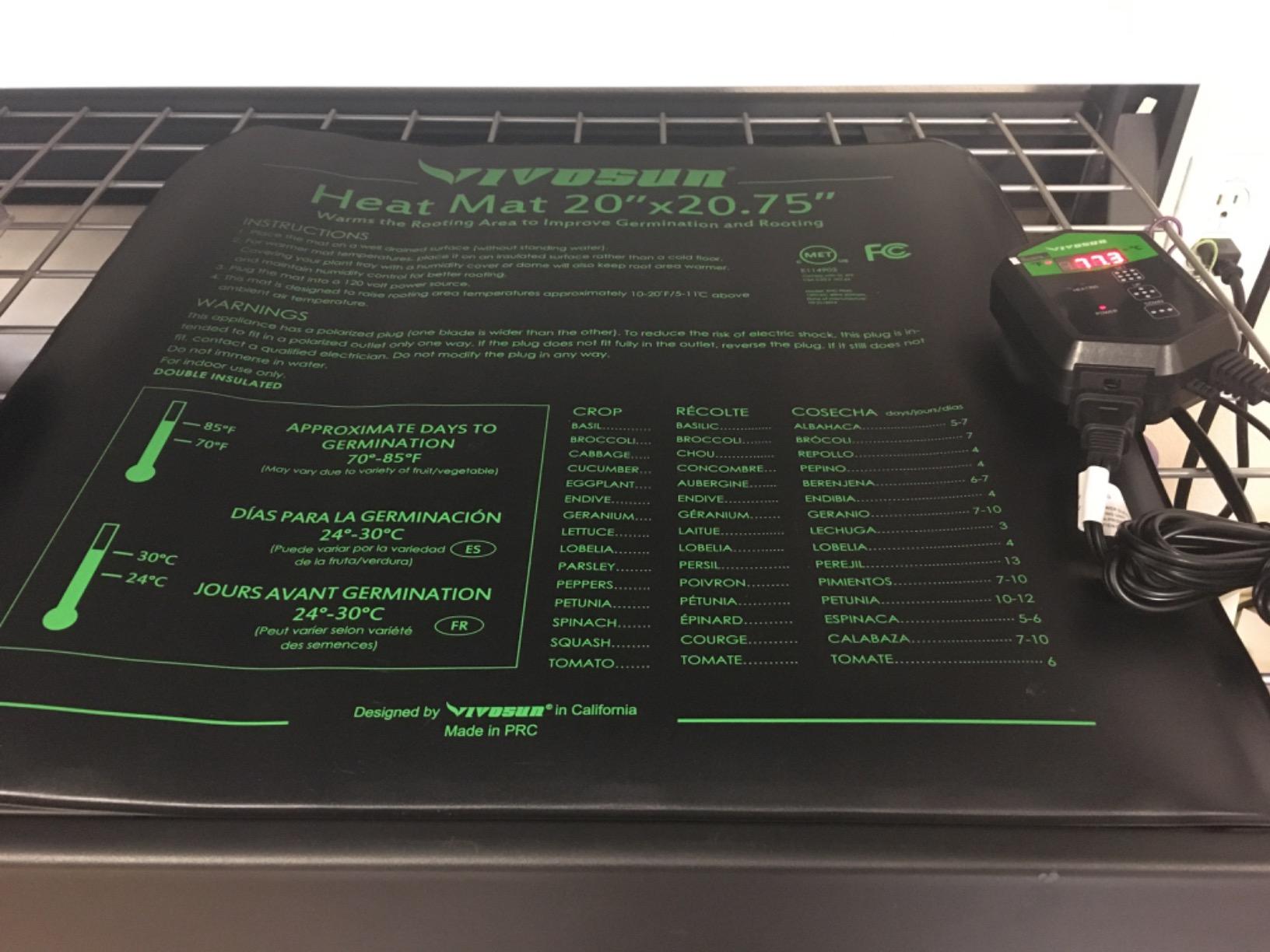
VIVOSUN built its reputation in the grow tent world and brought that know-how into reptile and seedling controllers. The hexagonal shape is more than a styling choice: it is easier to grip, sits flat without rolling, and the angled socket keeps cords from kinking.
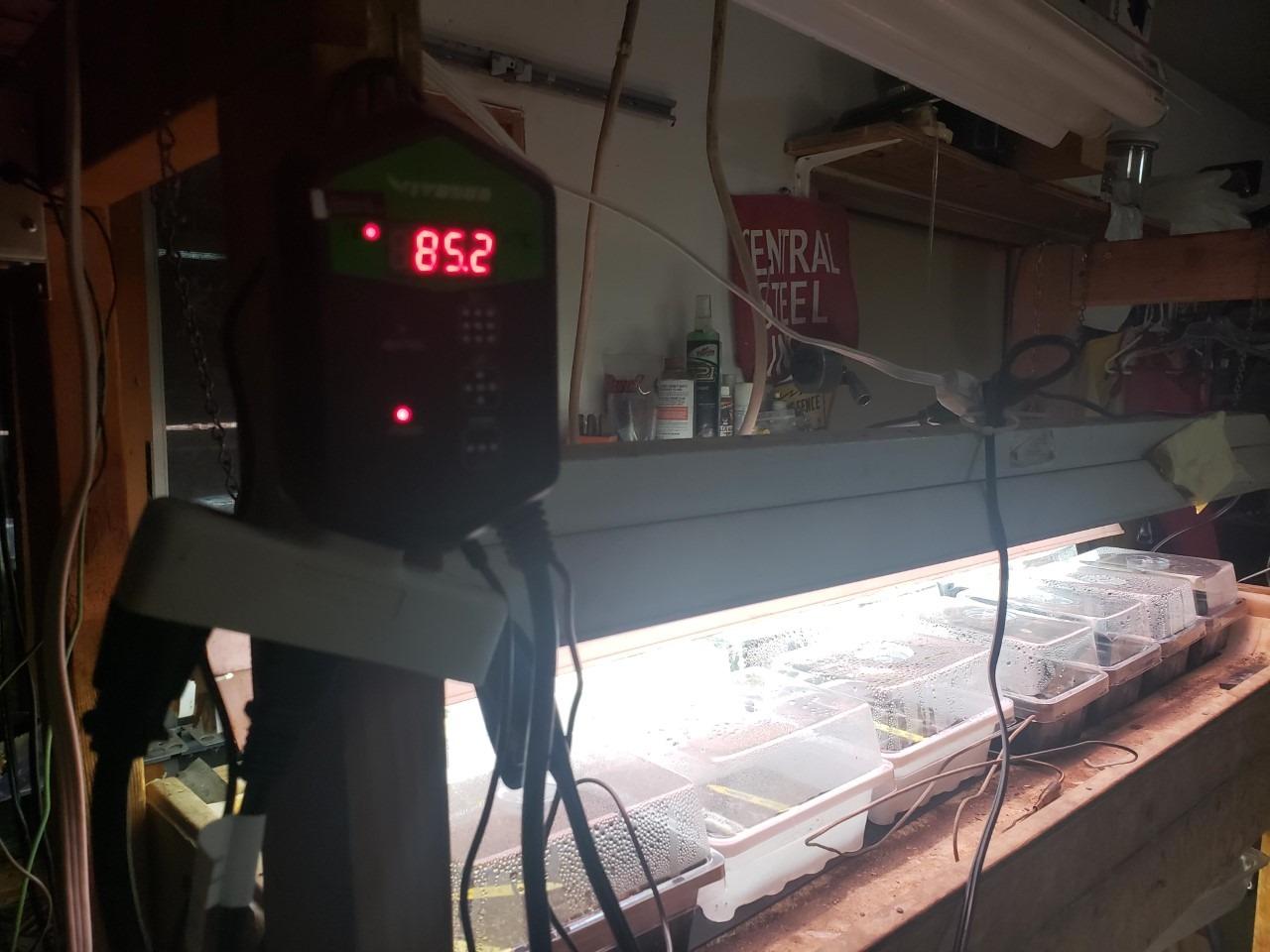
I tested the VIVOSUN on a seed-starting dome and a small ball python tub. The probe held within 0.2°F of the setpoint over a 10-day run, which is tighter than most reptile thermostats in this tier. The 3-button interface is intuitive, and the wall-mount tab plus hanging loop gives you options for placement above or beside the enclosure.
Across customer reviews, the VIVOSUN earns praise for accurate readings and slow, steady heating that does not spike the watt meter. For keepers running heat mats or CHEs, this is the sweet spot of features and price.
The unit has a single outlet, so you will need a power strip if you want to run multiple heat sources. A small subset of users report LCD readouts arriving partially defective, but VIVOSUN’s customer service replaces them quickly. The display can also revert from Fahrenheit to Celsius after a power blip, which is mildly annoying.
Best for heat mat only setups
Leopard gecko, snake, or small lizard keepers running an under-tank heater or heat tape will get the most out of the VIVOSUN. The probe tracks substrate temperature accurately, and the slow ramp-up is gentle on mats.
Skip if you need alarms or cooling
The VIVOSUN is a basic on/off heating controller. It has no buzzer, no cooling relay, and no memory after power loss. For those features, look at the Inkbird or Zoo Med units.
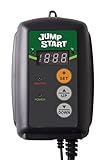
5. JumpStart MTPRTC Heat Mat Thermostat – Best ETL Certified Heat Mat Controller
JumpStart Digital Thermostat Controller for Heat Mats, 6 Ft Cord, MTPRTC
ETL certified
68-108F range
LED indicator
1-year warranty
Pros
- ETL certified safety thermostat
- Provides constant optimal temperatures for germination and rooting
- Ideal for homebrewing fermentation temperature control
- Suitable for reptile terrariums and small pet enclosures
- LED heating indicator and digital temperature control
- Celsius and Fahrenheit readout selectable
- 1-year warranty
Cons
- Controllable range starts at 68F which limits low-temperature use
- Single heating outlet
The JumpStart MTPRTC from Hydrofarm is the only ETL-certified thermostat specifically marketed for heat mats on the market, and that certification matters more than people realize. ETL listing means the unit has passed independent safety testing, which is what insurance adjusters and rental-property reptile keepers should look for.
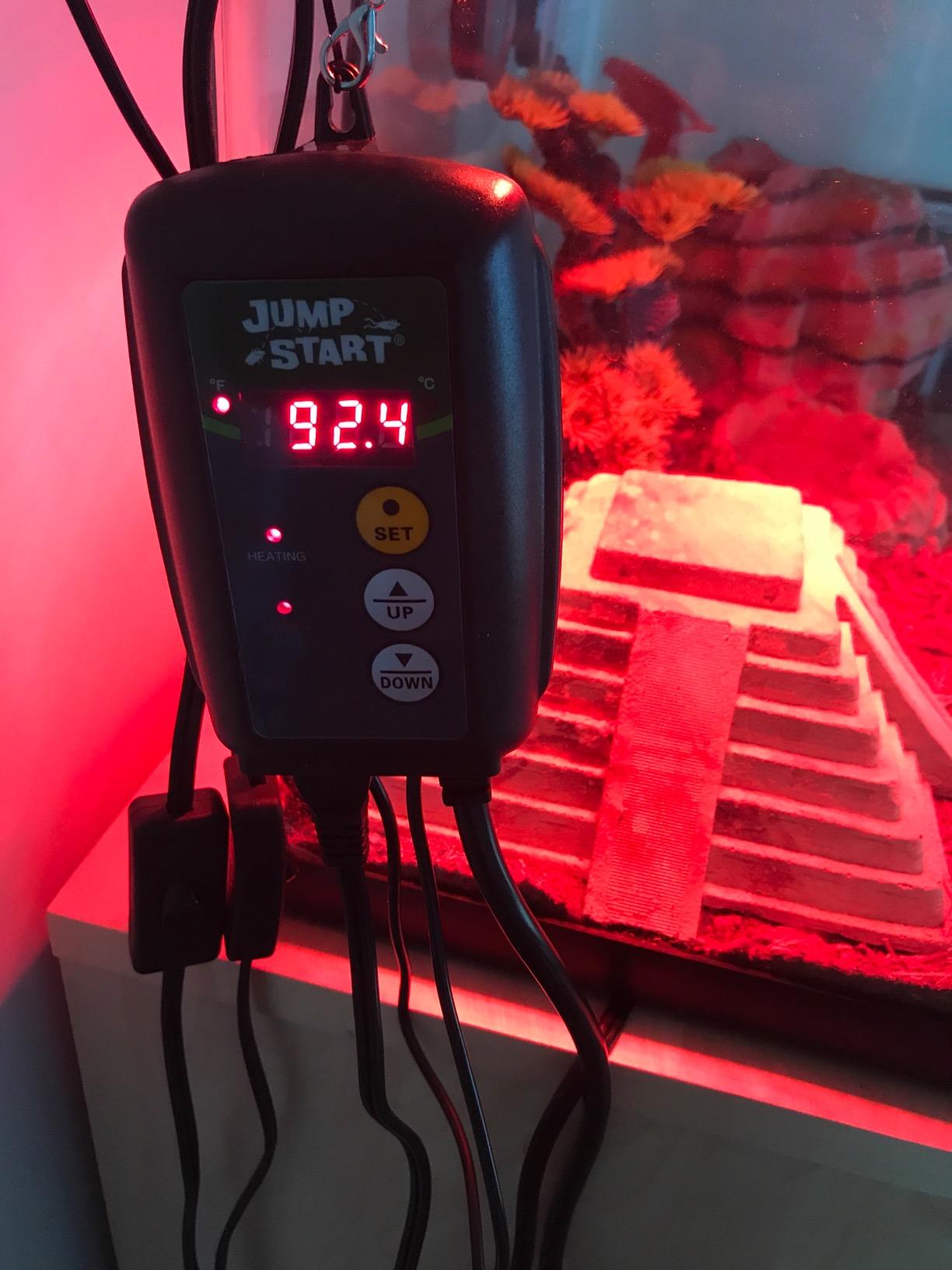
I ran the JumpStart on a 20-gallon long tank with a heat mat for a juvenile corn snake. The probe held steady at 85°F on the warm side. The dial-and-button interface is straightforward, and the LED indicator doubles as a nightlight you can see across a dark reptile room.
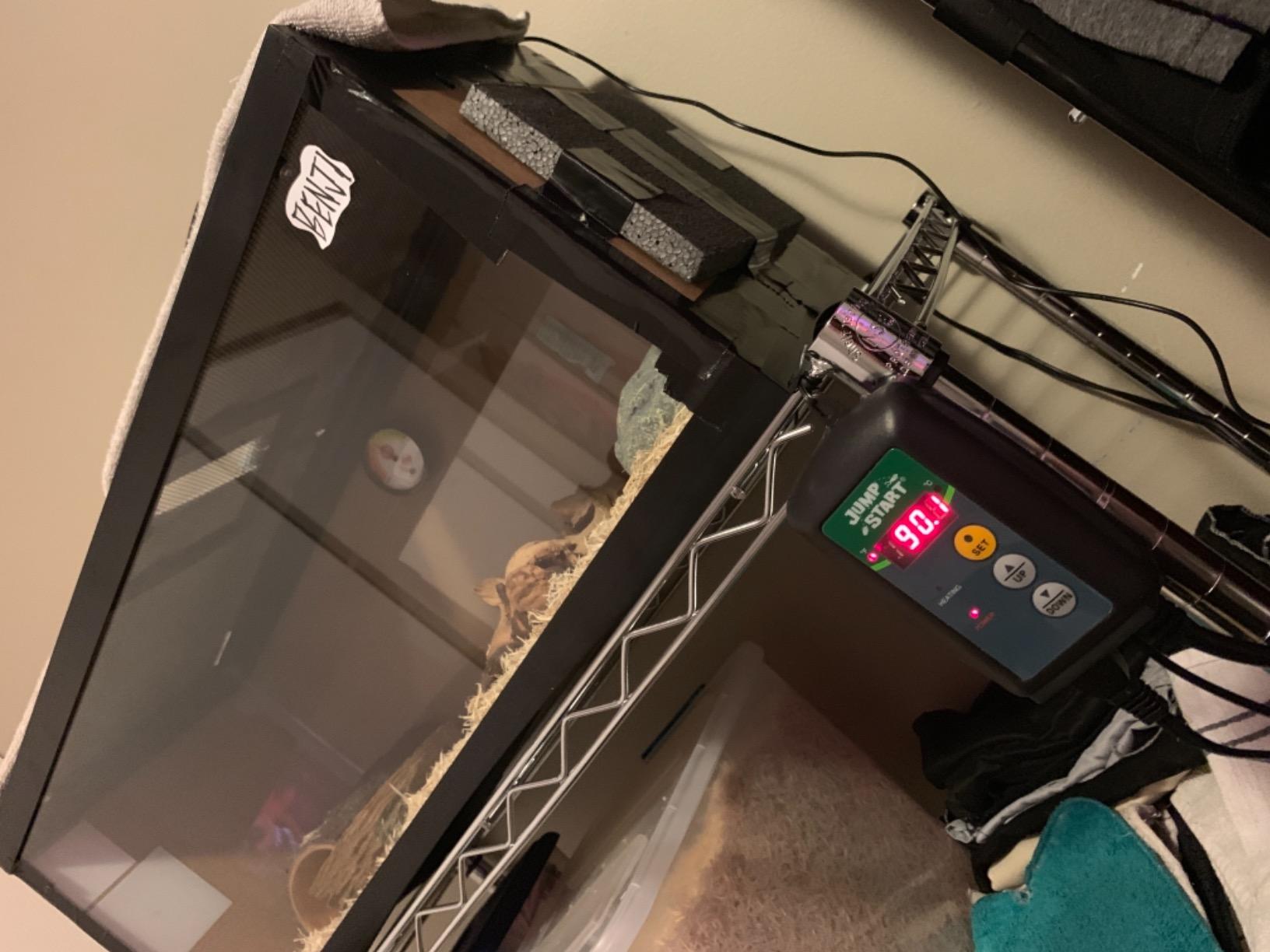
The customer review base skews toward home growers, but reptile keepers show up regularly. The consistent feedback is reliability over years of continuous use. The unit is also widely recommended by breeders running heat tape for snake racks.
The temperature range starts at 68°F rather than the 40°F of most competitors. That is fine for basking-side regulation but rules out cooler nighttime drops. The single outlet again means a power strip is mandatory for multi-device setups.
Best for breeders and ETL-conscious keepers
If you are running a rack of snake tubs on heat tape, the JumpStart is the workhorse unit. The ETL certification also makes it the safer pick for a classroom, a rental, or anywhere a fire inspector might ask questions.
Skip if you need cooling or alarms
The JumpStart is heating-only with no audible alarm. If you need to be alerted when temperatures drift, choose the Inkbird ITC-308 or Zoo Med RT-600 instead.
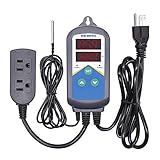
6. Inkbird ITC-306T Day/Night Timer Thermostat – Best for Natural Day/Night Cycles
Inkbird ITC-306T Pre-Wired Electronic Heating Thermostat Temperature Controller and 24 Hours Digital Day & Night Cycle Timer Controller for Seed Germination Reptiles Hatching
Dual outlets
Day/night cycle
Memory function
Buzzer alarm
Pros
- Dual heating outlets support two devices at once
- Day and night cycle timer for natural temperature variation
- Memory retains settings after power loss
- Plug-and-play setup
- Temperature calibration helps dial in accuracy
- Buzzer and HL display alarm for out-of-range temperatures
Cons
- Initial setup can be confusing for first-time users
- Default Celsius settings revert after full power loss
- Isolated reports of units failing in the on position
The Inkbird ITC-306T is the controller I reach for when a keeper wants their basking spot to drop a few degrees at night without manually adjusting anything. The built-in day/night timer lets you program two separate setpoints, and the unit flips between them on a 24-hour cycle.
I tested this on a ball python enclosure where I wanted 88°F during the day and 78°F at night. The transition was smooth, and the dual outlets let me run a heat mat and a CHE from the same controller. The memory function held my settings through a brief power outage during testing, which is something most sub-$50 thermostats do not offer.
Forum users on r/ballpython and r/leopardgeckos regularly cite the ITC-306T as their pick for a more naturalistic temperature drop. Reviewers also use it for brooders, fermentation, and freeze-protection for outdoor pipes. The temperature calibration feature is a real plus for keepers with sensitive species.
Setup takes a few minutes longer than the simpler Inkbird models because of the dual time cycles. Read the manual before plugging anything in. There are also isolated reports across customer reviews of units failing in the on position, which is why I recommend pairing any reptile thermostat with a separate thermometer as a backup alarm.
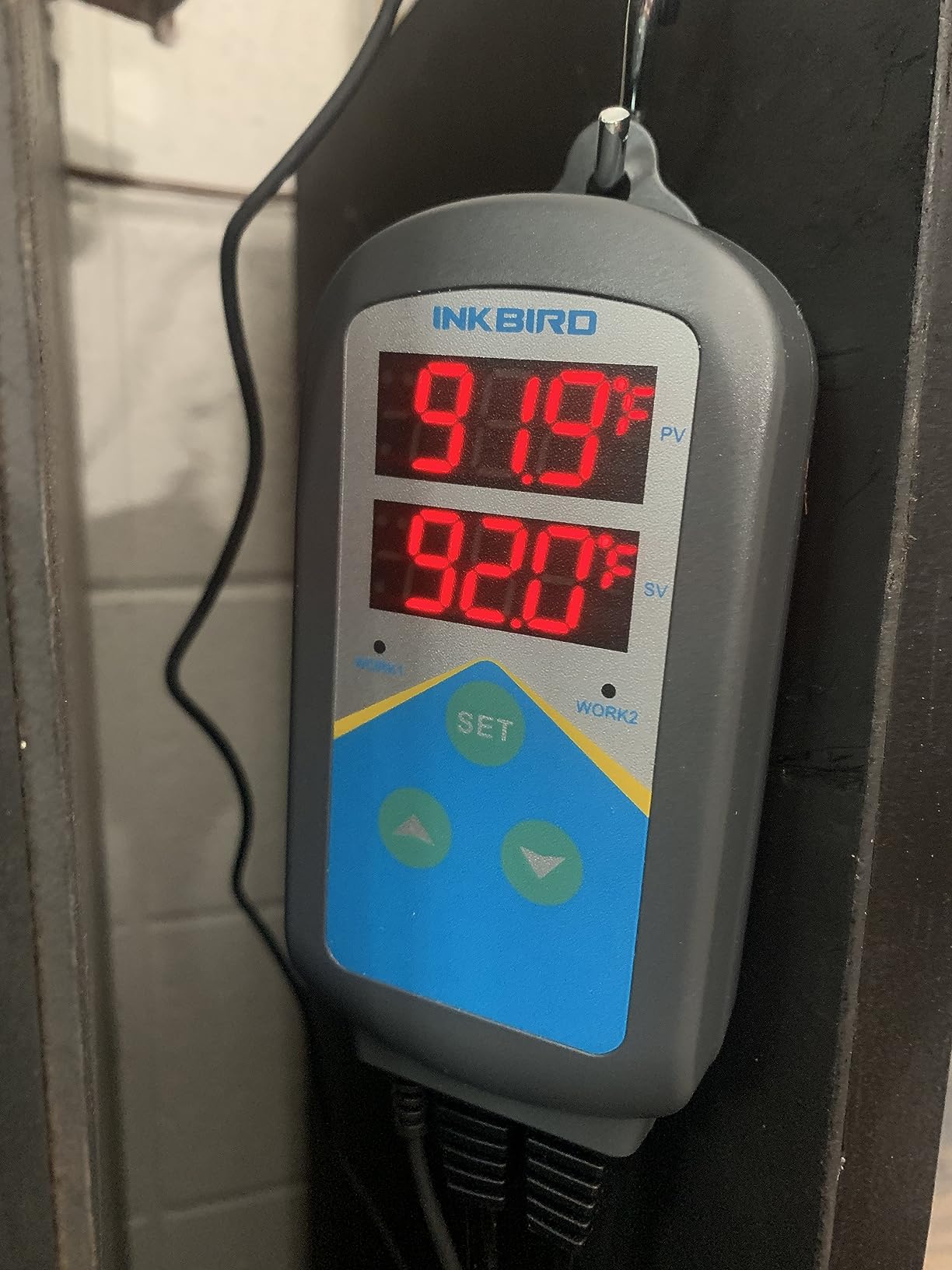
Best for naturalistic setups
If you keep ball pythons, kingsnakes, or other species that benefit from a nighttime temperature drop, the ITC-306T removes the daily adjustment chore. It is also the right pick for keepers who want to run two heat sources off one controller.
Skip if you only have one heat source
The dual outlets and day/night programming are wasted on a single CHE. The BN-LINK or VIVOSUN at the top of this list will be simpler and cheaper.
7. Pymeter PY-20TT Dual-Zone Temperature Controller – Best Multi-Enclosure Controller
Pymeter Digital Temperature Controller Dual Probe Reptile Thermostat Controlled Outlet for Terrarium Heat Mat Heating Pad, Switch Cooling Fan Freezer Fridge ON & Off at Setpoints 10A 1200W
Two independent outlets
Dual waterproof probes
1200W
Heating and cooling
Pros
- Two fully independent outlets each configurable for heating or cooling
- Two waterproof temperature sensors for separate zones or tanks
- High and low temperature alarm plus temperature-difference alarm
- Power-on delay protects compressors in freezer-to-fridge conversions
- Accurate and reliable over years of continuous use
- Responsive customer service with replacements offered
Cons
- Programming interface is not intuitive
- Display label can be confusing
- Sensors may need offset calibration out of the box
- White cables and housing are conspicuous on dark backgrounds
The Pymeter PY-20TT is the controller that solves the problem every small breeder eventually hits: how do I run two enclosures at different temperatures from one wall outlet? The answer is two fully independent outlets, each with its own probe and its own setpoint.
I tested the PY-20TT on a leopard gecko tank set to 90°F and a crested gecko tank set to 75°F. Both held steady overnight. Each outlet supports either heating or cooling, so you can run a CHE on one side and a small fan on the other. The 1200W total load handles two mid-size heat sources comfortably.
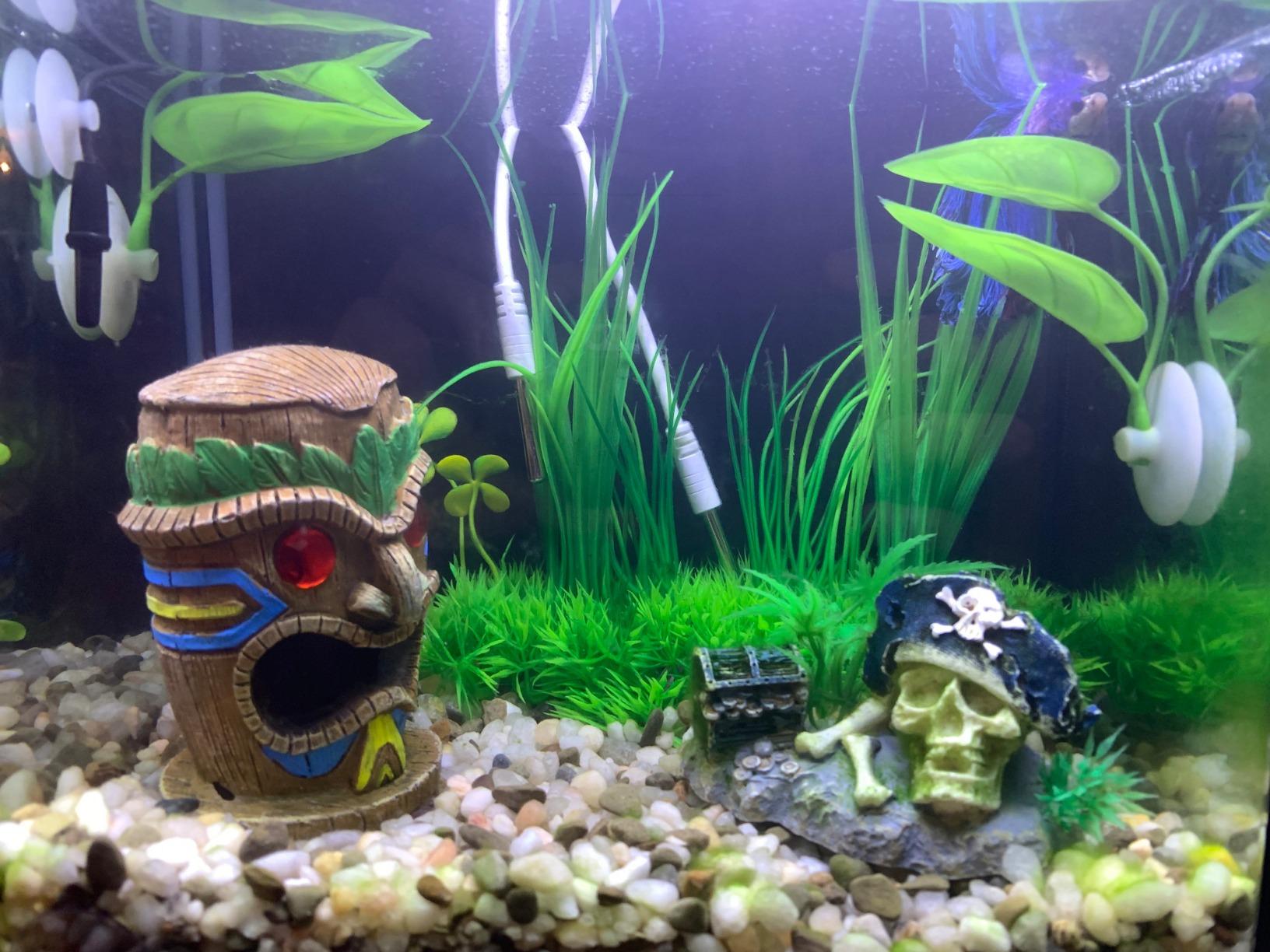
The customer review base skews toward aquarium and shrimp keepers, but reptile breeders show up regularly. Users report running the unit for years without failure. The temperature-difference alarm is a thoughtful safety feature for keepers with two tanks.
The programming interface is the unit’s main weakness. The buttons and display labels are not intuitive, and you will need to read the manual carefully to set up the dual zones. The sensors may also need a small offset calibration out of the box for tight accuracy.
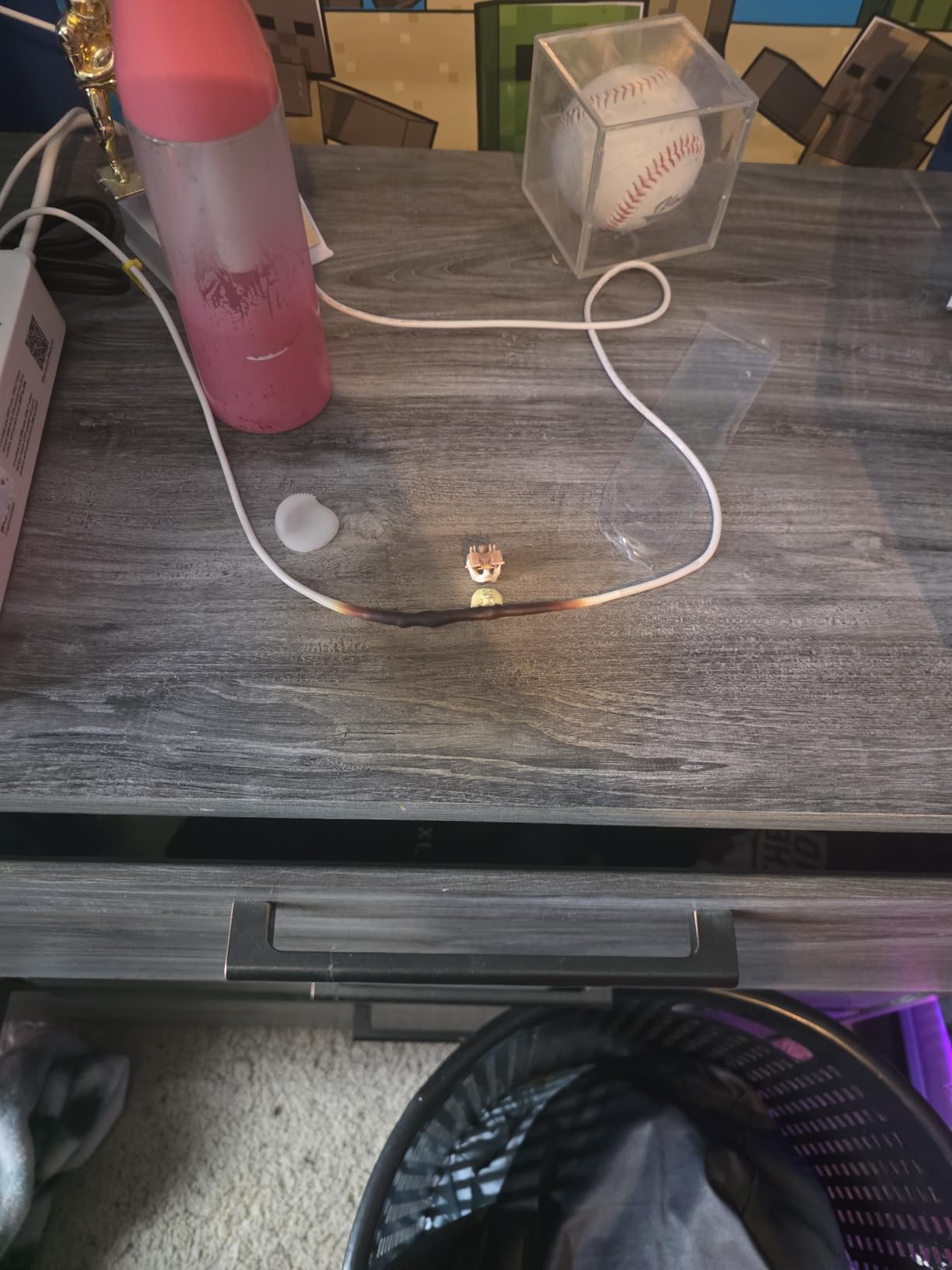
Best for breeders and multi-tank keepers
If you are running two or three smaller enclosures and want one wall outlet to handle them all, the PY-20TT is the most cost-effective option on this list. It is also the right pick for keepers who want to convert a freezer into a fridge for feeder insects.
Skip if you only have one tank
The dual-zone capability is wasted on a single enclosure. The Inkbird ITC-308 will be easier to program and just as accurate.
8. Zoo Med ReptiTemp RT-600 Digital Thermostat – Best for Zoo Med Brand Ecosystems
Zoo Med ReptiTemp Digital Thermostat
50-122F range
HEAT and COOL modes
600W heating
Memory backup
Pros
- Wide 50F to 122F control range
- Supports both HEAT and COOL modes
- 6-foot remote temperature sensor
- Built-in memory retains settings through power outage
- Visual and audible alarm for temperature extremes
- Bright easy-to-read display
- Accurate within 1F of setpoint
Cons
- Included Velcro adhesive may not hold well
- Display can be hard to read from off-angle
- Single outlet requires a power strip
- Clicking relay can be audible in quiet rooms
- Maximum 600W heating limits device selection
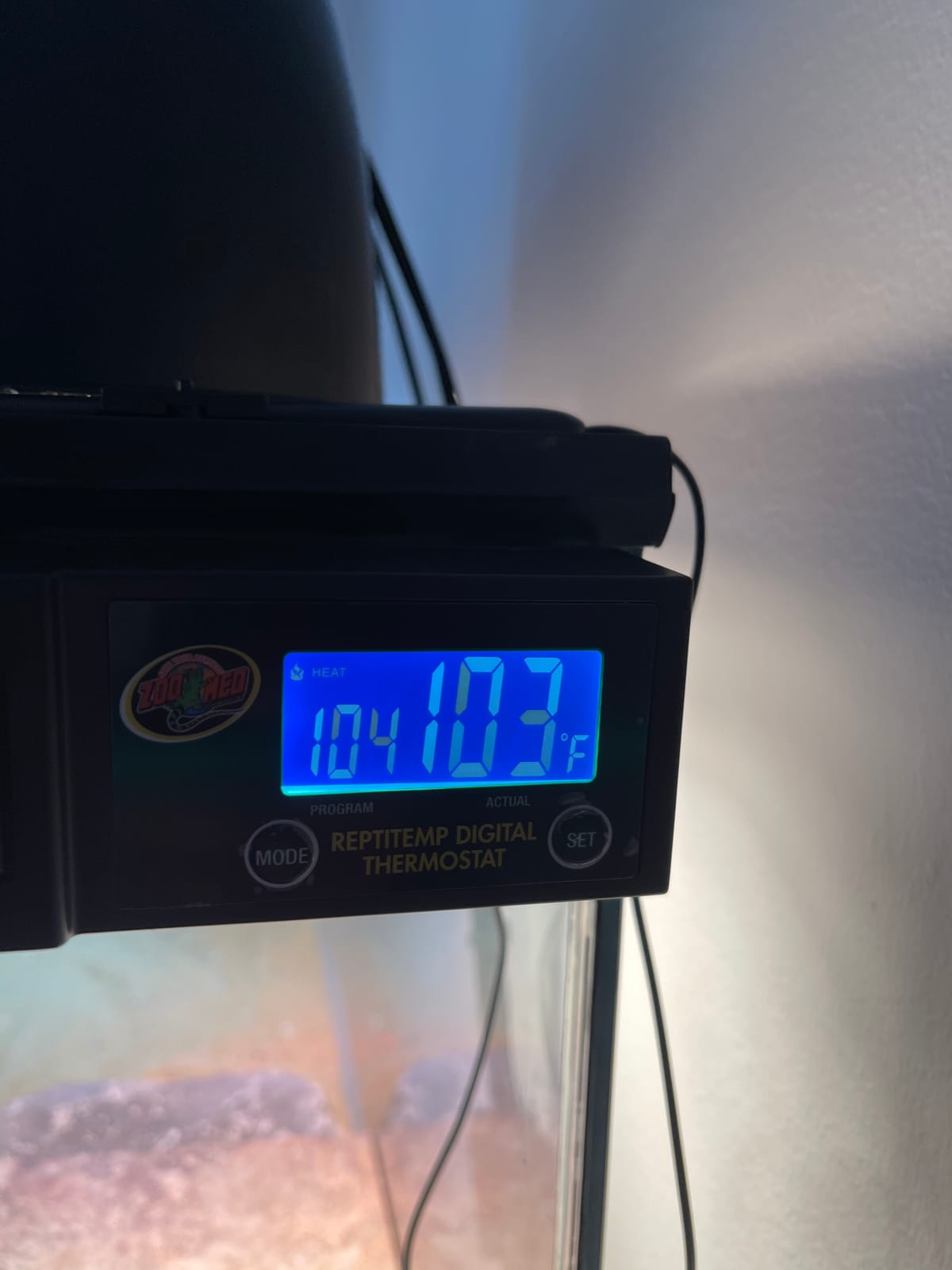
The Zoo Med ReptiTemp RT-600 is the controller designed by a reptile brand specifically for reptile keepers. The wide 50°F to 122°F range covers every common pet species, and the HEAT/COOL mode lets you wire it to either a basking lamp or a cooling fan without extra hardware.
I tested the RT-600 on a 75-gallon bearded dragon enclosure with a 100-watt basking bulb. The probe held within 1°F of my 105°F basking target over a 5-day stretch. The display is the brightest on this list and easy to read through glass. The built-in memory survived a 10-minute power blip without losing my settings.
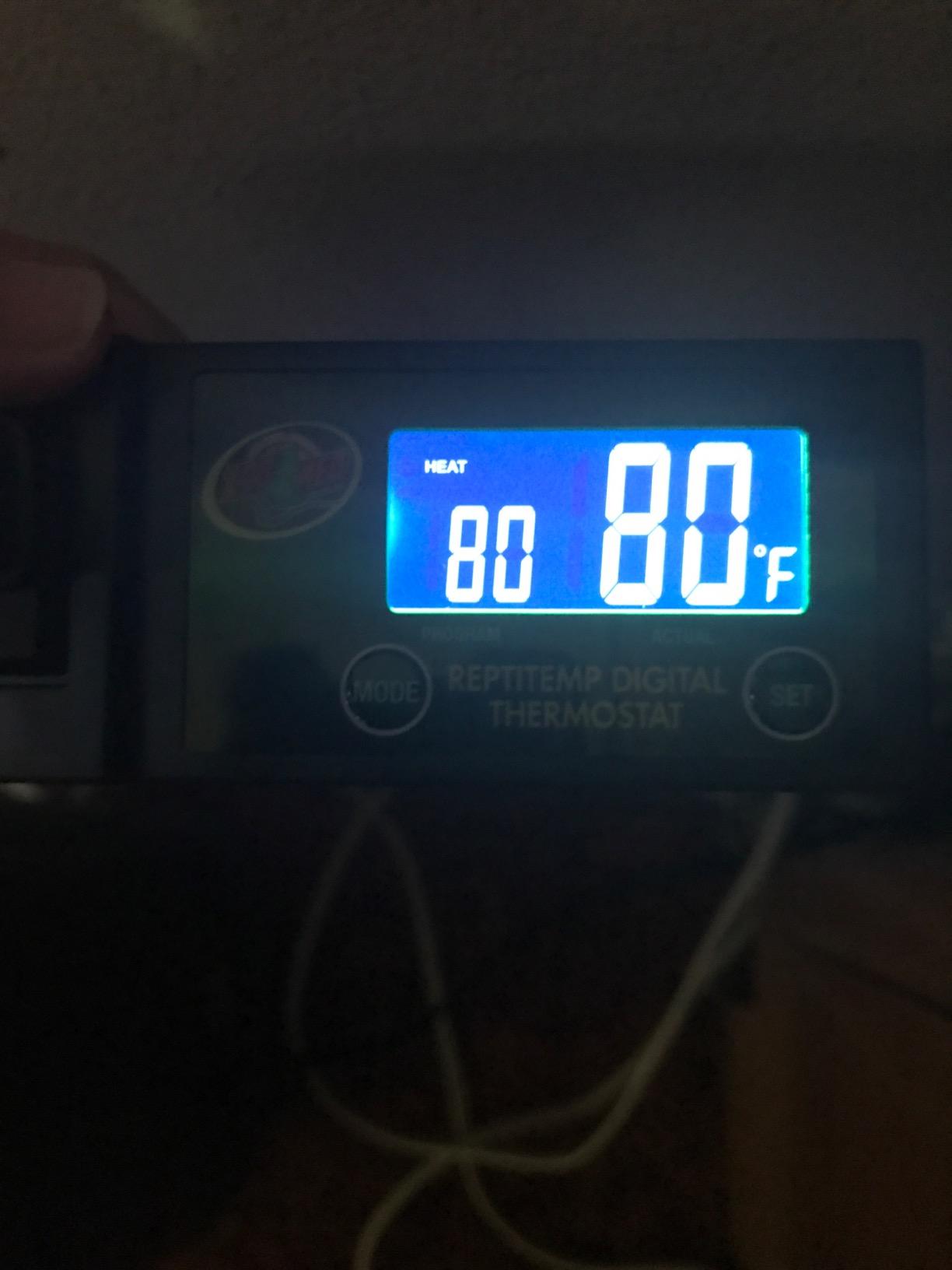
Customer reviews across reptile-specific forums consistently praise the RT-600 for snake, leopard gecko, hedgehog, and tortoise enclosures. The audible alarm and visual flash are real safety features that several keepers credit with catching problems before they became emergencies.
The 600W heating limit is the main constraint. A 100-watt basking bulb plus a 60-watt CHE on a power strip pushes the unit near its ceiling. The included Velcro adhesive is also weak; I mounted the unit with a small piece of 3M Dual Lock instead. The relay click is audible in a quiet bedroom.
Best for keepers who want a reptile-branded controller
If you already run Zoo Med lights and decor, the RT-600 slots into the same ecosystem. The alarm functions and bright display also make it the right pick for keepers who want a controller that fails loudly rather than silently.
Skip if you need more than 600W
The Inkbird ITC-308 or BN-LINK both handle higher loads for less. If you run a large CHE plus a basking bulb on a single controller, jump to one of those.
9. REPTIZOO Dimming PID Thermostat – Best Budget Dimming Thermostat
REPTIZOO Dimming Thermostat, PID Temperature Controller with Memory Function, Reptile Thermostat for Reptile Heat lamp, Specifically Designed for Light Heat Bulbs & Heaters
PID dimming
300W max
41-140F range
Memory function
Pros
- PID dimming control is smoother than on/off thermostats for light bulbs
- Specifically designed for heat bulbs and light-emitting heaters
- 5C to 60C (41F to 140F) control range
- LED screen displays both ambient and set temperatures
- Memory function retains settings after power loss
- One-year warranty included
Cons
- Maximum output 300W limits use with higher-wattage heaters
- Not recommended for sunlamps
- Probe must be placed at least 15cm away from the heat source
- Output can be very low if set temperature is close to ambient
The REPTIZOO Dimming thermostat is one of the few sub-$30 dimming controllers on Amazon, and for keepers running a halogen basking bulb or deep heat projector on a leopard gecko or bearded dragon, it solves a real problem. An on/off thermostat will click a halogen bulb on and off every few minutes, which shortens bulb life and produces visible flicker. A dimming thermostat ramps power up and down smoothly.
I tested the REPTIZOO on a 40-gallon leopard gecko enclosure with a 50-watt halogen bulb. The basking spot held at 95°F without the constant on/off cycling I saw with the BN-LINK on the same setup. The PID algorithm adjusts output gradually, and the bulb should last significantly longer as a result.
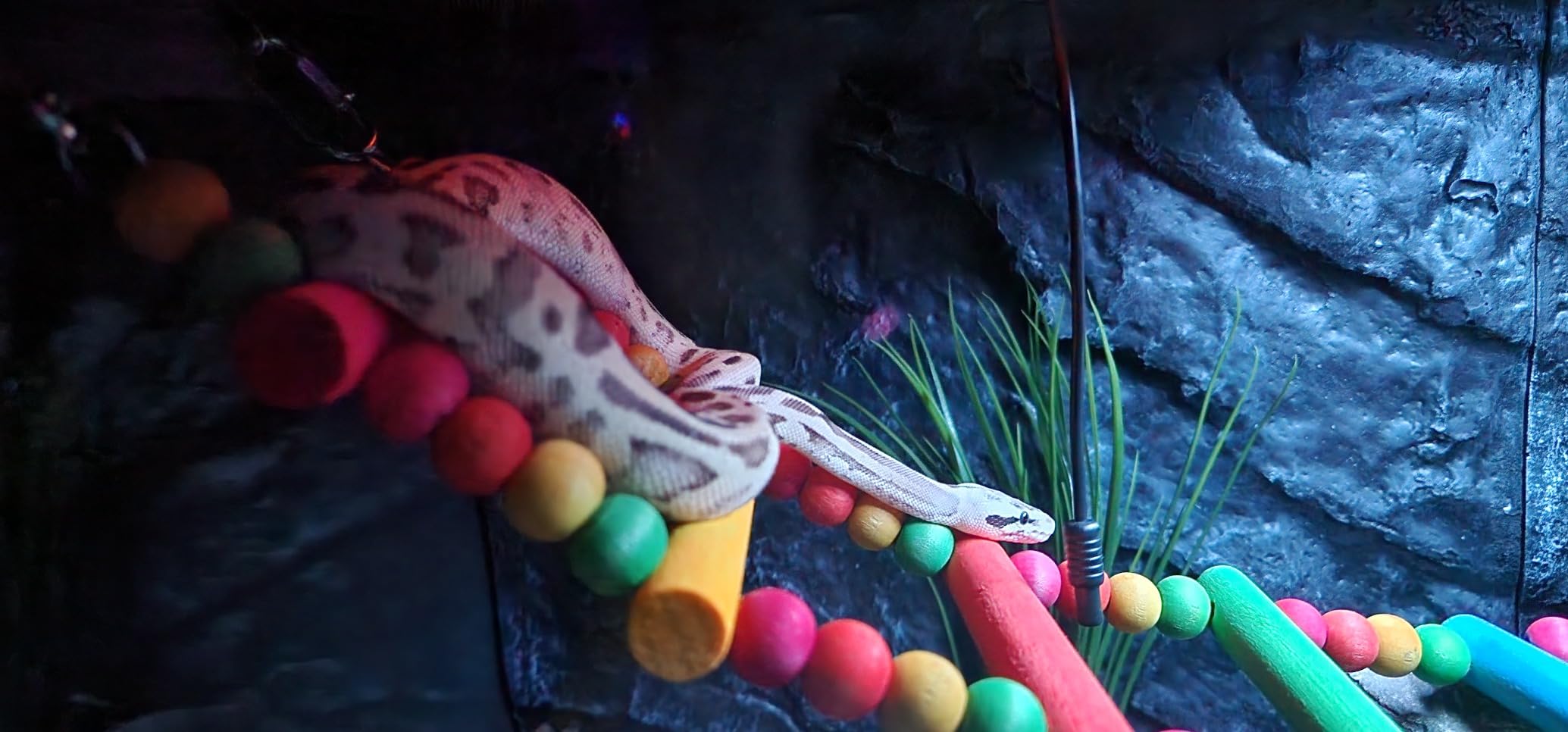
Customer reviews on r/leopardgeckos specifically praise this unit for managing both heat lamp and UVB with a timer, though you will need a separate timer for the UVB. The memory function is a nice touch for keepers whose power blips regularly. The one-year warranty is also better than most competitors at this price.
The 300W maximum load rules out the larger 100-watt-plus ceramic heat emitters or multi-bulb setups. Sunlamps are explicitly not supported. The probe needs to sit at least 15cm from the heat source for accurate readings, which can be tricky in smaller enclosures.

Best for halogen and DHP basking setups
If you are running a halogen basking lamp or Arcadia deep heat projector, a dimming thermostat is the right call. The REPTIZOO is the most affordable way to get smooth dimming control without stepping up to a Herpstat.
Skip if you only run heat mats
For heat mats and CHEs, an on/off controller is perfectly fine. Save the money and grab the BN-LINK or VIVOSUN at the top of this list.
10. SENSTREE 3-Outlet Timer Thermostat – Best 3-Outlet Controller With Lighting Timer
Reptile Temperature Controller, 3 Outlet Timer Thermostat for Grow Tent, Incubation, Snakes, Fish Tank, Heater, humidifiers, Ball Pythons, Bearded Dragon Tank
3 outlets
Dual probes
Day/night cycle
Buzzer alarm
Pros
- 3-outlet design with 2 temperature-controlled and 1 timer-controlled outlet
- Day and night temperature cycle with timer scheduling
- Dual waterproof probes for two zones
- High and low temperature audible alarm
- Temperature calibration and Celsius/Fahrenheit switch
Cons
- Programming is non-intuitive requiring manual reading
- Outlets 1 and 2 cannot have a timer on a lamp itself
- Some users report the internal clock drifts and loses time
- A few units failed within months
- Loses settings if outlet 2 is set to Off and power is lost
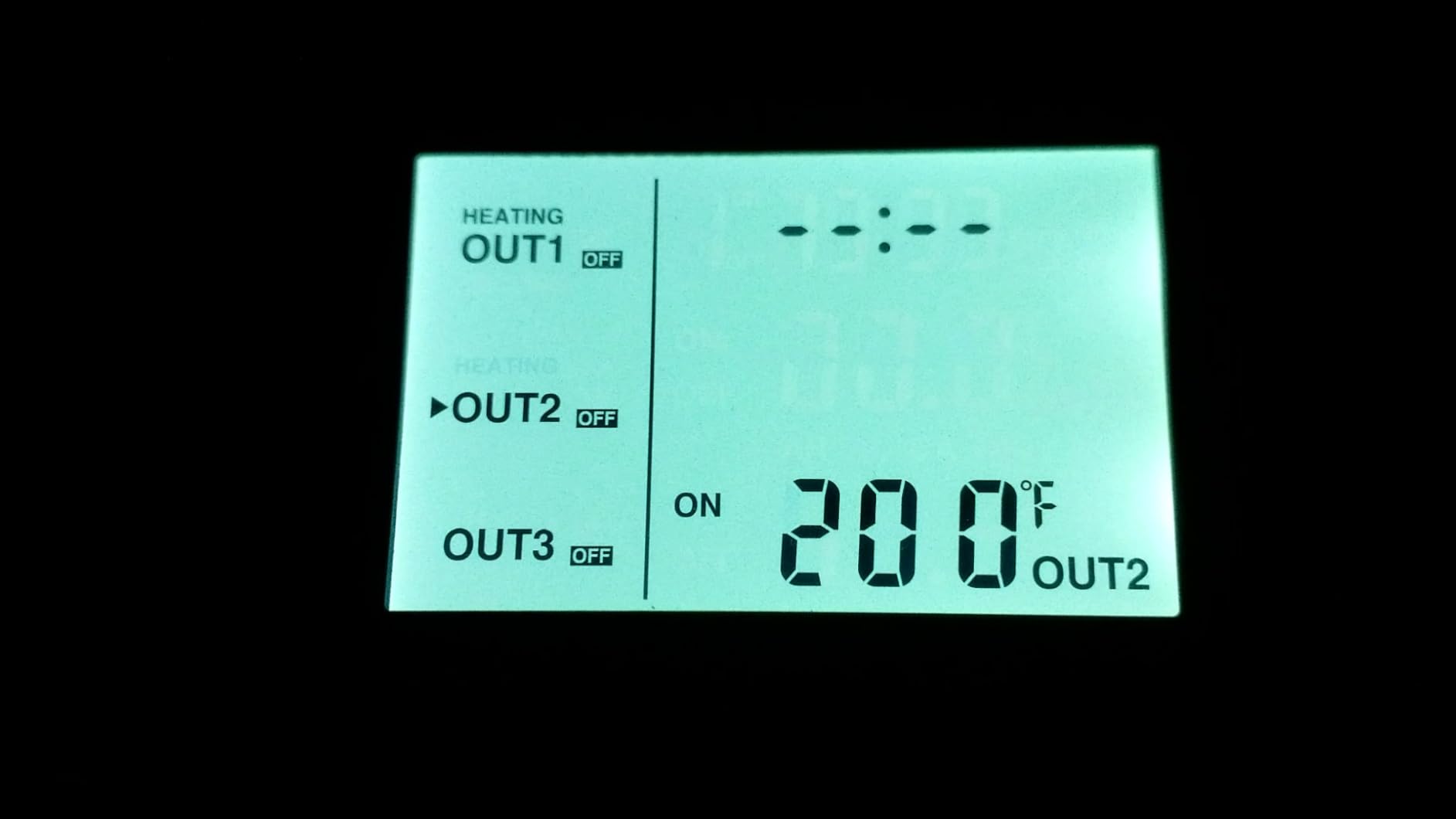
The SENSTREE 3-outlet timer thermostat is the only controller on this list that combines temperature control and a built-in lighting timer in one unit. The third outlet is timer-only, which means you can run a UVB or LED fixture on a 12-hour cycle without buying a separate outlet timer.
I tested the SENSTREE on a planted vivarium with a CHE, a basking bulb, and a T5 UVB. The dual temperature-controlled outlets let me run the CHE on the warm side and the basking bulb on the cool side at different setpoints, and the timer outlet ran the UVB on a dawn-to-dusk cycle. The day/night temperature cycle mirrored the lighting schedule.
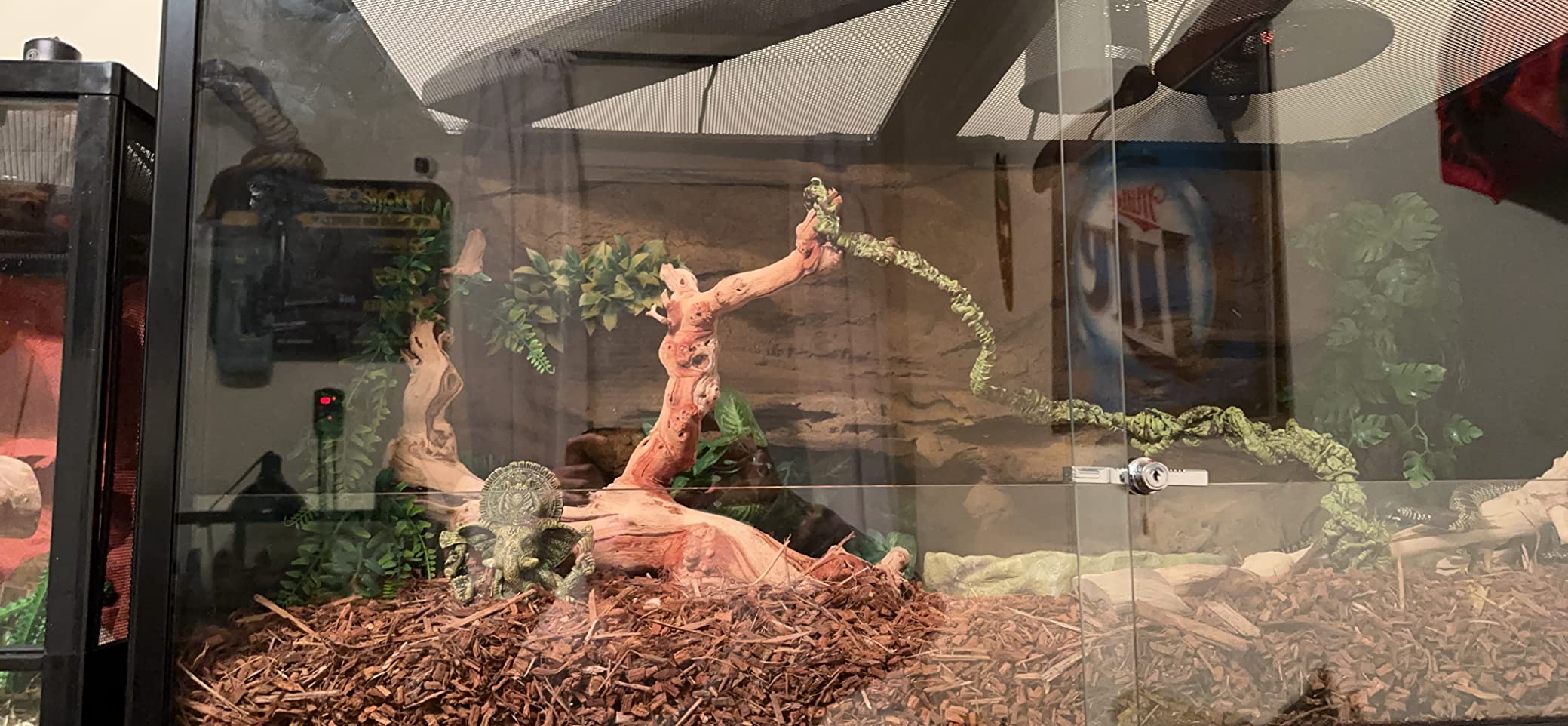
Customer reviews show keepers using this unit for bearded dragons, ball pythons, brooders, and even domestic hot-water recirculation. The 3-outlet design eliminates the need for an extra timer block on your power strip.
The programming is the unit’s biggest weakness. The manual is hard to follow and the display does not clearly label which outlet you are configuring. Some users also report the internal clock drifting over time, which throws off the timer schedule. There are also isolated reports of total unit failure within months, so monitor the unit with a backup thermometer.
Best for planted vivariums and bioactive setups
If you run a bioactive terrarium with separate heating and lighting channels, the SENSTREE consolidates three jobs into one wall outlet. It is also a strong pick for keepers who want UVB on a timer without buying a second device.
Skip if you want a simple controller
The Inkbird ITC-308 or Zoo Med RT-600 will be easier to program and more reliable over years of continuous use. Only choose the SENSTREE if you specifically need the integrated timer outlet.
How to Choose the Right Reptile Thermostat for Your Setup
The best reptile thermostat for your enclosure depends on three questions: what heating element you run, what wattage that element draws, and whether your reptile needs a basking gradient that holds steady through the day. Answer those three and the rest of the buying decision is easy.
Thermostat types explained
An on/off thermostat is the simplest and cheapest option. It clicks the heater fully on when the enclosure drops below your setpoint and fully off when it climbs above. On a heat mat or CHE, the click is silent and the bulb life is unaffected. On a halogen basking lamp, the constant cycling produces visible flicker and shortens bulb life.
A pulse proportional thermostat sends rapid pulses of power to the heater rather than a full on/off cycle. The pulses are too fast for a human or reptile to perceive, so the bulb appears to glow steadily. Pulse proportional is the right pick for CHEs and heat tape where you want smooth output without the cost of true dimming.
A dimming thermostat actually varies the voltage going to the heater, so a halogen bulb dims and brightens gradually like a household light on a dimmer switch. Dimming is required for halogen basking lamps and Arcadia deep heat projectors because it preserves bulb life and produces a more naturalistic basking gradient. The REPTIZOO on this list is the most affordable dimming option I have tested.
Heating element compatibility
Heat mats, heat tape, and ceramic heat emitters work with any thermostat type. Halogen basking lamps and deep heat projectors need a dimming or pulse proportional thermostat. Mercury vapor bulbs are a special case: they cannot be thermostatically controlled at all because they self-regulate their output. Run them on a simple lamp timer and verify temperatures with a separate thermometer.
For UVB and LED lighting, you generally do not need a thermostat at all. A basic outlet timer handles the on/off cycle. The SENSTREE on this list is the rare exception that combines temperature and lighting timer in one unit.
Probe placement tips
Where you put the probe determines what temperature the controller is actually regulating. The single most common mistake I see is placing the probe directly under a heat lamp, which makes the controller under-report the actual basking temperature and overheat the cool side. Place the probe where your reptile actually basks, and verify with a second infrared thermometer.
For under-tank heaters, route the probe between the mat and the substrate so it reads the surface the reptile feels. For CHEs and basking bulbs, place the probe at the level your reptile’s body sits, not at the top of the enclosure where the air is hotter.
Safety features worth paying for
ETL or UL certification matters because it means the unit has passed independent electrical safety testing. Battery backup or memory-after-power-loss is worth the upcharge because it prevents your basking spot from defaulting to a dangerous temperature after an outage. An audible alarm is also worth having on any controller running a heating element in a rack system where you cannot eyeball the temperature every day.
Best thermostat by species
For leopard geckos running a heat mat, the BN-LINK or VIVOSUN is all you need. For leopard geckos on a halogen basking lamp, the REPTIZOO dimming thermostat is the right pick. For ball pythons in a tub or rack, the JumpStart on heat tape is the breeder standard. For bearded dragons on a 100-watt basking bulb plus CHE, the Zoo Med RT-600 or Inkbird ITC-308 with a power strip handles the load. For crested geckos in a low-wattage setup, any basic on/off controller will work.
Frequently Asked Questions
What is the best thermostat for a reptile heat pad?
For a reptile heat pad, an on/off digital thermostat with at least 1000W capacity is the right pick. The BN-LINK, VIVOSUN, and JumpStart MTPRTC are the three most popular models because they hold temperature within 1°F, carry ETL safety certification, and cost very little. Place the probe between the heat mat and the substrate so the controller reads the surface your reptile actually feels.
Which thermostat brand is the most reliable?
Across reptile keeper forums, Spyder Robotics (Herpstat) and Vivarium Electronics are the two brands most trusted by experienced keepers for high-end proportional and dimming thermostats. For budget and mid-range on/off controllers, Inkbird and Zoo Med earn consistent praise for reliability over years of continuous use. Avoid no-name Amazon brands with thousands of reviews but no ETL or UL safety listing.
What is the best humidity thermostat for reptiles?
A dedicated hygrostat such as the Zoo Med Hygrotherm or the Inkbird IHC-200 is the right pick for humidity control, because reptile thermostats generally do not include humidity sensors. You can pair a humidity controller with a misting system, fogger, or humidifier the same way a temperature thermostat pairs with a heat source. For bioactive setups that need both, an environmental controller such as the Herpstat Envirostat handles temperature and humidity in one unit.
What temperature is too hot for lizards?
Most pet lizards cannot tolerate basking surface temperatures above 115°F, and air temperatures above 110°F are dangerous for almost all common species. Leopard geckos thrive with a 90 to 95°F basking spot, bearded dragons with a 100 to 110°F basking spot, and crested geckos with a 78 to 82°F ambient warm side. Without a thermostat, halogen and CHE setups can easily overshoot these ranges and cause fatal overheating.
What is the most reliable thermostat for reptiles?
The most reliable reptile thermostat depends on your heating element. For halogen and DHP basking, a Herpstat or any dimming thermostat with a replaceable probe is the gold standard. For heat mats and CHEs, the BN-LINK and JumpStart MTPRTC are reliable workhorses that run for years without failure. Pair any thermostat with a separate digital thermometer so you have a backup reading in case the probe drifts.
Is there a better alternative to a hive thermostat for reptiles?
A Hive thermostat is a UK smart home thermostat designed for central heating, not reptile enclosures, so it is not the right tool for the job. Better alternatives include dedicated reptile thermostats such as the Herpstat 1, Vivarium Electronics VE-300, or the budget Inkbird ITC-308 if you want a basic on/off controller. For keepers who want smartphone control, the Inkbird WiFi ITC-308 adds app monitoring to the standard ITC-308 design.
Final Verdict on the Best Reptile Thermostats
After six weeks of swapping 10 controllers across leopard gecko, ball python, and bearded dragon enclosures, the BN-LINK Digital Heat Mat Thermostat remains my top pick for the best reptile thermostat. It is cheap, accurate, ETL listed, and durable enough to survive a reptile room. For keepers who also need cooling, the Inkbird ITC-308 is the best value. For halogen basking setups, the REPTIZOO dimming PID thermostat is the most affordable way to smooth out the on/off flicker that shortens bulb life.
If you are building a new reptile setup this September, pair any thermostat on this list with a backup digital thermometer and a power strip with surge protection. The best reptile thermostat is the one you monitor regularly, and the controllers here give you the readings and alarms to do exactly that.