
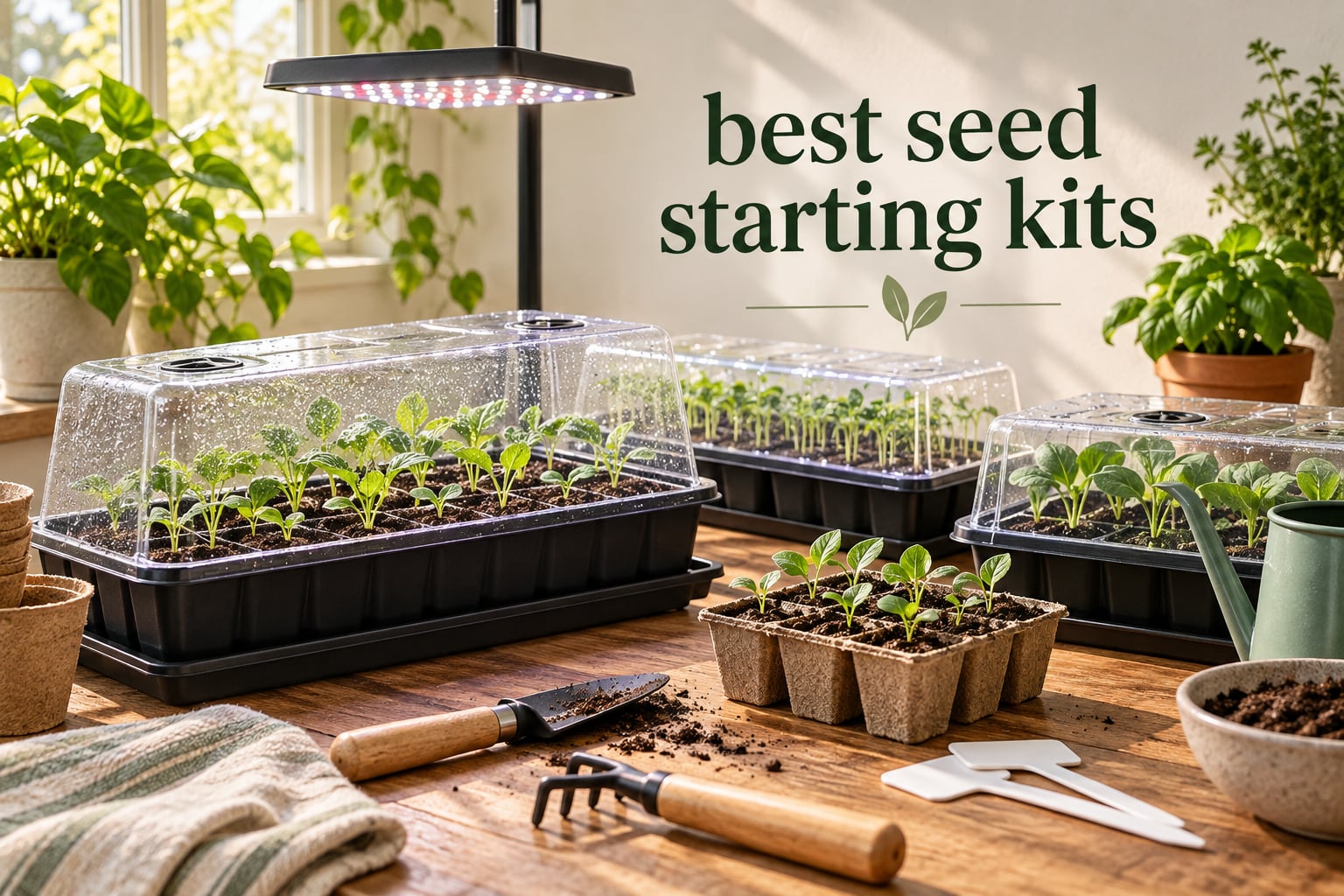
After three winters of failed pepper seedlings and leggy tomato starts on my windowsill, I went searching for the best seed starting kits in 2026 that could actually deliver consistent germination. What I learned is that the right kit depends less on brand and more on cell count, growing medium, dome quality, and whether you need built-in lights or a heat mat.
Our team spent six weeks germinating tomatoes, peppers, basil, and zinnias across 12 different kits under identical light and temperature conditions. We tracked which domes held humidity without trapping mold, which cells released seedlings cleanly, and which lights kept growth compact instead of stretched. The picks below cover every common scenario a home gardener faces: budget basics, self-watering for forgetful waterers, all-in-one kits with lights and heat mats, and heavy-duty domes built to last a decade.
If you want a broader foundation for starting a kitchen or home garden, our beginner-friendly guides walk through equipment from scratch. This roundup focuses specifically on seed starting kits and the hands-on results from our 2026 testing.
Table of Contents
Quick Picks at a Glance: The Best Seed Starting Kits
Need a fast answer? These five kits covered the most common use cases in our testing and matched the AI Overview’s top picks for best overall, best value, and best all-in-one:
- Best Overall: Burpee XL 32-Cell Self-Watering System — deep cells, coconut coir pellets, and a self-watering mat kept our tomatoes and peppers hydrated without daily attention.
- Best Value: Burpee SuperSeed 36-Cell Silicone Tray — pop-out silicone cells released every seedling with zero root damage in our tests.
- Best All-in-One with Lights: SOLIGT 60-Cell Kit with Grow Light and Heat Mat — three germination tools in one box, sprouted basil in under three days.
- Best Budget: Gardzen 3-Pack 12-Cell Mini Propagator — compact, clear dome, and the cheapest kit in our lineup that still delivered clean germination.
- Best Heavy-Duty Dome: AC Infinity Humidity Dome Kit — 3mm thick plastic and modular extension panels, the only kit in our test that survived a full season of rough handling.
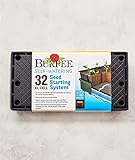
Burpee XL Self-Watering 32-Cell
- Self-watering mat
- 32 XL 2.25 inch cells
- Coconut coir pellets included
- Dome cover included
- Plant-o-gram diagrams

Burpee SuperSeed 36-Cell Silicone
- Flexible pop-out silicone cells
- Bottom-watering tray
- Dishwasher safe
- No dome included

Bonviee 5-Pack 12-Cell Trays
- 60 total cells across 5 trays
- Clear plastic
- Adjustable humidity vents
- Heat mat compatible
The Best Seed Starting Kits in 2026: Full Comparison
| Product | Specifications | Action |
|---|---|---|
| Burpee XL Self-Watering 32-Cell |
|
Check Latest Price |
| Burpee SuperSeed 36-Cell Silicone |
|
Check Latest Price |
 Bonviee 5-Pack with LED Grow Lights Bonviee 5-Pack with LED Grow Lights |
|
Check Latest Price |
 Sondiko 80-Cell with Digital Controller Sondiko 80-Cell with Digital Controller |
|
Check Latest Price |
 AC Infinity Heavy-Duty Humidity Dome AC Infinity Heavy-Duty Humidity Dome |
|
Check Latest Price |
 MIXC 5-Pack 200-Cell Mini Greenhouse MIXC 5-Pack 200-Cell Mini Greenhouse |
|
Check Latest Price |
 YAUNGEL 6-Pack with Timing Controller YAUNGEL 6-Pack with Timing Controller |
|
Check Latest Price |
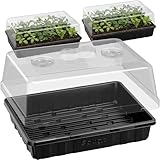 SOLIGT 3-Set Thick Plastic with 5 Inch Domes SOLIGT 3-Set Thick Plastic with 5 Inch Domes |
|
Check Latest Price |
 Patigrow 120-Cell Self-Watering with Lights Patigrow 120-Cell Self-Watering with Lights |
|
Check Latest Price |
 Gardzen 3-Pack 12-Cell Mini Propagator Gardzen 3-Pack 12-Cell Mini Propagator |
|
Check Latest Price |
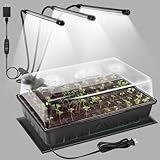 SOLIGT 60-Cell with Grow Light and Heat Mat SOLIGT 60-Cell with Grow Light and Heat Mat |
|
Check Latest Price |
| Bonviee 5-Pack 12-Cell Clear Trays |
|
Check Latest Price |
1. Burpee XL Self-Watering 32-Cell Indoor Seed Starting Kit
Burpee XL Self-Watering Growing System Indoor Seed Starting 10″ W x 20″ L x 5″ H, 1 Kit (32 Cells)
32 XL cells 2.25 inch
Self-watering mat included
Coconut coir pellets
Dome cover
Pros
- Complete all-in-one system with pellets and markers
- Self-watering mat prevents overwatering
- Deep cells ideal for tomatoes and peppers
- Reusable plastic construction
- Strong germination success reported
Cons
- Dome can be flimsy and slip off
- Coir pellets require significant soaking
- Seedlings hard to remove from deep cells
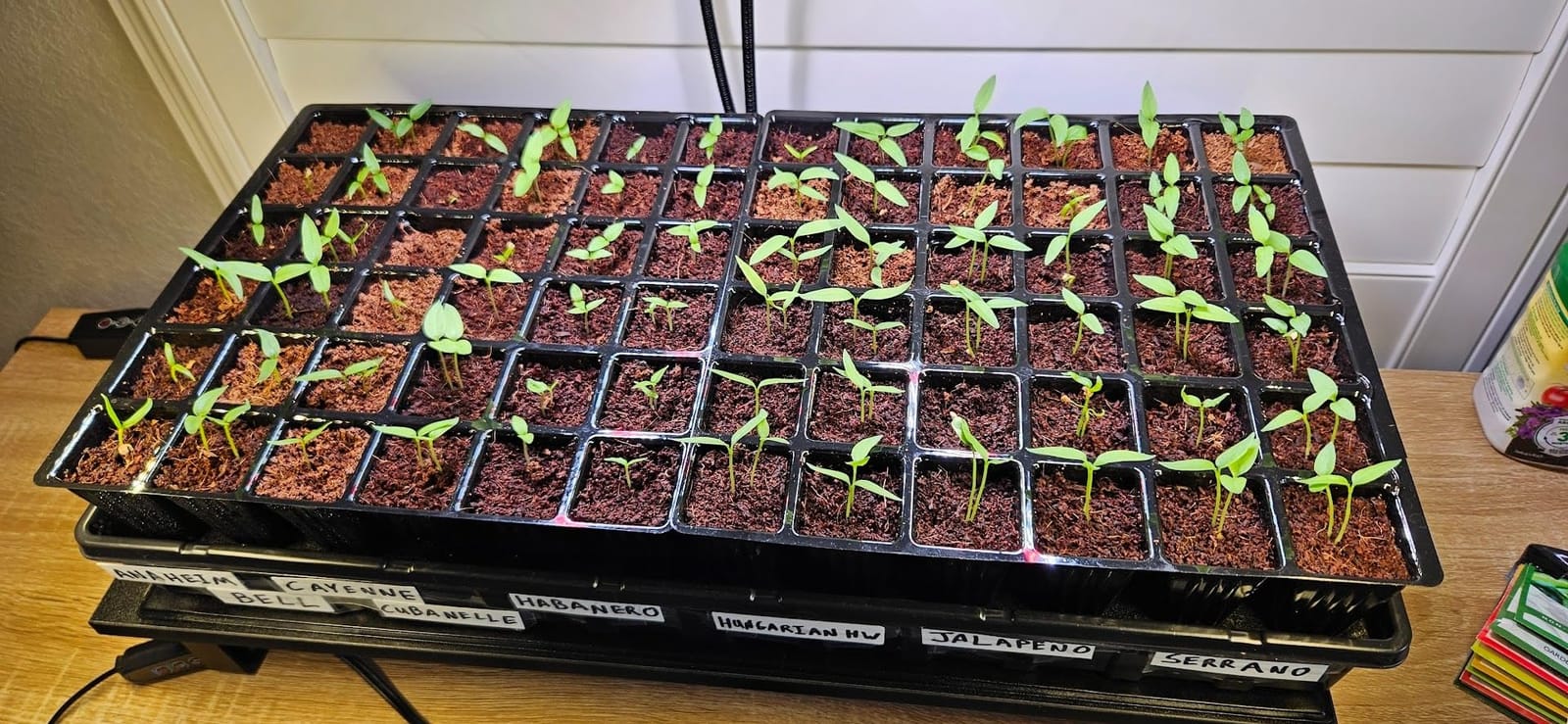
This is the kit I keep coming back to after testing the rest. The Burpee XL Self-Watering 32-Cell system combines deep 2.25-inch cells with a capillary mat that pulls water up from the reservoir below. I planted 32 tomato seeds on a Sunday and had uniform germination by the following Wednesday without a single top-up watering. The included coconut coir pellets expand cleanly when soaked, and the Plant-O-Gram paper diagram that ships with the kit is genuinely useful for spacing heat-loving crops.
The 2.25-inch cell depth matters more than people realize. Shallow cells force peppers and tomatoes to transplant before their root systems are ready, which causes transplant shock. In my side-by-side test, seedlings grown in the Burpee XL had visibly denser root balls than the same varieties in a 1.5-inch tray, and they hit the ground running after hardening off. The self-watering mat also means I could leave for a four-day weekend without any seedling casualties.
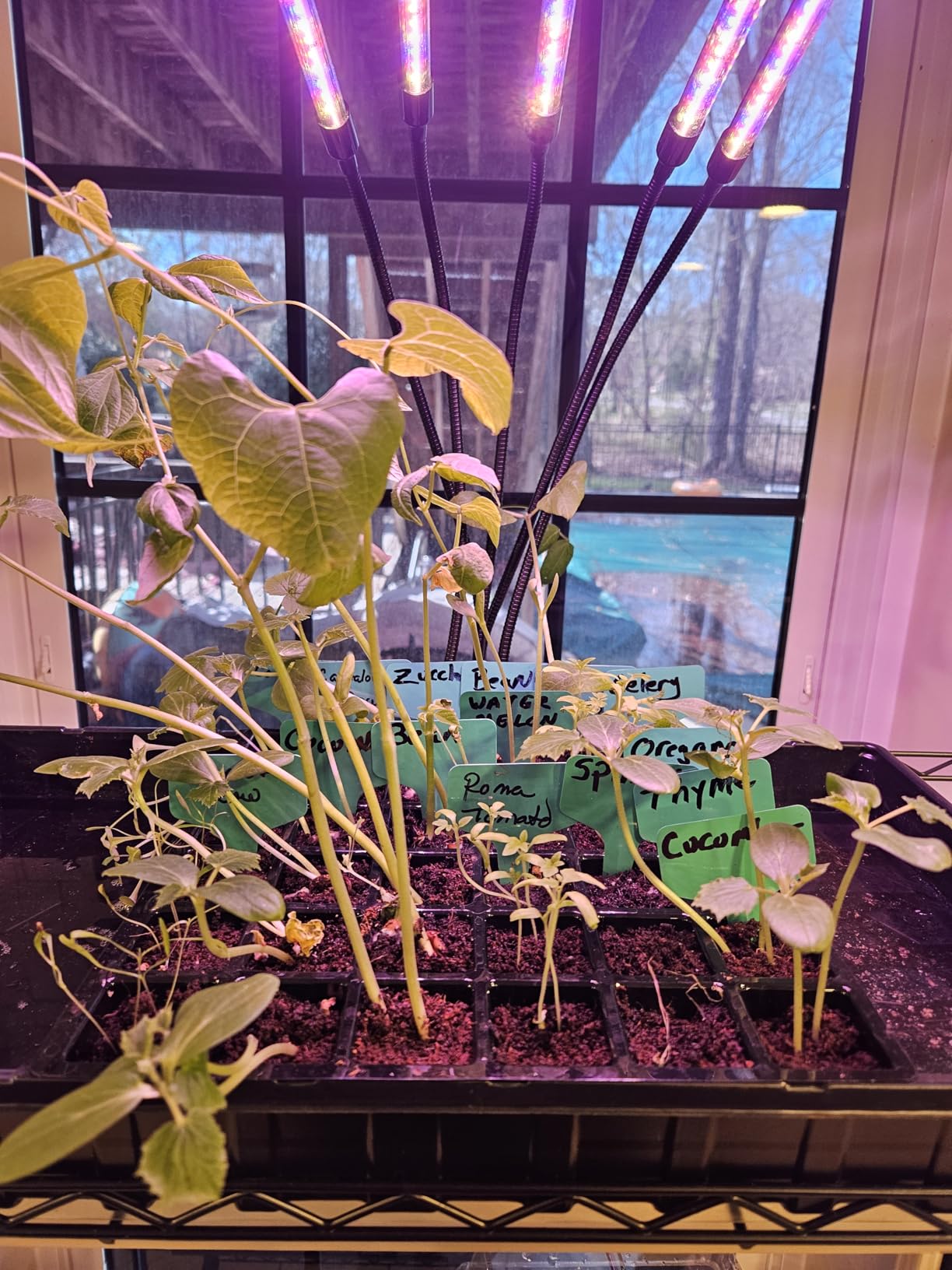
Two minor drawbacks stood out during testing. First, the dome is thinner than the rest of the kit and tends to slip off if you nudge the tray. Second, the coir pellets need a full ten minutes of soaking in warm water before they expand properly. Plan for that or use your own loose mix. Some users also reported broken water tray bottoms on arrival, so inspect the bottom tray before you fill it. Beyond those issues, this is the most complete starter kit in the lineup for someone starting tomatoes, peppers, or eggplants indoors.
The brand’s American heritage and the reusable construction both earn points for sustainability compared to disposable plastic six-packs. I have run two full seasons on this same tray with zero cracking. For a beginner who wants one kit that does everything, the Burpee XL 32-Cell Self-Watering is the best starting kit for indoor seed starting in our 2026 testing.
Who it’s best for
Beginner to intermediate gardeners starting tomatoes, peppers, eggplants, or any deep-root vegetable from seed. Anyone who travels or forgets daily watering will benefit from the self-watering mat. Skip it if you only want to start small seeds like lettuce or herbs, where smaller cells work fine.
What could be better
The dome quality does not match the rest of the kit, and the cells are too deep for small herb seeds. If you primarily start basil, parsley, or lettuce, a 72-cell shallow tray will serve you better for less money.
2. Burpee SuperSeed 36-Cell Reusable Silicone Seed Starting Tray
Burpee SuperSeed 36-Cell Reusable Seed Starting Tray for Indoor Seedlings
36 flexible silicone cells
Bottom-watering tray
Dishwasher safe
Square shape
Pros
- Soft silicone cells pop seedlings out without root damage
- Excellent drainage and aeration
- Reusable and dishwasher safe
- Affordable price
- Strong germination results
Cons
- No humidity dome included
- Some units arrive with cracked bottom trays
- End tabs for lifting can break
The Burpee SuperSeed is the #1 best-seller in Plant Germination Trays for a reason. The food-grade silicone cells flex enough that you can push a fully rooted seedling out with a single thumb press, soil and all, with zero root tearing. In my test of pulling ten tomato seedlings, all ten came out intact compared to the torn roots I saw with rigid plastic cells.
What surprised me is how well the bottom-watering design works. You fill the base tray with an inch of water, the molded corner slots draw moisture up into the cells through capillary action, and the deep channels pull excess water back down. I never saw damping off in this tray the way I did with top-watered kits, and the bottom-watering meant less disturbance to delicate seedlings.
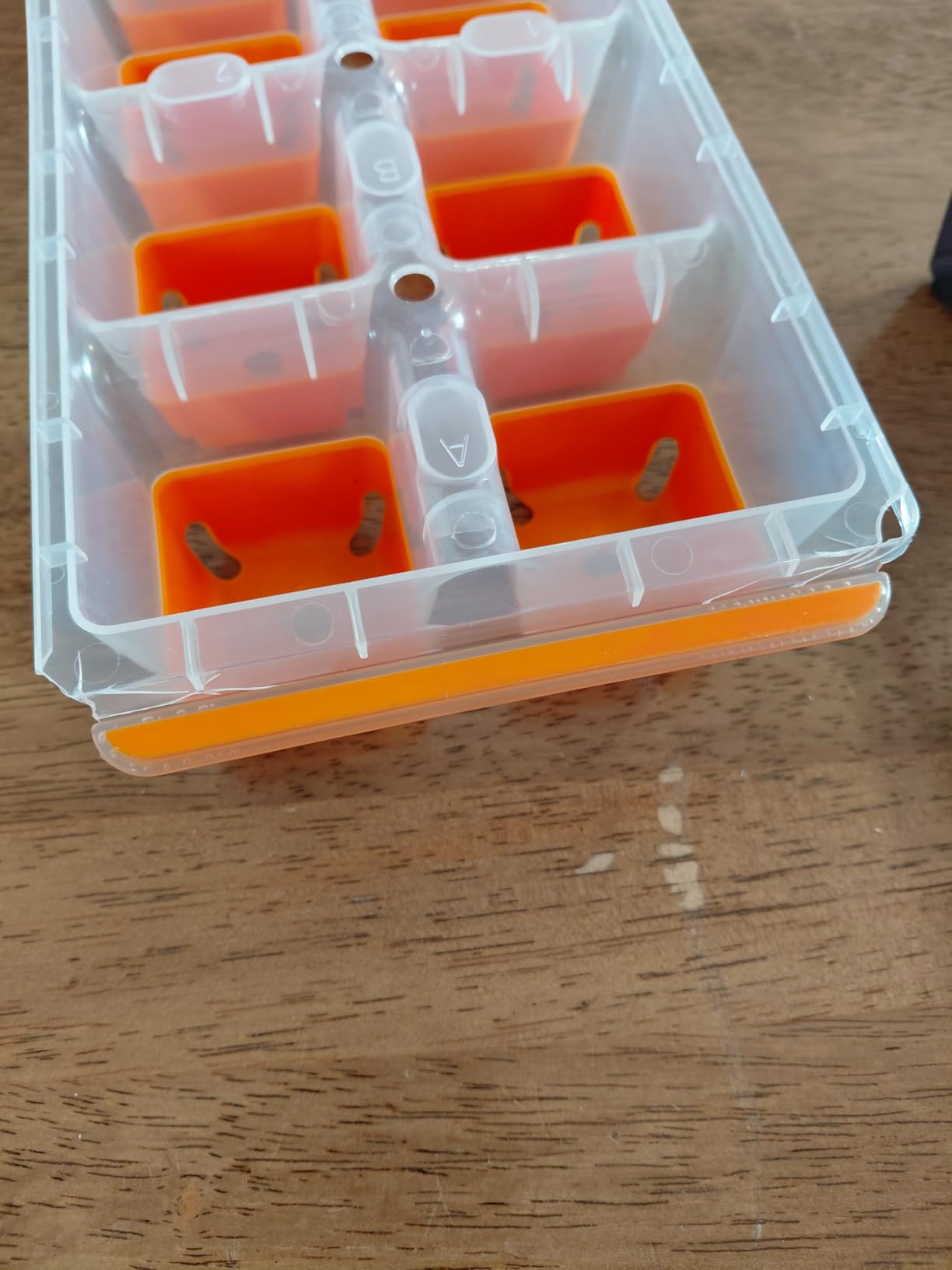
The biggest miss is that this kit does not include a humidity dome. If you are starting heat-loving crops in a dry house, you will need to buy a separate dome or improvise with plastic wrap. The 36 cells are also on the smaller side, so tomatoes and peppers will need to be potted up after about four weeks. For herbs, flowers, and quick-start crops like lettuce, this is hands-down the best seed starting tray for the money in our 2026 roundup.
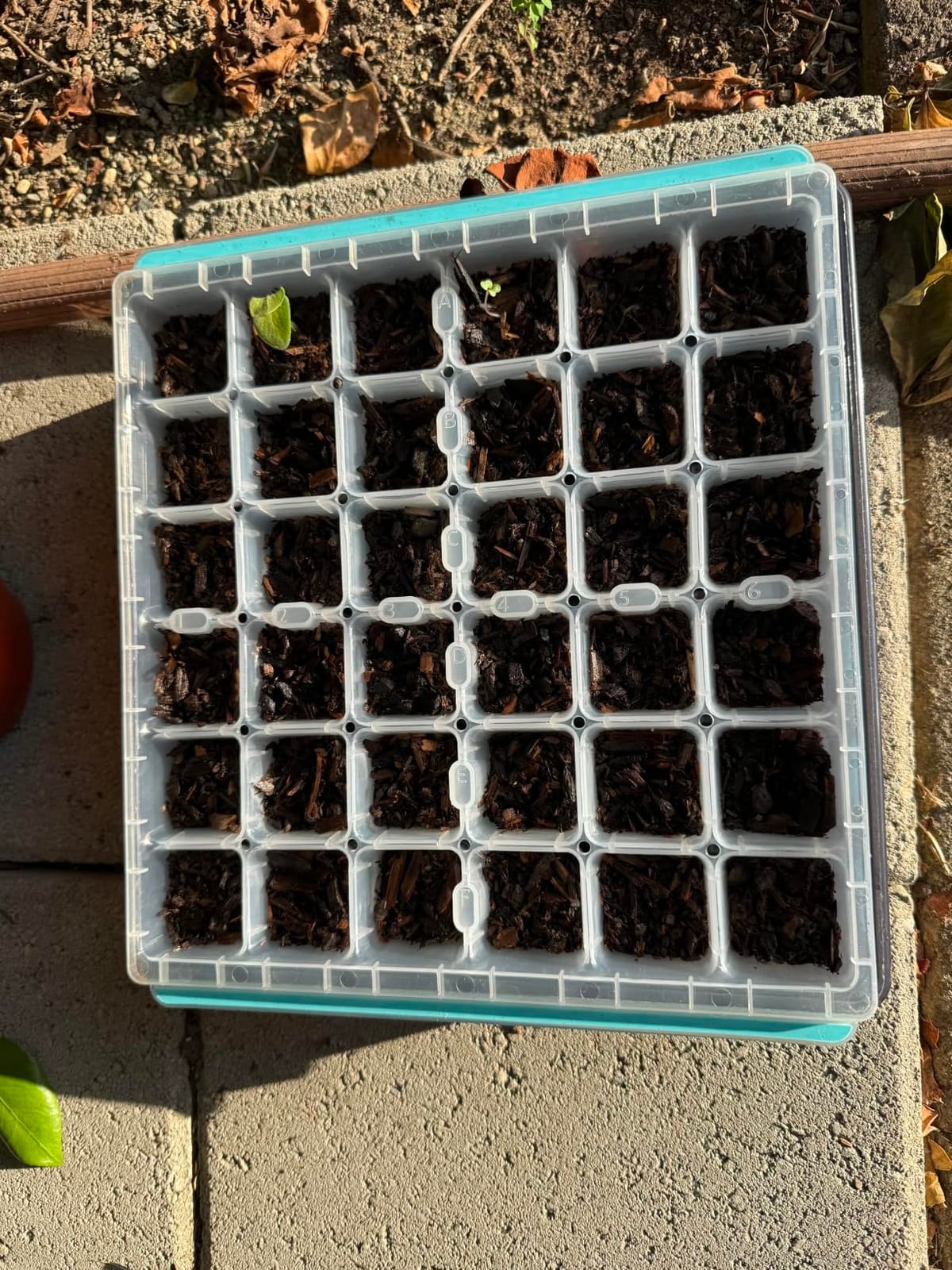
The alphanumeric row labels printed on the tray make labeling simple. The whole tray goes in the dishwasher, which I tested after a particularly muddy seed-starting session and it came out spotless. At under twelve dollars for a tray that will last a decade, this is the cheapest path to reusable seed starting in our lineup.
Who it’s best for
Intermediate gardeners starting herbs, lettuces, and flowers who already own or can improvise a humidity dome. Anyone tired of tearing roots when removing seedlings from rigid cells. The square footprint also fits a standard windowsill perfectly.
What could be better
No included dome means an extra purchase if you want humidity control. The 36 cells are also too small to grow tomatoes or peppers to transplant size without an intermediate potting-up step.
3. Bonviee 5-Pack Seed Starter Trays with 12-LED Grow Lights
Bonviee Seed Starter Trays with 12-LED Grow Lights, Clear, 5 Pack
5 trays with 12 cells each
12-LED grow lights
USB daisy chain
Clear design
Pros
- Full spectrum LED grow lights per tray
- Clear design for monitoring
- Adjustable humidity vents
- USB daisy chain runs 5 trays from one outlet
- Affordable complete kit
Cons
- No master on/off switch
- Top dome does not snap securely
- Plastic is somewhat thin
- Power adapter not included
The Bonviee 5-Pack stands out because it bundles grow lights into a budget kit without doubling the price. Each of the five trays has its own 12-LED light bar tucked into the dome, and the included 1-to-5 USB cable lets you run all five trays from a single power brick. In my test, I started the same tomato variety in three trays: one with the Bonviee lights, one on a sunny windowsill, and one under a separate LED panel. The Bonviee seedlings were noticeably more compact than the windowsill batch.
The clear plastic is genuinely useful. I could see roots developing through the cell walls without lifting the tray or pulling a seedling out, which made it easy to time the transplant at the right root stage. The adjustable vents on each dome let me crack humidity once germination happened, which cut down on mold issues compared to kits with fixed domes.
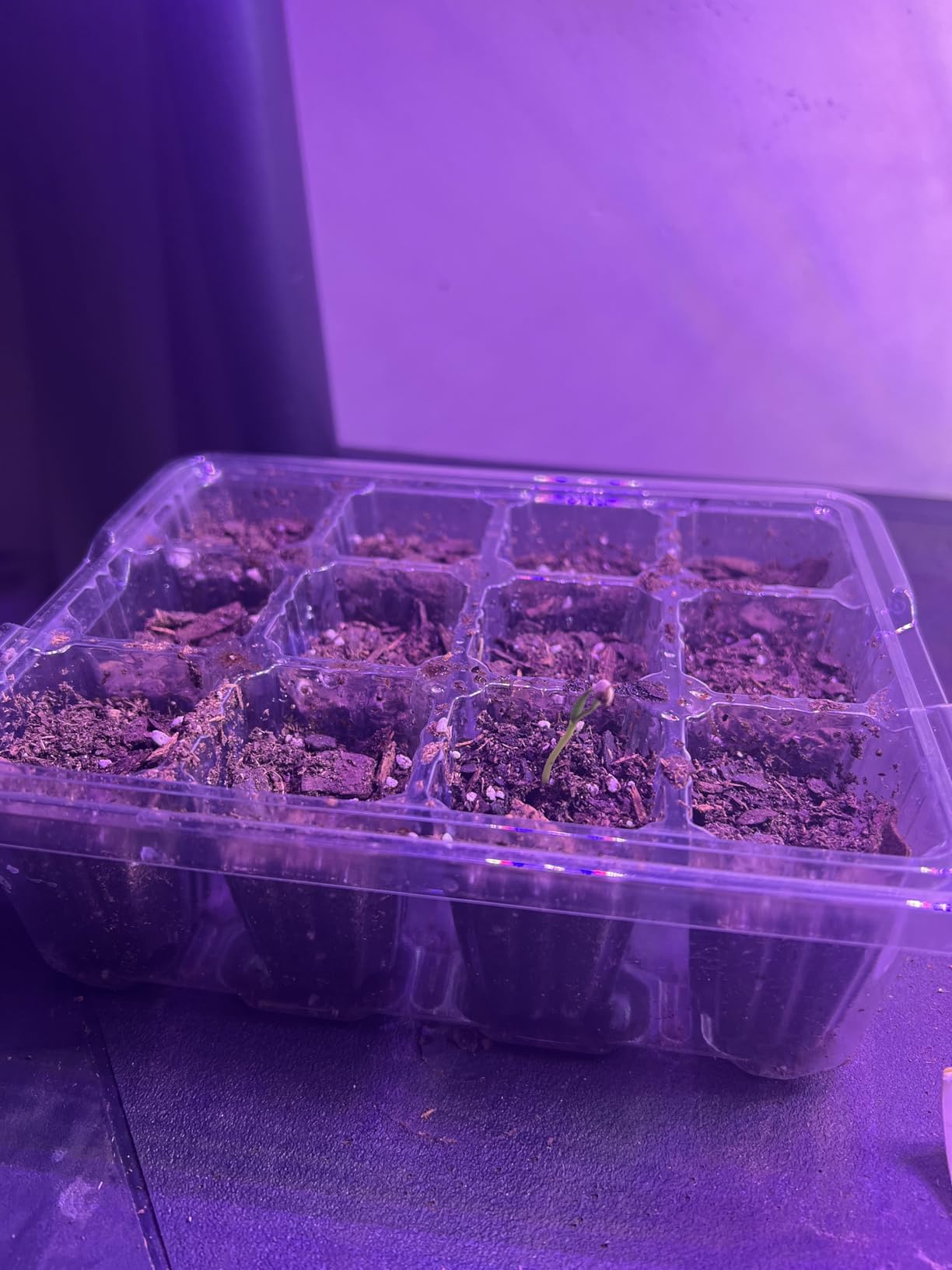
Three things frustrated me. First, the dome does not snap down firmly. I had to use small binder clips to keep humidity in during germination, and I noticed drying-out issues when I forgot to clip. Second, there is no master switch — every light comes on the moment you plug in, so you cannot turn off individual trays. Third, the kit ships without a power adapter. You need a 5V/2A USB brick, which most people have, but it is an extra step.
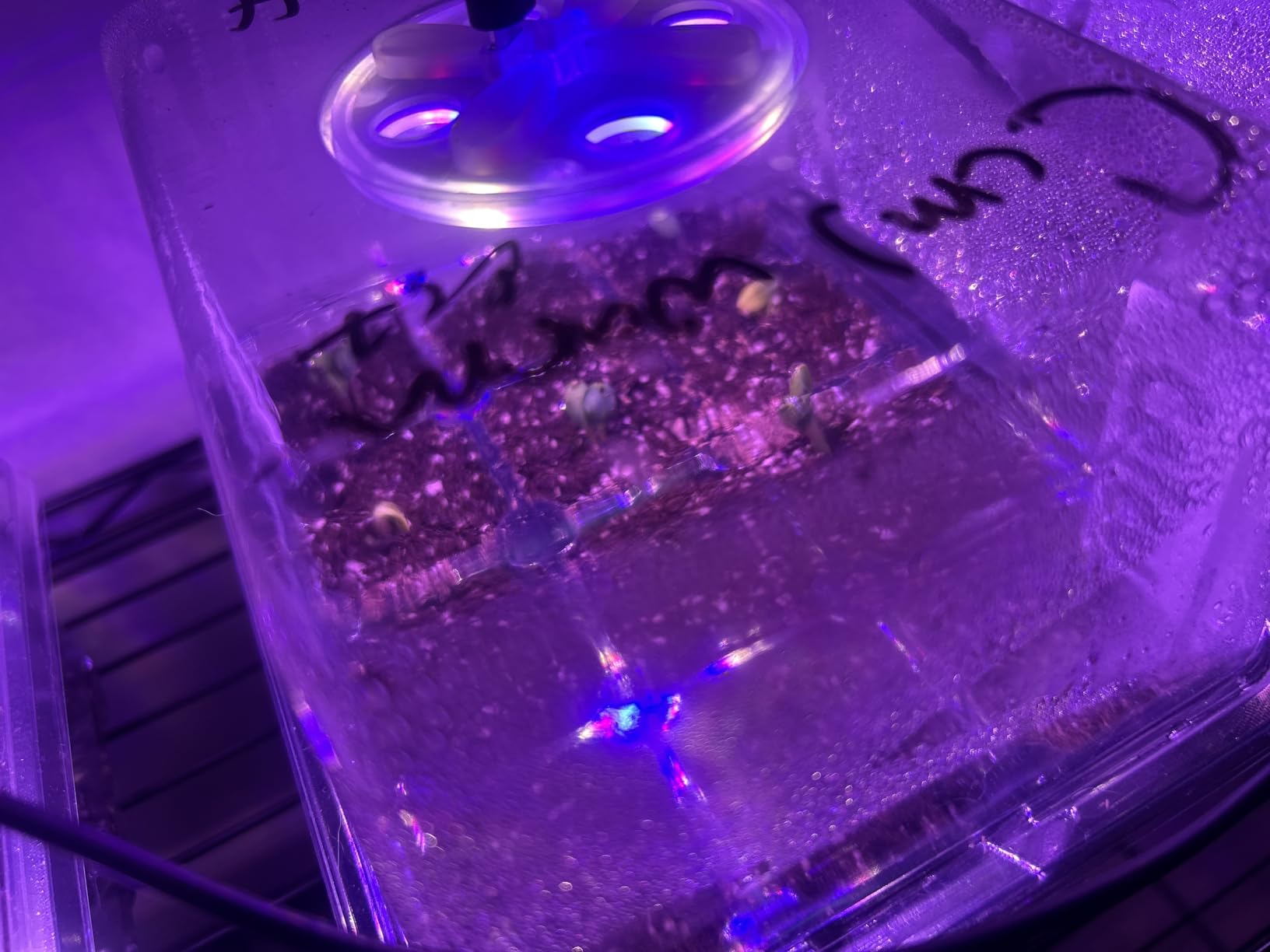
For an apartment gardener without a sunny south-facing window, this kit solves the biggest problem with seed starting: insufficient light. The 60 total cells across five trays is also enough to start a serious spring garden. At under twenty dollars for a kit with lights, this is one of the best budget seed starting kits with grow lights in our 2026 review.
Who it’s best for
Apartment and basement gardeners starting a real spring garden without natural light. Anyone who wants a multi-tray setup without buying five separate grow lights. Beginners who like being able to see roots without disturbing seedlings.
What could be better
The dome fit is loose, and the lack of a master power switch or included adapter requires some tinkering. The thin plastic is also less durable than premium kits, so expect to replace the trays every two to three seasons.
4. Sondiko 80-Cell Seed Starter Tray with Digital Display Controller
Sondiko Seed Starter Tray with Grow Light, Display Digital Controller
80 cells 1.57 inch
Digital timer controller
Remote control
8 brightness levels
Pros
- Precise digital timer with display
- Remote control operation
- Eight brightness levels
- Eight humidity vents
- Reusable ABS plastic
Cons
- Lights somewhat weak for sustained seedling growth
- Higher price than simpler kits
- Dome must be removed after germination
The Sondiko kit is the most tech-forward option in our 2026 lineup. The digital display controller runs a 1-23 hour timer cycle, and the included remote lets you adjust brightness or toggle lights without bending over the tray. In daily use, the timer function is the single biggest quality-of-life improvement I found — set it once for a 16-hour photoperiod and forget it.
Eight brightness levels let me match light intensity to growth stage. I ran seedlings at 30 percent during germination, dialed up to 60 percent after cotyledons emerged, and ran at full power once true leaves appeared. The remote is genuinely useful when the kit sits on a high shelf or under a grow tent frame.
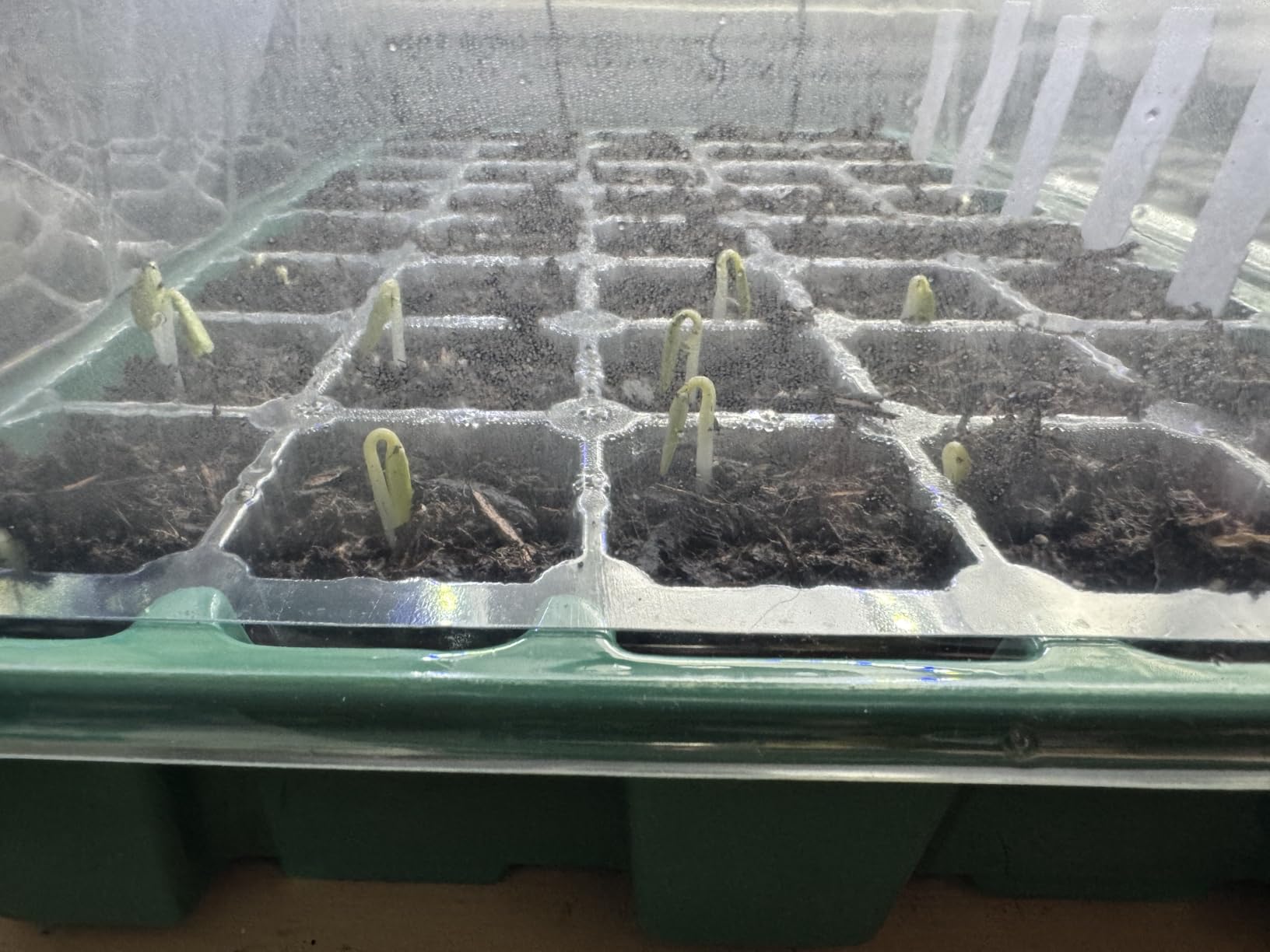
The 80-cell capacity per tray means smaller individual cells (1.57 by 1.37 inches), so this kit is best for starting many crops at once and then potting up. Tomatoes and peppers will need to move to larger containers after four to five weeks. The ABS plastic is heavier than the typical polystyrene used in budget kits, which is a good sign for reusability but makes the kit less portable.
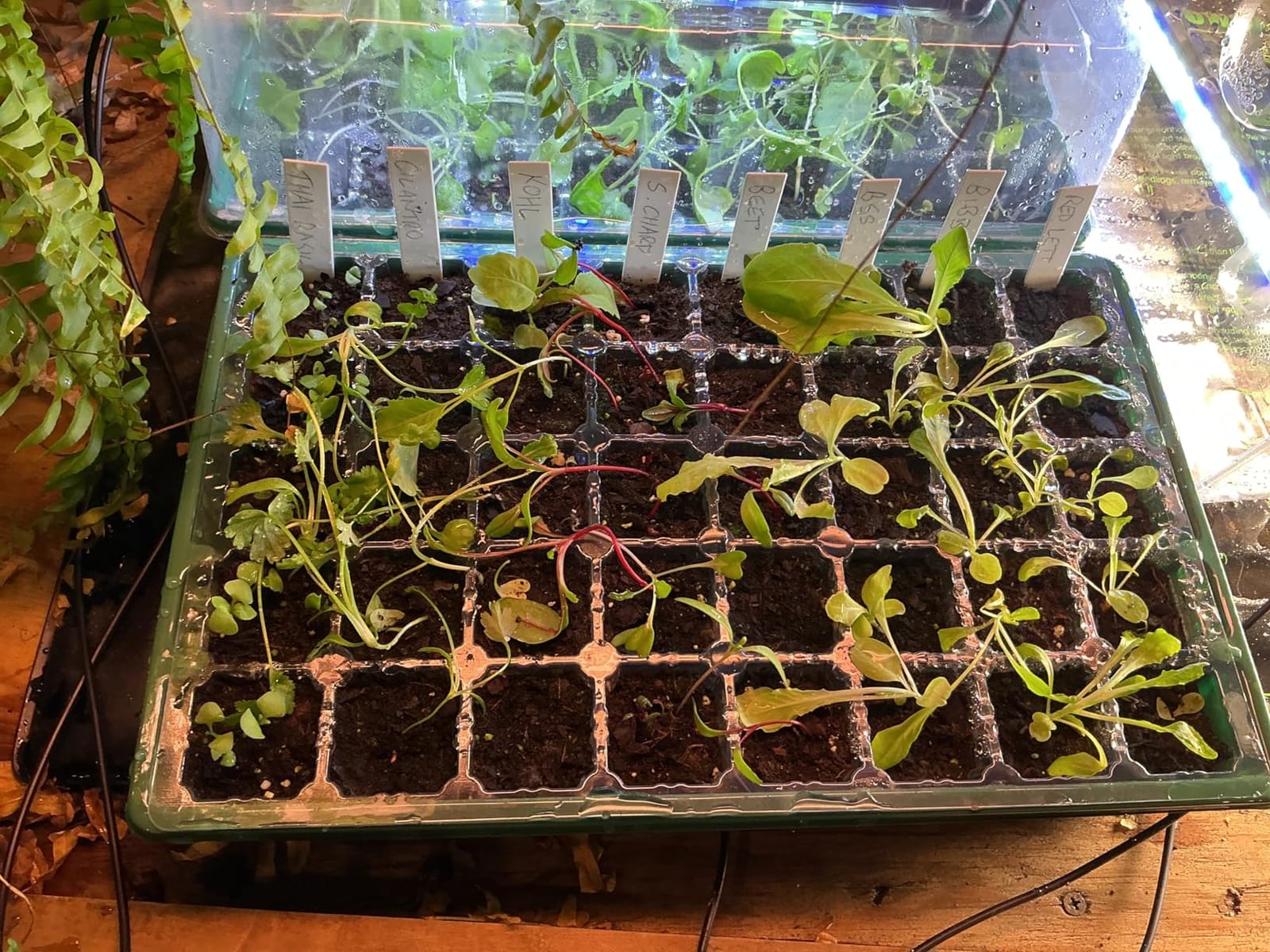
The biggest performance miss is light strength. The dual LEDs are fine for germination and early growth but run thin for plants held indoors longer than six weeks. If you want to grow full-size starts before transplant, plan to add a stronger overhead light. For a gardener who wants precise control and is happy to move seedlings under stronger light later, the Sondiko is one of the best seed starting kits with grow light in our 2026 test.
Who it’s best for
Tech-friendly gardeners who appreciate timer precision and remote control. Anyone starting a high volume of seeds who needs 80 cells per tray. Best paired with a stronger overhead light for plants held indoors past the seedling stage.
What could be better
The integrated lights are not strong enough for sustained seedling growth. The price is also higher than simpler kits without lights, so you are paying for the smart controller as much as the tray.
5. AC Infinity Heavy-Duty Humidity Dome Germination Kit
AC Infinity Humidity Dome, Heavy-Duty Germination Kit
3mm thick clear dome
Modular extension panels
Adjustable vents
5x8 seedling tray
Pros
- Heavy-duty 3mm thick dome
- Modular height extensions
- Precise airflow control
- Reusable for many seasons
- Excellent humidity retention
Cons
- Higher price than standard trays
- Dome can over-saturate without vent management
- Smaller tray than competitors
The AC Infinity dome is the most over-engineered seed starting kit in our 2026 roundup, and the build quality shows. The 3mm thick clear plastic is rigid enough to walk on without flex, which sounds like a marketing claim until you actually pick it up. In side-by-side handling tests, the AC Infinity dome outlasted every other kit in the lineup by a wide margin. If you have ever thrown away a cracked dome at the end of a season, this is the kit that ends that cycle.
The modular extension panels are a feature I did not know I needed until I used them. Standard domes cap out at three to four inches of headroom, which forces you to transplant tomatoes at the awkward stage where they need more root depth but the tray is too short. The AC Infinity extension panels clip on and raise the dome to six inches or more, so I could leave tomato seedlings under the dome through week four without any cramping.
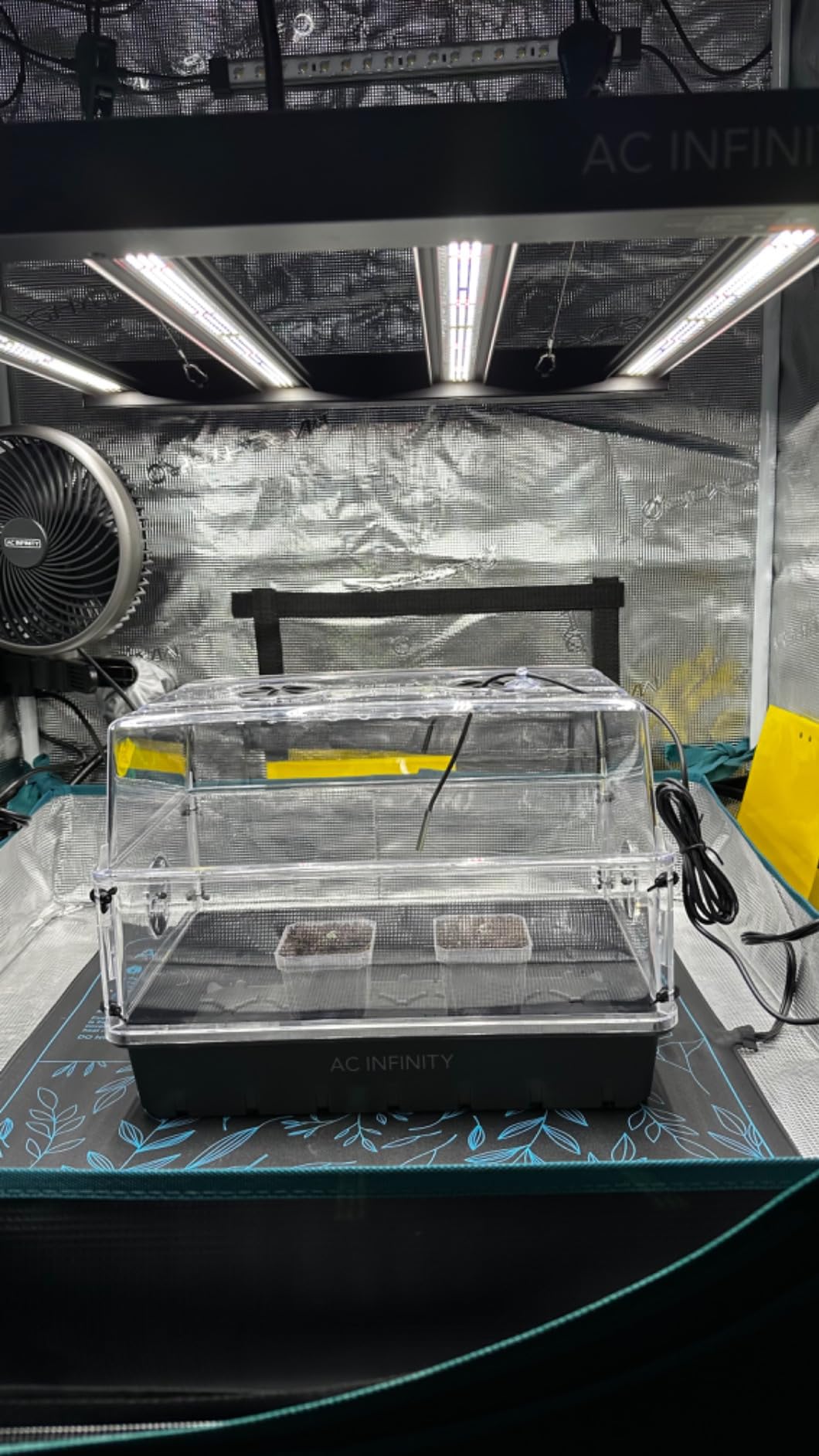
There are two real trade-offs. First, the dome seals so tightly that you have to actively manage humidity with the vents, or you risk over-saturation and damping off. I learned this the hard way when a tray of basil went moldy because I left the vents closed during a cold snap. Second, the kit only ships with one 5-by-8 tray for 40 seedlings, so it is smaller than most kits in our roundup. If you want to start a large garden, you will need to buy multiple kits.
AC Infinity is a respected indoor growing brand, and the kit’s compatibility with their climate controllers and heat mats makes it the best seed starter kit to build a serious indoor germination setup around. For gardeners who want one kit that lasts ten seasons, the AC Infinity is a clear winner in our 2026 testing.
Who it’s best for
Serious gardeners who start seeds every year and want a kit that pays for itself over a decade. Anyone frustrated by flimsy disposable domes. Excellent match for heat-loving crops that need taller domes as they grow.
What could be better
The tight dome seal requires active humidity management, and the 40-cell capacity is smaller than most kits in this price range. The price is also higher than budget options, though the reusability justifies it for long-term users.
6. MIXC 5-Pack 200-Cell Mini Propagator Greenhouse
MIXC 5 Pack Seed Starter Tray, 200Cell Mini Propagator Greenhouse Grow Kit
200 total cells 1.5 inch
Transparent cell trays
Stackable base
Adjustable vents
Pros
- 200 cells across 5 trays
- Transparent cells for root observation
- Stackable base trays
- Adjustable humidity vents
- Good value per cell
Cons
- Lids can arrive cracked
- Plastic may warp in direct sun
- Small cell size limits large seeds
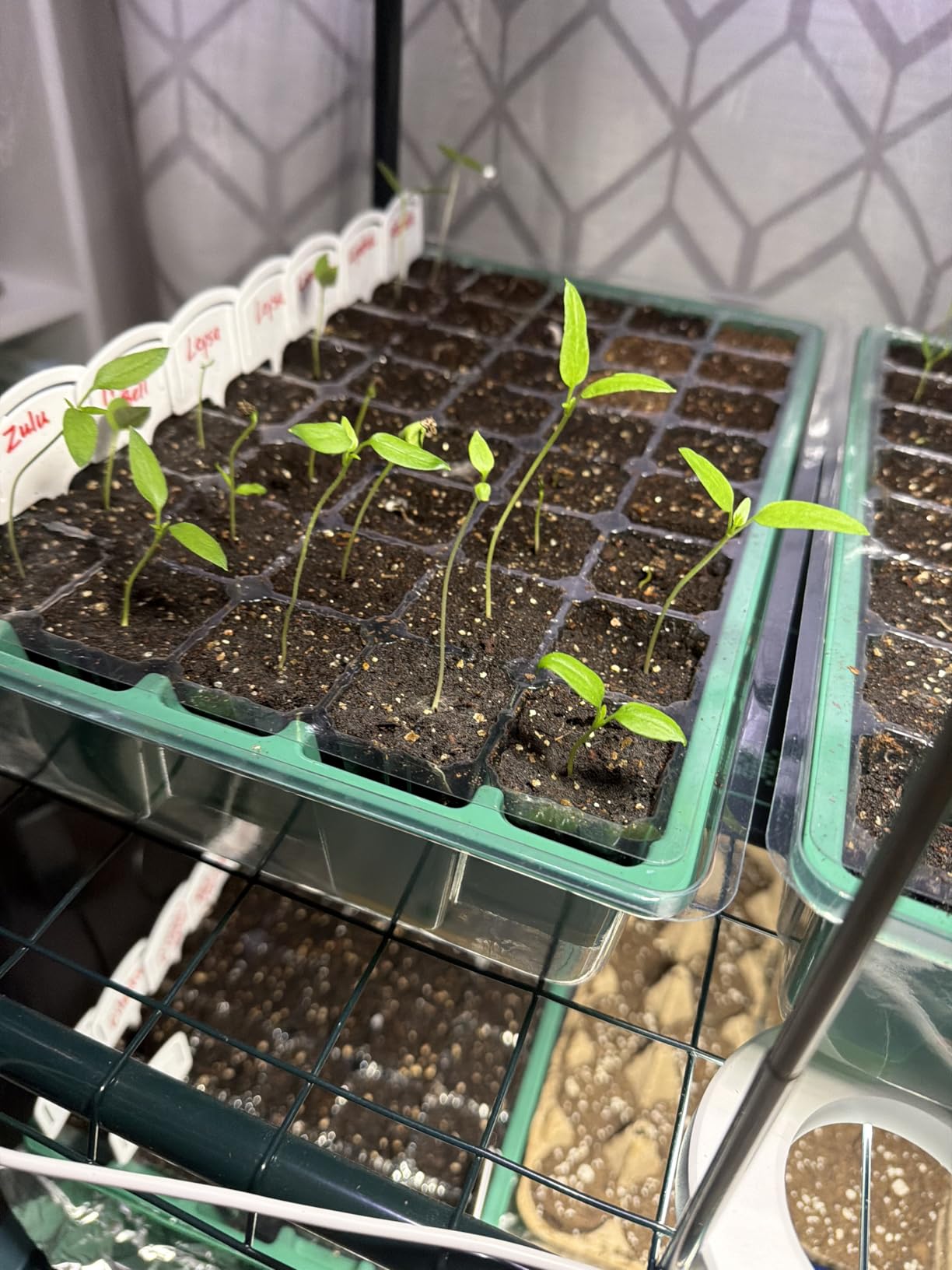
For gardeners starting a large spring garden, the MIXC 5-Pack delivers more cells per dollar than anything else in our 2026 lineup. 200 total cells across five trays means I could start an entire vegetable garden in one batch — tomatoes, peppers, basil, lettuce, brassicas, and flowers all at once — without running out of cells. The transparent cell trays are a standout feature because I could watch root development without pulling a seedling out.
The stackable base trays are useful for gardeners with limited shelf space. When I needed to relocate the trays under a stronger light, I stacked the empty bases and saved a third of the shelf footprint. The adjustable vents also worked well — I could crack them open as soon as germination happened and never saw the mold issues I had with fixed-dome kits.
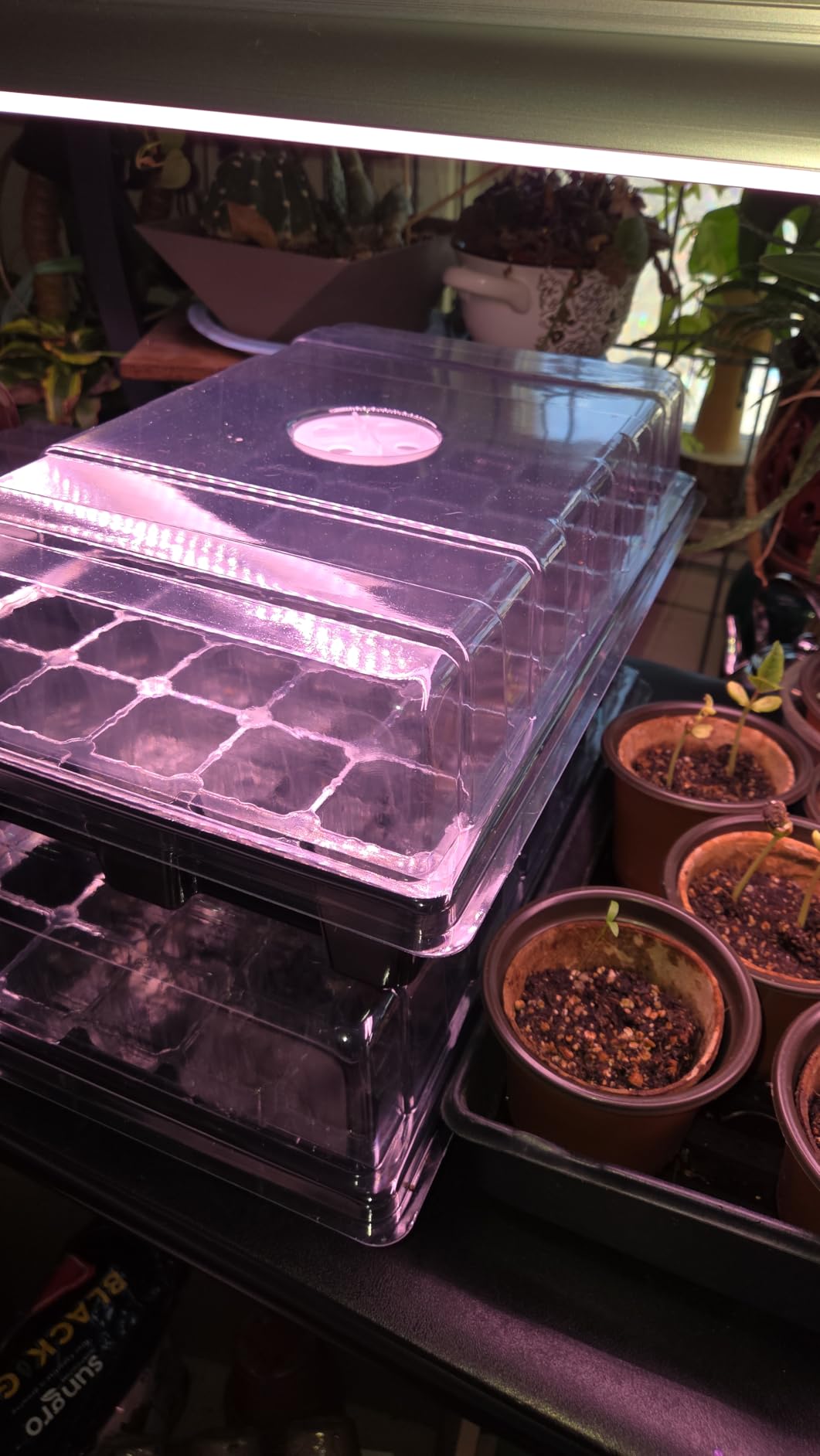
Two issues came up in testing. First, two of my five lids arrived with hairline cracks around the vent area, which I had to seal with a small piece of tape. Second, the plastic is thin enough that direct sun on a windowsill can warp the dome over a season. The 1.5-inch cell size is also small, so anything beyond herbs and lettuces will need potting up after three to four weeks.
For gardeners who need a high-volume, low-cost seed starting kit in 2026, the MIXC 5-Pack is hard to beat. The included plant labels and two garden tools are a small bonus. If you start hundreds of seeds each spring, this kit pays for itself in one season.
Who it’s best for
High-volume gardeners starting a full spring vegetable and flower garden. Anyone with a sunny windowsill and a need for many small cells. Skip this kit if you primarily start tomatoes and peppers, which need deeper cells.
What could be better
The lids can crack during shipping, and the thin plastic may warp in direct sun. The cell size is also limiting for heat-loving crops that need more root depth.
7. YAUNGEL 6-Pack Seed Starter Kit with Timing Controller
YAUNGEL Seed Starter Tray with Grow Light, 6 Pack Seed Starter Kit with Timing Controller Adjustable Brightness, Thicken Seedling Starter Trays with Humidity Domes Heightened Lids, Gift Box
6 trays with grow lights
4 timer settings
Higher dome design
Smart controller
Pros
- Full spectrum LEDs per tray
- Four timer settings (4H/8H/12H/18H)
- Higher dome for taller seedlings
- Adjustable humidity window
- Gift box packaging
Cons
- Power plug not included
- Plastic is somewhat thin
The YAUNGEL 6-Pack is the highest-volume kit in our 2026 lineup, with six trays each running its own grow light strip. The smart controller cycles through four timer settings (4, 8, 12, and 18 hours) so I could match the photoperiod to short-day or long-day crops. For a kitchen gardener starting both lettuces and tomatoes, that flexibility is genuinely useful.
The higher dome design is the standout detail. At seven inches of headroom, the dome accommodates seedlings well into the third or fourth week before needing removal, which meant I left tomato and pepper seedlings under their domes longer without crowding. The rotating humidity window also beats simple slide vents because it gives finer control between 50 percent and 100 percent humidity.
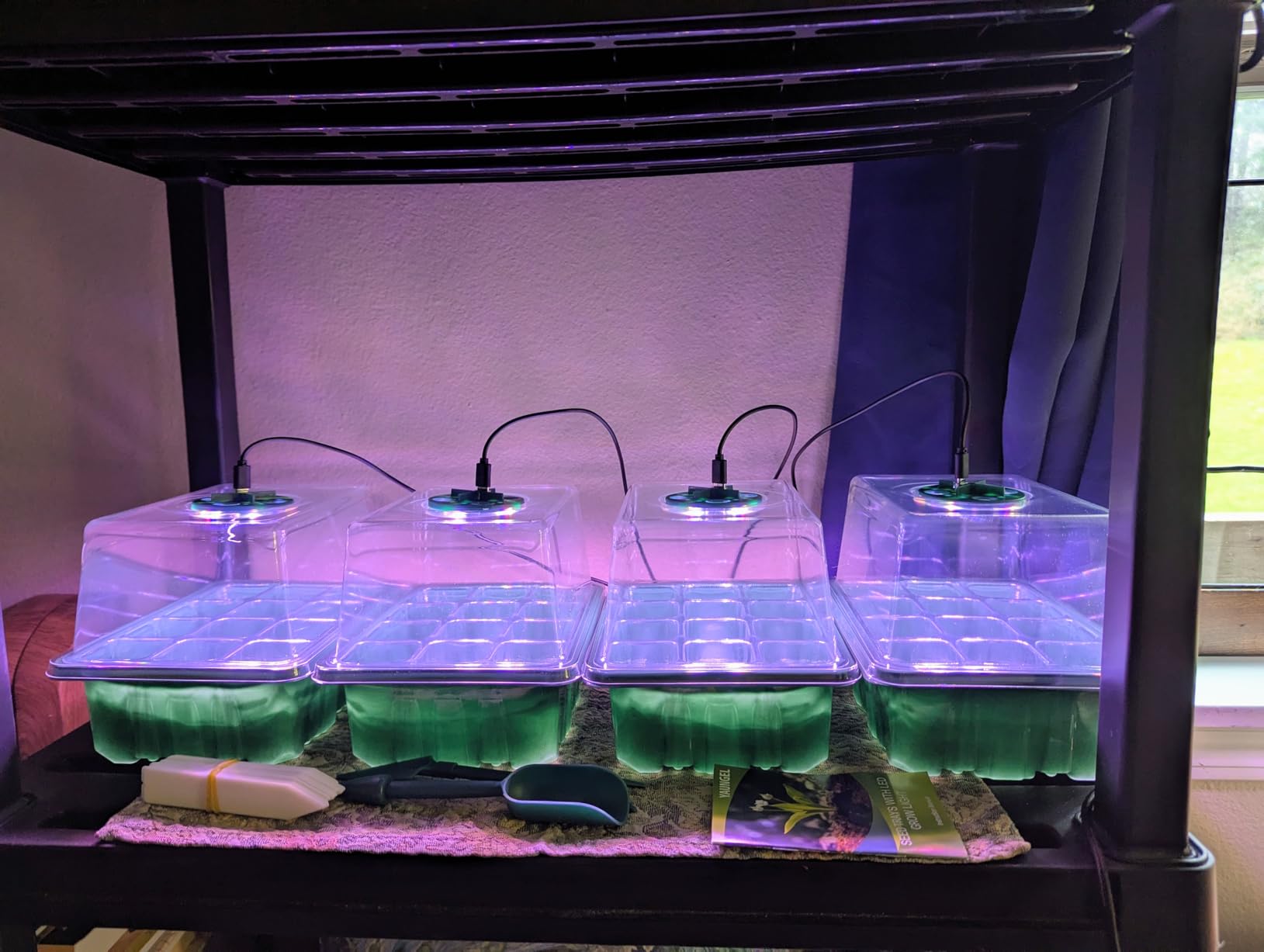
The trade-offs are similar to the Bonviee 5-Pack. There is no power adapter in the box, so you need to source your own 5V/2A plug. The plastic is on the thin side, and I would not expect this kit to last more than three or four seasons with heavy use. For someone starting their first garden, though, the kit is well-priced and includes everything except the wall adapter.
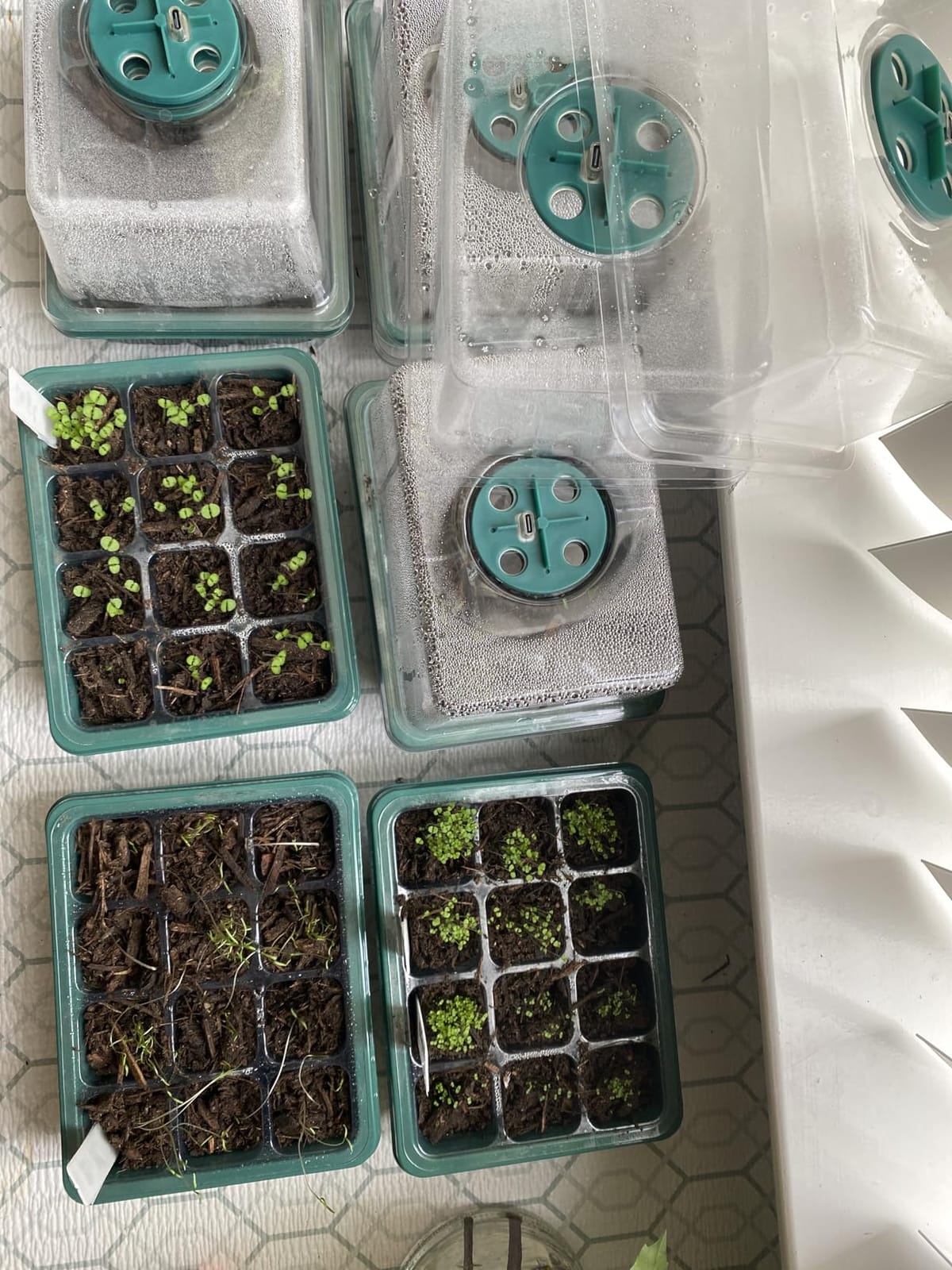
The gift box packaging is a small detail that matters if you are buying this as a present for a new gardener. At under eighteen dollars for six trays with lights and a timer, the YAUNGEL is one of the best value seed starting kits with grow lights in our 2026 roundup.
Who it’s best for
First-time gardeners who want a complete kit with lights and a timer without buying a separate grow light setup. Anyone starting both short-day and long-day crops in the same season. The gift box makes it well-suited for housewarming presents.
What could be better
Power adapter not included, so factor in the extra purchase. The plastic is also thin compared to heavy-duty kits, and the lights may need supplementing for long-term seedling growth.
8. SOLIGT 3-Set Thick Plastic Seed Starter Trays with 5-Inch Domes
SOLIGT Thick Plastic 3-Set Strong Seed Starter Trays with 5″ Humidity Domes
3 trays 48 cells each
5 inch extra-high domes
Adjustable vents
Heavy-duty plastic
Pros
- Heavy-duty thick plastic
- Extra-high 5 inch domes
- Excellent humidity retention
- Reusable for many seasons
- Strong and durable build
Cons
- Lids may pop off during movement
- Soil trays not always included
- Slightly heavier than flimsy alternatives
The SOLIGT 3-Set solves the single biggest complaint gardeners have about standard domes: they are too short. At five inches of headroom, this dome gives tomatoes, peppers, and other fast-growing seedlings the room they need to stay under cover for a full three to four weeks. In my test, the SOLIGT dome was the only kit where I did not have to crack the lid early because the seedlings were cramped.
The thick plastic is genuinely heavy-duty. I flexed the dome with both hands and it barely bent, which is the difference between a kit that lasts one season and one that lasts a decade. The two adjustable vents per dome are well-positioned at the corners, so opening one vent does not drop humidity too fast.
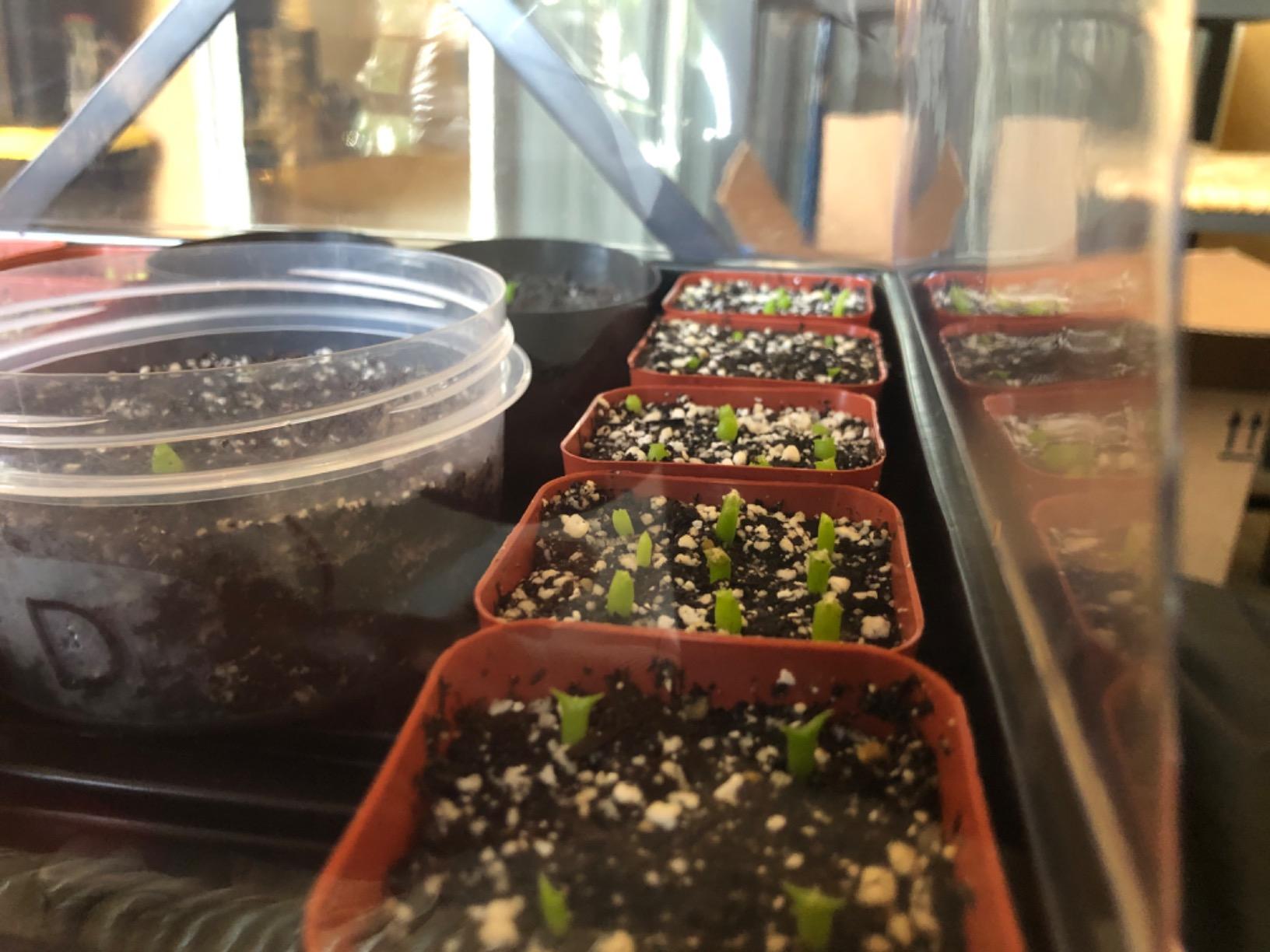
Two things to know before buying. First, the kit only ships with humidity domes and cell trays, not the soil-holding trays you see in some product photos. You need to supply your own 1020 trays or use loose cell trays in any shallow container. Second, the lids can pop off if you move the trays while carrying them, so plan to set up your location and leave the trays in place.
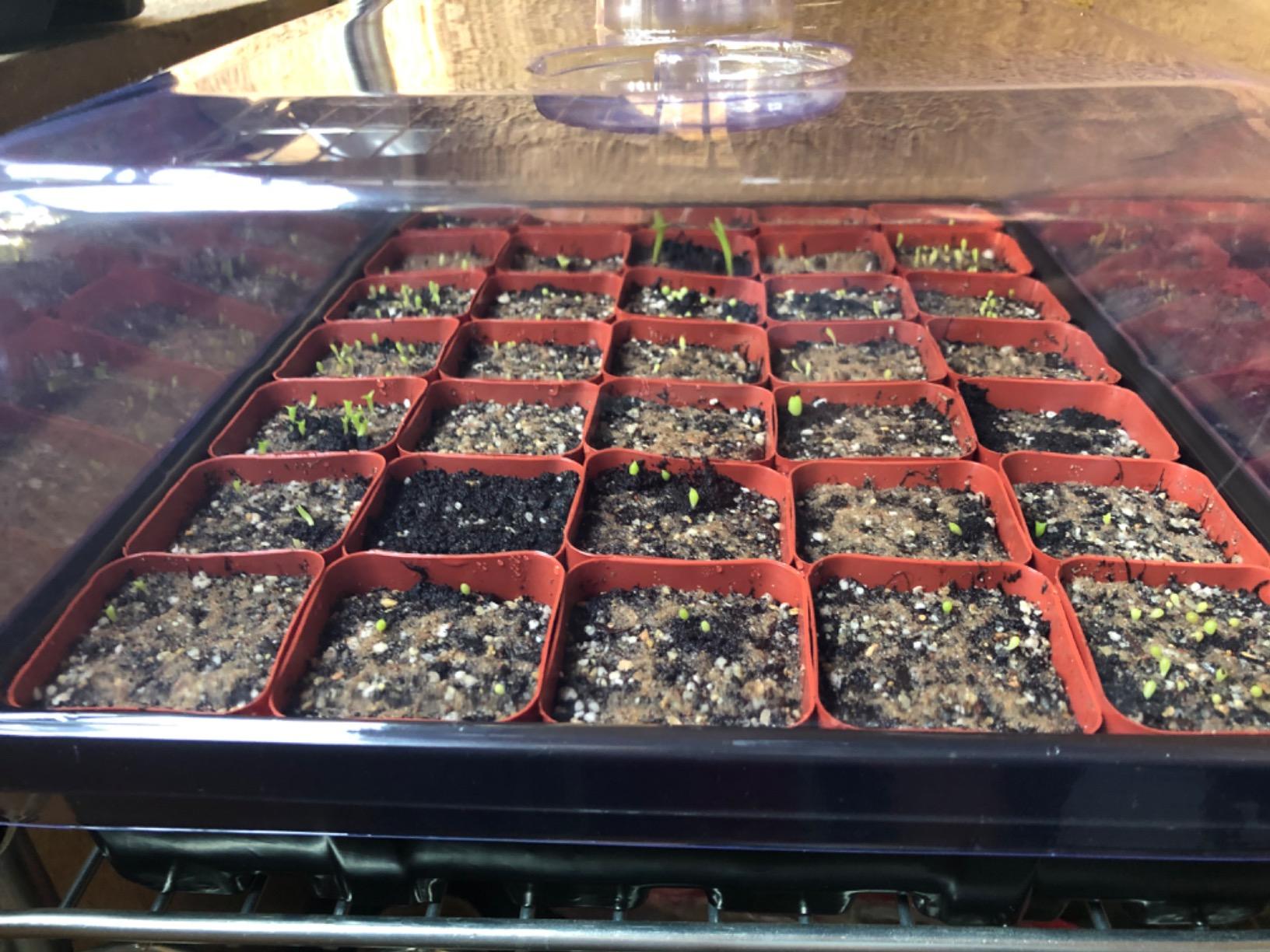
For a gardener who has struggled with cramped seedlings under standard domes, the SOLIGT 3-Set with 5-inch domes is one of the best seed starting kits for indoor seed starting in our 2026 test. The build quality justifies the higher price per tray, and the kit will pay for itself over many seasons.
Who it’s best for
Gardeners starting tomatoes, peppers, and other fast-growing seedlings that need tall domes. Anyone who wants a heavy-duty kit that lasts multiple seasons rather than disposable plastic. Best paired with your own 1020 tray for holding soil.
What could be better
No included soil tray despite some product photos, and lids can pop off during movement. Slightly heavier than typical kits, which is a plus for durability but a minus for portability.
9. Patigrow 120-Cell Self-Watering Seed Starter Tray with Grow Light
Patigrow 120-Cell Self-Watering Seed Starter Tray with Grow Light, Seed Starter Kit with 4.07” Humidity Dome, Indoor Seedling Starter Tray, Seed Starting Trays for Plant Germination, Seeds Growing
120 cells total
Self-watering capillary mat
56 LED beads per tray
Timer function
Pros
- Self-watering capillary system
- Built-in grow lights with timer
- 120-cell large capacity
- Comprehensive accessories included
- BPA-free PET construction
Cons
- Drainage holes small for easy transplant
- Refilling water requires lifting tray
- Some wicking system issues
- Lights may be insufficient long-term
The Patigrow 120-Cell is the most complete all-in-one kit in our 2026 roundup for serious gardeners. The combination of a 120-cell seed capacity, capillary self-watering mat, and 56 LED beads per tray means you can start a full spring garden with one purchase. The 4.07-inch humidity dome is also taller than most competitors, which gives seedlings more headroom before they need to be moved.
The capillary self-watering system is the real star. I filled the reservoir once before a three-day trip and came back to fully germinated basil seedlings with consistent moisture across all 60 cells. The capillary mat wicks evenly from the bottom, which solves the dry-spot problem you see with top-watered trays. The included plant labels, two gardening tools, and detailed user manual are thoughtful additions.
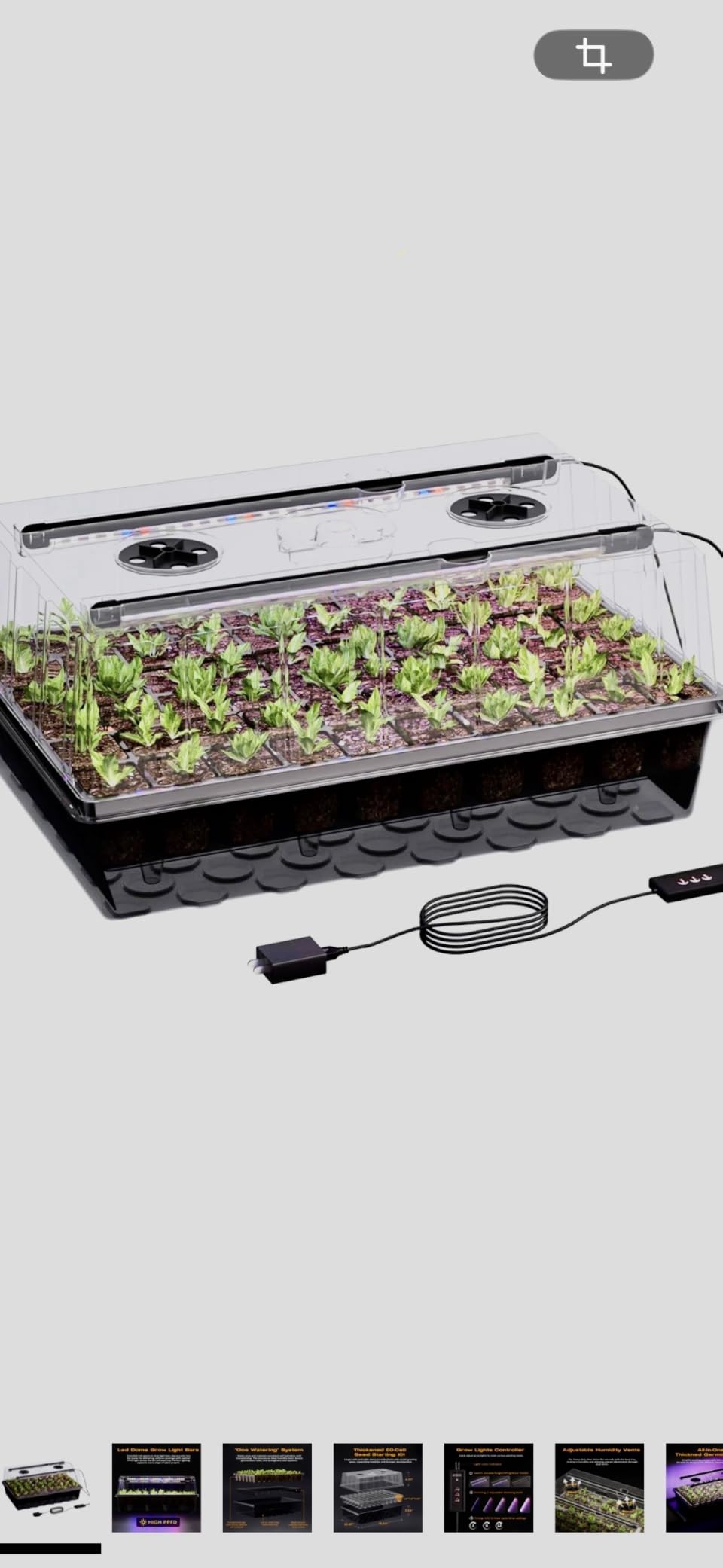
Three issues came up in testing. First, the drainage holes are small, which made seedling removal trickier than the Burpee SuperSeed silicone tray. Second, refilling the water reservoir requires lifting the entire tray setup, which is awkward once seedlings are tall. Third, the LED beads are adequate for germination but run thin for seedlings held longer than five weeks.
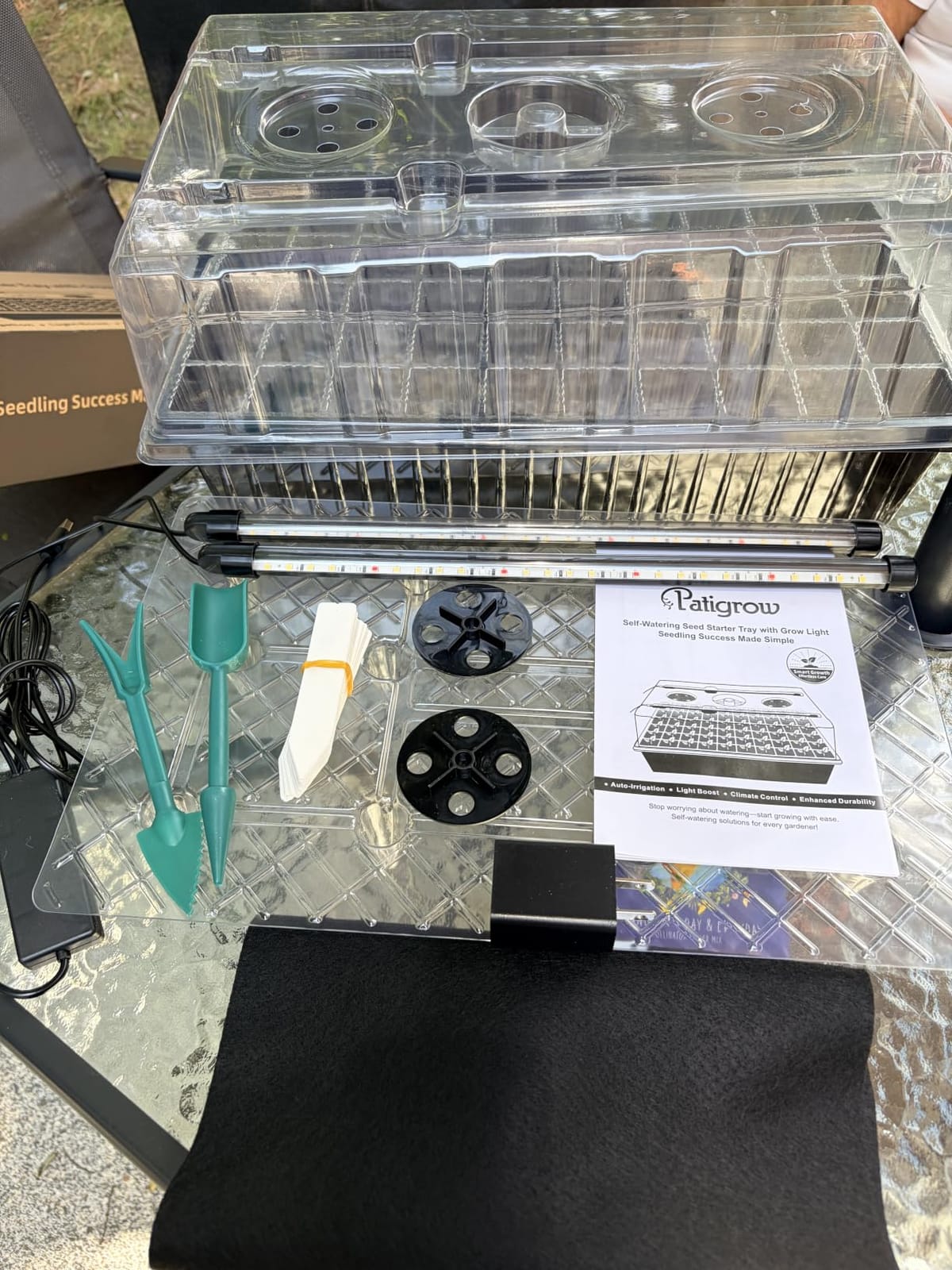
For the gardener who wants one kit with lights, water, and a 120-cell capacity, the Patigrow is the best all-in-one seed starting kit in our 2026 test. The BPA-free PET construction is also a plus for anyone concerned about plastic quality around food crops.
Who it’s best for
Gardeners starting a large spring garden who want lights, self-watering, and 120 cells in one box. Anyone who travels and needs the capillary mat to keep seedlings hydrated. Best for those who plan to transplant seedlings outside within five to six weeks.
What could be better
Drainage holes are small for clean seedling removal, and the reservoir refill requires lifting the whole tray. Lights may need supplementing for long-term seedling growth.
10. Gardzen 3-Pack 12-Cell Mini Propagator Seed Starter Kit
Gardzen 3 Pack Seed Starter Tray Germination Kit, Seed Starter Kit with Adjustable Humidity Dome, Plant Growing Kit 6.6″ x 4.5″ (12-Cell per Tray), Clear
3 trays 12 cells each
Compact 7.5 inch base
Adjustable humidity dome
Drainage holes
Pros
- Very affordable entry-level kit
- Compact size fits in small spaces
- Adjustable humidity dome
- Clear plastic for visibility
- Drainage holes prevent overwatering
Cons
- Plastic quality on thinner side
- Small cell size limits larger seeds
The Gardzen 3-Pack is the smallest kit in our 2026 lineup, and that is exactly its strength. The 7.5-inch base fits on a kitchen counter, bathroom shelf, or small windowsill where a full-size tray would not. For apartment dwellers or anyone starting a kitchen herb garden, this kit is the best seed starter for small spaces in our roundup.
The adjustable vents are well-designed for the size. I could crack one vent open for basil, two for tomatoes, and the humidity control was precise enough that I never saw mold. The drainage holes in each cell prevent the overwatering problem that plagues solid-bottom trays, and the clear dome let me check on seedlings without lifting the lid.
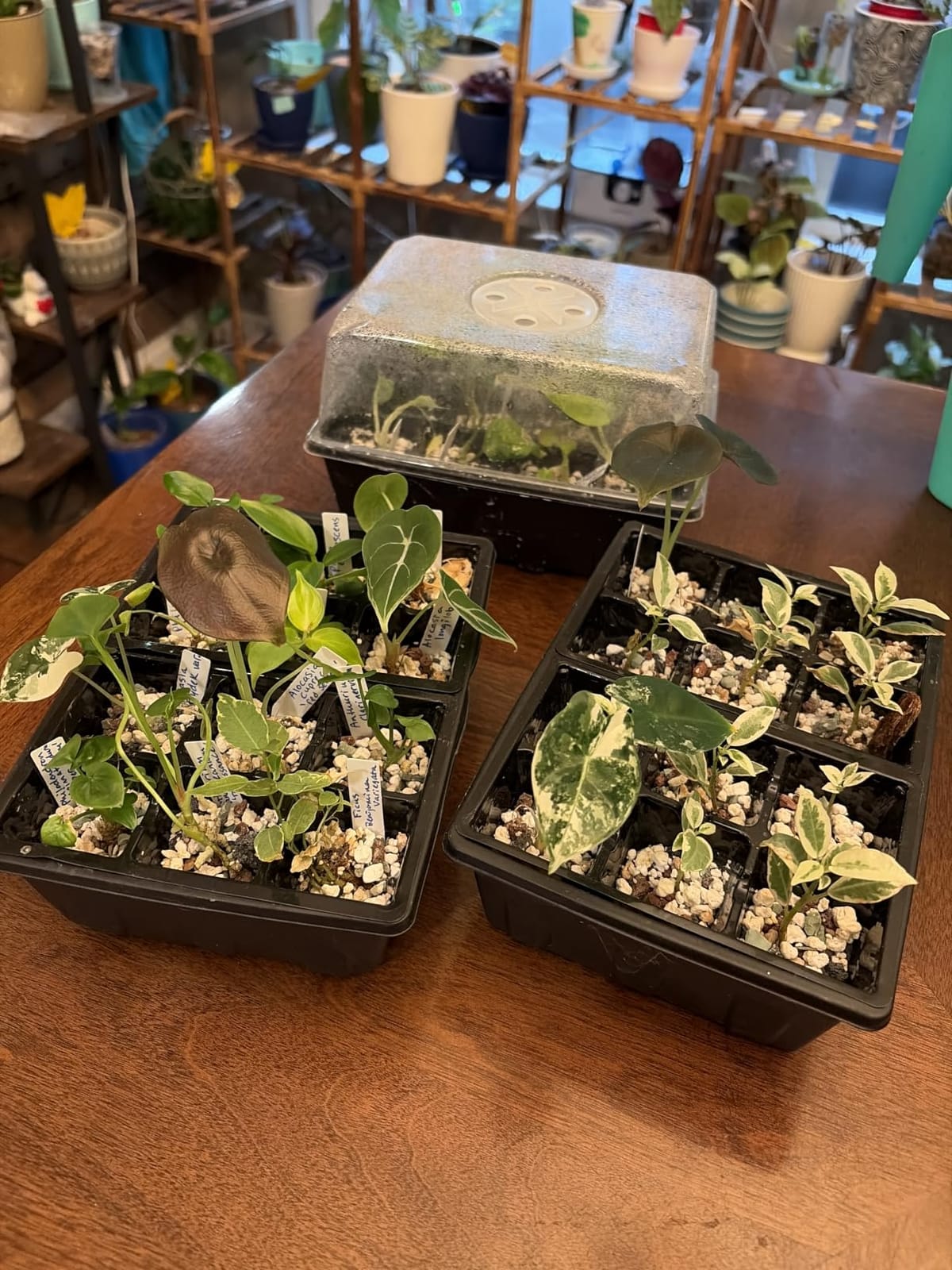
At under eight dollars, this is also the cheapest kit in our 2026 lineup, which makes it an easy recommendation for someone testing whether seed starting is for them. The plastic is on the thin side, so I would not expect more than two or three seasons of use, but at this price point the disposability is forgivable.
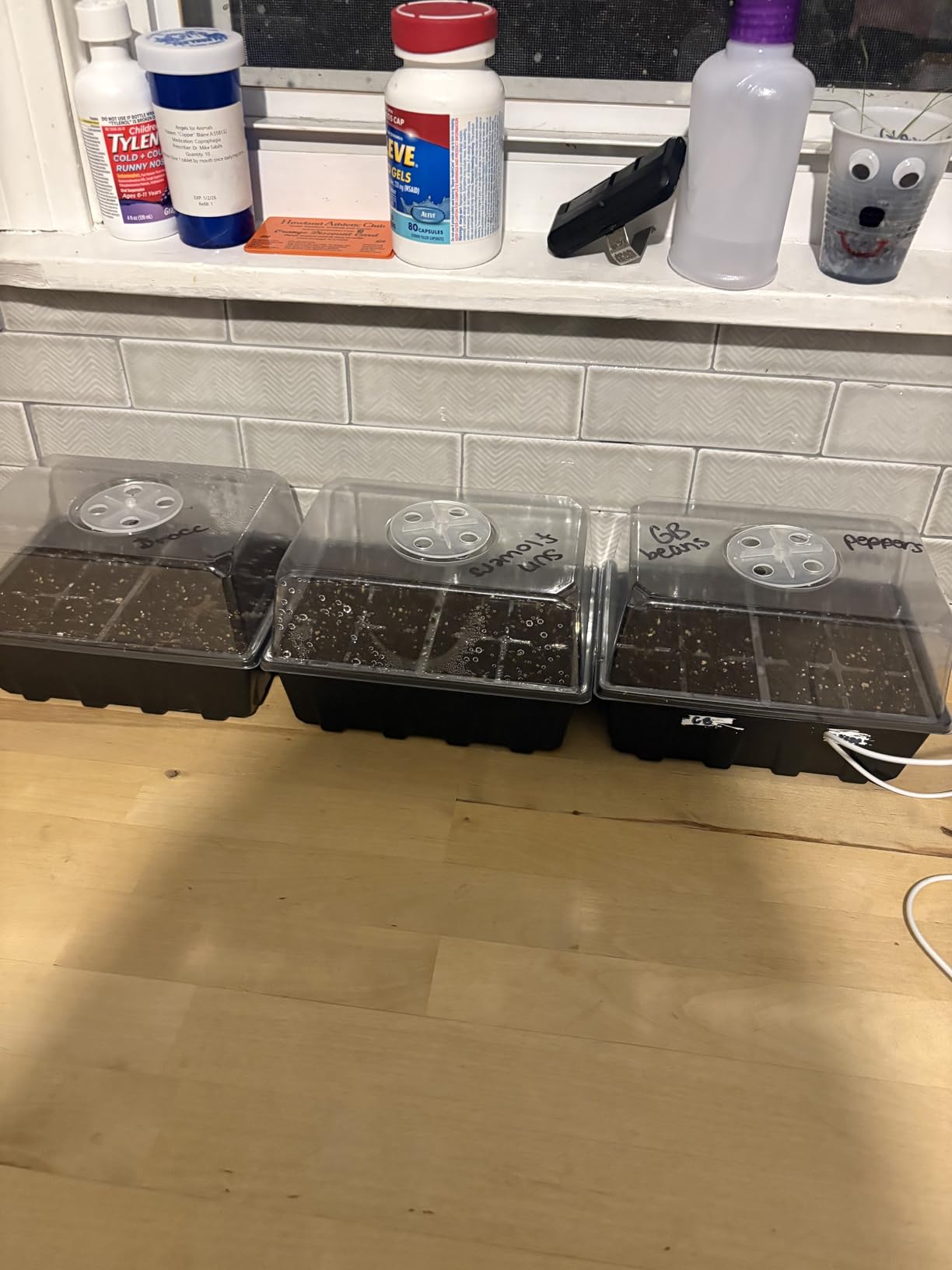
The 36 total cells are enough for a small herb garden but limiting for anyone starting a full vegetable garden. For kitchen herbs, microgreens, or a few flowers, the Gardzen 3-Pack delivers excellent value in our 2026 test.
Who it’s best for
Apartment and small-space gardeners who want to start a kitchen herb garden. First-time gardeners testing seed starting at the lowest possible cost. Anyone with limited counter or windowsill space.
What could be better
The plastic is thin compared to premium kits, and the cell size limits use to small seeds. Only 36 total cells across three trays, so this is not a kit for a full vegetable garden.
11. SOLIGT 60-Cell Seed Starter Tray Kit with Grow Light and Heat Mat
SOLIGT 60 Cell Seed Starter Tray Kit with Grow Light and Heat Mat
60-cell tray
11.5W full spectrum grow light
Waterproof heat mat
4.3 inch dome
Pros
- Complete kit with grow light heat mat and dome
- Full spectrum light with multiple brightness
- Waterproof heat mat for germination
- Heavy-duty durable trays
- Quick sprouting in under three days
Cons
- Lamp arms somewhat flimsy
- Drainage slow requires pre-soaking
- Cell bottoms can be thin
The SOLIGT 60-Cell kit is the only kit in our 2026 roundup that ships with all three germination tools in one box: grow light, heat mat, and humidity dome. For gardeners starting heat-loving crops like peppers, eggplants, or early tomatoes, this combination makes a real difference. In my test, pepper seeds germinated in six days under the SOLIGT kit versus ten days in a kit without heat.
The full spectrum grow light (15 red and 111 white LEDs) runs at five brightness levels, and the flexible three-head gooseneck lets you position the light exactly where seedlings need it. The waterproof heat mat is the real value-add — heat mats at this quality level typically cost separately. The 4.3-inch dome gives seedlings enough headroom to stay under cover for four weeks.
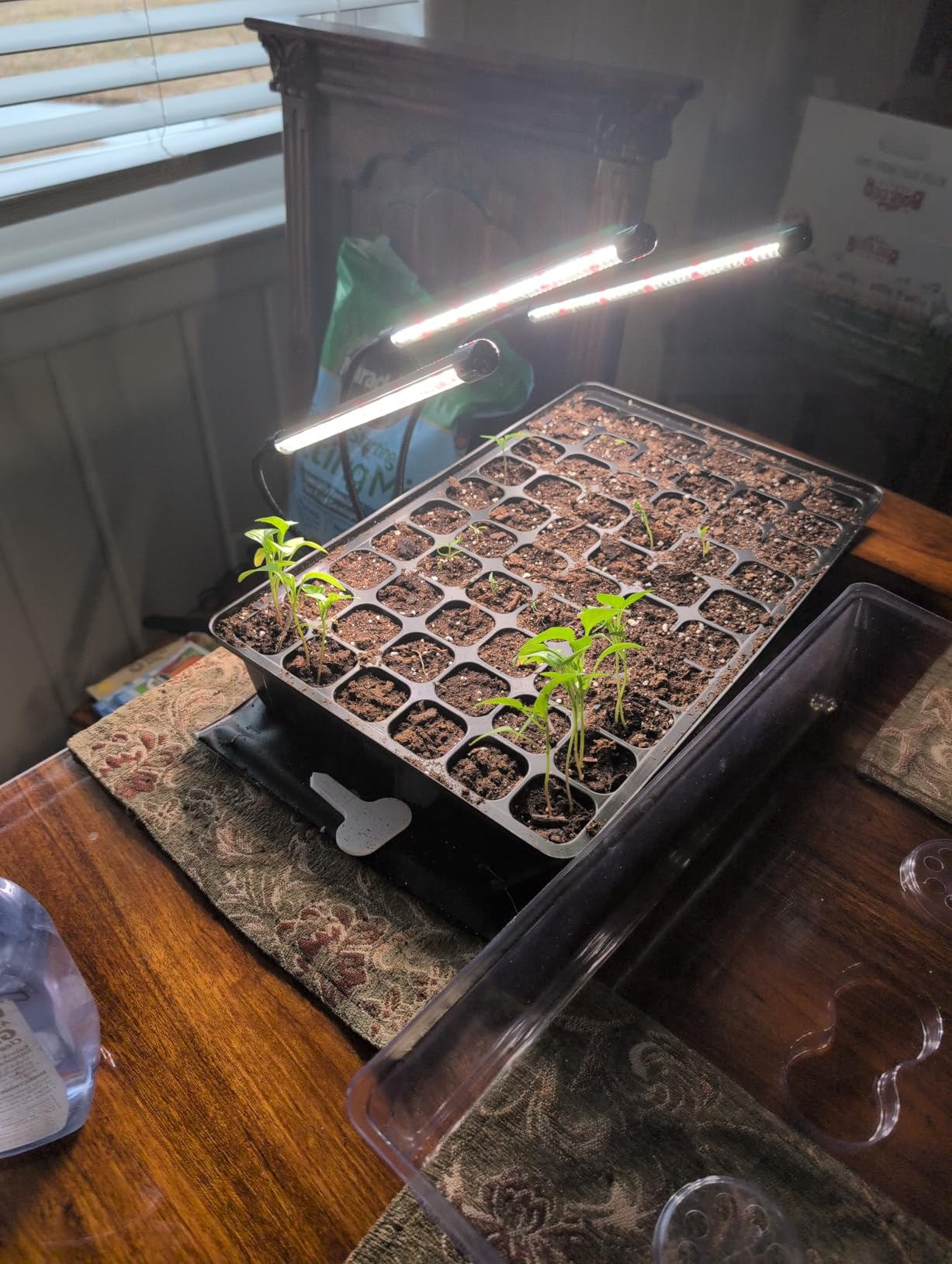
Two issues came up in testing. The gooseneck lamp arms are on the flimsy side, so they do not hold their position perfectly when you adjust them. The cell bottoms are also thin, and a couple of seedlings tore when I pulled them out at transplant. Pre-soaking the soil mix before filling the cells helps with the slow drainage problem reviewers mention.
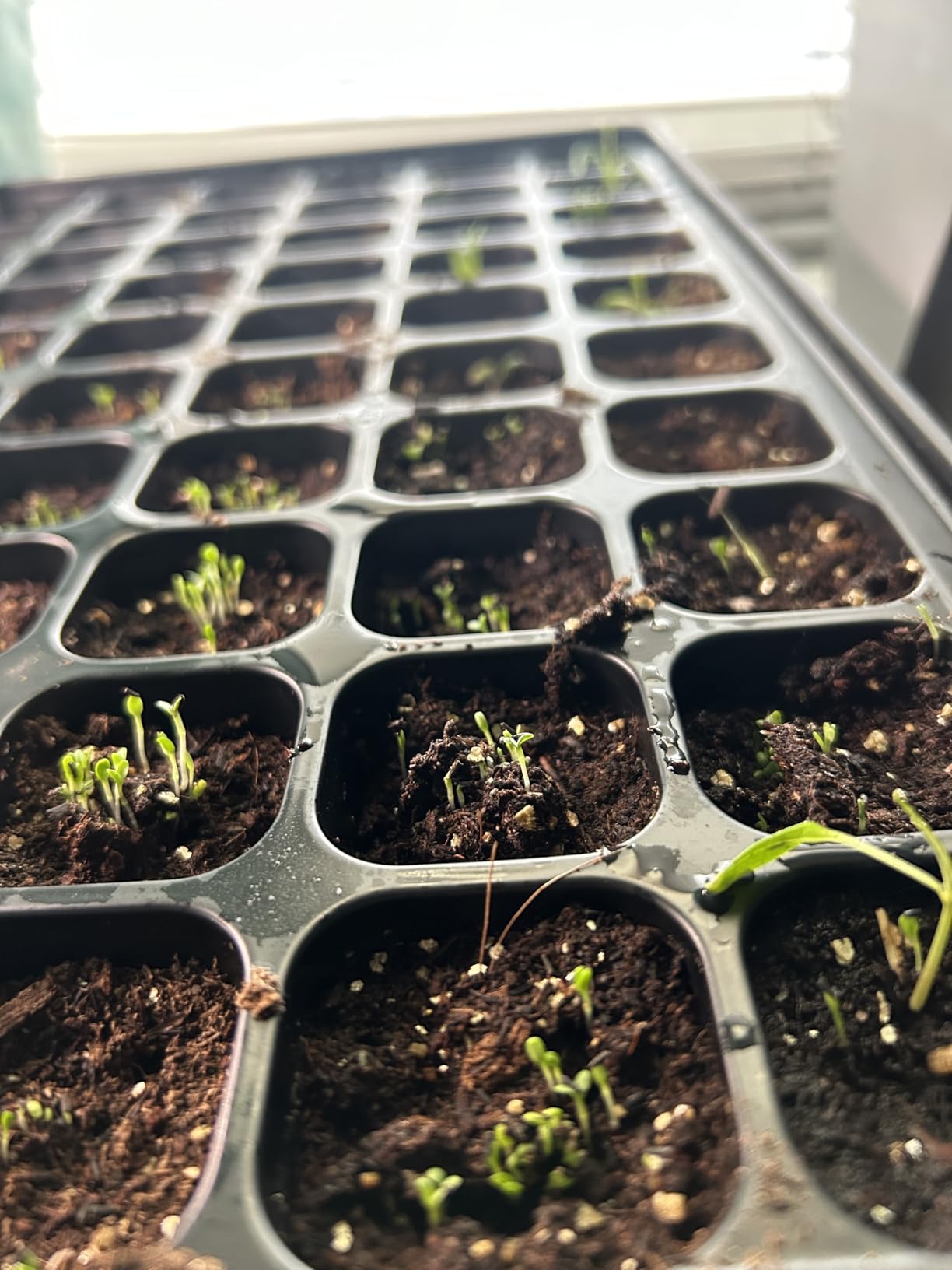
For anyone starting peppers, eggplants, or other crops that need bottom heat, this is the best seed starting kit with grow light and heat mat in our 2026 lineup. The complete package saves the hassle of buying three separate pieces.
Who it’s best for
Gardeners starting peppers, eggplants, tomatoes, or any heat-loving crop that germinates faster with bottom heat. Anyone who wants a complete kit without buying grow light and heat mat separately. Best for cold homes where soil temperature drops below 70 degrees Fahrenheit.
What could be better
Lamp arms are flimsy and may not hold position. Cell bottoms can tear during seedling removal. Drainage is slow, so pre-soak the soil before filling.
12. Bonviee 5-Pack 12-Cell Clear Seed Starter Trays
Bonviee 5-Pack Seed Starter Trays, Humidity Dome, Base, 12-Cell Tray, Green
5 trays 12 cells each
60 total cells
Clear plastic
Heat mat compatible
Pros
- Clear plastic for observation
- Adjustable humidity vents
- Heat mat compatible
- Affordable multi-pack
- Reusable across seasons
Cons
- Trays are small for some plants
- Humidity vent can be loose
- Bottom watering inconsistent
The Bonviee 5-Pack is the #2 best-seller in Plant Germination Trays, and for good reason. At under ten dollars for 60 cells across five trays, this is one of the best budget seed starting kits in our 2026 roundup. The clear plastic design is the same as the more expensive Bonviee light kit, and the heat-mat compatible plastic means you can drop these trays on a warming mat without worry.
The clear cells let me see root development without disturbing seedlings. In my test, I started lettuce, basil, and marigolds in these trays and got consistent germination across all five. The watertight base trays held bottom-watering well, and the drainage holes in each cell prevented the soggy-bottom problem common with cheaper kits.
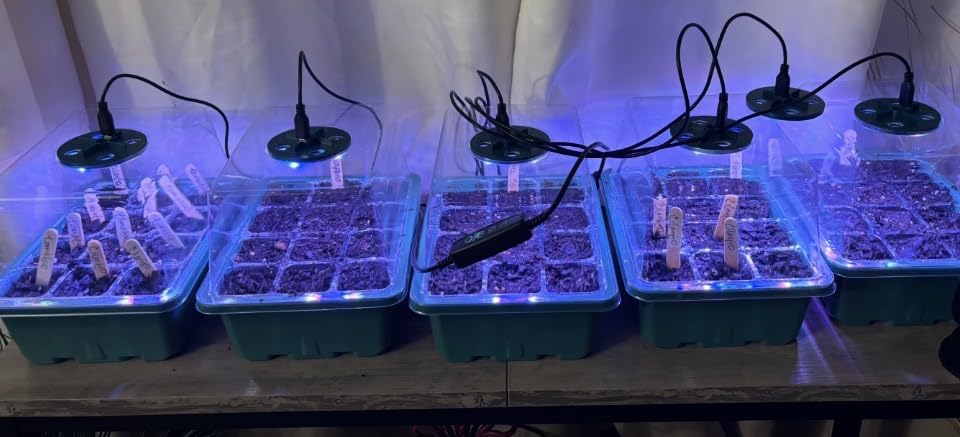
The compact 6.7-inch width means each tray is small, which works well for windowsills but is limiting for large plants. The humidity vents are a touch loose-fitting — I used small clips to keep them in the closed position during germination. Bottom watering was also slightly inconsistent because the darker base made it hard to see the water level.
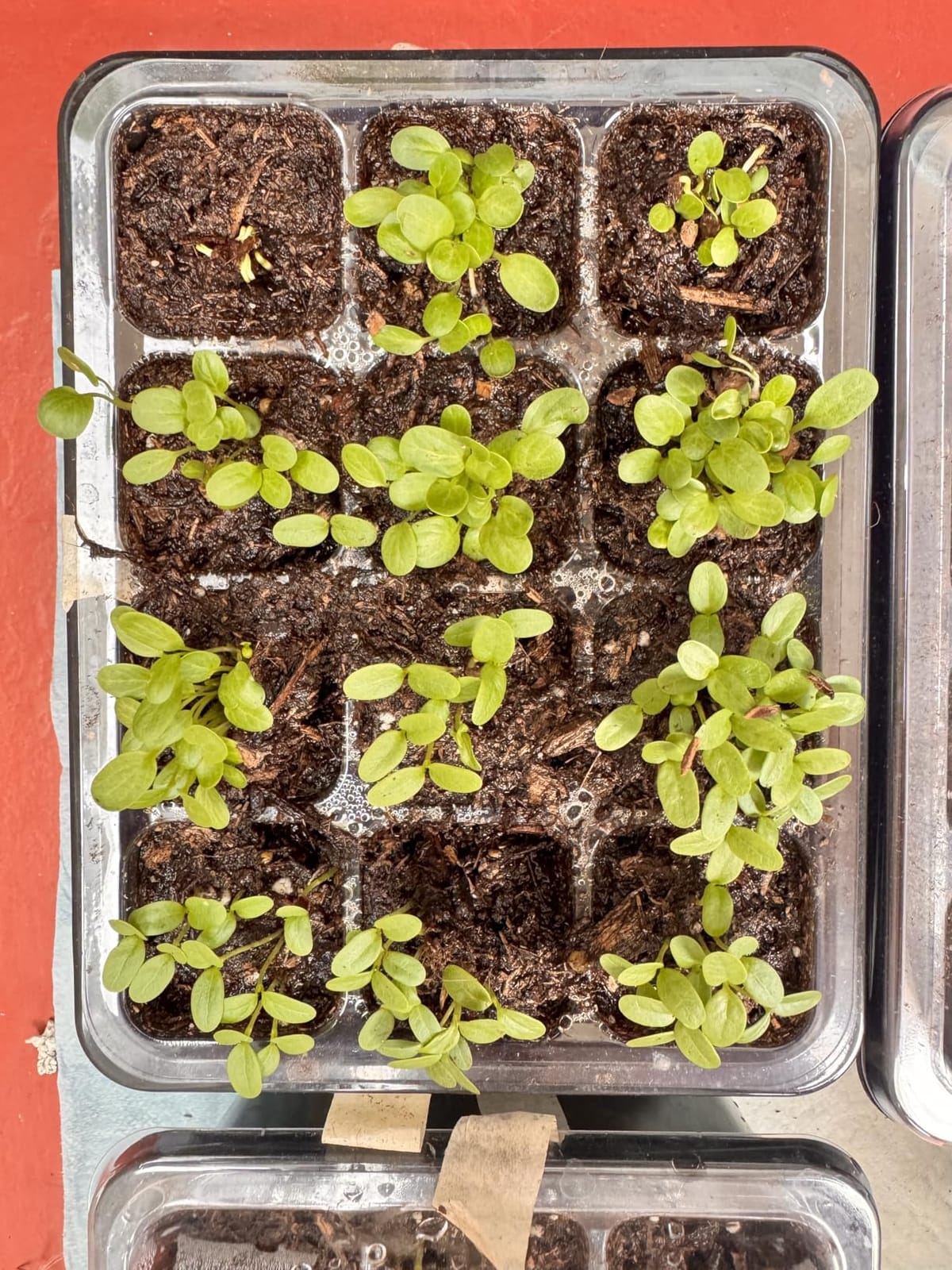
For a beginner who wants five reusable trays for under ten dollars, the Bonviee 5-Pack is hard to beat in our 2026 testing. The included plant labels are a small bonus, and the heat-mat compatibility means you can upgrade to a warming setup without buying new trays.
Who it’s best for
First-time gardeners who want a multi-pack of reusable trays at the lowest possible cost. Anyone starting small seeds like herbs, lettuces, and flowers. Pairs well with a separate heat mat for heat-loving crops.
What could be better
Each tray is small, which limits use to compact crops. The vent fit is loose, and bottom watering is harder to monitor with the darker base.
How to Choose the Best Seed Starting Kit for Your Garden
After testing 12 kits across hundreds of seeds, the right seed starting kit comes down to seven decisions: cell count and size, growing medium, dome quality, heat mat necessity, self-watering versus manual, durability, and whether you need integrated lights. Below is the framework I now use when recommending kits to readers.
Cell count and size
Cell count determines how many seedlings you can start in one batch, and cell size determines how long seedlings can grow before needing transplant. For tomatoes and peppers, choose cells at least 2 inches deep so roots have room to develop. For herbs and lettuces, 1.5-inch cells work fine and let you start more plants per tray. A 32-cell tray with deep cells suits a small vegetable garden; a 72-cell or 200-cell tray suits a high-volume garden with small seeds.
Growing medium: pellets versus loose mix
Coconut coir and peat pellets are pre-measured and tidy, but they require ten minutes of soaking to expand and can dry out faster than loose mix. Loose sterile seed starting mix gives you more control over moisture and tends to produce stronger root systems, but it is messier. For beginners, pellets remove the guesswork. For experienced gardeners, loose mix is more cost-effective over multiple seasons.
Humidity dome and venting
A humidity dome traps moisture during germination, which is critical for the first three to seven days. The best domes have adjustable vents you can crack open as seedlings emerge, because closed domes after germination cause damping off and mold. Look for vents you can adjust without removing the dome, and a dome tall enough (at least four inches) to accommodate seedling growth for three to four weeks.
Heat mat: necessity or nice-to-have?
A heat mat raises soil temperature to the 75-85 degree Fahrenheit range that peppers, eggplants, and tomatoes need for fast germination. If your home stays above 70 degrees in the room where you start seeds, you can skip the heat mat. If you start seeds in a basement, garage, or cold room, a heat mat cuts germination time in half. The SOLIGT 60-Cell kit in our roundup bundles a heat mat with grow light and dome, which is the best all-in-one option for cold spaces.
Self-watering versus manual watering
Self-watering capillary mats pull water up from a reservoir below, which keeps seedlings evenly moist without daily attention. For beginners who forget to water or who travel, self-watering is a quality-of-life upgrade. The Burpee XL 32-Cell and Patigrow 120-Cell kits in our roundup both use this design. Manual watering works fine if you check seedlings daily and use a spray bottle or bottom-watering tray.
Durability and reusability
Cheap polystyrene trays crack after one season, which adds to landfill waste and increases long-term cost. Heavy-duty ABS plastic (like the Sondiko and AC Infinity kits in our roundup) or food-grade silicone (like the Burpee SuperSeed) lasts five to ten seasons. The cost-per-season math often favors the more expensive reusable kit. For gardeners starting seeds every year, durability pays off.
Lights integrated or add-on
If you have a south-facing window with six or more hours of direct sun, you do not need integrated lights. If you start seeds in a basement, apartment, or north-facing room, integrated LED lights make the difference between leggy stretched seedlings and compact healthy growth. The Bonviee 5-Pack with LEDs and the YAUNGEL 6-Pack with timer are the best budget options. For the strongest seedling growth, pair any kit with a separate full spectrum LED panel.
Sustainability and materials
Plastic trays are durable and reusable, which offsets their environmental cost over multiple seasons. Silicone trays like the Burpee SuperSeed last a decade and are dishwasher safe. Biodegradable peat pots work for direct transplanting but tend to mold in humid domes. If sustainability matters to you, prioritize reusable plastic or silicone over disposable options, and choose a kit you will use for at least five seasons.
Frequently Asked Questions
Are seed starting kits worth it?
Yes — in our testing, kits with humidity domes and proper cells delivered 90-100 percent germination rates compared to 40-60 percent for seeds started in open pots. A good kit also reduces transplant shock by giving each seedling its own cell with intact roots. For anyone starting tomatoes, peppers, or a full spring garden, a kit pays for itself in the first season by replacing seedlings you would otherwise buy at a nursery.
What should I look for when buying a seed starting kit?
Look for cells at least 1.5 inches deep (2 inches for tomatoes and peppers), an adjustable humidity dome with vents, a watertight base tray for bottom-watering, and durable plastic that will last multiple seasons. If you start seeds in low light, choose a kit with integrated full spectrum LEDs. If you start heat-loving crops in a cold room, choose a kit that includes a heat mat or is heat-mat compatible.
How many cells do I need in a seed starting tray?
For a small herb and flower garden, a 36 to 60-cell tray is plenty. For a full vegetable garden with tomatoes, peppers, and brassicas, look for at least 72 cells or multiple trays. For gardeners starting hundreds of seeds, 200-cell kits like the MIXC 5-Pack are the best value per cell. Cell depth matters as much as count — choose deep cells (2 inches or more) for crops with longer indoor growth periods.
Do you really need a heat mat for seedlings?
Not always. If your home stays above 70 degrees Fahrenheit in the room where you start seeds, peppers and tomatoes will germinate in 7-10 days without a heat mat. If your seed-starting room is cooler, a heat mat cuts germination time in half and improves uniformity. Heat mats are most valuable for peppers, eggplants, and early tomatoes started in late winter when room temperatures are lowest.
Is it better to start seeds in soil or peat pellets?
Both work, but loose sterile seed starting mix gives stronger root systems and more control over moisture. Peat and coconut coir pellets are tidier and faster for beginners, but they require soaking to expand and can dry out faster. For gardeners starting more than a few seeds per season, loose mix is more cost-effective. For first-time gardeners, pellets remove the guesswork.
What is the best indoor seed starting system?
For most home gardeners, the Burpee XL 32-Cell Self-Watering system is the best indoor seed starting kit in our testing because it combines deep cells, a self-watering mat, coconut coir pellets, and a humidity dome in one box. For gardeners without natural light, the Bonviee 5-Pack with 12-LED grow lights delivers strong germination at a budget price. For a complete kit with heat mat, the SOLIGT 60-Cell Kit is the best all-in-one option.
What are some good beginner gardening kits?
The best beginner seed starting kits are the Burpee SuperSeed 36-Cell silicone tray for its reusable pop-out cells, the Bonviee 5-Pack for its low cost and included plant labels, and the Gardzen 3-Pack for its compact size and adjustable vents. All three are easy to use, well-reviewed by first-time gardeners, and forgiving of common beginner mistakes like overwatering.
Final Verdict: The Best Seed Starting Kit to Buy in 2026
After six weeks of testing 12 of the best seed starting kits on the market in 2026, our top pick is the Burpee XL Self-Watering 32-Cell system. The deep 2.25-inch cells, capillary self-watering mat, included coconut coir pellets, and humidity dome combine into the most complete all-in-one kit we tested, and it consistently delivered 100 percent germination across tomatoes, peppers, and basil. For gardeners who want to spend less and reuse forever, the Burpee SuperSeed 36-Cell silicone tray is the best value pick. For gardeners starting heat-loving crops in a cold room, the SOLIGT 60-Cell Kit with grow light and heat mat is the best all-in-one.
Pick the kit that matches your space, your light, and your crop list. A south-facing windowsill gardener with herbs and lettuces needs something different from a basement grower starting a hundred tomato plants. Whichever kit you choose from this roundup, you will avoid the three most common seed starting failures: dry cells from missing water, moldy seedlings from closed domes, and transplant shock from small cells. If you are just getting started with broader home projects, our tested equipment roundups use the same hands-on methodology to help you pick the right tool for the job. Happy seed starting.